 plumi
How does energy transform matter?: OCR GCSE Physics B questions
Every OCR GCSE Physics B exam question on P6.1 How does energy transform matter?, 2018–2025, with its mark scheme and examiner’s report.
Paper
All papers
Exam
All years
Calculations
Q5(a)(ii)
The whole paper ↗
Q5(b)
The whole paper ↗Q8(d)
The whole paper ↗
Q8(e)(ii)
The whole paper ↗Q5(b)
The whole paper ↗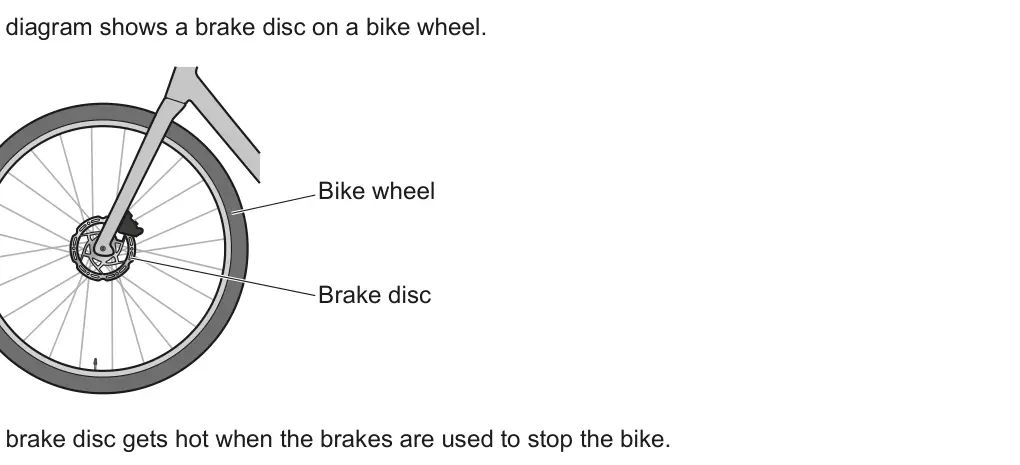
Q5(c)
The whole paper ↗Q5(d)
The whole paper ↗Q5(e)
The whole paper ↗Q5(f)
The whole paper ↗Q9(b)
The whole paper ↗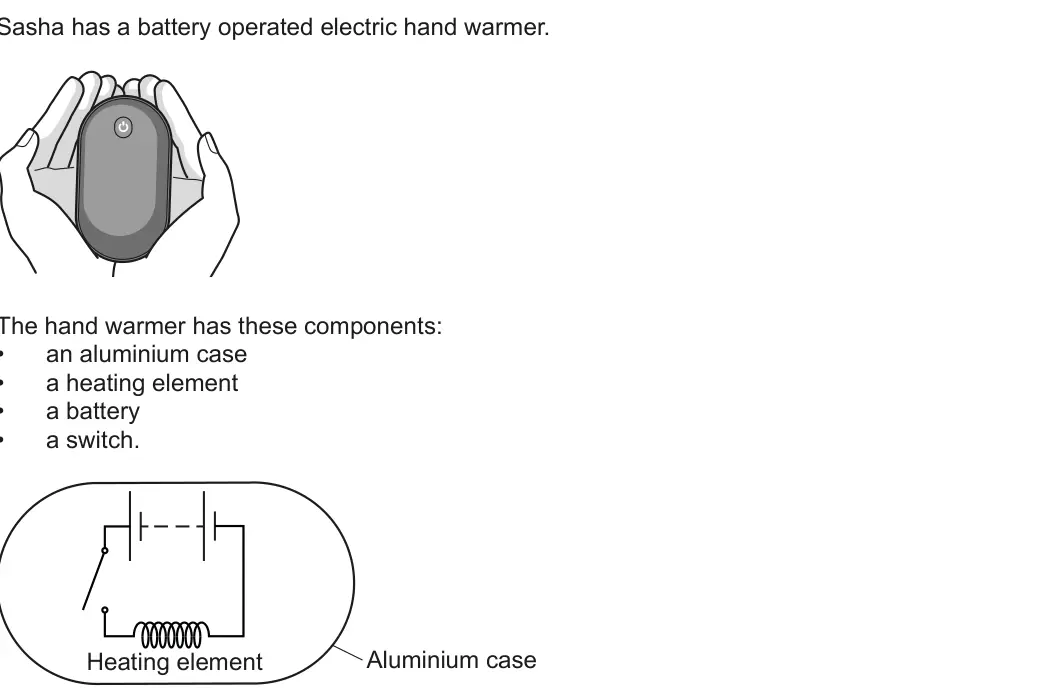
Q12(a)
The whole paper ↗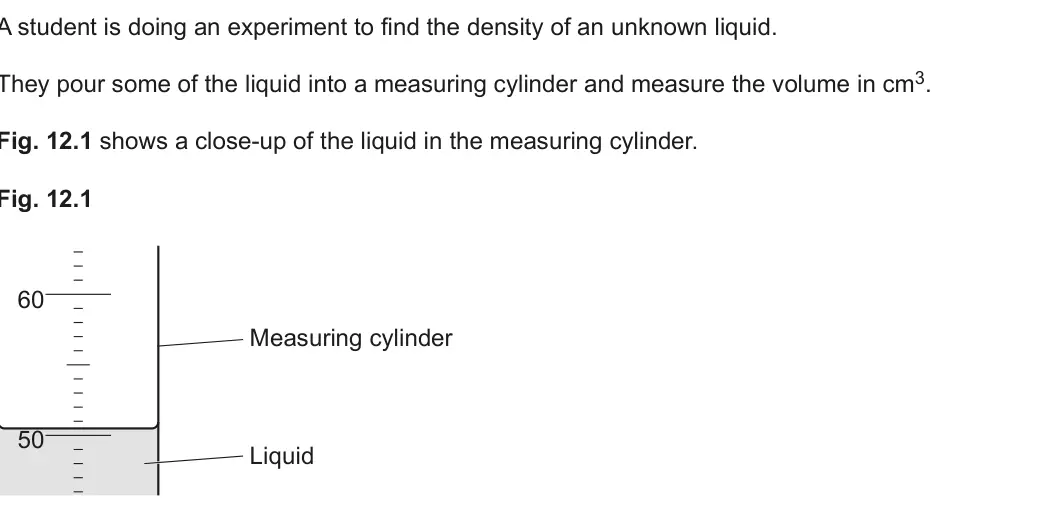
Q12(b)(i)
The whole paper ↗Q12(b)(ii)
The whole paper ↗Q3(d)
The whole paper ↗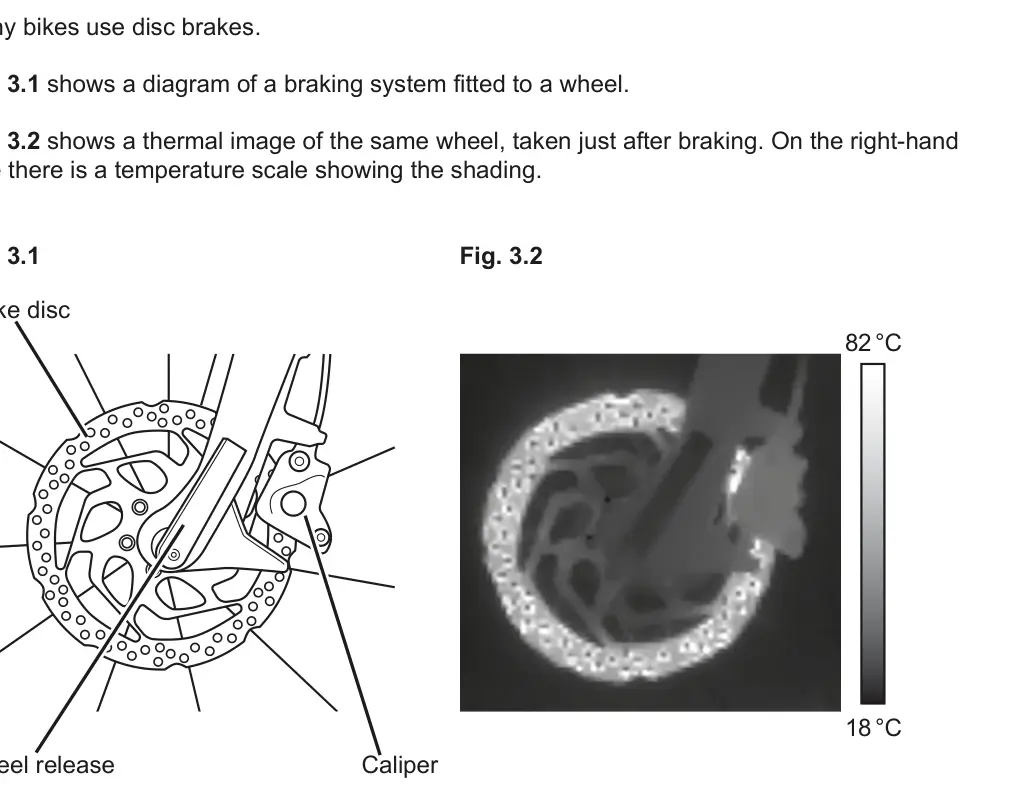
Q2(a)
The whole paper ↗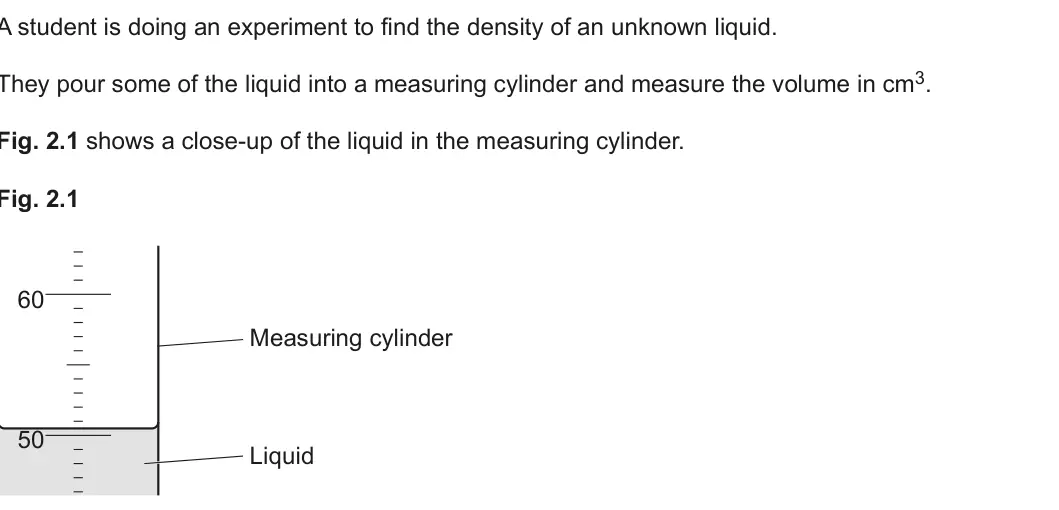
Q2(b)(i)
The whole paper ↗Q2(b)(ii)
The whole paper ↗Q13(a)
The whole paper ↗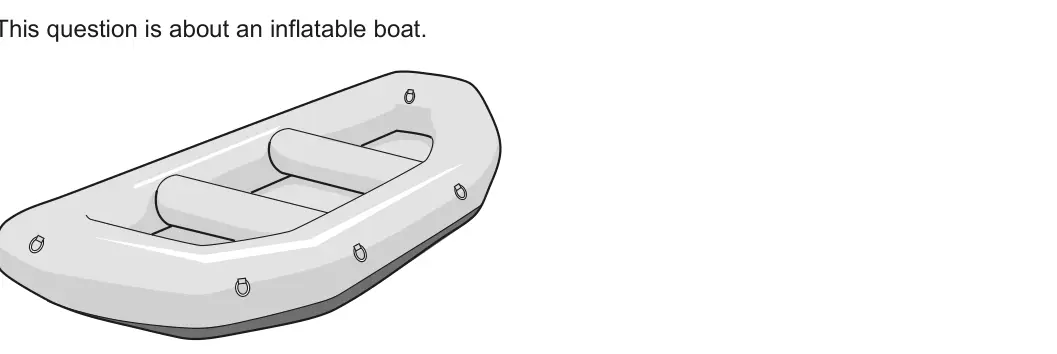
Q2(a)
The whole paper ↗
Q2(b)
The whole paper ↗
All 74 questions on How does energy transform matter?, as a list
- June 2025, Paper 1 Foundation, Q5(a)(ii) (3 marks): Calculate the density of the fluid in the bag when it is a liquid. • There is 0.45 g of fluid in each bag. The volume of the fluid when liquid is 0.3 cm3. • Use
- June 2025, Paper 1 Foundation, Q5(b) (3 marks): Calculate the energy needed to change the state of the fluid from liquid into gas. • The mass of the fluid is 0.00045 kg. • The specific latent heat is 200 000
- June 2025, Paper 3 Higher, Q8(d) (3 marks): Fig. 8.2 shows how the volume of a penguin can be modelled as a cylinder. Fig. 8.2 0.1 m 1.2 m Calculate the density of the penguin when it is modelled as a cyl
- June 2025, Paper 3 Higher, Q8(e)(ii) (2 marks): Explain why the penguin will sink at a depth of 100 cm if it is not swimming. Use the data in the table. The approximate density of seawater is 1020 kg / m3. [2
- June 2024, Paper 1 Foundation, Q5(b) (1 mark): The graph shows the temperature of the brake disc on part of a bike journey. 150 125 100 Brake disc 75 temperature (°C) 50 25 0 0 1 2 3 4 5 6 7 8 9 10 Time (s)
- June 2024, Paper 1 Foundation, Q5(c) (2 marks): Find the maximum temperature increase of the brake disc during braking. Use data from the graph. Temperature increase = °C [2]
- June 2024, Paper 1 Foundation, Q5(d) (3 marks): Use your answer to part (c) to calculate the change in internal energy of the brake disc while the bike slows down. The specific heat capacity of the brake disc
- June 2024, Paper 1 Foundation, Q5(e) (3 marks): Complete the sentence to define specific heat capacity. Use words from the list. energy joule kilogram mass temperature time Specific heat capacity is the neede
- June 2024, Paper 1 Foundation, Q5(f) (1 mark): When the rider stops applying the brakes, the brake disc will cool down. Predict the temperature of the brake disc once it has stopped cooling down. Use data fr
- June 2024, Paper 2 Foundation, Q9(b) (4 marks): The table shows some specifications of the aluminium case. Description Detail Mass of the aluminium case 0.2 kg Specific heat capacity of aluminium 920 J / kg °
- June 2024, Paper 2 Foundation, Q12(a) (1 mark): What is the volume of the liquid? Use Fig. 12.1. Volume = cm3 [1]
- June 2024, Paper 2 Foundation, Q12(b)(i) (1 mark): What is the mass of the empty measuring cylinder? Mass = g [1]
- June 2024, Paper 2 Foundation, Q12(b)(ii) (4 marks): Calculate the density of the liquid. Use: • data from the graph the equation: density = mass • volume Density = g / cm3 [4]
- June 2024, Paper 3 Higher, Q3(d) (3 marks): A brake disc increases in temperature by 60 °C during braking. Calculate the change in internal energy of the brake disc. The mass of the brake disc is 0.2 kg.
- June 2024, Paper 4 Higher, Q2(a) (1 mark): What is the volume of the liquid? Use Fig. 2.1. Volume = cm3 [1]
- June 2024, Paper 4 Higher, Q2(b)(i) (1 mark): What is the mass of the empty measuring cylinder? Mass = g [1]
- June 2024, Paper 4 Higher, Q2(b)(ii) (4 marks): Calculate the density of the liquid. Use: • data from the graph the equation: density = mass • volume Density = g / cm3 [4]
- June 2023, Paper 1 Foundation, Q13(a) (1 mark): Boats float because they are less dense than water. Define density. [1]
- June 2023, Paper 2 Foundation, Q2(a) (1 mark): Which piece of apparatus does Sam use to measure the mass of the bung? Tick (3) one box. Metre rule Thermometer Stopwatch Balance [1]
- June 2023, Paper 2 Foundation, Q2(b) (2 marks): Sam puts 25 cm3 of water in a measuring cylinder. When the bung is placed into the measuring cylinder, the level of the water rises as shown. cm3 cm3 50 50 40 4
- June 2023, Paper 2 Foundation, Q2(c) (2 marks): Sam has a second bung which has a mass of 24 g and a volume of 12 cm3. Calculate the density of the second bung. Use the equation: density = mass volume Density
- June 2023, Paper 2 Foundation, Q4(a) (1 mark): State which material A, B, C or D, could be used to make the lightest bicycle frame. Material = [1]
- June 2023, Paper 2 Foundation, Q11(a) (1 mark): Define the term specific heat capacity. [1]
- June 2023, Paper 2 Foundation, Q11(b)(i) (1 mark): Describe one energy transfer taking place during this experiment. [1]
- June 2023, Paper 2 Foundation, Q11(c)(i) (4 marks): Explain improvements that can be made to the equipment. [4]
- June 2023, Paper 2 Foundation, Q11(c)(ii) (1 mark): Suggest one improvement to the method. [1]
- June 2023, Paper 2 Foundation, Q11(d) (5 marks): Li records the results from the experiment in a table: Current (A) 4.62 Final Temperature (°C) 32 Initial Temperature (°C) 18 Mass of aluminium block (kg) 1 Pot
- June 2023, Paper 3 Higher, Q4(a) (1 mark): Boats float because they are less dense than water. Define density. [1]
- June 2023, Paper 3 Higher, Q12(b)(ii) (4 marks): A different puddle of liquid methane freezes. • The mass of the puddle is 90 g. The volume of the puddle when it is solid is 200 cm3. • Calculate the change in
- June 2023, Paper 4 Higher, Q9(a)(i) (4 marks): Name two other pieces of equipment that are needed so Li can calculate the specific heat capacity, and describe what each piece of equipment is used for. 1. 2.
- June 2023, Paper 4 Higher, Q9(a)(ii) (2 marks): Explain how the calculated value for the specific heat capacity would be different if the beaker was not insulated. [2]
- June 2023, Paper 4 Higher, Q9(a)(iii) (2 marks): Explain why it is important that Li does not exceed the melting point of the wax. [2]
- June 2023, Paper 4 Higher, Q9(a)(iv) (4 marks): In a different investigation Li connects a 12 V d.c. power supply to a heater. 0.02 kg of wax is heated. The temperature of the wax increases by 18 °C in 120 s.
- June 2022, Paper 2 Foundation, Q9(b) (4 marks): When they returned the samples of Moon rock to Earth, scientists identified the rocks by measuring their density. The table shows the density of some rocks. Typ
- November 2021, Paper 1 Foundation, Q5(a) (3 marks): The density of the wax in the candle is 0.9 g / cm3. The total volume of wax in the candle is 11 cm3. Calculate the mass of wax in the candle. Mass = g [3]
- November 2021, Paper 1 Foundation, Q5(b) (3 marks): Jack lights the candle. Solid wax Liquid wax After a few minutes, Jack notices that some of the wax is still solid, and some of it has melted. Approximately 0.6
- November 2021, Paper 2 Foundation, Q2(b) (2 marks): The specific latent heat of fusion for wax is 24 000 J / kg. Calculate the energy needed to change 0.25 kg of wax from solid to liquid. Use the equation: energy
- November 2021, Paper 2 Foundation, Q6(a)(i) (2 marks): Calculate the volume of the steel. Give your answer to 2 significant figures. Volume = cm3 [2]
- November 2021, Paper 2 Foundation, Q6(a)(ii) (2 marks): Calculate the density of the steel. The mass of the steel is 74.4 g. Use the equation: density = mass ÷ volume Use your answer from (a)(i). Density = g / cm3 [2
- November 2021, Paper 2 Foundation, Q6(b) (4 marks): Describe a method to find the density of the water. [4]
- November 2021, Paper 2 Foundation, Q6(c) (2 marks): The polystyrene and the water have the same mass. The volume of the polystyrene is four times greater than the volume of the water. The density of the water is
- November 2021, Paper 3 Higher, Q5(a) (3 marks): Fig. 5.2 shows a representation of the reservoir in the hydroelectric power station. 50 m 350 m 800 m Fig. 5.2 Calculate the total mass of water that can be hel
- November 2021, Paper 3 Higher, Q10(a)(i) (2 marks): What is the difference between specific heat capacity and specific latent heat? [2]
- November 2021, Paper 3 Higher, Q10(a)(ii) (3 marks): The temperature of the room is 20 °C. The melting point of the wax is 52 °C. For the wax to melt, it must first increase in temperature to its melting point. Ca
- November 2021, Paper 3 Higher, Q10(b) (2 marks): Describe what happens, in terms of energy, when Ling blows out the candle. [2]
- November 2021, Paper 4 Higher, Q5(a) (6 marks): Ali is investigating the specific heat capacity of a type of wax. He uses a 36 W heater to heat the solid wax from room temperature. The mass of the wax is 0.2
- November 2021, Paper 4 Higher, Q5(c)(i) (2 marks): Describe how the volume of the irregularly shaped candle can be measured. [2]
- November 2021, Paper 4 Higher, Q5(c)(ii) (4 marks): Ali makes measurements to find the volume and mass of the candle. He writes down his results in the table. Volume (m3) 5.0 × 10⁻⁵ 4.3 × 10⁻² Mass (kg) Calculate
- November 2020, Paper 1 Foundation, Q1(a)(i) (1 mark): Which measuring instrument should Jack use to measure mass? Tick (v) one box. Balance Measuring cylinder Metre ruler Thermometer [1]
- November 2020, Paper 1 Foundation, Q1(a)(ii) (1 mark): Which measuring instrument should Jack use to measure the volume of milk? Tick (v) one box. Balance Measuring cylinder Metre ruler Thermometer [1]
- November 2020, Paper 1 Foundation, Q1(b) (2 marks): Complete the sentences to describe how to measure the volume of the butter. Use words from the list. You can use each word once, more than once, or not at all.
- November 2020, Paper 1 Foundation, Q1(c) (2 marks): Jack makes these measurements for the block of butter: mass = 2.22 kg volume = 0.0024 m3 Calculate the density of the butter. Use the equation: density = mass ÷
- November 2020, Paper 1 Foundation, Q1(d) (2 marks): The cheese is an irregular solid shape. Suggest how to measure the volume of the cheese. [2]
- November 2020, Paper 2 Foundation, Q11(a) (2 marks): State two other pieces of equipment that Nina needs to use in her experiment. 1.... 2 [2]
- November 2020, Paper 2 Foundation, Q11(c)(ii) (2 marks): Calculate the specific heat capacity of the water from Nina’s experiment. Use the equation: change in internal energy = mass × specific heat capacity × change i
- November 2020, Paper 2 Foundation, Q11(d)(ii) (1 mark): Suggest one way in which the experiment to find the specific heat capacity of water could be improved. [1]
- November 2020, Paper 3 Higher, Q7(a) (3 marks): Describe how to accurately determine the density of milk. You should include in your answer how accurate measurements can be obtained from the apparatus used. •
- November 2020, Paper 3 Higher, Q7(b) (2 marks): Fig. 7.2 shows the dimensions of a block of cheese. 0.13 m 0.12m 0.046m Fig. 7.2 Calculate the volume of the block of cheese, in m3. Give your answer in standar
- November 2020, Paper 3 Higher, Q7(c) (2 marks): The yoghurt in Fig. 7.1 is not runny, so it can't be poured like milk. It is also too soft to hold its shape like a block of cheese. Suggest one method to measu
- November 2020, Paper 3 Higher, Q9(b)(ii) (2 marks): Coolant is continually pumped through the reactor. The purpose of the coolant is to remove thermal energy from the reactor. The table shows two coolants that ca
- November 2020, Paper 4 Higher, Q7(a)(i) (2 marks): Give one reason why Jane's result for the specific heat capacity of water will be inaccurate. [1] Suggest one improvement to Jane's experiment, to get a more ac
- November 2020, Paper 4 Higher, Q7(b) (4 marks): It takes the kettle 3 minutes to heat 1 kg of water to 100 °C from a starting temperature of 20 °C. Calculate the specific heat capacity of water. Use the equat
- June 2019, Paper 1 Foundation, Q9(a) (3 marks): He uses a kettle to heat 1.1 kg of water from 20 °C to 90°C. Ali then pours the hot water into the hot water bottle. The specific heat capacity of water is 4200
- June 2019, Paper 1 Foundation, Q9(c)(i) (2 marks): Suggest two pieces of measuring apparatus he will need to use in his investigation. 1 2 [2]
- June 2019, Paper 1 Foundation, Q9(c)(ii) (1 mark): Suggest one control variable for Ali’s investigation. [1]
- June 2019, Paper 2 Foundation, Q9 (6 marks): 9* Kai is doing experiments in the laboratory to determine the density of the two different liquids, E and F. He uses a measuring cylinder placed on a balance.
- June 2019, Paper 3 Higher, Q1(a) (3 marks): Calculate the thermal energy needed to melt 20 g of ice. The specific latent heat of melting for ice is 334 000 J / kg. Thermal energy = J [3]
- June 2019, Paper 4 Higher, Q2 (6 marks): 2* Kai is doing experiments in the laboratory to determine the density of the two different liquids, E and F. He uses a measuring cylinder placed on a balance.
- June 2018, Paper 1 Foundation, Q14(a) (2 marks): Show that more than 700 000 J of energy is needed to heat the oil from 20 °C to 120 °C. Use the equation: change in internal energy = mass × specific heat capac
- June 2018, Paper 2 Foundation, Q9(a) (6 marks): Sarah carries out an experiment to measure the specific latent heat of vaporisation of water. She does this by finding the energy needed to evaporate a known ma
- June 2018, Paper 3 Higher, Q3(a) (2 marks): Show that more than 700 000 J of energy is needed to heat the oil from 20 °C to 120 °C. Use the equation: change in internal energy = mass × specific heat capac
- June 2018, Paper 3 Higher, Q9(a) (1 mark): Which two of the statements below, taken together, explain why the bubbles rise but the tablet sinks? Tick (✓) two boxes. The bubbles are made of gas, but the t
- June 2018, Paper 4 Higher, Q2(a) (6 marks): Sarah carries out an experiment to measure the specific latent heat of vaporisation of water. She does this by finding the energy needed to evaporate a known ma
- June 2018, Paper 4 Higher, Q3(a)(iii) (5 marks): Watney uses the generator to heat up water for a bath. He heats 100 kg of water from 20 °C to 37 °C. Show that it takes more than an hour (3600 s) for his bath
Questions, mark schemes and examiner’s reports are © OCR, from their published past papers. Plumi isn’t affiliated with any exam board. Want whole papers? Every OCR GCSE Physics B paper.
Rather write your answers by hand on iPad? Plumi marks them against the same mark schemes.