 plumi
How does the particle model explain the effects of heating?: OCR GCSE Physics B questions
Every OCR GCSE Physics B exam question on P6.2 How does the particle model explain the effects of heating?, 2018–2025, with its mark scheme and examiner’s report.
Paper
All papers
Exam
All years
Calculations
Q5(a)(i)
The whole paper ↗
Q5(a)(iii)
The whole paper ↗Q5(c)
The whole paper ↗Q13(b)
The whole paper ↗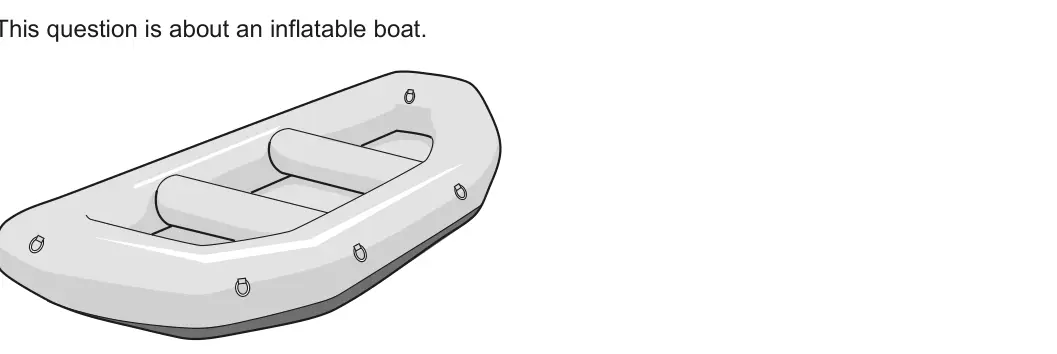
Q11(b)(ii)
The whole paper ↗
Q4(b)
The whole paper ↗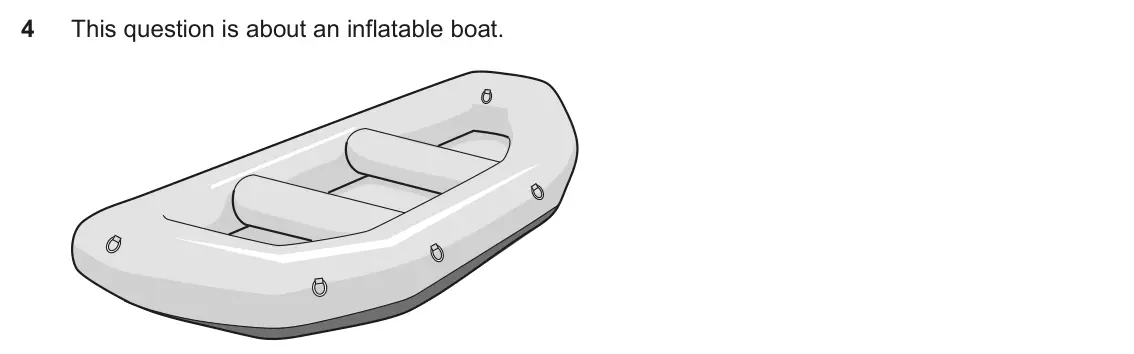
Q12(a)
The whole paper ↗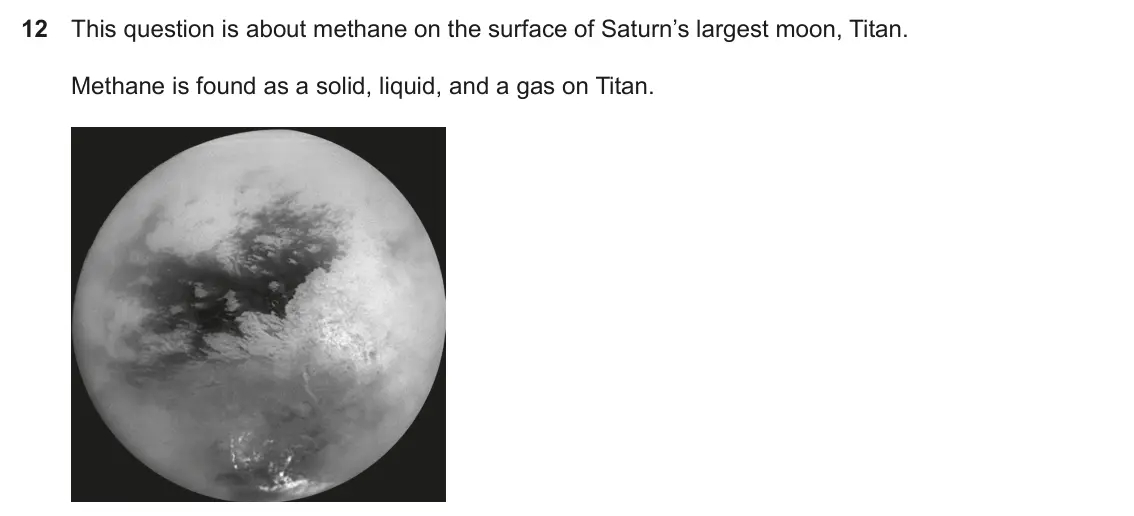
Q12(b)(i)
The whole paper ↗Q12(b)(ii)
The whole paper ↗Q12(a)
The whole paper ↗
Q5(c)
The whole paper ↗
Q2(a)
The whole paper ↗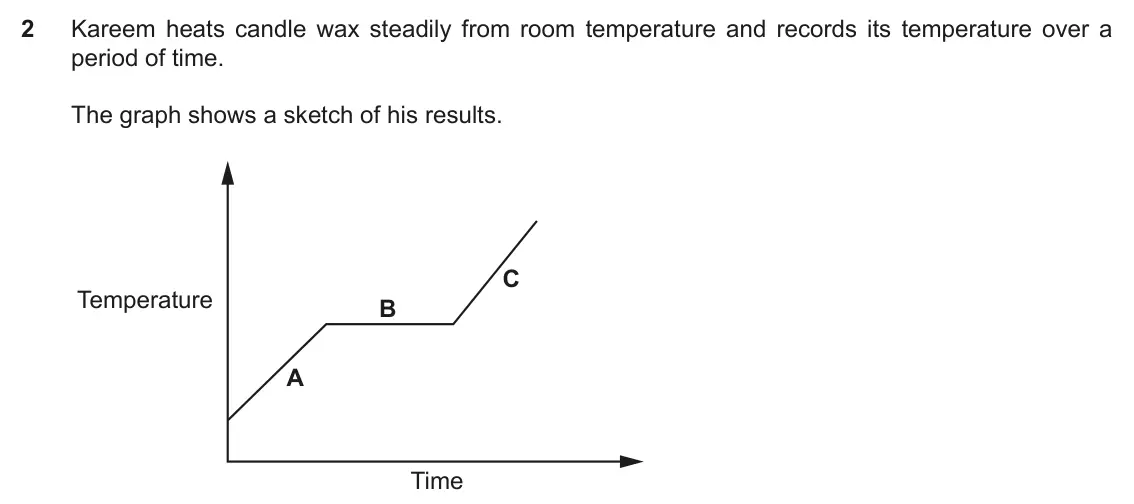
Q5(b)
The whole paper ↗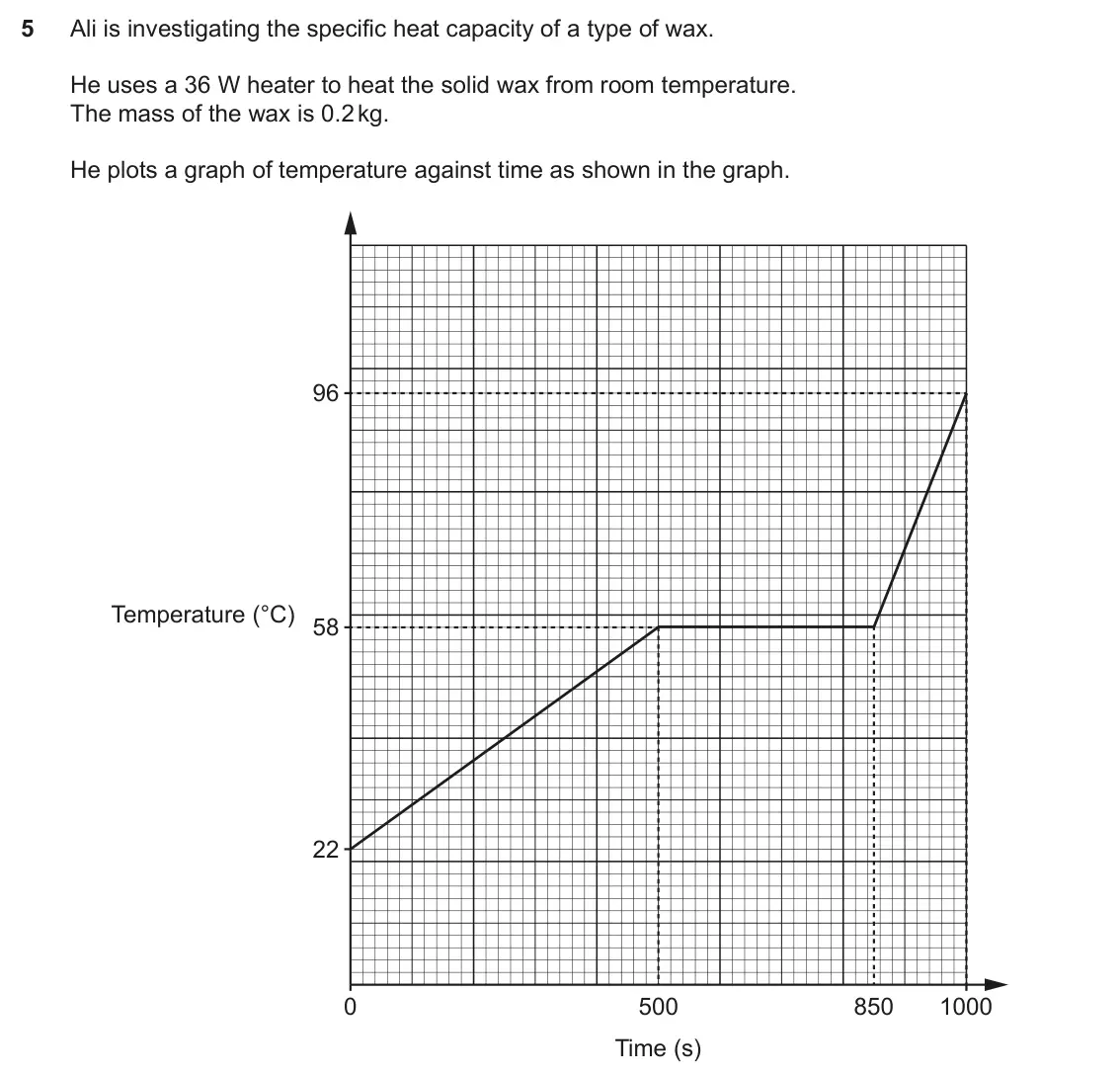
Q8(a)
The whole paper ↗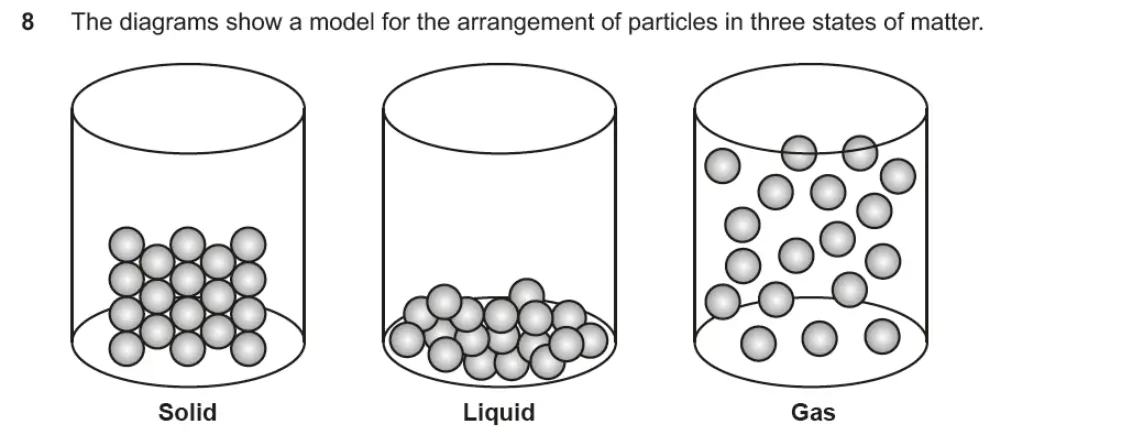
Q8(b)
The whole paper ↗Q7(c)
The whole paper ↗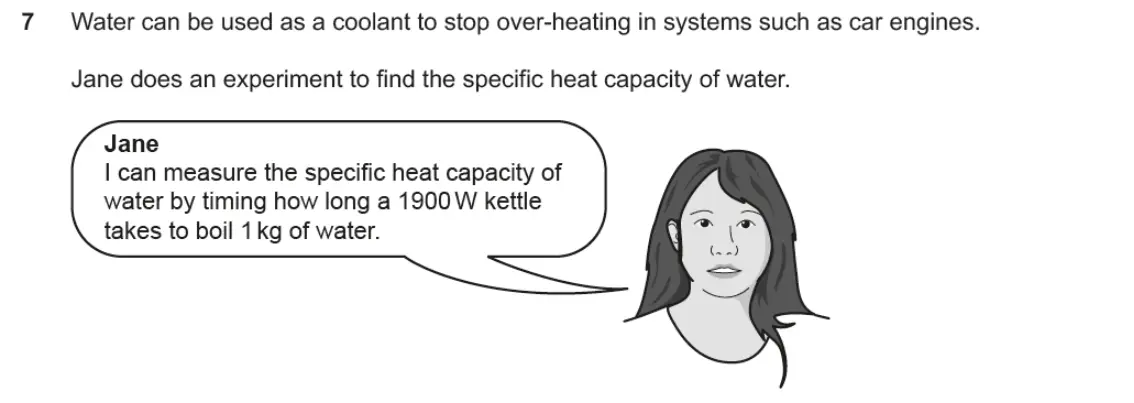
Q6(b)(i)
The whole paper ↗
Q7(a)(i)
The whole paper ↗
Q7(a)(ii)
The whole paper ↗Q7(a)(iii)
The whole paper ↗
All 22 questions on How does the particle model explain the effects of heating?, as a list
- June 2025, Paper 1 Foundation, Q5(a)(i) (2 marks): The bag becomes larger when the fluid becomes a gas. Complete the diagram below to show how the same particles are arranged in the bag when the fluid is a gas.
- June 2025, Paper 1 Foundation, Q5(a)(iii) (2 marks): When the fluid in the bag is a gas it has a volume of 4 cm3. Explain why the fluid has a higher density as a liquid than as a gas. You can include a calculation
- June 2025, Paper 1 Foundation, Q5(c) (2 marks): Which statements about the fluid in the bag are true and which are false? Tick (✓) one box in each row. True False The change of state is a chemical change. The
- June 2023, Paper 1 Foundation, Q13(b) (3 marks): The boat is inflated in the morning and then left out in the sun. The temperature of the air inside the boat rises to 50 °C. • The volume and mass of the air in
- June 2023, Paper 2 Foundation, Q11(b)(ii) (1 mark): Describe how the motion of the aluminium particles changes as the block is heated. [1]
- June 2023, Paper 3 Higher, Q4(b) (3 marks): The boat is inflated in the morning and then left out in the sun. The temperature of the air inside the boat rises to 50 °C. • The volume and mass of the air in
- June 2023, Paper 3 Higher, Q12(a) (2 marks): The table shows the densities of methane as a solid, liquid and a gas at –182 °C, and 150 kPa, the typical conditions on the surface of Titan. Density of methan
- June 2023, Paper 3 Higher, Q12(b)(i) (2 marks): What mass of methane gas has been added to the atmosphere on Titan? Explain your answer using the particle model. [2]
- June 2023, Paper 3 Higher, Q12(b)(ii) (4 marks): A different puddle of liquid methane freezes. • The mass of the puddle is 90 g. The volume of the puddle when it is solid is 200 cm3. • Calculate the change in
- June 2022, Paper 3 Higher, Q12(a) (3 marks): Use the particle model to explain why the temperature of the cloud of dust and gas increased as it collapsed. [3]
- November 2021, Paper 1 Foundation, Q5(c) (2 marks): Jack blows out the candle. The liquid wax turns back into a solid. Describe what happens to the particles in the wax as it changes from a liquid into a solid. [
- November 2021, Paper 2 Foundation, Q2(a) (3 marks): Complete the table by matching each section A, B or C with the correct statement. Tick (✓) one box in each row. Statement A B C The wax is melting The wax is a
- November 2021, Paper 4 Higher, Q5(b) (2 marks): When the wax is heated to a liquid its density changes. Explain why. [2]
- November 2020, Paper 2 Foundation, Q8(a) (3 marks): Complete the following statements about the three states of matter. Use words from the list. You may use each word once, more than once, or not at all. condensa
- November 2020, Paper 2 Foundation, Q8(b) (2 marks): Explain why the density of ice is higher than the density of water vapour. Use ideas from the particle model, and the diagrams to support your answer. [2]
- November 2020, Paper 4 Higher, Q7(c) (3 marks): When water is heated in a kettle, the energy stored within the water changes. Describe how heating water in the kettle to boiling point changes the energy store
- June 2018, Paper 1 Foundation, Q6(b)(i) (2 marks): Jane says, ‘The water on the mirror came from the bath’. Explain how this happened. [2]
- June 2018, Paper 2 Foundation, Q7(a)(i) (1 mark): Which sample has the fastest particles? [1]
- June 2018, Paper 2 Foundation, Q7(a)(ii) (1 mark): Which sample has the greatest density? [1]
- June 2018, Paper 2 Foundation, Q7(a)(iii) (1 mark): Which sample is at the highest temperature? [1]
- June 2018, Paper 2 Foundation, Q9(b) (3 marks): Sarah’s book has this information about vaporisation of two liquids. Liquid Specific latent heat of vaporisation (J per gram) water 2300 alcohol 950 Suggest why
- June 2018, Paper 4 Higher, Q2(b) (3 marks): Sarah’s book has this information about vaporisation of two liquids. Liquid Specific latent heat of vaporisation (J per gram) water 2300 alcohol 950 Suggest why
Questions, mark schemes and examiner’s reports are © OCR, from their published past papers. Plumi isn’t affiliated with any exam board. Want whole papers? Every OCR GCSE Physics B paper.
Rather write your answers by hand on iPad? Plumi marks them against the same mark schemes.