 plumi
How can scientific models help us understand the Big Bang?: OCR GCSE Physics B questions
Every OCR GCSE Physics B exam question on P6.5 How can scientific models help us understand the Big Bang?, 2018–2025, with its mark scheme and examiner’s report.
Paper
All papers
Exam
All years
Calculations
Q7(a)
The whole paper ↗
Q9(a)(ii)
The whole paper ↗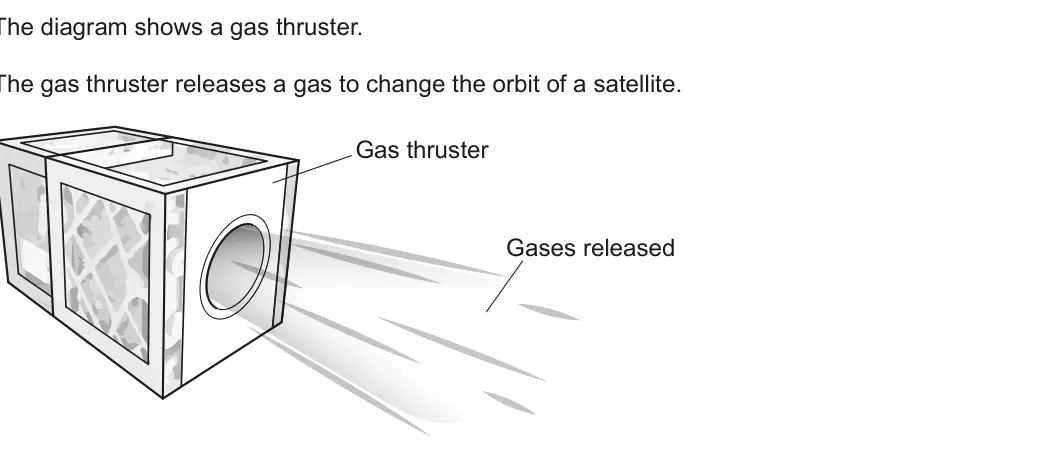
Q10(a)
The whole paper ↗
Q10(b)
The whole paper ↗Q10(c)
The whole paper ↗Q10(d)
The whole paper ↗Q10(e)
The whole paper ↗Q10(a)
The whole paper ↗
Q10(b)
The whole paper ↗Q2(a)
The whole paper ↗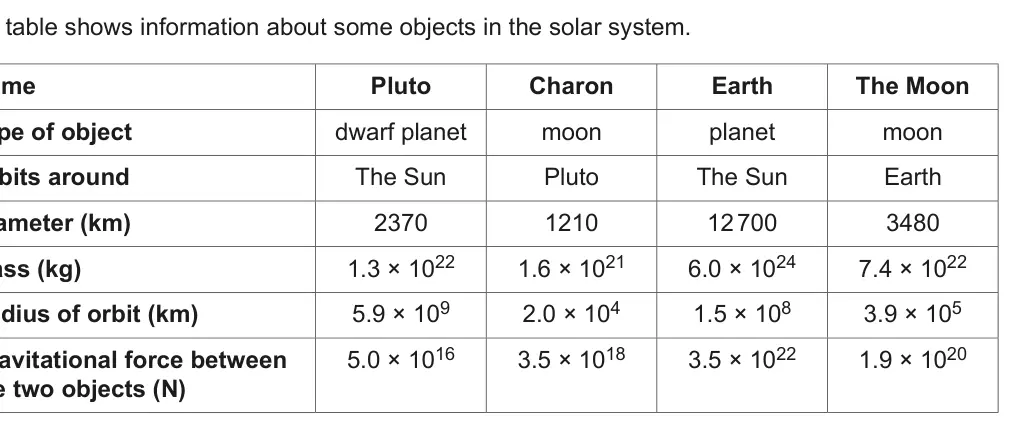
Q2(b)
The whole paper ↗Q2(c)
The whole paper ↗Q2(d)
The whole paper ↗Q2(e)
The whole paper ↗Q9(a)(i)
The whole paper ↗Q9(a)(ii)
The whole paper ↗Q9(b)
The whole paper ↗Q9(c)(i)
The whole paper ↗Q9(c)(ii)
The whole paper ↗
All 54 questions on How can scientific models help us understand the Big Bang?, as a list
- June 2025, Paper 1 Foundation, Q7(a) (1 mark): What force keeps satellites orbiting the Earth? [1]
- June 2025, Paper 3 Higher, Q9(a)(ii) (2 marks): Explain the difference in the speed of the satellite in its new orbit compared to its speed in the original orbit. [2]
- June 2025, Paper 4 Higher, Q7 (6 marks): 7* The Sun was formed from a cloud of dust and gas. The dust and gas particles were pulled together by the force of gravity. The cloud collapsed and fusion reac
- June 2024, Paper 1 Foundation, Q10(a) (1 mark): Name another type of object in the solar system that is not listed in the table. [1]
- June 2024, Paper 1 Foundation, Q10(b) (2 marks): A student looked at the data and said: ‘A moon is always approximately half the diameter of the object it orbits.’ Show that the student is incorrect. Use data
- June 2024, Paper 1 Foundation, Q10(c) (2 marks): Explain the difference in the time taken for Pluto and Earth to orbit the Sun. Use data from the table. [2]
- June 2024, Paper 1 Foundation, Q10(d) (2 marks): The photo shows the formation of a star from a cloud of dust and gas. Complete the sentences to explain the formation of the solar system and the birth of the S
- June 2024, Paper 1 Foundation, Q10(e) (1 mark): The diagrams represent the processes inside a star. Which diagram shows how these processes keep a star, like the Sun, stable in size and shape for millions of
- June 2024, Paper 2 Foundation, Q10(a) (1 mark): Describe the relationship shown by the graph. [1]
- June 2024, Paper 2 Foundation, Q10(b) (3 marks): Explain how this relationship provides evidence for the Big Bang model of the universe. [3]
- June 2024, Paper 3 Higher, Q2(a) (1 mark): Name another type of object in the solar system that is not listed in the table. [1]
- June 2024, Paper 3 Higher, Q2(b) (2 marks): A student looked at the data and said: ‘A moon is always approximately half the diameter of the object it orbits.’ Show that the student is incorrect. Use data
- June 2024, Paper 3 Higher, Q2(c) (2 marks): Explain the difference in the time taken for Pluto and Earth to orbit the Sun. Use data from the table. [2]
- June 2024, Paper 3 Higher, Q2(d) (2 marks): The photo shows the formation of a star from a cloud of dust and gas. Complete the sentences to explain the formation of the solar system and the birth of the S
- June 2024, Paper 3 Higher, Q2(e) (1 mark): The diagrams represent the processes inside a star. Which diagram shows how these processes keep a star, like the Sun, stable in size and shape for millions of
- June 2023, Paper 1 Foundation, Q9(a)(i) (1 mark): Which two students are asking questions that scientific evidence can answer? and [1]
- June 2023, Paper 1 Foundation, Q9(a)(ii) (1 mark): Which student is asking an ethical question? [1]
- June 2023, Paper 1 Foundation, Q9(b) (1 mark): Evidence for the Big Bang is a topic that sparks religious and philosophical debate as well as scientific discussion. One source of evidence for the Big Bang co
- June 2023, Paper 1 Foundation, Q9(c)(i) (2 marks): Plot the results from the table on the graph. 3 points have already been plotted. Include on your graph a line of best fit. [2]
- June 2023, Paper 1 Foundation, Q9(c)(ii) (1 mark): What is the relationship between distance and velocity shown by the graph? Tick (3) one box. Directly proportional Inversely proportional No correlation Non-lin
- June 2023, Paper 1 Foundation, Q9(c)(iii) (2 marks): Identify two features of the graph that show this relationship. 1. 2. [2]
- June 2023, Paper 1 Foundation, Q9(c)(iv) (2 marks): Describe the ‘Big Bang’ model. [2]
- June 2023, Paper 3 Higher, Q13(a)(i) (2 marks): The table shows data about four moons of Jupiter. Moon Name Distance from Jupiter Orbital speed (× 1000 km) (km / s) Thebe 222 23.9 Io 420 17.3 Europa 670 13.7
- June 2023, Paper 3 Higher, Q13(a)(ii) (1 mark): Another moon called Ganymede orbits 1 070 000 km from Jupiter. Predict the orbital speed of Ganymede. Use the graph. Orbital speed = km / s [1]
- June 2023, Paper 3 Higher, Q13(a)(iii) (1 mark): Describe the relationship shown by the graph. [1]
- June 2023, Paper 3 Higher, Q13(b)(i) (1 mark): Scientists have sent a solar probe to the Sun to collect data on its activity. Leo says: The solar probe is an artificial satellite. What is an artificial satel
- June 2022, Paper 2 Foundation, Q9(a)(i) (1 mark): Suggest why they wanted to analyse samples of rock from the Moon. [1]
- June 2022, Paper 2 Foundation, Q9(a)(ii) (2 marks): The Moon mission was dangerous and if something went wrong it could have resulted in their death. Suggest two reasons why they were willing to take this risk. 1
- June 2022, Paper 3 Higher, Q12(a) (3 marks): Use the particle model to explain why the temperature of the cloud of dust and gas increased as it collapsed. [3]
- June 2022, Paper 3 Higher, Q12(b)(i) (2 marks): Stars with a larger mass exert a larger gravitational force. Use this information to explain the trend shown in the graph. [2]
- June 2022, Paper 3 Higher, Q12(b)(ii) (1 mark): Beth evaluates the quality of the data. Beth The data on the graph is very scattered. The stars do not follow the trend exactly. Suggest why measurements of sta
- June 2022, Paper 4 Higher, Q7 (6 marks): 7* Edwin Hubble studied the visible light spectrum of distant galaxies and compared them to the spectrum of our Sun. Fig. 7.1 shows the visible light spectrum o
- June 2022, Paper 4 Higher, Q10(a) (2 marks): The force needed to keep an object moving in a circle depends on the speed of the object and the radius of the circle. The greater the speed and/or the smaller
- June 2022, Paper 4 Higher, Q10(b) (3 marks): Another exoplanet is discovered in orbit around a star. The star has the same mass as Kepler 452. The orbital velocity of the planet is approximately the same a
- November 2021, Paper 3 Higher, Q4(c) (2 marks): Voyager 1 is moving away from the Earth at a high speed. This causes the wavelength of the radio waves to change as they travel towards the Earth. Explain how t
- November 2021, Paper 4 Higher, Q8(a) (3 marks): Each point on the graph in Fig. 8.1 indicates the position of a galaxy at a different distance from Earth. Explain how Fig. 8.1 provides evidence for the Big Ba
- November 2021, Paper 4 Higher, Q8(b)(i) (2 marks): Describe two changes to telescopes that have helped to improve the observations of galaxies since 1929. 1. 2. [2]
- November 2021, Paper 4 Higher, Q8(b)(ii) (1 mark): Give one reason why the data shown in Fig. 8.2 has increased confidence in the Big Bang model. [1]
- November 2020, Paper 2 Foundation, Q12(a) (4 marks): James makes a conclusion from this data. Complete the sentences to finish James’s conclusion. Use words from the list. You can use each word once, more than onc
- November 2020, Paper 2 Foundation, Q12(b) (2 marks): James discovers a new galaxy and writes an article about it in a scientific journal. Before it is published it must be peer reviewed. Explain why and how the ar
- November 2020, Paper 3 Higher, Q12(a) (2 marks): The colour of a star depends on the wavelengths of light that it emits. Explain why the three stars have different colours. Use data from the table to support y
- November 2020, Paper 4 Higher, Q1(a) (4 marks): James makes a conclusion from this data. Complete the sentences to finish James’s conclusion. Use words from the list. You can use each word once, more than onc
- November 2020, Paper 4 Higher, Q1(b) (2 marks): James discovers a new galaxy and writes an article about it in a scientific journal. Before it is published it must be peer reviewed. Explain why and how the ar
- June 2019, Paper 2 Foundation, Q4(a)(i) (1 mark): What is the difference between a planet like the Earth and a star like our Sun? [1]
- June 2019, Paper 2 Foundation, Q4(a)(ii) (6 marks): Large telescopes, on the Earth and in space, have been used to make exciting discoveries. (ii)* In 2010 the star HD10180 was discovered. It is a yellow-colour s
- June 2019, Paper 2 Foundation, Q4(b)(i) (1 mark): What conclusion can you draw between the distance of a galaxy and its speed? [1]
- June 2019, Paper 2 Foundation, Q4(b)(ii) (2 marks): Write a list of the three named galaxies above, in order of increasing red-shift. lower red-shift higher red-shift [2]
- June 2019, Paper 3 Higher, Q11(c) (2 marks): James and Mia discuss whether scientists should look for life on Kepler-445d. James The government should spend money on new, bigger telescopes to search for li
- June 2019, Paper 4 Higher, Q9(b)(i) (2 marks): Explain how a star is initially formed. Use ideas from the particle model in your answer. [2]
- June 2019, Paper 4 Higher, Q9(b)(ii) (2 marks): Explain the evidence for the ‘Big Bang’ model of the Universe. [2]
- June 2018, Paper 1 Foundation, Q12(a) (2 marks): Identify two mistakes in Nina’s introduction. 1 2 [2]
- June 2018, Paper 1 Foundation, Q12(b) (2 marks): Nina wants to include a section about how the Solar System was formed. Describe how the Solar System was formed. [2]
- June 2018, Paper 3 Higher, Q1(a) (2 marks): Identify two mistakes in Nina’s introduction. 1 2 [2]
- June 2018, Paper 3 Higher, Q1(b) (2 marks): Nina wants to include a section about how the Solar System was formed. Describe how the Solar System was formed. [2]
Questions, mark schemes and examiner’s reports are © OCR, from their published past papers. Plumi isn’t affiliated with any exam board. Want whole papers? Every OCR GCSE Physics B paper.
Rather write your answers by hand on iPad? Plumi marks them against the same mark schemes.