 plumi
Factors affecting biodiversity: OCR A‑Level Biology A questions
OCR A-Level Biology A past-paper questions on 4.2.1.4 Factors affecting biodiversity, 2016–2025, with mark schemes and examiner’s reports where available.
Paper
All papers
Exam
All years
Calculations
Q2(b)(i)
The whole paper ↗
Q2(b)(ii)
The whole paper ↗Q26(a)
The whole paper ↗
Q26(b)
The whole paper ↗Q18(a)(i)
The whole paper ↗
Q18(a)(ii)
The whole paper ↗Q3(b)(i)
The whole paper ↗Q3(b)(ii)
The whole paper ↗Q17(b)(i)
The whole paper ↗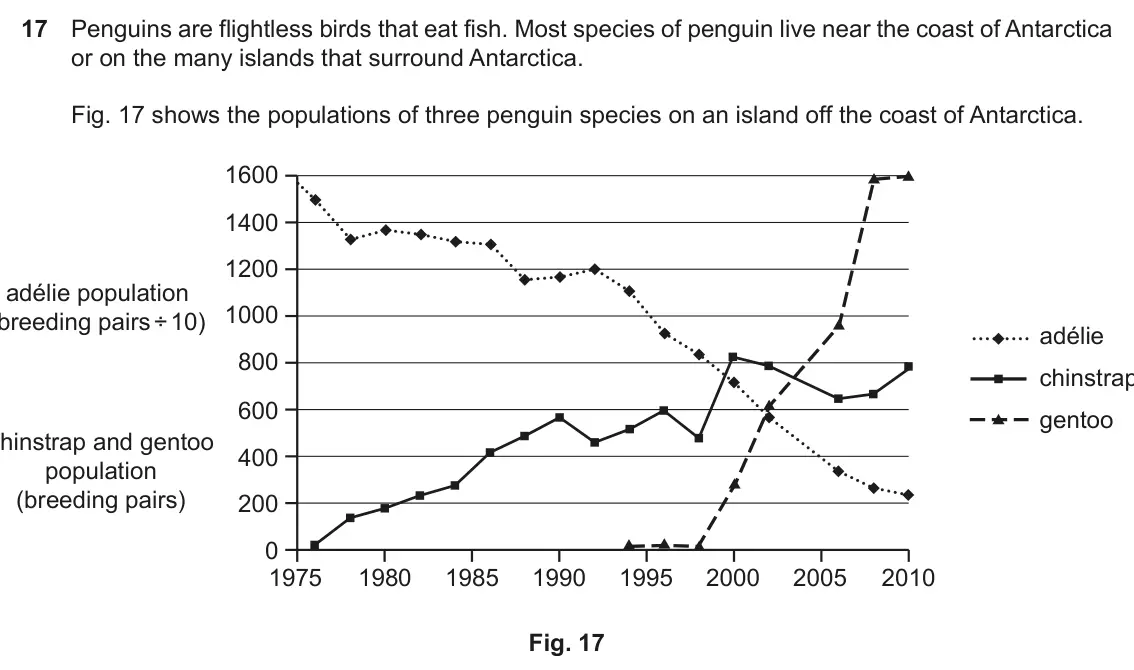
Q17(b)(ii)
The whole paper ↗Q5(a)(ii)
The whole paper ↗Q5(b)
The whole paper ↗Q5(a)(i)
The whole paper ↗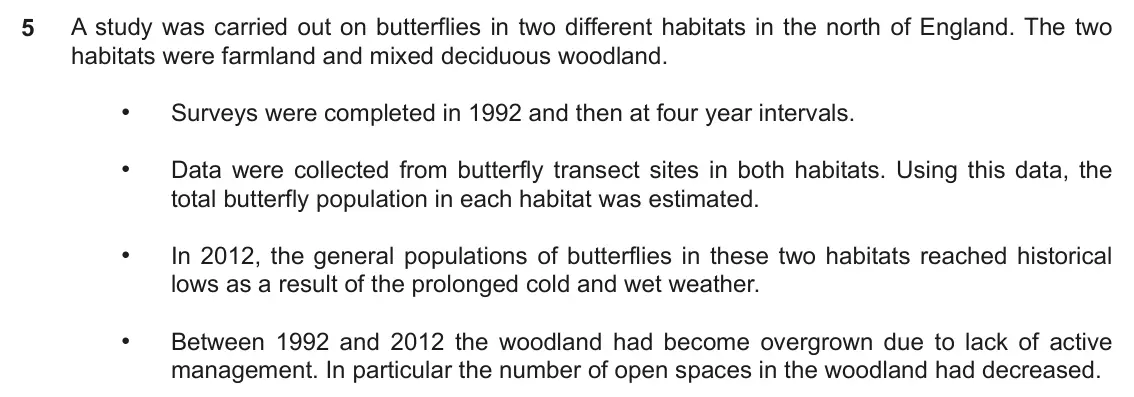
Q5(a)(ii)
The whole paper ↗Q5(a)(iii)
The whole paper ↗Q5(a)(iv)
The whole paper ↗Q5(b)
The whole paper ↗Q23(c)(i)
The whole paper ↗
Q23(c)(ii)
The whole paper ↗
All 19 questions on Factors affecting biodiversity, as a list
- June 2024, Paper 3, Q2(b)(i) (2 marks): Outline the differences between the bird and mammal results shown in the graph. [2]
- June 2024, Paper 3, Q2(b)(ii) (4 marks): A student looking at the graph concluded that ‘climate change is not a major threat to species biodiversity’. Evaluate this conclusion. [4]
- June 2024, AS Paper 1, Q26(a) (3 marks): Explain how agriculture can have a negative effect on biodiversity. [3]
- June 2024, AS Paper 1, Q26(b) (1 mark): State one factor other than agriculture that can have a negative effect on biodiversity. [1]
- June 2022, Paper 2, Q18(a)(i) (2 marks): Calculate the rate of change in wildebeest population between 1975 and 2007. Rate = animals per year [2]
- June 2022, Paper 2, Q18(a)(ii) (6 marks): The Maasai Mara is a grassland ecosystem in east Africa with a large range of wildlife. The human population in the area is increasing. An increasing human popu
- June 2019, AS Paper 2, Q3(b)(i) (1 mark): Suggest one reason why the wildcat was hunted. [1]
- June 2019, AS Paper 2, Q3(b)(ii) (6 marks): (ii)* Current estimates of the Scottish wildcat population vary. Recent reports by the Scottish Wildcat Association indicate that fewer than 100 individuals, po
- June 2018, Paper 2, Q17(b)(i) (3 marks): Discuss whether the information in Fig. 17 supports the scientists’ claim. You should refer to the data in Fig. 17 in your answer. [3]
- June 2018, Paper 2, Q17(b)(ii) (2 marks): Scientists working in the local area monitored water temperatures and populations of other water animals around the island between 1976 and 2010. Suggest two fu
- June 2018, AS Paper 2, Q5(a)(ii) (2 marks): Between 1913 and 2013 the approximate worldwide population of living elephants dropped from 10 000 000 to 500 000. Calculate how many orders of magnitude smalle
- June 2018, AS Paper 2, Q5(b) (2 marks): Fig. 5 shows the approximate percentages of elephants that were killed illegally in three different regions of Africa. Eastern Africa 100 80 number of 60 illega
- June 2017, AS Paper 2, Q5(a)(i) (2 marks): Calculate the total percentage decrease in the number of butterflies on farmland between 1992 and 2012. Show your working. Give your answer to the nearest whole
- June 2017, AS Paper 2, Q5(a)(ii) (2 marks): Using the data given in Fig. 5, compare the changes in the number of butterflies on farmland and on woodland between 1992 and 2012. [2]
- June 2017, AS Paper 2, Q5(a)(iii) (1 mark): Both habitats experienced the same weather conditions. Suggest a reason for the difference in the rates of decline in butterfly numbers in woodland and farmland
- June 2017, AS Paper 2, Q5(a)(iv) (2 marks): A student made the following statement: ‘These data show that the change in butterfly numbers was caused by changes in weather conditions in England.’ Comment o
- June 2017, AS Paper 2, Q5(b) (2 marks): Butterfly species in severe decline on farmland include gatekeeper, large skipper, small copper, wall brown, small tortoiseshell and white-letter hairstreak. Bu
- June 2016, AS Paper 1, Q23(c)(i) (2 marks): Suggest two reasons why this species is critically endangered in the wild. [2]
- June 2016, AS Paper 1, Q23(c)(ii) (2 marks): The remaining populations of D. sumatrensis are all small and are scattered in isolated areas. These are factors that might speed up the extinction of the speci
Questions, mark schemes and examiner’s reports are © OCR, from their published past papers. Plumi isn’t affiliated with any exam board. Want whole papers? OCR A-Level Biology A past papers, or our free OCR-style practice pack.
The Plumi iPad app also offers exam-style questions with AI feedback on your handwritten working.