 plumi
Anaerobic respiration: OCR A‑Level Biology A questions
OCR A-Level Biology A past-paper questions on 5.2.2.5 Anaerobic respiration, 2016–2025, with mark schemes and examiner’s reports where available.
Paper
All papers
Exam
All years
Calculations
Q5(b)(ii)
The whole paper ↗
- Your answer
- Your answer
Q2(d)(i)
The whole paper ↗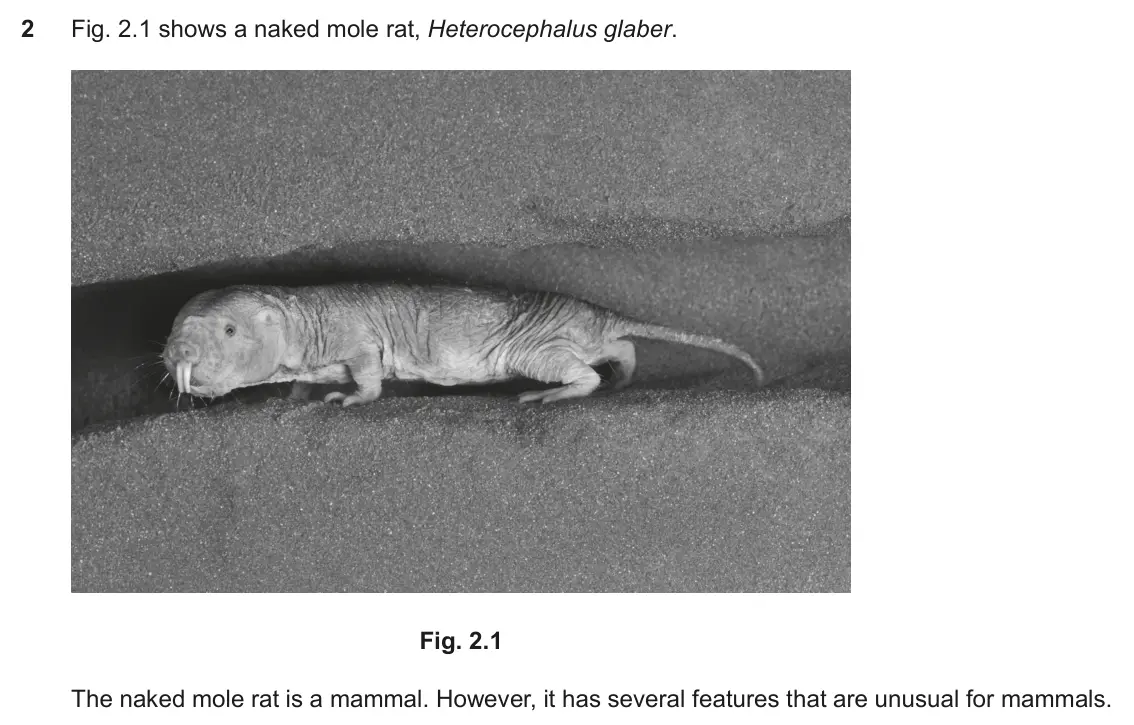
Q2(d)(ii)
The whole paper ↗Q18(b)(i)
The whole paper ↗Q18(b)(ii)
The whole paper ↗Q20(a)
The whole paper ↗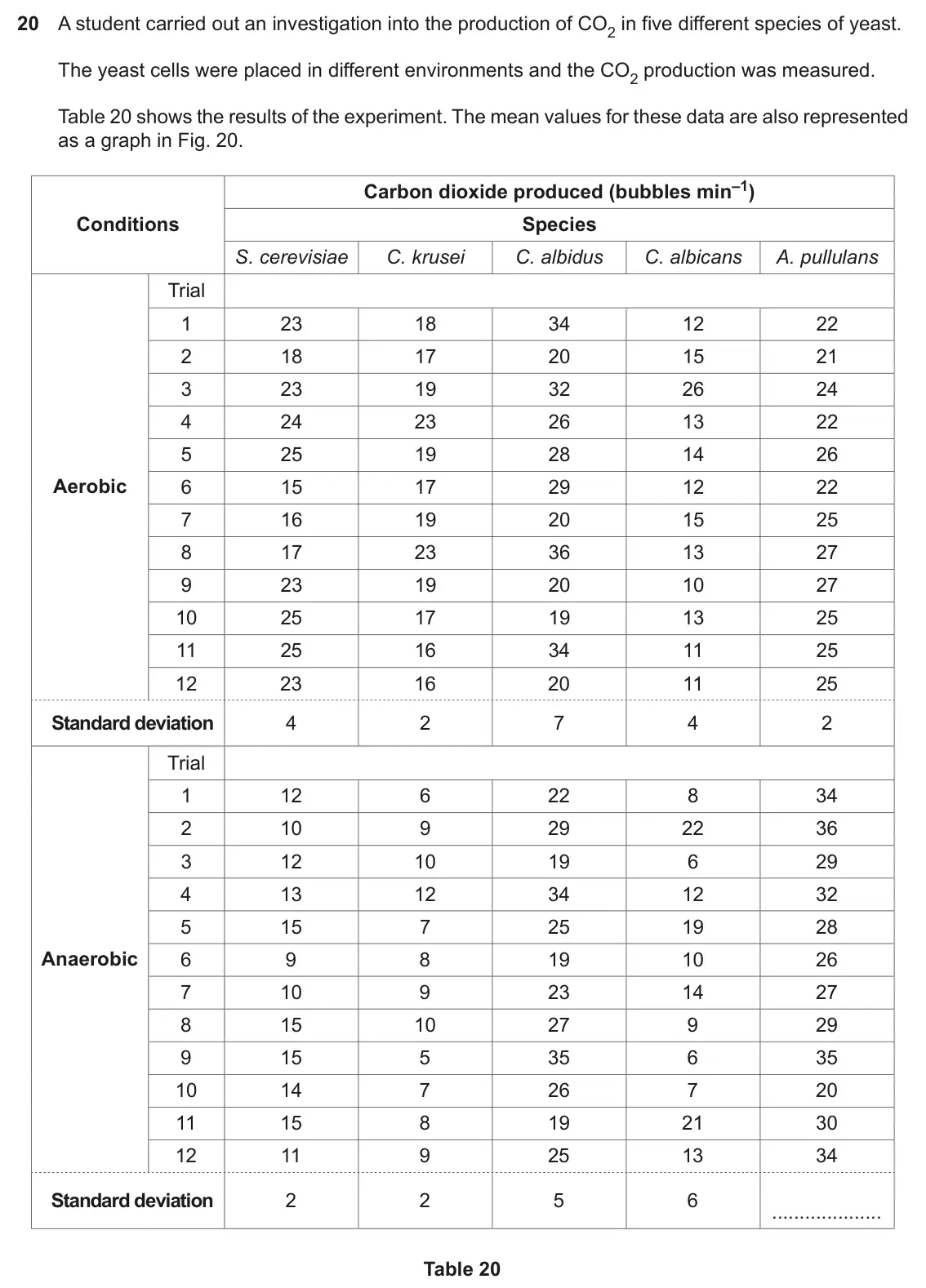
Q20(b)
The whole paper ↗Q20(c)
The whole paper ↗Q20(d)(i)
The whole paper ↗Q20(d)(ii)
The whole paper ↗Q2(b)(i)
The whole paper ↗
All 14 questions on Anaerobic respiration, as a list
- June 2023, Paper 3, Q5(b)(ii) (3 marks): Complete the sentences using appropriate words or phrases. This is the method that the student uses in their experiment: • To avoid contamination, place the yea
- June 2022, Paper 1, Q15 (1 mark): Erythrocytes are formed from bone marrow stem cells. During this process they lose most of their organelles. Which statement about respiration in erythrocytes i
- June 2022, Paper 1, Q19(d) (6 marks): (d)* Muscle contraction requires energy in the form of ATP. Describe the different sources of the ATP that is used in muscle contraction during strenuous exerci
- November 2020, Paper 1, Q13 (1 mark): Which of the following statements, A to D, describes and explains the relative yield of ATP in anaerobic and aerobic respiration? A Anaerobic respiration produc
- June 2019, Paper 3, Q2(d)(i) (2 marks): Suggest why the use of fructose allows naked mole rats to survive without oxygen for a long time. [2]
- June 2019, Paper 3, Q2(d)(ii) (1 mark): Suggest one other aspect of the physiology of naked mole rats that explains how they are able to survive without oxygen for a long time. [1]
- June 2017, Paper 1, Q18(b)(i) (3 marks): Summarise the conclusions that can be drawn from these data. [3]
- June 2017, Paper 1, Q18(b)(ii) (6 marks): (ii)* Water can fill air spaces in the soil surrounding the roots. This prevents oxygen from reaching root hair cells. Using your knowledge of aerobic and anaer
- June 2017, Paper 1, Q20(a) (3 marks): Using the information in Table 20, calculate the standard deviation for the number of CO2 bubbles produced by A. pullulans in anaerobic conditions. Write the an
- June 2017, Paper 1, Q20(b) (2 marks): Fig. 20 is a graph showing the mean values of the data from Table 20. 40 35 30 aerobic conditions 25 anaerobic conditions 20 15 10 5 0 S. cerevisiae C. krusei C
- June 2017, Paper 1, Q20(c) (3 marks): Calculate the mean percentage change in CO2 production for S. cerevisiae when moving from anaerobic to aerobic respiration. Give your answer to four significant
- June 2017, Paper 1, Q20(d)(i) (2 marks): The student drew the following conclusions: 1 All the yeast I investigated produced more CO2 during aerobic respiration than anaerobic respiration. 2 There is a
- June 2017, Paper 1, Q20(d)(ii) (1 mark): The student found the following definitions of errors in a text book: Random errors: mistakes during measurements caused by low-resolution equipment Systematic
- June 2017, Paper 3, Q2(b)(i) (3 marks): Suggest and explain what conclusions can be drawn from Fig. 2 about the factors that affected the rate and type of respiration carried out by S. cerevisiae in t
Questions, mark schemes and examiner’s reports are © OCR, from their published past papers. Plumi isn’t affiliated with any exam board. Want whole papers? OCR A-Level Biology A past papers, or our free OCR-style practice pack.
The Plumi iPad app also offers exam-style questions with AI feedback on your handwritten working.