 plumi
Nucleophilic substitution mechanisms: Edexcel International A Level Chemistry questions
Edexcel International A Level Chemistry past-paper questions on 10.B.3 Nucleophilic substitution mechanisms, 2019–2025, with mark schemes and examiner’s reports where available.
Paper
All papers
Exam
All years
Calculations
Q13(c)
The whole paper ↗ Your answer
Q14(c)(ii)
The whole paper ↗
Q19(c)(i)
The whole paper ↗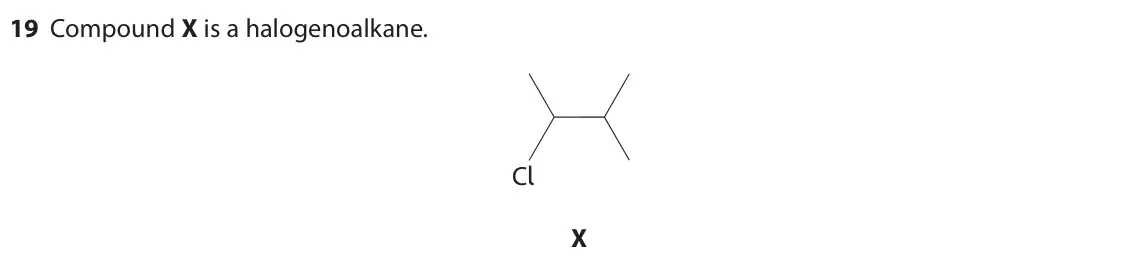
Q13(b)
The whole paper ↗ Your answer
Q16(b)(ii)
The whole paper ↗
Q21(c)
The whole paper ↗
Q5(c)(i)
The whole paper ↗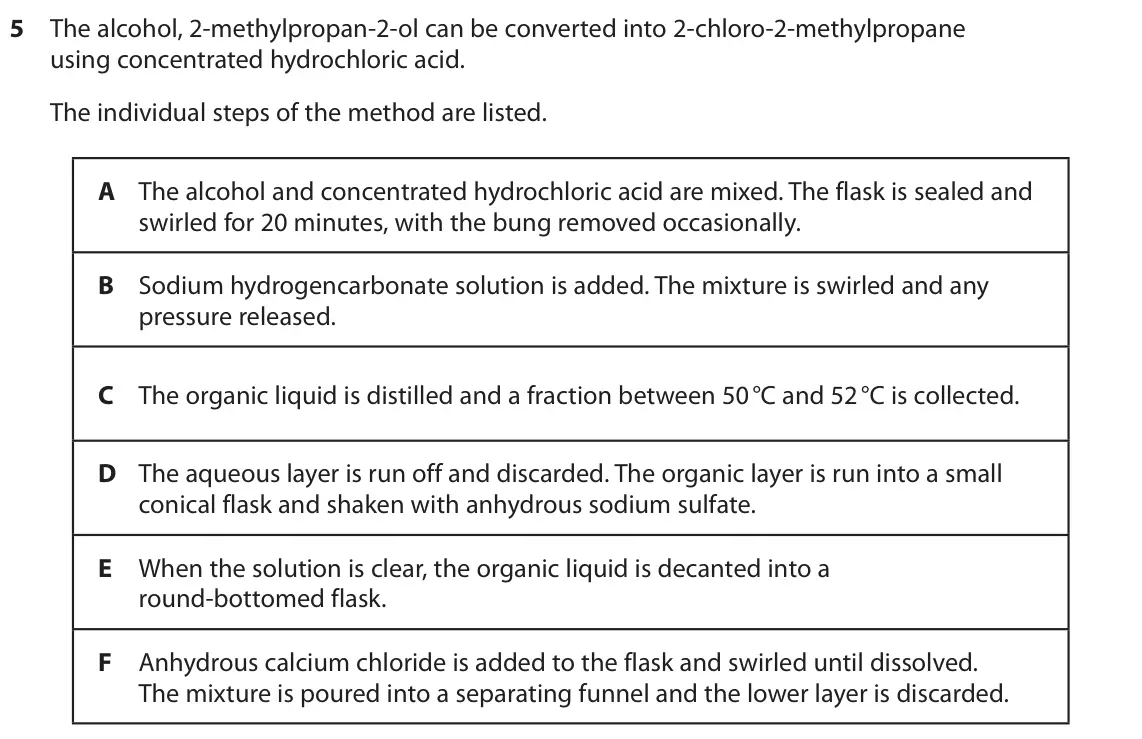
Q23(c)(ii)
The whole paper ↗
Q18(c)(i)
The whole paper ↗
Q18(c)(ii)
The whole paper ↗Q19(a)
The whole paper ↗
Q19(d)(i)
The whole paper ↗Q19(d)(ii)
The whole paper ↗Q19(d)(iii)
The whole paper ↗Q19(b)
The whole paper ↗
Q25(d)(v)
The whole paper ↗
Q20(c)(ii)
The whole paper ↗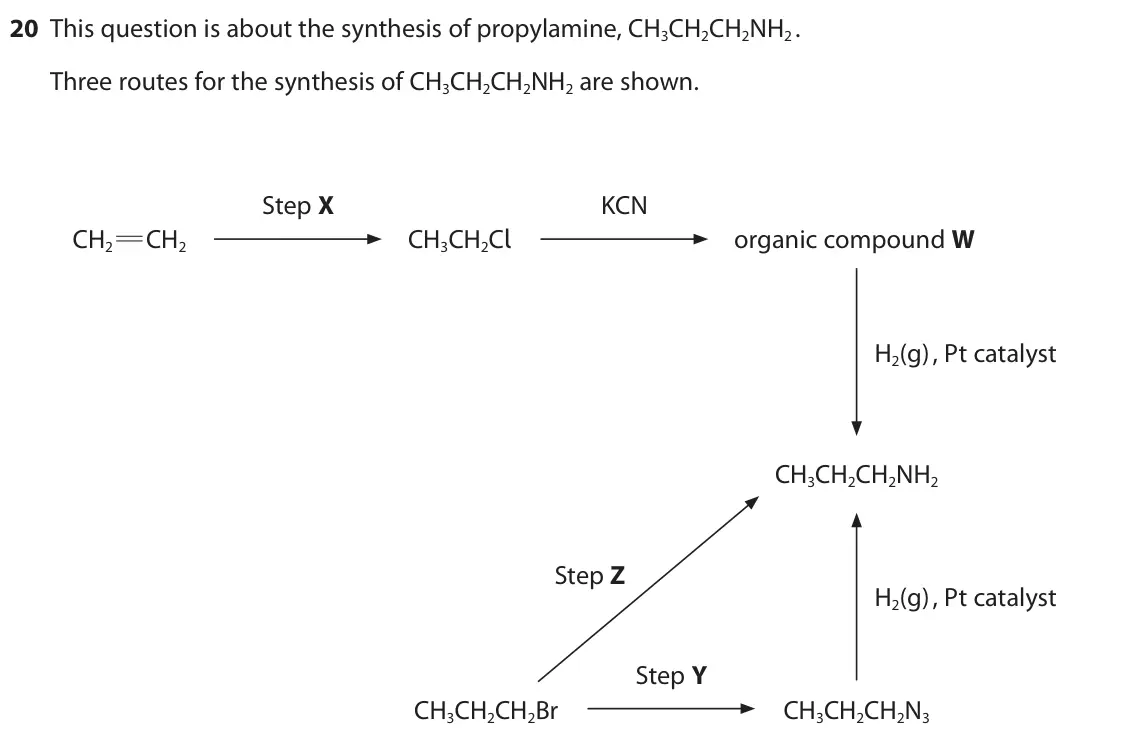
- Your answer
- Your answer
Q17(c)(ii)
The whole paper ↗
All 33 questions on Nucleophilic substitution mechanisms, as a list
- June 2025, AS Unit 2, Q13(c) (1 mark): What is the mechanism of these hydrolysis reactions to form alcohols? (1) A electrophilic addition B elimination C free radical substitution D nucleophilic subs
- June 2025, AS Unit 2, Q14(c)(ii) (3 marks): Complete the mechanism for this reaction. Include curly arrows, and relevant dipoles and lone pairs. (3) H H H H H N+ H C C Br H C C H H H H H H H H H H C C N H
- January 2025, AS Unit 2, Q19(c)(i) (3 marks): Complete the reaction mechanism for compound X reacting with cold, dilute aqueous potassium hydroxide. Include curly arrows and relevant lone pairs and dipoles.
- October 2024, AS Unit 2, Q13(b) (1 mark): Which mechanism shows the correct movement of electrons in this reaction? (1) :OH– H H A Cl H C C H H H H Cl H C C B H H :OH– H H Cl H C C C H H :OH– H H Cl H C
- June 2024, AS Unit 2, Q16(b)(ii) (2 marks): Complete the mechanism for the reaction of potassium hydroxide with 1‑chlorobutane to form butan‑1‑ol. Use curly arrows and show relevant dipoles and lone pairs
- June 2024 (R), AS Unit 2, Q21(c) (3 marks): Halogenoalkanes react with cyanide ions, CN– , in alcoholic solution to form nitriles. The cyanide ions act as nucleophiles. Complete the mechanism for the form
- June 2024 (R), AS Unit 3, Q5(c)(i) (3 marks): The C–O bond is broken in the mechanism. Using your knowledge of carbocations, explain which alcohol may react fastest in the experiment. (3)
- January 2024, AS Unit 2, Q23(c)(ii) (4 marks): Complete the mechanism for reaction R3. Include curly arrows, and any relevant lone pairs, dipoles and charges. (4) NH3 H H H H + Br– H7C3 C Br H7C3 C N H H H N
- October 2023, AS Unit 2, Q18(c)(i) (1 mark): State the type and mechanism of this reaction. (1)
- October 2023, AS Unit 2, Q18(c)(ii) (3 marks): Complete the mechanism for this reaction. Include curly arrows, and relevant lone pairs and dipoles. (3) H H H H C C C Br H H H
- June 2023, AS Unit 2, Q19(a) (1 mark): Name the type and mechanism of these reactions. (1)
- June 2023, AS Unit 2, Q19(d)(i) (2 marks): Complete the mechanism by adding curly arrows, and relevant dipoles and lone pairs. (2)
- June 2023, AS Unit 2, Q19(d)(ii) (2 marks): Describe how intermediate J is formed in the first step, naming the process that occurs. (2)
- June 2023, AS Unit 2, Q19(d)(iii) (2 marks): State the shape of intermediate J. Justify your answer. (2)
- June 2023, Unit 4, Q19(b) (4 marks): Draw the SN2 mechanism for the reaction of 1-bromopropane with hydroxide ions in aqueous solution. Include curly arrows, and relevant dipoles and lone pairs. (4
- June 2023, Unit 5, Q25(d)(v) (1 mark): State the type and mechanism of reaction occurring in Step 4. (1)
- January 2023, AS Unit 2, Q20(c)(ii) (3 marks): Complete the mechanism for Step Y. Include curly arrows, and any relevant lone pairs and dipoles. (3) H CH3CH2 C Br H – N3
- October 2022, AS Unit 2, Q7 (1 mark): Butanenitrile can be formed by reacting 1-bromopropane with potassium cyanide. Which is the correct mechanism and type of reaction that occurs? A electrophilic
- October 2022, AS Unit 2, Q18 (1 mark): Part of a reaction mechanism is shown. :Br− H H H H 1 + δ+ δ− H C C Br H C C NH2 3 2 H H H H H :NH3 :NH3 4 Which curly arrow in the mechanism is not correct? A
- June 2022, AS Unit 2, Q17(c)(ii) (4 marks): Complete the mechanism for this reaction by adding curly arrows, and any relevant lone pairs and dipoles. (4) C3H7 H C3H7 H C Br H N+ C H + Br− H H H H3N H3N H
- June 2022, Unit 4, Q20(b) (3 marks): Draw the mechanism for this reaction that is consistent with your rate equation. Include curly arrows, and any relevant dipoles and lone pairs of electrons. (3)
- January 2022, AS Unit 2, Q20(b)(i) (2 marks): Identify two omissions in the student’s mechanism. (2)
- January 2022, AS Unit 2, Q20(b)(ii) (3 marks): To obtain butylamine, sodium hydroxide solution is added. Complete the next step of the mechanism to form butylamine, showing curly arrows, relevant lone pairs
- October 2021, AS Unit 2, Q20(b) (2 marks): The equation for the hydrolysis of 1-chloropropane by aqueous hydroxide ions is shown. CH3CH2CH2Cl + OH− ® CH3CH2CH2OH + Cl− Give the mechanism for this hydroly
- October 2021, Unit 4, Q18 (6 marks): *18 The hydrolysis of halogenoalkanes by alkali is a nucleophilic substitution reaction. RX + OH− → ROH + X− The mechanism of this reaction for primary halogeno
- June 2021, AS Unit 2, Q18(b)(iii) (2 marks): Name the type and mechanism of the reaction taking place in reaction C. (2)
- June 2021, AS Unit 2, Q18(b)(iv) (4 marks): Complete the mechanism for the reaction that occurs between ammonia and 1-bromopropane to form propylamine, CH3CH2CH2NH2 . Include curly arrows, and relevant lo
- June 2021, Unit 4, Q5 (1 mark): The halogenoalkane 2-bromo-2-methylbutane was hydrolysed with sodium hydroxide solution, NaOH(aq). Which suggestion about the mechanism of this reaction is corr
- January 2021, AS Unit 2, Q20(a)(iii) (4 marks): Give the mechanism for the reaction in Step 2. Include curly arrows, and any relevant dipoles and lone pairs. (4)
- October 2020, AS Unit 2, Q16(c) (3 marks): Complete the mechanism for Reaction 2. Show the formation of the intermediate F and of the product. Include curly arrows, and any relevant lone pairs and dipole
- January 2020, Unit 4, Q5 (1 mark): Which diagram shows the mechanism for the second order reaction between 1-bromoethane and potassium hydroxide in aqueous solution? Diagram 1 H H H H H H H į+ H
- June 2019, AS Unit 2, Q21(a)(ii) (1 mark): State the type and mechanism of this reaction. (1)
- June 2019, AS Unit 2, Q21(a)(iii) (3 marks): Draw the mechanism for this reaction. Use curly arrows, and show relevant dipoles and lone pairs. (3)
Questions, mark schemes and examiner’s reports are © Pearson Edexcel, from their published past papers. Plumi isn’t affiliated with any exam board. Want whole papers? Edexcel International A Level Chemistry past papers.
The Plumi iPad app also offers exam-style questions with AI feedback on your handwritten working.