 plumi
Reactions of halogenoalkanes: Edexcel International A Level Chemistry questions
Edexcel International A Level Chemistry past-paper questions on 10.B.2 Reactions of halogenoalkanes, 2019–2025, with mark schemes and examiner’s reports where available.
Paper
All papers
Exam
All years
Calculations
Q14(c)(i)
The whole paper ↗
Q14(c)(iii)
The whole paper ↗Q16(d)
The whole paper ↗
Q18(b)
The whole paper ↗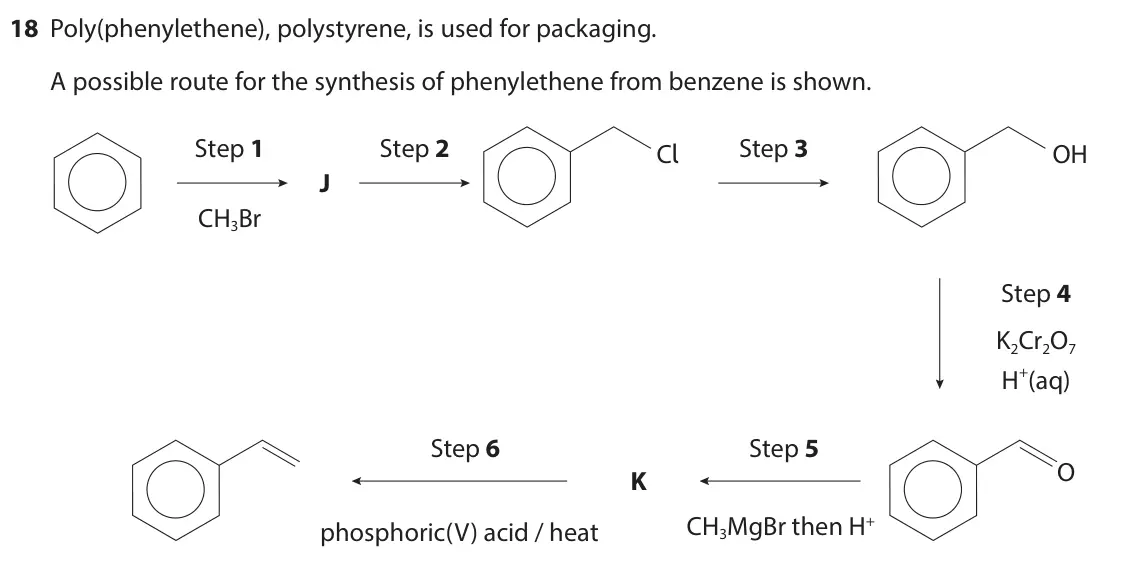
Q19(b)(i)
The whole paper ↗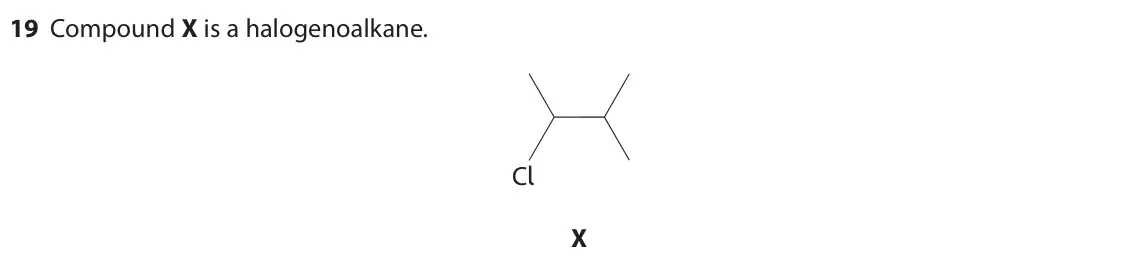
Q19(b)(ii)
The whole paper ↗Q19(d)
The whole paper ↗Q13(a)
The whole paper ↗ Your answer
Q17(c)(i)
The whole paper ↗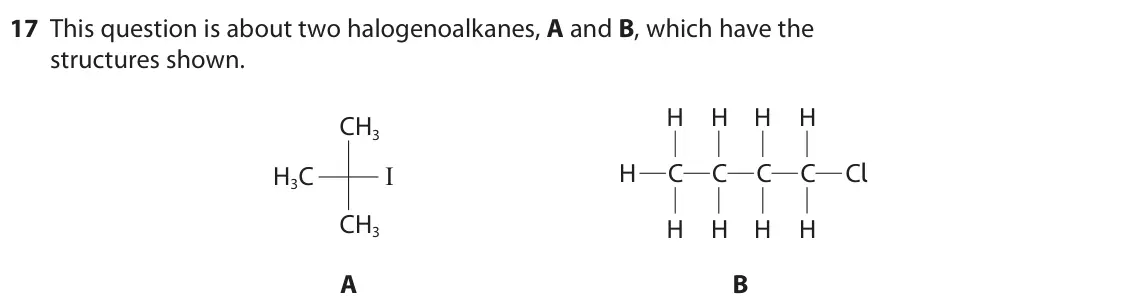
Q17(c)(ii)
The whole paper ↗Q16(a)(i)
The whole paper ↗
Q16(a)(ii)
The whole paper ↗Q16(b)(i)
The whole paper ↗Q2(j)
The whole paper ↗
Q23(c)(i)
The whole paper ↗
- Your answer
Q18(c)(iii)
The whole paper ↗
Q19(b)
The whole paper ↗
Q19(c)
The whole paper ↗Q19(e)(ii)
The whole paper ↗
All 36 questions on Reactions of halogenoalkanes, as a list
- June 2025, AS Unit 2, Q14(c)(i) (2 marks): State the conditions for this reaction. (2)
- June 2025, AS Unit 2, Q14(c)(iii) (2 marks): Further substitution of the ethylamine molecule may occur if the halogenoalkane is in excess. State two features of the ethylamine molecule that make this possi
- June 2025, AS Unit 2, Q16(d) (6 marks): Discuss the reactions between sodium hydroxide and 2-chlorobutane. The hydroxide ion acts in two different ways depending on the reaction conditions. Include th
- June 2025 (A), Unit 5, Q18(b) (2 marks): State the reagent and conditions used for the reaction in Step 3. (2)
- January 2025, AS Unit 2, Q19(b)(i) (1 mark): Name this type of reaction. (1)
- January 2025, AS Unit 2, Q19(b)(ii) (2 marks): Draw the structure of the two isomers. (2) Isomer 1 Isomer 2
- January 2025, AS Unit 2, Q19(d) (2 marks): State the role of the hydroxide ion in each of the reactions (b) and (c). (2) Role in (b) Role in (c)
- October 2024, AS Unit 2, Q13(a) (1 mark): What is the role of the hydroxide ion in this reaction? (1) A reducing agent B nucleophile C electrophile D base
- October 2024, AS Unit 2, Q17(c)(i) (2 marks): Write an equation for the reaction of B with an alcoholic solution of potassium cyanide and name the organic product. (2) Equation: Name
- October 2024, AS Unit 2, Q17(c)(ii) (1 mark): Suggest why this type of reaction is important in organic synthesis. (1)
- June 2024, AS Unit 2, Q16(a)(i) (1 mark): State what condition, other than a suitable temperature and concentration of potassium hydroxide, would give a high yield of but‑1‑ene and but‑2‑ene from 2‑chlo
- June 2024, AS Unit 2, Q16(a)(ii) (1 mark): Give the type of reaction occurring in (a)(i). (1)
- June 2024, AS Unit 2, Q16(b)(i) (1 mark): State what condition, other than a suitable temperature and concentration of potassium hydroxide, would give a high yield of butan‑1‑ol from 1‑chlorobutane. (1)
- June 2024, AS Unit 3, Q2(j) (4 marks): State a chemical test for the –OH group in ethanol and a chemical test for the –Br group in bromoethane. Include the expected positive observations. (4) –OH gro
- January 2024, AS Unit 2, Q23(c)(i) (4 marks): Complete the table. (4) Formula Reaction Name of mechanism of Condition(s) reagent R1 nucleophilic substitution R2 heat in ethanol R3 NH3 R4 heat in ethanol
- October 2023, AS Unit 2, Q17 (1 mark): Which compound reacts with ammonia to form CH3CH(NH2)CH3? A 1‑chloropropane B 2‑chloropropane C propane D propene
- October 2023, AS Unit 2, Q18(c)(iii) (2 marks): Under different conditions, sodium hydroxide reacts with 1‑bromopropane to form propene. Name the type of reaction and a suitable solvent. (2) Type of reaction
- June 2023, AS Unit 2, Q19(b) (2 marks): Give the IUPAC name and the structure of compound M. (2)
- June 2023, AS Unit 2, Q19(c) (2 marks): State the reagent and conditions required for Reaction 1. (2)
- June 2023, AS Unit 2, Q19(e)(ii) (1 mark): Suggest one advantage of using silver(I) oxide rather than sodium hydroxide or potassium hydroxide. (1)
- January 2023, AS Unit 2, Q14 (1 mark): CH3CH2CHBrCH2CH2CH3 is heated with ethanolic potassium hydroxide. How many alkene products are possible? A one B two C three D four
- January 2023, AS Unit 2, Q20(b) (1 mark): Give the structure of organic compound W. (1)
- January 2023, AS Unit 2, Q20(d)(i) (2 marks): Give the conditions for this reaction. (2)
- January 2023, AS Unit 2, Q20(d)(ii) (1 mark): Suggest why the yield of CH3CH2CH2NH2 obtained using Step Z is low. (1)
- October 2022, AS Unit 2, Q23(d)(iv) (2 marks): For Reaction 4, the reagent used is potassium hydroxide (KOH). Give the conditions required for this reaction, stating the role of the hydroxide ions in this re
- June 2022, AS Unit 2, Q17(c)(i) (1 mark): Give a reason why this reaction should be carried out by heating the reactants in a sealed tube rather than heating under reflux. (1)
- June 2022, AS Unit 2, Q17(e) (6 marks): The reaction between 2-bromopropane and potassium hydroxide takes place under two different conditions: • in aqueous solution • in ethanolic solution. Compare a
- January 2022, AS Unit 2, Q20(a) (2 marks): State the type and mechanism of this reaction. (2)
- October 2021, AS Unit 2, Q20(d) (3 marks): In another experiment, 2-bromobutane is heated with ethanolic potassium hydroxide and an elimination reaction occurs. Draw the skeletal formulae of the three po
- June 2021, AS Unit 2, Q18(b)(i) (1 mark): Give the conditions for the formation of propene. (1)
- June 2021, AS Unit 2, Q18(b)(ii) (1 mark): Give the molecular formula of product B. (1)
- June 2021, AS Unit 2, Q18(b)(iii) (2 marks): Name the type and mechanism of the reaction taking place in reaction C. (2)
- October 2020, AS Unit 2, Q16(a) (4 marks): Complete the table about these reactions. (4) Reaction Reagent Solvent Type of reaction 1 potassium hydroxide 2 ammonia 3 ethanol 4 elimination
- October 2020, AS Unit 2, Q16(b) (1 mark): Give the IUPAC name of the product of Reaction 3. (1)
- January 2020, AS Unit 2, Q11(a) (1 mark): What type of reaction occurs in this preparation? (1) A addition B elimination C reduction D substitution
- June 2019, AS Unit 2, Q21(a)(i) (1 mark): Name a suitable solvent for the potassium hydroxide in this reaction. (1)
Questions, mark schemes and examiner’s reports are © Pearson Edexcel, from their published past papers. Plumi isn’t affiliated with any exam board. Want whole papers? Edexcel International A Level Chemistry past papers.
The Plumi iPad app also offers exam-style questions with AI feedback on your handwritten working.