 plumi
Chirality and optical isomers: Edexcel International A Level Chemistry questions
Edexcel International A Level Chemistry past-paper questions on 15.A.1 Chirality and optical isomers, 2019–2025, with mark schemes and examiner’s reports where available.
Paper
All papers
Exam
All years
Calculations
Q20(a)(i)
The whole paper ↗
Q19(a)(v)
The whole paper ↗
Q19(c)(ii)
The whole paper ↗Q16(a)
The whole paper ↗ Your answer
Q3(a)
The whole paper ↗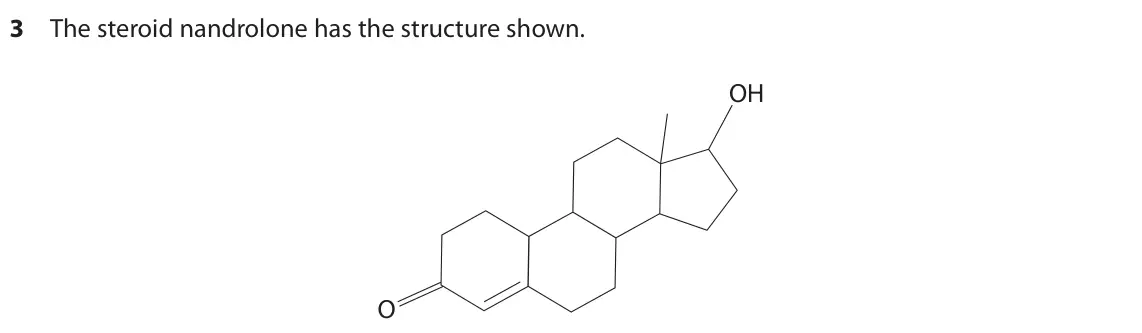 Your answer
Q19(a)(i)
The whole paper ↗
Q19(e)(i)
The whole paper ↗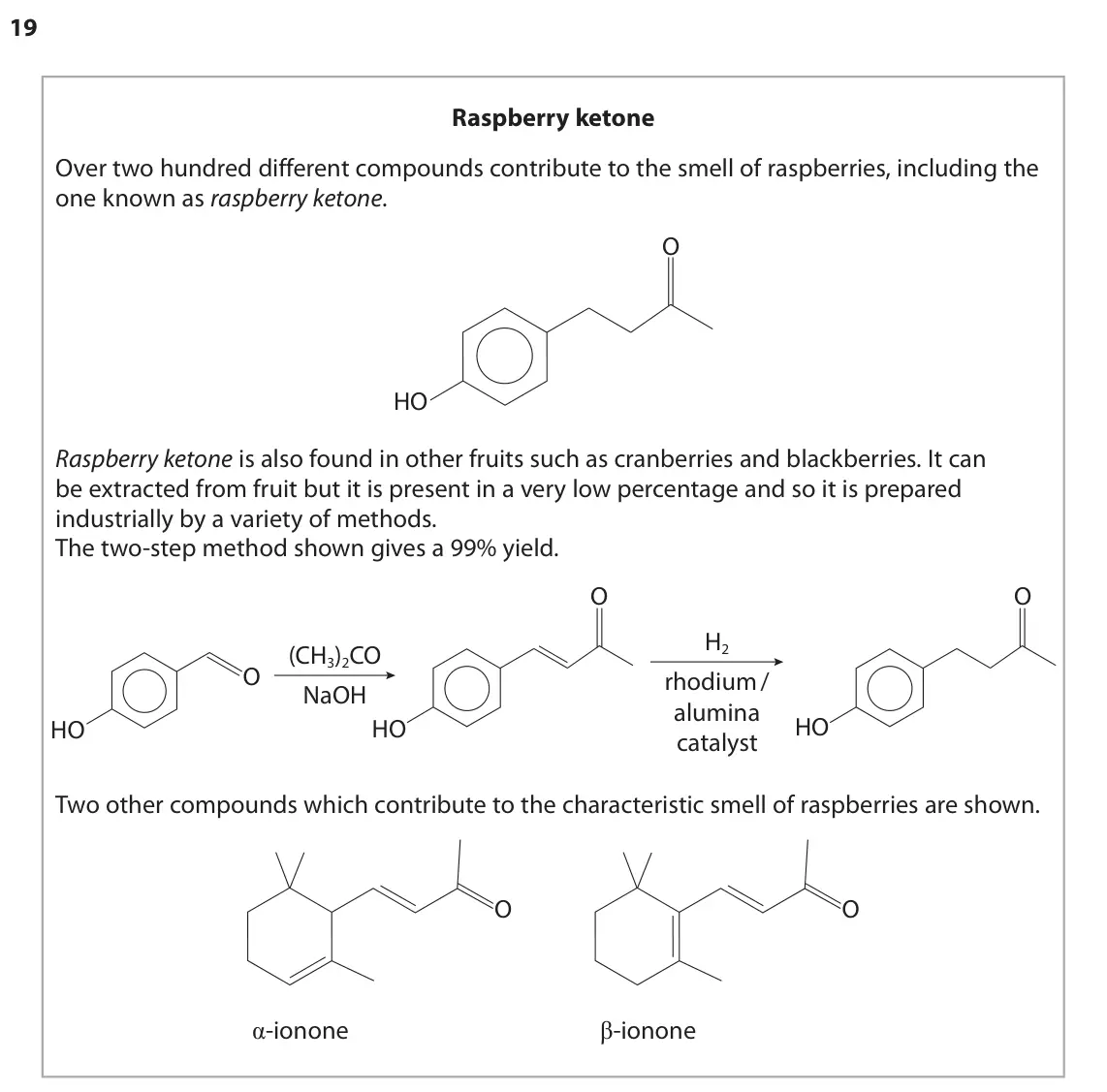
- Your answer
Q10(b)(ii)
The whole paper ↗ Your answer
Q11(a)
The whole paper ↗ Your answer
- Your answer
Q10(c)
The whole paper ↗ Your answer
Q15(a)(ii)
The whole paper ↗Q17(d)(i)
The whole paper ↗
Q17(d)(ii)
The whole paper ↗- Your answer
- Your answer
Q25(e)
The whole paper ↗
Q19(c)(iv)
The whole paper ↗
Q15(b)
The whole paper ↗
All 33 questions on Chirality and optical isomers, as a list
- June 2025, Unit 5, Q20(a)(i) (1 mark): Draw an asterisk (*) on the chiral carbon in phenylalanine. (1)
- June 2025 (A), Unit 5, Q19(a)(v) (3 marks): Alanine exists as two optical isomers. Explain how this type of isomerism occurs, stating how the isomers may be distinguished. (3)
- June 2025 (A), Unit 5, Q19(c)(ii) (2 marks): G has two chiral centres. Suggest a structure for G. (2)
- January 2025, Unit 5, Q16(a) (1 mark): Which compound is an optically active amino acid? (1) A compound W B compound X C compound Y D compound Z
- October 2024, Unit 4, Q3(a) (1 mark): How many chiral centres are present in nandrolone? (1) A six B seven C eight D nine
- October 2024, Unit 4, Q19(a)(i) (1 mark): State what is meant by the term stereoisomer. (1)
- October 2024, Unit 5, Q19(e)(i) (3 marks): Compare and contrast the stereoisomerism of these two molecules. On the structures, circle any features of the molecules that give rise to stereoisomerism. (3)
- June 2024, Unit 4, Q8 (1 mark): How many chiral centres are in the molecule shown? O O A 4 B 5 C 6 D 7 Use this space for any rough working. Anything you write in this space will gain no credi
- June 2024, Unit 5, Q10(b)(ii) (1 mark): What is the maximum number of chiral centres in the dipeptides in (b)(i)? (1) A 0 B 1 C 2 D 3
- January 2024, Unit 4, Q11(a) (1 mark): Carvone shows (1) A geometric and optical isomerism B geometric isomerism only C optical isomerism only D neither geometric nor optical isomerism
- January 2024, Unit 5, Q9 (1 mark): A dipeptide has the molecular formula C7H12N2O3 . The dipeptide is hydrolysed to form two amino acids. One of the amino acids produced does not have a chiral ce
- January 2024, Unit 5, Q10(c) (1 mark): Which of the esters could rotate the plane of plane‑polarised monochromatic light? (1) A Q only B Q and R C Q, R and S D R and S
- January 2024, Unit 5, Q15(a)(ii) (2 marks): The OH group is shown attached to the carbon chain by a wedge‑shaped bond. Suggest why the bond between the carbon chain and the OH group is shown as a wedge. (
- January 2024, Unit 5, Q17(d)(i) (2 marks): Explain why the tetrahedral complex [Co(NH3)ClBrI] exists as two optical isomers. (2)
- January 2024, Unit 5, Q17(d)(ii) (1 mark): Complete the diagram showing the two optical isomers of the tetrahedral complex. (1) Co Co
- June 2023, Unit 4, Q5 (1 mark): Which pair of compounds can form a racemic mixture when mixed? CH2OH CH2OH A H H C2H5 CH2OH HO H3C CH2OH CH2OH B H H C2H5 C2H5 HO HO CH3 CH3 C H HO C2H4OH CH2OH
- June 2023, Unit 4, Q6 (1 mark): Metoprolol is a drug used to treat heart problems. The structure of metoprolol is shown. OH H O N CH3 CH3 H3C O How many chiral centres are there in a molecule
- June 2023, Unit 5, Q25(e) (1 mark): Articaine is a chiral molecule. Indicate any chiral centres on the structure of articaine. (1) O S O NH NH O articaine
- January 2023, Unit 5, Q19(c)(iv) (1 mark): Circle the two chiral carbon atoms in aspartame on the structure shown. (1) NH2 O H N OH O O O
- October 2022, Unit 4, Q15(b) (2 marks): Lactic acid is a chiral molecule, existing as a pair of non-superimposable mirror images called enantiomers. Complete the 3D diagrams of the enantiomers of lact
- October 2022, Unit 5, Q21(c) (2 marks): Explain, using a diagram, which type of stereoisomerism is shown by coniine. In your diagram use R to represent the alkyl group. (2)
- June 2022, Unit 4, Q17(c)(ii) (1 mark): State why the product formed in (c)(i) does not show optical isomerism. (1)
- June 2022, Unit 6, Q4(b)(i) (1 mark): Identify the chiral carbon on the diagram. (1)
- January 2022, Unit 4, Q8 (1 mark): Menthol has a number of medicinal uses. It can be extracted from the peppermint plant. The structure of menthol is OH How many chiral centres are there in one m
- January 2022, Unit 4, Q19(b) (2 marks): The organic products of this reaction are enantiomers. Draw the three‑dimensional structures of these enantiomers. (2)
- October 2021, Unit 4, Q10 (1 mark): Citronellol is found in rose and geranium oils. OH citronellol The type(s) of stereoisomerism shown by citronellol is A optical and geometric isomerism B optica
- June 2021, Unit 4, Q8(a) (1 mark): What is the number of chiral centres in a molecule of menthol? (1) A 1 B 2 C 3 D 4
- June 2021, Unit 4, Q13 (1 mark): How many optical isomers does this molecule have? Br OH Cl A 2 B 3 C 6 D 8
- June 2021, Unit 4, Q14 (1 mark): Which of these structures is not identical to the others? OH H3C OH OH Cl CH2CH3 C C C C Cl Cl CH2CH3 CH2CH3 Cl H3CH2C CH3 OH CH3 H3C Structure A Structure B St
- January 2021, Unit 4, Q17(a)(i) (1 mark): The structure of lactic acid is H COOH COOH C HO HO CH CH3 Give a reason why lactic acid shows optical isomerism. (1)
- October 2020, Unit 4, Q17(a) (4 marks): Isomers A, B, C and D are structural isomers that all react with aqueous sodium carbonate to produce carbon dioxide. Isomer A is a straight-chain compound. Isom
- October 2020, Unit 5, Q22(d) (1 mark): Phenylalanine is an amino acid that exists as optical isomers. The structure of one of the optical isomers is shown. Complete the diagram to show the other opti
- January 2020, Unit 4, Q2 (1 mark): Which of these molecules can rotate the plane of plane-polarised light? A H2NCH2COOH B HOCH2CH2COOH C ClCH2C(CH3)(Cl)COOH D H2NC(CH3)2COOH
Questions, mark schemes and examiner’s reports are © Pearson Edexcel, from their published past papers. Plumi isn’t affiliated with any exam board. Want whole papers? Edexcel International A Level Chemistry past papers.
The Plumi iPad app also offers exam-style questions with AI feedback on your handwritten working.