 plumi
Types of immunity: Edexcel International A Level Biology questions
Edexcel International A Level Biology past-paper questions on 6.3.4 Types of immunity, 2019–2025, with mark schemes and examiner’s reports where available.
Paper
All papers
Exam
All years
Calculations
Q5(a)
The whole paper ↗ Your answer
Q8(b)(i)
The whole paper ↗
Q8(b)(ii)
The whole paper ↗Q8(b)(iv)
The whole paper ↗Q8(b)(v)
The whole paper ↗Q9(c)
The whole paper ↗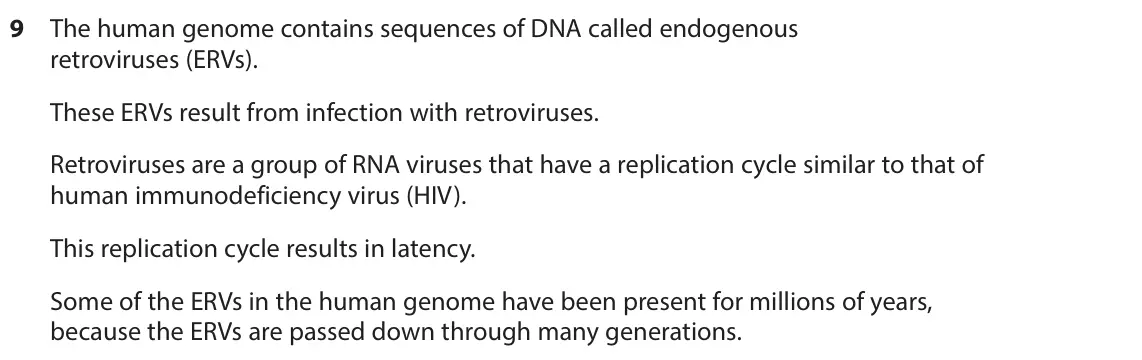
Q6(a)(i)
The whole paper ↗ Your answer
Q6(b)
The whole paper ↗Q6(c)(i)
The whole paper ↗Q6(c)(ii)
The whole paper ↗Q8(a)
The whole paper ↗
Q8(c)(i)
The whole paper ↗Q8(c)(iv)
The whole paper ↗Q2(c)
The whole paper ↗
Q7(a)
The whole paper ↗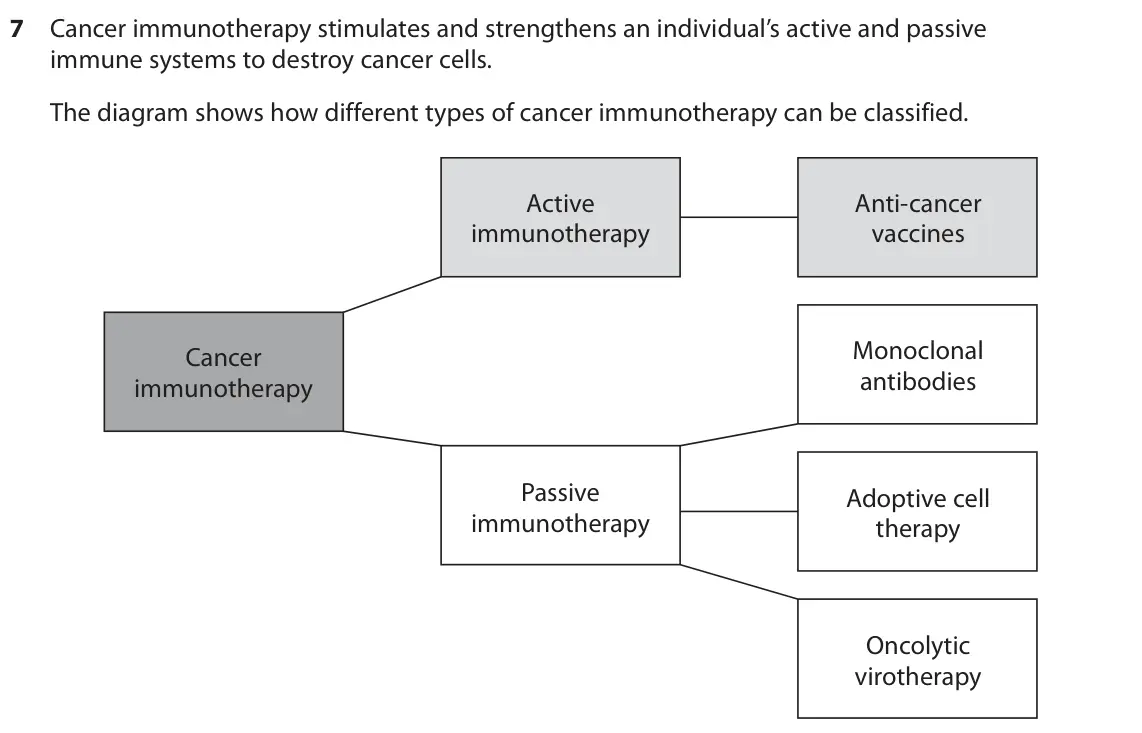
Q7(b)(ii)
The whole paper ↗Q6(c)(i)
The whole paper ↗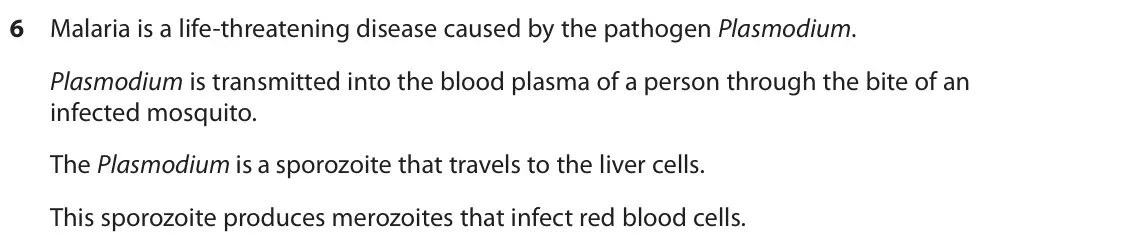
Q6(c)(ii)
The whole paper ↗Q9(c)(iv)
The whole paper ↗
Q6(c)(i)
The whole paper ↗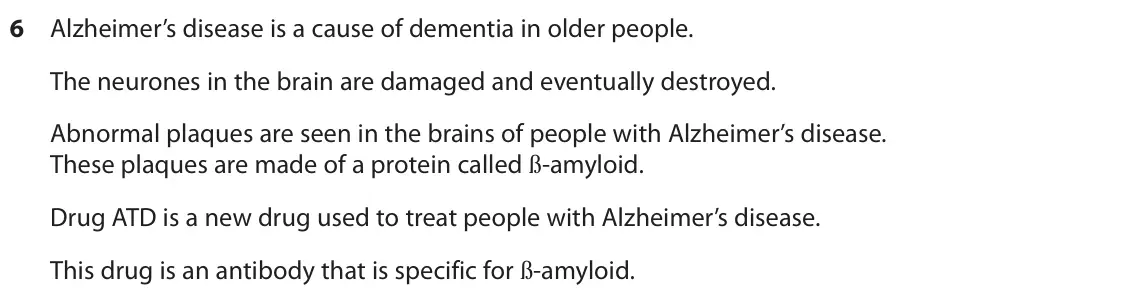
All 25 questions on Types of immunity, as a list
- June 2025, Unit 4, Q5(a) (1 mark): Which types of immunity result in the production of antibodies? (1) A artificial active and natural active B artificial active and natural passive C artificial
- January 2025, Unit 4, Q8(b)(i) (2 marks): Describe suitable placebos for use in this clinical trial. Use the information in the question to support your answer. (2)
- January 2025, Unit 4, Q8(b)(ii) (1 mark): The scientists running the trial concluded that a dose of 6 g of rice powder vaccine was needed to stimulate an immune response. State why they came to this con
- January 2025, Unit 4, Q8(b)(iv) (3 marks): Some people in the clinical trial did not respond to the rice powder vaccine. The scientists determined the proportions of different types of bacteria (A, B, C,
- January 2025, Unit 4, Q8(b)(v) (2 marks): Give two limitations when using this data to determine if the type of gut flora could cause a person to be a non‑responder to the vaccine. (2)
- January 2025, Unit 4, Q9(c) (5 marks): In cancer cells, the viral envelope proteins are synthesised and incorporated into the cancer cell membrane. Explain why these viral envelope proteins could be
- October 2024, Unit 4, Q6(a)(i) (1 mark): Which is the proportion of the children under five in hospital who are under 6 months old? (1) 5 A 11 6 B 11 5 C 6 6 D 5
- October 2024, Unit 4, Q6(b) (2 marks): In one trial, people received a new vaccine against RSV. The results showed that this vaccine protected against two subtypes of RSV. Give two reasons why one va
- October 2024, Unit 4, Q6(c)(i) (5 marks): As a result of passive immunity, the babies of these pregnant women were born with high levels of antibodies against RSV. Explain how passive immunity developed
- October 2024, Unit 4, Q6(c)(ii) (3 marks): The scientists running this trial claimed that the vaccine was 85 % successful at protecting babies against RSV infections that required medical attention. Desc
- January 2024, Unit 4, Q8(a) (2 marks): The table gives some statements about immunity. For each statement, put one cross in the appropriate box, in each row, to show whether these statements are true
- January 2024, Unit 4, Q8(c)(i) (2 marks): Explain two ways in which this investigation would have to be controlled to provide valid data. (2)
- January 2024, Unit 4, Q8(c)(iv) (6 marks): Explain the results of this investigation. (6)
- October 2023, Unit 4, Q2(c) (3 marks): The immune response results in the production of antibodies following the first infection with a pathogen and on further infections with the same pathogen. The
- October 2023, Unit 4, Q7(a) (2 marks): Suggest what the difference is between active immunotherapy and passive immunotherapy. (2)
- October 2023, Unit 4, Q7(b)(ii) (4 marks): Some active anti‑cancer vaccines can contain the mRNA that codes for the neoantigens. Explain how vaccines containing the mRNA coding for neoantigens stimulate
- June 2023, Unit 4, Q6(c)(i) (3 marks): Suggest why sporozoites are used in a vaccine against malaria. (3)
- June 2023, Unit 4, Q6(c)(ii) (3 marks): In clinical trials of this vaccine, people were injected with the vaccine and two chemicals. One chemical kills sporozoites and the other kills merozoites. Dedu
- January 2023, Unit 4, Q9(c)(iv) (1 mark): Suggest how this protein, released by the Mycobacterium tuberculosis, could be used to develop a treatment for TB. (1)
- October 2022, Unit 4, Q6(c)(i) (2 marks): Suggest why this person did not have Alzheimer’s disease. (2)
- June 2022, Unit 4, Q6(b)(v) (3 marks): Explain why this estimate would be lower if a vaccine for HIV became available in 2023. (3)
- October 2021, Unit 4, Q3(a) (3 marks): Artificial immunity develops when a person is immunised by an injection. The table gives some statements about artificial immunity. For each statement, put one
- January 2021, Unit 4, Q3(a) (4 marks): Describe how a vaccine results in active immunity. (4)
- January 2021, Unit 4, Q3(b)(i) (3 marks): Identify three conclusions that can be drawn from the results of this survey. (3)
- January 2021, Unit 4, Q3(c) (2 marks): The more people in a population who are vaccinated against a disease, the less likely it is for non-vaccinated people to become infected. Suggest why vaccinatio
Questions, mark schemes and examiner’s reports are © Pearson Edexcel, from their published past papers. Plumi isn’t affiliated with any exam board. Want whole papers? Edexcel International A Level Biology past papers.
The Plumi iPad app also offers exam-style questions with AI feedback on your handwritten working.