 plumi
Antigens, antibodies, B cells and T cells: Edexcel International A Level Biology questions
Edexcel International A Level Biology past-paper questions on 6.3.3 Antigens, antibodies, B cells and T cells, 2019–2025, with mark schemes and examiner’s reports where available.
Paper
All papers
Exam
All years
Calculations
Q5(b)(i)
The whole paper ↗
Q5(b)(ii)
The whole paper ↗Q5(b)(iii)
The whole paper ↗Q8(e)
The whole paper ↗
Q8(b)(iii)
The whole paper ↗
Q9(c)
The whole paper ↗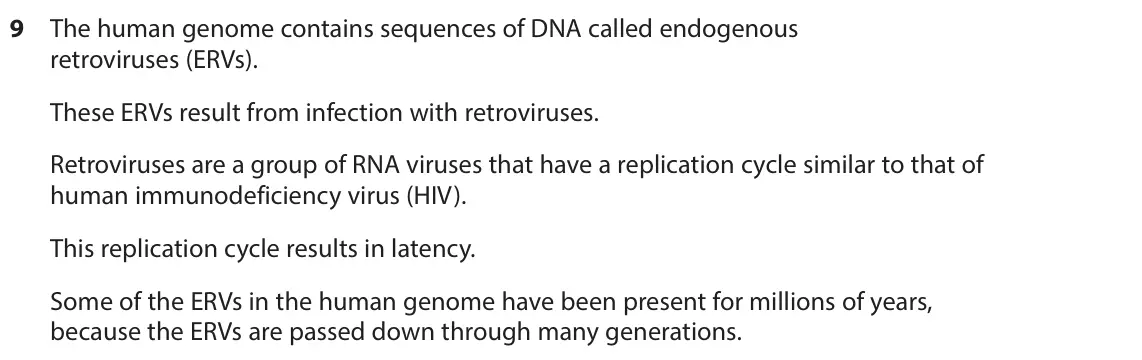
Q3(c)
The whole paper ↗
Q3(d)
The whole paper ↗Q6(b)
The whole paper ↗
Q7(b)(ii)
The whole paper ↗
Q8(g)
The whole paper ↗
Q5(c)
The whole paper ↗
Q8(b)
The whole paper ↗
Q8(c)(ii)
The whole paper ↗Q8(c)(iii)
The whole paper ↗Q8(c)(iv)
The whole paper ↗Q2(c)
The whole paper ↗
Q7(b)(ii)
The whole paper ↗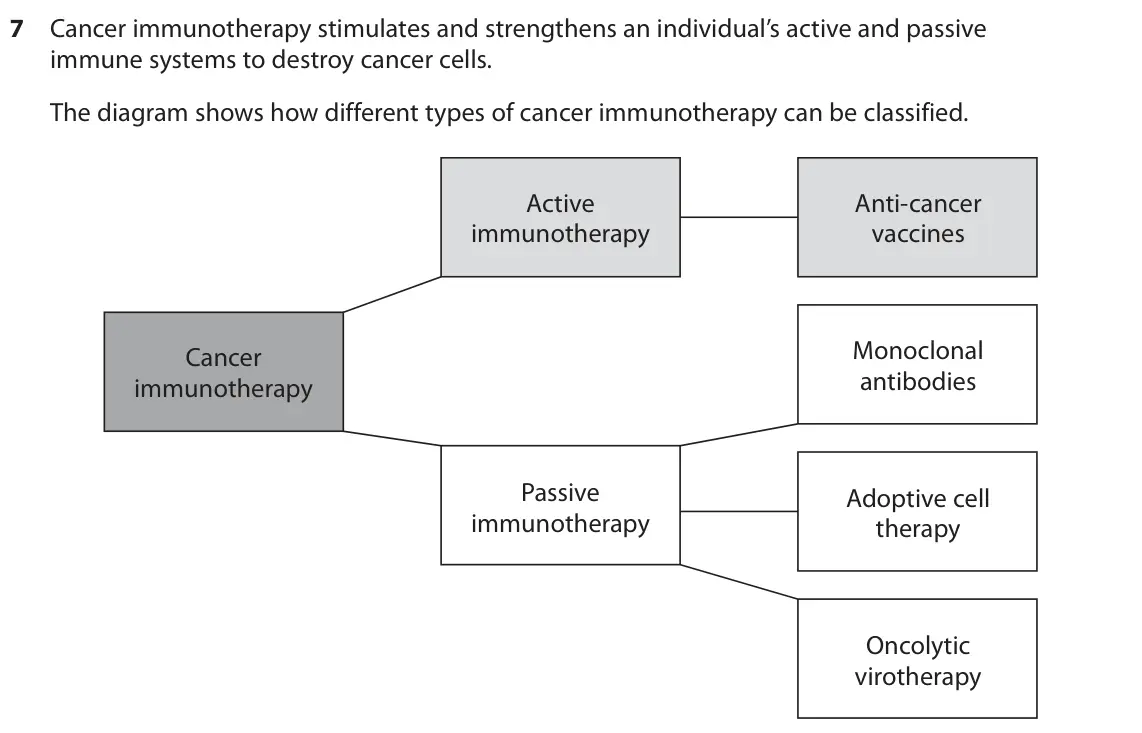
Q7(c)
The whole paper ↗Q7(d)
The whole paper ↗
All 46 questions on Antigens, antibodies, B cells and T cells, as a list
- June 2025, Unit 4, Q5(b)(i) (2 marks): Explain why a single antibody had to be made by the scientists. Use the information in the diagrams to support your answer. (2)
- June 2025, Unit 4, Q5(b)(ii) (3 marks): Suggest how the scientists could make this single antibody. Use the information in the diagram to support your answer. (3)
- June 2025, Unit 4, Q5(b)(iii) (2 marks): Explain how this single antibody helps the body destroy cancer cells. (2)
- June 2025, Unit 5, Q8(e) (2 marks): Explain how an antibody could block the effects of an inflammatory signalling molecule (ISM) (paragraphs 7 and 8). (2)
- January 2025, Unit 4, Q8(b)(iii) (2 marks): The scientists found that these antibodies also bind to different toxins produced by another type of bacteria. Explain why these antibodies, produced as a resul
- January 2025, Unit 4, Q9(c) (5 marks): In cancer cells, the viral envelope proteins are synthesised and incorporated into the cancer cell membrane. Explain why these viral envelope proteins could be
- October 2024, Unit 4, Q3(c) (2 marks): Explain why antigens need to be presented to T killer cells in a person’s immune response to viral infections. (2)
- October 2024, Unit 4, Q3(d) (3 marks): Explain how the action of T killer cells results in a person recovering from a viral infection. (3)
- October 2024, Unit 4, Q6(b) (2 marks): In one trial, people received a new vaccine against RSV. The results showed that this vaccine protected against two subtypes of RSV. Give two reasons why one va
- October 2024, Unit 5, Q7(b)(ii) (2 marks): Explain how BVZ antibodies can cause the destruction of cancer cells. (2)
- October 2024, Unit 5, Q8(g) (2 marks): Describe what is meant by the term ‘monoclonal antibody’ (Paragraph 31). (2)
- June 2024, Unit 4, Q5(c) (4 marks): Using a modified herpes simplex virus activates the immune system. Explain why activation of the immune system would result in destruction of the cancer cells.
- January 2024, Unit 4, Q8(b) (2 marks): Vaccination against a virus results in the production of antibodies. Describe how antibodies are produced following activation of T cells. (2)
- January 2024, Unit 4, Q8(c)(ii) (2 marks): In group 1, Vac 2 increased the levels of antibody more than Vac 1. Calculate how many times greater this increase was. (2) Answer
- January 2024, Unit 4, Q8(c)(iii) (1 mark): Suggest why there is no data on the graph for group 1 before vaccination. (1)
- January 2024, Unit 4, Q8(c)(iv) (6 marks): Explain the results of this investigation. (6)
- October 2023, Unit 4, Q2(c) (3 marks): The immune response results in the production of antibodies following the first infection with a pathogen and on further infections with the same pathogen. The
- October 2023, Unit 4, Q7(b)(ii) (4 marks): Some active anti‑cancer vaccines can contain the mRNA that codes for the neoantigens. Explain how vaccines containing the mRNA coding for neoantigens stimulate
- October 2023, Unit 4, Q7(c) (2 marks): Monoclonal antibodies are made in a laboratory. Large numbers of identical antibodies specific to one type of antigen can be made. Explain how these antibodies
- October 2023, Unit 4, Q7(d) (2 marks): In adoptive cell therapy, T cells are taken from the patient and large numbers of genetically identical cells are made in the laboratory. These cells are then i
- June 2023, Unit 4, Q6(c)(i) (3 marks): Suggest why sporozoites are used in a vaccine against malaria. (3)
- June 2023, Unit 4, Q6(c)(iii) (3 marks): Later in the clinical trials, people were infected with one of two strains of sporozoites, three months after the vaccination. One strain was identical to the o
- June 2023, Unit 5, Q8(c) (3 marks): “Microorganisms can also enhance the anti-tumor immune effect of drugs by promoting T cell accumulation and transformation.” Explain how microorganisms promote
- January 2023, Unit 4, Q8(b) (4 marks): Another group of scientists showed that an extract from the leaves of the papaya plant helped in recovery from dengue virus infection. They showed that the plat
- January 2023, Unit 4, Q9(c)(ii) (4 marks): An ELISA is used to detect a specific antigen. The IL‑1β was detected using an ELISA. The diagram shows an ELISA. Step 2: container Step 4: container rinsed wit
- October 2022, Unit 4, Q6(b)(i) (2 marks): Explain the phrase: ‘an antibody that is specific for ß‑amyloid’. (2)
- October 2022, Unit 4, Q6(b)(ii) (3 marks): Drug ATD reduces the build-up of ß‑amyloid in the brains of people with Alzheimer’s disease. Suggest how drug ATD could result in the reduction of the build‑up
- October 2022, Unit 4, Q6(c)(ii) (2 marks): Explain why this drug could be produced only from B memory cells taken from a person who did not have Alzheimer’s disease. (2)
- October 2022, Unit 5, Q7(a)(iii) (4 marks): Some patients receiving rHE develop anti-rHE antibodies. Describe how these antibodies may be produced. (4)
- June 2022, Unit 4, Q3(c)(ii) (2 marks): Describe the role of macrophages in the immune response of the body to these bacteria. (2)
- October 2021, Unit 4, Q3(b)(i) (3 marks): Describe the role of macrophages in the development of natural active immunity to a virus, following infection. (3)
- October 2021, Unit 4, Q3(b)(ii) (4 marks): Explain why both T helper cells and T killer cells are needed in the immune response to a virus. (4)
- October 2021, Unit 5, Q6(d) (3 marks): T lymphocytes produce different types of cytokine. Some of these cytokines activate T killer cells and some activate B cells. Explain why different cytokines ca
- June 2021, Unit 4, Q8(a)(iii) (4 marks): Following the transplant, the patient was given immunosuppressive drugs. Immunosuppressive drugs weaken the immune system. Some of these drugs work by preventin
- January 2021, Unit 4, Q3(a) (4 marks): Describe how a vaccine results in active immunity. (4)
- January 2021, Unit 5, Q8(b) (4 marks): Explain how ‘our immune systems learn to make another type of protein, called an antibody’ (paragraph 4). (4)
- October 2020, Unit 4, Q4(b)(ii) (2 marks): Explain why antibodies to TNF are used in the treatment of rheumatoid arthritis. (2)
- October 2020, Unit 4, Q8(a)(i) (1 mark): Which blood type can be used for all blood transfusions? (1) A blood type A B blood type B C blood type AB D blood type O
- October 2020, Unit 4, Q8(a)(ii) (4 marks): Explain what will happen if a person with blood type A is given a transfusion of blood type AB. (4)
- October 2020, Unit 4, Q8(b)(iii) (2 marks): Explain why this enzyme may be useful in blood transfusions. (2)
- October 2020, Unit 5, Q8(b) (4 marks): Explain why ‘tumors ... riddled with different mutations’ are good candidates for immunotherapies (paragraph 6). (4)
- October 2020, Unit 5, Q8(d) (2 marks): Checkpoints are a type of protein that prevent the activation of immune cells. Explain why a checkpoint inhibitor was given with the lymphocytes in the immunoth
- January 2020, Unit 4, Q8(a) (1 mark): Which row of the table shows the cells that present antigens to each of these T cells? (1) T helper cells T killer cells host-infected cells host-infected cells
- January 2020, Unit 4, Q8(b)(ii) (2 marks): Explain why the CAR gene is inserted into the T cells in Step 3. (2)
- January 2020, Unit 4, Q8(b)(iv) (3 marks): In Step 1, T cells are removed from a patient with cancer. Explain the advantages of injecting CAR-T cells into the same patient in Step 5. (3)
- January 2020, Unit 4, Q8(b)(v) (2 marks): Currently, the use of CAR-T cells has been effective against blood cell cancers only. Suggest why CAR-T cells are not effective against cancer cells in solid tu
Questions, mark schemes and examiner’s reports are © Pearson Edexcel, from their published past papers. Plumi isn’t affiliated with any exam board. Want whole papers? Edexcel International A Level Biology past papers.
The Plumi iPad app also offers exam-style questions with AI feedback on your handwritten working.