 plumi
RQ and investigating respiration: Edexcel International A Level Biology questions
Edexcel International A Level Biology past-paper questions on 7.1.6 RQ and investigating respiration, 2019–2025, with mark schemes and examiner’s reports where available.
Paper
All papers
Exam
All years
Calculations
Q1(a)
The whole paper ↗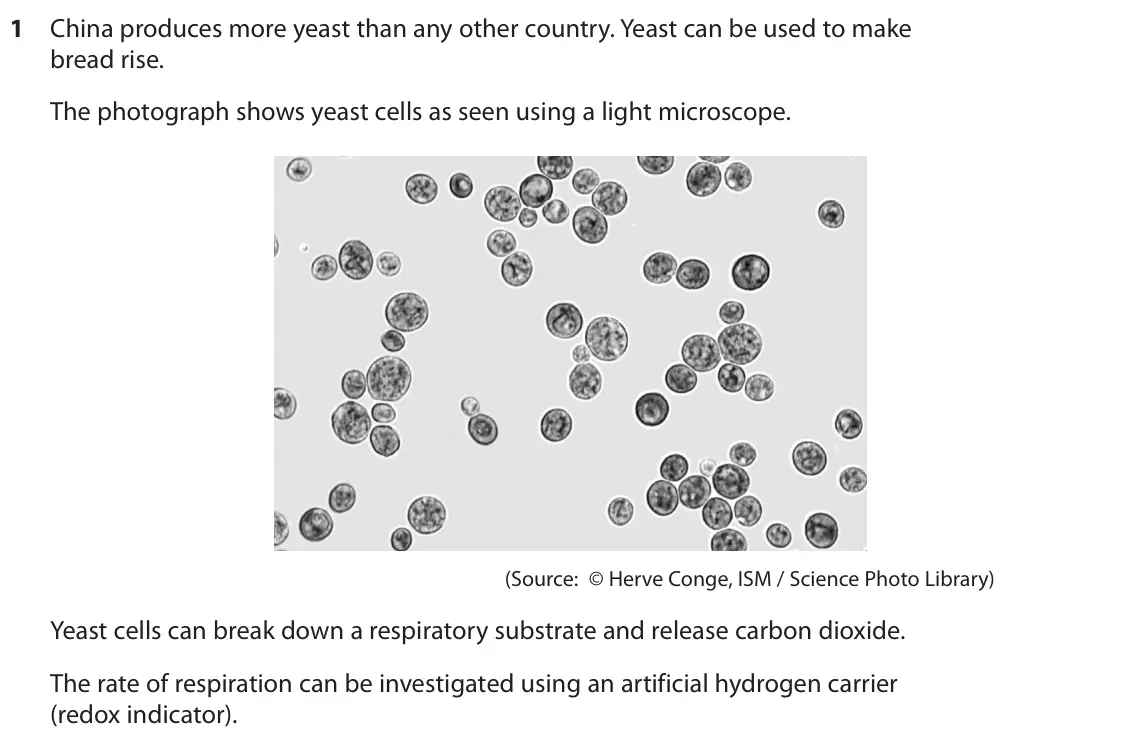
Q1(b)
The whole paper ↗Q4(a)
The whole paper ↗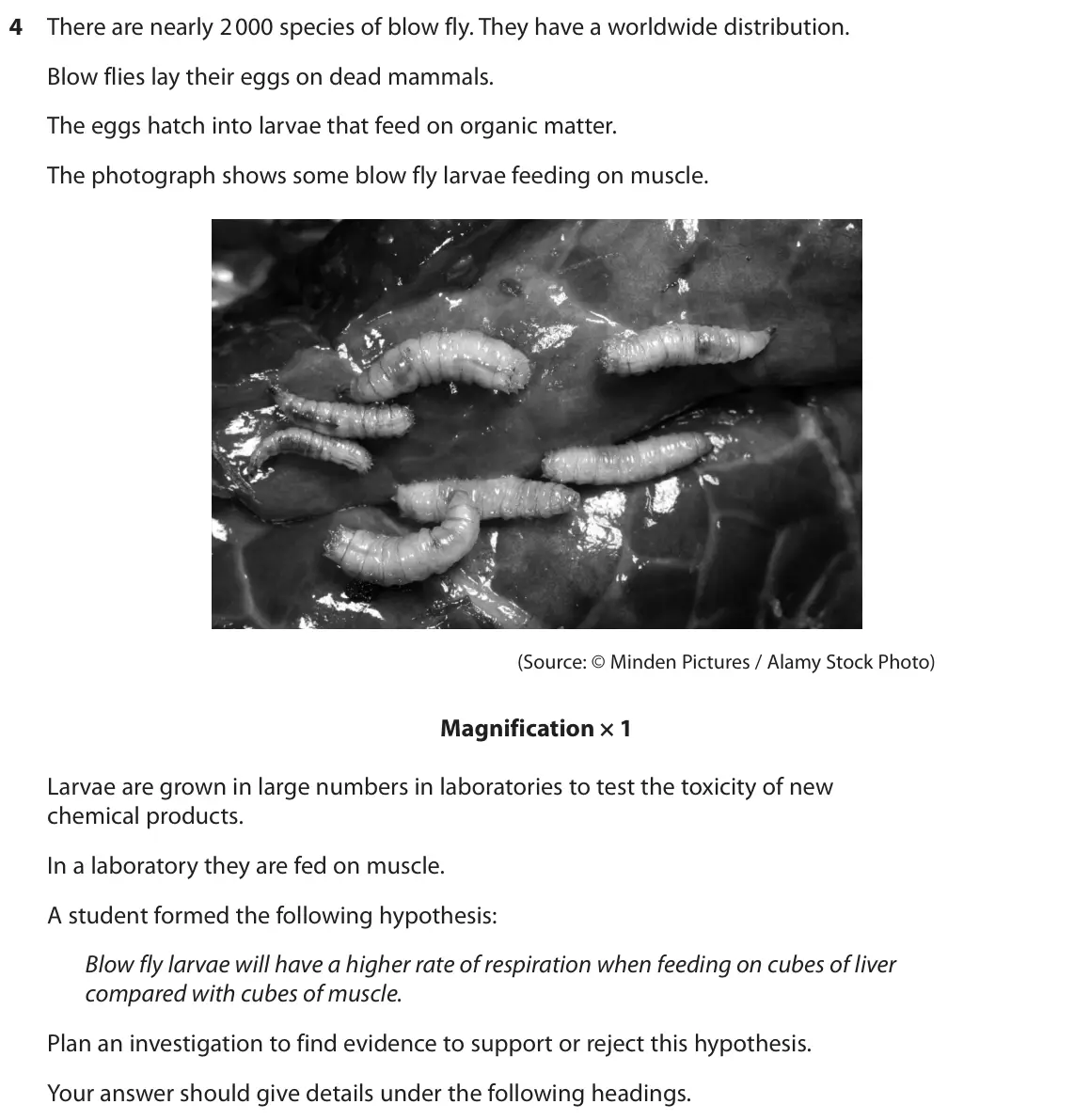
Q4(b)
The whole paper ↗Q1(b)
The whole paper ↗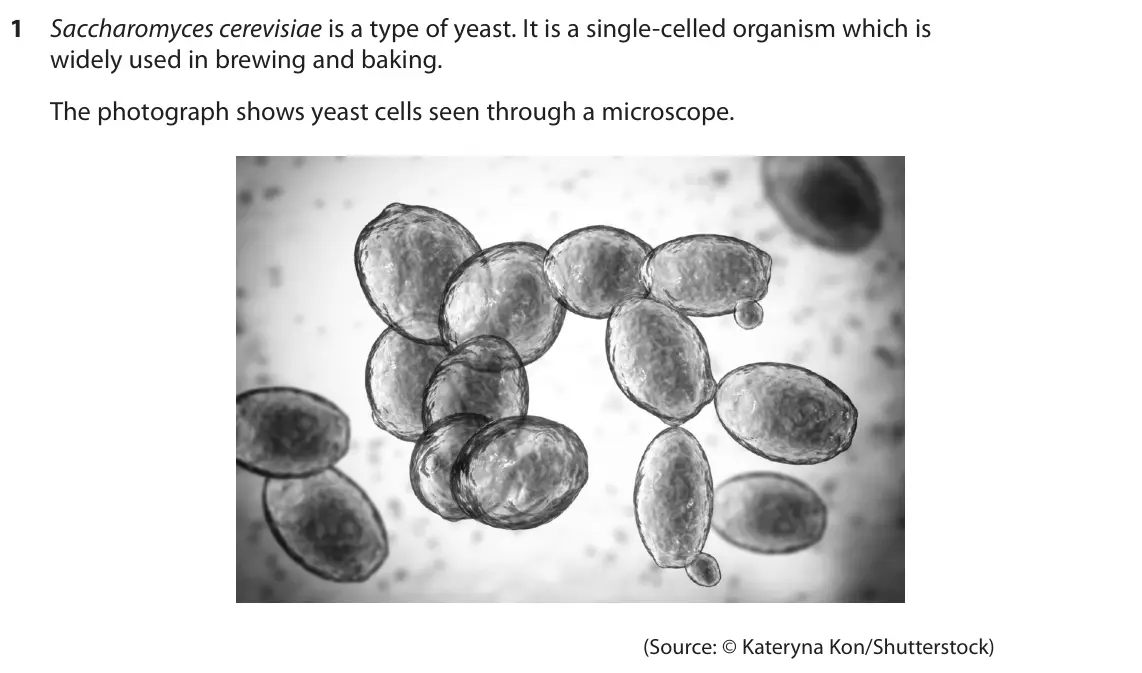
Q4(a)
The whole paper ↗
Q4(b)
The whole paper ↗Q1(c)(i)
The whole paper ↗ Your answer
Q4(a)
The whole paper ↗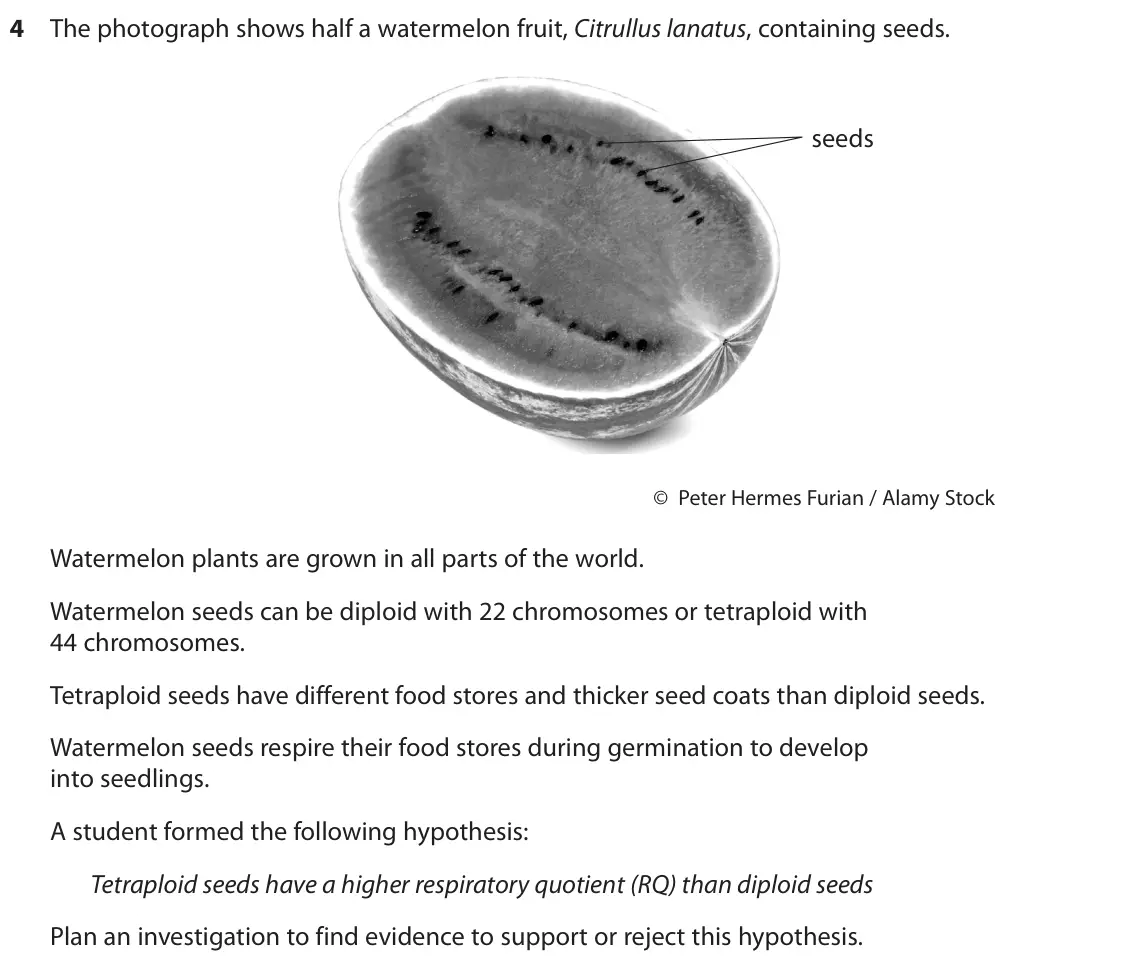
Q4(b)
The whole paper ↗Q5(b)(i)
The whole paper ↗ Your answer
Q5(b)(ii)
The whole paper ↗Q4(a)
The whole paper ↗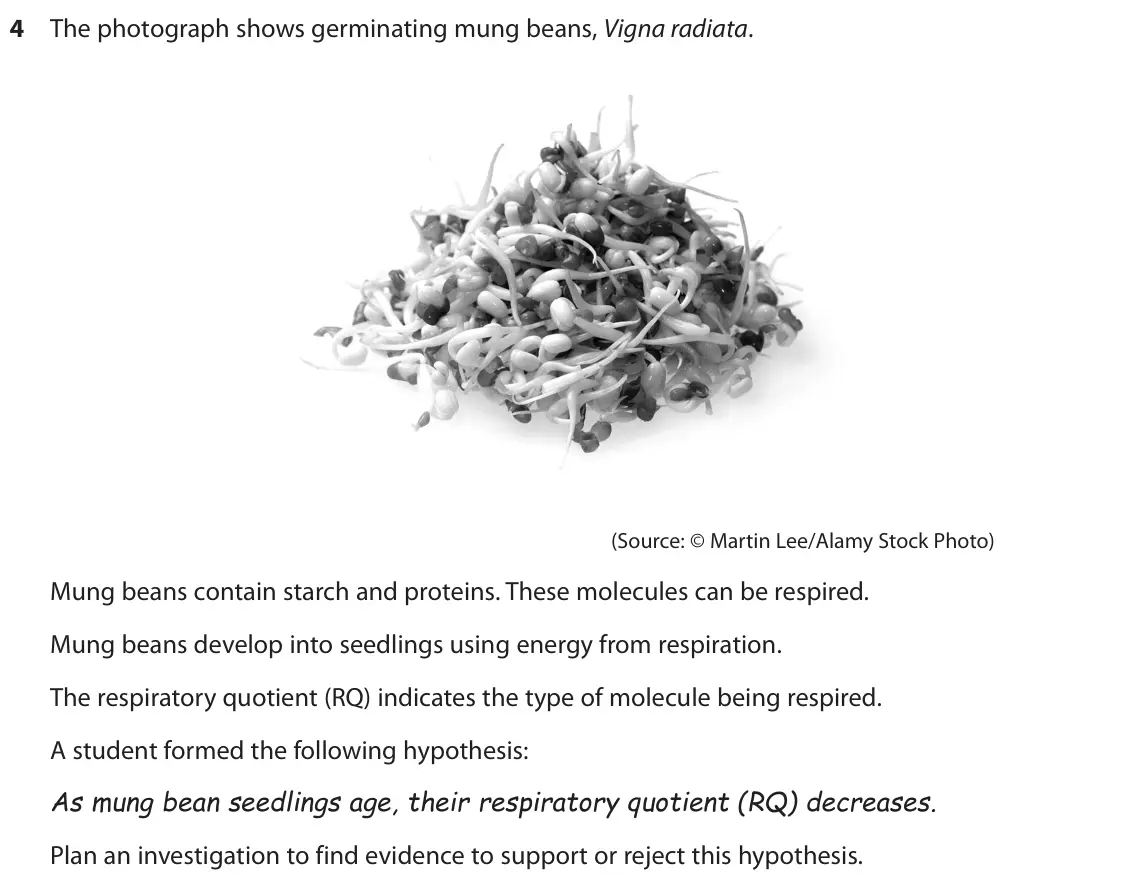
Q4(b)
The whole paper ↗Q4(d)
The whole paper ↗Q8(f)
The whole paper ↗
Q4(a)
The whole paper ↗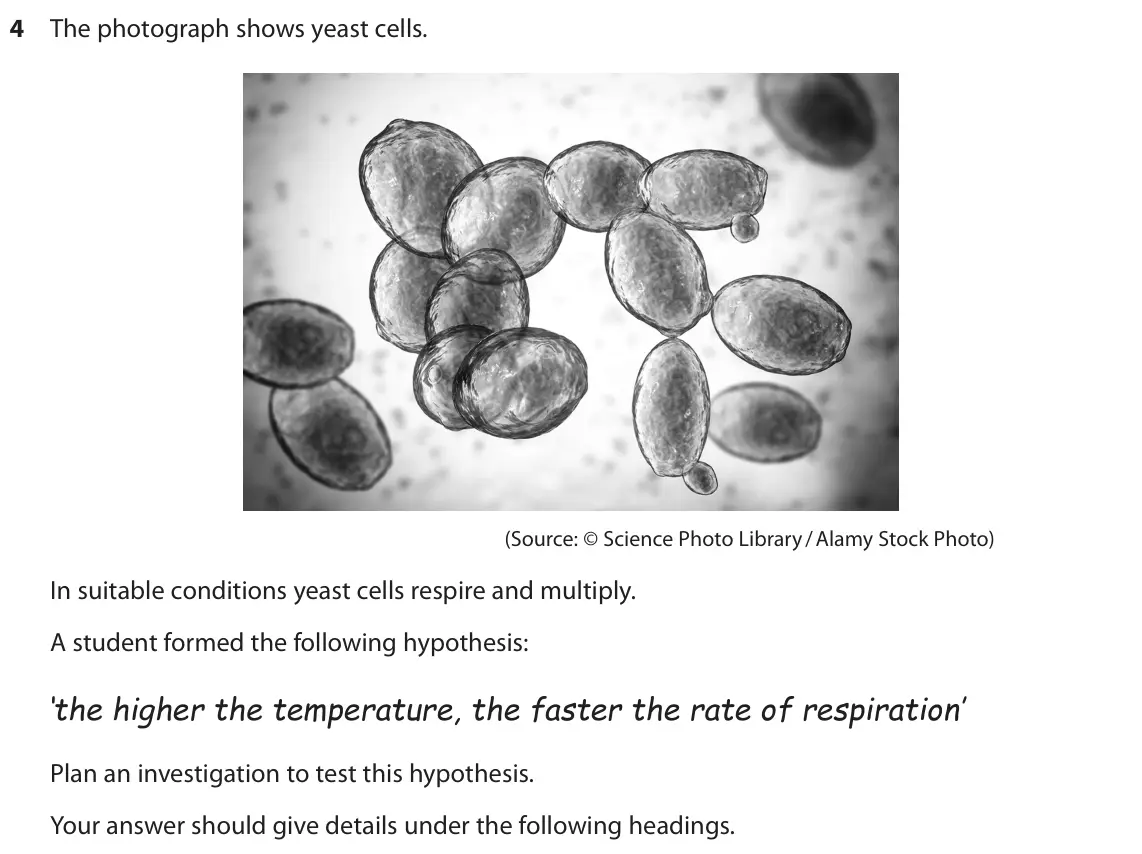
Q4(b)
The whole paper ↗Q4(d)
The whole paper ↗Q5(a)(ii)
The whole paper ↗ Your answer
All 24 questions on RQ and investigating respiration, as a list
- June 2025, Unit 6, Q1(a) (1 mark): Name one artificial hydrogen carrier. (1)
- June 2025, Unit 6, Q1(b) (6 marks): Describe an experiment to investigate the rate of respiration of yeast cells at different temperatures, using an artificial hydrogen carrier. (6)
- January 2025, Unit 6, Q4(a) (2 marks): Describe preliminary practical work that you might undertake to ensure your proposed method would provide quantitative results. (2)
- January 2025, Unit 6, Q4(b) (9 marks): Devise a detailed method, including how you would control and monitor important variables. (9)
- June 2024, Unit 6, Q1(b) (5 marks): Describe an experiment to investigate the effect of temperature on the rate of respiration in yeast, using an artificial hydrogen carrier (redox indicator). (5)
- June 2024, Unit 6, Q4(a) (3 marks): Describe preliminary practical work that you might undertake to ensure your proposed method would provide quantitative results. (3)
- June 2024, Unit 6, Q4(b) (8 marks): Devise a detailed method, including how you would control and monitor important variables. (8)
- January 2024, Unit 5, Q1(c)(i) (1 mark): Which is the respiratory quotient when this lipid is used in aerobic respiration? (1) A 0.67 B 0.71 C 1.06 D 1.42
- January 2024, Unit 6, Q4(a) (2 marks): Describe preliminary practical work that you might undertake to ensure your proposed method would provide quantitative results. . (2)
- January 2024, Unit 6, Q4(b) (9 marks): Devise a detailed method, including how you would control and monitor important variables. (9)
- January 2023, Unit 5, Q5(b)(i) (1 mark): The rate of oxygen uptake by the cyclist at 60 minutes was 2.20 dm3 min–1. Which is the rate of carbon dioxide production by the cyclist at 60 minutes? (1) A 1.
- January 2023, Unit 5, Q5(b)(ii) (2 marks): The table gives the respiratory quotient for aerobic respiration using fats or carbohydrates as respiratory substrates. Substrate Respiratory quotient Fat 0.7 C
- June 2022, Unit 6, Q4(a) (3 marks): Describe preliminary practical work that you might undertake to ensure your proposed method would provide quantitative results. (3)
- June 2022, Unit 6, Q4(b) (8 marks): Devise a detailed method, including an explanation of how you would control and monitor important variables. (8)
- June 2022, Unit 6, Q4(d) (2 marks): Suggest two limitations of your proposed method. (2)
- January 2022, Unit 5, Q8(f) (4 marks): In the MTT assay, reduced NAD converts an MTT solution from yellow to purple. Describe how the MTT assay could be used to show which of two drugs is more toxic
- January 2022, Unit 6, Q4(a) (2 marks): Describe preliminary practical work that you might undertake to ensure your proposed method would provide quantitative results. (2)
- January 2022, Unit 6, Q4(b) (8 marks): Devise a detailed method, including how you would control and monitor important variables. (8)
- January 2022, Unit 6, Q4(d) (2 marks): Give two limitations of your proposed method. (2)
- October 2021, Unit 5, Q5(a)(ii) (1 mark): A student calculated the volume of oxygen used by a cockroach as 1.7 cm3 hour−1 . The same cockroach produced 1.3 cm3 hour−1 of carbon dioxide in the same time.
- January 2021, Unit 6, Q2(a)(i) (3 marks): Calculate the mean rate of oxygen uptake in mm3 min–1. The internal diameter of the capillary tube was 0.2 mm. The volume of a cylinder (V) is calculated using
- January 2021, Unit 6, Q2(a)(ii) (2 marks): The mean rate of carbon dioxide released by the maggots was 0.11 mm3 min–1. Calculate the respiratory quotient (RQ) value for this investigation. (2) RQ
- January 2021, Unit 6, Q2(a)(iii) (1 mark): The soda lime was removed and replaced with glass beads in order to calculate the RQ. Suggest why this allows the student to calculate the RQ. (1)
- January 2021, Unit 6, Q2(b)(i) (2 marks): State two biotic variables that could affect this investigation. (2) First variable Second variable
Questions, mark schemes and examiner’s reports are © Pearson Edexcel, from their published past papers. Plumi isn’t affiliated with any exam board. Want whole papers? Edexcel International A Level Biology past papers.
The Plumi iPad app also offers exam-style questions with AI feedback on your handwritten working.