 plumi
Factors affecting enzyme activity: Edexcel International A Level Biology questions
Edexcel International A Level Biology past-paper questions on 2.3.4 Factors affecting enzyme activity, 2019–2025, with mark schemes and examiner’s reports where available.
Paper
All papers
Exam
All years
Calculations
Q7(b)(i)
The whole paper ↗
Q7(b)(ii)
The whole paper ↗Q1(c)
The whole paper ↗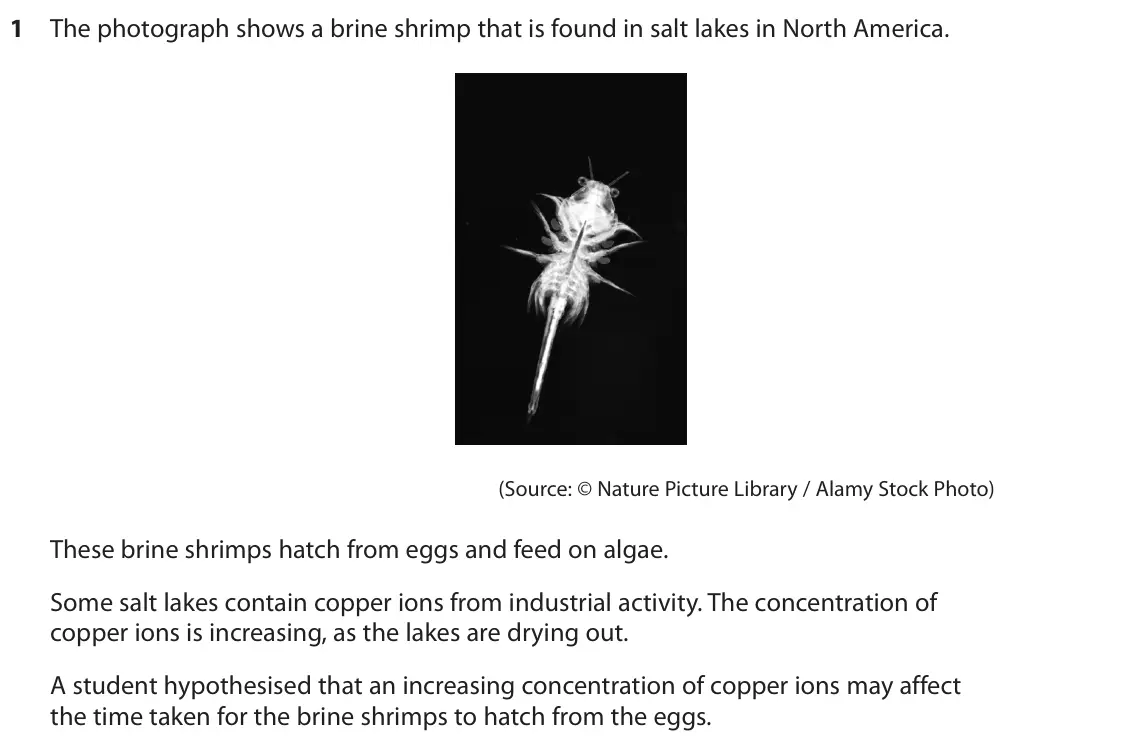
Q6(c)(iii)
The whole paper ↗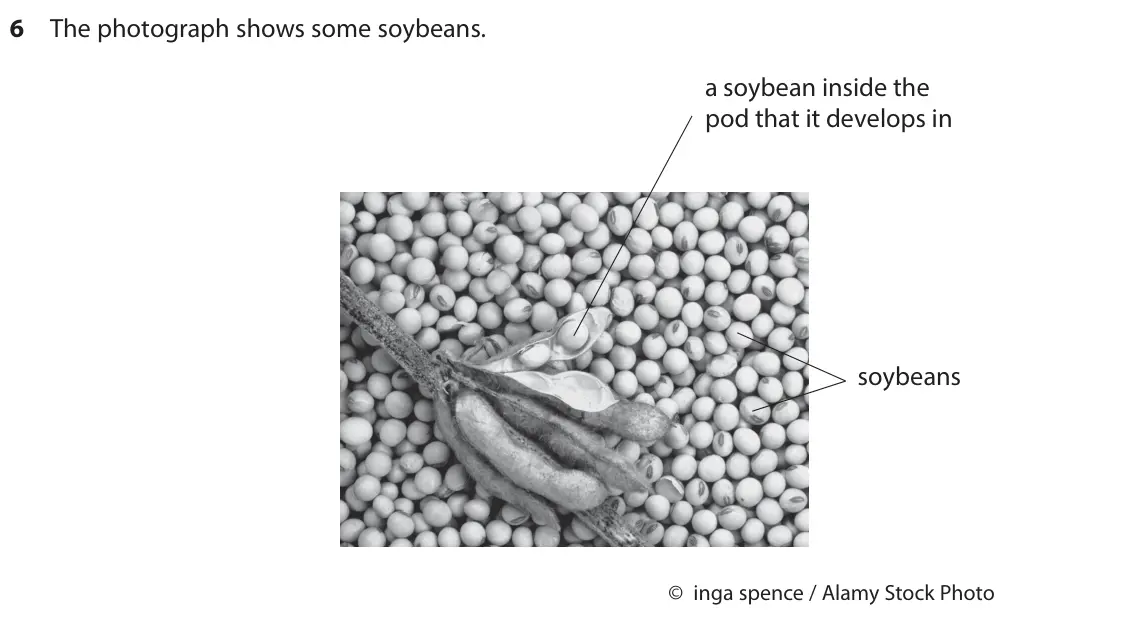
Q6(d)
The whole paper ↗Q1(b)(i)
The whole paper ↗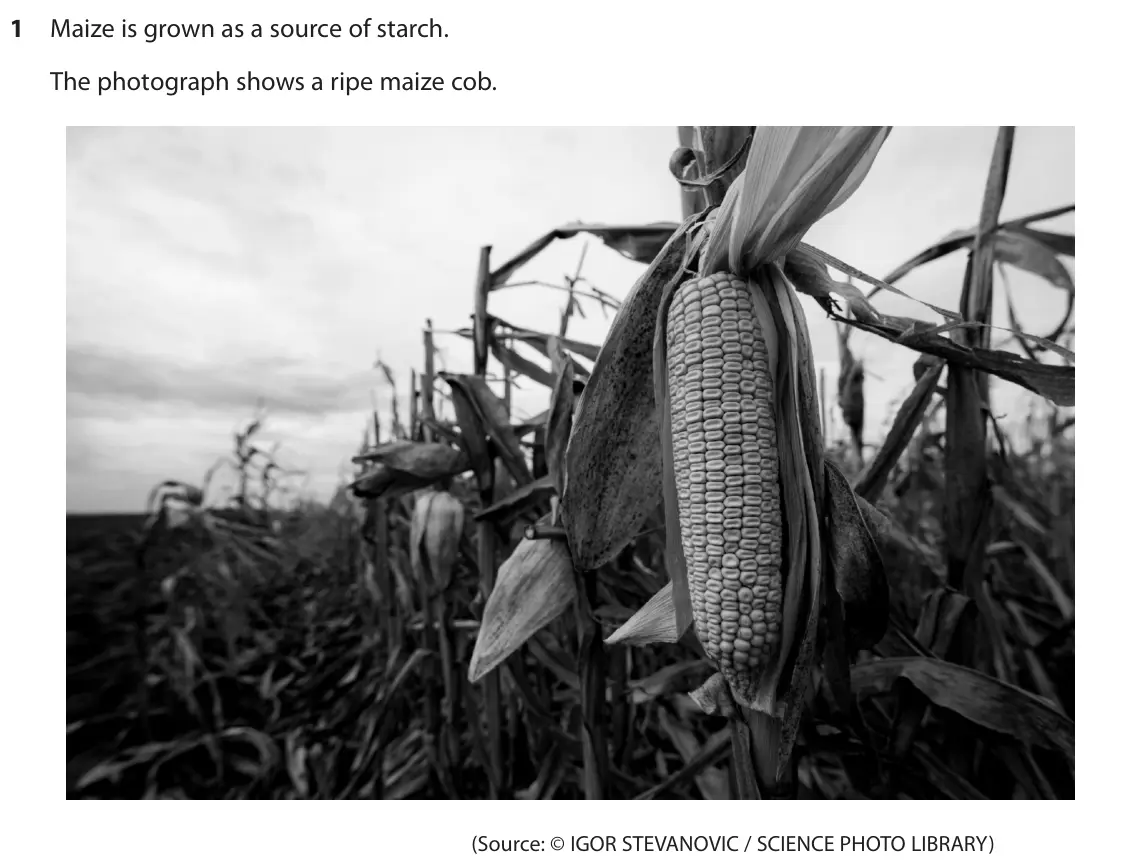
Q1(c)(i)
The whole paper ↗Q1(c)(iii)
The whole paper ↗Q1(d)(ii)
The whole paper ↗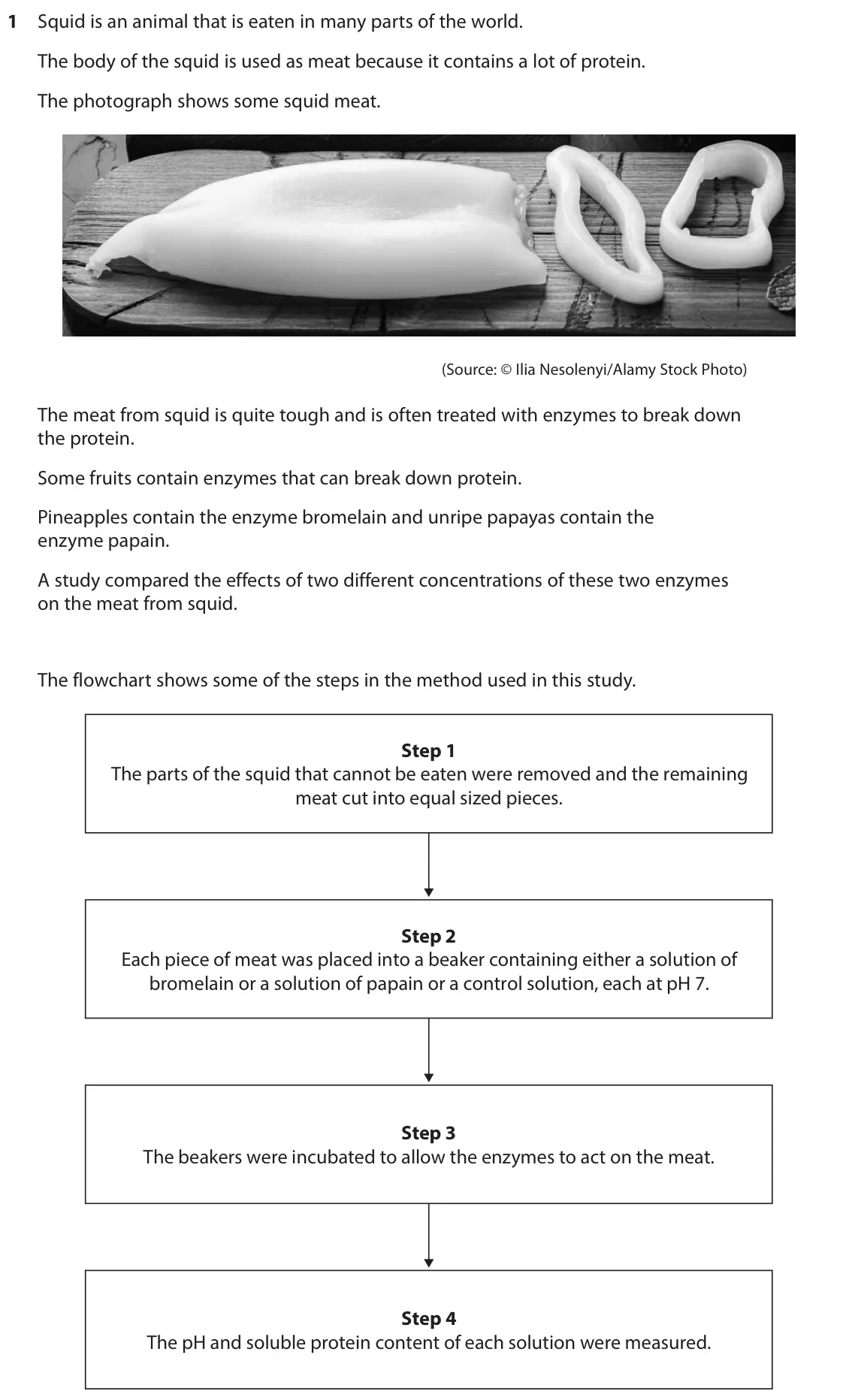
Q1(c)
The whole paper ↗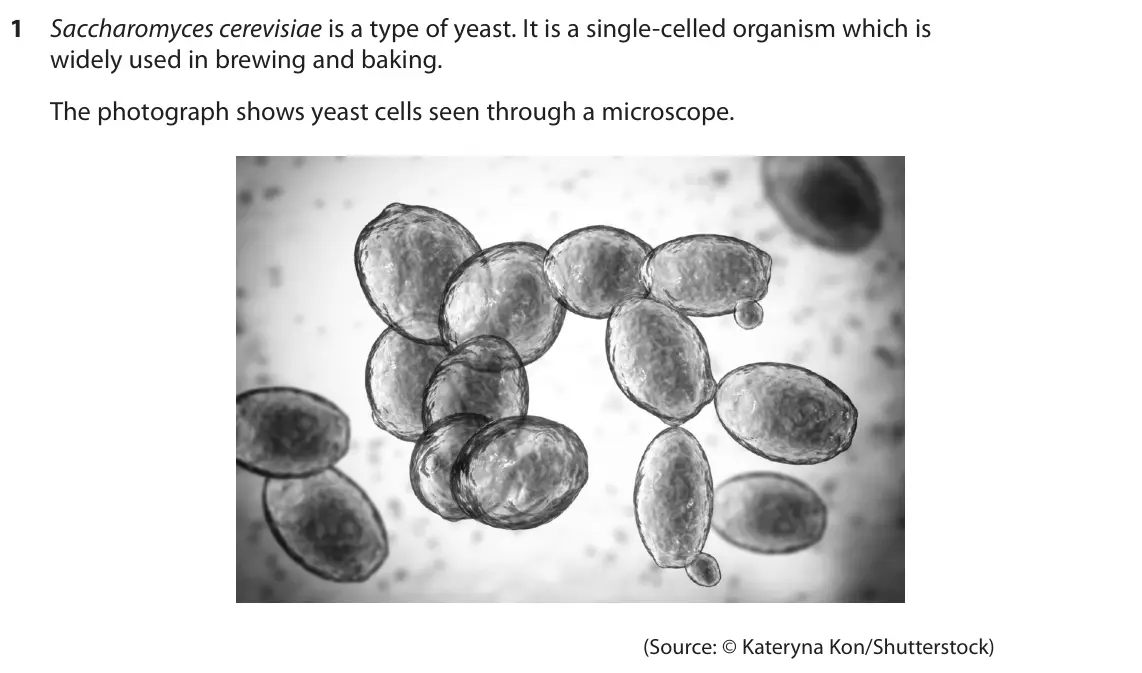
Q2(b)
The whole paper ↗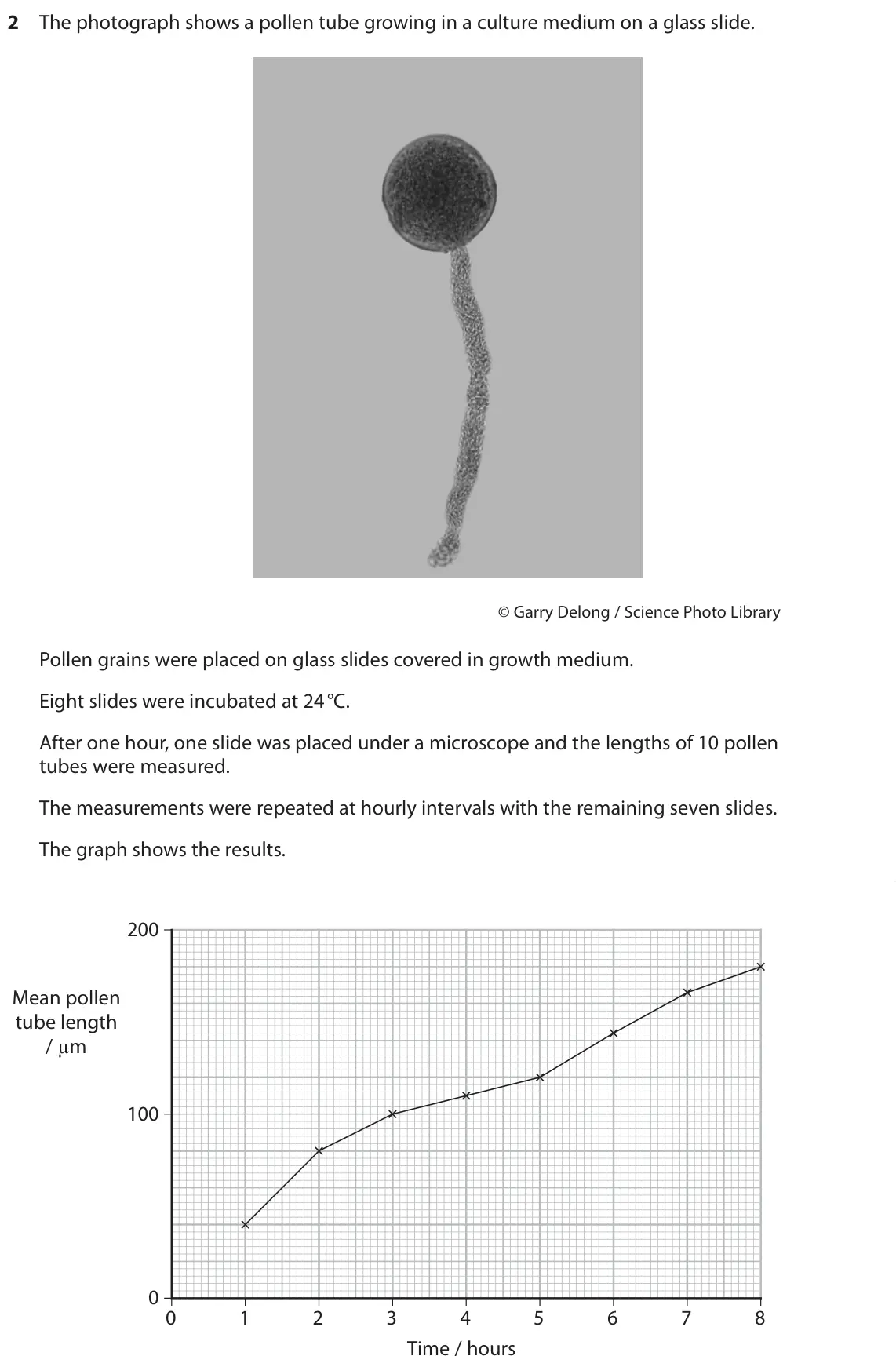
Q2(b)(i)
The whole paper ↗
Q2(b)(ii)
The whole paper ↗Q2(b)(i)
The whole paper ↗
Q6(c)(i)
The whole paper ↗
Q6(c)(ii)
The whole paper ↗Q4(d)
The whole paper ↗
Q2(b)(i)
The whole paper ↗
Q2(b)(iii)
The whole paper ↗Q2(b)(iv)
The whole paper ↗
All 43 questions on Factors affecting enzyme activity, as a list
- June 2025, AS Unit 1, Q7(b)(i) (3 marks): Some types of plastic break down at higher temperatures. These temperatures are too high for some enzymes to be active. Explain why some enzymes cannot function
- June 2025, AS Unit 1, Q7(b)(ii) (2 marks): Changing the bonding in the enzyme can make it more stable at higher temperatures. Suggest why changing the bonding could enable enzymes to work at higher tempe
- January 2025, Unit 6, Q1(c) (3 marks): Copper ions (Cu2+) can inhibit the enzymes involved in the hatching of brine shrimps. Describe how copper ions could inhibit enzyme activity. (3)
- October 2024, AS Unit 1, Q6(c)(iii) (2 marks): Explain why the soybean flour and enzymes were incubated at 37 °C for 2 hours in steps 2 and 3. (2) 37 °C 2 hours
- October 2024, AS Unit 1, Q6(d) (3 marks): The soybean peptides, at different concentrations, were incubated with the liver cells growing in culture. The enzyme HMGCR is involved in the synthesis of chol
- October 2024, AS Unit 3, Q1(b)(i) (2 marks): Explain the effect this will have on the mass of starch produced in maize plants. (2)
- October 2024, AS Unit 3, Q1(c)(i) (1 mark): Calculate the initial rate of reaction for 30°C shown in the graph. (1) Answer mg min–1
- October 2024, AS Unit 3, Q1(c)(iii) (2 marks): Give two reasons why the initial rate of reaction was measured. (2) 1 2
- June 2024, AS Unit 3, Q1(d)(ii) (2 marks): State two conclusions that can be made from the data shown in the graph. (2) 1 2
- June 2024, Unit 6, Q1(c) (3 marks): Explain why temperature affects the rate of respiration in yeast. (3)
- January 2024, Unit 6, Q2(b) (2 marks): Explain how changes in temperature could affect the rate of growth of pollen tubes. (2)
- October 2023, AS Unit 1, Q2(b)(i) (2 marks): Calculate the rate of reaction at 3 minutes. Draw a tangent to help with your calculation. (2) Answer mmol dm–3 min–1
- October 2023, AS Unit 1, Q2(b)(ii) (2 marks): This reaction was carried out below the optimum temperature for the enzyme. Explain what would happen to the shape of this curve if the temperature was increase
- January 2023, AS Unit 1, Q2(b)(i) (2 marks): Calculate the rate of reaction at 30 minutes. Draw a tangent to help with your calculation. (2) Answer nmol dm–3 min–1
- January 2023, Unit 4, Q6(c)(i) (3 marks): Calculate the Q10 for this enzyme stored for 3 hours. Use the formula Q10 = R ( t +10 ) R t where Rt is the initial rate of reaction at 20 °C. (3) Answer
- January 2023, Unit 4, Q6(c)(ii) (3 marks): Explain why the optimum temperature for this enzyme is affected by storage time. (3)
- October 2022, AS Unit 1, Q4(d) (2 marks): Pectinase is an enzyme that breaks down pectin. The effect of different combinations of pH and temperature on pectinase activity was investigated. The volume an
- October 2022, AS Unit 3, Q2(b)(i) (1 mark): Complete the table by calculating the initial rate of reaction when a 3.0% concentration of casein was used. (1)
- October 2022, AS Unit 3, Q2(b)(iii) (1 mark): Calculate how many times faster the initial rate of reaction is for a casein concentration of 2.0% than a casein concentration of 0.5%. Give your answer to 2 si
- October 2022, AS Unit 3, Q2(b)(iv) (3 marks): Explain the shape of the graph you have plotted in (ii). (3)
- October 2022, AS Unit 3, Q2(c)(ii) (3 marks): Determine which of these extracts is most useful for preventing apple juice from going brown. (3)
- June 2022, AS Unit 1, Q3(c)(i) (1 mark): Calculate the effect on the rate of reaction of each degree increase in temperature between 46 °C and 50 °C. Give your answer to two significant figures. (1) An
- June 2022, AS Unit 1, Q3(c)(ii) (1 mark): State why there is a decrease in the rate of reaction above the optimum temperature. (1)
- June 2022, AS Unit 3, Q1(b)(ii) (2 marks): Explain why changes in temperature will affect this investigation. (2)
- October 2021, AS Unit 3, Q3(a)(ii) (3 marks): One of the variables that needs to be controlled in this investigation is pH. Describe how a suitable pH could be decided on experimentally. (3)
- October 2021, AS Unit 3, Q3(b)(ii) (4 marks): Explain the relationship shown in the results of this investigation. (4)
- October 2021, AS Unit 3, Q3(c)(i) (2 marks): This investigation was criticised because it does not measure the initial rate of reaction. Explain why it would be better to measure the initial rate of reacti
- October 2021, AS Unit 3, Q3(c)(ii) (3 marks): Suggest how the initial rate of reaction could be measured in this investigation. (3)
- January 2021, AS Unit 1, Q8(b)(ii) (4 marks): The table shows the effect of pH on the activity of free lactase and immobilised lactase. Activity of free Activity of pH lactase immobilised lactase / a.u. / a
- January 2021, AS Unit 1, Q8(b)(iii) (2 marks): Suggest how the rate of activity of the lactase could be measured. Include appropriate units in your answer. (2)
- January 2021, Unit 4, Q8(a)(i) (2 marks): Sketch the graph for enzyme activity plotted against temperature for this enzyme. Use the data from this investigation. (2) Enzyme activity 0 10 20 30 40 50 60
- October 2020, AS Unit 3, Q2(a)(iii) (2 marks): Suggest why the temperature was kept at 25 °C. (2)
- October 2020, AS Unit 3, Q2(a)(vi) (2 marks): Explain why the initial rate of this reaction was determined. (2)
- October 2020, AS Unit 3, Q2(a)(vii) (3 marks): Suggest how the initial rate of this reaction could be determined. (3)
- October 2020, AS Unit 3, Q2(b)(ii) (3 marks): Criticise the conclusion that 5.5 is the optimum pH for this enzyme. (3)
- October 2020, AS Unit 3, Q2(c) (3 marks): Invertase is used in the food industry. Scientists wanted to increase the efficiency of the enzyme to save time and money. One way is to immobilise the enzyme b
- January 2020, AS Unit 1, Q3(c)(i) (2 marks): Explain why substrate concentration affects the rate of reaction. (2)
- January 2020, AS Unit 1, Q3(c)(ii) (2 marks): The reaction rate (V) at each substrate concentration can be calculated using the formula × V S = V max + K S Vmax is the maximum rate of reaction K is the subs
- June 2019, AS Unit 3, Q3(a)(i) (4 marks): Explain why the urease solution and the urea solution were kept in the water bath at 40 °C before and after being mixed. (4)
- June 2019, AS Unit 3, Q3(a)(ii) (2 marks): Explain how you could determine suitable concentrations of urea and urease solutions to use in this investigation. (2)
- June 2019, AS Unit 3, Q3(b)(ii) (2 marks): Calculate the rate of reaction at a pH of 7.3 during the first 15 minutes of this investigation. Include appropriate units with your answer. (2) Answer
- June 2019, AS Unit 3, Q3(b)(iii) (3 marks): Compare and contrast the results shown in the graph at 60 minutes with those at 15 minutes. (3)
- June 2019, AS Unit 3, Q3(c) (1 mark): In another investigation, the concentration of ammonia was recorded every 5 minutes for 35 minutes, at a pH of 6.0. The graph shows the results of this investig
Questions, mark schemes and examiner’s reports are © Pearson Edexcel, from their published past papers. Plumi isn’t affiliated with any exam board. Want whole papers? Edexcel International A Level Biology past papers.
The Plumi iPad app also offers exam-style questions with AI feedback on your handwritten working.