 plumi
Condensation and hydrolysis of carbohydrates: Edexcel International A Level Biology questions
Edexcel International A Level Biology past-paper questions on 1.1.3 Condensation and hydrolysis of carbohydrates, 2019–2025, with mark schemes and examiner’s reports where available.
Paper
All papers
Exam
All years
Calculations
Q8(h)
The whole paper ↗
Q6(a)
The whole paper ↗
Q6(b)(i)
The whole paper ↗Q6(c)(i)
The whole paper ↗Q5(c)(i)
The whole paper ↗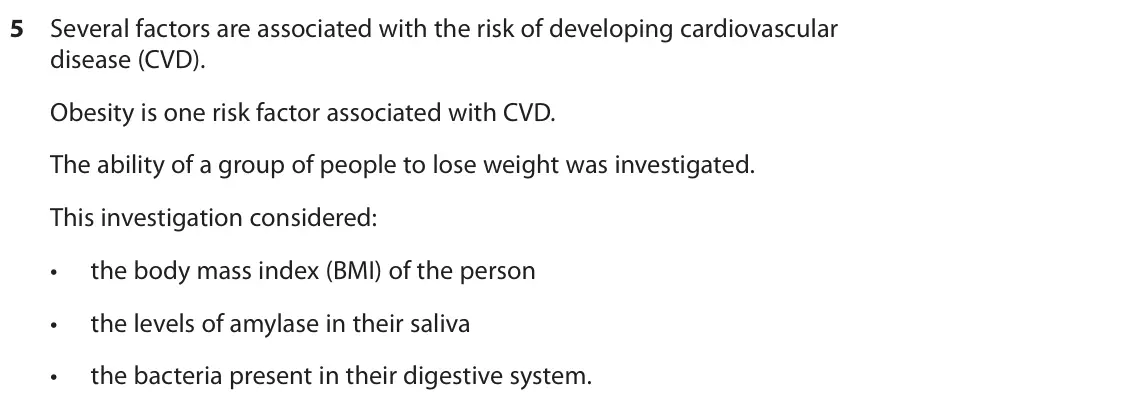 Your answer
Q5(c)(ii)
The whole paper ↗Q3(a)(i)
The whole paper ↗
Q3(a)(ii)
The whole paper ↗Q8(a)
The whole paper ↗
Q3(d)(iii)
The whole paper ↗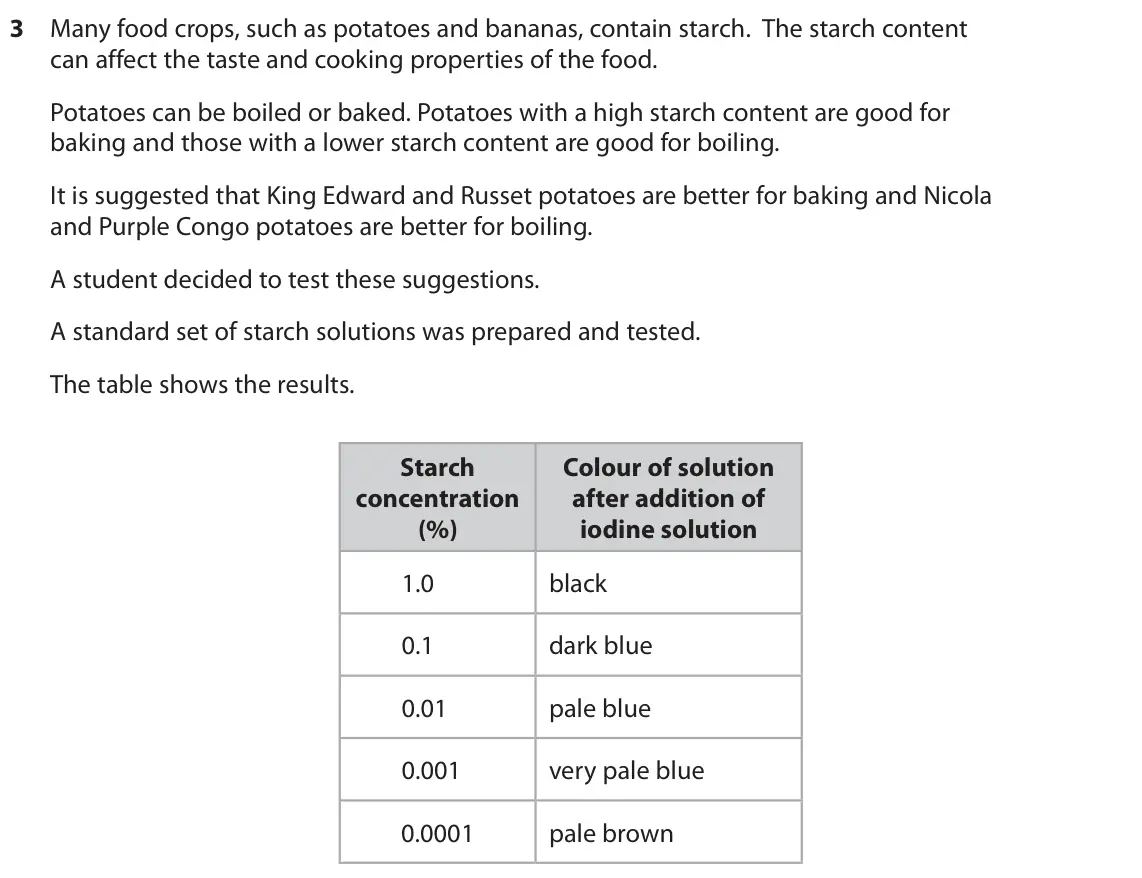
Q1(b)(ii)
The whole paper ↗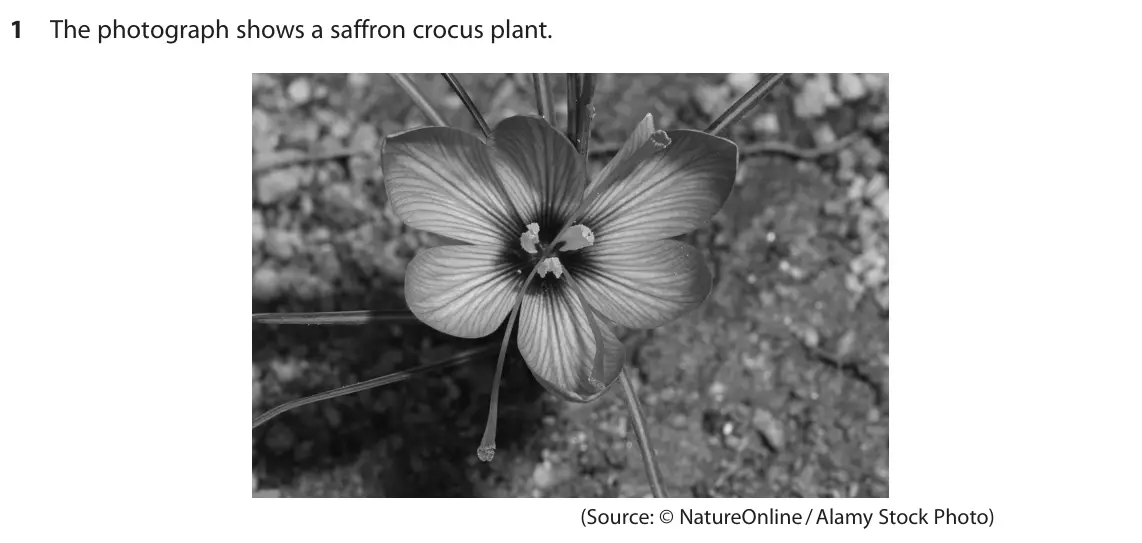
Q1(b)(iii)
The whole paper ↗Your answerQ4(a)(i)
The whole paper ↗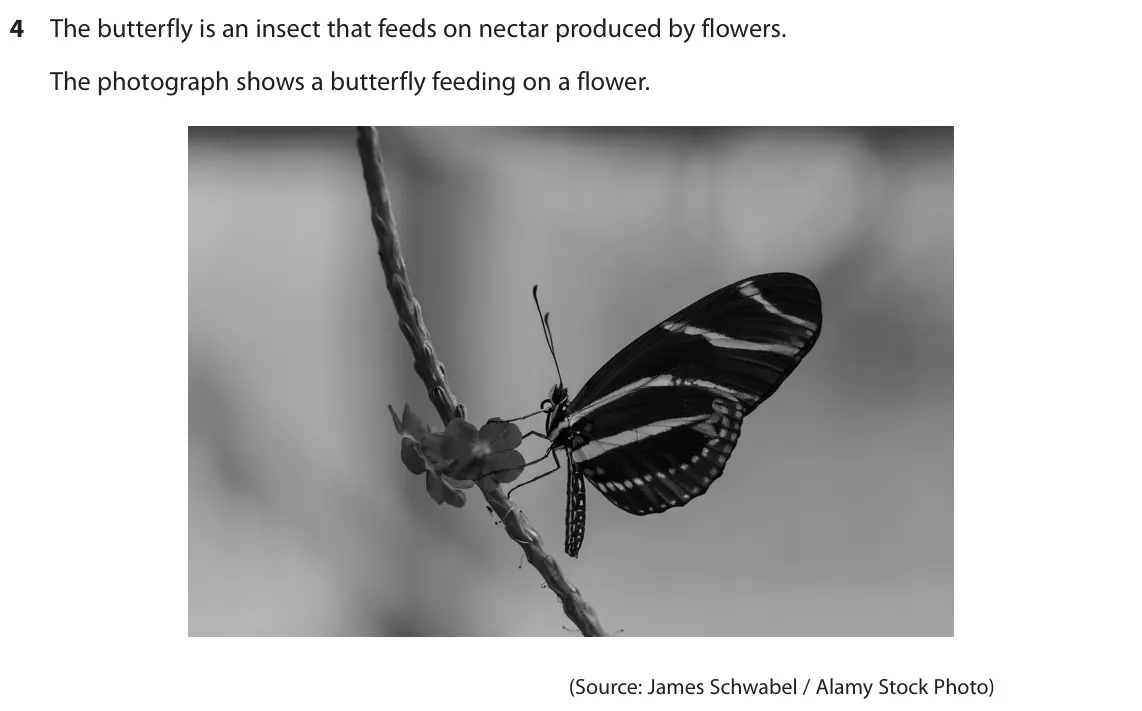 Your answer
Q2(b)
The whole paper ↗ Your answer
Q3(a)(i)
The whole paper ↗ Your answer
Q3(a)(ii)
The whole paper ↗Q8(a)(i)
The whole paper ↗ Your answer
Q5(b)(iii)
The whole paper ↗
Q2(a)(i)
The whole paper ↗
Q3(a)(ii)
The whole paper ↗ Your answer
All 23 questions on Condensation and hydrolysis of carbohydrates, as a list
- January 2025, Unit 5, Q8(h) (2 marks): Explain one reason why some people are not able to tolerate cow’s milk (paragraphs 30 and 31). (2)
- June 2024, AS Unit 1, Q6(a) (3 marks): The diagram shows two glucose molecules. Complete the diagram to show how these two molecules join by a glycosidic bond to form two products. (3) CH2OH CH2OH C
- June 2024, AS Unit 1, Q6(b)(i) (2 marks): The diagram shows part of an amylopectin molecule. Key glucose molecule joined by 1–4 glycosidic bonds glucose molecule joined by 1–4 and 1–6 glycosidic bonds D
- June 2024, AS Unit 1, Q6(c)(i) (3 marks): Suggest how disaccharides and oligosaccharides are broken down in the small intestine. Give reasons for your answer. (3)
- January 2024, AS Unit 1, Q5(c)(i) (1 mark): Which row of the table describes the action of amylase? (1) Type of reaction Glycosidic bond broken 1 – 4 A condensation B condensation 1 – 6 C hydrolysis 1 – 4
- January 2024, AS Unit 1, Q5(c)(ii) (2 marks): People with low levels of amylase in their saliva were found to lose weight more easily. Suggest why these people lost weight more easily. (2)
- June 2023, AS Unit 1, Q3(a)(i) (1 mark): The diagram shows a molecule of glucose and a molecule of fructose. Carbon 1 on the glucose and carbon 2 on the fructose are numbered. Complete the diagram to s
- June 2023, AS Unit 1, Q3(a)(ii) (2 marks): Complete the formula equation for the reaction that makes sucrose from glucose and fructose. (2) C6H12O6 + C6H12O6
- June 2023, Unit 5, Q8(a) (3 marks): “Gut microorganisms play an important role… affecting human metabolic functions by decomposing the complex polysaccharides in food”. Explain the role of gut mic
- June 2022, AS Unit 3, Q3(d)(iii) (2 marks): Sketch a graph to show the soluble sugar content of these bananas during storage. (2) Soluble sugar content / a.u. 0 5 10 15 20 25 Time in storage / days
- January 2022, AS Unit 1, Q1(b)(ii) (1 mark): Gentiobiose is formed from two identical monosaccharides. Name the type of reaction that joins these monosaccharides together in the formation of gentiobiose. (
- January 2022, AS Unit 1, Q1(b)(iii) (1 mark): The molecular mass of each of the monosaccharides in gentiobiose is 180. The table shows the molecular mass of the elements present in the monosaccharides. Elem
- October 2021, AS Unit 1, Q4(a)(i) (1 mark): The sugars in the nectar are fructose, glucose and sucrose. Which of these contain glycosidic bonds? (1) A fructose only B sucrose only C fructose and glucose D
- June 2021, AS Unit 1, Q2(b) (1 mark): Blood glucose levels can become high following the digestion of carbohydrates. Which of the following can be digested to release glucose? (1) A both fructose an
- January 2021, AS Unit 1, Q3(a)(i) (1 mark): Which is the correct statement about the formation of glycogen? (1) A α glucose molecules join together by a condensation reaction B α glucose molecules join to
- January 2021, AS Unit 1, Q3(a)(ii) (1 mark): Name the bond that joins two glucose molecules together. (1)
- January 2021, AS Unit 1, Q8(a)(i) (1 mark): Which are the products of lactose digestion? (1) A fructose and galactose B fructose and glucose C galactose and glucose D glucose and glucose
- October 2020, AS Unit 1, Q5(b)(iii) (2 marks): If glucomannan could be digested it would cause a gain in weight. Explain why glucomannan could cause a gain in weight. (2)
- October 2020, AS Unit 3, Q2(a)(i) (2 marks): Describe the structure of sucrose. (2)
- January 2020, AS Unit 1, Q3(a)(ii) (1 mark): Which of the following are the monosaccharides present in lactose? (1) A fructose and sucrose B galactose and glucose C glucose and fructose D sucrose and galac
- January 2020, Unit 4, Q2(b) (1 mark): Some bacteria have been discovered that can break down one type of plastic, the polymer polyethylene terephthalate (PET). This polymer is made from the monomer
- June 2019, AS Unit 1, Q5(a)(ii) (1 mark): Which type of bond joins two monosaccharides together to form a disaccharide? (1) A ester B glycosidic C peptide D phosphodiester
- January 2019, AS Unit 1, Q1(a)(ii) (1 mark): Name the reaction that joins two monosaccharides together to form a disaccharide. (1)
Questions, mark schemes and examiner’s reports are © Pearson Edexcel, from their published past papers. Plumi isn’t affiliated with any exam board. Want whole papers? Edexcel International A Level Biology past papers.
The Plumi iPad app also offers exam-style questions with AI feedback on your handwritten working.