 plumi
Antimicrobial properties of plants: Edexcel International A Level Biology questions
Edexcel International A Level Biology past-paper questions on 4.3.2 Antimicrobial properties of plants, 2019–2025, with mark schemes and examiner’s reports where available.
Paper
All papers
Exam
All years
Calculations
Q5(b)
The whole paper ↗
Q7(b)(i)
The whole paper ↗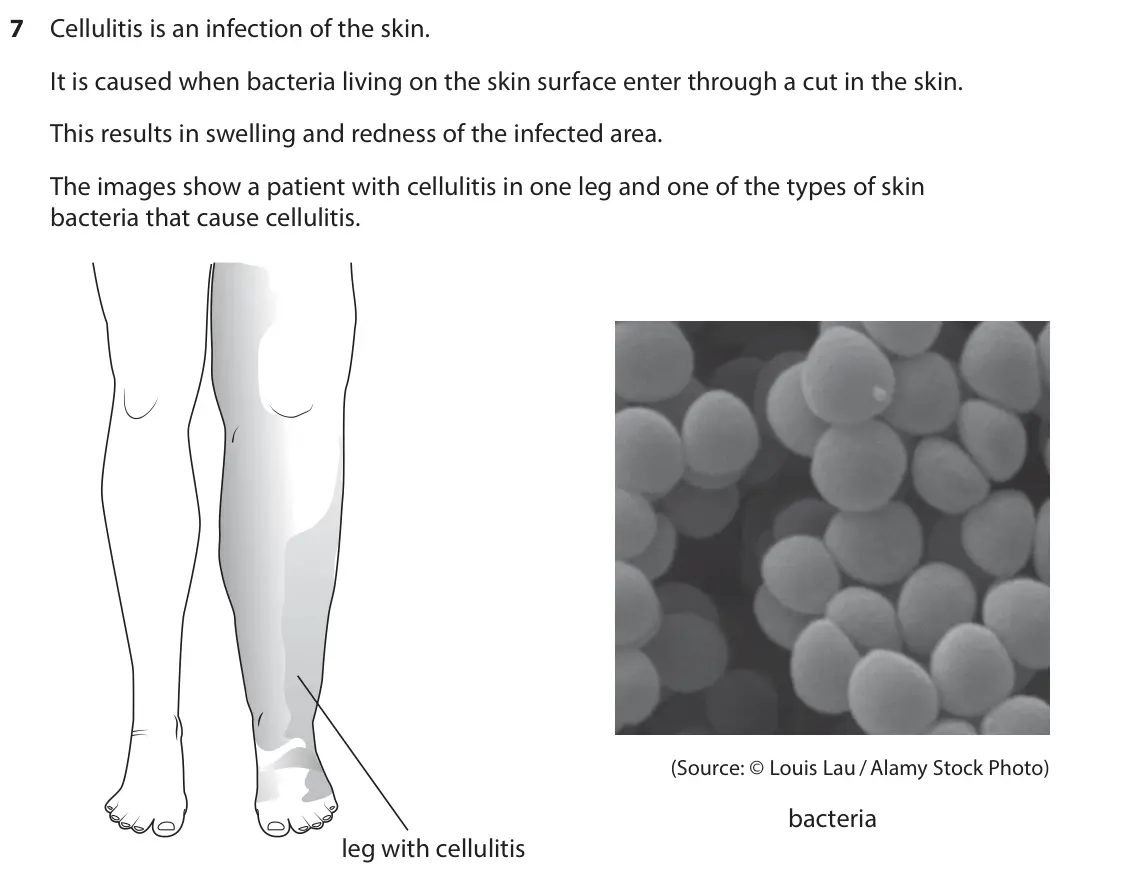
Q7(b)(ii)
The whole paper ↗Your answerQ3(a)(i)
The whole paper ↗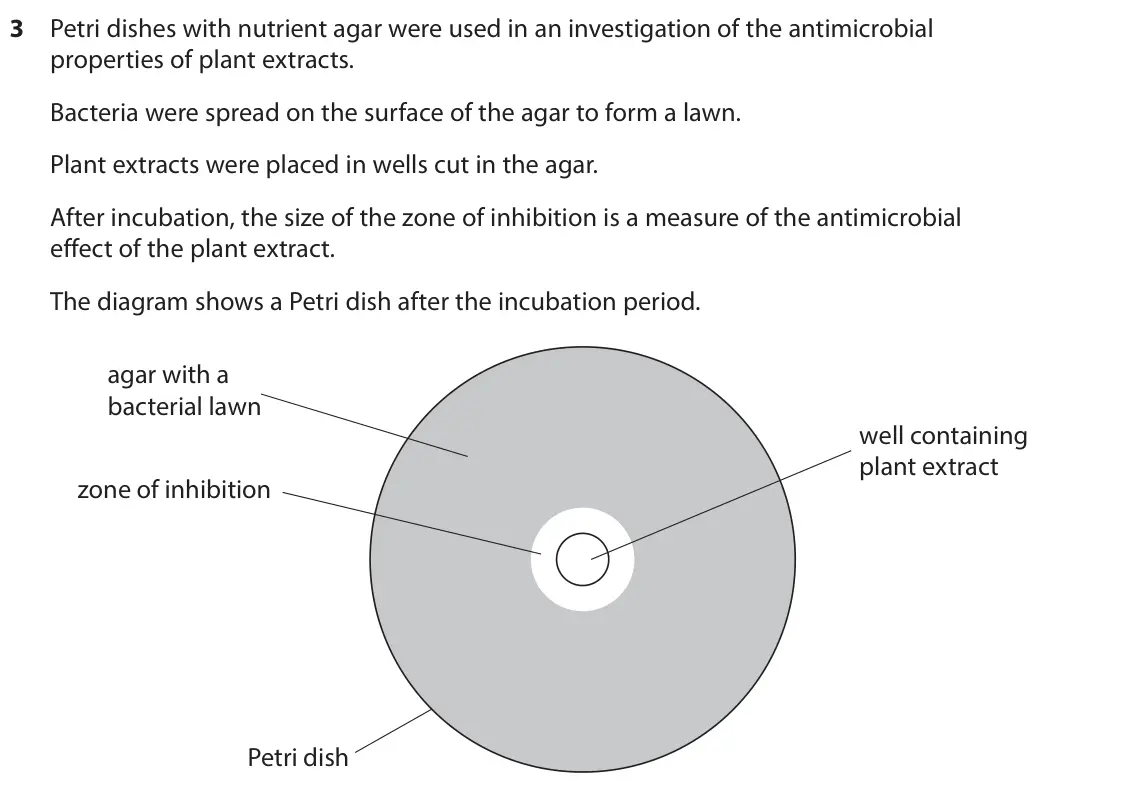
Q3(a)(ii)
The whole paper ↗Q3(b)(iii)
The whole paper ↗Q3(c)(ii)
The whole paper ↗Q3(b)(v)
The whole paper ↗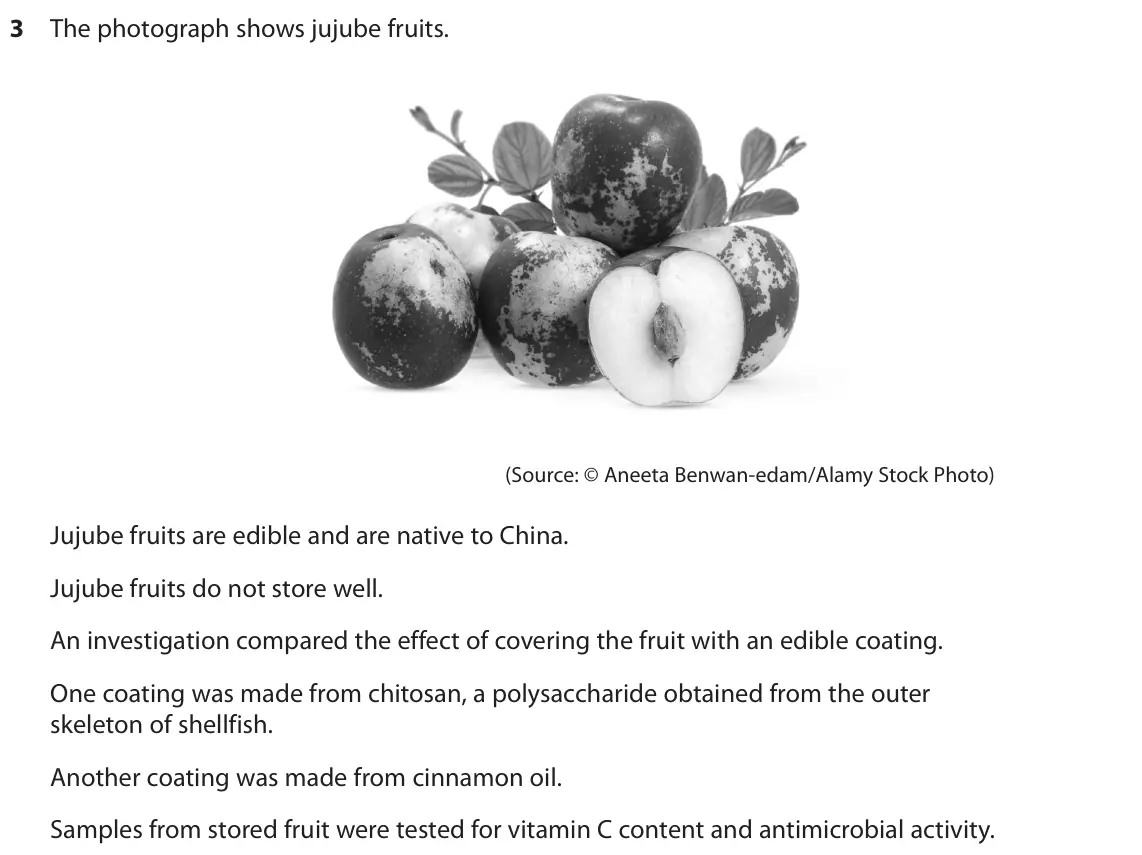
Q2(b)(ii)
The whole paper ↗
Q1(a)
The whole paper ↗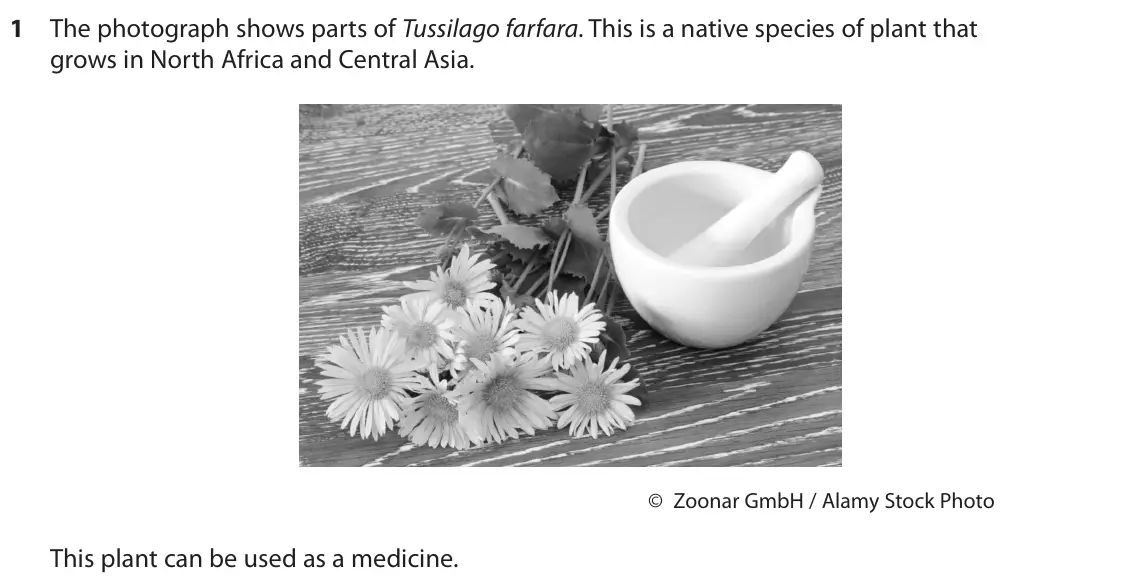
Q7(c)(ii)
The whole paper ↗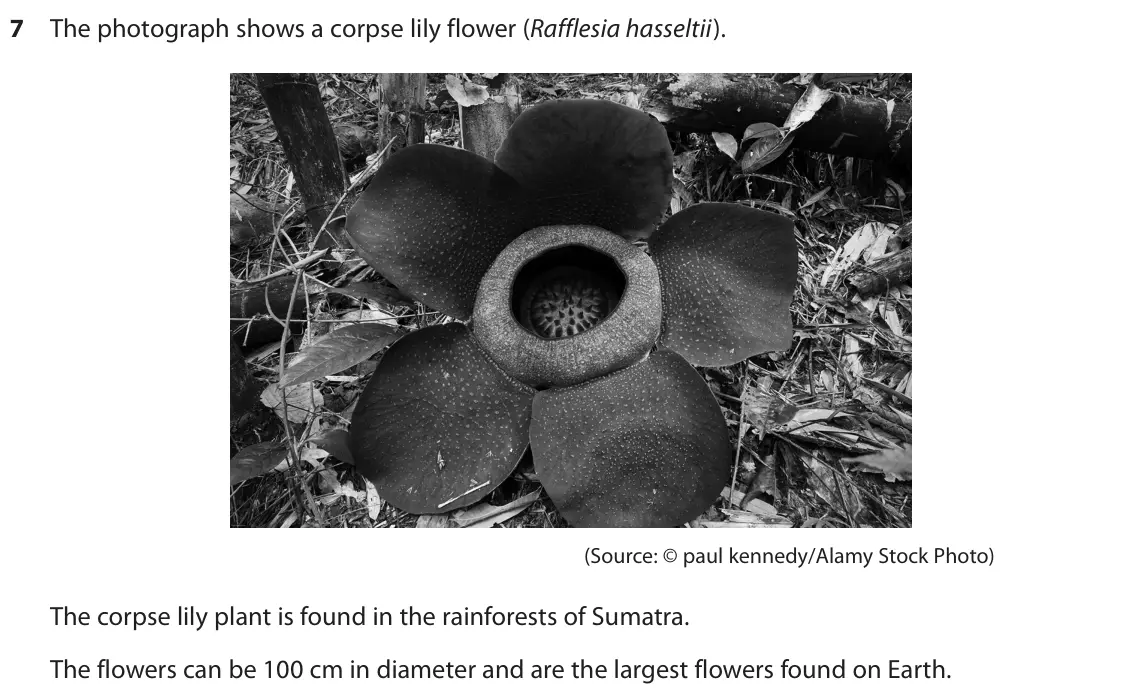
Q3(a)(i)
The whole paper ↗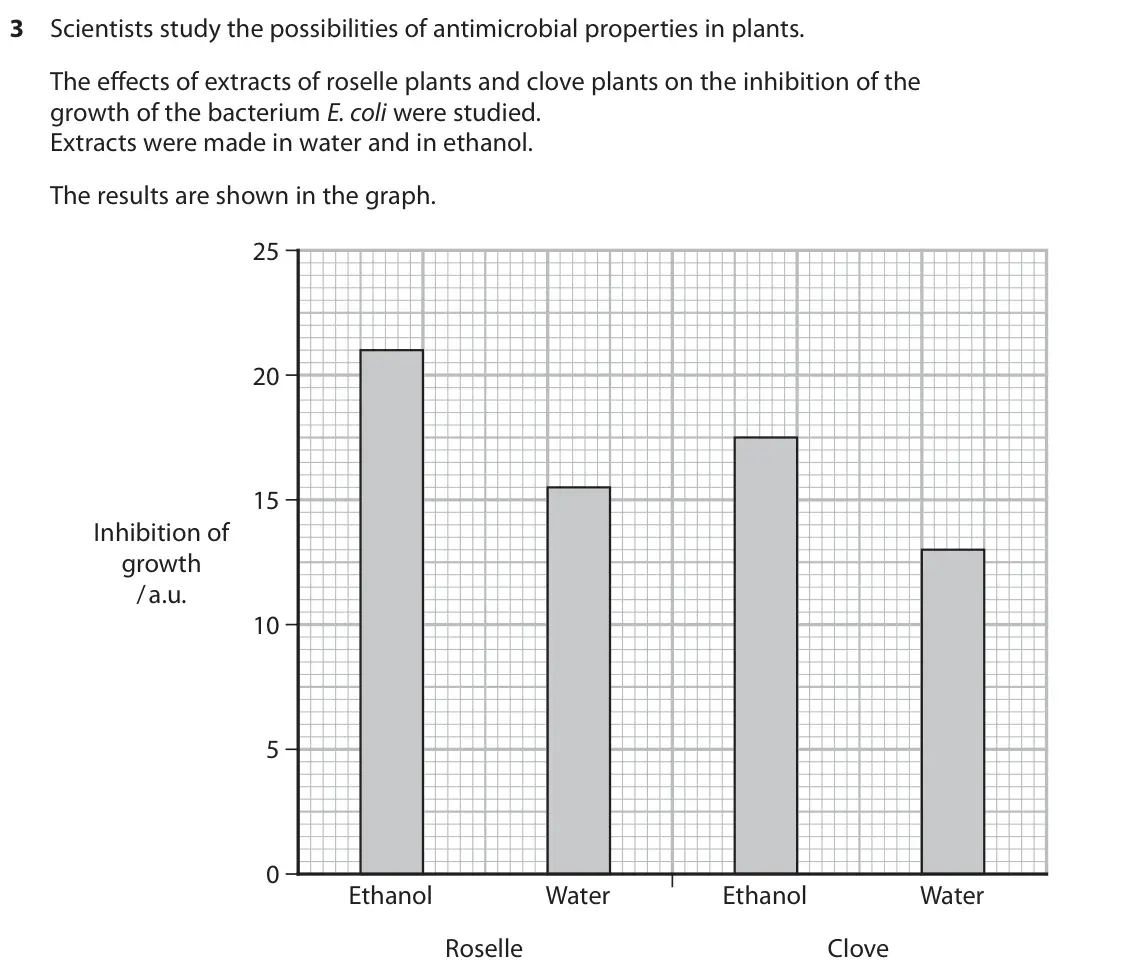
Q3(a)(ii)
The whole paper ↗Q3(c)(i)
The whole paper ↗Q3(c)(ii)
The whole paper ↗Q3(d)
The whole paper ↗Q4(a)
The whole paper ↗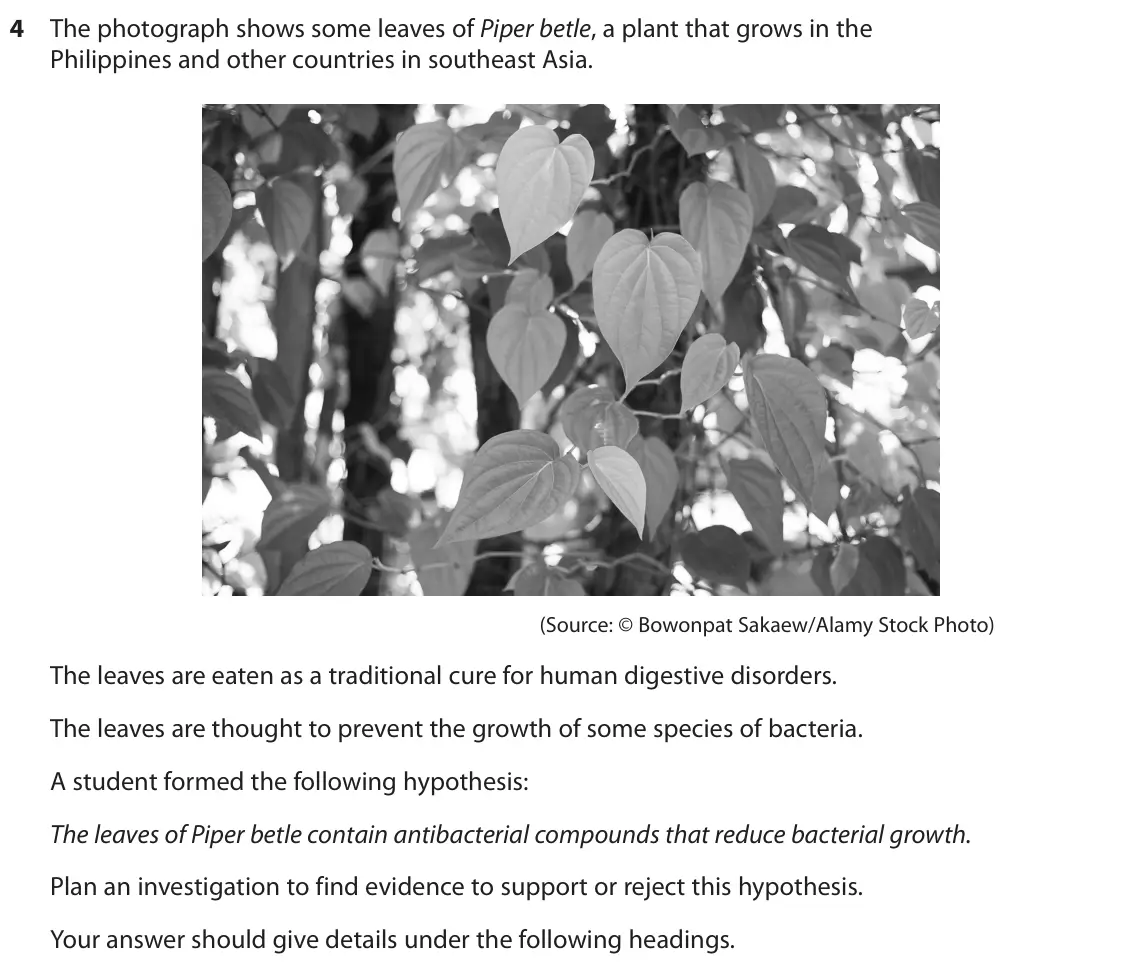
Q4(b)
The whole paper ↗Q4(d)
The whole paper ↗Q6(a)
The whole paper ↗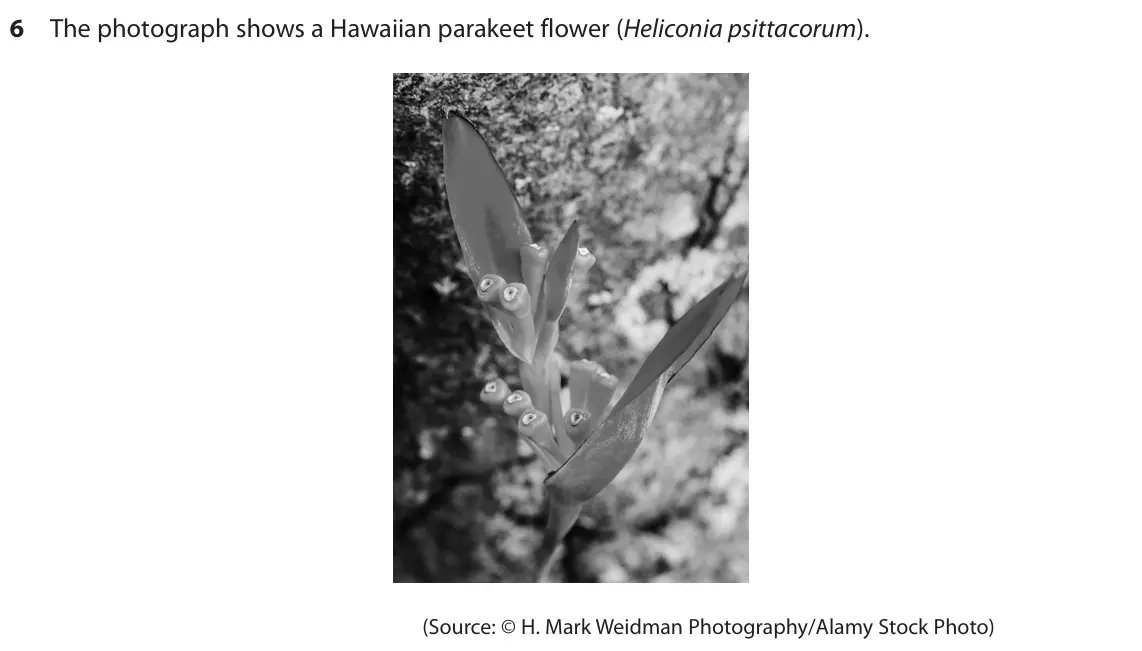
All 36 questions on Antimicrobial properties of plants, as a list
- June 2025, AS Unit 2, Q5(b) (4 marks): Substances derived from plants can have antimicrobial properties. The antimicrobial properties of an extract made from olive oil were investigated. The same num
- October 2024, AS Unit 2, Q7(b)(i) (3 marks): Calculate the standard deviation for this set of data. Use the student’s table and formula to help you. (3) Answer mm
- October 2024, AS Unit 2, Q7(b)(ii) (1 mark): Which of the following explains why the student would want to calculate the standard deviation(s) (SD) for this experiment? (1) A to see how widely the diameter
- October 2024, AS Unit 3, Q3(a)(i) (2 marks): Explain why the dishes were incubated for 48 hours at 30°C. (2) 48 hours 30°C
- October 2024, AS Unit 3, Q3(a)(ii) (3 marks): Explain three aseptic techniques that should be used when transferring bacteria from one culture to another. (3) 1 2 3
- October 2024, AS Unit 3, Q3(b)(iii) (4 marks): The table shows the results from this investigation. Diameter of zone of inhibition / mm Type of bacteria oil A oil B B. subtilis 20.66 11.33 E. coli 8.66 0.00
- October 2024, AS Unit 3, Q3(c)(ii) (2 marks): A method that avoids this problem is to find the minimum inhibitory concentration (MIC) of the extract. The MIC can be defined as the minimum concentration of t
- June 2024, AS Unit 3, Q3(b)(v) (4 marks): The antimicrobial activity was compared by measuring the diameter of the zone of growth inhibition. The greater the diameter, the greater the antimicrobial acti
- January 2024, AS Unit 2, Q2(b)(ii) (4 marks): The effect of packaging material on the growth of viable bacteria on the surface of fish was investigated. The number of S. aureus bacteria on four groups of fi
- January 2024, Unit 6, Q1(a) (6 marks): Describe how the antibacterial activity of different parts of this plant could be compared. (6)
- June 2023, AS Unit 2, Q7(c)(ii) (4 marks): Comment on the results of this investigation. (4)
- June 2023, AS Unit 3, Q3(a)(i) (2 marks): Explain two reasons why aseptic techniques were used in this study. (2) 1 2
- June 2023, AS Unit 3, Q3(a)(ii) (4 marks): Describe a method to obtain the data in this graph. (4)
- June 2023, AS Unit 3, Q3(c)(i) (1 mark): Calculate the ratio of the inhibition for the ethanol extracts of roselle and clove. (1) Answer
- June 2023, AS Unit 3, Q3(c)(ii) (2 marks): Describe two conclusions that can be drawn from the results of this investigation. (2) 1 2
- June 2023, AS Unit 3, Q3(d) (2 marks): In another study, the effect of these extracts on the internal pH of the cells of E. coli was investigated. The internal pH of E. coli was reduced by each of th
- June 2023, Unit 6, Q4(a) (2 marks): Describe preliminary practical work that you might undertake to ensure your proposed method would provide quantitative results. (2)
- June 2023, Unit 6, Q4(b) (9 marks): Devise a detailed method, including how you would control and monitor important variables. (9)
- June 2023, Unit 6, Q4(d) (2 marks): Describe two limitations of your proposed method. (2)
- January 2023, AS Unit 2, Q6(a) (3 marks): The antimicrobial properties of an extract from this plant were investigated. Three sets of agar plates were poured. Each set had a different type of bacteria s
- October 2022, AS Unit 2, Q4(b)(i) (3 marks): Comment on the results of this investigation. (3)
- October 2022, AS Unit 2, Q4(b)(ii) (1 mark): Suggest one reason for the difference in bacterial survival on the pine chopping board and on the plastic chopping board. (1)
- October 2022, Unit 4, Q7(d)(ii) (3 marks): Determine the effect that Castaneroxy A has on the mean size of skin infections. (3)
- October 2022, Unit 4, Q7(d)(iii) (3 marks): The leaves of the chestnut tree contain 0.0019 %, by mass, of Castaneroxy A. Calculate the mass of leaves, in kilograms, that would be needed to produce 1 dm3 o
- January 2022, AS Unit 2, Q5(b) (2 marks): The photograph shows a bottle of oil extracted from the plant oregano. This plant is native to Mediterranean and western Asian countries. (Source: © Frank Hecke
- January 2022, AS Unit 2, Q5(c)(i) (1 mark): Which type of bacteria was least affected by fucoxanthin? (1) A E. coli B S. aureus C L. monocytogenes D P. aeruginosa
- January 2022, AS Unit 2, Q5(c)(ii) (1 mark): The table shows the mean and the range of the diameter of the zone of inhibition for each type of bacteria. Calculate the maximum difference in the diameter of
- January 2022, AS Unit 3, Q1(a)(i) (2 marks): State a suitable dependent variable with units for this investigation. (2) Dependent variable Units
- January 2022, AS Unit 3, Q1(a)(ii) (5 marks): Describe a safe method, that uses your dependent variable, to obtain the results shown in the graph. (5)
- January 2022, AS Unit 3, Q1(a)(iii) (2 marks): Calculate the percentage difference in the effects of the methanol extract and gentamicin on S. typhimurium. Give your answer to two significant figures. (2) An
- January 2022, AS Unit 3, Q1(a)(iv) (4 marks): Comment on the antimicrobial effect of extracts of the Arencho plant. (4)
- January 2022, AS Unit 3, Q1(b) (4 marks): In a further study, the chemicals β-sitosterol and stigmasterol were purified from the methanol extract. The antimicrobial properties of these chemicals were me
- June 2021, AS Unit 3, Q1(a) (5 marks): Describe a method that can be used to study the antimicrobial properties of a plant extract. (5)
- June 2021, AS Unit 3, Q1(b)(ii) (4 marks): Evaluate the antimicrobial effects of these extracts. Use the data to support your answer. (4)
- October 2020, AS Unit 2, Q6(b)(i) (2 marks): Calculate the percentage decrease in the mean areas of ulcer of the rats treated with omeprazole compared with the control rats with ulcer. (2) Answer %
- October 2020, AS Unit 2, Q6(b)(ii) (6 marks): Explain the results of this investigation. Use all the information in Question 6 to support your answer. (6)
Questions, mark schemes and examiner’s reports are © Pearson Edexcel, from their published past papers. Plumi isn’t affiliated with any exam board. Want whole papers? Edexcel International A Level Biology past papers.
The Plumi iPad app also offers exam-style questions with AI feedback on your handwritten working.