 plumi
Thermal radiation: Edexcel GCSE Physics questions
Every Edexcel GCSE Physics exam question on Thermal radiation (specification points 5.15–5.19), 2018–2025, with its mark scheme and examiner’s report.
Find questions1,554
Exam
All years
Calculations
Q7(d)
The whole paper ↗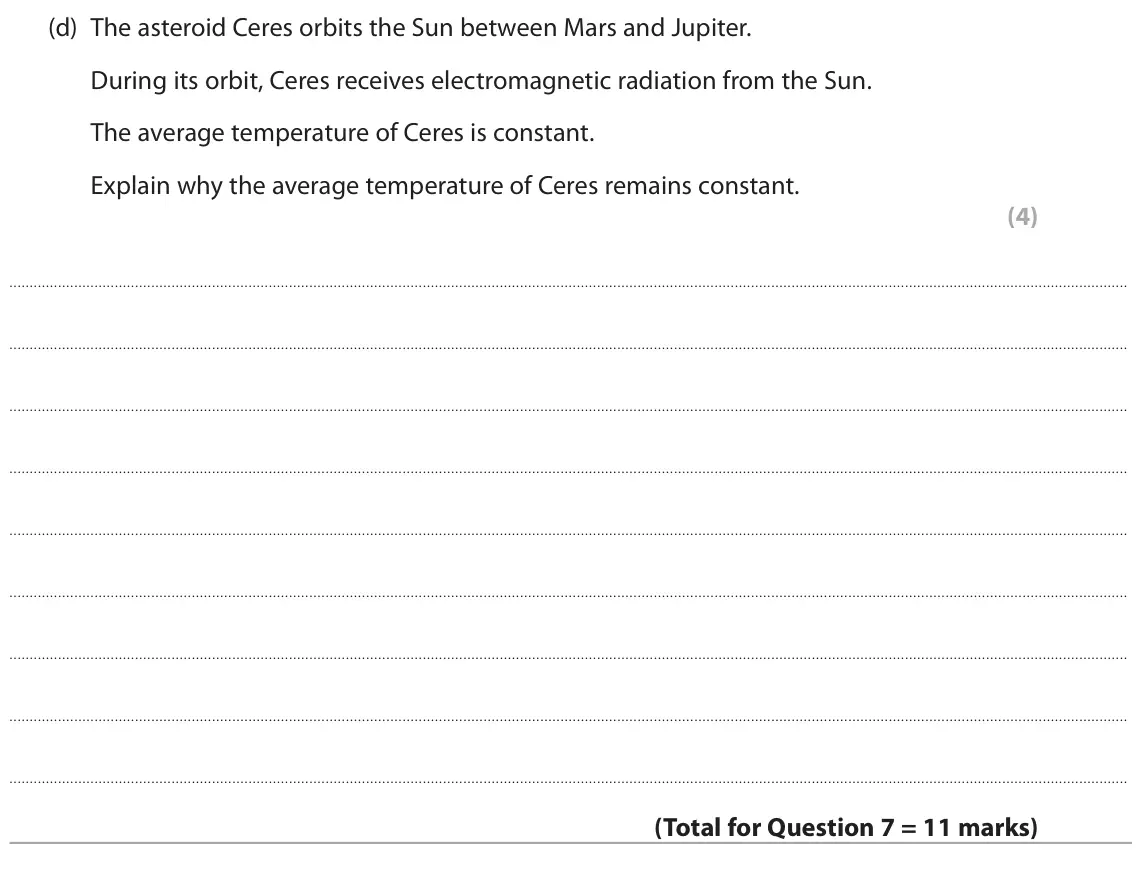
Q8(b)(i)
The whole paper ↗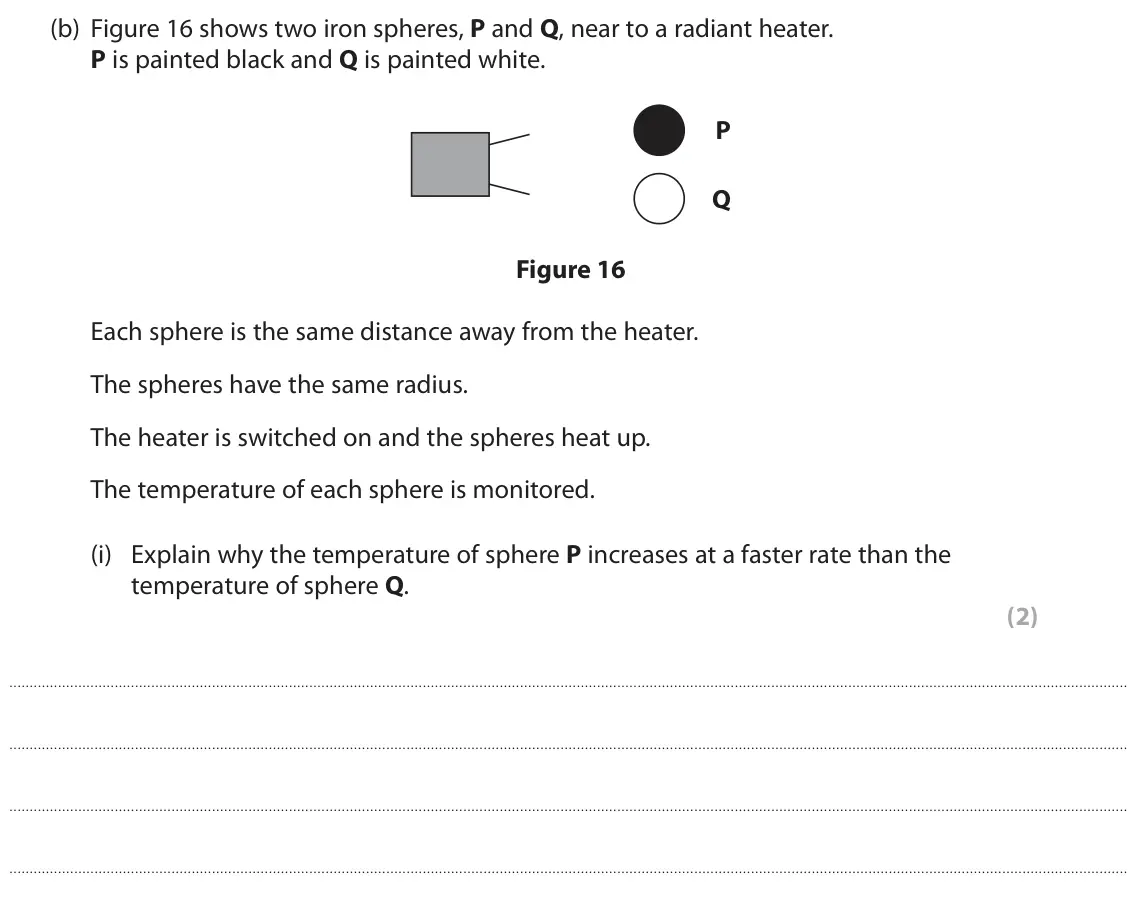
Q8(b)(ii)
The whole paper ↗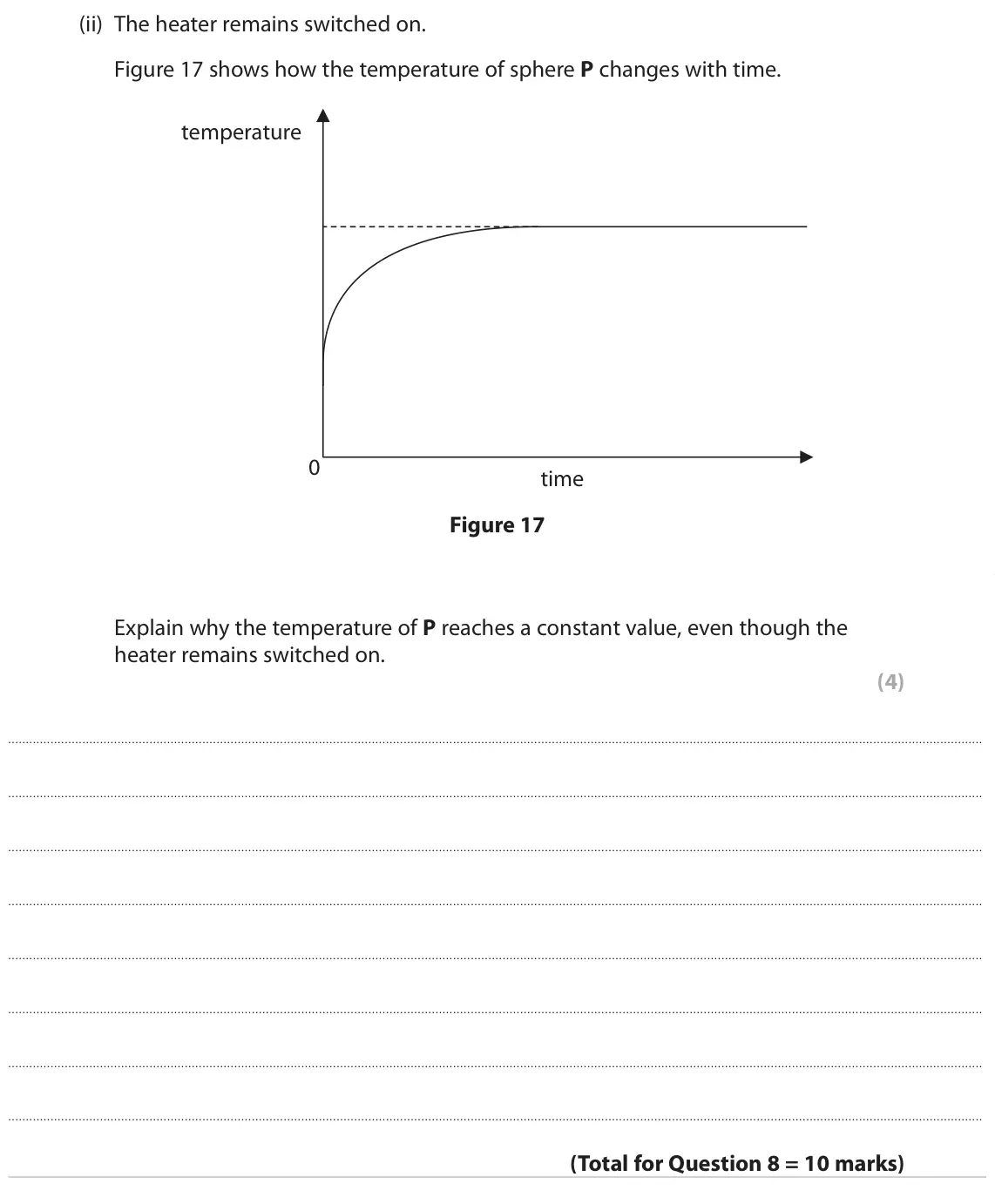
Q6(a)(i)
The whole paper ↗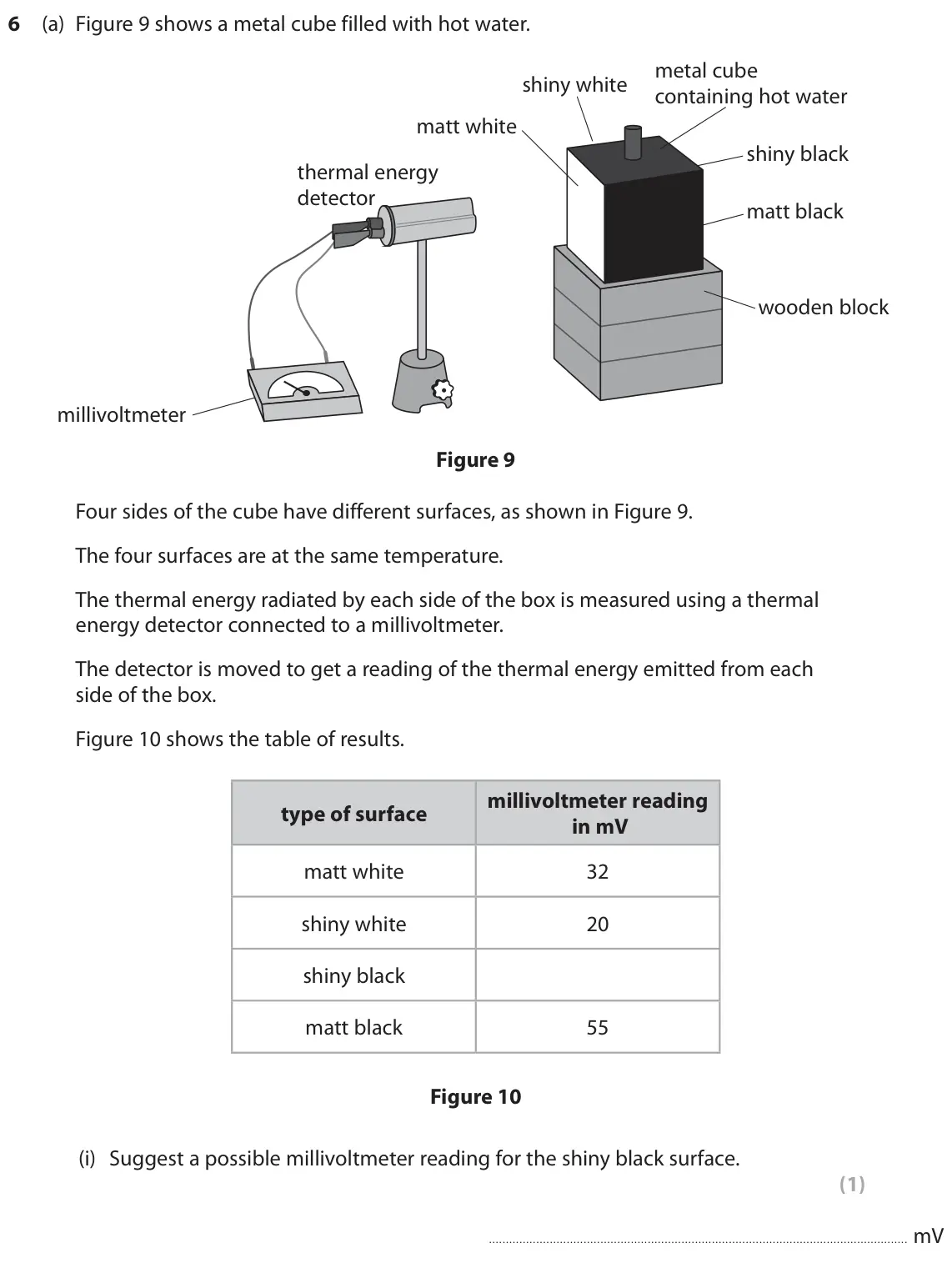
Q6(a)(ii)
The whole paper ↗
Q6(a)(iii)
The whole paper ↗
Q6(b)
The whole paper ↗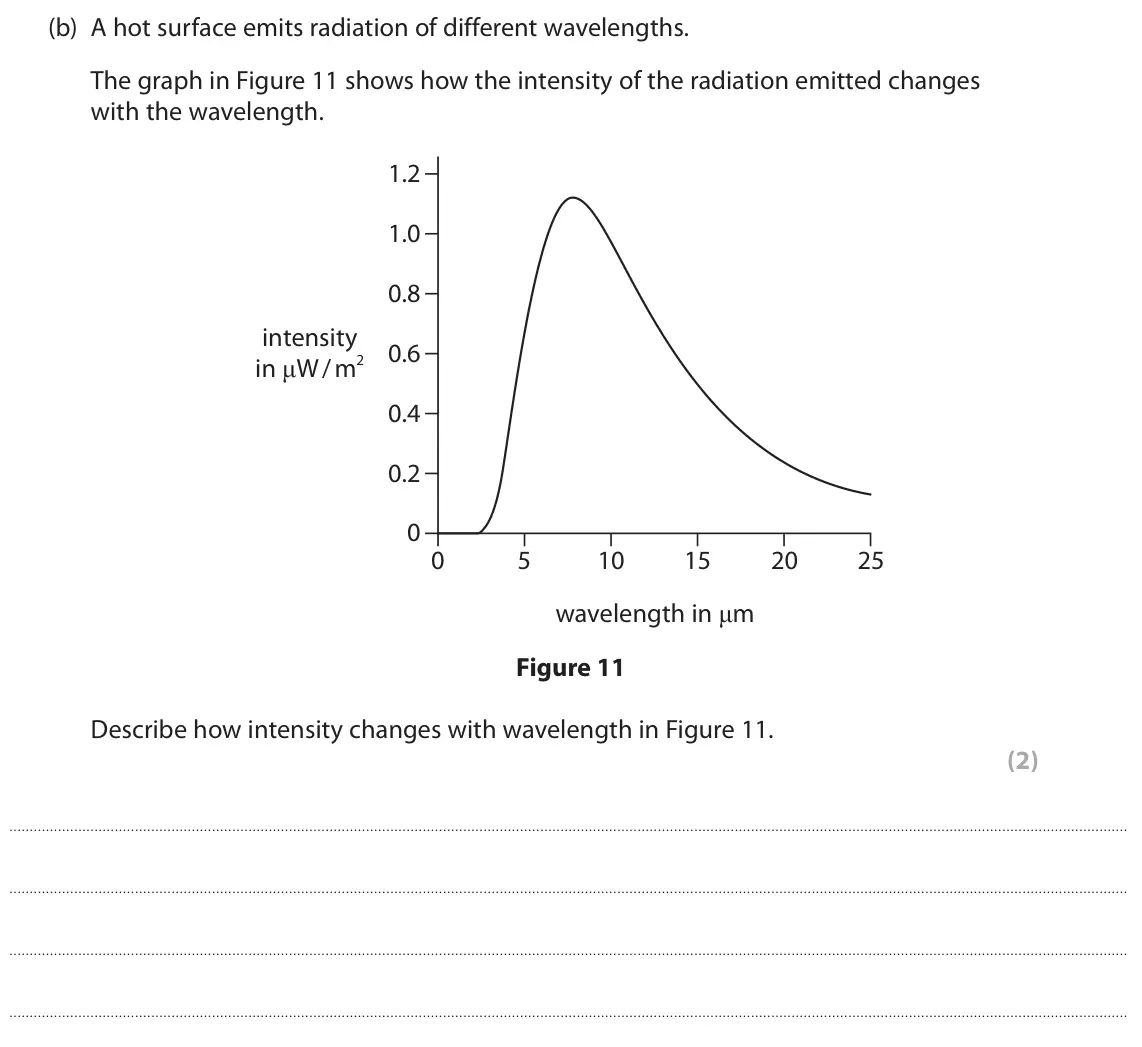
Q6(c)
The whole paper ↗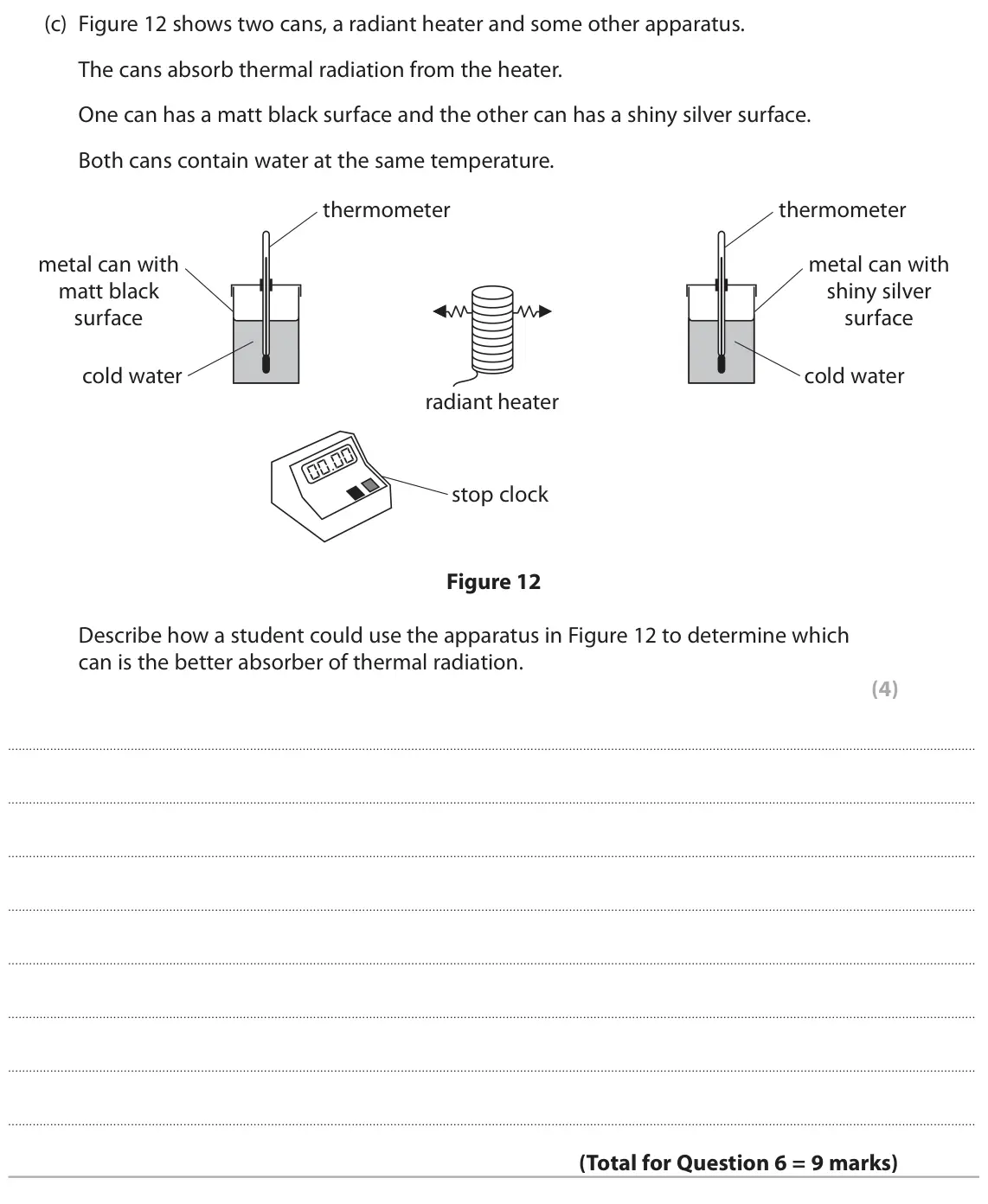
Q8(d)
The whole paper ↗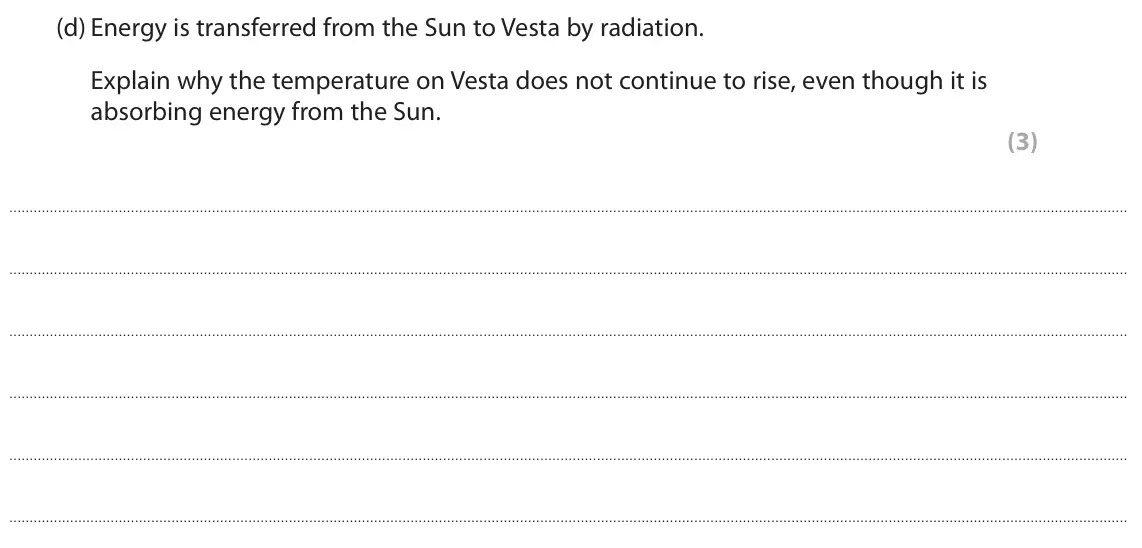
Q8(e)(i)
The whole paper ↗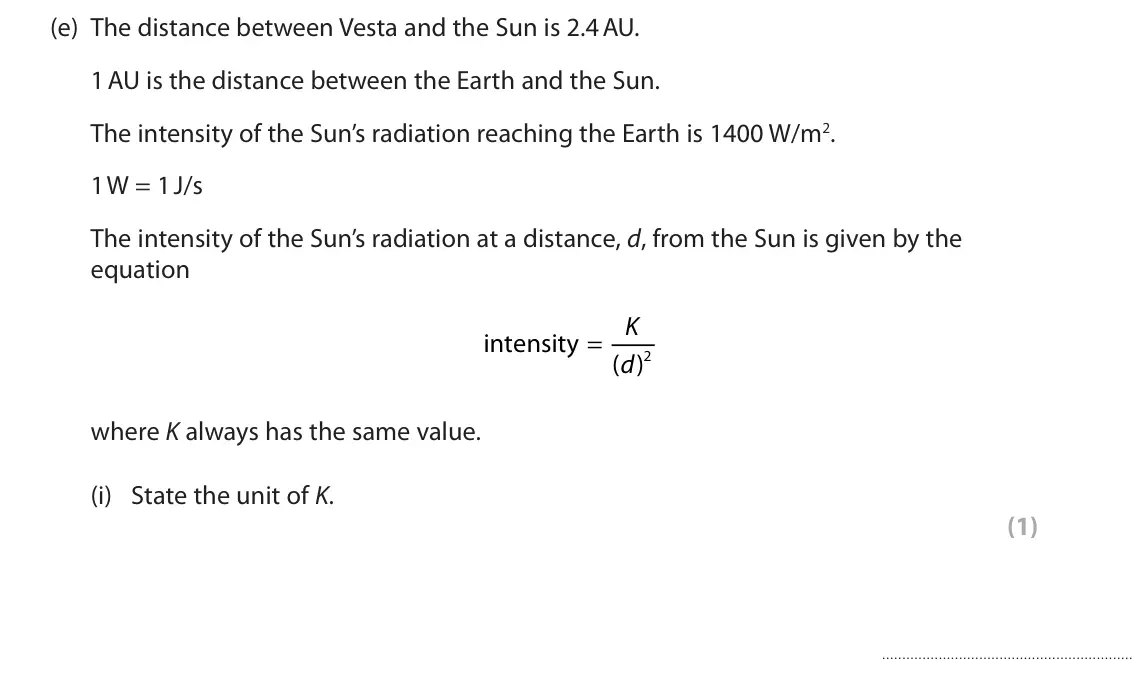
Q8(e)(ii)
The whole paper ↗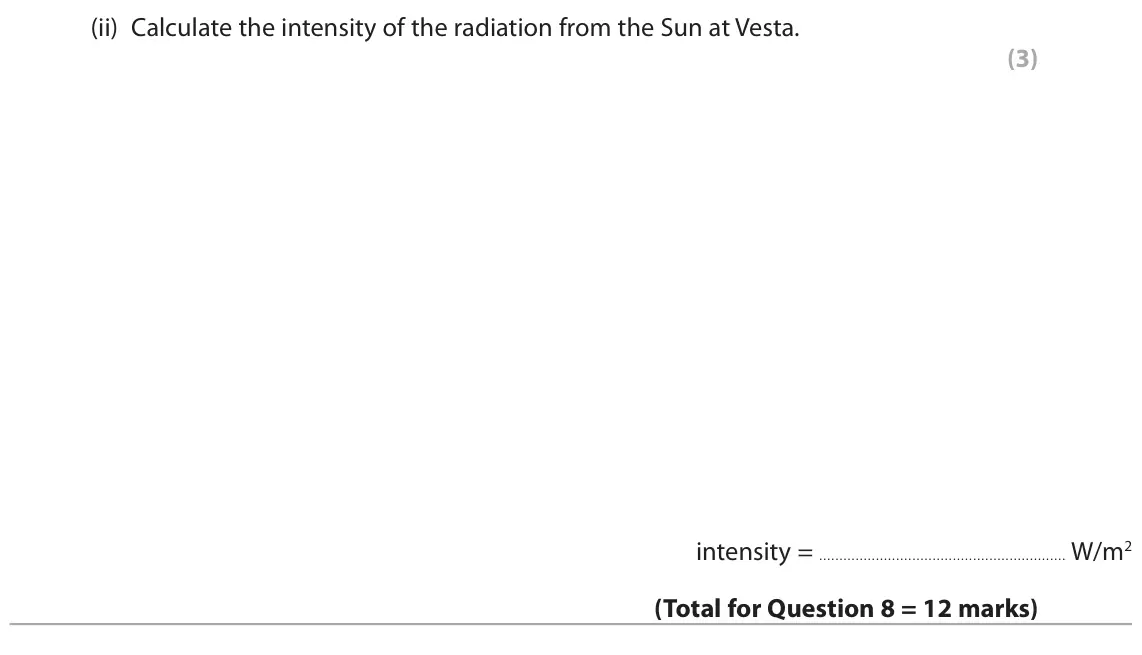
Q2(c)
The whole paper ↗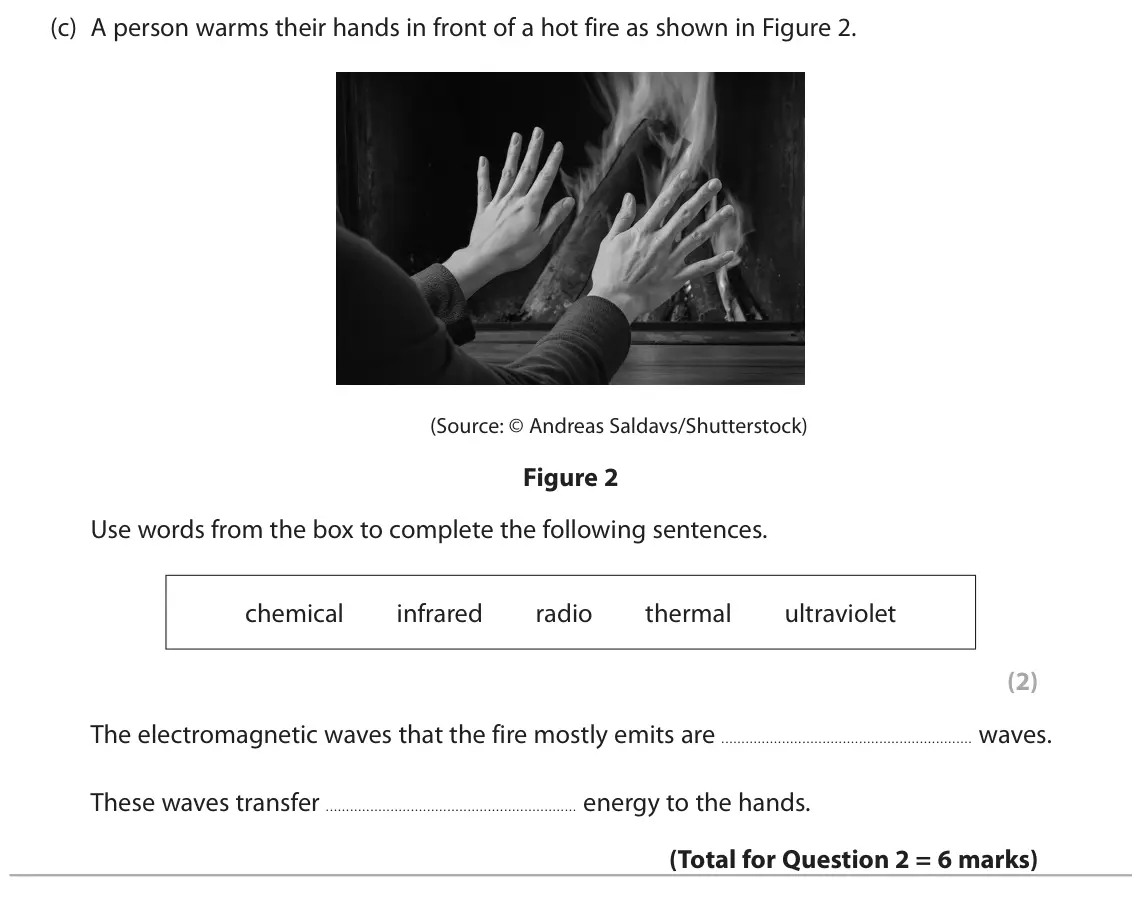
Q4(b)(i)
The whole paper ↗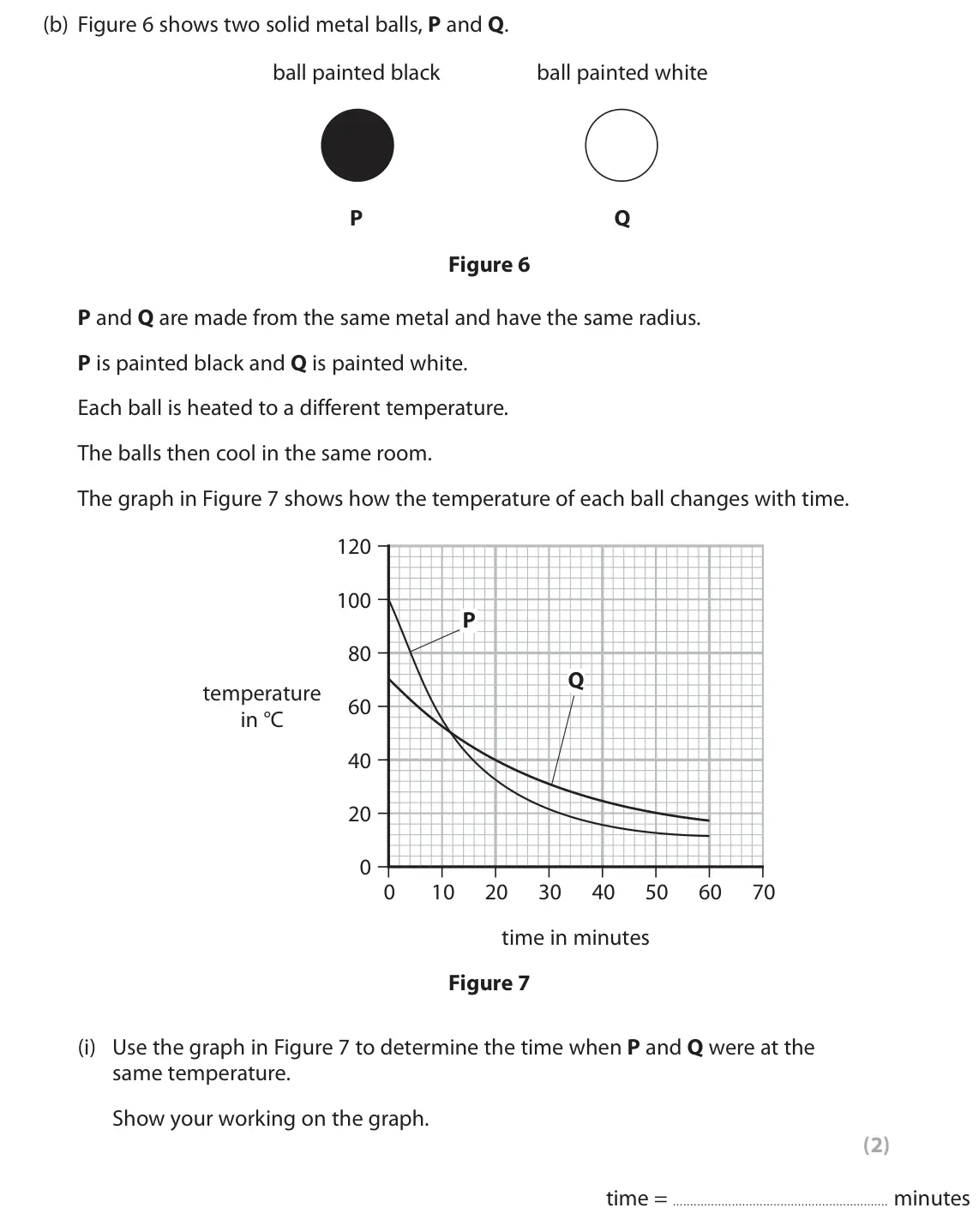
Q4(b)(ii)
The whole paper ↗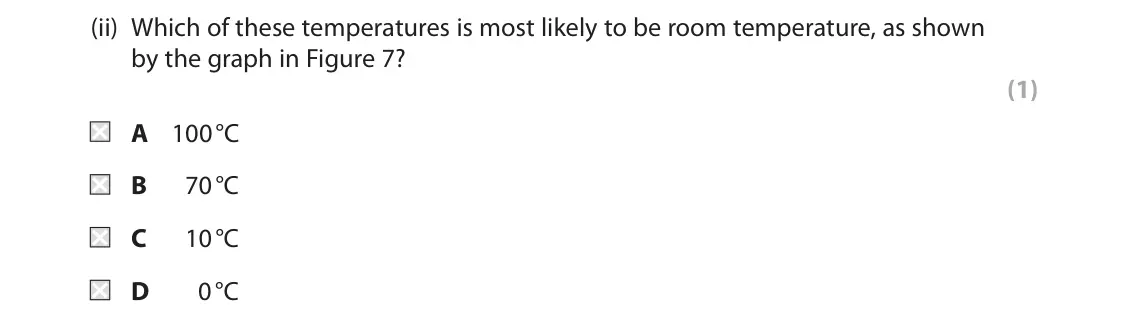
Q4(b)(iii)
The whole paper ↗
Q7(a)
The whole paper ↗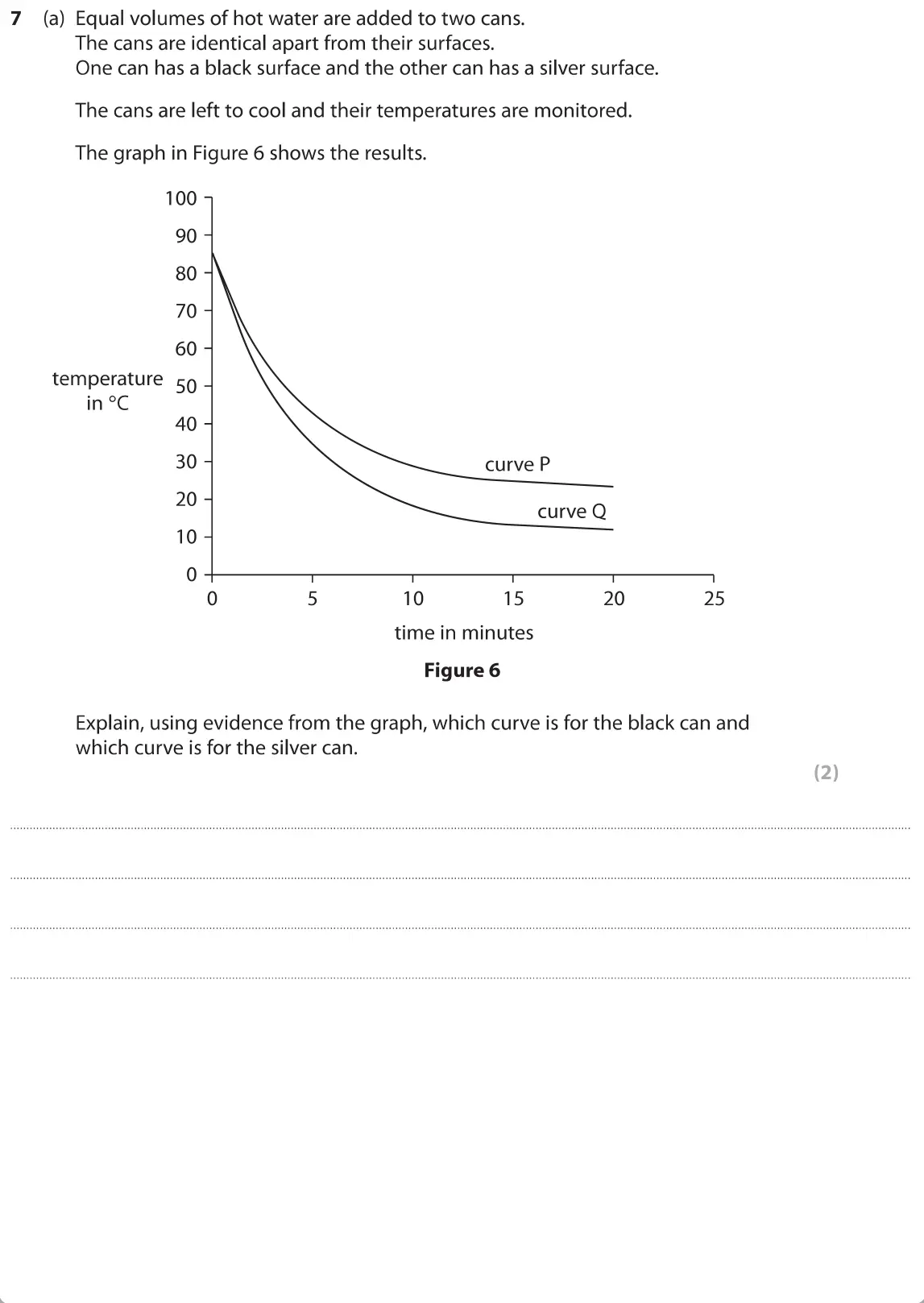
Q7(b)
The whole paper ↗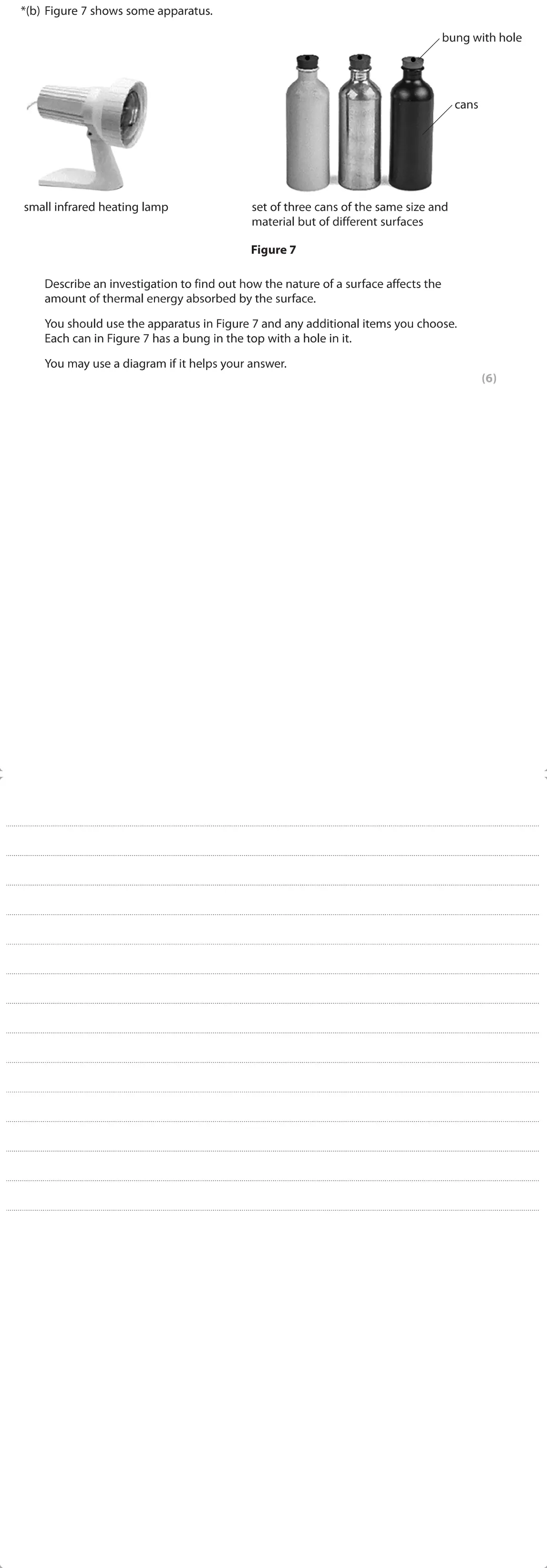
Q7(c)(ii)
The whole paper ↗
Q8(a)
The whole paper ↗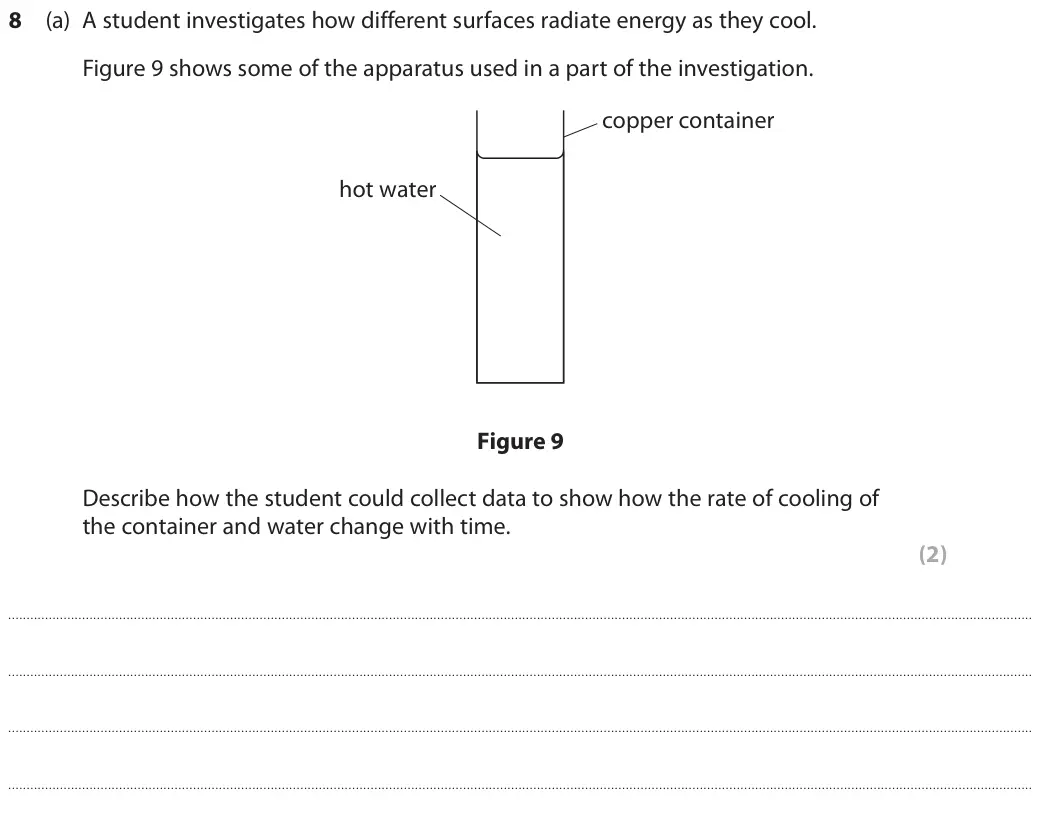
Q8(b)
The whole paper ↗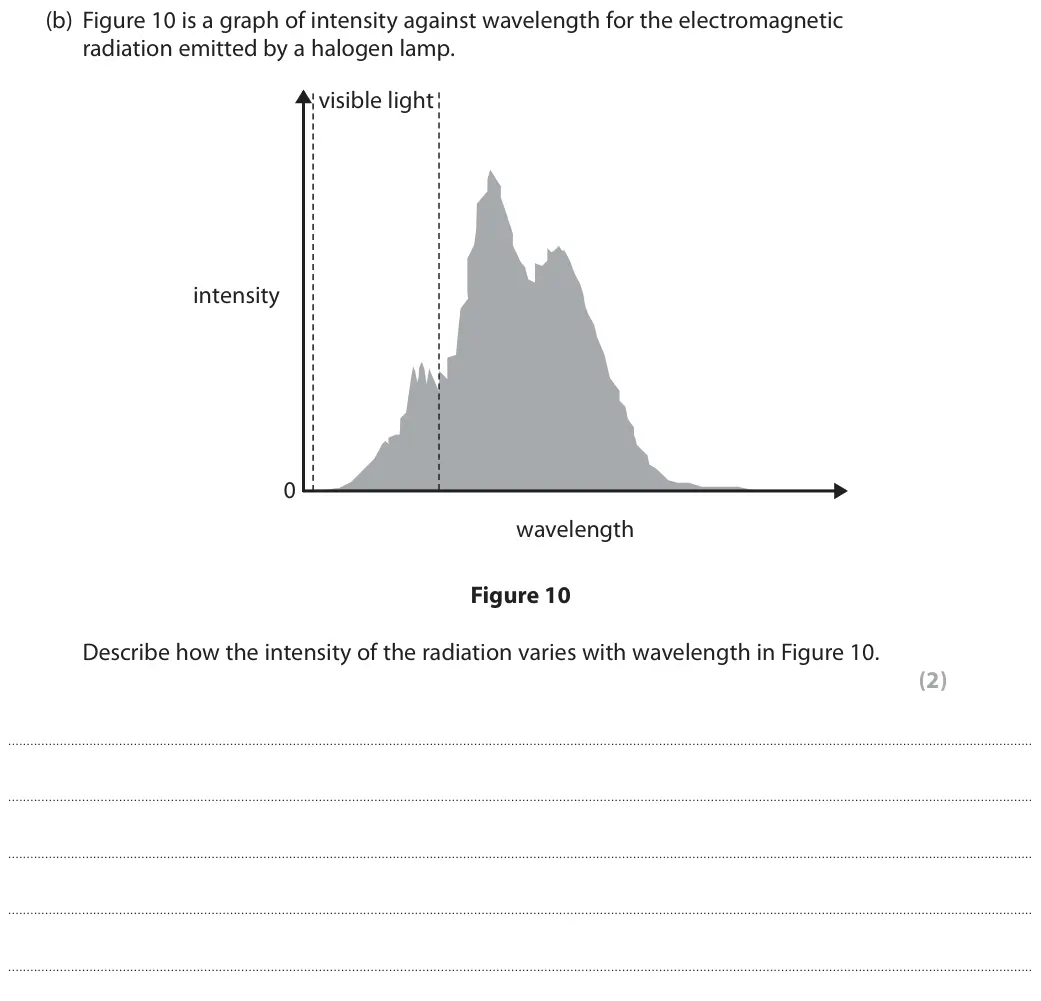
All 28 questions on Thermal radiation, as a list
- June 2025, Paper 1 Higher, Q7(d) (4 marks): The asteroid Ceres orbits the Sun between Mars and Jupiter. During its orbit, Ceres receives electromagnetic radiation from the Sun. The average temperature of
- June 2023, Paper 1 Higher, Q8(b)(i) (2 marks): Explain why the temperature of sphere P increases at a faster rate than the temperature of sphere Q. (2)
- June 2023, Paper 1 Higher, Q8(b)(ii) (4 marks): The heater remains switched on. Figure 17 shows how the temperature of sphere P changes with time. temperature 0 time Figure 17 Explain why the temperature of P
- June 2023, Paper 1 Foundation, Q6(a)(i) (1 mark): Suggest a possible millivoltmeter reading for the shiny black surface. (1) mV
- June 2023, Paper 1 Foundation, Q6(a)(ii) (1 mark): State what must be kept the same to take the measurement for each surface. (1)
- June 2023, Paper 1 Foundation, Q6(a)(iii) (1 mark): Suggest why the cube is placed on a block of wood. (1)
- June 2023, Paper 1 Foundation, Q6(b) (2 marks): A hot surface emits radiation of different wavelengths. The graph in Figure 11 shows how the intensity of the radiation emitted changes with the wavelength. 1.2
- June 2023, Paper 1 Foundation, Q6(c) (4 marks): Figure 12 shows two cans, a radiant heater and some other apparatus. The cans absorb thermal radiation from the heater. One can has a matt black surface and the
- November 2021, Paper 1 Higher, Q8(d) (3 marks): Energy is transferred from the Sun to Vesta by radiation. Explain why the temperature on Vesta does not continue to rise, even though it is absorbing energy fro
- November 2021, Paper 1 Higher, Q8(e)(i) (1 mark): State the unit of K. (1)
- November 2021, Paper 1 Higher, Q8(e)(ii) (3 marks): Calculate the intensity of the radiation from the Sun at Vesta. (3) intensity = W/m2
- November 2021, Paper 1 Foundation, Q2(c) (2 marks): A person warms their hands in front of a hot fire as shown in Figure 2. (Source: © Andreas Saldavs/Shutterstock) Figure 2 Use words from the box to complete the
- November 2020, Paper 1 Foundation, Q4(b)(i) (2 marks): Use the graph in Figure 7 to determine the time when P and Q were at the same temperature. Show your working on the graph. (2) time = minutes
- November 2020, Paper 1 Foundation, Q4(b)(ii) (1 mark): Which of these temperatures is most likely to be room temperature, as shown by the graph in Figure 7? (1) A 100 °C B 70 °C C 10 °C D 0 °C
- November 2020, Paper 1 Foundation, Q4(b)(iii) (2 marks): Explain why the curve for P is different from the curve of Q. Use information from Figure 6 and Figure 7 to help your answer. (2)
- June 2019, Paper 1 Foundation, Q7(a) (2 marks): Equal volumes of hot water are added to two cans. The cans are identical apart from their surfaces. One can has a black surface and the other can has a silver s
- June 2019, Paper 1 Foundation, Q7(b) (6 marks): Figure 7 shows some apparatus. bung with hole • cans small infrared heating lamp set of three cans of the same size and material but of different surfaces Figur
- June 2019, Paper 1 Foundation, Q7(c)(ii) (2 marks): One star is blue and another star is red. Explain why an astronomer expects the blue star to be hotter than the red star.
- June 2018, Paper 1 Higher, Q8(a) (2 marks): A student investigates how different surfaces radiate energy as they cool. Figure 9 shows some of the apparatus used in a part of the investigation. copper cont
- June 2018, Paper 1 Higher, Q8(b) (2 marks): Figure 10 is a graph of intensity against wavelength for the electromagnetic radiation emitted by a halogen lamp. visible light intensity 0 wavelength Figure 10
- June 2018, Paper 1 Higher, Q8(c)(i) (4 marks): Calculate the gradient of the graph at a time of 30 ms. State the unit. (4) gradient = unit
- June 2018, Paper 1 Higher, Q8(c)(ii) (3 marks): Explain why the temperature of the lamp rises and then remains at a constant value. (3)
- June 2018, Paper 1 Foundation, Q3(a)(i) (2 marks): Two points, shaded in the table, have not been plotted. Plot these two points on the graph, in Figure 4. (2) 120 100 80 60 temperature °C 40 20 0 0 5 10 15 20 2
- June 2018, Paper 1 Foundation, Q3(a)(ii) (1 mark): One of the points on the graph in Figure 4 is anomalous. Circle the anomalous point. (1)
- June 2018, Paper 1 Foundation, Q3(a)(iii) (1 mark): Draw the best fit curve on the graph in Figure 4. (1)
- June 2018, Paper 1 Foundation, Q3(a)(iv) (1 mark): An identical can contains the same amount of boiling water. This can has a shiny silver surface. The measurements are repeated with this can and a new curve is
- June 2018, Paper 1 Foundation, Q3(b)(i) (2 marks): Estimate the wavelength where the intensity is at a maximum for each of the objects. (2) wavelength at maximum intensity for object L = µm wavelength at maximum
- June 2018, Paper 1 Foundation, Q3(b)(ii) (1 mark): State, with a reason, which object is the hotter object. (1) Object Reason.
Questions, mark schemes and examiner’s reports are © Pearson Edexcel, from their published past papers. Plumi isn’t affiliated with any exam board. Want whole papers? Every Edexcel GCSE Physics paper.
Rather write your answers by hand on iPad? Plumi marks them against the same mark schemes.