 plumi
Reflection, colour and lenses: Edexcel GCSE Physics questions
Every Edexcel GCSE Physics exam question on Reflection, colour and lenses (specification points 5.1–5.6), 2018–2025, with its mark scheme and examiner’s report.
Find questions1,554
Exam
All years
Calculations
Q7(a)
The whole paper ↗
Q7(b)(i)
The whole paper ↗
Q7(b)(ii)
The whole paper ↗
Q7(c)
The whole paper ↗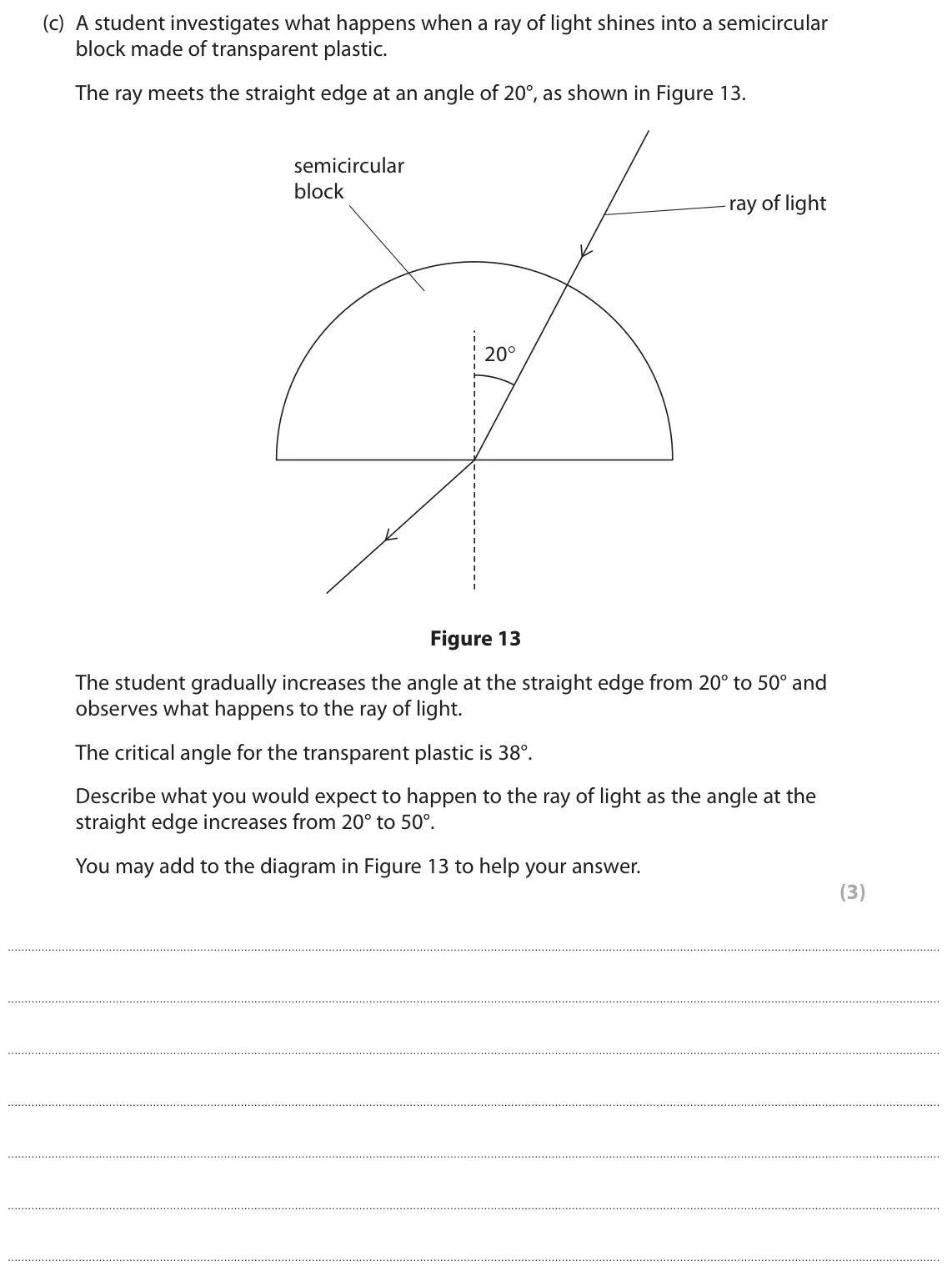
Q1(a)(i)
The whole paper ↗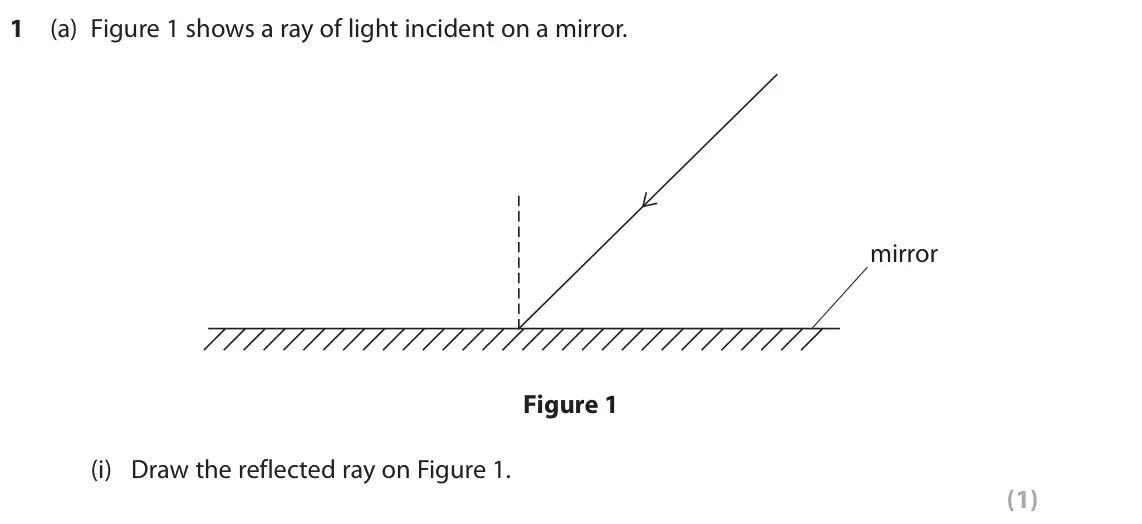
Q1(a)(ii)
The whole paper ↗
Q1(b)
The whole paper ↗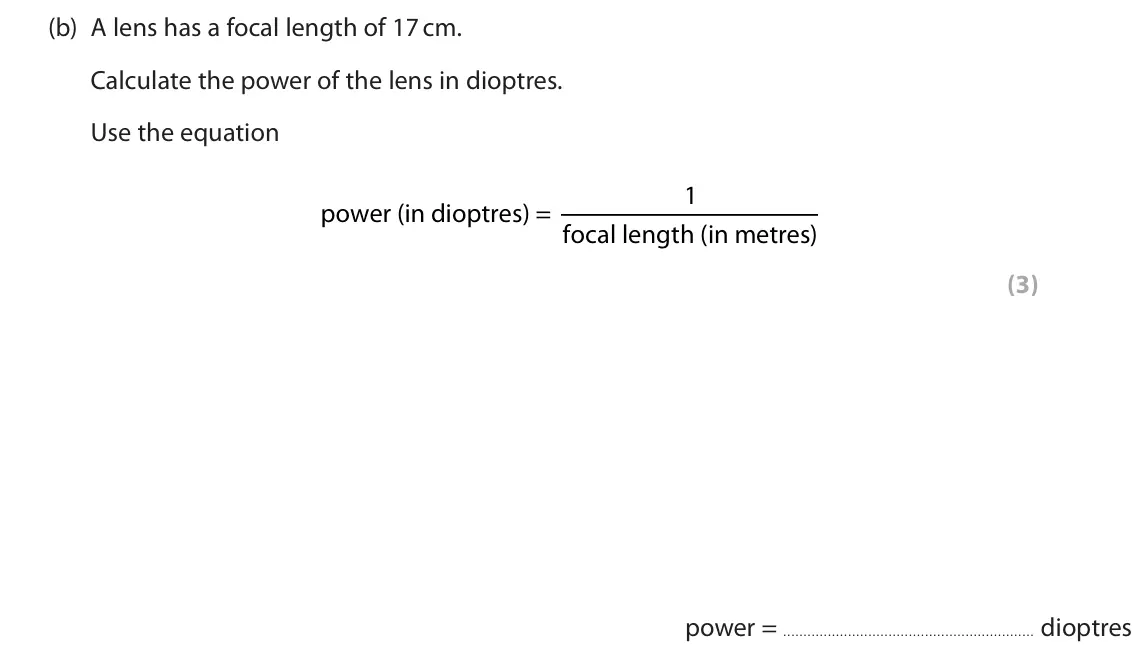
Q1(c)
The whole paper ↗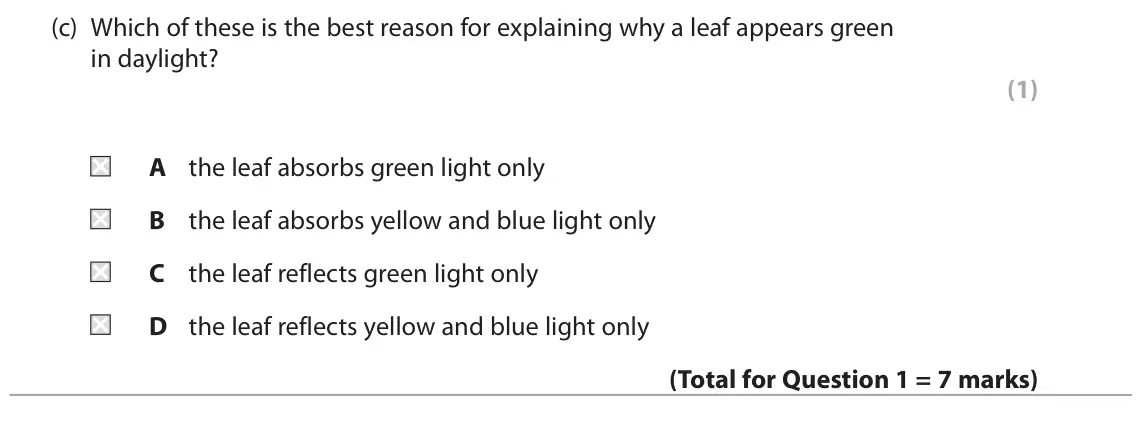
Q6(a)(i)
The whole paper ↗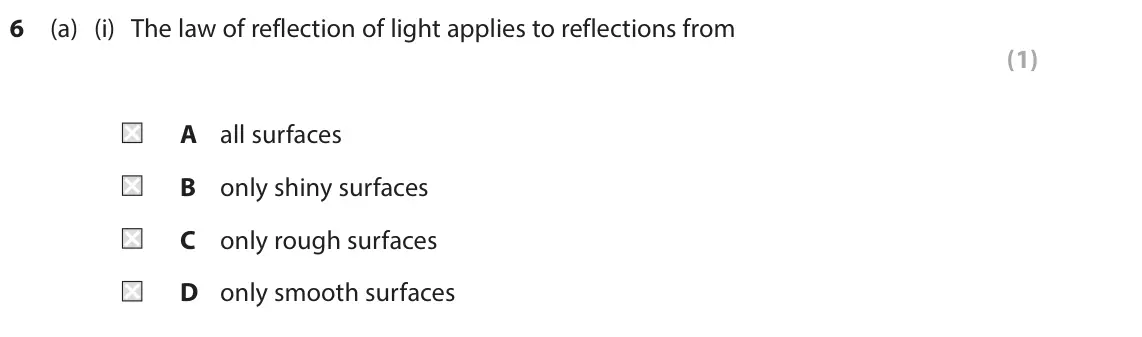
Q6(a)(ii)
The whole paper ↗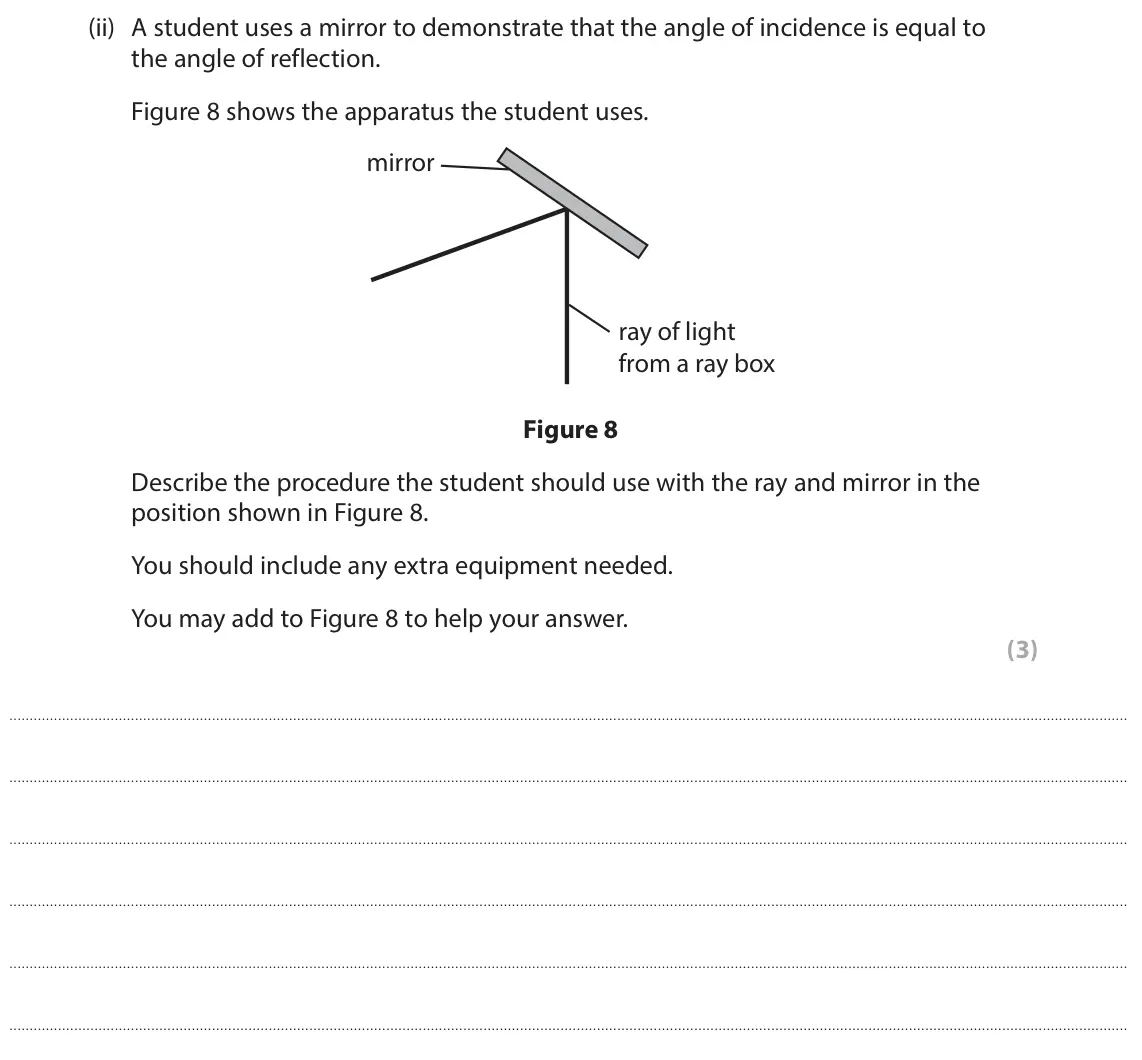
Q6(b)(i)
The whole paper ↗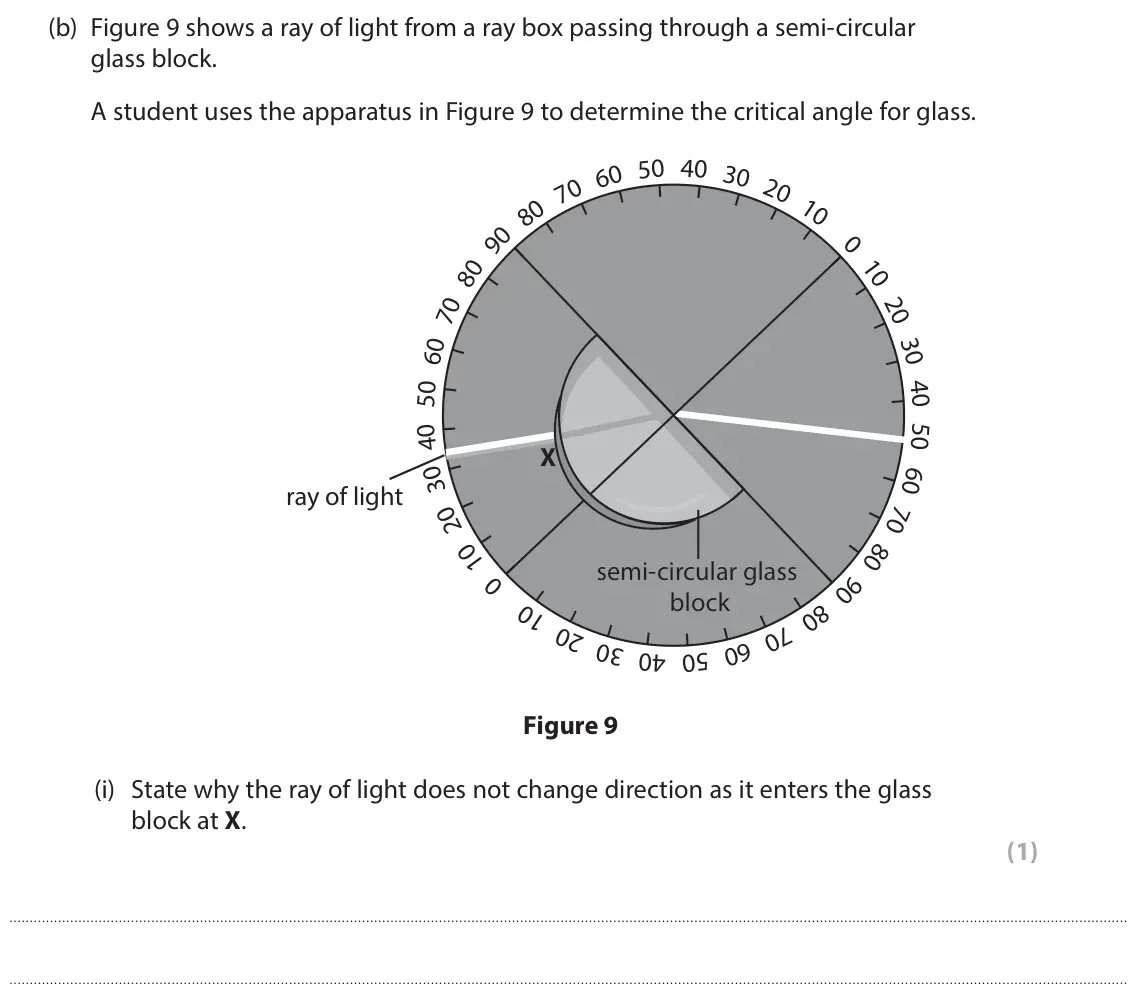
Q6(b)(ii)
The whole paper ↗
Q6(c)
The whole paper ↗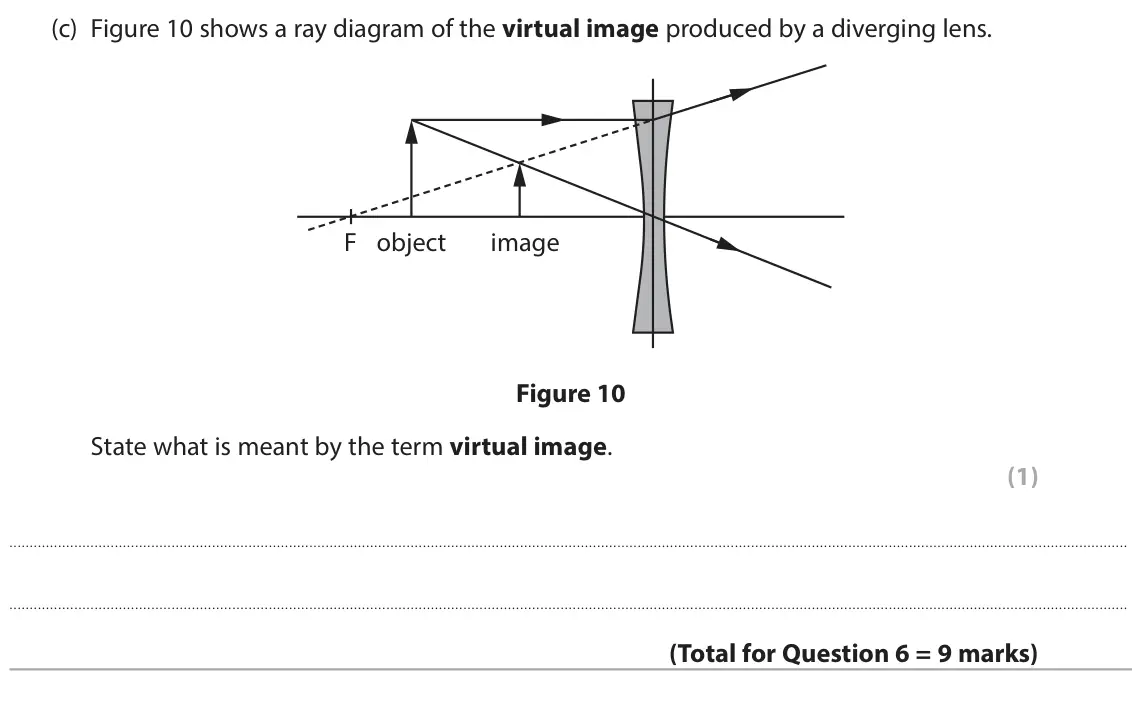
Q2(a)
The whole paper ↗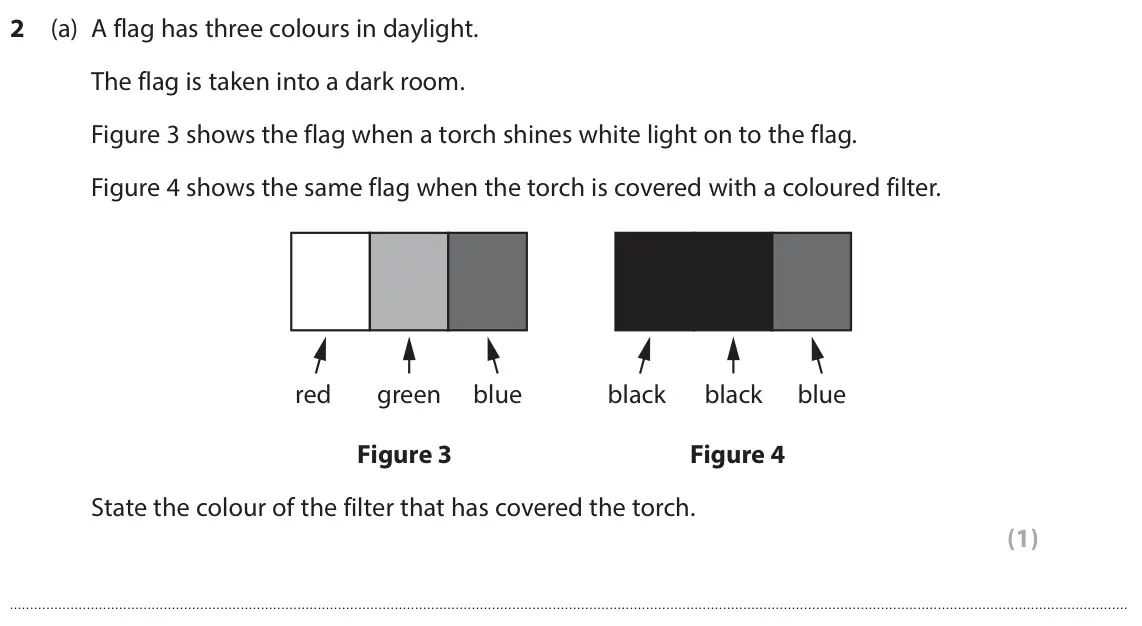
Q2(b)
The whole paper ↗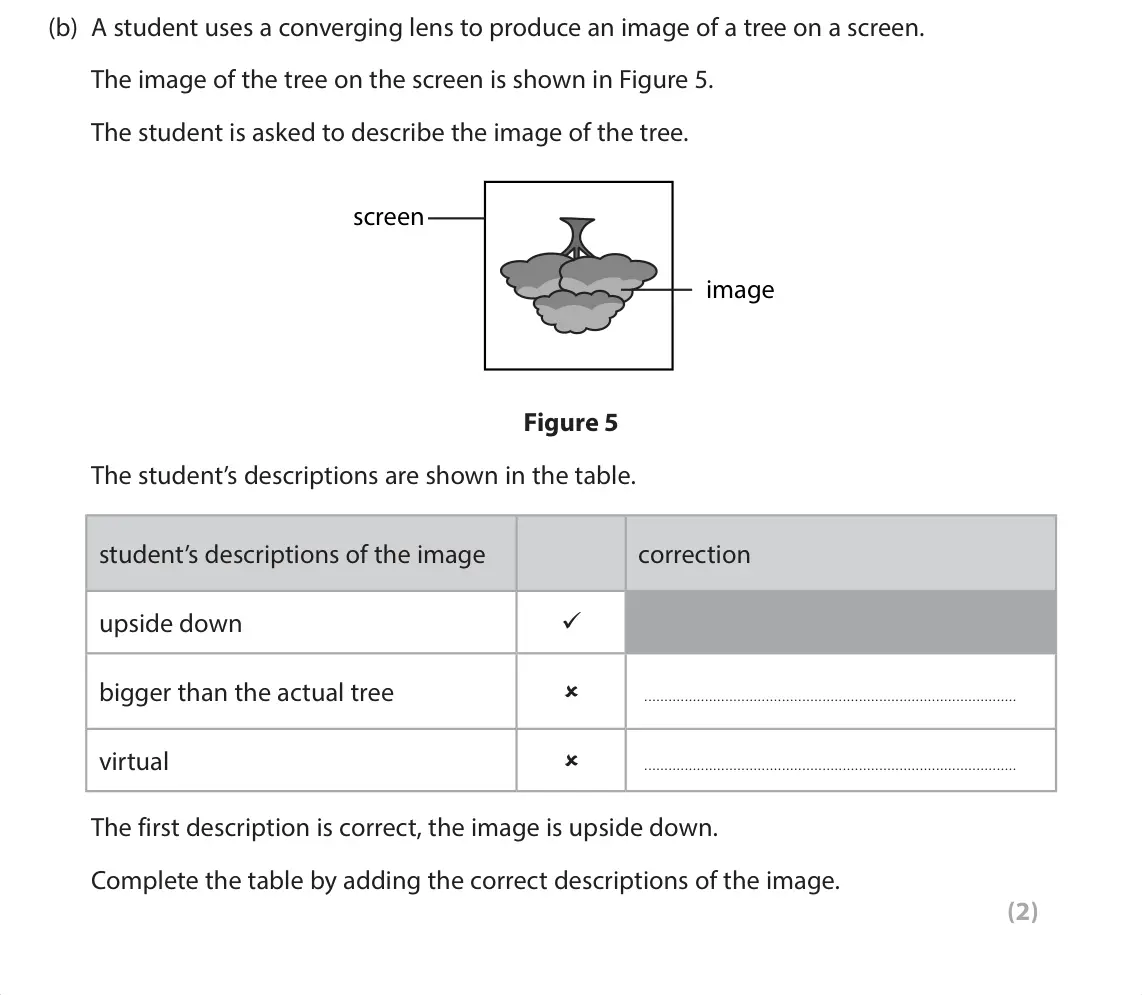
Q2(c)
The whole paper ↗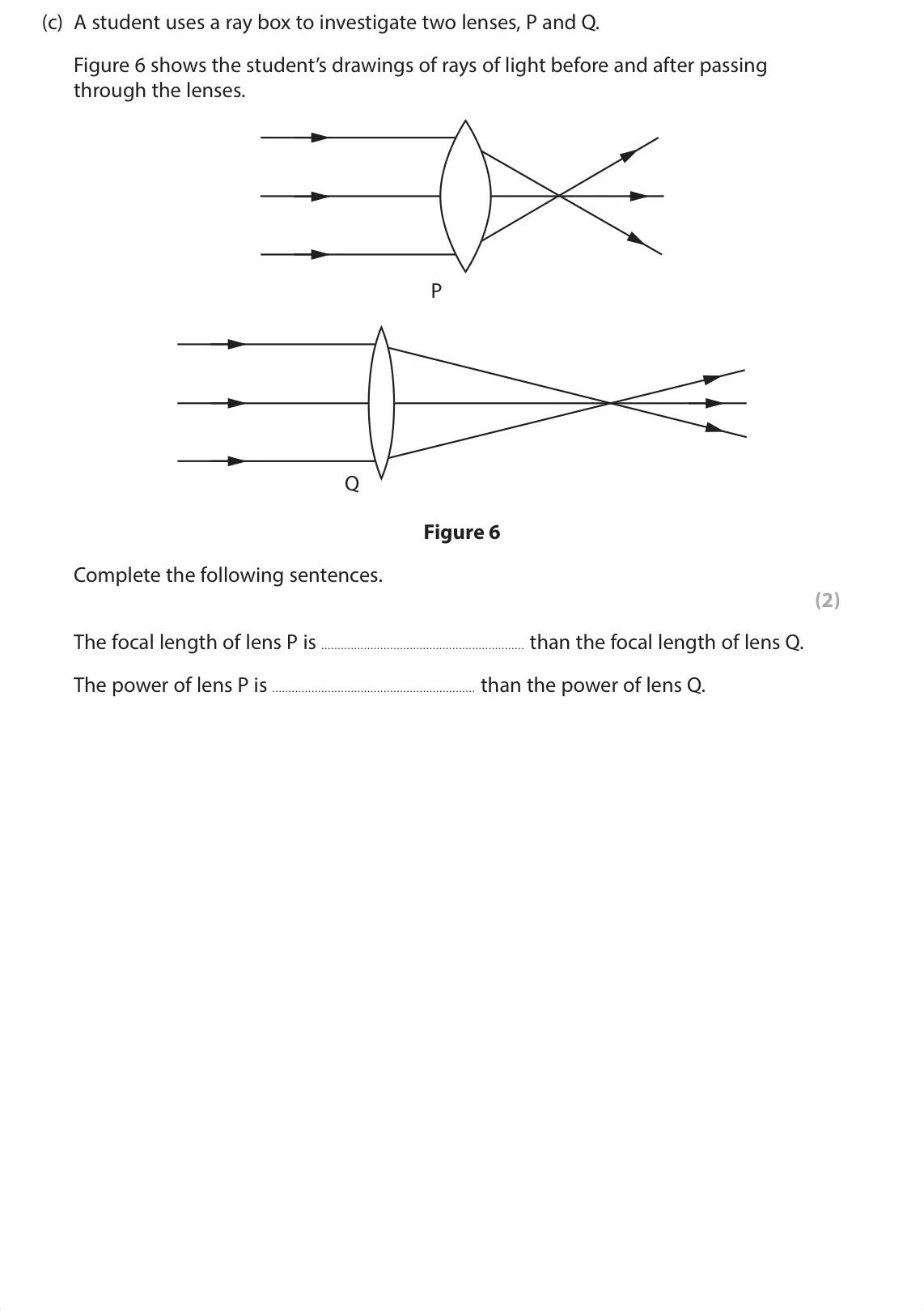
Q2(d)
The whole paper ↗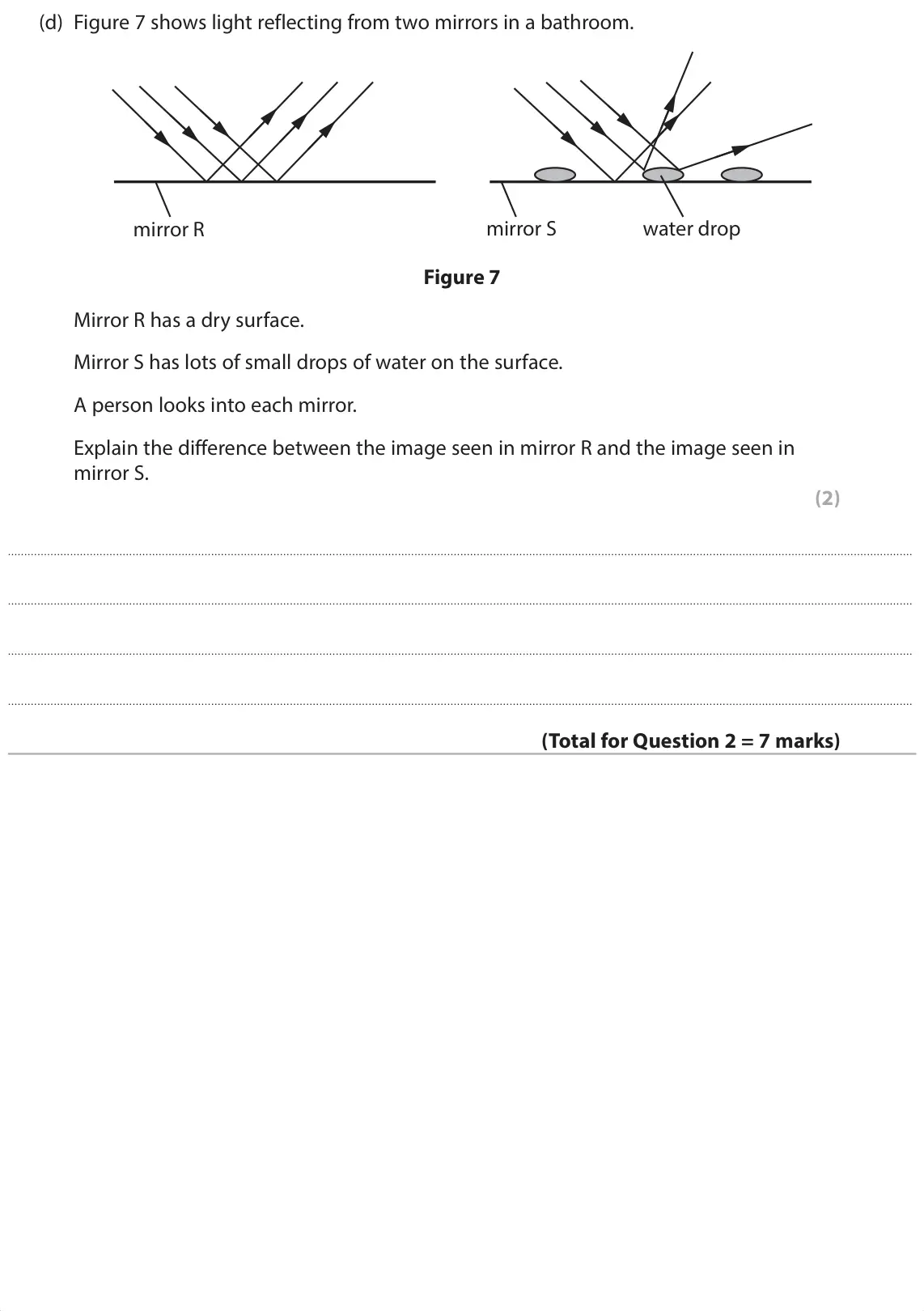
Q8(a)(i)
The whole paper ↗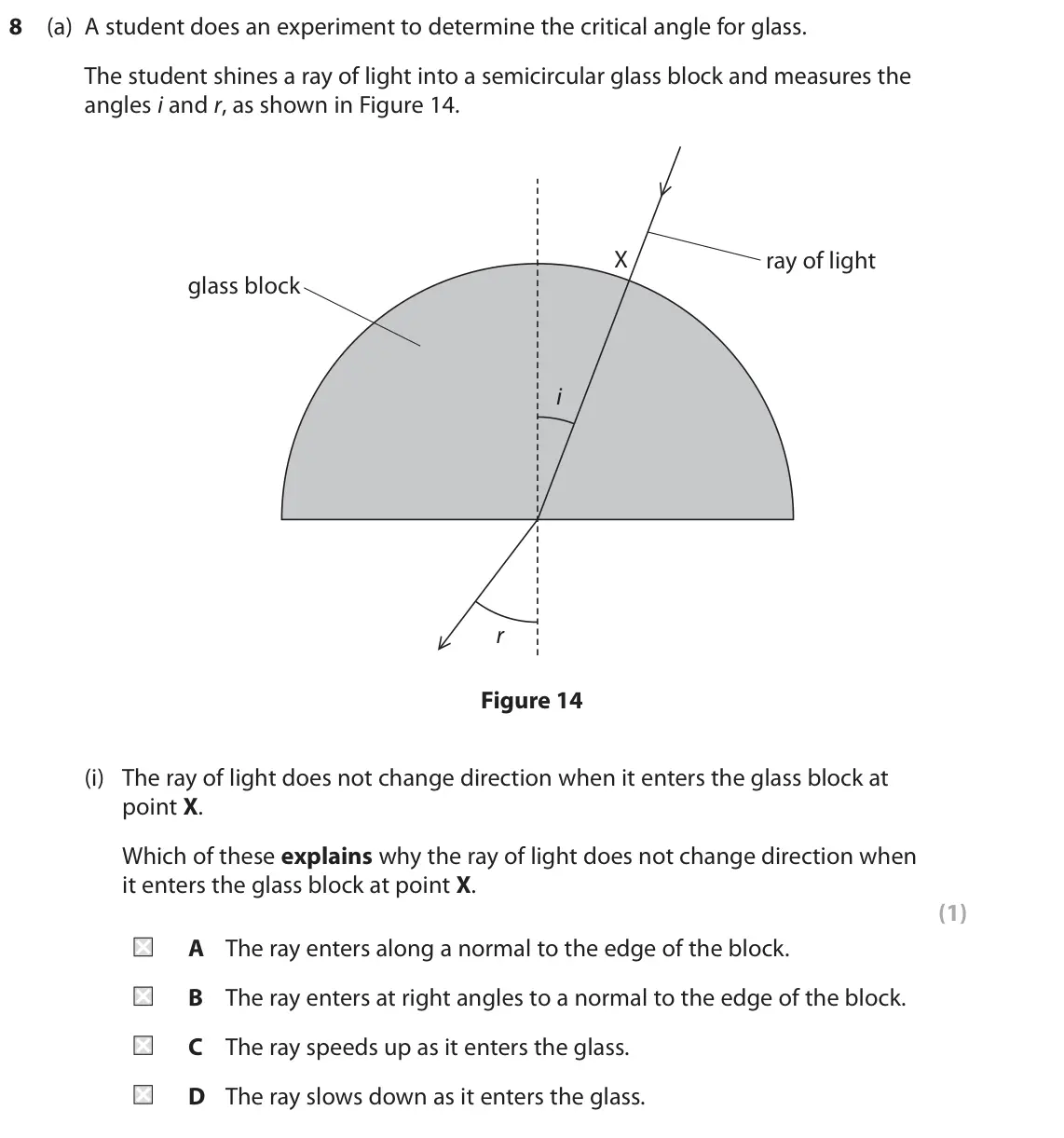
Q8(a)(ii)
The whole paper ↗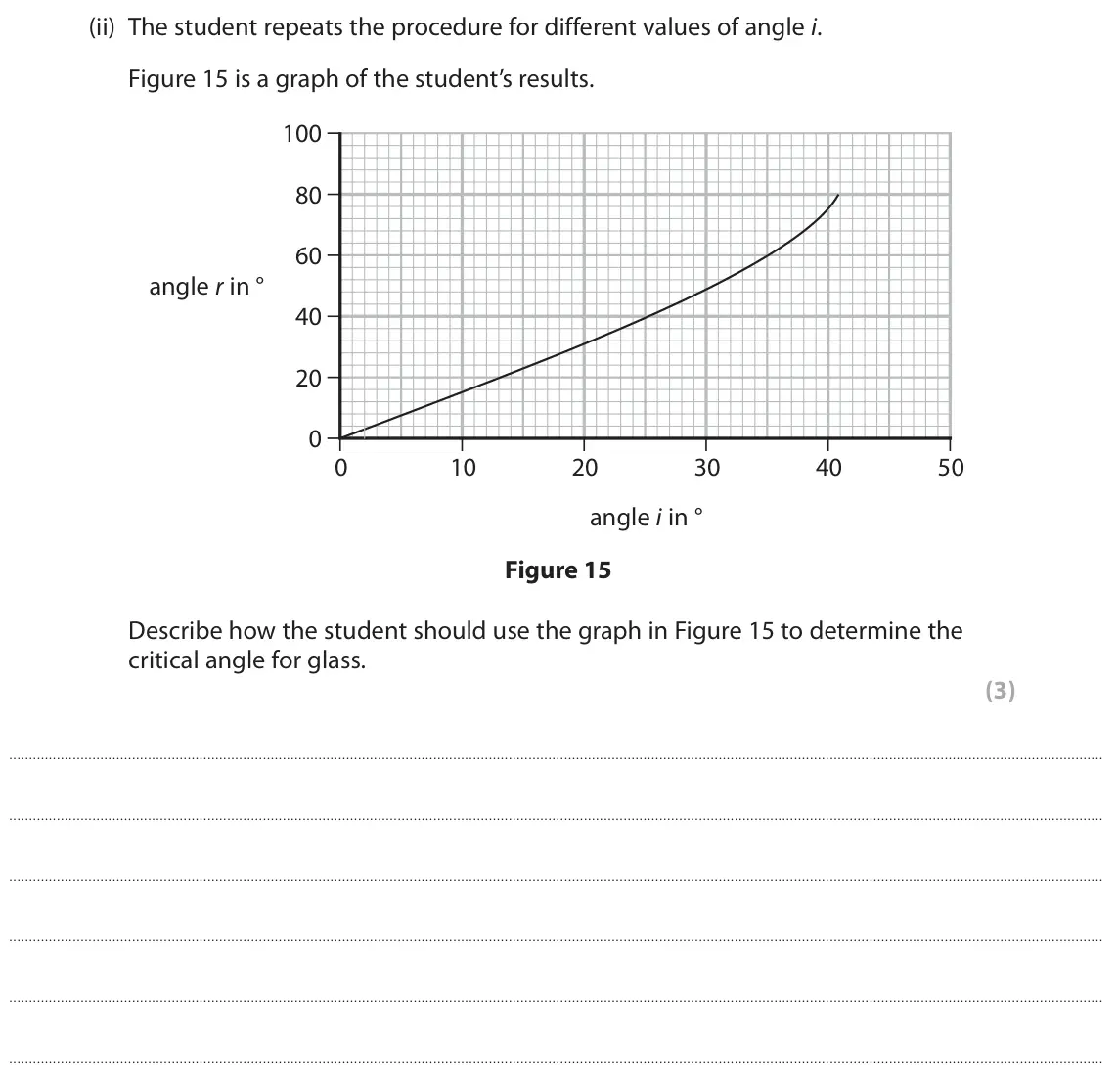
Q2(a)
The whole paper ↗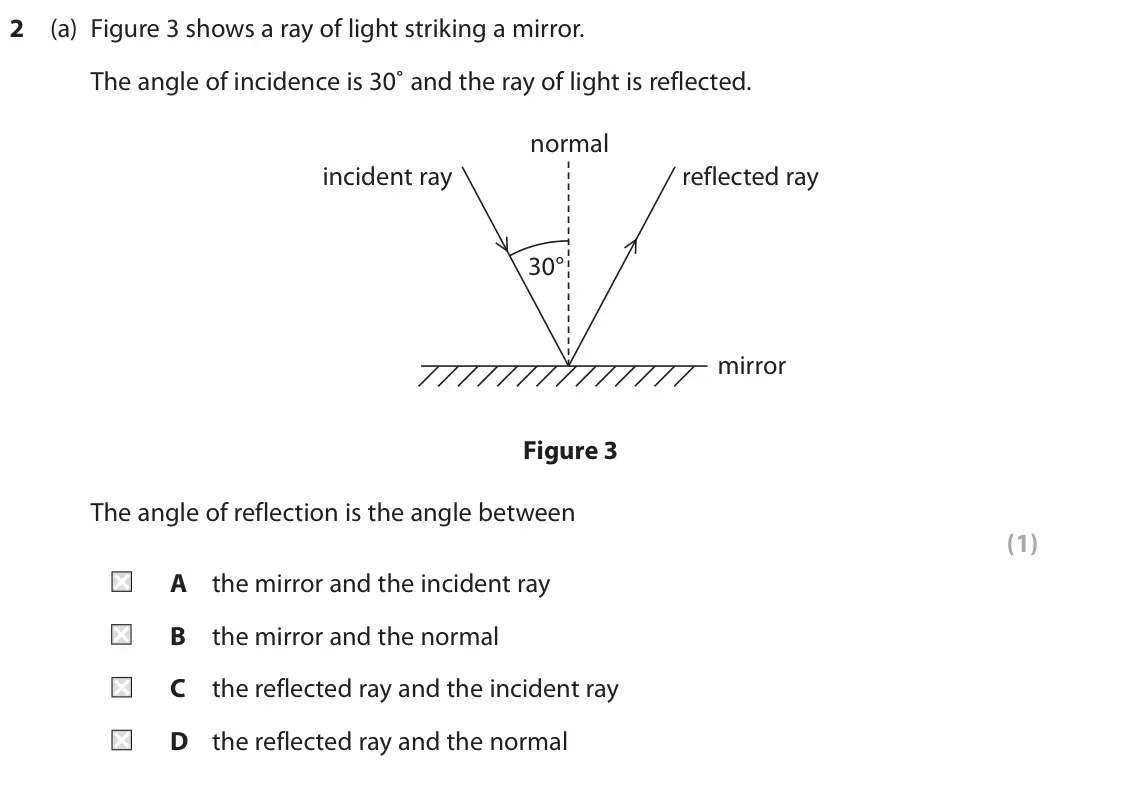
All 51 questions on Reflection, colour and lenses, as a list
- June 2025, Paper 1 Higher, Q7(a) (2 marks): Describe how the power of a lens is related to its focal length and the shape of the lens. (2)
- June 2025, Paper 1 Higher, Q7(b)(i) (1 mark): Give one example of a virtual image that a lens could produce. (1)
- June 2025, Paper 1 Higher, Q7(b)(ii) (1 mark): Give one example of a real image that a lens could produce. (1)
- June 2025, Paper 1 Higher, Q7(c) (3 marks): A student investigates what happens when a ray of light shines into a semicircular block made of transparent plastic. The ray meets the straight edge at an angl
- June 2025, Paper 1 Foundation, Q1(a)(i) (1 mark): Draw the reflected ray on Figure 1. (1)
- June 2025, Paper 1 Foundation, Q1(a)(ii) (2 marks): On Figure 1, label the angle of incidence with the letter i and the angle of reflection with the letter r. (2)
- June 2025, Paper 1 Foundation, Q1(b) (3 marks): A lens has a focal length of 17 cm. Calculate the power of the lens in dioptres. Use the equation 1 power (in dioptres) = focal length (in metres) (3) power = d
- June 2025, Paper 1 Foundation, Q1(c) (1 mark): Which of these is the best reason for explaining why a leaf appears green in daylight? (1) A the leaf absorbs green light only B the leaf absorbs yellow and blu
- June 2024, Paper 1 Higher, Q6(a)(i) (1 mark): The law of reflection of light applies to reflections from (1) A all surfaces B only shiny surfaces C only rough surfaces D only smooth surfaces
- June 2024, Paper 1 Higher, Q6(a)(ii) (3 marks): A student uses a mirror to demonstrate that the angle of incidence is equal to the angle of reflection. Figure 8 shows the apparatus the student uses. mirror ra
- June 2024, Paper 1 Higher, Q6(b)(i) (1 mark): State why the ray of light does not change direction as it enters the glass block at X. (1)
- June 2024, Paper 1 Higher, Q6(b)(ii) (3 marks): Describe how the critical angle for glass can be determined using the apparatus shown in Figure 9. (3)
- June 2024, Paper 1 Higher, Q6(c) (1 mark): Figure 10 shows a ray diagram of the virtual image produced by a diverging lens. F object image Figure 10 State what is meant by the term virtual image. (1)
- June 2024, Paper 1 Foundation, Q2(a) (1 mark): A flag has three colours in daylight. The flag is taken into a dark room. Figure 3 shows the flag when a torch shines white light on to the flag. Figure 4 shows
- June 2024, Paper 1 Foundation, Q2(b) (2 marks): A student uses a converging lens to produce an image of a tree on a screen. The image of the tree on the screen is shown in Figure 5. The student is asked to de
- June 2024, Paper 1 Foundation, Q2(c) (2 marks): A student uses a ray box to investigate two lenses, P and Q. Figure 6 shows the student’s drawings of rays of light before and after passing through the lenses.
- June 2024, Paper 1 Foundation, Q2(d) (2 marks): Figure 7 shows light reflecting from two mirrors in a bathroom. mirror R mirror S water drop Figure 7 Mirror R has a dry surface. Mirror S has lots of small dro
- June 2023, Paper 1 Higher, Q8(a)(i) (1 mark): The ray of light does not change direction when it enters the glass block at point X. Which of these explains why the ray of light does not change direction whe
- June 2023, Paper 1 Higher, Q8(a)(ii) (3 marks): The student repeats the procedure for different values of angle i. Figure 15 is a graph of the student’s results. 100 80 60 angle r in ° 40 20 0 0 10 20 30 40 5
- June 2023, Paper 1 Foundation, Q2(a) (1 mark): Figure 3 shows a ray of light striking a mirror. The angle of incidence is 30˚ and the ray of light is reflected. normal incident ray reflected ray 30° mirror F
- June 2023, Paper 1 Foundation, Q2(b)(i) (1 mark): State one use for a telescope. (1)
- June 2023, Paper 1 Foundation, Q2(b)(ii) (1 mark): Which of these describes the lenses? (1) A P is converging, Q is diverging B P is diverging, Q is converging C P and Q are both converging D P and Q are both di
- June 2023, Paper 1 Foundation, Q2(b)(iii) (2 marks): The focal length of lens Q is 0.14 m. Calculate the power of the lens. (2) Use the equation 1 power = focal length in m power of lens = dioptre
- June 2023, Paper 1 Foundation, Q2(c) (2 marks): A student is in a laboratory that has windows. The student is given a converging lens, and a sheet of paper. Describe how the student can produce an image of th
- June 2022, Paper 1 Higher, Q1(a) (1 mark): Which ray diagram shows total internal reflection at an air and glass boundary? (1) air air glass glass A B glass glass air air C D
- June 2022, Paper 1 Higher, Q1(b)(i) (2 marks): Using information from Figure 1, determine the magnification of the virtual image. Use the equation magnification = height of image height of object (2) magnifi
- June 2022, Paper 1 Higher, Q1(b)(ii) (2 marks): Describe one way the magnification of the image could be increased. (2)
- June 2022, Paper 1 Higher, Q1(c) (3 marks): Figure 2 shows a converging lens used to produce a real image on a screen. The apparatus is used to find the focal length, f, of the lens. The screen is moved t
- June 2022, Paper 1 Foundation, Q3(a)(i) (2 marks): Figure 4 shows a ray of light travelling to a plane mirror. On Figure 4, draw the ray of light after it reflects off the mirror surface. (2) ray of light mirror
- June 2022, Paper 1 Foundation, Q3(a)(ii) (2 marks): Figure 5 shows a ray of light in air travelling to a glass block. On Figure 5, draw the ray of light after it refracts at the surface of the glass block. (2) ra
- June 2022, Paper 1 Foundation, Q3(a)(iii) (2 marks): Figure 6 shows a ray of light in water, travelling to the surface of the water. The angle marked X is greater than the critical angle. On Figure 6, draw the ray
- June 2022, Paper 1 Foundation, Q3(b) (3 marks): A converging lens has a focal length of 40 cm. Calculate the power of this lens in dioptres. Use the equation 1 power in dioptres = focal length in metres (3) p
- November 2021, Paper 1 Foundation, Q7(a) (1 mark): White light includes all the colours in the visible spectrum. A beam of white light is the only light that shines on a book. The book appears green. A red filte
- November 2021, Paper 1 Foundation, Q7(b)(i) (1 mark): This clear image is an example of (1) A diffuse reflection B diffuse refraction C specular reflection D specular refraction
- November 2021, Paper 1 Foundation, Q7(b)(ii) (2 marks): Explain why the surface of the metal ball gives a clear image. You may draw diagrams to help with your answer. (2)
- November 2021, Paper 1 Foundation, Q7(c)(i) (2 marks): State one similarity and one difference in the way the rays of light pass through the lenses. (2) similarity difference
- November 2021, Paper 1 Foundation, Q7(c)(ii) (1 mark): Figure 10 shows two glass lenses P and Q. P Q Figure 10 State how the power of P is different from the power of Q. (1)
- November 2021, Paper 1 Foundation, Q7(d) (6 marks): Figure 11a shows refraction of light at a boundary between glass and air. Figure 11b shows total internal reflection of light at a boundary between glass and ai
- November 2020, Paper 1 Foundation, Q4(a)(i) (1 mark): Figure 4 shows two light rays hitting a glass lens. On Figure 4, draw the two light rays after they leave this lens. (1) Figure 4
- November 2020, Paper 1 Foundation, Q4(a)(ii) (1 mark): Figure 5 shows two light rays hitting a different glass lens. On Figure 5, draw the two light rays after they leave this lens. (1) Figure 5
- November 2020, Paper 1 Foundation, Q4(a)(iii) (2 marks): A lens has a focal length of 25 cm. Calculate the power of the lens. Use the equation 1 power in dioptres = focal length in metres (2) power of the lens = diopt
- June 2019, Paper 1 Higher, Q4(a)(i) (1 mark): Which lens is a converging lens with the greatest power? (1) A B C D
- June 2019, Paper 1 Higher, Q4(a)(ii) (2 marks): The equation that relates the power of a lens to the focal length of the lens is 1 power (in dioptres) = focal length (in metres) The power of a lens is 5 diopt
- June 2019, Paper 1 Higher, Q4(b) (4 marks): Figure 3 shows a semicircular glass block. Figure 3 Describe how a student could use the semicircular glass block and other apparatus to determine the critical
- June 2019, Paper 1 Foundation, Q3(a) (3 marks): Figure 3 shows a ray of light going from air to glass. 3 Fill in the labels in Figure 3 using words from the box. refracted critical normal reflected incident (
- June 2019, Paper 1 Foundation, Q10(a)(i) (1 mark): Which lens is a converging lens with the greatest power? (1) 00XX •D X B X C A
- June 2019, Paper 1 Foundation, Q10(a)(ii) (2 marks): The equation that relates the power of a lens to the focal length of the lens is 1 power (in dioptres) = - focal length (in metres) The power of a lens is 5 dio
- June 2019, Paper 1 Foundation, Q10(b) (4 marks): Figure 12 shows a semicircular glass block. Figure 12 Describe how a student could use the semicircular glass block and other apparatus to determine the critica
- June 2018, Paper 1 Foundation, Q7(a)(i) (1 mark): This diagram shows a (1) A converging lens forming a real image B diverging lens forming a real image C converging lens forming a virtual image D diverging lens
- June 2018, Paper 1 Foundation, Q7(a)(ii) (1 mark): Which length, labelled on Figure 12, shows the focal length of the lens? (1) P Q R S
- June 2018, Paper 1 Foundation, Q7(b) (3 marks): Calculate the power of a lens of focal length 17 cm. Use the equation 1 = power (in dioptres) focal length (in metres) Give the answer to 2 significant figures.
Questions, mark schemes and examiner’s reports are © Pearson Edexcel, from their published past papers. Plumi isn’t affiliated with any exam board. Want whole papers? Every Edexcel GCSE Physics paper.
Rather write your answers by hand on iPad? Plumi marks them against the same mark schemes.