 plumi
The menstrual cycle and contraception: Edexcel GCSE Biology questions
Every Edexcel GCSE Biology exam question on The menstrual cycle and contraception (specification points 7.4–7.8), 2018–2025, with its mark scheme and examiner’s report.
Find questions1,834
Exam
All years
Calculations
Q9(a)(i)
The whole paper ↗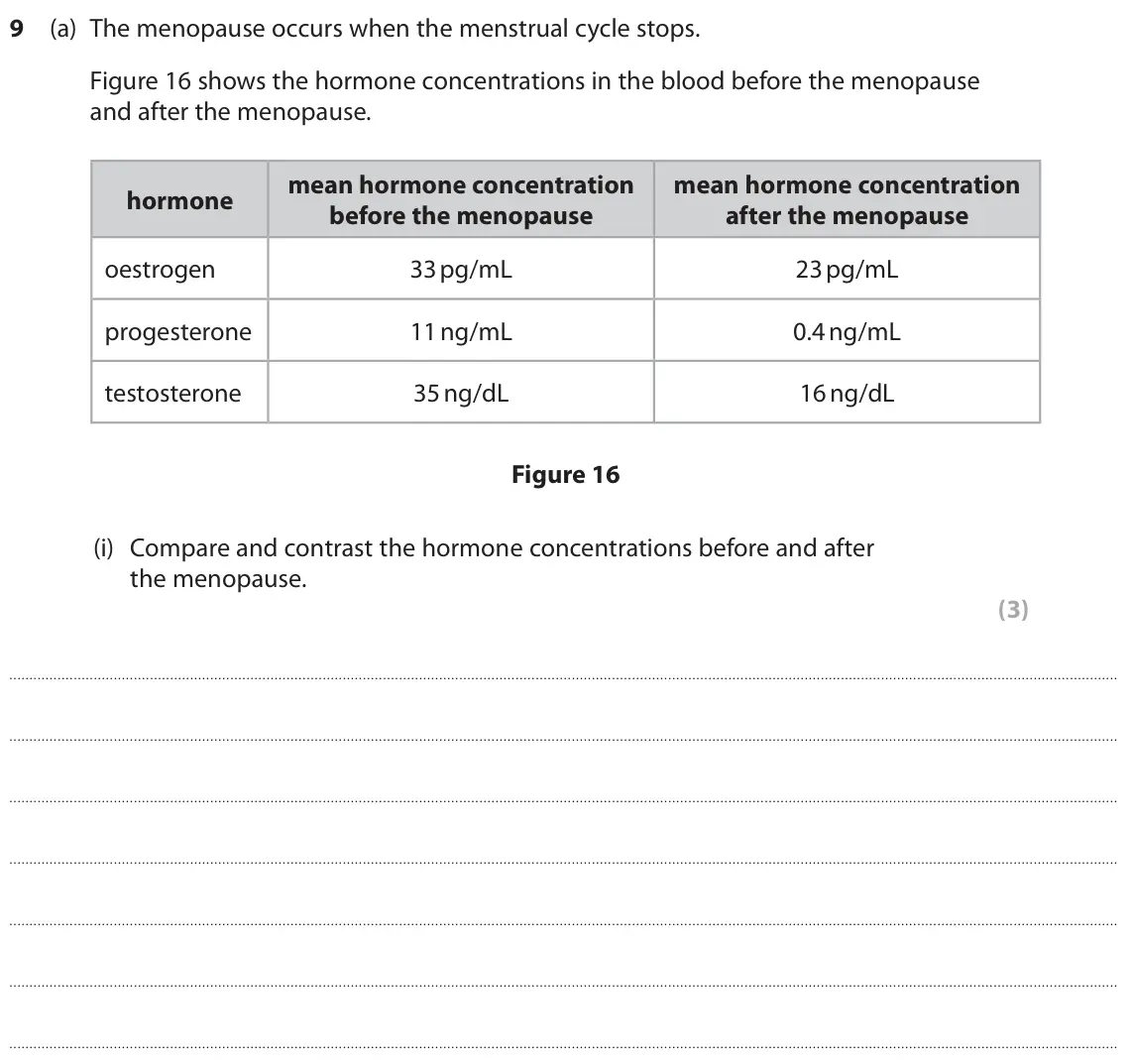
Q9(a)(ii)
The whole paper ↗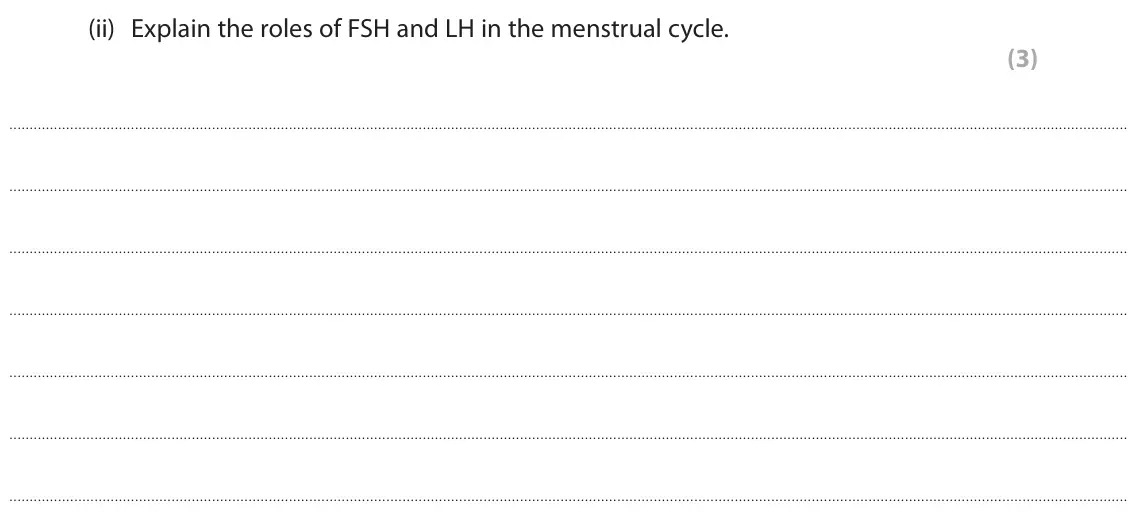
Q9(a)(i)
The whole paper ↗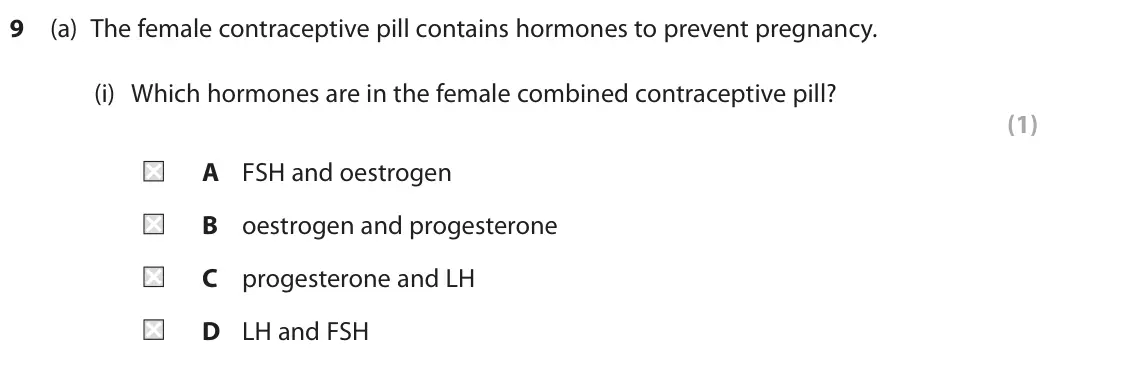
Q9(a)(ii)
The whole paper ↗
Q9(a)(iii)
The whole paper ↗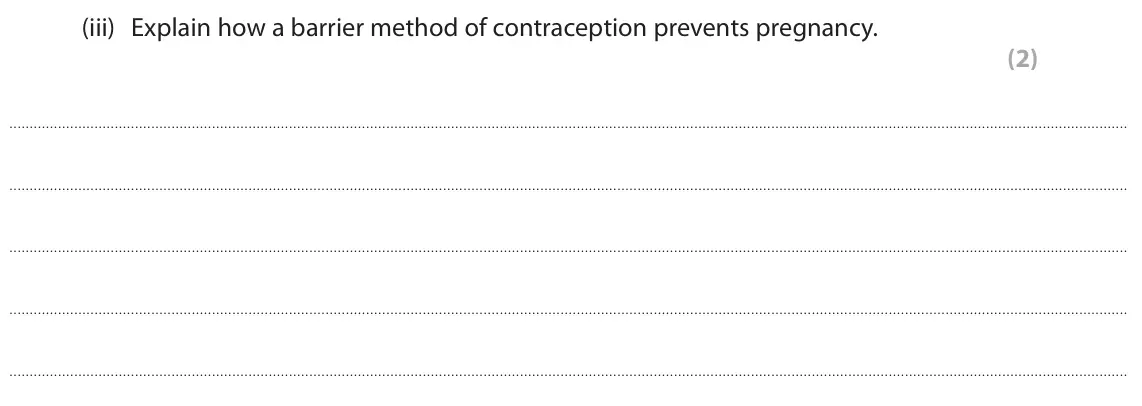
Q4(b)
The whole paper ↗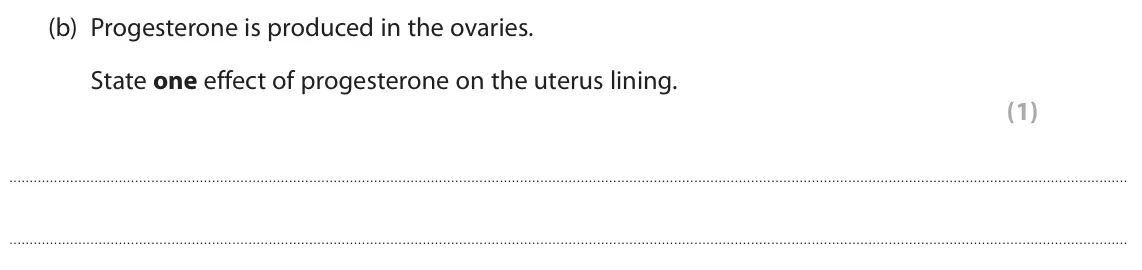
Q8(a)(i)
The whole paper ↗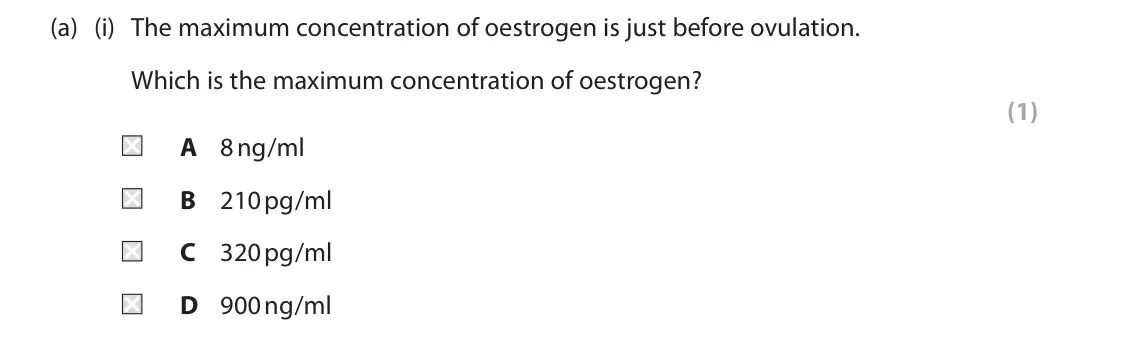
Q8(a)(ii)
The whole paper ↗
Q8(a)(iii)
The whole paper ↗
Q8(a)(iv)
The whole paper ↗
Q4(b)(i)
The whole paper ↗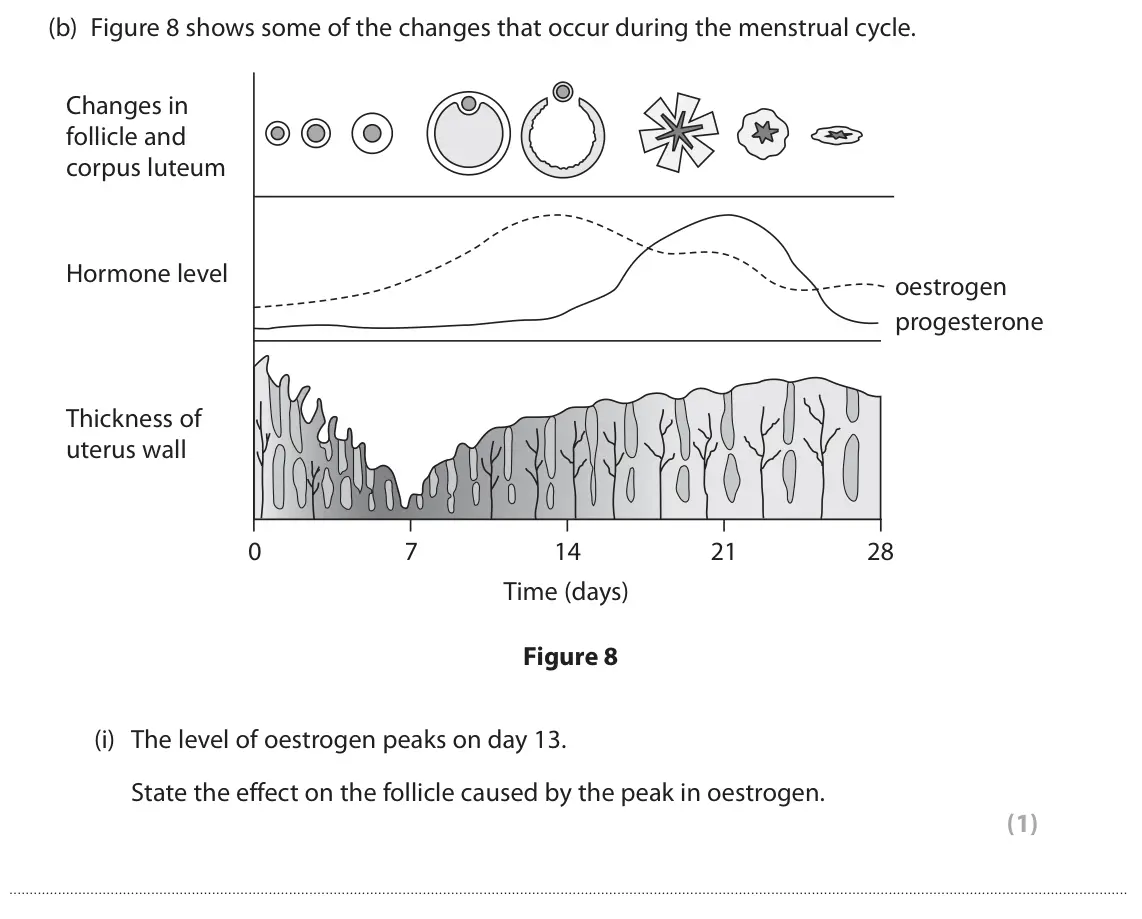
Q4(b)(ii)
The whole paper ↗
Q4(c)
The whole paper ↗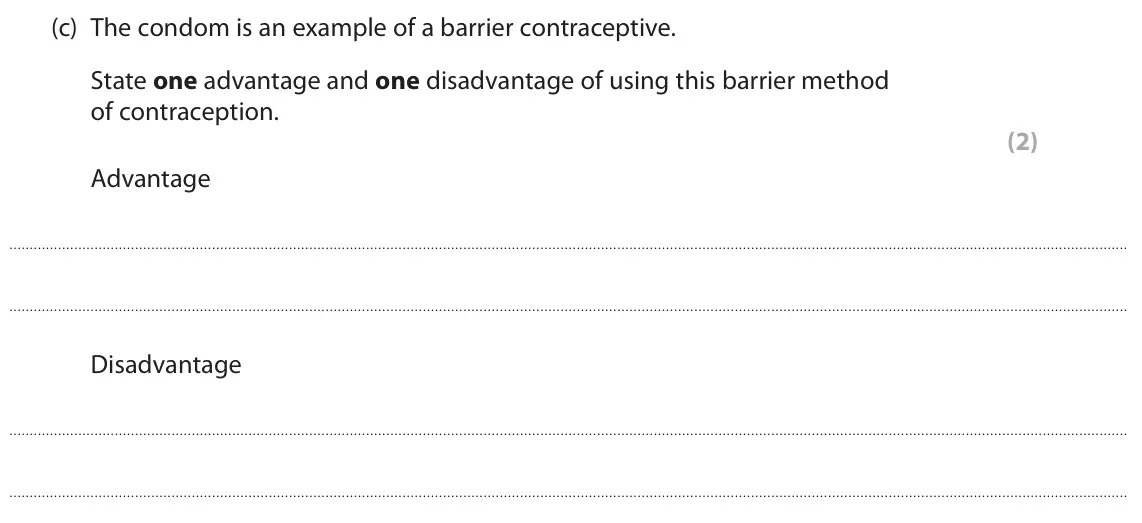
Q4(d)
The whole paper ↗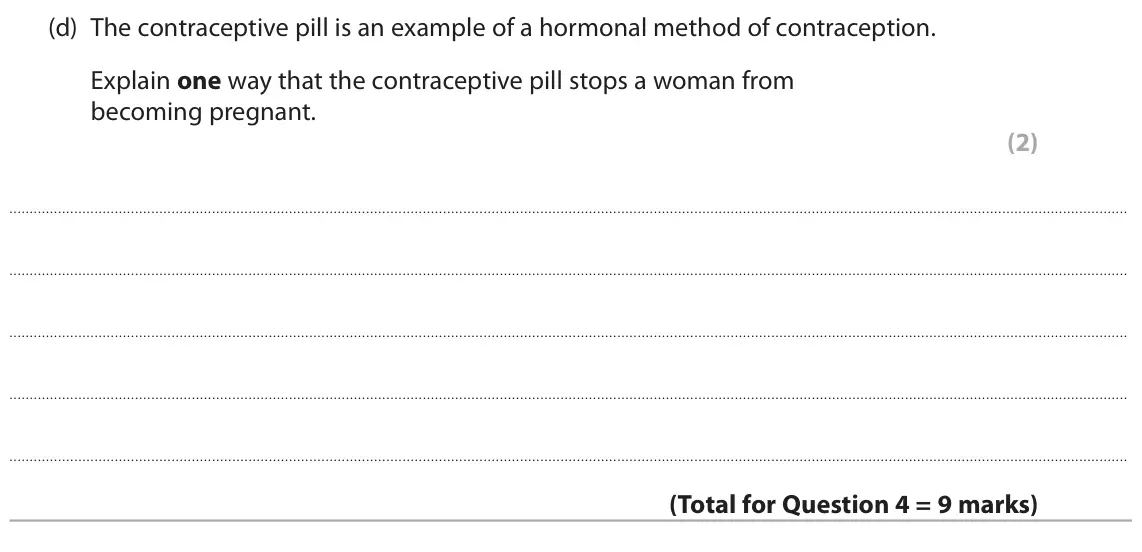
Q6(a)(i)
The whole paper ↗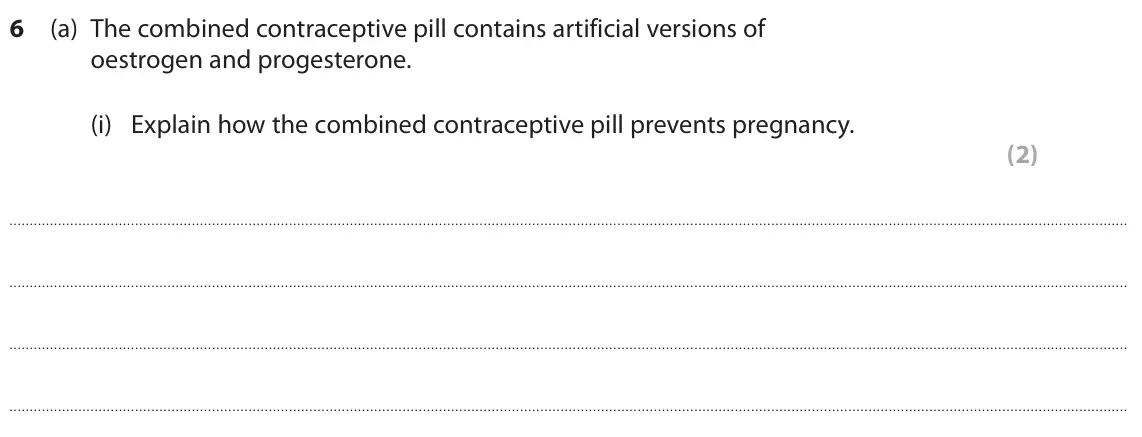
Q6(a)(ii)
The whole paper ↗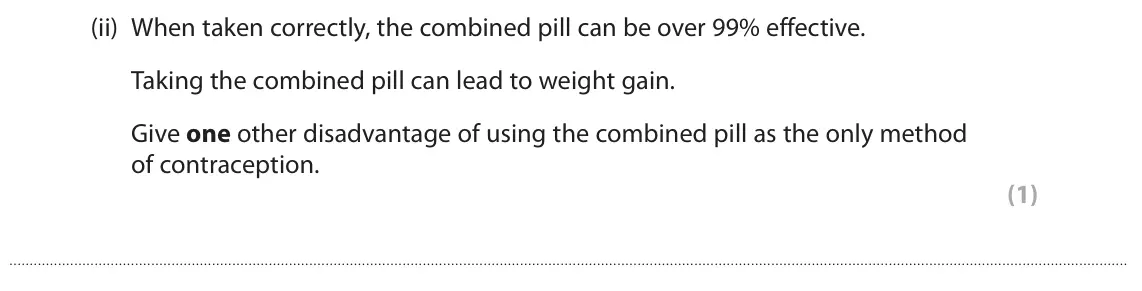
Q6(a)(i)
The whole paper ↗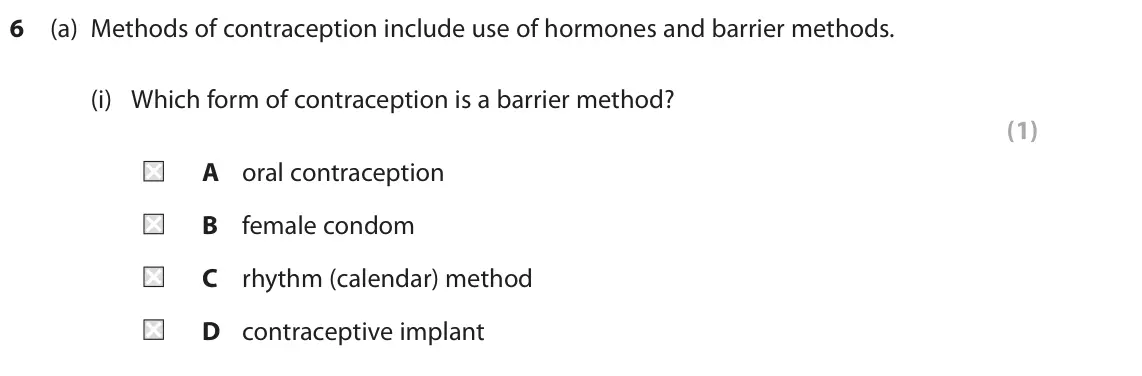
Q6(a)(ii)
The whole paper ↗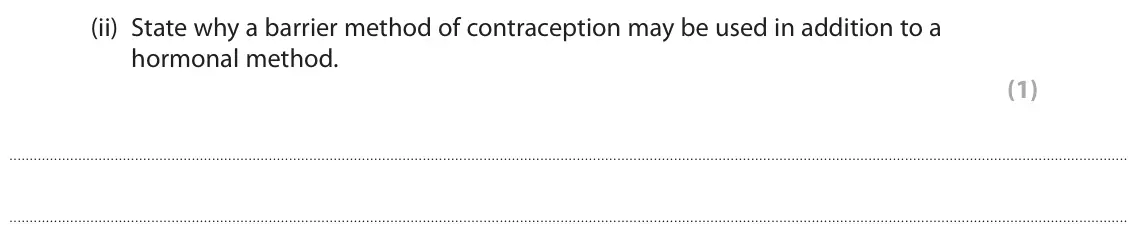
Q6(b)(i)
The whole paper ↗
All 39 questions on The menstrual cycle and contraception, as a list
- June 2025, Paper 2 Higher, Q9(a)(i) (3 marks): Compare and contrast the hormone concentrations before and after the menopause. (3)
- June 2025, Paper 2 Higher, Q9(a)(ii) (3 marks): Explain the roles of FSH and LH in the menstrual cycle. (3)
- June 2024, Paper 2 Higher, Q9(a)(i) (1 mark): Which hormones are in the female combined contraceptive pill? (1) A FSH and oestrogen B oestrogen and progesterone C progesterone and LH D LH and FSH
- June 2024, Paper 2 Higher, Q9(a)(ii) (3 marks): Explain how the hormones in contraceptive pills prevent ovulation. (3)
- June 2024, Paper 2 Higher, Q9(a)(iii) (2 marks): Explain how a barrier method of contraception prevents pregnancy. (2)
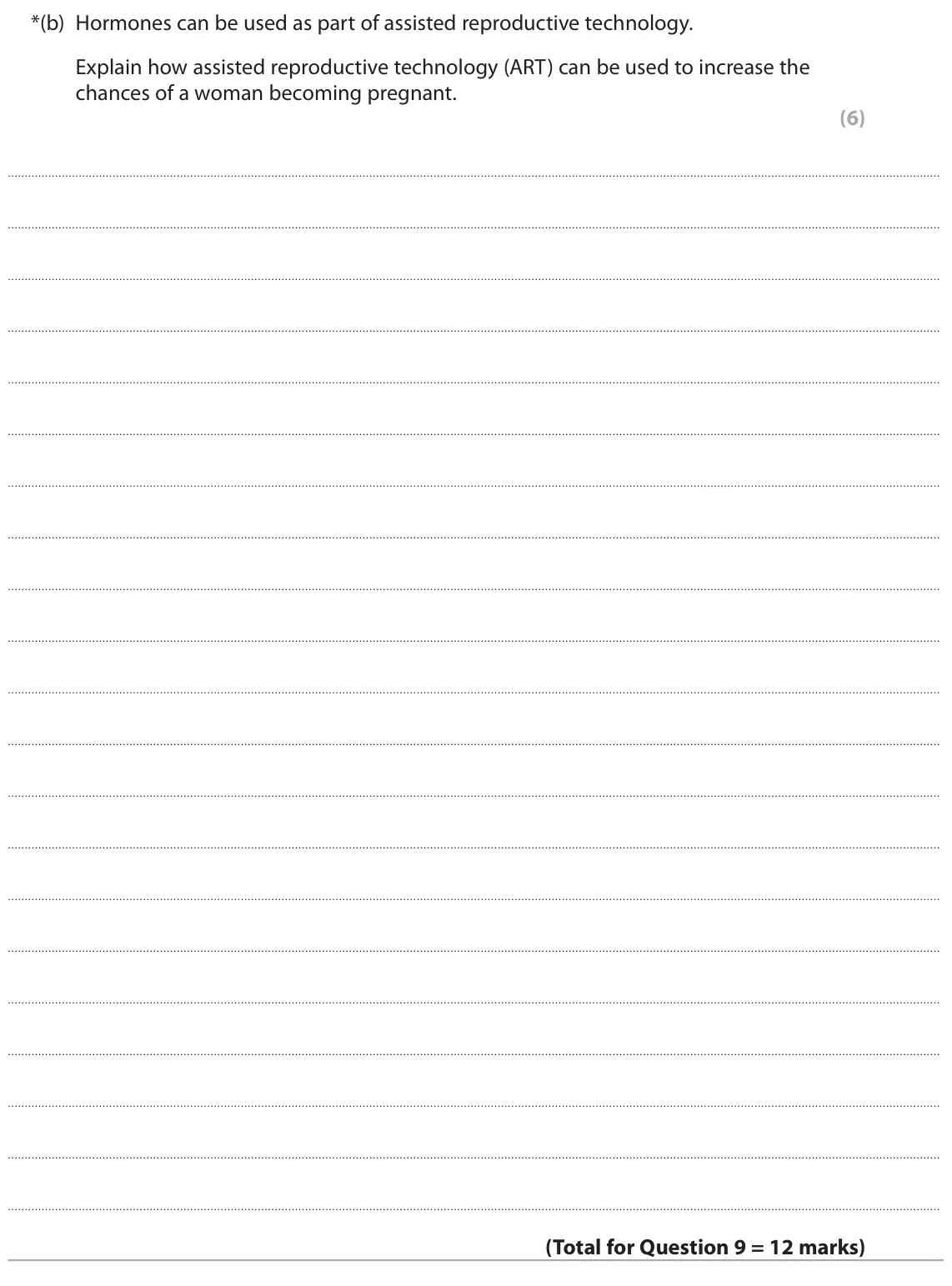
- June 2024, Paper 2 Higher, Q9(b) (6 marks): Hormones can be used as part of assisted reproductive technology. Explain how assisted reproductive technology (ART) can be used to increase the chances of a wo
- June 2024, Paper 2 Foundation, Q4(b) (1 mark): Progesterone is produced in the ovaries. State one effect of progesterone on the uterus lining. (1)
- June 2023, Paper 2 Higher, Q8(a)(i) (1 mark): The maximum concentration of oestrogen is just before ovulation. Which is the maximum concentration of oestrogen? (1) A 8 ng/ml B 210 pg/ml C 320 pg/ml D 900 ng
- June 2023, Paper 2 Higher, Q8(a)(ii) (3 marks): Explain how two of the hormones shown in Figure 15 cause ovulation. (3)
- June 2023, Paper 2 Higher, Q8(a)(iii) (1 mark): State the number of days for the first menstruation shown in Figure 15. (1)
- June 2023, Paper 2 Higher, Q8(a)(iv) (4 marks): Explain how the levels of each hormone in the woman shown in Figure 15 would be different, if she was pregnant. (4)
- June 2023, Paper 2 Foundation, Q4(b)(i) (1 mark): The level of oestrogen peaks on day 13. State the effect on the follicle caused by the peak in oestrogen. (1)
- June 2023, Paper 2 Foundation, Q4(b)(ii) (2 marks): Describe the effect of progesterone on the uterus lining from day 13 to day 21. (2)
- June 2023, Paper 2 Foundation, Q4(c) (2 marks): The condom is an example of a barrier contraceptive. State one advantage and one disadvantage of using this barrier method of contraception. (2) Advantage Disad
- June 2023, Paper 2 Foundation, Q4(d) (2 marks): The contraceptive pill is an example of a hormonal method of contraception. Explain one way that the contraceptive pill stops a woman from becoming pregnant. (2
- June 2022, Paper 2 Higher, Q6(a)(i) (2 marks): Explain how the combined contraceptive pill prevents pregnancy. (2)
- June 2022, Paper 2 Higher, Q6(a)(ii) (1 mark): When taken correctly, the combined pill can be over 99% effective. Taking the combined pill can lead to weight gain. Give one other disadvantage of using the co
- November 2021, Paper 2 Higher, Q6(a)(i) (1 mark): Which form of contraception is a barrier method? (1) A oral contraception B female condom C rhythm (calendar) method D contraceptive implant
- November 2021, Paper 2 Higher, Q6(a)(ii) (1 mark): State why a barrier method of contraception may be used in addition to a hormonal method. (1)
- November 2021, Paper 2 Higher, Q6(b)(i) (1 mark): State the endocrine gland that releases oestrogen. (1)
- November 2021, Paper 2 Higher, Q6(b)(ii) (4 marks): Explain how high levels of oestrogen and progesterone in the combined contraceptive pill work together to prevent pregnancy. (4)
- November 2021, Paper 2 Higher, Q6(c) (4 marks): Hormones can also be used to treat infertility. Explain how clomifene therapy and IVF can improve female fertility. (4) clomifene therapy IVF
- November 2020, Paper 2 Higher, Q9(c) (6 marks): Explain how hormones control the menstrual cycle. (6)
- June 2019, Paper 2 Higher, Q7(a)(i) (1 mark): Women with the condition known as polycystic ovary syndrome (PCOS) do not ovulate regularly. Women with PCOS can be treated using clomifene therapy. Clomifene t
- June 2019, Paper 2 Higher, Q7(a)(ii) (2 marks): During this therapy, a woman takes a clomifene tablet each day for the first five days of her menstrual cycle. Describe the changes that would happen inside the
- June 2019, Paper 2 Higher, Q7(a)(iii) (1 mark): Which hormone causes ovulation? (1) A LH B FSH C testosterone D progesterone
- June 2019, Paper 2 Higher, Q7(a)(iv) (2 marks): During clomifene therapy, the woman has a blood test on day 20 of the menstrual cycle. The blood test shows a high level of progesterone. Explain the cause of t
- June 2019, Paper 2 Higher, Q7(b) (2 marks): Hormones are also used as a method of contraception. Explain why taking high levels of oestrogen and progesterone in the combined contraceptive pill reduces the
- June 2019, Paper 2 Higher, Q7(c) (3 marks): The female population of Britain is 32.6 million. The percentage of this population taking the combined contraceptive pill is 13.2%. The combined pill is 98.8%
- June 2018, Paper 2 Higher, Q9(a)(i) (2 marks): Use information from Figure 17 to explain why women over the age of 50 are less likely to ovulate. (2)
- June 2018, Paper 2 Higher, Q9(a)(ii) (2 marks): Use information from Figure 17 to explain why women are less likely to menstruate after the age of 60. (2)
- June 2018, Paper 2 Higher, Q9(a)(iii) (2 marks): Explain how clomifene therapy may increase the chance of a woman over the age of 50 becoming pregnant. (2)
- June 2018, Paper 2 Higher, Q9(a)(iv) (1 mark): The hormone progesterone is produced by the (1) A corpus luteum B pituitary C thyroid D uterus
- Specimen, Paper 2 Higher, Q2(b)(i) (2 marks): Describe the changes in progesterone levels during the 28-day cycle. (2)
- Specimen, Paper 2 Higher, Q2(b)(ii) (2 marks): Explain why progesterone levels changed following day 14. (2)
- Specimen, Paper 2 Higher, Q2(b)(iii) (2 marks): Use Figure 5 to explain if the female is pregnant. (2)
- Specimen, Paper 2 Foundation, Q8(b)(i) (2 marks): Describe the changes in progesterone levels during the 28-day cycle. (2)
- Specimen, Paper 2 Foundation, Q8(b)(ii) (2 marks): Explain why progesterone levels changed following day 14. (2) Figure 15 shows the effectiveness of different methods of contraception in the prevention of pregn
- Specimen, Paper 2 Foundation, Q8(c) (6 marks): Compare and contrast the data for different contraceptive methods and types, to advise a young adult as to the best method of contraception to avoid pregnancy.
Questions, mark schemes and examiner’s reports are © Pearson Edexcel, from their published past papers. Plumi isn’t affiliated with any exam board. Want whole papers? Every Edexcel GCSE Biology paper.
Rather write your answers by hand on iPad? Plumi marks them against the same mark schemes.