 plumi
Homeostasis and thermoregulation: Edexcel GCSE Biology questions
Every Edexcel GCSE Biology exam question on Homeostasis and thermoregulation (specification points 7.9–7.12), 2018–2025, with its mark scheme and examiner’s report.
Find questions1,834
Exam
All years
Calculations
Q3(a)(i)
The whole paper ↗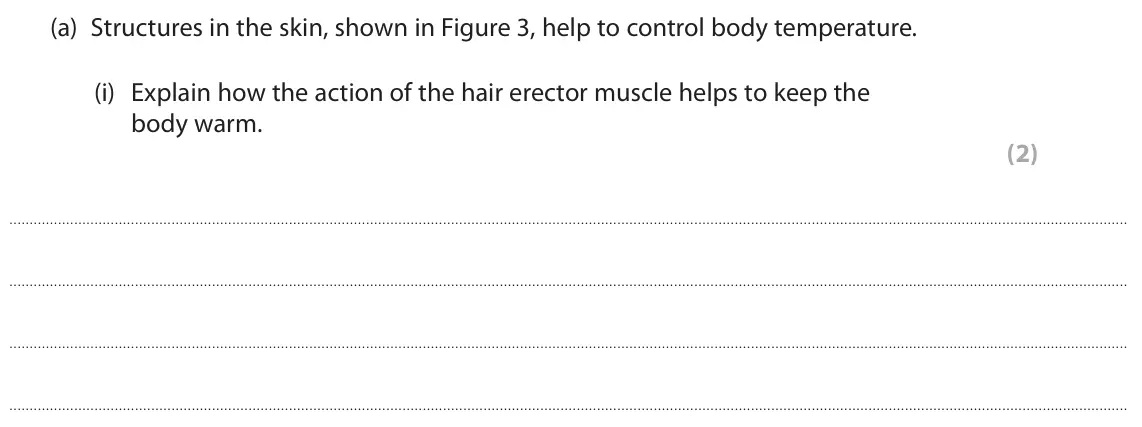
Q3(a)(ii)
The whole paper ↗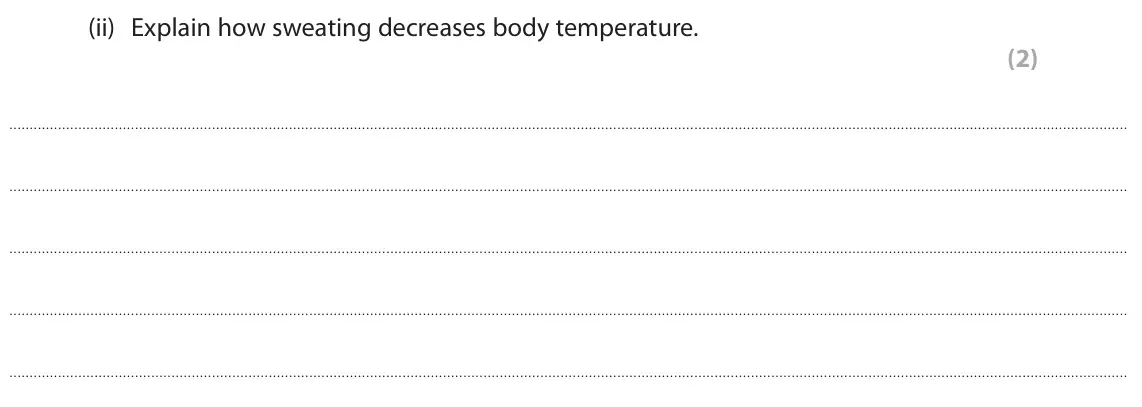
Q3(b)
The whole paper ↗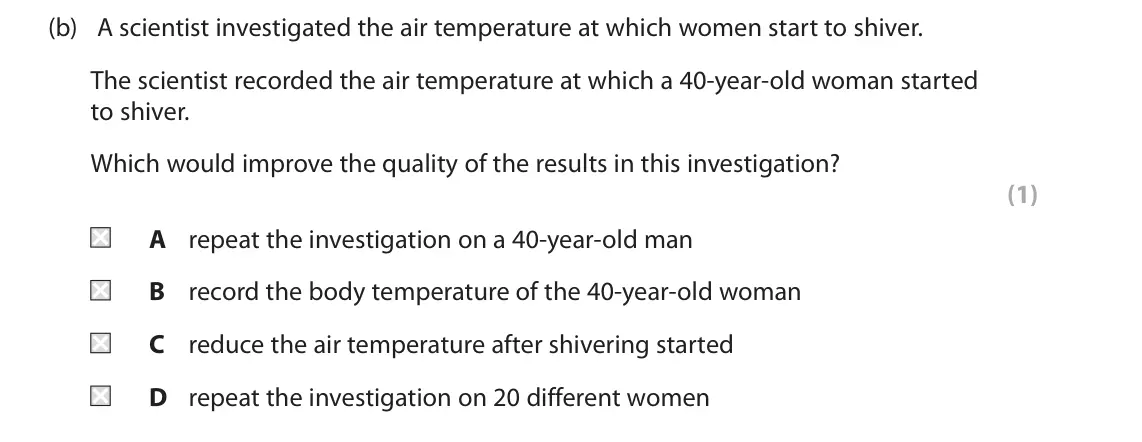
Q3(c)(i)
The whole paper ↗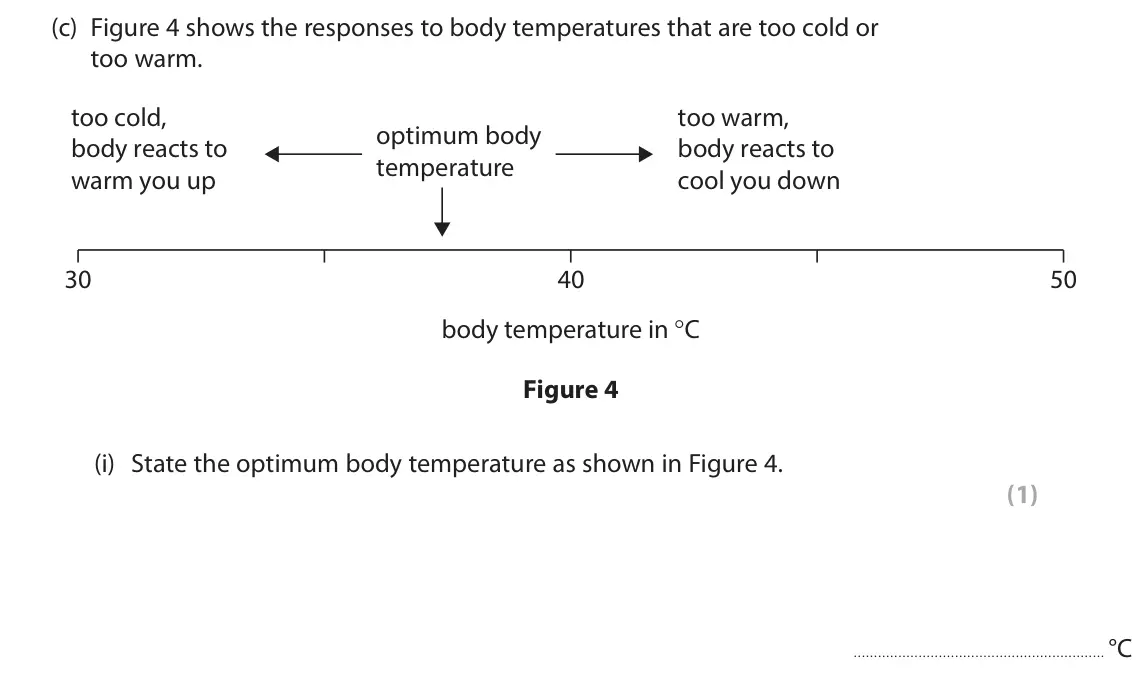
Q4(a)(i)
The whole paper ↗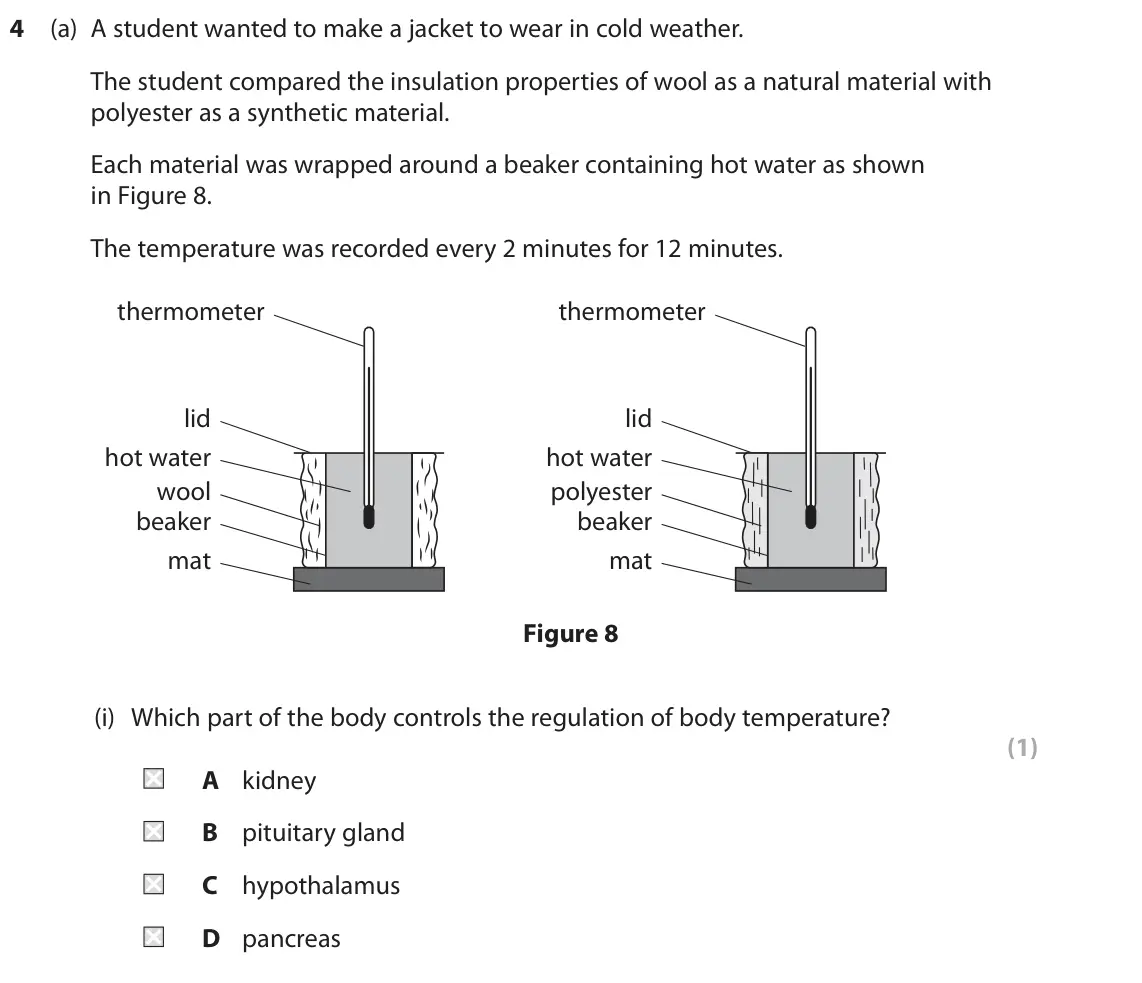
Q4(a)(ii)
The whole paper ↗
Q4(a)(iii)
The whole paper ↗
Q4(b)(i)
The whole paper ↗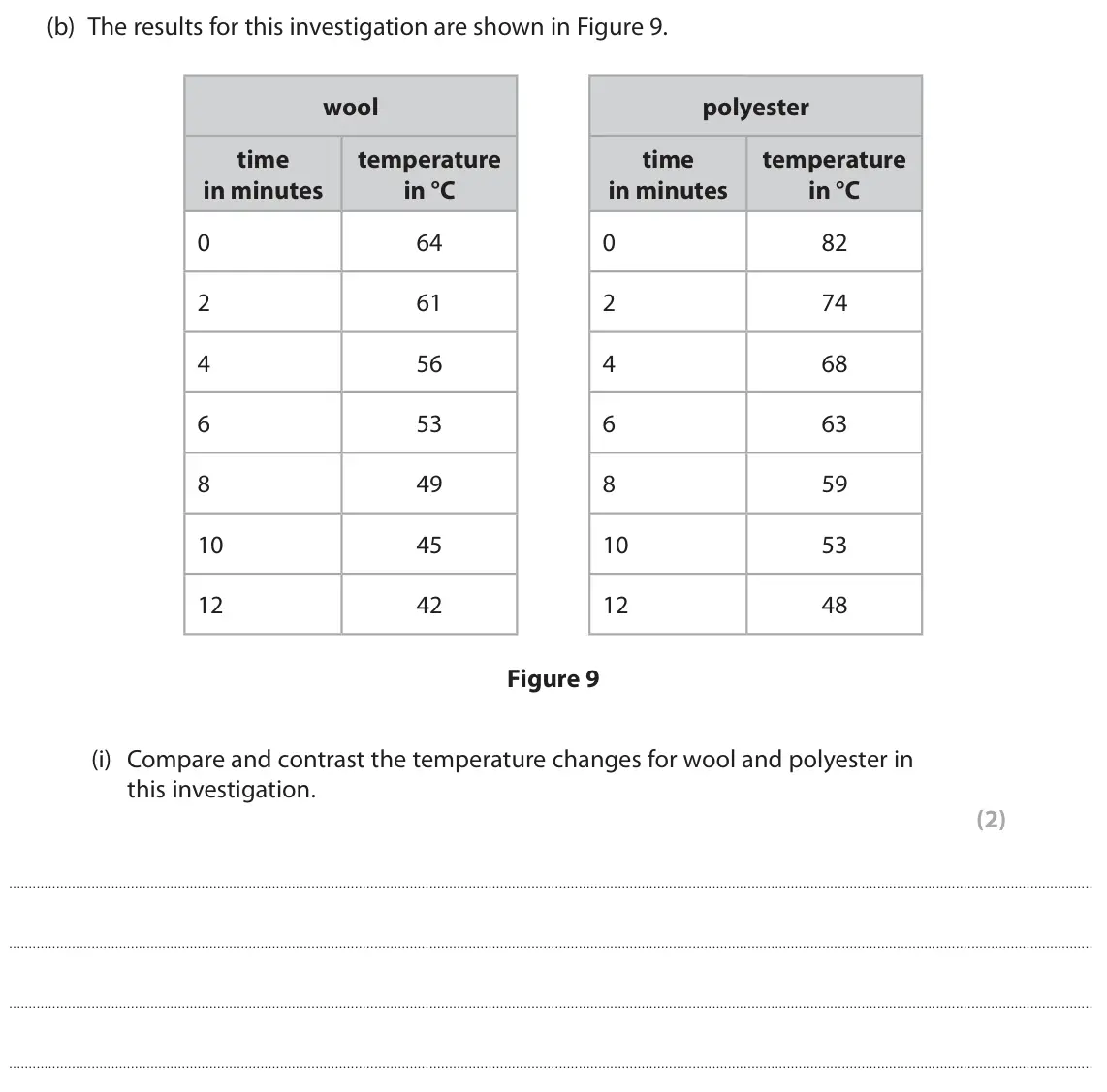
Q4(b)(ii)
The whole paper ↗
Q4(c)(i)
The whole paper ↗
Q10(a)(i)
The whole paper ↗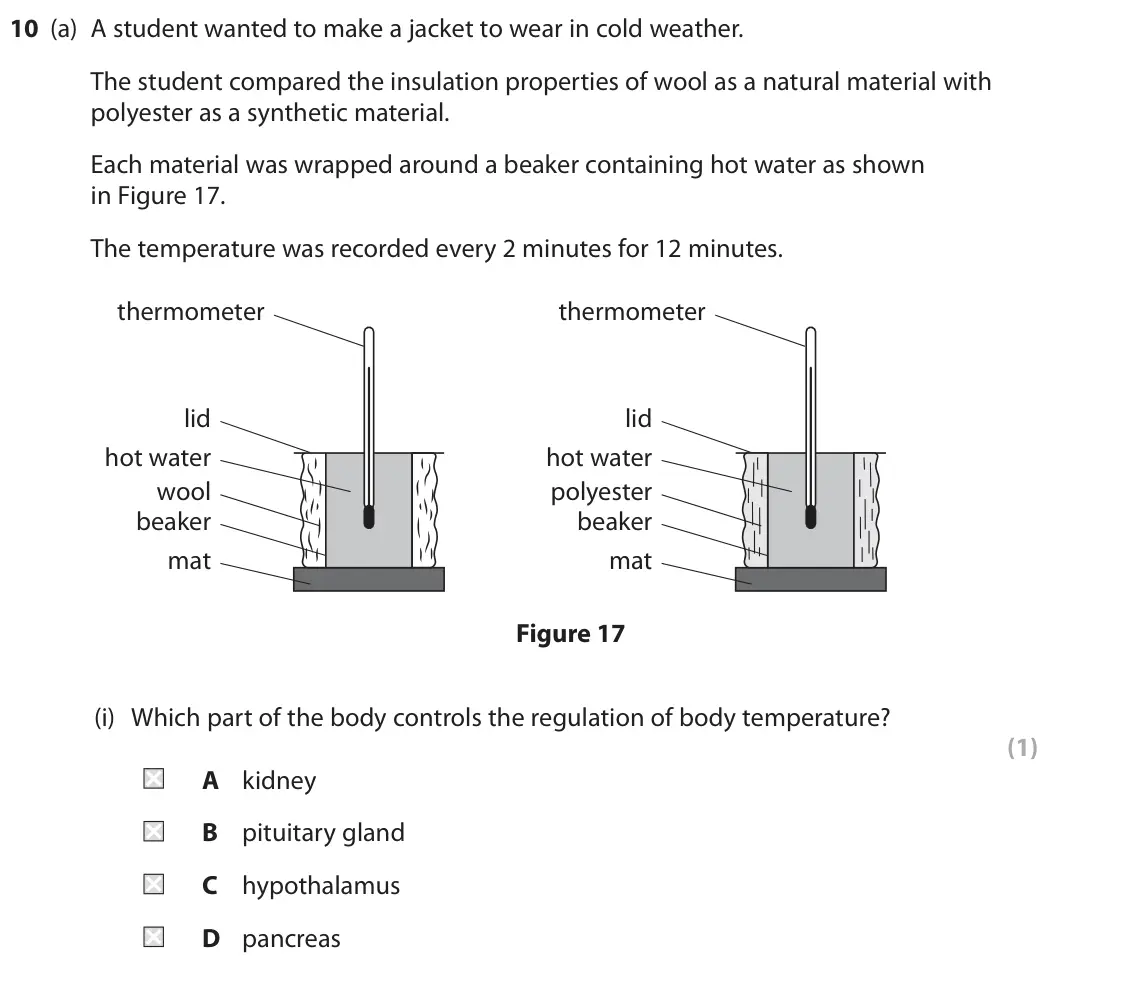
Q10(a)(ii)
The whole paper ↗
Q10(a)(iii)
The whole paper ↗
Q10(b)(i)
The whole paper ↗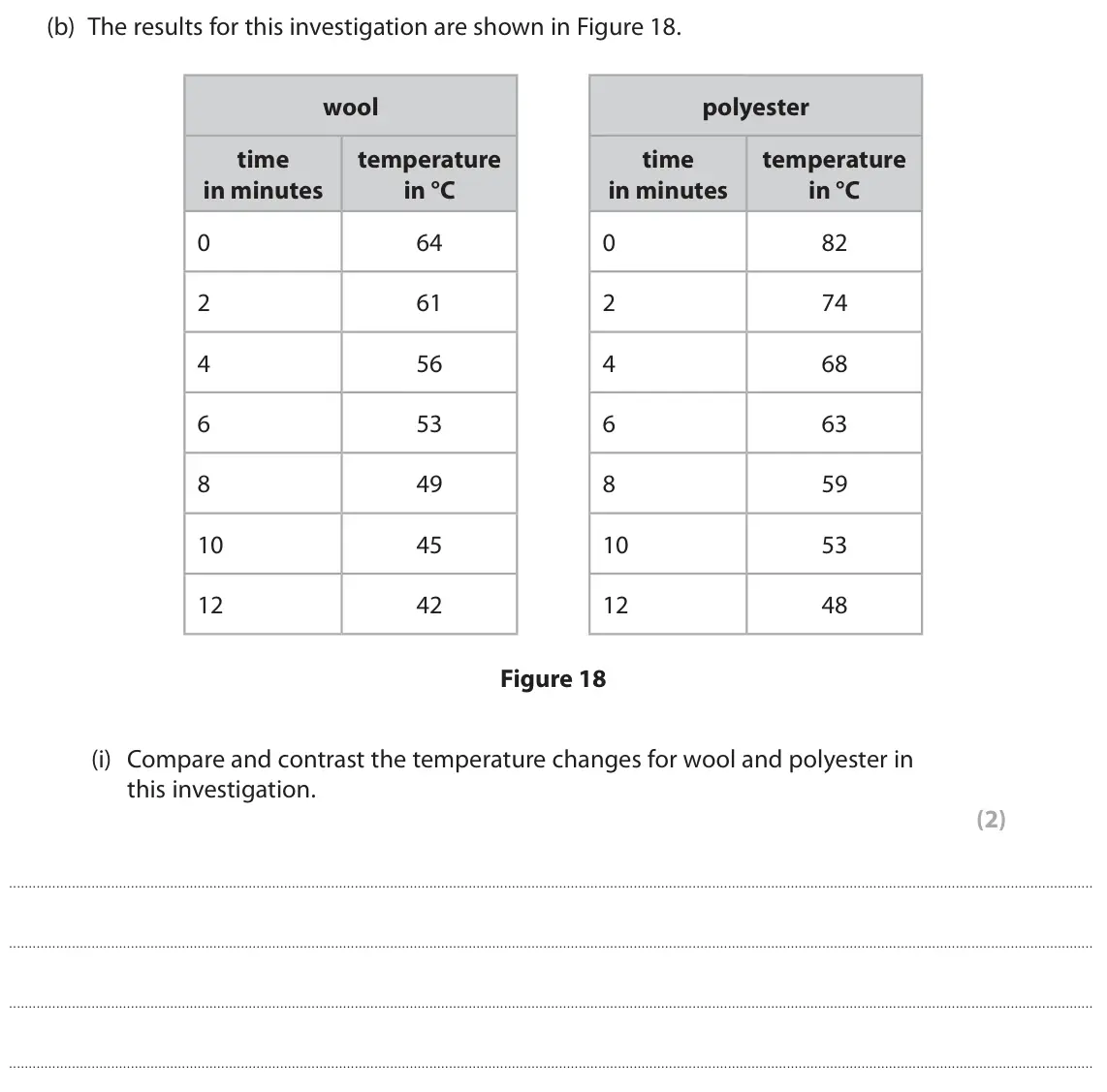
Q10(b)(ii)
The whole paper ↗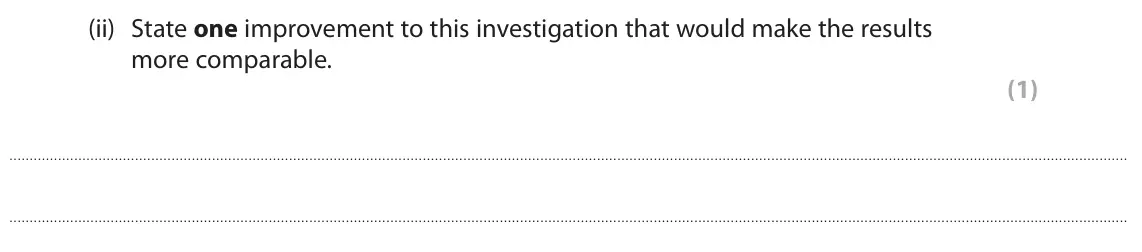
Q10(c)(i)
The whole paper ↗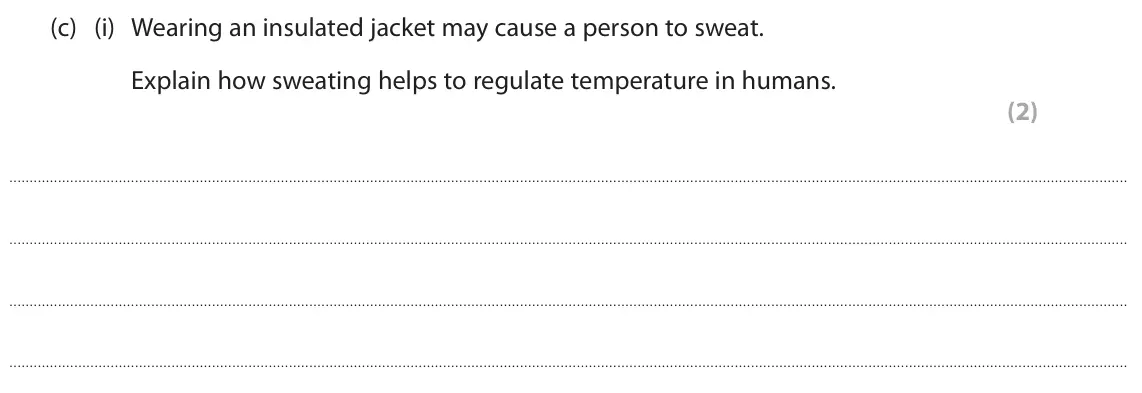
Q10(a)
The whole paper ↗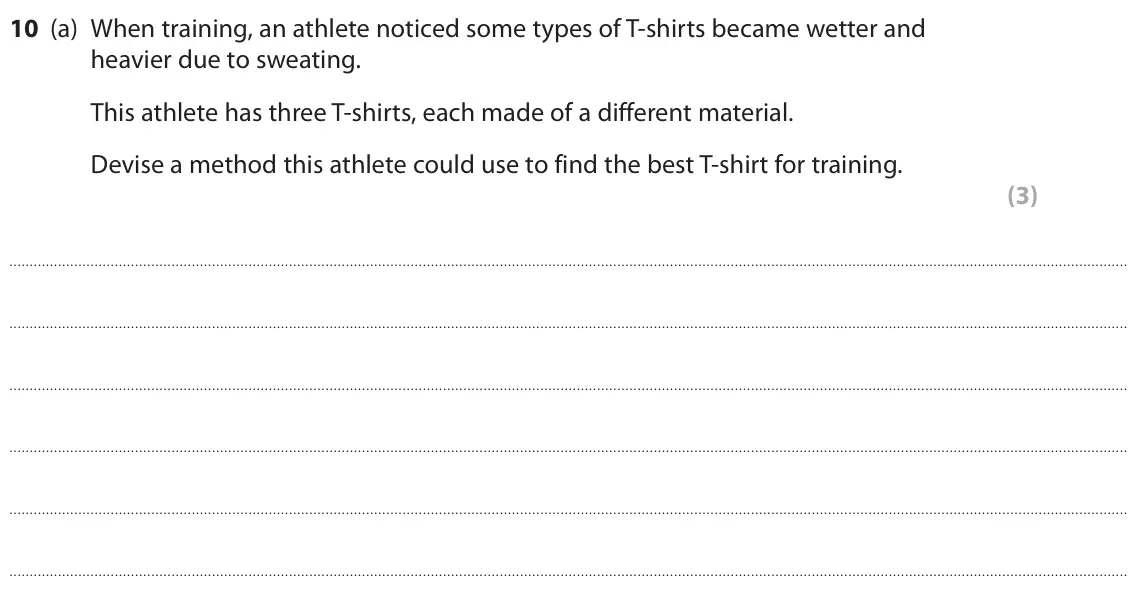
Q3(a)(i)
The whole paper ↗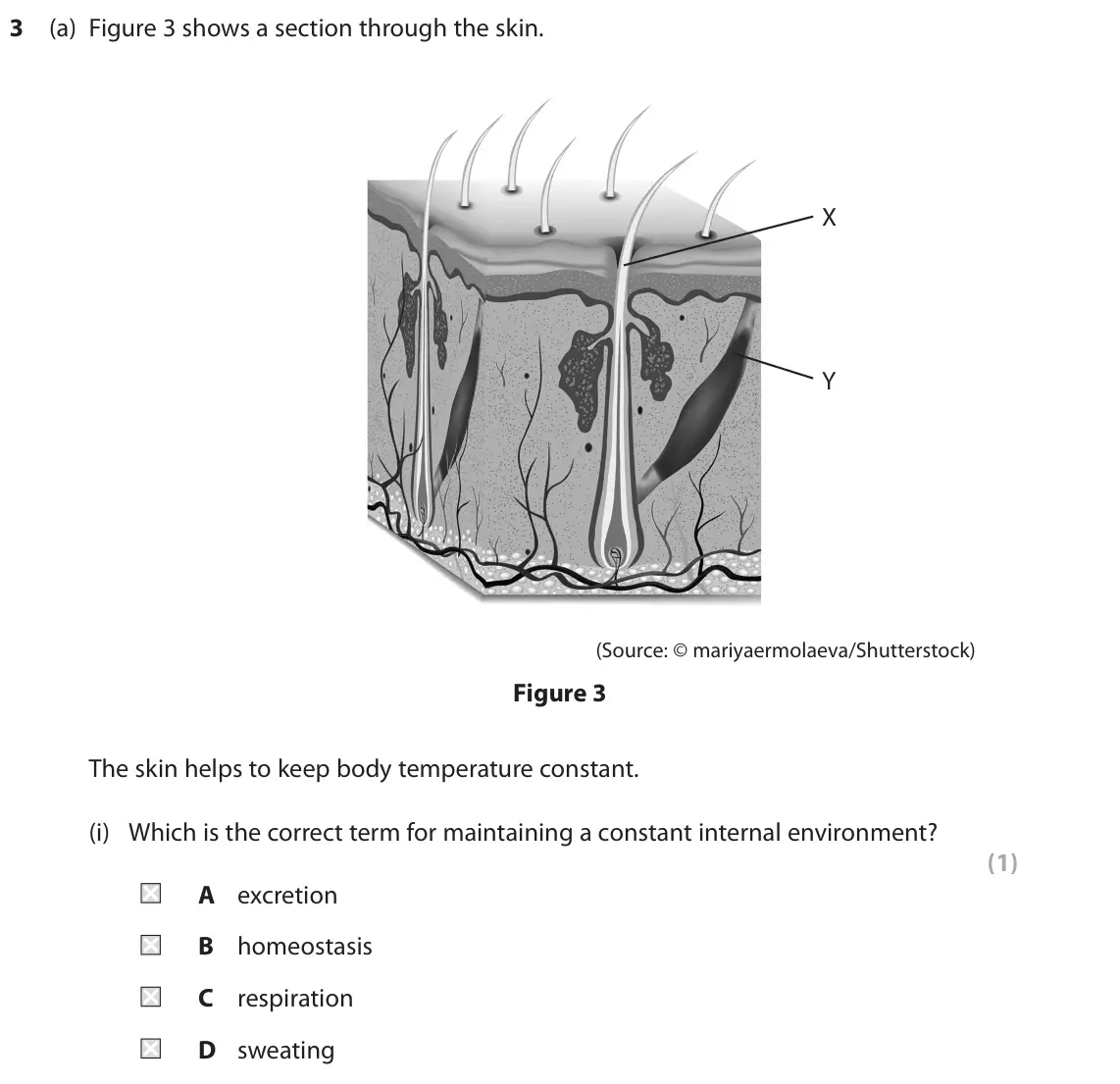
Q3(a)(ii)
The whole paper ↗
Q3(a)(iii)
The whole paper ↗
All 48 questions on Homeostasis and thermoregulation, as a list
- June 2025, Paper 2 Foundation, Q3(a)(i) (2 marks): Explain how the action of the hair erector muscle helps to keep the body warm. (2)
- June 2025, Paper 2 Foundation, Q3(a)(ii) (2 marks): Explain how sweating decreases body temperature. (2)
- June 2025, Paper 2 Foundation, Q3(b) (1 mark): A scientist investigated the air temperature at which women start to shiver. The scientist recorded the air temperature at which a 40‑year‑old woman started to
- June 2025, Paper 2 Foundation, Q3(c)(i) (1 mark): State the optimum body temperature as shown in Figure 4. (1) °C
- June 2023, Paper 2 Higher, Q4(a)(i) (1 mark): Which part of the body controls the regulation of body temperature? (1) A kidney B pituitary gland C hypothalamus D pancreas
- June 2023, Paper 2 Higher, Q4(a)(ii) (1 mark): State one variable that should be controlled in this investigation. (1)
- June 2023, Paper 2 Higher, Q4(a)(iii) (2 marks): Describe a control that could be used for this investigation. (2)
- June 2023, Paper 2 Higher, Q4(b)(i) (2 marks): Compare and contrast the temperature changes for wool and polyester in this investigation. (2)
- June 2023, Paper 2 Higher, Q4(b)(ii) (1 mark): State one improvement to this investigation that would make the results more comparable. (1)
- June 2023, Paper 2 Higher, Q4(c)(i) (2 marks): Wearing an insulated jacket may cause a person to sweat. Explain how sweating helps to regulate temperature in humans. (2)
- June 2023, Paper 2 Foundation, Q10(a)(i) (1 mark): Which part of the body controls the regulation of body temperature? (1) A kidney B pituitary gland C hypothalamus D pancreas
- June 2023, Paper 2 Foundation, Q10(a)(ii) (1 mark): State one variable that should be controlled in this investigation. (1)
- June 2023, Paper 2 Foundation, Q10(a)(iii) (2 marks): Describe a control that could be used for this investigation. (2)
- June 2023, Paper 2 Foundation, Q10(b)(i) (2 marks): Compare and contrast the temperature changes for wool and polyester in this investigation. (2)
- June 2023, Paper 2 Foundation, Q10(b)(ii) (1 mark): State one improvement to this investigation that would make the results more comparable. (1)
- June 2023, Paper 2 Foundation, Q10(c)(i) (2 marks): Wearing an insulated jacket may cause a person to sweat. Explain how sweating helps to regulate temperature in humans. (2)
- June 2022, Paper 2 Higher, Q10(a) (3 marks): When training, an athlete noticed some types of T‑shirts became wetter and heavier due to sweating. This athlete has three T‑shirts, each made of a different ma
- June 2022, Paper 2 Foundation, Q3(a)(i) (1 mark): Which is the correct term for maintaining a constant internal environment? (1) A excretion B homeostasis C respiration D sweating
- June 2022, Paper 2 Foundation, Q3(a)(ii) (2 marks): Explain how structures X and Y help to regulate body temperature when the body is too cold. (2)
- June 2022, Paper 2 Foundation, Q3(a)(iii) (2 marks): Explain how shivering can help a person regulate their body temperature. (2)
- June 2022, Paper 2 Foundation, Q3(b)(i) (1 mark): State this person’s highest body temperature. (1)
- June 2022, Paper 2 Foundation, Q3(b)(ii) (3 marks): Explain the change in body temperature from 0 hours to 4 hours. (3)
- November 2020, Paper 2 Foundation, Q7(b)(i) (1 mark): Which part of the brain controls body temperature? (1) A cerebral hemispheres B medulla oblongata C cerebellum D hypothalamus
- November 2020, Paper 2 Foundation, Q7(b)(ii) (6 marks): Figure 17 shows a diagram of the skin. surface hair of skin muscle nerve gland capillary Figure 17 Explain how structures in the skin help to reduce body temper
- June 2019, Paper 2 Higher, Q4(a) (2 marks): State two variables that would need to be controlled in this investigation. (2) 1 2
- June 2019, Paper 2 Higher, Q4(b)(i) (2 marks): Calculate the rate of temperature change in flask 1 from 1 to 8 minutes. (2) °C per minute
- June 2019, Paper 2 Higher, Q4(b)(ii) (2 marks): Compare the trends shown in the data for flask 1 and flask 2. (2)
- June 2019, Paper 2 Higher, Q4(c) (2 marks): Explain how sweating helps to cool the body. (2)
- June 2019, Paper 2 Higher, Q4(d) (1 mark): Which part of the brain controls internal body temperature? (1) A cerebellum B medulla oblongata C hypothalamus D pituitary gland
- June 2019, Paper 2 Higher, Q4(e) (2 marks): Explain why it is important to control the internal temperature of the human body. (2)
- June 2019, Paper 2 Foundation, Q2(c) (1 mark): What name is given to the process of maintaining the internal body conditions? (1) A respiration B diffusion C digestion D homeostasis
- June 2019, Paper 2 Foundation, Q10(a) (2 marks): State two variables that would need to be controlled in this investigation. (2) 1 2
- June 2019, Paper 2 Foundation, Q10(b)(i) (2 marks): Calculate the rate of temperature change in flask 1 from 1 to 8 minutes. (2) °C per minute
- June 2019, Paper 2 Foundation, Q10(b)(ii) (2 marks): Compare the trends shown in the data for flask 1 and flask 2. (2)
- June 2019, Paper 2 Foundation, Q10(c) (2 marks): Explain how sweating helps to cool the body. (2)
- June 2019, Paper 2 Foundation, Q10(d) (1 mark): Which part of the brain controls internal body temperature? (1) A cerebellum B medulla oblongata C hypothalamus D pituitary gland
- June 2019, Paper 2 Foundation, Q10(e) (2 marks): Explain why it is important to control the internal temperature of the human body. (2)
- June 2018, Paper 2 Higher, Q6(a)(i) (1 mark): Describe how the body temperature of the iguana affects its oxygen consumption. (1)
- June 2018, Paper 2 Higher, Q6(a)(ii) (3 marks): Explain why the body temperature of the iguana affects its oxygen consumption. (3)
- June 2018, Paper 2 Higher, Q6(a)(iii) (2 marks): Iguanas do not have sweat glands. When an iguana is too hot, it pants by opening its mouth to cool down. Explain how this behaviour helps to cool the iguana dow
- June 2018, Paper 2 Higher, Q6(b)(i) (1 mark): Where in the human brain is the thermoregulatory centre? (1) A cerebellum B cerebral cortex C hypothalamus D pituitary gland
- June 2018, Paper 2 Higher, Q6(b)(ii) (4 marks): Explain the role of vasodilation in thermoregulation. (4)
- Specimen, Paper 2 Higher, Q9(a) (1 mark): The name of the process that controls water levels in the body is (1) A diffusion B osmosis C osmoregulation D thermoregulation
- Specimen, Paper 2 Foundation, Q4(a) (2 marks): Explain how part A is involved in thermoregulation. (2)
- Specimen, Paper 2 Foundation, Q4(b) (1 mark): Which part of the brain contains the thermoregulatory centre? (1) A cerebellum B cerebral cortex C hypothalamus D medulla
- Specimen, Paper 2 Foundation, Q4(c)(i) (2 marks): Describe how the internal temperature of the fish changes in response to the external temperature. (2)
- Specimen, Paper 2 Foundation, Q4(c)(ii) (2 marks): Explain why it is important that the temperature of the otter is maintained at about 37°C. (2)
- Specimen, Paper 2 Foundation, Q4(d) (3 marks): Shivering is one way in which humans can regulate their body temperature. Explain how shivering helps to regulate body temperature. (3)
Questions, mark schemes and examiner’s reports are © Pearson Edexcel, from their published past papers. Plumi isn’t affiliated with any exam board. Want whole papers? Every Edexcel GCSE Biology paper.
Rather write your answers by hand on iPad? Plumi marks them against the same mark schemes.