 plumi
Blood glucose and diabetes: Edexcel GCSE Biology questions
Every Edexcel GCSE Biology exam question on Blood glucose and diabetes (specification points 7.13–7.17), 2018–2025, with its mark scheme and examiner’s report.
Find questions1,834
Exam
All years
Calculations
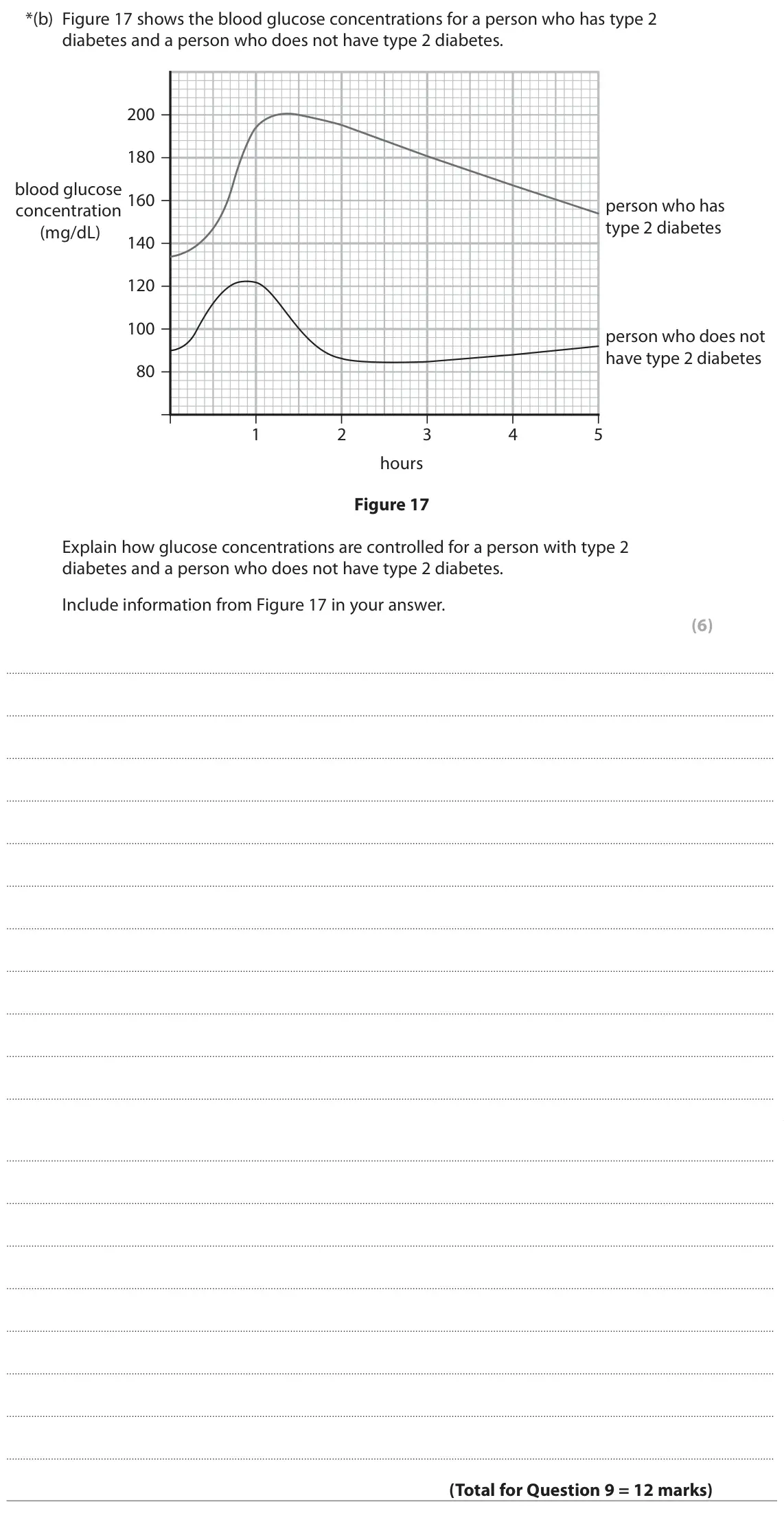
Q1(b)(i)
The whole paper ↗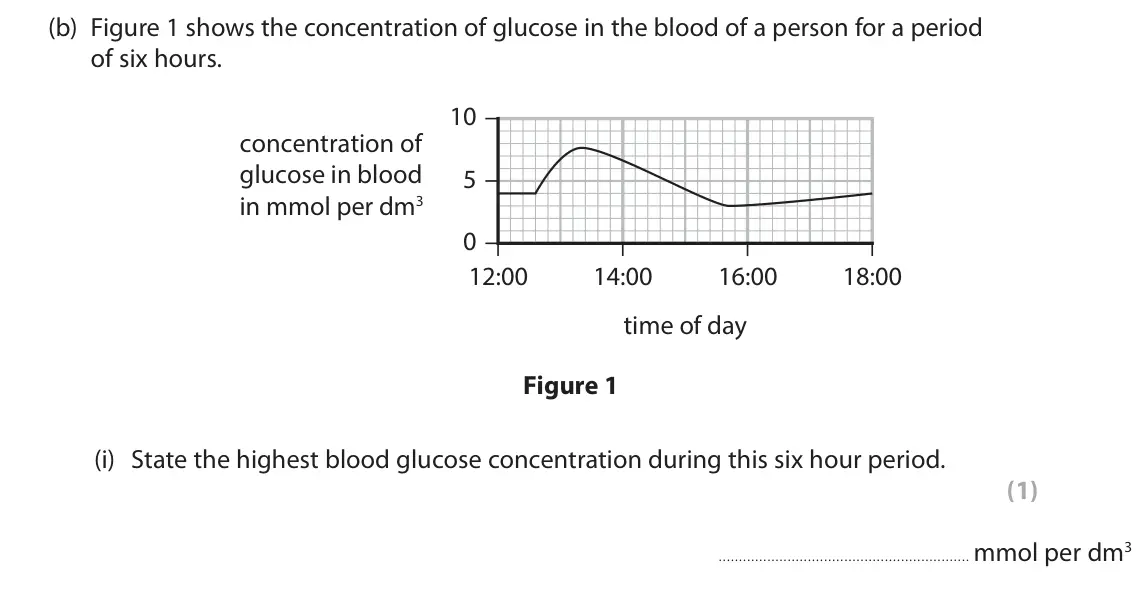
Q1(b)(ii)
The whole paper ↗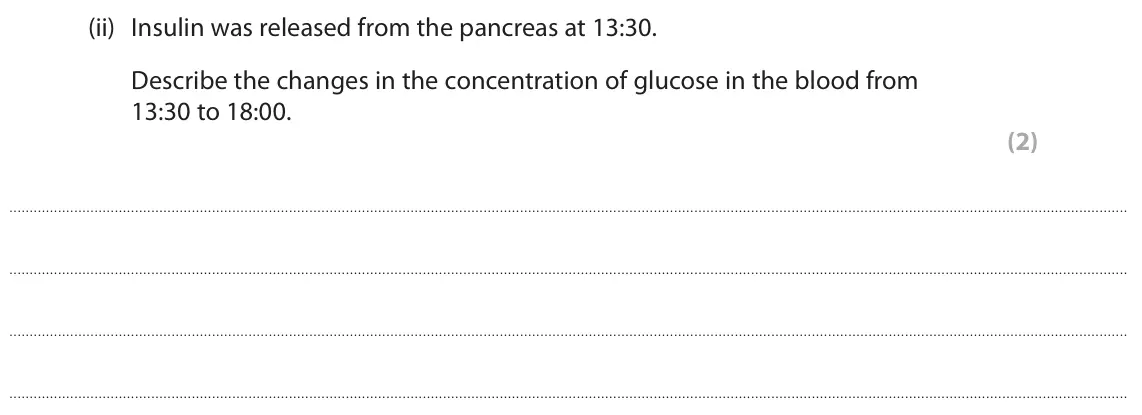
Q1(c)
The whole paper ↗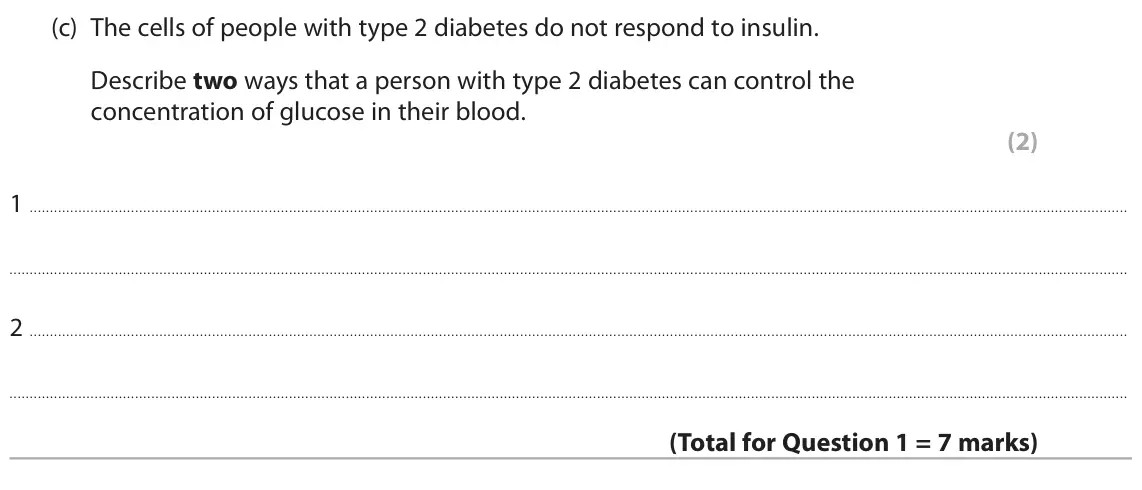
Q1(a)(i)
The whole paper ↗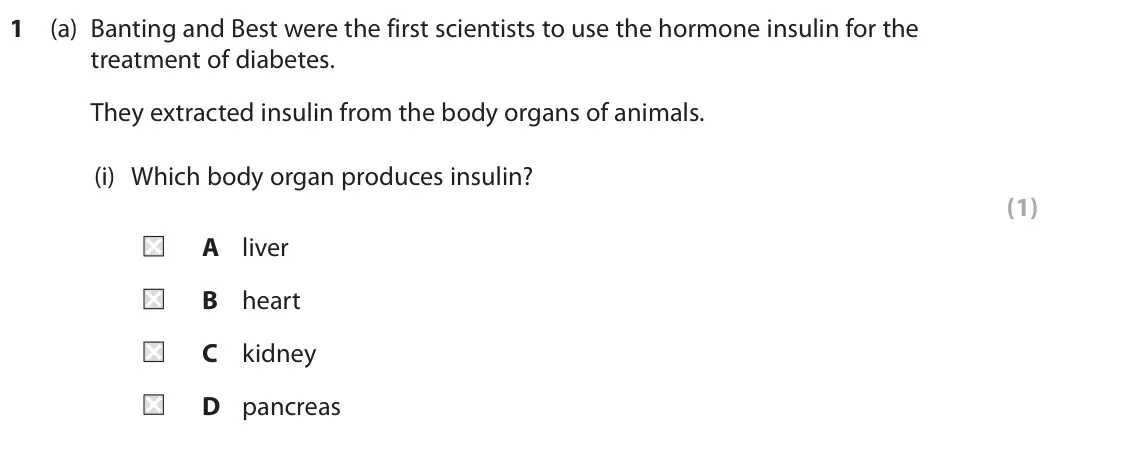
Q1(a)(ii)
The whole paper ↗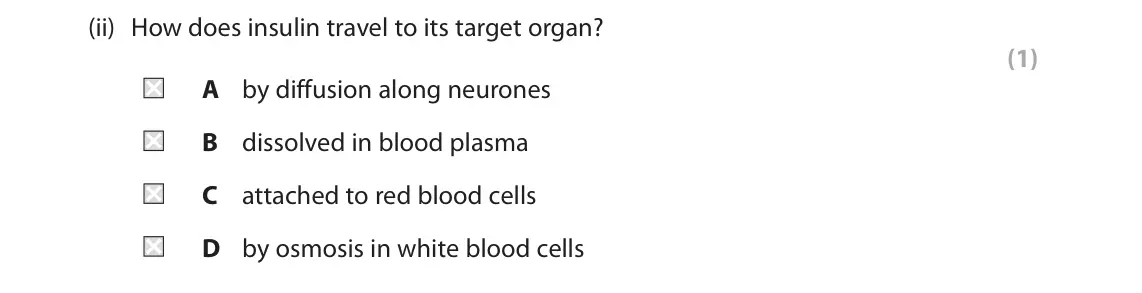
Q4(c)(i)
The whole paper ↗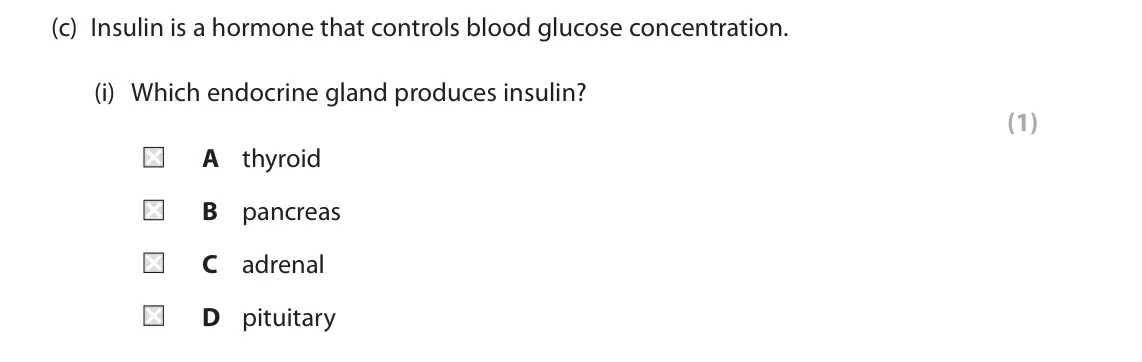
Q4(c)(ii)
The whole paper ↗
Q4(c)(iii)
The whole paper ↗
Q4(d)(i)
The whole paper ↗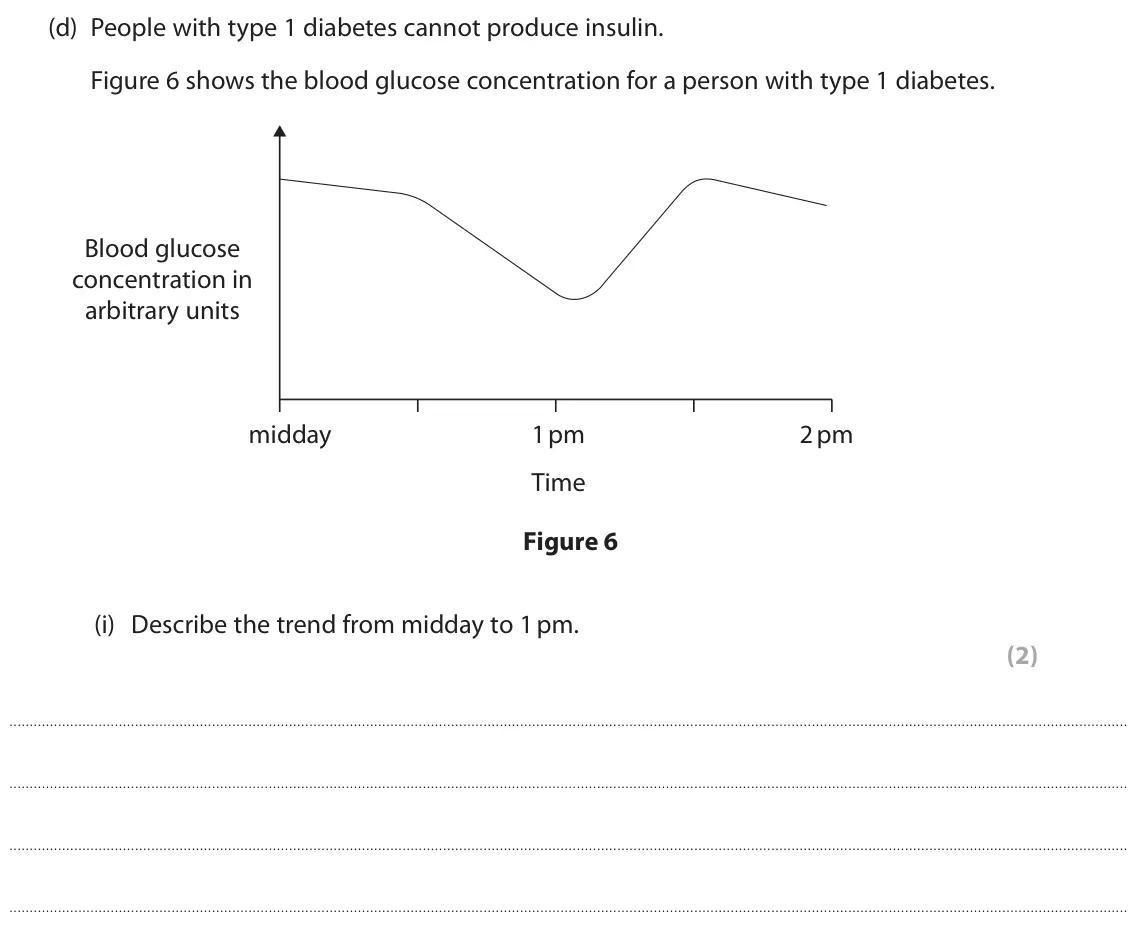
Q4(d)(ii)
The whole paper ↗
Q4(e)
The whole paper ↗
Q2(a)(i)
The whole paper ↗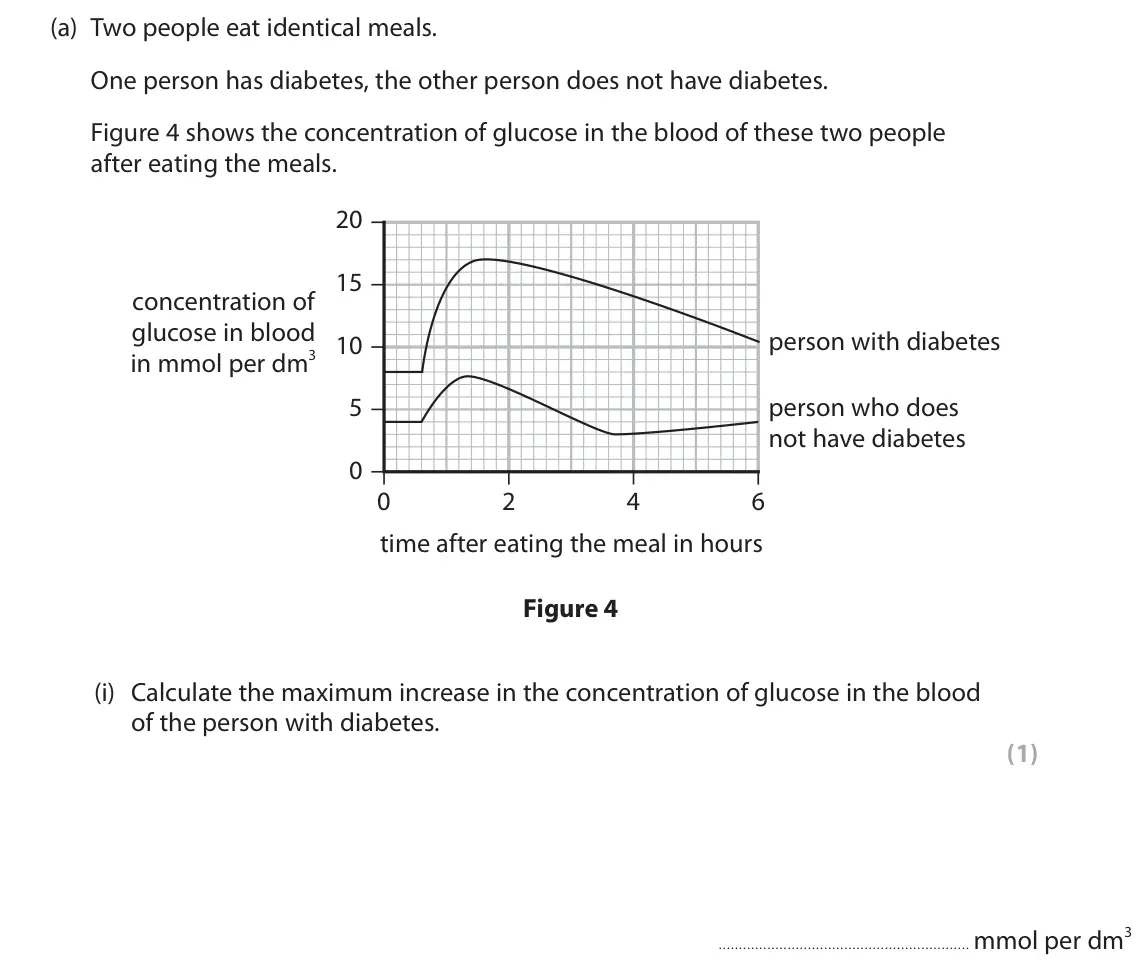
Q2(b)(i)
The whole paper ↗
Q2(b)(iii)
The whole paper ↗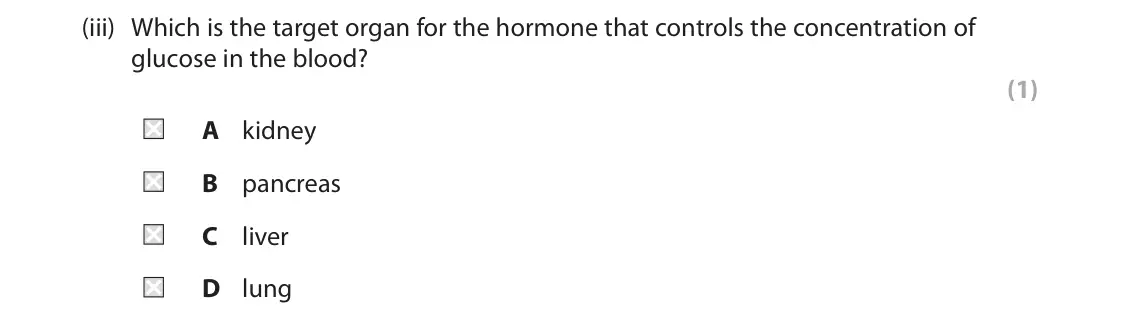
Q2(c)
The whole paper ↗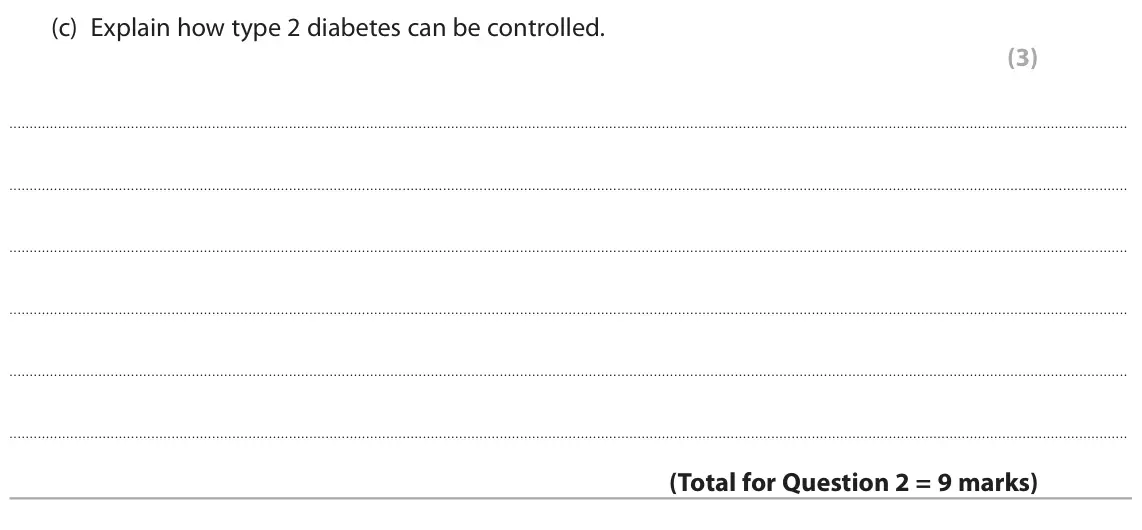
Q8(a)(i)
The whole paper ↗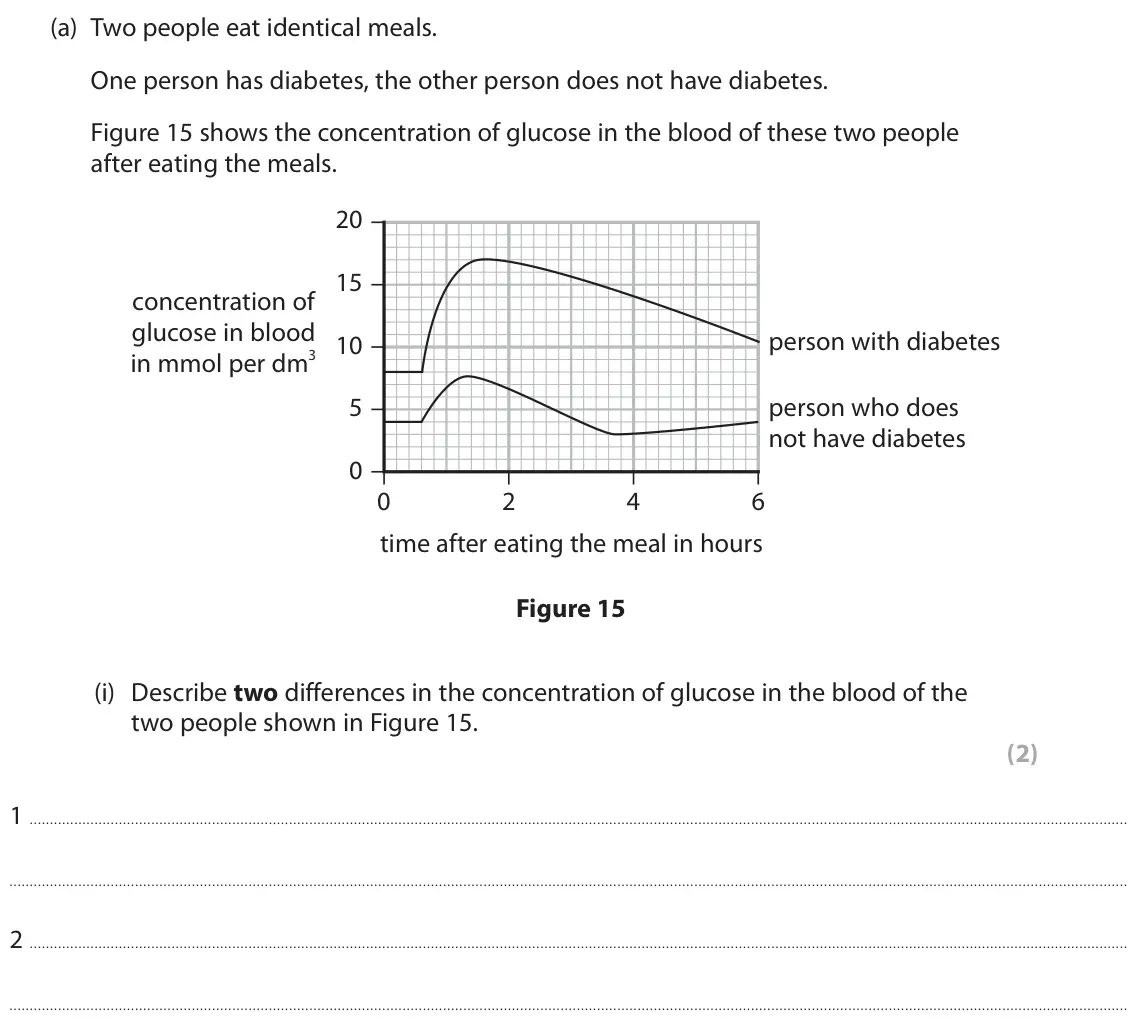
Q8(a)(ii)
The whole paper ↗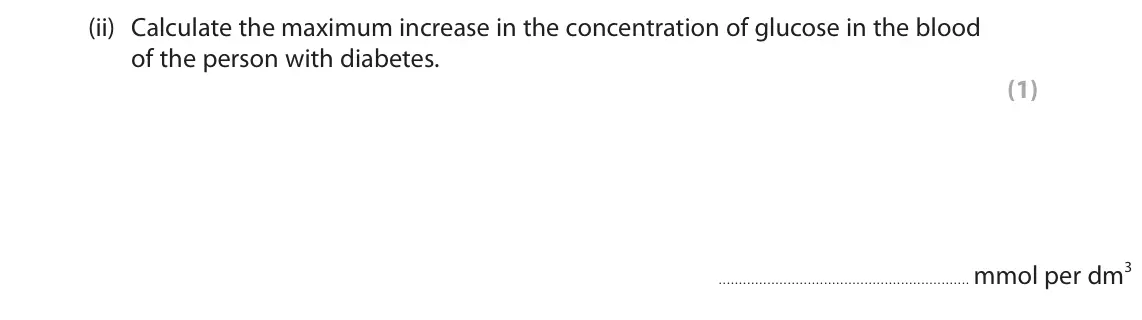
Q8(b)(i)
The whole paper ↗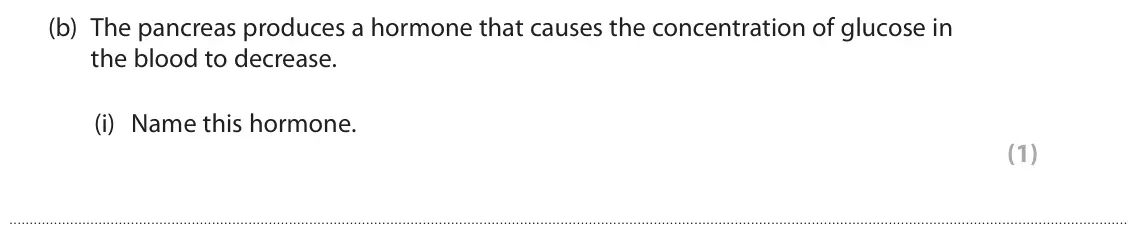
Q8(b)(ii)
The whole paper ↗
All 53 questions on Blood glucose and diabetes, as a list
- June 2025, Paper 2 Higher, Q9(b) (6 marks): Figure 17 shows the blood glucose concentrations for a person who has type 2 diabetes and a person who does not have type 2 diabetes. 200 180 blood glucose 160
- June 2025, Paper 2 Foundation, Q1(b)(i) (1 mark): State the highest blood glucose concentration during this six hour period. (1) mmol per dm3
- June 2025, Paper 2 Foundation, Q1(b)(ii) (2 marks): Insulin was released from the pancreas at 13:30. Describe the changes in the concentration of glucose in the blood from 13:30 to 18:00. (2)
- June 2025, Paper 2 Foundation, Q1(c) (2 marks): The cells of people with type 2 diabetes do not respond to insulin. Describe two ways that a person with type 2 diabetes can control the concentration of glucos
- June 2024, Paper 2 Higher, Q1(a)(i) (1 mark): Which body organ produces insulin? (1) A liver B heart C kidney D pancreas
- June 2024, Paper 2 Higher, Q1(a)(ii) (1 mark): How does insulin travel to its target organ? (1) A by diffusion along neurones B dissolved in blood plasma C attached to red blood cells D by osmosis in white b
- June 2024, Paper 2 Foundation, Q4(c)(i) (1 mark): Which endocrine gland produces insulin? (1) A thyroid B pancreas C adrenal D pituitary
- June 2024, Paper 2 Foundation, Q4(c)(ii) (1 mark): State how insulin is transported from its endocrine gland to its target organs. (1)
- June 2024, Paper 2 Foundation, Q4(c)(iii) (1 mark): Name the main target organ for insulin. (1)
- June 2024, Paper 2 Foundation, Q4(d)(i) (2 marks): Describe the trend from midday to 1 pm. (2)
- June 2024, Paper 2 Foundation, Q4(d)(ii) (1 mark): State what a person with type 1 diabetes could have done to cause the change in the blood glucose concentration from 1.05 pm to 1.30 pm. (1)
- June 2024, Paper 2 Foundation, Q4(e) (2 marks): People with type 2 diabetes have cells that do not respond to insulin. State two ways that people with type 2 diabetes can control their blood glucose concentra
- June 2023, Paper 2 Higher, Q2(a)(i) (1 mark): Calculate the maximum increase in the concentration of glucose in the blood of the person with diabetes. (1) mmol per dm3
- June 2023, Paper 2 Higher, Q2(b)(i) (1 mark): Name this hormone. (1)
- June 2023, Paper 2 Higher, Q2(b)(iii) (1 mark): Which is the target organ for the hormone that controls the concentration of glucose in the blood? (1) A kidney B pancreas C liver D lung
- June 2023, Paper 2 Higher, Q2(c) (3 marks): Explain how type 2 diabetes can be controlled. (3)
- June 2023, Paper 2 Foundation, Q8(a)(i) (2 marks): Describe two differences in the concentration of glucose in the blood of the two people shown in Figure 15. (2) 1 2
- June 2023, Paper 2 Foundation, Q8(a)(ii) (1 mark): Calculate the maximum increase in the concentration of glucose in the blood of the person with diabetes. (1) mmol per dm3
- June 2023, Paper 2 Foundation, Q8(b)(i) (1 mark): Name this hormone. (1)
- June 2023, Paper 2 Foundation, Q8(b)(ii) (1 mark): State how this hormone is transported from the pancreas to its target organs. (1)
- June 2023, Paper 2 Foundation, Q8(b)(iii) (1 mark): Which is the target organ for the hormone that controls the concentration of glucose in the blood? (1) A kidney B pancreas C liver D lung
- June 2023, Paper 2 Foundation, Q8(c) (3 marks): Explain how type 2 diabetes can be controlled. (3)
- June 2022, Paper 2 Higher, Q6(b) (3 marks): Excessive weight gain and obesity increase the likelihood of developing type 2 diabetes. Explain the effect of type 2 diabetes on the body. (3)
- November 2021, Paper 2 Higher, Q7(a) (2 marks): A hospital patient was tested for diabetes. A nurse recorded his mass and height. Figure 10 shows these measurements. mass in kg height in metres 124 1.8 Figure
- November 2021, Paper 2 Higher, Q7(b)(i) (3 marks): Describe the trends shown in this data. (3)
- November 2021, Paper 2 Higher, Q7(b)(ii) (3 marks): This patient was diagnosed as being type 2 diabetic. Explain why the blood glucose concentration of this patient remained high from 4 hours to 8 hours. (3)
- November 2021, Paper 2 Higher, Q7(b)(iii) (3 marks): This patient did some exercise during these 24 hours. Explain how the data in Figure 11 shows that this exercise occurred after 8 hours but before 12 hours. (3)
- November 2021, Paper 2 Foundation, Q4(b) (2 marks): Person A has type 1 diabetes. Person B has type 2 diabetes. Draw one straight line from each person to the cause of their type of diabetes. (2) person cause doe
- November 2021, Paper 2 Foundation, Q4(c)(i) (2 marks): Describe the trend shown in Figure 7. Use data from Figure 7 in your answer. (2)
- November 2021, Paper 2 Foundation, Q4(c)(ii) (2 marks): A female has a waist measurement of 78.3 cm and a hip measurement of 90.0 cm. Calculate the waist to hip ratio for this female and use Figure 7 to estimate the
- November 2021, Paper 2 Foundation, Q4(d)(i) (2 marks): The scientist also measured the BMI of the females. BMI and waist to hip ratio are two factors that affect the probability of females developing type 2 diabetes
- November 2021, Paper 2 Foundation, Q4(d)(ii) (1 mark): State why an athlete may have a high BMI but still have a low probability of developing type 2 diabetes. (1)
- November 2020, Paper 2 Foundation, Q5(a)(i) (1 mark): Which row of the table shows the endocrine gland and hormone involved in the control of blood glucose concentration? (1) endocrine gland hormone A ovary oestrog
- November 2020, Paper 2 Foundation, Q5(a)(ii) (1 mark): State a target organ for the hormone that controls blood glucose concentration. (1)
- November 2020, Paper 2 Foundation, Q5(b)(i) (2 marks): Use the formula to calculate the BMI for person A BMI = mass height2 (2)
- November 2020, Paper 2 Foundation, Q5(b)(ii) (2 marks): Person B develops type 2 diabetes. Describe two lifestyle changes person B should make to help to control their blood glucose concentration. (2) 1 2
- June 2019, Paper 2 Higher, Q6(a)(i) (1 mark): A doctor analysed the results and asked the person to have further tests for type 2 diabetes. Give a reason why the doctor came to this conclusion. (1)
- June 2019, Paper 2 Foundation, Q2(d)(i) (2 marks): Describe the trends shown in Figure 4 from 0 minutes to 30 minutes. (2)
- June 2019, Paper 2 Foundation, Q2(d)(ii) (2 marks): Explain why the concentration of glucose decreases from 30 minutes to 40 minutes. (2)
- June 2018, Paper 2 Foundation, Q1(a)(i) (1 mark): Which row shows the endocrine gland and the target organs for insulin? (1) endocrine gland target organs A adrenal liver and muscles B adrenal small and large i
- June 2018, Paper 2 Foundation, Q1(b) (2 marks): Figure 1 shows the blood glucose and blood insulin concentration for a healthy person during one day. Key blood glucose blood insulin breakfast lunch dinner con
- June 2018, Paper 2 Foundation, Q1(c) (1 mark): State one cause of type 1 diabetes. (1)
- June 2018, Paper 2 Foundation, Q1(d) (2 marks): Explain how controlling the diet can be used to treat type 2 diabetes. (2)
- June 2018, Paper 2 Foundation, Q1(e) (2 marks): A scientist is planning to test a new treatment for type 2 diabetes. She selects 300 volunteers who have type 2 diabetes. State two other factors that the scien
- Specimen, Paper 2 Higher, Q2(a)(i) (1 mark): Compare the glucose levels of person 1 with the glucose levels of person 2 after fasting for 12 hours. (1)
- Specimen, Paper 2 Higher, Q2(a)(ii) (1 mark): Compare the glucose levels of person 3 with the glucose levels of person 1, two hours after drinking 75g glucose. (1) Person 3 cannot produce the hormone that c
- Specimen, Paper 2 Higher, Q2(a)(iii) (1 mark): State the hormone that person 3 cannot produce. (1)
- Specimen, Paper 2 Higher, Q7(a)(i) (2 marks): Calculate how many units of insulin the athlete would need to inject to control the rise in blood glucose levels. Give your answer to two significant figures. (
- Specimen, Paper 2 Higher, Q7(a)(ii) (2 marks): The athlete miscalculated his carbohydrate intake to be greater than his actual intake. Explain how the increase in the number of units injected would affect hi
- Specimen, Paper 2 Higher, Q7(b)(i) (1 mark): A patient visits his doctor because he is putting on weight but does not think he is increasing his calorie intake. The patient has a height of 1.9m and a body
- Specimen, Paper 2 Foundation, Q8(a)(i) (1 mark): Compare the glucose levels of person 1 with the glucose levels of person 2 after fasting for 12 hours. (1)
- Specimen, Paper 2 Foundation, Q8(a)(ii) (1 mark): Compare the glucose levels of person 2 with the glucose levels of person 1, two hours after drinking 75g glucose. (1) Person 3 cannot produce the hormone that c
- Specimen, Paper 2 Foundation, Q8(a)(iii) (1 mark): State the hormone that person 3 cannot produce. (1)
Questions, mark schemes and examiner’s reports are © Pearson Edexcel, from their published past papers. Plumi isn’t affiliated with any exam board. Want whole papers? Every Edexcel GCSE Biology paper.
Rather write your answers by hand on iPad? Plumi marks them against the same mark schemes.