 plumi
Respiration: Edexcel GCSE Biology questions
Every Edexcel GCSE Biology exam question on Respiration (specification points 8.9–8.11), 2018–2025, with its mark scheme and examiner’s report.
Find questions1,834
Exam
All years
Calculations
Q2(b)
The whole paper ↗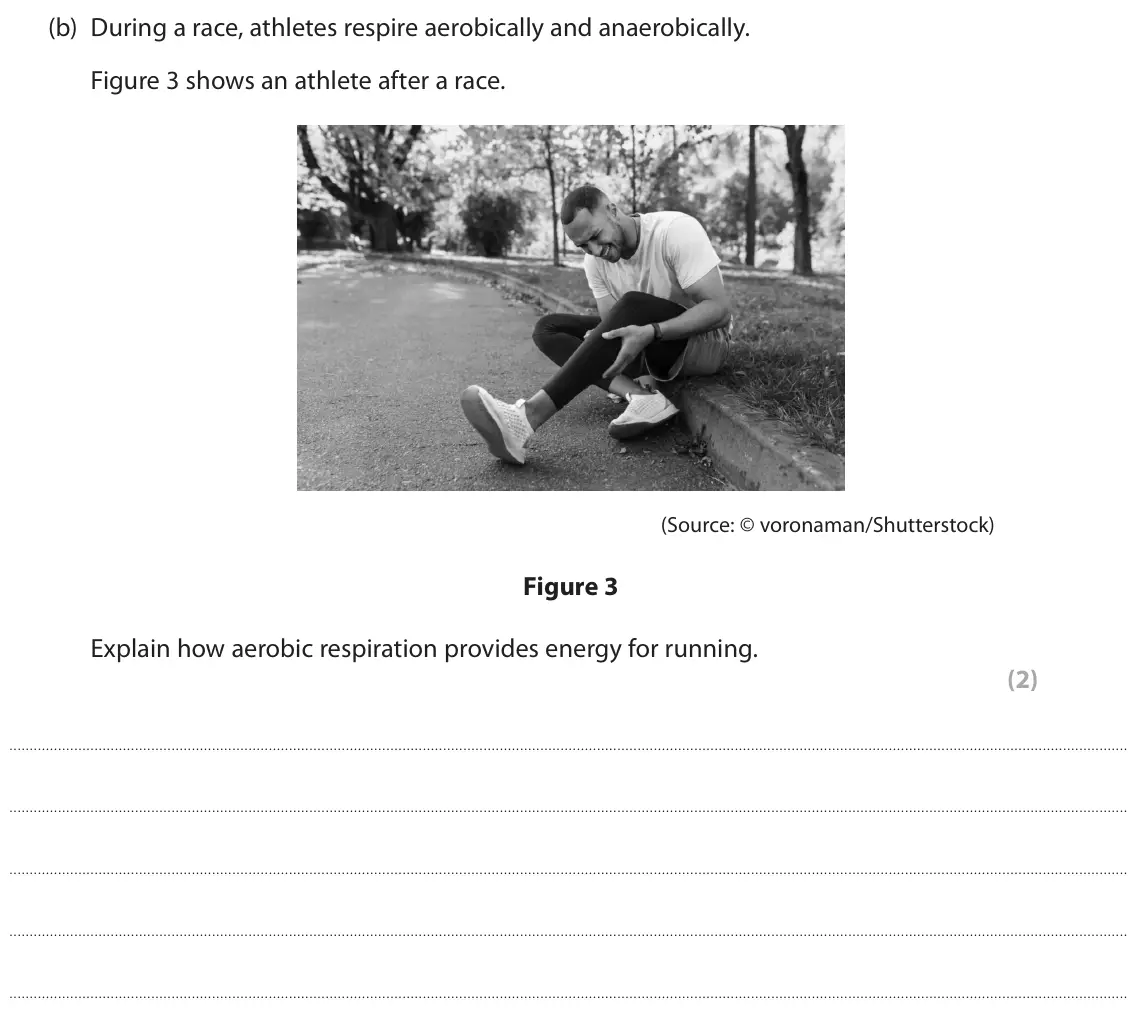
Q2(c)(i)
The whole paper ↗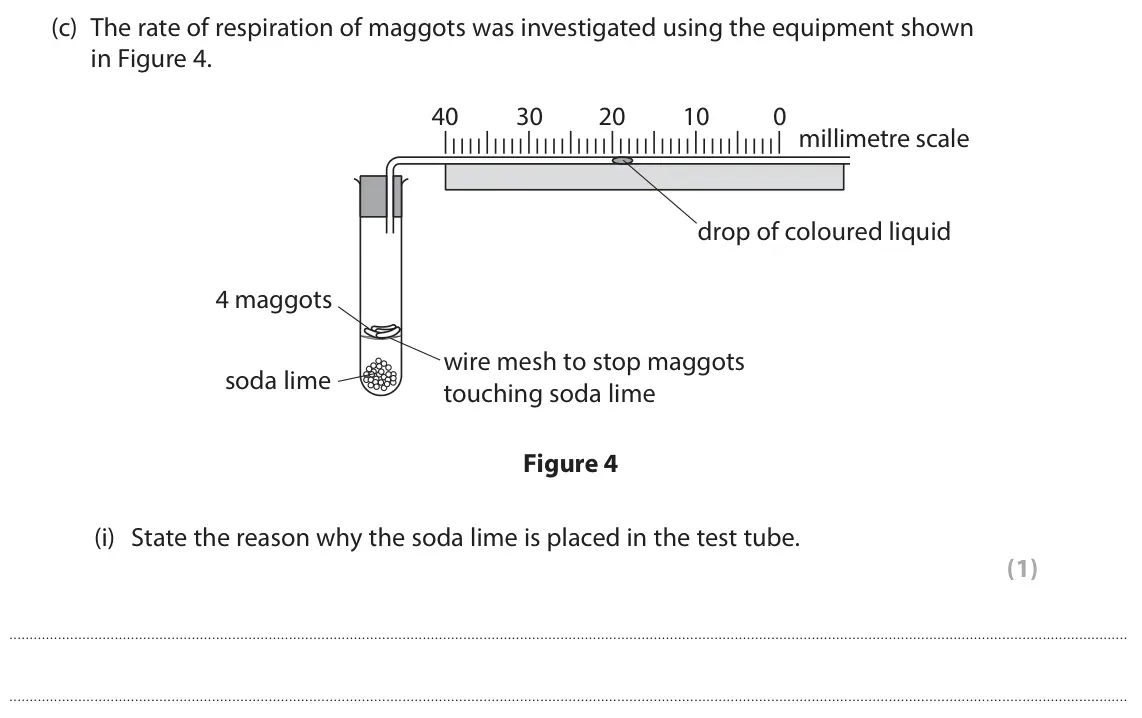
Q2(c)(ii)
The whole paper ↗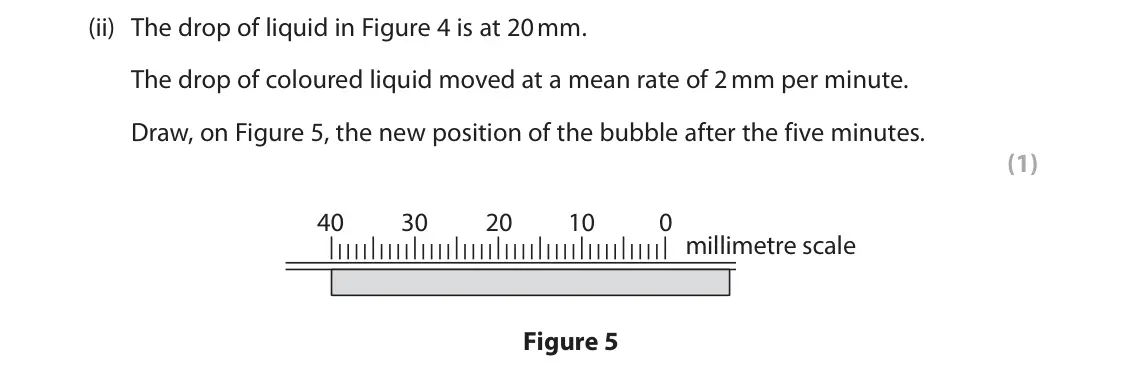
Q2(c)(iii)
The whole paper ↗
Q2(c)(iv)
The whole paper ↗
Q8(c)
The whole paper ↗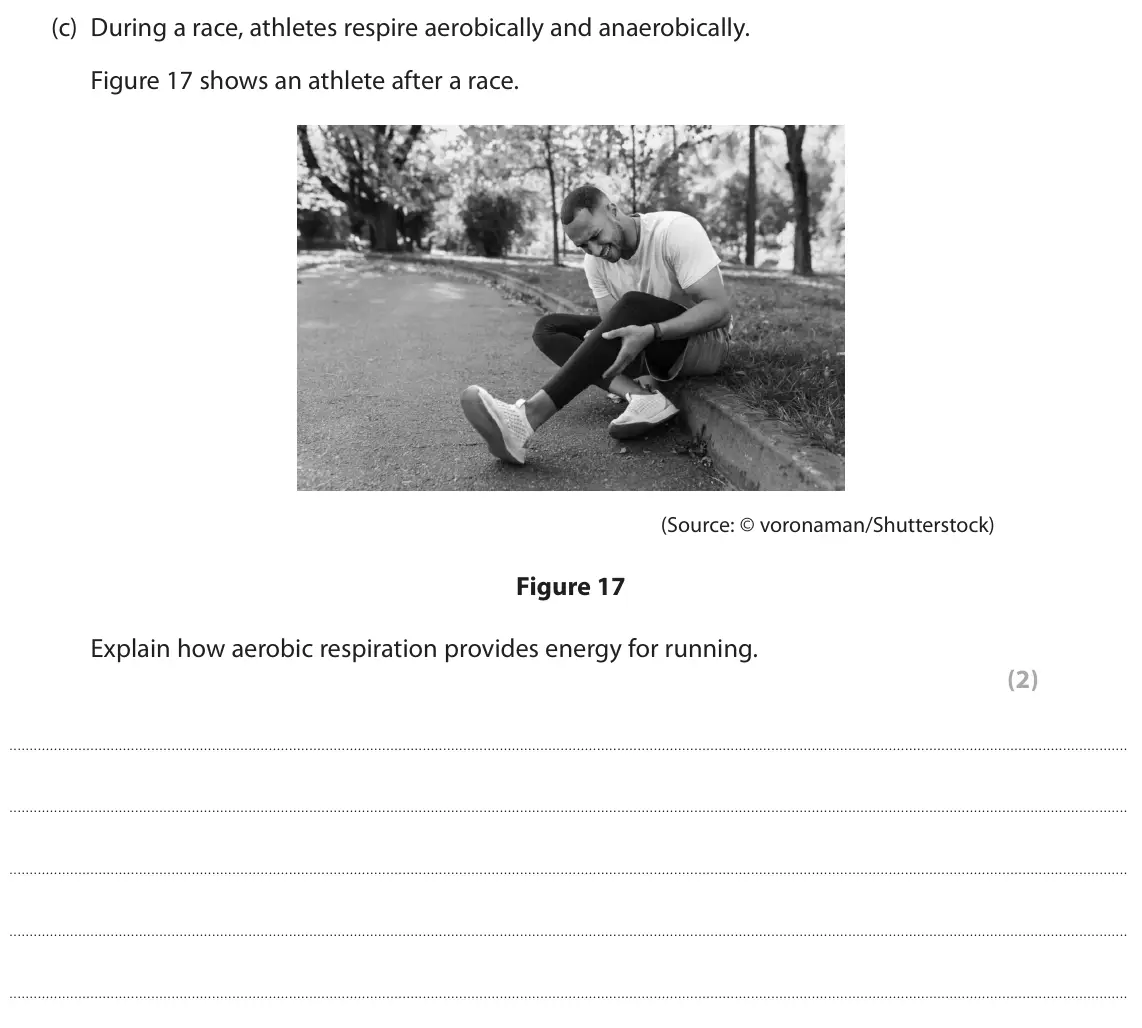
Q8(d)(i)
The whole paper ↗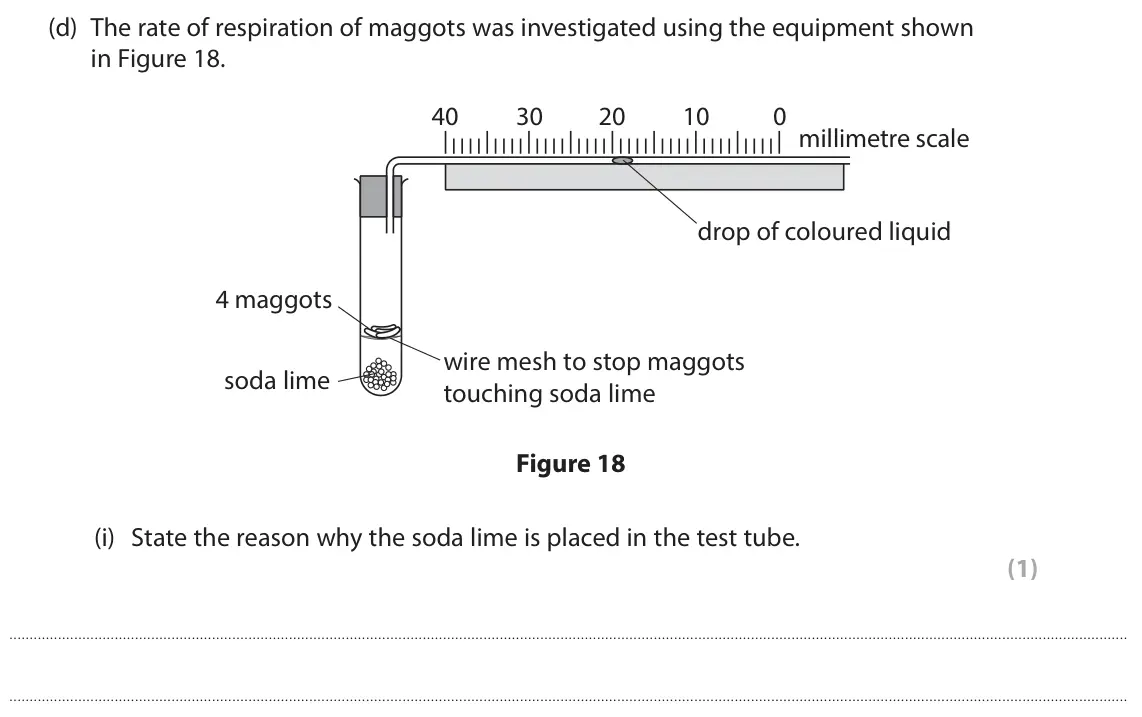
Q8(d)(ii)
The whole paper ↗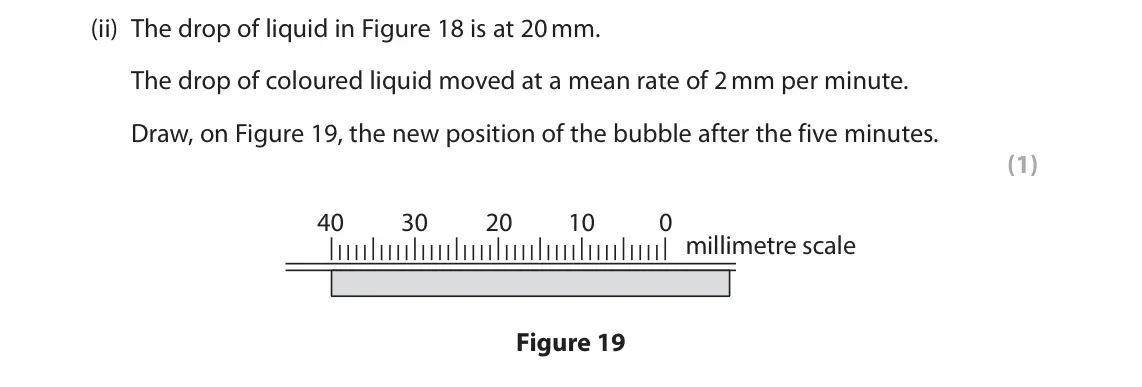
Q8(d)(iii)
The whole paper ↗
Q8(d)(iv)
The whole paper ↗
Q6(a)(i)
The whole paper ↗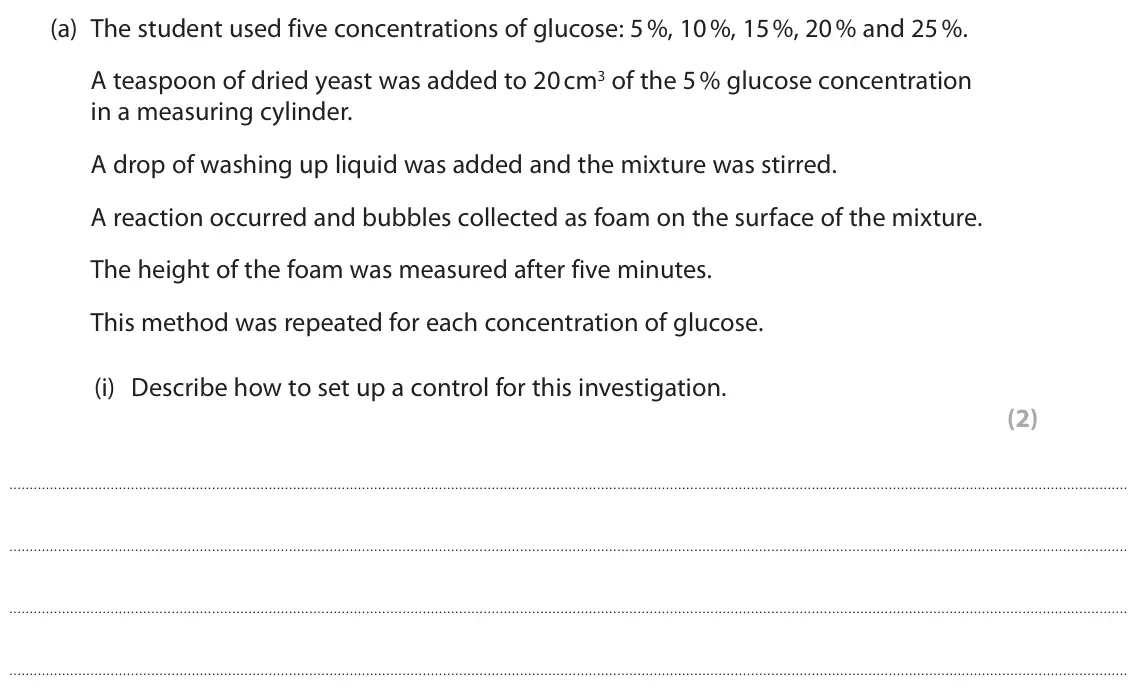
Q6(a)(ii)
The whole paper ↗
Q6(b)(i)
The whole paper ↗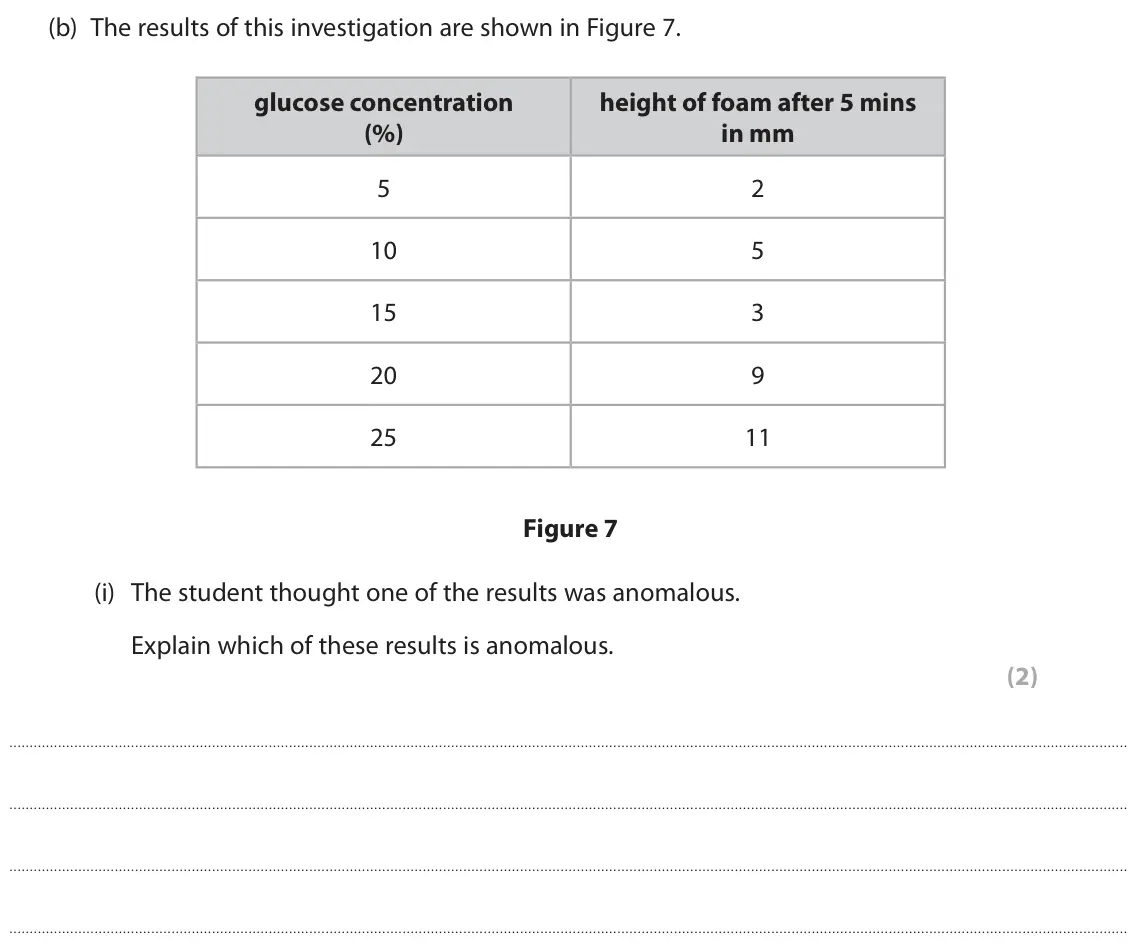
Q6(b)(ii)
The whole paper ↗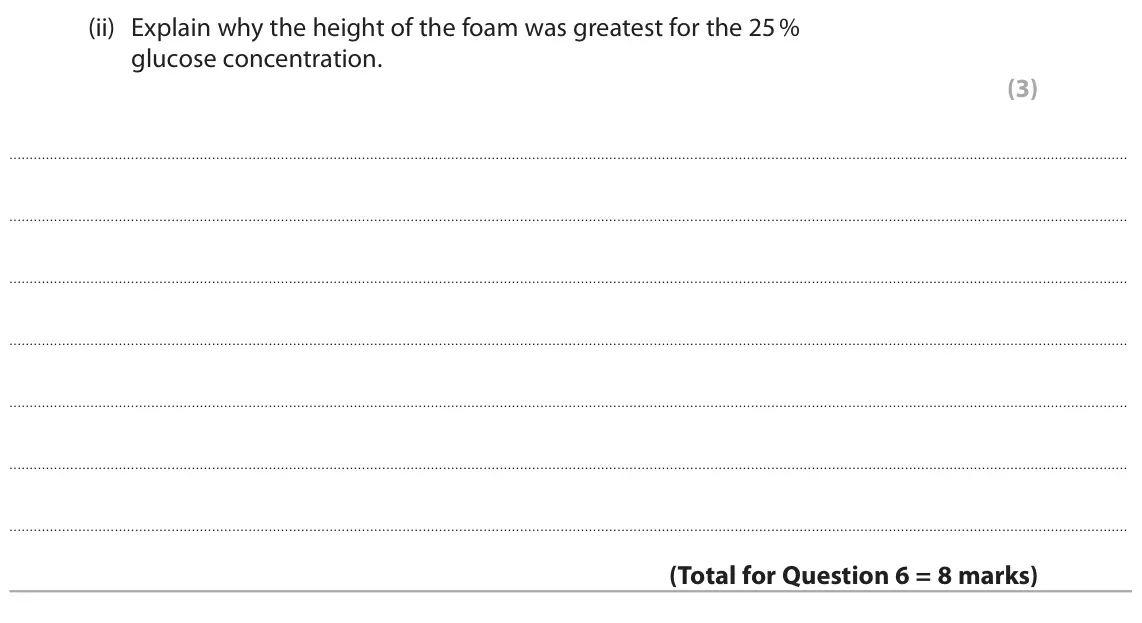
Q3(a)
The whole paper ↗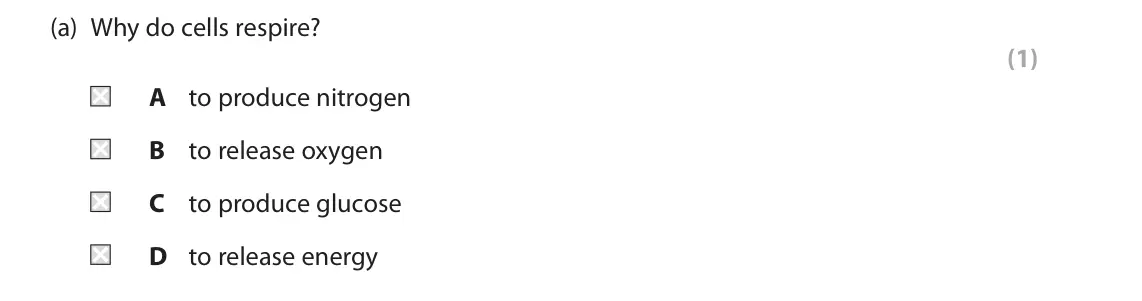
Q3(b)(i)
The whole paper ↗
Q3(b)(ii)
The whole paper ↗
Q3(c)(i)
The whole paper ↗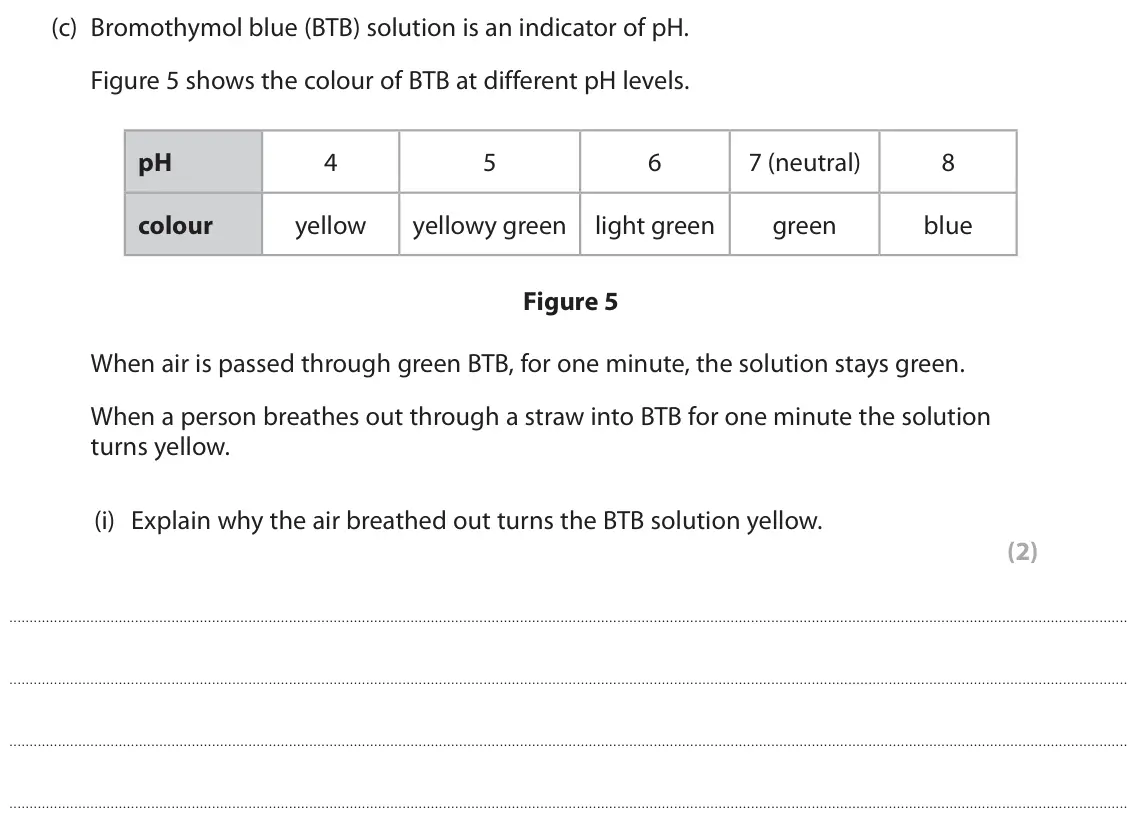
Q3(c)(ii)
The whole paper ↗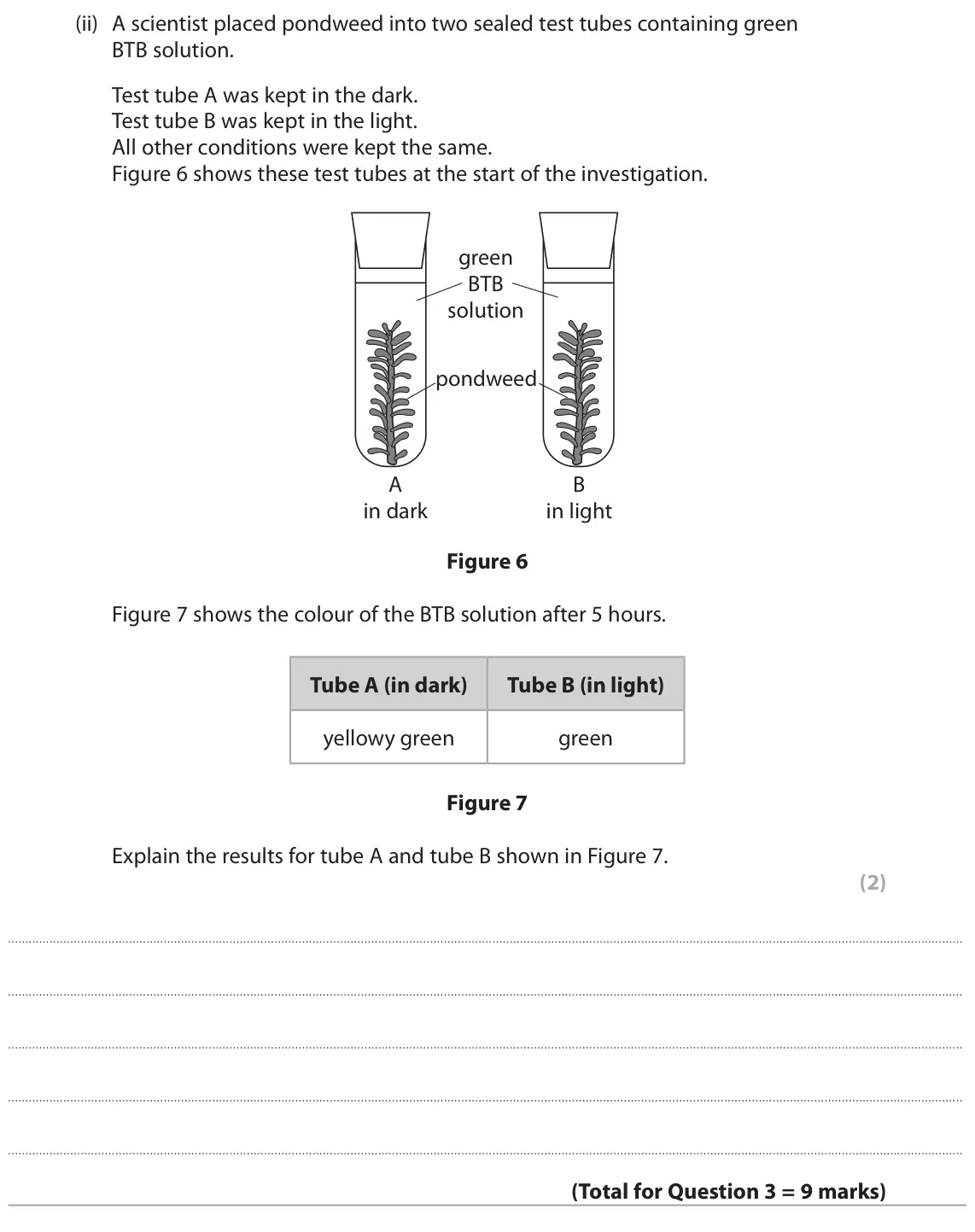
Q9(a)
The whole paper ↗
All 57 questions on Respiration, as a list
- June 2025, Paper 2 Higher, Q2(b) (2 marks): During a race, athletes respire aerobically and anaerobically. Figure 3 shows an athlete after a race. (Source: © voronaman/Shutterstock) Figure 3 Explain how a
- June 2025, Paper 2 Higher, Q2(c)(i) (1 mark): State the reason why the soda lime is placed in the test tube. (1)
- June 2025, Paper 2 Higher, Q2(c)(ii) (1 mark): The drop of liquid in Figure 4 is at 20 mm. The drop of coloured liquid moved at a mean rate of 2 mm per minute. Draw, on Figure 5, the new position of the bubb
- June 2025, Paper 2 Higher, Q2(c)(iii) (2 marks): The investigation was repeated with two maggots. Explain how the movement of the drop of coloured liquid would be affected if the investigation was repeated usi
- June 2025, Paper 2 Higher, Q2(c)(iv) (1 mark): State one way this investigation can be improved to obtain more reliable results. (1)
- June 2025, Paper 2 Foundation, Q8(c) (2 marks): During a race, athletes respire aerobically and anaerobically. Figure 17 shows an athlete after a race. (Source: © voronaman/Shutterstock) Figure 17 Explain how
- June 2025, Paper 2 Foundation, Q8(d)(i) (1 mark): State the reason why the soda lime is placed in the test tube. (1)
- June 2025, Paper 2 Foundation, Q8(d)(ii) (1 mark): The drop of liquid in Figure 18 is at 20 mm. The drop of coloured liquid moved at a mean rate of 2 mm per minute. Draw, on Figure 19, the new position of the bu
- June 2025, Paper 2 Foundation, Q8(d)(iii) (2 marks): The investigation was repeated with two maggots. Explain how the movement of the drop of coloured liquid would be affected if the investigation was repeated usi
- June 2025, Paper 2 Foundation, Q8(d)(iv) (1 mark): State one way this investigation can be improved to obtain more reliable results. (1)
- June 2024, Paper 2 Higher, Q6(a)(i) (2 marks): Describe how to set up a control for this investigation. (2)
- June 2024, Paper 2 Higher, Q6(a)(ii) (1 mark): State how the scientist could improve this investigation to increase the rate of the reaction. (1)
- June 2024, Paper 2 Higher, Q6(b)(i) (2 marks): The student thought one of the results was anomalous. Explain which of these results is anomalous. (2)
- June 2024, Paper 2 Higher, Q6(b)(ii) (3 marks): Explain why the height of the foam was greatest for the 25 % glucose concentration. (3)
- June 2023, Paper 2 Higher, Q3(a) (1 mark): Why do cells respire? (1) A to produce nitrogen B to release oxygen C to produce glucose D to release energy
- June 2023, Paper 2 Higher, Q3(b)(i) (2 marks): Explain why the breathing rate of the athlete increases when running. (2)
- June 2023, Paper 2 Higher, Q3(b)(ii) (2 marks): When the athlete is running, their muscle cells use both aerobic respiration and anaerobic respiration. State two differences between aerobic respiration and an
- June 2023, Paper 2 Higher, Q3(c)(i) (2 marks): Explain why the air breathed out turns the BTB solution yellow. (2)
- June 2023, Paper 2 Higher, Q3(c)(ii) (2 marks): A scientist placed pondweed into two sealed test tubes containing green BTB solution. Test tube A was kept in the dark. Test tube B was kept in the light. All o
- June 2023, Paper 2 Foundation, Q9(a) (1 mark): Why do cells respire? (1) A to produce nitrogen B to release oxygen C to produce glucose D to release energy
- June 2023, Paper 2 Foundation, Q9(b)(i) (2 marks): Explain why the breathing rate of the athlete increases when running. (2)
- June 2023, Paper 2 Foundation, Q9(b)(ii) (2 marks): When the athlete is running, their muscle cells use both aerobic respiration and anaerobic respiration. State two differences between aerobic respiration and an
- June 2023, Paper 2 Foundation, Q9(c)(i) (2 marks): Explain why the air breathed out turns the BTB solution yellow. (2)
- June 2023, Paper 2 Foundation, Q9(c)(ii) (6 marks): Devise a plan, using green BTB solution, to investigate the amount of carbon dioxide in the air athletes breathe out after they have been running at different s
- June 2022, Paper 2 Higher, Q8(c) (2 marks): After high intensity exercise, the pH of muscles can decrease from pH 7.0 to pH 6.3. Explain this change in pH. (2)
- November 2021, Paper 2 Higher, Q3(b)(i) (2 marks): Use information from Figures 5 and 6 to calculate the mean rate of respiration of the maggots in mm per minute. (2) mm per minute
- November 2021, Paper 2 Higher, Q3(b)(ii) (2 marks): Describe a control for this investigation. (2)
- November 2021, Paper 2 Foundation, Q6(a)(ii) (1 mark): Amoeba proteus uses oxygen for aerobic respiration. Complete the equation for aerobic respiration. (1) glucose + oxygen → + (+ energy is released)
- November 2021, Paper 2 Foundation, Q6(b)(i) (1 mark): Which two changes allow the rate of respiration in the muscle to increase? (1) amount of glucose heart rate delivered to the muscles A increases increases B inc
- November 2021, Paper 2 Foundation, Q6(b)(ii) (2 marks): Figure 11 shows breathing data for a human at rest and when running at 5 metres per second on a running machine. mean number mean volume of mean volume activity
- November 2021, Paper 2 Foundation, Q6(b)(iii) (4 marks): Devise an investigation to compare the mean number of breaths per minute for men, with the mean number of breaths per minute for women, when running at 5 metres
- November 2021, Paper 2 Foundation, Q6(c) (1 mark): Whilst running, the leg muscles of an athlete tightened up, causing cramp. Name the product of anaerobic respiration that can cause cramp. (1)
- November 2021, Paper 2 Foundation, Q9(b) (2 marks): Figure 19 shows equipment used to investigate the rate of respiration in maggots. centimetre 4 3 2 1 0 scale drop of coloured liquid maggots wire mesh to stop m
- November 2020, Paper 2 Higher, Q3(b)(iii) (1 mark): The starch grains in the potatoes became smaller as the starch was converted into glucose. State why the potatoes need glucose. (1)
- November 2020, Paper 2 Foundation, Q5(c)(i) (1 mark): Which row of the table shows the type or types of respiration that use glucose? (1) aerobic respiration anaerobic respiration A yes yes B yes no C no yes D no n
- November 2020, Paper 2 Foundation, Q5(c)(ii) (3 marks): A scientist measured the rate of respiration in a person when sleeping and then running at different speeds. Figure 12 shows the results. activity speed in km p
- November 2020, Paper 2 Foundation, Q9(b)(iii) (1 mark): The starch grains in the potatoes became smaller as the starch was converted into glucose. State why the potatoes need glucose. (1)
- June 2019, Paper 2 Higher, Q3(a)(i) (2 marks): State two ways this method could be improved to make the results for these three organisms more comparable. (2) 1 2
- June 2019, Paper 2 Higher, Q3(a)(ii) (2 marks): Describe a suitable control for this investigation. (2)
- June 2019, Paper 2 Higher, Q3(b)(i) (2 marks): Explain why the result for the germinating peas is different from the result for the dried peas. (2)
- June 2019, Paper 2 Higher, Q3(b)(ii) (1 mark): How was the carbon dioxide produced in this investigation? (1) A by photosynthesis B when glucose is broken down in the presence of oxygen C when glucose is bro
- June 2019, Paper 2 Higher, Q3(c) (2 marks): Explain why cellular respiration is essential for living organisms. (2)
- June 2019, Paper 2 Foundation, Q4(c)(i) (2 marks): Describe the relationship shown by this data. (2)
- June 2019, Paper 2 Foundation, Q4(c)(ii) (3 marks): Explain why some people’s leg muscles tired quickly and developed cramp when they were running. (3)
- June 2019, Paper 2 Foundation, Q9(a)(i) (2 marks): State two ways this method could be improved to make the results for these three organisms more comparable. (2) 1 2
- June 2019, Paper 2 Foundation, Q9(a)(ii) (2 marks): Describe a suitable control for this investigation. (2)
- June 2019, Paper 2 Foundation, Q9(b)(i) (2 marks): Explain why the result for the germinating peas is different from the result for the dried peas. (2)
- June 2019, Paper 2 Foundation, Q9(b)(ii) (1 mark): How was the carbon dioxide produced in this investigation? (1) A by photosynthesis B when glucose is broken down in the presence of oxygen C when glucose is bro
- June 2018, Paper 2 Foundation, Q2(b)(i) (2 marks): Describe the trend shown in Figure 4. (2)
- June 2018, Paper 2 Foundation, Q2(b)(ii) (1 mark): Which uses more oxygen when the running speed of the athlete changes from 4 to 6 km per hour? (1) A increasing aerobic respiration B increasing anaerobic respir
- June 2018, Paper 2 Foundation, Q2(b)(iii) (2 marks): Explain why the athlete produces lactic acid when running at 14 km per hour. (2)
- Specimen, Paper 2 Higher, Q6(a) (2 marks): Explain why the respirometers are placed in a water bath at 25 °C. (2)
- Specimen, Paper 2 Higher, Q6(b)(i) (2 marks): Complete the table for these results. (2)
- Specimen, Paper 2 Higher, Q6(b)(ii) (2 marks): Calculate the rate of oxygen consumption per second for the results in respirometer A. (2) ml/second
- Specimen, Paper 2 Higher, Q6(b)(iii) (2 marks): Explain why respirometer A has the highest rate of oxygen consumption. (2)
- Specimen, Paper 2 Higher, Q6(c) (1 mark): Some respirometers read the movement of a bubble along capillary tubing. Carbon dioxide can affect the measuring of oxygen used in this type of respirometer. St
- Specimen, Paper 2 Foundation, Q2(b)(iii) (1 mark): Which is the correct equation for aerobic respiration? (1) A oxygen + carbon dioxide glucose + lactic acid B carbon dioxide + water oxygen + lactic acid C g
Questions, mark schemes and examiner’s reports are © Pearson Edexcel, from their published past papers. Plumi isn’t affiliated with any exam board. Want whole papers? Every Edexcel GCSE Biology paper.
Rather write your answers by hand on iPad? Plumi marks them against the same mark schemes.