 plumi
Photosynthesis: Edexcel GCSE Biology questions
Every Edexcel GCSE Biology exam question on Photosynthesis (specification points 6.1–6.6), 2018–2025, with its mark scheme and examiner’s report.
Find questions1,834
Exam
All years
Calculations
Q2(a)
The whole paper ↗
Q2(b)(i)
The whole paper ↗
Q2(c)
The whole paper ↗
Q2(d)
The whole paper ↗
Q2(a)
The whole paper ↗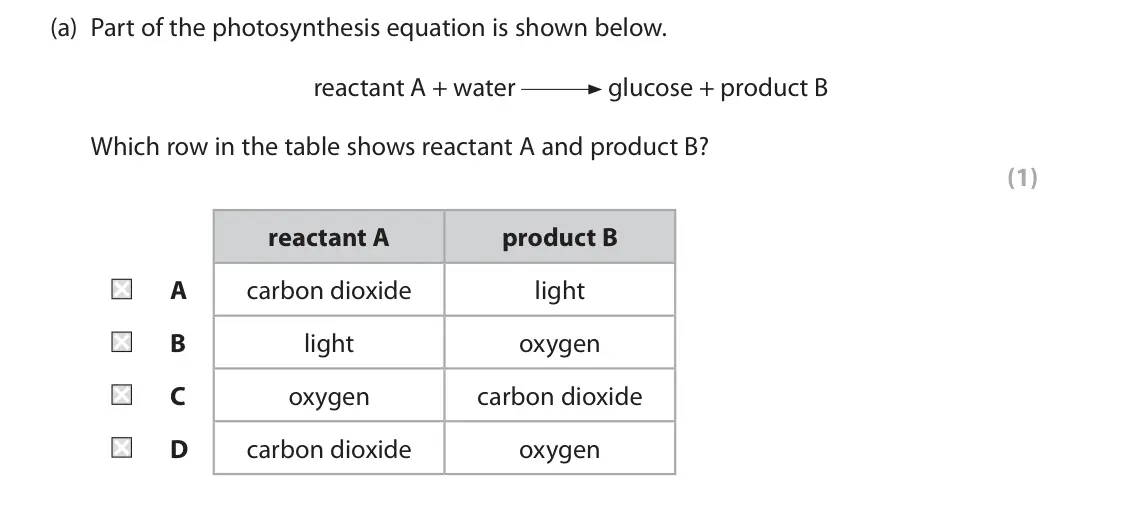
Q2(b)
The whole paper ↗
Q2(c)(i)
The whole paper ↗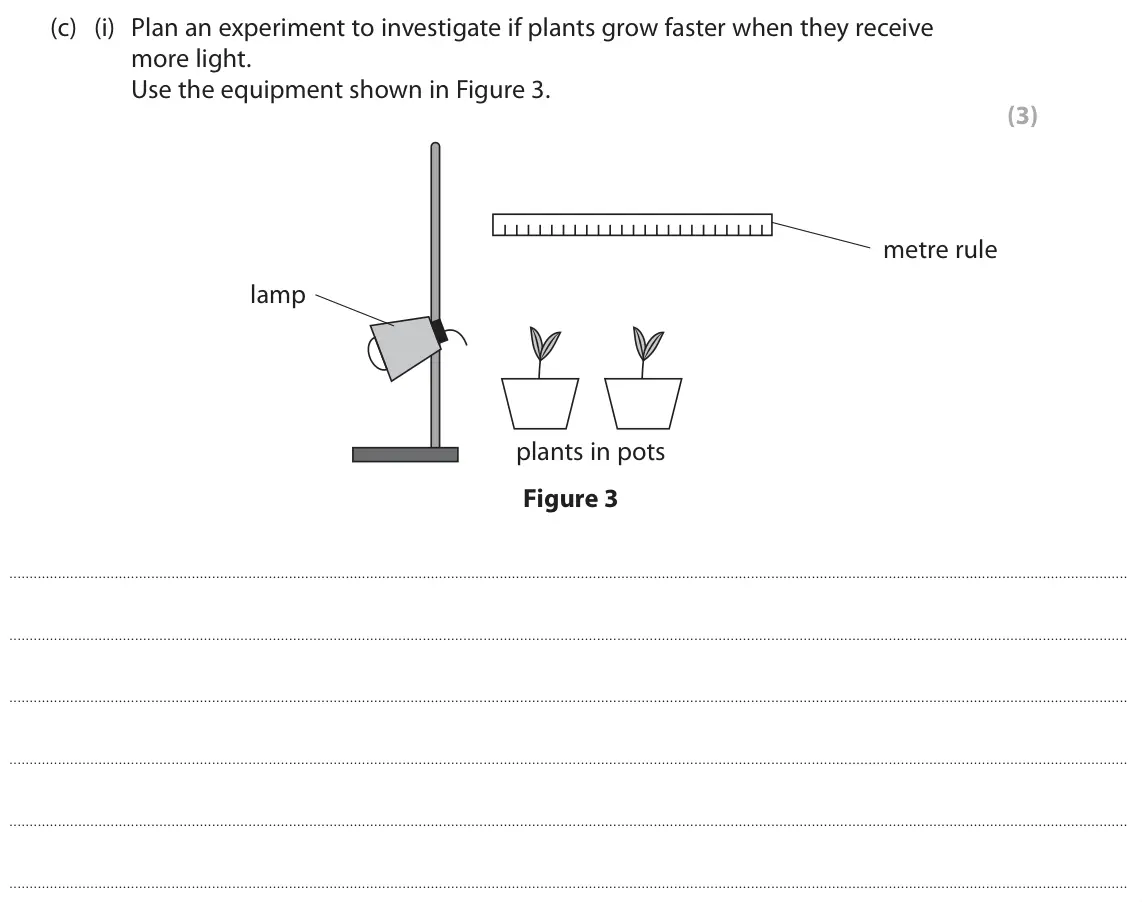
Q2(c)(ii)
The whole paper ↗
Q2(c)(iii)
The whole paper ↗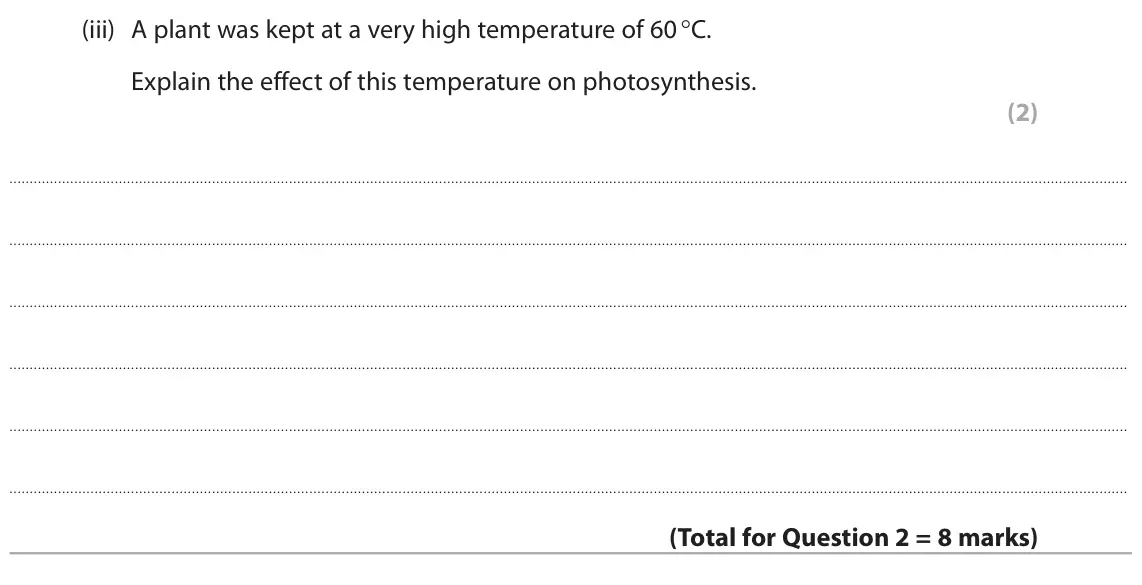
Q5(a)(ii)
The whole paper ↗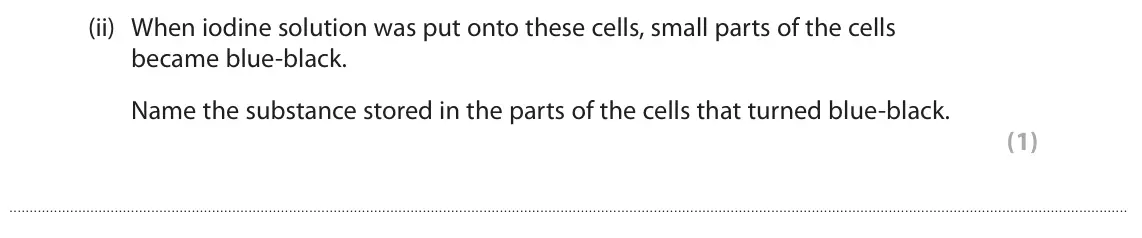
Q3(c)(ii)
The whole paper ↗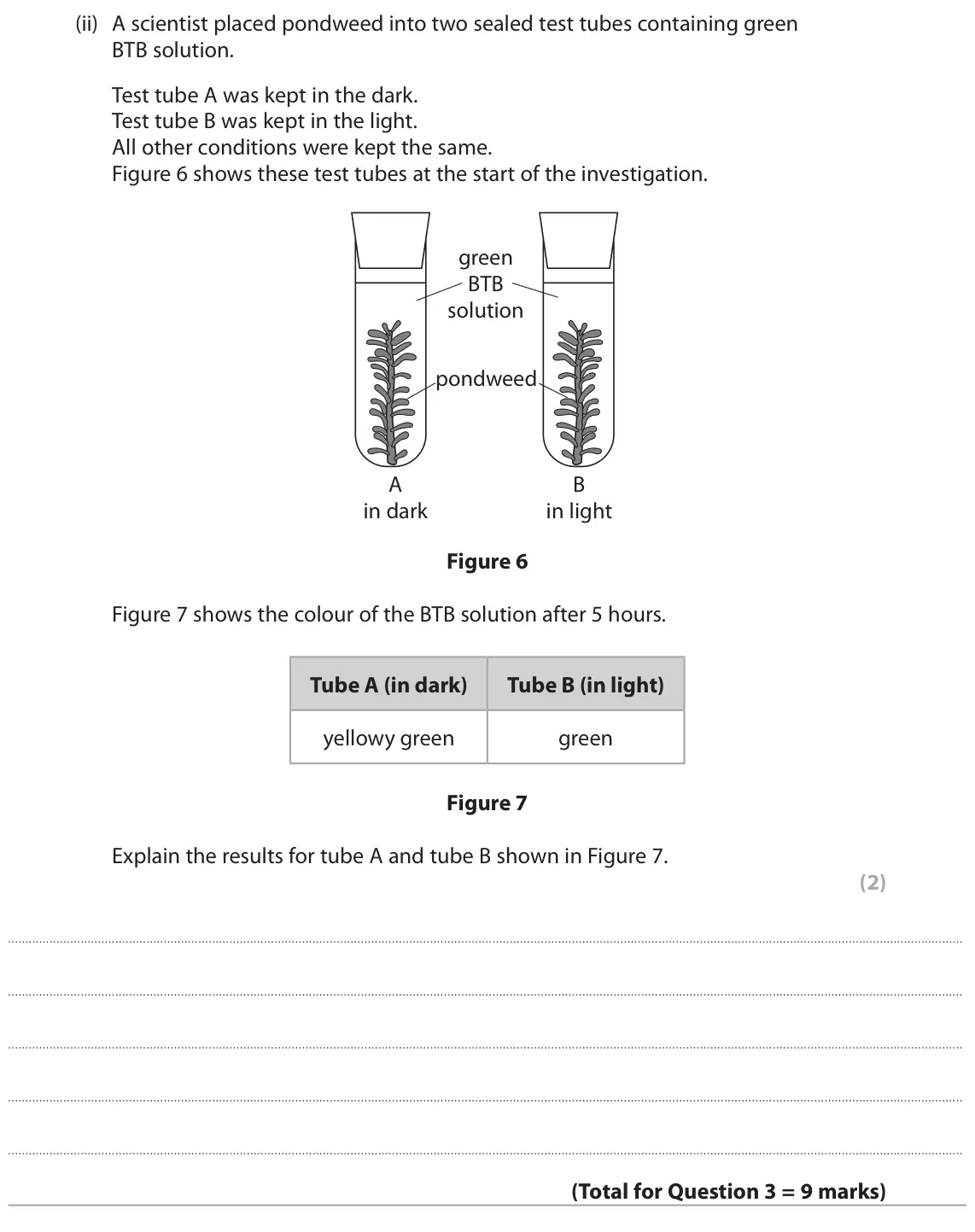
Q5(a)(i)
The whole paper ↗
Q5(a)(ii)
The whole paper ↗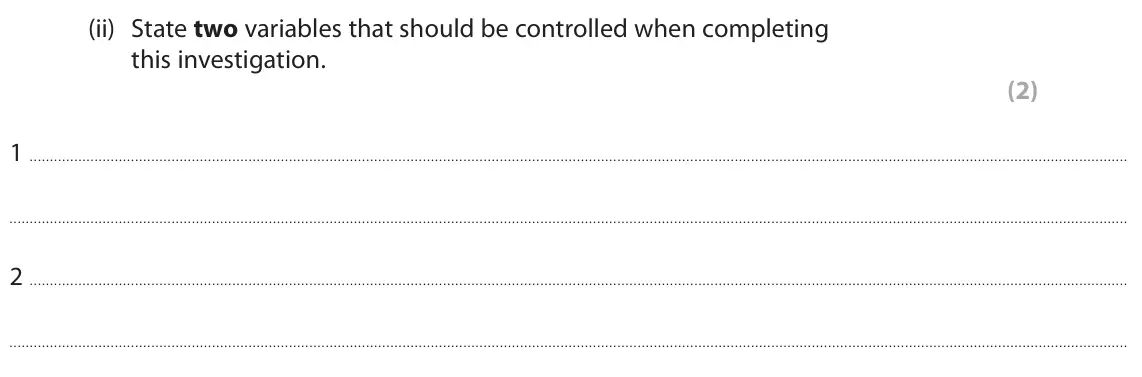
Q5(b)(i)
The whole paper ↗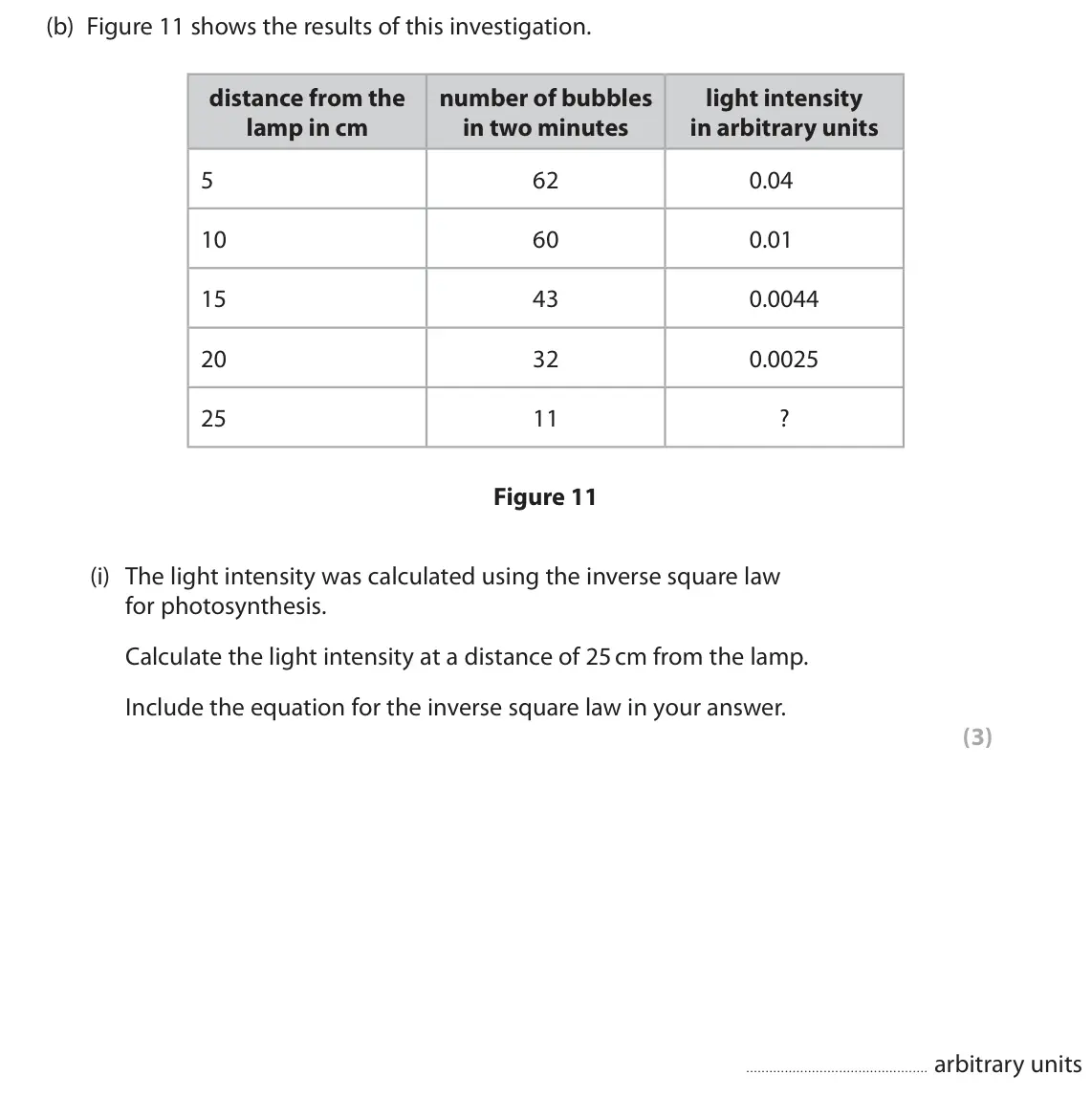
Q5(b)(ii)
The whole paper ↗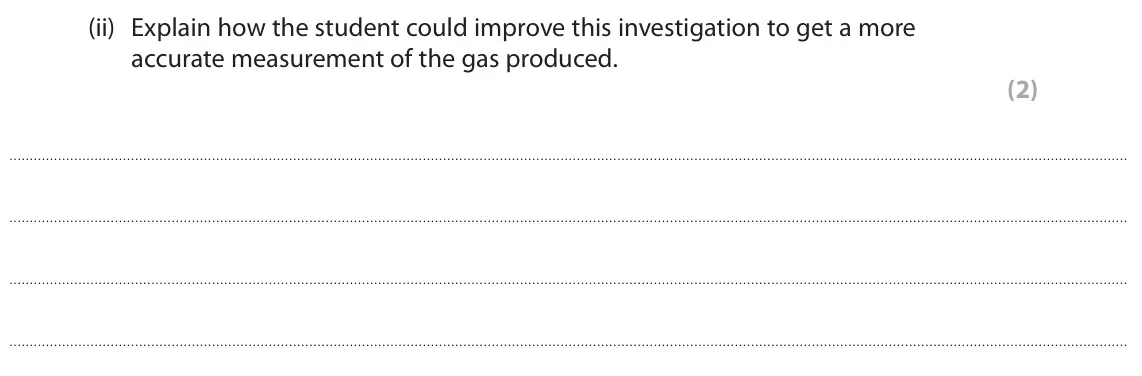
Q5(c)
The whole paper ↗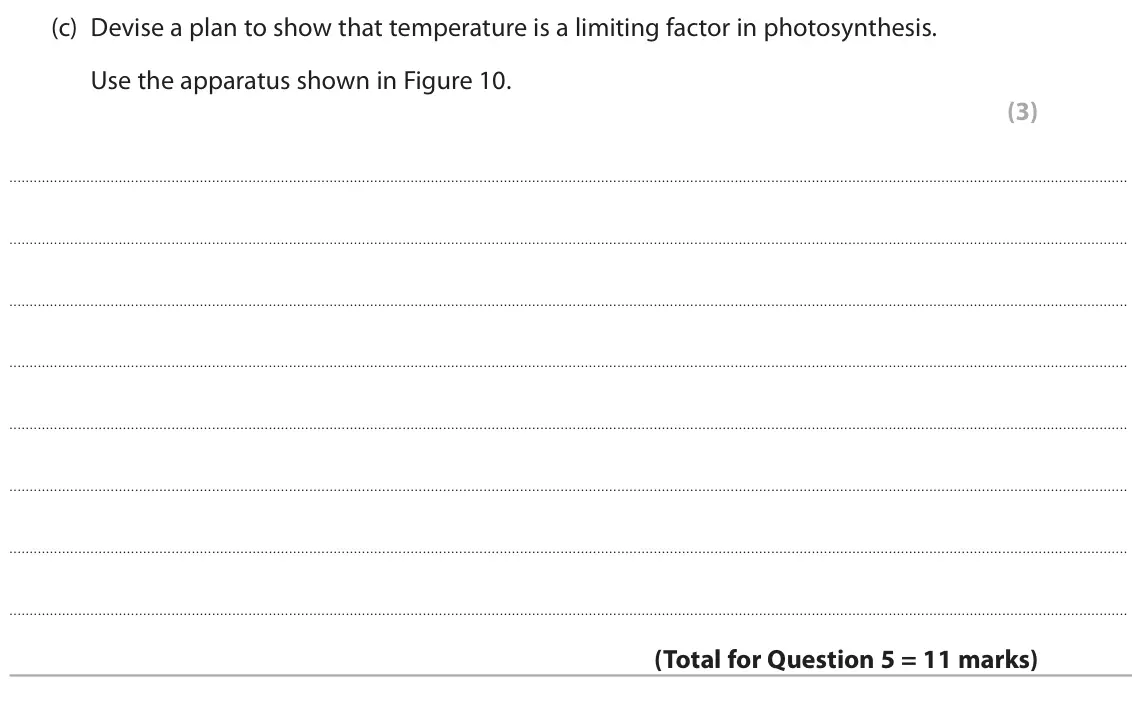
Q7(b)
The whole paper ↗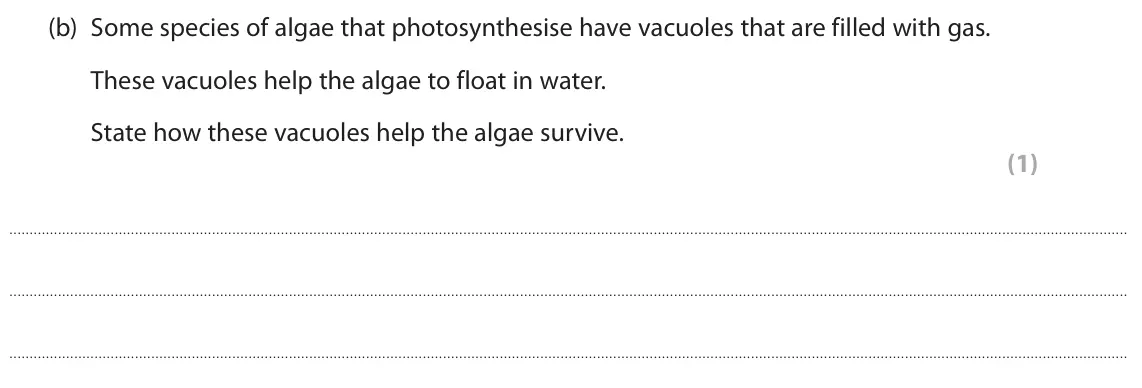
Q6(a)(i)
The whole paper ↗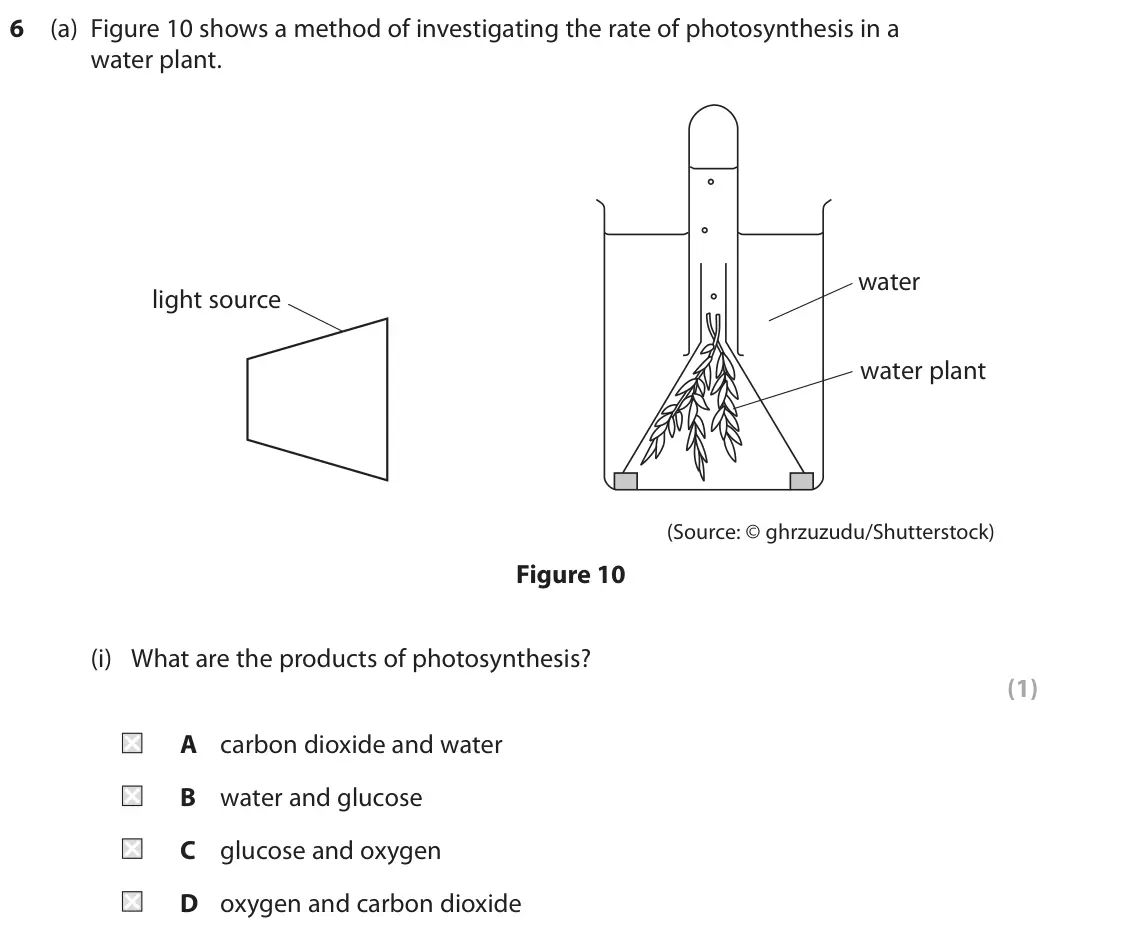
Q6(a)(ii)
The whole paper ↗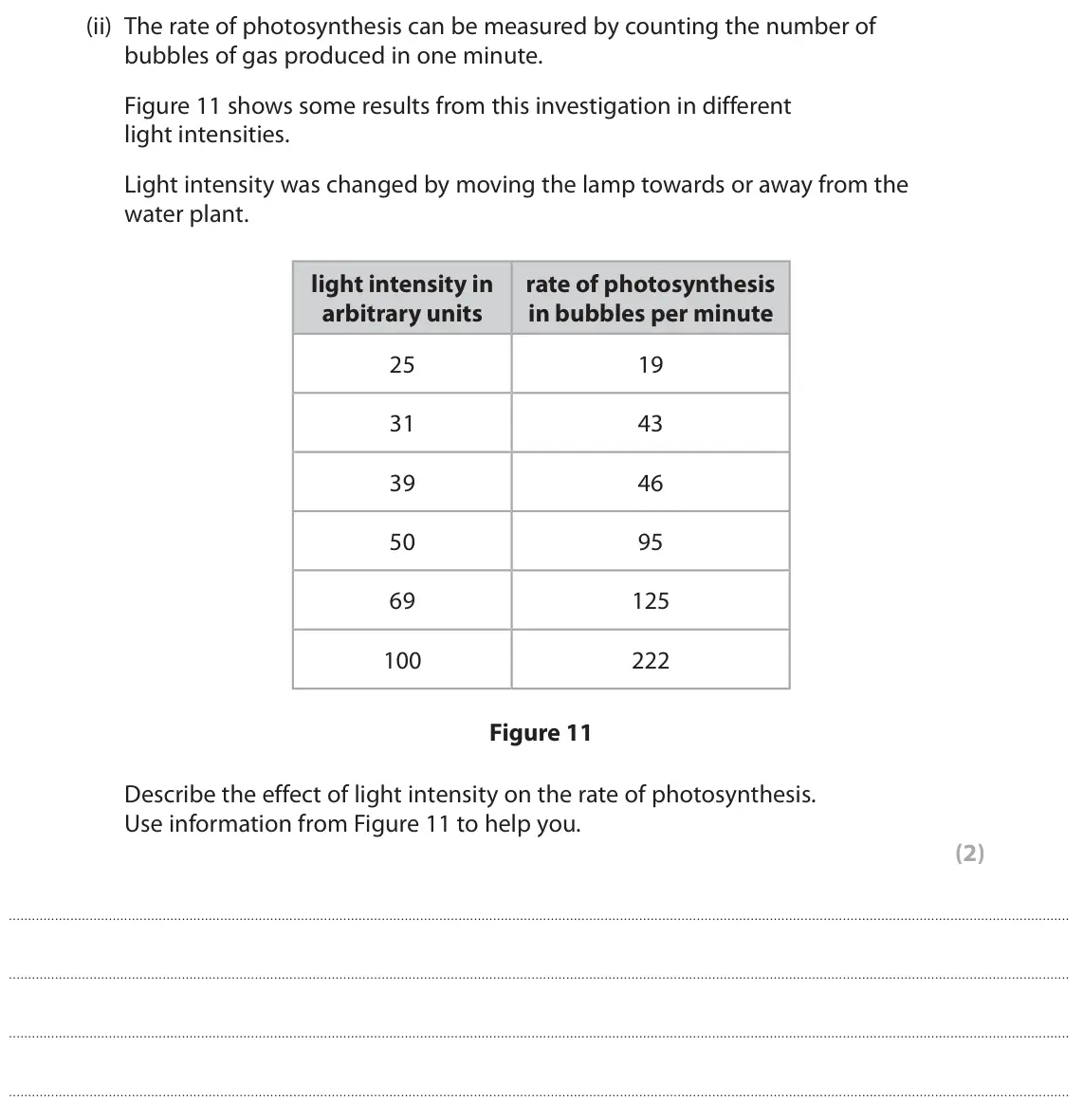
Q6(a)(iii)
The whole paper ↗
All 45 questions on Photosynthesis, as a list
- June 2025, Paper 2 Foundation, Q2(a) (2 marks): Complete the word equation for photosynthesis shown in Figure 2. (2) water + glucose + Figure 2
- June 2025, Paper 2 Foundation, Q2(b)(i) (1 mark): State why photosynthesis does not occur in the roots of plants. (1)
- June 2025, Paper 2 Foundation, Q2(c) (2 marks): Chlorophyll is found in green leaf cells. Describe the role of chlorophyll in leaf cells. (2)
- June 2025, Paper 2 Foundation, Q2(d) (2 marks): A greenhouse contained an oil burning heater. State two ways this could increase the rate of photosynthesis in the greenhouse. (2) 1 2
- June 2024, Paper 2 Foundation, Q2(a) (1 mark): Part of the photosynthesis equation is shown below. reactant A + water glucose + product B Which row in the table shows reactant A and product B? (1) reactant A
- June 2024, Paper 2 Foundation, Q2(b) (1 mark): Name the green chemical in chloroplasts that absorbs light. (1)
- June 2024, Paper 2 Foundation, Q2(c)(i) (3 marks): Plan an experiment to investigate if plants grow faster when they receive more light. Use the equipment shown in Figure 3. (3) metre rule lamp plants in pots Fi
- June 2024, Paper 2 Foundation, Q2(c)(ii) (1 mark): State one factor that you would keep the same in this experiment. (1)
- June 2024, Paper 2 Foundation, Q2(c)(iii) (2 marks): A plant was kept at a very high temperature of 60 °C. Explain the effect of this temperature on photosynthesis. (2)
- June 2024, Paper 2 Foundation, Q5(a)(ii) (1 mark): When iodine solution was put onto these cells, small parts of the cells became blue‑black. Name the substance stored in the parts of the cells that turned blue‑
- June 2023, Paper 2 Higher, Q3(c)(ii) (2 marks): A scientist placed pondweed into two sealed test tubes containing green BTB solution. Test tube A was kept in the dark. Test tube B was kept in the light. All o
- June 2023, Paper 2 Higher, Q5(a)(i) (1 mark): State why the student included a water bath in the apparatus. (1)
- June 2023, Paper 2 Higher, Q5(a)(ii) (2 marks): State two variables that should be controlled when completing this investigation. (2) 1 2
- June 2023, Paper 2 Higher, Q5(b)(i) (3 marks): The light intensity was calculated using the inverse square law for photosynthesis. Calculate the light intensity at a distance of 25 cm from the lamp. Include
- June 2023, Paper 2 Higher, Q5(b)(ii) (2 marks): Explain how the student could improve this investigation to get a more accurate measurement of the gas produced. (2)
- June 2023, Paper 2 Higher, Q5(c) (3 marks): Devise a plan to show that temperature is a limiting factor in photosynthesis. Use the apparatus shown in Figure 10. (3)
- June 2023, Paper 2 Foundation, Q7(b) (1 mark): Some species of algae that photosynthesise have vacuoles that are filled with gas. These vacuoles help the algae to float in water. State how these vacuoles hel
- June 2022, Paper 2 Foundation, Q6(a)(i) (1 mark): What are the products of photosynthesis? (1) A carbon dioxide and water B water and glucose C glucose and oxygen D oxygen and carbon dioxide
- June 2022, Paper 2 Foundation, Q6(a)(ii) (2 marks): The rate of photosynthesis can be measured by counting the number of bubbles of gas produced in one minute. Figure 11 shows some results from this investigation
- June 2022, Paper 2 Foundation, Q6(a)(iii) (2 marks): The bubbles are different sizes and can be difficult to count. Describe how the quality of the results from this investigation could be improved. (2)
- June 2022, Paper 2 Foundation, Q6(a)(iv) (3 marks): Describe how this investigation could be changed to find the effect of temperature on the rate of photosynthesis. (3)
- November 2021, Paper 2 Foundation, Q8(a) (2 marks): The leaves of the small plants are green. Describe how these plants make glucose. (2)
- November 2020, Paper 2 Higher, Q2(b)(i) (1 mark): The white petals of the water lily flowers cannot photosynthesise. Which structure in leaf cells is the site of photosynthesis? (1) A nucleus B vacuole C mitoch
- November 2020, Paper 2 Foundation, Q8(b)(i) (1 mark): The white petals of the water lily flowers cannot photosynthesise. Which structure in leaf cells is the site of photosynthesis? (1) A nucleus B vacuole C mitoch
- November 2020, Paper 2 Foundation, Q9(c) (6 marks): Figure 23 shows a diagram of some equipment that can be used to investigate the rate of photosynthesis. bubbles of oxygen water light source pondweed Figure 23
- June 2019, Paper 1 Higher, Q5(a)(ii) (1 mark): Plant cells contain chloroplasts. What happens in a chloroplast? (1) A oxygen produced sunlight absorbed by chlorophyll B carbon dioxide produced sunlight absor
- June 2019, Paper 2 Higher, Q10(b)(i) (1 mark): State why the candle was not burning after three minutes. (1)
- June 2019, Paper 2 Higher, Q10(b)(ii) (2 marks): Joseph Priestley continued the investigation but placed a plant inside the bell jar as shown in Figure 14. Figure 14 He observed that the candle stayed alight f
- June 2019, Paper 2 Higher, Q10(b)(iii) (2 marks): State two variables that would need to be controlled to compare these two experiments. (2) 1 2
- June 2019, Paper 2 Foundation, Q3(a)(i) (1 mark): Which substance is needed for photosynthesis? (1) A carbon dioxide B glucose C oxygen D nitrogen
- June 2018, Paper 2 Higher, Q8(a)(i) (2 marks): Describe the effect of light intensity on the rate of photosynthesis. (2)
- June 2018, Paper 2 Higher, Q8(a)(ii) (2 marks): Explain the effect of temperature on the rate of photosynthesis. (2)
- June 2018, Paper 2 Higher, Q8(b) (1 mark): A student measured the rate of photosynthesis using algal balls in a laboratory. The tube of algal balls was kept at a temperature of 25 °C and was moved to dif
- June 2018, Paper 2 Foundation, Q6(b) (2 marks): Figure 14 shows how light intensity changed during one day. light intensity 2 am 4 am 6 am 8 am 10 am 2 pm 4 pm 6 pm 8 pm 10 pm midnight midday midnight Figure
- Specimen, Paper 2 Higher, Q5(a)(i) (2 marks): Calculate the light intensity when the lamp is 25 cm from the Cabomba plant. (2) light intensity = arbitrary units
- Specimen, Paper 2 Higher, Q5(a)(ii) (2 marks): Use information from Figure 10 to describe the effect of light intensity on the rate of photosynthesis. (2)
- Specimen, Paper 2 Higher, Q5(a)(iii) (1 mark): Give another method of measuring light intensity rather than calculating it. (1)
- Specimen, Paper 2 Higher, Q5(a)(iv) (2 marks): The scientist counted the number of bubbles produced by the Cabomba plant. Another scientist stated that this was not the best method of measuring the volume of
- Specimen, Paper 2 Higher, Q5(b) (2 marks): Explain what would happen to the levels of gas produced if the light intensity decreased to 0.0001 arbitrary units. (2)
- Specimen, Paper 2 Foundation, Q1(a) (1 mark): Which of the following would complete the photosynthesis equation? (1) reactant product A water chlorophyll B chlorophyll oxygen C water oxygen D oxygen water A
- Specimen, Paper 2 Foundation, Q1(b)(i) (3 marks): State three variables that should be kept constant to improve the results. (3) 1 2 3 The scientist noticed that the temperature of water near the light increase
- Specimen, Paper 2 Foundation, Q1(b)(ii) (1 mark): Give one improvement the scientist could make to reduce the effect of this increase in temperature. (1)
- Specimen, Paper 2 Foundation, Q1(c)(i) (1 mark): Calculate the mean result for a distance of 20cm. (1) The number of bubbles counted for test 2 at 10cm was anomalous.
- Specimen, Paper 2 Foundation, Q1(c)(ii) (1 mark): State how the scientist could deal with this anomaly. (1)
- Specimen, Paper 2 Foundation, Q1(c)(iii) (1 mark): Give a conclusion about the effect of light intensity on photosynthesis. (1)
Questions, mark schemes and examiner’s reports are © Pearson Edexcel, from their published past papers. Plumi isn’t affiliated with any exam board. Want whole papers? Every Edexcel GCSE Biology paper.
Rather write your answers by hand on iPad? Plumi marks them against the same mark schemes.