 plumi
Blood, blood vessels and the heart: Edexcel GCSE Biology questions
Every Edexcel GCSE Biology exam question on Blood, blood vessels and the heart (specification points 8.6–8.8, 8.12), 2018–2025, with its mark scheme and examiner’s report.
Find questions1,834
Exam
All years
Calculations
Q8(a)(i)
The whole paper ↗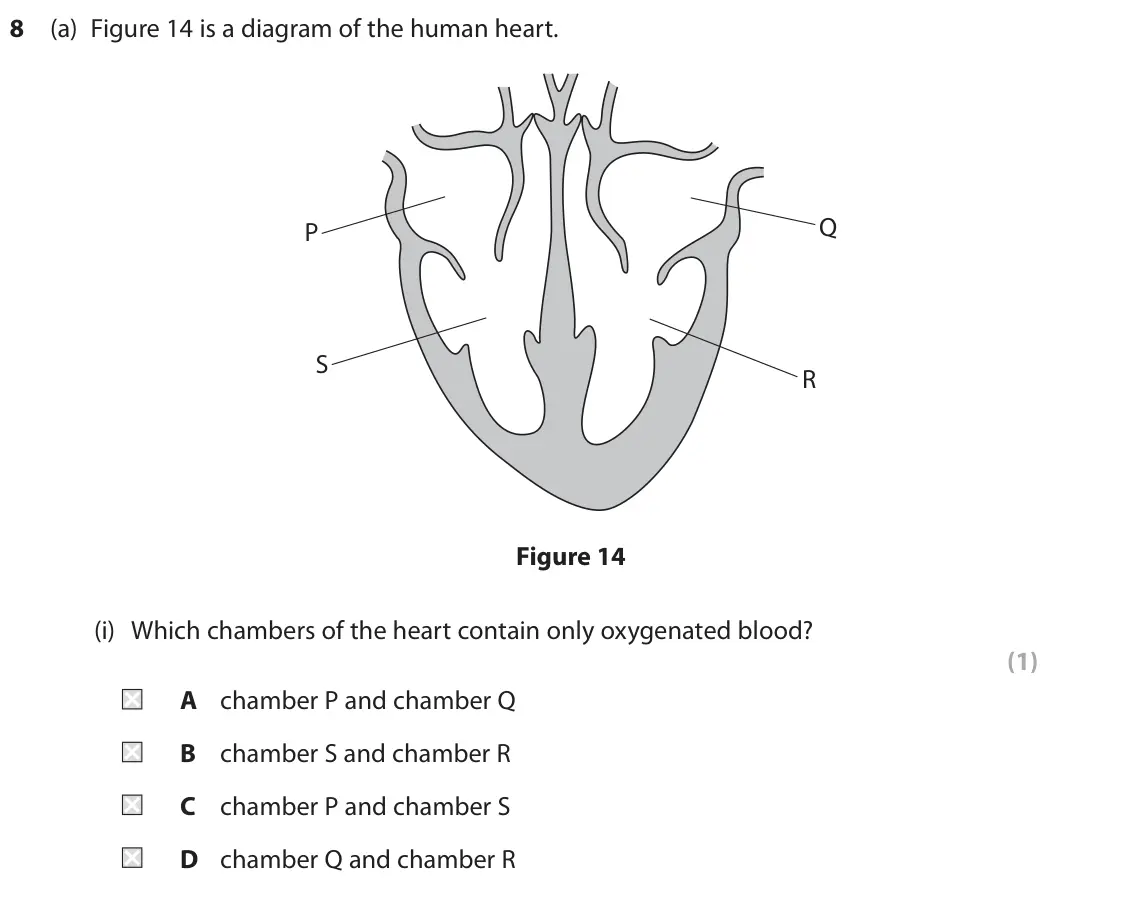
Q8(a)(ii)
The whole paper ↗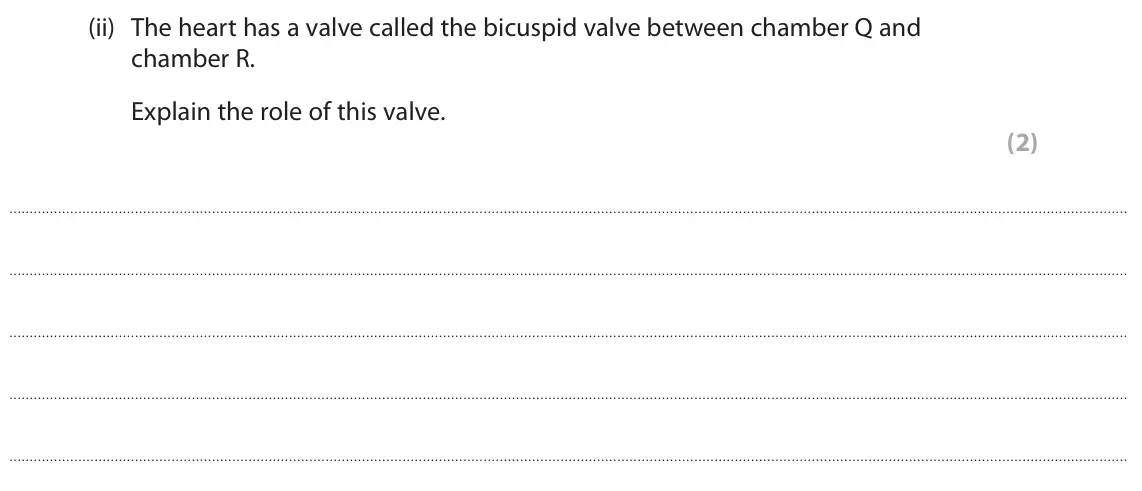
Q8(b)
The whole paper ↗
Q8(c)(i)
The whole paper ↗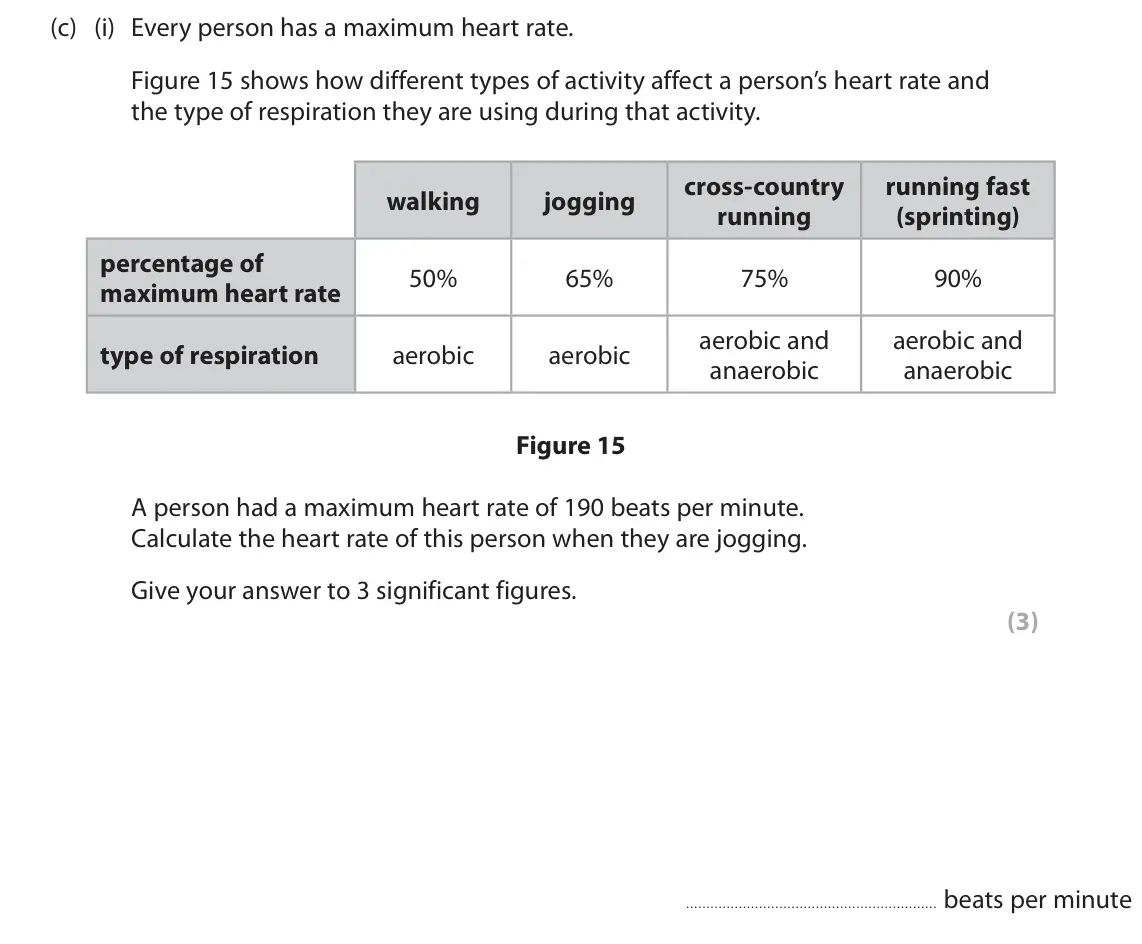
Q8(c)(ii)
The whole paper ↗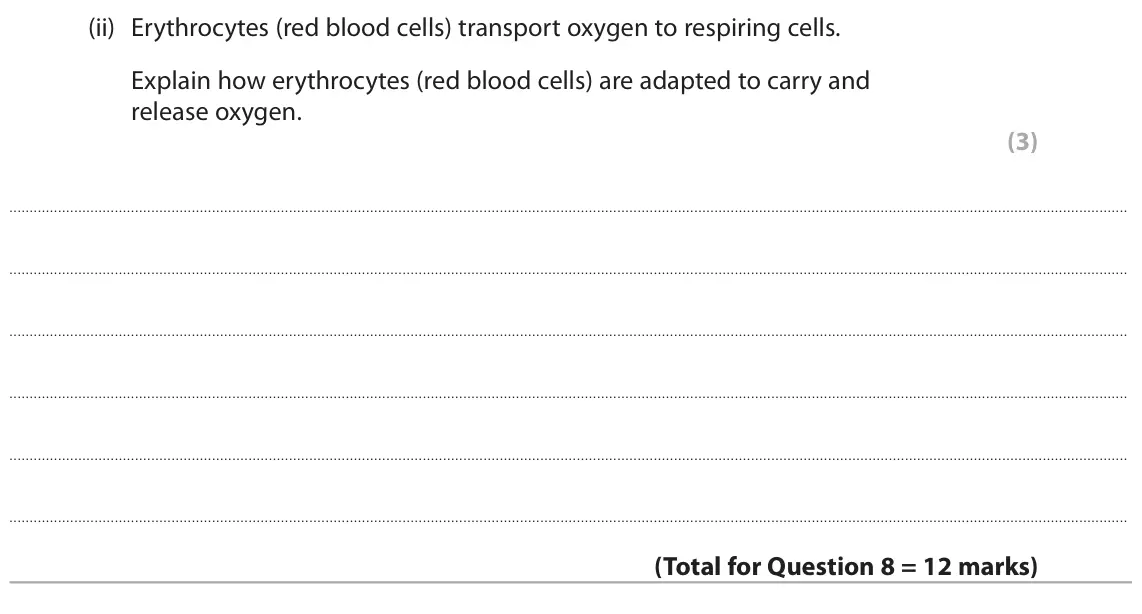
Q6(a)(i)
The whole paper ↗
Q6(a)(ii)
The whole paper ↗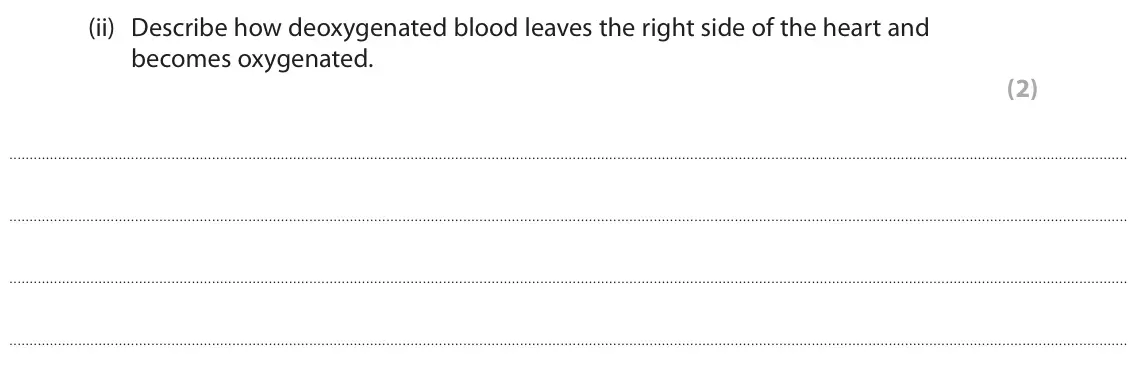
Q6(a)(iii)
The whole paper ↗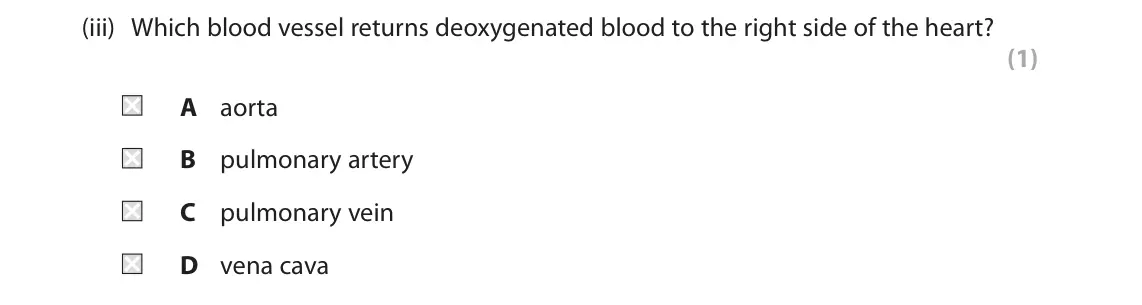
Q6(b)
The whole paper ↗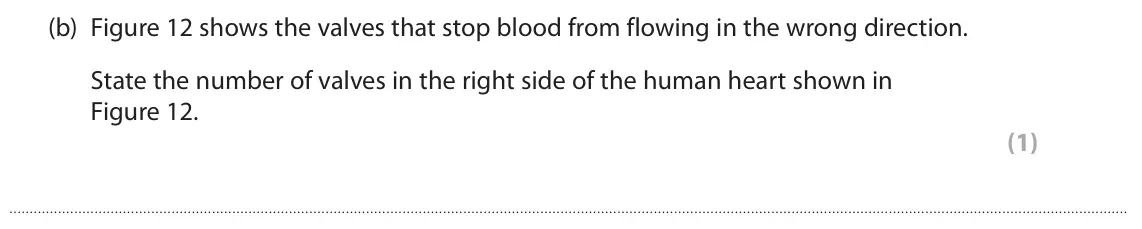
Q6(c)
The whole paper ↗
Q6(d)(i)
The whole paper ↗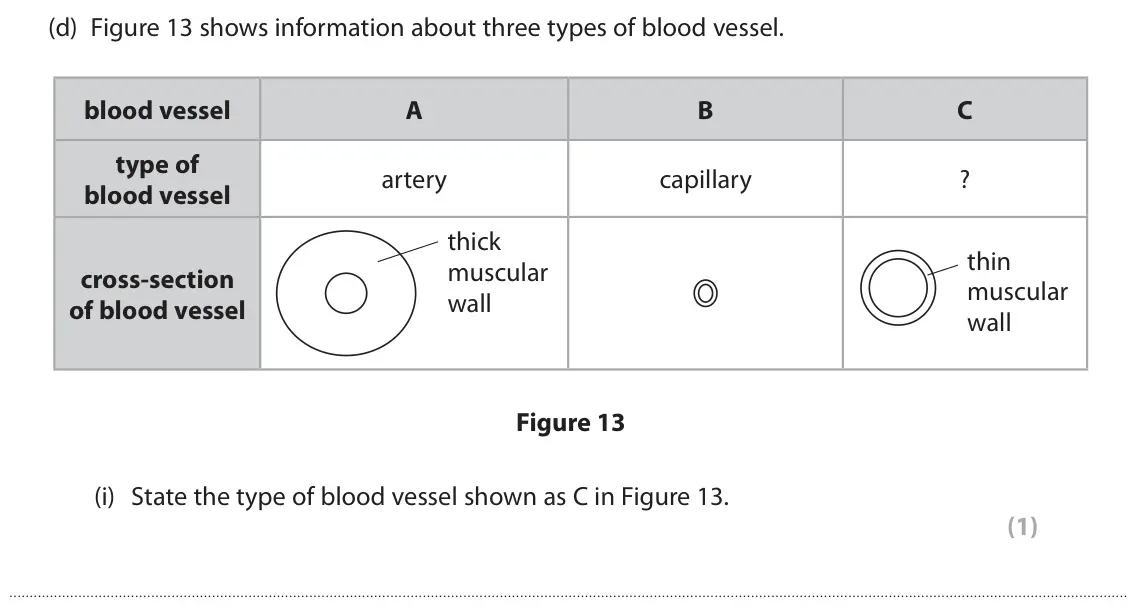
Q6(d)(ii)
The whole paper ↗
Q8(a)
The whole paper ↗
Q2(a)(i)
The whole paper ↗
Q2(a)(ii)
The whole paper ↗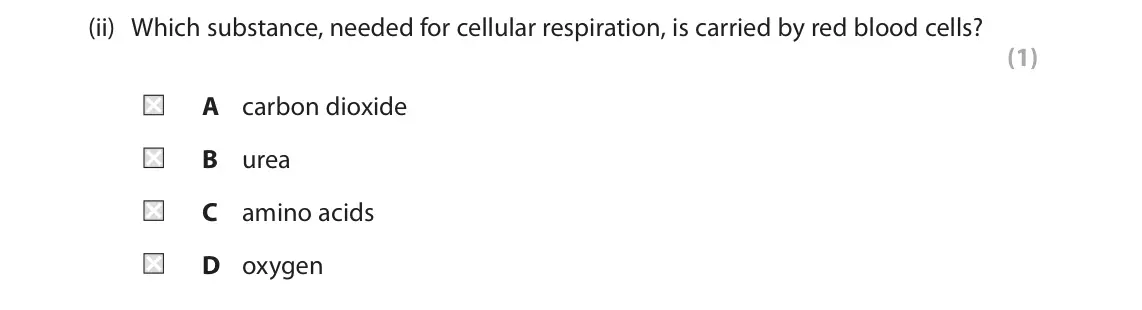
Q2(a)(iii)
The whole paper ↗
Q2(b)(i)
The whole paper ↗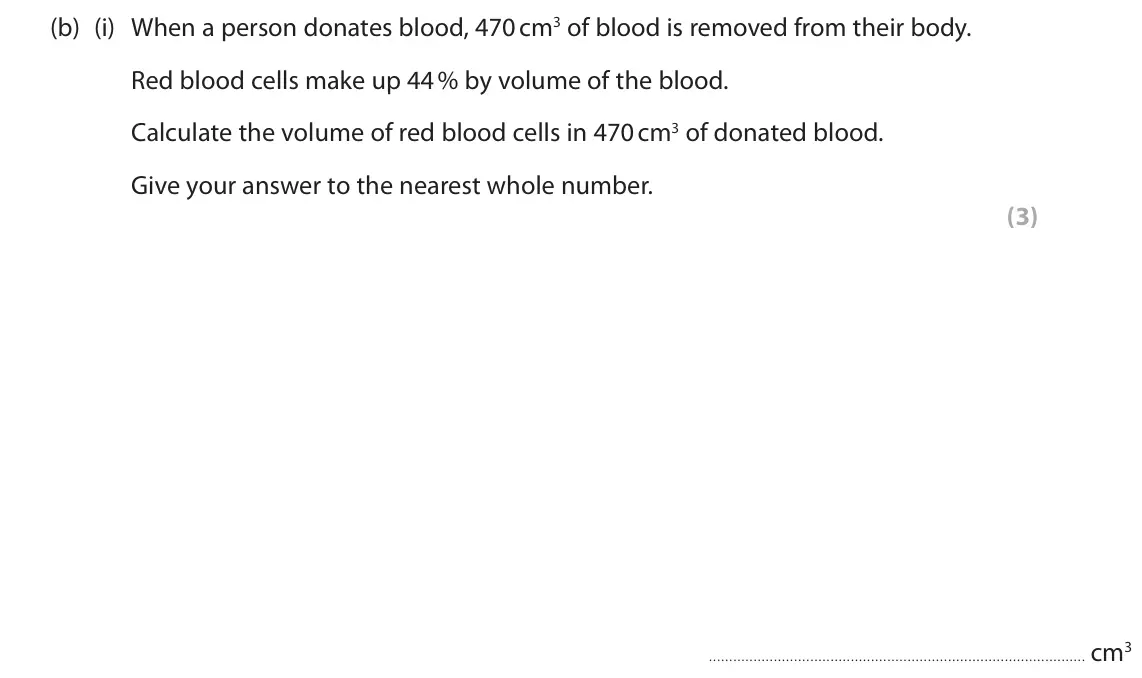
Q2(b)(ii)
The whole paper ↗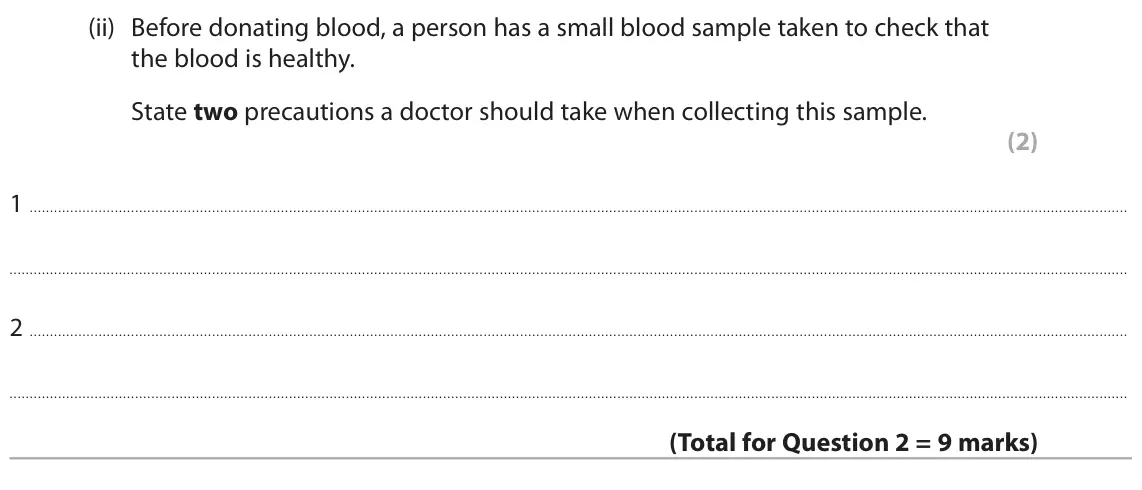
Q8(a)(i)
The whole paper ↗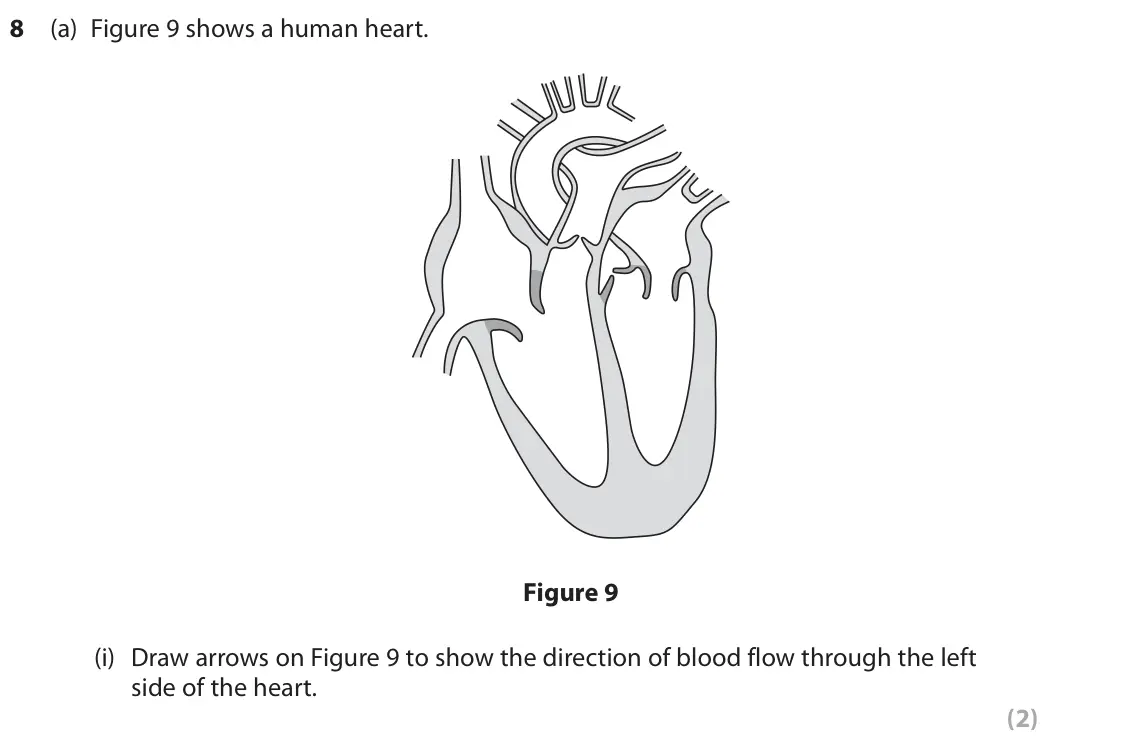
Q8(a)(ii)
The whole paper ↗
All 103 questions on Blood, blood vessels and the heart, as a list
- June 2025, Paper 2 Higher, Q8(a)(i) (1 mark): Which chambers of the heart contain only oxygenated blood? (1) A chamber P and chamber Q B chamber S and chamber R C chamber P and chamber S D chamber Q and cha
- June 2025, Paper 2 Higher, Q8(a)(ii) (2 marks): The heart has a valve called the bicuspid valve between chamber Q and chamber R. Explain the role of this valve. (2)
- June 2025, Paper 2 Higher, Q8(b) (3 marks): Explain why heart rate increases during exercise. (3)
- June 2025, Paper 2 Higher, Q8(c)(i) (3 marks): Every person has a maximum heart rate. Figure 15 shows how different types of activity affect a person’s heart rate and the type of respiration they are using d
- June 2025, Paper 2 Higher, Q8(c)(ii) (3 marks): Erythrocytes (red blood cells) transport oxygen to respiring cells. Explain how erythrocytes (red blood cells) are adapted to carry and release oxygen. (3)
- June 2025, Paper 2 Foundation, Q6(a)(i) (1 mark): Measure the thickness of the left ventricle wall between points T and U. (1) T–U = mm
- June 2025, Paper 2 Foundation, Q6(a)(ii) (2 marks): Describe how deoxygenated blood leaves the right side of the heart and becomes oxygenated. (2)
- June 2025, Paper 2 Foundation, Q6(a)(iii) (1 mark): Which blood vessel returns deoxygenated blood to the right side of the heart? (1) A aorta B pulmonary artery C pulmonary vein D vena cava
- June 2025, Paper 2 Foundation, Q6(b) (1 mark): Figure 12 shows the valves that stop blood from flowing in the wrong direction. State the number of valves in the right side of the human heart shown in Figure
- June 2025, Paper 2 Foundation, Q6(c) (3 marks): The heart is part of the circulatory system. Describe what happens to the blood when the left ventricle contracts. (3)
- June 2025, Paper 2 Foundation, Q6(d)(i) (1 mark): State the type of blood vessel shown as C in Figure 13. (1)
- June 2025, Paper 2 Foundation, Q6(d)(ii) (2 marks): Describe how the structure of a capillary helps gas exchange in the lungs. (2)
- June 2025, Paper 2 Foundation, Q8(a) (2 marks): Explain why a person’s heart rate increases when they are running compared with when they are at rest. (2)
- June 2024, Paper 2 Higher, Q2(a)(i) (1 mark): Name part X. (1)
- June 2024, Paper 2 Higher, Q2(a)(ii) (1 mark): Which substance, needed for cellular respiration, is carried by red blood cells? (1) A carbon dioxide B urea C amino acids D oxygen
- June 2024, Paper 2 Higher, Q2(a)(iii) (2 marks): Name two types of white blood cell. (2) 1 2
- June 2024, Paper 2 Higher, Q2(b)(i) (3 marks): When a person donates blood, 470 cm3 of blood is removed from their body. Red blood cells make up 44 % by volume of the blood. Calculate the volume of red blood
- June 2024, Paper 2 Higher, Q2(b)(ii) (2 marks): Before donating blood, a person has a small blood sample taken to check that the blood is healthy. State two precautions a doctor should take when collecting th
- June 2024, Paper 2 Higher, Q8(a)(i) (2 marks): Draw arrows on Figure 9 to show the direction of blood flow through the left side of the heart. (2)
- June 2024, Paper 2 Higher, Q8(a)(ii) (1 mark): Name the main blood vessel that carries deoxygenated blood into the heart. (1)
- June 2024, Paper 2 Higher, Q8(b)(i) (4 marks): Calculate the difference in cardiac output when at rest and when doing exercise. Give your answer to 3 significant figures and include units in your answer. (4)
- June 2024, Paper 2 Higher, Q8(b)(ii) (4 marks): Explain why the cardiac output needs to increase during exercise. (4)
- June 2024, Paper 2 Foundation, Q6(c) (2 marks): Describe how blood is moved from the heart to the lungs. (2)
- June 2024, Paper 2 Foundation, Q6(d)(i) (2 marks): Describe the trend shown in Figure 10. Use data from Figure 10 to support your answer. (2)
- June 2024, Paper 2 Foundation, Q6(d)(ii) (2 marks): Explain the trend shown in Figure 10 from 5 minutes to 25 minutes. (2)
- June 2024, Paper 2 Foundation, Q6(d)(iii) (3 marks): The stroke volume is the volume of blood pumped during one beat of the heart. At 25 minutes the stroke volume was 0.13 dm3. Calculate the cardiac output of the
- June 2024, Paper 2 Foundation, Q8(a) (2 marks): The heart pumps blood. Explain why the wall of the left ventricle of the heart is thicker than the wall of the right ventricle of the heart. (2)
- June 2024, Paper 2 Foundation, Q8(b)(i) (1 mark): Name part X. (1)
- June 2024, Paper 2 Foundation, Q8(b)(ii) (1 mark): Which substance, needed for cellular respiration, is carried by red blood cells? (1) A carbon dioxide B urea C amino acids D oxygen
- June 2024, Paper 2 Foundation, Q8(b)(iii) (2 marks): Name two types of white blood cell. (2) 1 2
- June 2024, Paper 2 Foundation, Q8(c)(i) (3 marks): When a person donates blood, 470 cm3 of blood is removed from their body. Red blood cells make up 44% by volume of the blood. Calculate the volume of red blood
- June 2024, Paper 2 Foundation, Q8(c)(ii) (2 marks): Before donating blood, a person has a small blood sample taken to check that the blood is healthy. State two precautions a doctor should take when collecting th
- June 2023, Paper 2 Foundation, Q3(a)(i) (1 mark): Name blood vessel X. (1)
- June 2023, Paper 2 Foundation, Q3(a)(ii) (1 mark): Which row of the table shows the width of the wall and blood pressure in blood vessel X? (1) width of wall blood pressure A thick high B thick low C thin high D
- June 2023, Paper 2 Foundation, Q3(b) (2 marks): Figure 6 shows the pressure of blood flowing through the arteries, capillaries and veins of a person. arteries capillaries veins 18 16 14 12 Blood 10 pressure 8
- June 2023, Paper 2 Foundation, Q3(c)(i) (1 mark): Identify structure Q. (1)
- June 2023, Paper 2 Foundation, Q3(c)(ii) (1 mark): State the function of structure Q. (1)
- June 2023, Paper 2 Foundation, Q3(d) (3 marks): Describe how the heart causes blood to move to the lungs. (3)
- June 2022, Paper 2 Higher, Q3(a)(i) (2 marks): Explain one difference between the artery wall and the vein wall shown in Figure 4. (2)
- June 2022, Paper 2 Higher, Q3(a)(ii) (1 mark): Name one structure that is found in veins but not found in arteries. (1)
- June 2022, Paper 2 Higher, Q3(b)(i) (2 marks): Calculate the volume of blood travelling to the muscles during exercise. (2) dm3
- June 2022, Paper 2 Higher, Q3(b)(ii) (2 marks): Explain one reason why there is an increase in blood flow to muscles during exercise. (2)
- June 2022, Paper 2 Higher, Q8(a)(i) (1 mark): State how the heart rate was calculated using this method. (1)
- June 2022, Paper 2 Higher, Q8(a)(ii) (2 marks): Give two ways of improving the method used to obtain the data needed to calculate the heart rate. (2) 1 2 Figure 13 shows the results of this investigation. hea
- June 2022, Paper 2 Higher, Q8(a)(iii) (3 marks): Comment on the difference in the heart rates during these types of exercise. (3)
- June 2022, Paper 2 Higher, Q10(b)(iii) (1 mark): Digested protein enters the blood as amino acids. State which component of the blood transports amino acids. (1)
- June 2022, Paper 2 Foundation, Q2(a)(i) (2 marks): Draw one straight line from each part of the blood to its function. (2) part of the blood function produces oestrogen plasma transports dissolved urea contains
- June 2022, Paper 2 Foundation, Q2(a)(ii) (2 marks): State two features that can be seen in the red blood cells in Figure 2. (2) 1 2
- June 2022, Paper 2 Foundation, Q9(a)(i) (2 marks): Explain one difference between the artery wall and the vein wall shown in Figure 17. (2)
- June 2022, Paper 2 Foundation, Q9(a)(ii) (1 mark): Name one structure that is found in veins but not found in arteries. (1)
- June 2022, Paper 2 Foundation, Q9(b)(i) (2 marks): Calculate the volume of blood travelling to the muscles during exercise. (2) dm3
- June 2022, Paper 2 Foundation, Q9(b)(ii) (2 marks): Explain one reason why there is an increase in blood flow to muscles during exercise. (2)
- June 2022, Paper 2 Foundation, Q9(c) (6 marks): Figure 18 shows the structure of the human heart. valve left ventricle Figure 18 Explain how the structure of the heart is related to its function. (6)
- November 2021, Paper 2 Higher, Q5(a)(ii) (3 marks): Explain how the shape of a red blood cell is related to its function. (3)
- November 2021, Paper 2 Higher, Q5(a)(iii) (1 mark): State the role of haemoglobin inside the red blood cell. (1)
- November 2021, Paper 2 Higher, Q9(a)(i) (3 marks): During exercise, the blood flow to the stomach changes. Calculate the percentage change in blood flow to the stomach in response to exercise. Give your answer t
- November 2021, Paper 2 Higher, Q9(a)(ii) (2 marks): Suggest two other variables that should be controlled in this investigation. (2) 1 2
- November 2021, Paper 2 Higher, Q9(a)(iii) (6 marks): Explain the changes in blood flow, shown in Figure 13, that are caused by exercise. (6)
- November 2021, Paper 2 Foundation, Q1(a)(ii) (2 marks): Use words from the box to complete the sentences. (2) gas haemoglobin hormone liquid platelet solid Red blood cells contain the substance . Blood plasma is a .
- November 2021, Paper 2 Foundation, Q1(a)(iii) (2 marks): Describe two ways that white blood cells protect the body from disease. (2) 1 2
- November 2020, Paper 2 Higher, Q6(a)(i) (3 marks): Draw a graph to show the data in Figure 11. (3) time taken for blood to clot in seconds temperature in °C
- November 2020, Paper 2 Higher, Q6(a)(ii) (2 marks): Give two safety precautions that should be used when handling blood samples. (2) 1 2
- November 2020, Paper 2 Higher, Q6(b)(i) (1 mark): Which part of the blood causes blood to start clotting? (1) A erythrocytes B lymphocytes C platelets D antibodies
- November 2020, Paper 2 Higher, Q6(b)(ii) (1 mark): Give one advantage of a blood clot forming. (1)
- November 2020, Paper 2 Higher, Q6(c) (2 marks): Explain how one structure of a vein helps the blood return to the heart. (2)
- November 2020, Paper 2 Higher, Q8(a) (4 marks): Both people rested for the first 6 minutes, then did the same high intensity exercise for the next 12 minutes, then rested. Compare the heart rates of person A
- November 2020, Paper 2 Higher, Q8(b) (3 marks): The stroke volume for person B before exercising was 61 ml per beat. Calculate the cardiac output for person B before exercising. Give your answer in litres per
- November 2020, Paper 2 Higher, Q8(c) (3 marks): The cardiac output for person A during exercise was 5.5 litres per minute. Explain why the heart rate for person A needed to be higher than the heart rate for p
- November 2020, Paper 2 Foundation, Q1(a)(i) (1 mark): Draw arrows on Figure 1 to show how oxygenated blood moves through the heart. (1)
- November 2020, Paper 2 Foundation, Q1(a)(ii) (1 mark): What happens when the right ventricle contracts? (1) A valve T opens B valve T closes C blood is forced into the left atrium D blood is forced into the pulmonar
- November 2020, Paper 2 Foundation, Q1(a)(iii) (2 marks): Draw one straight line from each structure to its function. (2) structure function carries deoxygenated blood pulmonary vein forces blood towards body organs ca
- November 2020, Paper 2 Foundation, Q1(b)(i) (2 marks): Explain how the valves in veins help the blood, at low pressure, flow towards the heart. (2)
- November 2020, Paper 2 Foundation, Q1(b)(ii) (1 mark): The equipment used to dissect the vein was cleaned and put into disinfectant. State why this equipment was put into disinfectant. (1)
- November 2020, Paper 2 Foundation, Q2(b) (1 mark): When skin is cut a blood clot forms. Which part of the blood starts the clotting process? (1) A red blood cells B water C platelets D white blood cells
- June 2019, Paper 2 Higher, Q8(a)(i) (2 marks): Compare the effect of heart rate on stroke volume of the person who has trained for a marathon with the person who has not trained for a marathon. (2)
- June 2019, Paper 2 Higher, Q8(a)(ii) (3 marks): Calculate the cardiac output for the person who has trained for a marathon when the heart rate is 160 beats per minute. Give the units in your answer. (3)
- June 2019, Paper 2 Higher, Q8(b) (6 marks): Blood from the body enters the heart through the vena cava. Describe how this blood flows through the heart and lungs to leave the heart through the aorta. Incl
- June 2019, Paper 2 Foundation, Q4(a)(i) (1 mark): Measure the length of line A and the length of line B in mm. (1) line A mm line B mm
- June 2019, Paper 2 Foundation, Q4(a)(ii) (1 mark): State the ratio of the thickness of the artery wall to the thickness of the vein wall. (1)
- June 2019, Paper 2 Foundation, Q4(b)(i) (1 mark): Give a reason why veins have valves. (1)
- June 2019, Paper 2 Foundation, Q4(b)(ii) (1 mark): Name the artery that transports oxygenated blood from the heart to the body. (1)
- June 2019, Paper 2 Foundation, Q9(c) (6 marks): Carbon dioxide is carried in blood plasma. Human blood also contains red blood cells and white blood cells. Explain how the structure of red blood cells and whi
- June 2018, Paper 2 Higher, Q1(b)(i) (2 marks): Calculate the difference in the number of red blood cells and the number of white blood cells in 1 cm3 blood. Give your answer in standard form. (2)
- June 2018, Paper 2 Higher, Q2(b)(i) (3 marks): Describe a method you could use to see how much the ring of tissue from an artery could stretch before it no longer returned to its original size. (3)
- June 2018, Paper 2 Higher, Q2(b)(ii) (1 mark): Give one safety precaution you need to take when handling animal tissue such as blood vessels. (1)
- June 2018, Paper 2 Higher, Q5(a) (3 marks): Compare the rate of blood flow through the body when this person is at rest and during exercise. (3)
- June 2018, Paper 2 Higher, Q5(b) (2 marks): Explain why there is a change in the rate of blood flow through the digestive system during exercise. (2)
- June 2018, Paper 2 Higher, Q5(c) (1 mark): The stroke volume is the amount of blood leaving one chamber of the heart per beat. From which chamber of the heart does this volume of oxygenated blood flow? (
- June 2018, Paper 2 Higher, Q5(d) (2 marks): A person has a cardiac output of 4.9 litres per minute. The stroke volume of each heart beat is 70 ml. Calculate the heart rate. (2) beats per minute
- June 2018, Paper 2 Foundation, Q1(a)(ii) (1 mark): Which part of the blood transports insulin to its target organs? (1) A plasma B red blood cells C white blood cells D platelets
- June 2018, Paper 2 Foundation, Q8(b)(i) (3 marks): Describe a method you could use to see how much the ring of tissue from an artery could stretch before it no longer returned to its original size. (3)
- June 2018, Paper 2 Foundation, Q8(b)(ii) (1 mark): Give one safety precaution you need to take when handling animal tissue such as blood vessels. (1)
- June 2018, Paper 2 Foundation, Q8(c) (3 marks): Figure 21 shows the circulatory system of a frog. lung capillaries right atrium left atrium Key one ventricle oxygenated blood deoxygenated blood aorta mixed bl
- Specimen, Paper 2 Higher, Q1(a)(i) (1 mark): Vessel X takes (1) A deoxygenated blood to the body B deoxygenated blood to the lungs C oxygenated blood to the body D oxygenated blood to the lungs
- Specimen, Paper 2 Higher, Q1(a)(ii) (1 mark): Give one reason why the wall of the left ventricle is thicker than the right. (1) Valves in the human heart may become damaged and no longer function.
- Specimen, Paper 2 Higher, Q1(a)(iii) (2 marks): Describe what would happen to the flow of blood in the left side of the heart if the bicuspid valve did not function effectively. (2) Figure 2 shows a photomicr
- Specimen, Paper 2 Higher, Q1(b) (2 marks): Explain how the structure of this blood vessel is related to its function. (2) Figure 3 shows a diagram of the circulatory system of a fish. gill capillaries ve
- Specimen, Paper 2 Higher, Q1(c) (4 marks): Compare the differences between the structure of the circulatory system of a fish and the human circulatory system. (4)
- Specimen, Paper 2 Foundation, Q7(a)(i) (1 mark): Vessel X takes (1) A deoxygenated blood to the body B deoxygenated blood to the lungs C oxygenated blood to the body D oxygenated blood to the lungs
- Specimen, Paper 2 Foundation, Q7(a)(ii) (1 mark): Give one reason why the wall of the left ventricle is thicker than the right. (1) Valves in the human heart may become damaged and no longer function.
- Specimen, Paper 2 Foundation, Q7(a)(iii) (2 marks): Describe what would happen to the flow of blood in the left side of the heart if the bicuspid valve did not function effectively. (2) Figure 11 shows a photomic
- Specimen, Paper 2 Foundation, Q7(b) (2 marks): Explain how the structure of this blood vessel is related to its function. (2) Figure 12 shows a diagram of the circulatory system of a fish. gill capillaries v
- Specimen, Paper 2 Foundation, Q7(c) (4 marks): Describe the differences between the structure of the circulatory system of a fish and the human circulatory system. (4)
Questions, mark schemes and examiner’s reports are © Pearson Edexcel, from their published past papers. Plumi isn’t affiliated with any exam board. Want whole papers? Every Edexcel GCSE Biology paper.
Rather write your answers by hand on iPad? Plumi marks them against the same mark schemes.