 plumi
Exchange surfaces and diffusion: Edexcel GCSE Biology questions
Every Edexcel GCSE Biology exam question on Exchange surfaces and diffusion (specification points 8.1–8.5), 2018–2025, with its mark scheme and examiner’s report.
Find questions1,834
Exam
All years
Calculations
Q3(c)(ii)
The whole paper ↗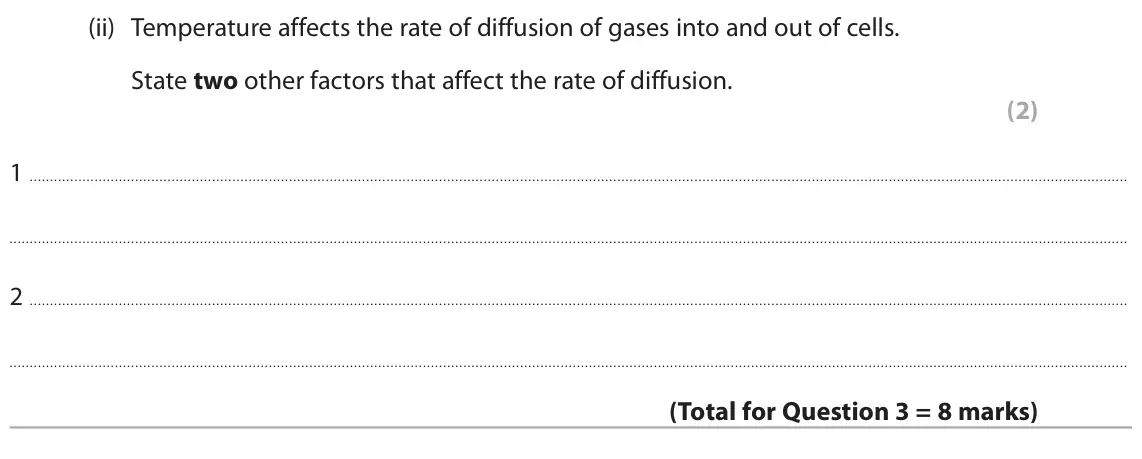
Q6(a)
The whole paper ↗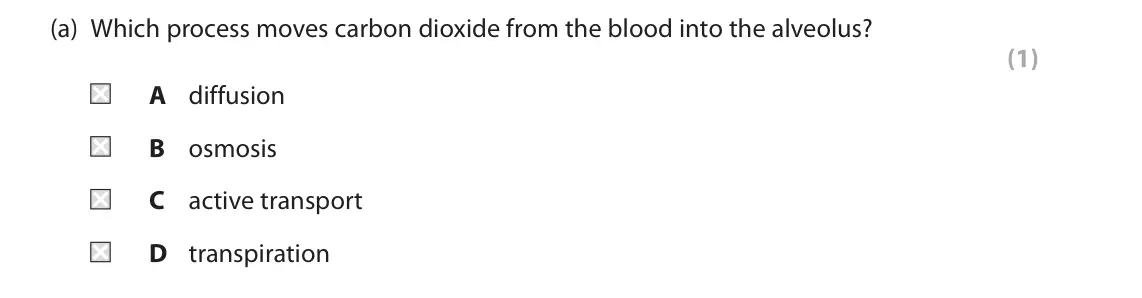
Q6(b)
The whole paper ↗
Q6(a)(i)
The whole paper ↗
Q6(a)(ii)
The whole paper ↗
Q6(a)(iii)
The whole paper ↗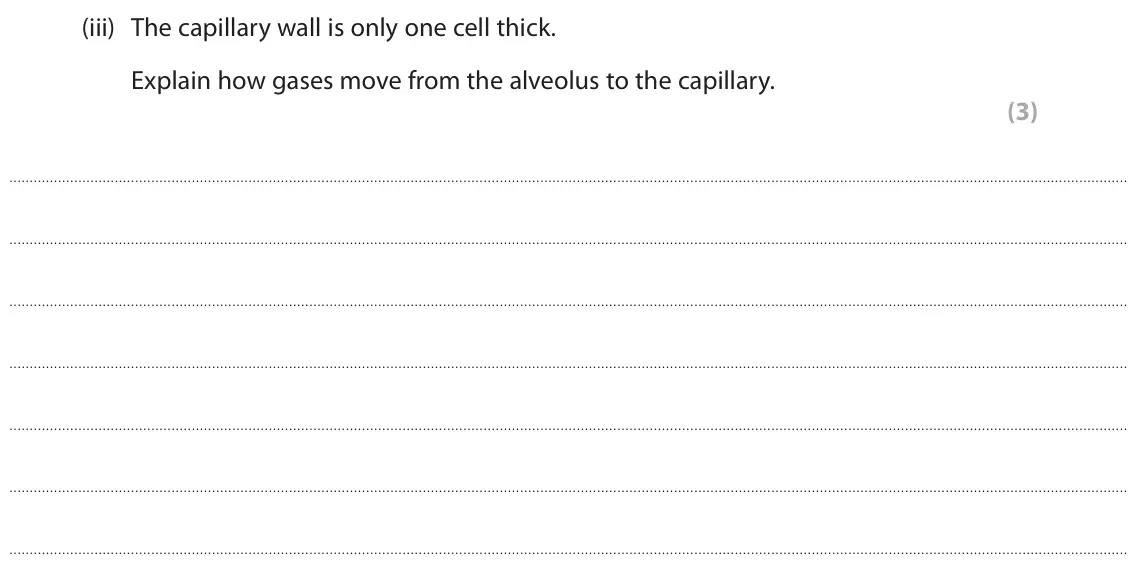
Q6(a)(iv)
The whole paper ↗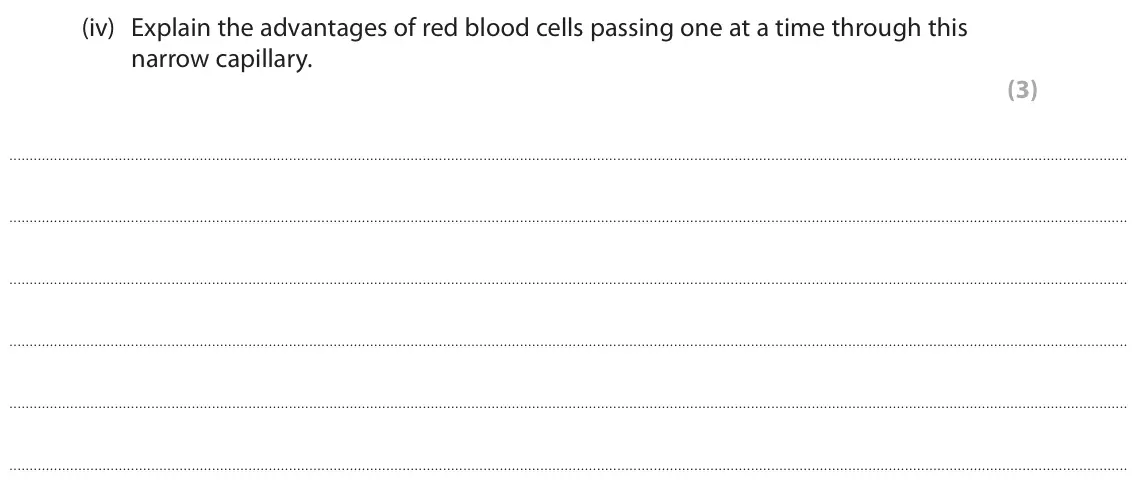
Q6(b)
The whole paper ↗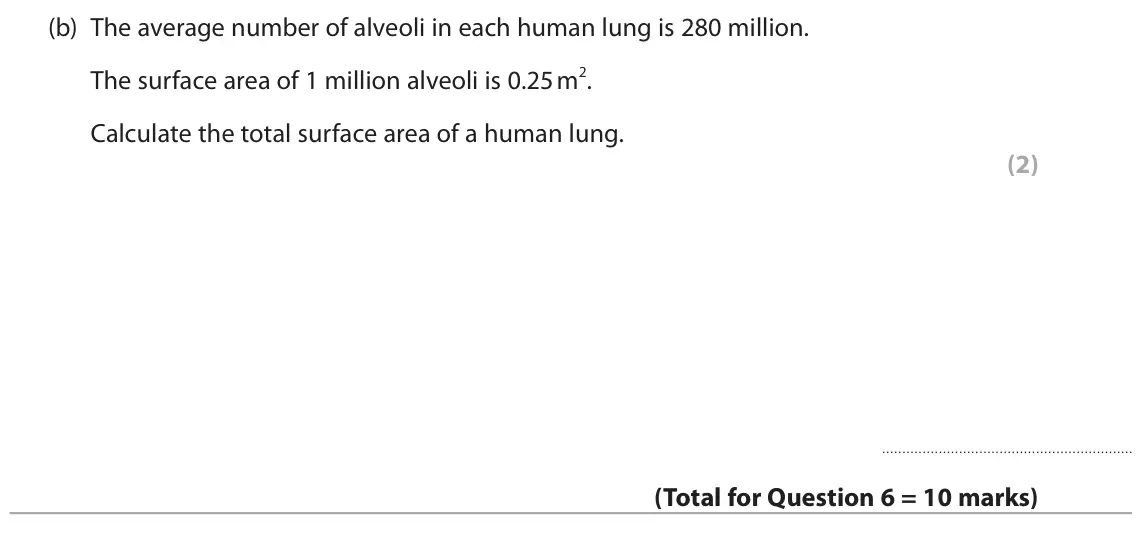
Q7(a)(i)
The whole paper ↗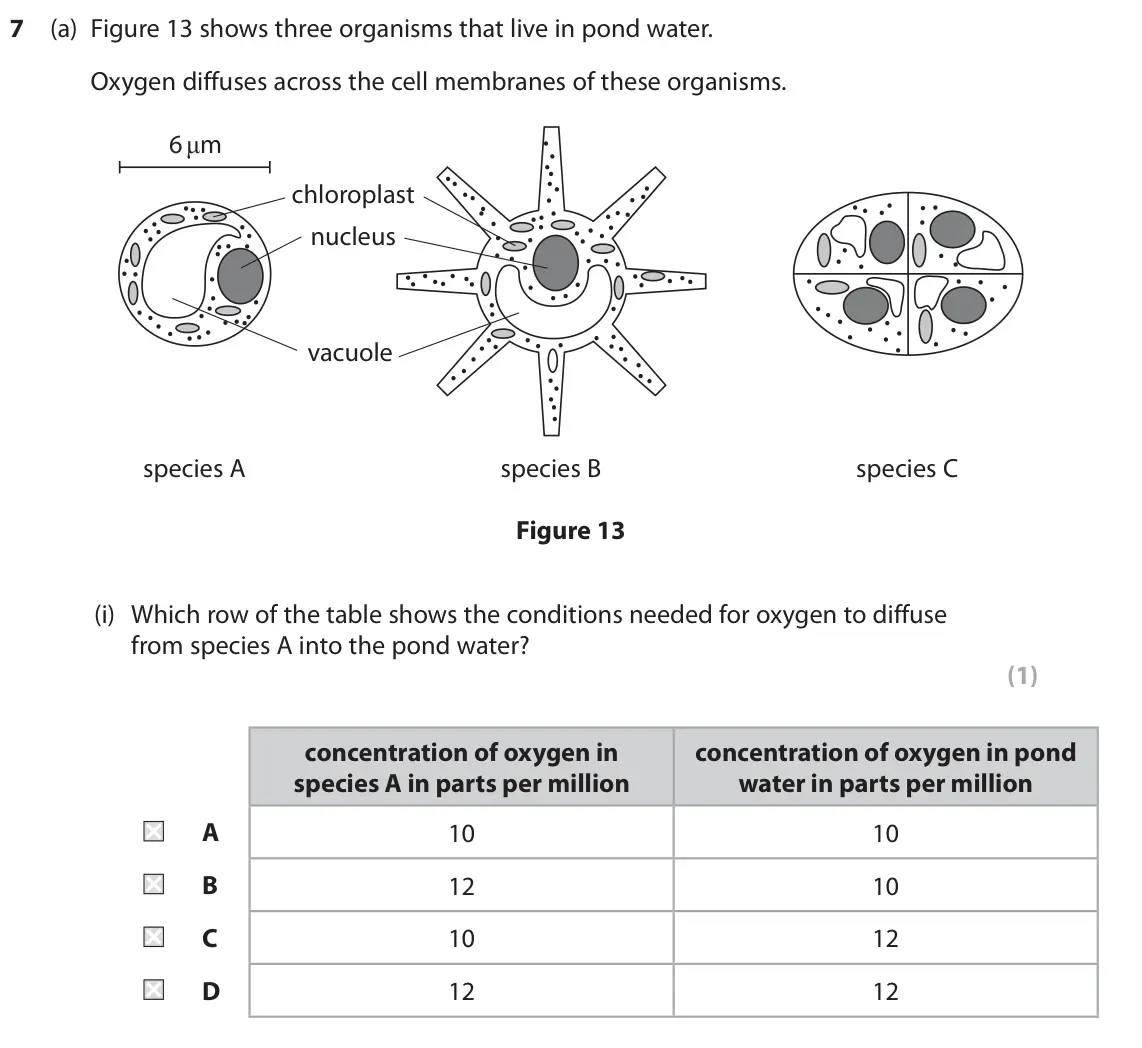
Q7(a)(ii)
The whole paper ↗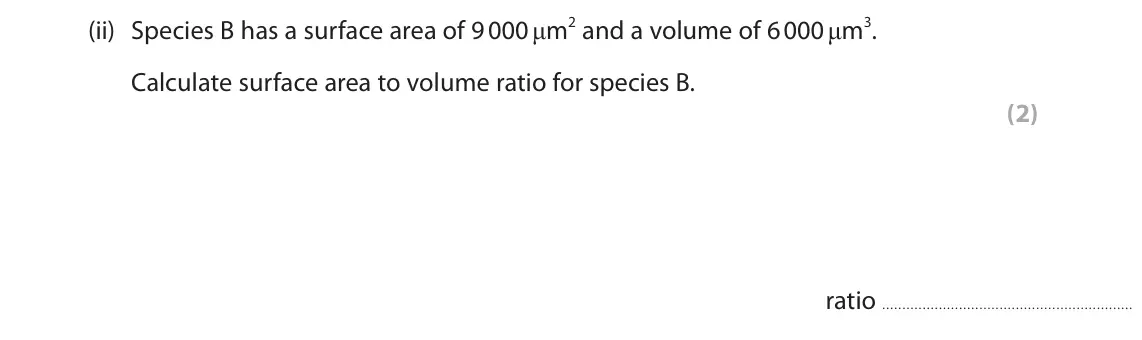
Q7(a)(iii)
The whole paper ↗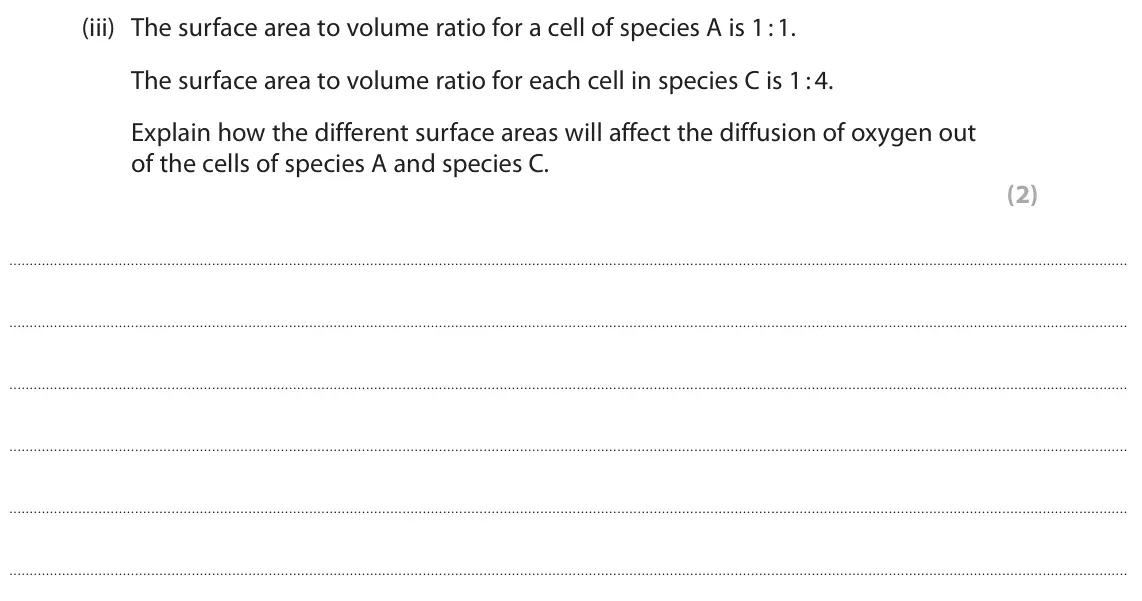
Q1(a)(iii)
The whole paper ↗
Q10(b)(ii)
The whole paper ↗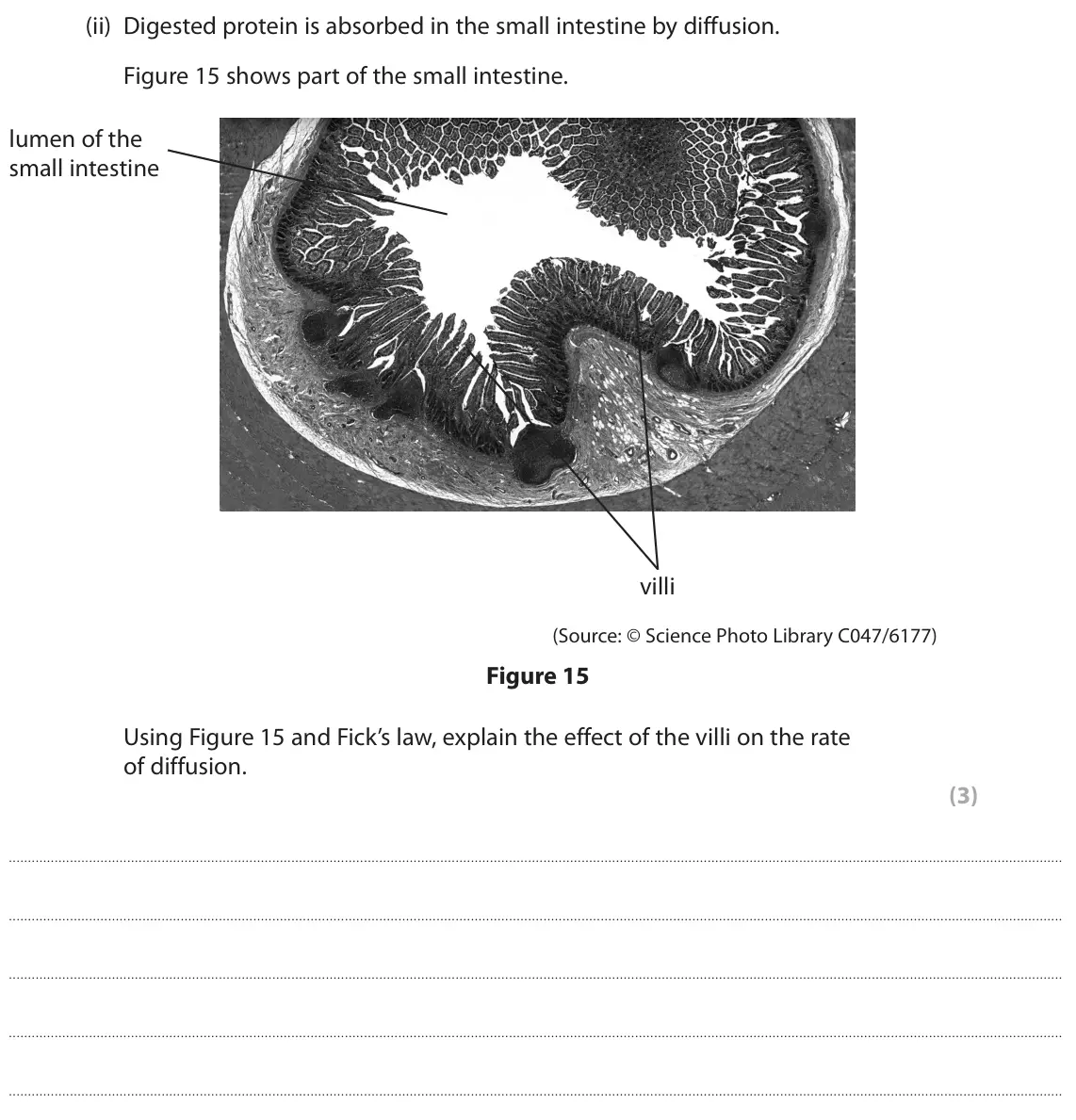
Q9(c)
The whole paper ↗
Q9(a)(i)
The whole paper ↗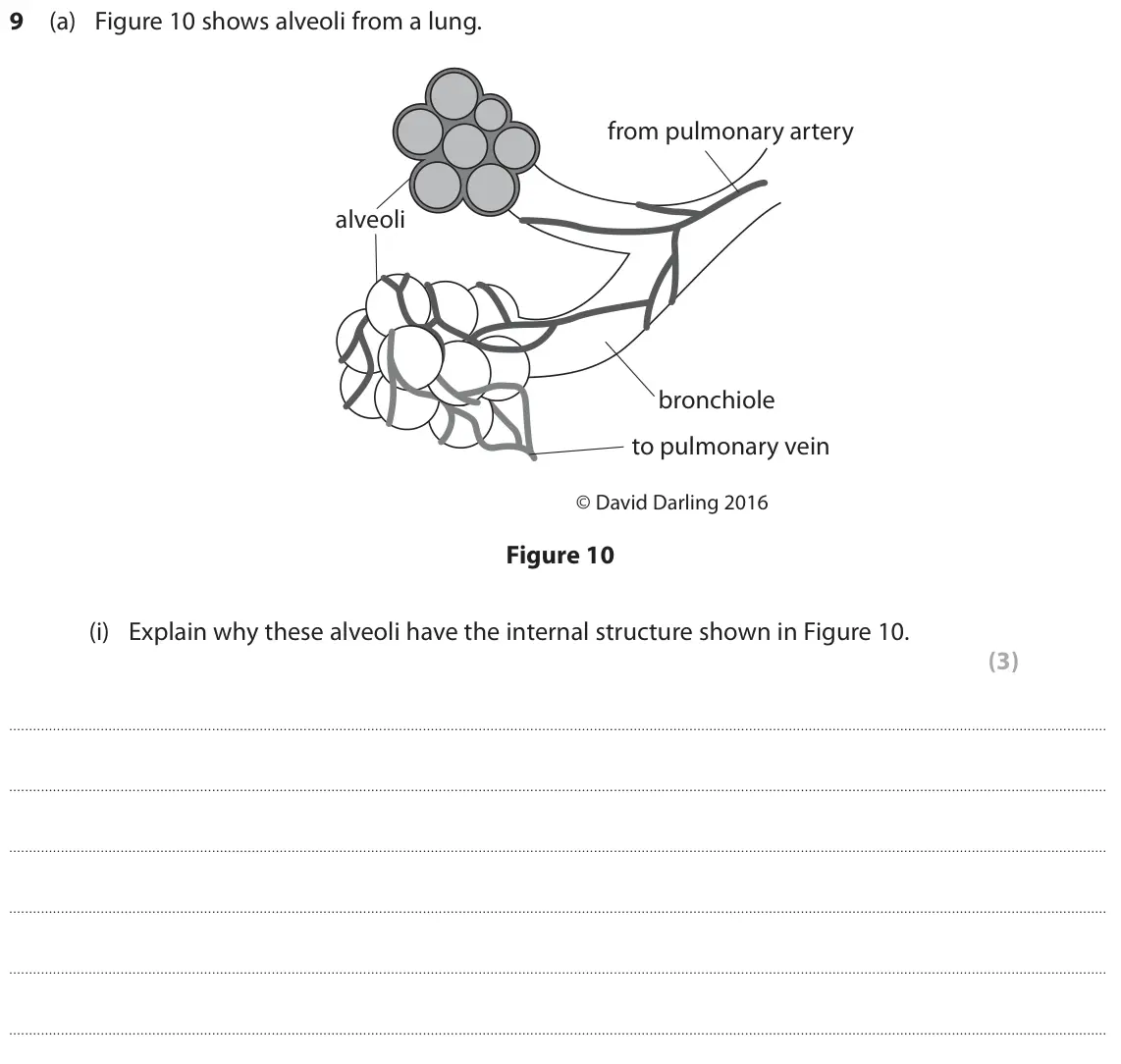
Q9(a)(ii)
The whole paper ↗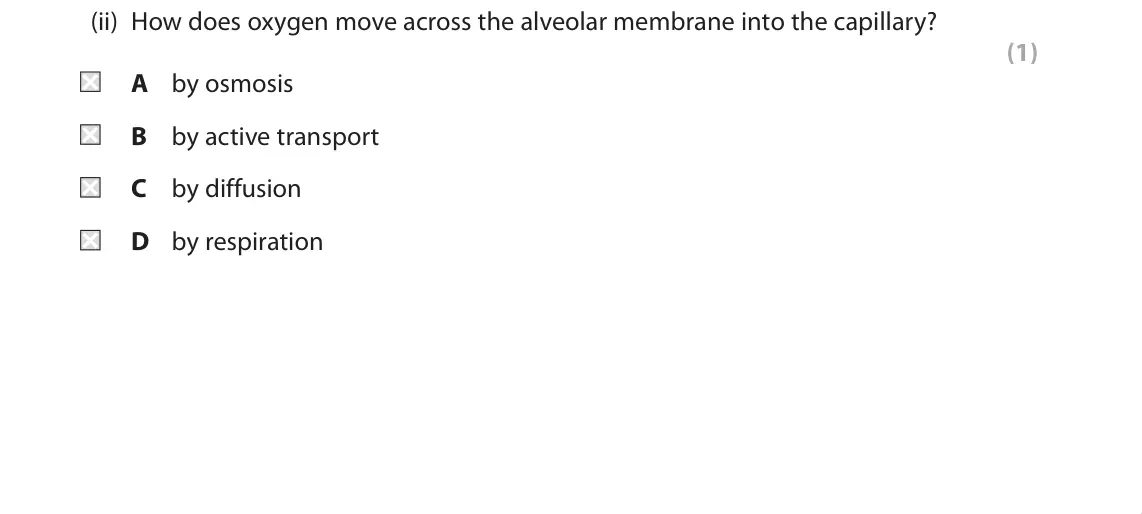
Q9(c)
The whole paper ↗
Q2(a)
The whole paper ↗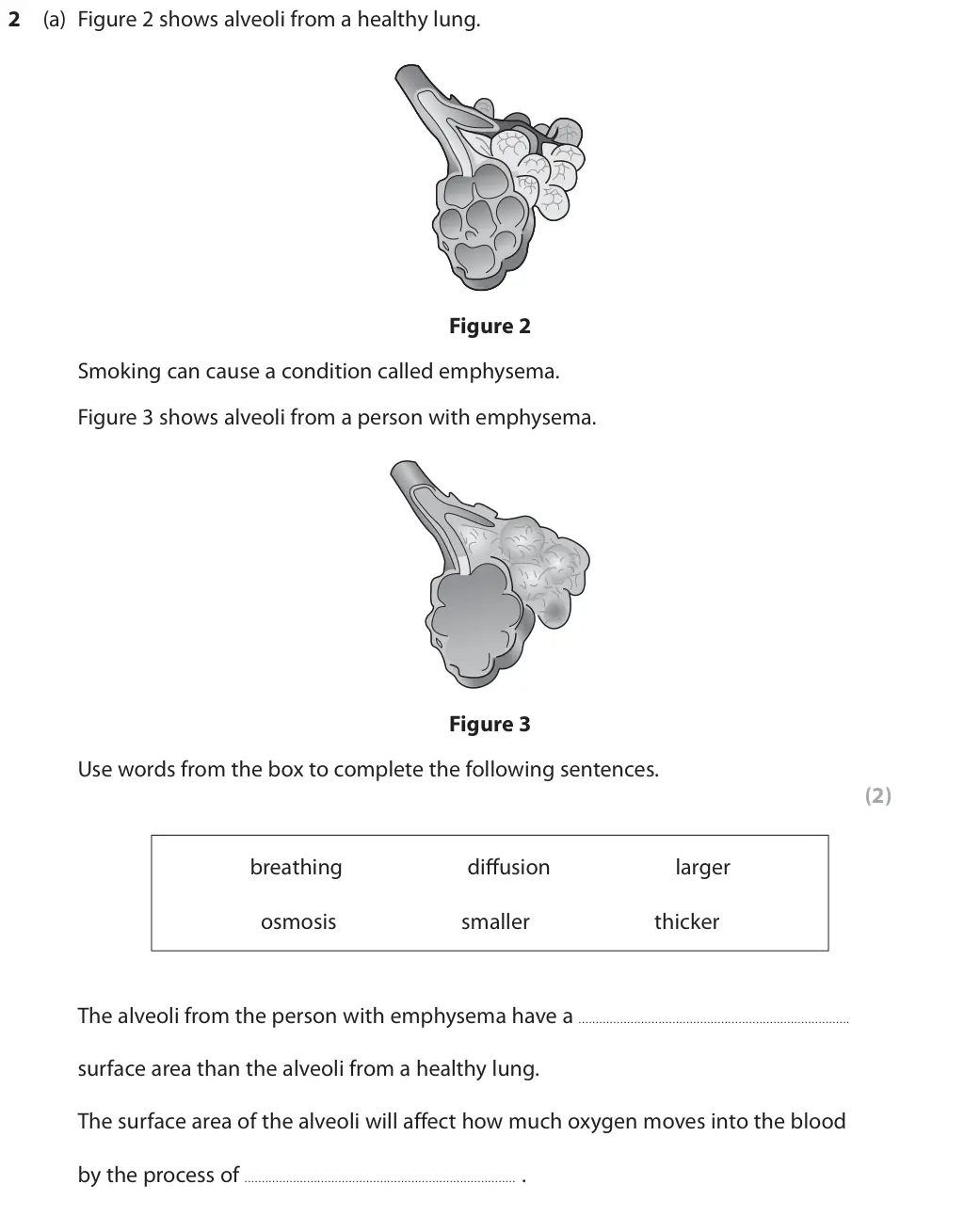
Q2(a)(i)
The whole paper ↗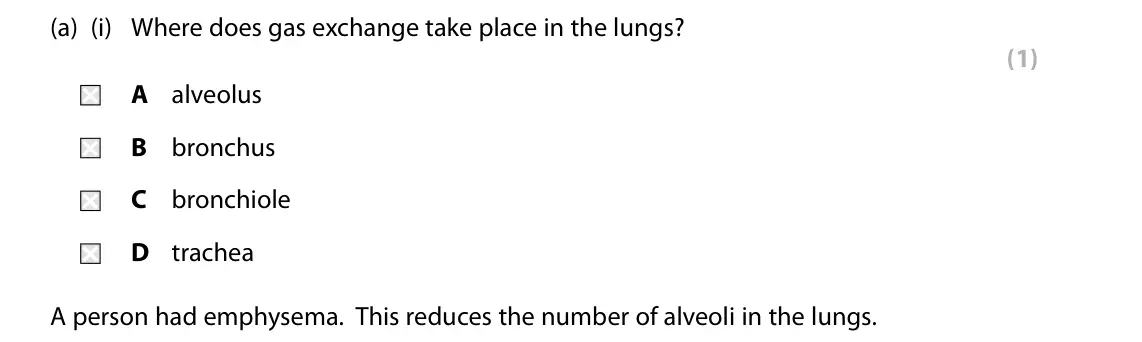
Q2(a)(ii)
The whole paper ↗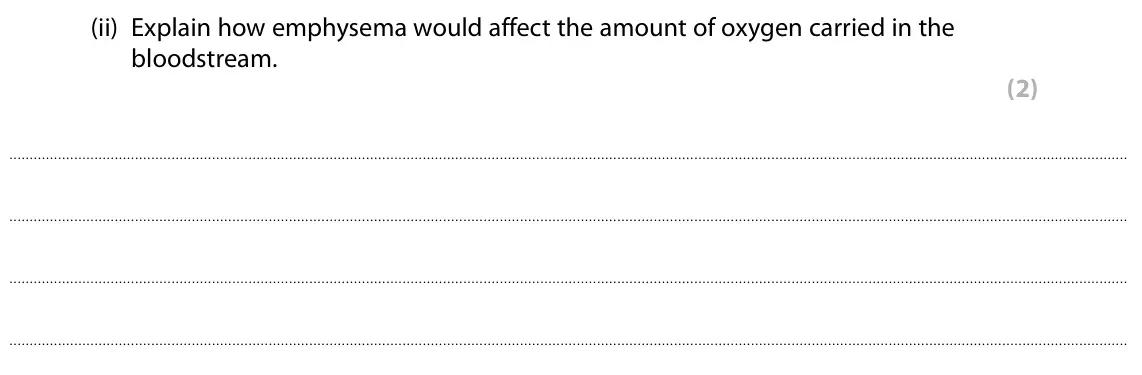
All 24 questions on Exchange surfaces and diffusion, as a list
- June 2025, Paper 2 Foundation, Q3(c)(ii) (2 marks): Temperature affects the rate of diffusion of gases into and out of cells. State two other factors that affect the rate of diffusion. (2) 1 2
- June 2024, Paper 2 Foundation, Q6(a) (1 mark): Which process moves carbon dioxide from the blood into the alveolus? (1) A diffusion B osmosis C active transport D transpiration
- June 2024, Paper 2 Foundation, Q6(b) (1 mark): State one adaptation of an alveolus that increases the rate of gas exchange. (1)
- June 2023, Paper 2 Higher, Q6(a)(i) (1 mark): Name the gas used in respiration that moves from the alveolus into the capillary. (1)
- June 2023, Paper 2 Higher, Q6(a)(ii) (1 mark): Name the gas produced by respiration that moves from the capillary into the alveolus. (1)
- June 2023, Paper 2 Higher, Q6(a)(iii) (3 marks): The capillary wall is only one cell thick. Explain how gases move from the alveolus to the capillary. (3)
- June 2023, Paper 2 Higher, Q6(a)(iv) (3 marks): Explain the advantages of red blood cells passing one at a time through this narrow capillary. (3)
- June 2023, Paper 2 Higher, Q6(b) (2 marks): The average number of alveoli in each human lung is 280 million. The surface area of 1 million alveoli is 0.25 m2. Calculate the total surface area of a human l
- June 2023, Paper 2 Foundation, Q7(a)(i) (1 mark): Which row of the table shows the conditions needed for oxygen to diffuse from species A into the pond water? (1) concentration of oxygen in concentration of oxy
- June 2023, Paper 2 Foundation, Q7(a)(ii) (2 marks): Species B has a surface area of 9 000 μm2 and a volume of 6 000 μm3. Calculate surface area to volume ratio for species B. (2) ratio
- June 2023, Paper 2 Foundation, Q7(a)(iii) (2 marks): The surface area to volume ratio for a cell of species A is 1 : 1. The surface area to volume ratio for each cell in species C is 1 : 4. Explain how the differe
- June 2022, Paper 2 Higher, Q1(a)(iii) (2 marks): Carbon dioxide diffuses from the body of the bloodworm into the water. Give two factors that affect the rate of diffusion. (2) 1 2
- June 2022, Paper 2 Higher, Q10(b)(ii) (3 marks): Digested protein is absorbed in the small intestine by diffusion. Figure 15 shows part of the small intestine. lumen of the small intestine villi (Source: © Sci
- November 2021, Paper 2 Foundation, Q9(c) (6 marks): Explain how alveoli in human lungs are adapted for gas exchange. Include the names of the gases that are being exchanged. (6)
- June 2019, Paper 2 Higher, Q9(a)(i) (3 marks): Explain why these alveoli have the internal structure shown in Figure 10. (3)
- June 2019, Paper 2 Higher, Q9(a)(ii) (1 mark): How does oxygen move across the alveolar membrane into the capillary? (1) A by osmosis B by active transport C by diffusion D by respiration
- June 2019, Paper 2 Higher, Q9(c) (6 marks): Explain, using Fick’s law, the factors that affect the diffusion rate of molecules into and out of cells. (6)
- June 2018, Paper 2 Foundation, Q2(a) (2 marks): Figure 2 shows alveoli from a healthy lung. Figure 2 Smoking can cause a condition called emphysema. Figure 3 shows alveoli from a person with emphysema. Figure
- Specimen, Paper 2 Foundation, Q2(a)(i) (1 mark): Where does gas exchange take place in the lungs? (1) A alveolus B bronchus C bronchiole D trachea A person had emphysema. This reduces the number of alveoli in
- Specimen, Paper 2 Foundation, Q2(a)(ii) (2 marks): Explain how emphysema would affect the amount of oxygen carried in the bloodstream. (2)
- Specimen, Paper 2 Foundation, Q2(b)(i) (2 marks): Calculate the SA:V ratio for the 2 cm cube. (2)
- Specimen, Paper 2 Foundation, Q2(b)(ii) (1 mark): Give one reason why it is important that human lungs have a high surface area to volume ratio. (1) Oxygen is involved with aerobic respiration in cells.
- Specimen, Paper 2 Foundation, Q6(a)(ii) (2 marks): Describe the gases that are exchanged across the skin of the earthworm as a result of the earthworm respiring. (2)
- Specimen, Paper 2 Foundation, Q6(a)(iii) (1 mark): What is the method in which gases are exchanged across the skin of the earthworm? (1) A active transport B diffusion C osmosis D transpiration
Questions, mark schemes and examiner’s reports are © Pearson Edexcel, from their published past papers. Plumi isn’t affiliated with any exam board. Want whole papers? Every Edexcel GCSE Biology paper.
Rather write your answers by hand on iPad? Plumi marks them against the same mark schemes.