 plumi
Leaves and transpiration: Edexcel GCSE Biology questions
Every Edexcel GCSE Biology exam question on Leaves and transpiration (specification points 6.11–6.13), 2018–2025, with its mark scheme and examiner’s report.
Find questions1,834
Exam
All years
Calculations
Q6(a)(i)
The whole paper ↗
Q6(a)(ii)
The whole paper ↗
Q6(a)(iii)
The whole paper ↗
Q5(a)(i)
The whole paper ↗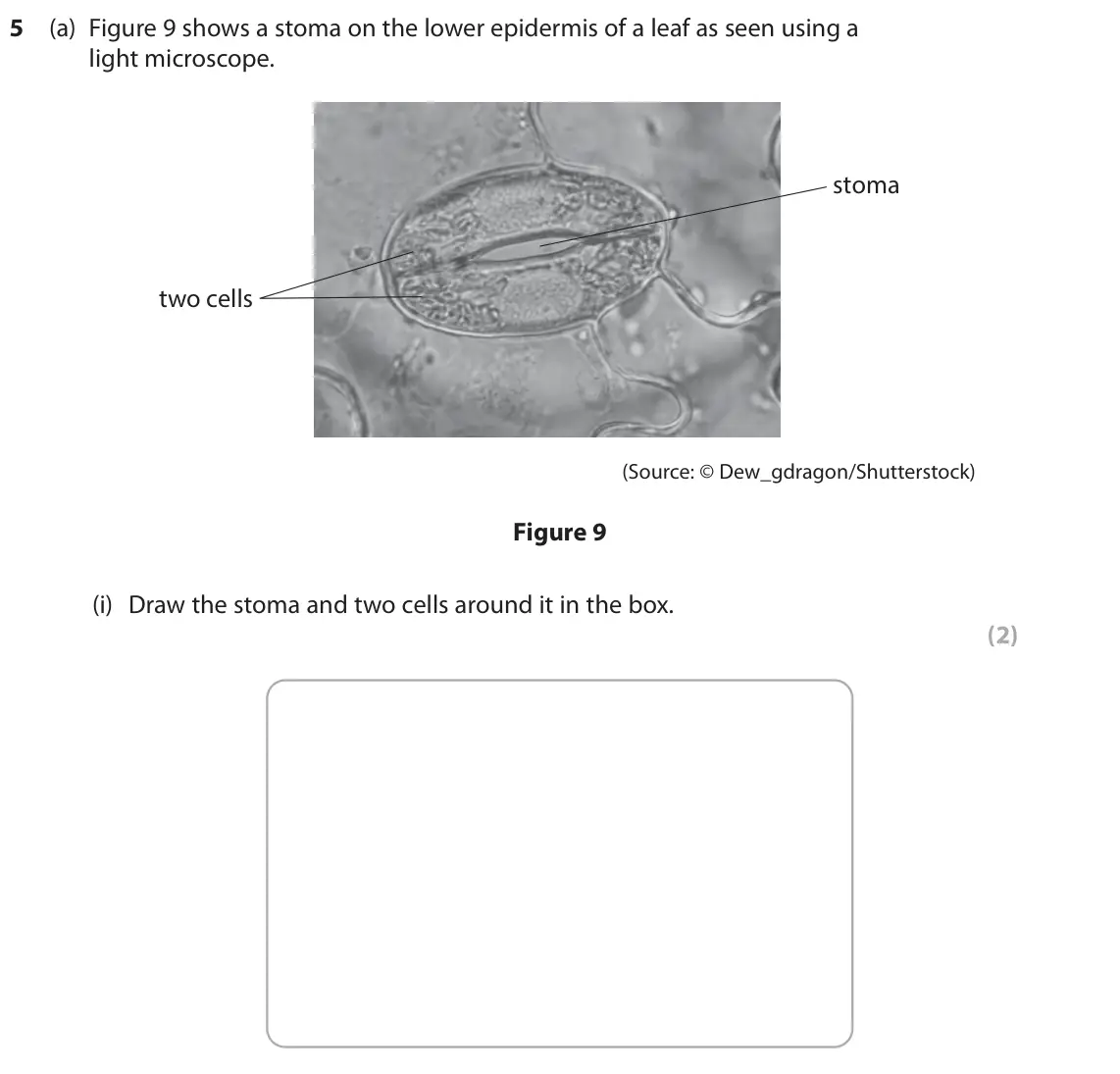
Q5(a)(ii)
The whole paper ↗
Q7(b)(iii)
The whole paper ↗
Q5(a)(i)
The whole paper ↗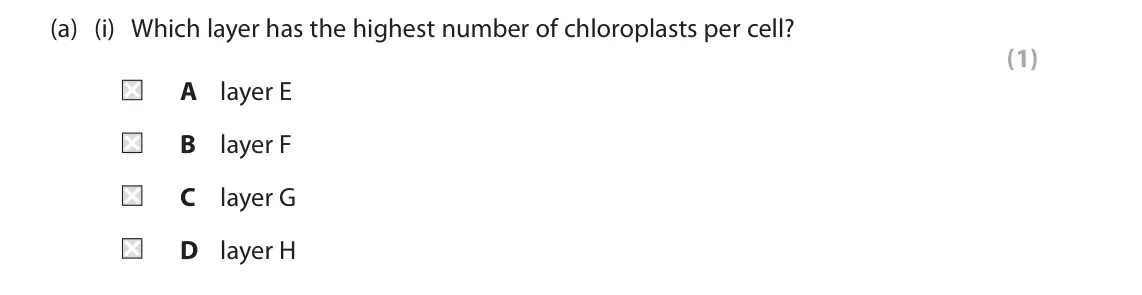
Q5(a)(iii)
The whole paper ↗
Q7(c)
The whole paper ↗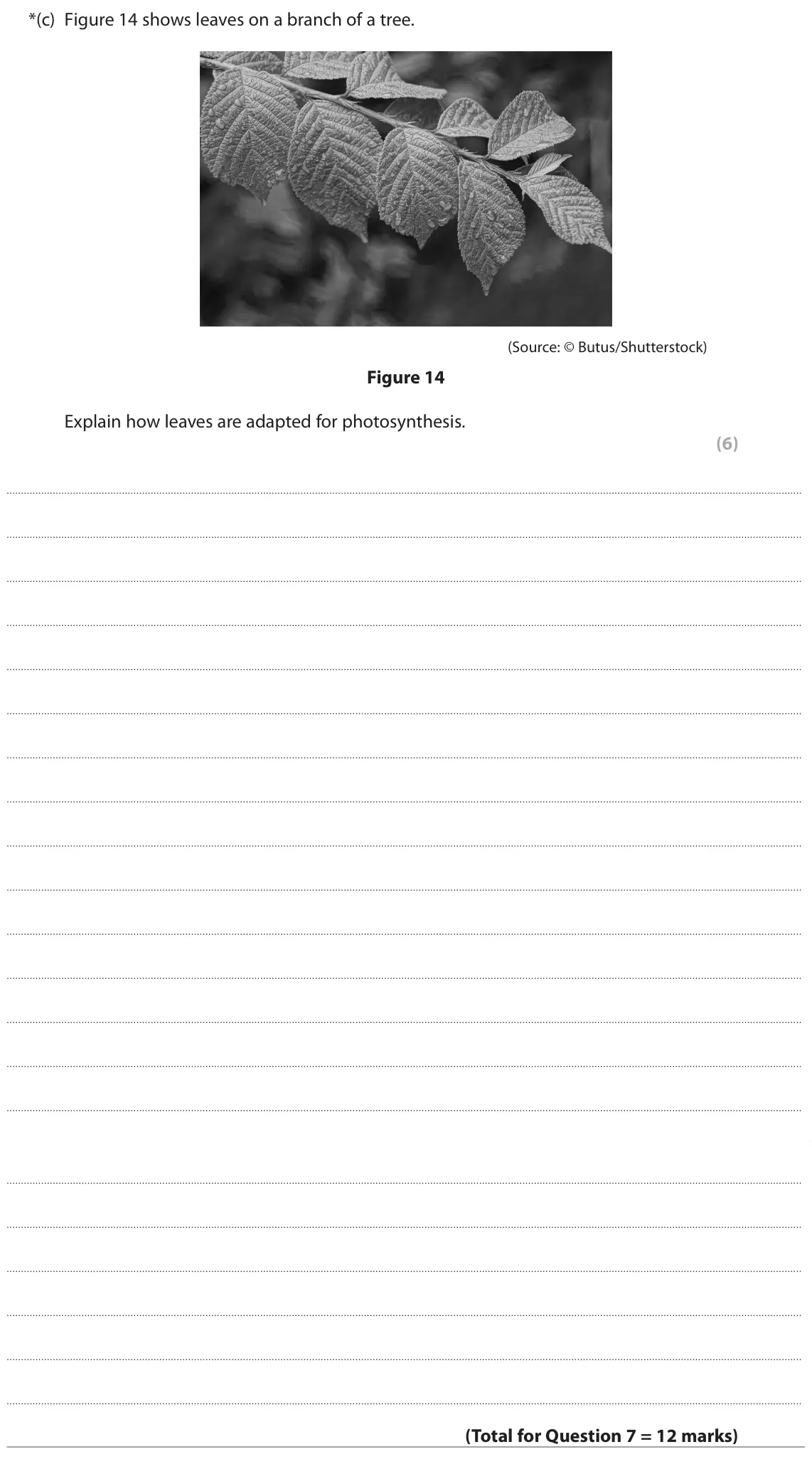
Q2(b)(i)
The whole paper ↗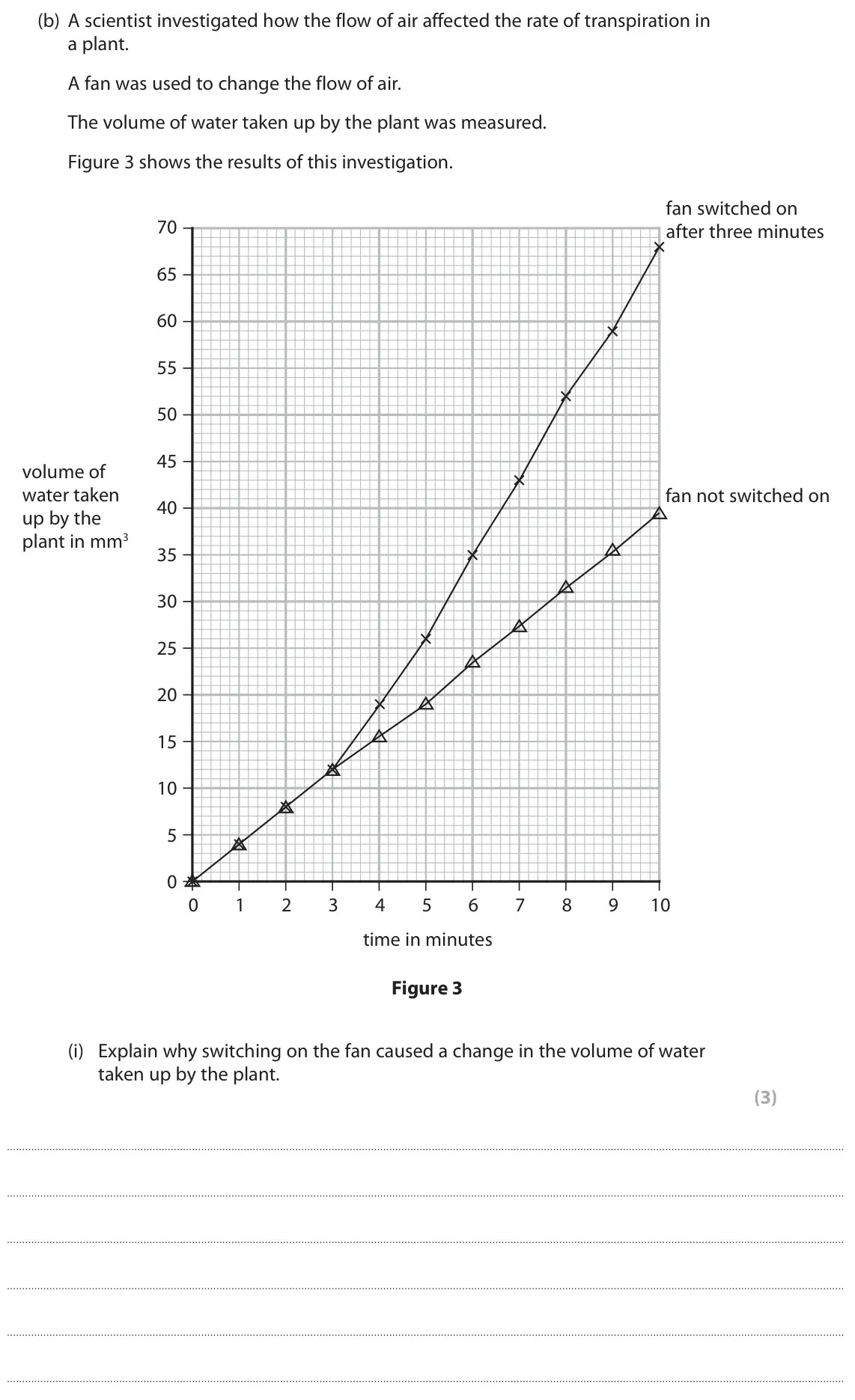
Q2(b)(ii)
The whole paper ↗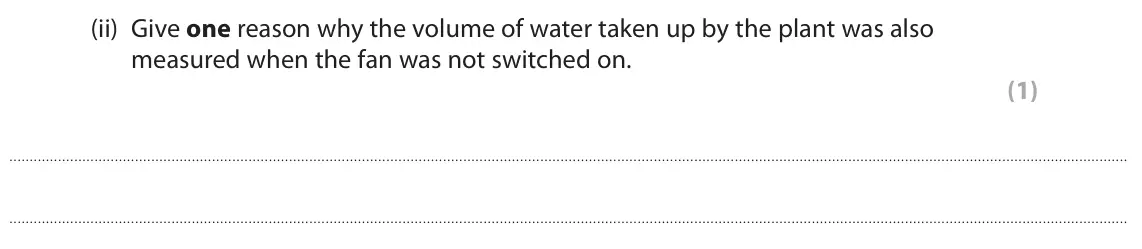
Q2(b)(iii)
The whole paper ↗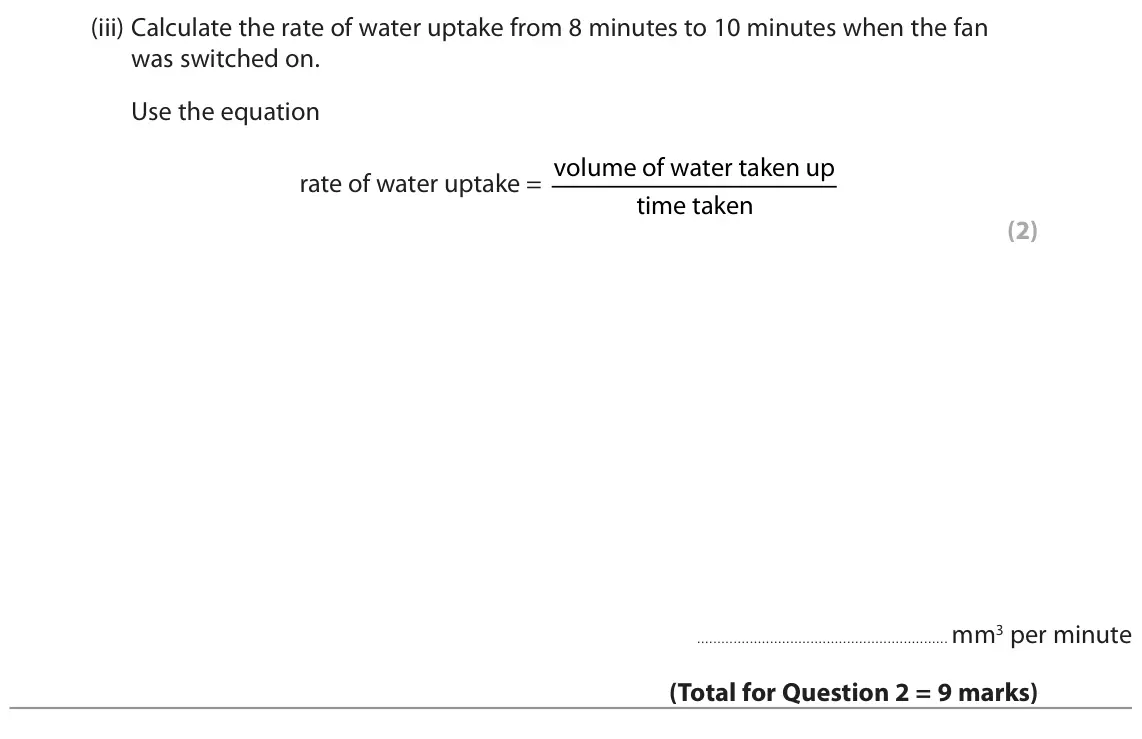
Q8(c)(i)
The whole paper ↗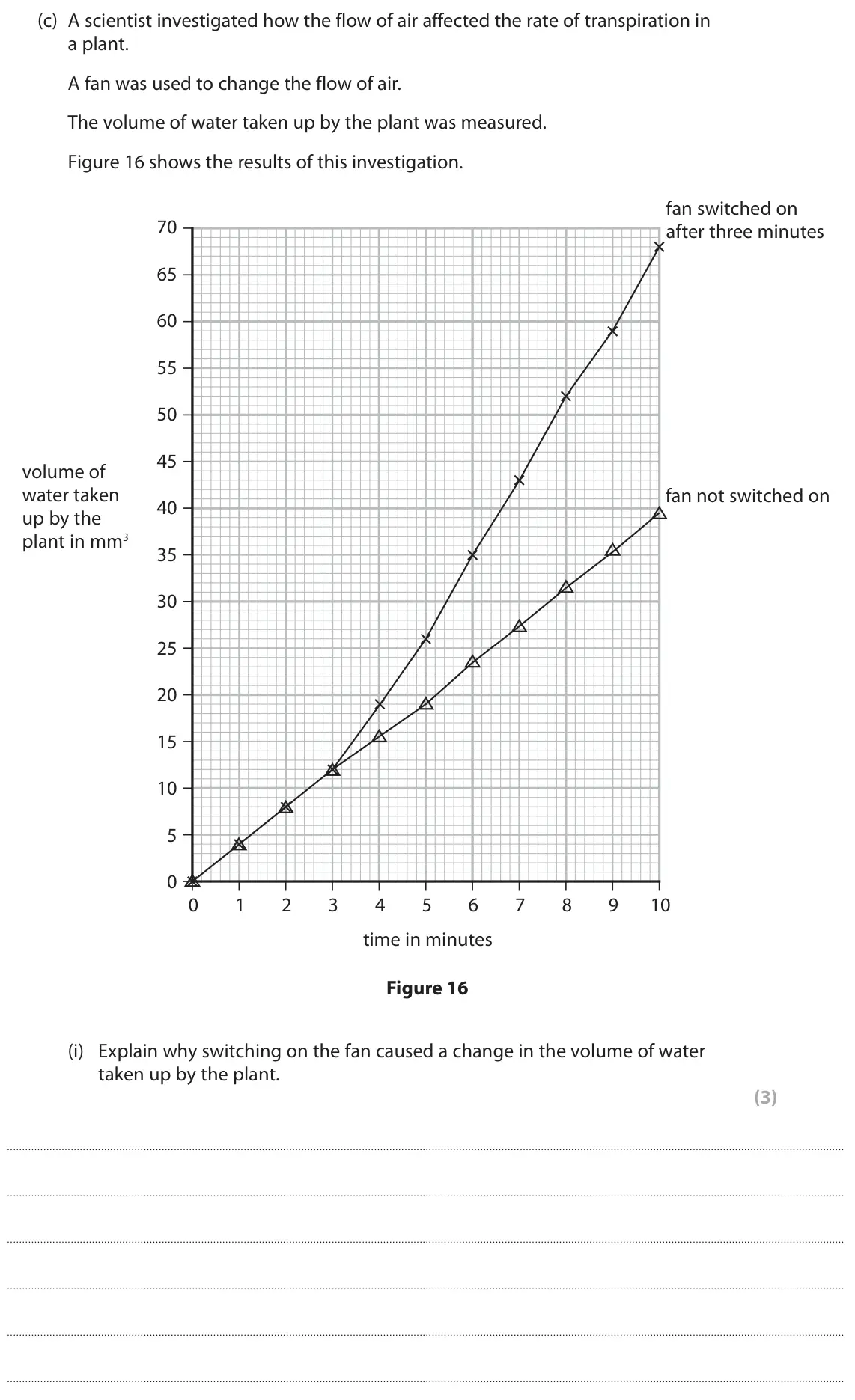
Q8(c)(ii)
The whole paper ↗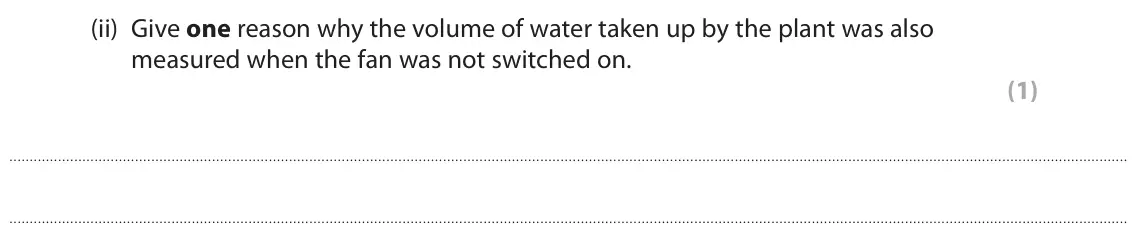
Q8(c)(iii)
The whole paper ↗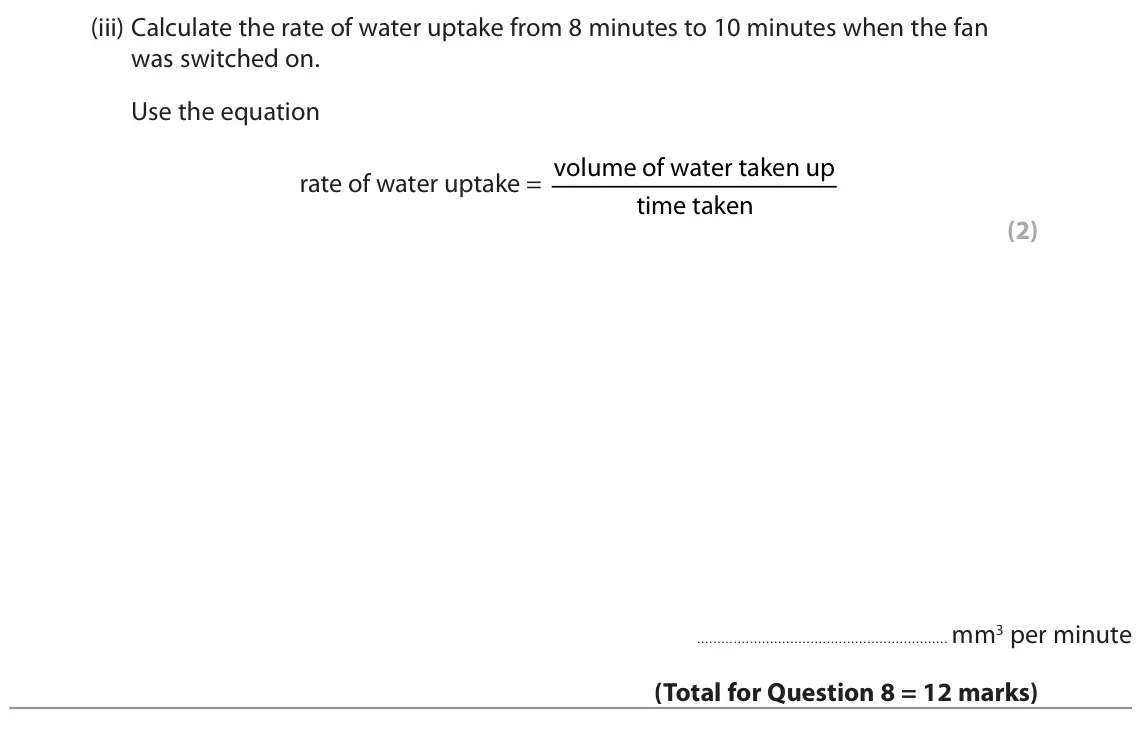
Q7(a)
The whole paper ↗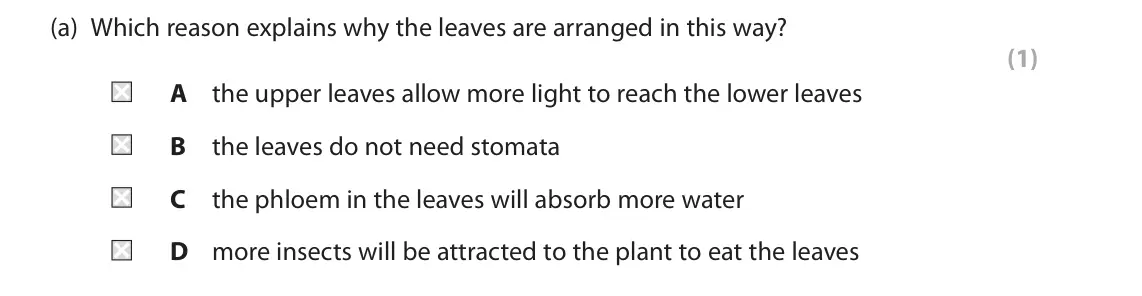
Q2(a)
The whole paper ↗
Q8(a)
The whole paper ↗
Q1(a)(i)
The whole paper ↗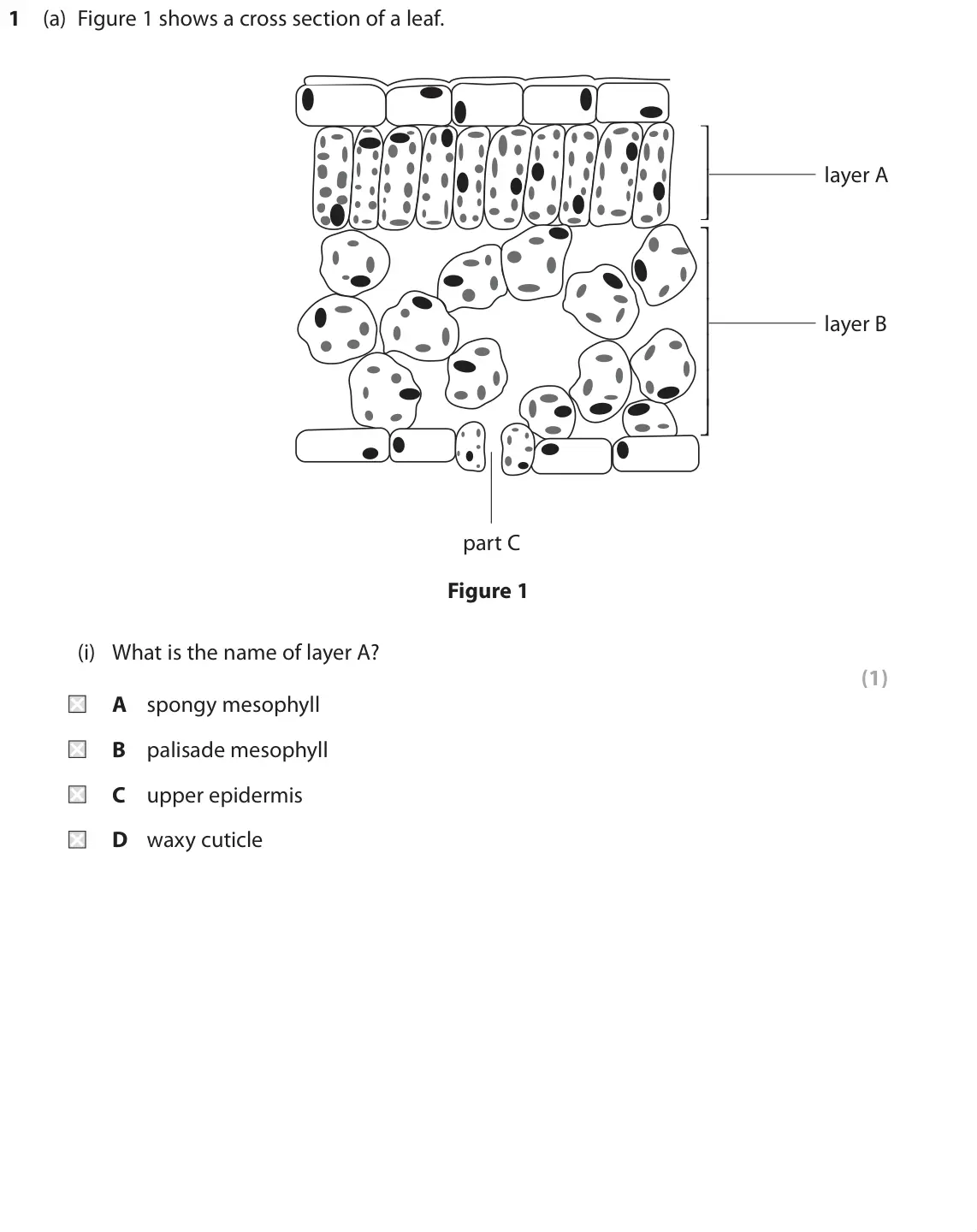
All 43 questions on Leaves and transpiration, as a list
- June 2025, Paper 2 Higher, Q6(a)(i) (1 mark): State the number of guard cells shown in Figure 12. (1)
- June 2025, Paper 2 Higher, Q6(a)(ii) (2 marks): State one gas that leaves the stomata and one gas that enters the stomata during daylight. (2) gas leaving stomata gas entering stomata
- June 2025, Paper 2 Higher, Q6(a)(iii) (1 mark): State why the stomata close. (1)
- June 2025, Paper 2 Foundation, Q5(a)(i) (2 marks): Draw the stoma and two cells around it in the box. (2)
- June 2025, Paper 2 Foundation, Q5(a)(ii) (1 mark): Give the name of the two cells around the stoma. (1)
- June 2024, Paper 2 Higher, Q7(b)(iii) (3 marks): Sunflower leaves are large. Explain why large leaves are an advantage to the plant. (3)
- June 2024, Paper 2 Foundation, Q5(a)(i) (1 mark): Which layer has the highest number of chloroplasts per cell? (1) A layer E B layer F C layer G D layer H
- June 2024, Paper 2 Foundation, Q5(a)(iii) (1 mark): State how the guard cells control the amount of gas exchange that occurs through the stomata. (1)
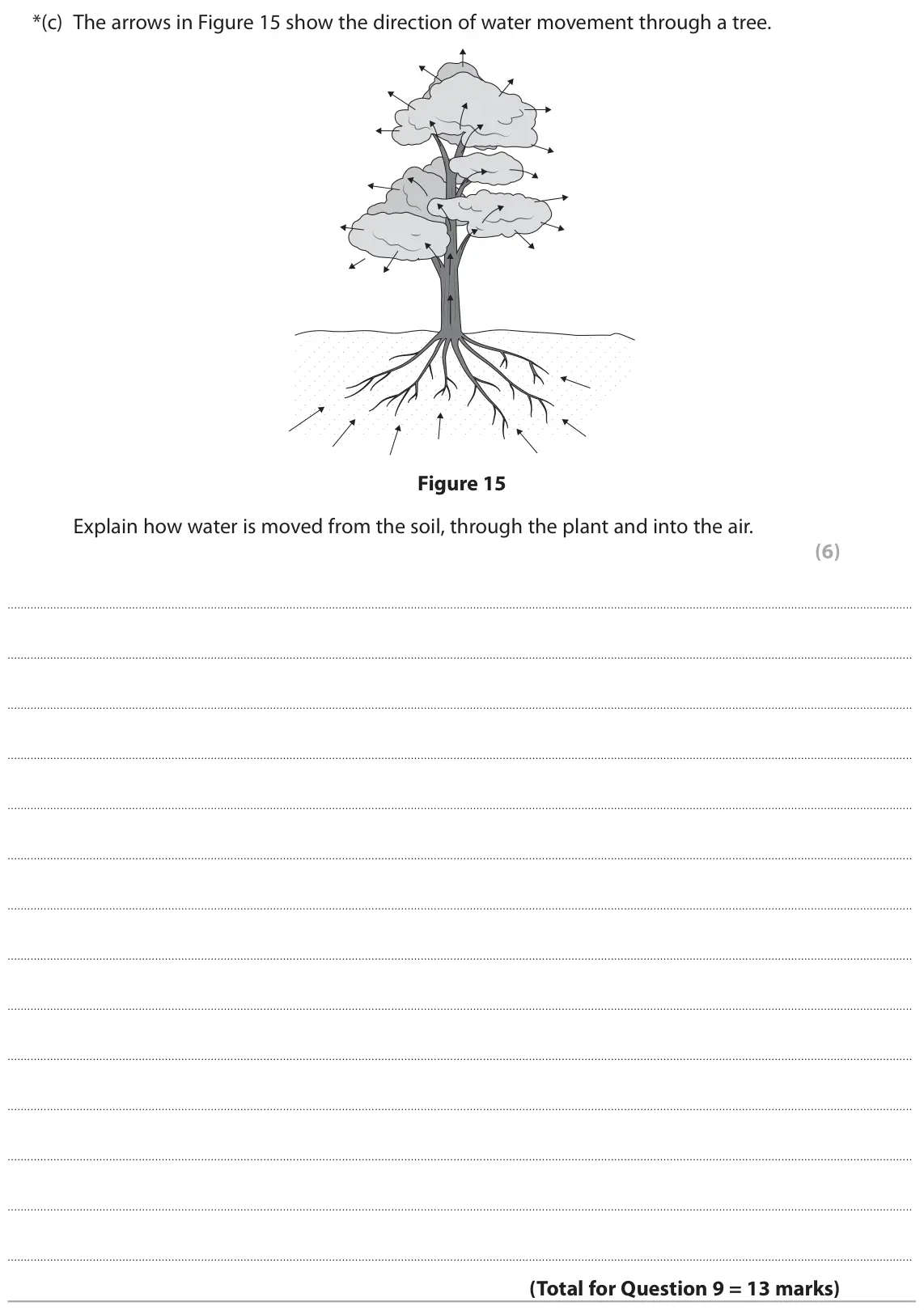
- June 2024, Paper 2 Foundation, Q9(c) (6 marks): The arrows in Figure 15 show the direction of water movement through a tree. Figure 15 Explain how water is moved from the soil, through the plant and into the
- June 2023, Paper 2 Foundation, Q7(c) (6 marks): Figure 14 shows leaves on a branch of a tree. (Source: © Butus/Shutterstock) Figure 14 Explain how leaves are adapted for photosynthesis. (6)
- June 2022, Paper 2 Higher, Q2(b)(i) (3 marks): Explain why switching on the fan caused a change in the volume of water taken up by the plant. (3)
- June 2022, Paper 2 Higher, Q2(b)(ii) (1 mark): Give one reason why the volume of water taken up by the plant was also measured when the fan was not switched on. (1)
- June 2022, Paper 2 Higher, Q2(b)(iii) (2 marks): Calculate the rate of water uptake from 8 minutes to 10 minutes when the fan was switched on. Use the equation rate of water uptake = volume of water taken up t
- June 2022, Paper 2 Foundation, Q8(c)(i) (3 marks): Explain why switching on the fan caused a change in the volume of water taken up by the plant. (3)
- June 2022, Paper 2 Foundation, Q8(c)(ii) (1 mark): Give one reason why the volume of water taken up by the plant was also measured when the fan was not switched on. (1)
- June 2022, Paper 2 Foundation, Q8(c)(iii) (2 marks): Calculate the rate of water uptake from 8 minutes to 10 minutes when the fan was switched on. Use the equation rate of water uptake = volume of water taken up t
- November 2021, Paper 2 Foundation, Q7(a) (1 mark): Which reason explains why the leaves are arranged in this way? (1) A the upper leaves allow more light to reach the lower leaves B the leaves do not need stomat
- November 2020, Paper 2 Higher, Q2(a) (2 marks): Water lilies have stomata on the upper surface of the leaves. Explain why water lilies have no stomata on the lower surface of the leaves. (2)
- November 2020, Paper 2 Foundation, Q8(a) (2 marks): Water lilies have stomata on the upper surface of the leaves. Explain why water lilies have no stomata on the lower surface of the leaves. (2)
- June 2019, Paper 2 Higher, Q1(a)(i) (1 mark): What is the name of layer A? (1) A spongy mesophyll B palisade mesophyll C upper epidermis D waxy cuticle
- June 2019, Paper 2 Higher, Q1(a)(ii) (2 marks): Explain the function of the spaces between the cells in layer B. (2)
- June 2019, Paper 2 Higher, Q1(a)(iii) (2 marks): Explain the function of part C in Figure 1. (2)
- June 2019, Paper 2 Higher, Q5(c)(i) (1 mark): Name the cells that change the size of stomata. (1)
- June 2019, Paper 2 Higher, Q5(c)(ii) (2 marks): Describe the trend shown in Figure 7. (2)
- June 2019, Paper 2 Higher, Q5(c)(iii) (2 marks): The temperature increased from 8 am to 1 pm. Explain why this affected the size of the stomata. (2)
- June 2018, Paper 2 Higher, Q3(a)(i) (1 mark): State why a coverslip is placed on top of the leaf peel. (1)
- June 2018, Paper 2 Higher, Q3(a)(ii) (2 marks): Explain why the leaf peel rather than the whole leaf was viewed with a microscope. (2)
- June 2018, Paper 2 Higher, Q3(b)(i) (1 mark): State the number of stomata visible on Figure 6. (1)
- June 2018, Paper 2 Higher, Q3(b)(ii) (3 marks): The student observed that the stomata were open. Describe how stomata open. (3)
- June 2018, Paper 2 Higher, Q3(b)(iii) (2 marks): The leaf peel from the upper surface of this leaf showed no stomata. Explain why it is an advantage to the plant to have this distribution of stomata in the upp
- June 2018, Paper 2 Higher, Q8(c) (6 marks): Explain how substances are moved through a plant by transpiration and translocation. (6)
- June 2018, Paper 2 Foundation, Q6(a)(i) (1 mark): What is the name of the part labelled R in Figure 12? (1) A cell wall B cytoplasm C stomata D waxy cuticle
- June 2018, Paper 2 Foundation, Q6(a)(ii) (2 marks): Figure 13 shows the mass of glucose produced in each layer of a leaf per hour. 25 20 mass of 15 glucose produced per hour in mg 10 5 0 upper palisade spongy low
- June 2018, Paper 2 Foundation, Q9(a)(i) (1 mark): State why a coverslip is placed on top of the leaf peel. (1)
- June 2018, Paper 2 Foundation, Q9(a)(ii) (2 marks): Explain why the leaf peel rather than the whole leaf was viewed with a microscope. (2)
- June 2018, Paper 2 Foundation, Q9(b)(i) (1 mark): State the number of stomata visible on Figure 23. (1)
- June 2018, Paper 2 Foundation, Q9(b)(ii) (3 marks): The student observed that the stomata were open. Describe how stomata open. (3)
- Specimen, Paper 2 Higher, Q3(a)(ii) (2 marks): Explain which compost would be best to use for a pot containing strawberry plants to be grown during a hot summer. (2)
- Specimen, Paper 2 Higher, Q3(a)(iii) (1 mark): State one way to improve this investigation in order to compare the results without having to calculate the percentage change in mass. (1)
- Specimen, Paper 2 Foundation, Q5(b)(i) (3 marks): Calculate the rate of water loss from the plant in mm3/s if the volume of water lost was 12 mm3 in 10 minutes. (3) rate of water loss = mm3/s
- Specimen, Paper 2 Foundation, Q5(b)(ii) (2 marks): Explain how the water loss would change if the plant only had one leaf. (2) The scientist wants to extend the investigation by considering other factors that af
- Specimen, Paper 2 Foundation, Q5(b)(iii) (2 marks): State two variables, other than temperature, that she could investigate. (2) 1 2
- Specimen, Paper 2 Foundation, Q5(c) (2 marks): Explain the effect of increasing air temperature on the rate of transpiration in a plant. (2)
Questions, mark schemes and examiner’s reports are © Pearson Edexcel, from their published past papers. Plumi isn’t affiliated with any exam board. Want whole papers? Every Edexcel GCSE Biology paper.
Rather write your answers by hand on iPad? Plumi marks them against the same mark schemes.