 plumi
Transport in plants: Edexcel GCSE Biology questions
Every Edexcel GCSE Biology exam question on Transport in plants (specification points 6.7–6.10), 2018–2025, with its mark scheme and examiner’s report.
Find questions1,834
Exam
All years
Calculations
Q3(c)
The whole paper ↗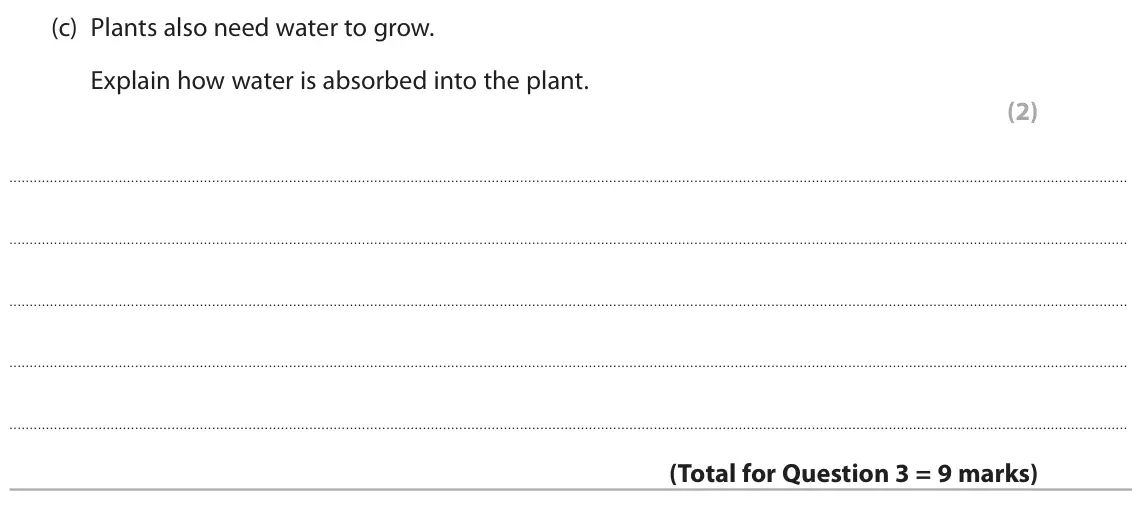
Q6(c)
The whole paper ↗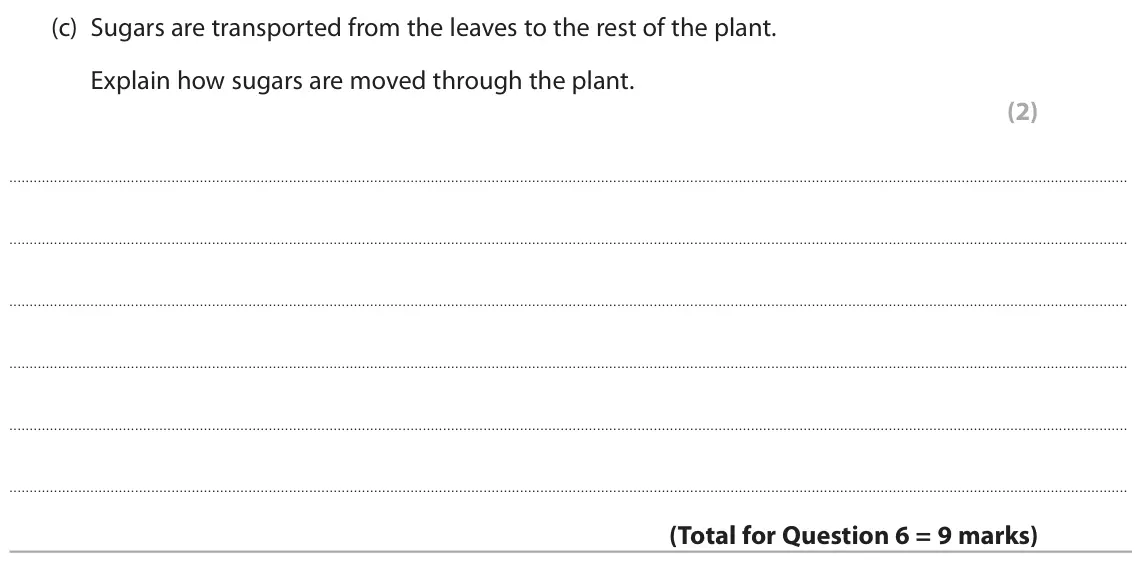
Q2(b)(ii)
The whole paper ↗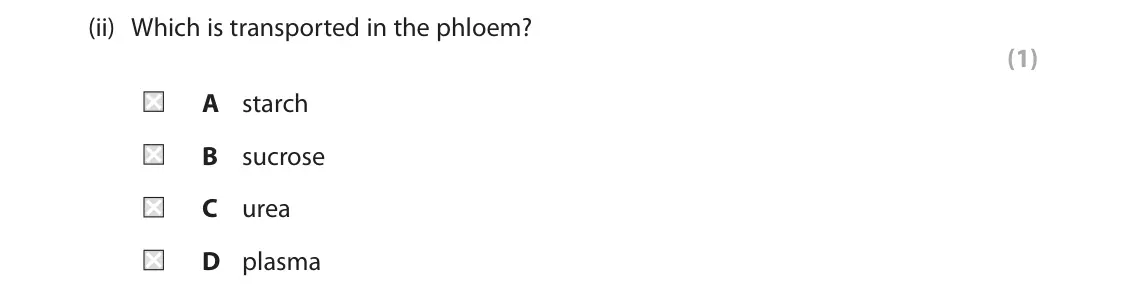
Q3(a)(ii)
The whole paper ↗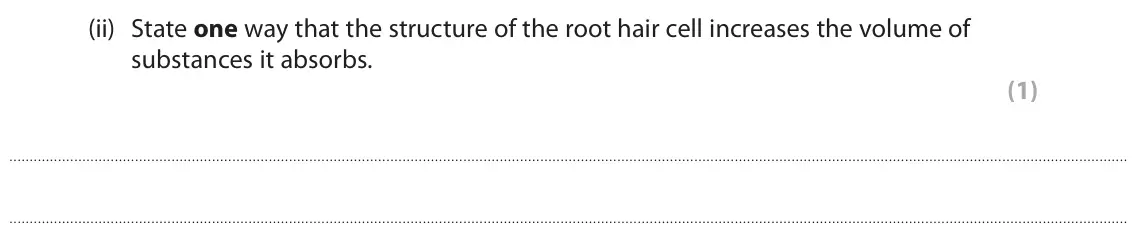
Q3(a)(iii)
The whole paper ↗
Q7(b)(ii)
The whole paper ↗
Q9(a)(i)
The whole paper ↗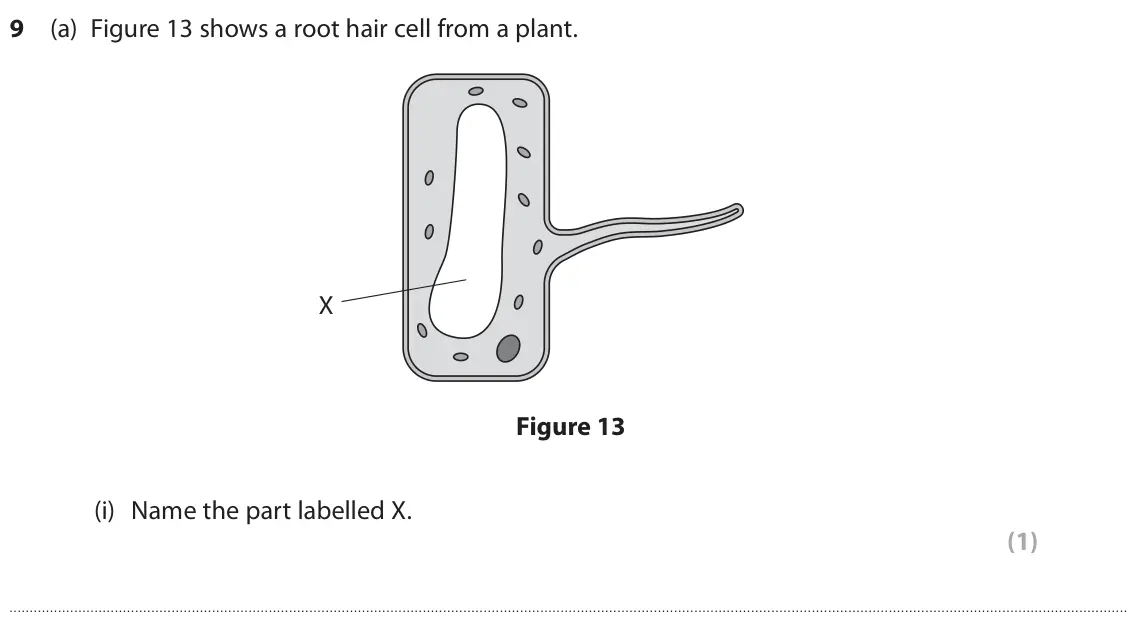
Q9(a)(ii)
The whole paper ↗
Q9(a)(iii)
The whole paper ↗
Q2(a)(i)
The whole paper ↗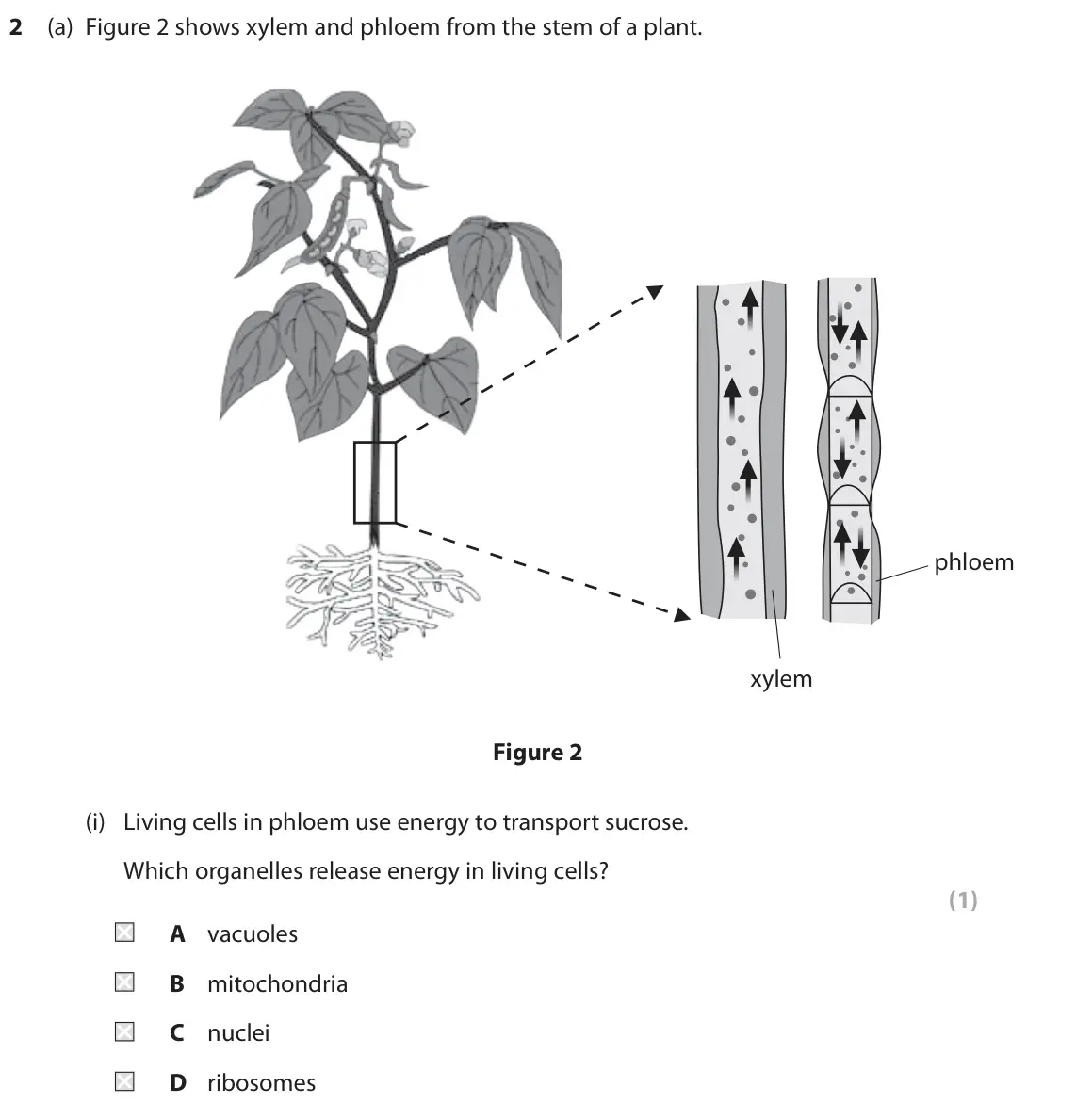
Q2(a)(ii)
The whole paper ↗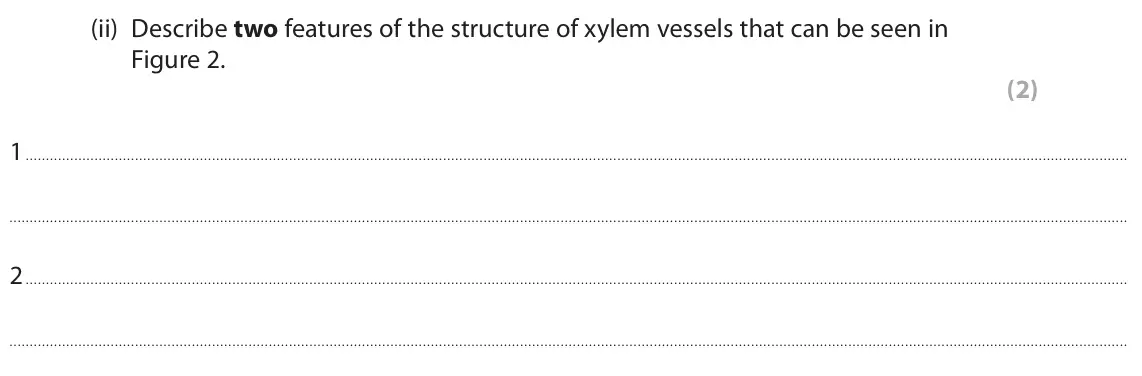
Q8(a)(i)
The whole paper ↗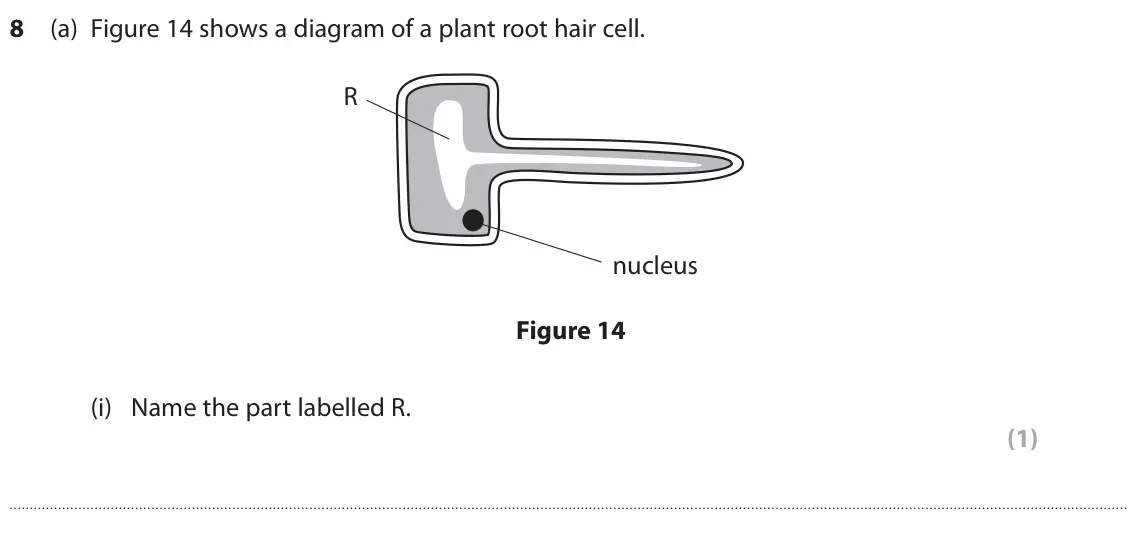
Q8(a)(ii)
The whole paper ↗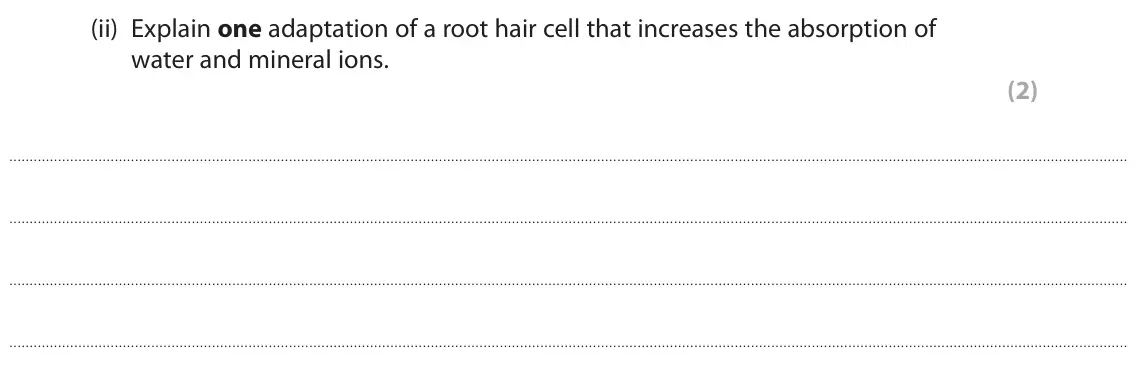
Q8(b)(i)
The whole paper ↗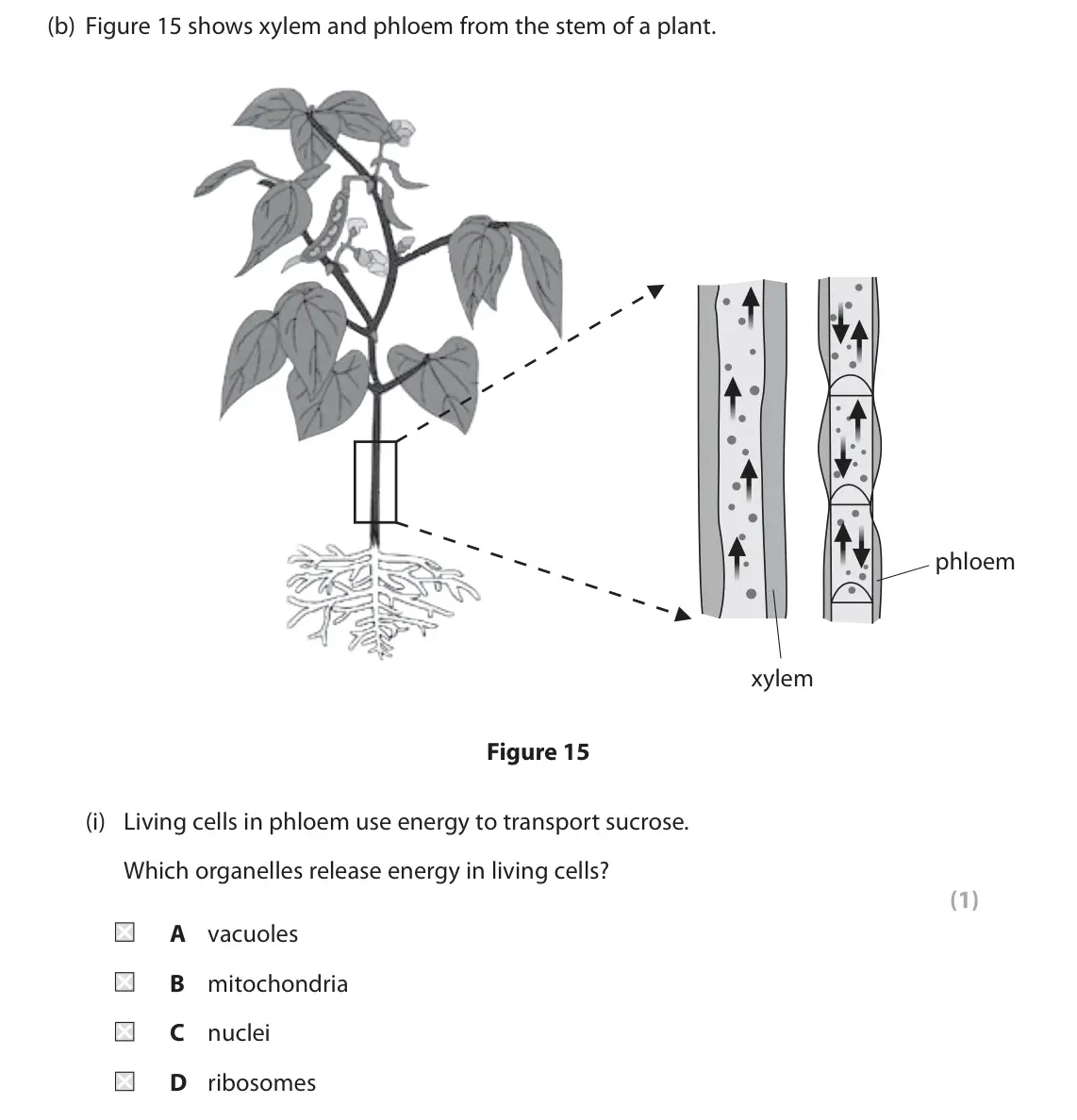
Q8(b)(ii)
The whole paper ↗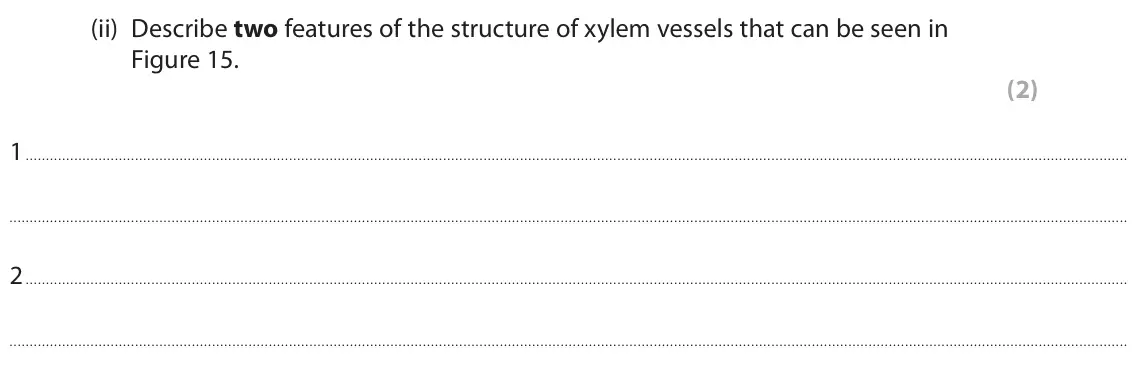
Q2(b)
The whole paper ↗
Q8(c)
The whole paper ↗
Q2(b)(ii)
The whole paper ↗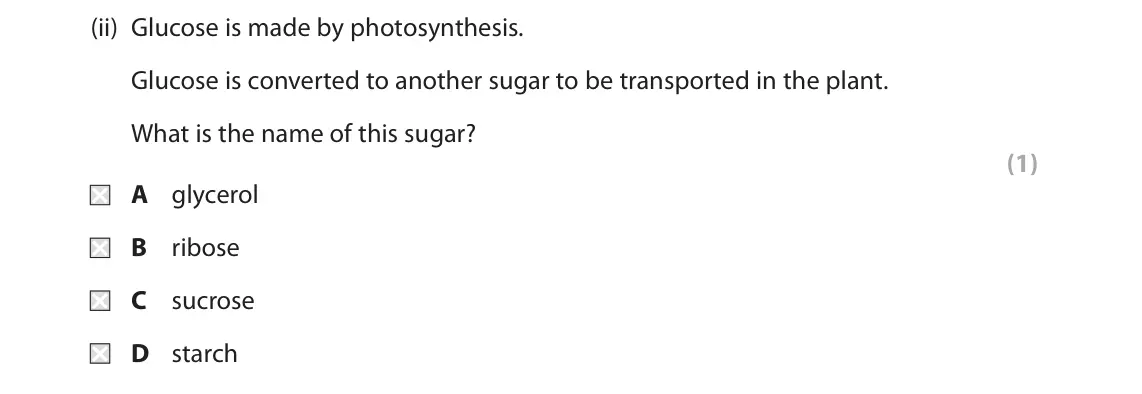
Q2(b)(iii)
The whole paper ↗
All 42 questions on Transport in plants, as a list
- June 2025, Paper 2 Higher, Q3(c) (2 marks): Plants also need water to grow. Explain how water is absorbed into the plant. (2)
- June 2025, Paper 2 Higher, Q6(c) (2 marks): Sugars are transported from the leaves to the rest of the plant. Explain how sugars are moved through the plant. (2)
- June 2025, Paper 2 Foundation, Q2(b)(ii) (1 mark): Which is transported in the phloem? (1) A starch B sucrose C urea D plasma
- June 2024, Paper 2 Higher, Q3(a)(ii) (1 mark): State one way that the structure of the root hair cell increases the volume of substances it absorbs. (1)
- June 2024, Paper 2 Higher, Q3(a)(iii) (3 marks): Explain why root hair cells do not contain chloroplasts. (3)
- June 2024, Paper 2 Higher, Q7(b)(ii) (3 marks): Explain how water moves through the stem of the sunflower plant to the leaves. (3)
- June 2024, Paper 2 Foundation, Q9(a)(i) (1 mark): Name the part labelled X. (1)
- June 2024, Paper 2 Foundation, Q9(a)(ii) (1 mark): State one way that the structure of the root hair cell increases the volume of substances it absorbs. (1)
- June 2024, Paper 2 Foundation, Q9(a)(iii) (3 marks): Explain why root hair cells do not contain chloroplasts. (3)
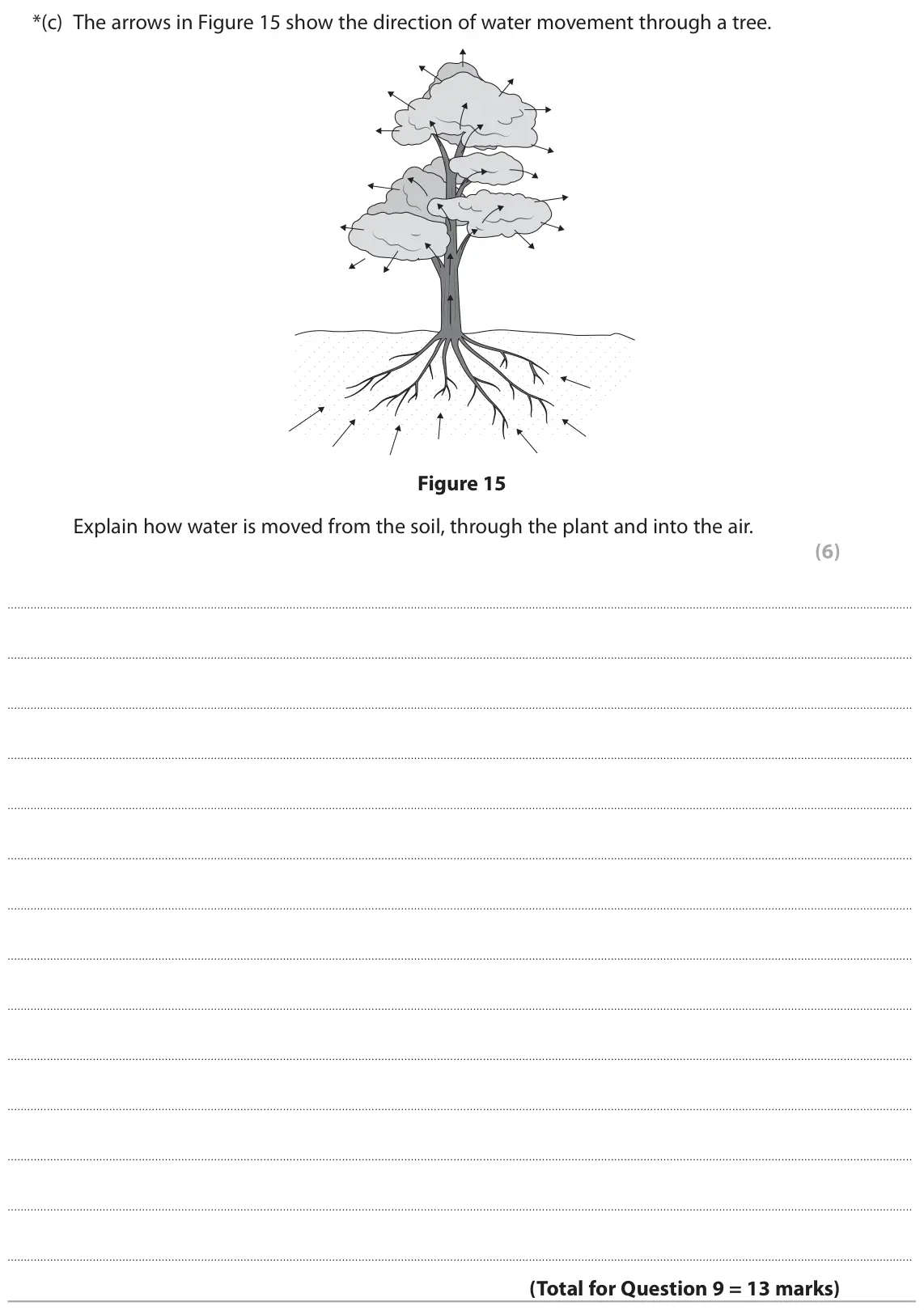
- June 2024, Paper 2 Foundation, Q9(c) (6 marks): The arrows in Figure 15 show the direction of water movement through a tree. Figure 15 Explain how water is moved from the soil, through the plant and into the
- June 2022, Paper 2 Higher, Q2(a)(i) (1 mark): Living cells in phloem use energy to transport sucrose. Which organelles release energy in living cells? (1) A vacuoles B mitochondria C nuclei D ribosomes
- June 2022, Paper 2 Higher, Q2(a)(ii) (2 marks): Describe two features of the structure of xylem vessels that can be seen in Figure 2. (2) 1 2
- June 2022, Paper 2 Foundation, Q8(a)(i) (1 mark): Name the part labelled R. (1)
- June 2022, Paper 2 Foundation, Q8(a)(ii) (2 marks): Explain one adaptation of a root hair cell that increases the absorption of water and mineral ions. (2)
- June 2022, Paper 2 Foundation, Q8(b)(i) (1 mark): Living cells in phloem use energy to transport sucrose. Which organelles release energy in living cells? (1) A vacuoles B mitochondria C nuclei D ribosomes
- June 2022, Paper 2 Foundation, Q8(b)(ii) (2 marks): Describe two features of the structure of xylem vessels that can be seen in Figure 15. (2) 1 2
- November 2021, Paper 2 Higher, Q2(b) (2 marks): The mineral ions are absorbed from the soil into the roots of plants. Describe how these mineral ions are transported from the roots to the leaves of the plants
- November 2021, Paper 2 Foundation, Q8(c) (2 marks): The mineral ions are absorbed from the soil into the roots of plants. Describe how these mineral ions are transported from the roots to the leaves of the plants
- November 2020, Paper 2 Higher, Q2(b)(ii) (1 mark): Glucose is made by photosynthesis. Glucose is converted to another sugar to be transported in the plant. What is the name of this sugar? (1) A glycerol B ribose
- November 2020, Paper 2 Higher, Q2(b)(iii) (2 marks): Describe how this sugar is transported from the leaves to the flowers of the water lily. (2)
- November 2020, Paper 2 Foundation, Q3(a)(i) (1 mark): Label the cell vacuole in Figure 6. (1)
- November 2020, Paper 2 Foundation, Q3(a)(ii) (2 marks): Explain how the structure of root hair cells increases water absorption from the soil. (2)
- November 2020, Paper 2 Foundation, Q8(b)(ii) (1 mark): Glucose is made by photosynthesis. Glucose is converted to another sugar to be transported in the plant. What is the name of this sugar? (1) A glycerol B ribose
- November 2020, Paper 2 Foundation, Q8(b)(iii) (2 marks): Describe how this sugar is transported from the leaves to the flowers of the water lily. (2)
- June 2019, Paper 2 Higher, Q5(a)(i) (1 mark): Water enters a plant through root hair cells. Root hair cells have (1) A a small surface area and thin cell walls B a small surface area and thick cell walls C
- June 2019, Paper 2 Higher, Q5(a)(ii) (2 marks): Explain how water in the root is transported to the leaves of the plant. (2)
- June 2019, Paper 2 Higher, Q5(b) (1 mark): How is sucrose transported from the leaves to other parts of the plant? (1) A by osmosis through the phloem B by osmosis through the xylem C by translocation th
- June 2018, Paper 2 Higher, Q7(a)(i) (2 marks): Describe a control for this investigation. (2)
- June 2018, Paper 2 Higher, Q7(a)(ii) (1 mark): The nitrate fertiliser contains the chemical compound potassium nitrate. The hazard symbol on the bag of potassium nitrate fertiliser is shown in Figure 14. Fig
- June 2018, Paper 2 Higher, Q7(a)(iii) (1 mark): Give a method, other than measuring the change in length, that would show the growth of the seedlings. (1)
- June 2018, Paper 2 Higher, Q7(b)(i) (2 marks): Explain why there are differences in the change in the lengths of the seedlings. (2)
- June 2018, Paper 2 Higher, Q7(b)(ii) (3 marks): Explain how nitrate ions were absorbed by the seedling in test tube 3. (3)
- June 2018, Paper 2 Higher, Q8(c) (6 marks): Explain how substances are moved through a plant by transpiration and translocation. (6)
- June 2018, Paper 2 Foundation, Q4(b)(i) (2 marks): Calculate the surface area to volume ratio of the root hair cell. (2)
- June 2018, Paper 2 Foundation, Q4(b)(ii) (2 marks): Explain the benefit to the plant of having root hair cells. (2)
- June 2018, Paper 2 Foundation, Q9(c) (6 marks): Figure 24 shows xylem and phloem. Xylem and phloem are involved in the transport of substances through a plant. xylem phloem Figure 24 Use Figure 24 to help you
- Specimen, Paper 2 Higher, Q4(c)(ii) (1 mark): The transport vessels are labelled on Figure 9. Which row of the table is correct for the movement of sucrose through the plant? (1) method of transport of stru
- Specimen, Paper 2 Higher, Q10(a)(iii) (2 marks): Explain how this aquatic plant can uptake nitrates from the water in the fish tank. (2) Leguminous plants have nodules on their roots that have colonies of nitr
- Specimen, Paper 2 Foundation, Q5(a)(ii) (1 mark): What structure transports water through the stem of the plant? (1) A guard cell B phloem C stomata D xylem
- Specimen, Paper 2 Foundation, Q9(a)(i) (2 marks): Calculate the percentage change in mass for compost B. (2) %
- Specimen, Paper 2 Foundation, Q9(a)(ii) (2 marks): Explain which compost would be best to use in a pot containing strawberry plants to be grown during a hot summer. (2)
- Specimen, Paper 2 Foundation, Q9(a)(iii) (1 mark): State one way to improve this investigation in order to compare the results without having to calculate the percentage change in mass. (1)
Questions, mark schemes and examiner’s reports are © Pearson Edexcel, from their published past papers. Plumi isn’t affiliated with any exam board. Want whole papers? Every Edexcel GCSE Biology paper.
Rather write your answers by hand on iPad? Plumi marks them against the same mark schemes.