 plumi
Material cycles: Edexcel GCSE Biology questions
Every Edexcel GCSE Biology exam question on Material cycles (specification points 9.12–9.15), 2018–2025, with its mark scheme and examiner’s report.
Find questions1,834
Exam
All years
Calculations
Q4(a)
The whole paper ↗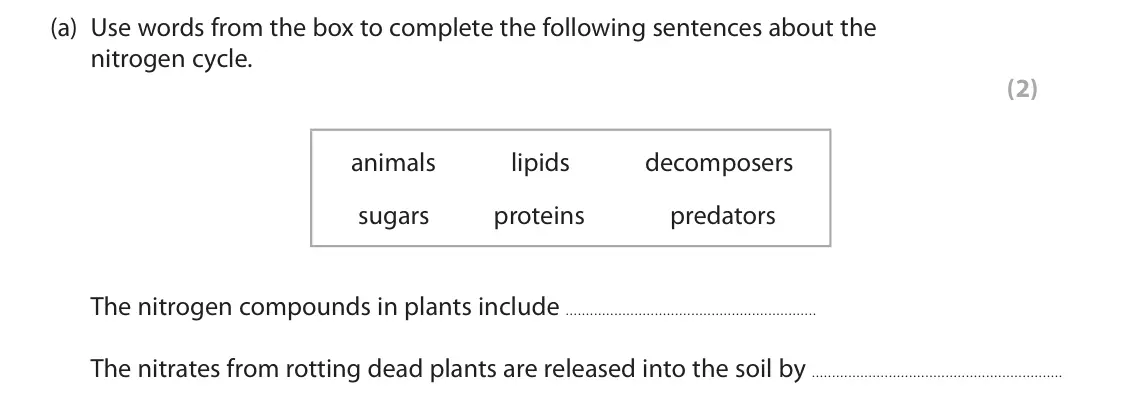
Q4(b)(i)
The whole paper ↗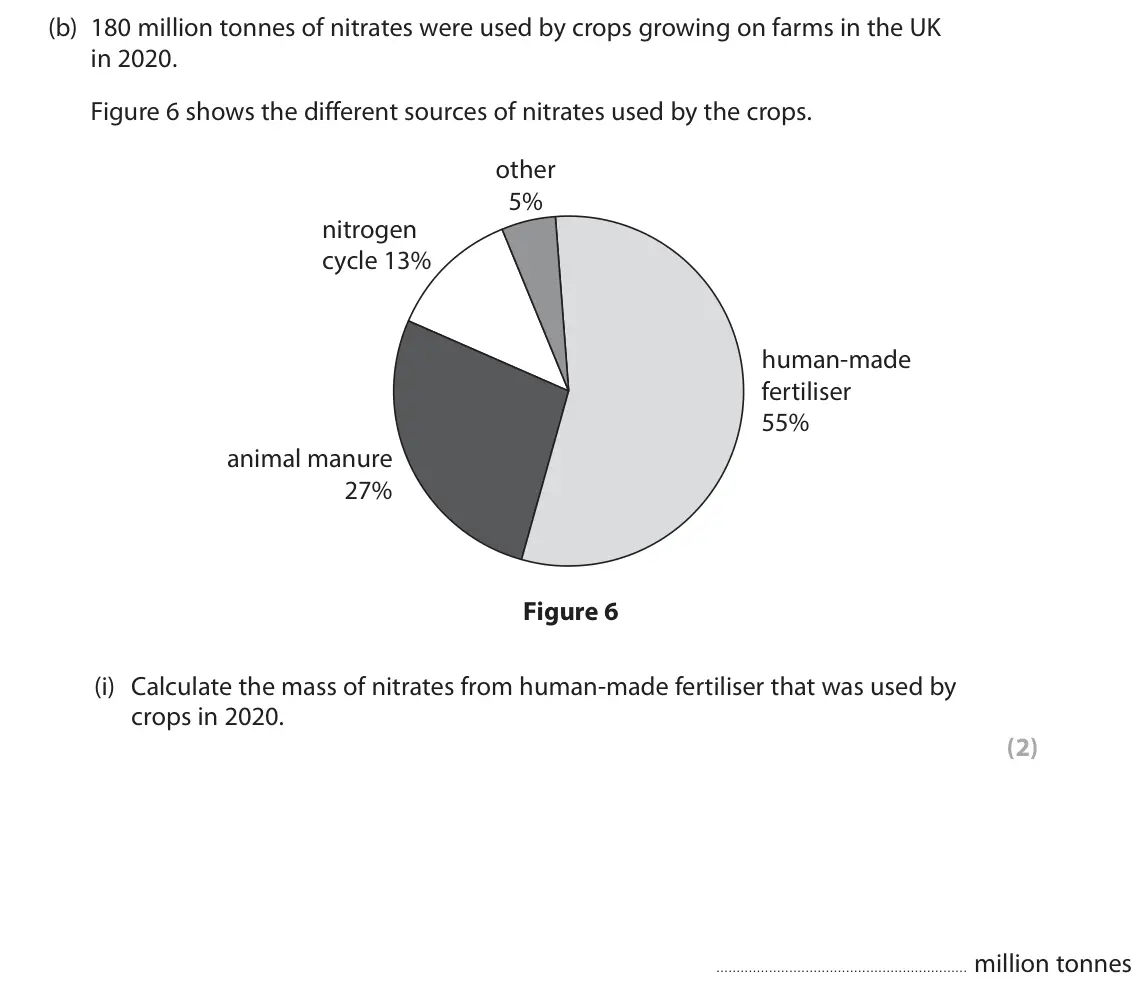
Q5(b)
The whole paper ↗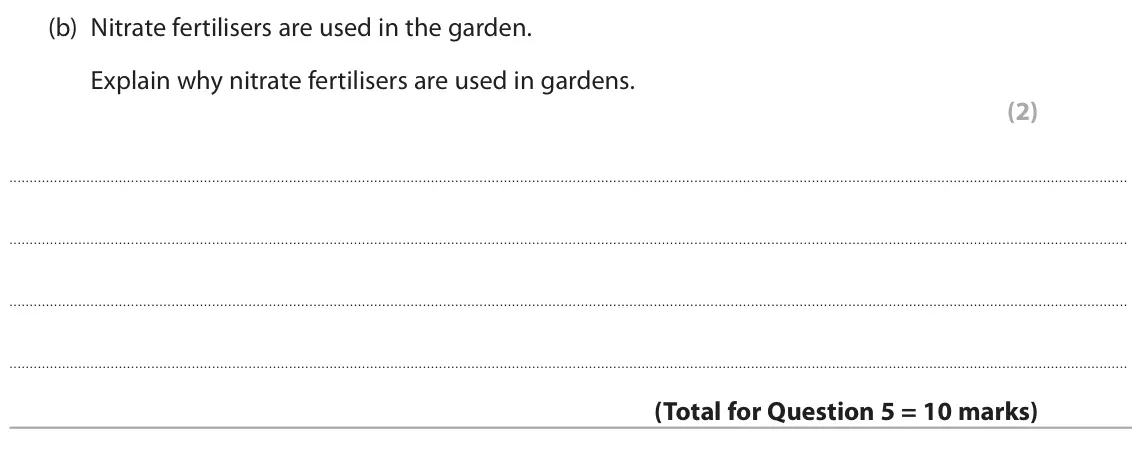
Q10(c)
The whole paper ↗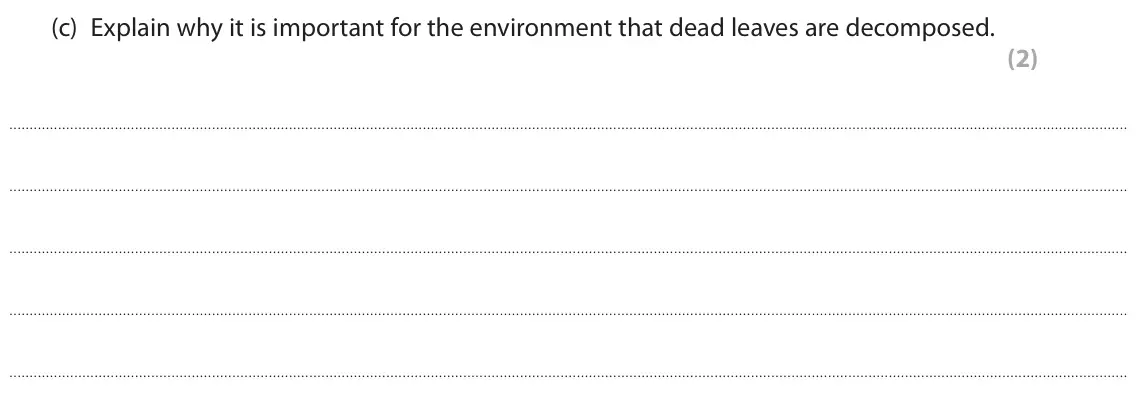
Q9(b)
The whole paper ↗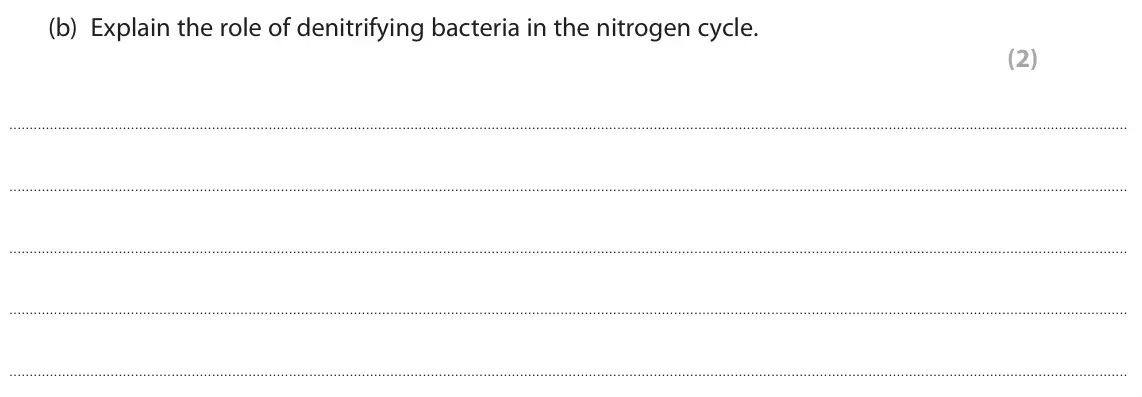
Q9(c)
The whole paper ↗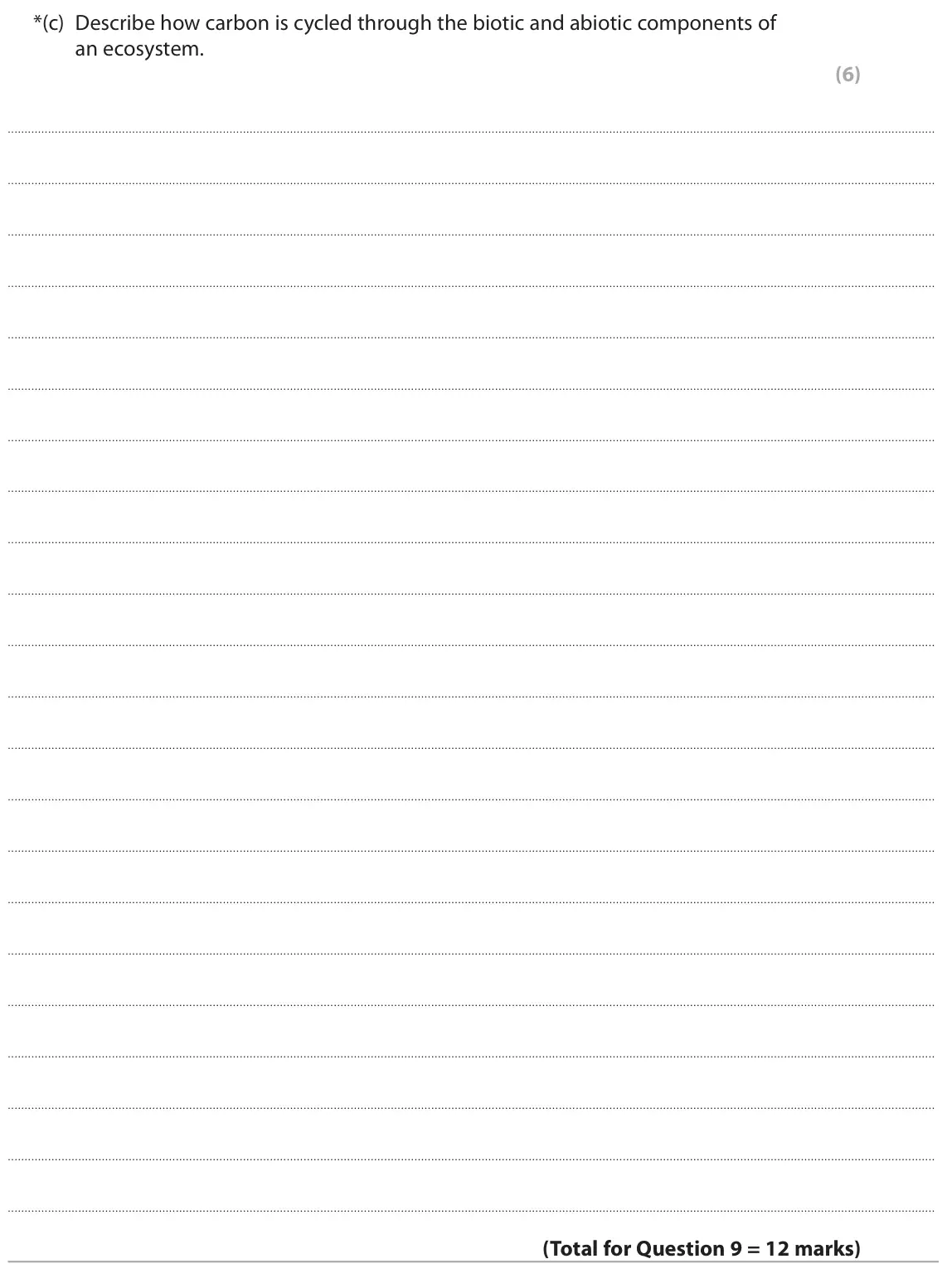
Q1(a)(ii)
The whole paper ↗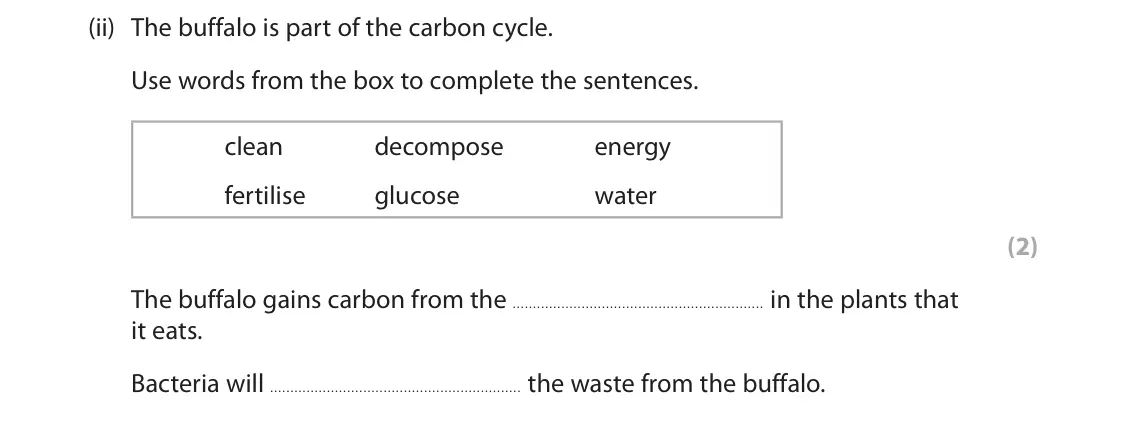
Q1(a)(iii)
The whole paper ↗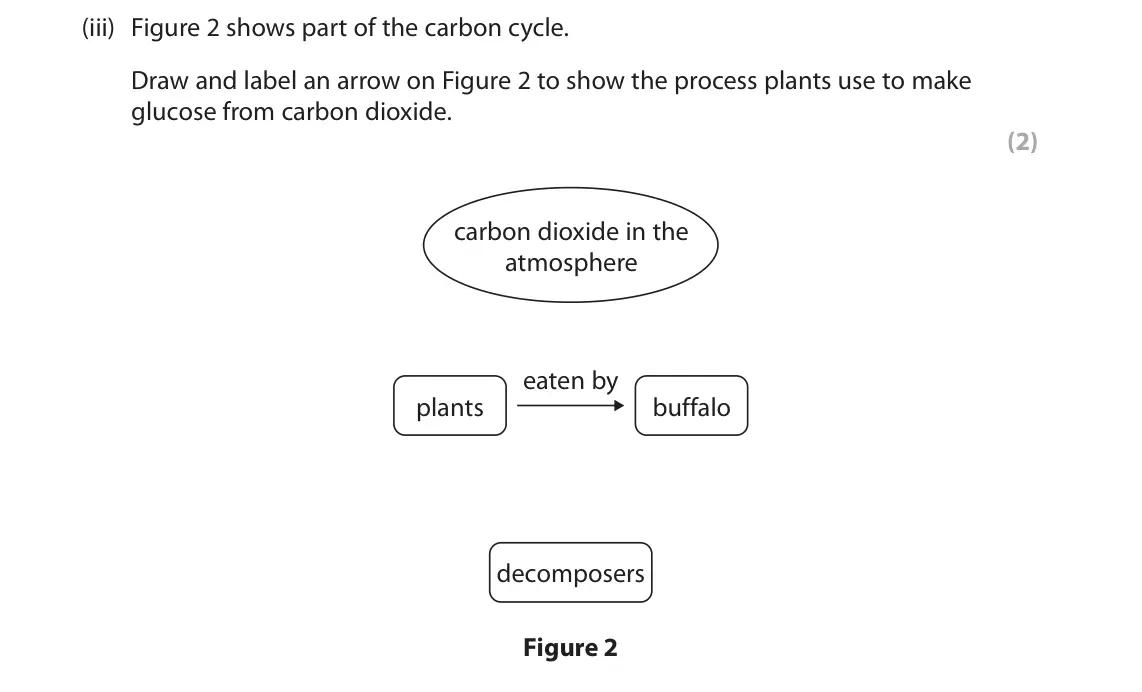
Q5(b)(i)
The whole paper ↗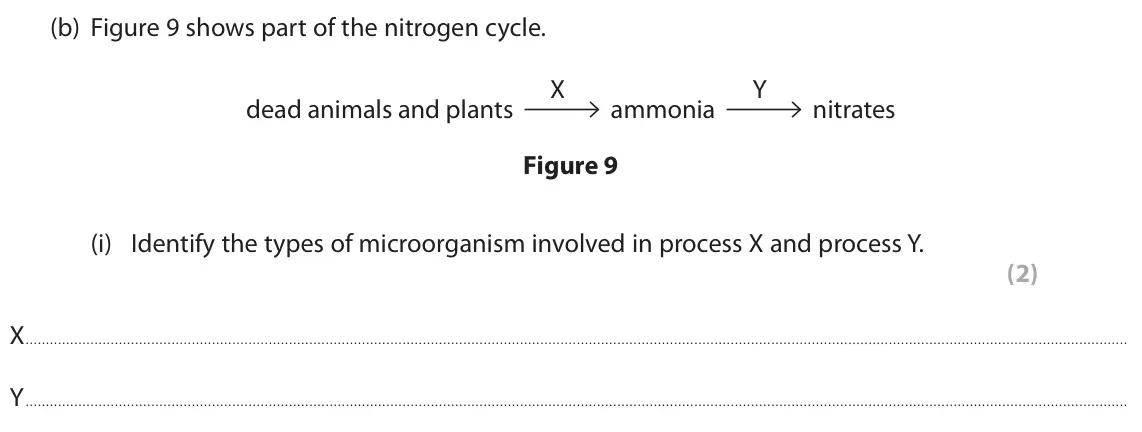
Q5(b)(ii)
The whole paper ↗
Q5(b)(iii)
The whole paper ↗
Q1(a)(i)
The whole paper ↗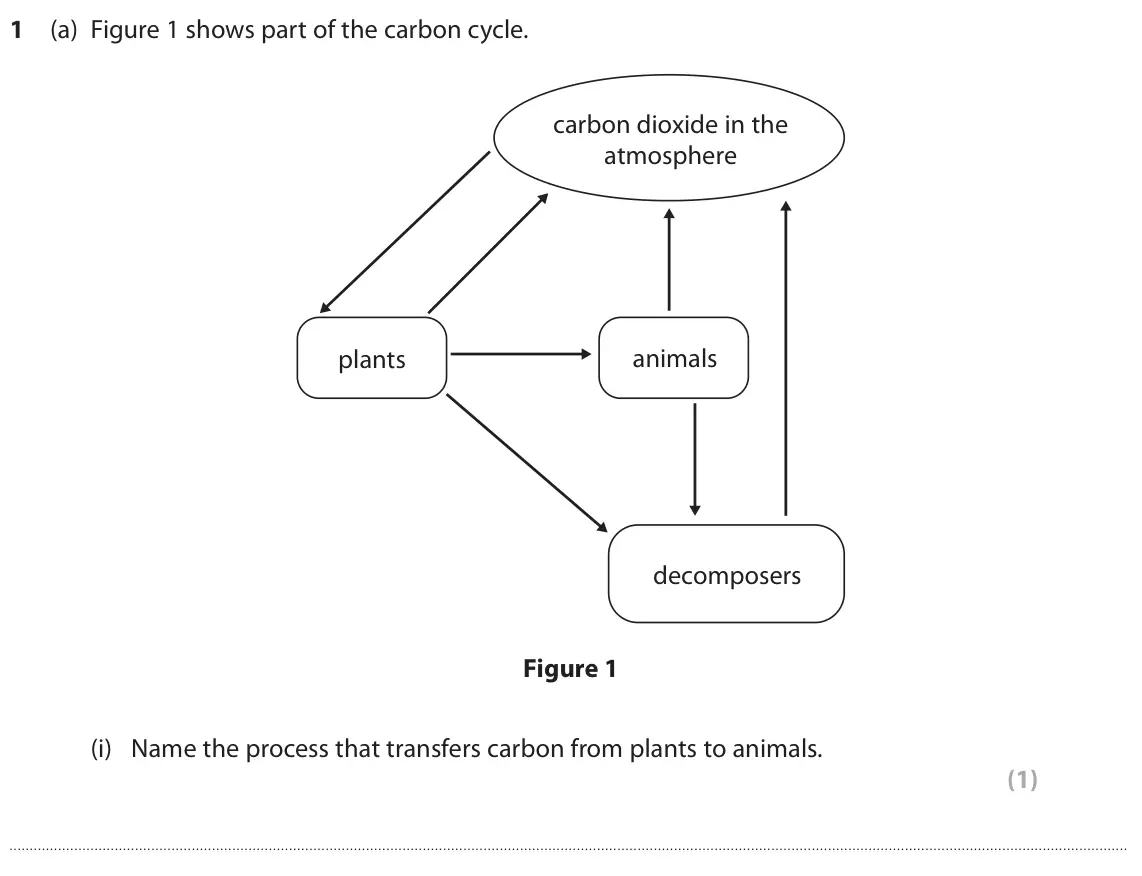
Q1(a)(ii)
The whole paper ↗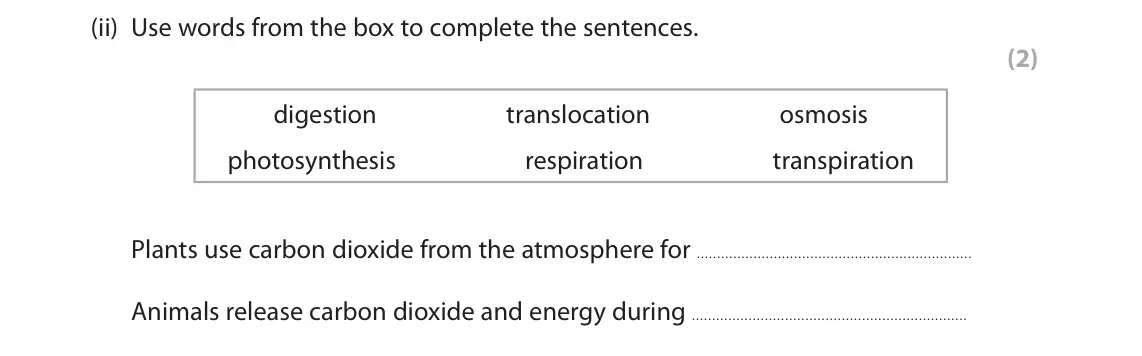
Q1(a)(iii)
The whole paper ↗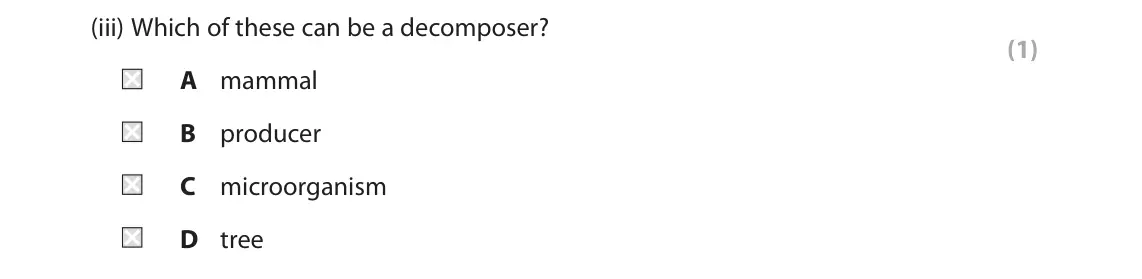
Q1(b)
The whole paper ↗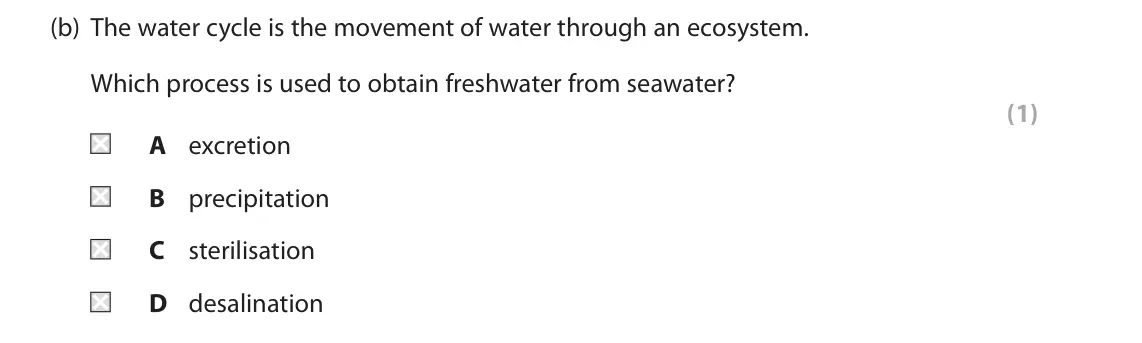
Q1(c)(i)
The whole paper ↗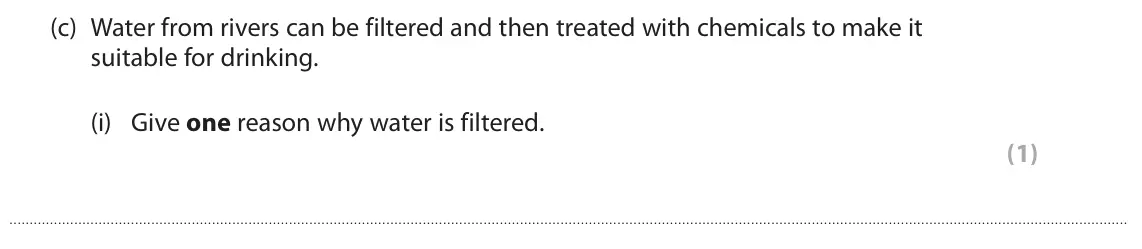
Q1(c)(ii)
The whole paper ↗
Q8(a)
The whole paper ↗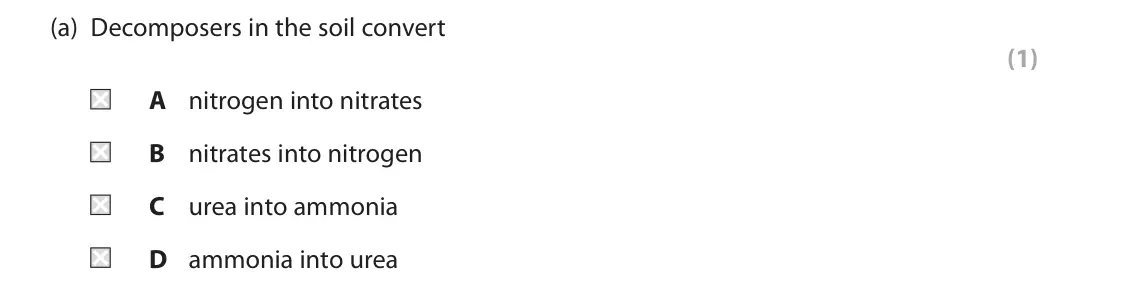
Q8(b)
The whole paper ↗
Q2(b)
The whole paper ↗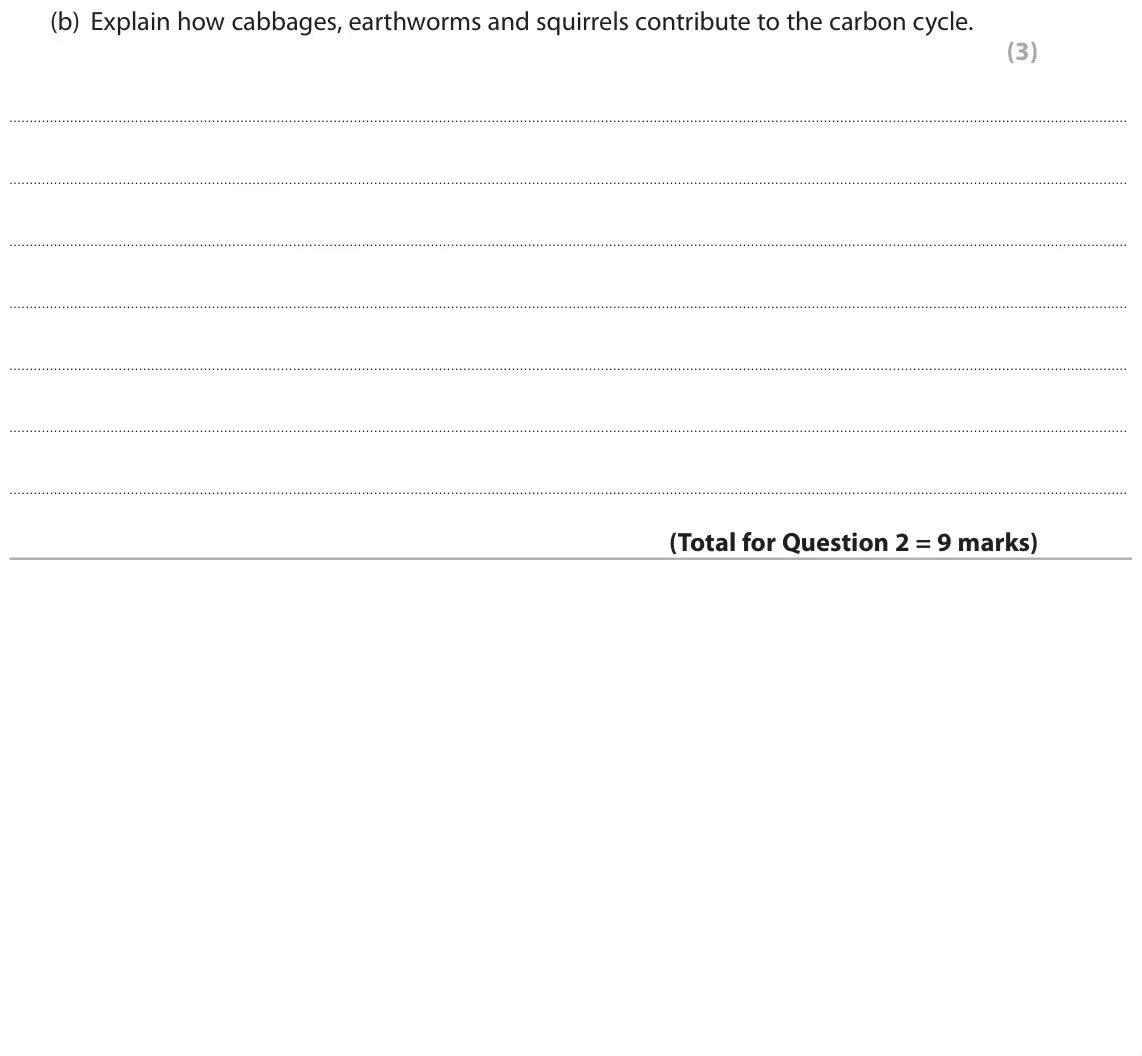
All 34 questions on Material cycles, as a list
- June 2025, Paper 2 Foundation, Q4(a) (2 marks): Use words from the box to complete the following sentences about the nitrogen cycle. (2) animals lipids decomposers sugars proteins predators The nitrogen compo
- June 2025, Paper 2 Foundation, Q4(b)(i) (2 marks): Calculate the mass of nitrates from human-made fertiliser that was used by crops in 2020. (2) million tonnes
- June 2024, Paper 2 Higher, Q5(b) (2 marks): Nitrate fertilisers are used in the garden. Explain why nitrate fertilisers are used in gardens. (2)
- June 2024, Paper 2 Foundation, Q10(c) (2 marks): Explain why it is important for the environment that dead leaves are decomposed. (2)
- June 2023, Paper 2 Higher, Q9(b) (2 marks): Explain the role of denitrifying bacteria in the nitrogen cycle. (2)
- June 2023, Paper 2 Higher, Q9(c) (6 marks): Describe how carbon is cycled through the biotic and abiotic components of an ecosystem. (6)
- June 2023, Paper 2 Foundation, Q1(a)(ii) (2 marks): The buffalo is part of the carbon cycle. Use words from the box to complete the sentences. clean decompose energy fertilise glucose water (2) The buffalo gains
- June 2023, Paper 2 Foundation, Q1(a)(iii) (2 marks): Figure 2 shows part of the carbon cycle. Draw and label an arrow on Figure 2 to show the process plants use to make glucose from carbon dioxide. (2) carbon diox
- June 2022, Paper 2 Higher, Q5(b)(i) (2 marks): Identify the types of microorganism involved in process X and process Y. (2) X. Y
- June 2022, Paper 2 Higher, Q5(b)(ii) (3 marks): Explain how crop rotation increases nitrate levels in the soil. (3)
- June 2022, Paper 2 Higher, Q5(b)(iii) (2 marks): Explain why increased nitrate levels in the soil improve crop yield. (2)
- June 2022, Paper 2 Foundation, Q1(a)(i) (1 mark): Name the process that transfers carbon from plants to animals. (1)
- June 2022, Paper 2 Foundation, Q1(a)(ii) (2 marks): Use words from the box to complete the sentences. (2) digestion translocation osmosis photosynthesis respiration transpiration Plants use carbon dioxide from th
- June 2022, Paper 2 Foundation, Q1(a)(iii) (1 mark): Which of these can be a decomposer? (1) A mammal B producer C microorganism D tree
- June 2022, Paper 2 Foundation, Q1(b) (1 mark): The water cycle is the movement of water through an ecosystem. Which process is used to obtain freshwater from seawater? (1) A excretion B precipitation C steri
- June 2022, Paper 2 Foundation, Q1(c)(i) (1 mark): Give one reason why water is filtered. (1)
- June 2022, Paper 2 Foundation, Q1(c)(ii) (1 mark): Give one reason why water is treated with chemicals. (1)
- November 2021, Paper 2 Higher, Q8(a) (1 mark): Decomposers in the soil convert (1) A nitrogen into nitrates B nitrates into nitrogen C urea into ammonia D ammonia into urea
- November 2021, Paper 2 Foundation, Q8(b) (1 mark): Name a group of organisms that break down the dead leaves and release mineral ions into the soil. (1)
- June 2019, Paper 2 Higher, Q2(b) (3 marks): Explain how cabbages, earthworms and squirrels contribute to the carbon cycle. (3)
- June 2019, Paper 2 Higher, Q10(a) (2 marks): Figure 12 shows the global movement of carbon into or out of the atmosphere. movement of carbon process into or out of the atmosphere in gigatonnes per year pho
- June 2019, Paper 2 Higher, Q10(c) (4 marks): Nitrogen is cycled through the environment. Describe the roles of bacteria in the nitrogen cycle. (4)
- June 2019, Paper 2 Foundation, Q1(a)(i) (2 marks): Name process G and process H. (2) process G process H
- June 2019, Paper 2 Foundation, Q1(a)(ii) (1 mark): What causes the water vapour to condense and form clouds? (1) A the water vapour cools down B the water vapour heats up C the temperature of the water vapour st
- June 2019, Paper 2 Foundation, Q1(b) (2 marks): Water from rivers is treated before it is safe to drink. Use words from the box to complete the sentences. (2) filtering fish heating mud pathogens stirring Dur
- June 2019, Paper 2 Foundation, Q1(c) (2 marks): Figure 2 shows the Canary Islands. Atlantic Ocean Tenerife Gran Canaria Figure 2 The Canary Islands do not have enough fresh water. Describe how seawater can be
- June 2019, Paper 2 Foundation, Q8(b) (3 marks): Explain how cabbages, earthworms and squirrels contribute to the carbon cycle. (3)
- June 2019, Paper 2 Foundation, Q8(c) (3 marks): State three ways the concentration of nitrates in soil can be increased. (3) 1 2 3
- June 2018, Paper 2 Higher, Q7(c) (3 marks): Farmers use crop rotation to reduce the need to add nitrate fertilisers to the soil. Plants such as peas and beans have a mutualistic relationship with nitrogen
- June 2018, Paper 2 Foundation, Q4(a)(i) (1 mark): What effects will a low nitrate ion concentration in soils have on plants? (1) A reduced growth and darker green leaves B reduced growth and lighter green leave
- June 2018, Paper 2 Foundation, Q4(a)(ii) (1 mark): Which organisms convert nitrogen to nitrate ions during the nitrogen cycle? (1) A bacteria B mammals C fungi D worms
- Specimen, Paper 2 Higher, Q10(a)(i) (1 mark): Nitrosomonas bacteria are an example of (1) A nitrogen fixing bacteria B nitrifying bacteria C denitrifying bacteria D Helicobacter bacteria
- Specimen, Paper 2 Higher, Q10(a)(ii) (2 marks): Explain why Nitrosomonas and Nitrobacter bacteria are needed in tropical fish tanks. (2) An aquatic plant in the fish tank had a concentration of nitrates highe
- Specimen, Paper 2 Higher, Q10(c) (4 marks): Explain how leguminous plants such as clover could be used to reduce the amount of artificial fertilisers. (4)
Questions, mark schemes and examiner’s reports are © Pearson Edexcel, from their published past papers. Plumi isn’t affiliated with any exam board. Want whole papers? Every Edexcel GCSE Biology paper.
Rather write your answers by hand on iPad? Plumi marks them against the same mark schemes.