 plumi
Energy transfer between trophic levels: Edexcel GCSE Biology questions
Every Edexcel GCSE Biology exam question on Energy transfer between trophic levels (specification points 9.7–9.8), 2018–2025, with its mark scheme and examiner’s report.
Find questions1,834
Exam
All years
Calculations
Q7(a)(i)
The whole paper ↗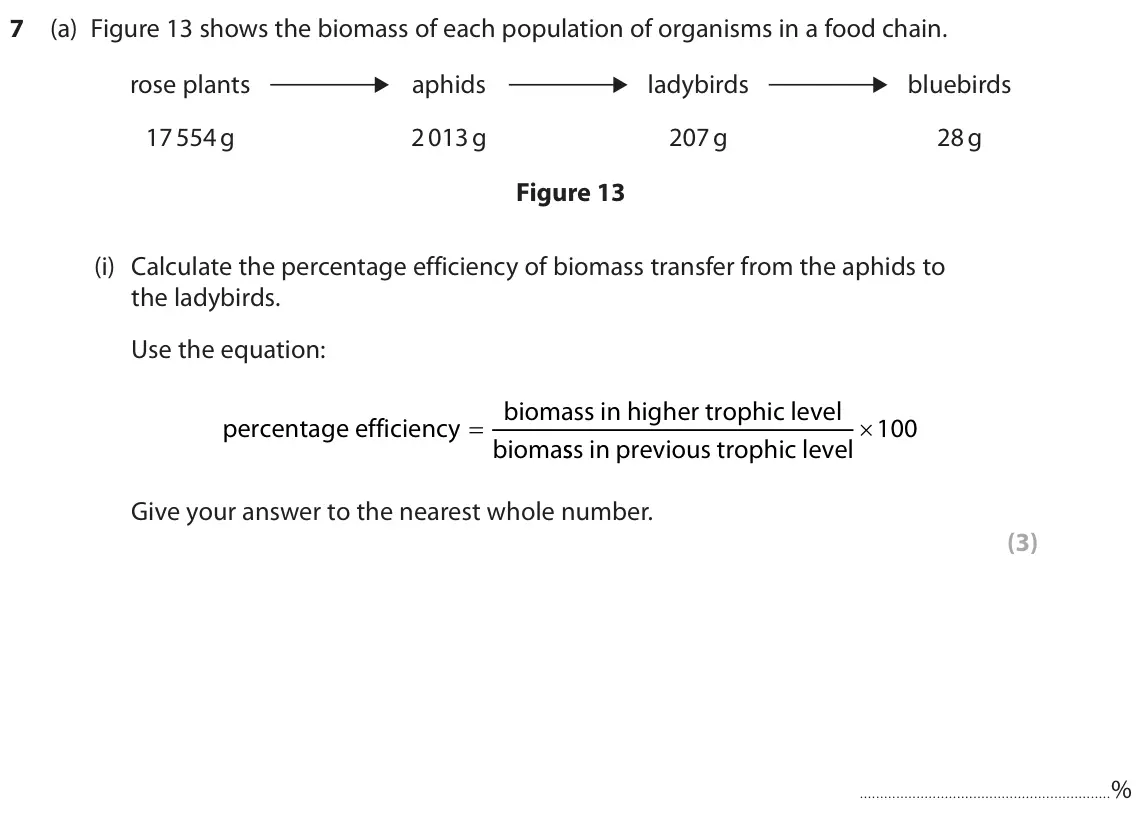
Q7(a)(ii)
The whole paper ↗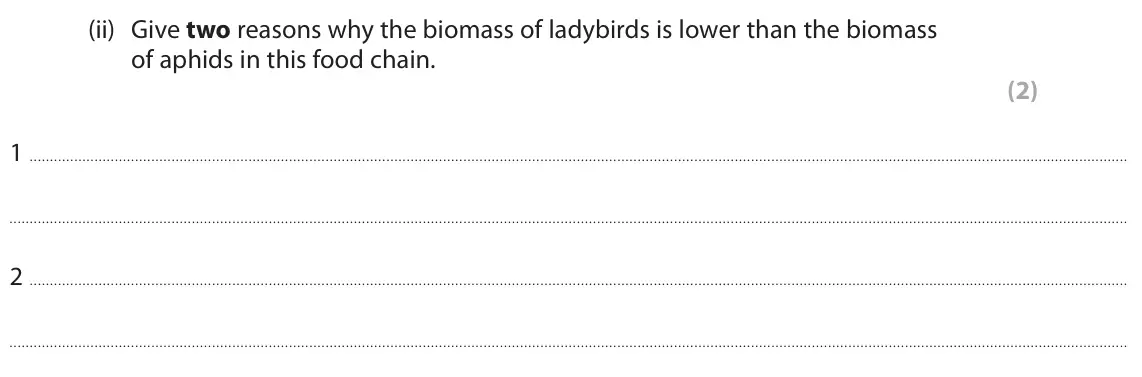
Q4(e)
The whole paper ↗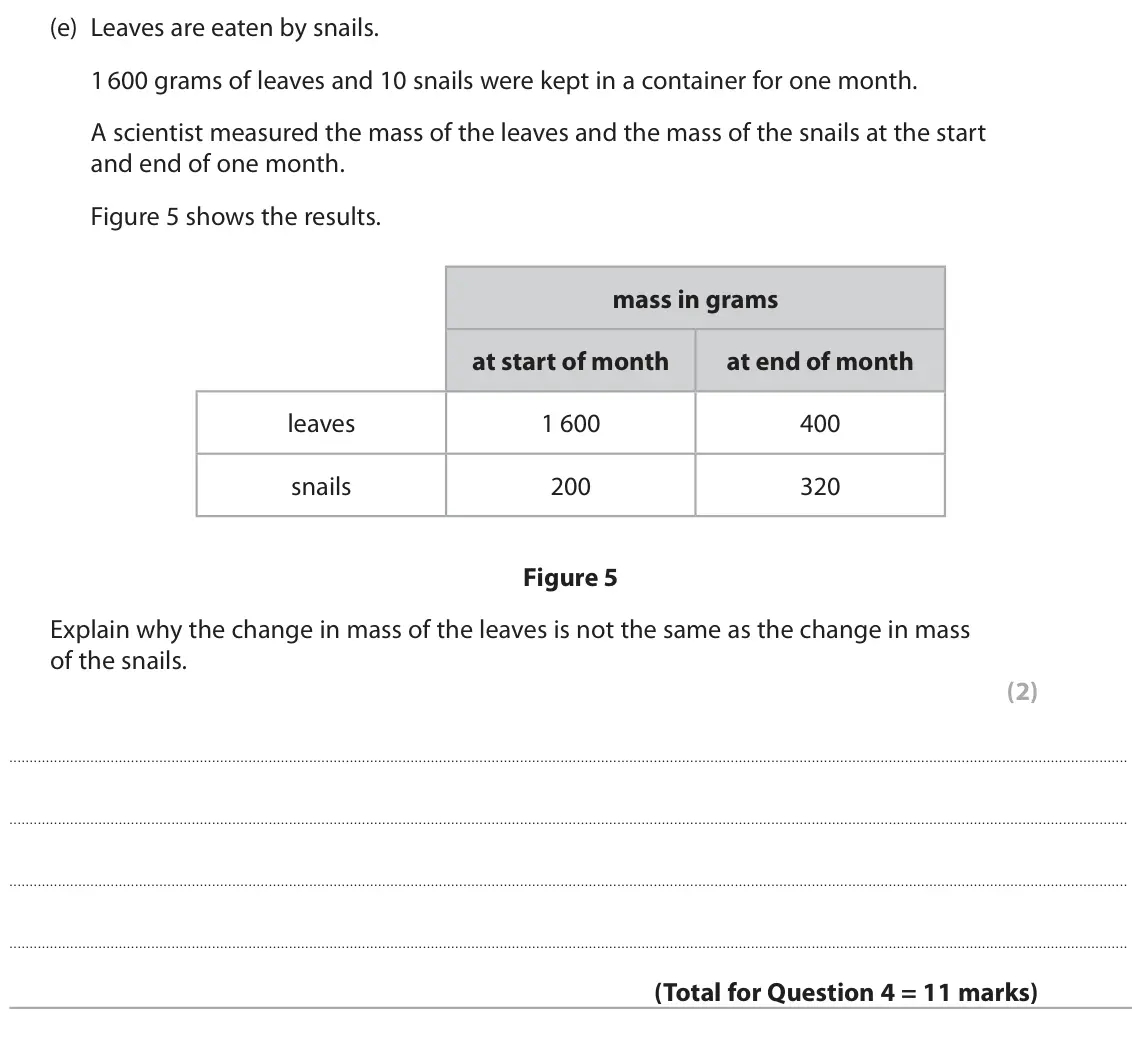
Q3(a)
The whole paper ↗
Q3(b)
The whole paper ↗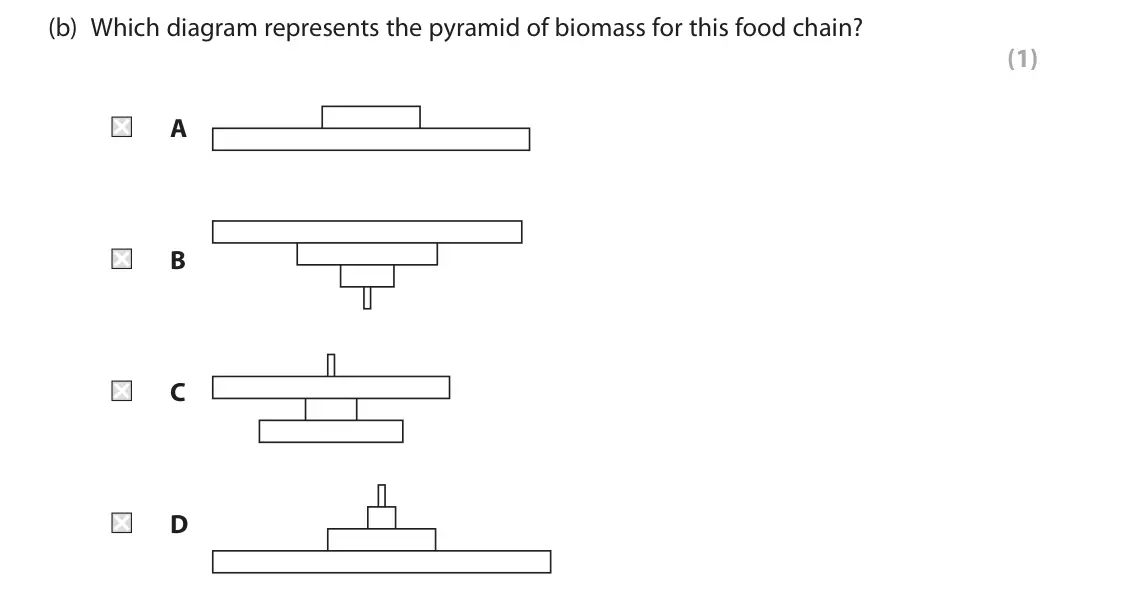
Q3(c)
The whole paper ↗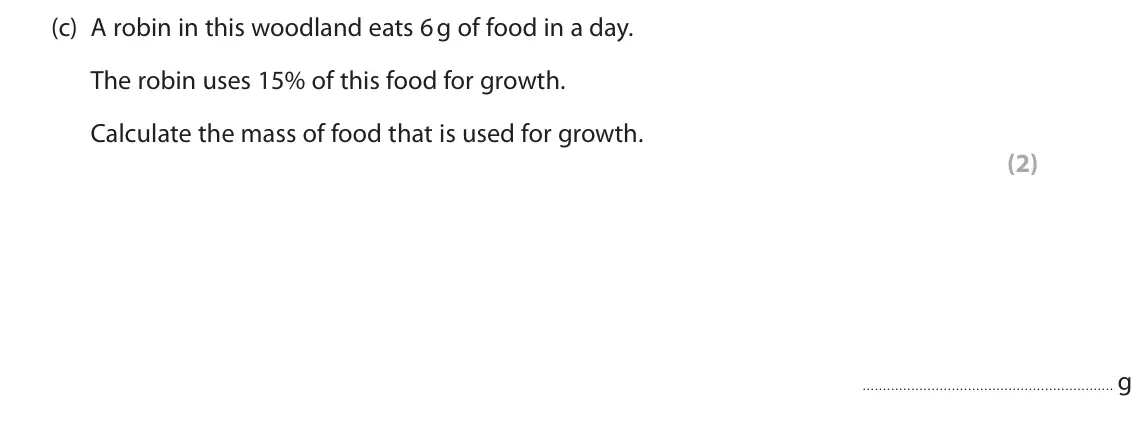
Q10(e)
The whole paper ↗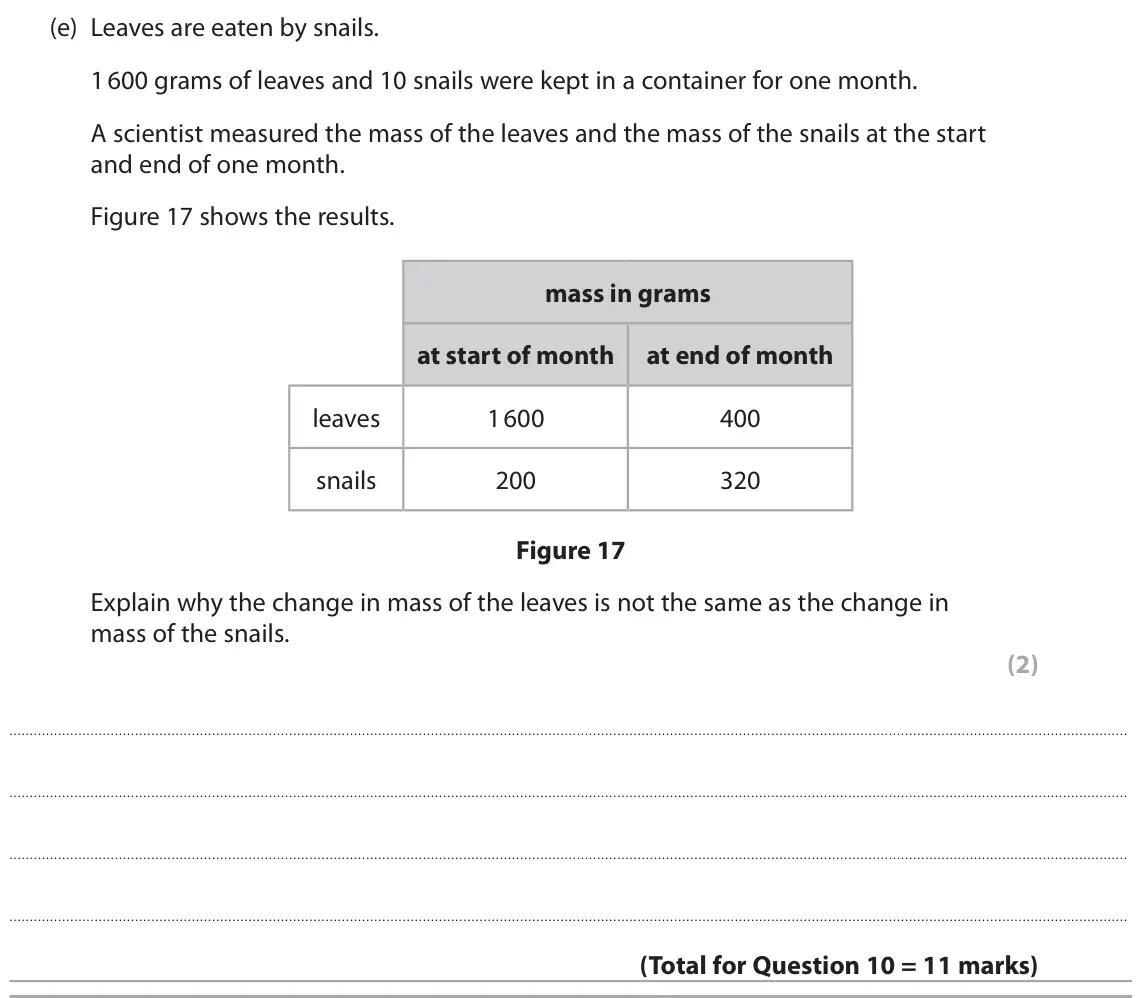
Q7(c)(i)
The whole paper ↗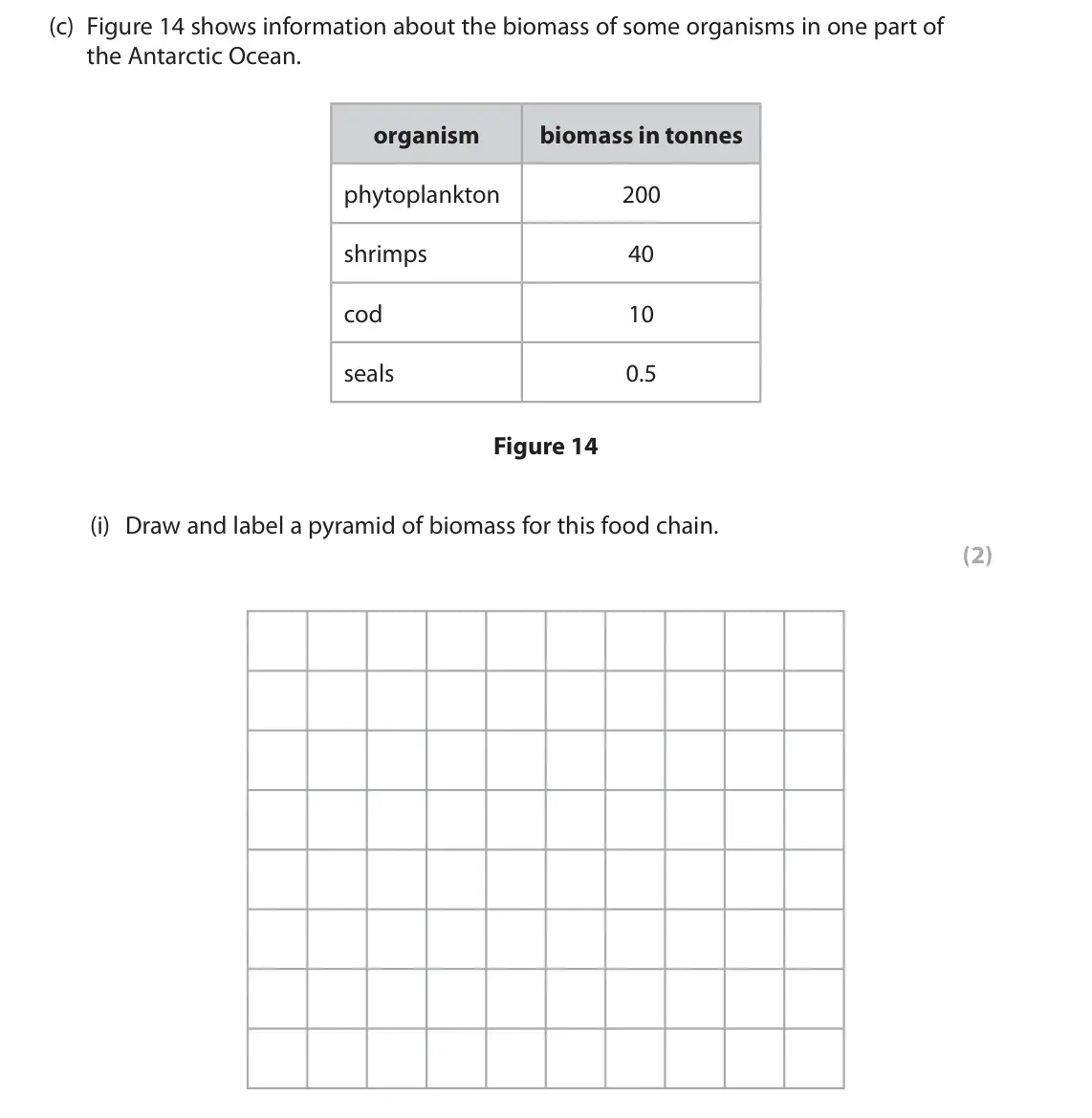
Q7(c)(ii)
The whole paper ↗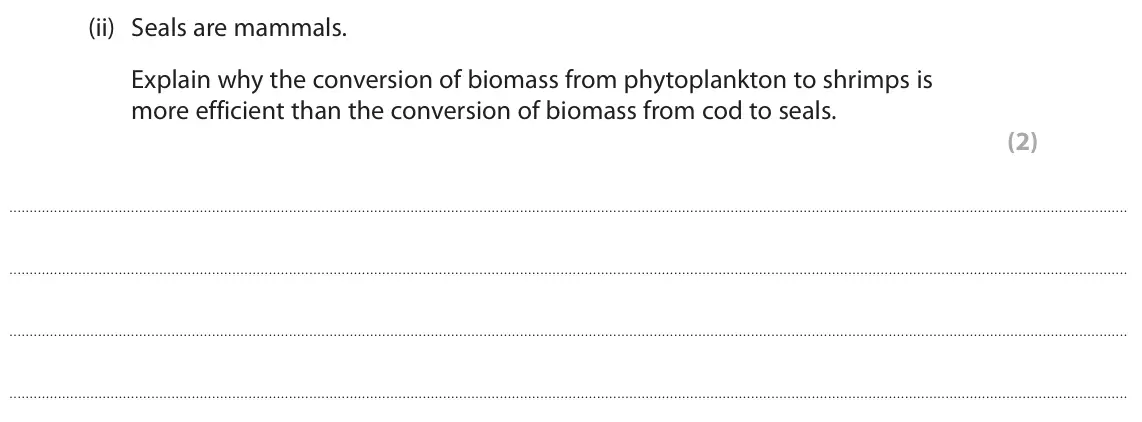
Q4(c)(i)
The whole paper ↗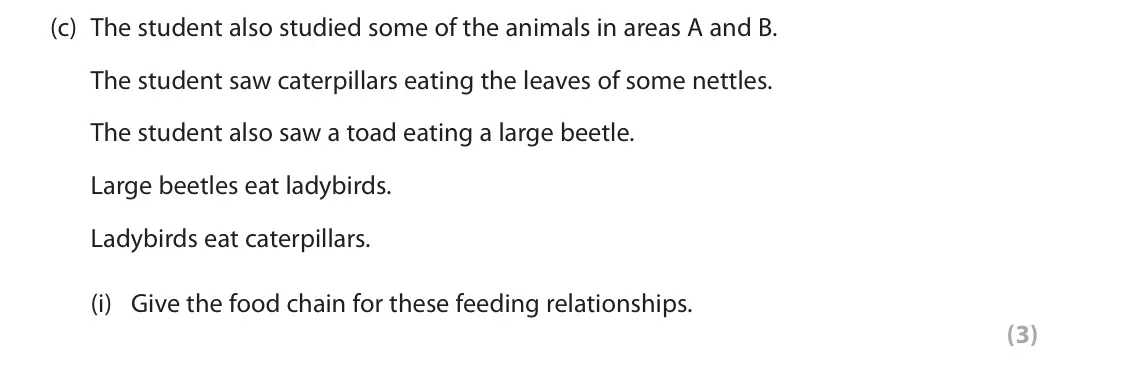
Q4(c)(ii)
The whole paper ↗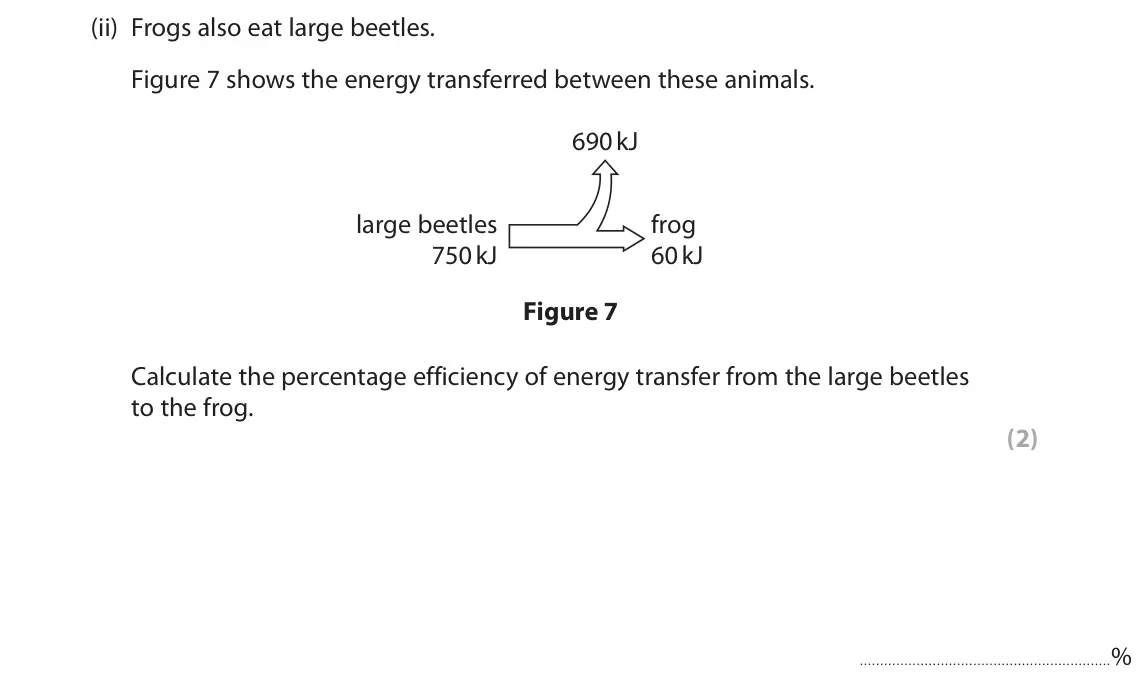
Q4(c)(iii)
The whole paper ↗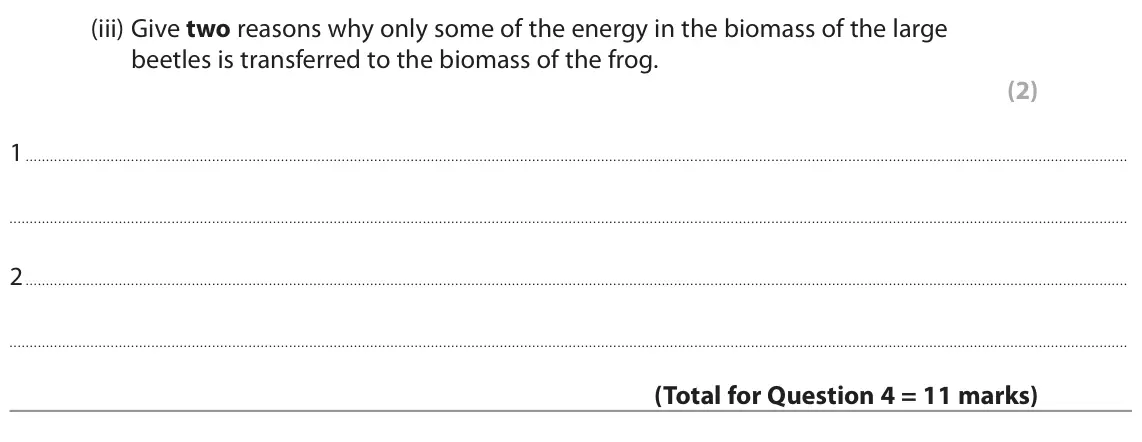
Q10(c)(i)
The whole paper ↗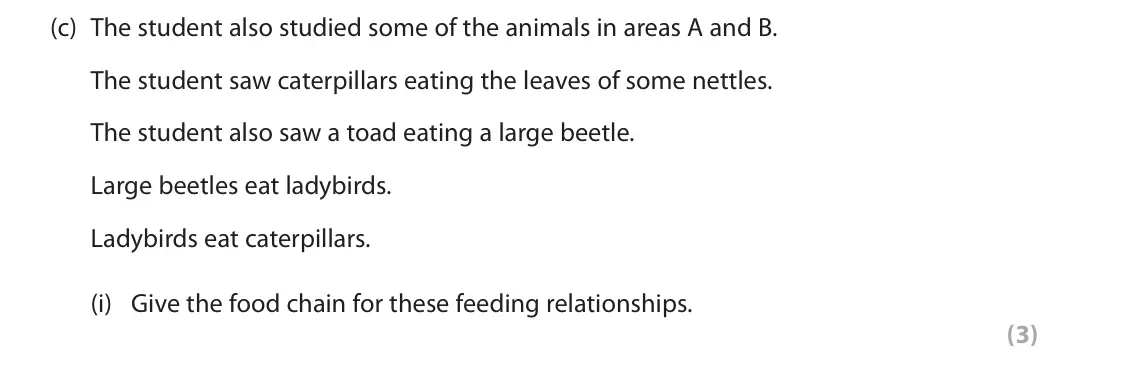
Q10(c)(ii)
The whole paper ↗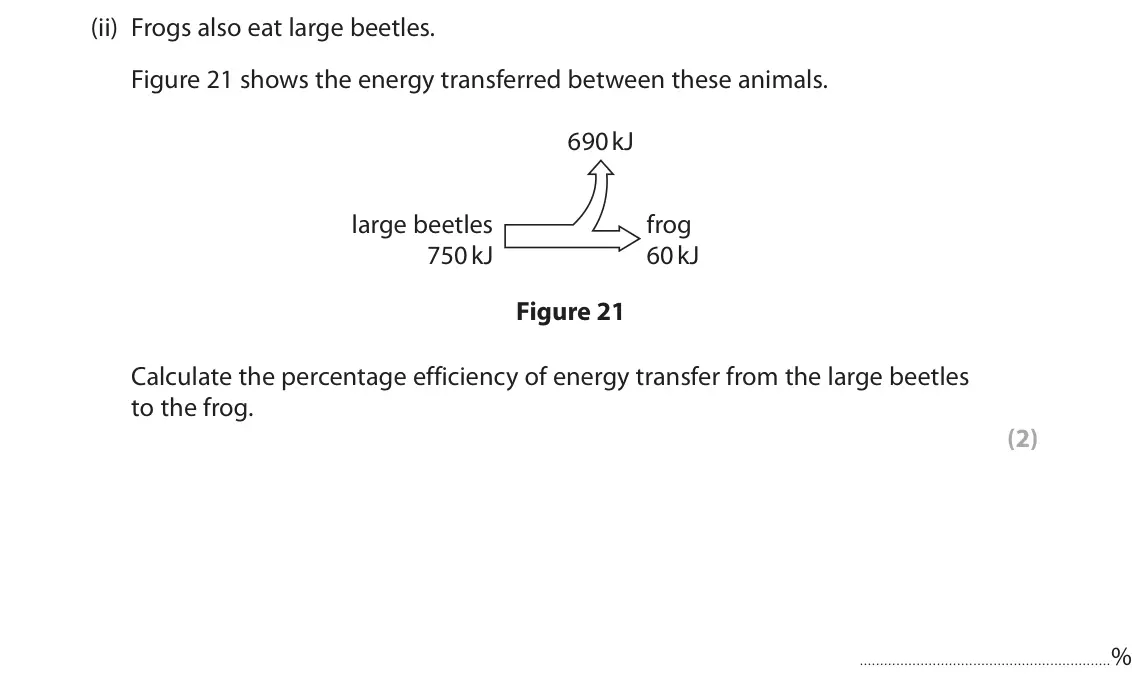
Q10(c)(iii)
The whole paper ↗
Q3(b)(i)
The whole paper ↗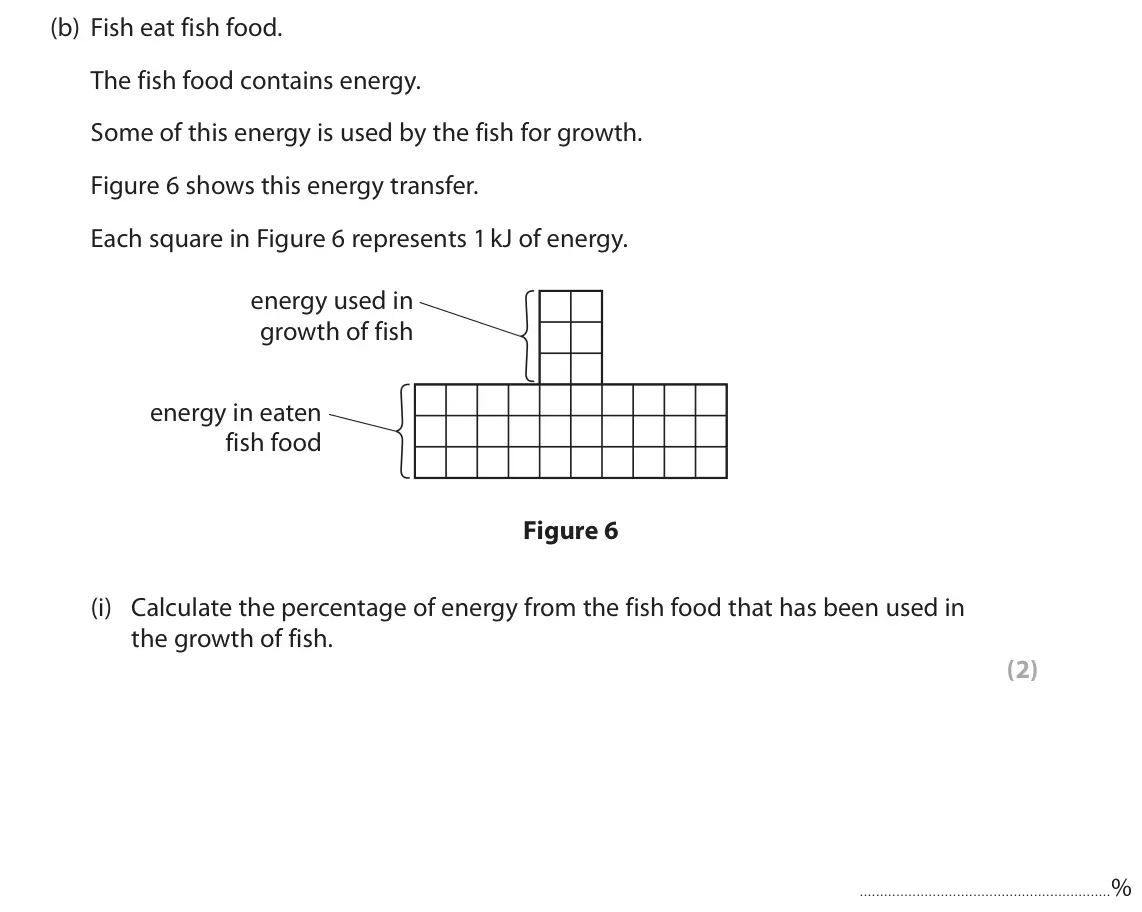
Q3(b)(ii)
The whole paper ↗
Q4(d)(i)
The whole paper ↗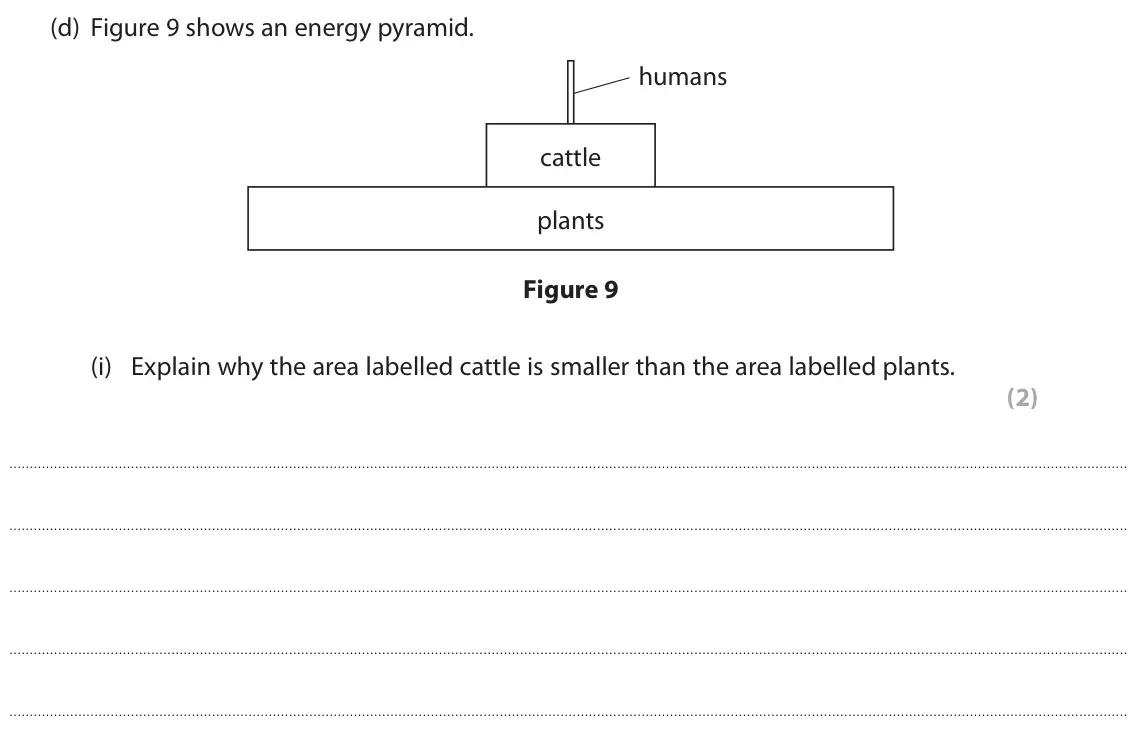
Q2(c)(ii)
The whole paper ↗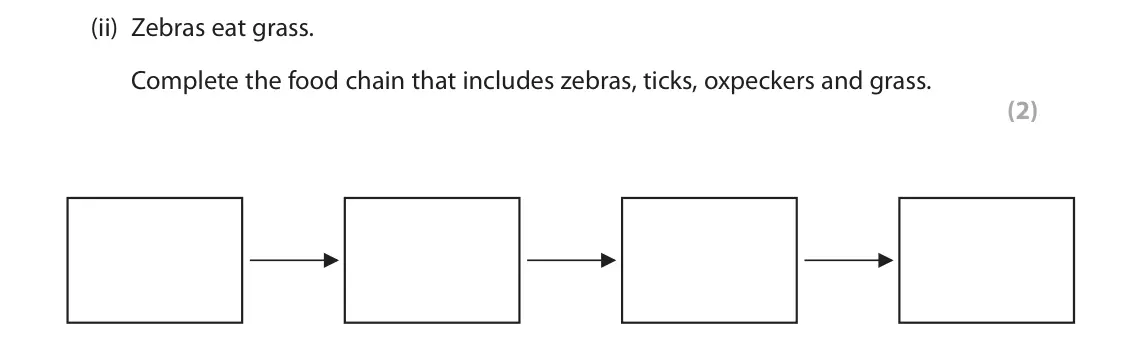
Q10(d)(i)
The whole paper ↗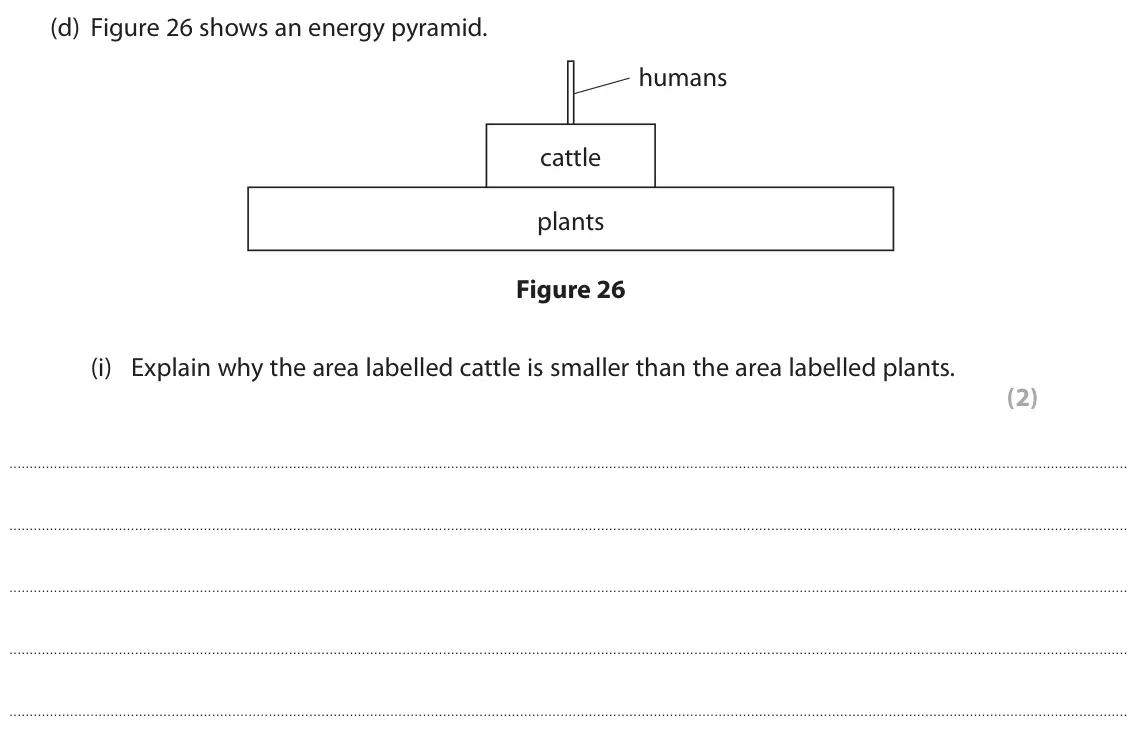
All 32 questions on Energy transfer between trophic levels, as a list
- June 2025, Paper 2 Higher, Q7(a)(i) (3 marks): Calculate the percentage efficiency of biomass transfer from the aphids to the ladybirds. Use the equation: biomass in higher trophic level percentage efficienc
- June 2025, Paper 2 Higher, Q7(a)(ii) (2 marks): Give two reasons why the biomass of ladybirds is lower than the biomass of aphids in this food chain. (2) 1 2
- June 2024, Paper 2 Higher, Q4(e) (2 marks): Leaves are eaten by snails. 1 600 grams of leaves and 10 snails were kept in a container for one month. A scientist measured the mass of the leaves and the mass
- June 2024, Paper 2 Foundation, Q3(a) (1 mark): State what the arrows in the food chain represent. (1)
- June 2024, Paper 2 Foundation, Q3(b) (1 mark): Which diagram represents the pyramid of biomass for this food chain? (1) A B C D
- June 2024, Paper 2 Foundation, Q3(c) (2 marks): A robin in this woodland eats 6 g of food in a day. The robin uses 15% of this food for growth. Calculate the mass of food that is used for growth. (2) g
- June 2024, Paper 2 Foundation, Q10(e) (2 marks): Leaves are eaten by snails. 1 600 grams of leaves and 10 snails were kept in a container for one month. A scientist measured the mass of the leaves and the mass
- June 2023, Paper 2 Higher, Q7(c)(i) (2 marks): Draw and label a pyramid of biomass for this food chain. (2)
- June 2023, Paper 2 Higher, Q7(c)(ii) (2 marks): Seals are mammals. Explain why the conversion of biomass from phytoplankton to shrimps is more efficient than the conversion of biomass from cod to seals. (2)
- June 2022, Paper 2 Higher, Q4(c)(i) (3 marks): Give the food chain for these feeding relationships. (3)
- June 2022, Paper 2 Higher, Q4(c)(ii) (2 marks): Frogs also eat large beetles. Figure 7 shows the energy transferred between these animals. 690 kJ large beetles frog 750 kJ 60 kJ Figure 7 Calculate the percent
- June 2022, Paper 2 Higher, Q4(c)(iii) (2 marks): Give two reasons why only some of the energy in the biomass of the large beetles is transferred to the biomass of the frog. (2) 1 2
- June 2022, Paper 2 Foundation, Q10(c)(i) (3 marks): Give the food chain for these feeding relationships. (3)
- June 2022, Paper 2 Foundation, Q10(c)(ii) (2 marks): Frogs also eat large beetles. Figure 21 shows the energy transferred between these animals. 690 kJ large beetles frog 750 kJ 60 kJ Figure 21 Calculate the perce
- June 2022, Paper 2 Foundation, Q10(c)(iii) (2 marks): Give two reasons why only some of the energy in the biomass of the large beetles is transferred to the biomass of the frog. (2) 1 2
- November 2021, Paper 2 Foundation, Q3(b)(i) (2 marks): Calculate the percentage of energy from the fish food that has been used in the growth of fish. (2) %
- November 2021, Paper 2 Foundation, Q3(b)(ii) (2 marks): Describe what happened to the fish food that was eaten but was not used in the growth of the fish. (2)
- November 2020, Paper 2 Higher, Q4(d)(i) (2 marks): Explain why the area labelled cattle is smaller than the area labelled plants. (2)
- November 2020, Paper 2 Foundation, Q2(c)(ii) (2 marks): Zebras eat grass. Complete the food chain that includes zebras, ticks, oxpeckers and grass. (2)
- November 2020, Paper 2 Foundation, Q10(d)(i) (2 marks): Explain why the area labelled cattle is smaller than the area labelled plants. (2)
- June 2019, Paper 2 Higher, Q2(a)(i) (1 mark): Calculate the biomass of the population of earthworms in the garden. (1)
- June 2019, Paper 2 Foundation, Q5(b)(i) (2 marks): Calculate the mass of nettles that the caterpillar ate. (2) grams
- June 2019, Paper 2 Foundation, Q5(b)(ii) (2 marks): Describe what happens to food eaten that is not converted into the body mass of the caterpillar. (2)
- June 2019, Paper 2 Foundation, Q8(a)(i) (1 mark): Calculate the biomass of the population of earthworms in the garden. (1)
- June 2018, Paper 2 Higher, Q4(a)(i) (2 marks): Figure 8 shows the biomass of three organisms in a food chain from one area of Siberia. organisms biomass in kg acorns 20 650 chipmunks 2 200 wild dogs 230 Figu
- June 2018, Paper 2 Higher, Q4(a)(iii) (3 marks): The percentage of energy transferred from the acorns to the chipmunks is 9.5%. The energy contained in the acorns is 97 500 kJ. Calculate the amount of energy t
- June 2018, Paper 2 Foundation, Q10(a)(i) (2 marks): Figure 26 shows the biomass of three organisms in a food chain from one area of Siberia. organisms biomass in kg acorns 20 650 chipmunks 2 200 wild dogs 230 Fig
- June 2018, Paper 2 Foundation, Q10(a)(iii) (3 marks): The percentage of energy transferred from the acorns to the chipmunks is 9.5%. The energy contained in the acorns is 97 500 kJ. Calculate the amount of energy t
- Specimen, Paper 2 Higher, Q8(a)(i) (2 marks): In the food chain there is 2.1 × 10⁴ J of energy in the biomass of stonefly larvae. 90% of the energy is lost between each trophic level of the food chain. Calc
- Specimen, Paper 2 Higher, Q8(a)(ii) (1 mark): State the impact of this energy loss on the length of the food chain. (1)
- Specimen, Paper 2 Foundation, Q3(a)(i) (2 marks): Draw an accurate pyramid of biomass for this food chain. (2)
- Specimen, Paper 2 Foundation, Q3(a)(ii) (2 marks): Give two reasons why all the biomass from the krill is not transferred to the cod. (2) 1 2
Questions, mark schemes and examiner’s reports are © Pearson Edexcel, from their published past papers. Plumi isn’t affiliated with any exam board. Want whole papers? Every Edexcel GCSE Biology paper.
Rather write your answers by hand on iPad? Plumi marks them against the same mark schemes.