 plumi
Decomposition and indicator species: Edexcel GCSE Biology questions
Every Edexcel GCSE Biology exam question on Decomposition and indicator species (specification points 9.16–9.19), 2018–2025, with its mark scheme and examiner’s report.
Find questions1,834
Exam
All years
Calculations
Q4(c)(i)
The whole paper ↗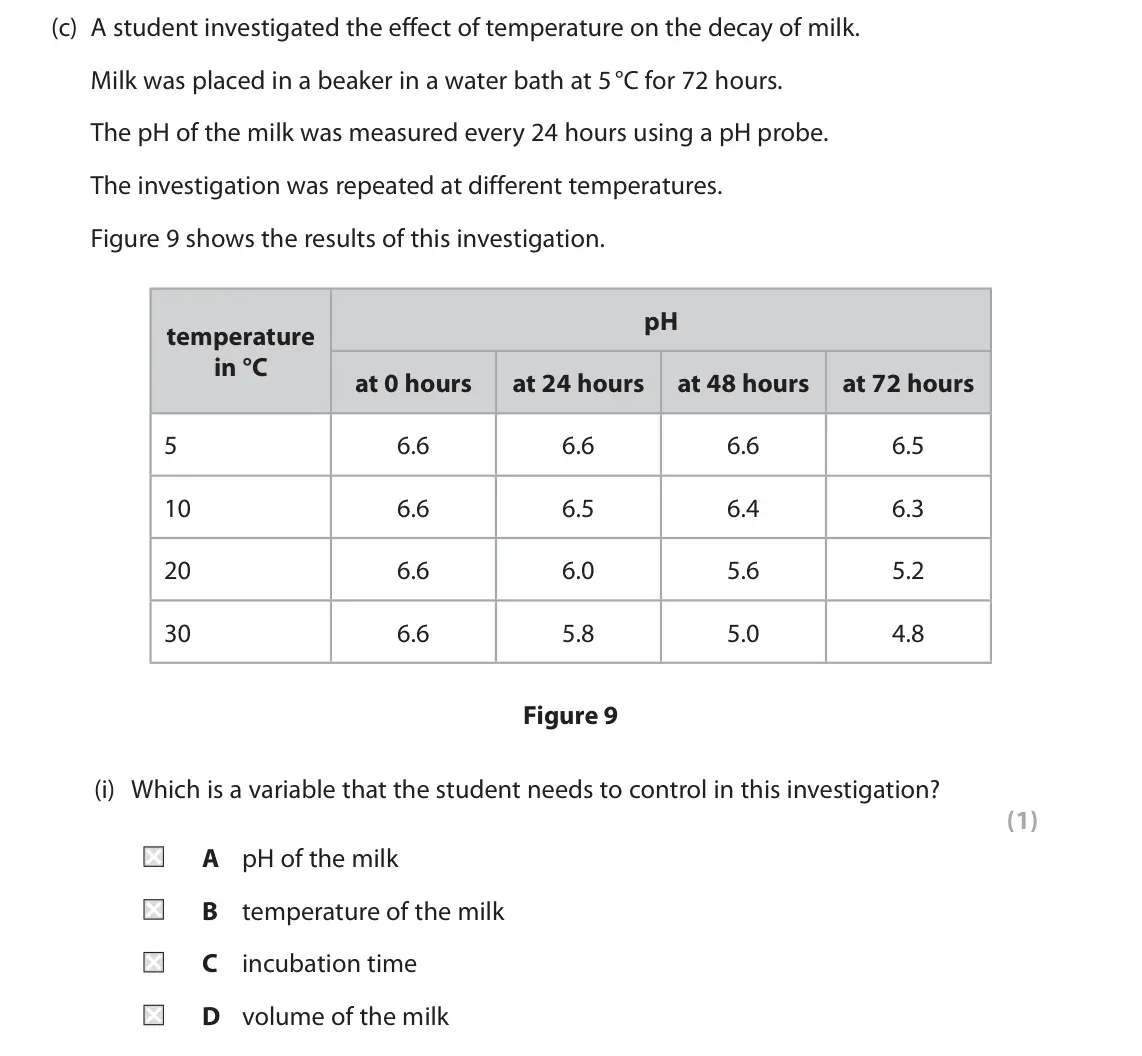
Q4(c)(ii)
The whole paper ↗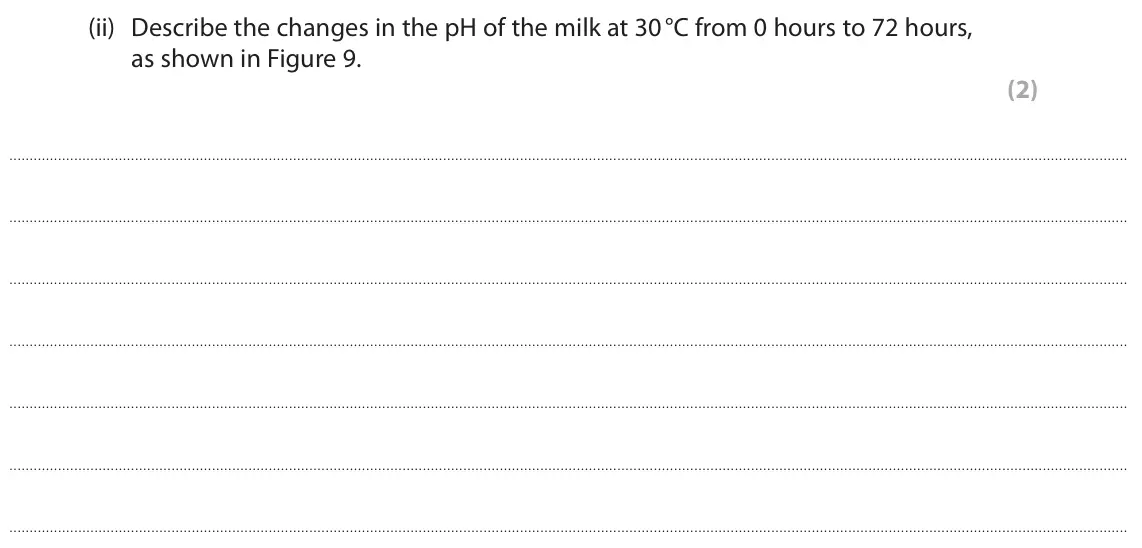
Q4(c)(iii)
The whole paper ↗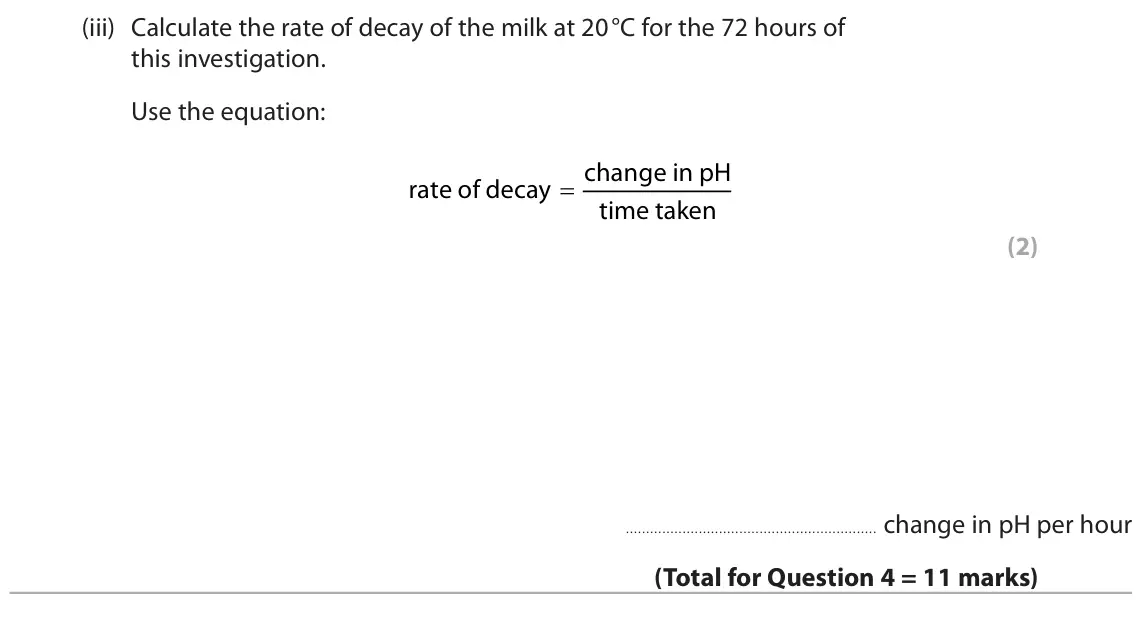
Q10(b)(i)
The whole paper ↗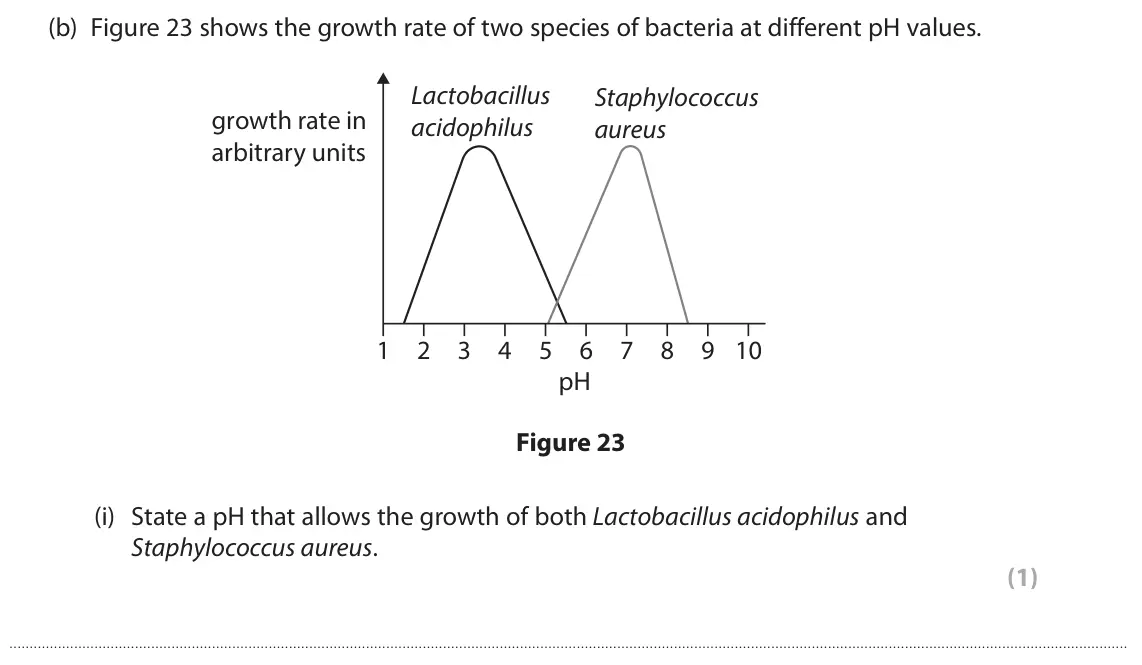
Q10(b)(ii)
The whole paper ↗
Q10(c)(i)
The whole paper ↗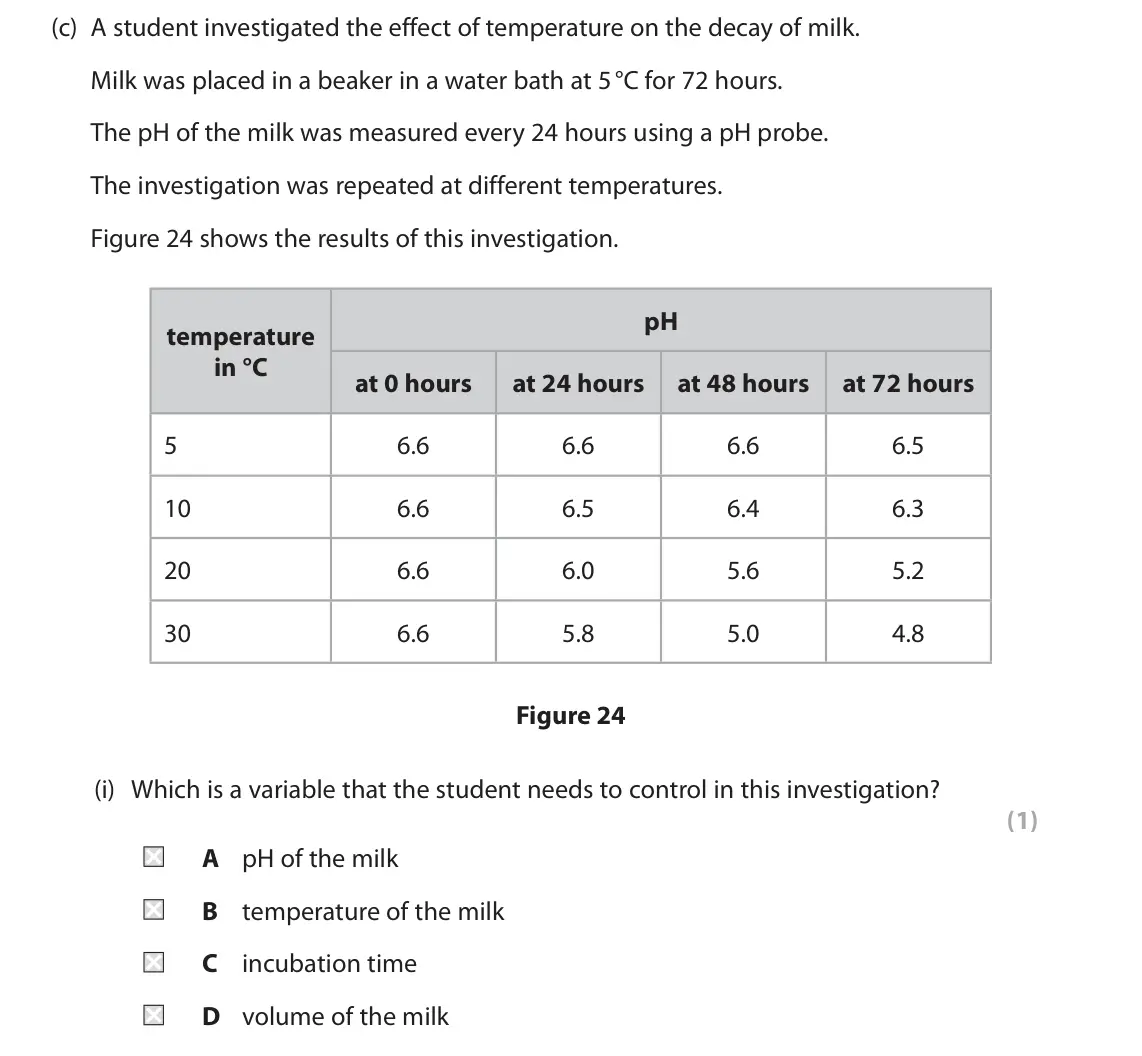
Q10(c)(ii)
The whole paper ↗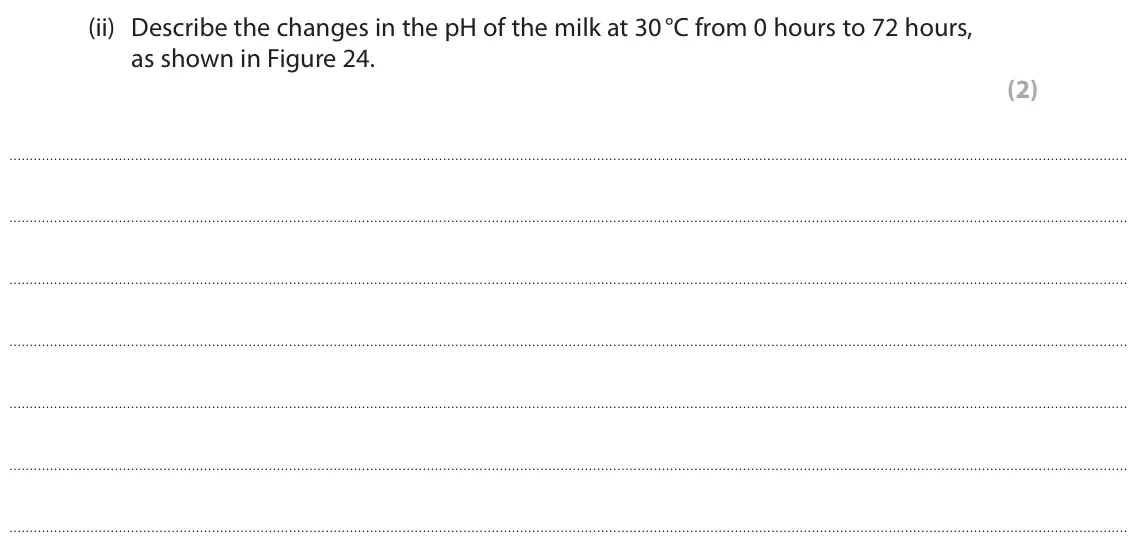
Q10(c)(iii)
The whole paper ↗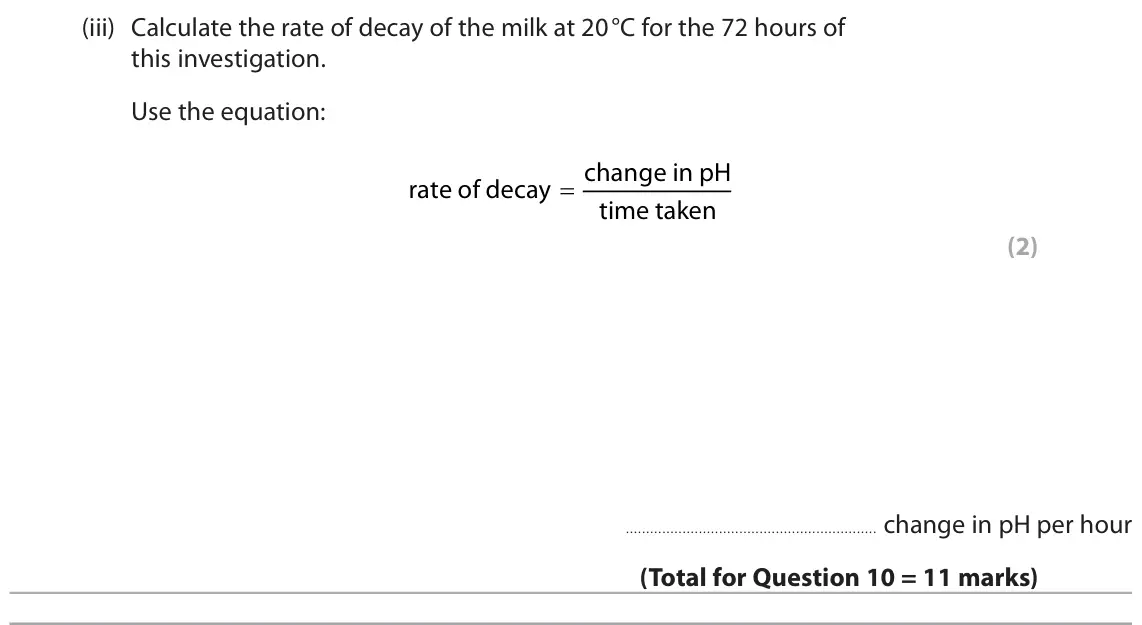
Q4(a)
The whole paper ↗
Q4(b)(i)
The whole paper ↗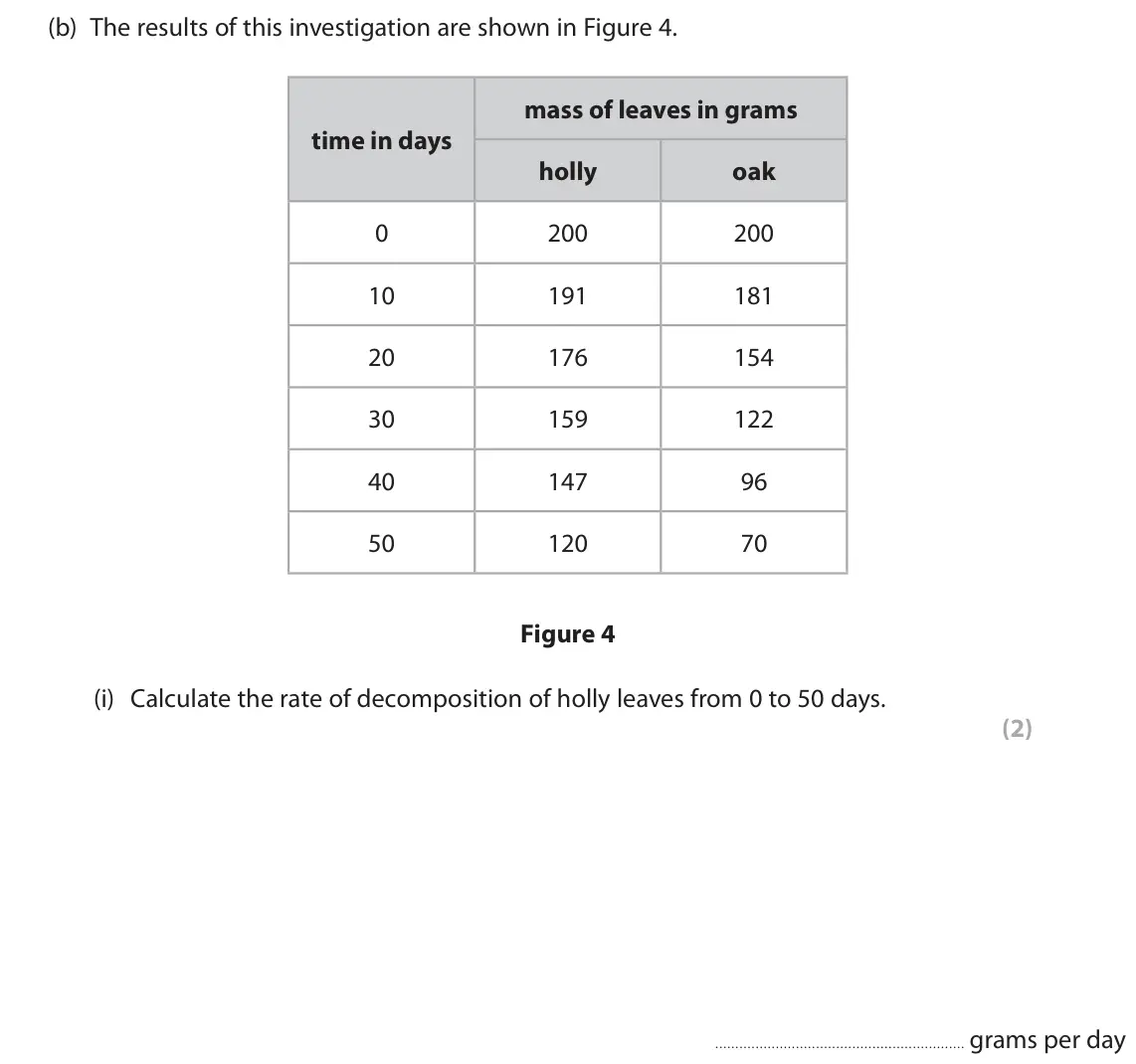
Q4(b)(ii)
The whole paper ↗
Q4(c)
The whole paper ↗
Q4(d)
The whole paper ↗
Q10(a)
The whole paper ↗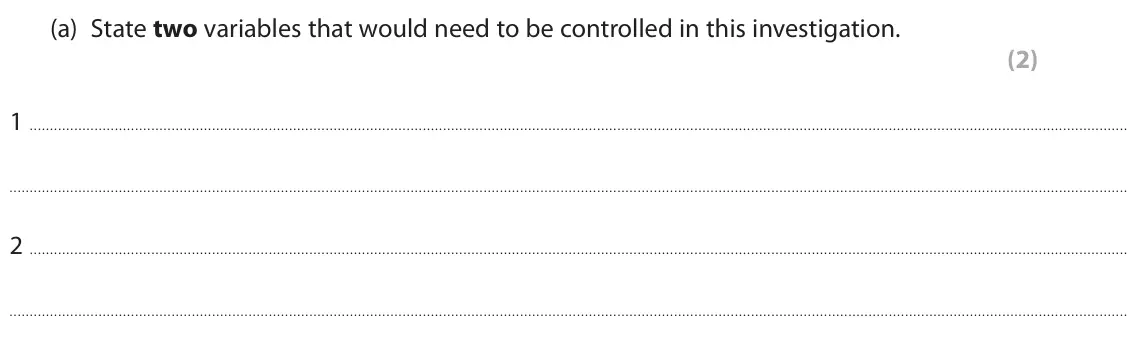
Q10(b)(i)
The whole paper ↗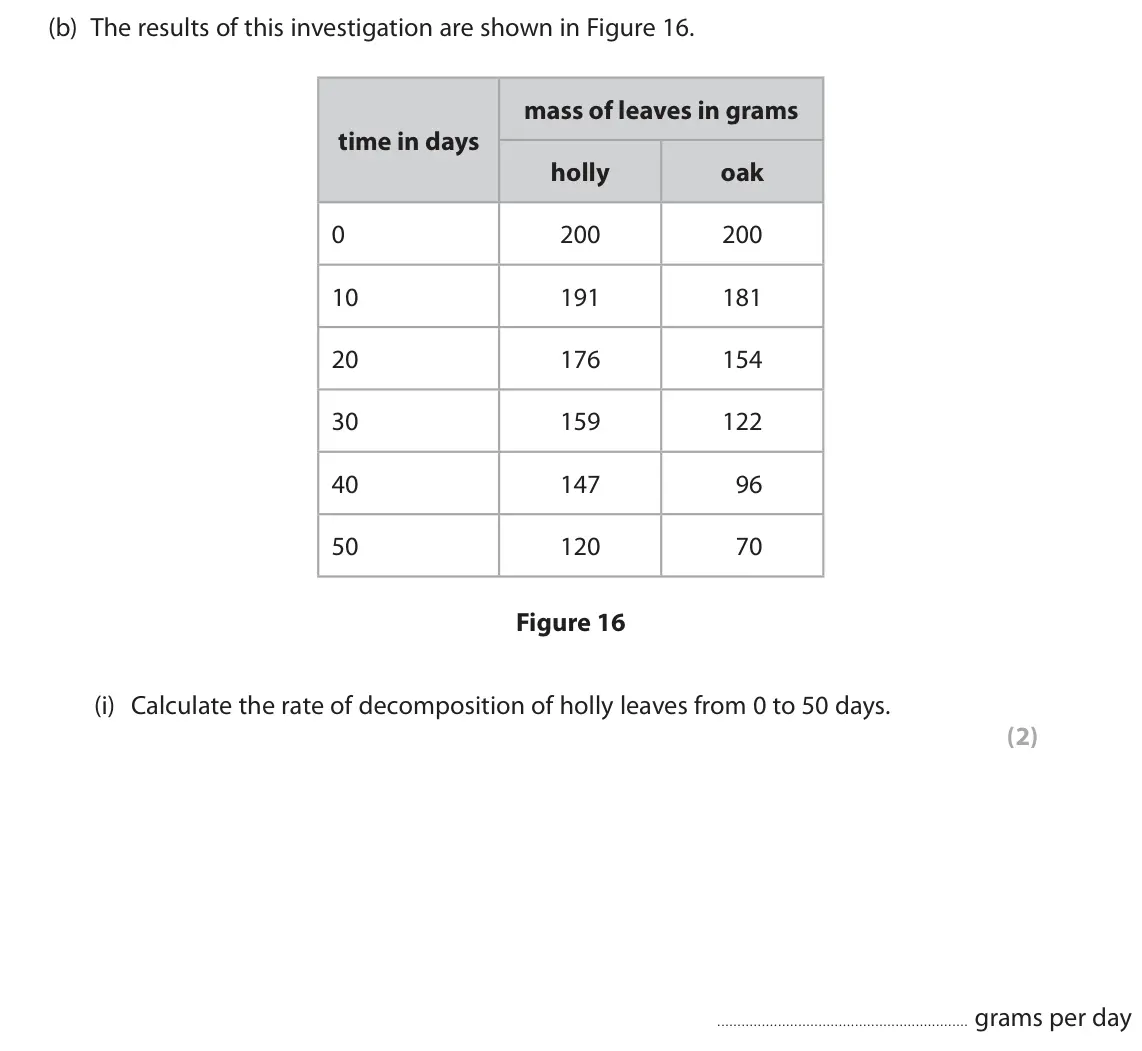
Q10(b)(ii)
The whole paper ↗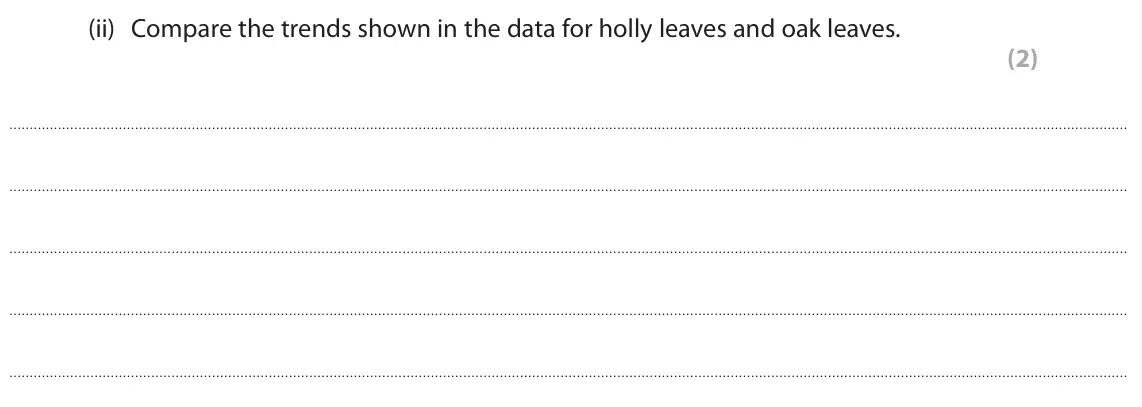
Q10(d)
The whole paper ↗
Q1(a)(i)
The whole paper ↗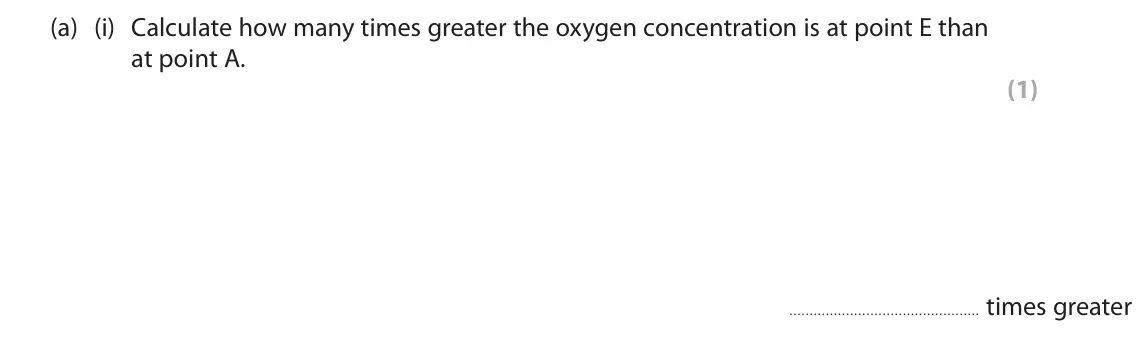
Q1(a)(ii)
The whole paper ↗
Q1(a)(iii)
The whole paper ↗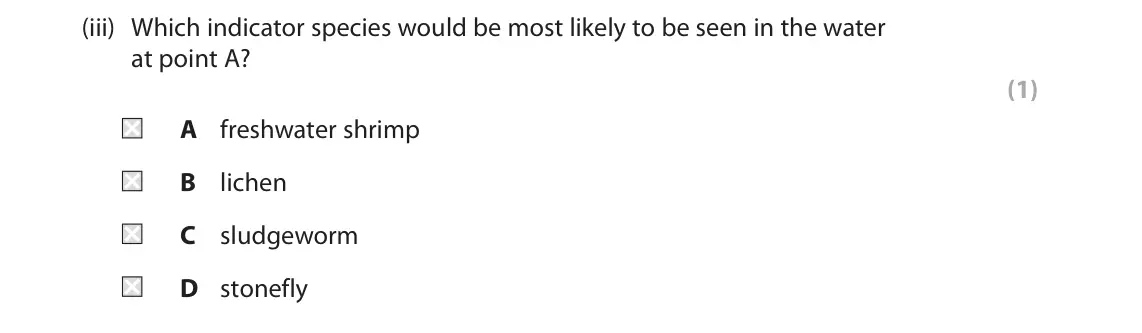
All 57 questions on Decomposition and indicator species, as a list
- June 2025, Paper 2 Higher, Q4(c)(i) (1 mark): Which is a variable that the student needs to control in this investigation? (1) A pH of the milk B temperature of the milk C incubation time D volume of the mi
- June 2025, Paper 2 Higher, Q4(c)(ii) (2 marks): Describe the changes in the pH of the milk at 30 °C from 0 hours to 72 hours, as shown in Figure 9. (2)
- June 2025, Paper 2 Higher, Q4(c)(iii) (2 marks): Calculate the rate of decay of the milk at 20 °C for the 72 hours of this investigation. Use the equation: change in pH = rate of decay time taken (2) change in
- June 2025, Paper 2 Foundation, Q10(b)(i) (1 mark): State a pH that allows the growth of both Lactobacillus acidophilus and Staphylococcus aureus. (1)
- June 2025, Paper 2 Foundation, Q10(b)(ii) (2 marks): Describe the relationship between pH and the growth of Staphylococcus aureus, as shown in Figure 23. (2)
- June 2025, Paper 2 Foundation, Q10(c)(i) (1 mark): Which is a variable that the student needs to control in this investigation? (1) A pH of the milk B temperature of the milk C incubation time D volume of the mi
- June 2025, Paper 2 Foundation, Q10(c)(ii) (2 marks): Describe the changes in the pH of the milk at 30 °C from 0 hours to 72 hours, as shown in Figure 24. (2)
- June 2025, Paper 2 Foundation, Q10(c)(iii) (2 marks): Calculate the rate of decay of the milk at 20 °C for the 72 hours of this investigation. Use the equation: change in pH = rate of decay time taken (2) change in
- June 2024, Paper 2 Higher, Q4(a) (2 marks): State two variables that would need to be controlled in this investigation. (2) 1 2
- June 2024, Paper 2 Higher, Q4(b)(i) (2 marks): Calculate the rate of decomposition of holly leaves from 0 to 50 days. (2) grams per day
- June 2024, Paper 2 Higher, Q4(b)(ii) (2 marks): Compare the trends shown in the data for holly leaves and oak leaves. (2)
- June 2024, Paper 2 Higher, Q4(c) (2 marks): Explain why it is important for the environment that dead leaves are decomposed. (2)
- June 2024, Paper 2 Higher, Q4(d) (1 mark): Name one type of organism that decomposes leaves. (1)
- June 2024, Paper 2 Foundation, Q10(a) (2 marks): State two variables that would need to be controlled in this investigation. (2) 1 2
- June 2024, Paper 2 Foundation, Q10(b)(i) (2 marks): Calculate the rate of decomposition of holly leaves from 0 to 50 days. (2) grams per day
- June 2024, Paper 2 Foundation, Q10(b)(ii) (2 marks): Compare the trends shown in the data for holly leaves and oak leaves. (2)
- June 2024, Paper 2 Foundation, Q10(d) (1 mark): Name one type of organism that decomposes leaves. (1)
- June 2023, Paper 2 Higher, Q1(a)(i) (1 mark): Calculate how many times greater the oxygen concentration is at point E than at point A. (1) times greater
- June 2023, Paper 2 Higher, Q1(a)(ii) (1 mark): State how the oxygen concentration changes from point A to point E. (1)
- June 2023, Paper 2 Higher, Q1(a)(iii) (1 mark): Which indicator species would be most likely to be seen in the water at point A? (1) A freshwater shrimp B lichen C sludgeworm D stonefly
- June 2023, Paper 2 Higher, Q1(a)(iv) (3 marks): Explain where the biodiversity will be highest in the stream. (3)
- June 2023, Paper 2 Higher, Q1(b) (1 mark): Figure 3 shows rose leaves infected with blackspot fungus. (Source: © Manfred Ruckszio/Shutterstock) Figure 3 State why rose plants growing near this factory ar
- June 2022, Paper 2 Higher, Q1(a)(i) (1 mark): Which species also indicates that the water is polluted? (1) A fertiliser B lichen C stonefly D sludgeworm
- June 2022, Paper 2 Higher, Q1(a)(ii) (1 mark): Bloodworms have a high level of haemoglobin in their blood. Give a reason why this helps them survive in polluted water. (1)
- June 2022, Paper 2 Higher, Q1(b) (2 marks): Figure 1 shows part of a diseased rose plant from a garden. (Source: © Manfred Ruckszio/Shutterstock) Figure 1 Explain what Figure 1 indicates about the air qua
- June 2022, Paper 2 Higher, Q7(a)(i) (1 mark): Give one reason why the gardener thought the gardening society website was a good source of information. (1)
- June 2022, Paper 2 Higher, Q7(a)(ii) (2 marks): Give reasons why soil is added to the compost bin and why the contents are turned to add air. (2)
- June 2022, Paper 2 Higher, Q7(a)(iii) (1 mark): The gardener noticed the compost bin became warm a few days after vegetation was added. Why did the contents of the compost bin become warm? (1) A respiration o
- June 2022, Paper 2 Higher, Q7(a)(iv) (1 mark): The mass of the contents of the compost bin at the start was 40 kg. After 60 days the mass of the contents was 32 kg. Which is the rate of decay? (1) A 1.8 kg p
- June 2022, Paper 2 Foundation, Q5(a)(i) (1 mark): Give one reason why the compost bin has gaps at the sides. (1)
- June 2022, Paper 2 Foundation, Q5(a)(ii) (3 marks): A student placed 2.0 kg of vegetable waste in a compost bin. After 20 days, the student reweighed the vegetable waste and found that its mass was 1.7 kg. Calcul
- June 2022, Paper 2 Foundation, Q5(a)(iii) (2 marks): The temperature in the compost bin increased from 20 °C to 25 °C. Explain how this increase in temperature would affect the rate of decomposition in the compost
- June 2022, Paper 2 Foundation, Q5(b) (3 marks): Figure 9 shows some preserved food that can be bought in a supermarket. Dried food Vacuum packed food (Source: © Sarah Marchant/Shutterstock © Cultura Motion/Sh
- November 2021, Paper 2 Higher, Q2(a) (1 mark): Name a group of organisms that break down the dead leaves and release mineral ions into the soil. (1)
- November 2021, Paper 2 Higher, Q8(b)(i) (2 marks): State two abiotic factors that should be kept the same in this investigation. (2) 1 2
- November 2021, Paper 2 Higher, Q8(b)(ii) (2 marks): Explain how this investigation could be improved to make the results more comparable. (2)
- November 2021, Paper 2 Higher, Q8(c)(i) (1 mark): Which leaves would produce compost in the least time? (1) A beech leaves B oak leaves C sycamore leaves D ash leaves
- November 2021, Paper 2 Higher, Q8(c)(ii) (3 marks): The same investigation was extended to include the leaves of a silver birch tree. The starting mass of the leaves was 28.2 grams. After 40 days the mass of the
- November 2021, Paper 2 Higher, Q8(d) (2 marks): Explain how the concentration of oxygen in a compost bin would affect the rate of decomposition. (2)
- November 2021, Paper 2 Foundation, Q5(b)(i) (1 mark): Which is the best estimate of the percentage cover of mould on the bread at 40 °C? (1) A 0% B 25% C 50% D 75%
- November 2021, Paper 2 Foundation, Q5(b)(ii) (2 marks): State two conclusions that can be made about the growth of mould on the bread from 0 °C to 40 °C shown in Figure 8. (2) 1 2
- November 2021, Paper 2 Foundation, Q5(b)(iii) (2 marks): Explain why there was no mould growing on the bread kept at 60 °C. (2)
- November 2021, Paper 2 Foundation, Q5(c) (1 mark): Figure 9 shows some part-baked bread in a sealed bag. The gas in the bag is nitrogen, which prevents the bread from going mouldy. Figure 9 If the bag is opened,
- November 2021, Paper 2 Foundation, Q5(d) (2 marks): Explain why keeping food in a fridge slows down the growth of mould. (2)
- November 2020, Paper 2 Higher, Q1(a)(i) (1 mark): Which part of the river will have the largest number of bloodworms? (1) A no pollution B high pollution C some pollution D low pollution
- November 2020, Paper 2 Higher, Q1(a)(ii) (2 marks): Give the names of the two indicator species from the box which provide evidence for clean water. blackspot fungus lichen freshwater shrimp sludgeworm stonefly (
- November 2020, Paper 2 Foundation, Q3(b)(i) (2 marks): The mean rate of growth of fungus at 25 °C was 12 cm2 per day. Calculate the mean rate of growth of fungus at 30 °C. (2) cm2 per day
- November 2020, Paper 2 Foundation, Q3(b)(ii) (1 mark): State the effect of temperature on the growth of fungus on strawberries from 5 °C to 30 °C. (1)
- June 2018, Paper 2 Foundation, Q3(a) (1 mark): Which type of tray should be used so that the leaves are in the best conditions for decomposition? (1) A tray with air holes and dry soil B airtight tray with d
- June 2018, Paper 2 Foundation, Q3(b)(i) (2 marks): Calculate the percentage decrease in mass for the leaves at 85 °C. Give your answer to two significant figures. (2) %
- June 2018, Paper 2 Foundation, Q3(b)(ii) (2 marks): Explain which temperature was the best for the decomposition of the leaves. (2)
- June 2018, Paper 2 Foundation, Q3(b)(iii) (2 marks): State two improvements to the method for this investigation. (2) 1 2
- Specimen, Paper 2 Higher, Q3(b)(i) (2 marks): Explain why reducing the water content of the strawberries will help to preserve them. (2)
- Specimen, Paper 2 Higher, Q3(b)(ii) (1 mark): Give a reason for sterilising the jars before adding the jam. (1)
- Specimen, Paper 2 Higher, Q8(b)(i) (2 marks): Calculate the percentage of organisms in stream A that are clean water indicators. Give your answer to two significant figures. (2)
- Specimen, Paper 2 Higher, Q8(b)(ii) (2 marks): Use the results to explain which stream is more polluted. (2) The student investigated a third stream, which is very slow flowing and runs through an area where
- Specimen, Paper 2 Foundation, Q9(b)(i) (1 mark): Strawberries can be preserved by freezing them. State how freezing helps to preserve strawberries. (1) When the strawberries are frozen they become soft.
Questions, mark schemes and examiner’s reports are © Pearson Edexcel, from their published past papers. Plumi isn’t affiliated with any exam board. Want whole papers? Every Edexcel GCSE Biology paper.
Rather write your answers by hand on iPad? Plumi marks them against the same mark schemes.