 plumi
Biodiversity and food security: Edexcel GCSE Biology questions
Every Edexcel GCSE Biology exam question on Biodiversity and food security (specification points 9.9–9.11), 2018–2025, with its mark scheme and examiner’s report.
Find questions1,834
Exam
All years
Calculations
Q10(a)
The whole paper ↗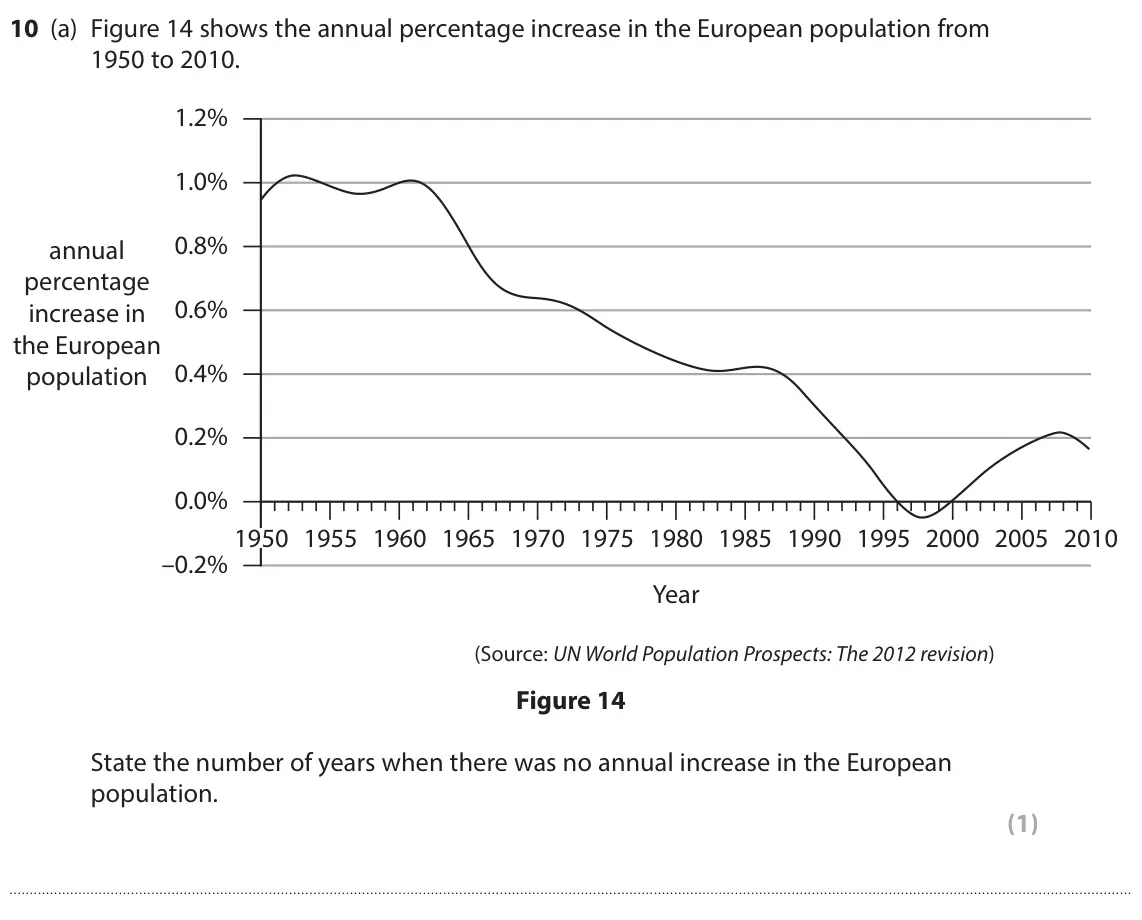
Q10(b)(i)
The whole paper ↗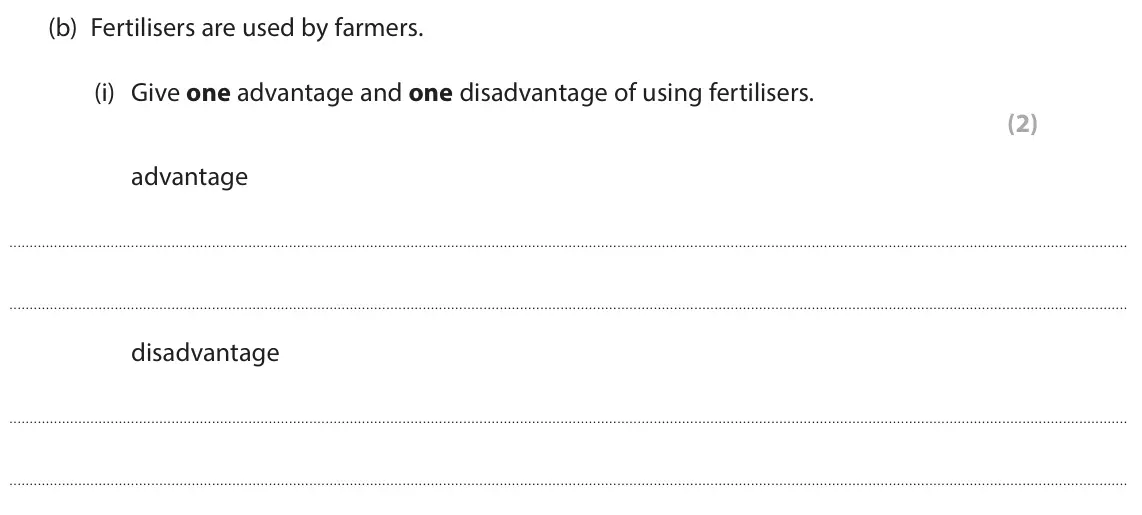
Q10(b)(ii)
The whole paper ↗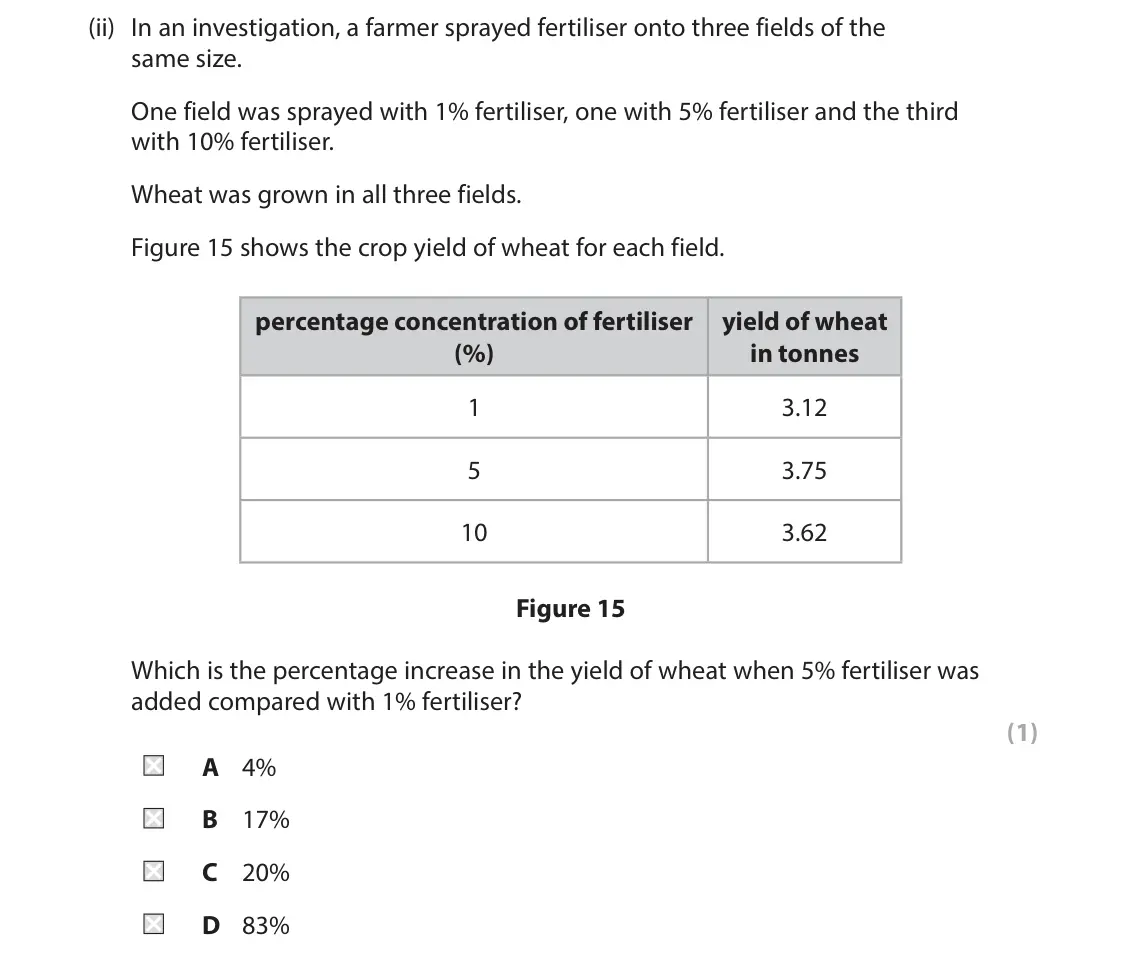
Q10(b)(iii)
The whole paper ↗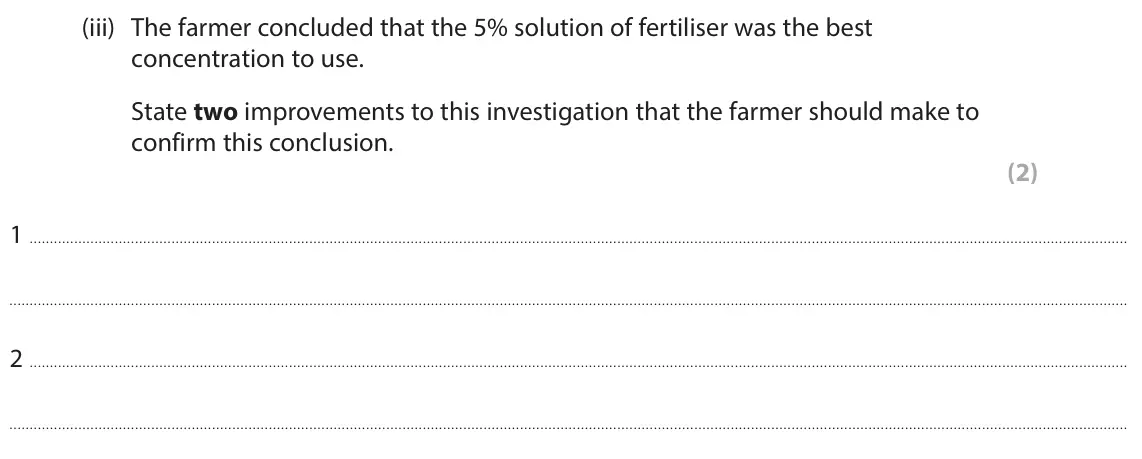
Q10(c)
The whole paper ↗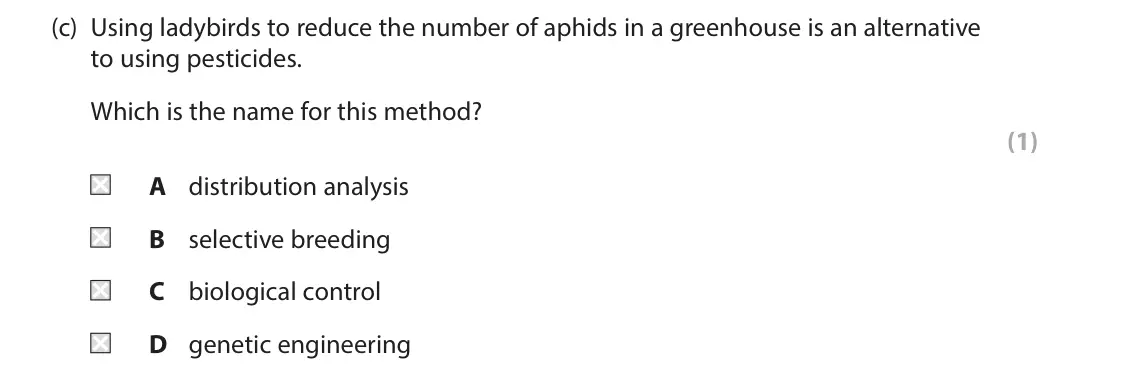
Q5(a)(i)
The whole paper ↗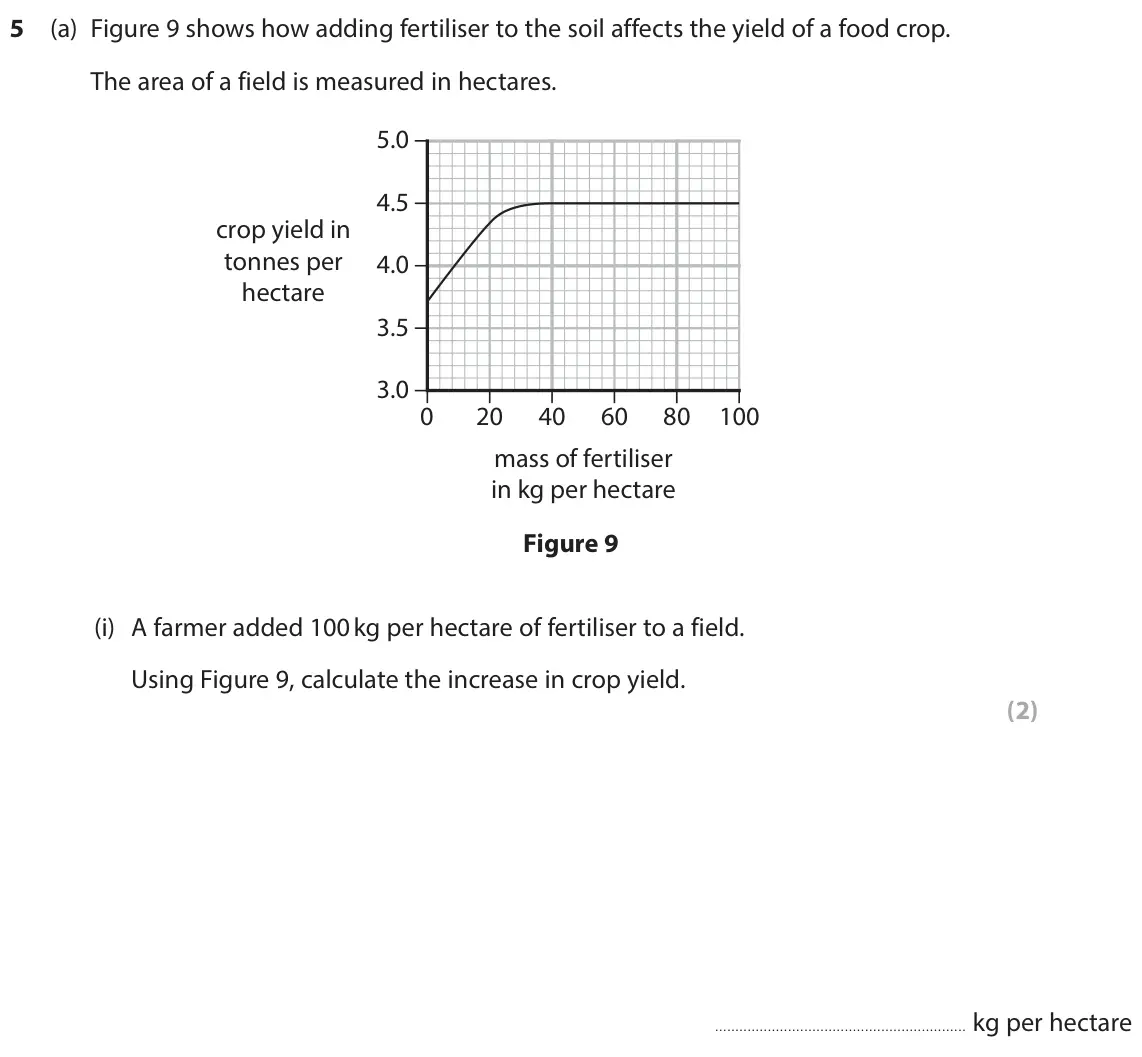
Q5(a)(ii)
The whole paper ↗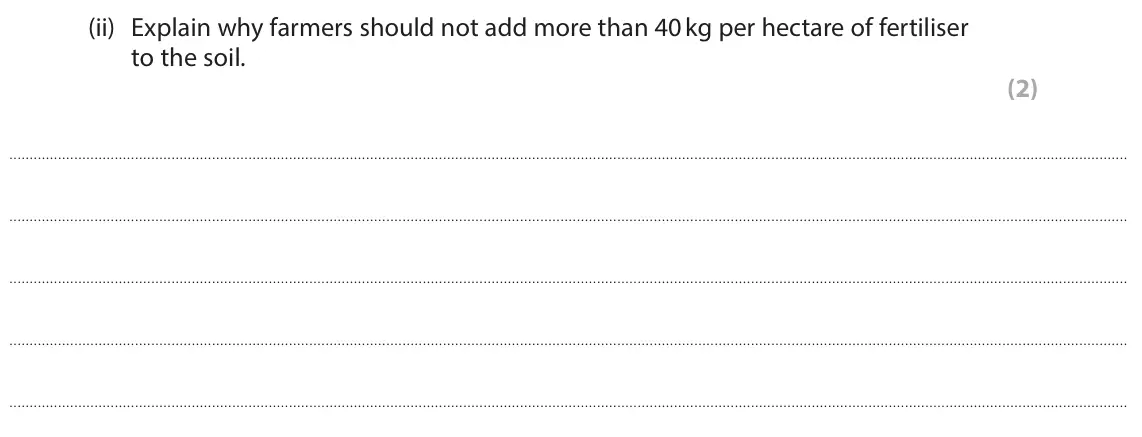
Q5(c)
The whole paper ↗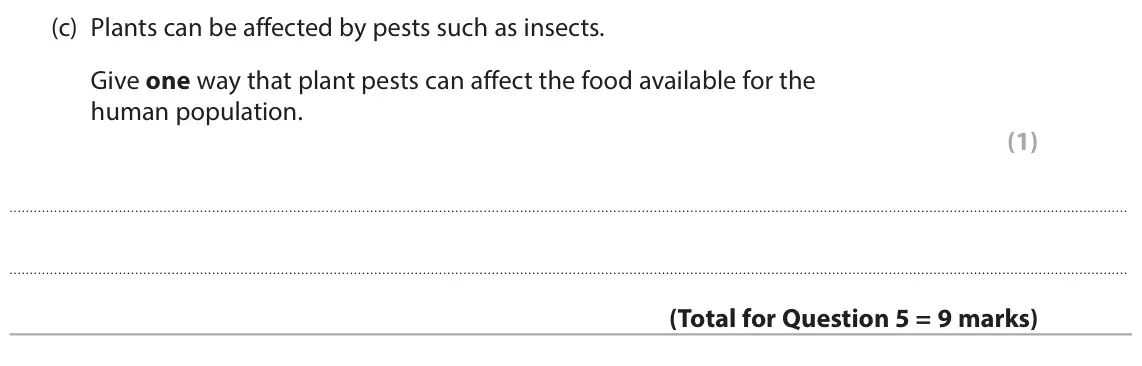
Q7(c)
The whole paper ↗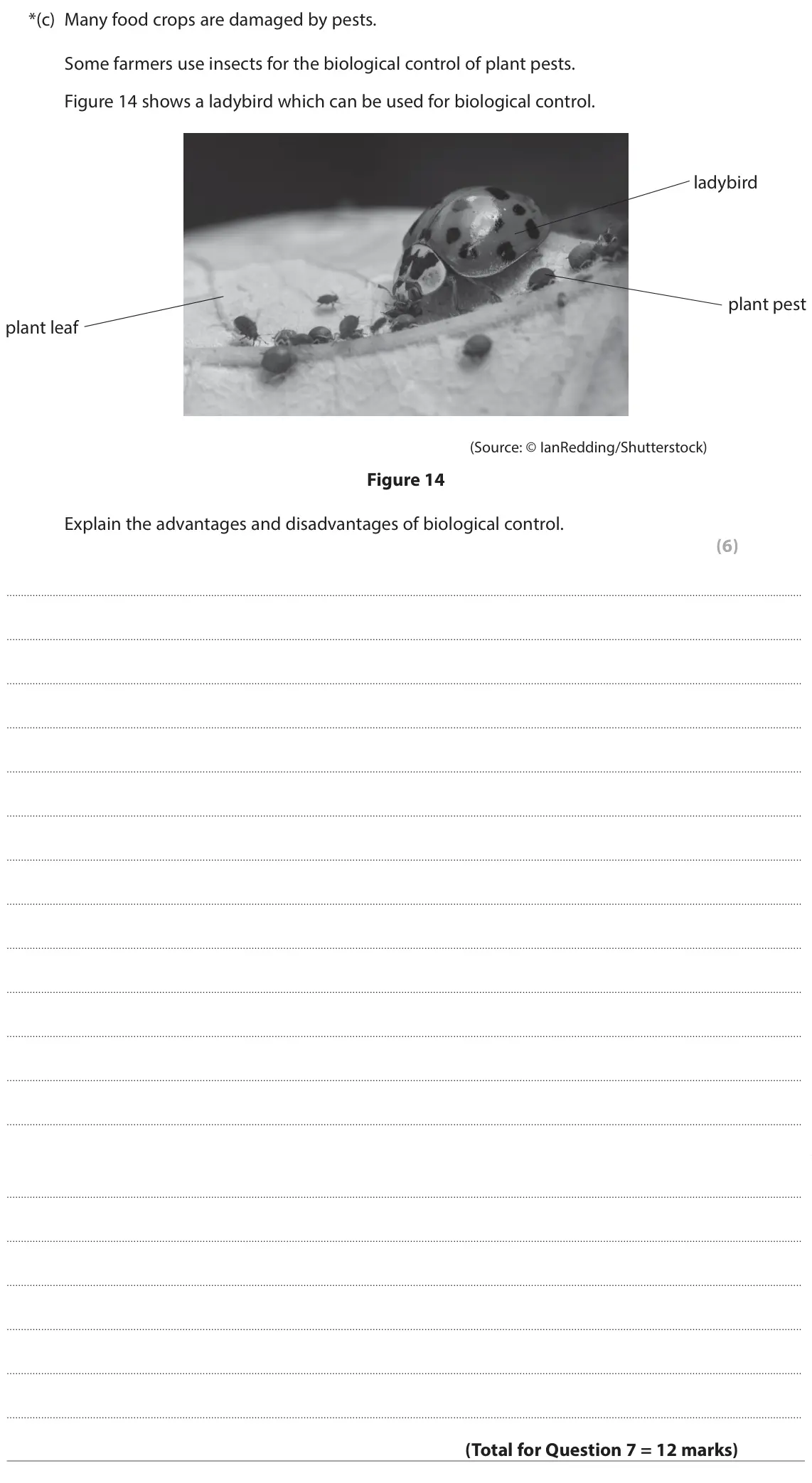
Q3(a)(i)
The whole paper ↗
Q7(b)
The whole paper ↗
Q4(b)(ii)
The whole paper ↗
Q4(c)(i)
The whole paper ↗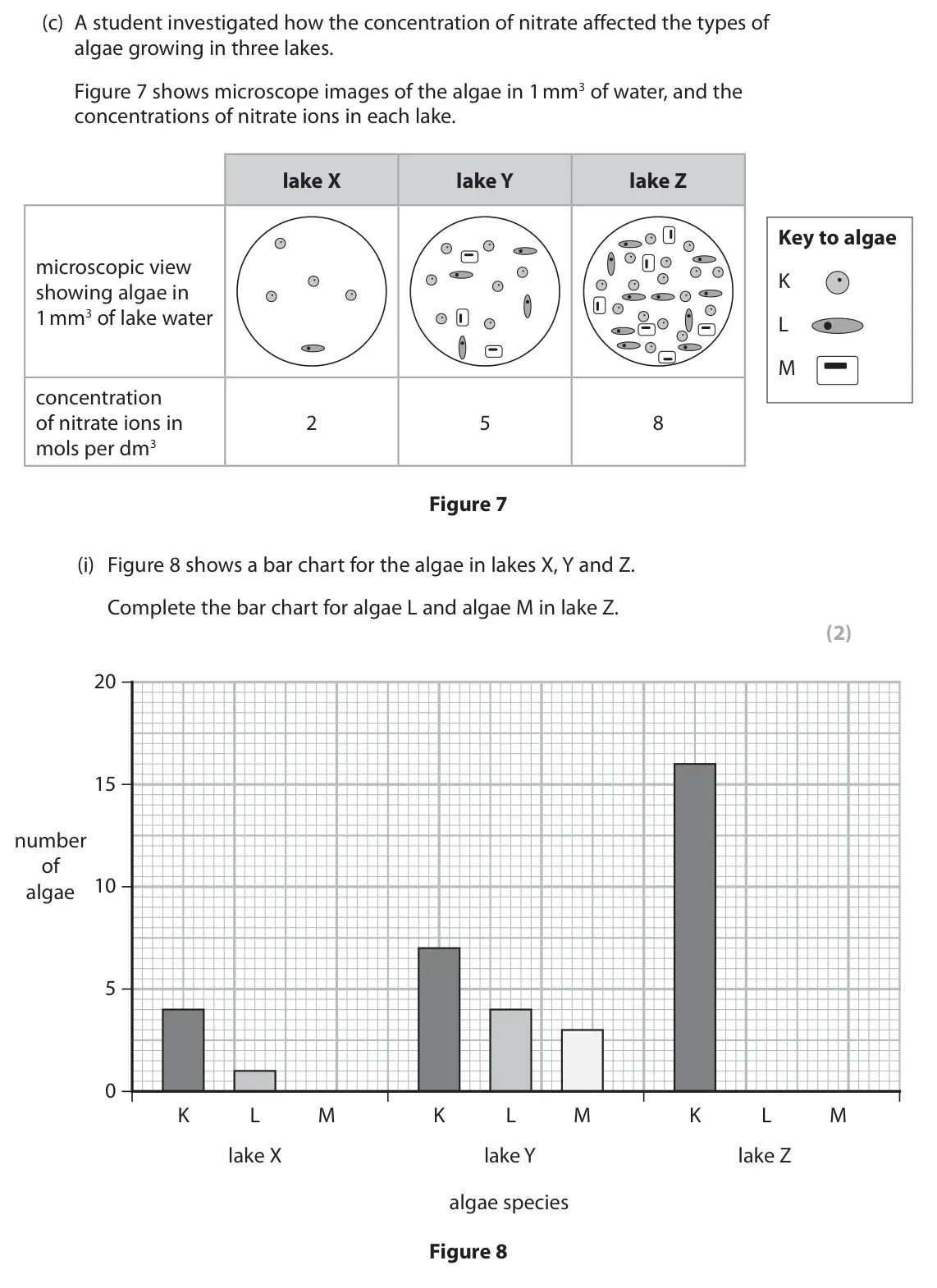
Q4(c)(ii)
The whole paper ↗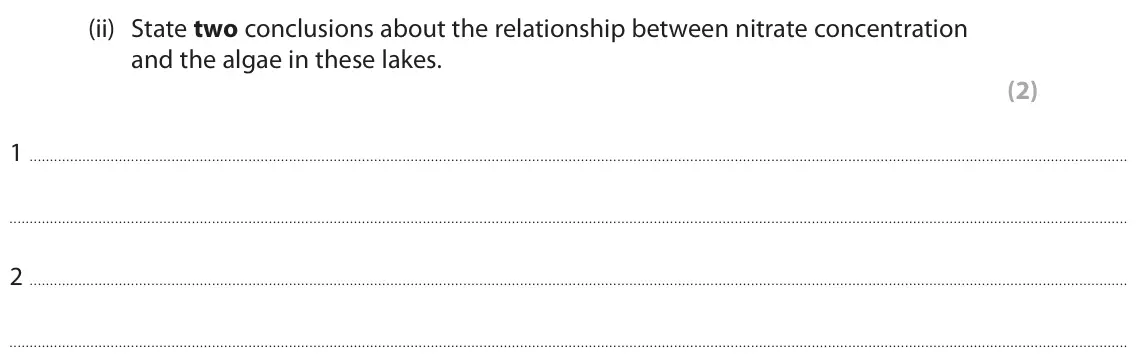
Q4(c)(iii)
The whole paper ↗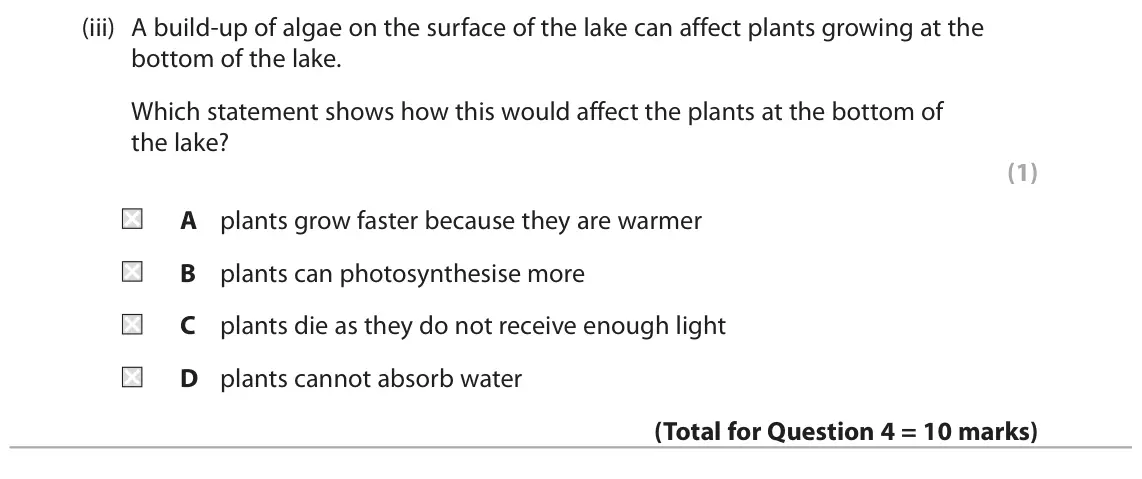
Q9(a)(i)
The whole paper ↗
Q7(c)
The whole paper ↗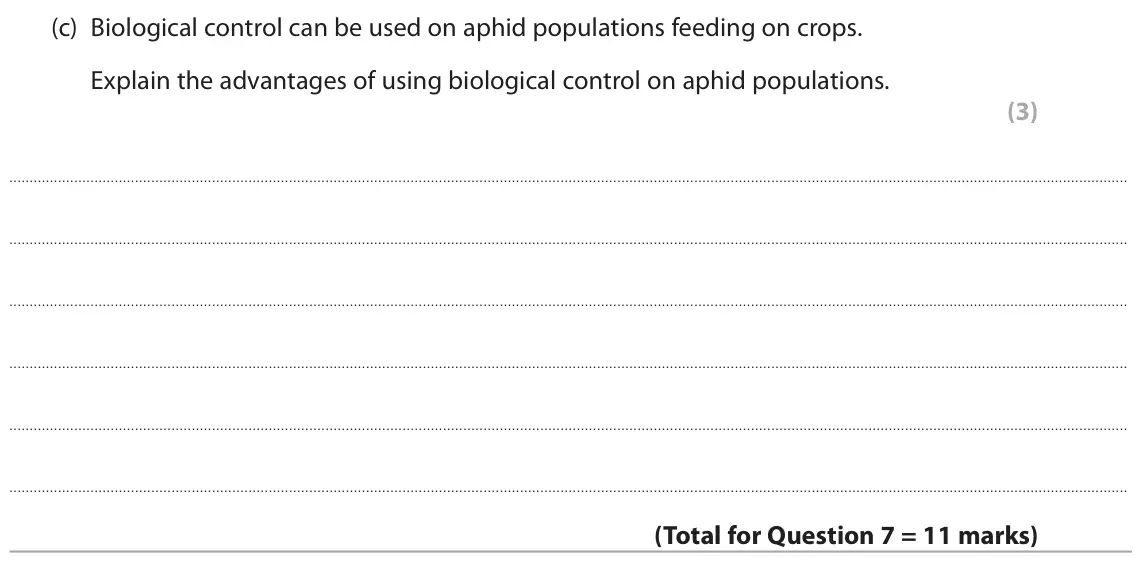
Q3(d)(i)
The whole paper ↗
Q6(a)(i)
The whole paper ↗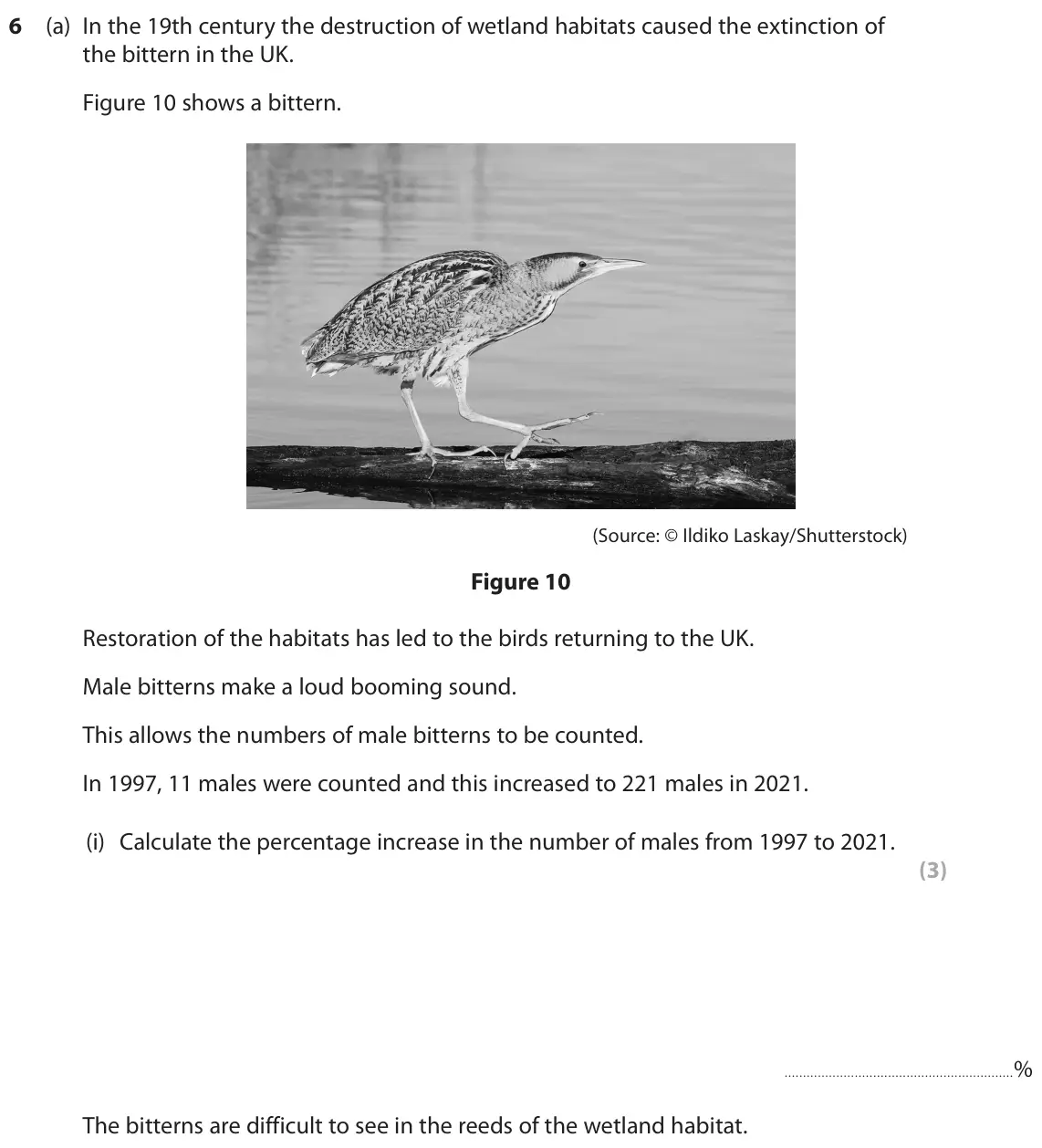
Q7(a)
The whole paper ↗
All 61 questions on Biodiversity and food security, as a list
- June 2025, Paper 1 Higher, Q10(a) (1 mark): Figure 14 shows the annual percentage increase in the European population from 1950 to 2010. 1.2% 1.0% 0.8% annual percentage 0.6% increase in the European 0.4%
- June 2025, Paper 1 Higher, Q10(b)(i) (2 marks): Give one advantage and one disadvantage of using fertilisers. (2) advantage disadvantage
- June 2025, Paper 1 Higher, Q10(b)(ii) (1 mark): In an investigation, a farmer sprayed fertiliser onto three fields of the same size. One field was sprayed with 1% fertiliser, one with 5% fertiliser and the th
- June 2025, Paper 1 Higher, Q10(b)(iii) (2 marks): The farmer concluded that the 5% solution of fertiliser was the best concentration to use. State two improvements to this investigation that the farmer should m
- June 2025, Paper 1 Higher, Q10(c) (1 mark): Using ladybirds to reduce the number of aphids in a greenhouse is an alternative to using pesticides. Which is the name for this method? (1) A distribution anal
- June 2025, Paper 1 Foundation, Q5(a)(i) (2 marks): A farmer added 100 kg per hectare of fertiliser to a field. Using Figure 9, calculate the increase in crop yield. (2) kg per hectare
- June 2025, Paper 1 Foundation, Q5(a)(ii) (2 marks): Explain why farmers should not add more than 40 kg per hectare of fertiliser to the soil. (2)
- June 2025, Paper 1 Foundation, Q5(c) (1 mark): Plants can be affected by pests such as insects. Give one way that plant pests can affect the food available for the human population. (1)
- June 2025, Paper 1 Foundation, Q7(c) (6 marks): Many food crops are damaged by pests. Some farmers use insects for the biological control of plant pests. Figure 14 shows a ladybird which can be used for biolo
- June 2025, Paper 2 Higher, Q3(a)(i) (1 mark): State what is meant by the term ’indigenous’. (1)
- June 2025, Paper 2 Higher, Q7(b) (3 marks): As human population rises, food security is an increasing problem throughout the world. Give three factors that reduce the amount of food available for humans t
- June 2025, Paper 2 Foundation, Q4(b)(ii) (1 mark): Some of the nitrates spread on fields as fertiliser get into lakes. Name the type of pollution caused by the build-up of nitrates in lakes. (1)
- June 2025, Paper 2 Foundation, Q4(c)(i) (2 marks): Figure 8 shows a bar chart for the algae in lakes X, Y and Z. Complete the bar chart for algae L and algae M in lake Z. (2) 20 15 number of 10 algae 5 0 K L M K
- June 2025, Paper 2 Foundation, Q4(c)(ii) (2 marks): State two conclusions about the relationship between nitrate concentration and the algae in these lakes. (2) 1 2
- June 2025, Paper 2 Foundation, Q4(c)(iii) (1 mark): A build-up of algae on the surface of the lake can affect plants growing at the bottom of the lake. Which statement shows how this would affect the plants at th
- June 2025, Paper 2 Foundation, Q9(a)(i) (1 mark): State what is meant by the term ’indigenous’. (1)
- June 2024, Paper 1 Higher, Q7(c) (3 marks): Biological control can be used on aphid populations feeding on crops. Explain the advantages of using biological control on aphid populations. (3)
- June 2024, Paper 2 Foundation, Q3(d)(i) (2 marks): State two human activities that have caused this temperature increase. (2) 1 2
- June 2023, Paper 1 Higher, Q6(a)(i) (3 marks): Calculate the percentage increase in the number of males from 1997 to 2021. (3) % The bitterns are difficult to see in the reeds of the wetland habitat.
- June 2023, Paper 1 Foundation, Q7(a) (1 mark): Give one effect on the grains produced, when wheat plants are grown in soil with fertiliser. (1)
- June 2023, Paper 1 Foundation, Q7(b) (2 marks): Explain why farmers measure the mass of 1000 grains rather than the mass of one wheat grain. (2)
- June 2023, Paper 1 Foundation, Q7(c)(i) (1 mark): Which is the definition of biological control? (1) A using antiseptics to control pests B using fertilisers to control pests C using predators to control pests
- June 2023, Paper 1 Foundation, Q7(c)(ii) (2 marks): Figure 14 shows a crop being grown under a clear plastic cover and a crop being grown in a garden. clear plastic cover Figure 14 Explain why biological control
- June 2023, Paper 2 Higher, Q7(d) (2 marks): Cod are being overfished in the Antarctic Ocean. Suggest two actions that could be taken by humans to increase the number of cod in the Antarctic Ocean. (2) 1 2
- June 2023, Paper 2 Foundation, Q2(a) (1 mark): Which human activity is most likely to cause an increase in global warming? (1) A burning fossil fuels B insulating houses C using more solar panels D using nuc
- June 2023, Paper 2 Foundation, Q2(b)(i) (2 marks): State two conclusions about the actual rainfall compared with the average rainfall shown in Figure 4. (2) 1 2
- June 2023, Paper 2 Foundation, Q2(b)(ii) (2 marks): The average potato yield for a field is 44 tonnes. The weather in 2022 meant that the actual yield for this field was one quarter lower than this average. Calcu
- June 2023, Paper 2 Foundation, Q2(b)(iii) (3 marks): Food security occurs when all people are able to access enough safe and nutritious food to meet their requirements for a healthy life. Explain how lower yields
- June 2023, Paper 2 Foundation, Q6(a) (1 mark): Why were indigenous trees used instead of non-indigenous trees? (1) A indigenous trees will bring in more pests B indigenous trees are less likely to survive C
- June 2023, Paper 2 Foundation, Q6(b)(i) (1 mark): Draw a straight line of best fit on Figure 12 to show the main trend in this data. (1)
- June 2023, Paper 2 Foundation, Q6(b)(ii) (1 mark): Estimate the animal biodiversity of the reforested area in 2022. (1)
- June 2023, Paper 2 Foundation, Q6(c)(ii) (1 mark): State why point A on Figure 12 was ignored when considering the trend in animal biodiversity. (1)
- June 2022, Paper 2 Higher, Q9(b) (2 marks): This pond is affected by eutrophication. Explain one possible cause of eutrophication. (2)
- June 2022, Paper 2 Higher, Q9(c) (6 marks): Reforestation has a beneficial effect on air composition and biodiversity. Animal conservation projects can also have a beneficial effect on biodiversity. Expla
- June 2022, Paper 2 Foundation, Q6(b) (3 marks): Increased nitrates can cause eutrophication in lakes. Explain how eutrophication will affect the fish living in the lakes. (3)
- November 2021, Paper 1 Foundation, Q7(b)(i) (1 mark): Which is the name of this method of limiting the population of weeds? (1) A biological control B chemical control C tissue culture D genetic engineering
- November 2021, Paper 1 Foundation, Q7(b)(ii) (2 marks): Give two benefits of using insects, rather than chemicals, on prickly pear cacti. (2) 1 2
- November 2021, Paper 2 Higher, Q1 (7 marks): The population of native white‑clawed crayfish in English rivers is decreasing due to an increasing population of American imported signal crayfish. Figure 1 sh
- November 2021, Paper 2 Foundation, Q2(c)(i) (1 mark): Flatworms from New Zealand that eat slugs are now living in the UK. Which term describes a species from one country that is living in another country? (1) A pat
- November 2021, Paper 2 Foundation, Q5(a) (2 marks): Explain how this mould affected food security in Ireland. (2)
- November 2020, Paper 1 Foundation, Q3(c)(i) (1 mark): Using ladybirds to control insect pests is an example of (1) A chemical control B enzyme technology C biological control D tissue culture
- November 2020, Paper 1 Foundation, Q3(c)(ii) (2 marks): Explain one advantage of using predators to control insect pests. (2)
- November 2020, Paper 2 Higher, Q1(b) (2 marks): Explain why sewage pollution in the river can decrease the oxygen levels in the water. (2)
- November 2020, Paper 2 Higher, Q1(c)(i) (1 mark): Excess fertilisers can cause a build‑up of nitrates in the rivers and lakes. State the name given to a build‑up of nitrates in the lake. (1)
- November 2020, Paper 2 Higher, Q1(c)(ii) (1 mark): State why the build‑up of nitrates is less likely to affect a river than a lake. (1)
- November 2020, Paper 2 Higher, Q2(c) (3 marks): Figure 3 shows water lilies growing in a lake in Europe. © lynn gladwell/123RF Figure 3 One water lily plant was brought from America 10 years ago and planted i
- November 2020, Paper 2 Higher, Q4(a) (2 marks): In 2015, 13% of the world human population were classified as malnourished. Calculate, using Figure 7, how many people were classified as malnourished in 2015.
- November 2020, Paper 2 Higher, Q4(c) (2 marks): Figure 8 shows the mass of meat eaten in the world from 1980 to 2010. 300 250 200 mass of meat eaten in the 150 world in millions of tonnes 100 50 0 1980 1990 2
- November 2020, Paper 2 Higher, Q4(d)(ii) (3 marks): The World Health Organisation uses this definition of food security. ‘When all people at all times have access to sufficient, safe, nutritious food to maintain
- November 2020, Paper 2 Foundation, Q8(c)(i) (3 marks): One water lily plant was brought from America 10 years ago and planted in the lake shown in Figure 19. Explain why this non‑indigenous plant now covers the whol
- November 2020, Paper 2 Foundation, Q8(c)(ii) (3 marks): Explain how the water lilies will affect the biodiversity of this lake. (3)
- November 2020, Paper 2 Foundation, Q10(a) (2 marks): In 2015, 13% of the world human population were classified as malnourished. Calculate, using Figure 24, how many people were classified as malnourished in 2015.
- November 2020, Paper 2 Foundation, Q10(c) (2 marks): Figure 25 shows the mass of meat eaten in the world from 1980 to 2010. 300 250 200 mass of meat eaten in the 150 world in millions of tonnes 100 50 0 1980 1990
- November 2020, Paper 2 Foundation, Q10(d)(ii) (3 marks): The World Health Organisation uses this definition of food security. ‘When all people at all times have access to sufficient, safe, nutritious food to maintain
- June 2019, Paper 2 Foundation, Q7(a) (1 mark): Extend the line to estimate the human population of the UK in 2030 if this trend continues. (1) million
- June 2019, Paper 2 Foundation, Q7(b) (1 mark): Food security means that a population has enough safe and healthy food. Which of these would improve food security? (1) A increased reforestation B increased an
- June 2019, Paper 2 Foundation, Q7(d) (6 marks): Figure 14 shows a field of a crop in one area of Africa. The crop cannot be eaten by people. The crop is used to produce biofuel. (Source: © KAMBOU SIA/Stringer
- June 2018, Paper 1 Foundation, Q7(a)(i) (2 marks): Describe how the farmer prepares 100 cm3 of the 20% solution. (2)
- June 2018, Paper 1 Foundation, Q7(a)(ii) (3 marks): The farmer has 60 wheat plants. Each plant is 20 mm in height. Devise a plan to find the optimum percentage solution of fertiliser for the growth of these wheat
- June 2018, Paper 1 Foundation, Q7(a)(iii) (1 mark): The farmer improves this plan by controlling all the variables. State one variable that the farmer should control when growing these wheat plants. (1)
- Specimen, Paper 2 Higher, Q8(c) (4 marks): Explain the effect of this algal growth on the organisms in the stream. (4)
Questions, mark schemes and examiner’s reports are © Pearson Edexcel, from their published past papers. Plumi isn’t affiliated with any exam board. Want whole papers? Every Edexcel GCSE Biology paper.
Rather write your answers by hand on iPad? Plumi marks them against the same mark schemes.