 plumi
Structure: Edexcel A‑Level Chemistry questions
Every Edexcel A-Level Chemistry exam question on 2B Structure, 2016–2025, with its mark scheme and examiner’s report.
Find questions2,028
Calculations
Q2(a)(i)
The whole paper ↗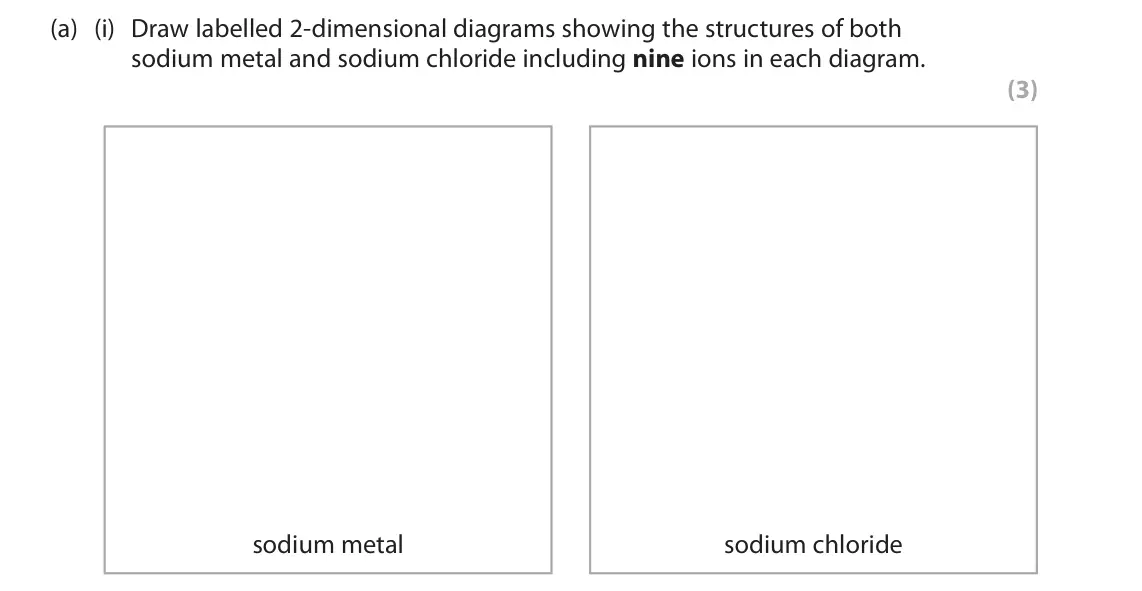
Q2(a)(iii)
The whole paper ↗
Q2(a)(iv)
The whole paper ↗
Q7(d)
The whole paper ↗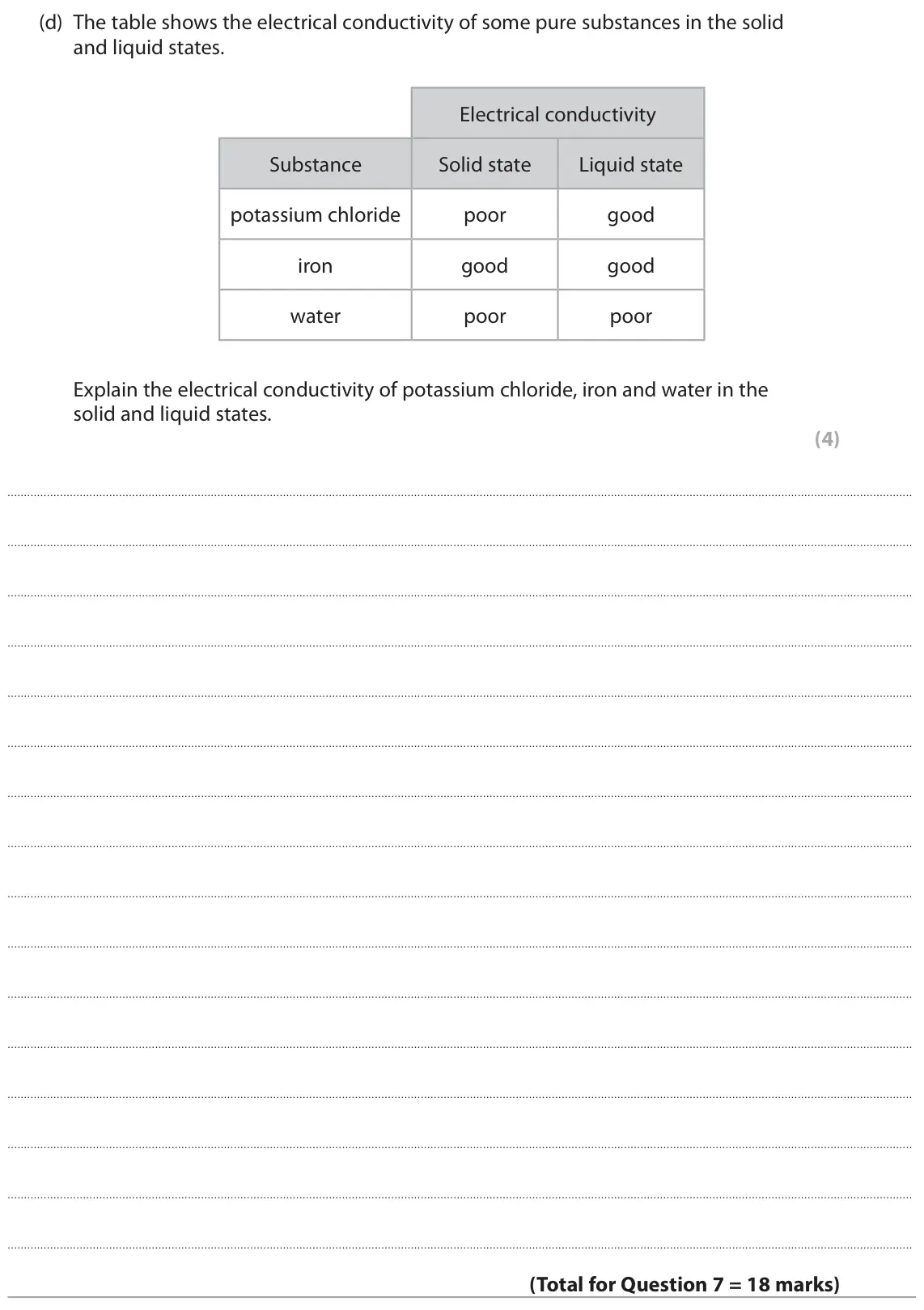
Q8(b)(ii)
The whole paper ↗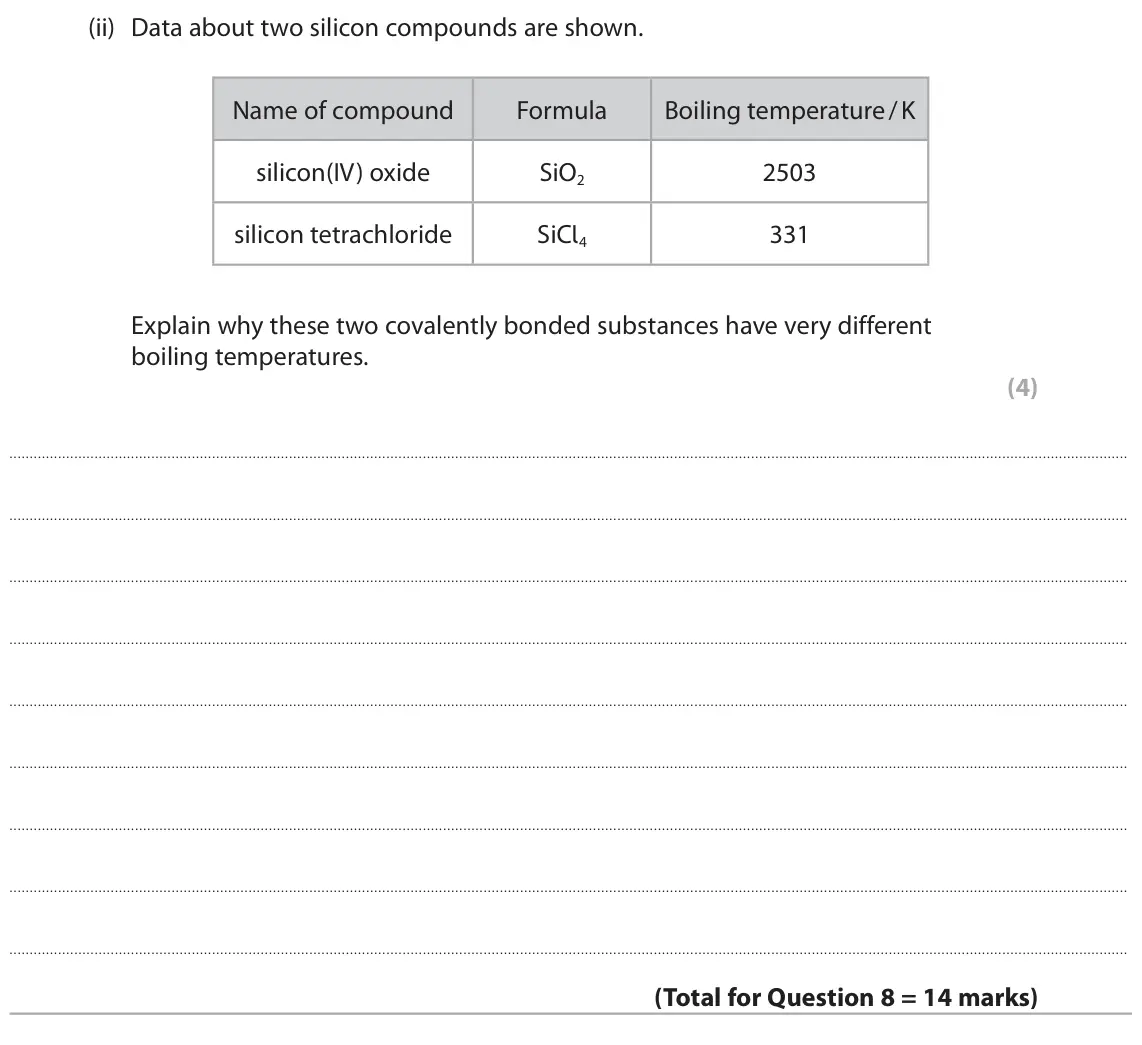
Q4(a)
The whole paper ↗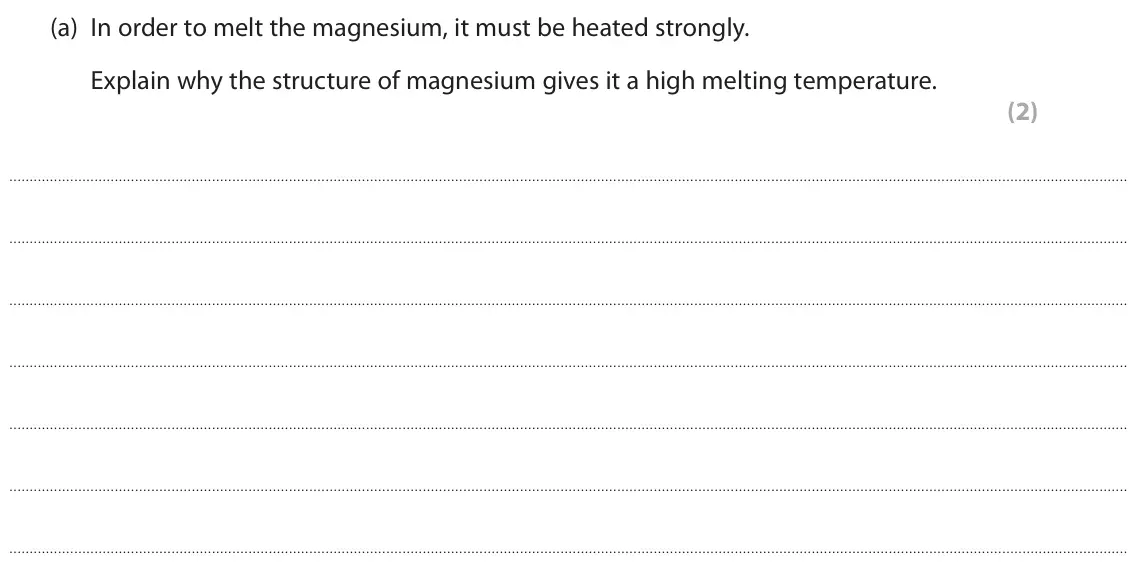
Q1(d)
The whole paper ↗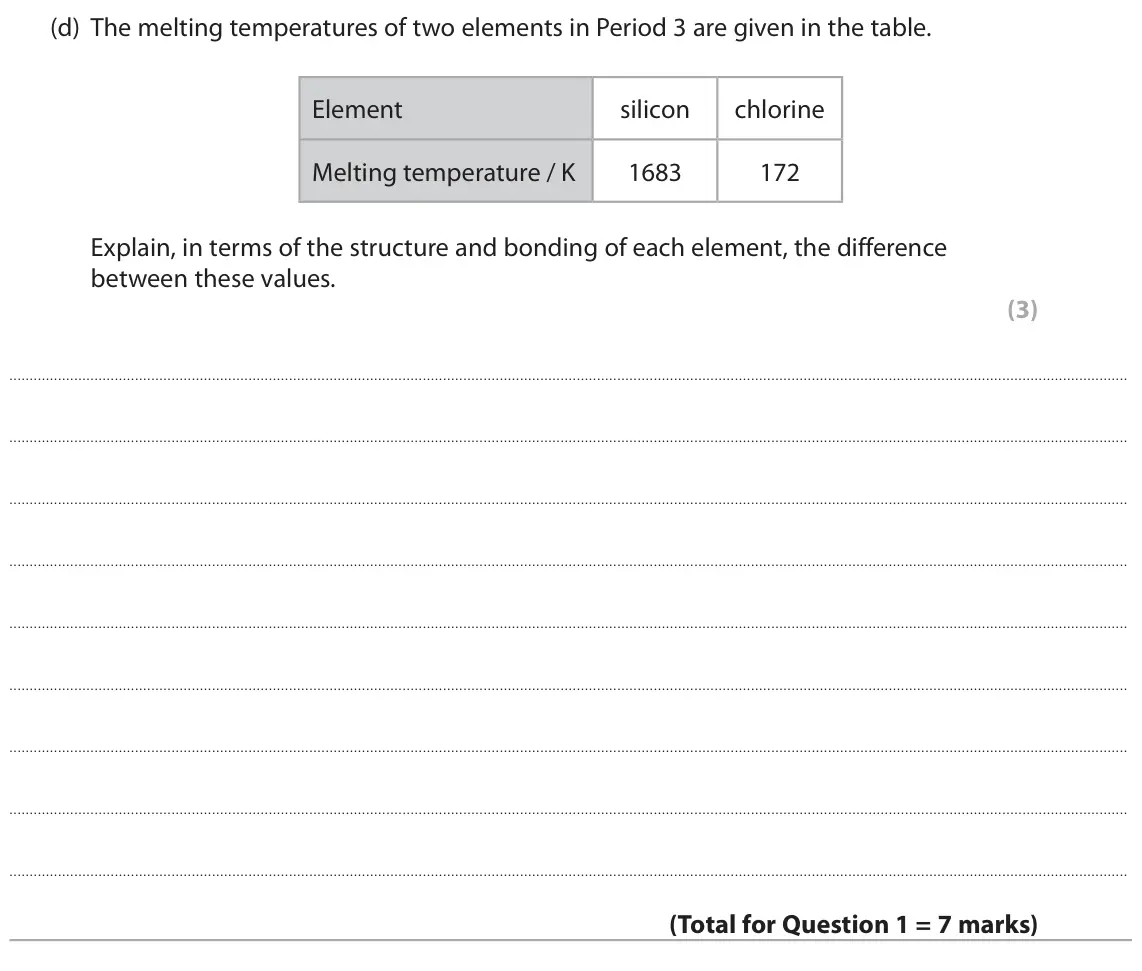
Q4(d)(i)
The whole paper ↗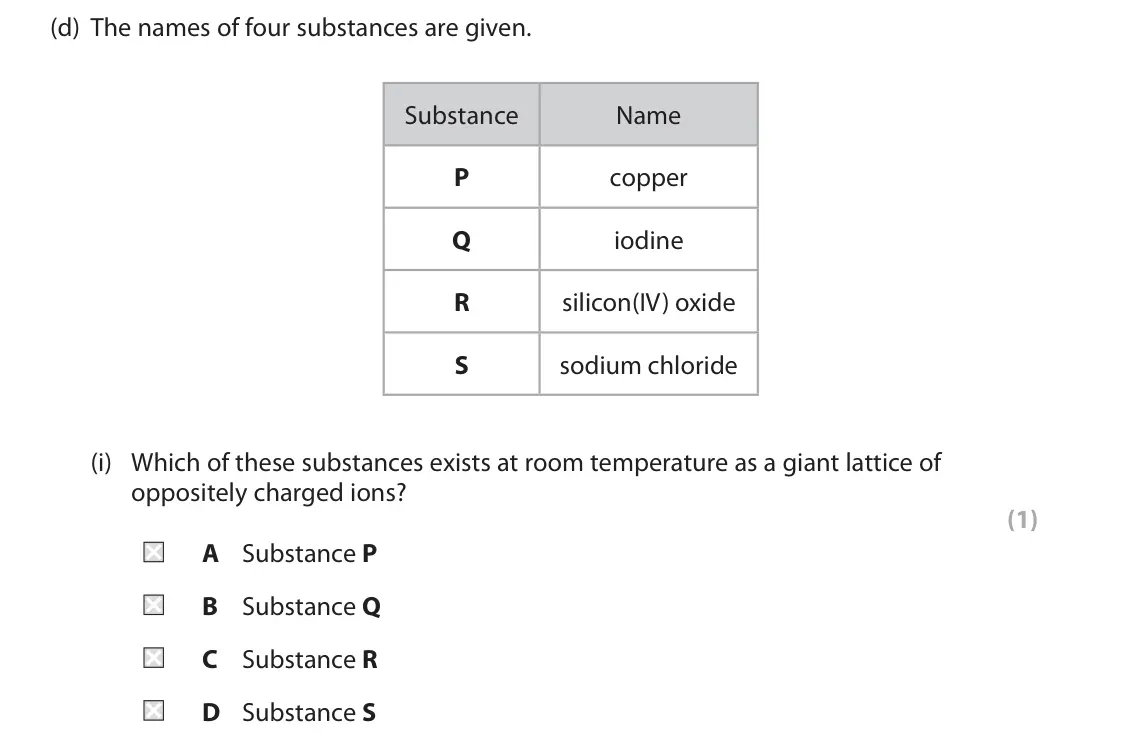
Q4(d)(ii)
The whole paper ↗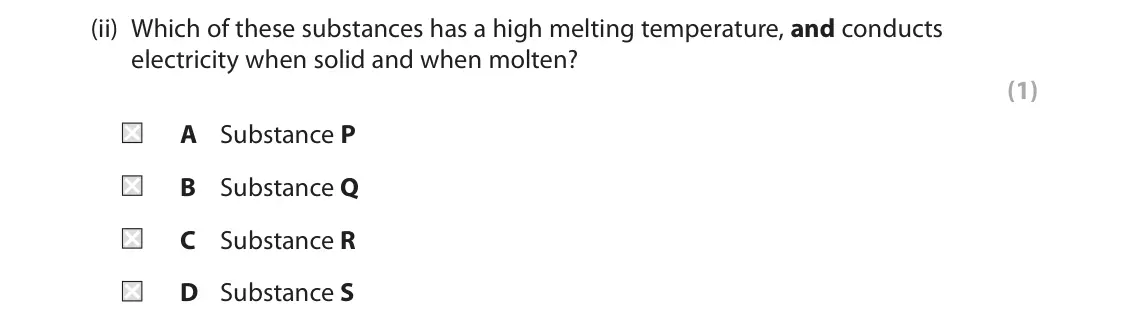
Q6(a)
The whole paper ↗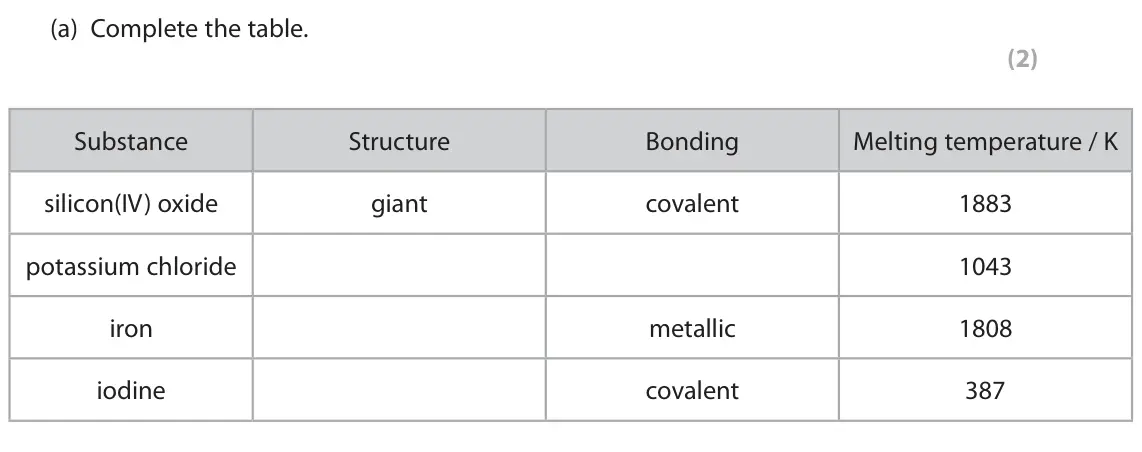
Q6(b)
The whole paper ↗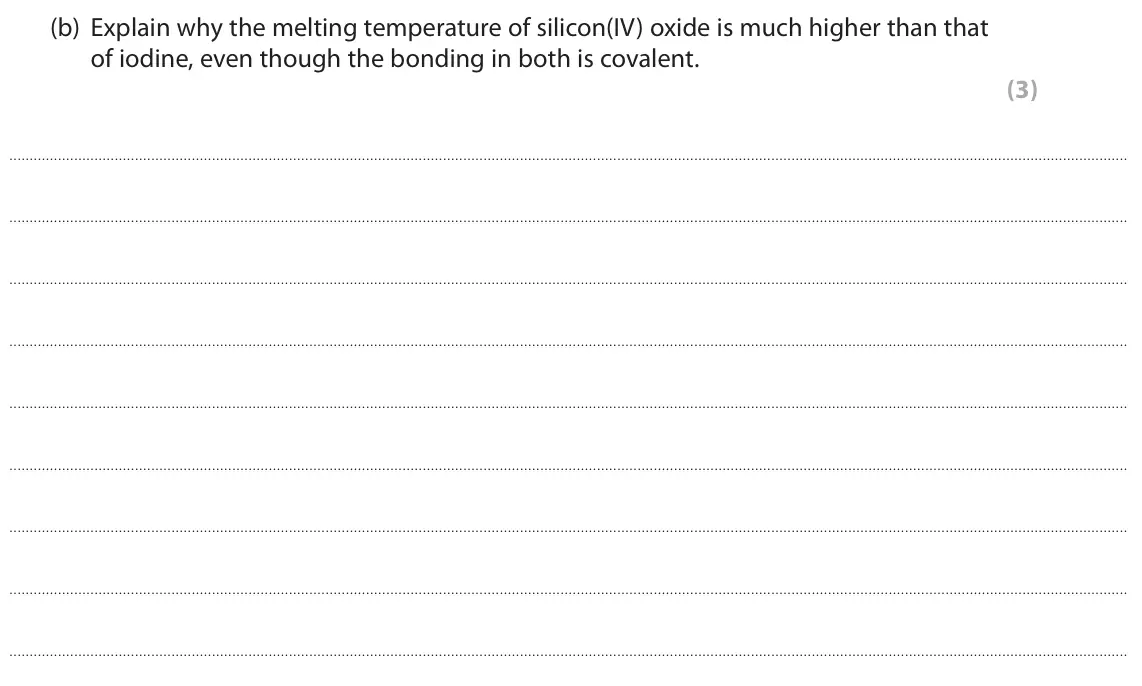
Q6(c)
The whole paper ↗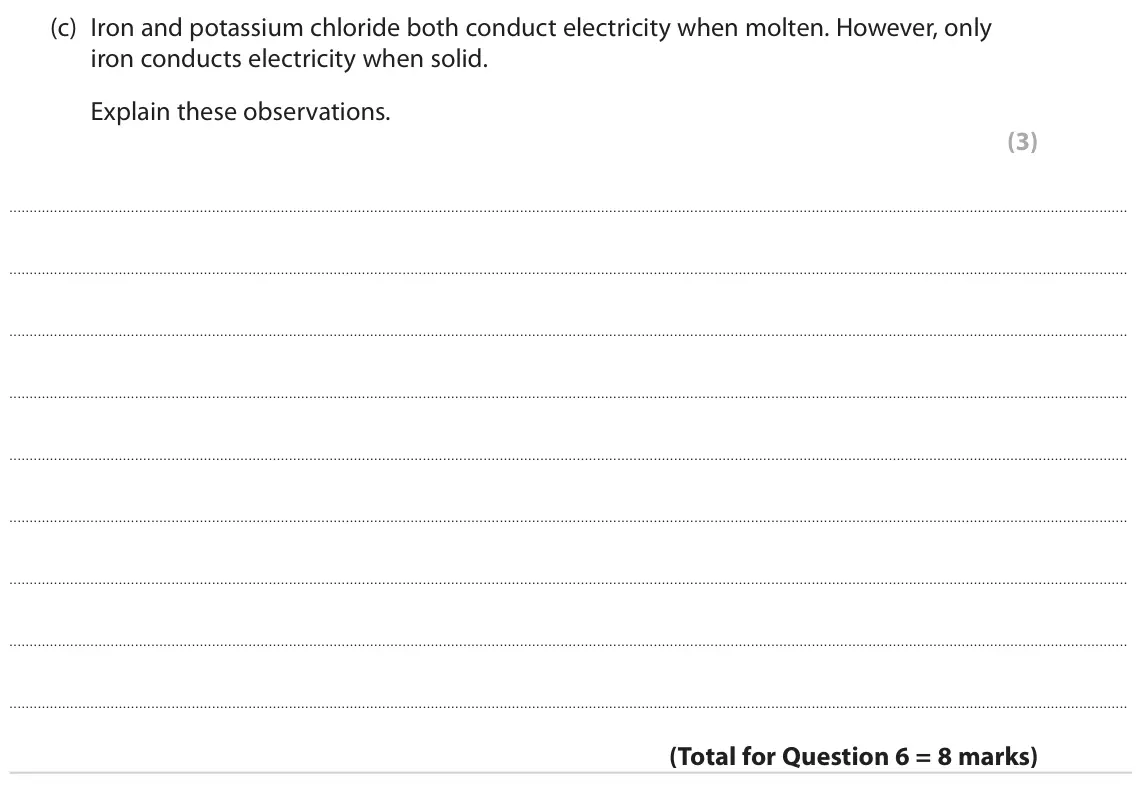
Q5(a)
The whole paper ↗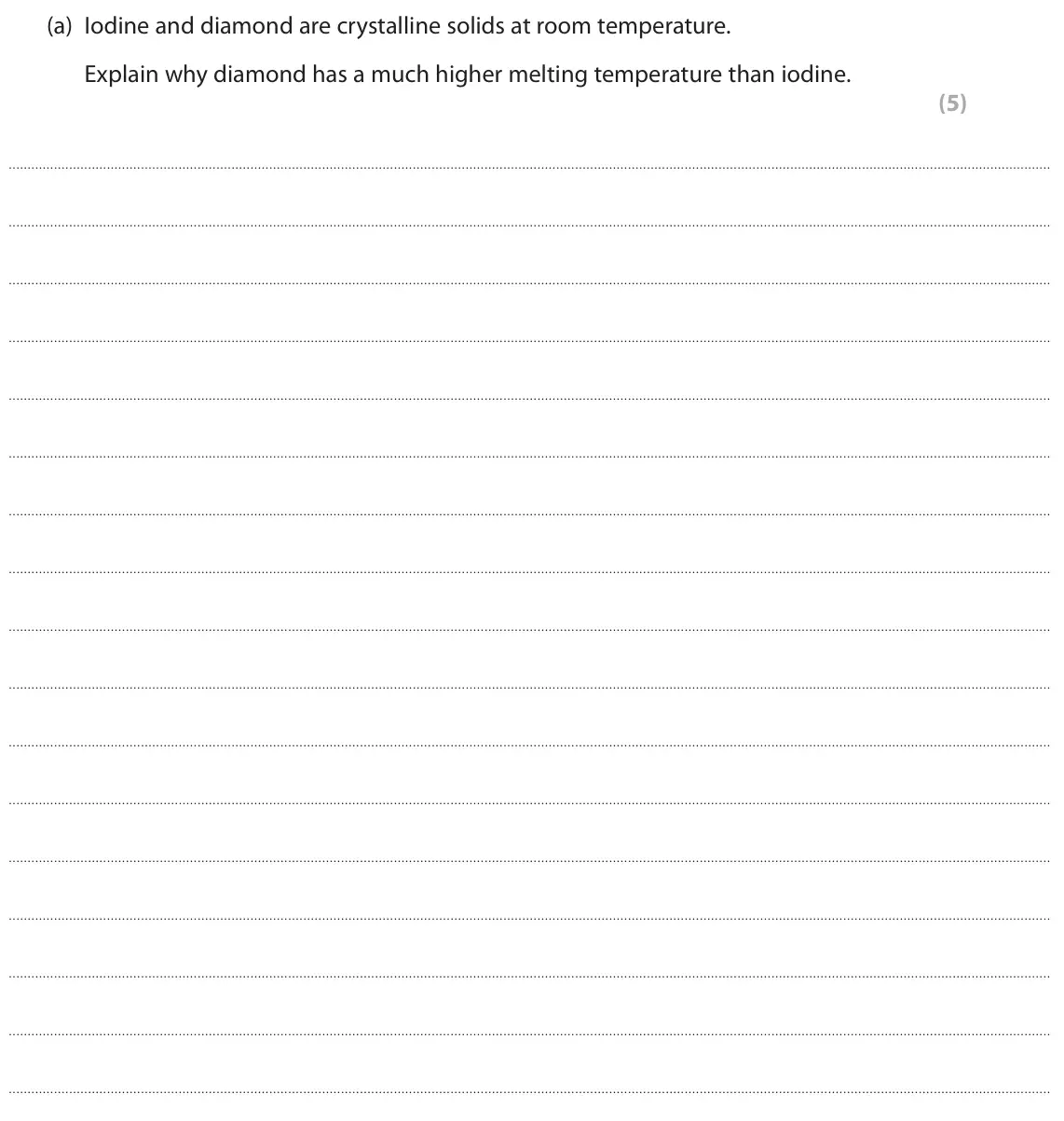
Q5(b)
The whole paper ↗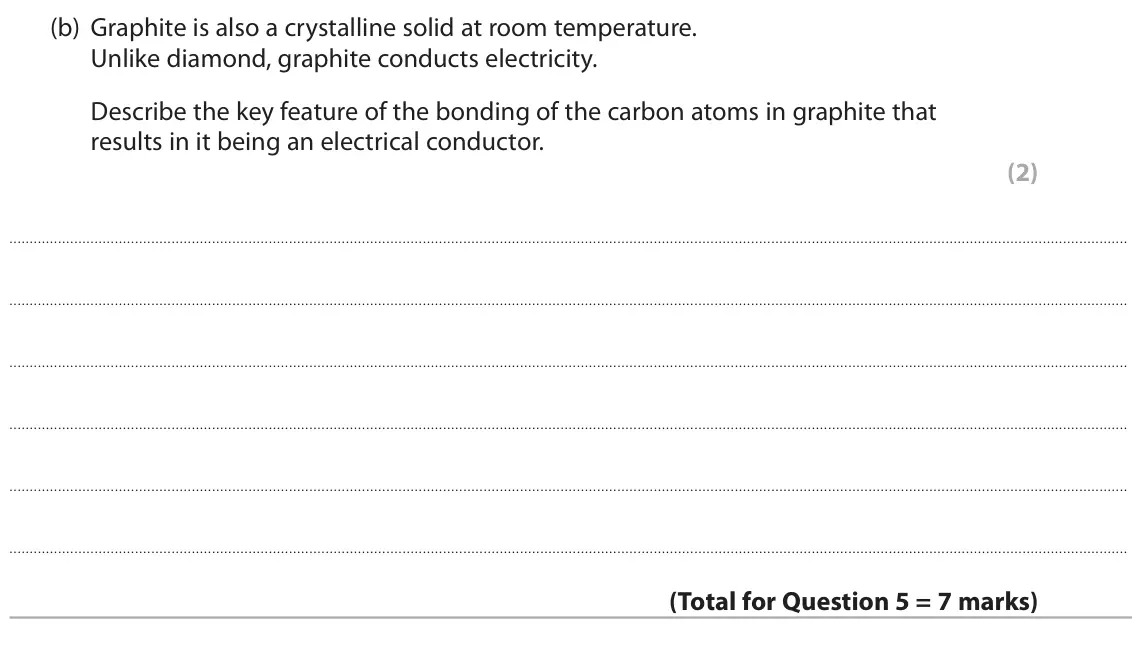
Q7(b)
The whole paper ↗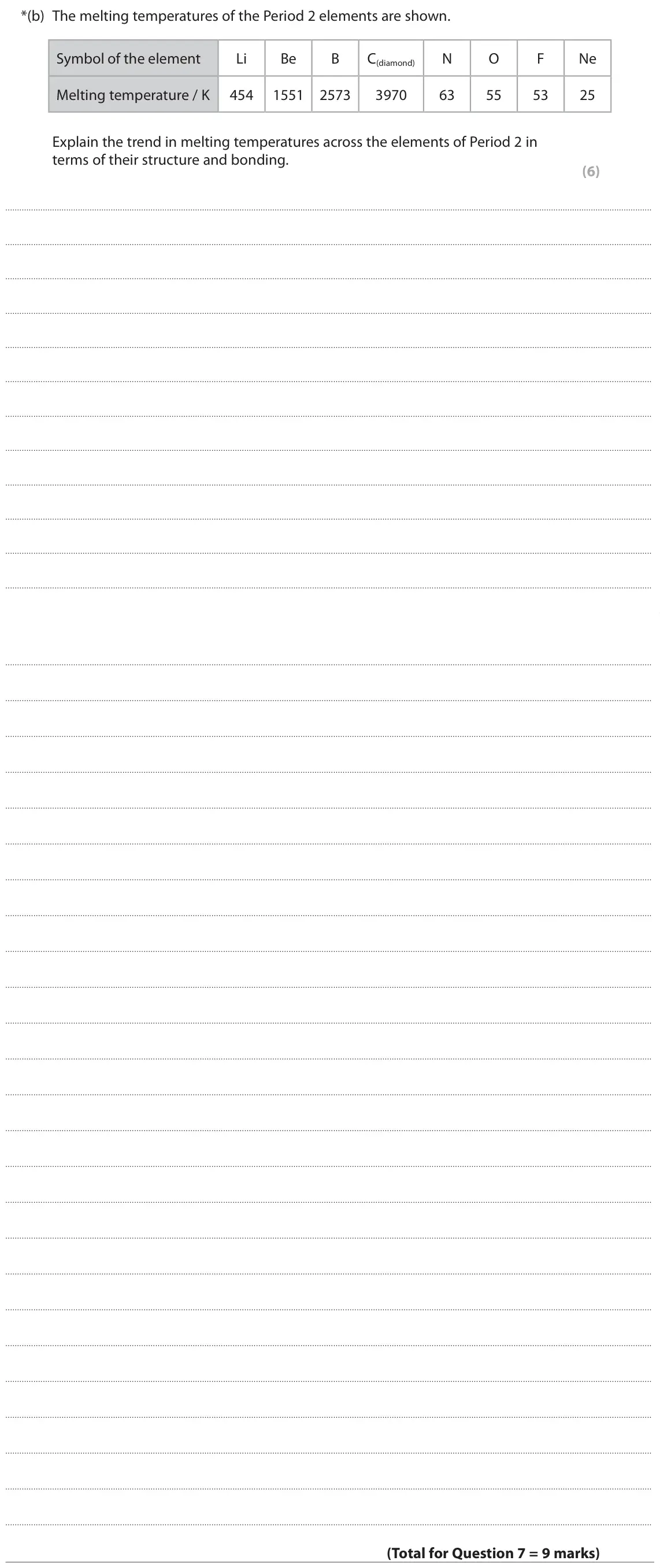
Q8(b)
The whole paper ↗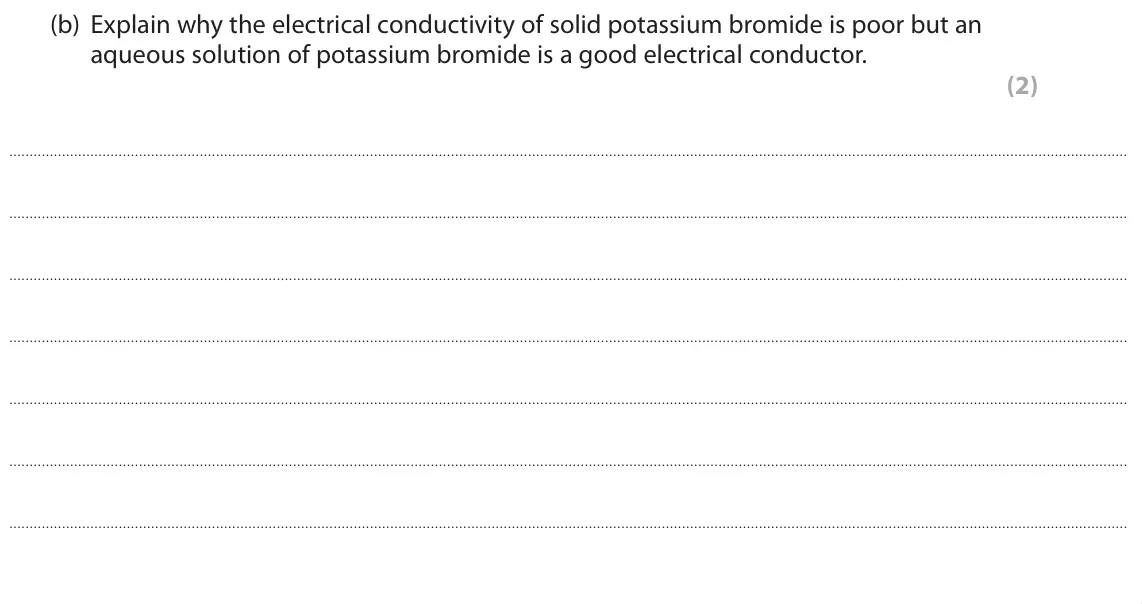
Q8(c)
The whole paper ↗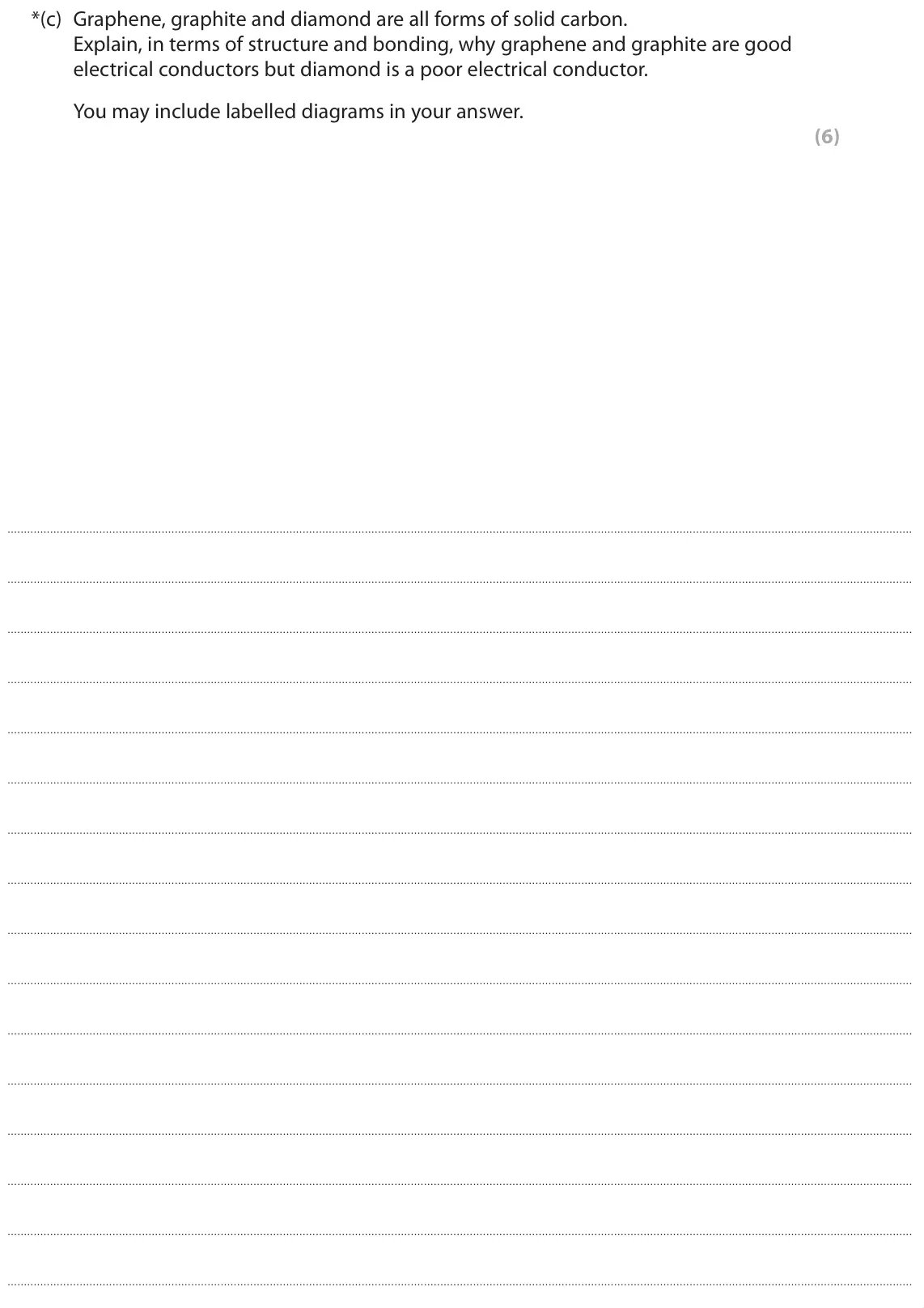
Q8(d)
The whole paper ↗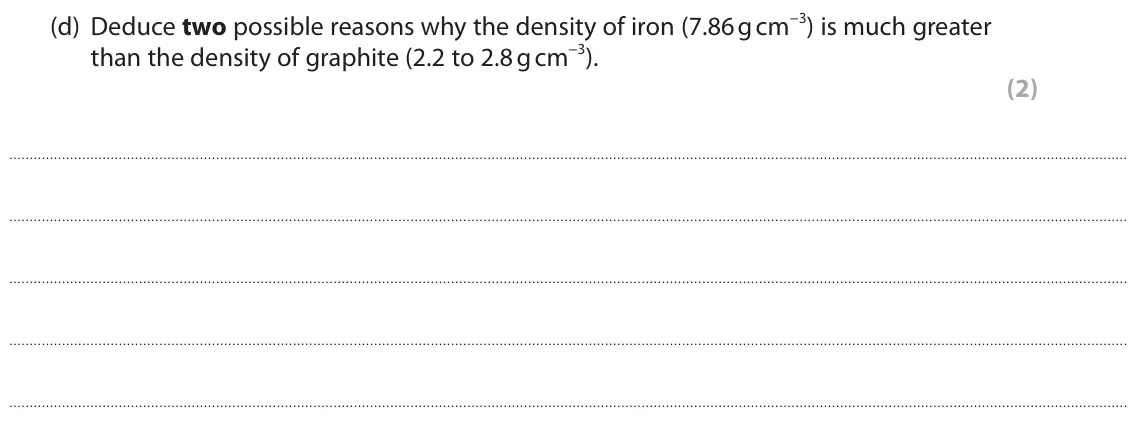
Q8(e)
The whole paper ↗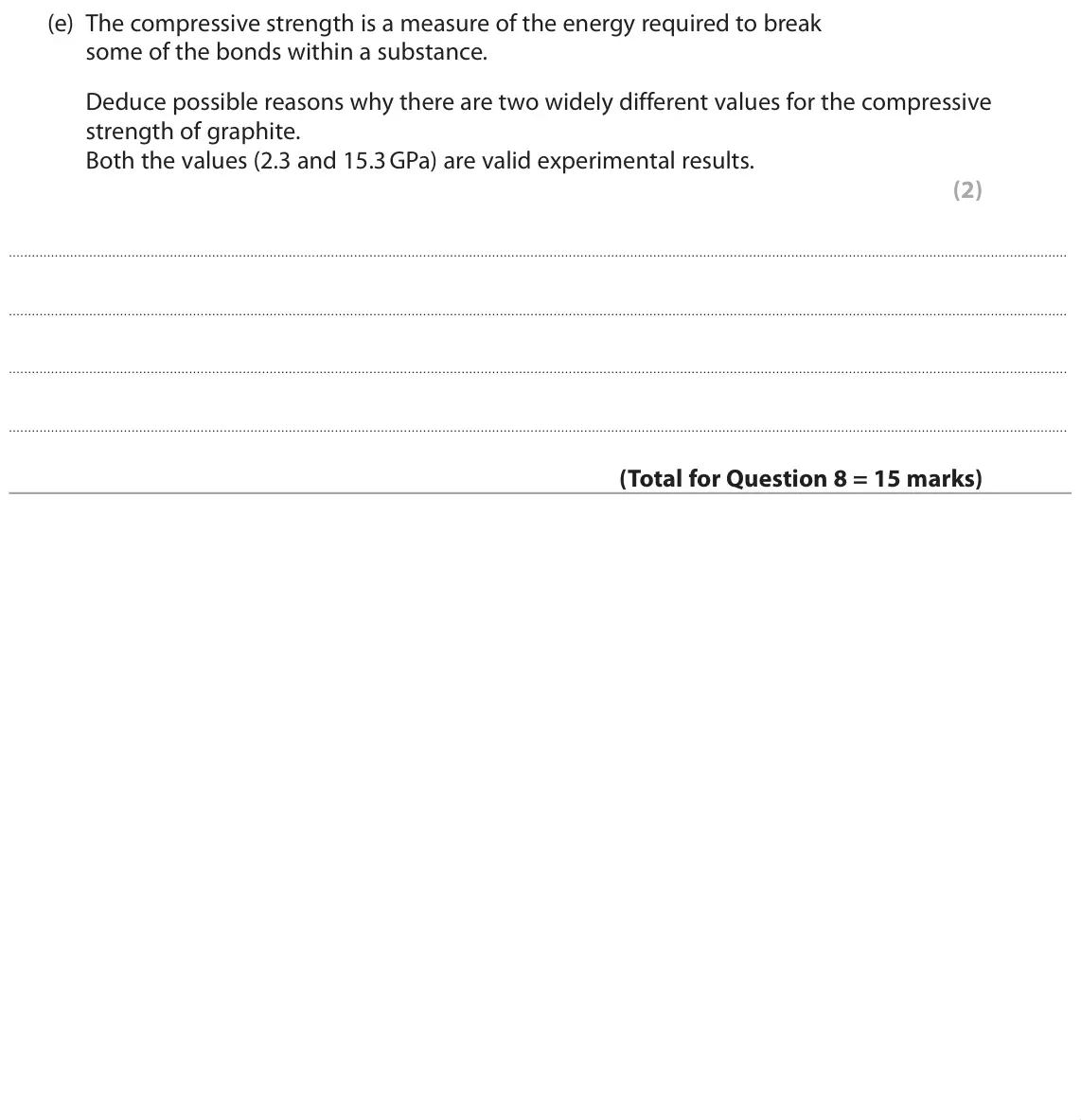
All 26 questions on Structure, as a list
- June 2025, AS Paper 1, Q2(a)(i) (3 marks): Draw labelled 2-dimensional diagrams showing the structures of both sodium metal and sodium chloride including nine ions in each diagram. (3) sodium metal sodiu
- June 2025, AS Paper 1, Q2(a)(iii) (1 mark): The melting temperature of sodium chloride is much higher than that of sodium metal. State what this information shows about the bonding in these two substances
- June 2025, AS Paper 1, Q2(a)(iv) (3 marks): Compare and contrast the electrical conductivity of sodium metal with that of sodium chloride, including how the charge is carried. (3)
- June 2024, AS Paper 1, Q7(d) (4 marks): The table shows the electrical conductivity of some pure substances in the solid and liquid states. Electrical conductivity Substance Solid state Liquid state p
- June 2024, AS Paper 1, Q8(b)(ii) (4 marks): Data about two silicon compounds are shown. Name of compound Formula Boiling temperature / K silicon(IV) oxide SiO2 2503 silicon tetrachloride SiCl4 331 Explain
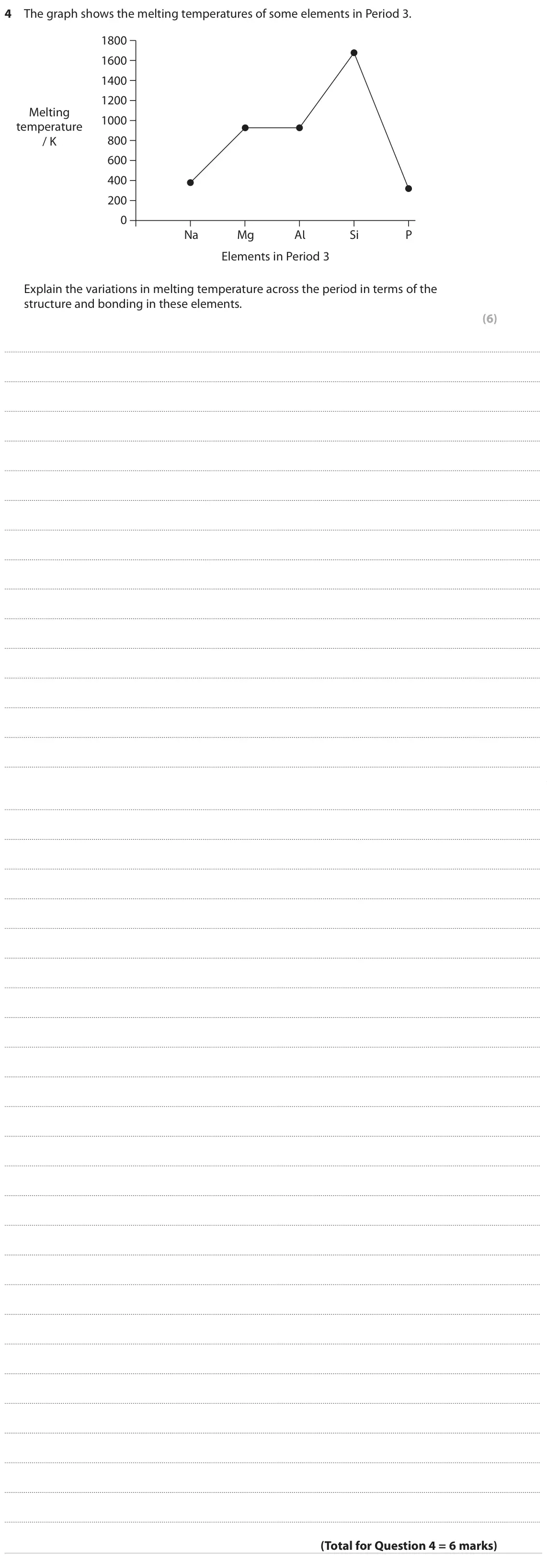
- June 2023, Paper 1, Q4 (6 marks): The graph shows the melting temperatures of some elements in Period 3. 1800 1600 1400 1200 Melting 1000 temperature 800 / K 600 400 200 0 Na Mg Al Si P Elements
- June 2023, AS Paper 1, Q4(a) (2 marks): In order to melt the magnesium, it must be heated strongly. Explain why the structure of magnesium gives it a high melting temperature. (2)
- June 2022, Paper 1, Q1(d) (3 marks): The melting temperatures of two elements in Period 3 are given in the table. Element silicon chlorine Melting temperature / K 1683 172 Explain, in terms of the
- June 2022, Paper 1, Q4(d)(i) (1 mark): Which of these substances exists at room temperature as a giant lattice of oppositely charged ions? (1) A Substance P B Substance Q C Substance R D Substance S
- June 2022, Paper 1, Q4(d)(ii) (1 mark): Which of these substances has a high melting temperature, and conducts electricity when solid and when molten? (1) A Substance P B Substance Q C Substance R D S
- June 2022, AS Paper 1, Q6(a) (2 marks): Complete the table. (2) Substance Structure Bonding Melting temperature / K silicon(IV) oxide giant covalent 1883 potassium chloride 1043 iron metallic 1808 iod
- June 2022, AS Paper 1, Q6(b) (3 marks): Explain why the melting temperature of silicon(IV) oxide is much higher than that of iodine, even though the bonding in both is covalent. (3)
- June 2022, AS Paper 1, Q6(c) (3 marks): Iron and potassium chloride both conduct electricity when molten. However, only iron conducts electricity when solid. Explain these observations. (3)
- November 2021, AS Paper 1, Q5(a) (5 marks): Iodine and diamond are crystalline solids at room temperature. Explain why diamond has a much higher melting temperature than iodine. (5)
- November 2021, AS Paper 1, Q5(b) (2 marks): Graphite is also a crystalline solid at room temperature. Unlike diamond, graphite conducts electricity. Describe the key feature of the bonding of the carbon a
- October 2020, AS Paper 1, Q7(b) (6 marks): The melting temperatures of the Period 2 elements are shown. Symbol of the element Li Be B C(diamond) N O F Ne Melting temperature / K 454 1551 2573 3970 63 55
- June 2019, AS Paper 1, Q8(b) (2 marks): Explain why the electrical conductivity of solid potassium bromide is poor but an aqueous solution of potassium bromide is a good electrical conductor. (2)
- June 2019, AS Paper 1, Q8(c) (6 marks): Graphene, graphite and diamond are all forms of solid carbon. Explain, in terms of structure and bonding, why graphene and graphite are good electrical conducto
- June 2019, AS Paper 1, Q8(d) (2 marks): Deduce two possible reasons why the density of iron (7.86 g cm−3) is much greater than the density of graphite (2.2 to 2.8 g cm−3). (2)
- June 2019, AS Paper 1, Q8(e) (2 marks): The compressive strength is a measure of the energy required to break some of the bonds within a substance. Deduce possible reasons why there are two widely dif
- June 2017, Paper 1, Q6(a)(ii) (1 mark): State all the conditions under which magnesium bromide conducts electricity. (1)
- June 2017, Paper 2, Q2(a) (1 mark): The structural feature that graphene and graphite have in common is that the carbon atoms are arranged in (1) A layers with each atom bonded to four others B he
- June 2017, Paper 2, Q2(b) (1 mark): The bond angles within a layer of graphene and a layer of graphite are (1) A 90° and 109.5° B all 109.5° C 109.5° and 120° D all 120°
- June 2017, Paper 2, Q2(c) (1 mark): One way in which diamond differs from graphene and graphite is that only diamond has (1) A a high melting temperature B a precise molecular formula C poor elect
- June 2016, AS Paper 1, Q8(a) (1 mark): Magnesium oxide has a very high melting temperature. Which of the following is the best description of its structure and bonding? (1) A giant ionic B giant meta
- June 2016, AS Paper 1, Q8(c) (4 marks): Element X has the typical appearance of a metal. Predict two other distinct physical properties that element X would exhibit if it is a metal. Explain your choi
Questions, mark schemes and examiner’s reports are © Pearson Edexcel, from their published past papers. Plumi isn’t affiliated with any exam board. Want whole papers? Every Edexcel A-Level Chemistry paper.
Rather write your answers by hand on iPad? Plumi marks them against the same mark schemes.