 plumi
Atomic structure and the periodic table: Edexcel A‑Level Chemistry questions
Every Edexcel A-Level Chemistry exam question on 1 Atomic structure and the periodic table, 2016–2025, with its mark scheme and examiner’s report.
Find questions2,028
Calculations
Q1(a)
The whole paper ↗
Q1(b)
The whole paper ↗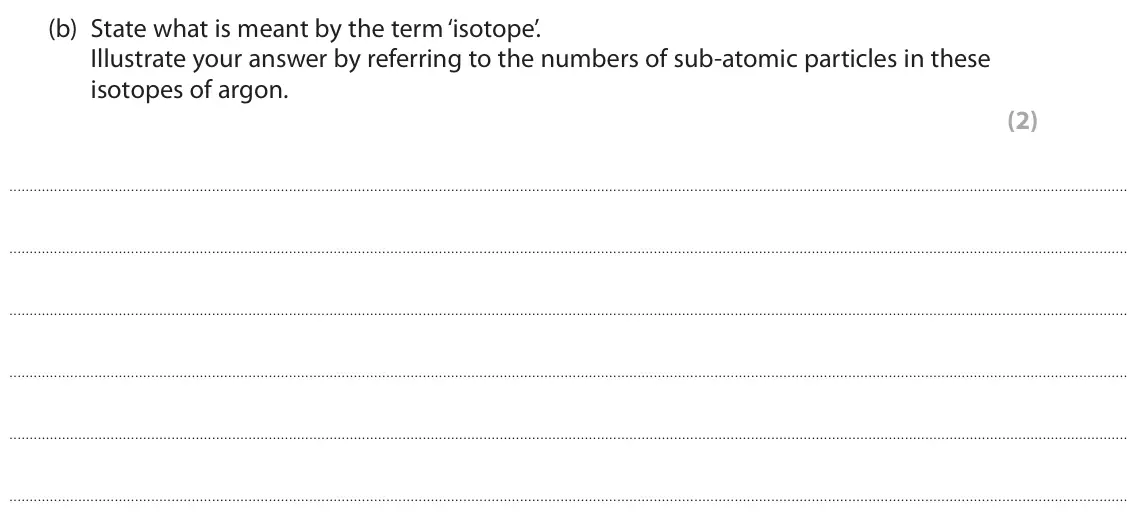
Q1(c)
The whole paper ↗
Q2(a)
The whole paper ↗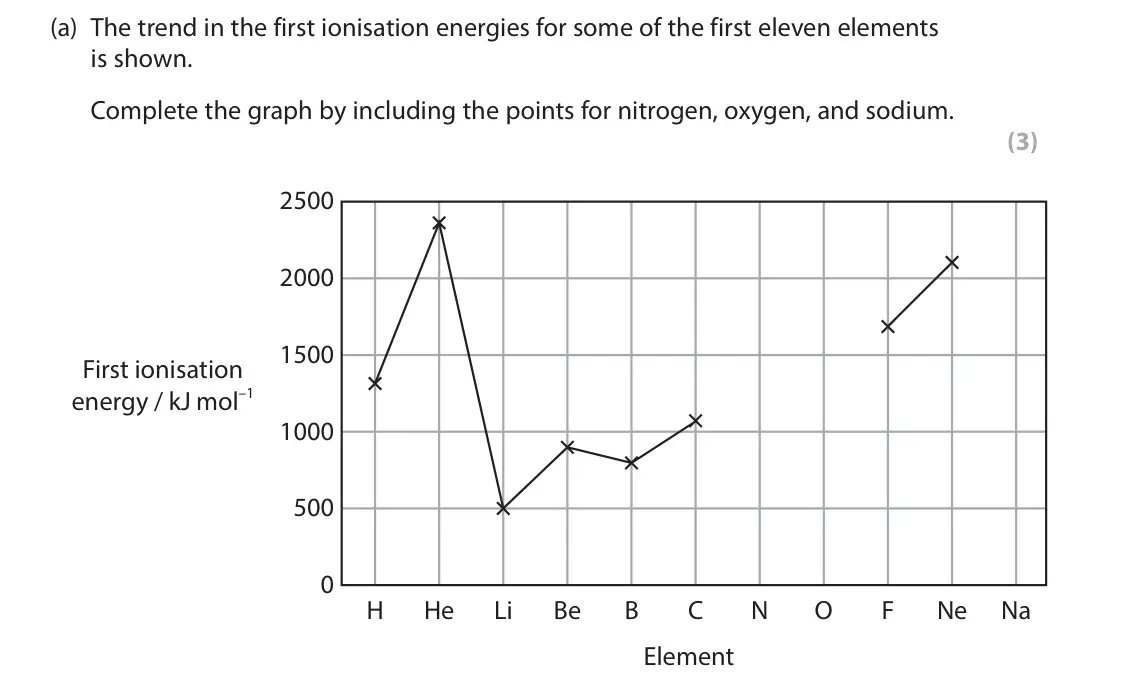
Q2(b)
The whole paper ↗
Q2(c)
The whole paper ↗
Q2(d)
The whole paper ↗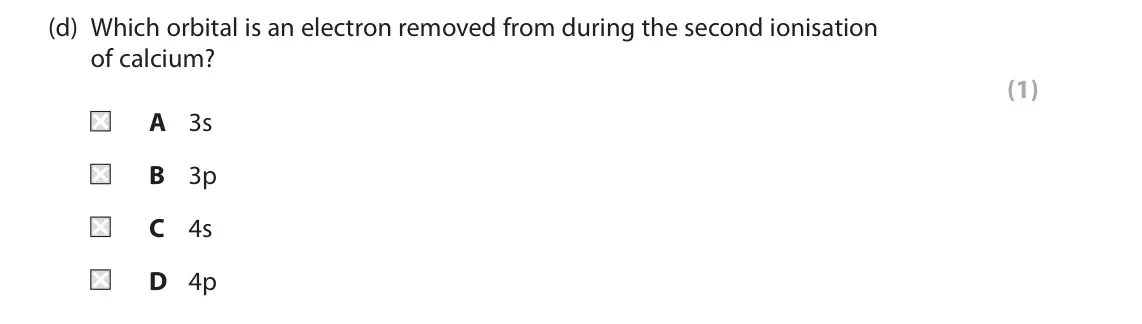
Q1(a)
The whole paper ↗
Q1(b)
The whole paper ↗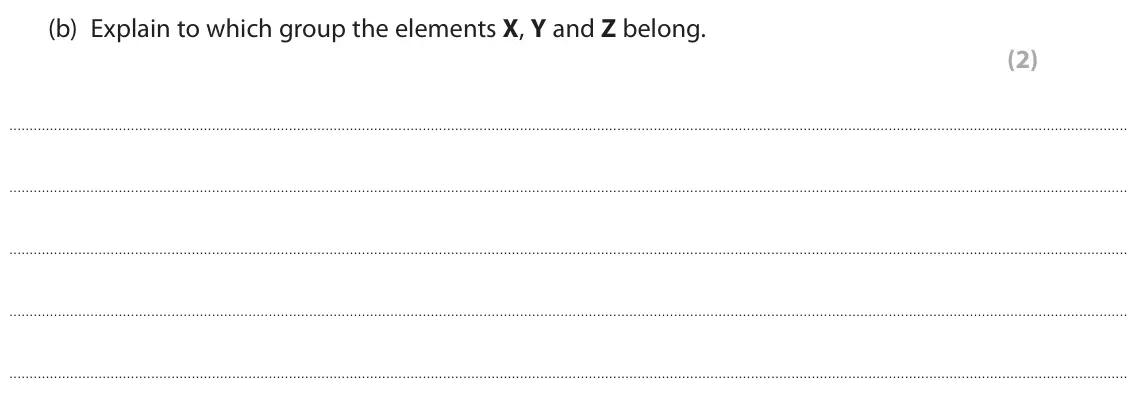
Q1(c)
The whole paper ↗
Q5(a)(i)
The whole paper ↗
Q5(a)(ii)
The whole paper ↗
Q5(b)(i)
The whole paper ↗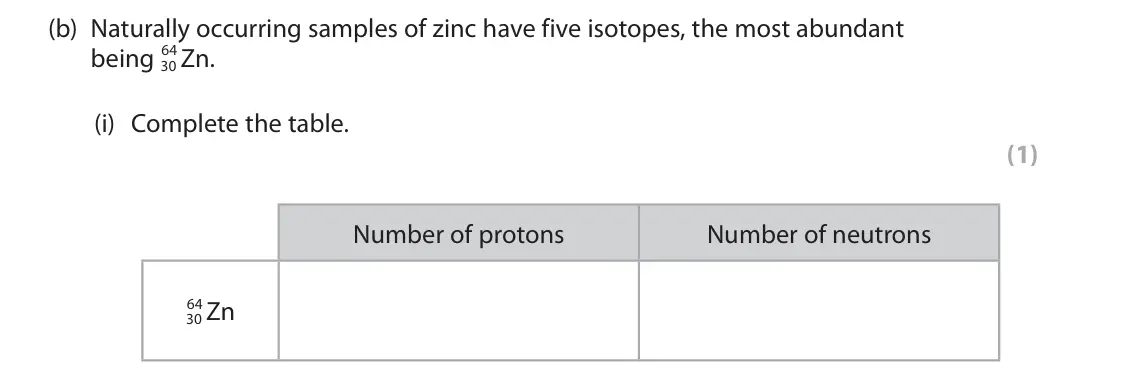
Q5(b)(ii)
The whole paper ↗
Q5(b)(iii)
The whole paper ↗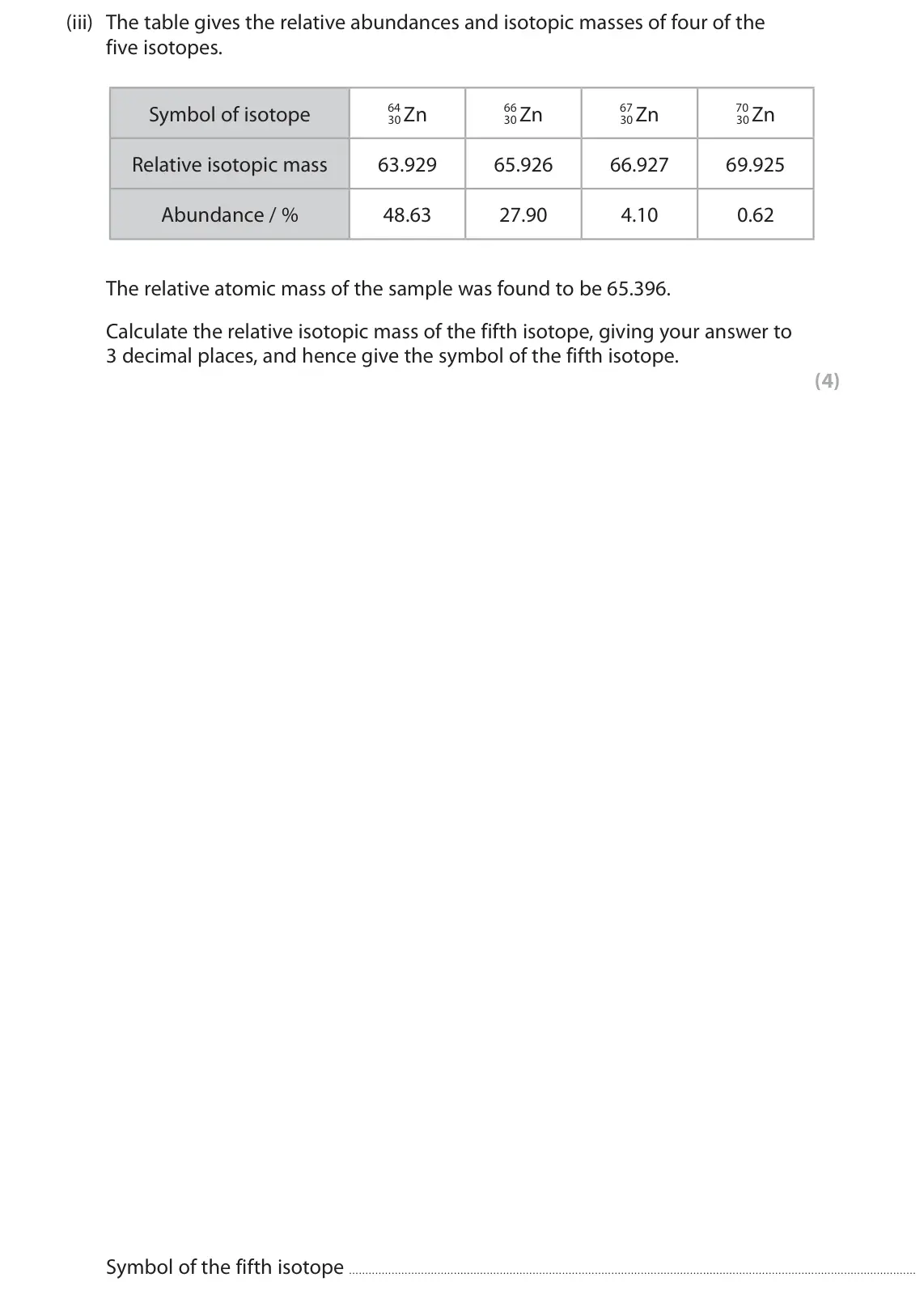
Q7(a)
The whole paper ↗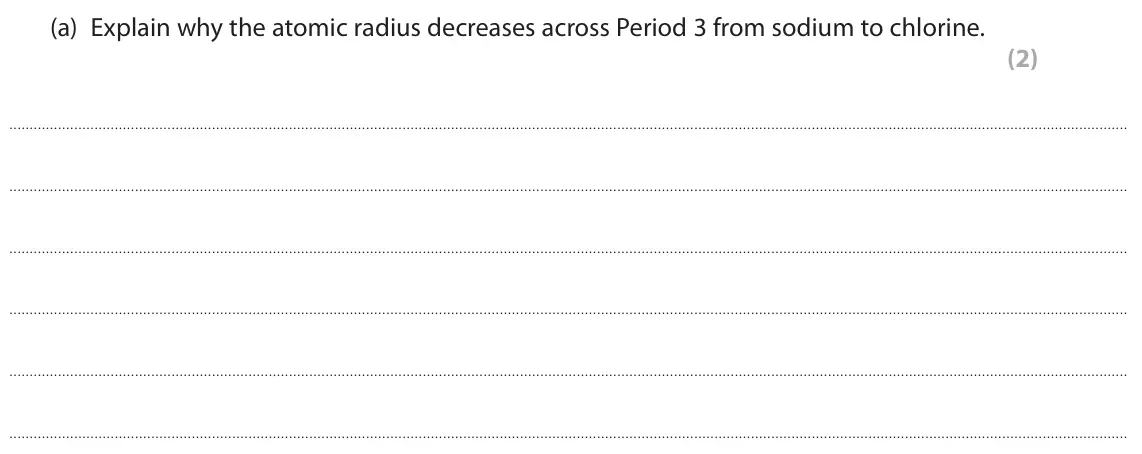
Q7(b)
The whole paper ↗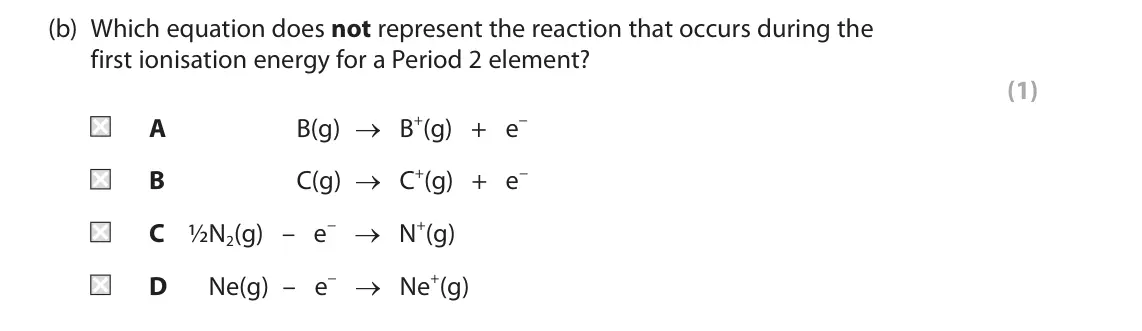
Q7(d)
The whole paper ↗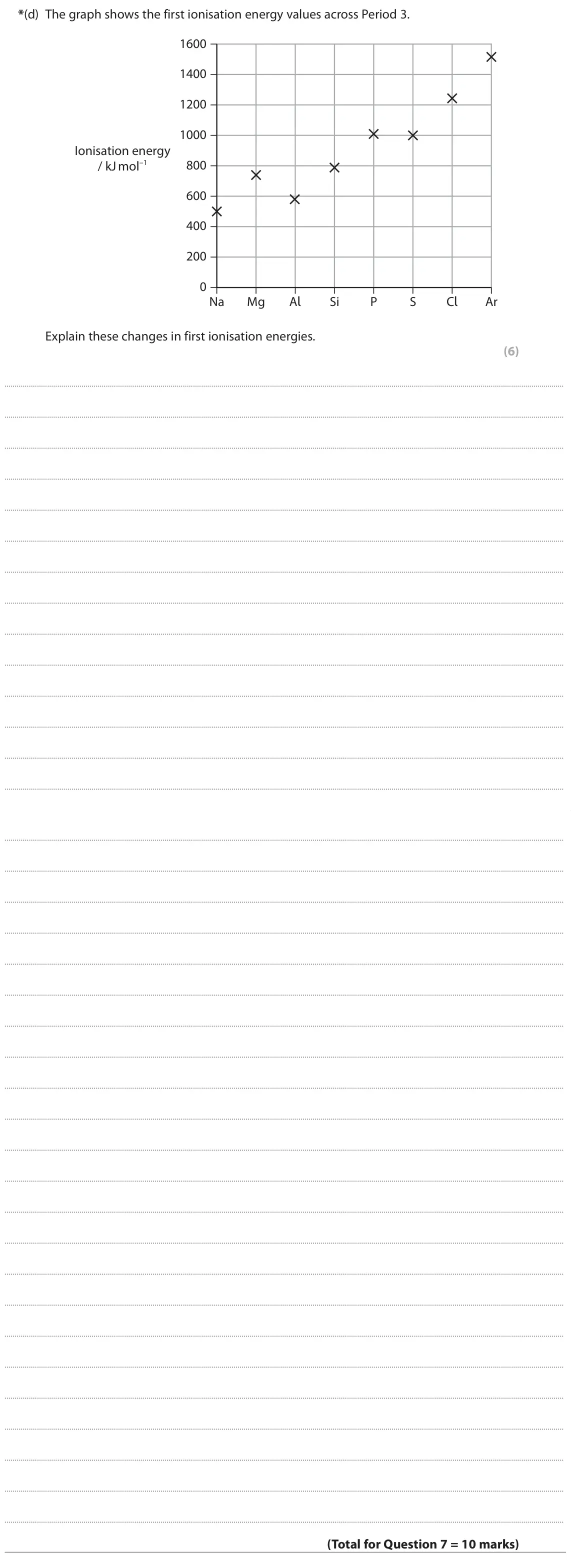
Q1(a)
The whole paper ↗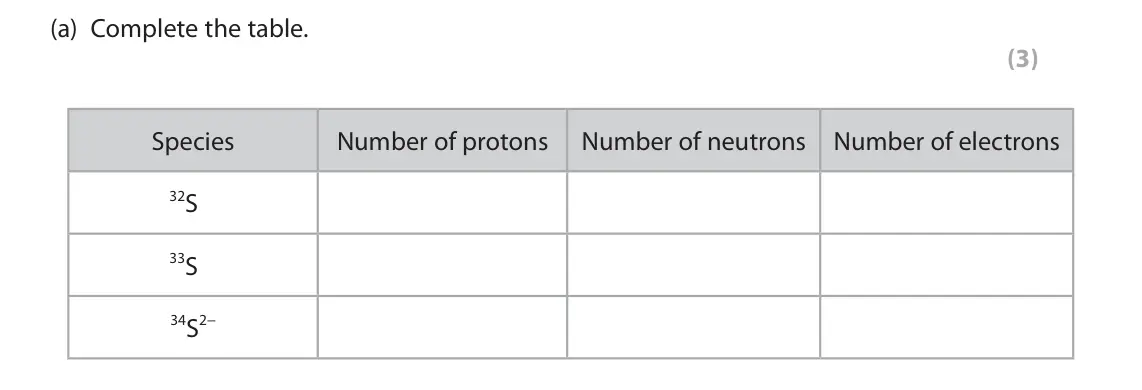
Q1(b)(i)
The whole paper ↗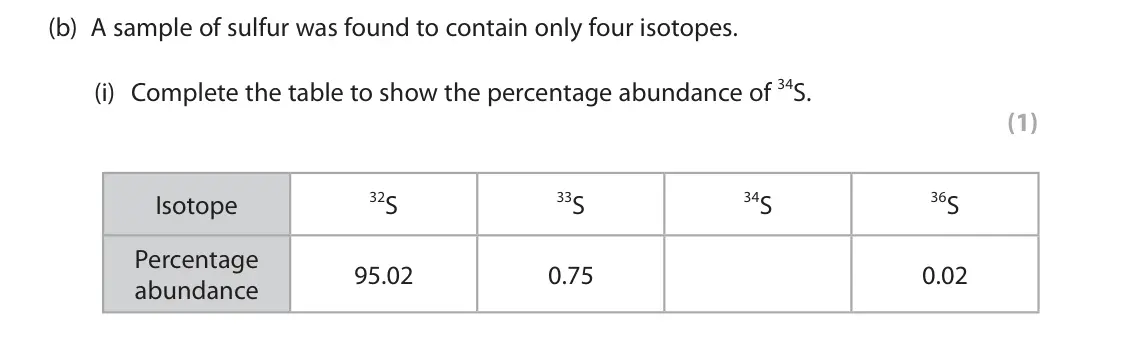
All 144 questions on Atomic structure and the periodic table, as a list
- June 2025, Paper 1, Q1(a) (2 marks): State what is meant by the term ‘relative isotopic mass’. (2)
- June 2025, Paper 1, Q1(b) (2 marks): State what is meant by the term ‘isotope’. Illustrate your answer by referring to the numbers of sub‑atomic particles in these isotopes of argon. (2)
- June 2025, Paper 1, Q1(c) (2 marks): Calculate the relative atomic mass of argon. Give your answer to two decimal places. (2)
- June 2025, Paper 1, Q2(a) (3 marks): The trend in the first ionisation energies for some of the first eleven elements is shown. Complete the graph by including the points for nitrogen, oxygen, and
- June 2025, Paper 1, Q2(b) (4 marks): Explain why the first ionisation energy of beryllium is higher than the first ionisation energy of both lithium and boron. (4)
- June 2025, Paper 1, Q2(c) (1 mark): Write the equation for the second ionisation energy of beryllium. Include state symbols. (1)
- June 2025, Paper 1, Q2(d) (1 mark): Which orbital is an electron removed from during the second ionisation of calcium? (1) A 3s B 3p C 4s D 4p
- June 2025, Paper 3, Q1(a) (2 marks): State what is meant by the term ‘first ionisation energy’. (2)
- June 2025, Paper 3, Q1(b) (2 marks): Explain to which group the elements X, Y and Z belong. (2)
- June 2025, Paper 3, Q1(c) (3 marks): Explain which of the elements X, Y and Z has the highest atomic number. (3)
- June 2025, AS Paper 1, Q5(a)(i) (2 marks): Complete the electronic structure of the Zn atom and of the Mg2+ ion. (2) 1s2 Zn Mg2+ 1s2
- June 2025, AS Paper 1, Q5(a)(ii) (2 marks): Explain, in terms of ionisation energies, why zinc and magnesium both form stable 2+ ions. (2)
- June 2025, AS Paper 1, Q5(b)(i) (1 mark): Complete the table. (1) Number of protons Number of neutrons 64 Zn 30
- June 2025, AS Paper 1, Q5(b)(ii) (1 mark): The relative isotopic mass of 30 Give the reason why the relative isotopic mass is not exactly 64. (1)
- June 2025, AS Paper 1, Q5(b)(iii) (4 marks): The table gives the relative abundances and isotopic masses of four of the five isotopes. 64 66 67 70 Symbol of isotope 30 Zn 30 Zn 30 Zn 30 Zn Relative isotopi
- June 2025, AS Paper 1, Q7(a) (2 marks): Explain why the atomic radius decreases across Period 3 from sodium to chlorine. (2)
- June 2025, AS Paper 1, Q7(b) (1 mark): Which equation does not represent the reaction that occurs during the first ionisation energy for a Period 2 element? (1) A B(g) → B+(g) + e− B C(g) → C+(g) + e
- June 2025, AS Paper 1, Q7(d) (6 marks): The graph shows the first ionisation energy values across Period 3. 1600 1400 1200 1000 Ionisation energy 800 / kJ mol–1 600 400 200 0 Na Mg Al Si P S Cl Ar Exp
- June 2024, Paper 1, Q1(a) (3 marks): Complete the table. (3) Species Number of protons Number of neutrons Number of electrons 32S 33S 34S2−
- June 2024, Paper 1, Q1(b)(i) (1 mark): Complete the table to show the percentage abundance of 34S. (1) 32S 33S 34S 36S Isotope Percentage 95.02 0.75 0.02 abundance
- June 2024, Paper 1, Q1(b)(ii) (2 marks): Calculate the relative atomic mass (Ar ) of the sulfur in this sample using the data in the table. Give your answer to two decimal places. (2)
- June 2024, Paper 1, Q2(c)(i) (1 mark): Which element in the table could be in Group 4? (1) A B C D
- June 2024, Paper 1, Q2(c)(ii) (1 mark): Which element in the table could be described as an s-block element? (1) A B C D
- June 2024, Paper 3, Q1(a) (2 marks): Define relative isotopic mass. (2)
- June 2024, Paper 3, Q1(b) (1 mark): A sample of hydrogen gas is formed from atoms of three isotopes, 1H, 2H and 3H. +, in the mass spectrum of Deduce the number of peaks due to molecular ions, H2
- June 2024, AS Paper 1, Q1 (1 mark): 31P3– ? 1 What is the electronic configuration of the phosphide ion, 15 A 1s22s22p63s23p3 B 1s22s22p63s23p6 C 1s22s22p63s2 D 1s22s22p63p6
- June 2024, AS Paper 1, Q2 (1 mark): Which could be the first four successive ionisation energies, in kJ mol−1 , of a Group 4 element? A 496 4563 6913 9544 B 900 1757 14 849 21 007 C 801 2427 3610
- June 2024, AS Paper 1, Q3 (1 mark): Which pair of responses show the trend in atomic radii of atoms, excluding the noble gases (Group 0)? Trend across Period 2 Trend down Group 2 A increasing incr
- June 2024, AS Paper 1, Q6(b) (2 marks): A mass spectrometer was used to obtain the mass number and relative abundance of each isotope of an unknown element, B. Mass number Relative isotopic of isotope
- June 2024, AS Paper 1, Q6(c) (1 mark): Cations are formed in a mass spectrometer. Which species is a cation? (1) Number of protons Number of neutrons Number of electrons A 3 4 3 B 6 6 6 C 12 12 10 D
- June 2023, Paper 1, Q1(a) (1 mark): Which of the labels 1–4 identifies a d‑block element in Period 4? 2 3 Ionisation energy 4 1 10 20 30 40 50 60 Atomic number (1) A 1 B 2 C 3 D 4
- June 2023, Paper 1, Q1(b) (1 mark): State what is meant by the term d‑block element. (1)
- June 2023, Paper 1, Q2(a) (2 marks): State what is meant by the term orbital. (2)
- June 2023, Paper 1, Q2(b) (2 marks): Draw diagrams to show the shape of an s and a p orbital. (2) s orbital p orbital
- June 2023, Paper 1, Q2(c) (1 mark): What is the electronic configuration of a copper atom? (1) A [Ar]4s13d10 B [Ar]4s23d9 C [Ar]4s24p13d8 D [Ar]4s24p23d7
- June 2023, Paper 1, Q7(a) (2 marks): Naturally occurring chromium has four isotopes, 50Cr, 52Cr, 53Cr and 54Cr. State what is meant by the term isotopes. (2)
- June 2023, Paper 1, Q7(b)(i) (1 mark): Complete the electronic configuration of a Cr2+ ion. (1) 1s2 .
- June 2023, Paper 1, Q7(b)(ii) (3 marks): Explain which of chromium or calcium most easily forms a +2 ion using all of the data in the table. Atomic 1st ionisation energy 2nd ionisation energy Metallic
- June 2023, AS Paper 1, Q1(a) (1 mark): Which are the correct data for a proton and a neutron? (1) Proton Neutron Relative charge Relative mass Relative charge Relative mass A +1 1 –1 0.0005 B +1 1 0
- June 2023, AS Paper 1, Q1(b)(i) (1 mark): State the shape of the 2s orbital of a silicon atom. (1)
- June 2023, AS Paper 1, Q1(b)(ii) (1 mark): State the difference between the two subatomic particles in the 2s orbital. (1)
- June 2023, AS Paper 1, Q1(c) (2 marks): Silicon has three stable isotopes. A sample of silicon was found to have a relative atomic mass, Ar , of 28.11 due to the presence of only the three stable isot
- June 2023, AS Paper 1, Q1(d) (1 mark): Give the symbol, including the mass number and atomic number, for an atom of element X that has four fewer protons and three fewer neutrons than an atom of 14 2
- June 2023, AS Paper 1, Q9(a) (1 mark): The first four ionisation energies, in kJ mol–1, of four elements are shown. Which element is in Group 3? (1) A 738 1451 7753 10 541 B 578 1817 2745 11 578 C 78
- June 2023, AS Paper 1, Q9(b)(i) (2 marks): Write an equation for the second ionisation of beryllium. Include state symbols. (2)
- June 2023, AS Paper 1, Q9(b)(ii) (6 marks): Explain how the nuclear structure and the electronic structure of the Group 2 elements affect ionisation energies. Include: • an explanation of the trend of the
- June 2022, Paper 1, Q1(a) (2 marks): Complete the table to show the relative charges and masses for a neutron and an electron. (2) Particle Relative charge Relative mass proton +1 1 neutron electro
- June 2022, Paper 1, Q1(b) (1 mark): Atomic emission spectroscopy provides evidence for the existence of (1) A atoms B electrons C isotopes D quantum shells
- June 2022, Paper 1, Q1(c) (1 mark): Draw the shape of a p orbital. (1)
- June 2022, Paper 1, Q3(c) (1 mark): The halogens can form halide ions during reactions. Complete the electronic configuration of the chloride ion. (1) 1s2
- June 2022, Paper 3, Q1(a) (2 marks): Define the term relative atomic mass. (2)
- June 2022, Paper 3, Q1(b) (2 marks): A sample of neon consisted of three isotopes. Isotope Percentage abundance 20Ne 84.80 21Ne 2.26 22Ne 12.94 Calculate the relative atomic mass of neon in this sa
- June 2022, AS Paper 1, Q1 (1 mark): Which is the electronic configuration for the S2– ion? A 1s2 2s2 2p6 3s2 3p2 B 1s2 2s2 2p6 3s2 3p4 C 1s2 2s2 2p6 3p6 D 1s2 2s2 2p6 3s2 3p6
- June 2022, AS Paper 1, Q2 (1 mark): Which is the most likely sequence of values, in kJ mol–1 , for the first four ionisation energies of barium? A 1000 2251 3361 4564 B 496 4563 6913 9544 C 503 96
- June 2022, AS Paper 1, Q4(a) (1 mark): Hydrogen has three isotopes, 1H, 2H and 3H. Which is the correct number of subatomic particles in 3H? (1) Number of subatomic particles Protons Neutrons Electro
- June 2022, AS Paper 1, Q4(b)(i) (2 marks): The relative abundance of the isotope 35Cl is 75.5 %. The relative peak height of this isotope is 82.5 in the mass spectrum. Calculate the relative peak height
- June 2022, AS Paper 1, Q4(b)(ii) (1 mark): Give a reason for the presence of the three peaks at 70, 72 and 74. (1)
- June 2022, AS Paper 1, Q4(b)(iii) (3 marks): Explain, using calculations, why there is an approximate ratio of 9 : 6 : 1 for the peak heights corresponding to the m / z values of 70, 72 and 74. (3)
- June 2022, AS Paper 1, Q7(a) (1 mark): Which list contains only s‑block elements? (1) A Li, Na, Mg and Cl B K, Ca, Co and Rb C Mg, Al, Sr and Ba D Be, Rb, Ba and Ra
- November 2021, Paper 1, Q1(a) (1 mark): Which of the following pairs of ions is isoelectronic? (1) A N3– and Cl– B O2– and S2– C Na+ and K+ D Na+ and Mg2+
- November 2021, Paper 1, Q1(b) (1 mark): Which is a correct definition of relative isotopic mass? (1) A the weighted mean mass of an atom of an element relative to one twelfth of the mass of an atom of
- November 2021, Paper 1, Q1(c) (2 marks): The percentage composition of the two bromine isotopes in a sample is given in the table. Isotope Relative isotopic mass Percentage abundance bromine-79 78.918
- November 2021, Paper 1, Q4(a) (2 marks): A student’s definition of first ionisation energy is shown. First ionisation energy is the energy released when one mole of gaseous atoms loses one mole of elec
- November 2021, Paper 1, Q4(b) (2 marks): Write an equation for the second ionisation energy of oxygen. Include state symbols. (2)
- November 2021, Paper 1, Q4(c) (3 marks): A sodium atom has 11 protons whereas a potassium atom has 19 protons. Explain why the first ionisation energy of sodium is greater than that of potassium. (3)
- November 2021, Paper 1, Q4(d)(i) (1 mark): Complete the table. (1)
- November 2021, Paper 1, Q4(d)(ii) (1 mark): Give a reason why the logarithm of the ionisation energy, rather than just the ionisation energy, is used to plot a graph. (1)
- November 2021, Paper 1, Q4(d)(iii) (1 mark): Give a reason why the successive ionisation energies increase. (1)
- November 2021, Paper 1, Q4(d)(iv) (3 marks): Plot the graph of log(ionisation energy) against electron number removed. Join the individual points using straight lines. (3)
- November 2021, Paper 1, Q4(d)(v) (1 mark): Identify on the graph, using a circle, the points that represent the removal of the electrons in the outermost energy level of magnesium. (1)
- November 2021, Paper 1, Q4(e) (1 mark): Estimate a value for the first ionisation energy of oxygen given the data in the table. (1) Element First ionisation energy / kJ mol–1 carbon 1086 nitrogen 1402
- November 2021, Paper 3, Q1(a)(i) (2 marks): Complete the table to show the numbers of subatomic particles in a 35Cl atom and a 37Cl− ion. (2) Particle Protons Neutrons Electrons 35Cl atom 37Cl− ion
- November 2021, Paper 3, Q1(a)(ii) (2 marks): A sample of chlorine contained 75% of 35Cl and 25% of 37Cl. Complete the mass spectrum to show the peaks you would expect for the molecular ion Cl2 + from this
- November 2021, Paper 3, Q3(a) (1 mark): Complete the electronic configuration of an aluminium atom. (1) 1s2 …………………………………………………………………………………………………………………………
- November 2021, AS Paper 1, Q1(a) (2 marks): Give one similarity and one difference between these two isotopes by referring to the number of particles in the nuclei of the two isotopes. (2)
- November 2021, AS Paper 1, Q1(b)(i) (1 mark): Give the reason why, despite the difference in atomic structure, the isotopes have the same chemical reactions. (1)
- November 2021, AS Paper 1, Q1(b)(ii) (2 marks): State how the relative abundance of the two isotopes can be found. (2)
- November 2021, AS Paper 1, Q1(c)(i) (1 mark): Complete the electronic configuration of a bromine atom. (1) 1s2 2s2
- November 2021, AS Paper 1, Q1(c)(ii) (1 mark): What is the number of electrons in the fourth quantum shell of bromine? (1) A 2 B 7 C 17 D 18
- November 2021, AS Paper 1, Q4(a)(i) (1 mark): Which equation represents the first ionisation energy of sulfur? (1) A S(s) → S+(g) + e– B S8(s) → S8 +(g) + e– C S(g) → S+(g) + e– D S8(g) → S8 +(g) + e–
- November 2021, AS Paper 1, Q4(a)(ii) (3 marks): Explain the trend in the values of the first ionisation energies for the group containing sulfur. (3)
- November 2021, AS Paper 1, Q4(a)(iii) (2 marks): Explain why the first ionisation energy of sulfur is lower than that of chlorine. (2)
- November 2021, AS Paper 1, Q4(a)(iv) (2 marks): Explain why the first ionisation energy of sulfur is lower than that of phosphorus. (2)
- October 2020, Paper 1, Q1(a) (1 mark): Which equation shows the third ionisation energy of aluminium? (1) A Al(g) → Al3+(g) + 3e− B Al2+(g) → Al3+(g) + e− C Al3+(g) + 3e− → Al(g) D Al3+(g) + e− → Al2
- October 2020, Paper 1, Q1(b) (1 mark): Which element in this table is in Group 2? Ionisation energy / kJ mol−1 Element First Second Third Fourth W 1086 2353 4621 6223 X 653 1592 2987 4740 Y 590 1145
- October 2020, Paper 1, Q1(c): The graph shows the first ionisation energies (IE) of eight successive elements from the first 20 elements in the Periodic Table. Which letter represents the fi
- October 2020, Paper 1, Q1(d) (2 marks): (b) (a) (c) 1st IE / kJ mol-1 (g) (f) (h) Atomic number (1) A (a) B (b) C (c) D (h) (d) Give the formula of a stable ion that is isoelectronic with the magnesiu
- October 2020, AS Paper 1, Q1(a) (1 mark): Which is the electronic configuration of the arsenide ion, As3–? (1) A 1s22s22p63s23p63d104s2 B 1s22s22p63s23p63d104s24p3 C 1s22s22p63s23p63d104s24p6 D 1s22s22p
- October 2020, AS Paper 1, Q1(b)(i) (1 mark): State what is meant by the two arrows in the first box. (1)
- October 2020, AS Paper 1, Q1(b)(ii) (1 mark): State why the arrows are all pointing in the same direction in the 3p boxes. (1)
- October 2020, AS Paper 1, Q2(a)(i) (1 mark): Which equation represents the second ionisation of bromine? (1) A Br(g) + e– → Br–(g) B Br–(g) + e– → Br2–(g) C Br(g) – 2e– → Br2+(g) D Br+(g) – e– → Br2+(g)
- October 2020, AS Paper 1, Q2(a)(ii) (1 mark): Which set of successive ionisation energies is most likely to be associated with the element boron? (1) A 738, 1 451, 7 733, 10 541, 13 629 B 801, 2 427, 3 660,
- October 2020, AS Paper 1, Q2(b)(i) (3 marks): Complete the graph to show how the first ionisation energies of the Period 3 elements change across the period. Precise figures are not required. (3) First ioni
- October 2020, AS Paper 1, Q2(b)(ii) (2 marks): The successive ionisation energies of sodium are shown on the graph. Successive ionisation energies of sodium 5.5 5.0 4.5 Log ionisation 4.0 energy 3.5 3.0 2.5
- October 2020, AS Paper 1, Q4(a)(i) (3 marks): State what is meant by the terms ‘relative isotopic mass’ and ‘relative atomic mass’. (3)
- October 2020, AS Paper 1, Q4(a)(ii) (2 marks): State what is meant by the term ‘isotopes’. Illustrate your answer by referring to the isotopes of potassium. (2)
- October 2020, AS Paper 1, Q4(a)(iii) (2 marks): Use the data in the table to calculate the relative atomic mass of potassium. Give your answer to 4 significant figures. (2)
- October 2020, AS Paper 1, Q4(b)(i) (1 mark): Name the feature of the mass spectrometer responsible for the behaviour of the ions in the region indicated by the arrow X. (1)
- October 2020, AS Paper 1, Q4(b)(ii) (3 marks): Explain the three ion pathways, A, B and C, shown in the region indicated by the arrow X. (3)
- October 2020, AS Paper 1, Q4(b)(iii) (1 mark): Give a reason why the mass spectrometer must be operated under vacuum. (1)
- October 2020, AS Paper 1, Q7(a) (3 marks): Give the meaning of the term ‘periodicity’. Illustrate your answer by referring to the atomic radii of the Period 2 and Period 3 elements. Specific values of at
- October 2020, AS Paper 1, Q7(b) (6 marks): The melting temperatures of the Period 2 elements are shown. Symbol of the element Li Be B C(diamond) N O F Ne Melting temperature / K 454 1551 2573 3970 63 55
- June 2019, Paper 1, Q1(a) (1 mark): The numbers of subatomic particles in an 18O atom are (1) A 8 protons, 10 neutrons and 8 electrons B 9 protons, 9 neutrons and 9 electrons C 10 protons, 8 neutr
- June 2019, Paper 1, Q1(b) (1 mark): The mass spectrum of a sample of bromine molecules with approximately equal proportions of the 79Br and 81Br isotopes is (1) A B Relative Relative intensity int
- June 2019, Paper 1, Q1(c) (1 mark): The total number of electrons in all the occupied p orbitals in a chloride ion, Cl–, is (1) A 5 B 6 C 12 D 18
- June 2019, AS Paper 1, Q2 (1 mark): What is the electronic configuration of the sulfide ion, S2− ? A 1s22s22p63s23p2 B 1s22s22p63p4 C 1s22s22p63s23p4 D 1s22s22p63s23p6
- June 2019, AS Paper 1, Q3(a) (2 marks): State, in terms of subatomic particles, what is meant by the term isotopes. (2)
- June 2019, AS Paper 1, Q3(b) (2 marks): The element gallium has a relative atomic mass of 69.735 and only contains two isotopes. A sample of gallium contained the isotope 69Ga, with a relative abundan
- June 2018, Paper 1, Q2(a) (2 marks): Lithium exists as two isotopes. Complete the table to show the numbers of subatomic particles in a 6Li atom and a 7Li+ ion. (2) Particle Protons Neutrons Electr
- June 2018, Paper 1, Q2(b) (3 marks): The mass spectrum of a diatomic molecule, X2, has peaks at the following + ion: m / z values for the X2 32, 33, 34, 35, 36 Deduce the formulae of all the specie
- June 2018, Paper 1, Q2(c) (3 marks): Complete the table to show the maximum number of electrons which can fill each region of an atom. (3) Region Maximum number of electrons the 1s orbital the 2p s
- June 2018, Paper 1, Q8(a)(i) (2 marks): Complete the table by identifying the specific orbital from which each electron is removed. (2)
- June 2018, Paper 1, Q8(a)(ii) (1 mark): Write the equation for the third ionisation energy of calcium. Include state symbols. (1)
- June 2018, Paper 1, Q8(a)(iii) (2 marks): Explain why the difference between the second and third ionisation energies of calcium is much larger than the difference between the first and second ionisatio
- June 2018, AS Paper 1, Q2(a)(i) (1 mark): Hydrogen has two stable isotopes, 1 1H and 2 1H. Complete the table to show the number of subatomic particles present in the nuclei of these two isotopes of hyd
- June 2018, AS Paper 1, Q2(a)(ii) (2 marks): Use the data in the table to explain the term isotopes. (2)
- June 2018, AS Paper 1, Q2(b)(i) (1 mark): Using the data in the table, give a reason why it can be estimated that the relative atomic mass of hydrogen is greater than 1.0. (1)
- June 2018, AS Paper 1, Q2(b)(ii) (2 marks): Calculate the relative atomic mass of hydrogen from these data, giving your answer to four decimal places. (2)
- June 2018, AS Paper 1, Q2(c)(i) (2 marks): Write an equation to represent the first ionisation energy of hydrogen. Include state symbols. (2)
- June 2018, AS Paper 1, Q2(c)(ii) (4 marks): The sequence of the first three elements in the Periodic Table is hydrogen, helium and then lithium. Explain why the first ionisation energy of hydrogen is less
- June 2018, AS Paper 1, Q2(d) (3 marks): Hydrogen can be placed in several different positions in periodic tables. One is immediately above lithium in Group 1. Another is in the centre of the first row
- June 2018, AS Paper 1, Q6(a)(i) (1 mark): Complete the electronic configuration of chlorine using the s, p, d notation. (1) 1s2
- June 2018, AS Paper 1, Q6(a)(ii) (2 marks): Explain why iodine and chlorine have many similar chemical reactions. (2)
- June 2017, Paper 1, Q1(a) (1 mark): How many of each sub-atomic particle are present in the phosphide ion, P3–? (1) Number of protons Number of neutrons Number of electrons A 15 16 12 B 15 16 18 C
- June 2017, Paper 1, Q1(c) (2 marks): Phosphorus has one naturally occurring isotope with mass number 31. Chlorine exists as two isotopes with mass numbers 35 and 37. Give the formulae and mass/char
- June 2017, Paper 1, Q6(c)(i) (3 marks): The first ionisation energy of sodium is 496 kJ mol–1. Explain why the first ionisation energy of magnesium is higher than that of sodium. (3)
- June 2017, Paper 1, Q6(c)(ii) (1 mark): Write the equation, including state symbols, to show the third ionisation energy of magnesium. (1)
- June 2017, Paper 2, Q4(b) (2 marks): One reason for the use of nitrogen gas in car tyres is that less gas is lost from the tyres during use because nitrogen molecules are larger than oxygen molecul
- June 2017, AS Paper 1, Q3(a) (2 marks): Draw in the boxes the shape of an s-orbital and a p-orbital. s-orbital p-orbital (2)
- June 2017, AS Paper 1, Q3(b) (3 marks): State what is meant by the term first ionisation energy. (3)
- June 2017, AS Paper 1, Q3(c)(i) (3 marks): The graph shows the first ionisation energies for a series of six consecutive elements A–F. The letters are not their chemical symbols. Complete the graph of th
- June 2017, AS Paper 1, Q3(c)(ii) (2 marks): Explain why the value of the first ionisation energy for D is greater than for C. (2)
- June 2017, AS Paper 1, Q3(c)(iii) (2 marks): Explain why the value of the first ionisation energy of E is less than for D. (2)
- June 2017, AS Paper 1, Q3(d) (1 mark): Successive ionisation energies can give information about the electronic structure of an element. Which of the following sets of data showing the first four ion
- June 2017, AS Paper 1, Q5(a)(i) (1 mark): Complete the electronic structure of a magnesium atom. (1) 1s2
- June 2017, AS Paper 1, Q5(b) (2 marks): Magnesium exists as three stable isotopes. One isotope has a relative isotopic mass of 25.0. State what is meant by the term relative isotopic mass. (2)
- June 2017, AS Paper 1, Q5(c) (1 mark): What are the numbers of protons, neutrons and electrons in an atom of magnesium which has a mass number of 25? (1) A 12 protons, 13 neutrons and 12 electrons B
- June 2017, AS Paper 1, Q5(d) (4 marks): The relative atomic mass of a sample of magnesium was found to be 24.3. The percentage composition for two of the three isotopes is given in the table. Use thes
- June 2016, AS Paper 1, Q2(a) (2 marks): Identify and correct two errors in the excerpt. (2)
- June 2016, AS Paper 1, Q2(b) (1 mark): What is the structure of a 1+ ion of the carbon-13 isotope? (1) A six protons, six neutrons and five electrons B six protons, seven neutrons and six electrons C
- June 2016, AS Paper 1, Q2(c)(i) (2 marks): State what is meant by the term relative atomic mass. (2)
- June 2016, AS Paper 1, Q2(c)(ii) (3 marks): A 5.000 g sample of lithium, containing the two isotopes lithium-6 and lithium-7, was found to contain 0.460 g of the isotope lithium-6. Calculate the relative
- June 2016, AS Paper 1, Q2(d) (2 marks): A mass spectrometer was used to analyse a sample of bromine, Br2, with only the 79Br and 81Br isotopes present. Explain why a very small peak occurs at m/z = 80
- June 2016, AS Paper 1, Q7(b) (1 mark): Which is the equation for the third ionisation energy of barium? (1) A Ba(s) r Ba3+(g) + 3e– B Ba2+(s) r Ba3+(g) + e– C Ba2+(g) r Ba3+(g) + e– D Ba3+(g) r Ba4+(
Questions, mark schemes and examiner’s reports are © Pearson Edexcel, from their published past papers. Plumi isn’t affiliated with any exam board. Want whole papers? Every Edexcel A-Level Chemistry paper.
Rather write your answers by hand on iPad? Plumi marks them against the same mark schemes.