 plumi
Chromatography: Edexcel A‑Level Chemistry questions
Every Edexcel A-Level Chemistry exam question on 19C Chromatography, 2016–2025, with its mark scheme and examiner’s report.
Find questions2,028
Calculations
Q6(a)
The whole paper ↗
Q6(b)(ii)
The whole paper ↗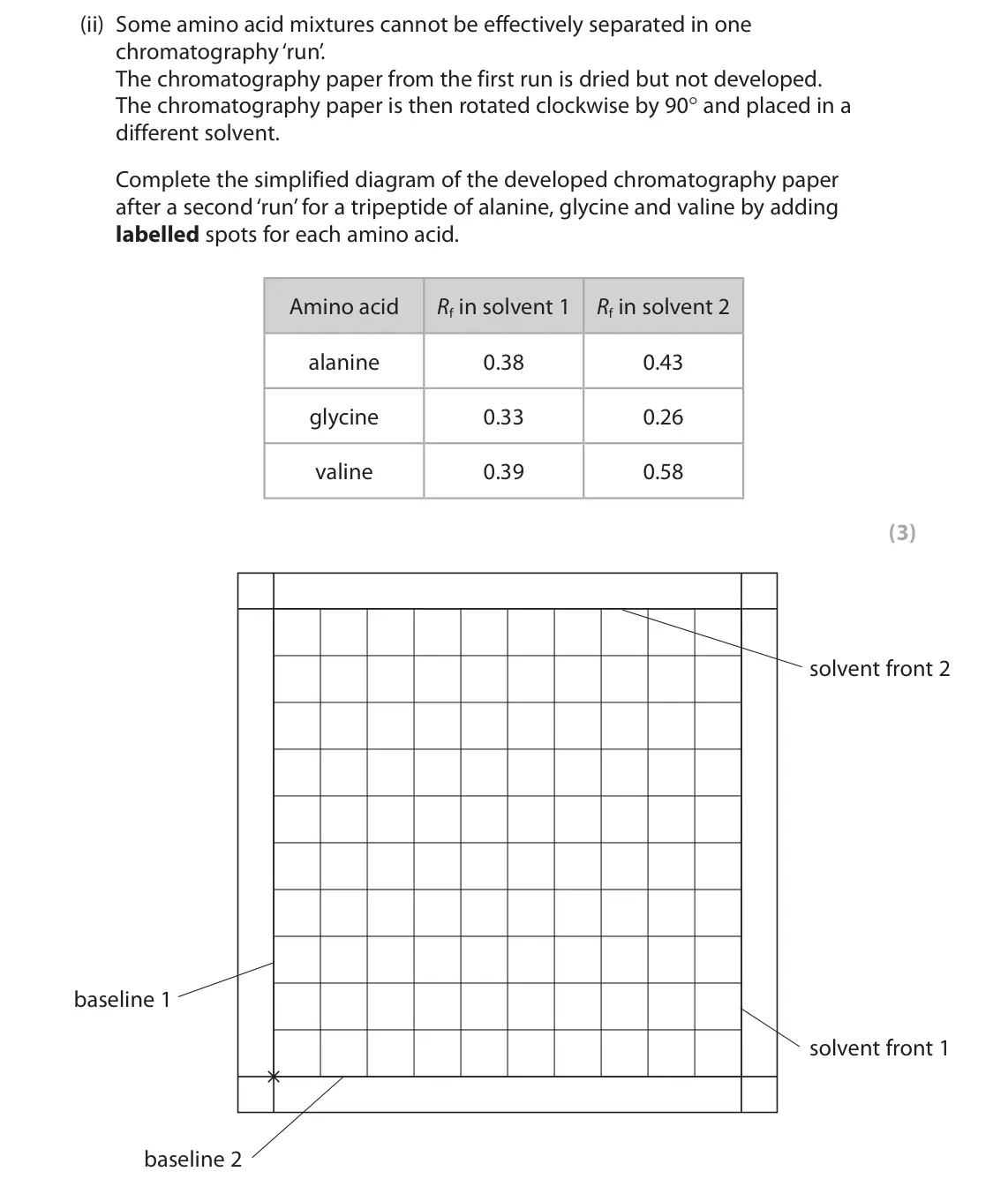
Q6(b)(iii)
The whole paper ↗
Q6(c)
The whole paper ↗
Q3(a)(i)
The whole paper ↗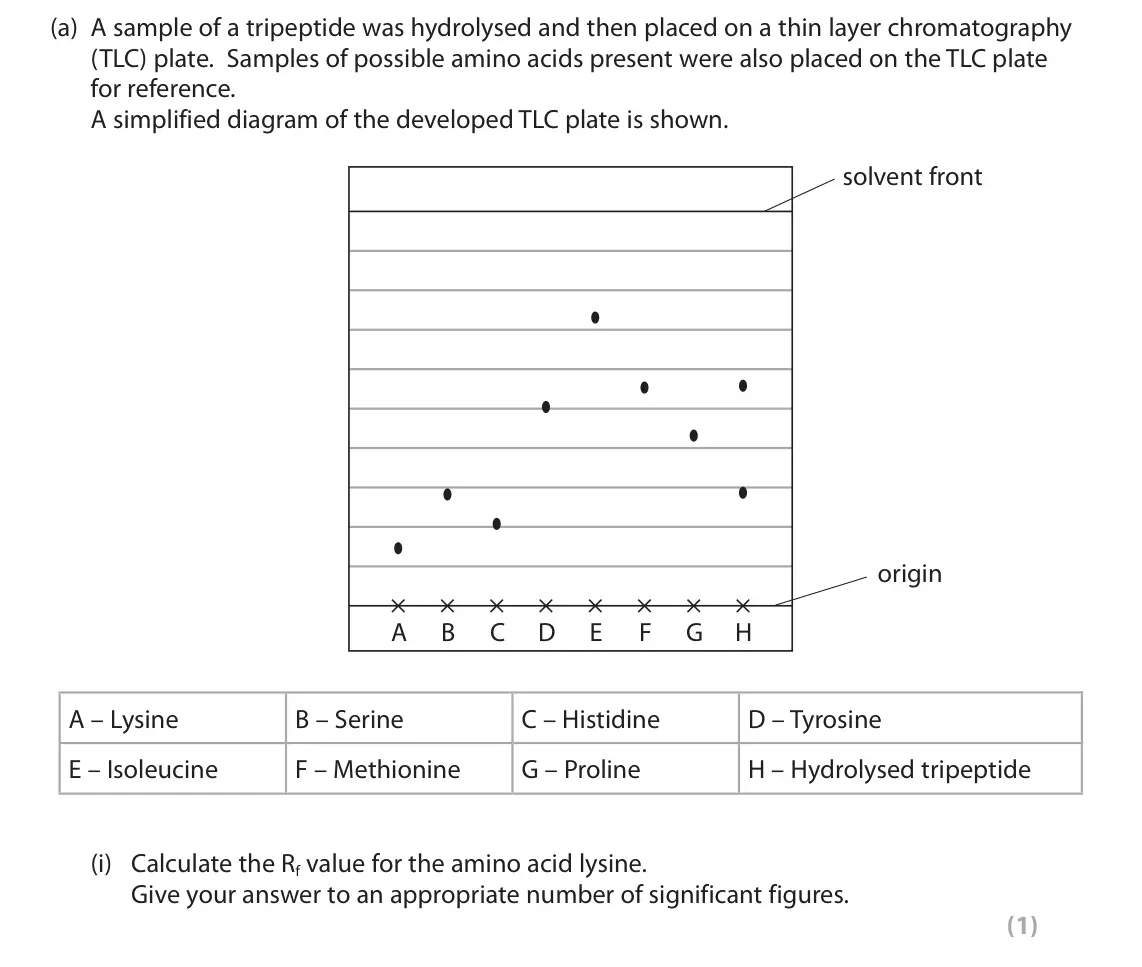
Q3(a)(ii)
The whole paper ↗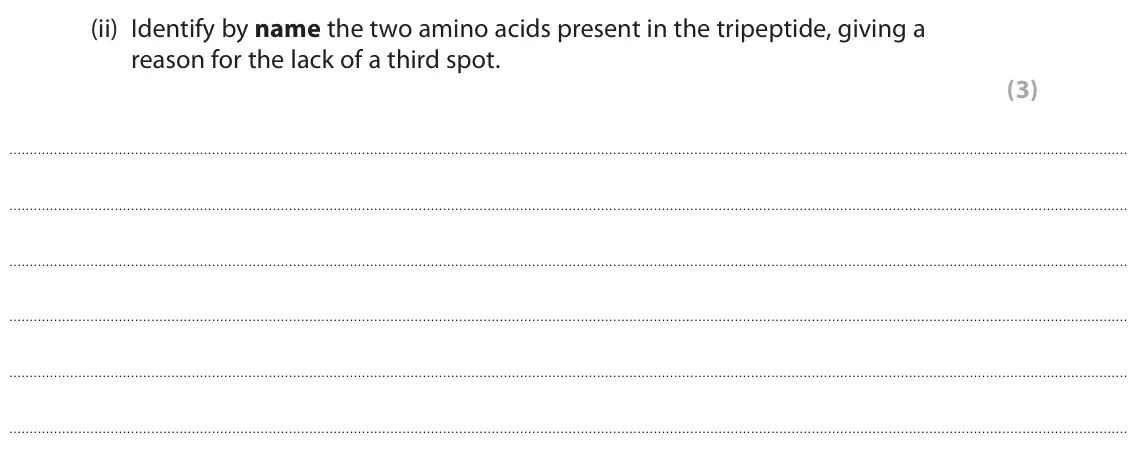
Q3(a)(iii)
The whole paper ↗
Q3(a)(iv)
The whole paper ↗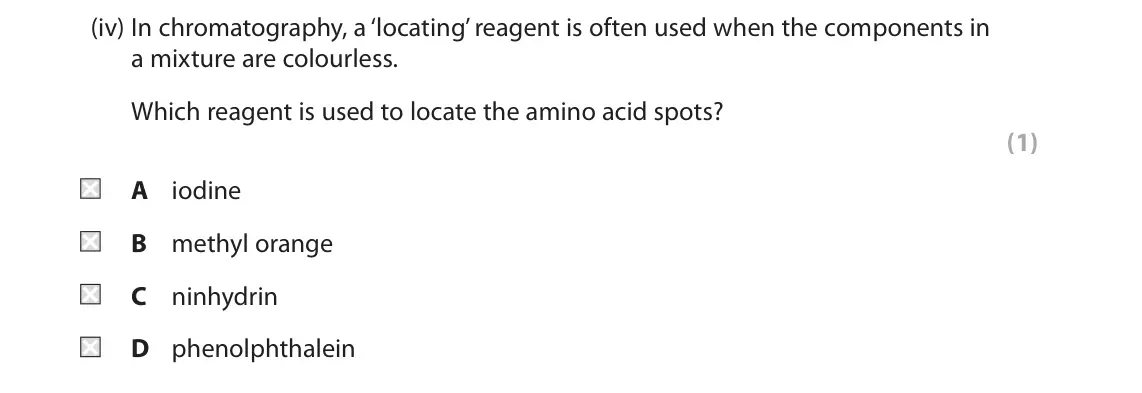
Q3(b)(i)
The whole paper ↗
Q3(b)(ii)
The whole paper ↗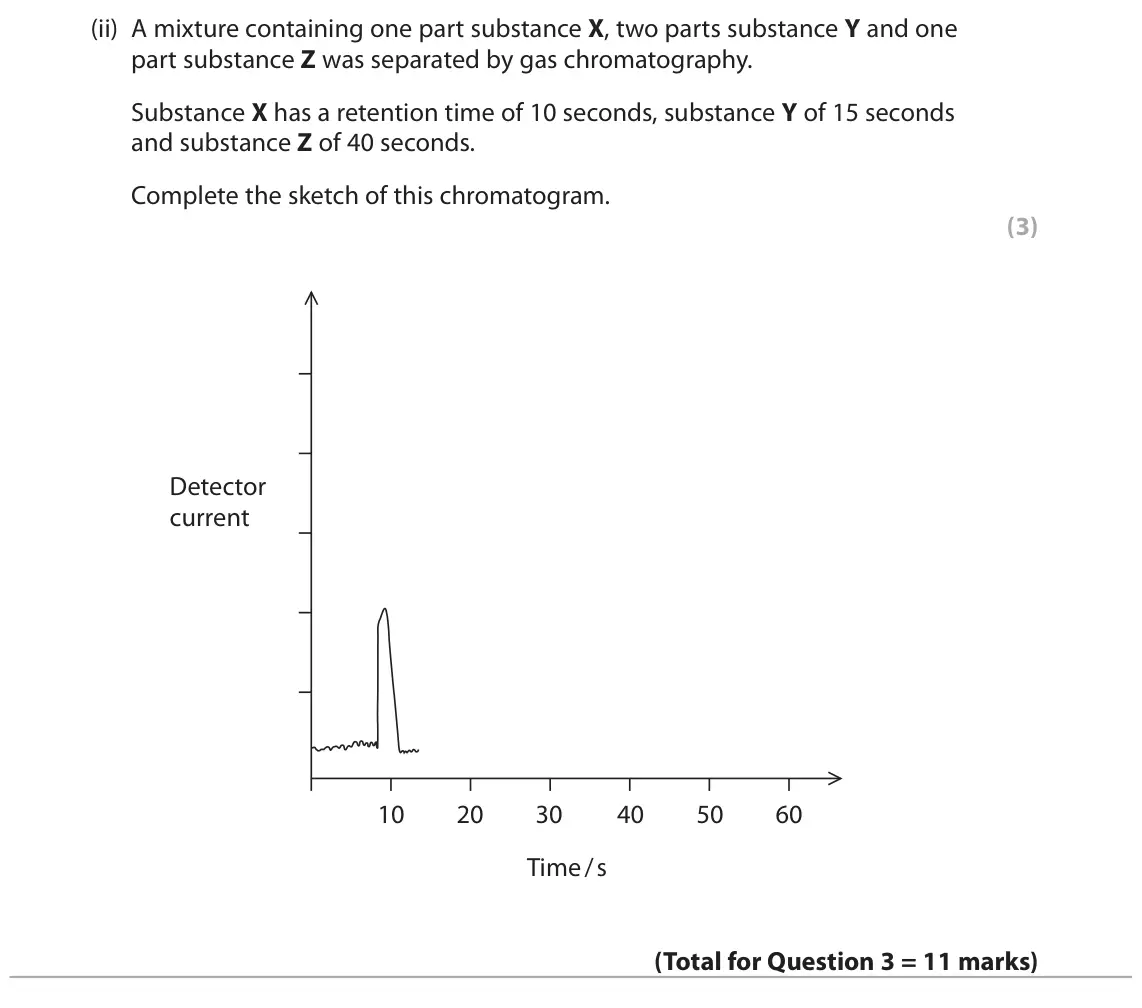
Q3(d)
The whole paper ↗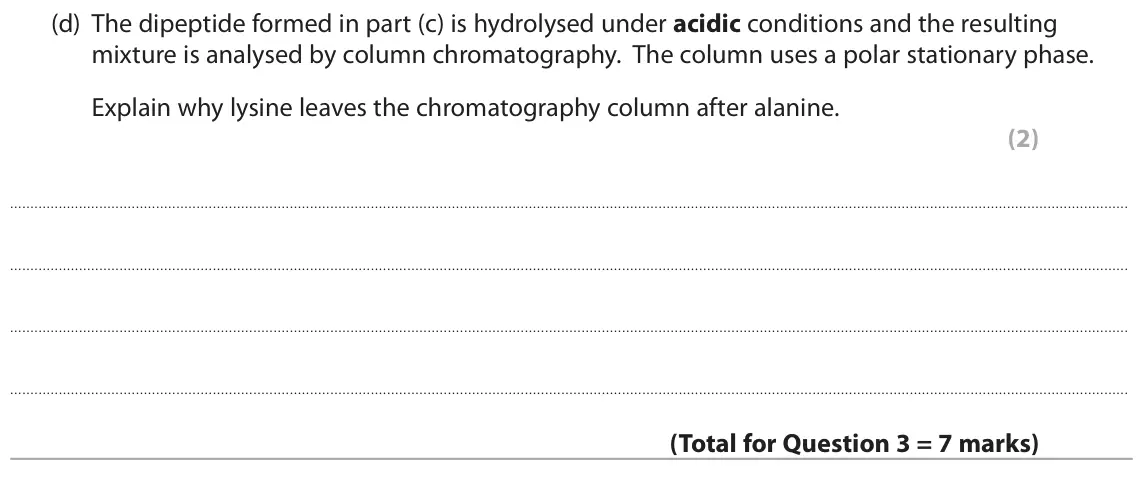
All 11 questions on Chromatography, as a list
- June 2023, Paper 3, Q6(a) (1 mark): State how chromatography separates the components of a mixture. (1)
- June 2023, Paper 3, Q6(b)(ii) (3 marks): Some amino acid mixtures cannot be effectively separated in one chromatography ‘run’. The chromatography paper from the first run is dried but not developed. Th
- June 2023, Paper 3, Q6(b)(iii) (1 mark): Name a reagent that locates colourless amino acids by producing a coloured compound. (1)
- June 2023, Paper 3, Q6(c) (1 mark): State the technique that is used in conjunction with gas chromatography (GC) when carrying out forensic testing. (1)
- June 2018, Paper 2, Q3(a)(i) (1 mark): Calculate the Rf value for the amino acid lysine. Give your answer to an appropriate number of significant figures. (1)
- June 2018, Paper 2, Q3(a)(ii) (3 marks): Identify by name the two amino acids present in the tripeptide, giving a reason for the lack of a third spot. (3)
- June 2018, Paper 2, Q3(a)(iii) (2 marks): Give two reasons why different amino acids have different Rf values. (2)
- June 2018, Paper 2, Q3(a)(iv) (1 mark): In chromatography, a ‘locating’ reagent is often used when the components in a mixture are colourless. Which reagent is used to locate the amino acid spots? (1)
- June 2018, Paper 2, Q3(b)(i) (1 mark): State why argon and nitrogen are suitable carrier gases for gas chromatography. (1)
- June 2018, Paper 2, Q3(b)(ii) (3 marks): A mixture containing one part substance X, two parts substance Y and one part substance Z was separated by gas chromatography. Substance X has a retention time
- June 2017, Paper 3, Q3(d) (2 marks): The dipeptide formed in part (c) is hydrolysed under acidic conditions and the resulting mixture is analysed by column chromatography. The column uses a polar s
Questions, mark schemes and examiner’s reports are © Pearson Edexcel, from their published past papers. Plumi isn’t affiliated with any exam board. Want whole papers? Every Edexcel A-Level Chemistry paper.
Rather write your answers by hand on iPad? Plumi marks them against the same mark schemes.