 plumi
Amines, amides, amino acids and proteins: Edexcel A‑Level Chemistry questions
Every Edexcel A-Level Chemistry exam question on 18B Amines, amides, amino acids and proteins, 2016–2025, with its mark scheme and examiner’s report.
Find questions2,028
Calculations
Q7(a)
The whole paper ↗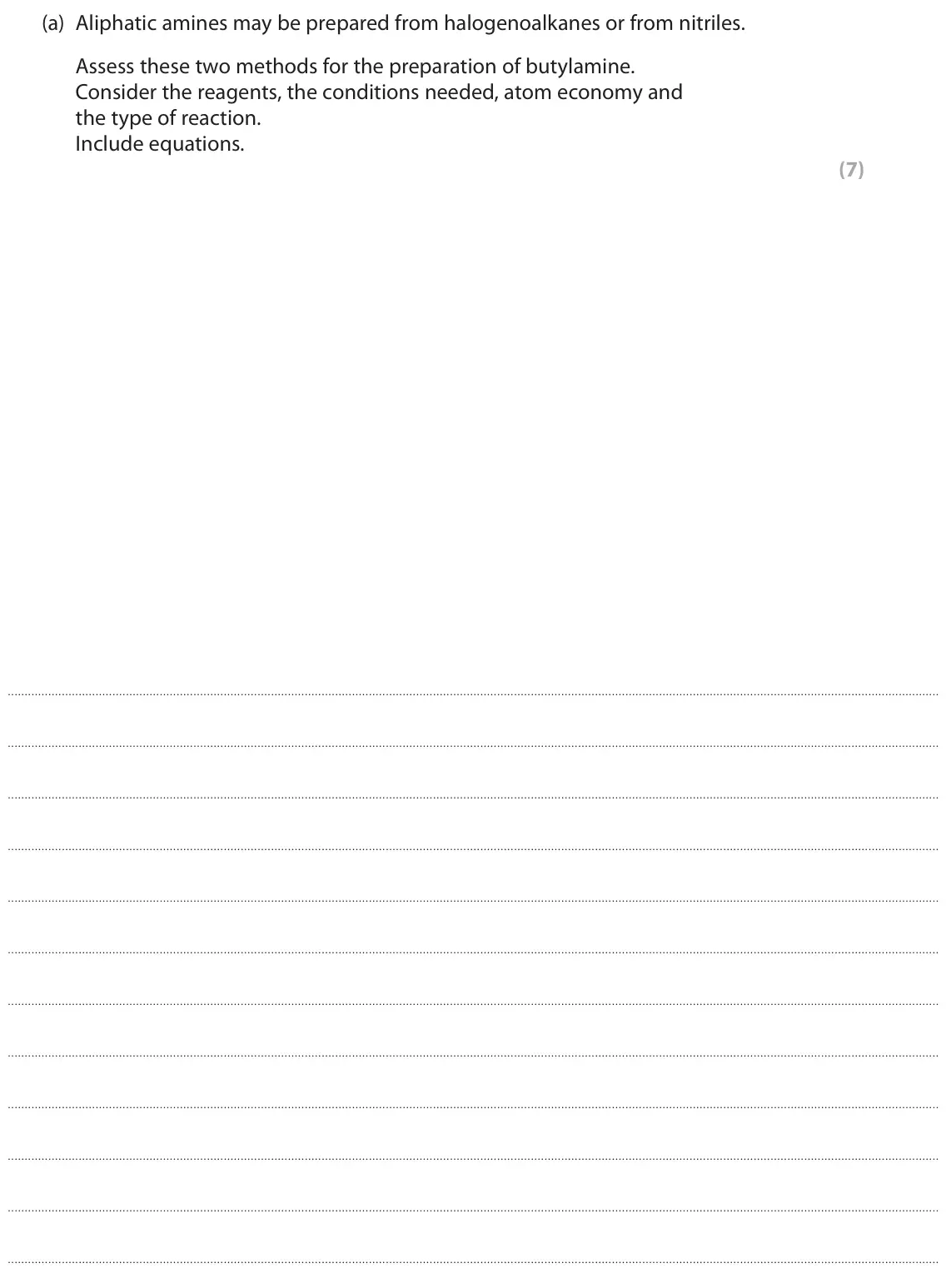
Q7(b)(i)
The whole paper ↗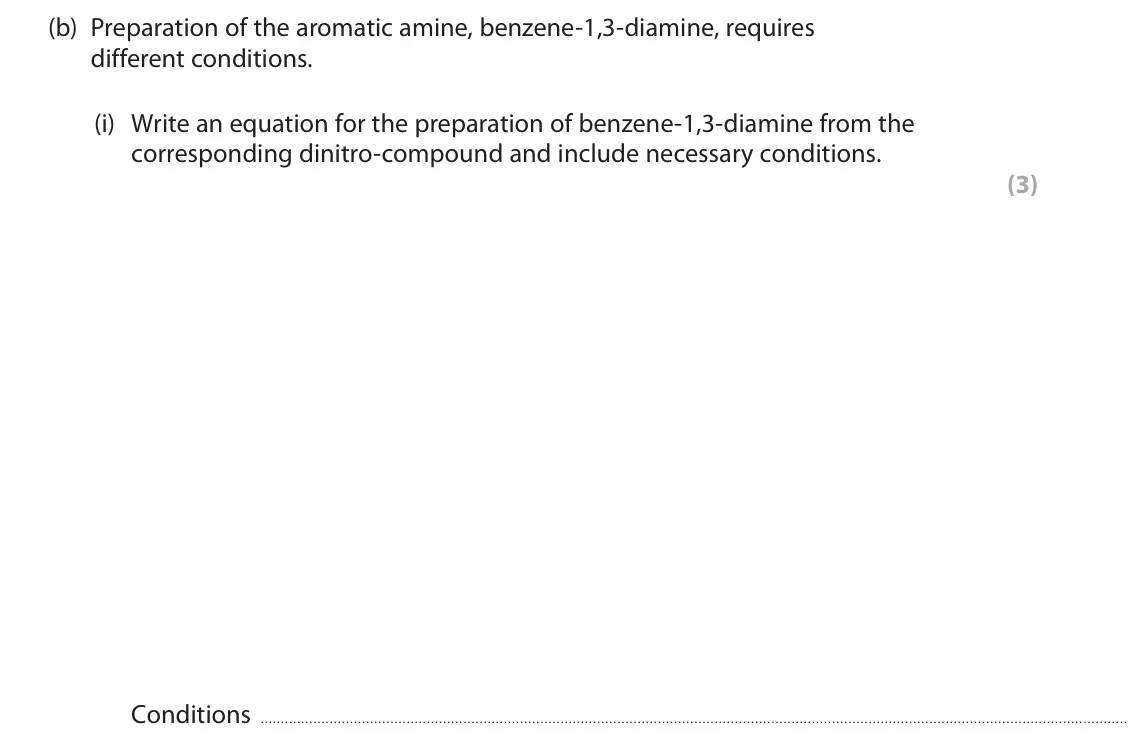
Q7(b)(ii)
The whole paper ↗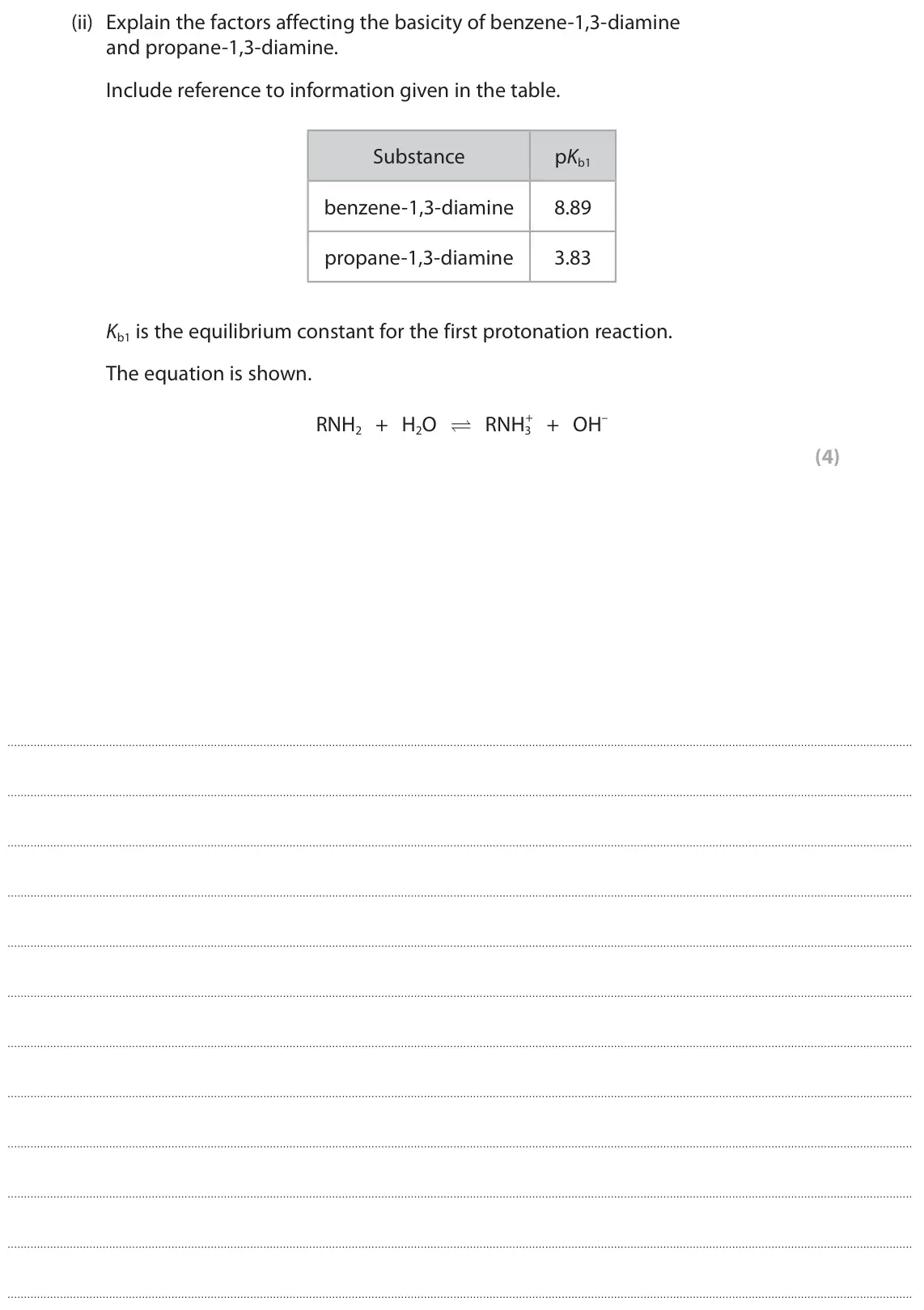
Q7(c)
The whole paper ↗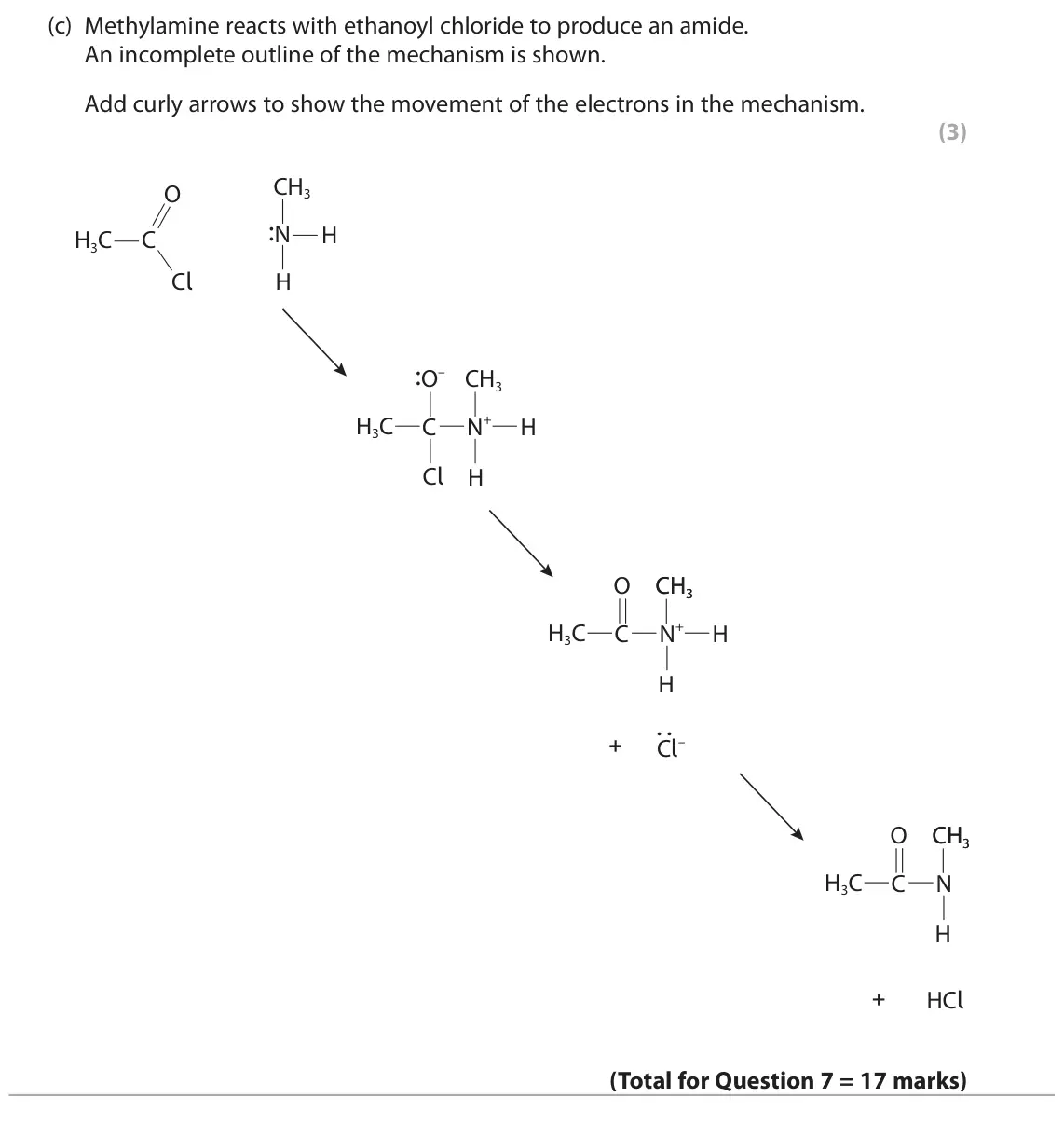
Q1(b)
The whole paper ↗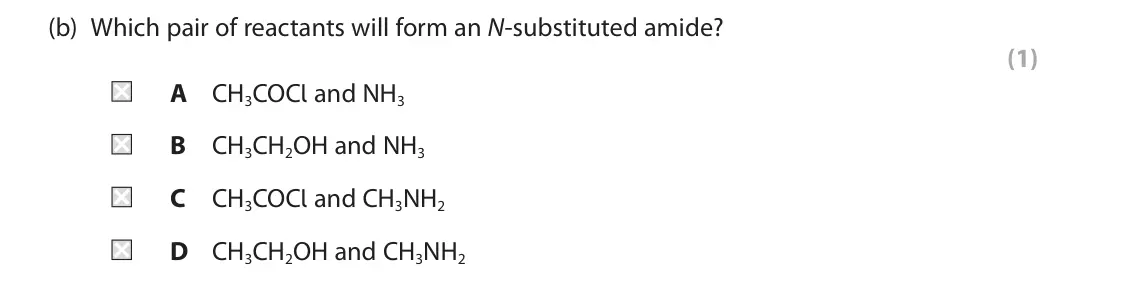
Q6(c)(i)
The whole paper ↗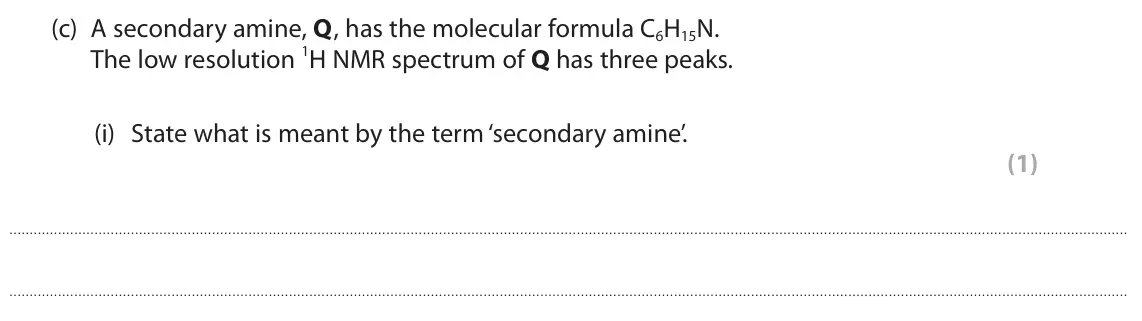
Q8(b)
The whole paper ↗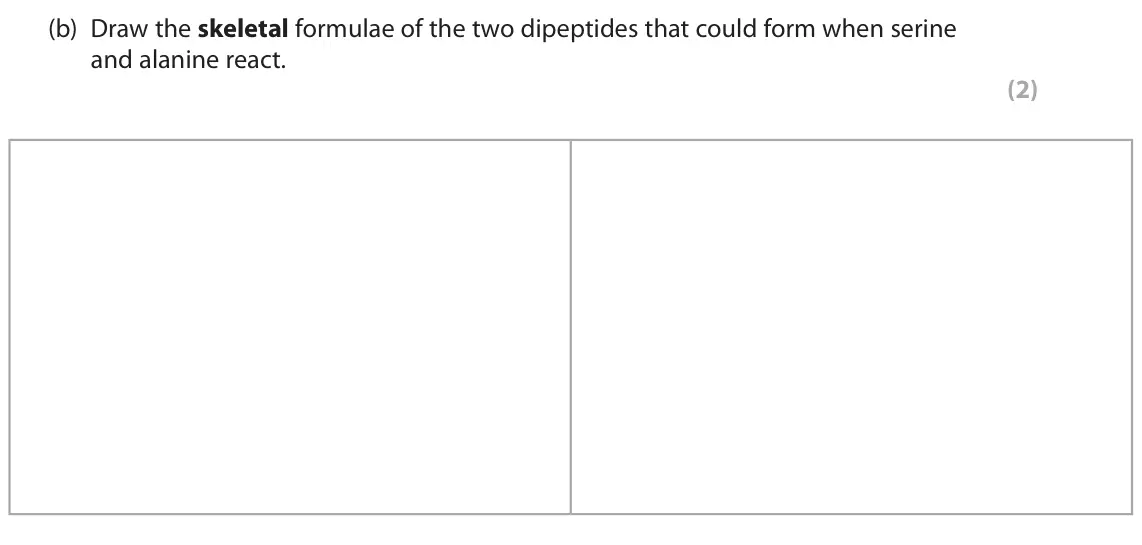
Q8(c)
The whole paper ↗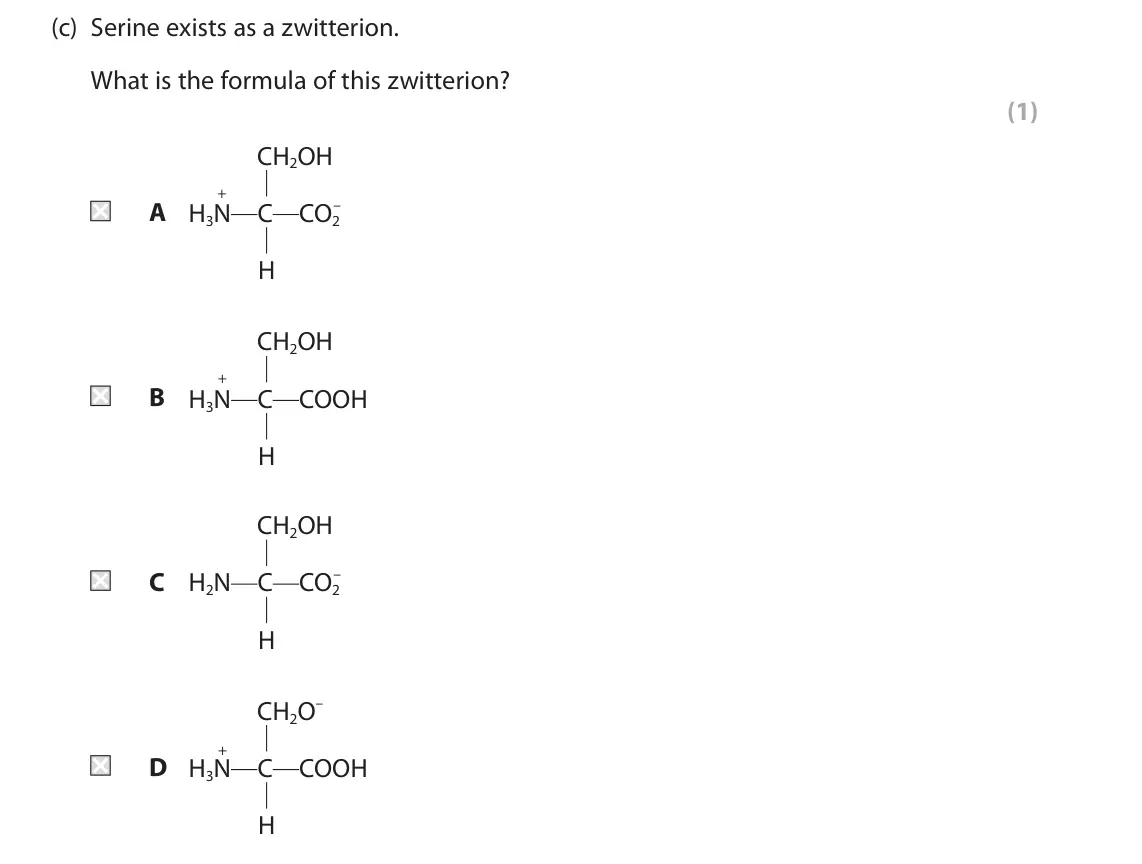
Q8(e)
The whole paper ↗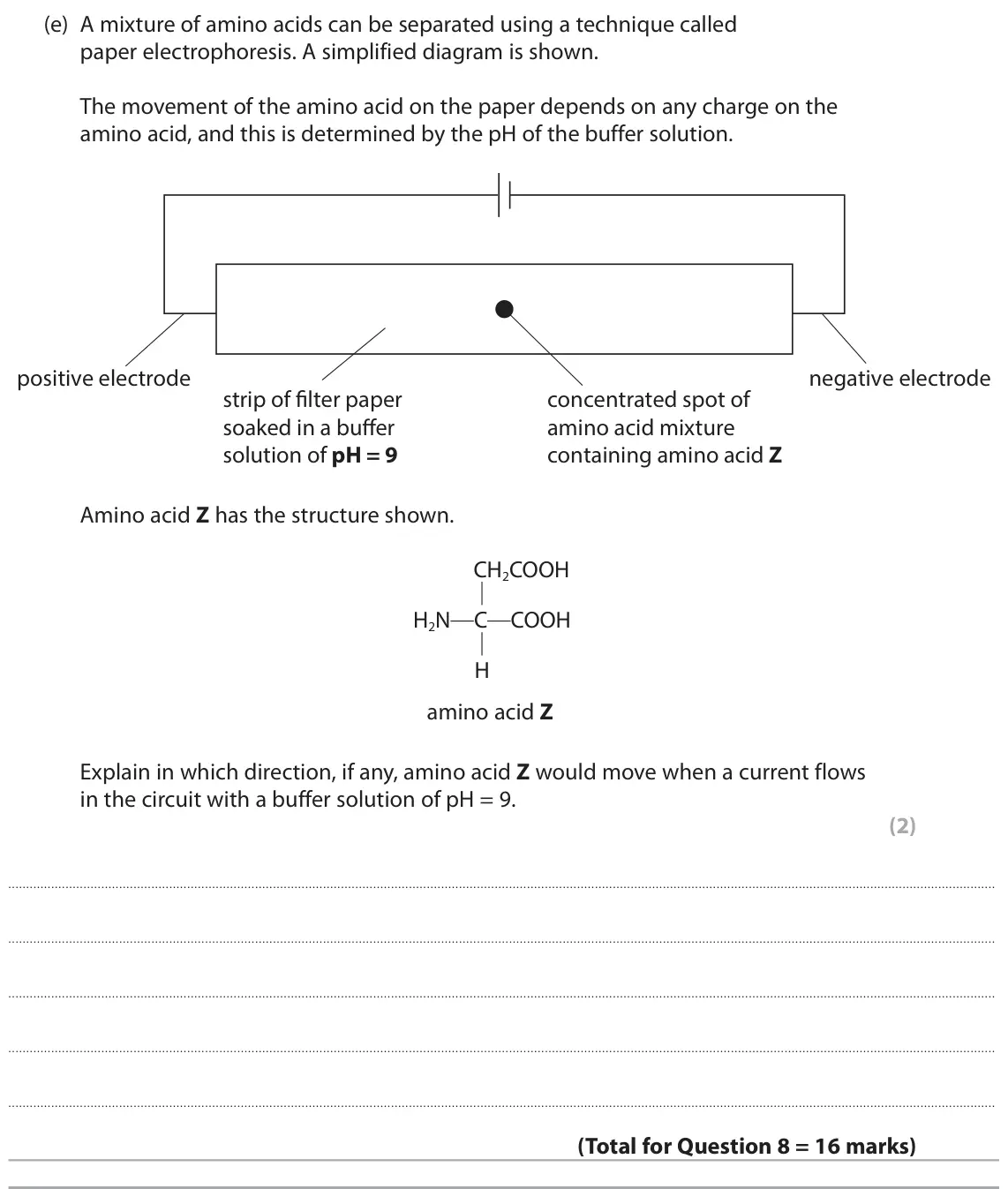
Q6(b)(i)
The whole paper ↗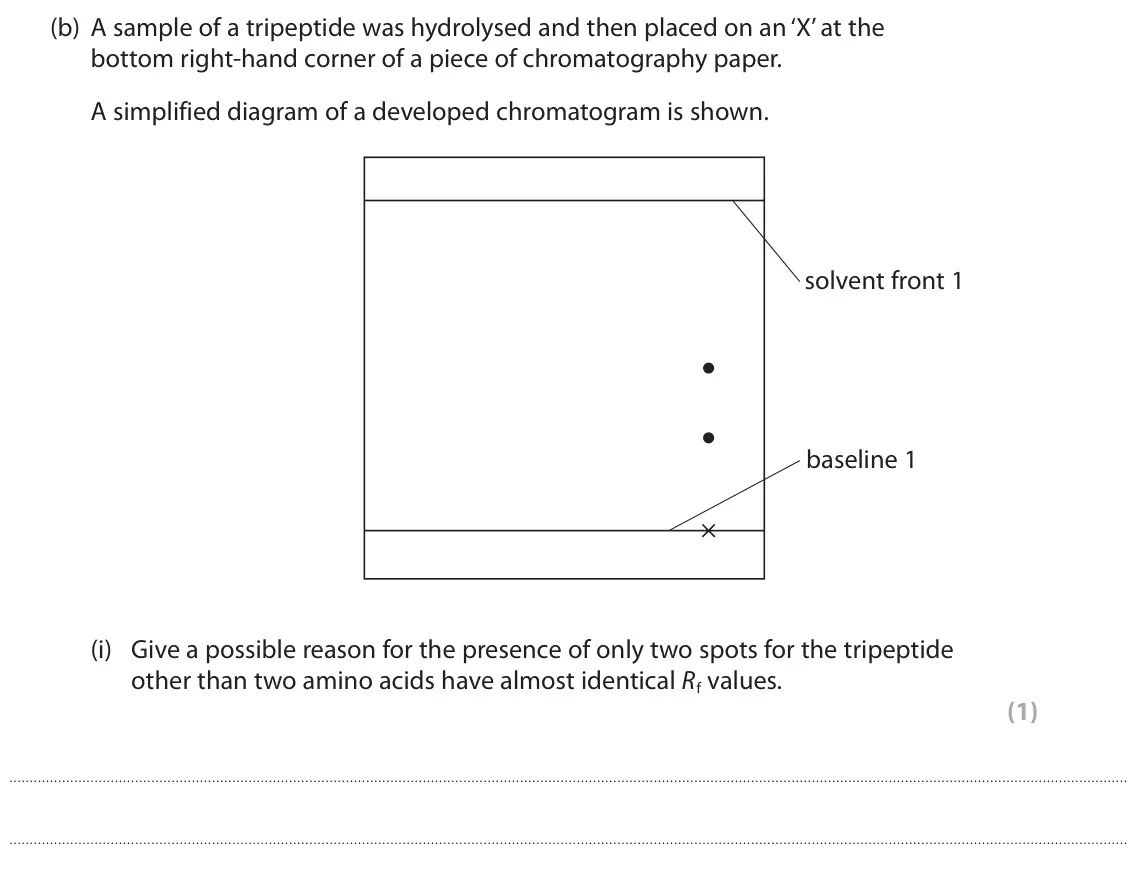
Q4(d)
The whole paper ↗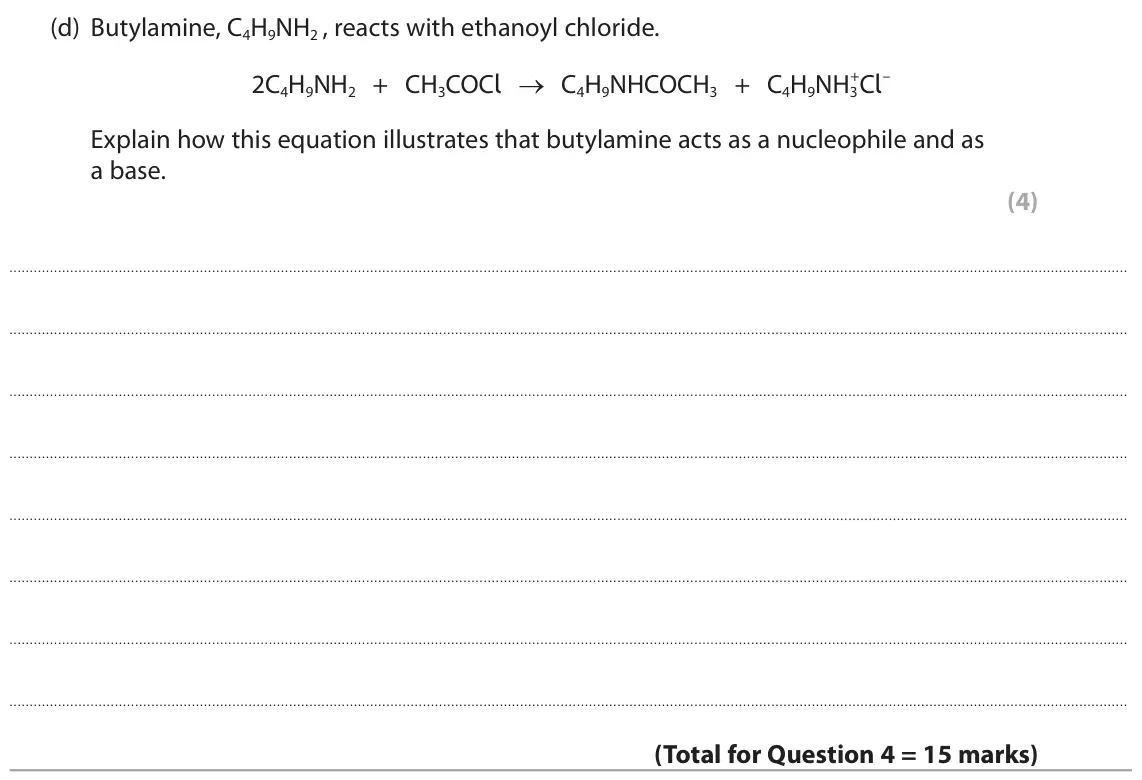
Q7(a)(i)
The whole paper ↗
Q7(a)(ii)
The whole paper ↗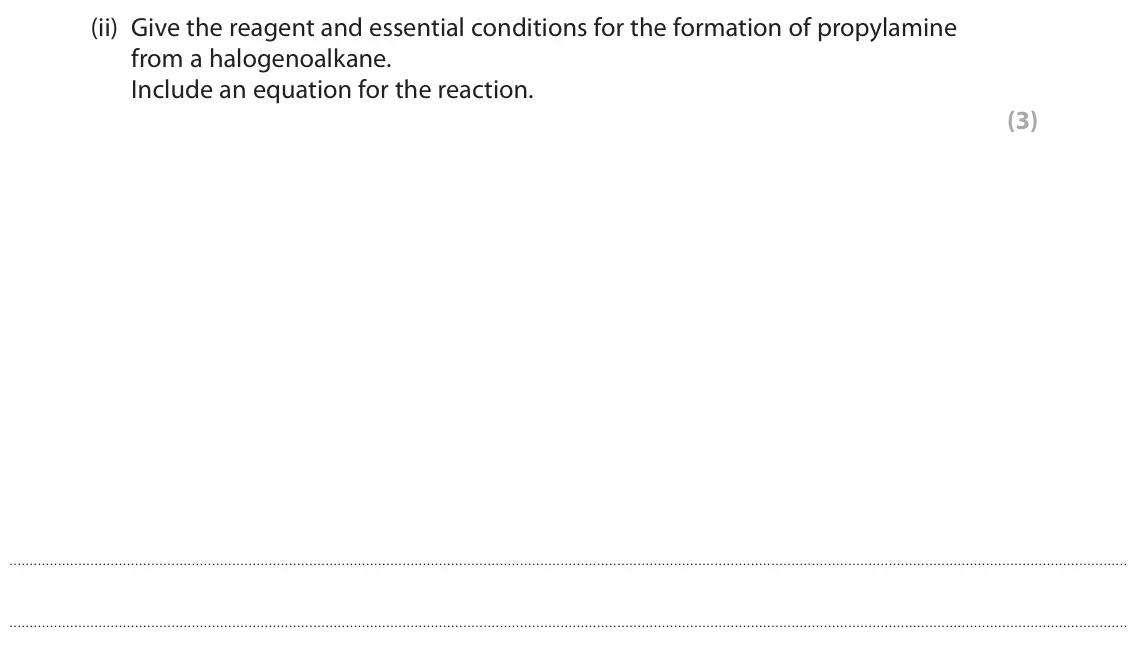
Q7(c)
The whole paper ↗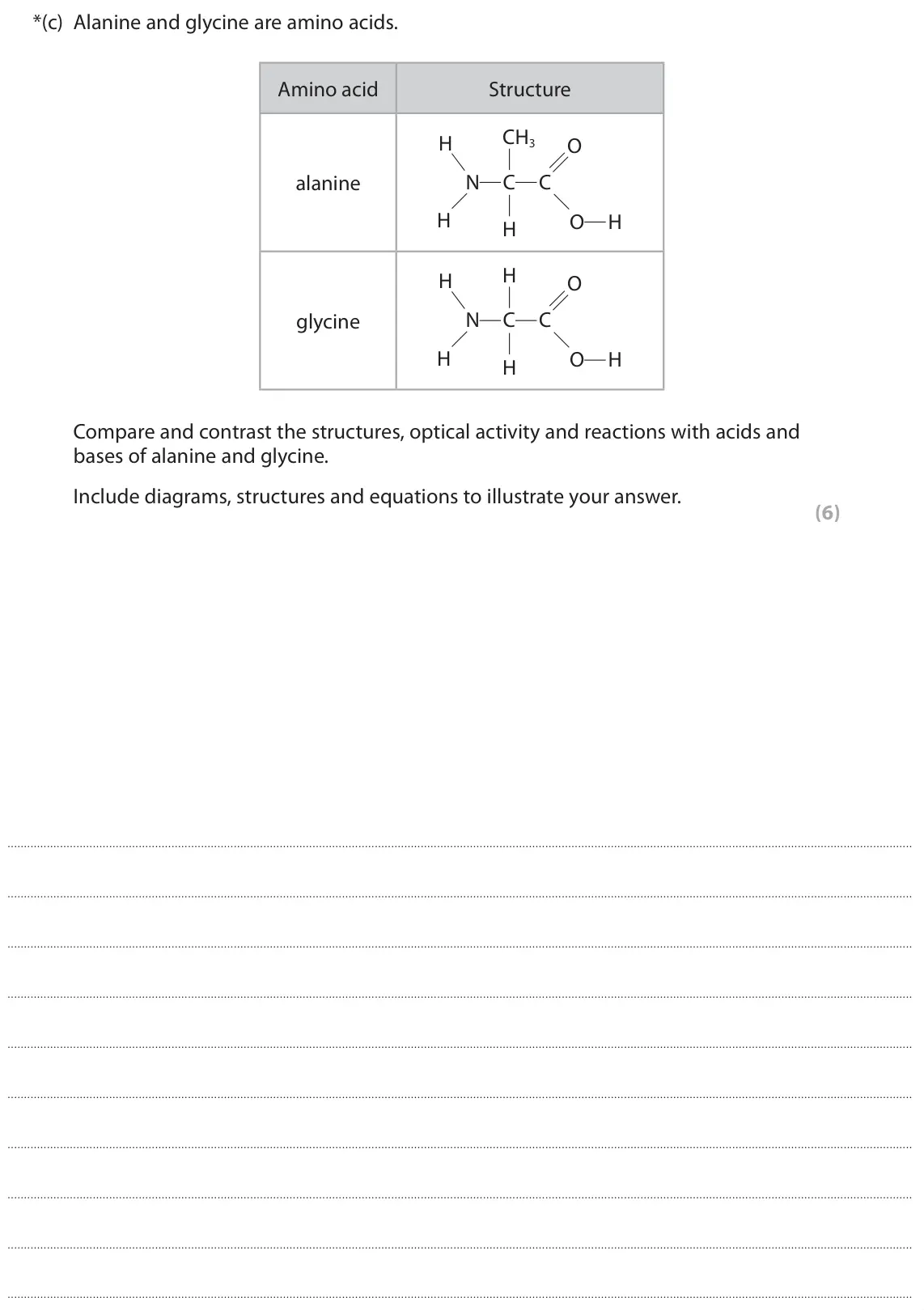
Q7(d)
The whole paper ↗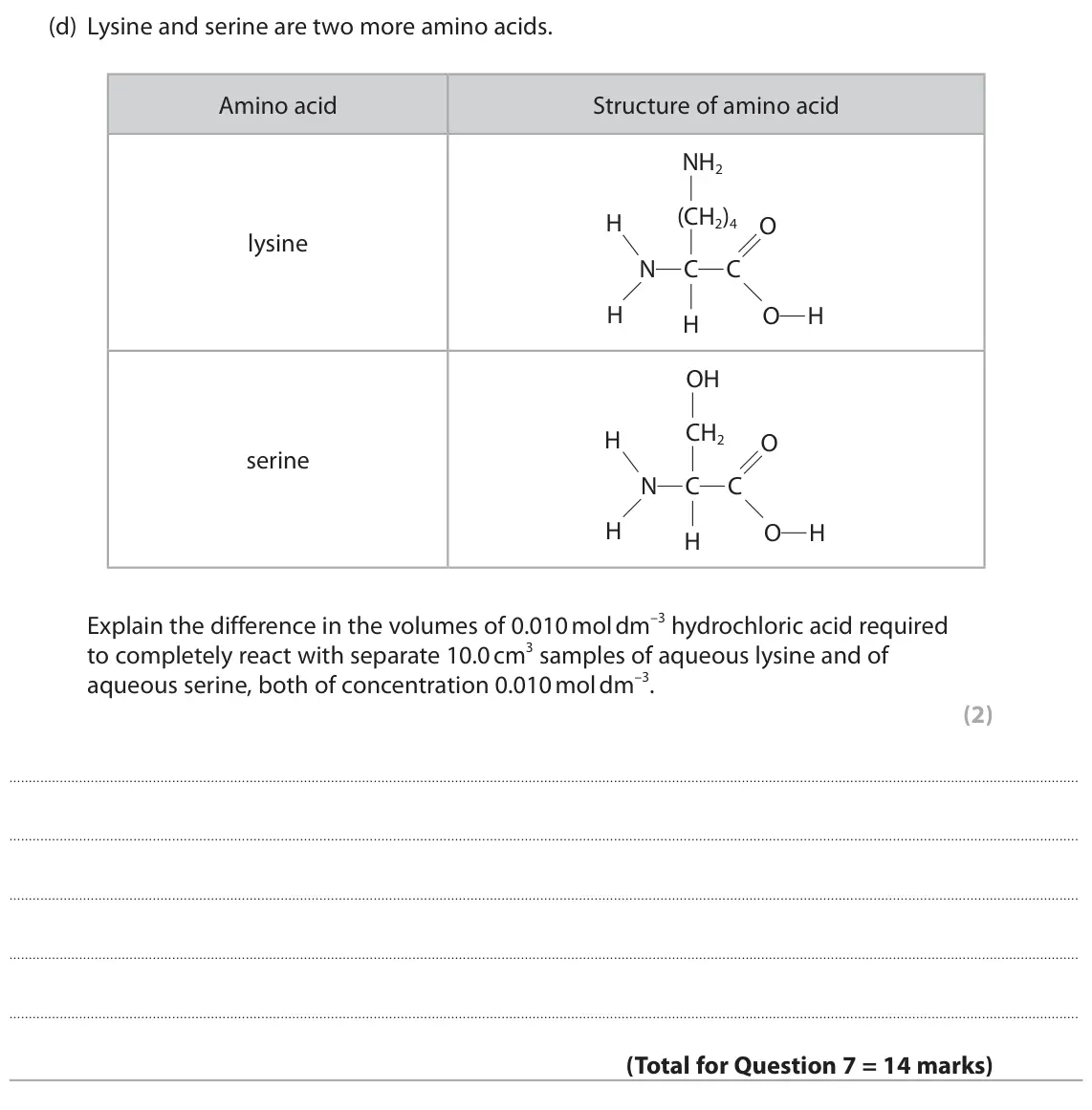
Q9(c)(iii)
The whole paper ↗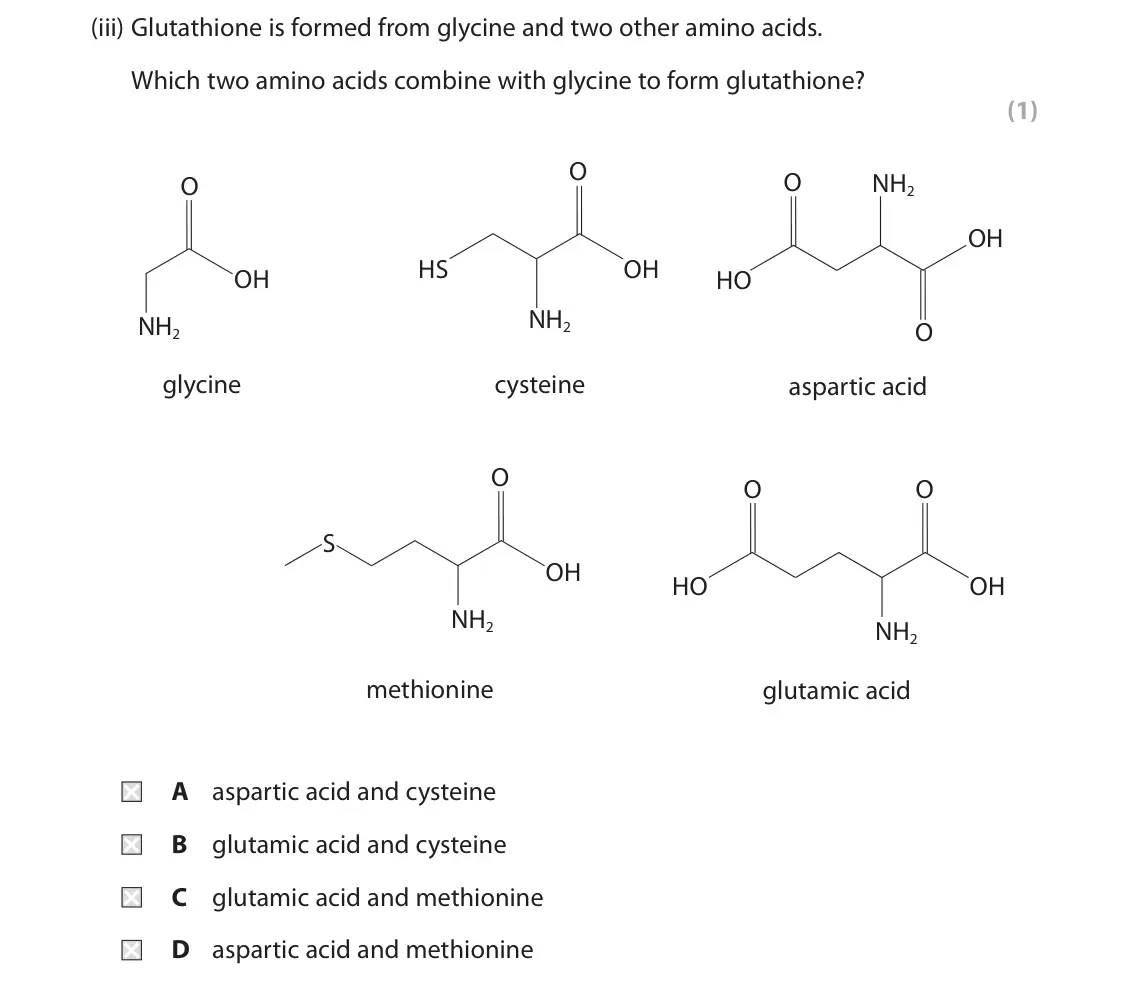
Q9(d)
The whole paper ↗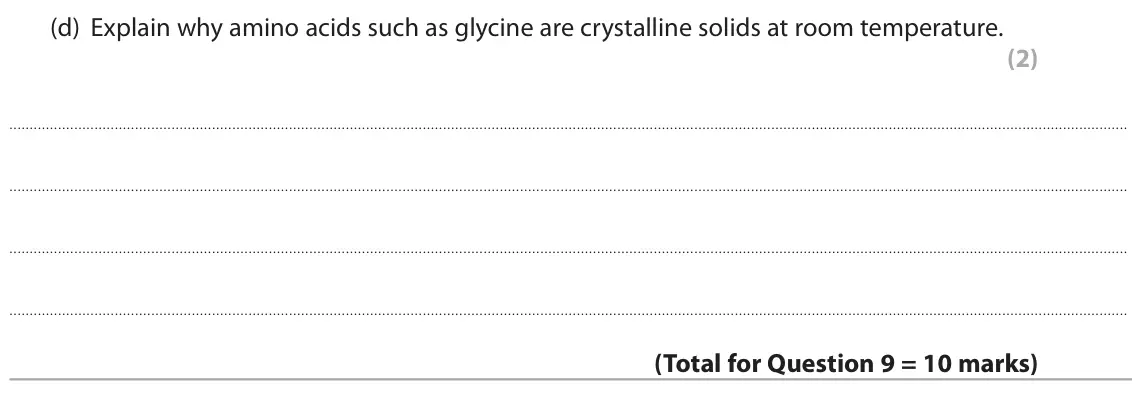
Q10(a)(i)
The whole paper ↗
Q10(a)(ii)
The whole paper ↗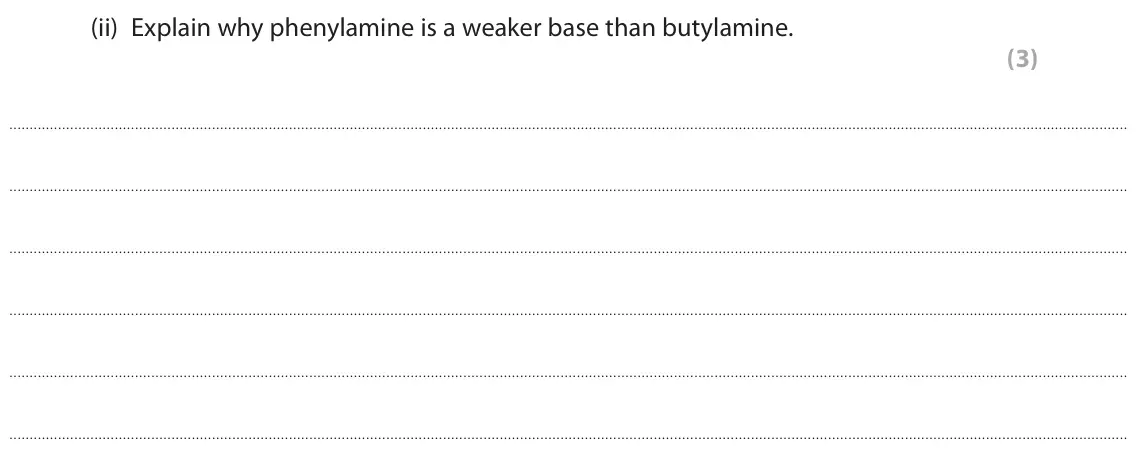
Q10(b)
The whole paper ↗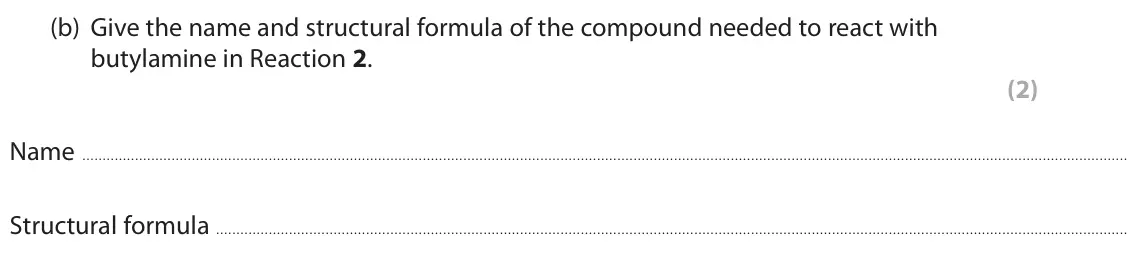
All 36 questions on Amines, amides, amino acids and proteins, as a list
- June 2025, Paper 2, Q7(a) (7 marks): Aliphatic amines may be prepared from halogenoalkanes or from nitriles. Assess these two methods for the preparation of butylamine. Consider the reagents, the c
- June 2025, Paper 2, Q7(b)(i) (3 marks): Write an equation for the preparation of benzene‑1,3‑diamine from the corresponding dinitro‑compound and include necessary conditions. (3) Conditions
- June 2025, Paper 2, Q7(b)(ii) (4 marks): Explain the factors affecting the basicity of benzene‑1,3‑diamine and propane‑1,3‑diamine. Include reference to information given in the table. Substance pKb1 b
- June 2025, Paper 2, Q7(c) (3 marks): Methylamine reacts with ethanoyl chloride to produce an amide. An incomplete outline of the mechanism is shown. Add curly arrows to show the movement of the ele
- June 2024, Paper 2, Q1(b) (1 mark): Which pair of reactants will form an N‑substituted amide? (1) A CH3COCl and NH3 B CH3CH2OH and NH3 C CH3COCl and CH3NH2 D CH3CH2OH and CH3NH2
- June 2024, Paper 2, Q6(c)(i) (1 mark): State what is meant by the term ‘secondary amine’. (1)
- June 2024, Paper 2, Q8(b) (2 marks): Draw the skeletal formulae of the two dipeptides that could form when serine and alanine react. (2)
- June 2024, Paper 2, Q8(c) (1 mark): Serine exists as a zwitterion. What is the formula of this zwitterion? (1) CH2OH + A H3N C CO2 – H CH2OH + B H3N C COOH H CH2OH C H2N C CO2 – H CH2O– + D H3N C
- June 2024, Paper 2, Q8(e) (2 marks): A mixture of amino acids can be separated using a technique called paper electrophoresis. A simplified diagram is shown. The movement of the amino acid on the p
- June 2023, Paper 3, Q6(b)(i) (1 mark): Give a possible reason for the presence of only two spots for the tripeptide other than two amino acids have almost identical Rf values. (1)
- June 2022, Paper 2, Q4(d) (4 marks): Butylamine, C4H9NH2 , reacts with ethanoyl chloride. 2C4H9NH2 + CH3COCl → C4H9NHCOCH3 + C4H9NH3 +Cl– Explain how this equation illustrates that butylamine acts
- June 2022, Paper 2, Q7(a)(i) (2 marks): Give the reagent and essential condition for the formation of propylamine from a nitrile. Include an equation for the reaction. (2)
- June 2022, Paper 2, Q7(a)(ii) (3 marks): Give the reagent and essential conditions for the formation of propylamine from a halogenoalkane. Include an equation for the reaction. (3)
- June 2022, Paper 2, Q7(c) (6 marks): Alanine and glycine are amino acids. Amino acid Structure CH3 H O N C C alanine H O H H H H O N C C glycine H O H H Compare and contrast the structures, optical
- June 2022, Paper 2, Q7(d) (2 marks): Lysine and serine are two more amino acids. Amino acid Structure of amino acid NH2 (CH2)4 H O lysine N C C H O H H OH CH2 H O serine N C C H O H H Explain the d
- November 2021, Paper 2, Q9(c)(iii) (1 mark): Glutathione is formed from glycine and two other amino acids. Which two amino acids combine with glycine to form glutathione? (1) O O NH2 O OH HS OH OH HO NH2 N
- November 2021, Paper 2, Q9(d) (2 marks): Explain why amino acids such as glycine are crystalline solids at room temperature. (2)
- November 2021, Paper 2, Q10(a)(i) (1 mark): Write the equation for Reaction 1 to show why the pH of the solution is greater than 7. State symbols are not required. (1)
- November 2021, Paper 2, Q10(a)(ii) (3 marks): Explain why phenylamine is a weaker base than butylamine. (3)
- November 2021, Paper 2, Q10(b) (2 marks): Give the name and structural formula of the compound needed to react with butylamine in Reaction 2. (2) Name Structural formula
- November 2021, Paper 2, Q10(c) (1 mark): What is seen when excess butylamine is used in Reaction 3? (1) A blue solution B blue precipitate C yellow solution D yellow precipitate
- November 2021, Paper 2, Q10(d)(i) (1 mark): What is the type and mechanism of the reaction in Reaction 4? (1) A electrophilic addition B electrophilic substitution C nucleophilic addition D nucleophilic s
- November 2021, Paper 2, Q10(d)(ii) (4 marks): Complete the diagram to show the mechanism for Reaction 4. Include curly arrows, and relevant lone pairs and dipoles. (4) H H C H2 H2 Br CH3 H C C H3C C N H2 H
- November 2021, Paper 3, Q6(b) (1 mark): State the type of reagent needed to convert 4-nitrophenol into 4-aminophenol in Stage 2. (1)
- October 2020, Paper 3, Q9(a) (3 marks): Phenylamine is an aromatic amine and butylamine is an aliphatic amine. Phenylamine can be prepared from nitrobenzene. NO2 NH2 Butylamine can be prepared from bu
- October 2020, Paper 3, Q9(b) (3 marks): Compare and contrast the basicity of phenylamine and butylamine. (3)
- October 2020, Paper 3, Q9(c) (2 marks): Write the equation for the reaction between propanoyl chloride and pentylamine. Include the name of the amide formed. State symbols are not required. (2) Name o
- October 2020, Paper 3, Q9(d) (1 mark): A section of a polyamide is shown. H O N N O H Identify, by name or formula, the amine monomer that reacts to form this polyamide. (1)
- June 2019, Paper 2, Q8(a)(i) (1 mark): What is the reaction type and mechanism in Step 1? (1) A electrophilic addition • B electrophilic substitution C nucleophilic addition D nucleophilic substituti
- June 2019, Paper 2, Q8(a)(ii) (4 marks): Draw the mechanism for the reaction in Step 1. Include curly arrows, and relevant lone pairs and dipoles. (4)
- June 2017, Paper 2, Q6(b) (2 marks): Deduce the two monomers needed to produce the polyamide shown. (2) H O N N O H and
- June 2017, Paper 2, Q6(c) (1 mark): Deduce the single monomer that could be used to produce the polyamide shown. (1) O N H
- June 2017, Paper 3, Q3(a) (1 mark): Give the systematic (IUPAC) name for lysine. (1)
- June 2017, Paper 3, Q3(b) (3 marks): Draw the structure of the organic product formed when lysine reacts with the following reagents: (3) aqueous sodium hydroxide, NaOH(aq) excess dilute hydrochlor
- June 2017, Paper 3, Q3(c) (1 mark): Draw the structure of a dipeptide formed when one molecule of alanine reacts with one molecule of lysine. (1)
- June 2017, Paper 3, Q3(d) (2 marks): The dipeptide formed in part (c) is hydrolysed under acidic conditions and the resulting mixture is analysed by column chromatography. The column uses a polar s
Questions, mark schemes and examiner’s reports are © Pearson Edexcel, from their published past papers. Plumi isn’t affiliated with any exam board. Want whole papers? Every Edexcel A-Level Chemistry paper.
Rather write your answers by hand on iPad? Plumi marks them against the same mark schemes.