 plumi
Arenes - benzene: Edexcel A‑Level Chemistry questions
Every Edexcel A-Level Chemistry exam question on 18A Arenes - benzene, 2016–2025, with its mark scheme and examiner’s report.
Find questions2,028
Calculations
Q8(e)(i)
The whole paper ↗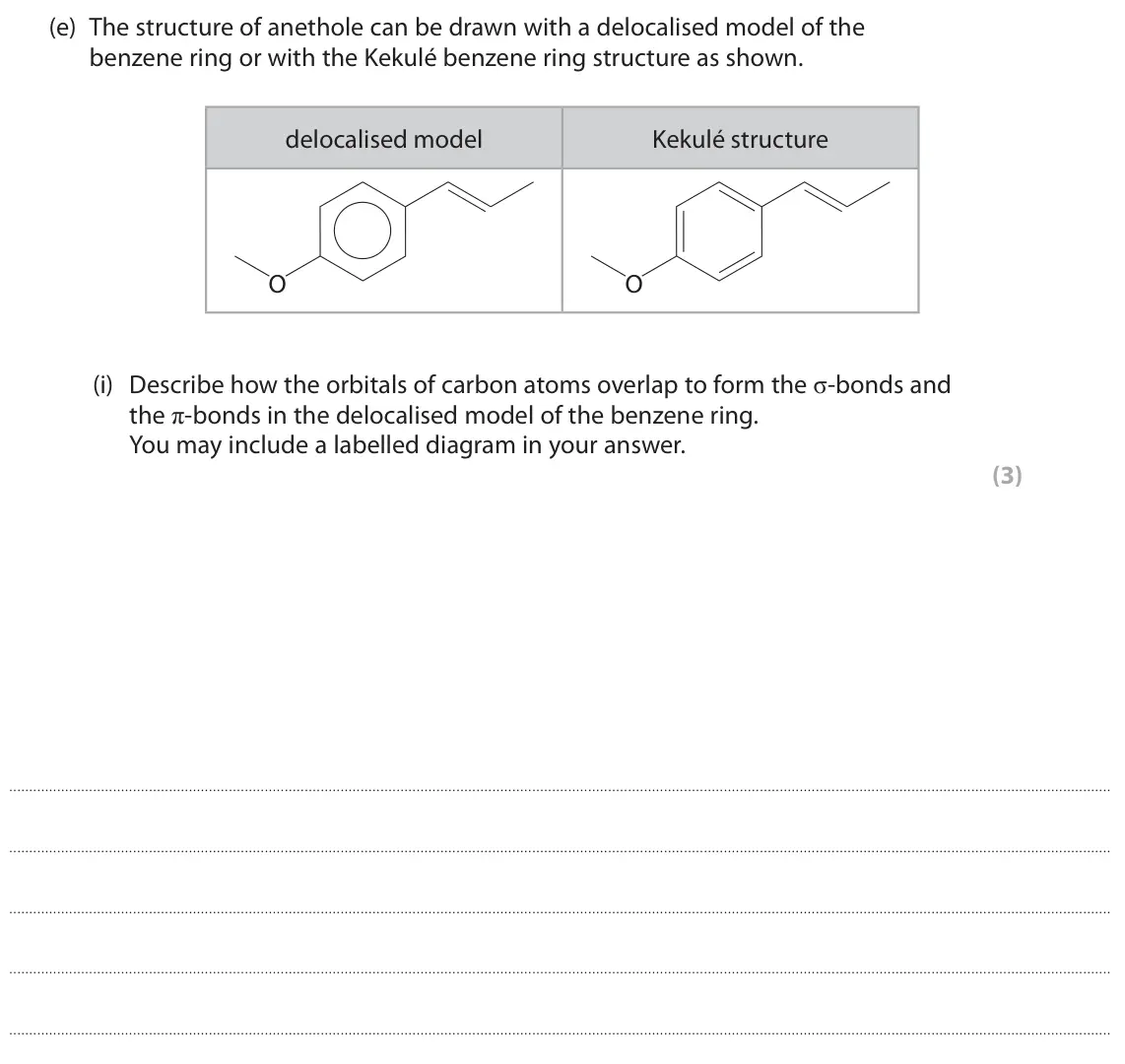
Q8(e)(ii)
The whole paper ↗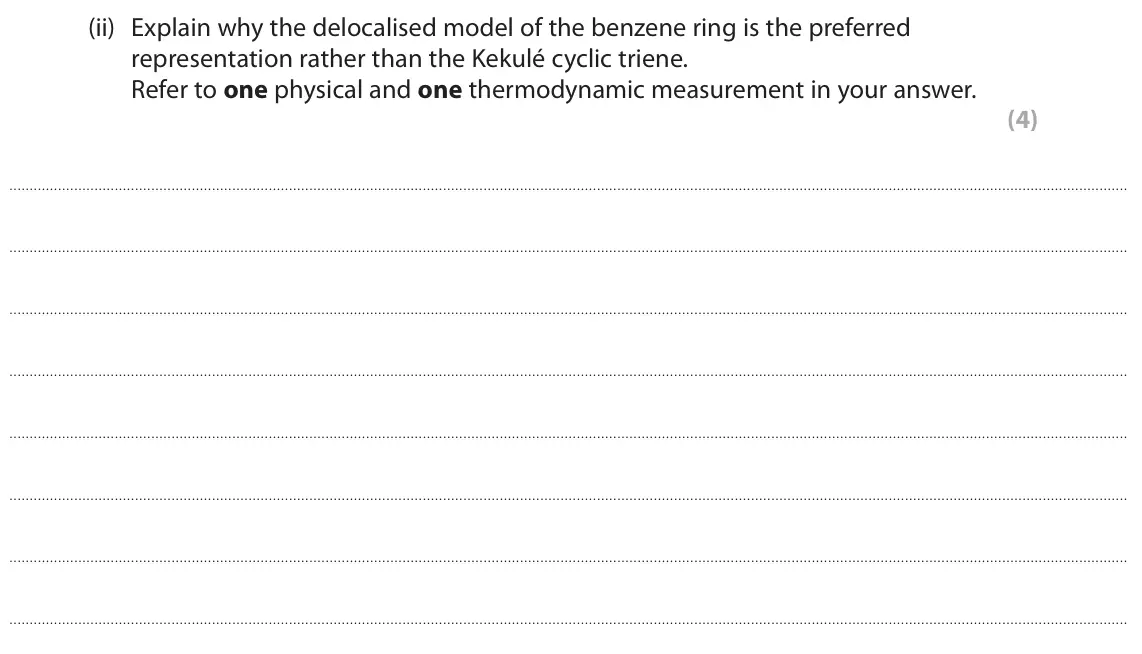
Q9(a)
The whole paper ↗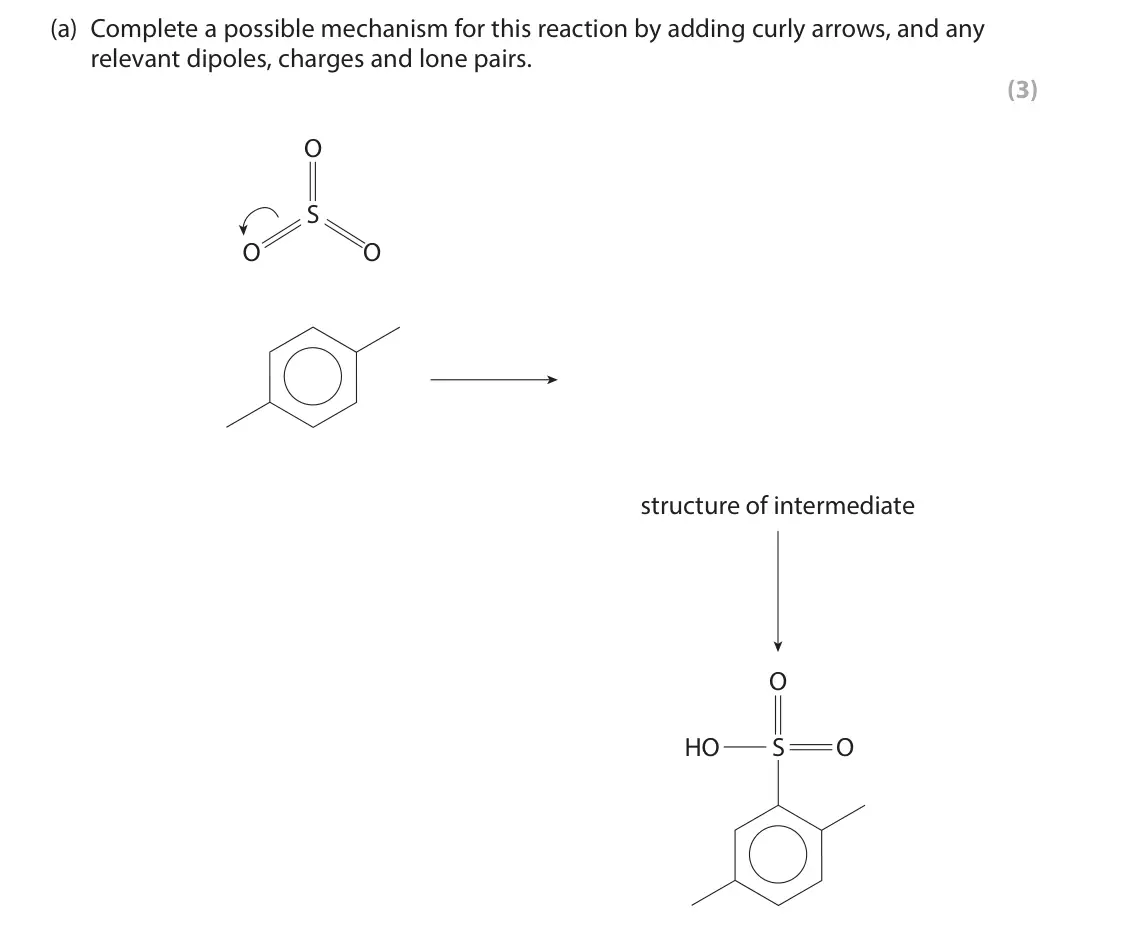
Q4(b)(ii)
The whole paper ↗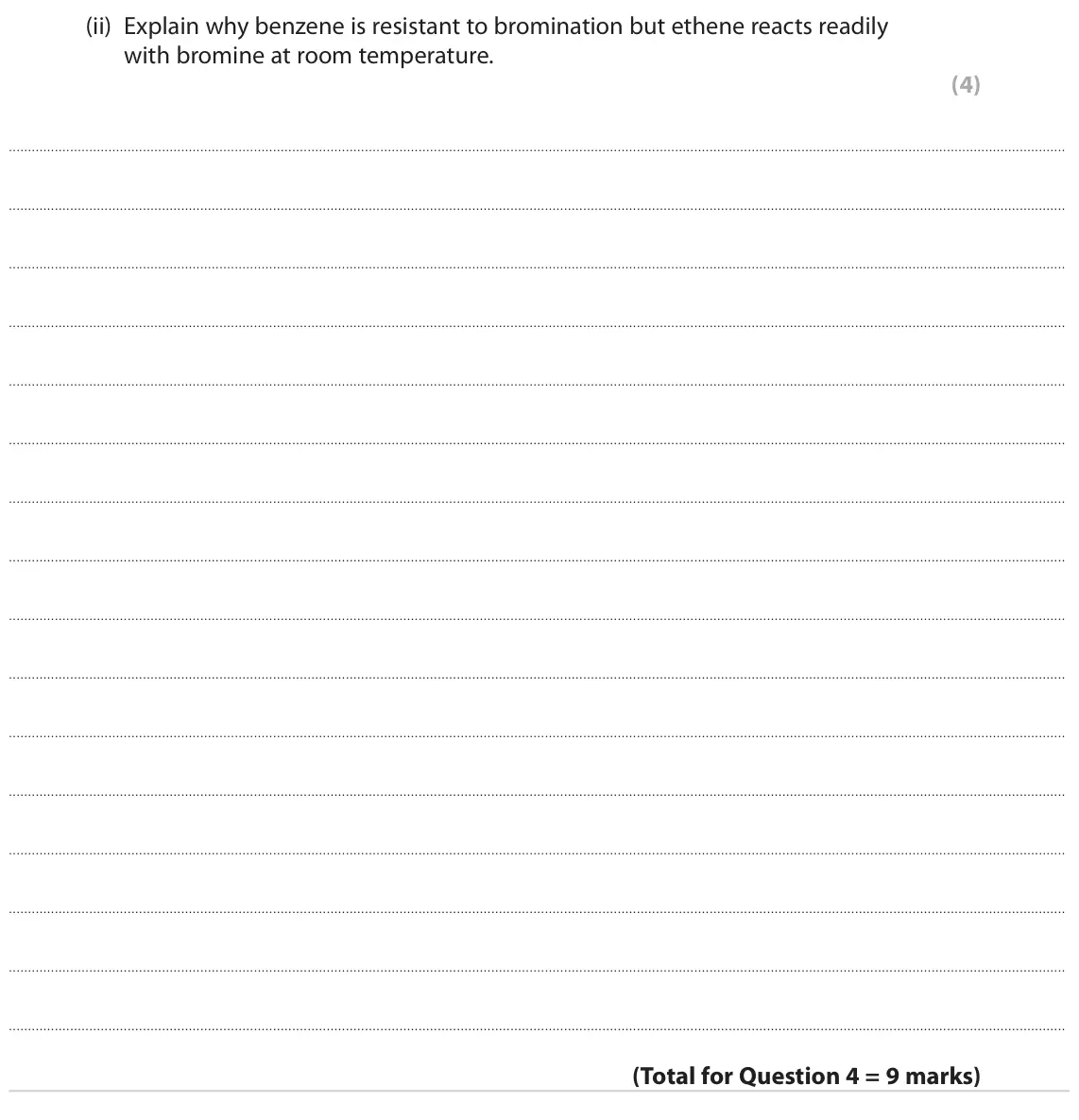
Q9(c)(i)
The whole paper ↗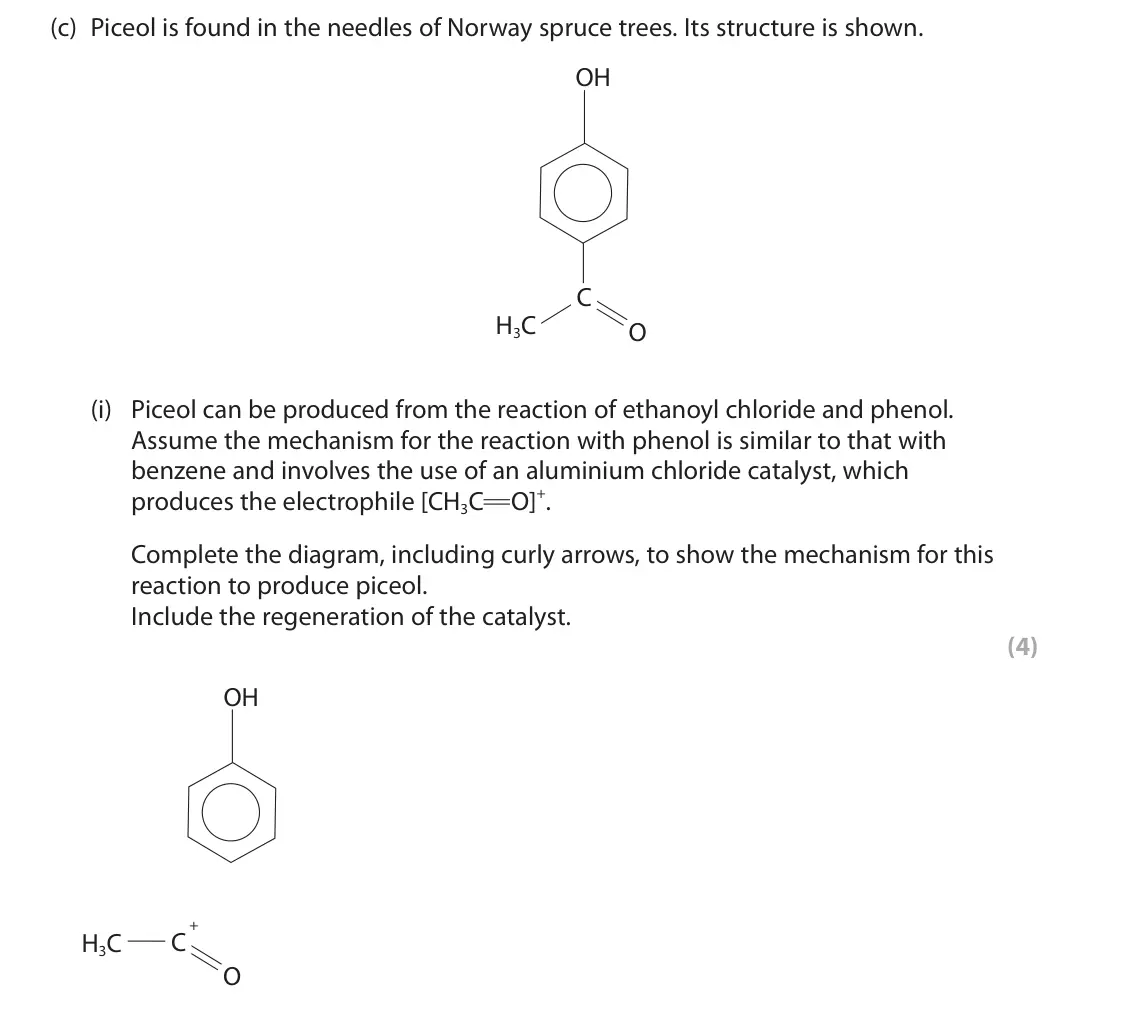
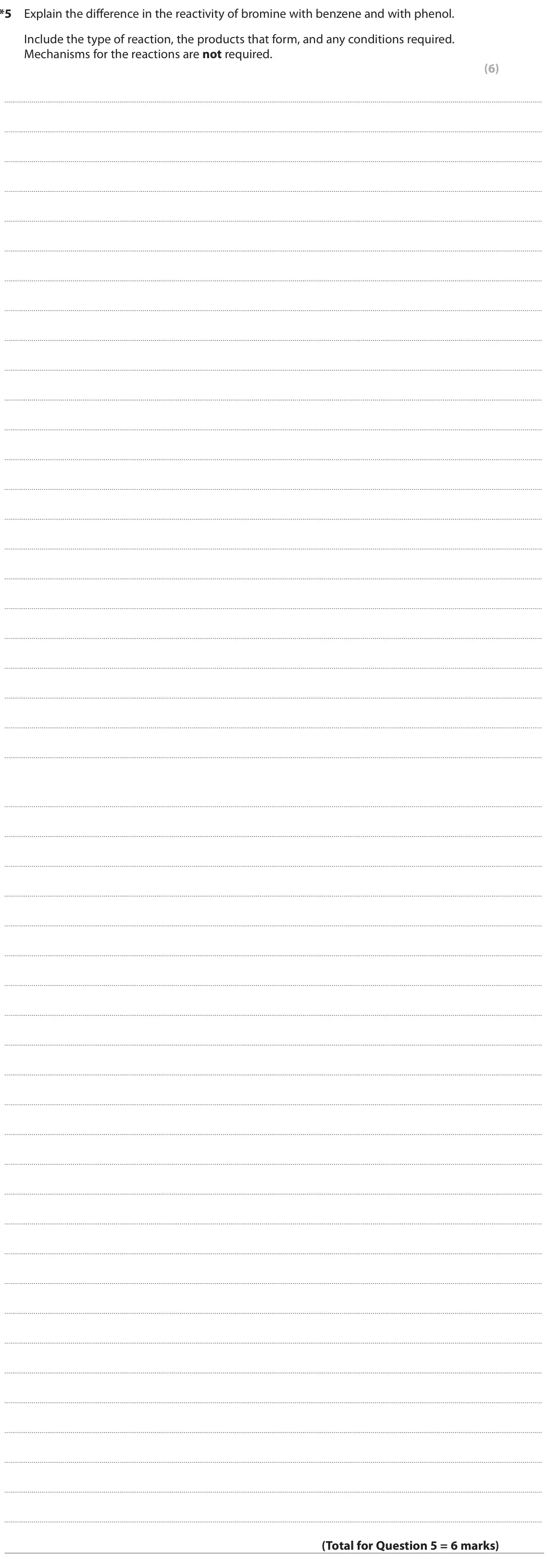
Q3(b)(iii)
The whole paper ↗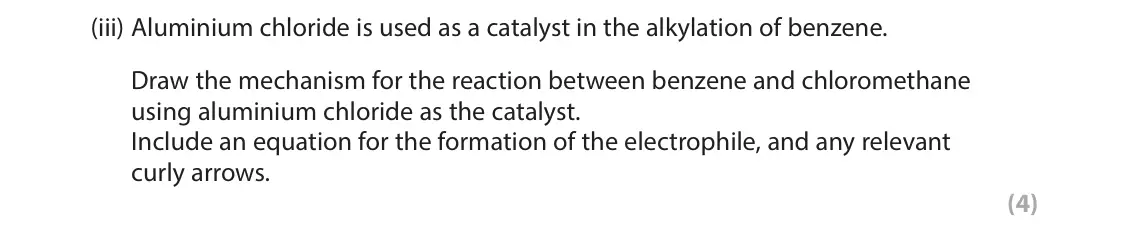
Q6(a)(i)
The whole paper ↗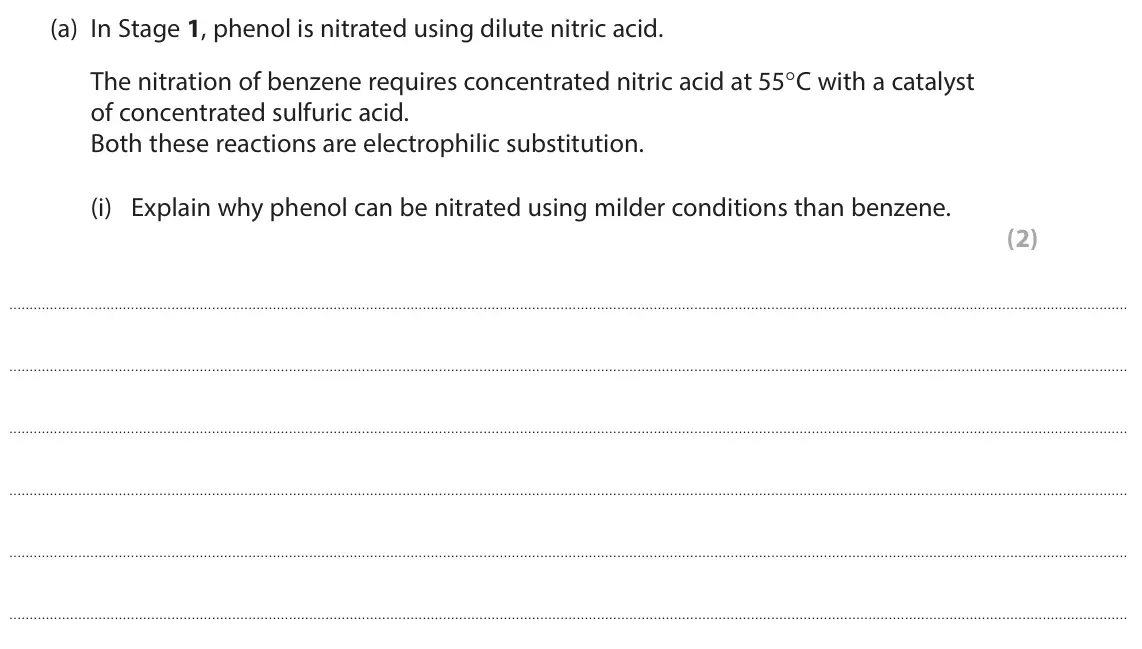
Q6(b)(ii)
The whole paper ↗
Q6(b)(iii)
The whole paper ↗
Q6(b)(iv)
The whole paper ↗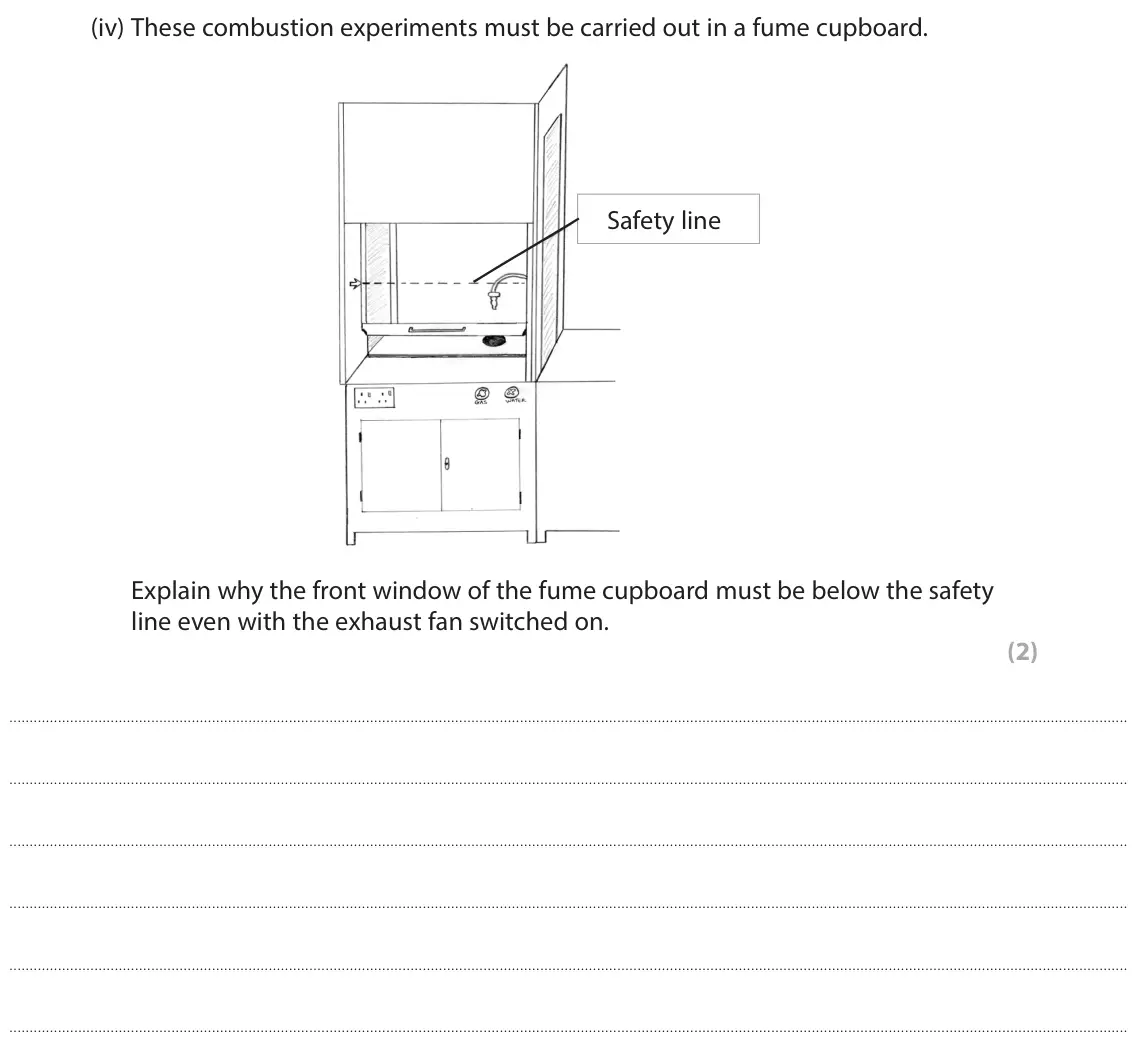
Q5(a)(i)
The whole paper ↗
Q5(a)(ii)
The whole paper ↗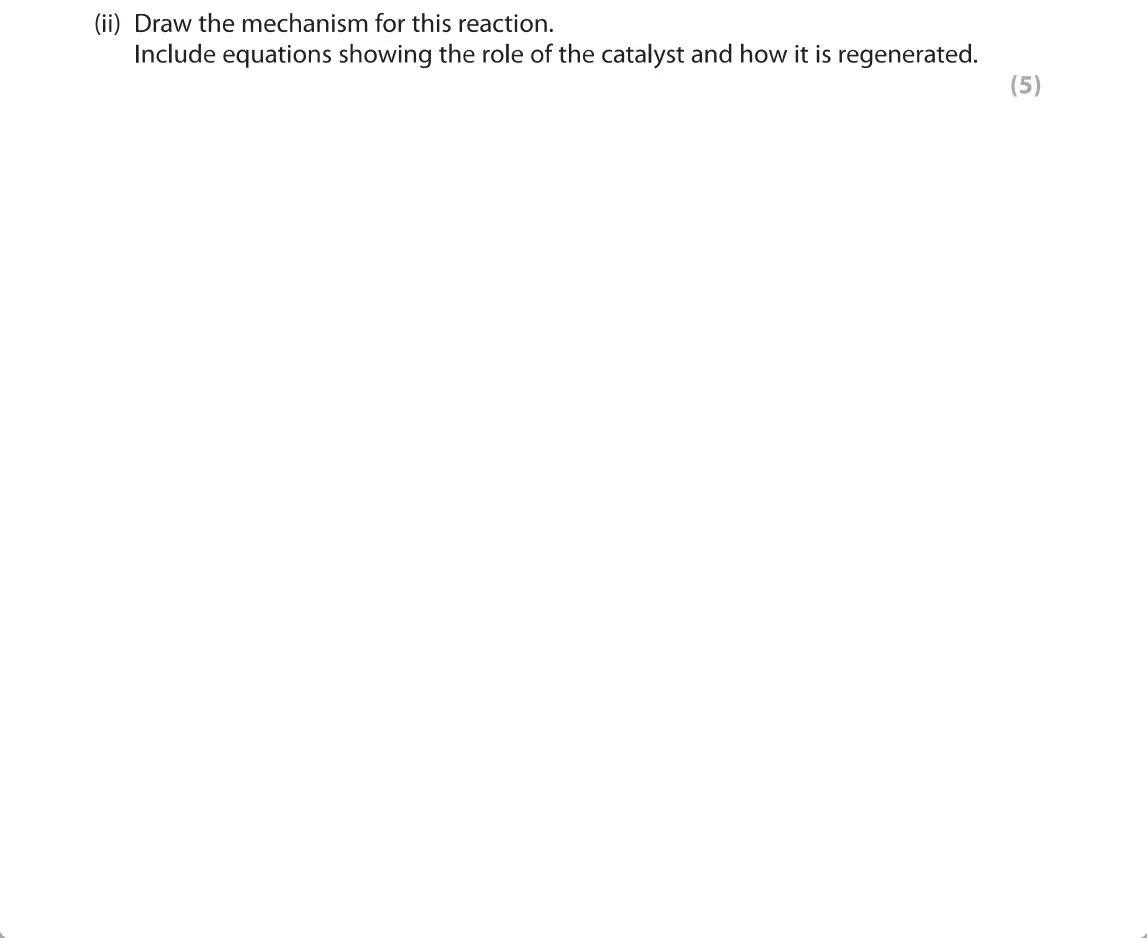
Q5(a)(iii)
The whole paper ↗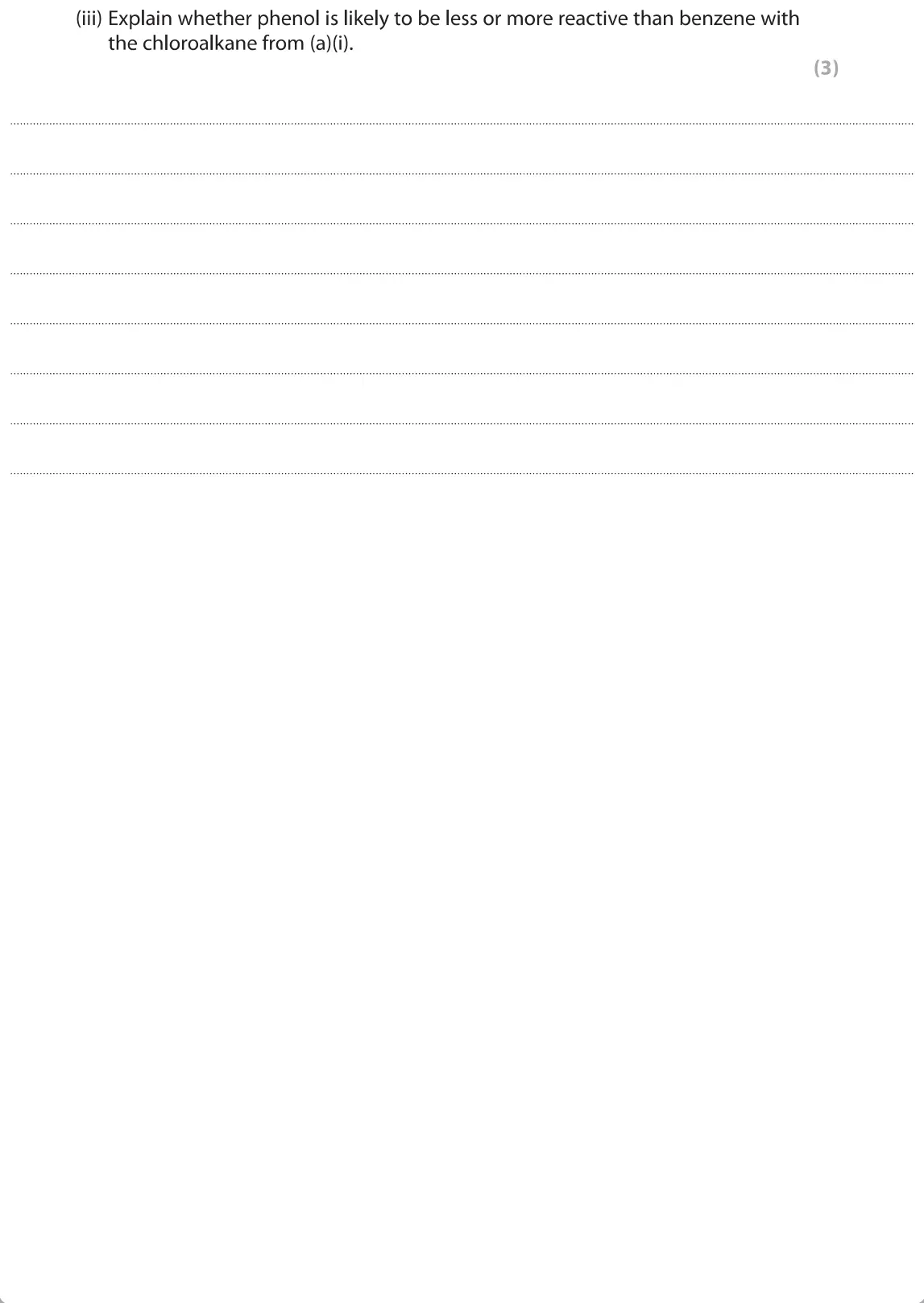
Q10(c)(ii)
The whole paper ↗
Q8(a)(i)
The whole paper ↗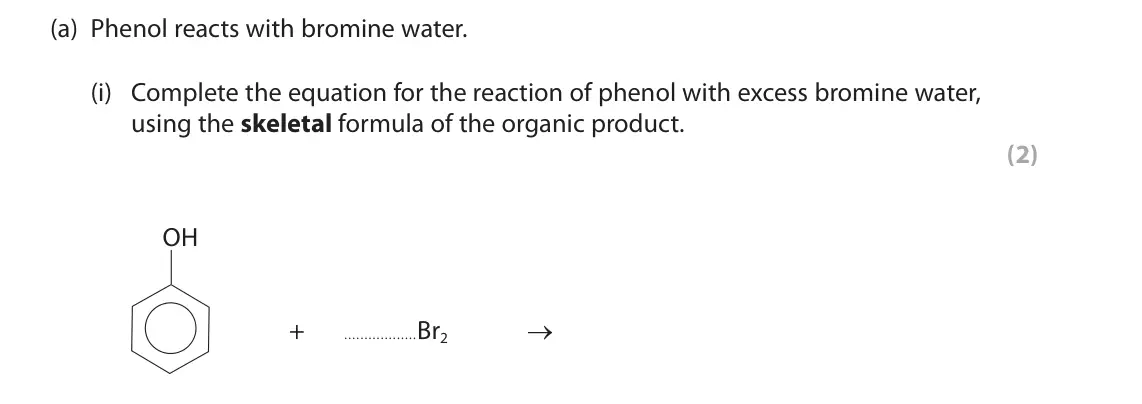
Q8(a)(ii)
The whole paper ↗
Q8(b)(i)
The whole paper ↗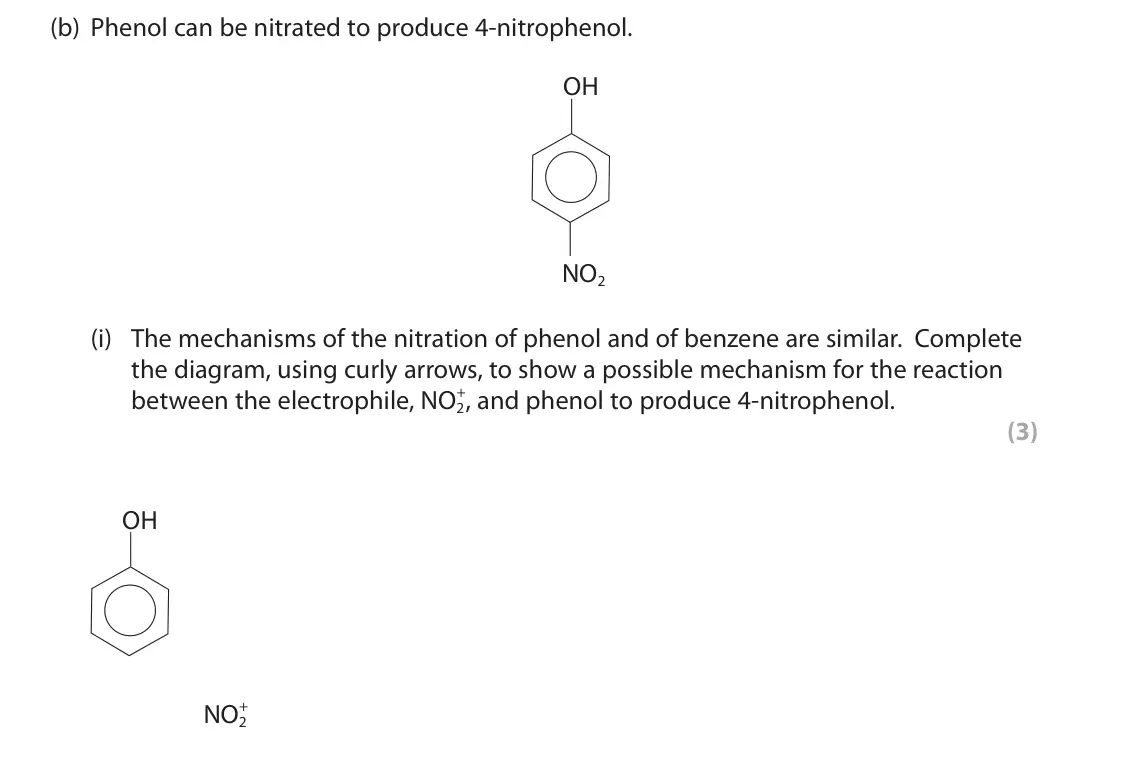
Q7(c)
The whole paper ↗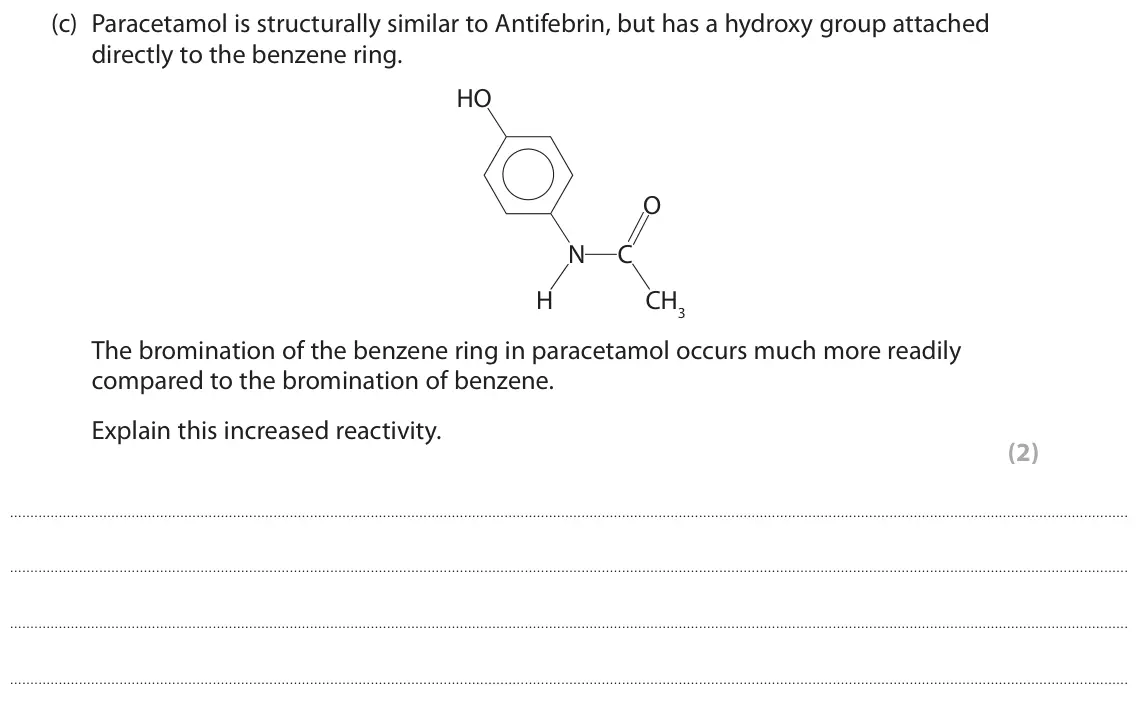
All 22 questions on Arenes - benzene, as a list
- June 2025, Paper 2, Q8(e)(i) (3 marks): Describe how the orbitals of carbon atoms overlap to form the σ‑bonds and the π‑bonds in the delocalised model of the benzene ring. You may include a labelled d
- June 2025, Paper 2, Q8(e)(ii) (4 marks): Explain why the delocalised model of the benzene ring is the preferred representation rather than the Kekulé cyclic triene. Refer to one physical and one thermo
- June 2025, Paper 3, Q9(a) (3 marks): Complete a possible mechanism for this reaction by adding curly arrows, and any relevant dipoles, charges and lone pairs. (3) O S O O structure of intermediate
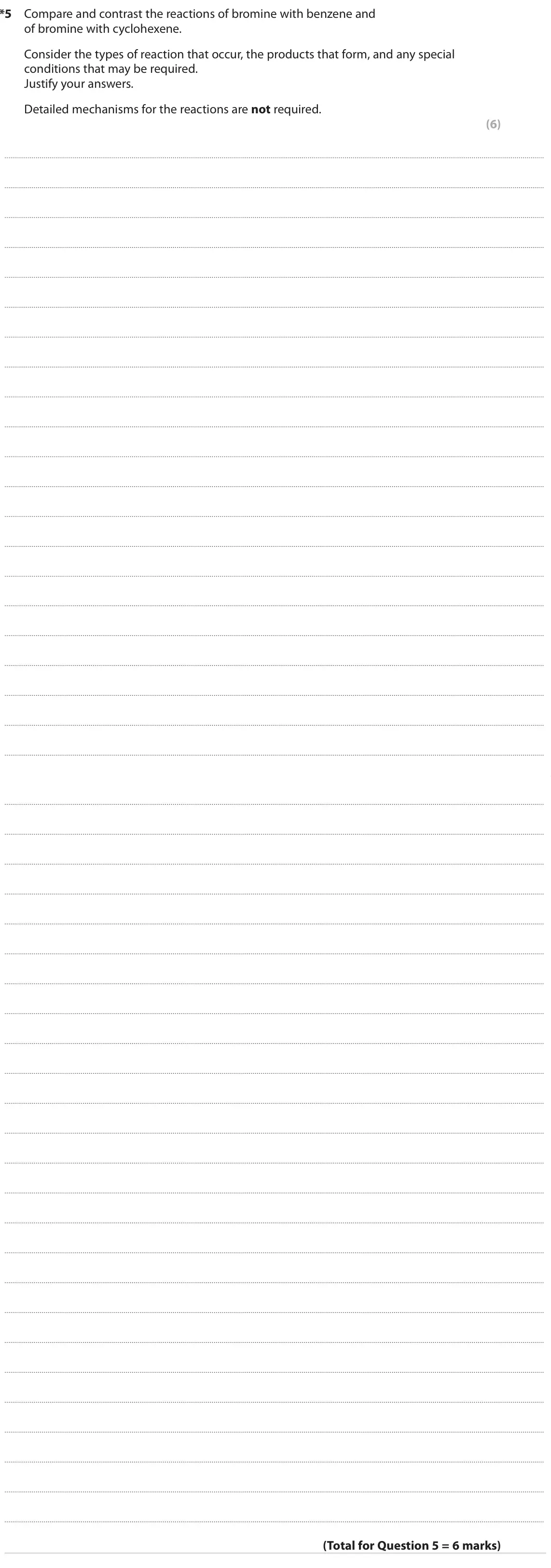
- June 2024, Paper 3, Q5 (6 marks): * 5 Compare and contrast the reactions of bromine with benzene and of bromine with cyclohexene. Consider the types of reaction that occur, the products that for
- June 2023, Paper 2, Q4(b)(ii) (4 marks): Explain why benzene is resistant to bromination but ethene reacts readily with bromine at room temperature. (4)
- June 2023, Paper 3, Q9(c)(i) (4 marks): Piceol can be produced from the reaction of ethanoyl chloride and phenol. Assume the mechanism for the reaction with phenol is similar to that with benzene and
- June 2022, Paper 3, Q5 (6 marks): * 5 Explain the difference in the reactivity of bromine with benzene and with phenol. Include the type of reaction, the products that form, and any conditions r
- November 2021, Paper 3, Q3(b)(iii) (4 marks): Aluminium chloride is used as a catalyst in the alkylation of benzene. Draw the mechanism for the reaction between benzene and chloromethane using aluminium chl
- November 2021, Paper 3, Q6(a)(i) (2 marks): Explain why phenol can be nitrated using milder conditions than benzene. (2)
- October 2020, Paper 3, Q6(b)(ii) (1 mark): Give the expected observation when these aromatic compounds undergo incomplete combustion. (1)
- October 2020, Paper 3, Q6(b)(iii) (1 mark): Identify another type of organic compound which will also produce the same observation as in (b)(ii). (1)
- October 2020, Paper 3, Q6(b)(iv) (2 marks): These combustion experiments must be carried out in a fume cupboard. Safety line Explain why the front window of the fume cupboard must be below the safety line
- June 2019, Paper 2, Q5(a)(i) (1 mark): Draw the displayed formula of the chloroalkane required for this reaction. (1)
- June 2019, Paper 2, Q5(a)(ii) (5 marks): Draw the mechanism for this reaction. Include equations showing the role of the catalyst and how it is regenerated. (5)
- June 2019, Paper 2, Q5(a)(iii) (3 marks): Explain whether phenol is likely to be less or more reactive than benzene with the chloroalkane from (a)(i). (3)
- June 2019, Paper 3, Q10(c)(ii) (2 marks): Draw the structures of the three possible isomers of D containing a benzene ring. (2)
- June 2018, Paper 2, Q8(a)(i) (2 marks): Complete the equation for the reaction of phenol with excess bromine water, using the skeletal formula of the organic product. (2) OH + Br2 →
- June 2018, Paper 2, Q8(a)(ii) (3 marks): Compare and contrast the bromination of phenol with the bromination of benzene. (3)
- June 2018, Paper 2, Q8(b)(i) (3 marks): The mechanisms of the nitration of phenol and of benzene are similar. Complete the diagram, using curly arrows, to show a possible mechanism for the reaction +,
- June 2017, Paper 2, Q7(c) (2 marks): Paracetamol is structurally similar to Antifebrin, but has a hydroxy group attached directly to the benzene ring. HO O N C H CH3 The bromination of the benzene
- June 2017, Paper 2, Q8(a)(i) (1 mark): Write the equation for the formation of the electrophile, CH3CO+, from ethanoyl chloride using the catalyst aluminium chloride. (1)
- June 2017, Paper 2, Q8(a)(ii) (4 marks): Complete the diagram, including curly arrows, to show the mechanism for the reaction between this electrophile and benzene to produce phenylethanone. Include th
Questions, mark schemes and examiner’s reports are © Pearson Edexcel, from their published past papers. Plumi isn’t affiliated with any exam board. Want whole papers? Every Edexcel A-Level Chemistry paper.
Rather write your answers by hand on iPad? Plumi marks them against the same mark schemes.