 plumi
Human effects on ecosystems: Edexcel A‑Level Biology B questions
Every Edexcel A-Level Biology B exam question on 10.4 Human effects on ecosystems, 2016–2025, with its mark scheme and examiner’s report.
Find questions1,826
Calculations
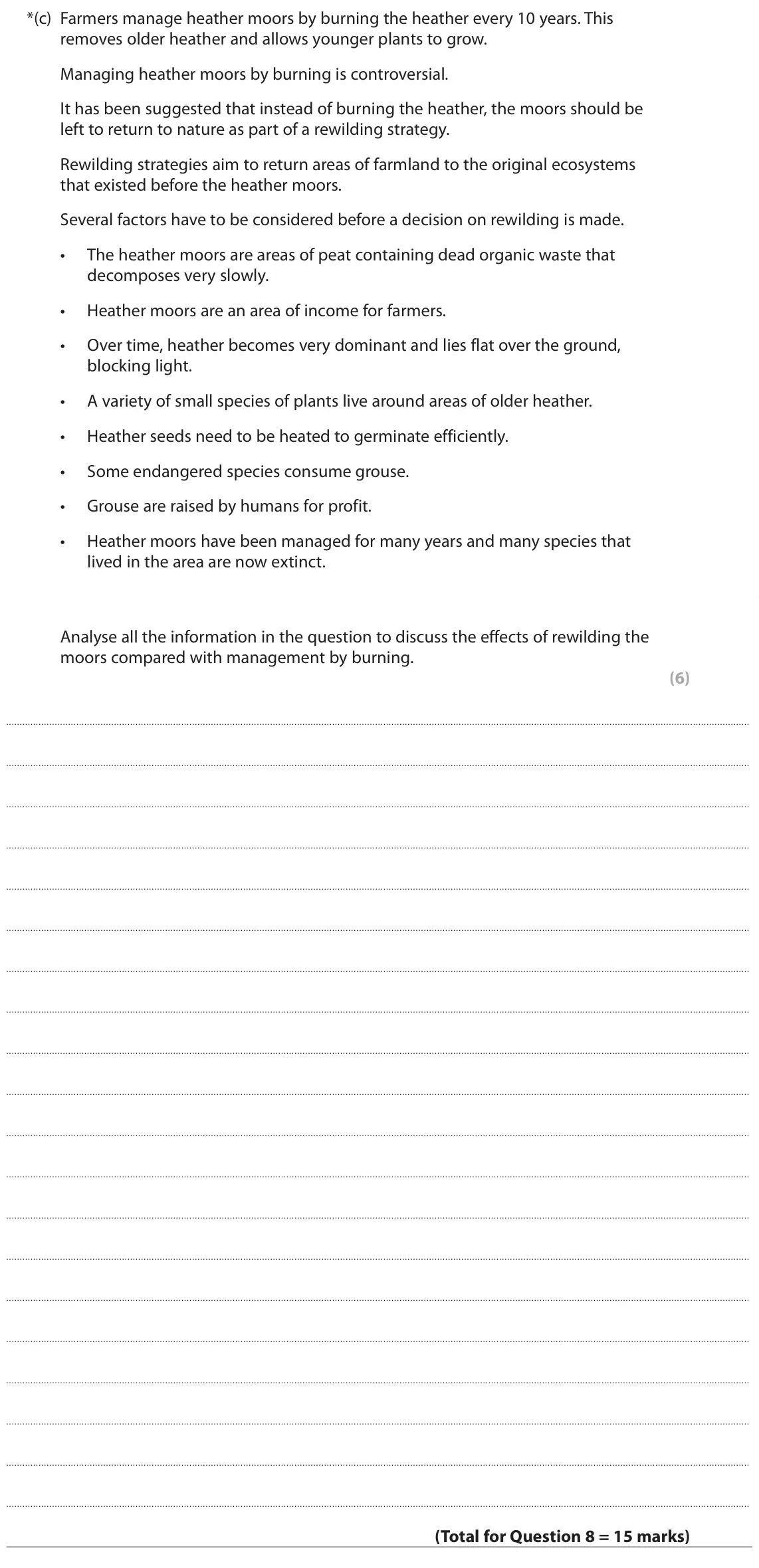
Q10(b)
The whole paper ↗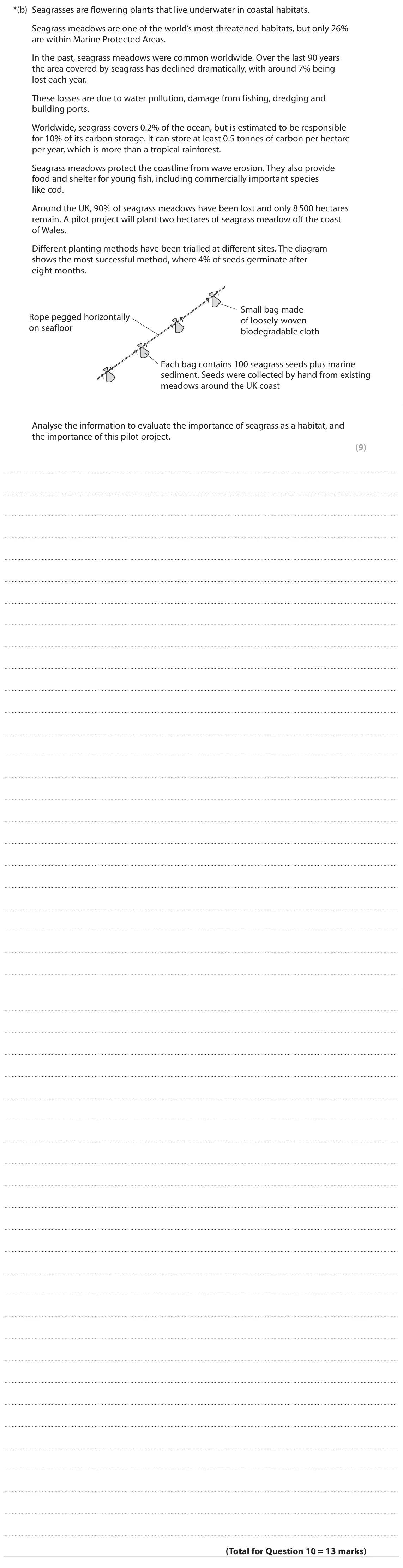
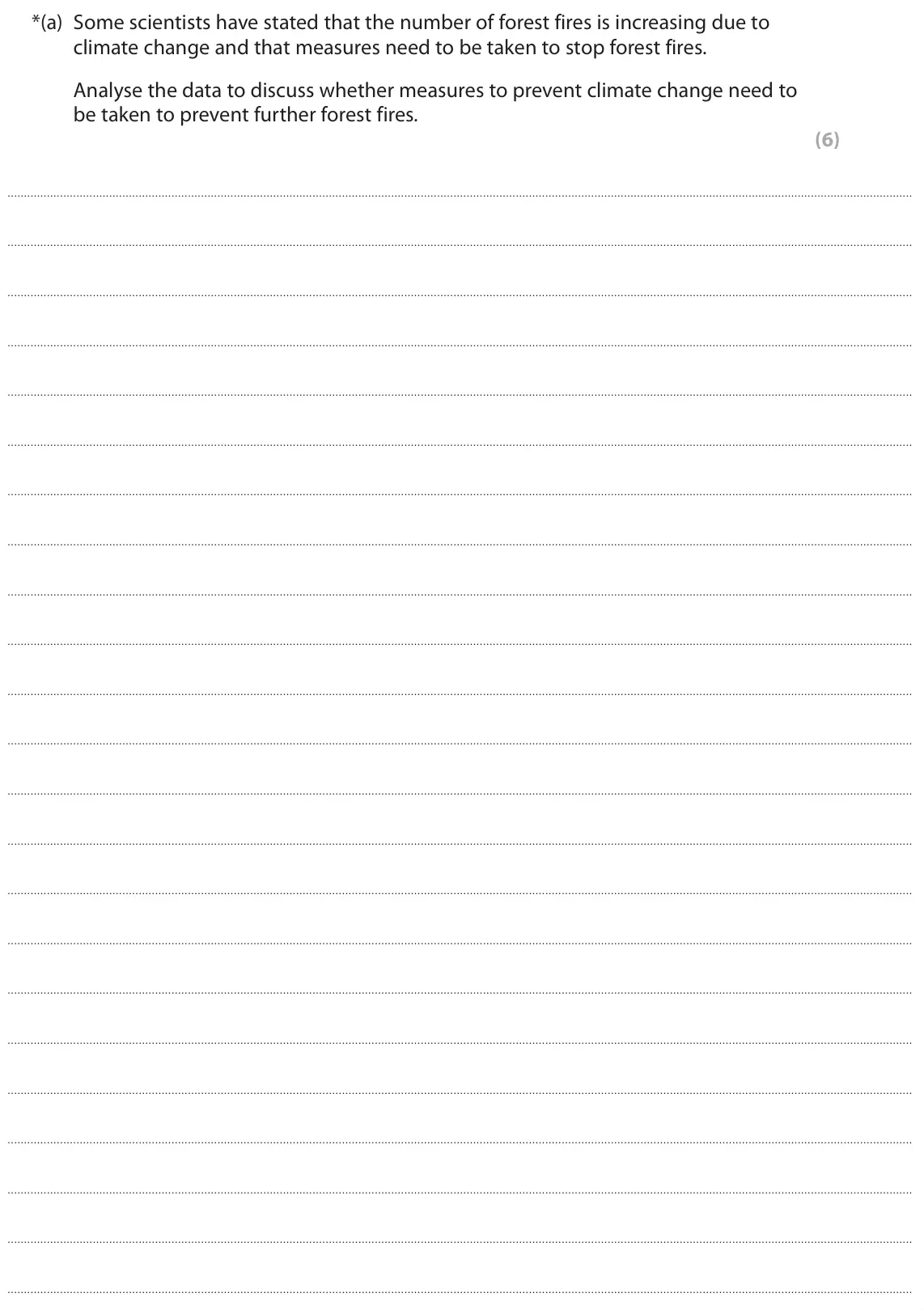
Q9(a)(iv)
The whole paper ↗
Q6(c)
The whole paper ↗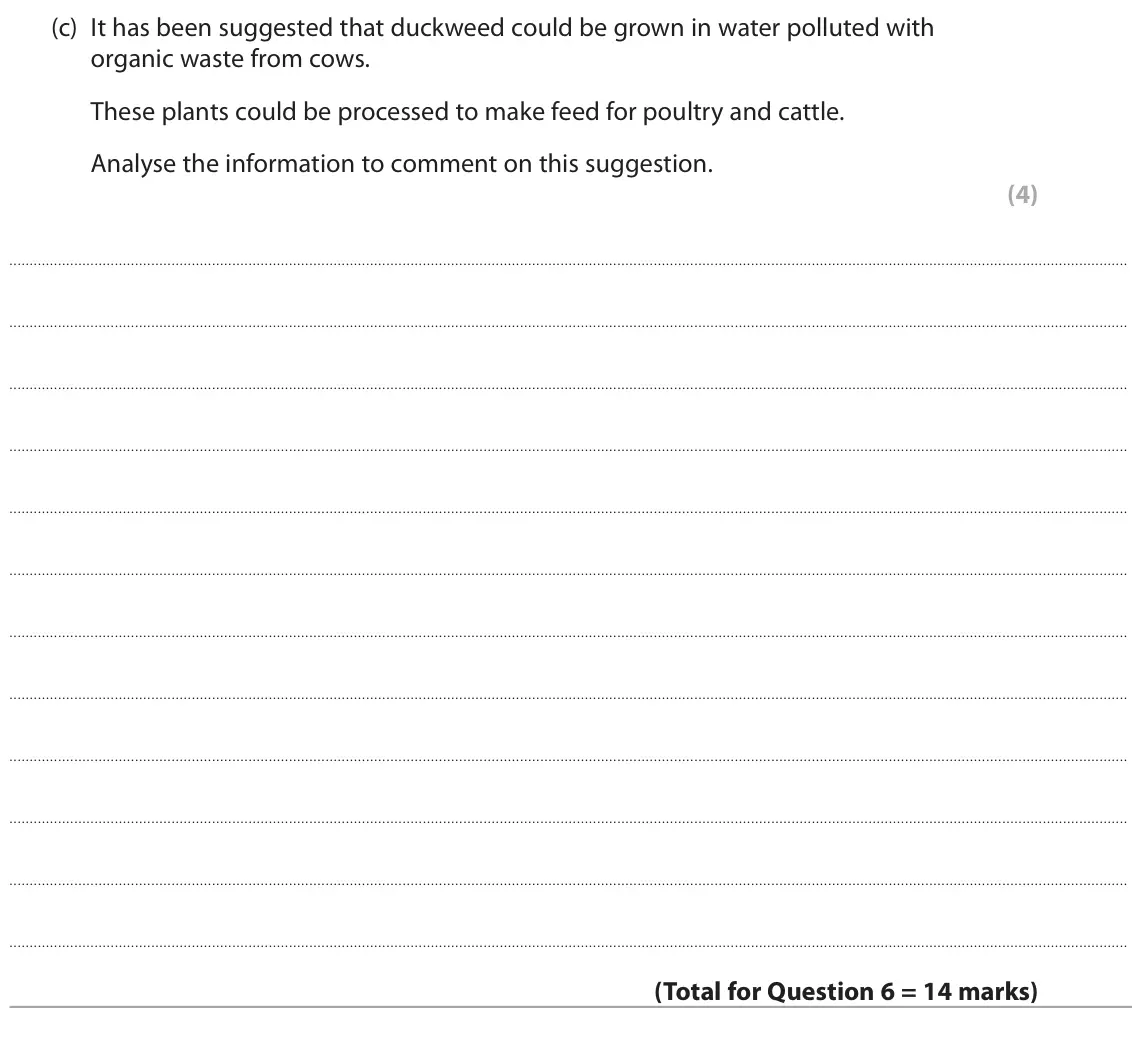
Q9(c)(ii)
The whole paper ↗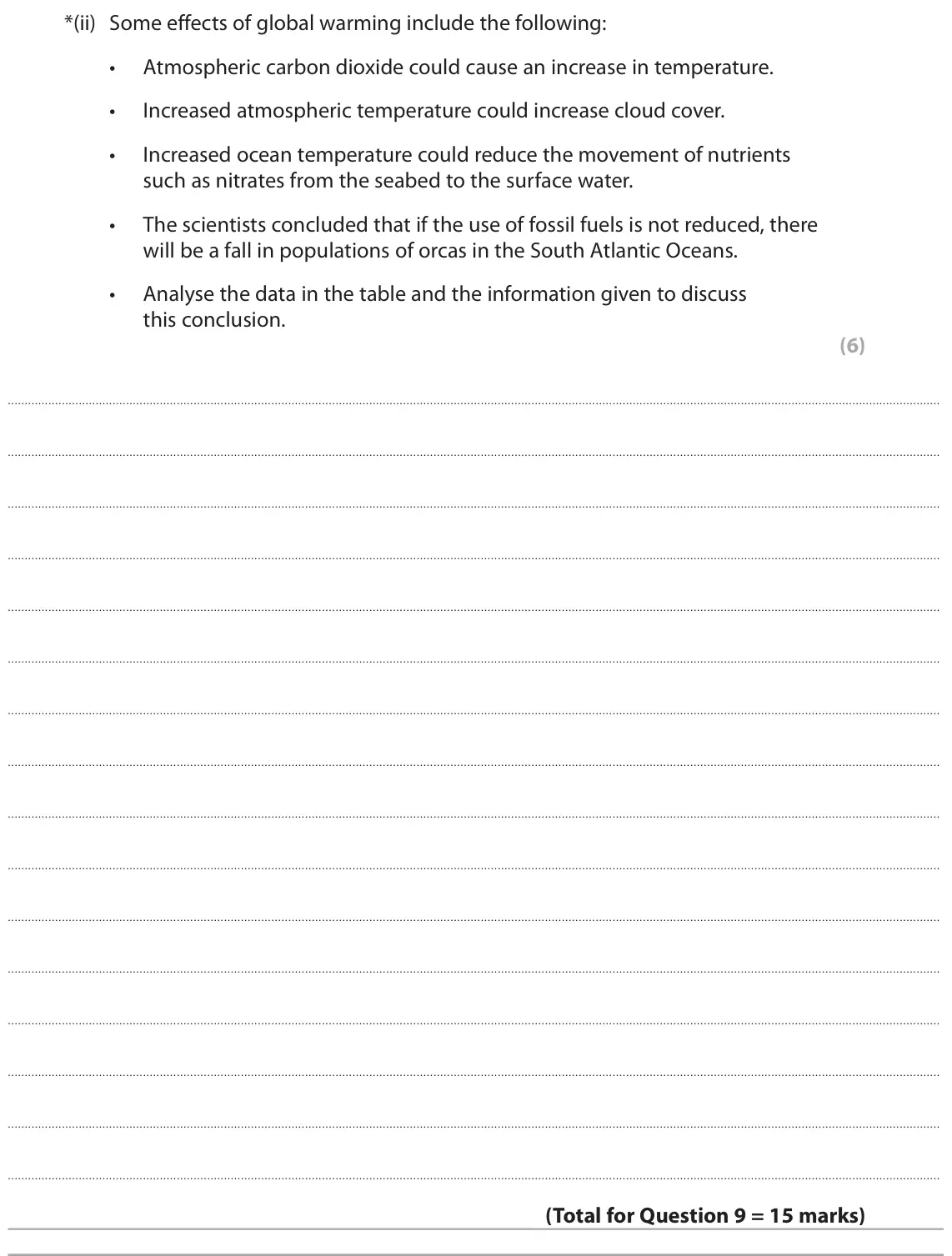
Q9(c)
The whole paper ↗
Q10(c)
The whole paper ↗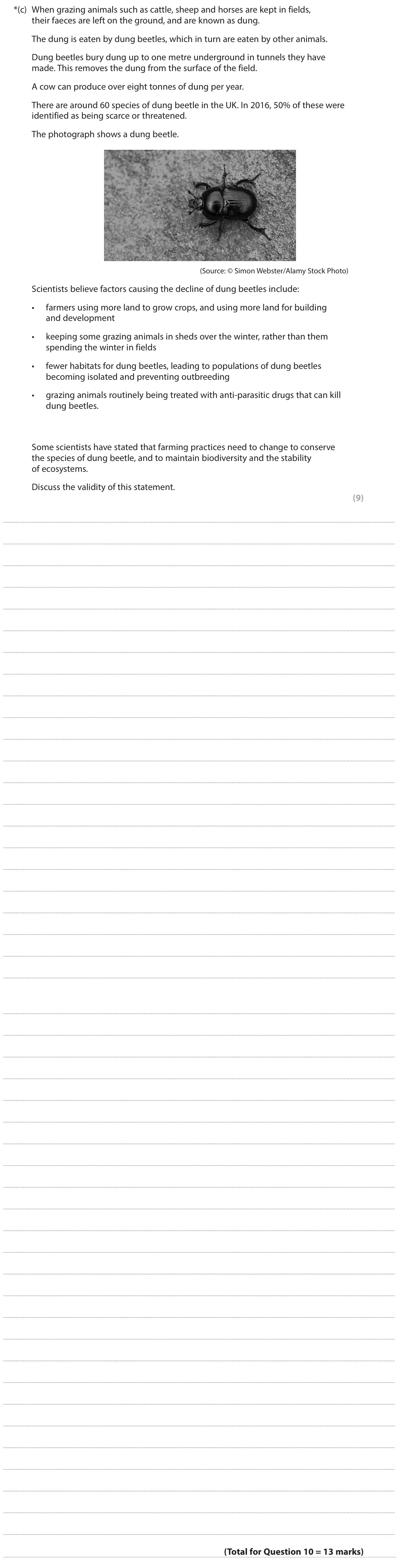
Q5(c)(ii)
The whole paper ↗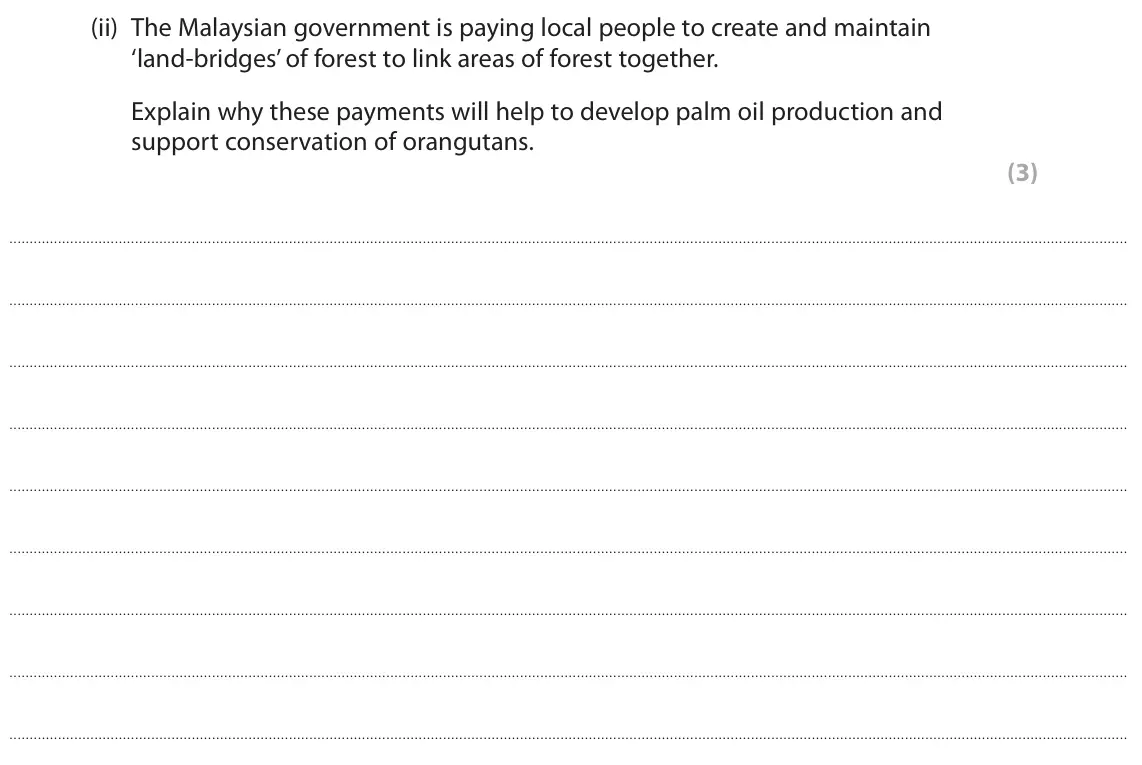
Q5(c)(iii)
The whole paper ↗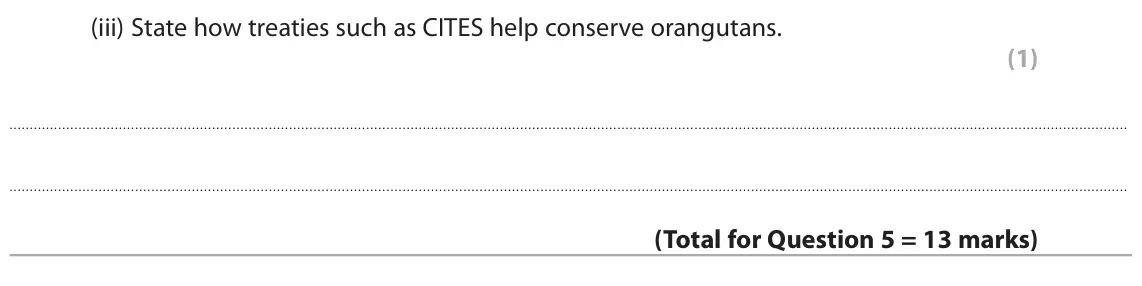
Q9(c)
The whole paper ↗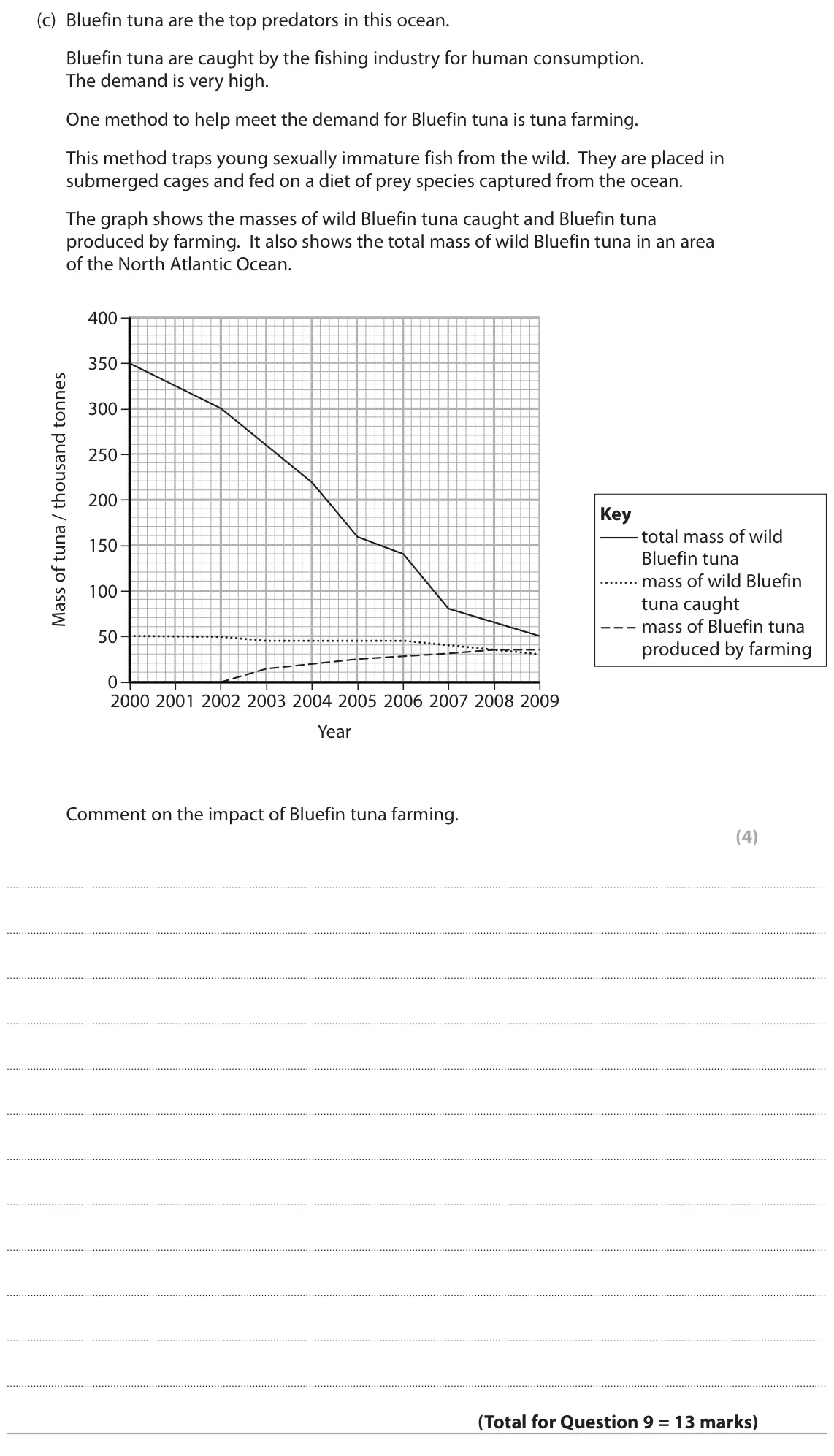
Q10(a)(i)
The whole paper ↗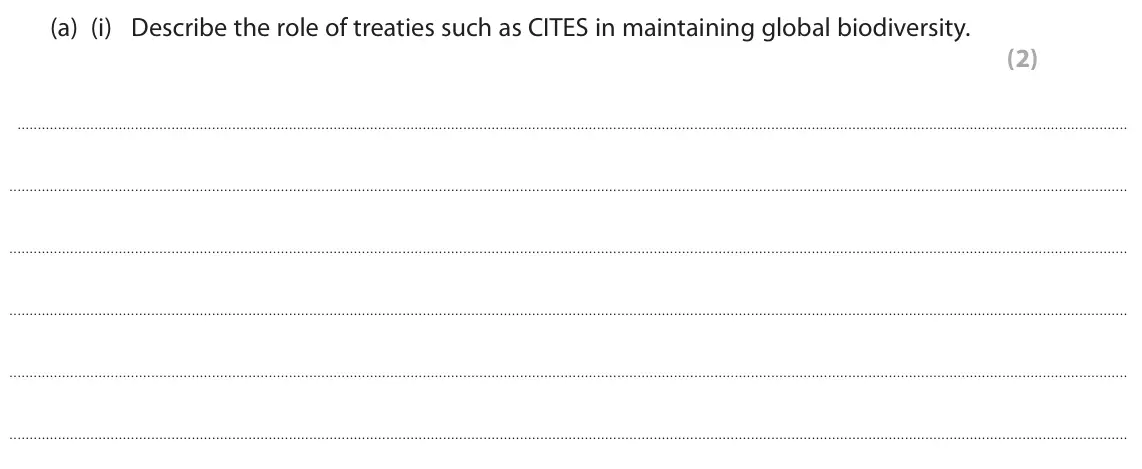
All 12 questions on Human effects on ecosystems, as a list
- June 2025, Paper 2, Q8(c) (6 marks): Farmers manage heather moors by burning the heather every 10 years. This removes older heather and allows younger plants to grow. Managing heather moors by burn
- June 2025, Paper 3, Q10(b) (9 marks): Seagrasses are flowering plants that live underwater in coastal habitats. Seagrass meadows are one of the world’s most threatened habitats, but only 26% are wit
- June 2024, Paper 2, Q5(a) (6 marks): Some scientists have stated that the number of forest fires is increasing due to climate change and that measures need to be taken to stop forest fires. Analyse
- June 2024, Paper 2, Q9(a)(iv) (2 marks): Describe how CITES helps to maintain populations of Asiatic lions in the wild. (2)
- June 2024, Paper 3, Q6(c) (4 marks): It has been suggested that duckweed could be grown in water polluted with organic waste from cows. These plants could be processed to make feed for poultry and
- June 2023, Paper 2, Q9(c)(ii) (6 marks): Some effects of global warming include the following: • Atmospheric carbon dioxide could cause an increase in temperature. • Increased atmospheric temperature c
- June 2022, Paper 2, Q9(c) (2 marks): Describe the limitations of CITES in the conservation of organisms such as elephants. (2)
- June 2022, Paper 3, Q10(c) (9 marks): When grazing animals such as cattle, sheep and horses are kept in fields, their faeces are left on the ground, and are known as dung. The dung is eaten by dung
- October 2020, Paper 2, Q5(c)(ii) (3 marks): The Malaysian government is paying local people to create and maintain ‘land-bridges’ of forest to link areas of forest together. Explain why these payments wil
- October 2020, Paper 2, Q5(c)(iii) (1 mark): State how treaties such as CITES help conserve orangutans. (1)
- June 2018, Paper 2, Q9(c) (4 marks): Bluefin tuna are the top predators in this ocean. Bluefin tuna are caught by the fishing industry for human consumption. The demand is very high. One method to
- June 2017, Paper 2, Q10(a)(i) (2 marks): Describe the role of treaties such as CITES in maintaining global biodiversity. (2)
Questions, mark schemes and examiner’s reports are © Pearson Edexcel, from their published past papers. Plumi isn’t affiliated with any exam board. Want whole papers? Every Edexcel A-Level Biology B paper.
Rather write your answers by hand on iPad? Plumi marks them against the same mark schemes.