 plumi
Energy transfer through ecosystems: Edexcel A‑Level Biology B questions
Every Edexcel A-Level Biology B exam question on 10.2 Energy transfer through ecosystems, 2016–2025, with its mark scheme and examiner’s report.
Find questions1,826
Calculations
Q8(a)
The whole paper ↗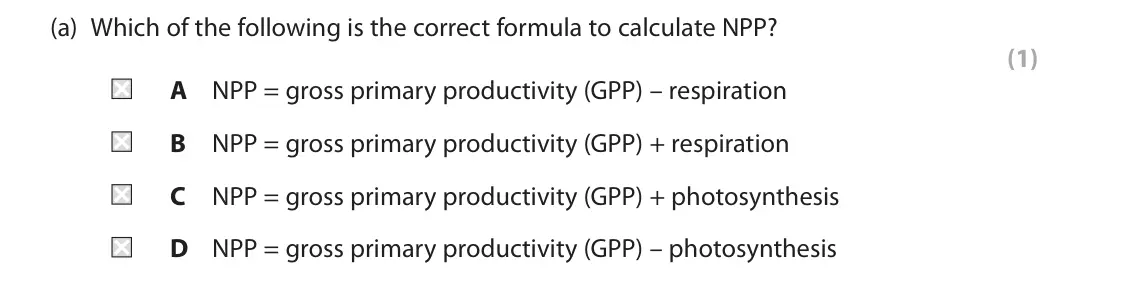
Q9(b)(i)
The whole paper ↗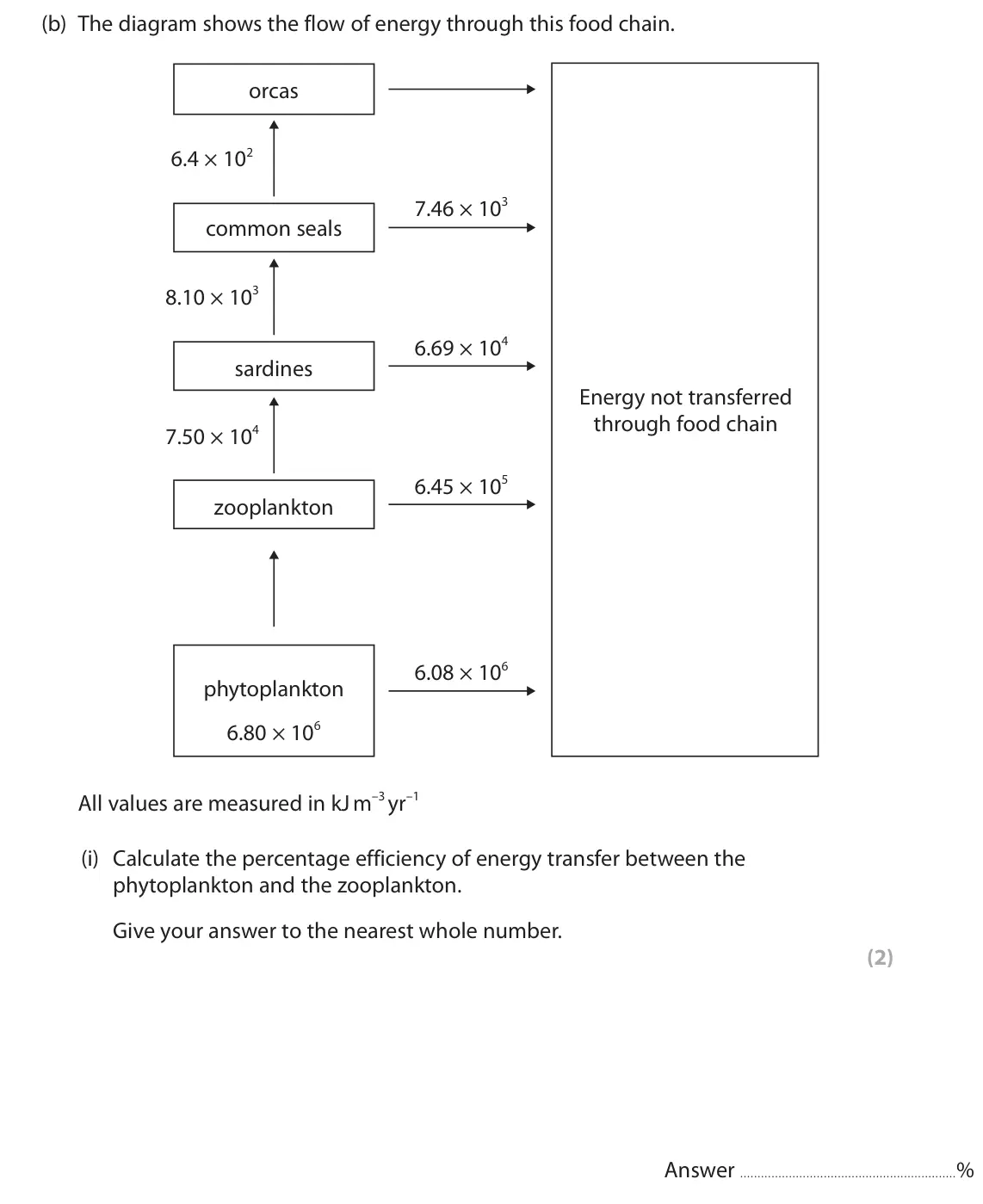
Q9(b)(ii)
The whole paper ↗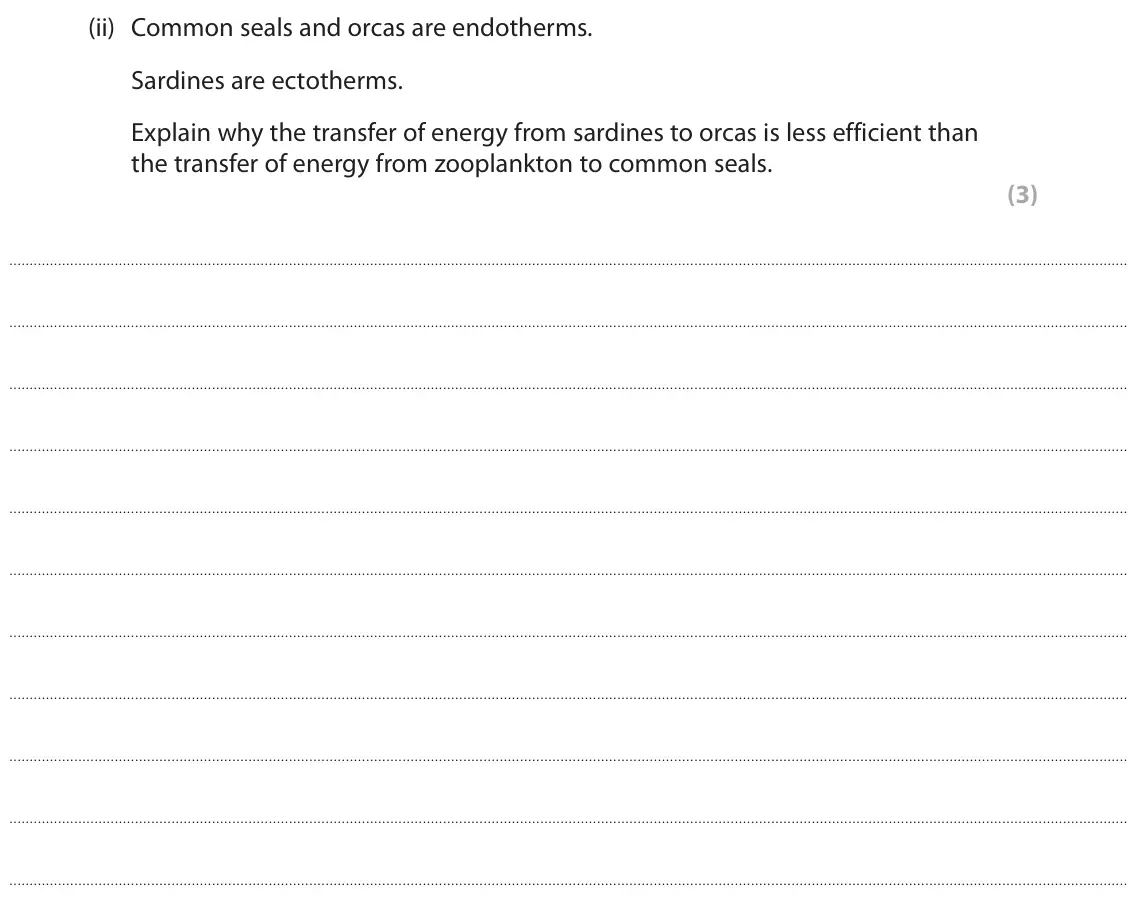
Q9(c)(i)
The whole paper ↗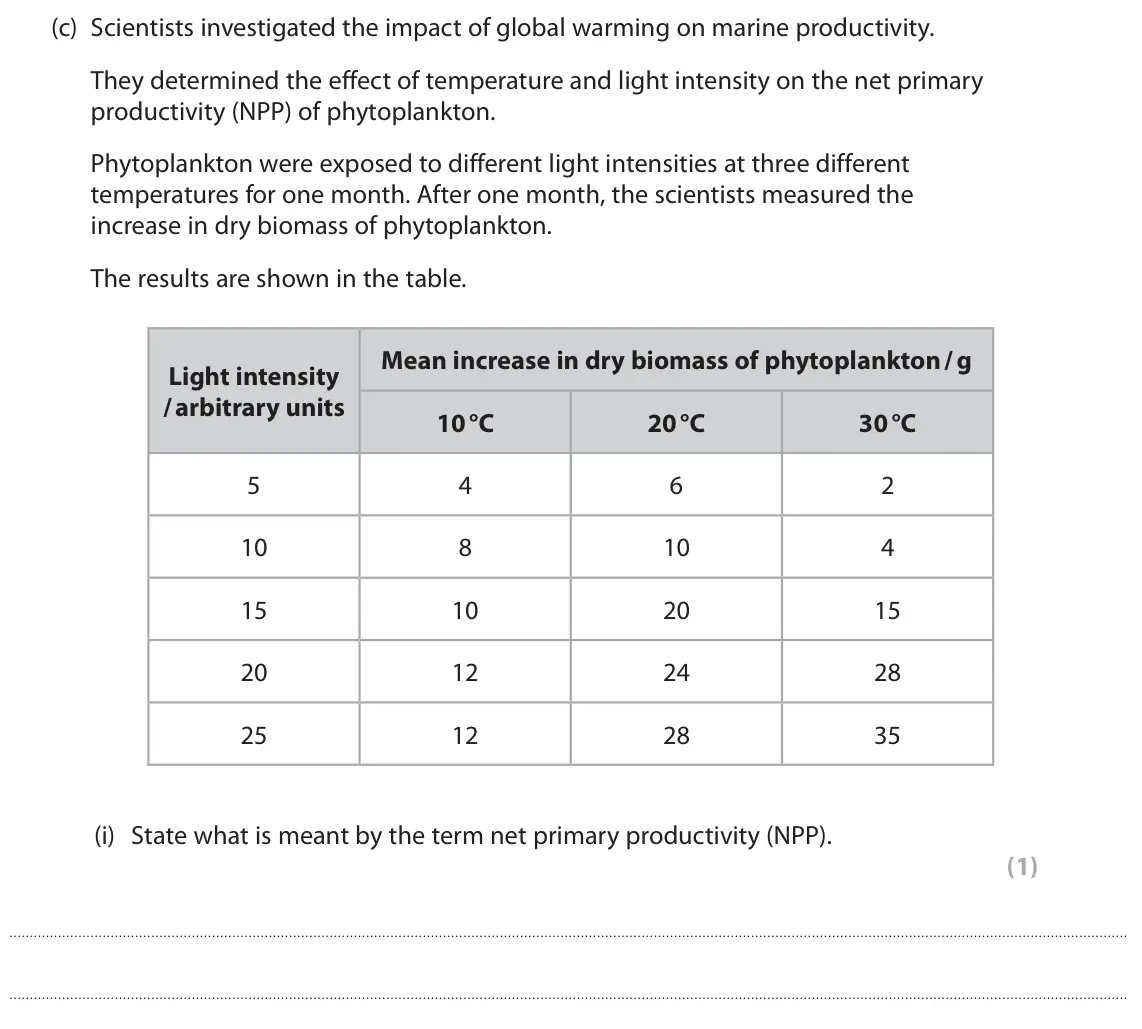
Q11(c)(i)
The whole paper ↗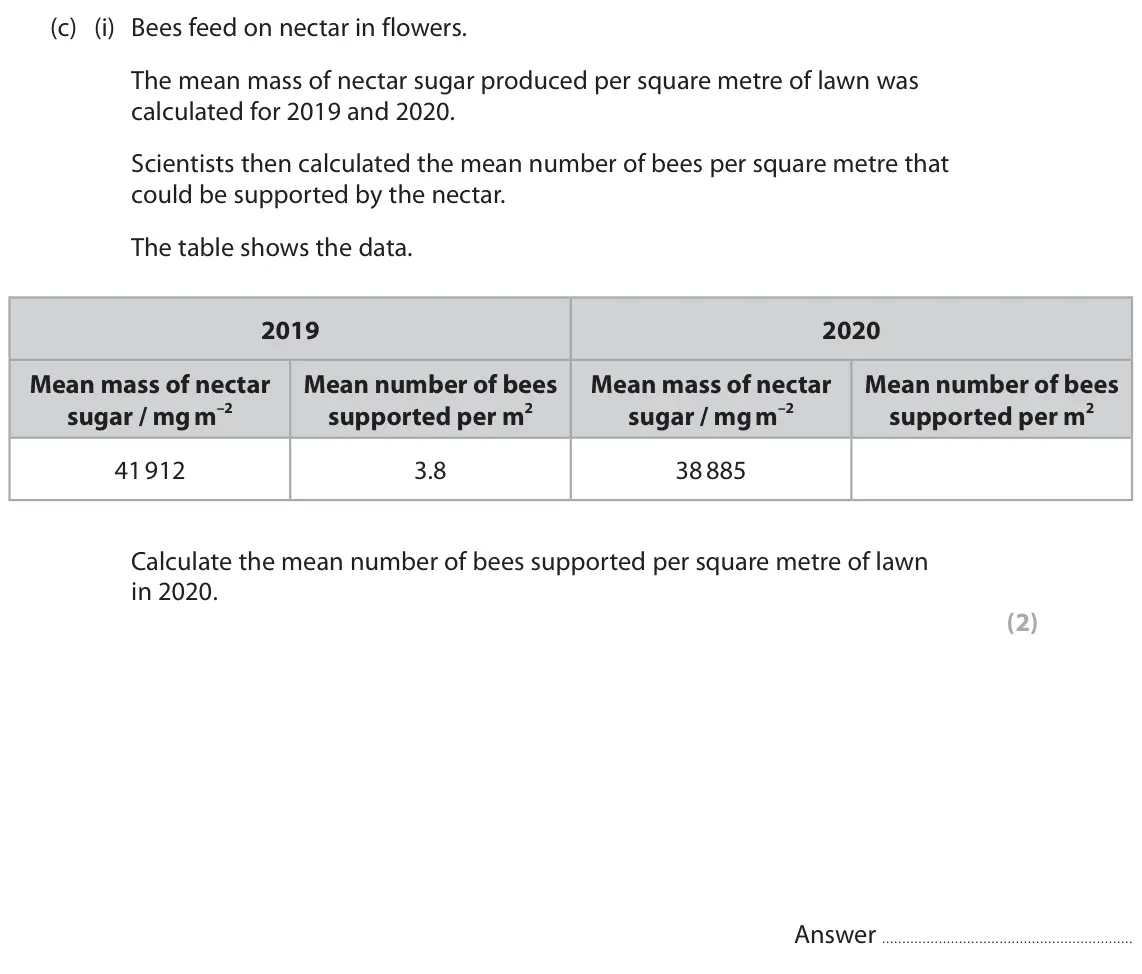
Q10(a)
The whole paper ↗
Q10(b)
The whole paper ↗
Q10(c)
The whole paper ↗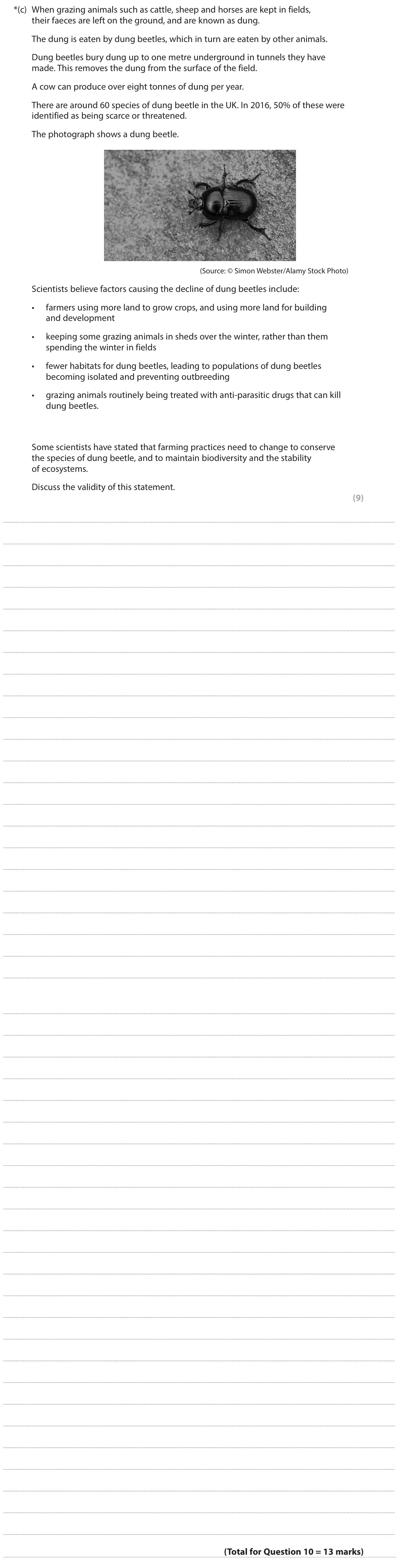
Q7(a)(i)
The whole paper ↗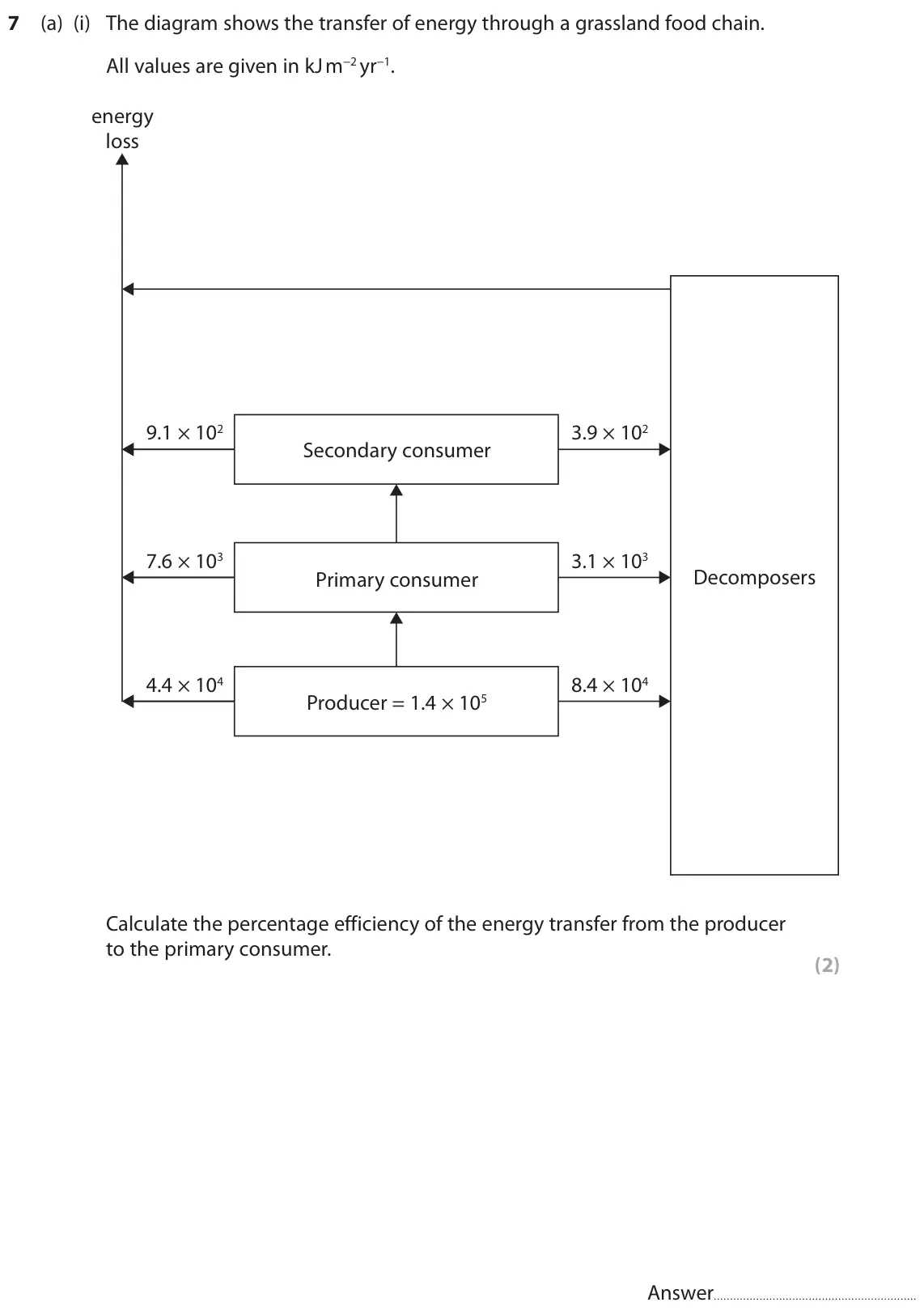
Q7(a)(ii)
The whole paper ↗
Q9(a)
The whole paper ↗
Q10(a)(i)
The whole paper ↗
Q10(a)(ii)
The whole paper ↗
Q10(a)(iii)
The whole paper ↗
Q10(b)
The whole paper ↗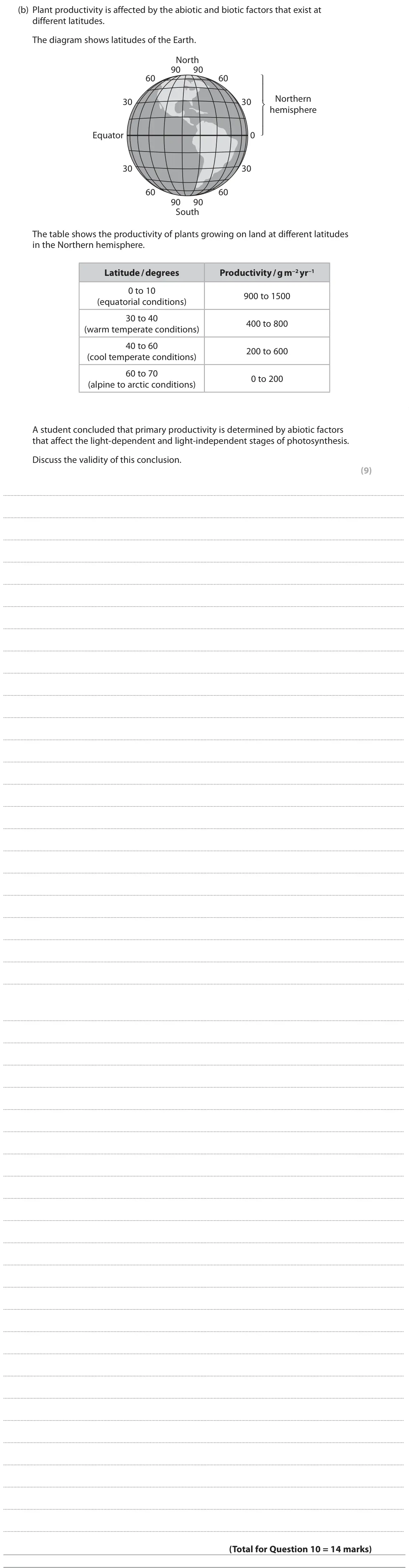
Q9(a)(i)
The whole paper ↗
Q9(a)(ii)
The whole paper ↗
Q9(b)(i)
The whole paper ↗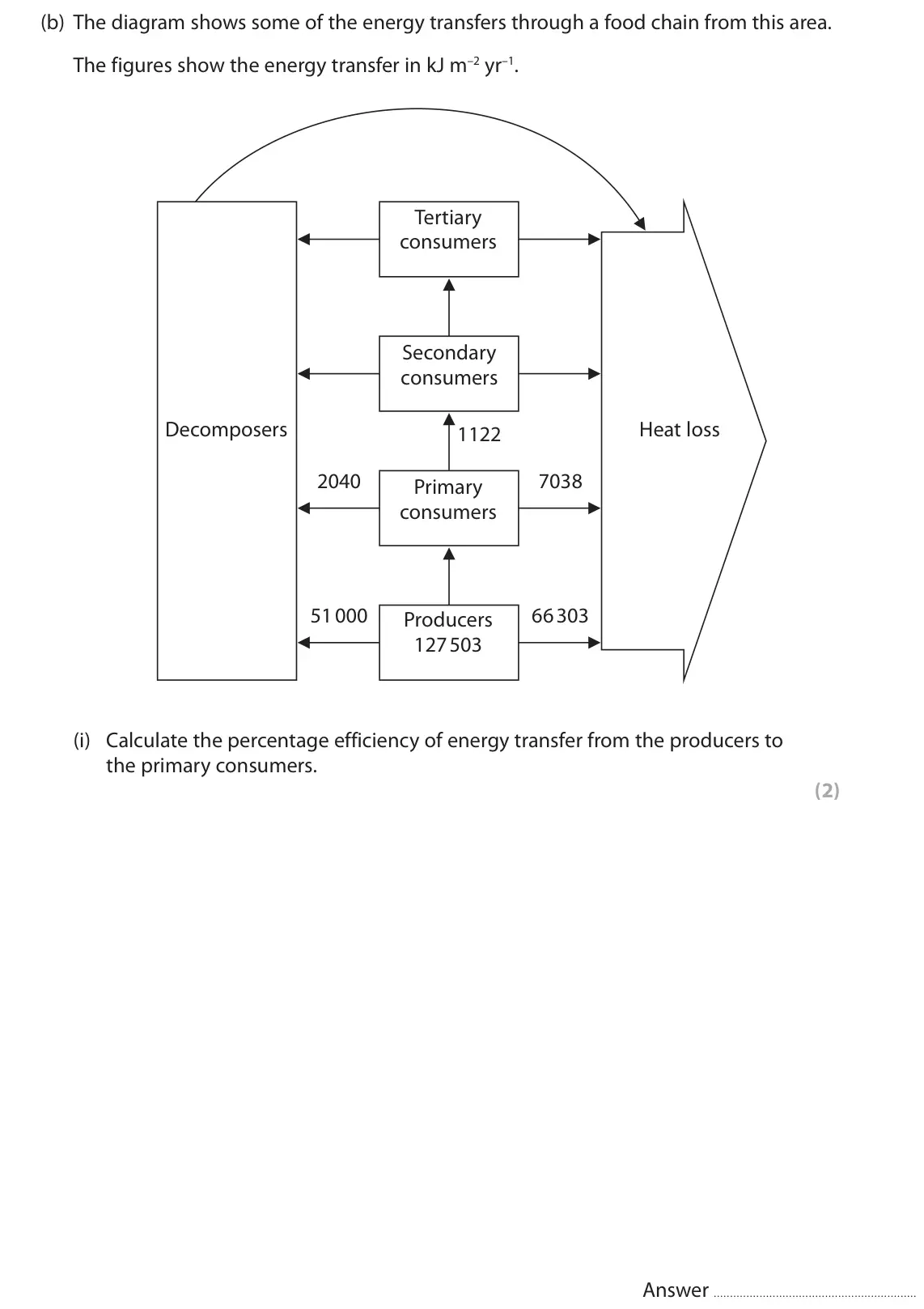
Q9(b)(ii)
The whole paper ↗
Q8(a)(i)
The whole paper ↗
All 21 questions on Energy transfer through ecosystems, as a list
- June 2025, Paper 2, Q8(a) (1 mark): Which of the following is the correct formula to calculate NPP? (1) A NPP = gross primary productivity (GPP) – respiration B NPP = gross primary productivity (G
- June 2023, Paper 2, Q9(b)(i) (2 marks): Calculate the percentage efficiency of energy transfer between the phytoplankton and the zooplankton. Give your answer to the nearest whole number. (2) Answer %
- June 2023, Paper 2, Q9(b)(ii) (3 marks): Common seals and orcas are endotherms. Sardines are ectotherms. Explain why the transfer of energy from sardines to orcas is less efficient than the transfer of
- June 2023, Paper 2, Q9(c)(i) (1 mark): State what is meant by the term net primary productivity (NPP). (1)
- June 2023, Paper 3, Q11(c)(i) (2 marks): Bees feed on nectar in flowers. The mean mass of nectar sugar produced per square metre of lawn was calculated for 2019 and 2020. Scientists then calculated the
- June 2022, Paper 3, Q10(a) (2 marks): Fields used for grazing cattle must have a high gross primary productivity. State what is meant by the term gross primary productivity and include the units in
- June 2022, Paper 3, Q10(b) (2 marks): Cattle graze on the plants on grassland. Describe what happens to the energy in the plants that are not eaten by cattle. (2)
- June 2022, Paper 3, Q10(c) (9 marks): When grazing animals such as cattle, sheep and horses are kept in fields, their faeces are left on the ground, and are known as dung. The dung is eaten by dung
- November 2021, Paper 2, Q7(a)(i) (2 marks): The diagram shows the transfer of energy through a grassland food chain. All values are given in kJ m−2 yr−1. energy loss 9.1 × 10² 3.9 × 10² Secondary consumer
- November 2021, Paper 2, Q7(a)(ii) (3 marks): Explain the differences in the efficiency of energy transfer between the trophic levels in a food chain. (3)
- November 2021, Paper 3, Q9(a) (2 marks): Explain the advantage to the ecosystem of fungal spores being spread by potoroos. (2)
- October 2020, Paper 3, Q10(a)(i) (2 marks): Calculate the percentage efficiency of energy transfer from sunlight to the producers. (2) Answer %
- October 2020, Paper 3, Q10(a)(ii) (1 mark): Give one reason why the energy transfer from sunlight to the producers is less than 100% efficient. (1)
- October 2020, Paper 3, Q10(a)(iii) (2 marks): Explain the energy difference between the producers and the primary consumers. (2)
- October 2020, Paper 3, Q10(b) (9 marks): Plant productivity is affected by the abiotic and biotic factors that exist at different latitudes. The diagram shows latitudes of the Earth. North 90 90 60 60
- June 2018, Paper 2, Q9(a)(i) (1 mark): State what is meant by the term net primary productivity (NPP). (1)
- June 2018, Paper 2, Q9(a)(ii) (3 marks): Analyse the data to explain the effect of daylight and temperature on NPP. (3)
- June 2018, Paper 2, Q9(b)(i) (2 marks): Calculate the percentage efficiency of energy transfer from the producers to the primary consumers. (2) Answer
- June 2018, Paper 2, Q9(b)(ii) (3 marks): Explain why the efficiency of energy transfer differs between different trophic levels. (3)
- June 2017, Paper 2, Q8(a)(i) (1 mark): State what is meant by the term net primary productivity. (1)
- June 2017, Paper 2, Q8(a)(ii) (2 marks): Explain why temperature has different effects on NPP at these two light intensities. (2)
Questions, mark schemes and examiner’s reports are © Pearson Edexcel, from their published past papers. Plumi isn’t affiliated with any exam board. Want whole papers? Every Edexcel A-Level Biology B paper.
Rather write your answers by hand on iPad? Plumi marks them against the same mark schemes.