 plumi
Transport across membranes: Edexcel A‑Level Biology A questions
Every Edexcel A-Level Biology A exam question on Transport across membranes (specification points 2.3–2.4), 2016–2025, with its mark scheme and examiner’s report.
Find questions1,749
Calculations
Q5(b)(i)
The whole paper ↗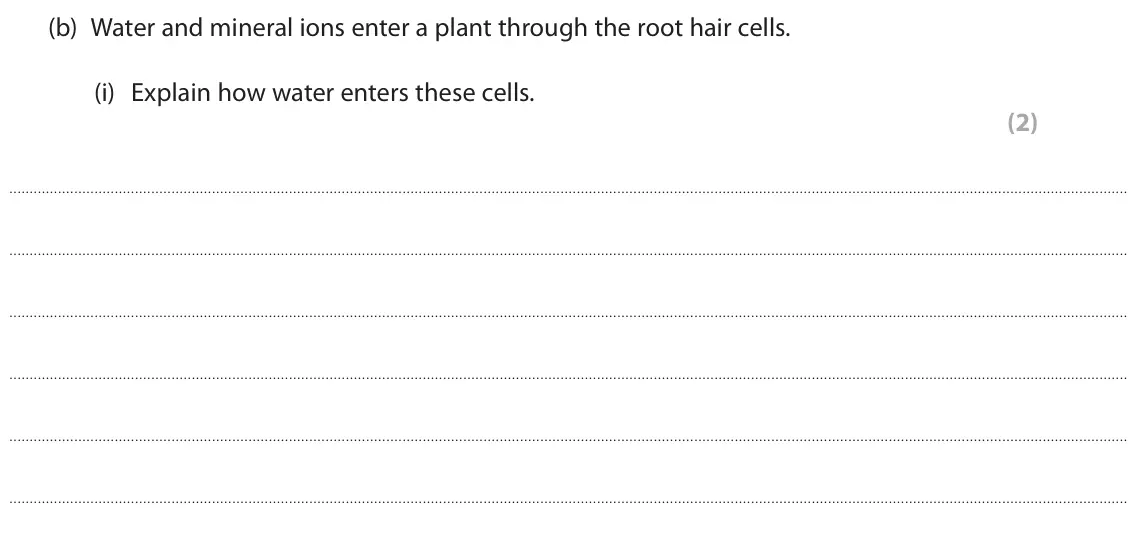
Q5(b)(ii)
The whole paper ↗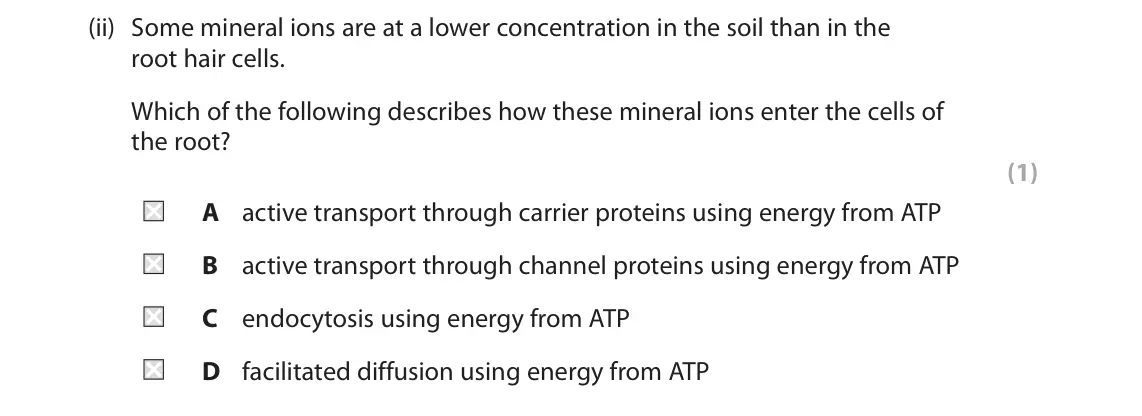
Q3(b)
The whole paper ↗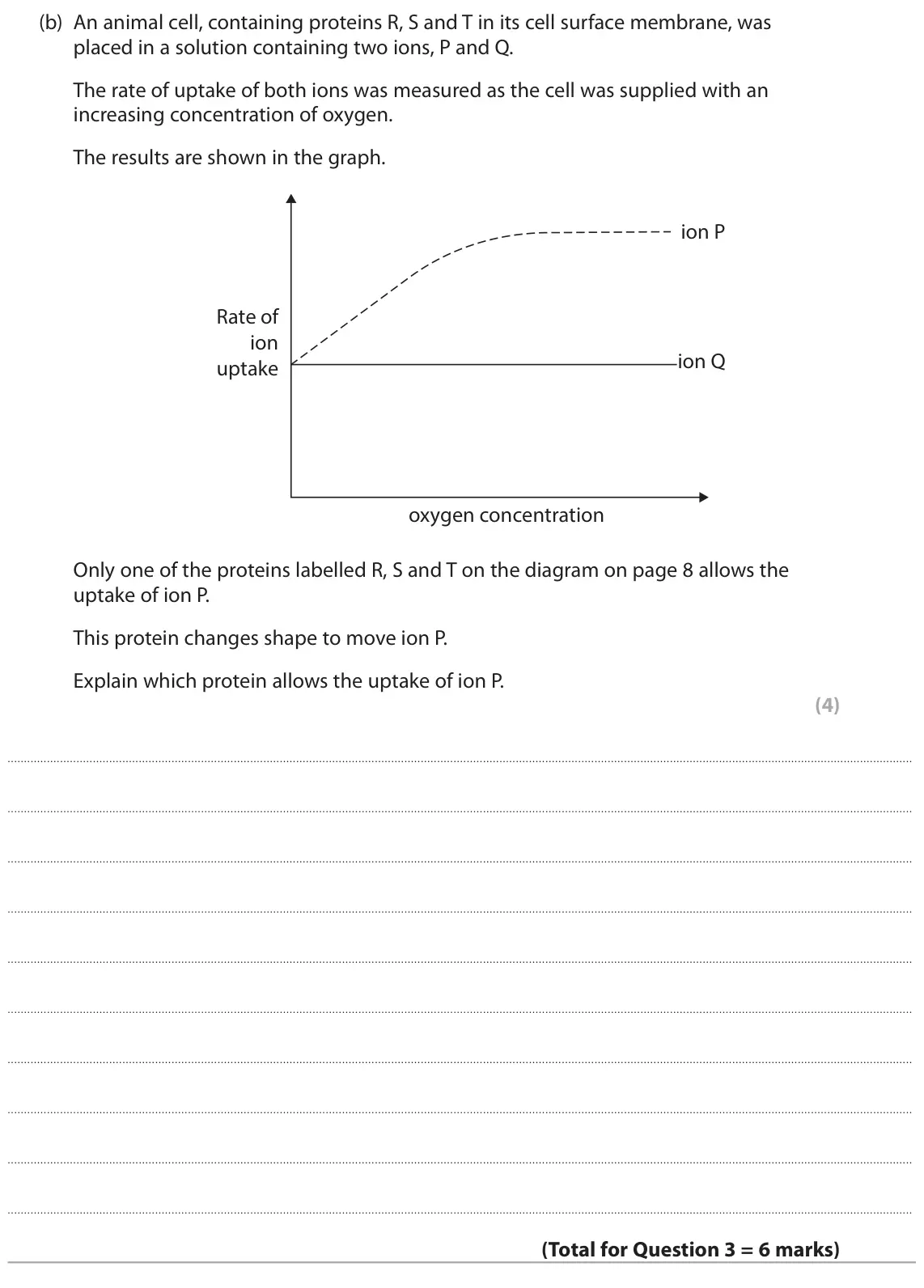
Q2(a)(i)
The whole paper ↗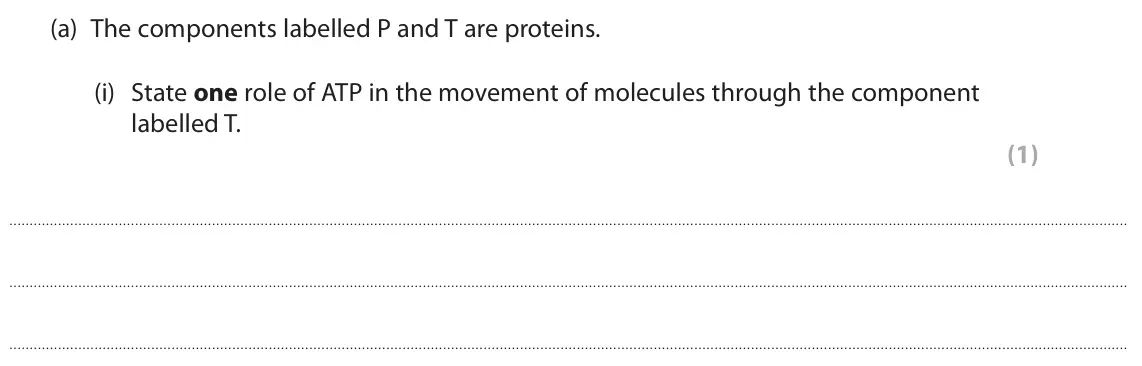
Q2(a)(ii)
The whole paper ↗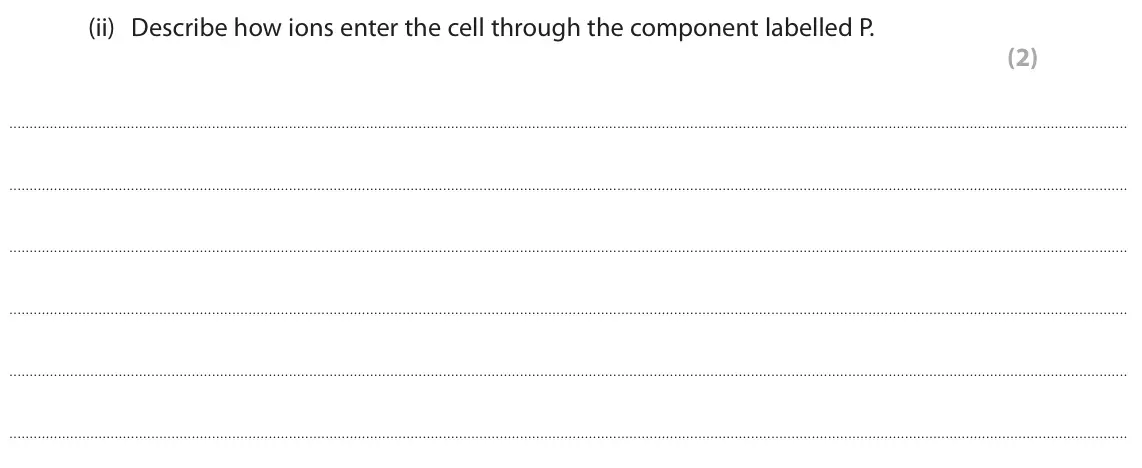
Q2(b)(i)
The whole paper ↗
Q6(b)(i)
The whole paper ↗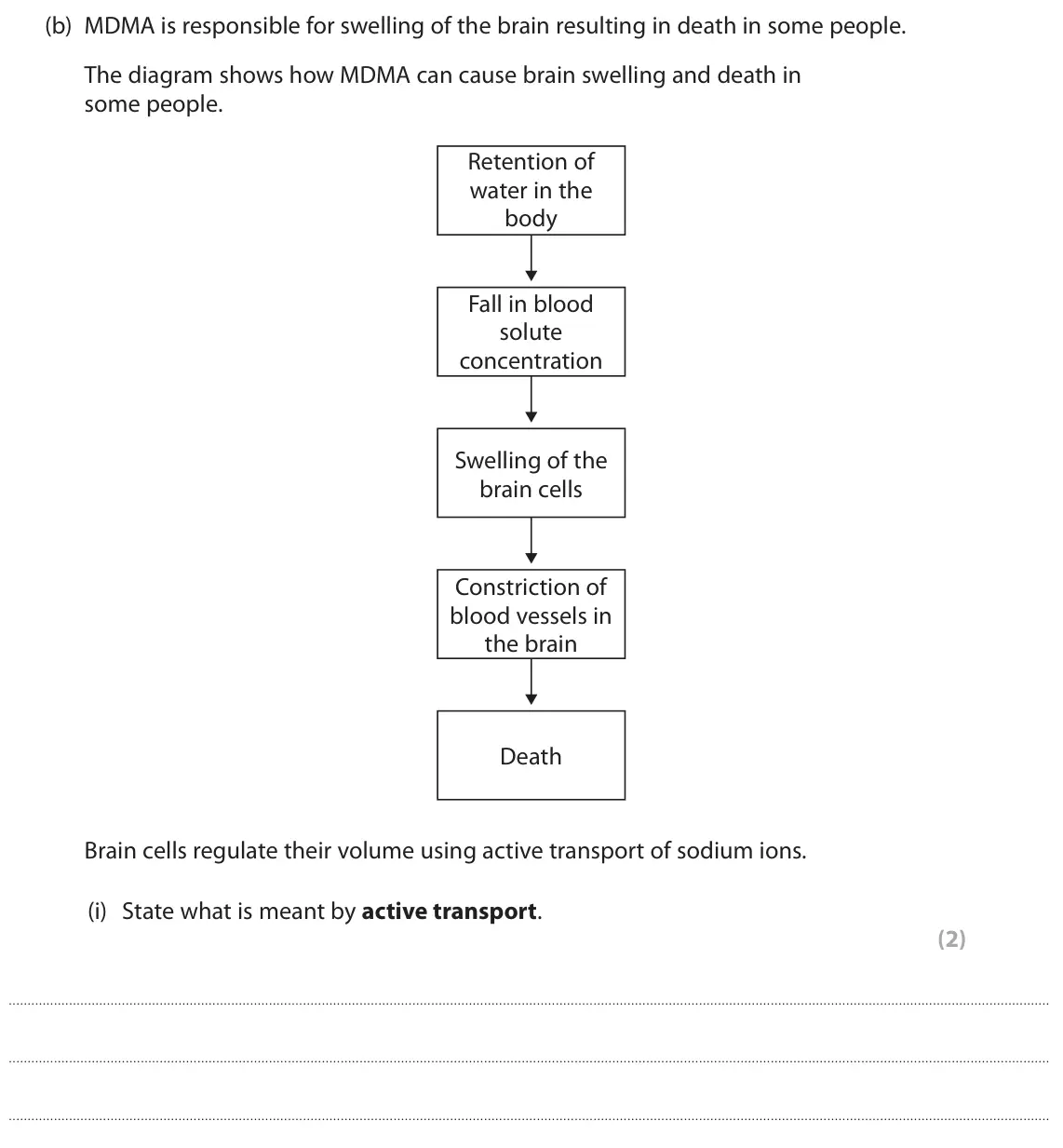
Q6(b)(ii)
The whole paper ↗
Q4(a)
The whole paper ↗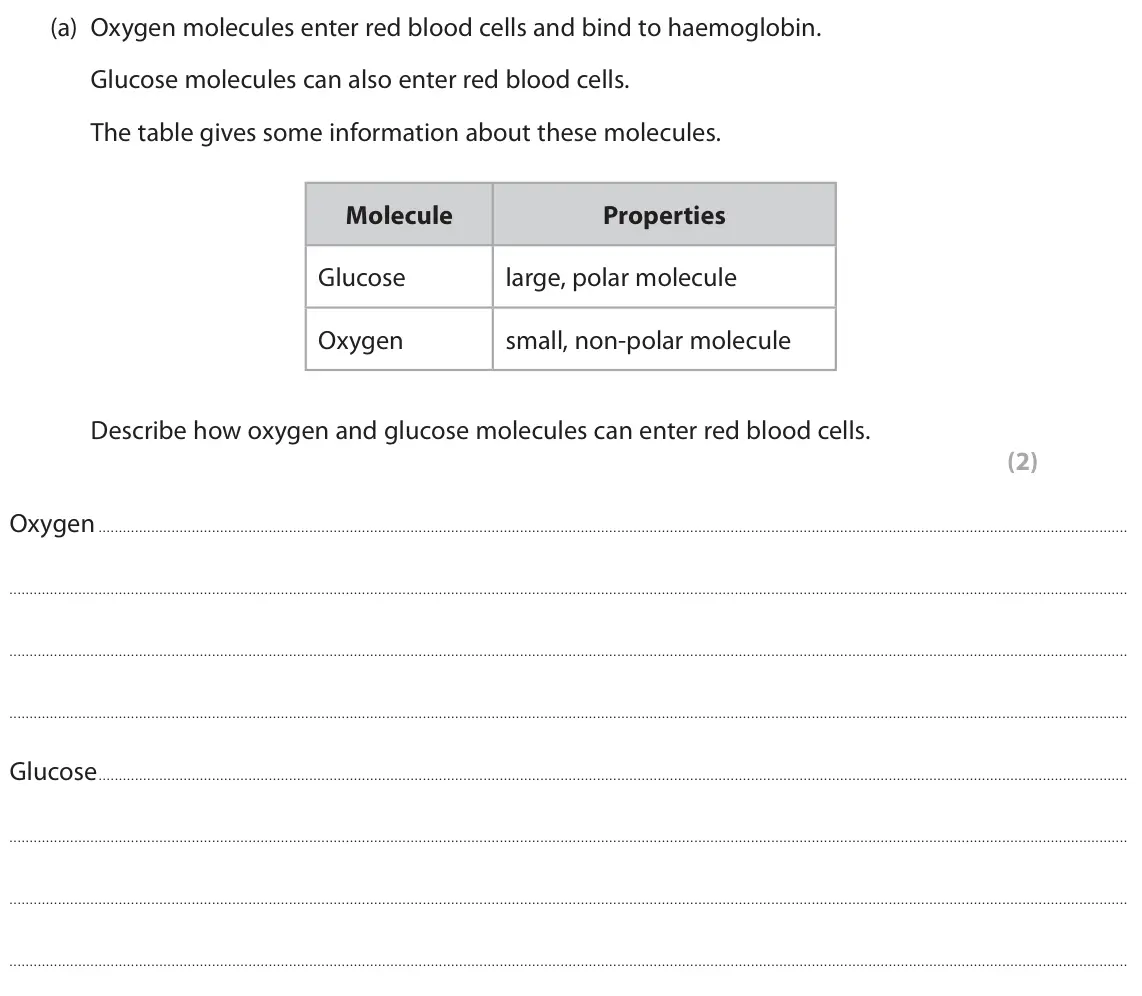
Q8(a)(i)
The whole paper ↗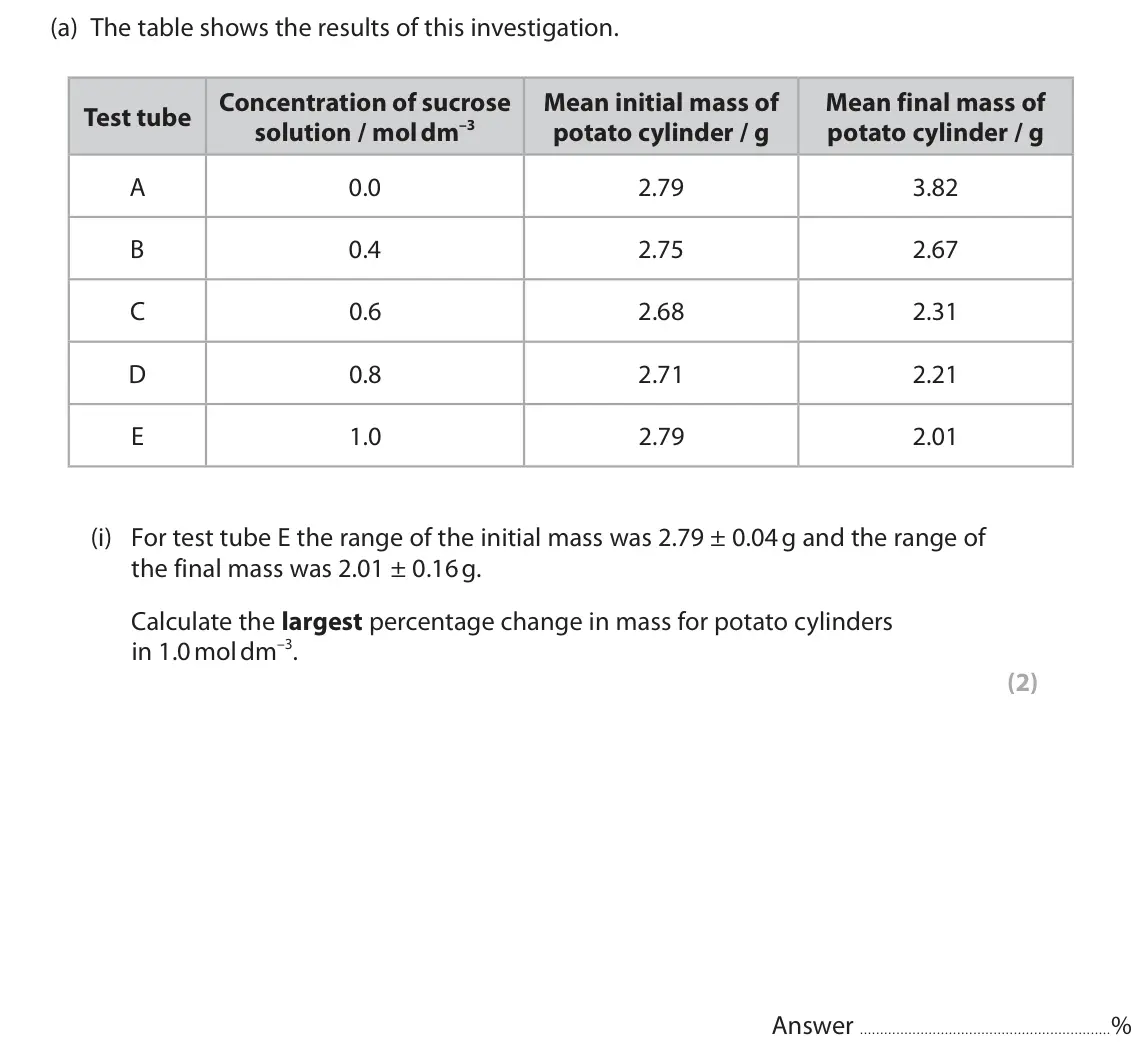
Q8(a)(ii)
The whole paper ↗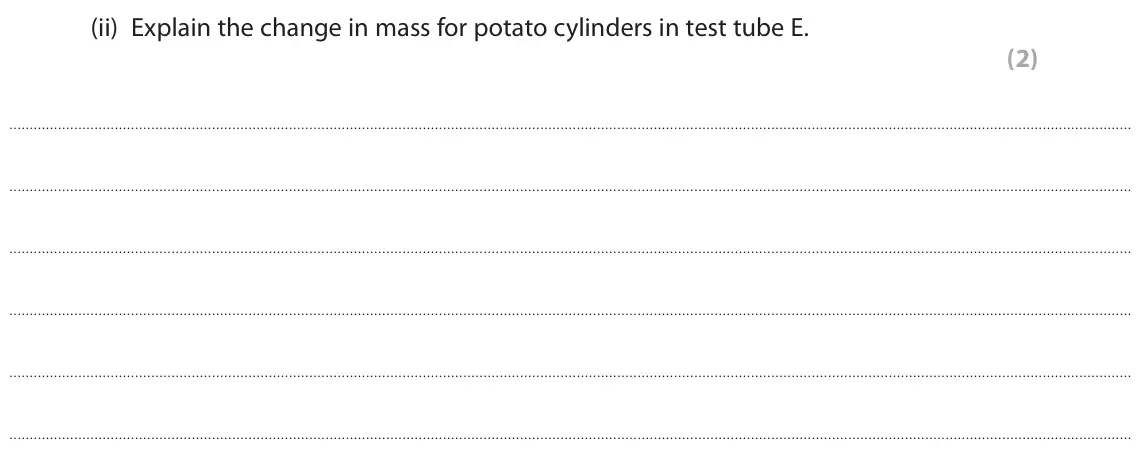
Q8(b)
The whole paper ↗
Q1(b)
The whole paper ↗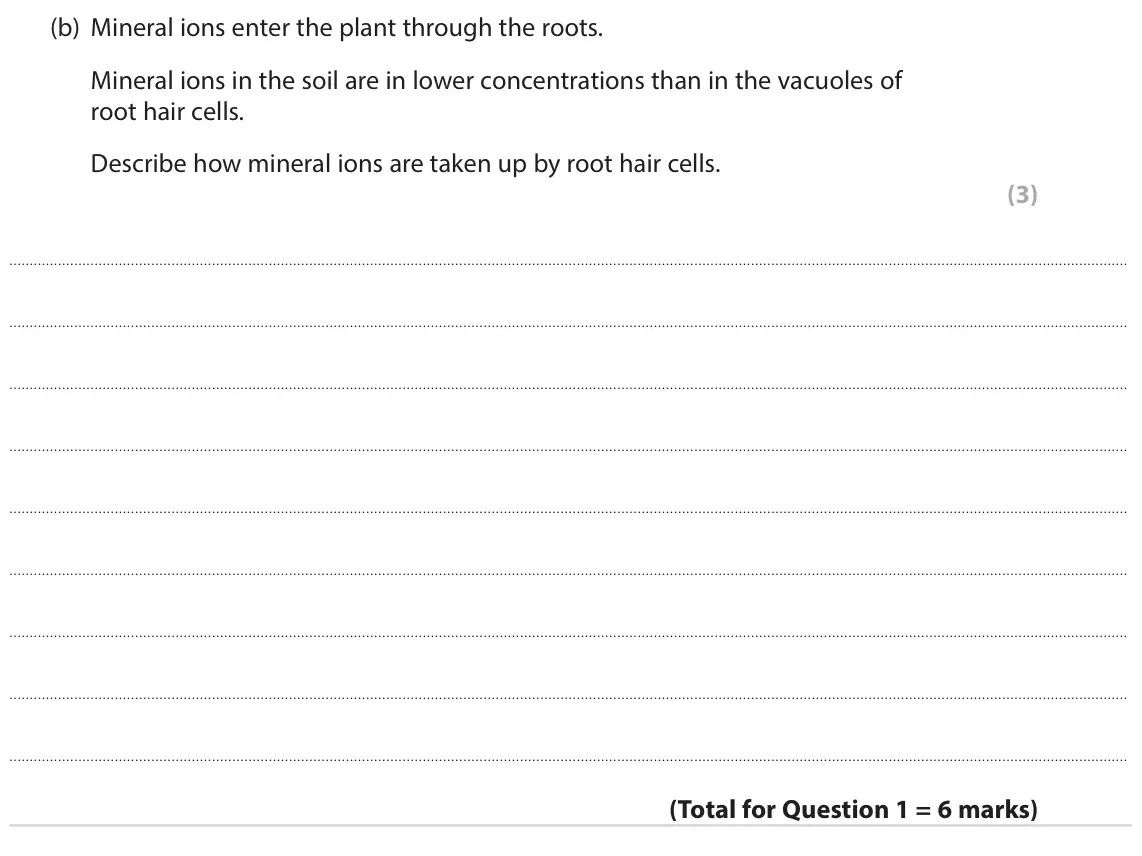
Q5(b)(i)
The whole paper ↗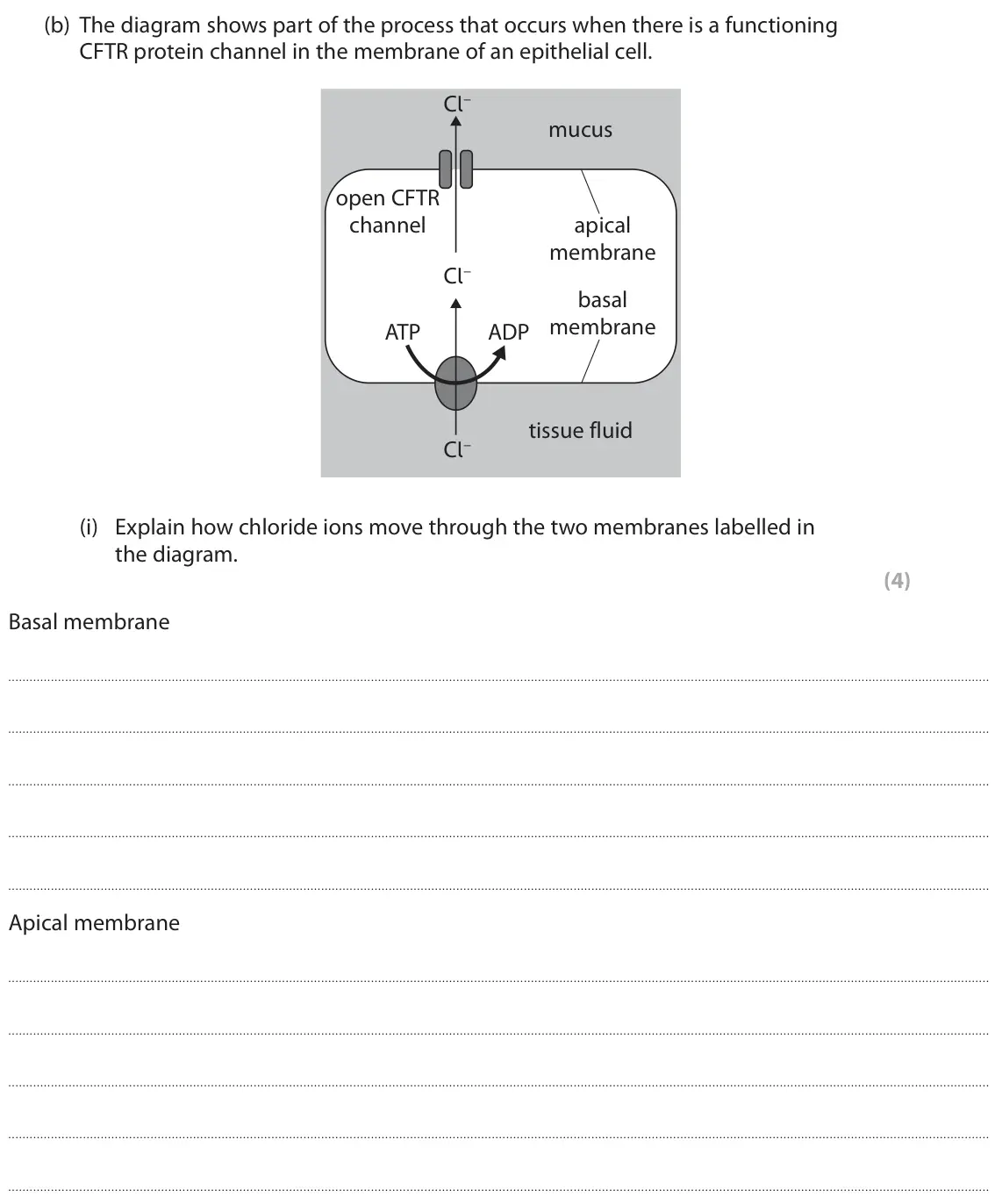
Q5(b)(ii)
The whole paper ↗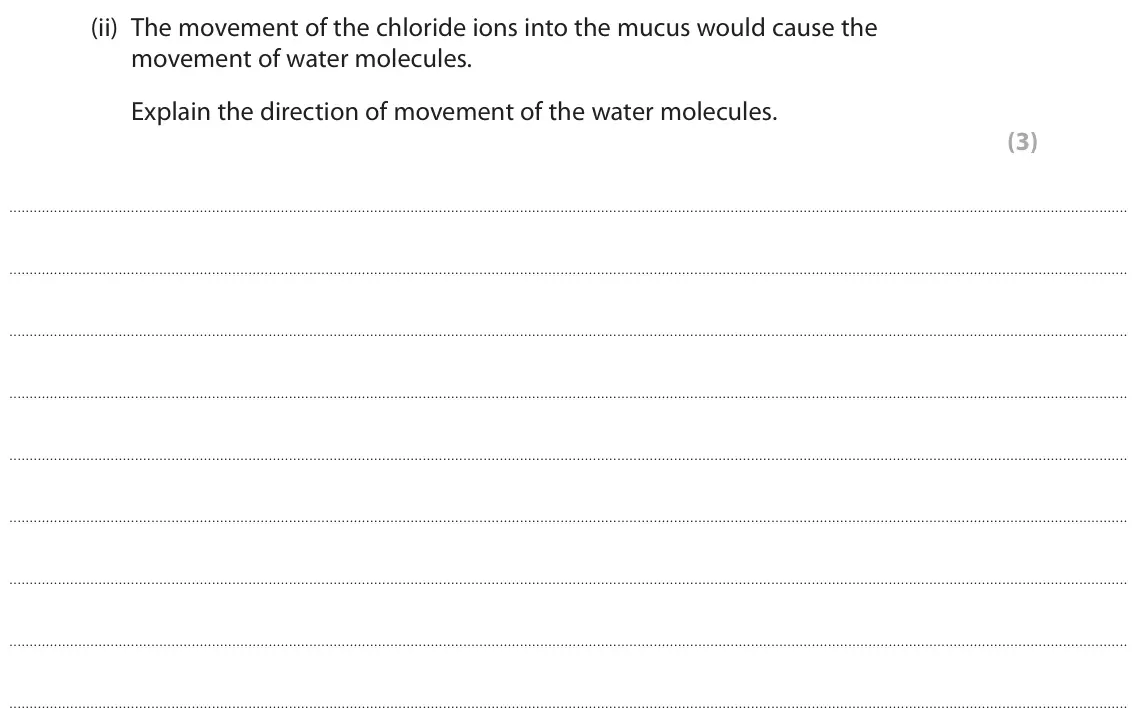
Q4(c)(ii)
The whole paper ↗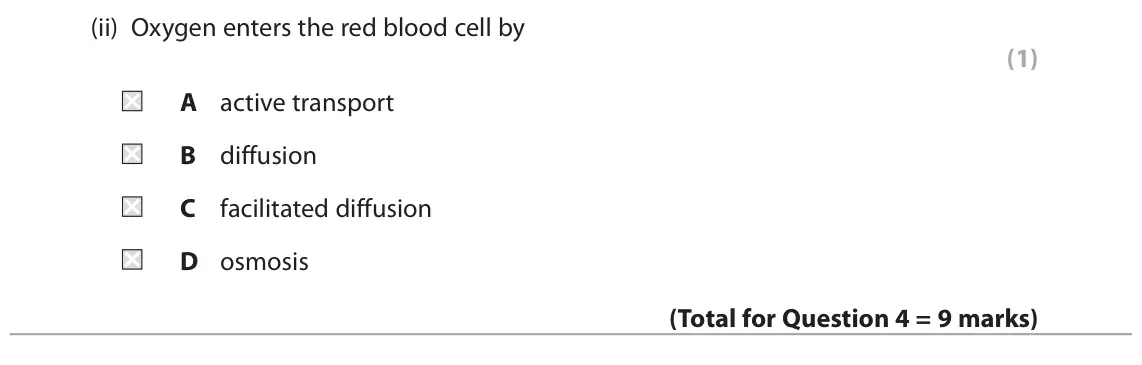
Q5(c)
The whole paper ↗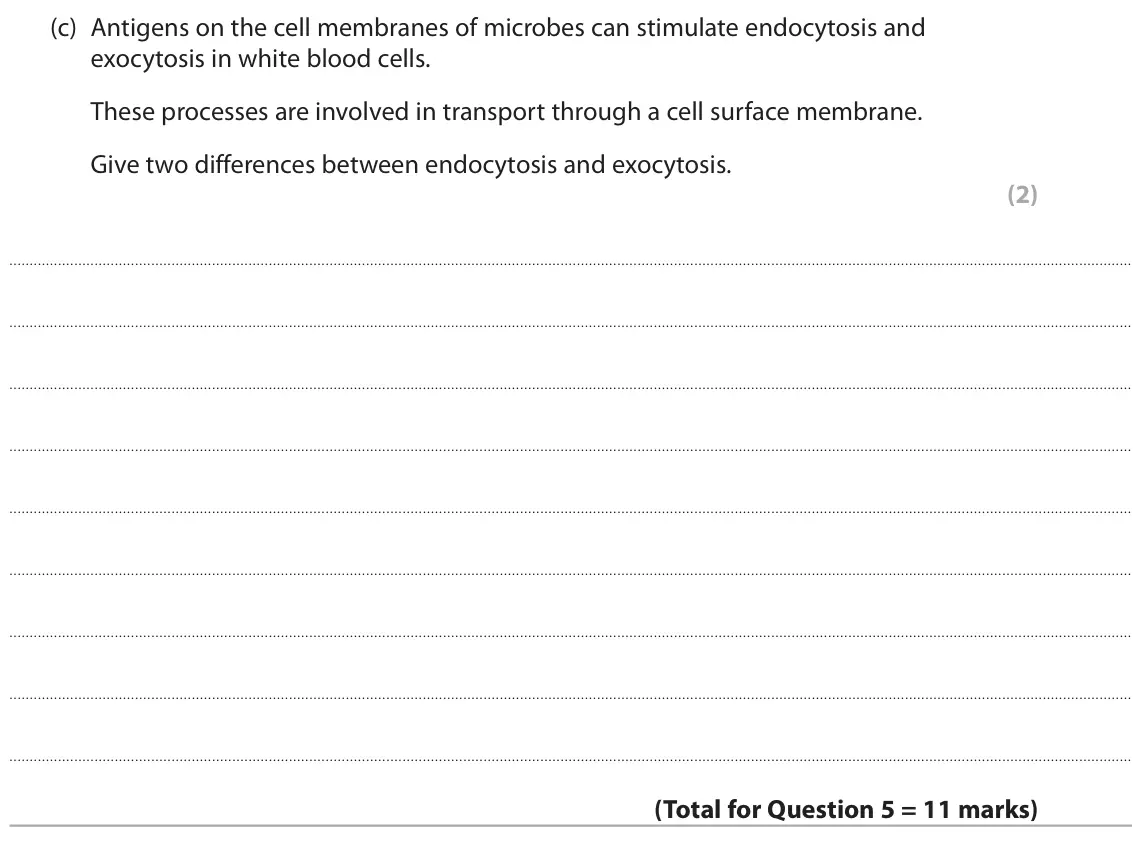
Q6(b)
The whole paper ↗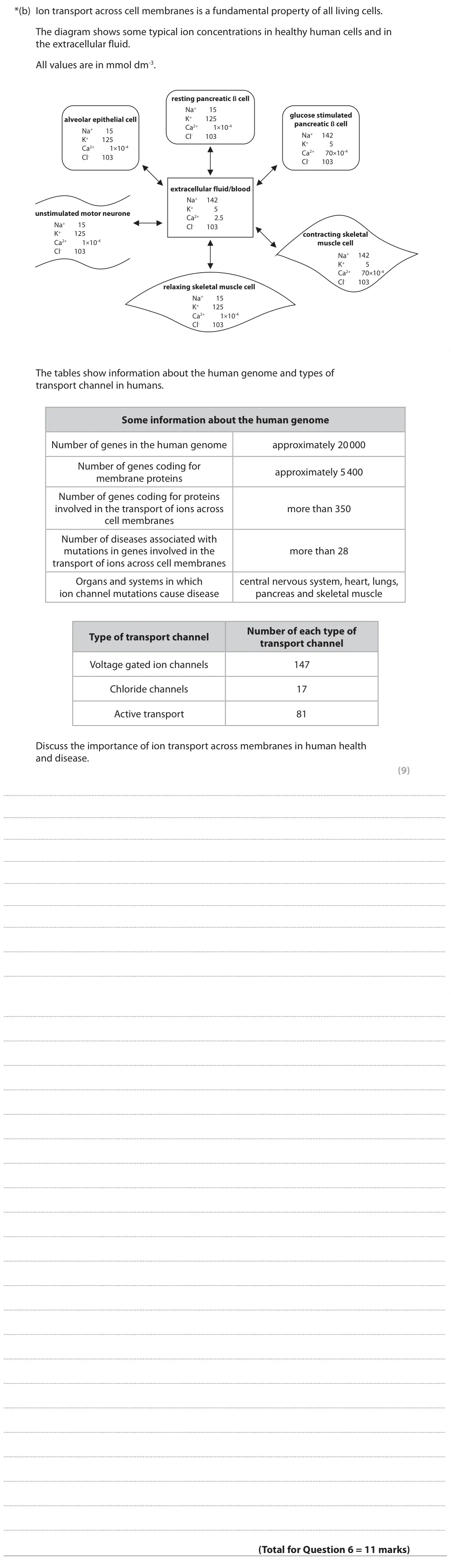
Q1(a)(iv)
The whole paper ↗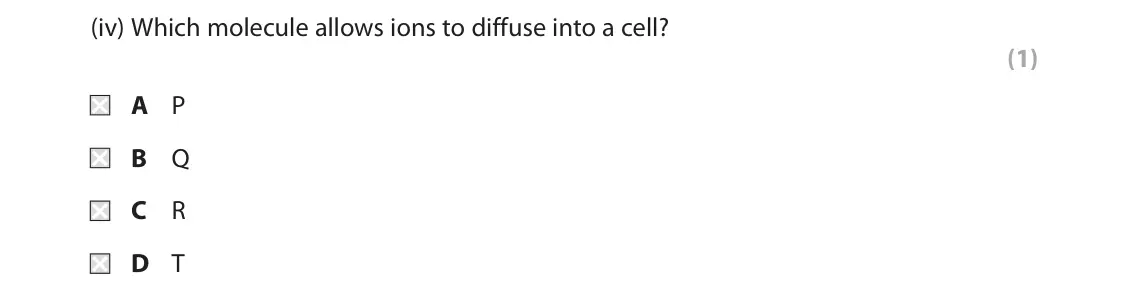
Q1(b)(i)
The whole paper ↗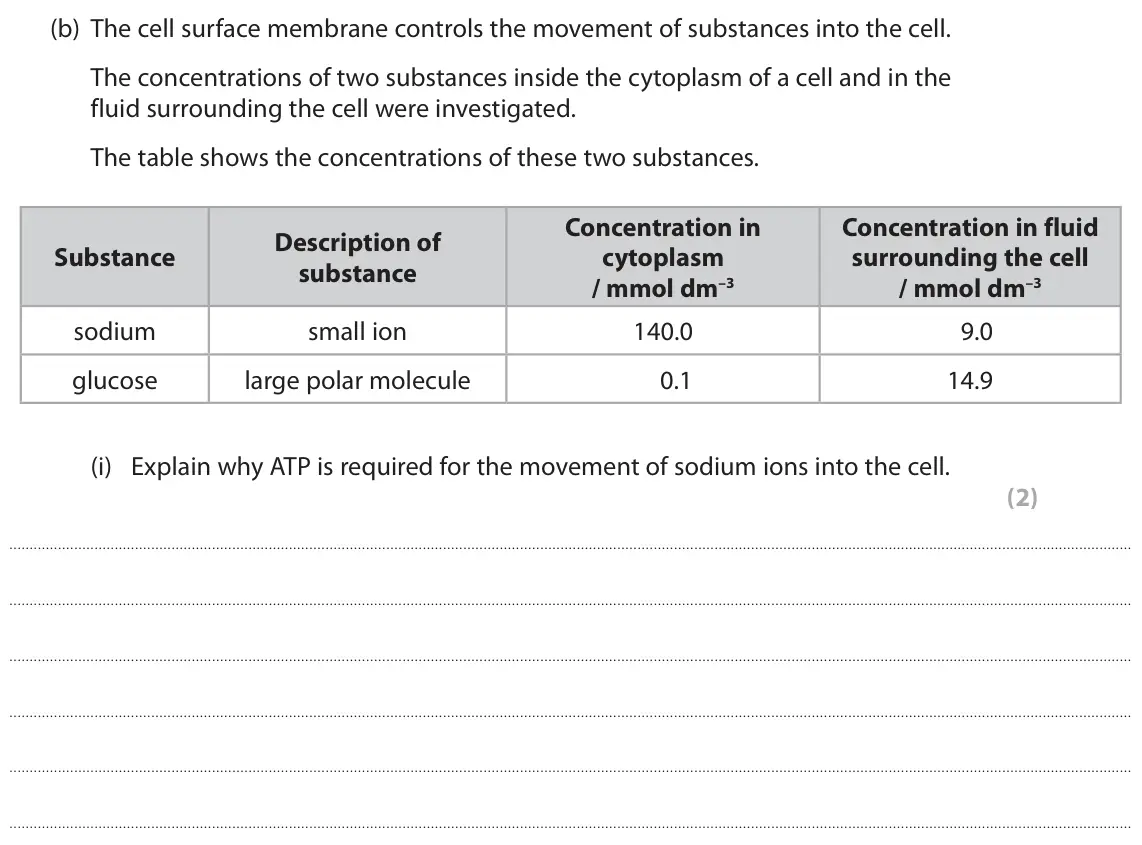
All 43 questions on Transport across membranes, as a list
- June 2025, Paper 1, Q5(b)(i) (2 marks): Explain how water enters these cells. (2)
- June 2025, Paper 1, Q5(b)(ii) (1 mark): Some mineral ions are at a lower concentration in the soil than in the root hair cells. Which of the following describes how these mineral ions enter the cells
- June 2025, Paper 2, Q3(b) (4 marks): An animal cell, containing proteins R, S and T in its cell surface membrane, was placed in a solution containing two ions, P and Q. The rate of uptake of both i
- June 2025, AS Paper 1, Q2(a)(i) (1 mark): State one role of ATP in the movement of molecules through the component labelled T. (1)
- June 2025, AS Paper 1, Q2(a)(ii) (2 marks): Describe how ions enter the cell through the component labelled P. (2)
- June 2025, AS Paper 1, Q2(b)(i) (1 mark): Water molecules can pass between phospholipids to enter or leave a cell. Name this process. (1)
- June 2024, Paper 3, Q6(b)(i) (2 marks): State what is meant by active transport. (2)
- June 2024, Paper 3, Q6(b)(ii) (3 marks): Explain how the active transport of sodium ions can regulate brain cell volume. (3)
- June 2024, AS Paper 1, Q4(a) (2 marks): Oxygen molecules enter red blood cells and bind to haemoglobin. Glucose molecules can also enter red blood cells. The table gives some information about these m
- June 2023, AS Paper 1, Q8(a)(i) (2 marks): For test tube E the range of the initial mass was 2.79 ± 0.04 g and the range of the final mass was 2.01 ± 0.16 g. Calculate the largest percentage change in ma
- June 2023, AS Paper 1, Q8(a)(ii) (2 marks): Explain the change in mass for potato cylinders in test tube E. (2)
- June 2023, AS Paper 1, Q8(b) (3 marks): Describe how this investigation could be modified to determine the concentration of sucrose solution that does not change the mass of the potato cylinders. (3)
- June 2022, Paper 1, Q1(b) (3 marks): Mineral ions enter the plant through the roots. Mineral ions in the soil are in lower concentrations than in the vacuoles of root hair cells. Describe how miner
- June 2022, AS Paper 1, Q5(b)(i) (4 marks): Explain how chloride ions move through the two membranes labelled in the diagram. (4) Basal membrane Apical membrane
- June 2022, AS Paper 1, Q5(b)(ii) (3 marks): The movement of the chloride ions into the mucus would cause the movement of water molecules. Explain the direction of movement of the water molecules. (3)
- November 2021, Paper 2, Q4(c)(ii) (1 mark): Oxygen enters the red blood cell by (1) A active transport B diffusion C facilitated diffusion D osmosis
- November 2021, AS Paper 1, Q5(c) (2 marks): Antigens on the cell membranes of microbes can stimulate endocytosis and exocytosis in white blood cells. These processes are involved in transport through a ce
- October 2020, Paper 3, Q6(b) (9 marks): Ion transport across cell membranes is a fundamental property of all living cells. The diagram shows some typical ion concentrations in healthy human cells and
- October 2020, AS Paper 1, Q1(a)(iv) (1 mark): Which molecule allows ions to diffuse into a cell? (1) A P B Q C R D T
- October 2020, AS Paper 1, Q1(b)(i) (2 marks): Explain why ATP is required for the movement of sodium ions into the cell. (2)
- October 2020, AS Paper 1, Q1(b)(ii) (2 marks): Describe how glucose molecules move into the cell. (2)
- June 2019, Paper 2, Q1(a)(i) (1 mark): Which of the shaded structures transport charged molecules or ions across the membrane? (1) A 1 and 2 only B 3 and 4 only C 1, 2 and 3 only D 1, 2, 3 and 4
- June 2019, AS Paper 1, Q5(a)(i) (2 marks): Explain one way in which this investigation could be improved. (2)
- June 2019, AS Paper 1, Q5(a)(ii) (2 marks): Standard deviation can be calculated using the formula shown. − ( ) ∑ x 2 − x S = − n 1 Calculate the standard deviation for the 2.5% sodium chloride solution.
- June 2019, AS Paper 1, Q5(a)(iii) (3 marks): Deduce the effect of increasing the concentration of sodium chloride on the change in mass of the onion tissue. (3)
- June 2019, AS Paper 1, Q6(c) (3 marks): Endocytosis and exocytosis are processes that move large molecules into a cell or out of a cell. Compare and contrast the processes of endocytosis and exocytosi
- June 2018, Paper 1, Q3(c)(iii) (1 mark): Glycoproteins made in animal cells are released into the extracellular fluid by (1) A endocytosis B exocytosis C facilitated diffusion D phagocytosis
- June 2018, Paper 2, Q1(a)(i) (2 marks): Describe how glucose moves into cells by facilitated diffusion. (2)
- June 2018, Paper 2, Q10(b) (2 marks): Describe what happens to lysosomes once their contents have been digested. (2)
- June 2018, Paper 3, Q7(a) (2 marks): ‘The hunger system is mediated by hormones from the gut and from fat cells’ (paragraph 6). Describe how these fat cells could release hormones. (2)
- June 2018, AS Paper 1, Q1(b) (3 marks): Diffusion and active transport are mechanisms by which molecules can enter cells. Compare and contrast these two mechanisms. (3)
- June 2018, AS Paper 1, Q6(a) (1 mark): During which period of time did the fluorescence inside the cells decrease at the fastest rate? (1) A 0 to 5 minutes B 0 to 10 minutes C 10 to 15 minutes D 10 t
- June 2018, AS Paper 1, Q6(b) (4 marks): The percentage of fluorescence inside and outside these alveolar cells changed. Explain why these changes occurred. (4)
- June 2017, Paper 1, Q2(b)(i) (1 mark): Which of the following describes the movement of water by osmosis? (1) A against a solute concentration gradient through a fully permeable membrane B against a
- June 2017, Paper 1, Q2(b)(ii) (1 mark): The concentration of potassium ions inside an animal cell is many times higher than the concentration of potassium ions in the extracellular fluid. Which mechan
- June 2017, Paper 1, Q2(b)(iii) (1 mark): Glucose enters cells by facilitated diffusion. Which part of the cell surface membrane allows facilitated diffusion of glucose? (1) A cholesterol B glycolipid C
- June 2017, AS Paper 1, Q3(b) (2 marks): Describe how glucose enters muscle cells through the cell membrane. (2)
- June 2017, AS Paper 1, Q3(c) (3 marks): The ratio of glucose to glycogen inside a cell can affect the uptake of water by the cell. This results in a change in cell mass. Cells with different ratios of
- June 2017, AS Paper 1, Q4(a) (1 mark): Which component of the cell surface membrane is involved in this process? (1) A carrier protein B channel protein C cholesterol D glycolipid
- June 2017, AS Paper 1, Q4(b) (3 marks): Analyse the data to justify the conclusion of this investigation. (3)
- June 2017, AS Paper 1, Q4(c) (2 marks): Explain one way in which this investigation could be improved. (2)
- June 2016, AS Paper 1, Q3(a)(ii) (4 marks): Describe the function of carrier proteins in a cell surface membrane. (4)
- June 2016, AS Paper 1, Q6(a)(ii) (1 mark): Name the process by which enzymes leave the cells of the pancreas and small intestine. (1)
Questions, mark schemes and examiner’s reports are © Pearson Edexcel, from their published past papers. Plumi isn’t affiliated with any exam board. Want whole papers? Every Edexcel A-Level Biology A paper.
Rather write your answers by hand on iPad? Plumi marks them against the same mark schemes.