 plumi
DNA replication and mutation: Edexcel A‑Level Biology A questions
Every Edexcel A-Level Biology A exam question on DNA replication and mutation (specification points 2.11–2.12), 2016–2025, with its mark scheme and examiner’s report.
Find questions1,749
Calculations
Q5(b)
The whole paper ↗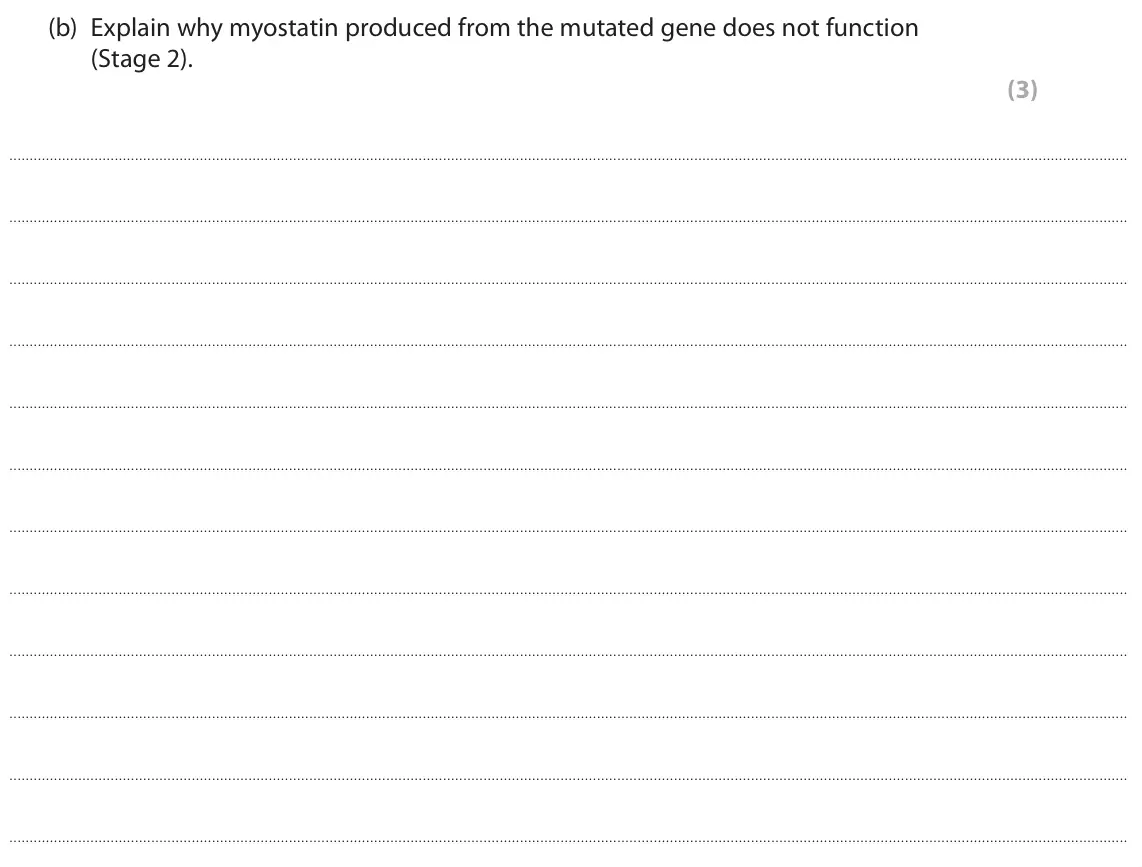
Q1(b)(ii)
The whole paper ↗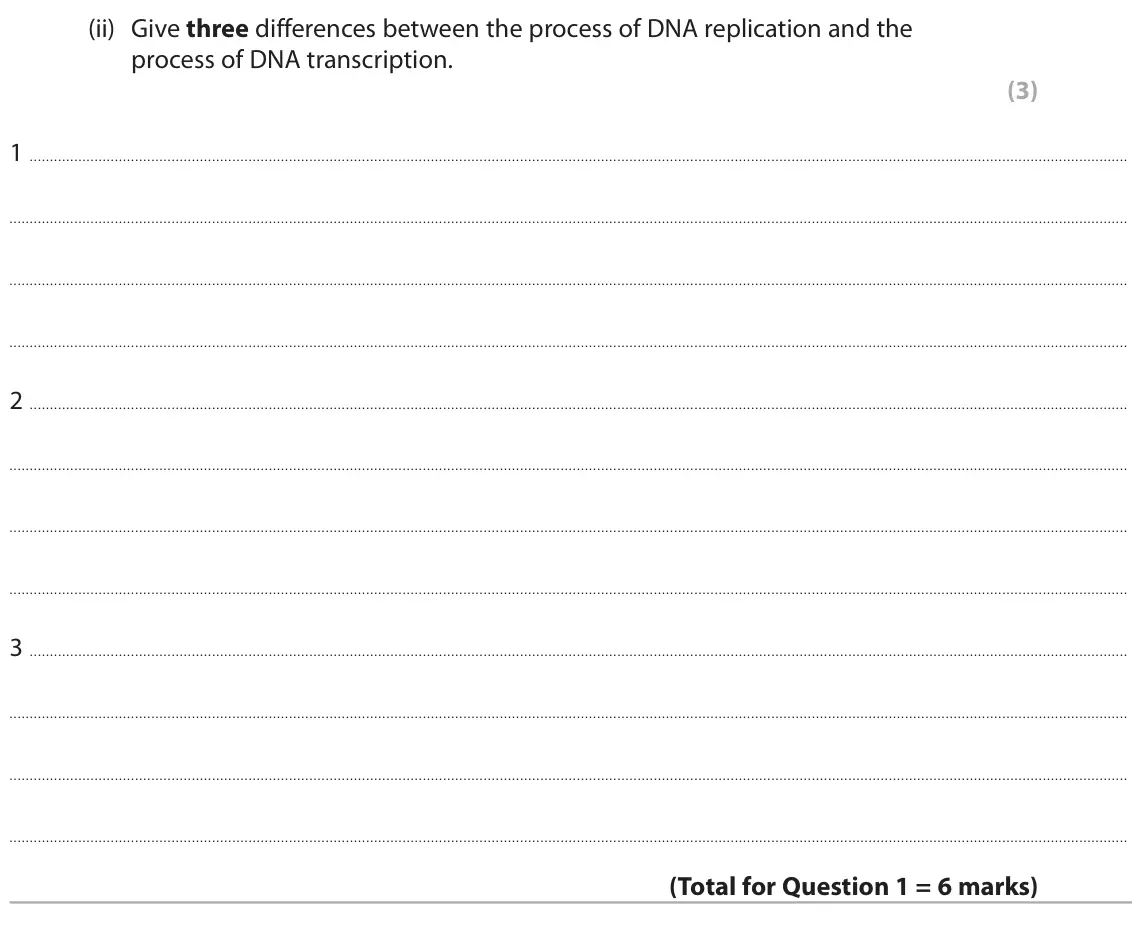
Q4(a)
The whole paper ↗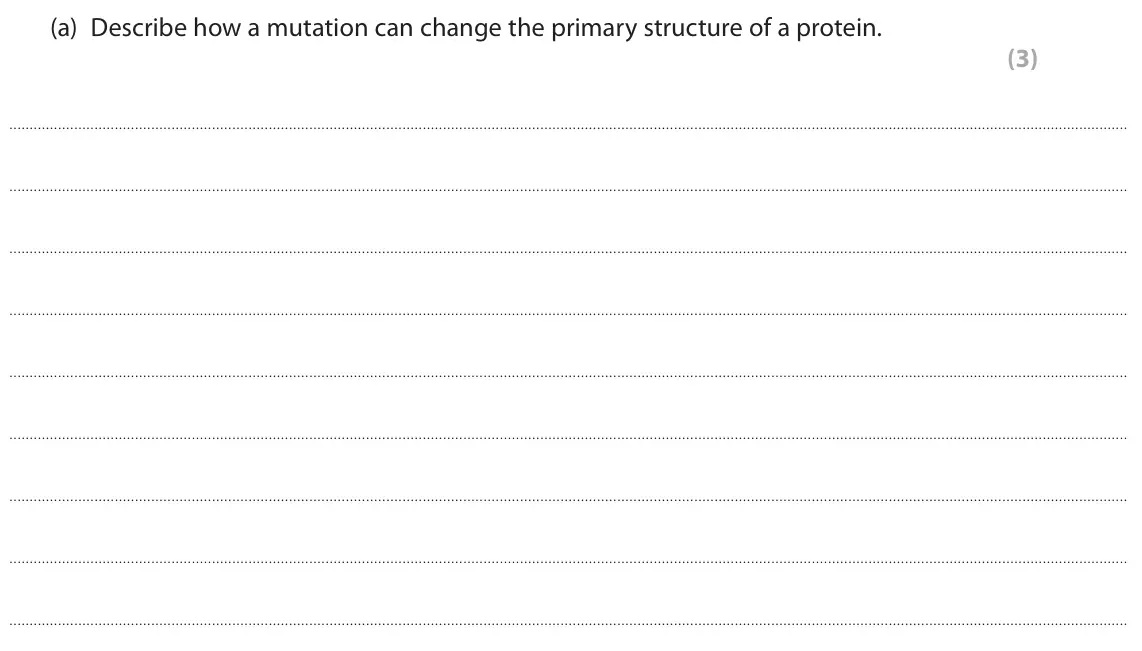
Q4(a)
The whole paper ↗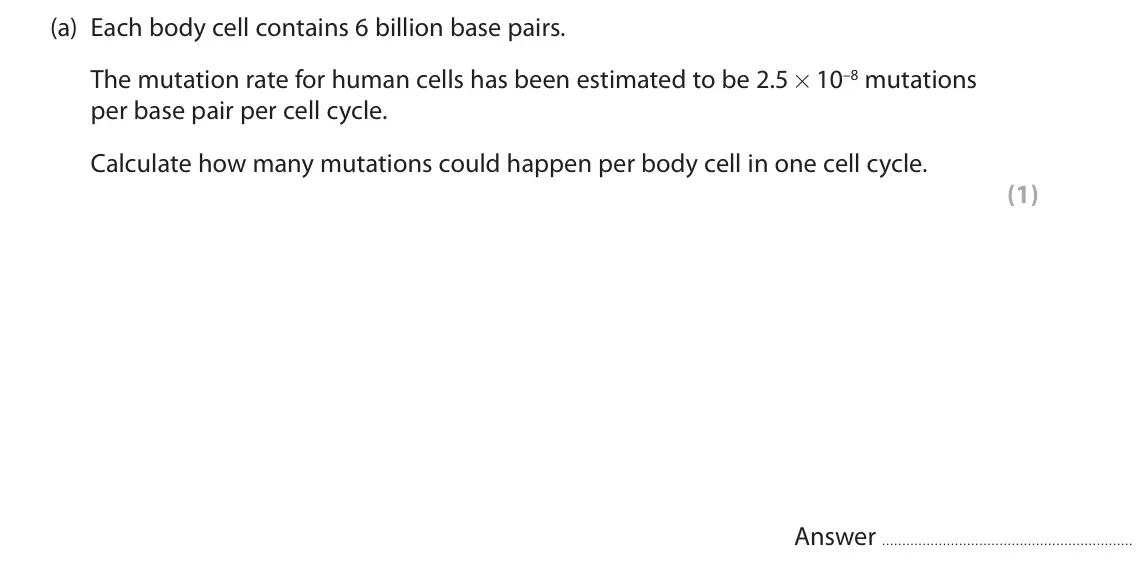
Q4(b)(ii)
The whole paper ↗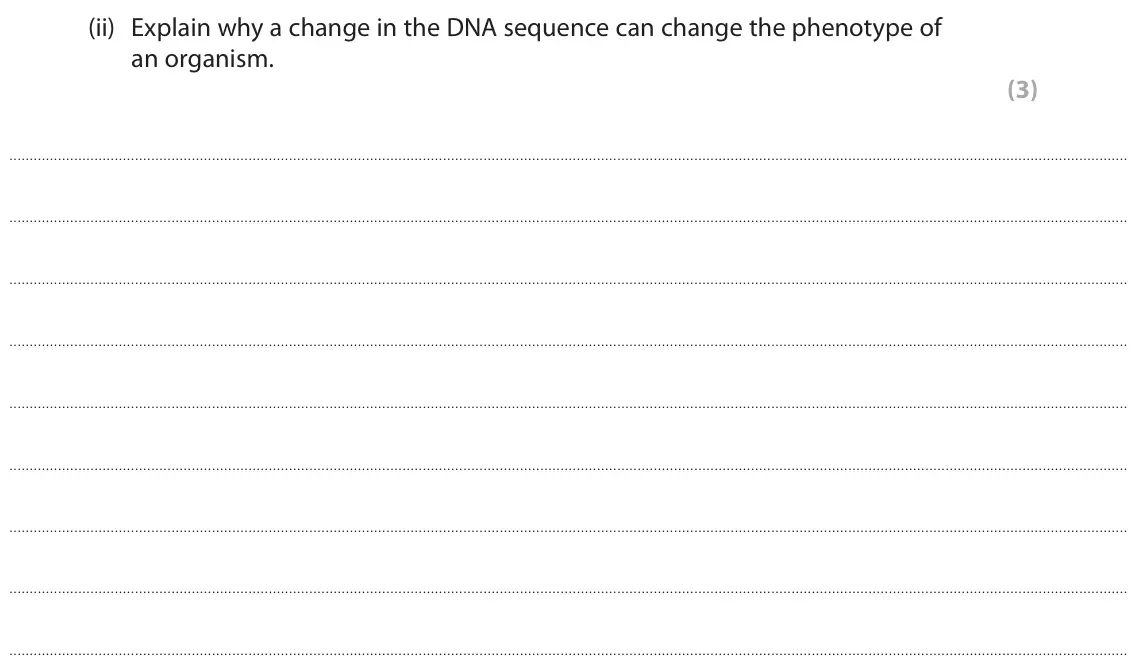
Q5(a)(i)
The whole paper ↗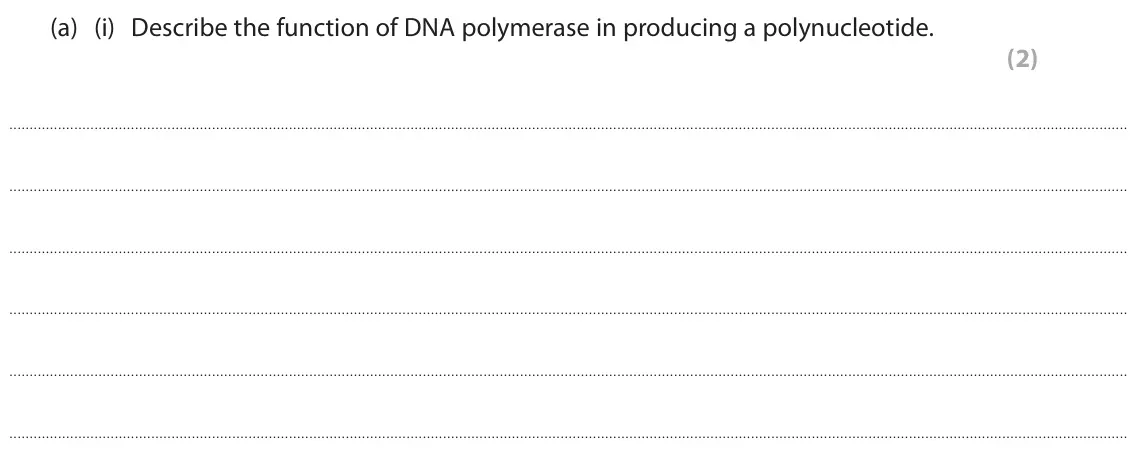
Q5(a)(ii)
The whole paper ↗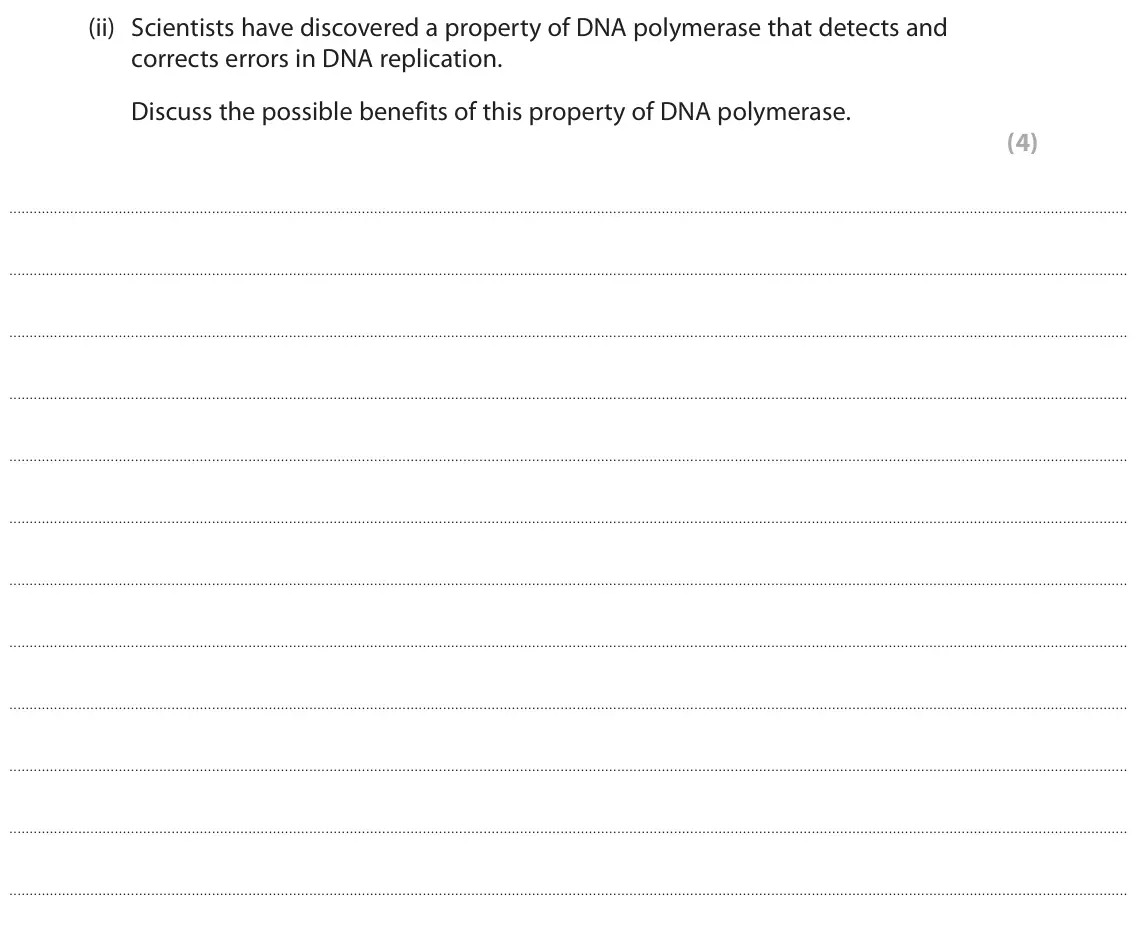
Q3(b)(i)
The whole paper ↗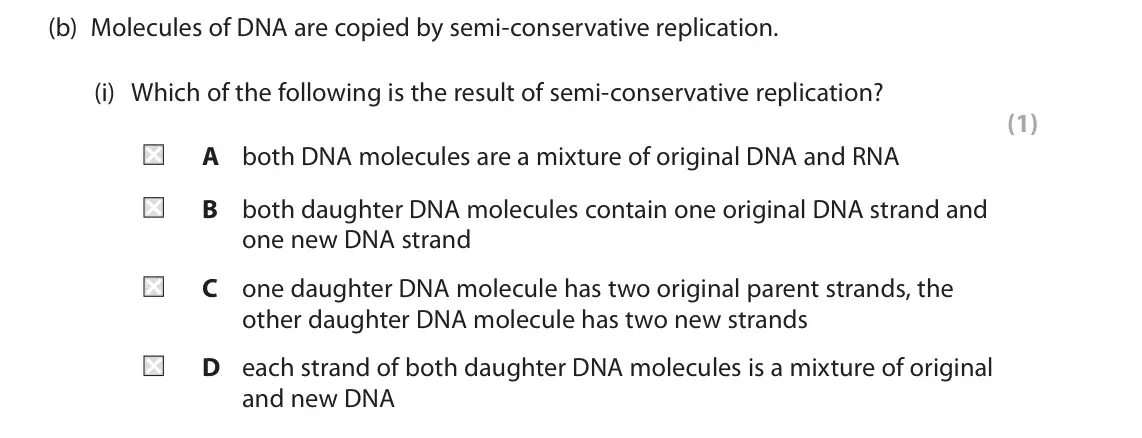
Q3(b)(ii)
The whole paper ↗
Q6(b)(iii)
The whole paper ↗
Q5(b)(i)
The whole paper ↗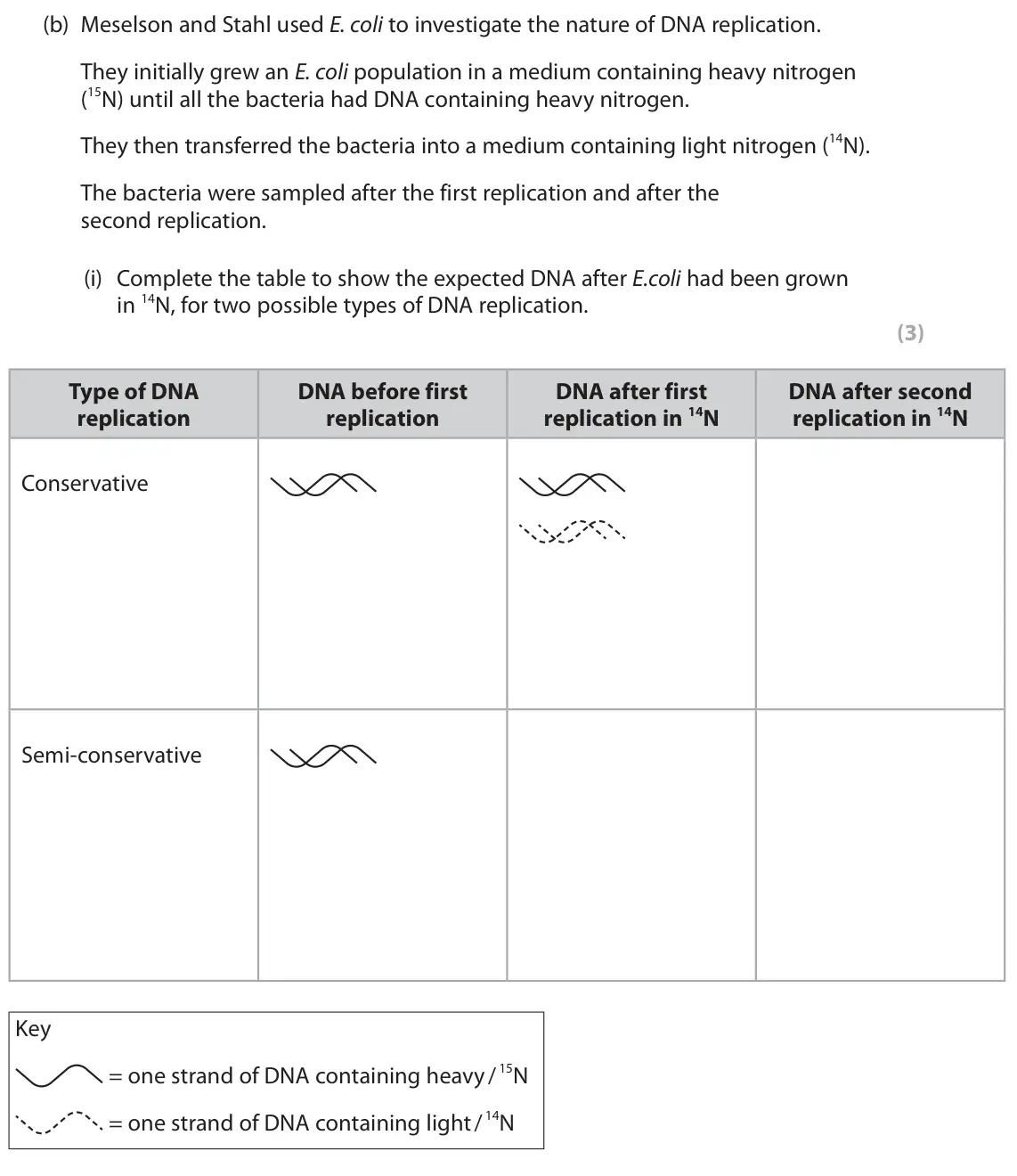
Q5(b)(ii)
The whole paper ↗
Q6(b)(i)
The whole paper ↗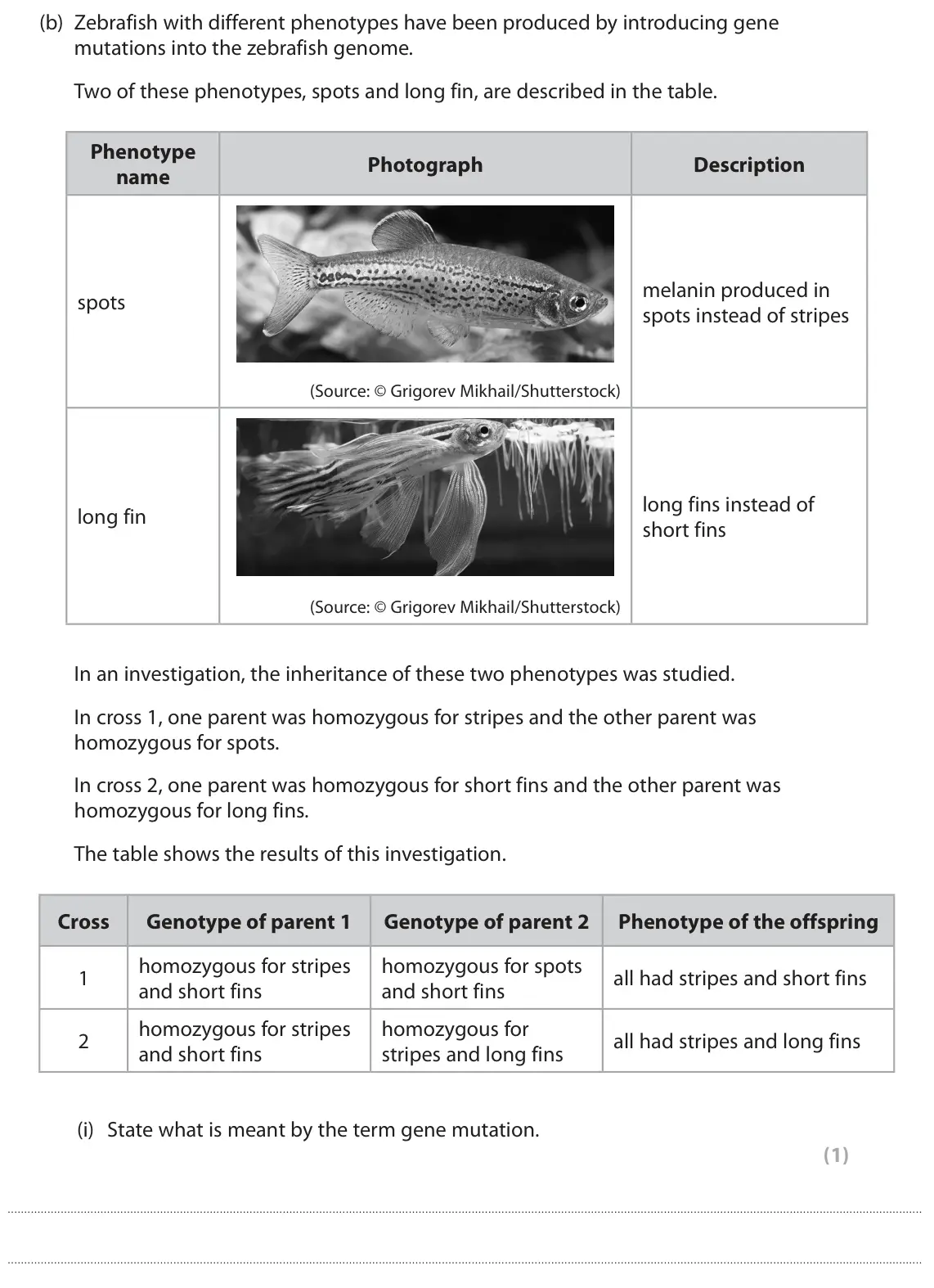
Q1(a)(ii)
The whole paper ↗
Q5(a)
The whole paper ↗
Q8(d)
The whole paper ↗
Q8(f)
The whole paper ↗
Q4(a)
The whole paper ↗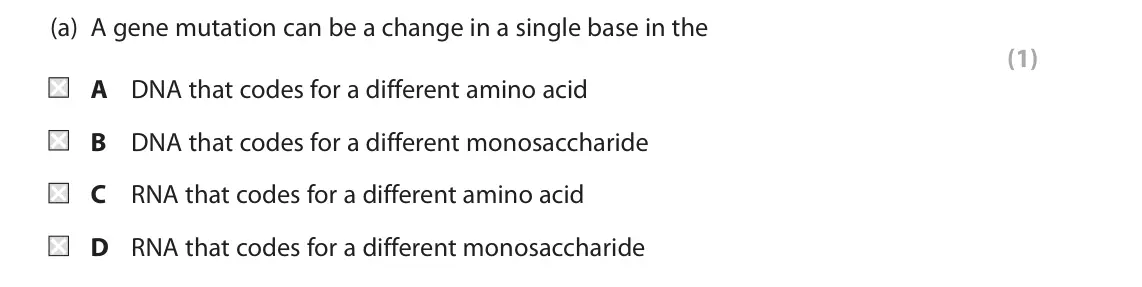
Q4(b)
The whole paper ↗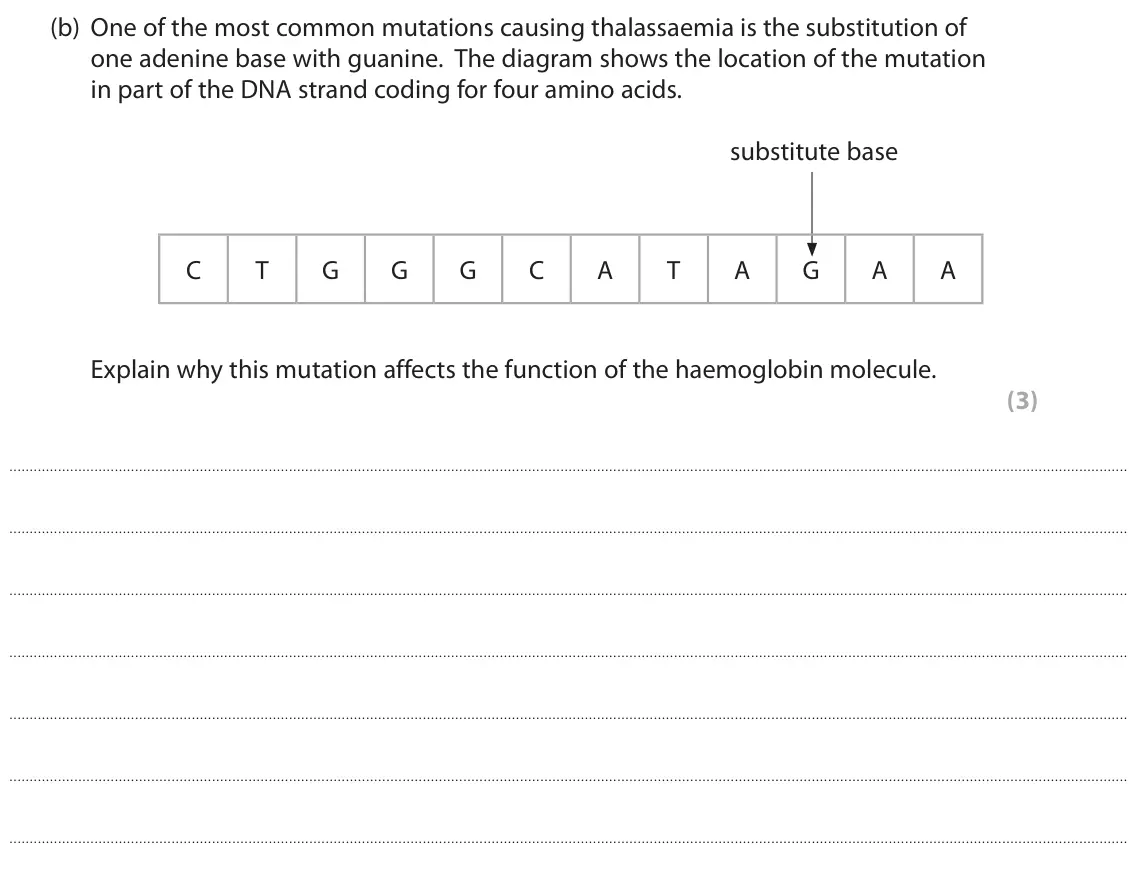
Q2(b)
The whole paper ↗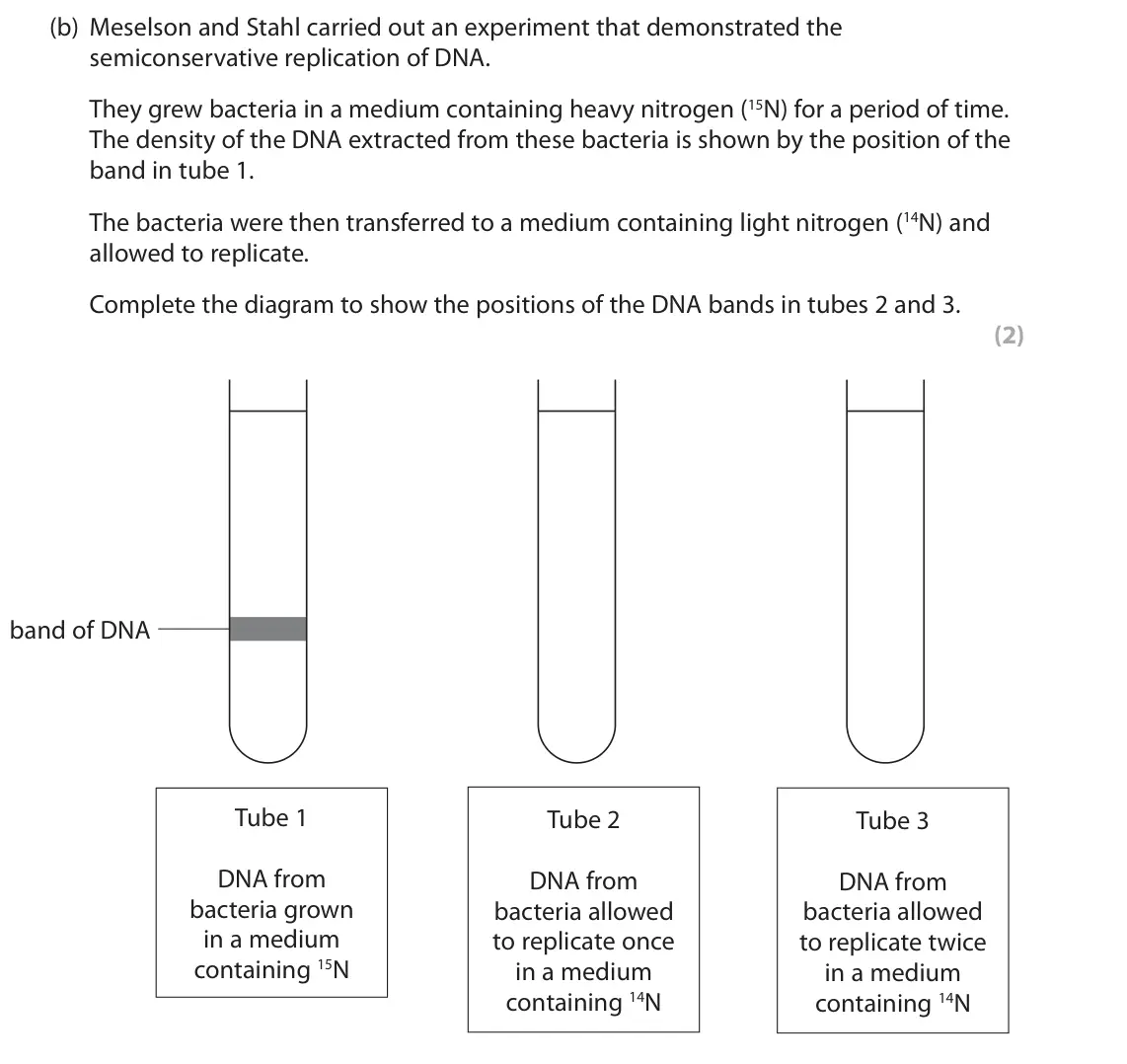
All 31 questions on DNA replication and mutation, as a list
- June 2025, Paper 2, Q5(b) (3 marks): Explain why myostatin produced from the mutated gene does not function (Stage 2). (3)
- June 2025, AS Paper 1, Q1(b)(ii) (3 marks): Give three differences between the process of DNA replication and the process of DNA transcription. (3) 1 2 3
- June 2024, Paper 1, Q4(a) (3 marks): Describe how a mutation can change the primary structure of a protein. (3)
- June 2024, Paper 2, Q4(a) (1 mark): Each body cell contains 6 billion base pairs. The mutation rate for human cells has been estimated to be 2.5 × 10⁻⁸ mutations per base pair per cell cycle. Calc
- June 2024, Paper 2, Q4(b)(ii) (3 marks): Explain why a change in the DNA sequence can change the phenotype of an organism. (3)
- June 2024, AS Paper 1, Q5(a)(i) (2 marks): Describe the function of DNA polymerase in producing a polynucleotide. (2)
- June 2024, AS Paper 1, Q5(a)(ii) (4 marks): Scientists have discovered a property of DNA polymerase that detects and corrects errors in DNA replication. Discuss the possible benefits of this property of D
- June 2023, Paper 1, Q3(b)(i) (1 mark): Which of the following is the result of semi-conservative replication? (1) A both DNA molecules are a mixture of original DNA and RNA B both daughter DNA molecu
- June 2023, Paper 1, Q3(b)(ii) (4 marks): Describe how DNA is replicated. (4)
- June 2023, Paper 1, Q6(b)(iii) (3 marks): Explain why a change in the base sequence of the gene coding for myoglobin could change its tertiary structure. (3)
- June 2023, Paper 2, Q5(b)(i) (3 marks): Complete the table to show the expected DNA after E.coli had been grown in 14N, for two possible types of DNA replication. (3) Type of DNA DNA before first DNA
- June 2023, Paper 2, Q5(b)(ii) (2 marks): This study enabled Meselson and Stahl to show that DNA replication was semi‑conservative rather than conservative. Explain what is meant by the term semi‑conser
- June 2023, Paper 3, Q6(b)(i) (1 mark): State what is meant by the term gene mutation. (1)
- June 2023, AS Paper 1, Q1(a)(ii) (2 marks): Name two bonds formed between nucleotides in the process of DNA replication. (2) 1 2
- June 2022, Paper 1, Q5(a) (4 marks): Explain why this mutation may prevent the enzyme involved in the production of haem from functioning correctly. (4)
- June 2022, Paper 3, Q8(d) (3 marks): “Why is aging, smoking or radiation exposure associated with cancer?” (paragraph 8). Explain why “These things cause mutations”. (3)
- June 2022, Paper 3, Q8(f) (3 marks): Explain how ‘a cancer‑causing mutation’ could increase the rate of division in stem cells (paragraph 14). (3)
- October 2020, Paper 1, Q4(a) (1 mark): A gene mutation can be a change in a single base in the (1) A DNA that codes for a different amino acid B DNA that codes for a different monosaccharide C RNA th
- October 2020, Paper 1, Q4(b) (3 marks): One of the most common mutations causing thalassaemia is the substitution of one adenine base with guanine. The diagram shows the location of the mutation in pa
- October 2020, AS Paper 1, Q2(b) (2 marks): Meselson and Stahl carried out an experiment that demonstrated the semiconservative replication of DNA. They grew bacteria in a medium containing heavy nitrogen
- October 2020, AS Paper 1, Q2(c) (3 marks): Give three differences between replication of DNA and transcription of DNA. (3) 1 2 3
- October 2020, AS Paper 1, Q4(b) (6 marks): Mutations in the gene coding for the prothrombin protein have been identified. These mutations have resulted in different forms of prothrombin being produced. T
- June 2019, Paper 1, Q8(a)(ii) (3 marks): Explain why a mutation in the gene coding for the protein factor V may increase the risk of VTE. (3)
- June 2019, Paper 2, Q3(b)(ii) (2 marks): Explain why different mutations in the CFTR gene can lead to differences in the severity of the symptoms of cystic fibrosis. (2)
- June 2019, AS Paper 1, Q7(c) (4 marks): The synthesis of mRNA occurs in a process called transcription. Compare and contrast the process of transcription with the process of DNA replication. (4)
- June 2018, Paper 1, Q4(b) (2 marks): Several mutations of the leptin gene have been identified. All these mutations are frameshift mutations that result in shortened primary structures. A frameshif
- June 2018, Paper 2, Q10(c)(i) (3 marks): Explain how a single base mutation can lead to an altered primary structure of enzyme G. (3)
- June 2017, Paper 1, Q3(b)(i) (2 marks): Calculate the fastest rate of uptake of bases by these bacteria. (2) Answer
- June 2017, Paper 1, Q3(b)(ii) (2 marks): Deduce how many times the bacteria in the culture have divided during this experiment. (2)
- June 2017, AS Paper 1, Q7(b) (4 marks): Different theories for DNA replication have been suggested. Figure 1 illustrates two of these theories. A. Conservative B. Semi-conservative model model Figure
- June 2016, AS Paper 1, Q7(c) (4 marks): Mutations to DNA can affect the structure of proteins produced in the cell. Removing one base from a DNA sequence will affect the primary structure of a protein
Questions, mark schemes and examiner’s reports are © Pearson Edexcel, from their published past papers. Plumi isn’t affiliated with any exam board. Want whole papers? Every Edexcel A-Level Biology A paper.
Rather write your answers by hand on iPad? Plumi marks them against the same mark schemes.