 plumi
The immune response: Edexcel A‑Level Biology A questions
Every Edexcel A-Level Biology A exam question on The immune response (specification points 6.7–6.12), 2016–2025, with its mark scheme and examiner’s report.
Find questions1,749
Calculations
Q6(a)
The whole paper ↗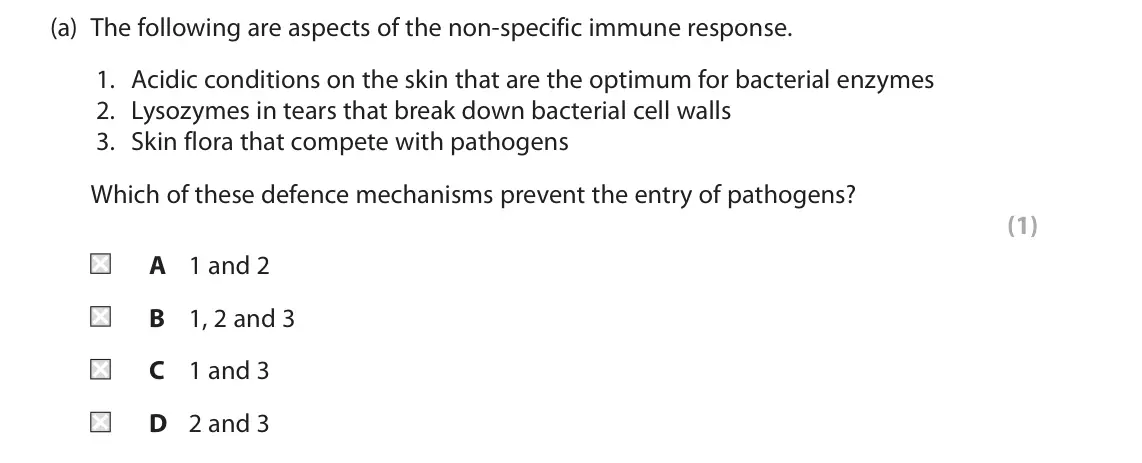
Q8(c)(ii)
The whole paper ↗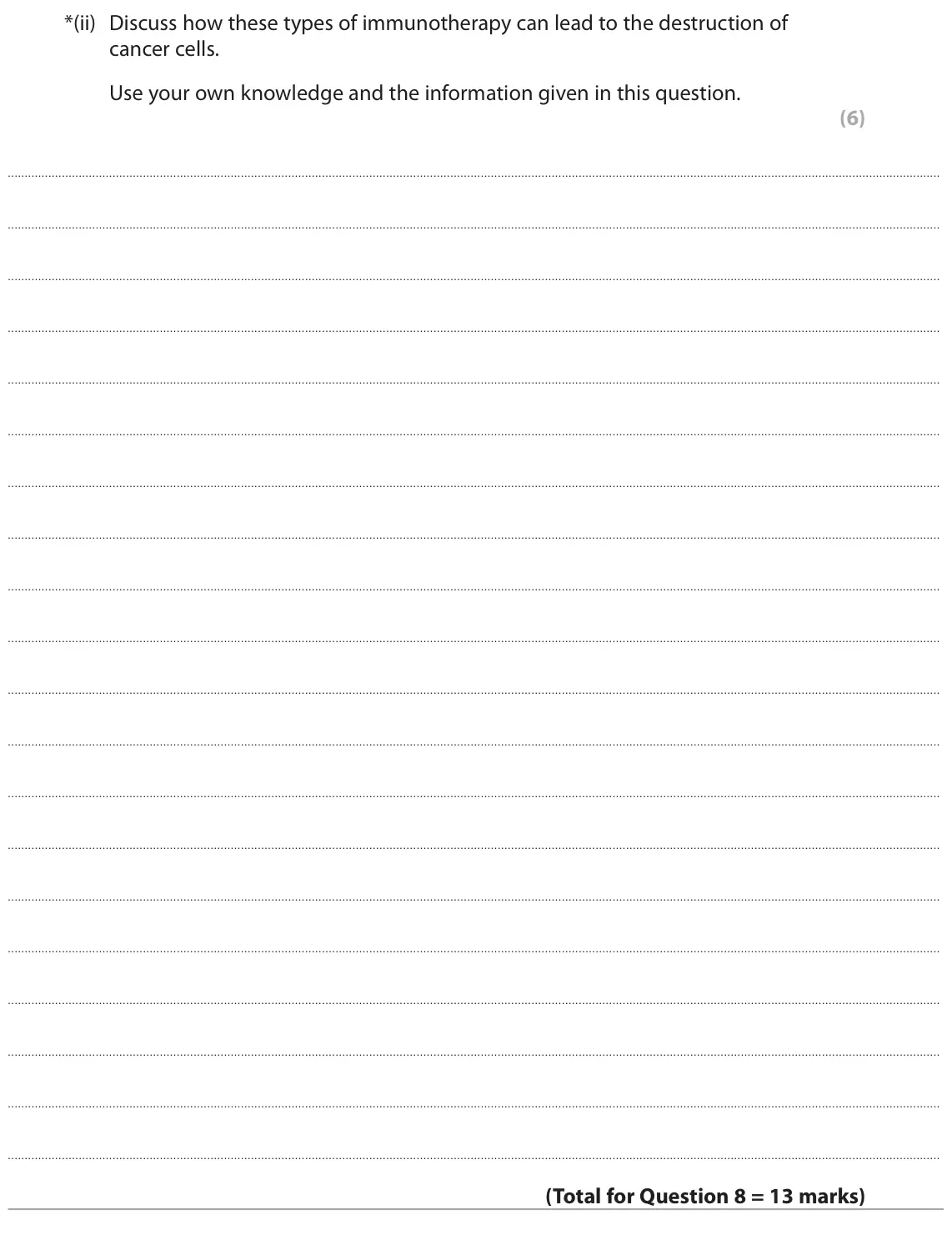
Q9(a)(i)
The whole paper ↗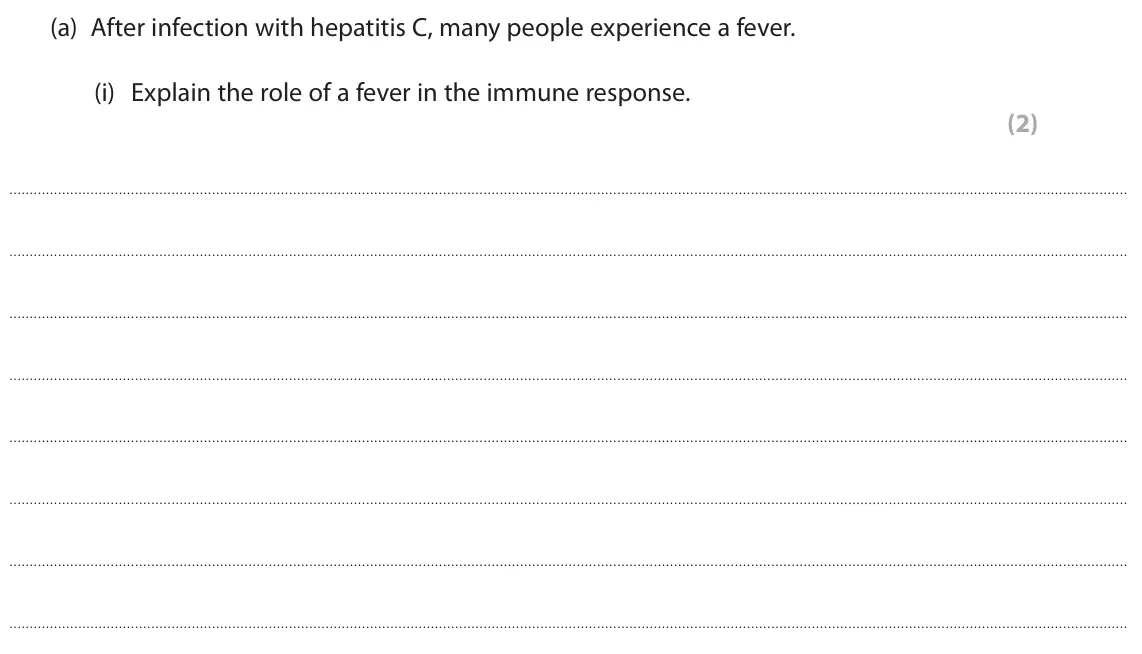
Q9(a)(ii)
The whole paper ↗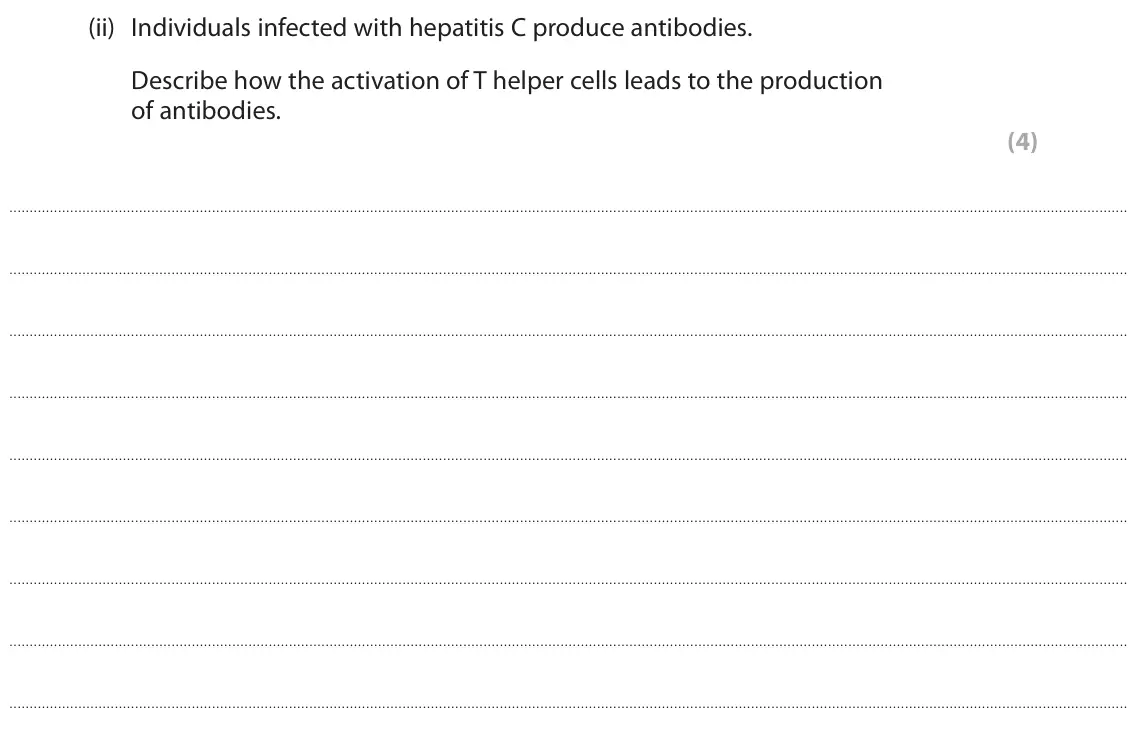
Q9(c)
The whole paper ↗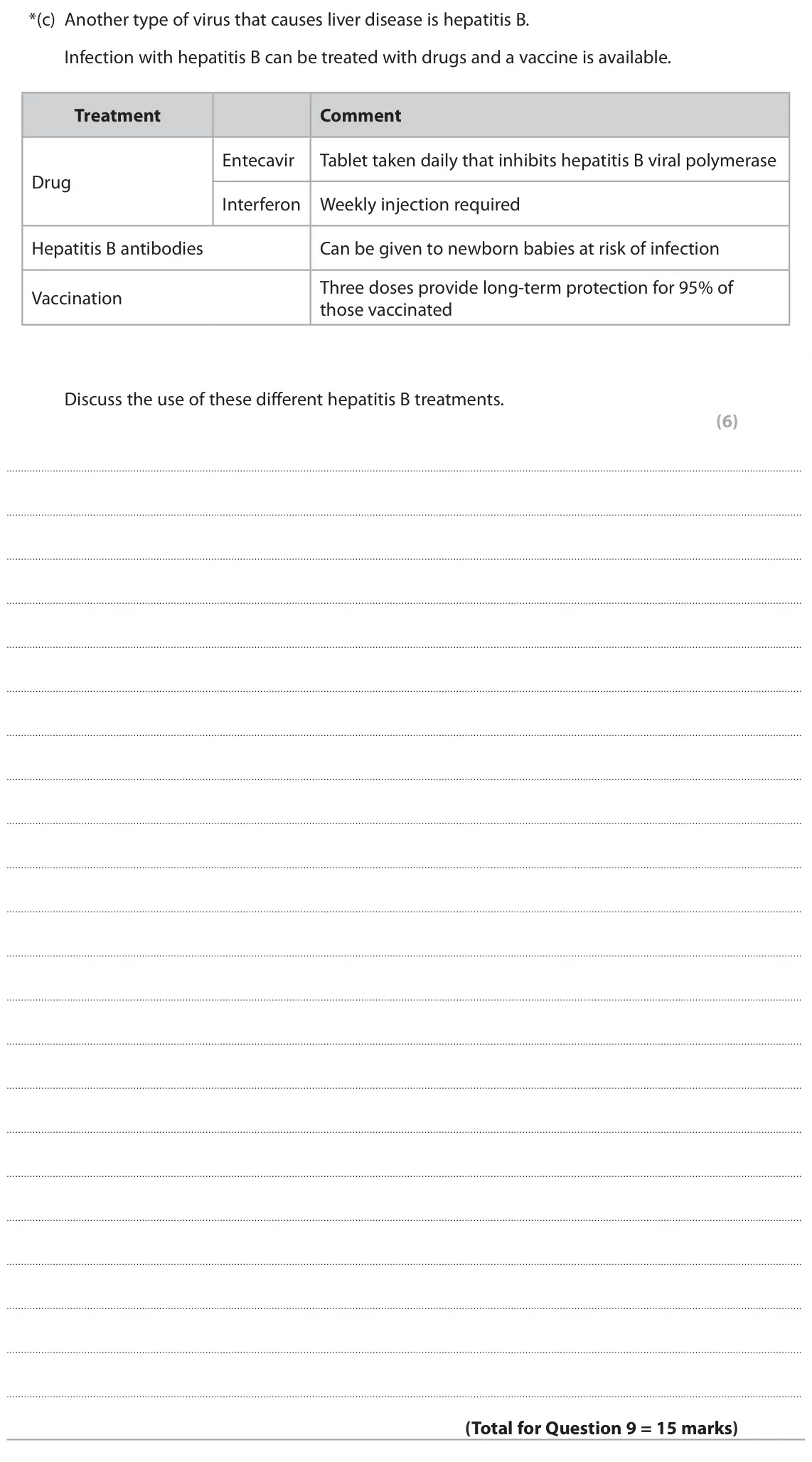
Q8(d)
The whole paper ↗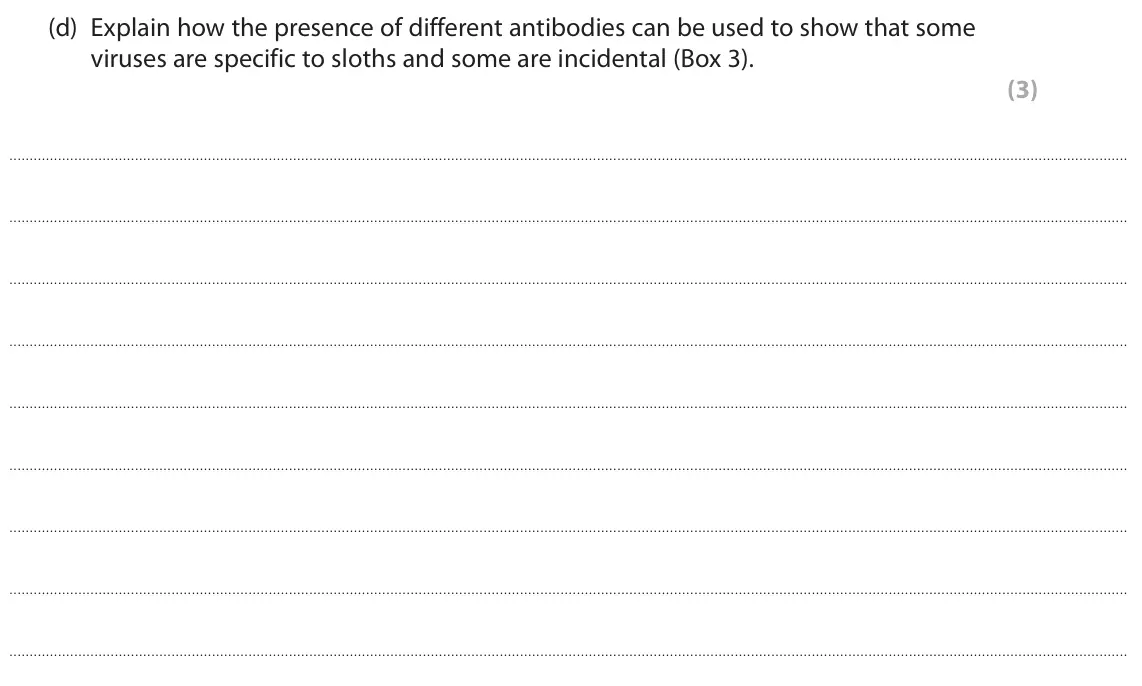
Q5(c)
The whole paper ↗
Q7(b)(iii)
The whole paper ↗
Q9(b)
The whole paper ↗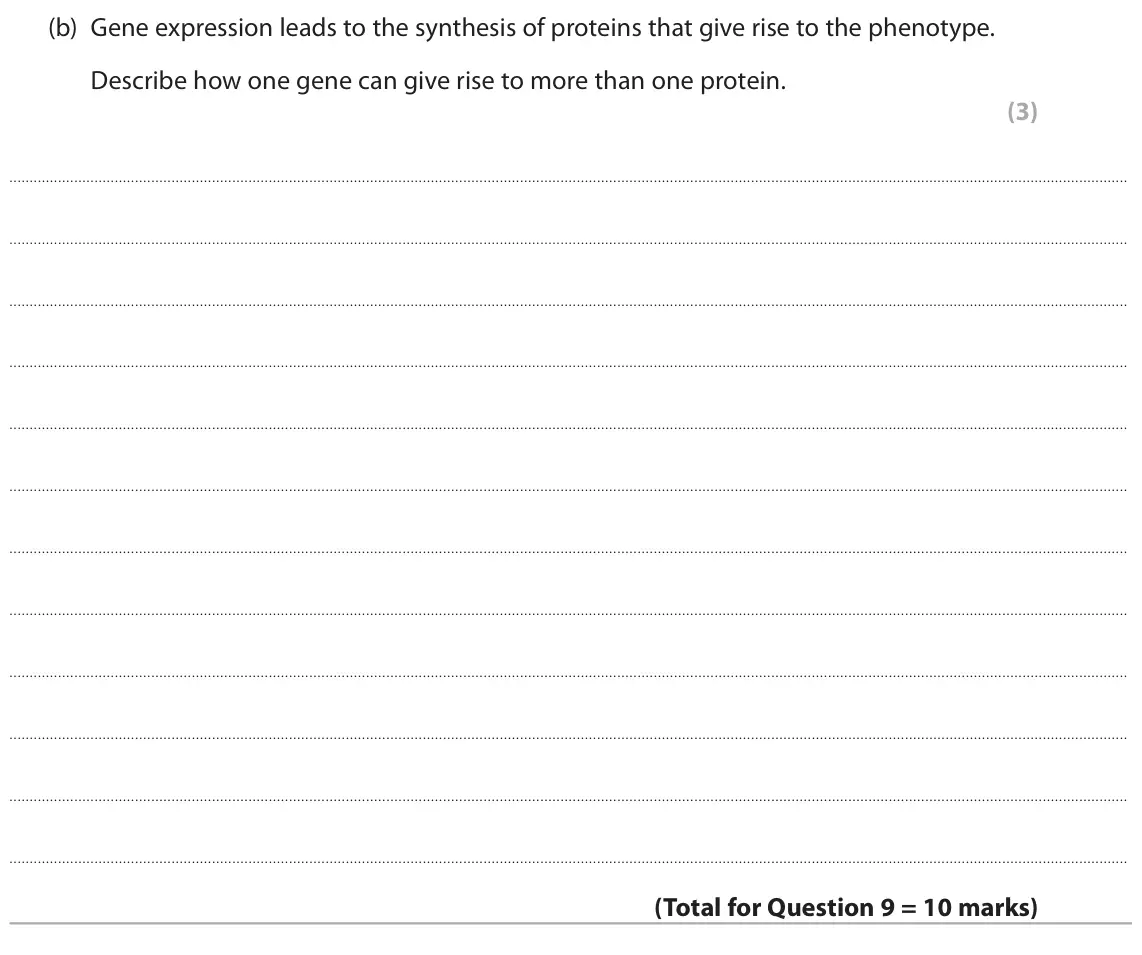
Q2(a)
The whole paper ↗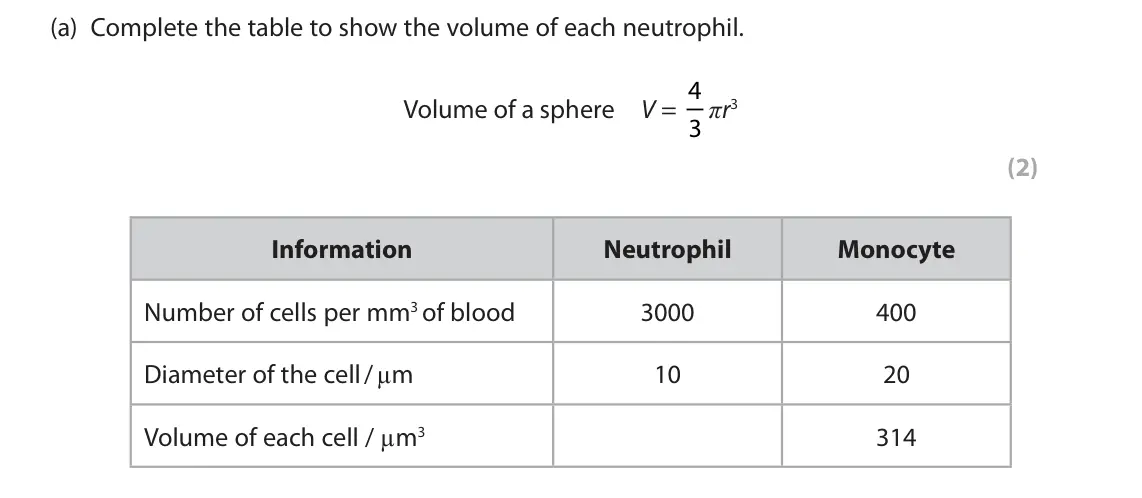
Q2(b)(i)
The whole paper ↗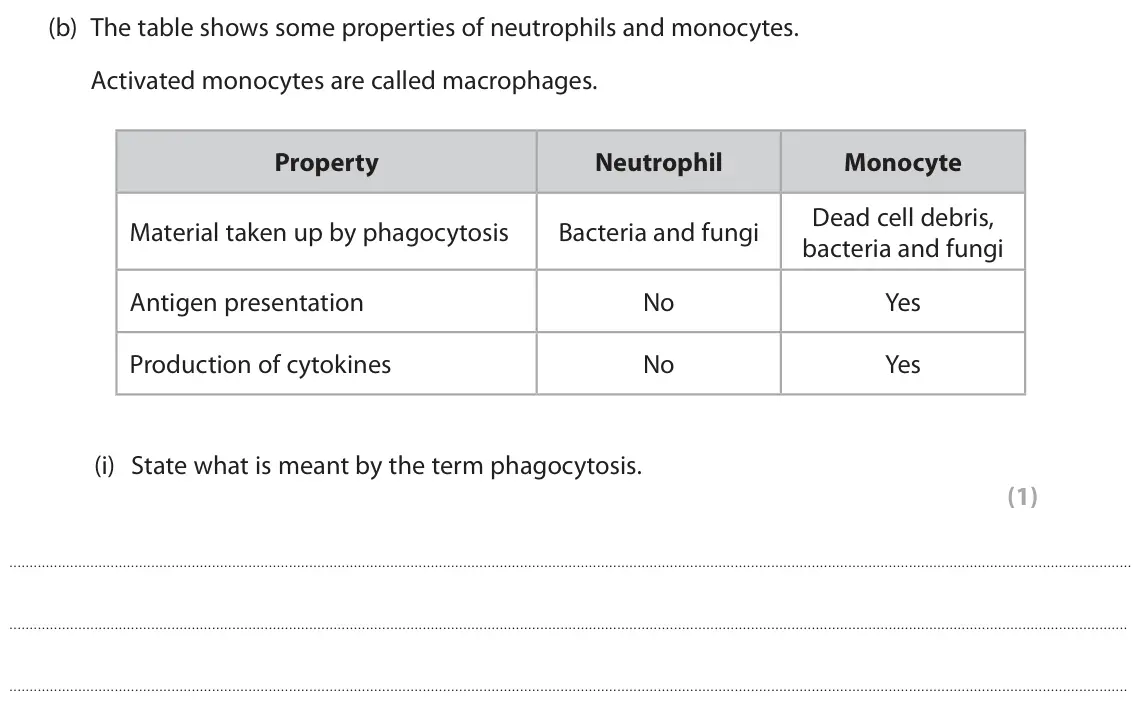
Q2(b)(ii)
The whole paper ↗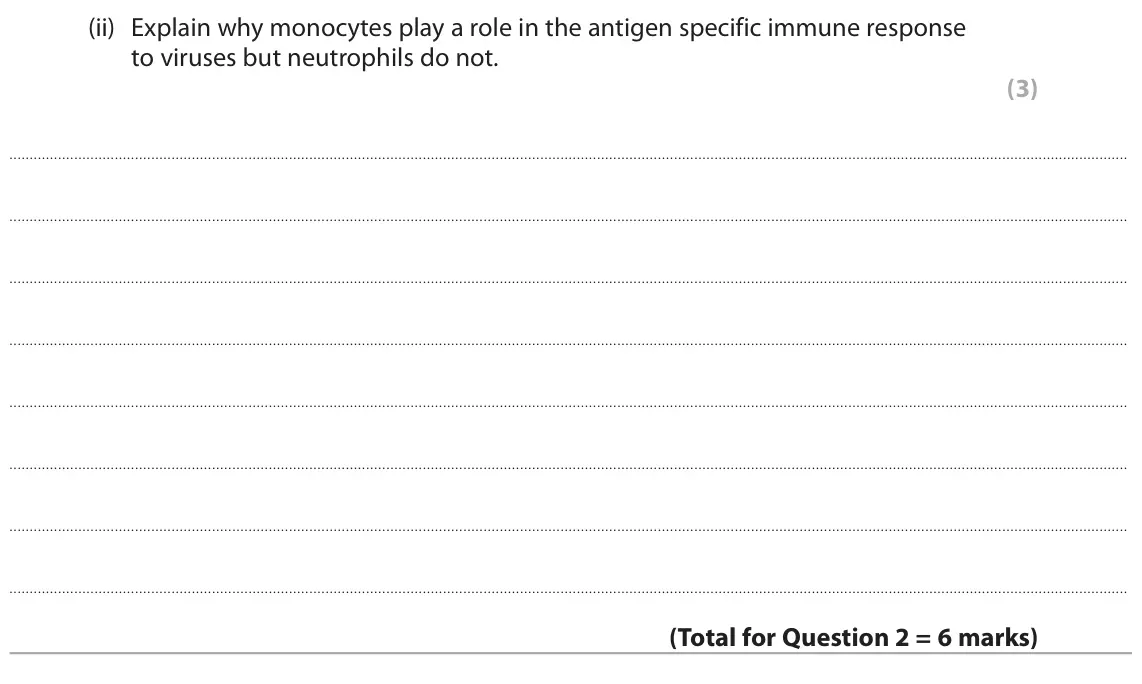
Q7(b)(ii)
The whole paper ↗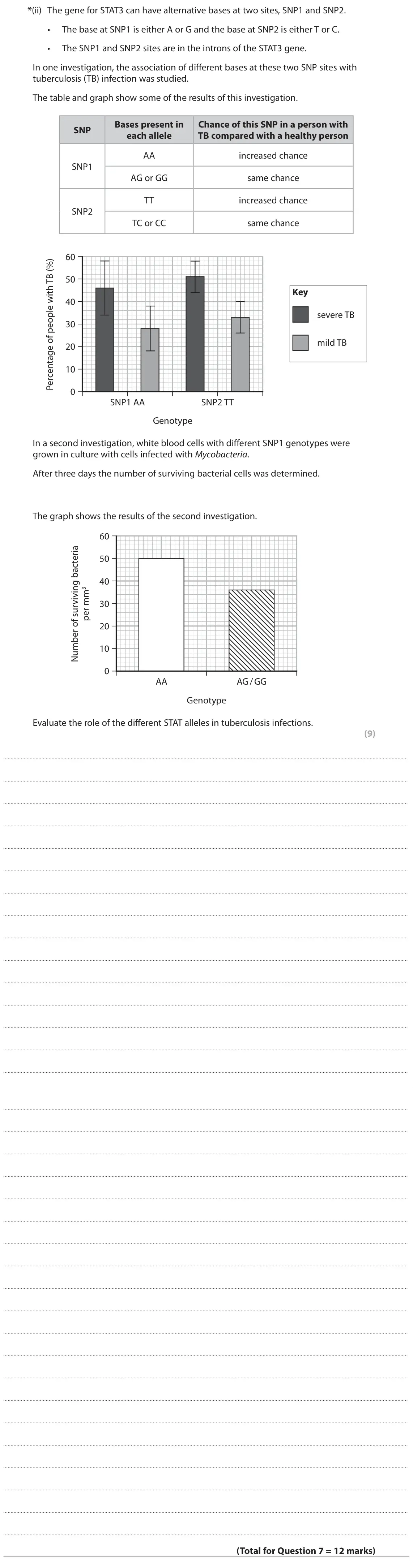
Q7(a)(i)
The whole paper ↗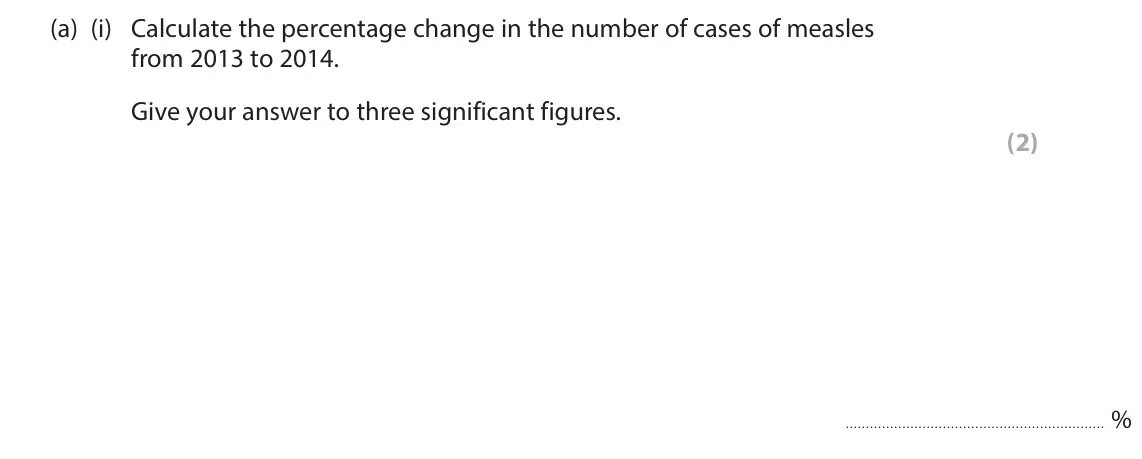
Q7(a)(ii)
The whole paper ↗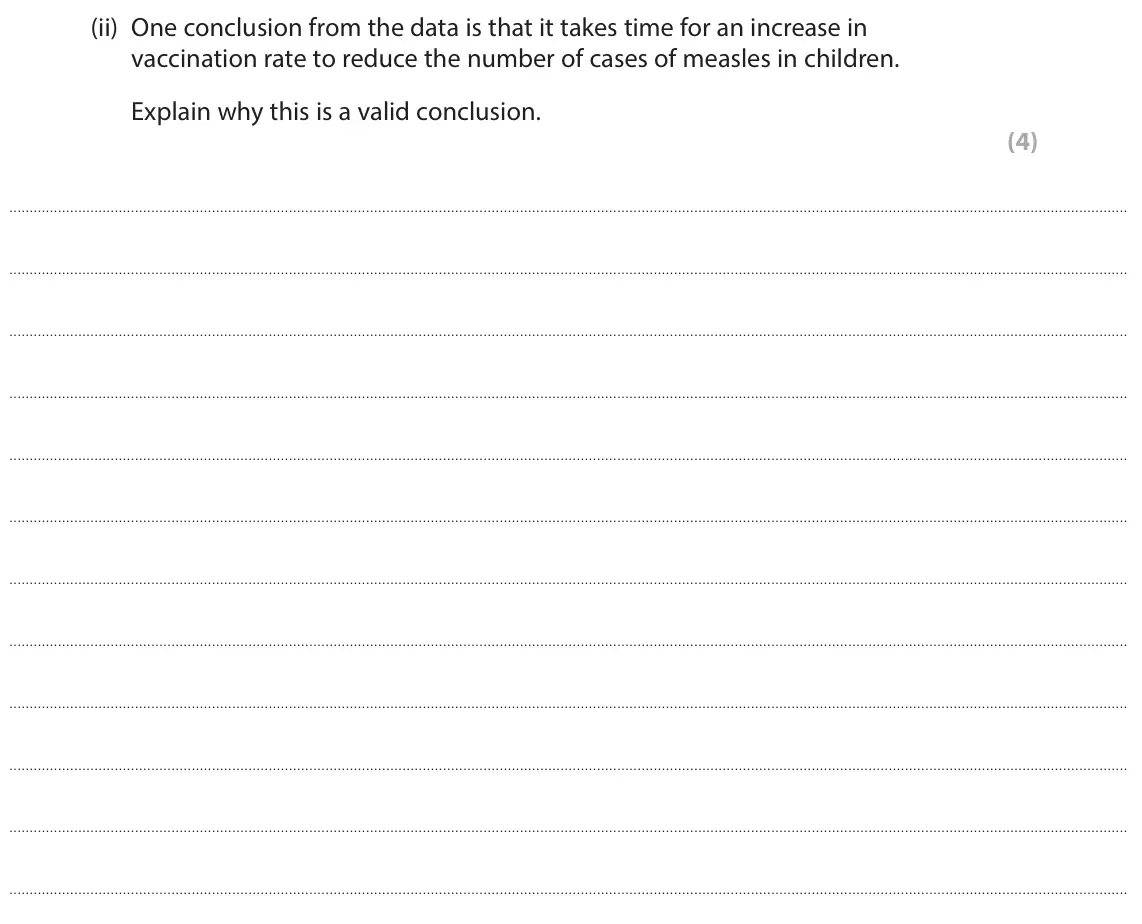
Q7(b)(i)
The whole paper ↗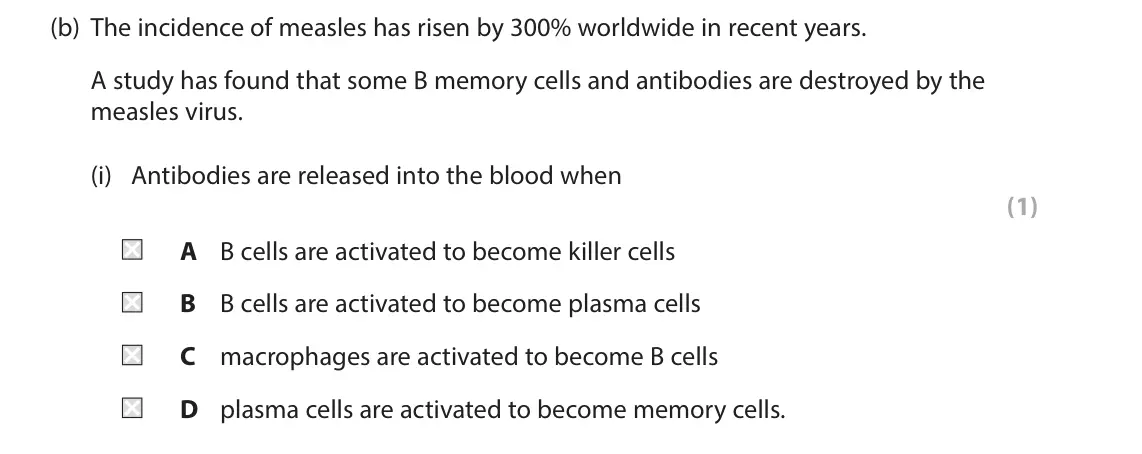
Q7(b)(ii)
The whole paper ↗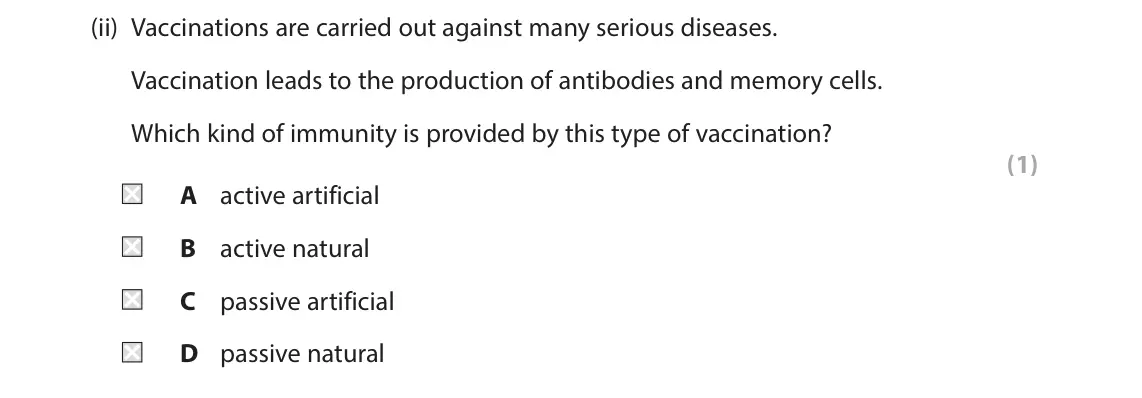
Q7(b)(iii)
The whole paper ↗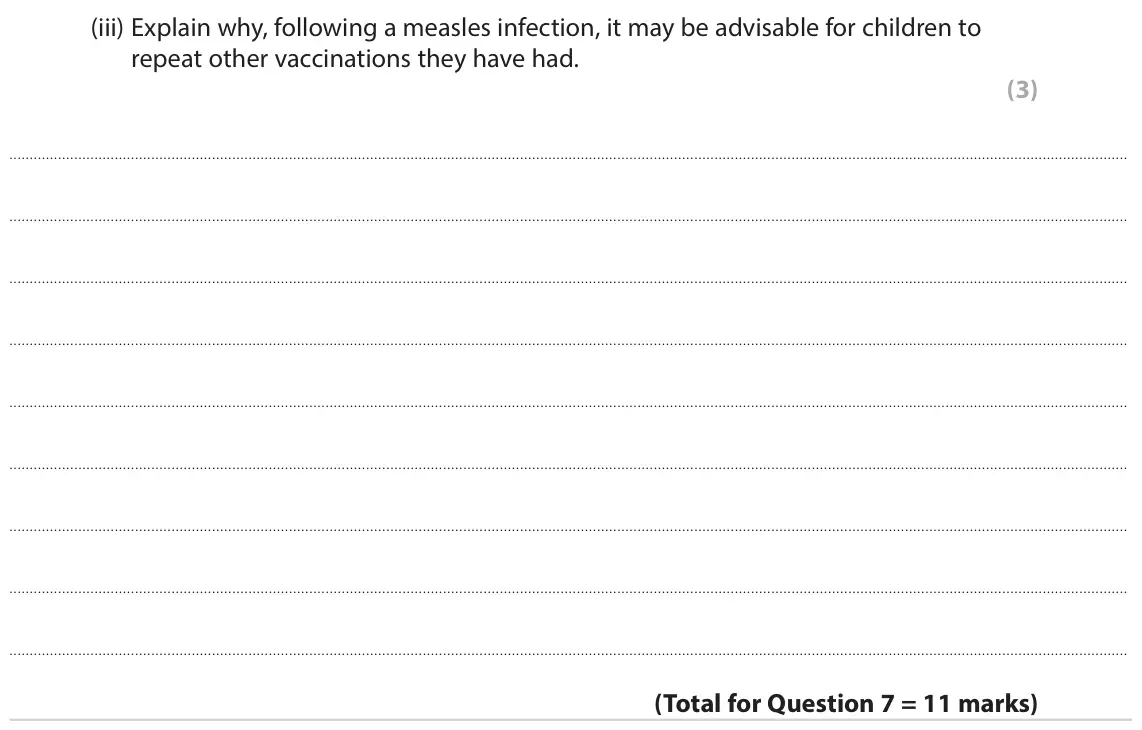
Q8(a)
The whole paper ↗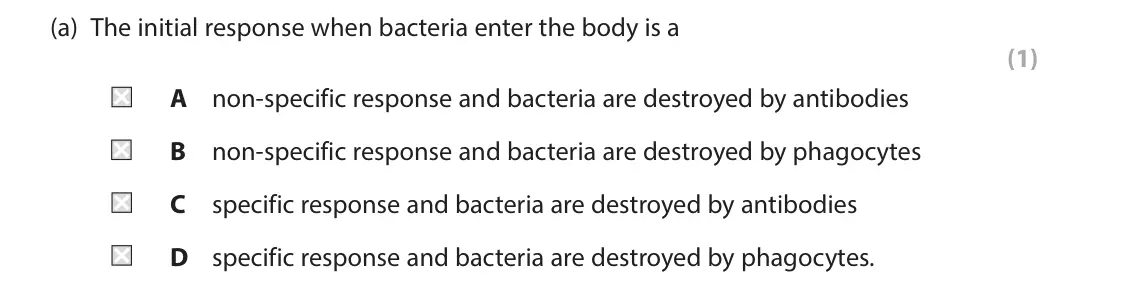
Q9(b)
The whole paper ↗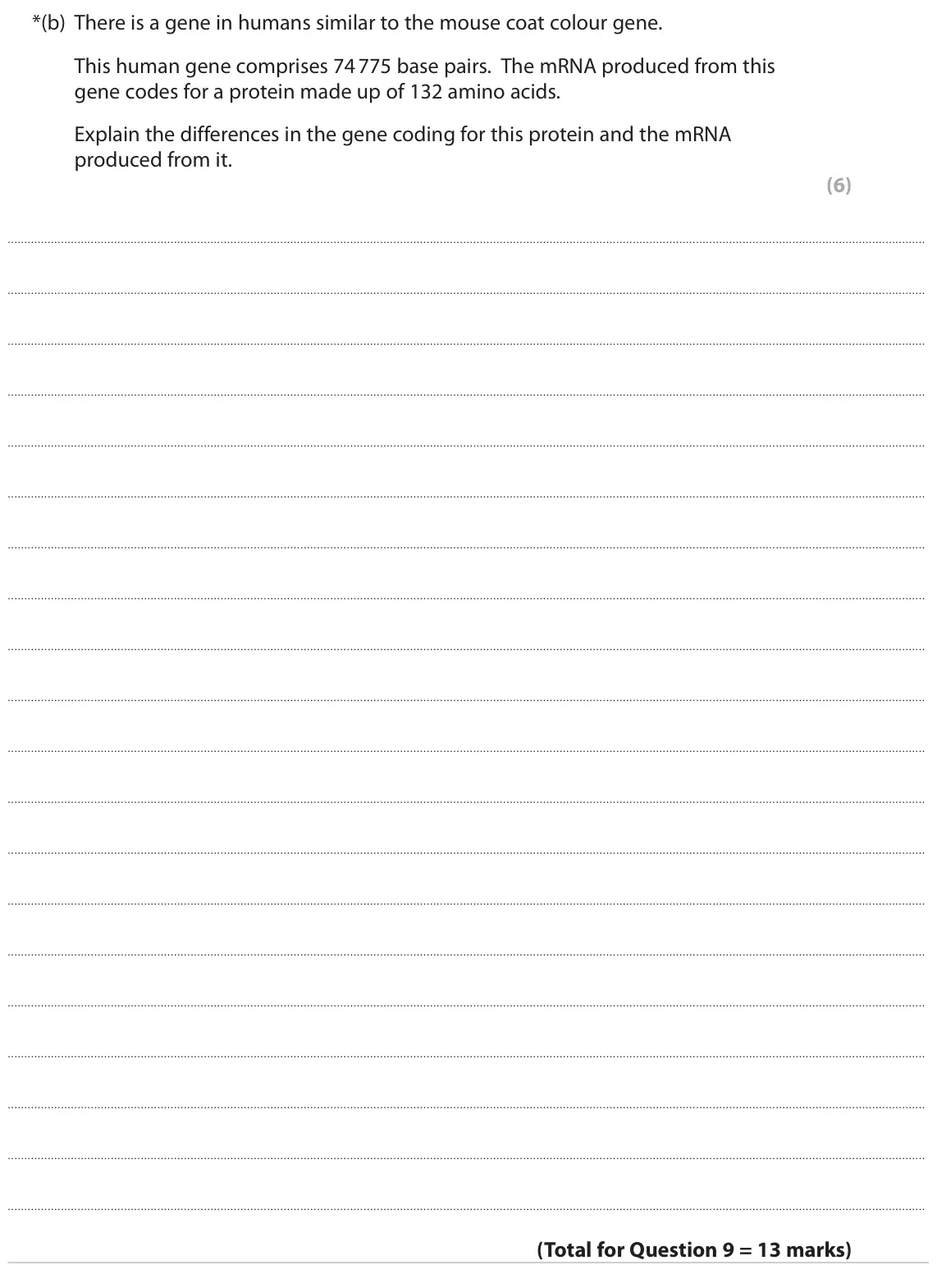
All 44 questions on The immune response, as a list
- June 2025, Paper 1, Q6(a) (1 mark): The following are aspects of the non-specific immune response. 1. Acidic conditions on the skin that are the optimum for bacterial enzymes 2. Lysozymes in tears
- June 2025, Paper 1, Q8(c)(ii) (6 marks): Discuss how these types of immunotherapy can lead to the destruction of cancer cells. Use your own knowledge and the information given in this question. (6)
- June 2024, Paper 1, Q9(a)(i) (2 marks): Explain the role of a fever in the immune response. (2)
- June 2024, Paper 1, Q9(a)(ii) (4 marks): Individuals infected with hepatitis C produce antibodies. Describe how the activation of T helper cells leads to the production of antibodies. (4)
- June 2024, Paper 1, Q9(c) (6 marks): Another type of virus that causes liver disease is hepatitis B. Infection with hepatitis B can be treated with drugs and a vaccine is available. Treatment Comme
- June 2024, Paper 3, Q8(d) (3 marks): Explain how the presence of different antibodies can be used to show that some viruses are specific to sloths and some are incidental (Box 3). (3)
- June 2023, Paper 1, Q5(c) (2 marks): The gut has barriers to prevent pathogens entering the body. Explain the role of conditions in the gut in preventing infection by microorganisms. (2)
- June 2023, Paper 1, Q7(b)(iii) (4 marks): Symptoms of bacterial infection include fever and inflammation. Explain the role of the inflammatory response in protecting the body from bacterial infection. (
- June 2023, Paper 1, Q9(b) (3 marks): Gene expression leads to the synthesis of proteins that give rise to the phenotype. Describe how one gene can give rise to more than one protein. (3)
- June 2023, Paper 3, Q2(a) (2 marks): Complete the table to show the volume of each neutrophil. Volume of a sphere V = 4 3 πr3 (2) Information Neutrophil Monocyte Number of cells per mm3 of blood 30
- June 2023, Paper 3, Q2(b)(i) (1 mark): State what is meant by the term phagocytosis. (1)
- June 2023, Paper 3, Q2(b)(ii) (3 marks): Explain why monocytes play a role in the antigen specific immune response to viruses but neutrophils do not. (3)
- June 2023, Paper 3, Q7(b)(ii) (9 marks): The gene for STAT3 can have alternative bases at two sites, SNP1 and SNP2. • The base at SNP1 is either A or G and the base at SNP2 is either T or C. • The SNP1
- June 2022, Paper 1, Q7(a)(i) (2 marks): Calculate the percentage change in the number of cases of measles from 2013 to 2014. Give your answer to three significant figures. (2) %
- June 2022, Paper 1, Q7(a)(ii) (4 marks): One conclusion from the data is that it takes time for an increase in vaccination rate to reduce the number of cases of measles in children. Explain why this is
- June 2022, Paper 1, Q7(b)(i) (1 mark): Antibodies are released into the blood when (1) A B cells are activated to become killer cells B B cells are activated to become plasma cells C macrophages are
- June 2022, Paper 1, Q7(b)(ii) (1 mark): Vaccinations are carried out against many serious diseases. Vaccination leads to the production of antibodies and memory cells. Which kind of immunity is provid
- June 2022, Paper 1, Q7(b)(iii) (3 marks): Explain why, following a measles infection, it may be advisable for children to repeat other vaccinations they have had. (3)
- June 2022, Paper 1, Q8(a) (1 mark): The initial response when bacteria enter the body is a (1) A non-specific response and bacteria are destroyed by antibodies B non-specific response and bacteria
- June 2022, Paper 2, Q9(b) (6 marks): There is a gene in humans similar to the mouse coat colour gene. This human gene comprises 74 775 base pairs. The mRNA produced from this gene codes for a prote
- June 2022, Paper 3, Q8(b) (3 marks): Explain how inflammation and the immune response can cause damage to tissues (paragraph 4). (3)
- November 2021, Paper 3, Q2(a)(i) (2 marks): Explain how a single gene can give rise to acetylcholinesterase molecules with different primary structures. (2)
- November 2021, Paper 3, Q8(i) (3 marks): Explain why some pig genes can cause reactions in the human immune system (paragraph 27). (3)
- November 2021, Paper 3, Q8(j) (3 marks): Explain how a vaccine developed against human plague can provide lifelong immunity to sylvatic plague in the black-footed ferret (paragraph 33). (3)
- October 2020, Paper 1, Q3(a) (2 marks): Complete the table by putting a tick (ü) in the box if the type of barrier is correct. If the type of barrier is not correct, place a cross (X) in the box. (2)
- October 2020, Paper 1, Q3(b) (3 marks): Explain why the presence of microorganisms on the skin and in the gut helps to prevent pathogenic organisms multiplying in the body. (3)
- October 2020, Paper 1, Q3(c) (2 marks): The human gut contains more than a thousand species of bacteria. Only 30 to 40 of these species are found in the stomach. Explain why there are relatively few s
- October 2020, Paper 1, Q4(c)(i) (2 marks): Describe how the pre‑mRNA may be modified before being translated on the ribosome. (2)
- October 2020, Paper 1, Q4(c)(ii) (2 marks): Explain why modification of pre‑mRNA enables one gene to give rise to more than one protein. (2)
- October 2020, Paper 1, Q9(b)(i) (1 mark): The type of immunity given by this vaccine is (1) A artificial active immunity B artificial passive immunity C natural active immunity D natural passive immunit
- October 2020, Paper 1, Q9(b)(ii) (3 marks): Explain the role of T cells in the immunity to the Ebola virus that develops following the use of this vaccine. (3)
- October 2020, Paper 3, Q7(c) (4 marks): ‘Innate immunity initiates the inflammatory response, in which white blood cells swarm the site of infection’ (paragraph 5). Explain how white blood cells ‘swar
- October 2020, Paper 3, Q7(d) (2 marks): The protein α4β1 integrin projects out from the cell surface membrane of white blood cells. Deduce how molecules such as α4β1 integrin help immune cells cross t
- October 2020, Paper 3, Q7(f) (3 marks): ‘The lymphatic vessels also ferry antigens—substances capable of inducing an immune response—from the tissues into tissue-draining lymph nodes, where they are p
- June 2018, Paper 1, Q3(a)(i) (1 mark): Which cell produces antibodies? (1) A macrophage B plasma cell C red blood cell D T cell
- June 2018, Paper 1, Q3(a)(ii) (1 mark): The type of immunity that the newborn baby obtains from the milk produced by its mother is (1) A artificial active immunity B artificial passive immunity C natu
- June 2018, Paper 1, Q3(b) (4 marks): Inflammation is a non-specific response to an infection. Explain how changes in the blood vessels result in the redness and swelling seen at the site of inflamm
- June 2018, Paper 1, Q3(c)(i) (3 marks): The influenza virus can be lethal to mice. The effects of interferon on influenza infection in mice was investigated. Mice were infected with influenza virus an
- June 2018, Paper 3, Q7(i) (2 marks): There are ‘trillions of microbes’ found in the gut, ‘as well as others living elsewhere in and on the body’. Describe the role of the microbes that are normally
- June 2018, Paper 3, Q7(d) (3 marks): Probiotics include live bacteria that are ingested for health benefits. Explain how probiotics may regulate food cravings (paragraphs 18, 19 and 20). (3)
- June 2018, Paper 3, Q7(g) (4 marks): ‘Bacterial molecules pass into the bloodstream where they do not belong, triggering an immune response’ (paragraph 32). Explain how the bacterial molecules coul
- June 2017, Paper 1, Q8(a)(ii) (4 marks): The table shows two vaccines developed from different combinations of HPV. Strains of HPV used in development Vaccine of the vaccine Cervarix 16 and 18 Guardasi
- June 2017, Paper 1, Q8(a)(iii) (1 mark): Which of the following describes the type of immunity developed by these vaccines? (1) A artificial active immunity B artificial passive immunity C natural acti
- June 2017, Paper 1, Q8(b) (3 marks): Cervarix and Guardasil have been used in national vaccination programs. A person who has been vaccinated becomes infected with HPV-16. Explain the role of the T
Questions, mark schemes and examiner’s reports are © Pearson Edexcel, from their published past papers. Plumi isn’t affiliated with any exam board. Want whole papers? Every Edexcel A-Level Biology A paper.
Rather write your answers by hand on iPad? Plumi marks them against the same mark schemes.