 plumi
Antibiotics and hospital infections: Edexcel A‑Level Biology A questions
Every Edexcel A-Level Biology A exam question on Antibiotics and hospital infections (specification points 6.13–6.15), 2016–2025, with its mark scheme and examiner’s report.
Find questions1,749
Calculations
Q6(b)
The whole paper ↗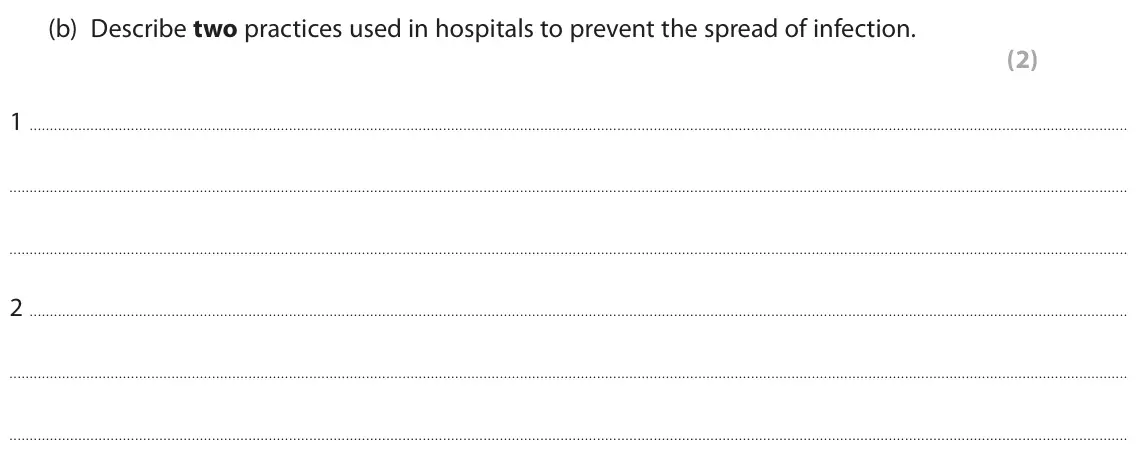
Q6(c)(i)
The whole paper ↗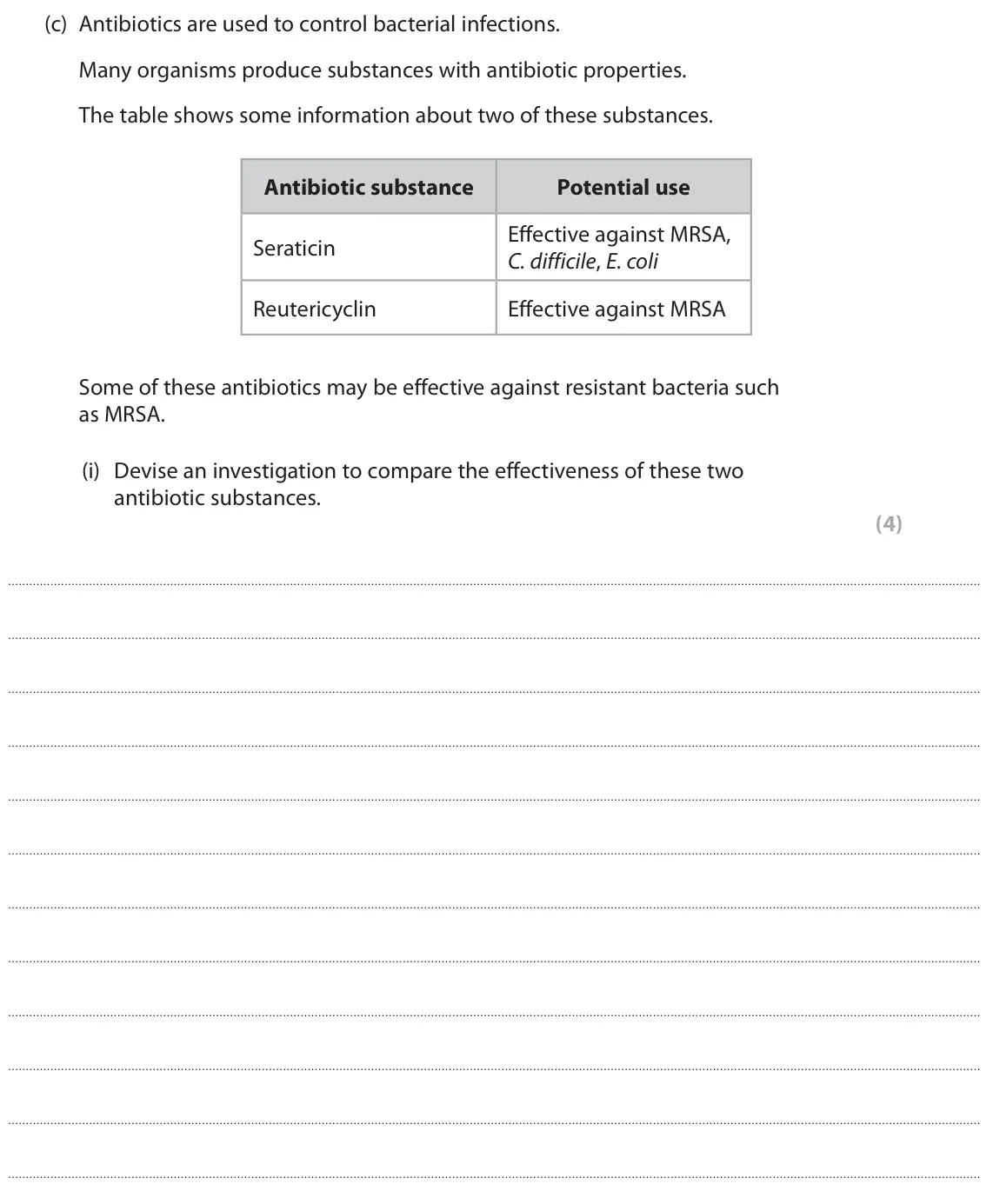
Q5(a)
The whole paper ↗
Q5(b)(i)
The whole paper ↗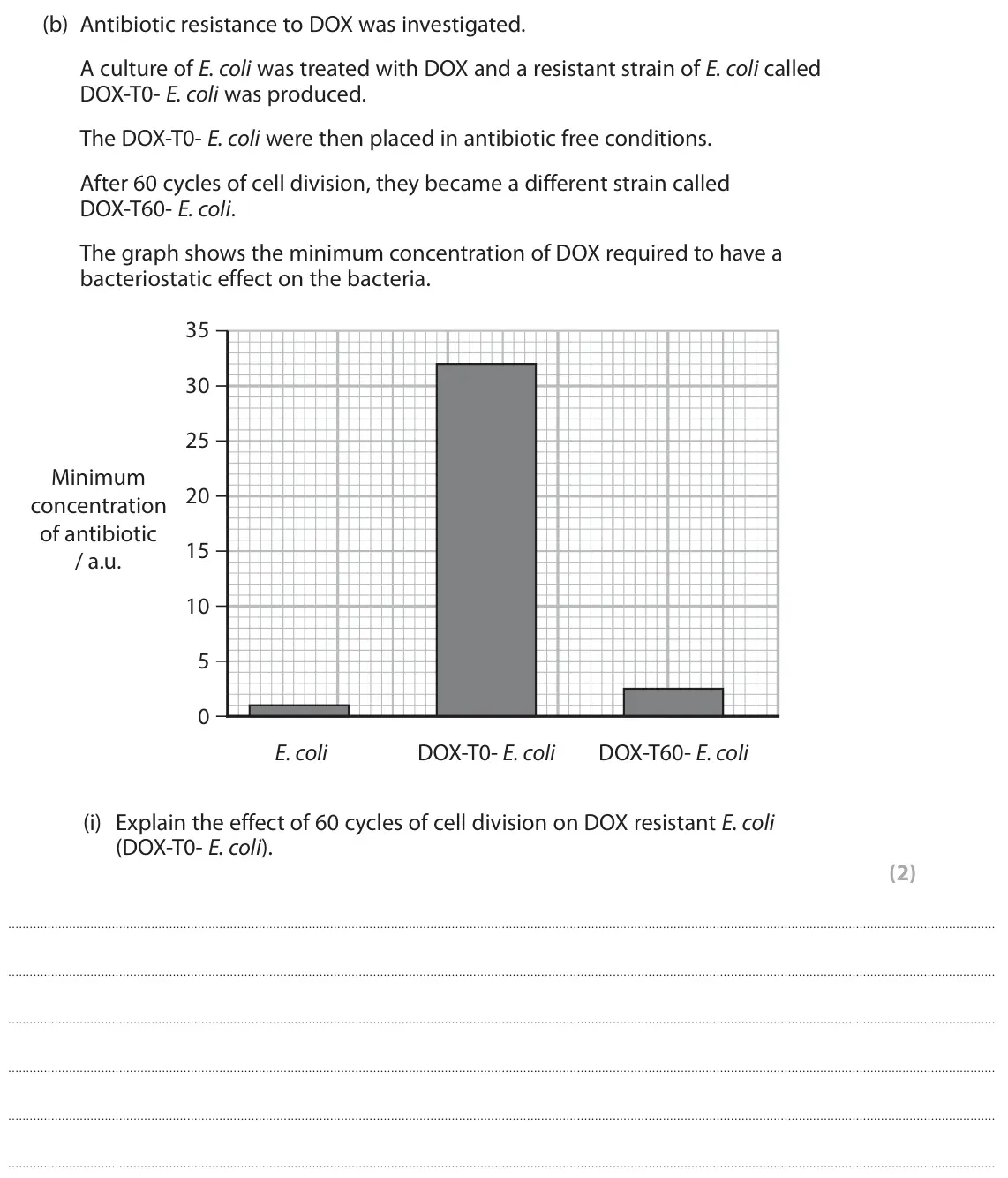
Q5(b)(ii)
The whole paper ↗
Q5(c)(i)
The whole paper ↗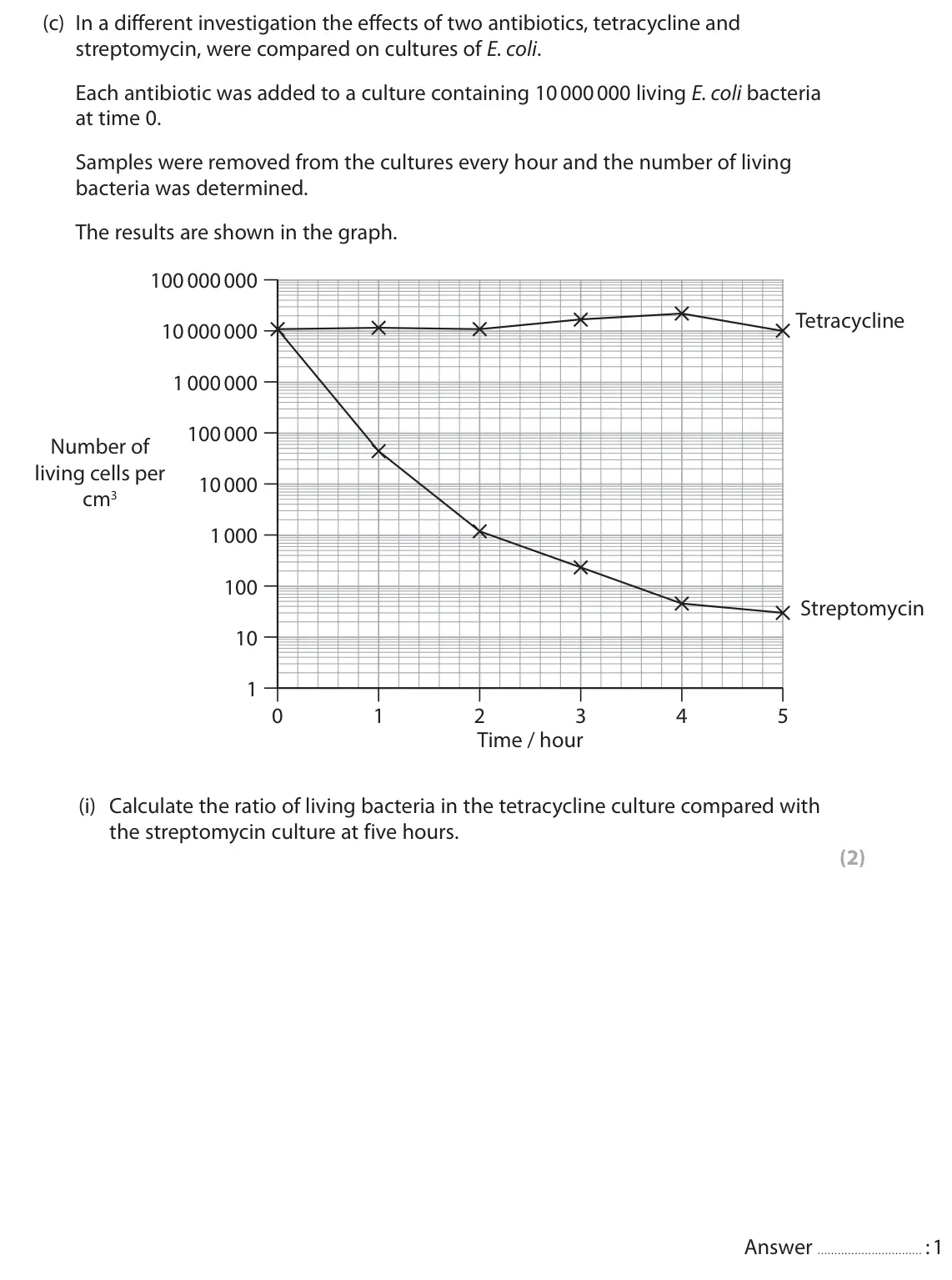
Q5(c)(ii)
The whole paper ↗
Q10(a)
The whole paper ↗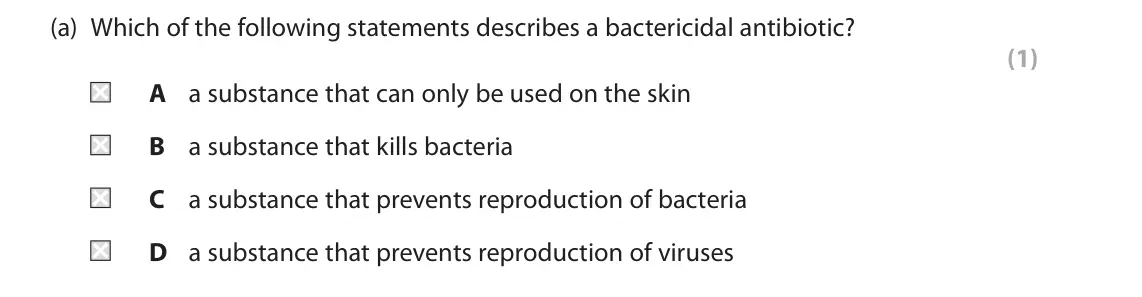
Q10(b)(i)
The whole paper ↗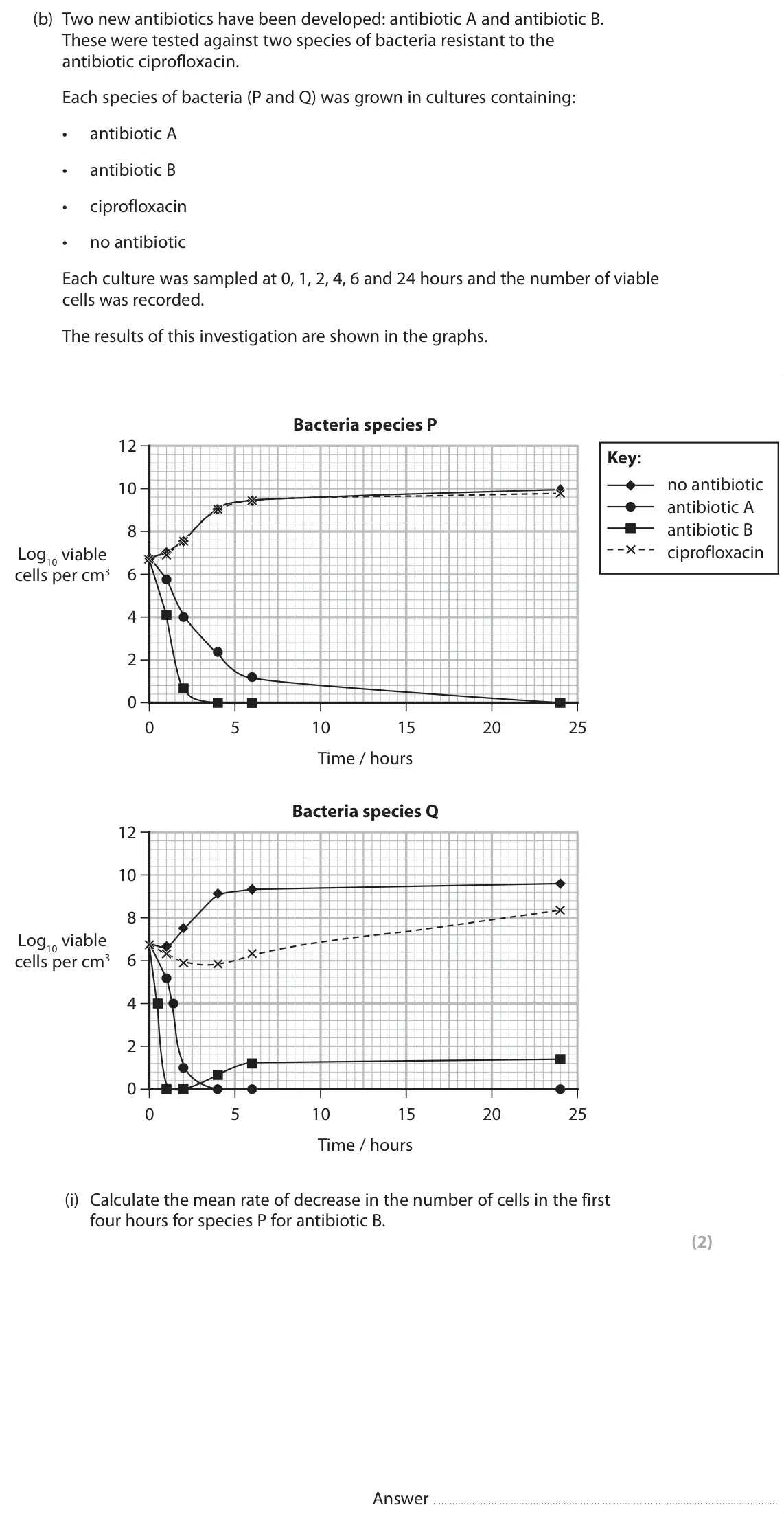
Q10(b)(ii)
The whole paper ↗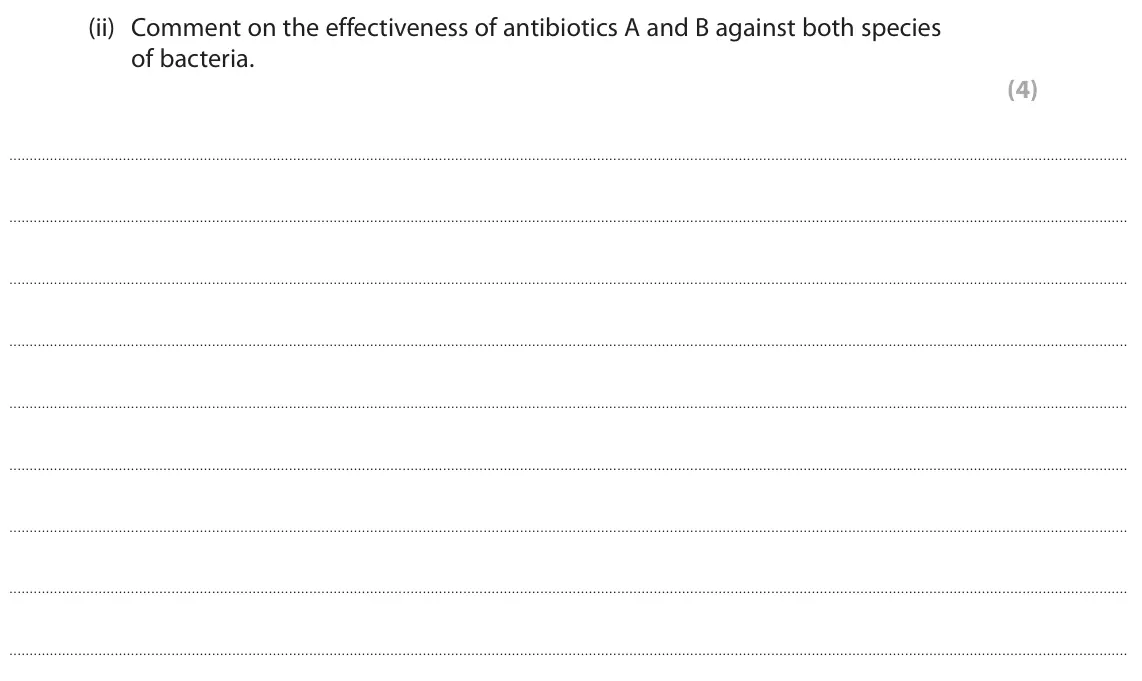
Q10(b)(iii)
The whole paper ↗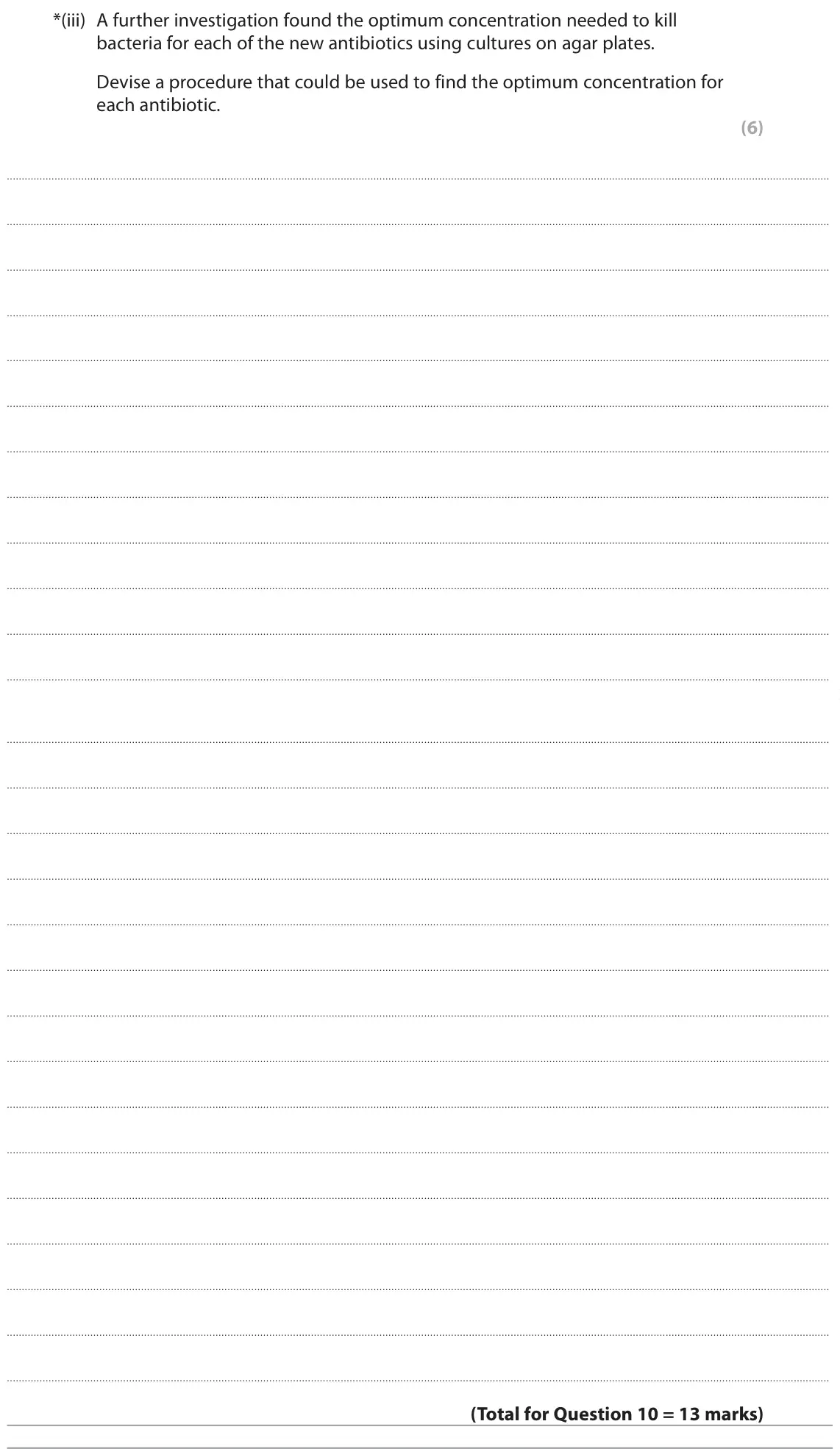
Q7(b)(i)
The whole paper ↗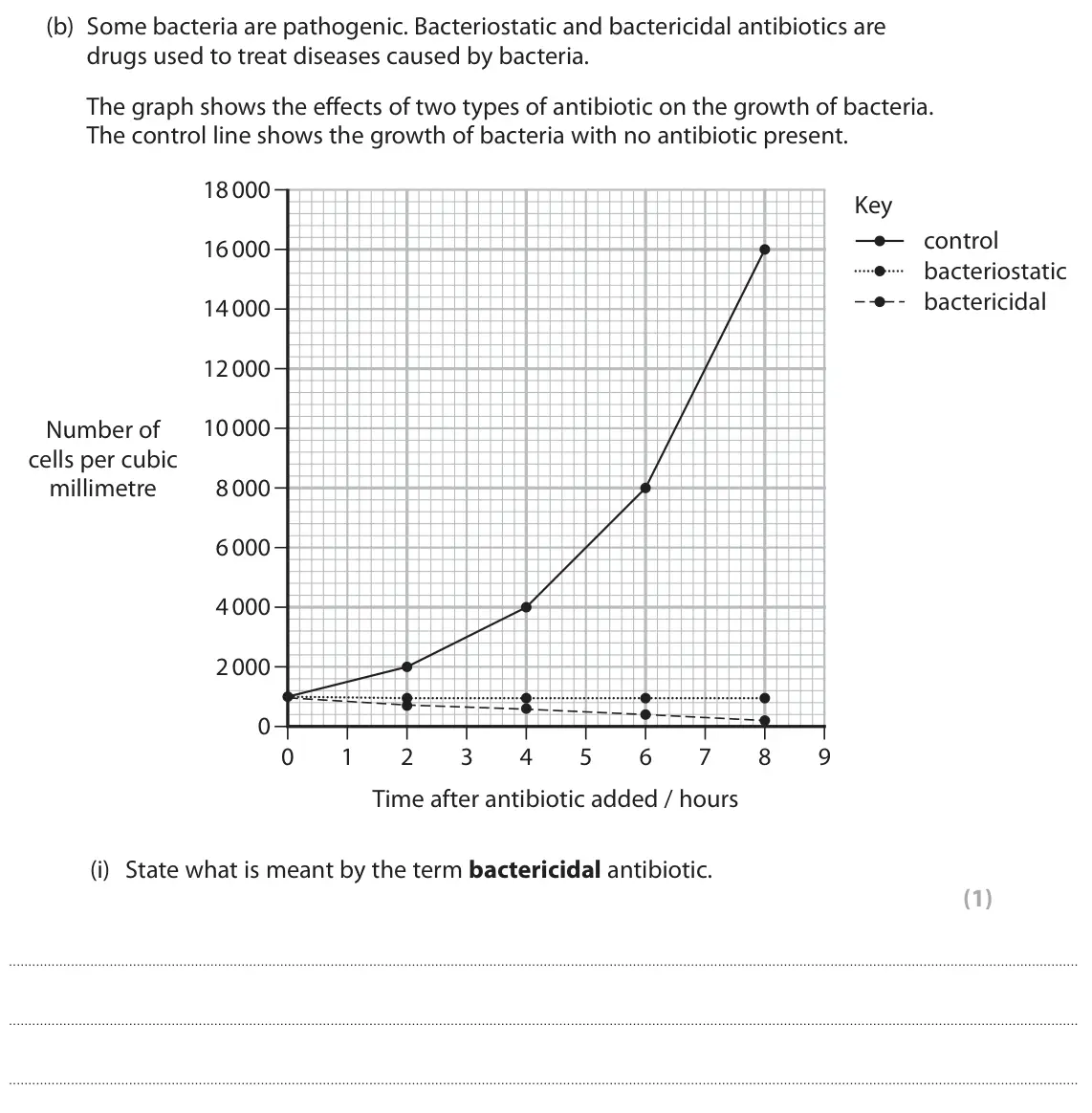
Q7(b)(ii)
The whole paper ↗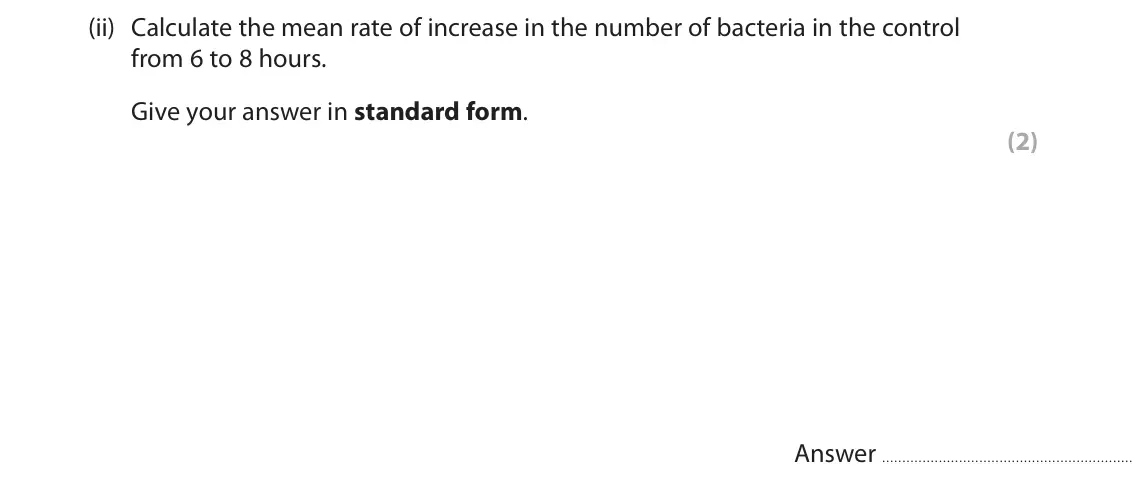
Q7(c)
The whole paper ↗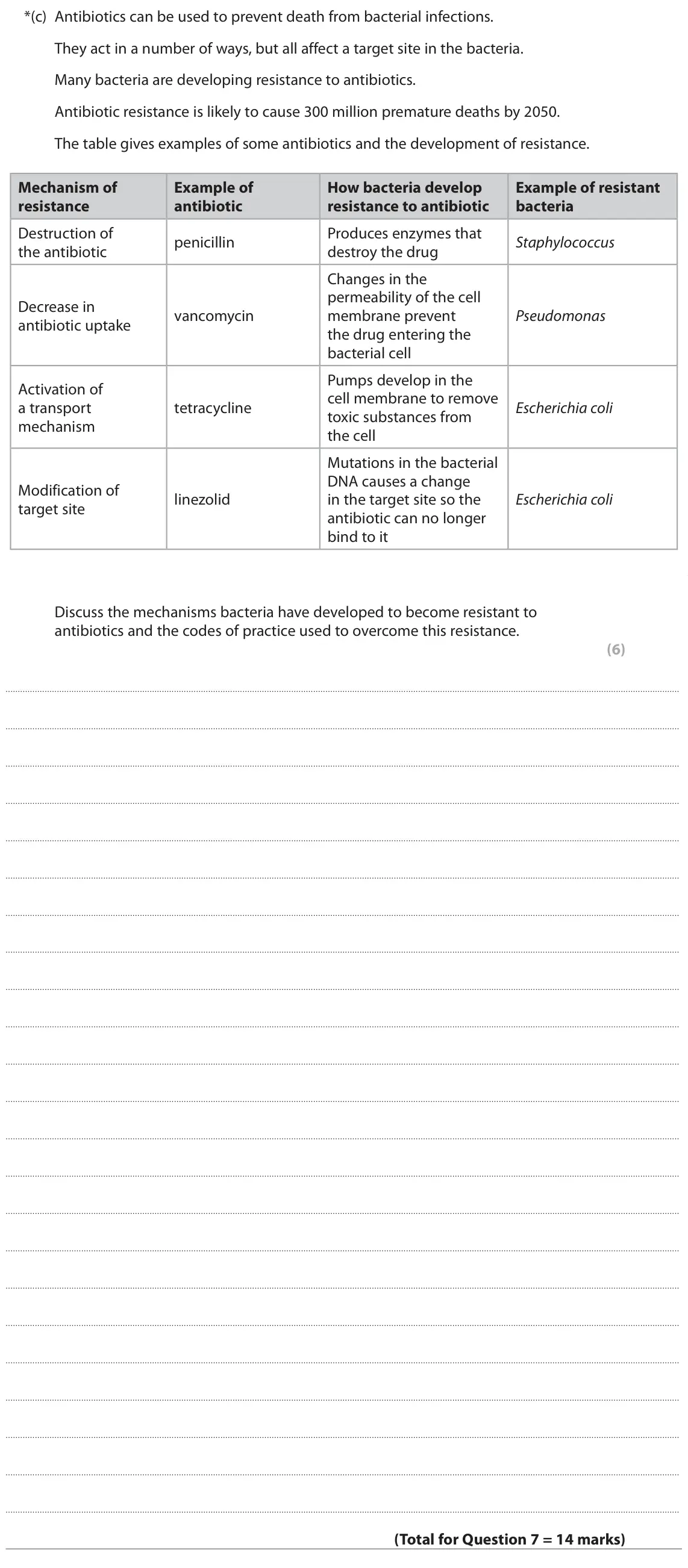
Q2(a)
The whole paper ↗
Q8(i)
The whole paper ↗
Q8(a)
The whole paper ↗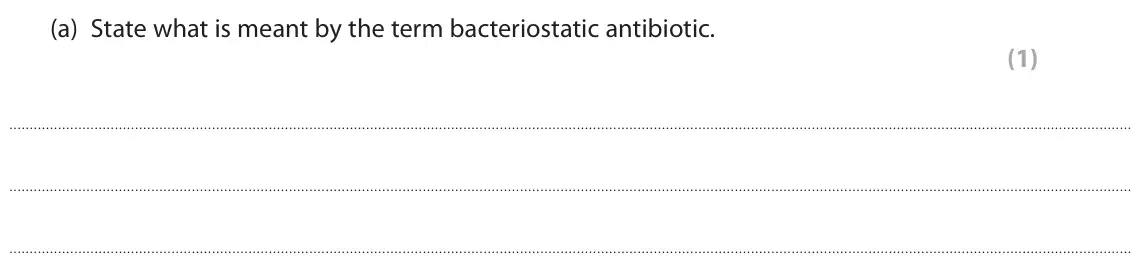
Q8(b)(ii)
The whole paper ↗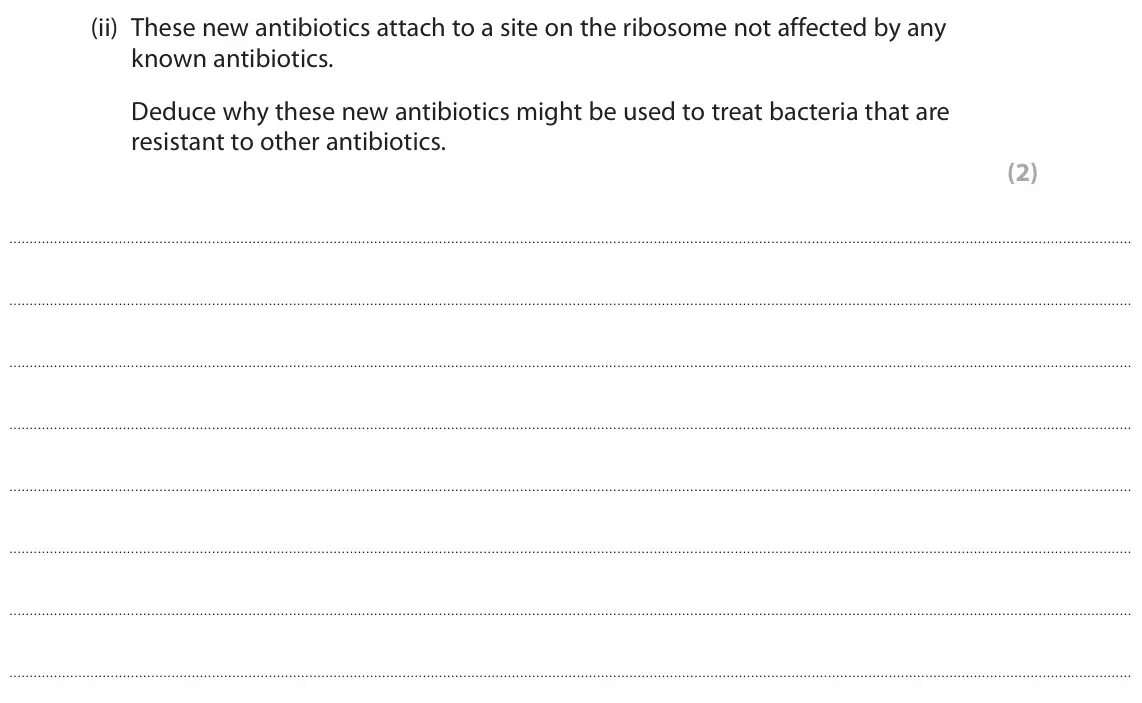
Q8(b)(iii)
The whole paper ↗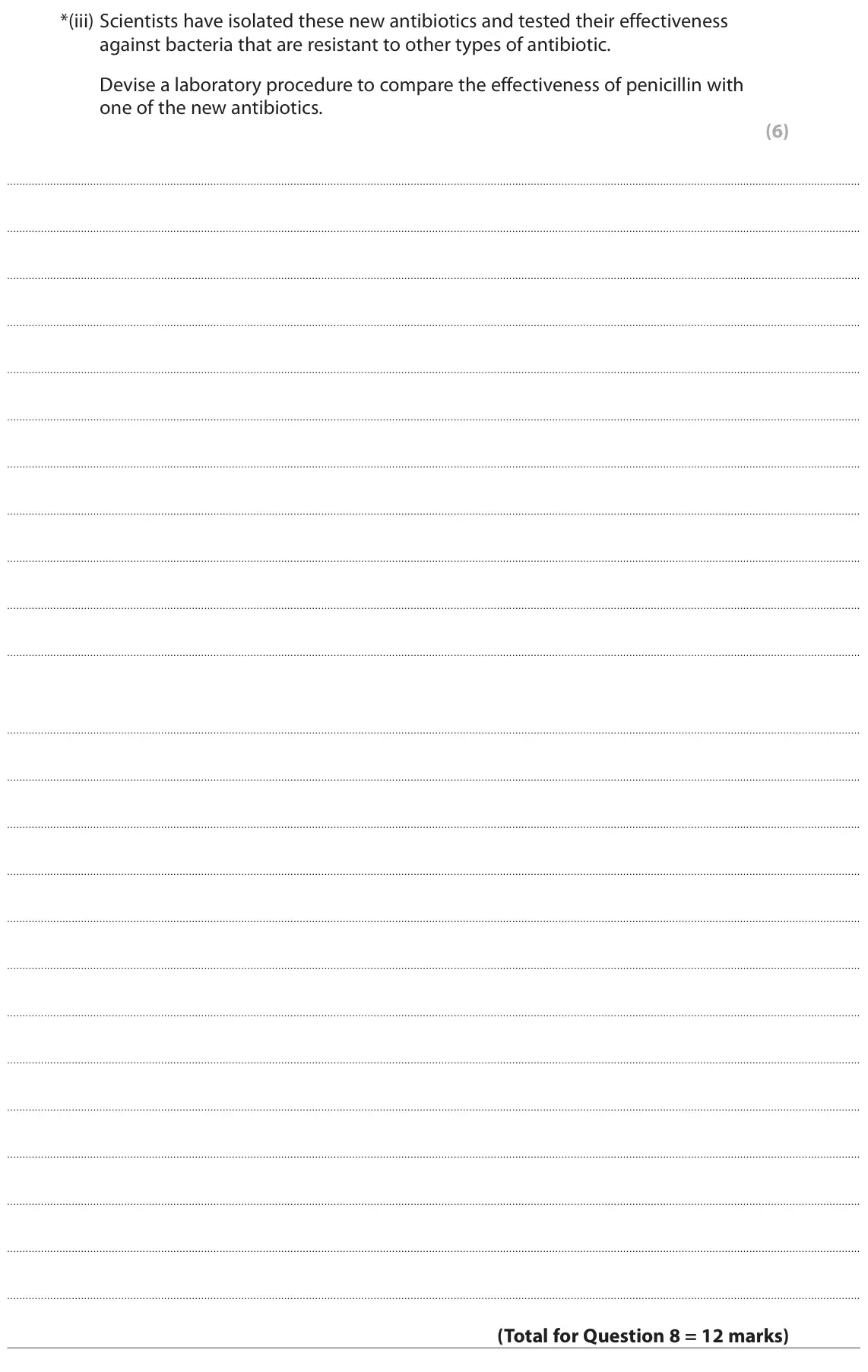
Q7(c)
The whole paper ↗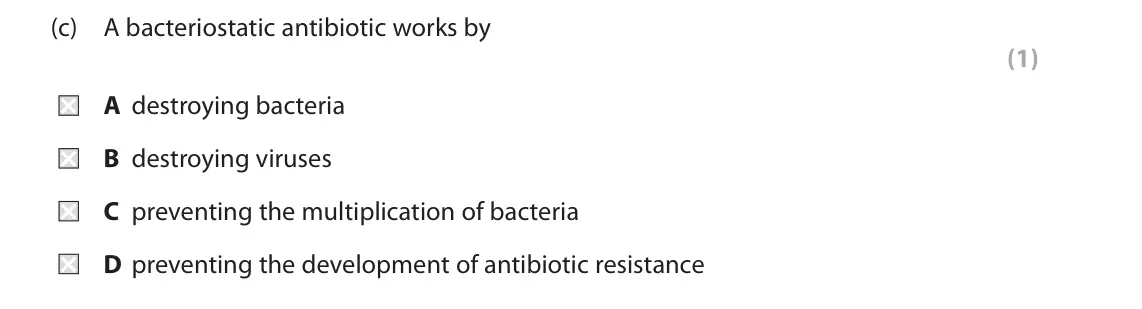
All 23 questions on Antibiotics and hospital infections, as a list
- June 2025, Paper 1, Q6(b) (2 marks): Describe two practices used in hospitals to prevent the spread of infection. (2) 1 2
- June 2025, Paper 1, Q6(c)(i) (4 marks): Devise an investigation to compare the effectiveness of these two antibiotic substances. (4)
- June 2025, Paper 3, Q5(a) (1 mark): State what is meant by the term bacteriostatic antibiotic. (1)
- June 2025, Paper 3, Q5(b)(i) (2 marks): Explain the effect of 60 cycles of cell division on DOX resistant E. coli (DOX-T0- E. coli). (2)
- June 2025, Paper 3, Q5(b)(ii) (4 marks): Devise a procedure to determine the minimum concentration of DOX required to have a bacteriostatic effect on the bacteria. (4)
- June 2025, Paper 3, Q5(c)(i) (2 marks): Calculate the ratio of living bacteria in the tetracycline culture compared with the streptomycin culture at five hours. (2) Answer : 1
- June 2025, Paper 3, Q5(c)(ii) (2 marks): Deduce the effects of these two antibiotics on E. coli. (2)
- June 2024, Paper 1, Q10(a) (1 mark): Which of the following statements describes a bactericidal antibiotic? (1) A a substance that can only be used on the skin B a substance that kills bacteria C a
- June 2024, Paper 1, Q10(b)(i) (2 marks): Calculate the mean rate of decrease in the number of cells in the first four hours for species P for antibiotic B. (2) Answer
- June 2024, Paper 1, Q10(b)(ii) (4 marks): Comment on the effectiveness of antibiotics A and B against both species of bacteria. (4)
- June 2024, Paper 1, Q10(b)(iii) (6 marks): A further investigation found the optimum concentration needed to kill bacteria for each of the new antibiotics using cultures on agar plates. Devise a procedur
- June 2023, Paper 1, Q7(b)(i) (1 mark): State what is meant by the term bactericidal antibiotic. (1)
- June 2023, Paper 1, Q7(b)(ii) (2 marks): Calculate the mean rate of increase in the number of bacteria in the control from 6 to 8 hours. Give your answer in standard form. (2) Answer
- June 2023, Paper 1, Q7(c) (6 marks): Antibiotics can be used to prevent death from bacterial infections. They act in a number of ways, but all affect a target site in the bacteria. Many bacteria ar
- June 2022, Paper 3, Q2(a) (2 marks): Influenza cannot be treated with antibiotics. Explain why antibiotics cannot be used to treat influenza. (2)
- June 2022, Paper 3, Q8(i) (2 marks): Describe how evasion mechanisms can enable pathogens to become drug‑resistant (paragraph 20). (2)
- November 2021, Paper 1, Q8(a) (1 mark): State what is meant by the term bacteriostatic antibiotic. (1)
- November 2021, Paper 1, Q8(b)(ii) (2 marks): These new antibiotics attach to a site on the ribosome not affected by any known antibiotics. Deduce why these new antibiotics might be used to treat bacteria t
- November 2021, Paper 1, Q8(b)(iii) (6 marks): Scientists have isolated these new antibiotics and tested their effectiveness against bacteria that are resistant to other types of antibiotic. Devise a laborat
- June 2019, Paper 1, Q7(c) (1 mark): A bacteriostatic antibiotic works by (1) A destroying bacteria B destroying viruses C preventing the multiplication of bacteria D preventing the development of
- June 2019, Paper 1, Q7(d) (3 marks): Hospitals have developed practices in response to the increase in hospital acquired infections. Describe the infection control practices hospitals have introduc
- June 2018, Paper 1, Q6(c) (6 marks): Individuals infected with M. tuberculosis can be treated with antibiotics. Four of the antibiotics used to treat TB are shown in the table. Antibiotic Mechanism
- June 2017, Paper 1, Q3(c) (2 marks): Antibiotics can be used to control bacterial infections. In an experiment, a culture of bacteria was grown in nutrient broth. The culture was then divided into
Questions, mark schemes and examiner’s reports are © Pearson Edexcel, from their published past papers. Plumi isn’t affiliated with any exam board. Want whole papers? Every Edexcel A-Level Biology A paper.
Rather write your answers by hand on iPad? Plumi marks them against the same mark schemes.