 plumi
Respiration: Edexcel A‑Level Biology A questions
Every Edexcel A-Level Biology A exam question on Respiration (specification points 7.3–7.7), 2016–2025, with its mark scheme and examiner’s report.
Find questions1,749
Calculations
Q7(b)
The whole paper ↗
Q7(c)
The whole paper ↗
Q8(b)
The whole paper ↗
Q2(a)
The whole paper ↗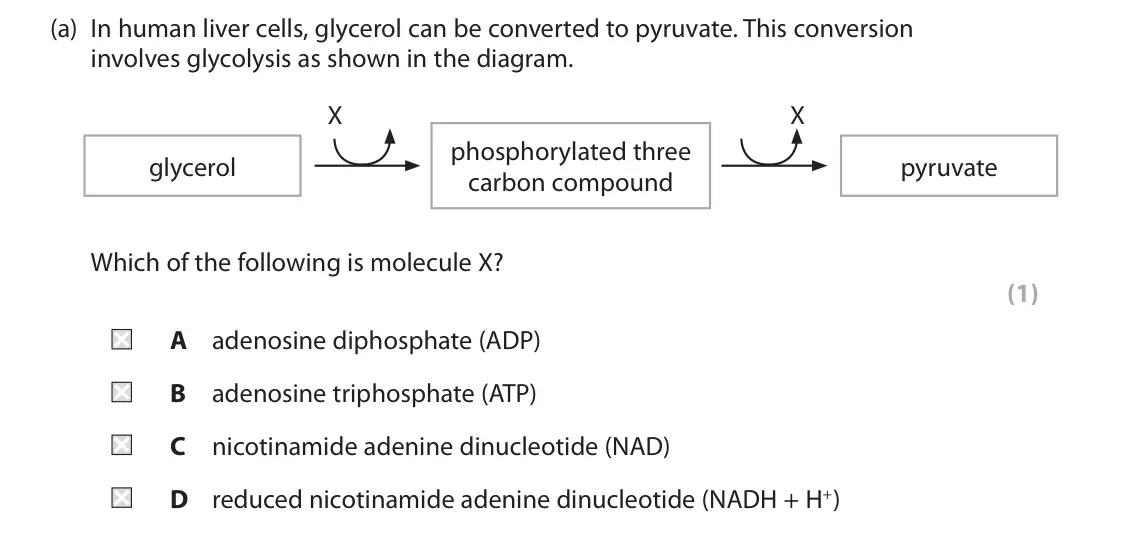
Q2(b)
The whole paper ↗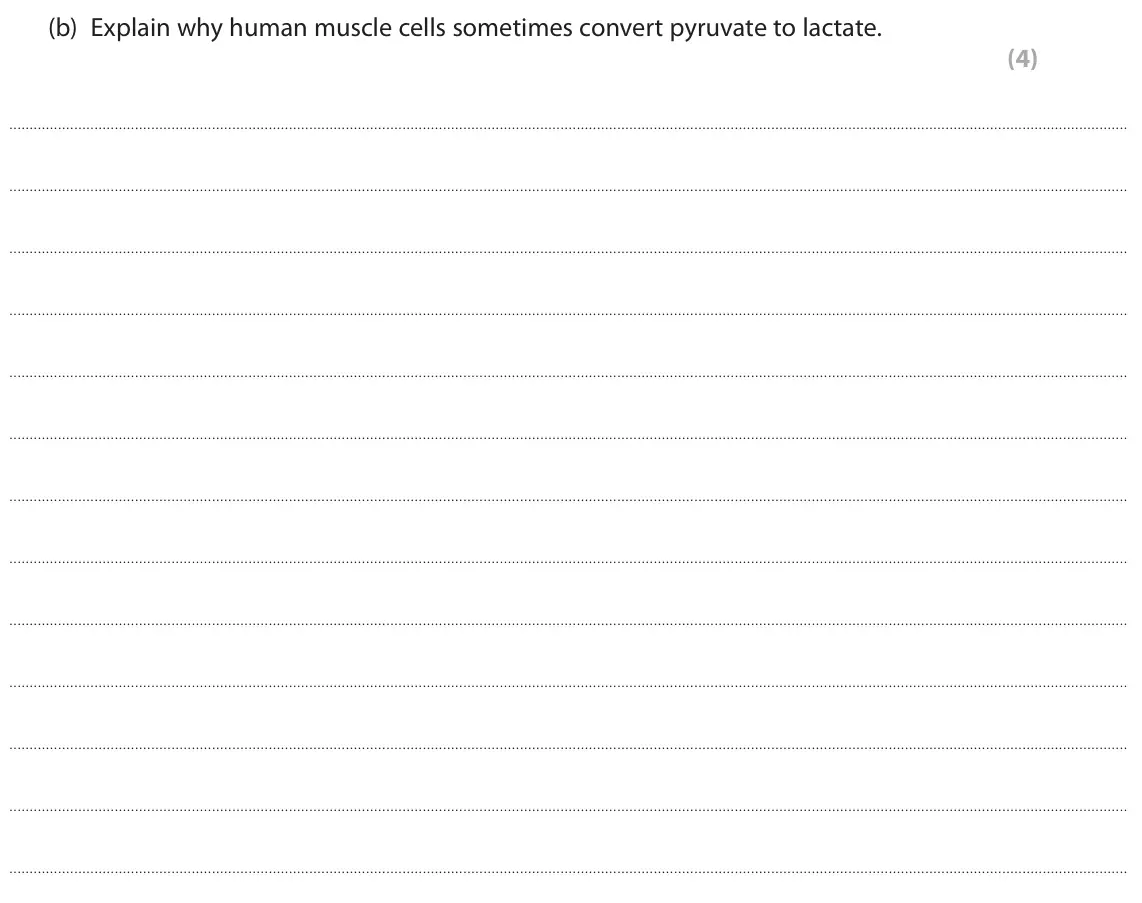
Q4(c)(i)
The whole paper ↗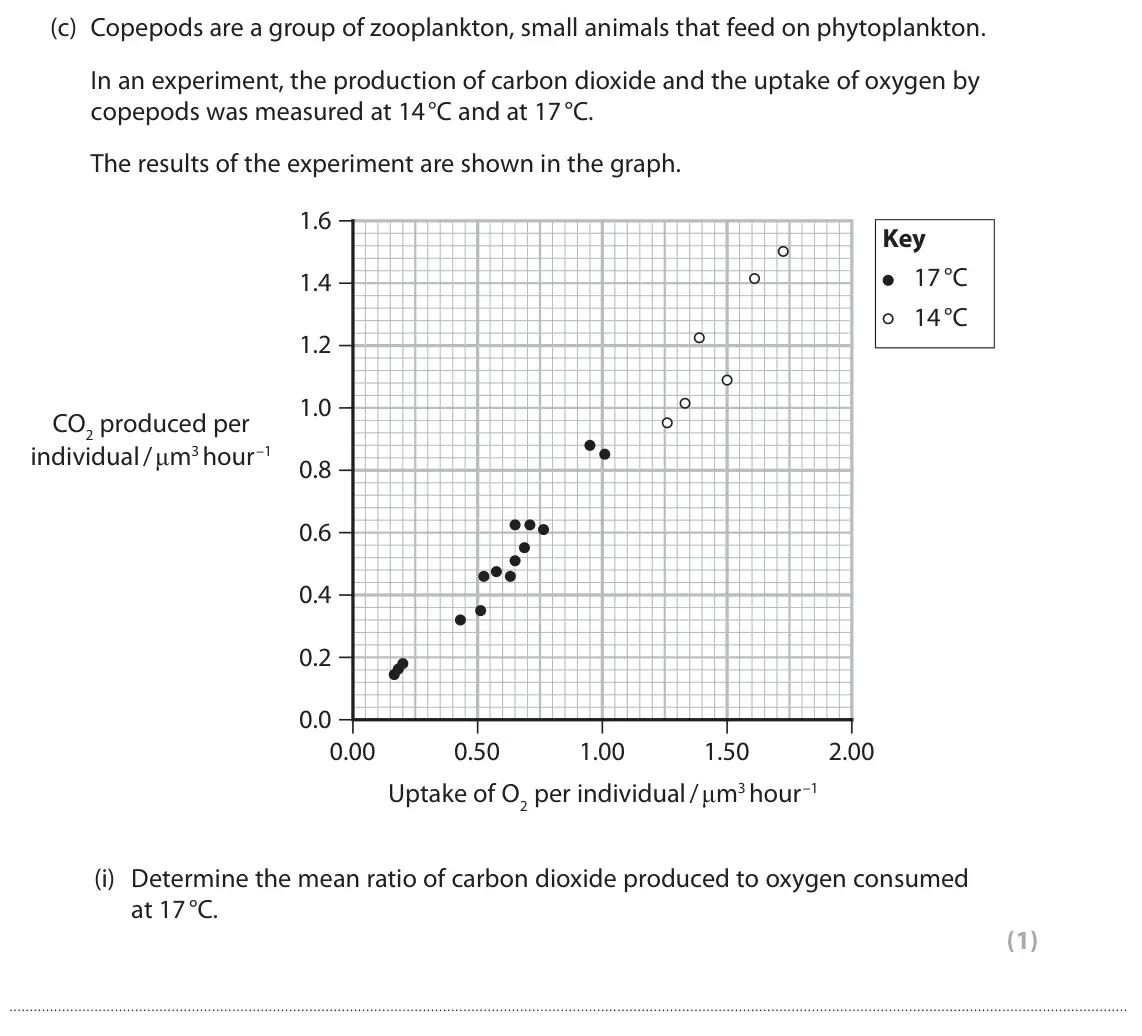
Q4(c)(ii)
The whole paper ↗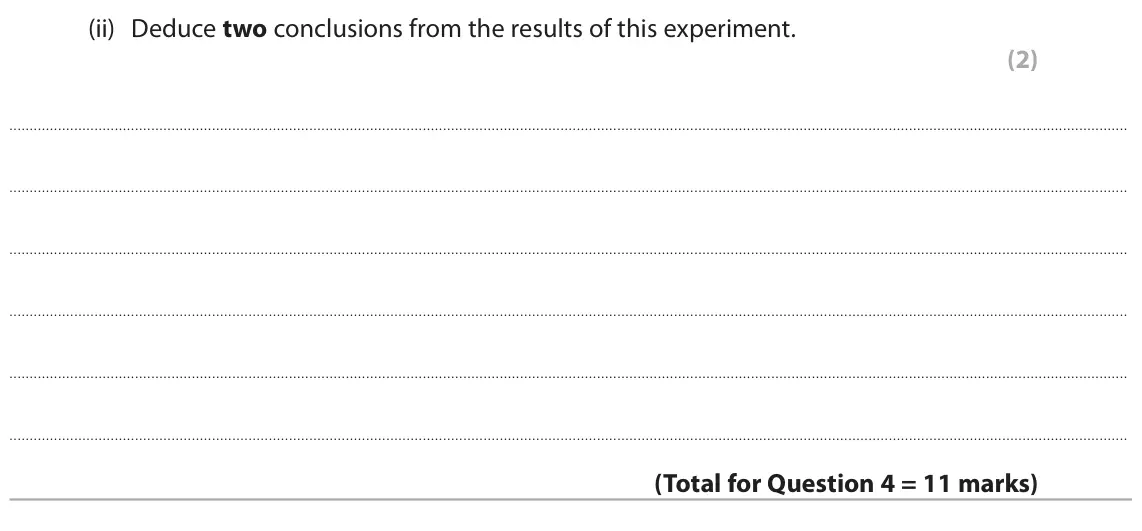
Q6(b)(iv)
The whole paper ↗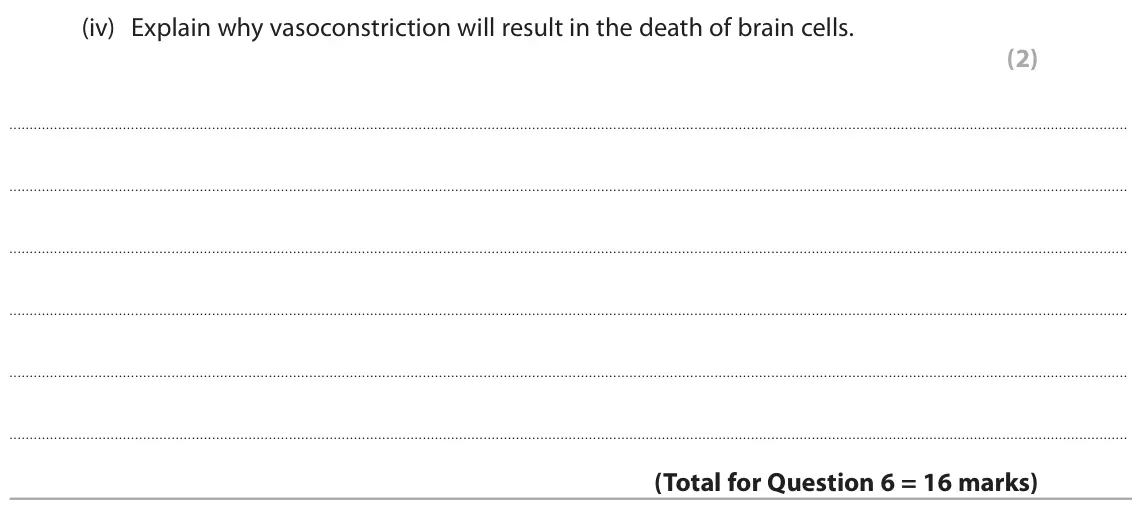
Q6(a)(i)
The whole paper ↗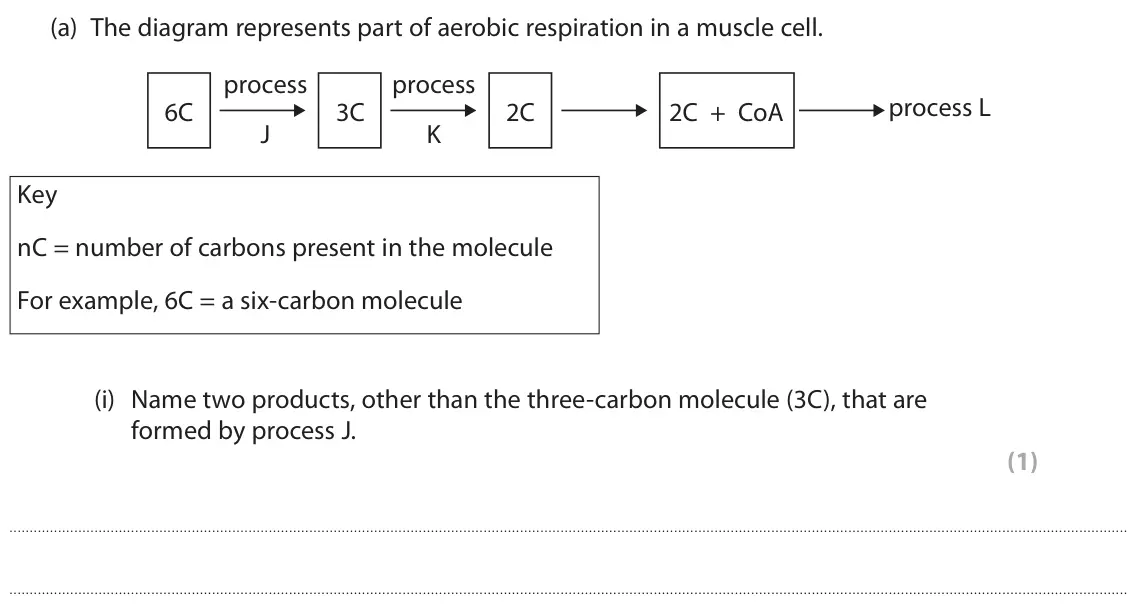
Q6(a)(ii)
The whole paper ↗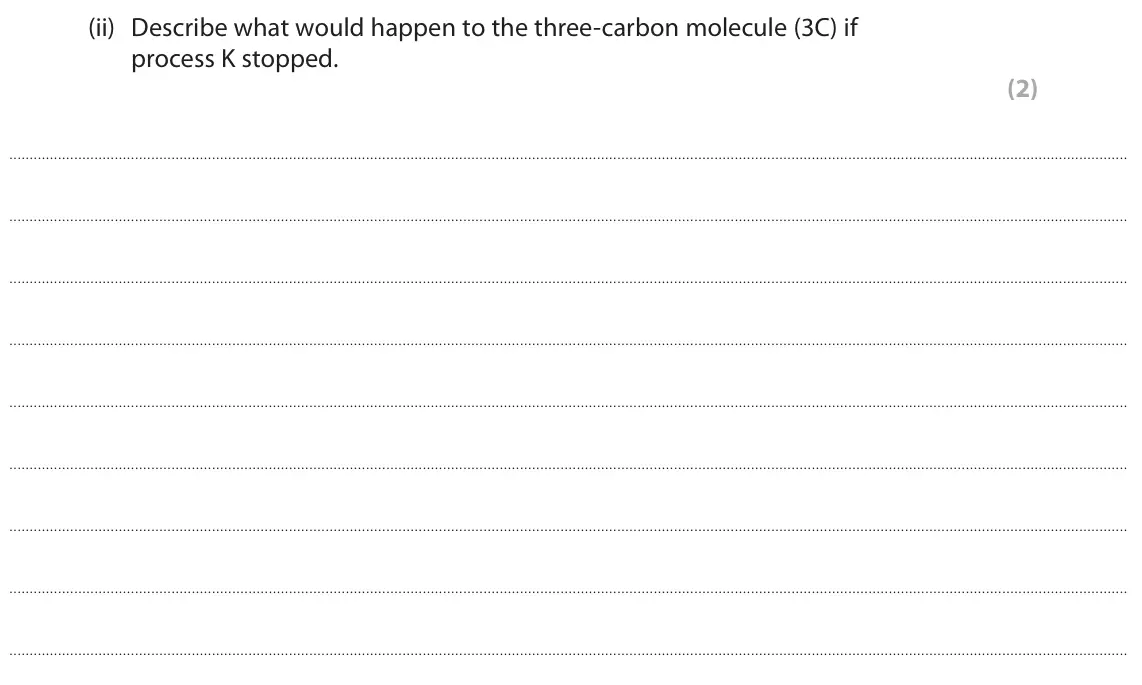
Q6(a)(iii)
The whole paper ↗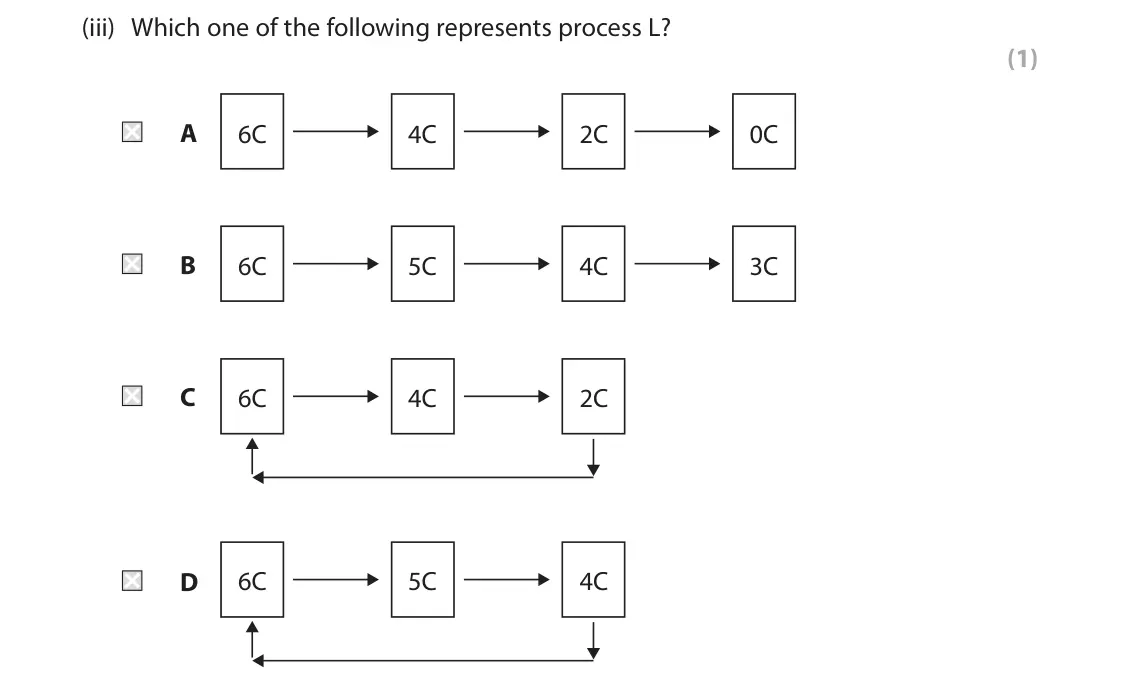
Q6(b)
The whole paper ↗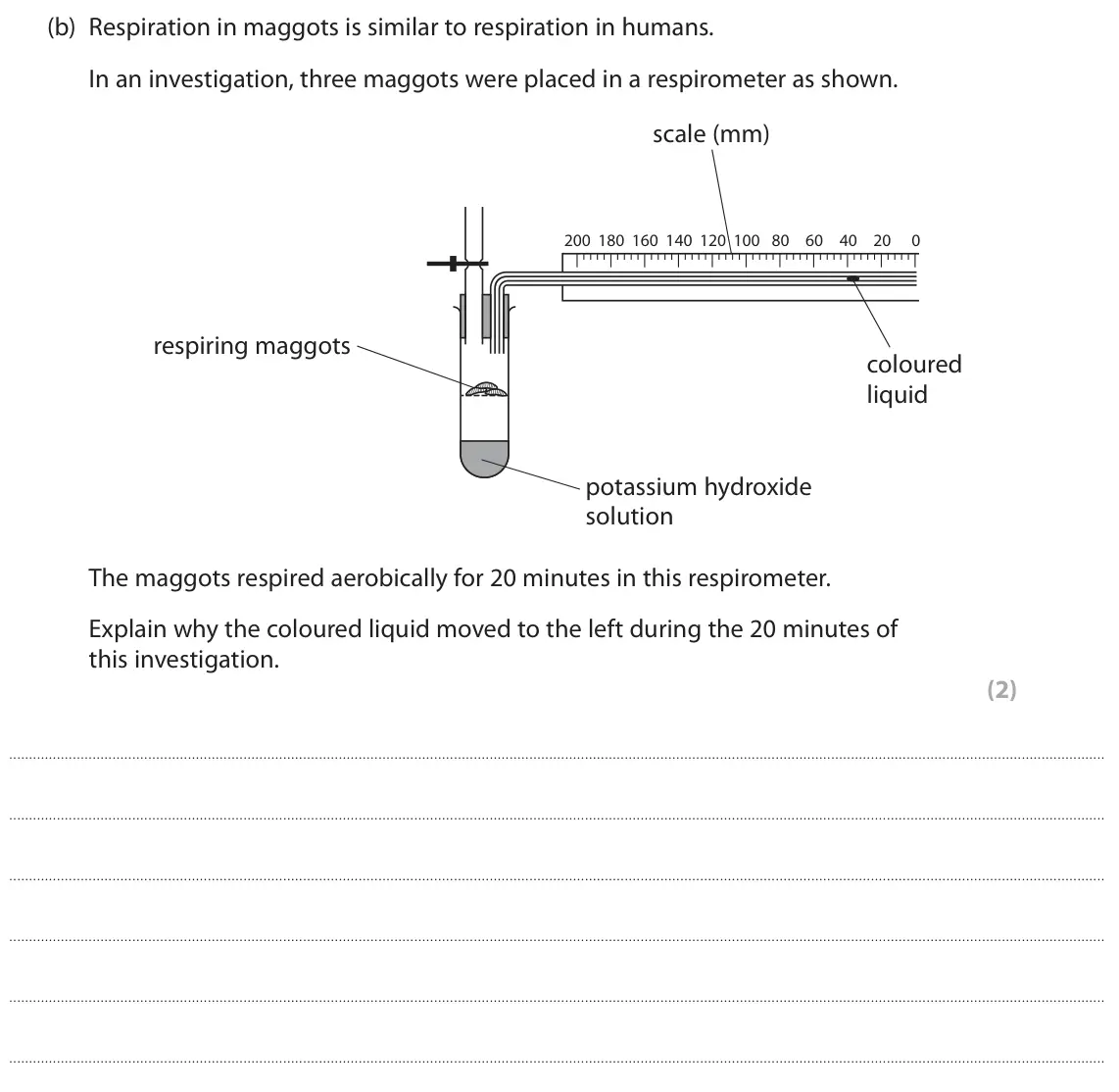
Q6(c)
The whole paper ↗
Q1(b)(iii)
The whole paper ↗
Q3(c)
The whole paper ↗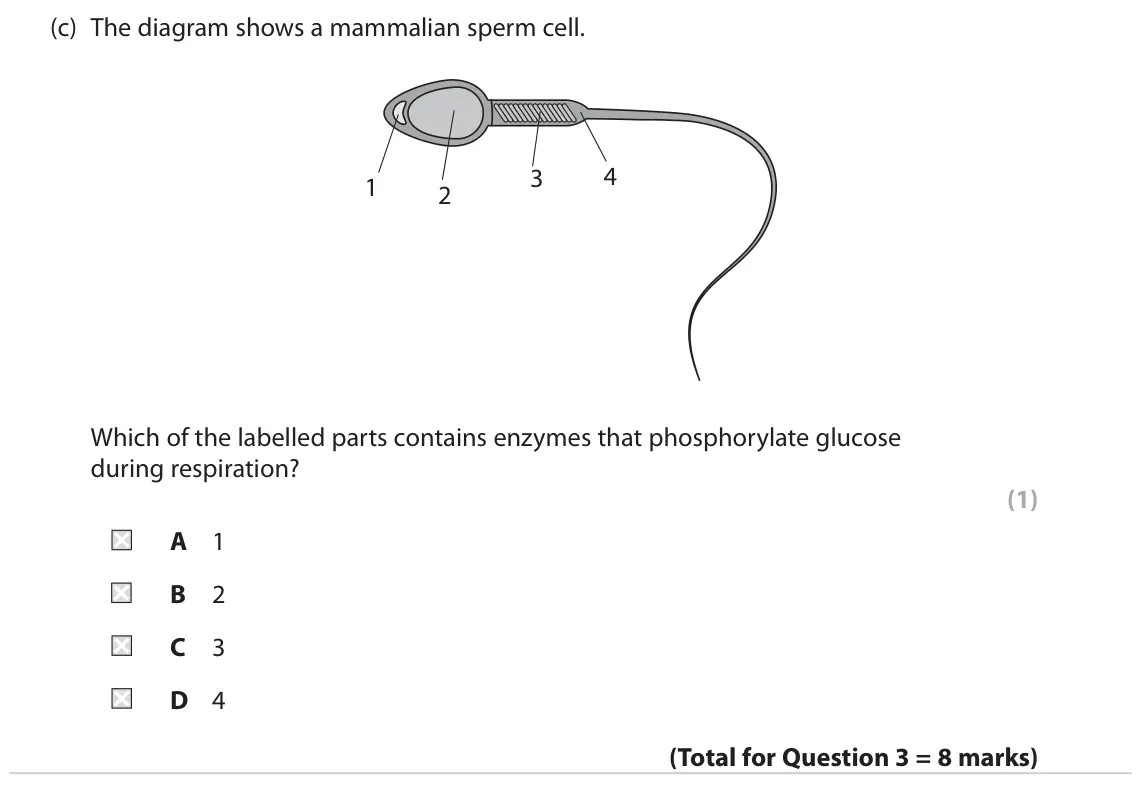
Q6(c)(ii)
The whole paper ↗
Q8(e)
The whole paper ↗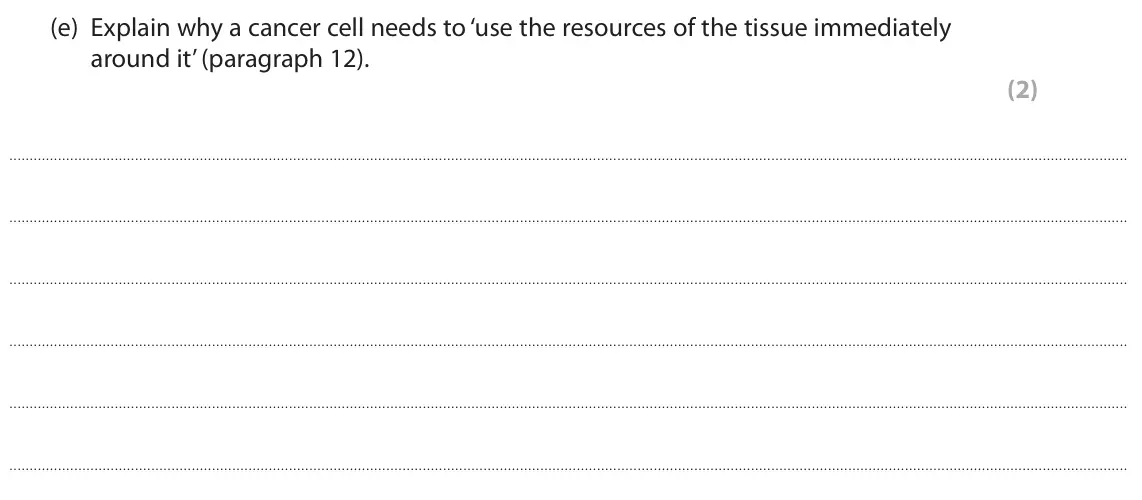
Q8(a)(i)
The whole paper ↗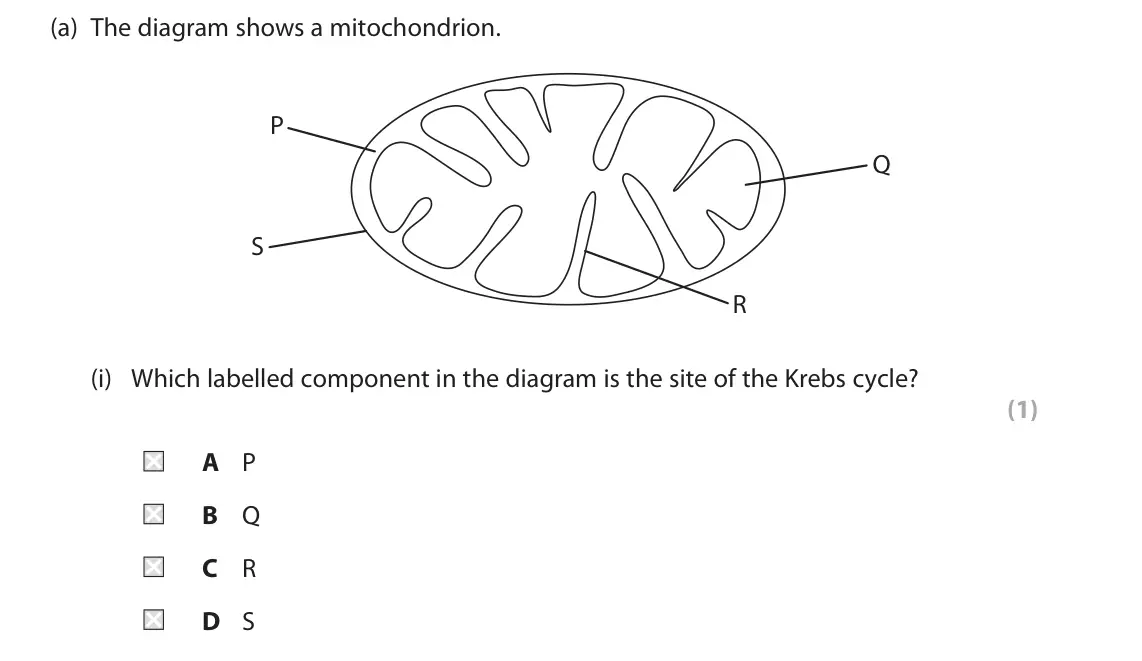
Q8(a)(ii)
The whole paper ↗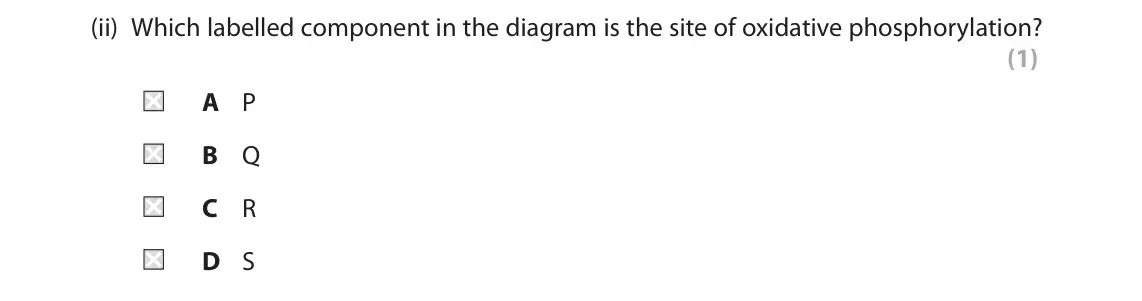
Q8(b)(i)
The whole paper ↗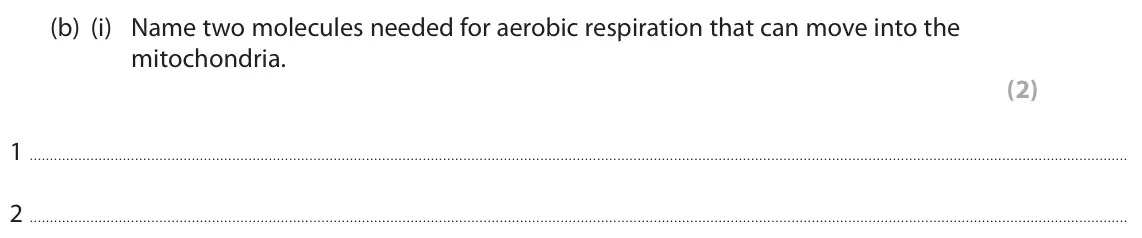
All 42 questions on Respiration, as a list
- June 2025, Paper 2, Q7(b) (4 marks): The matrix of a mitochondrion contains a range of enzymes. Describe the role of enzymes in the link reaction. (4)
- June 2025, Paper 2, Q7(c) (5 marks): Proton pumps are found in mitochondria. Explain the role of proton pumps in aerobic respiration. (5)
- June 2025, Paper 3, Q8(b) (3 marks): Explain how a reduction in physiological activity can result in a reduction in body temperature (paragraph 6). (3)
- June 2024, Paper 2, Q2(a) (1 mark): In human liver cells, glycerol can be converted to pyruvate. This conversion involves glycolysis as shown in the diagram. X X phosphorylated three glycerol pyru
- June 2024, Paper 2, Q2(b) (4 marks): Explain why human muscle cells sometimes convert pyruvate to lactate. (4)
- June 2024, Paper 3, Q4(c)(i) (1 mark): Determine the mean ratio of carbon dioxide produced to oxygen consumed at 17 °C. (1)
- June 2024, Paper 3, Q4(c)(ii) (2 marks): Deduce two conclusions from the results of this experiment. (2)
- June 2024, Paper 3, Q6(b)(iv) (2 marks): Explain why vasoconstriction will result in the death of brain cells. (2)
- June 2023, Paper 2, Q6(a)(i) (1 mark): Name two products, other than the three-carbon molecule (3C), that are formed by process J. (1)
- June 2023, Paper 2, Q6(a)(ii) (2 marks): Describe what would happen to the three-carbon molecule (3C) if process K stopped. (2)
- June 2023, Paper 2, Q6(a)(iii) (1 mark): Which one of the following represents process L? (1) A 6C 4C 2C 0C B 6C 5C 4C 3C C 6C 4C 2C D 6C 5C 4C
- June 2023, Paper 2, Q6(b) (2 marks): Respiration in maggots is similar to respiration in humans. In an investigation, three maggots were placed in a respirometer as shown. scale (mm) 200 180 160 14
- June 2023, Paper 2, Q6(c) (5 marks): Devise an investigation, using a respirometer, to find the optimum temperature for respiration in maggots. (5)
- June 2023, Paper 3, Q1(b)(iii) (2 marks): Explain why the right atrium and the rest of the heart eventually stop beating. (2)
- June 2022, Paper 2, Q3(c) (1 mark): The diagram shows a mammalian sperm cell. 4 3 1 2 Which of the labelled parts contains enzymes that phosphorylate glucose during respiration? (1) A 1 B 2 C 3 D
- June 2022, Paper 3, Q6(c)(ii) (3 marks): A student suggested that between 20 and 24 hours the cells in the developing embryo switched from anaerobic to aerobic respiration. Describe how a respirometer
- June 2022, Paper 3, Q8(e) (2 marks): Explain why a cancer cell needs to ‘use the resources of the tissue immediately around it’ (paragraph 12). (2)
- November 2021, Paper 2, Q8(a)(i) (1 mark): Which labelled component in the diagram is the site of the Krebs cycle? (1) A P B Q C R D S
- November 2021, Paper 2, Q8(a)(ii) (1 mark): Which labelled component in the diagram is the site of oxidative phosphorylation? (1) A P B Q C R D S
- November 2021, Paper 2, Q8(b)(i) (2 marks): Name two molecules needed for aerobic respiration that can move into the mitochondria. (2) 1 2
- November 2021, Paper 2, Q8(b)(ii) (4 marks): The outer mitochondrial membrane is not permeable to hydrogen ions (H+). Explain the importance of this feature of the membrane. (4)
- November 2021, Paper 2, Q8(c) (4 marks): It has been stated that if the temperature of yeast is raised by 10 °C, the rate of respiration will double. The diagram shows some apparatus that can be used t
- October 2020, Paper 2, Q4(d) (1 mark): Glycolysis occurs during germination. One of the products is adenosine triphosphate (ATP). Which of the following is another product of glycolysis? (1) A carbon
- October 2020, Paper 2, Q10(a)(i) (1 mark): Which row shows the number of carbon atoms in citrate and succinate? (1) Number of carbon atoms in citrate succinate A 2 4 B 5 4 C 6 4 D 6 8
- October 2020, Paper 2, Q10(a)(ii) (1 mark): Which of the following is transferred to a molecule of FAD to form reduced FAD? (1) A two oxygen atoms B two hydrogen atoms C one oxygen atom and one hydrogen a
- October 2020, Paper 2, Q10(a)(iii) (2 marks): Explain the need for reduced NAD to be oxidised in a mitochondrion. (2)
- October 2020, Paper 2, Q10(a)(iv) (1 mark): A mutation in the gene that codes for the enzyme succinate dehydrogenase stops the conversion of succinate into citrate. Which row states the change in concentr
- October 2020, Paper 2, Q10(b)(iii) (6 marks): Scientists have found that a high level of succinate leads to the inhibition of an enzyme called TET. The function of TET is to remove methyl groups from DNA. E
- June 2019, Paper 2, Q7(a)(ii) (2 marks): Cells produce lactate during anaerobic respiration. Lactate travels in the blood to the liver. Liver cells can absorb lactate from the blood. Deduce what happen
- June 2019, Paper 2, Q7(c)(i) (1 mark): During which of the following processes is ATP formed? (1) A glycolysis and the electron transport chain only B glycolysis and the Krebs cycle only C glycolysis
- June 2019, Paper 2, Q7(c)(ii) (2 marks): Explain why some ATP is broken down during glycolysis. (2)
- June 2019, Paper 2, Q7(c)(iii) (3 marks): The electron transport chain occurs in the cristae of mitochondria. The electron transport chain involves a number of carrier molecules. Explain the role of the
- June 2019, Paper 2, Q10(a)(ii) (3 marks): In investigation 2, some of the cells from the middle layer of the aortas of the mice were removed. Two protein complexes, A and B, are found in the cells of th
- June 2018, Paper 2, Q7(b)(i) (3 marks): Calculate the change in metabolic rate for an arctic ground squirrel, with a body mass of 850g, as the air temperature increases from −16 °C to 4 °C. Give your
- June 2018, Paper 2, Q7(b)(ii) (1 mark): When the air temperature was −4 °C, the respiratory quotient (RQ) for the arctic ground squirrel was calculated as 0.77. The RQ value can indicate the respirato
- June 2018, Paper 2, Q7(b)(iii) (4 marks): The data for calculating metabolic rate are collected using a respirometer. The rate of respiration for small mammals can be measured using a continuous flow re
- June 2017, Paper 2, Q6(a) (2 marks): Explain the increase in blood lactate concentration observed between 0 and 5 minutes. (2)
- June 2017, Paper 2, Q6(b) (3 marks): Give reasons why blood lactate concentration remains constant between 5 and 15 minutes. (3)
- June 2017, Paper 2, Q6(c) (4 marks): The most effective training involves the greatest power requirement over longer periods of time. Therefore, it is important to avoid high concentrations of bloo
- June 2017, Paper 2, Q9(c) (3 marks): Explain why individuals with severe emphysema will tire more easily than healthy individuals. (3)
- June 2017, Paper 3, Q7(d) (4 marks): Humans have a ‘requirement for oxygen’ (paragraph 5). Explain the role of oxygen in human respiration. (4)
- June 2017, Paper 3, Q7(j) (1 mark): Pyruvate is one of the products of glycolysis (paragraph 20). State one difference between the structure of pyruvate and the structure of the acetyl group in ac
Questions, mark schemes and examiner’s reports are © Pearson Edexcel, from their published past papers. Plumi isn’t affiliated with any exam board. Want whole papers? Every Edexcel A-Level Biology A paper.
Rather write your answers by hand on iPad? Plumi marks them against the same mark schemes.