 plumi
Muscle fibres, homeostasis and feedback: Edexcel A‑Level Biology A questions
Every Edexcel A-Level Biology A exam question on Muscle fibres, homeostasis and feedback (specification points 7.10–7.13), 2016–2025, with its mark scheme and examiner’s report.
Find questions1,749
Calculations
Q8(c)
The whole paper ↗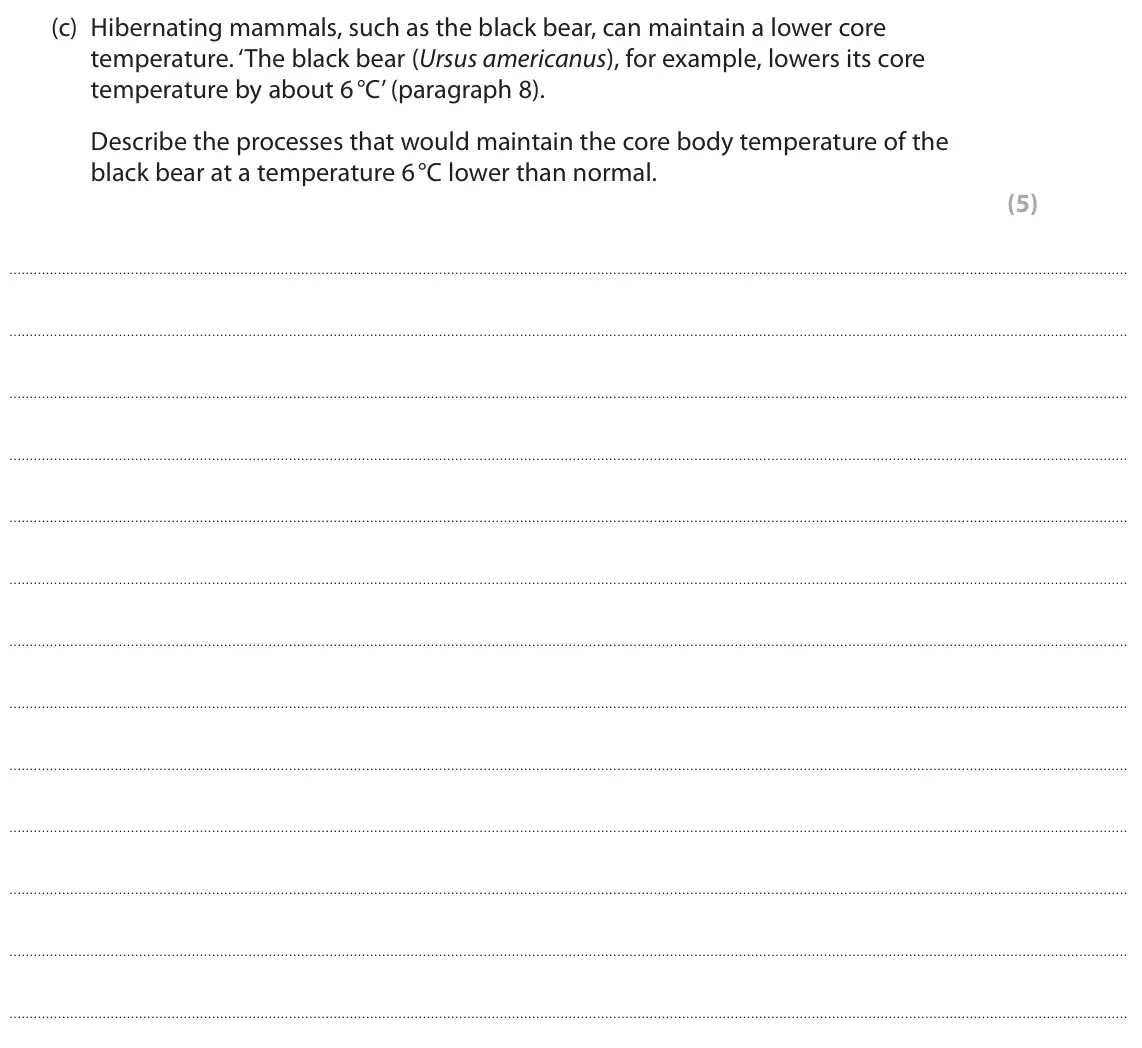
Q8(k)
The whole paper ↗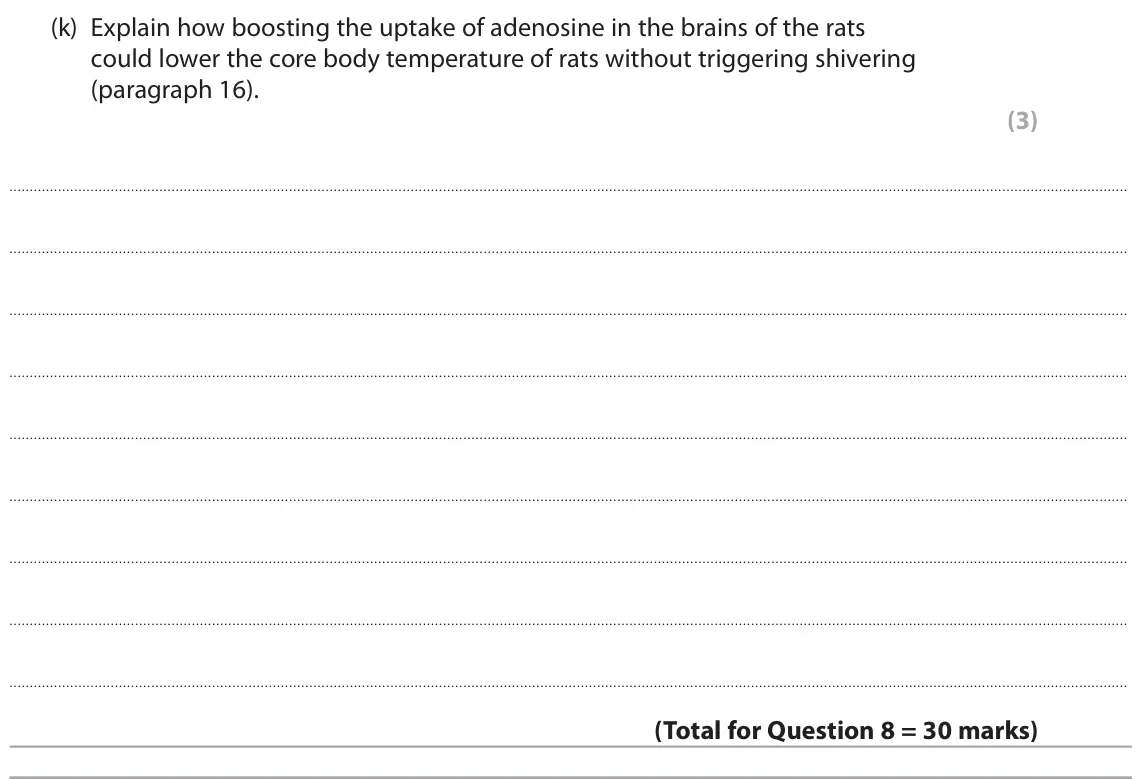
Q4(c)
The whole paper ↗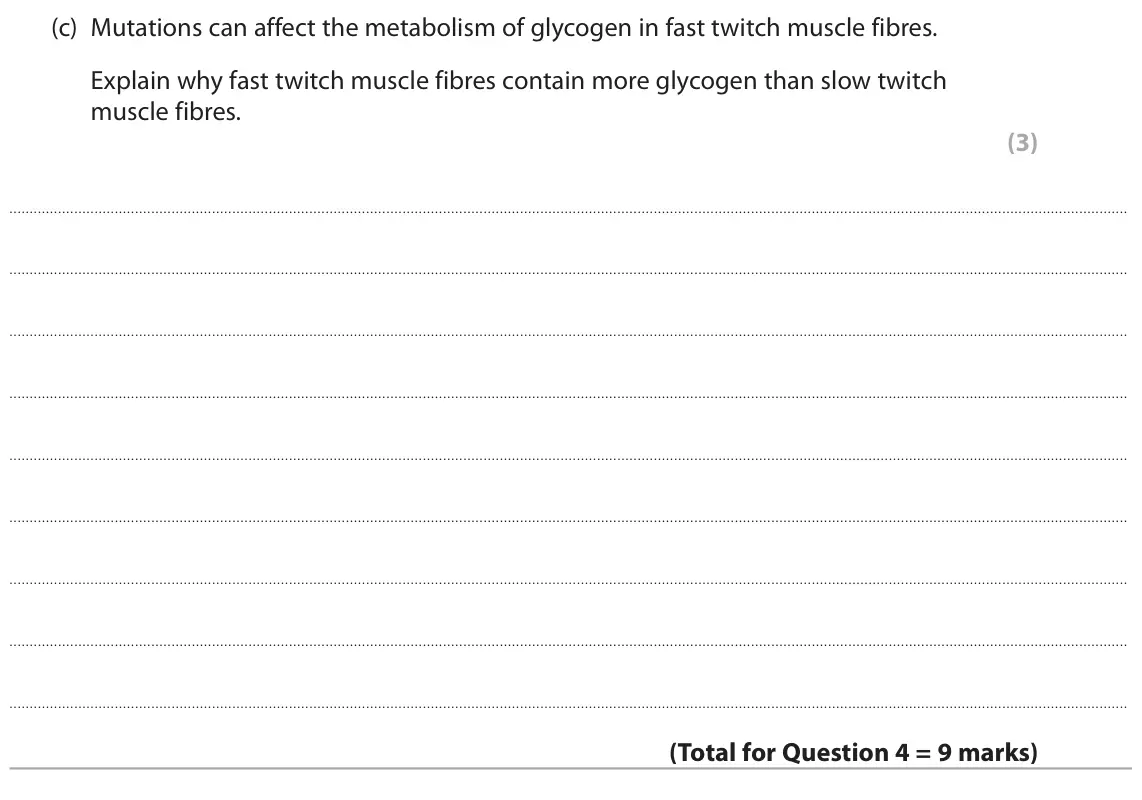
Q10(a)
The whole paper ↗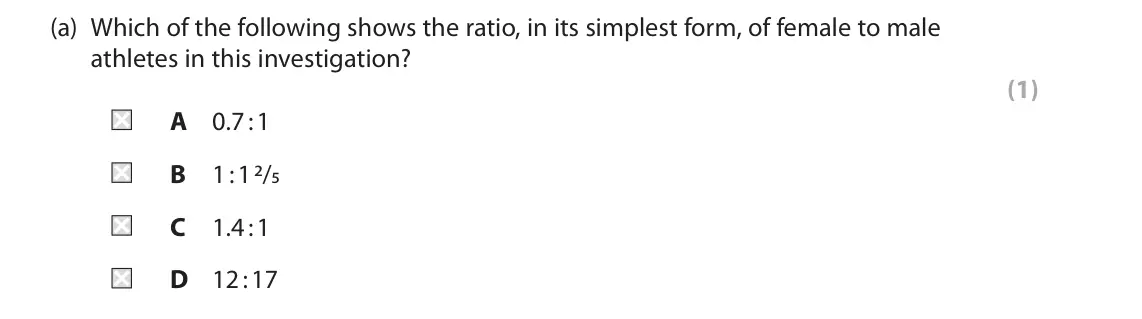
Q10(b)(i)
The whole paper ↗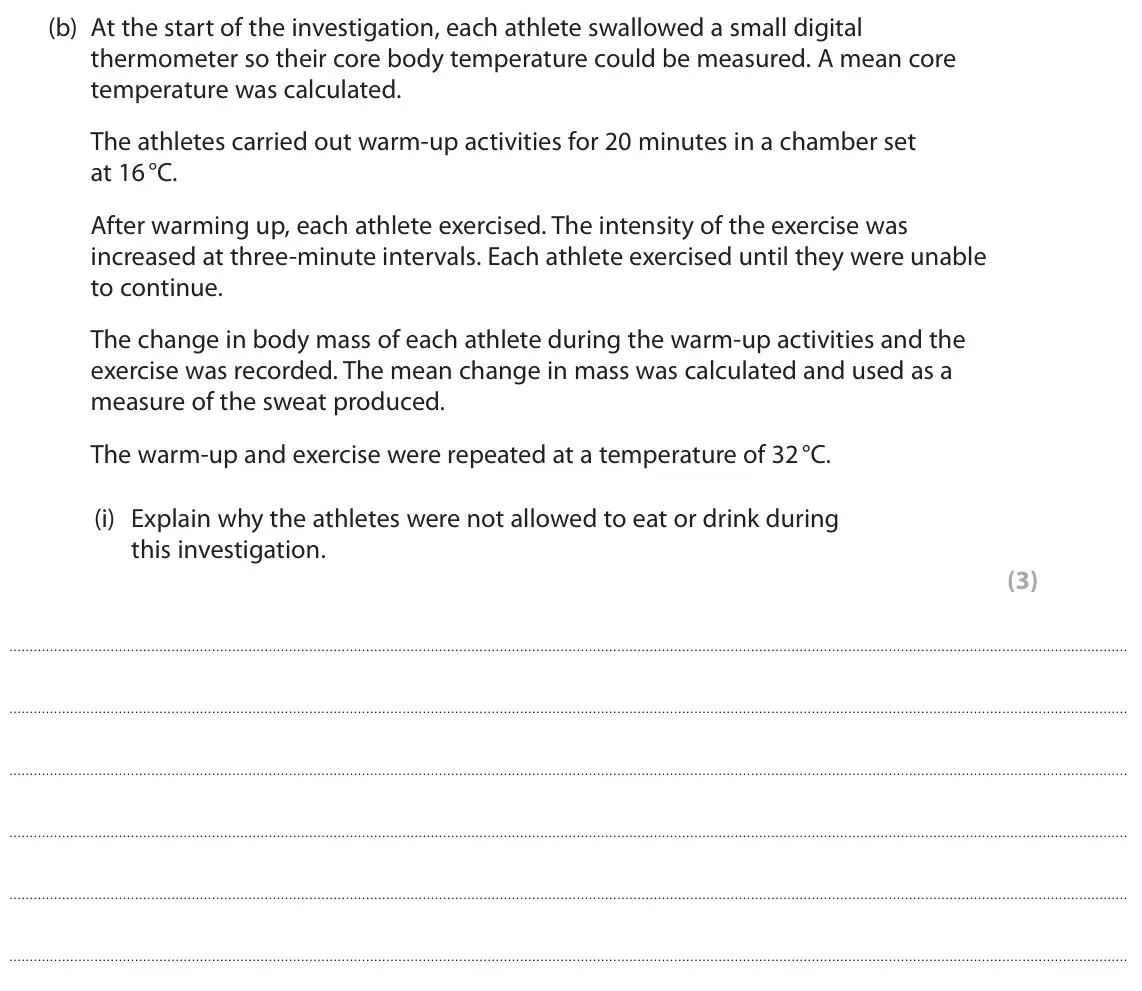
Q10(b)(ii)
The whole paper ↗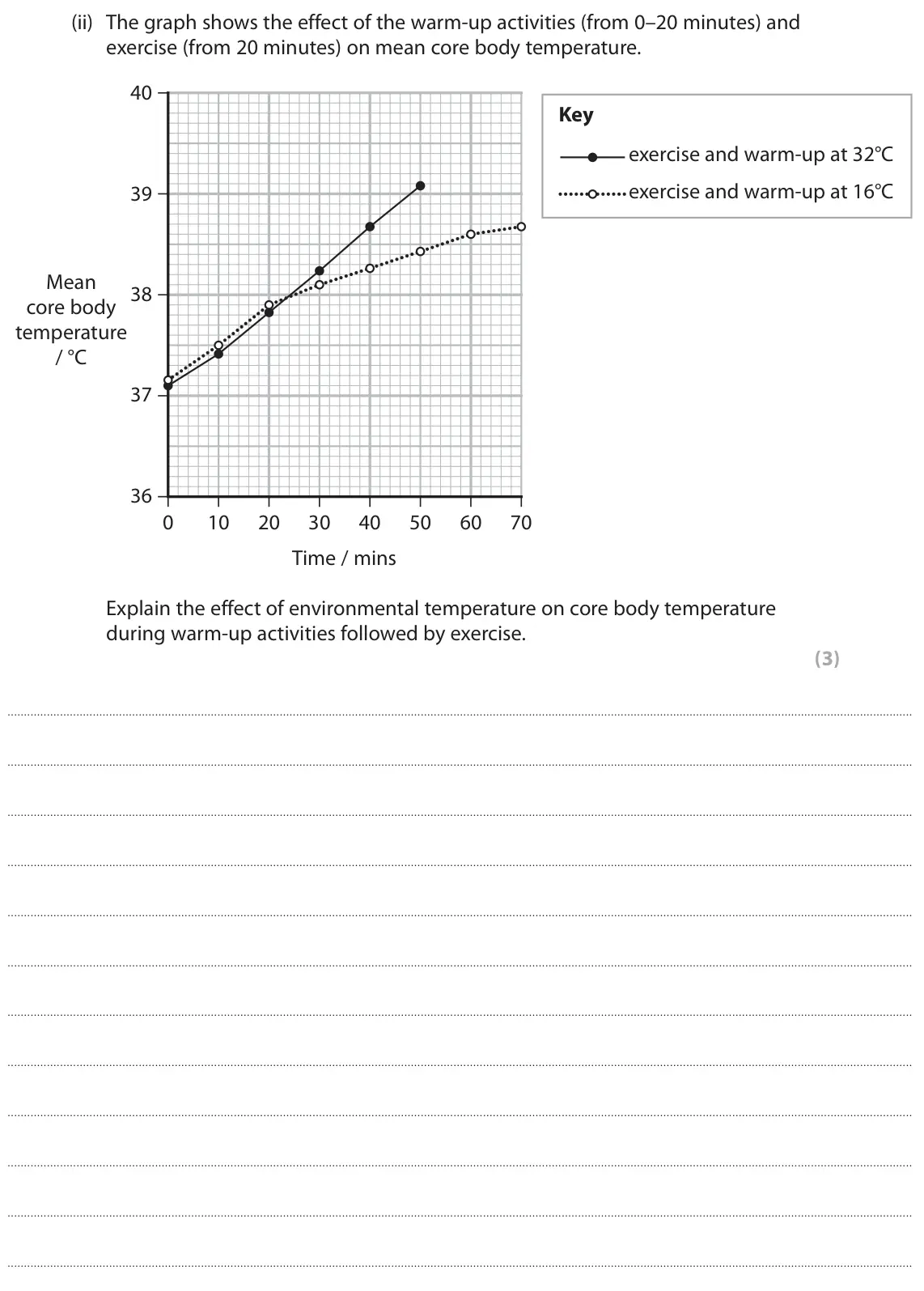
Q10(b)(iii)
The whole paper ↗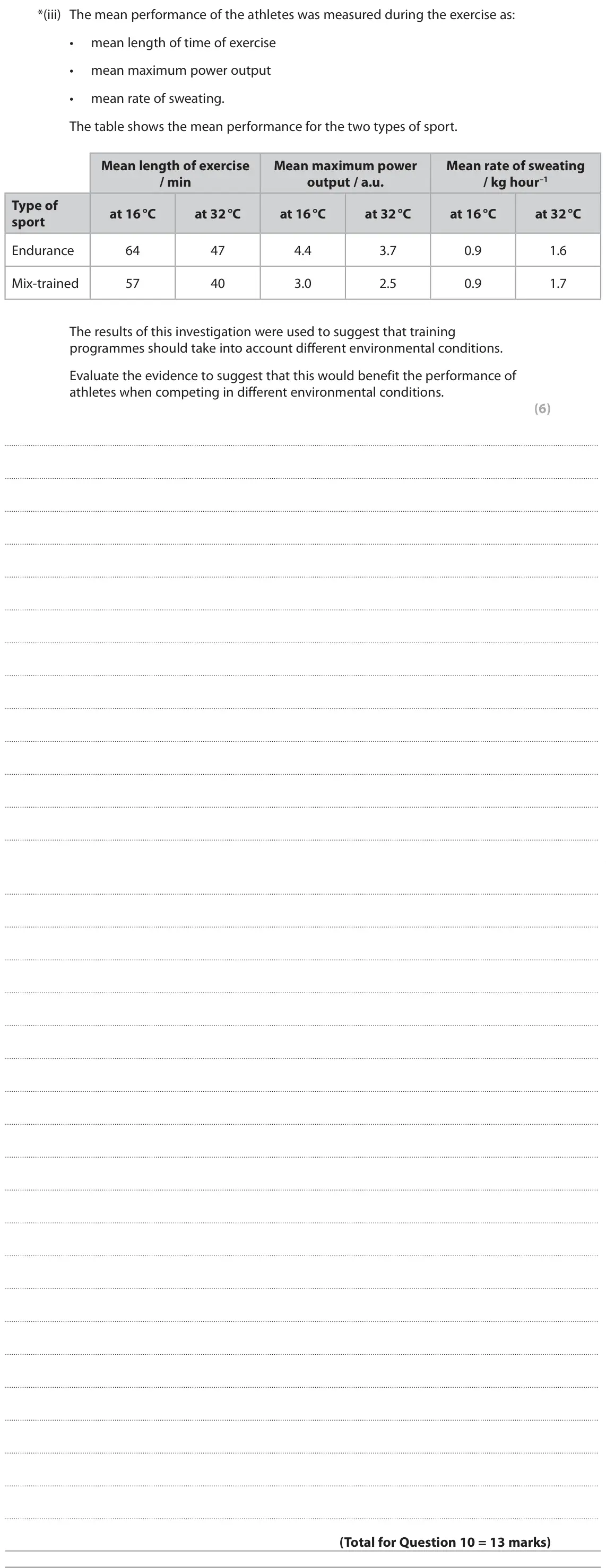
Q8(f)
The whole paper ↗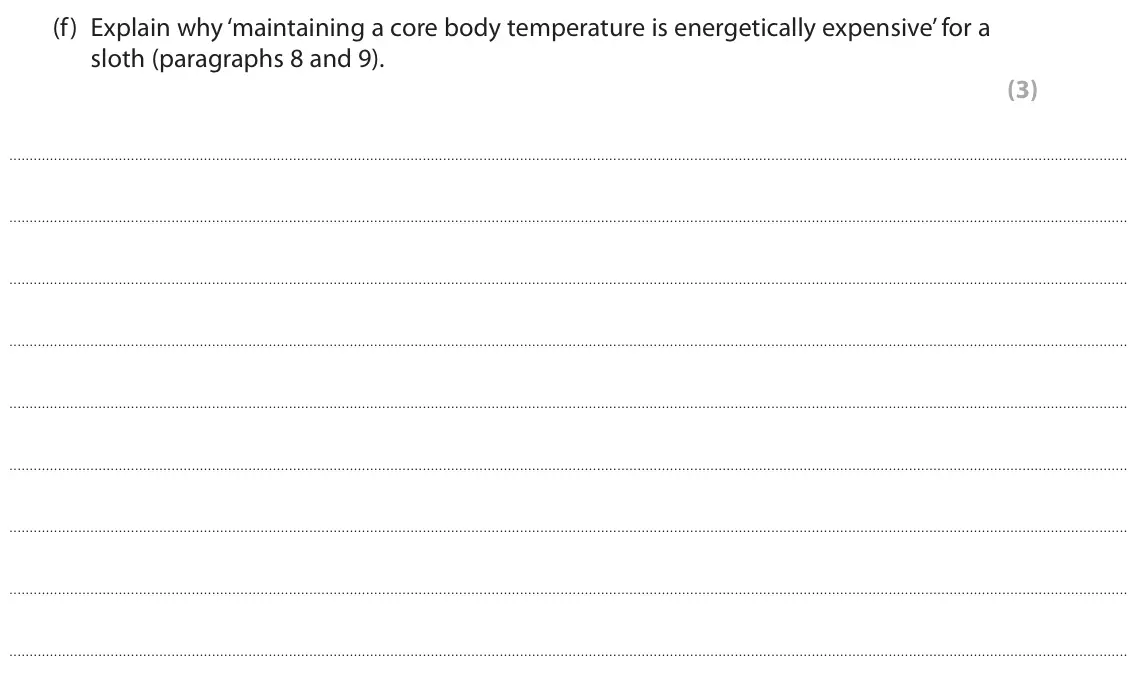
Q7(a)
The whole paper ↗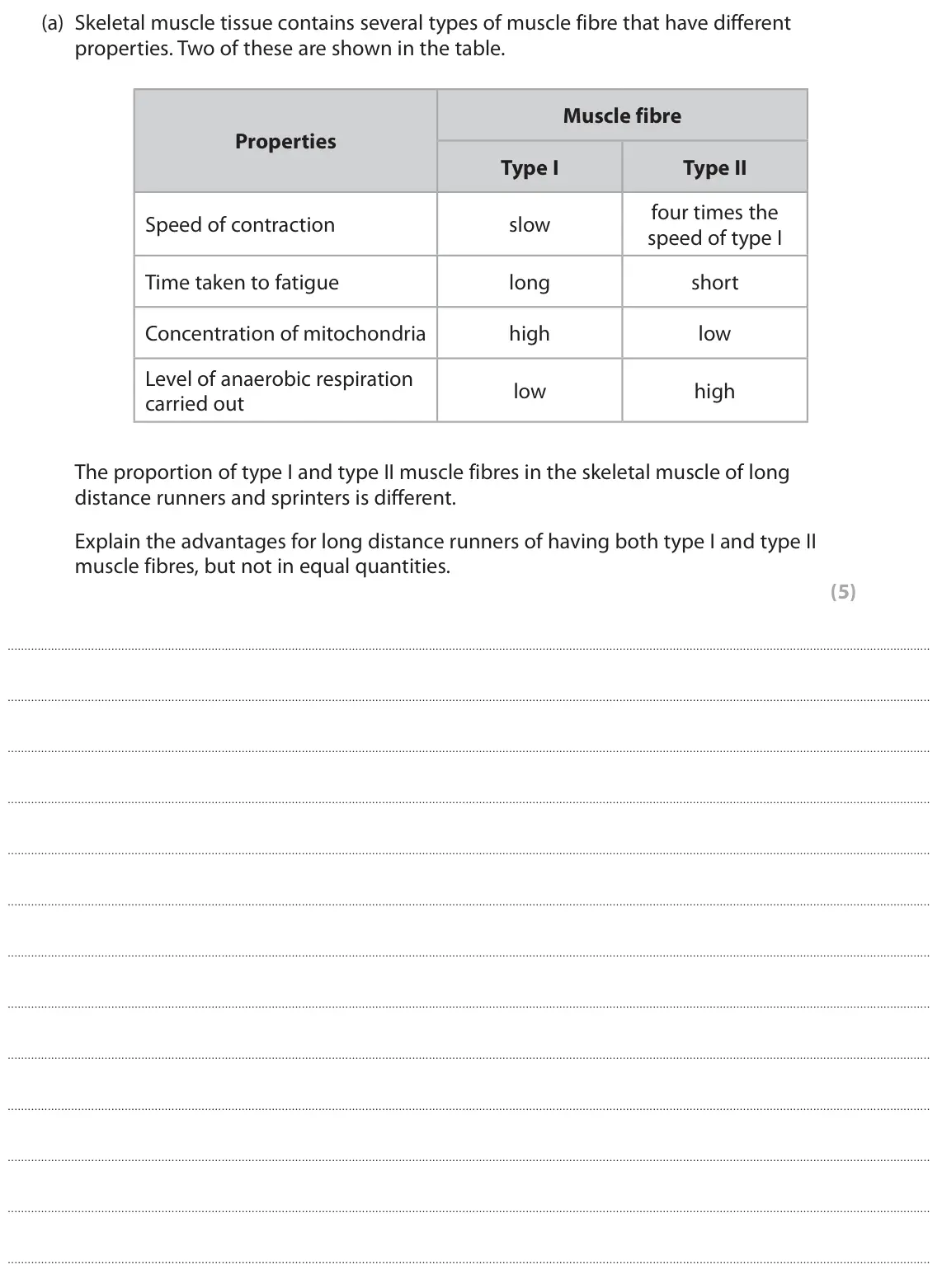
Q4(b)
The whole paper ↗
Q4(c)
The whole paper ↗
Q7(a)(i)
The whole paper ↗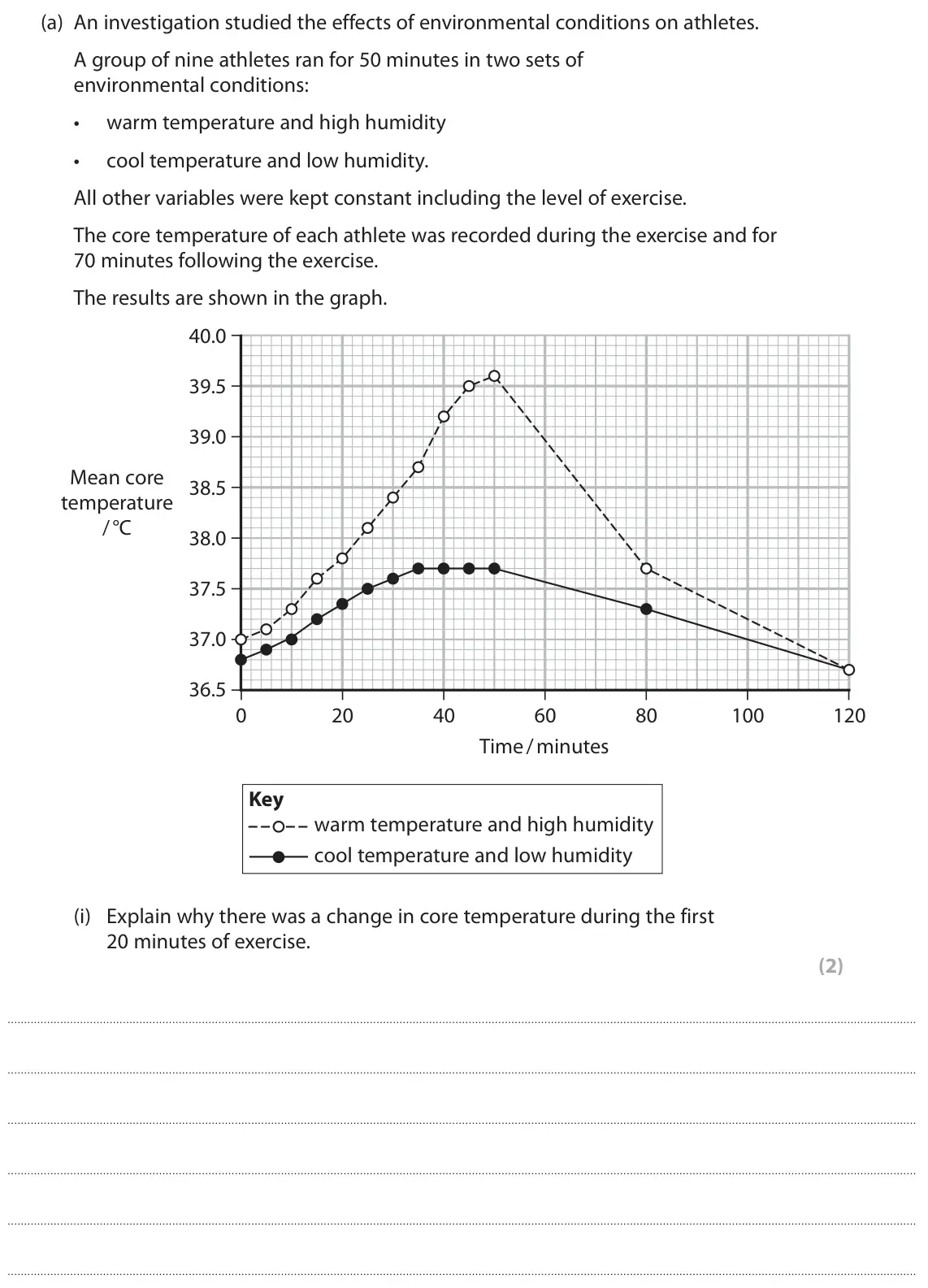
Q7(a)(ii)
The whole paper ↗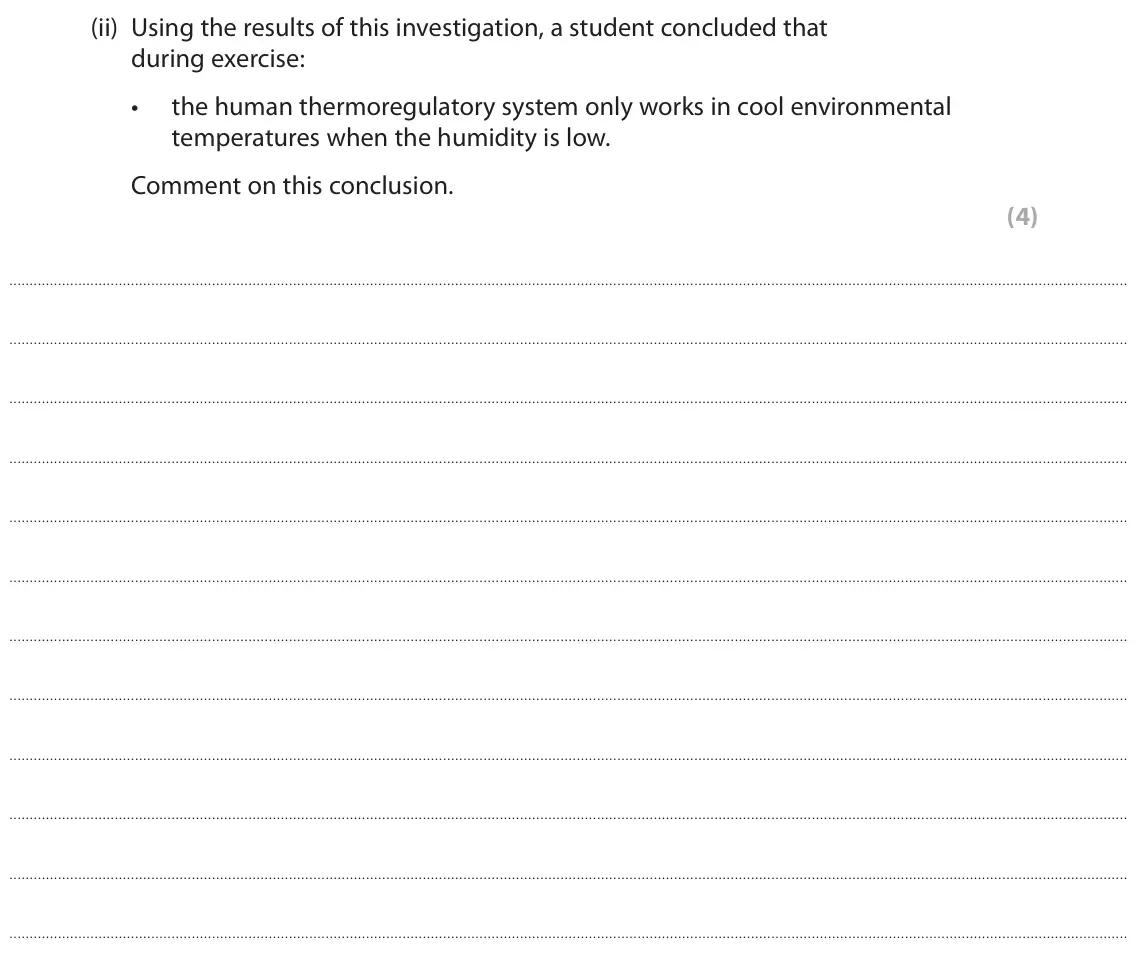
Q7(a)(iii)
The whole paper ↗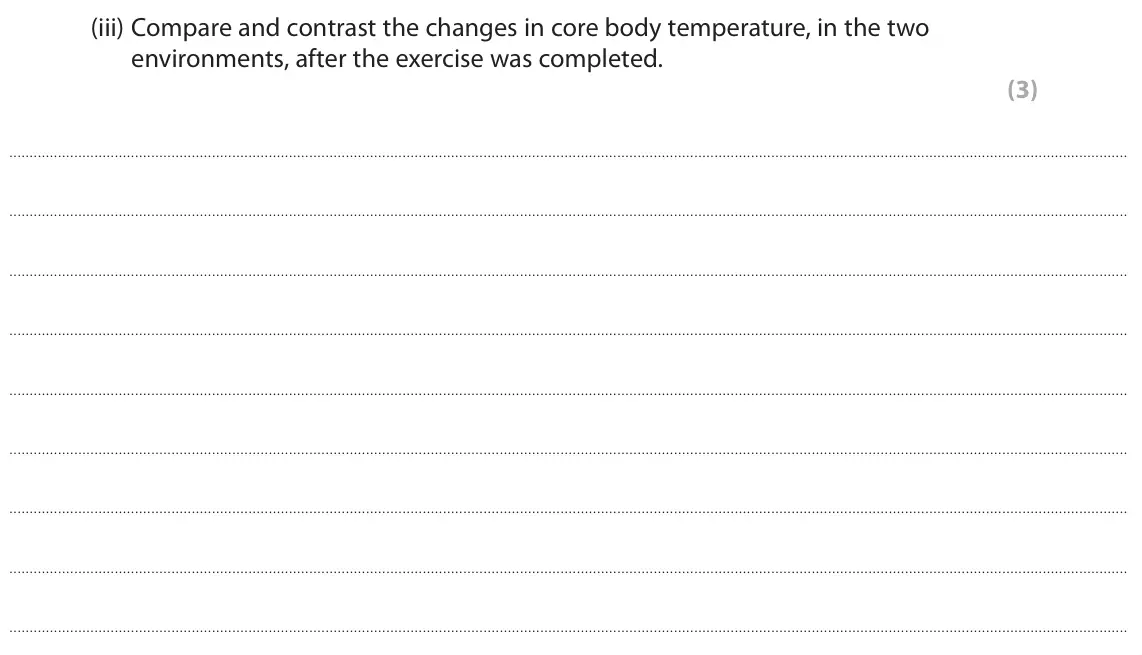
Q7(b)(i)
The whole paper ↗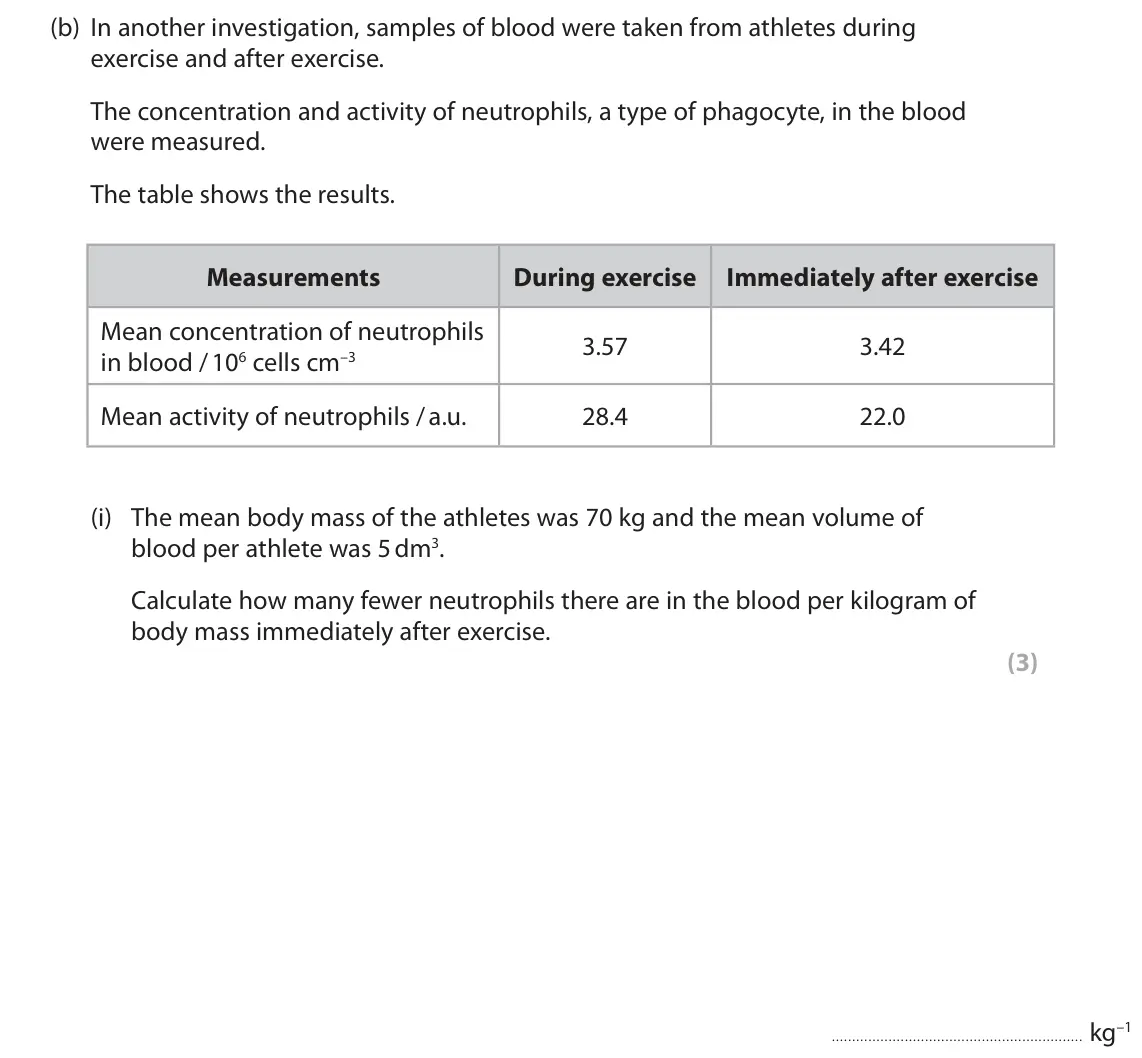
Q7(b)(ii)
The whole paper ↗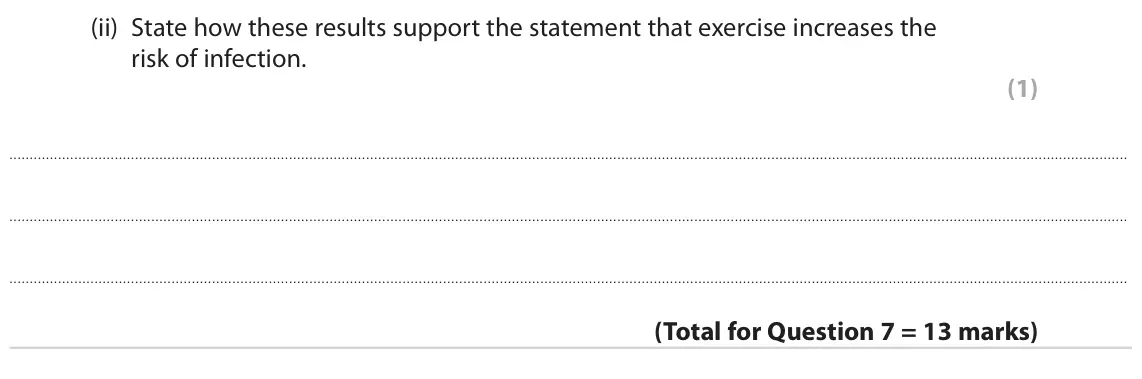
Q7(a)(i)
The whole paper ↗
Q7(a)(i)
The whole paper ↗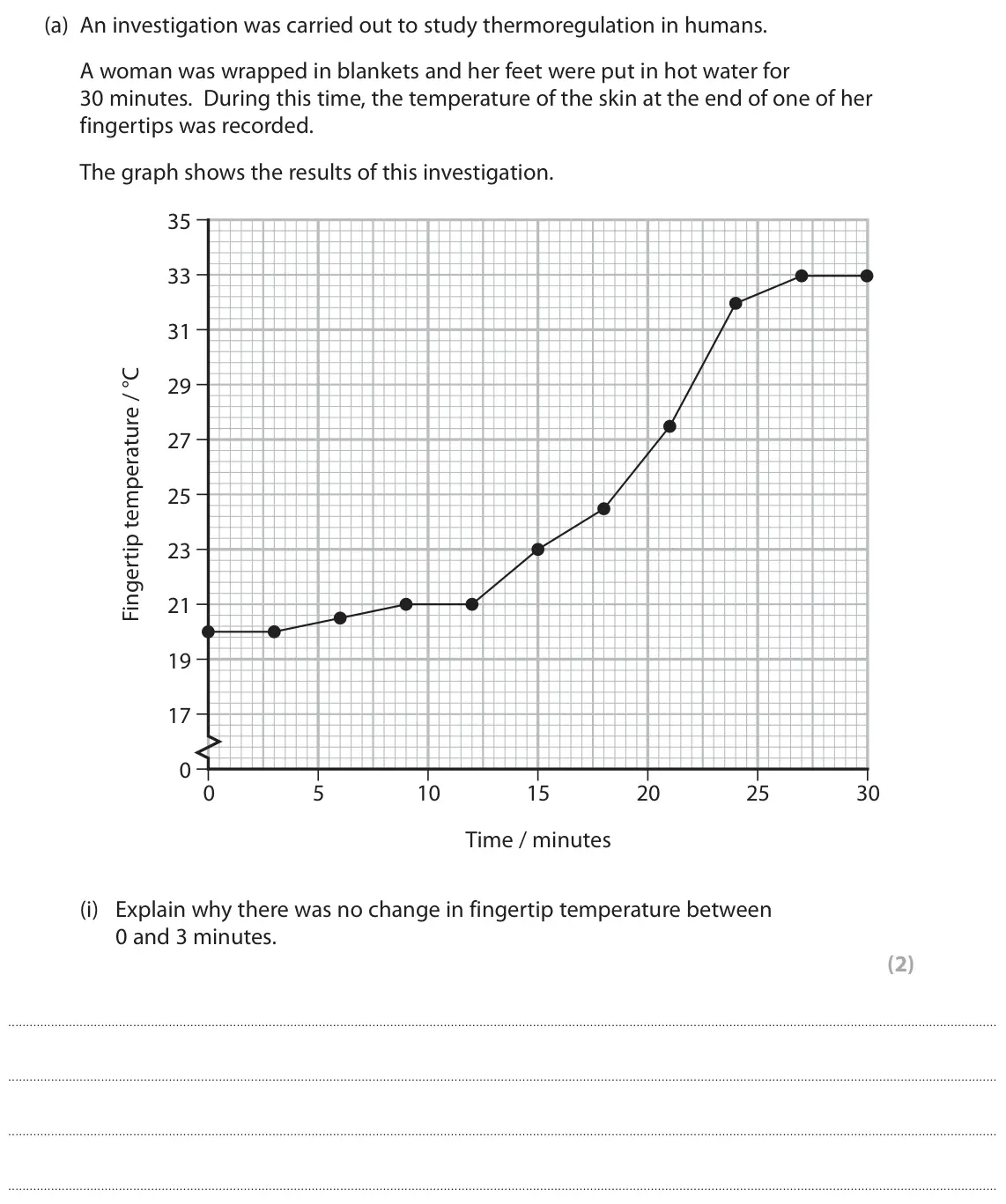
Q7(a)(ii)
The whole paper ↗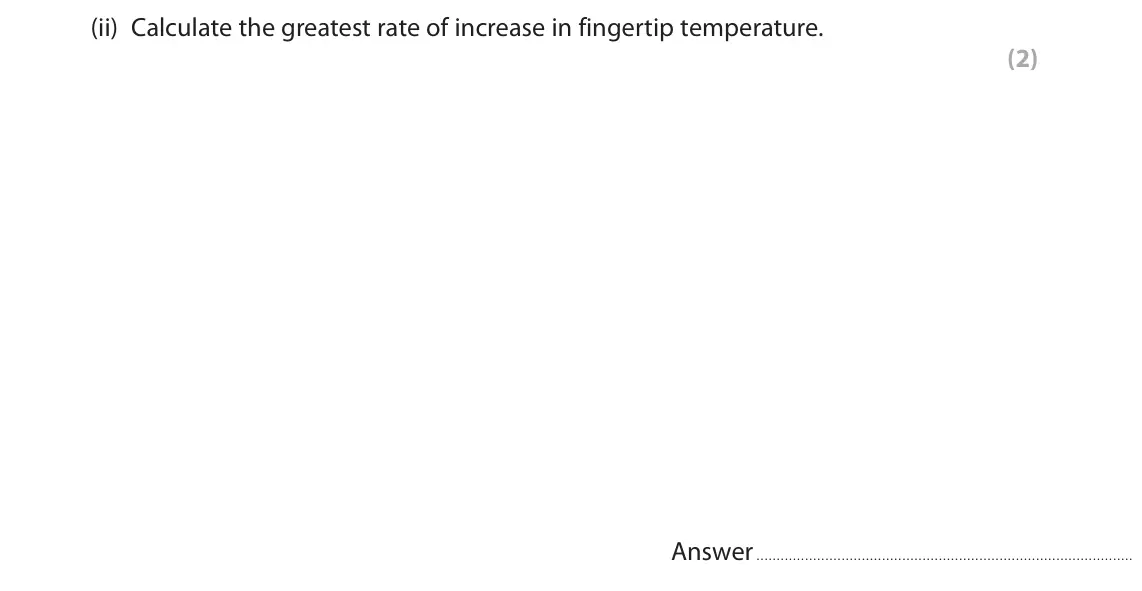
Q7(a)(iii)
The whole paper ↗
All 25 questions on Muscle fibres, homeostasis and feedback, as a list
- June 2025, Paper 3, Q8(c) (5 marks): Hibernating mammals, such as the black bear, can maintain a lower core temperature. ‘The black bear (Ursus americanus), for example, lowers its core temperature
- June 2025, Paper 3, Q8(k) (3 marks): Explain how boosting the uptake of adenosine in the brains of the rats could lower the core body temperature of rats without triggering shivering (paragraph 16)
- June 2024, Paper 2, Q4(c) (3 marks): Mutations can affect the metabolism of glycogen in fast twitch muscle fibres. Explain why fast twitch muscle fibres contain more glycogen than slow twitch muscl
- June 2024, Paper 2, Q10(a) (1 mark): Which of the following shows the ratio, in its simplest form, of female to male athletes in this investigation? (1) A 0.7 : 1 B 1 : 1 2/5 C 1.4 : 1 D 12 : 17
- June 2024, Paper 2, Q10(b)(i) (3 marks): Explain why the athletes were not allowed to eat or drink during this investigation. (3)
- June 2024, Paper 2, Q10(b)(ii) (3 marks): The graph shows the effect of the warm-up activities (from 0–20 minutes) and exercise (from 20 minutes) on mean core body temperature. 40 Key exercise and warm-
- June 2024, Paper 2, Q10(b)(iii) (6 marks): The mean performance of the athletes was measured during the exercise as: • mean length of time of exercise • mean maximum power output • mean rate of sweating.
- June 2024, Paper 3, Q8(f) (3 marks): Explain why ‘maintaining a core body temperature is energetically expensive’ for a sloth (paragraphs 8 and 9). (3)
- June 2023, Paper 2, Q7(a) (5 marks): Skeletal muscle tissue contains several types of muscle fibre that have different properties. Two of these are shown in the table. Muscle fibre Properties Type
- June 2023, Paper 3, Q4(b) (4 marks): Comment on the results of this study. (4)
- June 2023, Paper 3, Q4(c) (4 marks): Describe how the production of sweat is controlled during exercise in humans. (4)
- June 2022, Paper 2, Q7(a)(i) (2 marks): Explain why there was a change in core temperature during the first 20 minutes of exercise. (2)
- June 2022, Paper 2, Q7(a)(ii) (4 marks): Using the results of this investigation, a student concluded that during exercise: • the human thermoregulatory system only works in cool environmental temperat
- June 2022, Paper 2, Q7(a)(iii) (3 marks): Compare and contrast the changes in core body temperature, in the two environments, after the exercise was completed. (3)
- June 2022, Paper 2, Q7(b)(i) (3 marks): The mean body mass of the athletes was 70 kg and the mean volume of blood per athlete was 5 dm3. Calculate how many fewer neutrophils there are in the blood per
- June 2022, Paper 2, Q7(b)(ii) (1 mark): State how these results support the statement that exercise increases the risk of infection. (1)
- November 2021, Paper 2, Q7(a)(i) (2 marks): Describe two structural differences between fast twitch muscle fibres and slow twitch muscle fibres. (2)
- October 2020, Paper 2, Q7(a)(i) (2 marks): Explain why there was no change in fingertip temperature between 0 and 3 minutes. (2)
- October 2020, Paper 2, Q7(a)(ii) (2 marks): Calculate the greatest rate of increase in fingertip temperature. (2) Answer
- October 2020, Paper 2, Q7(a)(iii) (5 marks): Explain the role of the nervous system in bringing about the increase in temperature of the fingertip as shown in this investigation. (5)
- October 2020, Paper 2, Q8(a) (3 marks): A muscle fibre is a specialised body cell. Explain how the structure of a muscle fibre is related to its specialised function. (3)
- June 2019, Paper 2, Q4(a)(ii) (2 marks): Describe how the brain reduces the activity of the sweat glands after the exercise. (2)
- June 2019, Paper 2, Q4(b) (3 marks): Explain why too much exercise could be harmful to the human body. (3)
- June 2018, Paper 2, Q5(a) (4 marks): Describe how thermoregulatory mechanisms are controlled to help marathon runners avoid heat stress. (4)
- June 2018, Paper 2, Q5(b) (4 marks): Physical and physiological differences between males and females affect thermoregulation. The graph shows the effect of a mean increase in body temperature on t
Questions, mark schemes and examiner’s reports are © Pearson Edexcel, from their published past papers. Plumi isn’t affiliated with any exam board. Want whole papers? Every Edexcel A-Level Biology A paper.
Rather write your answers by hand on iPad? Plumi marks them against the same mark schemes.