 plumi
Heart rate, cardiac output and ventilation: Edexcel A‑Level Biology A questions
Every Edexcel A-Level Biology A exam question on Heart rate, cardiac output and ventilation (specification points 7.8–7.9), 2016–2025, with its mark scheme and examiner’s report.
Find questions1,749
Calculations
Q2(a)
The whole paper ↗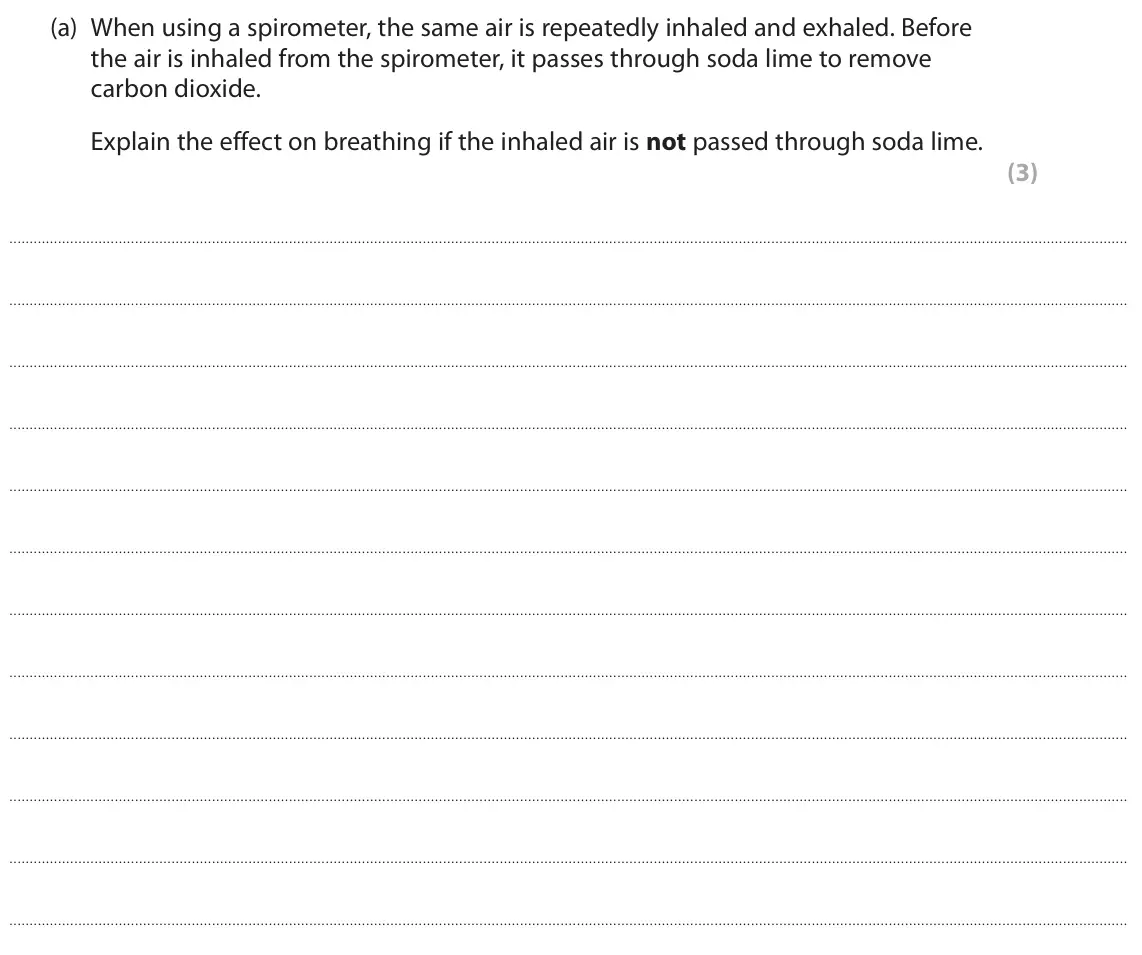
Q2(b)(i)
The whole paper ↗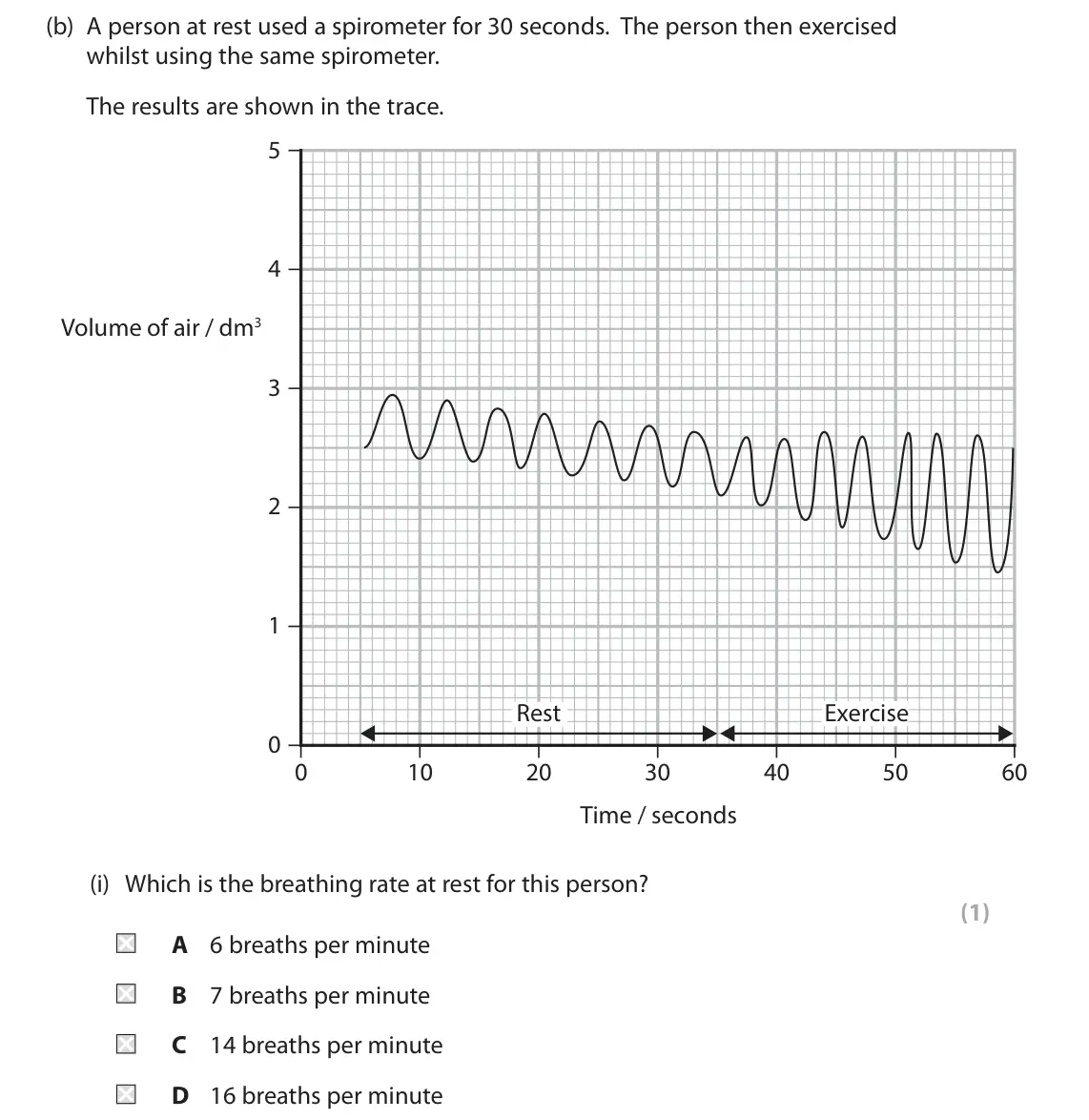
Q2(b)(ii)
The whole paper ↗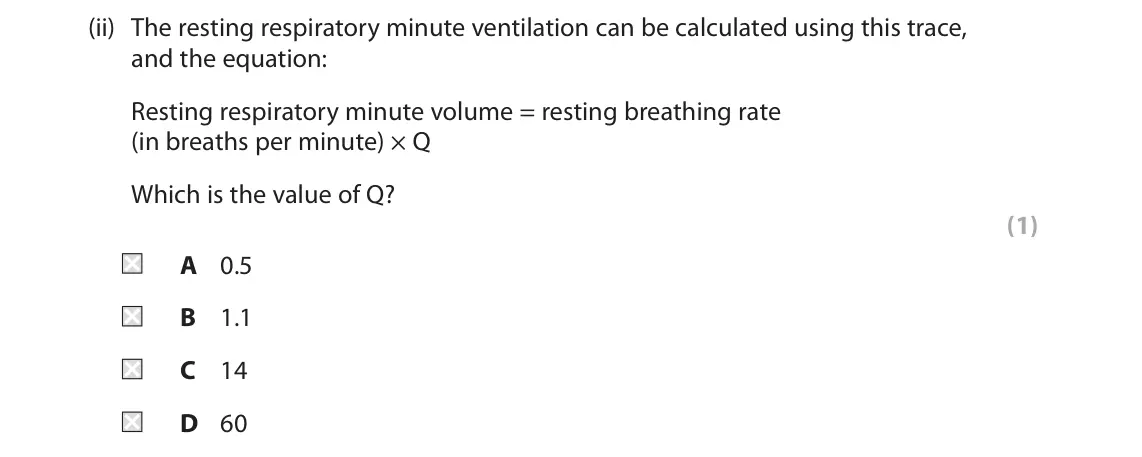
Q2(b)(iii)
The whole paper ↗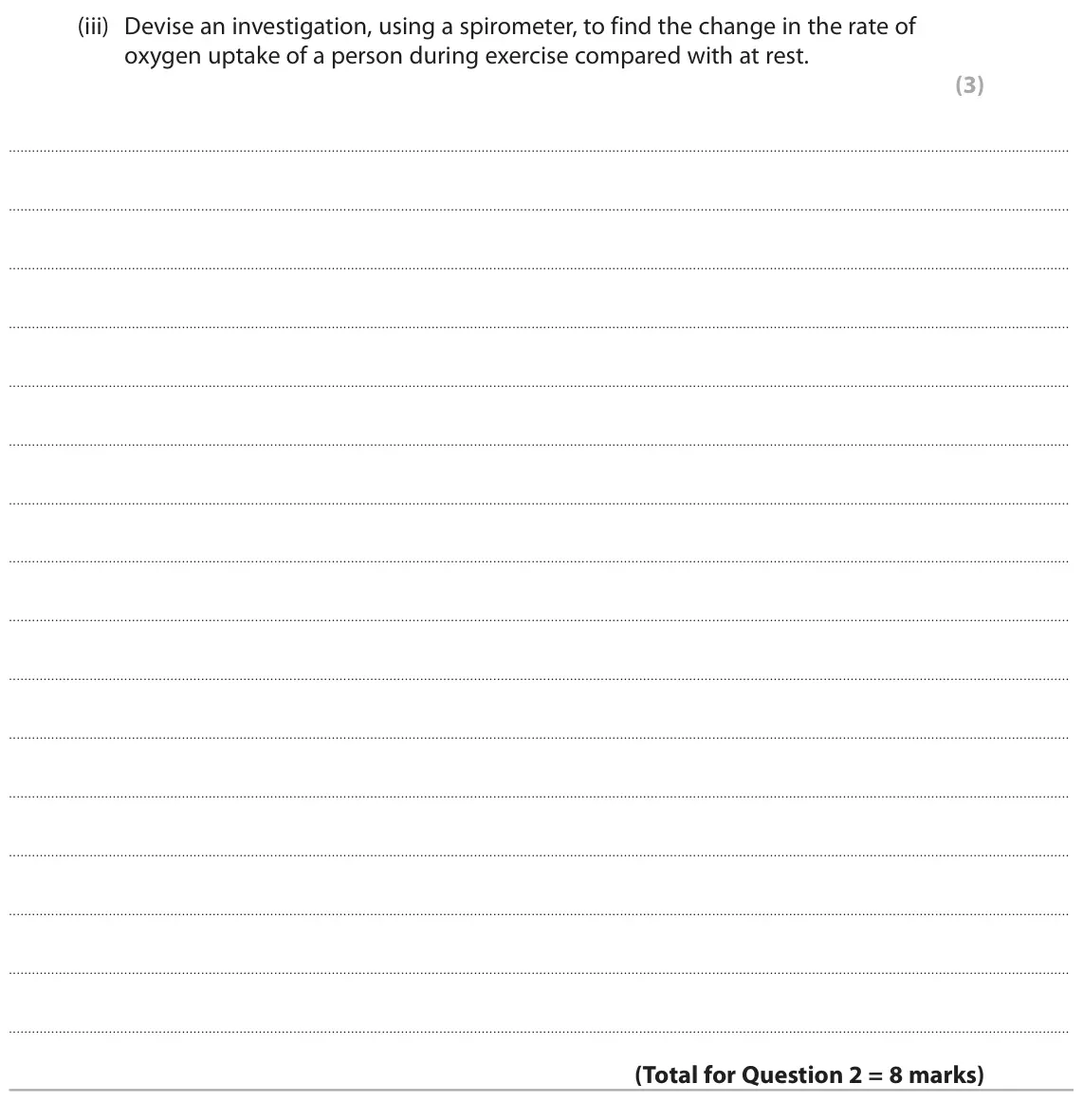
Q8(e)
The whole paper ↗
Q3(a)(i)
The whole paper ↗
Q3(a)(ii)
The whole paper ↗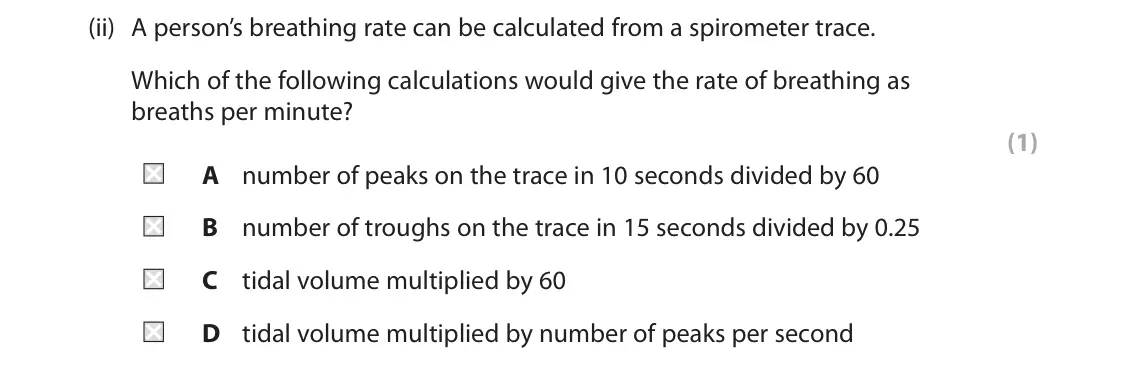
Q3(b)
The whole paper ↗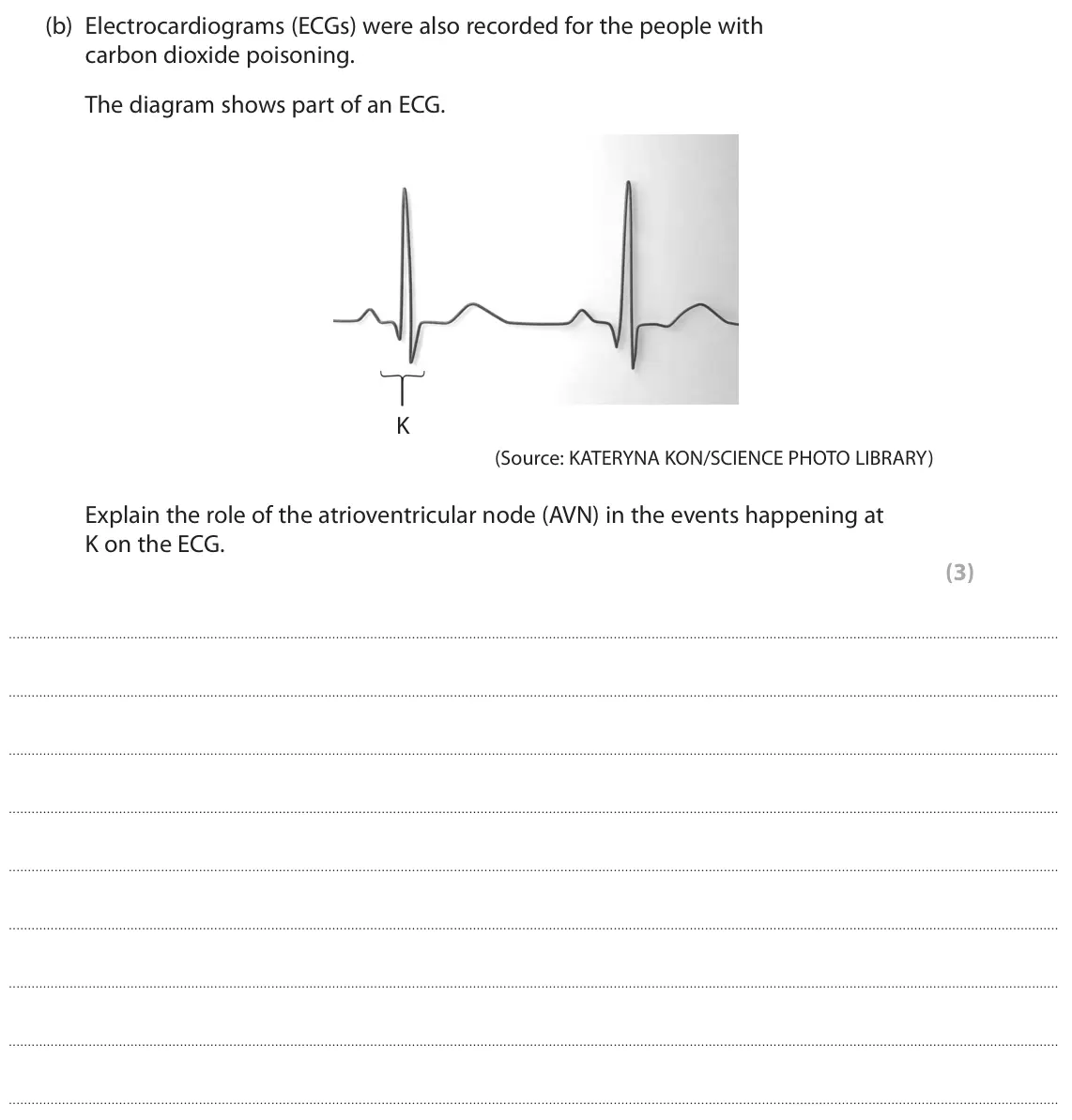
Q8(c)
The whole paper ↗
Q1(b)(i)
The whole paper ↗
Q1(b)(ii)
The whole paper ↗
Q4(a)(i)
The whole paper ↗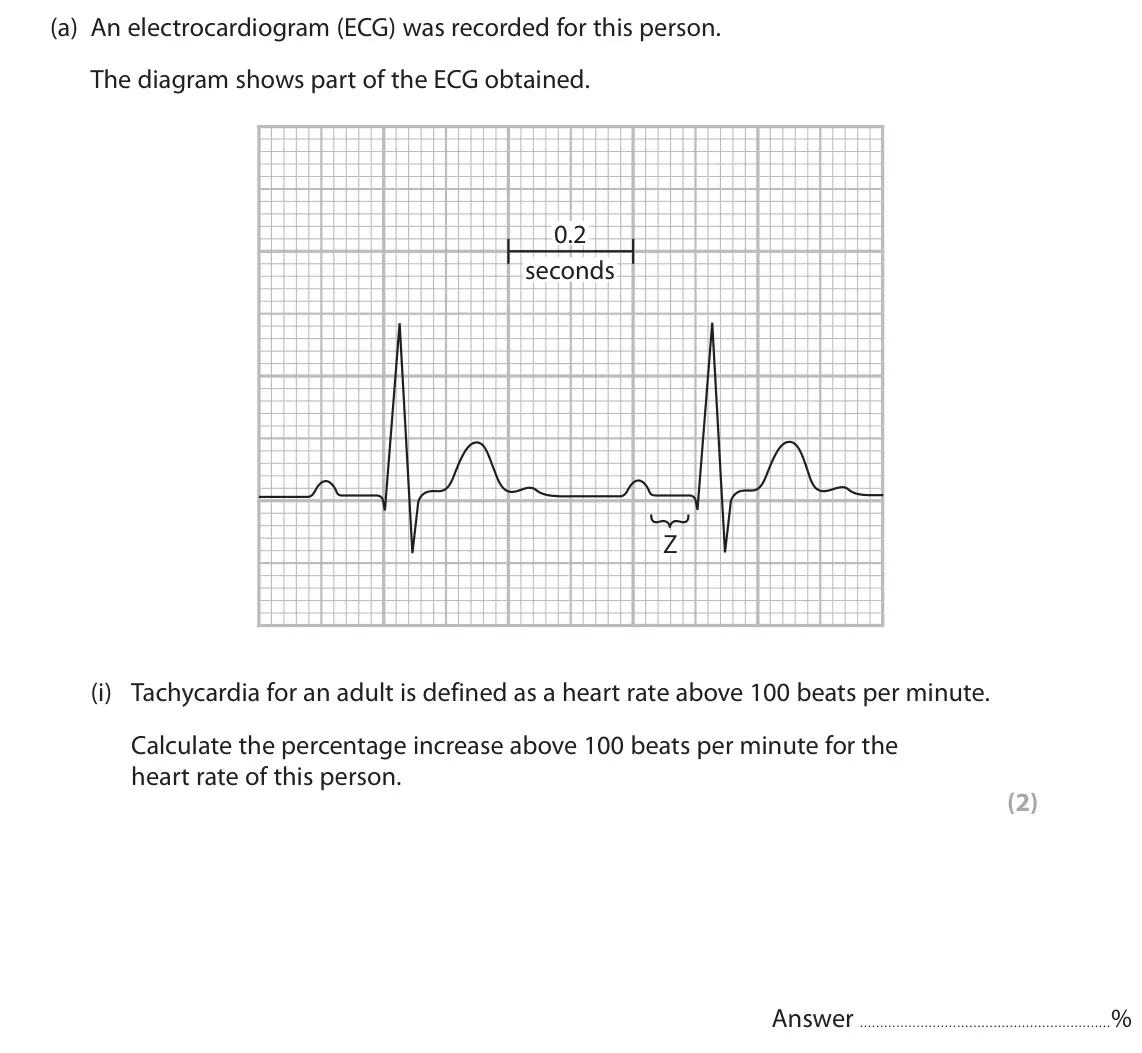
Q4(a)(ii)
The whole paper ↗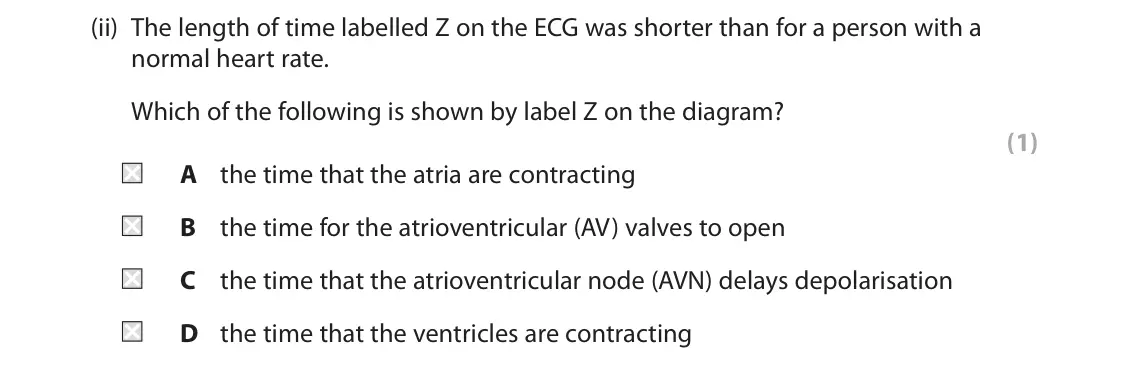
Q4(b)
The whole paper ↗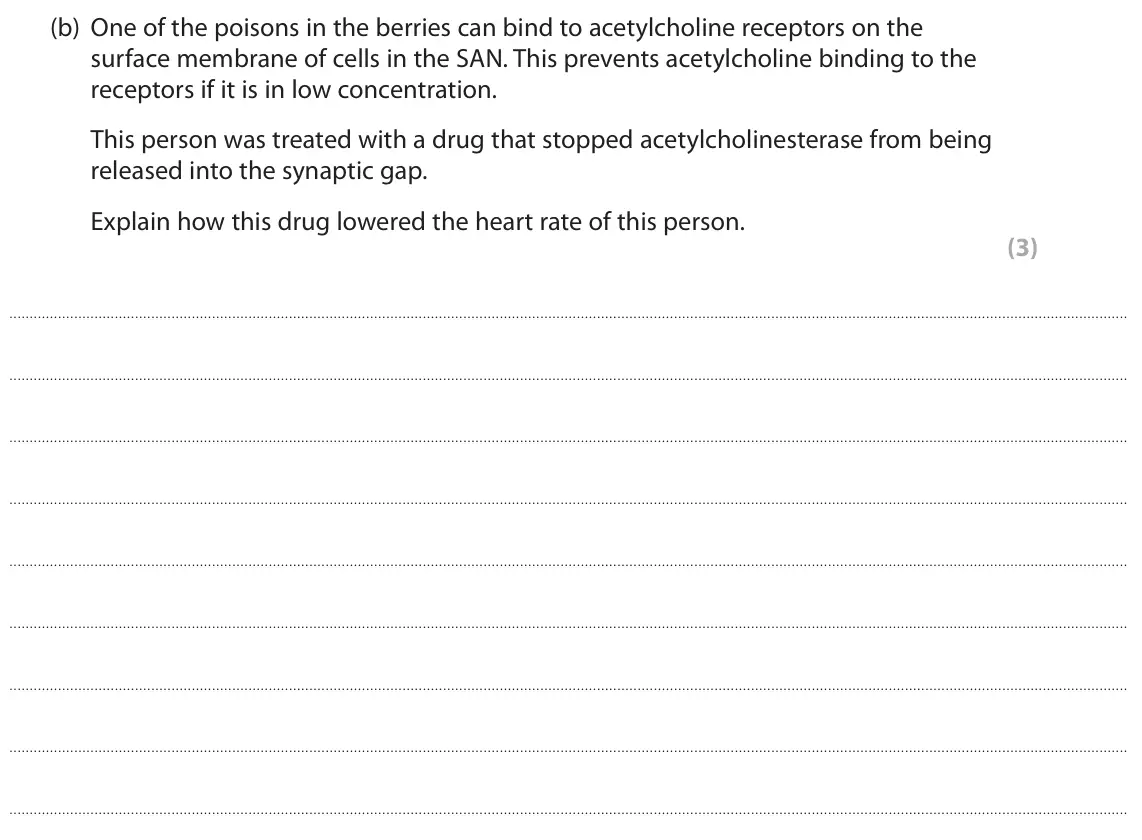
Q5(a)
The whole paper ↗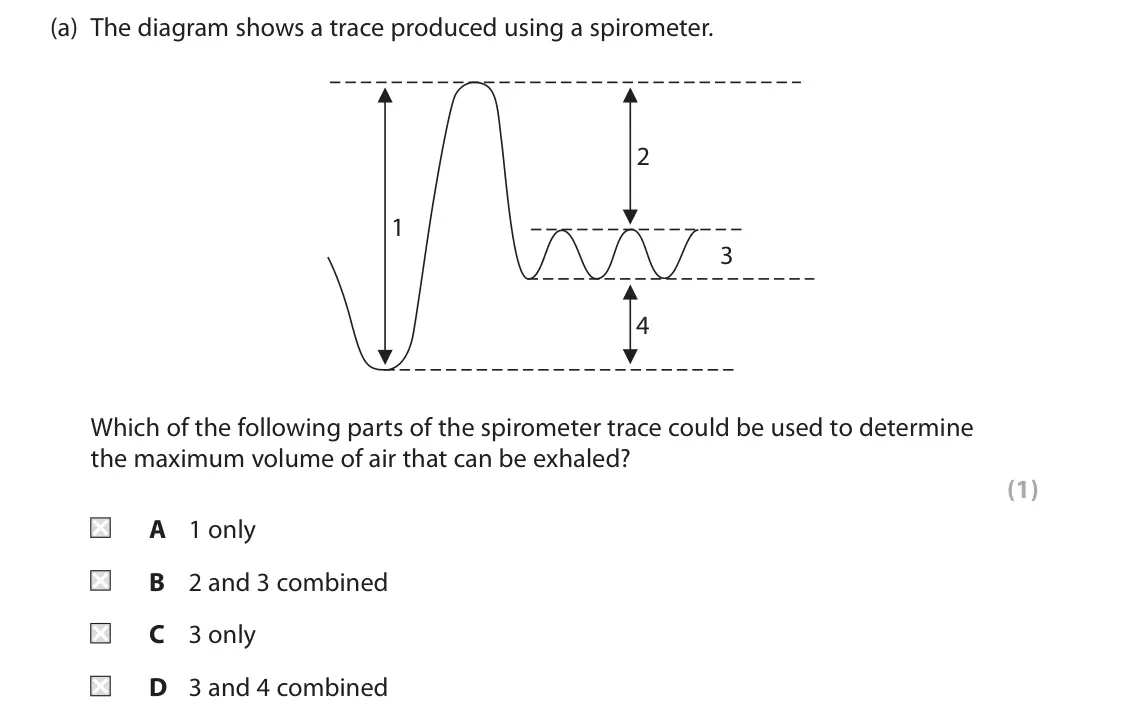
Q5(b)(i)
The whole paper ↗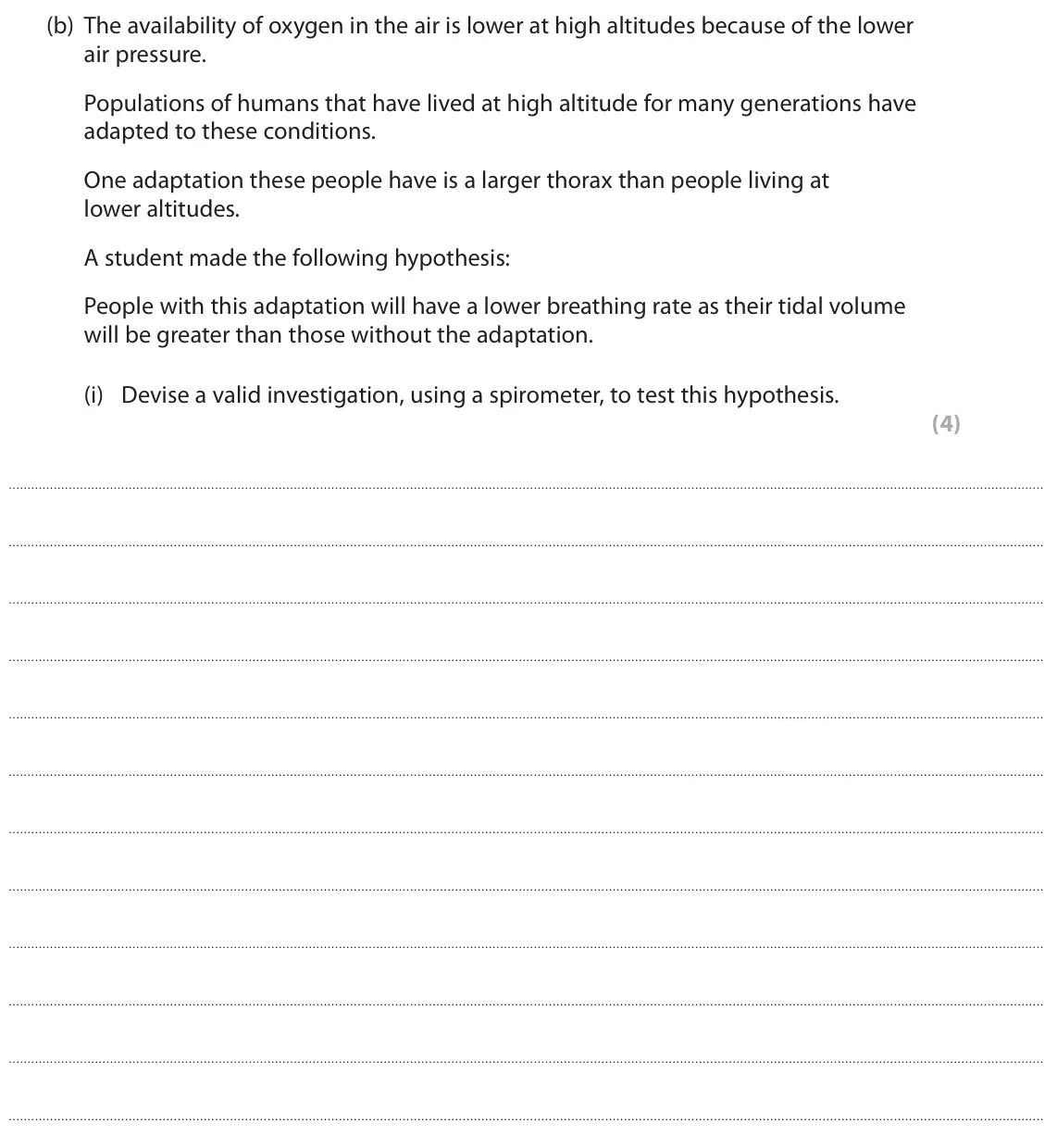
Q7(b)(iii)
The whole paper ↗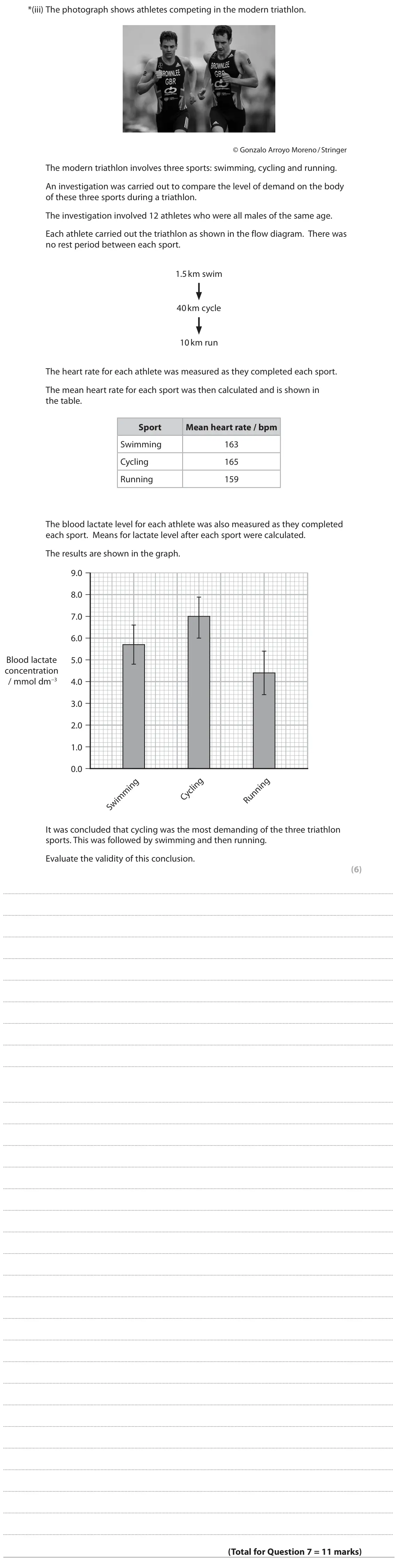
Q3(a)(i)
The whole paper ↗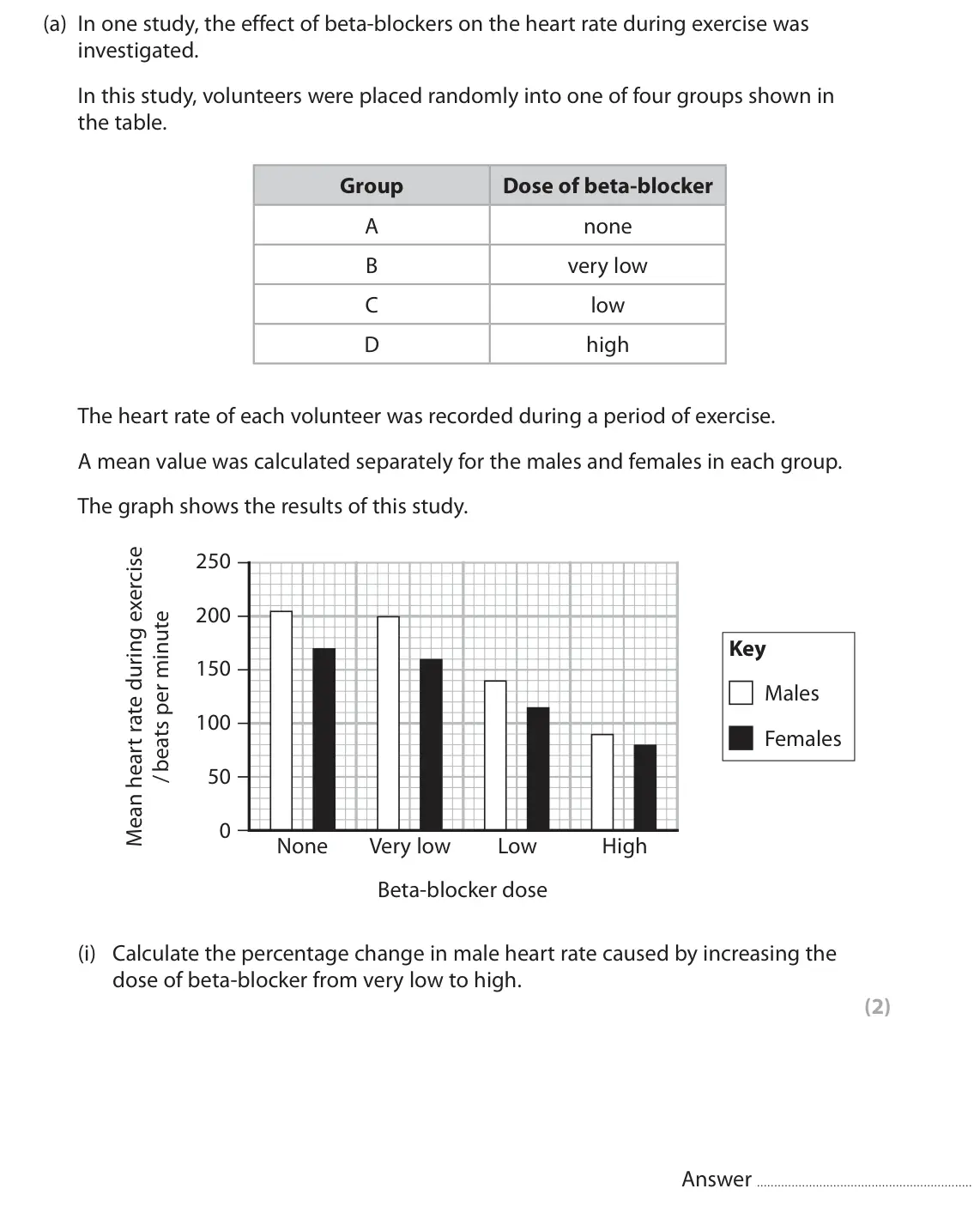
Q3(a)(ii)
The whole paper ↗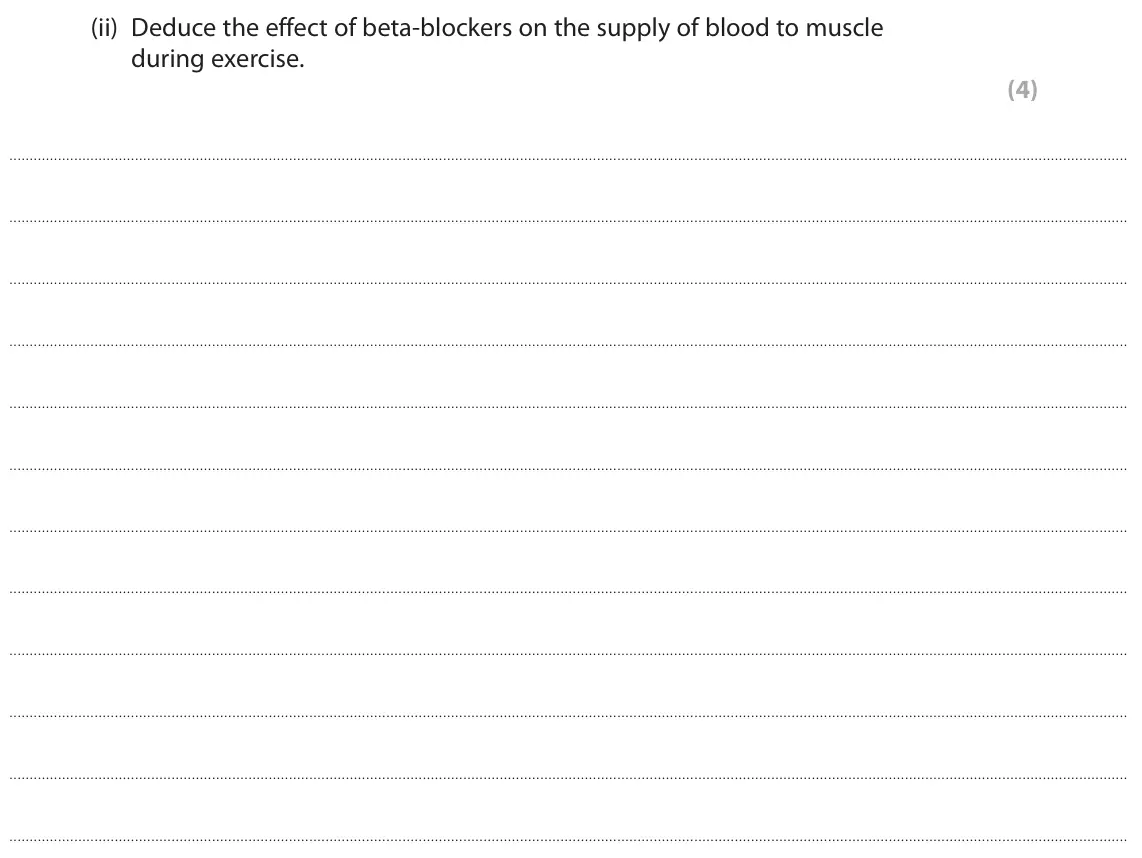
Q3(c)
The whole paper ↗
All 34 questions on Heart rate, cardiac output and ventilation, as a list
- June 2025, Paper 2, Q2(a) (3 marks): When using a spirometer, the same air is repeatedly inhaled and exhaled. Before the air is inhaled from the spirometer, it passes through soda lime to remove ca
- June 2025, Paper 2, Q2(b)(i) (1 mark): Which is the breathing rate at rest for this person? (1) A 6 breaths per minute B 7 breaths per minute C 14 breaths per minute D 16 breaths per minute
- June 2025, Paper 2, Q2(b)(ii) (1 mark): The resting respiratory minute ventilation can be calculated using this trace, and the equation: Resting respiratory minute volume = resting breathing rate (in
- June 2025, Paper 2, Q2(b)(iii) (3 marks): Devise an investigation, using a spirometer, to find the change in the rate of oxygen uptake of a person during exercise compared with at rest. (3)
- June 2025, Paper 3, Q8(e) (2 marks): Explain why there will be changes in blood pressure when a mammal comes out of hibernation (paragraph 13). (2)
- June 2024, Paper 2, Q3(a)(i) (4 marks): Explain why rapid breathing is a symptom of carbon dioxide poisoning. (4)
- June 2024, Paper 2, Q3(a)(ii) (1 mark): A person’s breathing rate can be calculated from a spirometer trace. Which of the following calculations would give the rate of breathing as breaths per minute?
- June 2024, Paper 2, Q3(b) (3 marks): Electrocardiograms (ECGs) were also recorded for the people with carbon dioxide poisoning. The diagram shows part of an ECG. K (Source: KATERYNA KON/SCIENCE PHO
- June 2024, Paper 3, Q8(c) (4 marks): Describe how a spirometer could be used to estimate the metabolic rate of a sloth (paragraph 5). (4)
- June 2023, Paper 3, Q1(b)(i) (1 mark): Give a reason why the heart will continue to beat after being removed from the body. (1)
- June 2023, Paper 3, Q1(b)(ii) (2 marks): Explain why the left atrium stops beating when it is separated from the right atrium. (2)
- June 2022, Paper 2, Q4(a)(i) (2 marks): Tachycardia for an adult is defined as a heart rate above 100 beats per minute. Calculate the percentage increase above 100 beats per minute for the heart rate
- June 2022, Paper 2, Q4(a)(ii) (1 mark): The length of time labelled Z on the ECG was shorter than for a person with a normal heart rate. Which of the following is shown by label Z on the diagram? (1)
- June 2022, Paper 2, Q4(b) (3 marks): One of the poisons in the berries can bind to acetylcholine receptors on the surface membrane of cells in the SAN. This prevents acetylcholine binding to the re
- June 2022, Paper 2, Q5(a) (1 mark): The diagram shows a trace produced using a spirometer. 2 1 3 4 Which of the following parts of the spirometer trace could be used to determine the maximum volum
- June 2022, Paper 2, Q5(b)(i) (4 marks): Devise a valid investigation, using a spirometer, to test this hypothesis. (4)
- November 2021, Paper 2, Q7(b)(iii) (6 marks): The photograph shows athletes competing in the modern triathlon. © Gonzalo Arroyo Moreno / Stringer The modern triathlon involves three sports: swimming, cyclin
- November 2021, Paper 3, Q3(a)(i) (2 marks): Calculate the percentage change in male heart rate caused by increasing the dose of beta-blocker from very low to high. (2) Answer
- November 2021, Paper 3, Q3(a)(ii) (4 marks): Deduce the effect of beta-blockers on the supply of blood to muscle during exercise. (4)
- November 2021, Paper 3, Q3(c) (4 marks): Beta-blockers work by blocking the effects of a hormone called adrenaline. Adrenaline is produced by the adrenal glands located on top of each kidney. Adrenalin
- October 2020, Paper 2, Q2(a) (4 marks): Describe how a spirometer trace can be used to calculate the respiratory minute ventilation and the oxygen consumption per minute. (4) respiratory minute ventil
- October 2020, Paper 2, Q2(b) (2 marks): A student compared the spirometer trace for a pair of healthy, genetically identical twins. State two variables that would have to be controlled to make this a
- June 2019, Paper 2, Q4(a)(i) (2 marks): Explain the role of the brain in reducing the student’s heart rate after the exercise. (2)
- June 2019, Paper 3, Q1(a) (1 mark): Changes in the cardiac cycle can be observed by recording an electrocardiogram (ECG). The ECG for a resting person is shown in the diagram. 0.2 second Calculate
- June 2019, Paper 3, Q1(b)(i) (2 marks): Analyse the data to determine the effect of anabolic steroid use on heart function. (2)
- June 2019, Paper 3, Q3(a) (2 marks): Changes in breathing can be investigated using a spirometer. Spirometer traces taken from the same individual before, during and two minutes after exercise are
- June 2018, Paper 2, Q5(c)(i) (2 marks): Cardiac output is the product of stroke volume and heart rate. During a race, a marathon runner’s exercise intensity increased from 0 to 100%. The table shows t
- June 2018, Paper 2, Q5(c)(ii) (2 marks): Explain why it is necessary for the cardiac output of marathon runners to increase during a race. (2)
- June 2017, Paper 2, Q2(a) (1 mark): Which term describes the ability of heart muscle to contract without external stimulation? (1) A autonomic B cardiac C myogenic D systolic
- June 2017, Paper 2, Q2(b) (2 marks): Describe how the sinoatrial node (SAN) is involved in bringing about a change in heart rate as the level of activity increases. (2)
- June 2017, Paper 2, Q3(b)(i) (1 mark): Which of the following is the name of this piece of apparatus? (1) A colorimeter B potometer C respirometer D spirometer
- June 2017, Paper 2, Q3(b)(ii) (1 mark): Which of the following is shown by the label V on the trace? (1) A alveolar volume B tidal volume C total lung volume D ventilation rate
- June 2017, Paper 2, Q3(b)(iii) (1 mark): Which of the following is the breathing rate in breaths per minute between 80 and 120 seconds? (1) A 6 breaths min−1 B 9 breaths min−1 C 12 breaths min−1 D 16 b
- June 2017, Paper 2, Q3(b)(iv) (3 marks): Calculate the rate of oxygen uptake between 80 and 120 seconds. (3) Answer cm3 min−1
Questions, mark schemes and examiner’s reports are © Pearson Edexcel, from their published past papers. Plumi isn’t affiliated with any exam board. Want whole papers? Every Edexcel A-Level Biology A paper.
Rather write your answers by hand on iPad? Plumi marks them against the same mark schemes.