 plumi
Learning, brain development and animal research: Edexcel A‑Level Biology A questions
Every Edexcel A-Level Biology A exam question on Learning, brain development and animal research (specification points 8.10–8.13), 2016–2025, with its mark scheme and examiner’s report.
Find questions1,749
Calculations
Q2(b)(i)
The whole paper ↗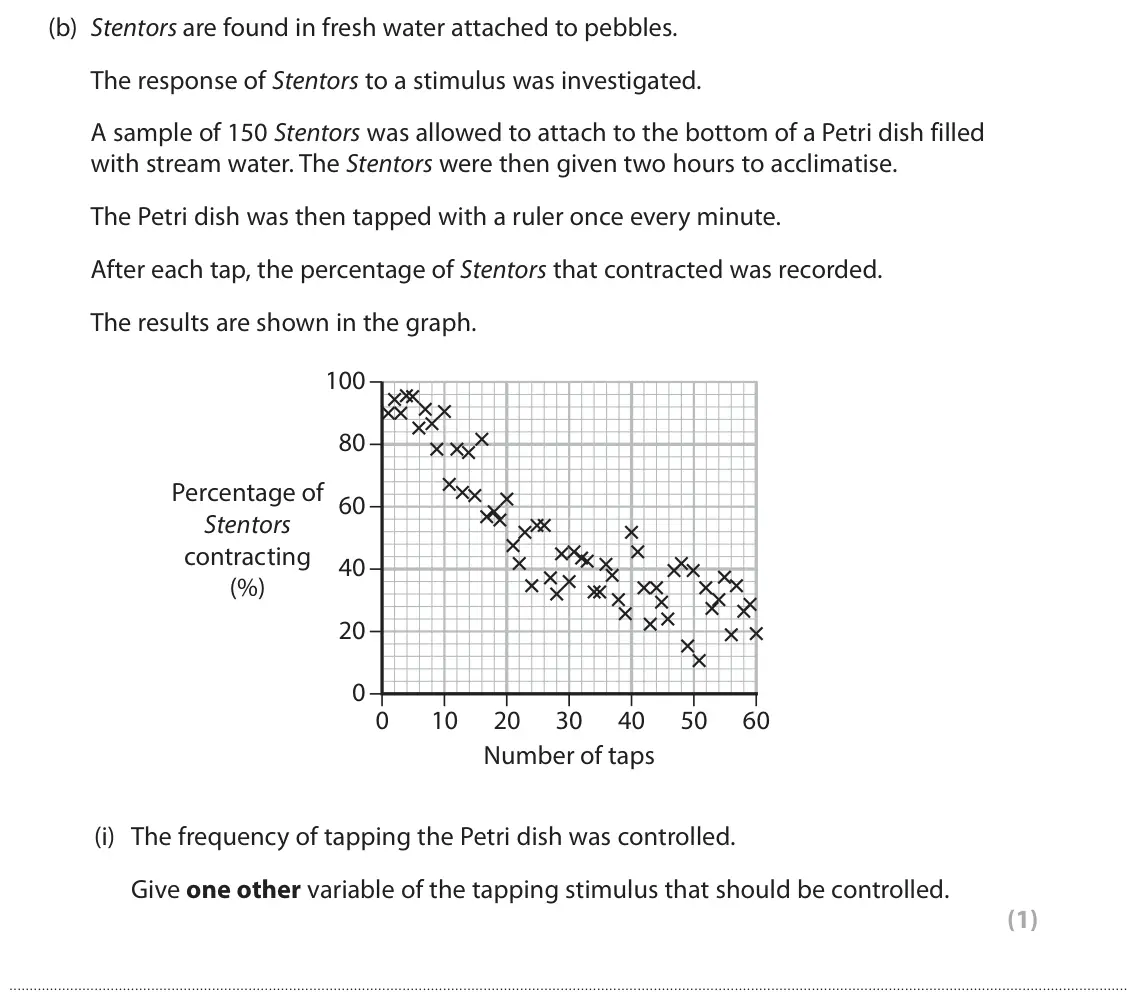
Q2(b)(ii)
The whole paper ↗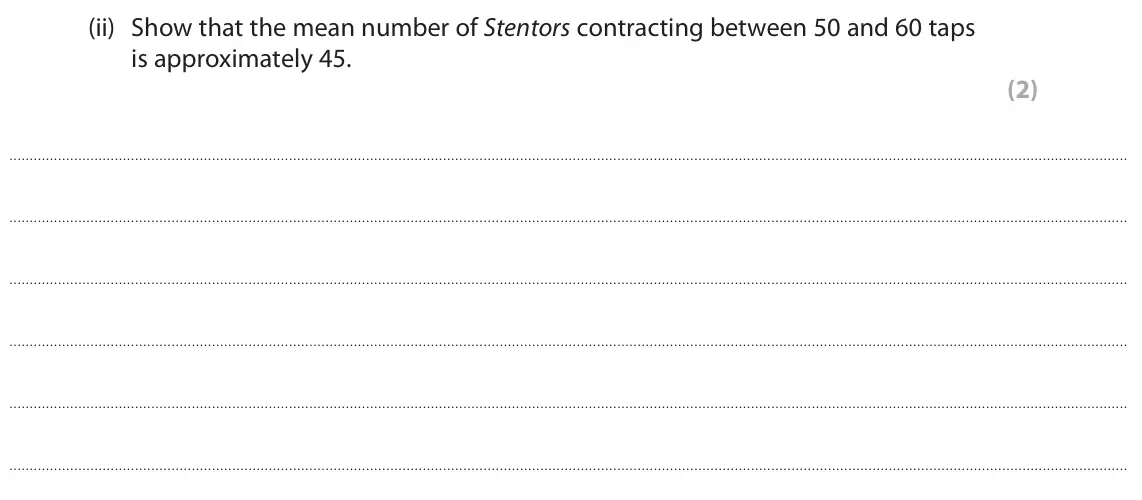
Q2(b)(iii)
The whole paper ↗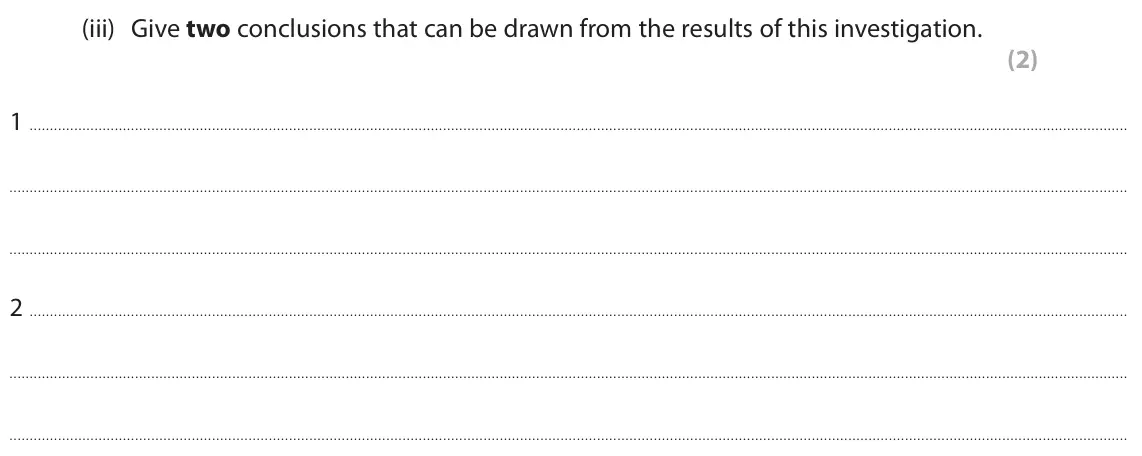
Q2(b)(iv)
The whole paper ↗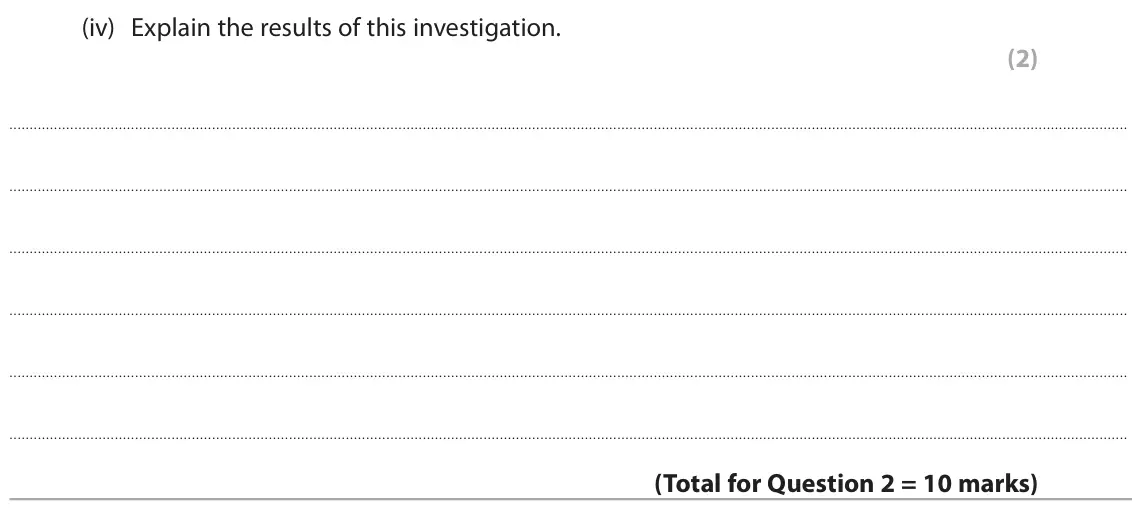
Q9(a)(ii)
The whole paper ↗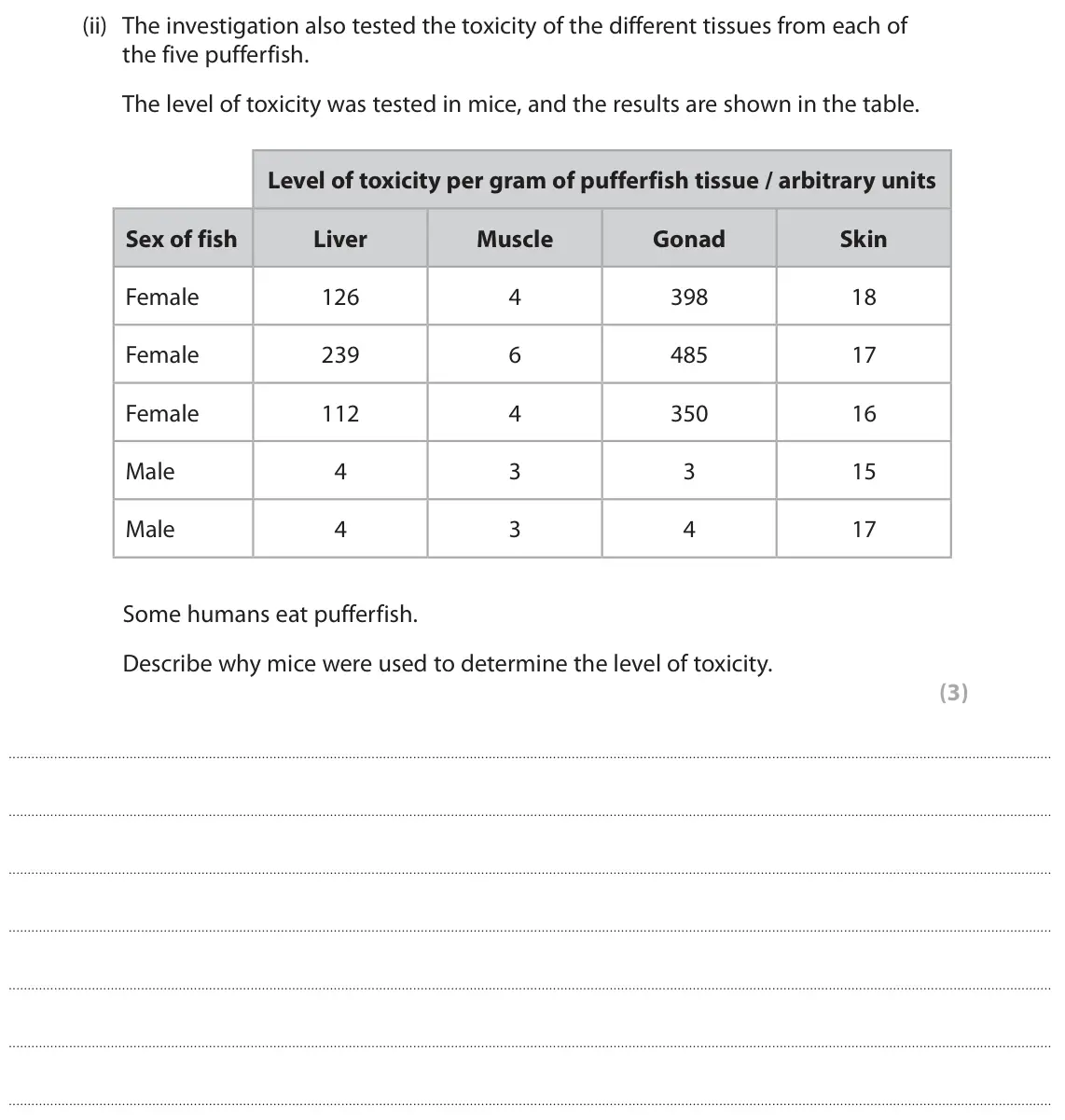
Q3(a)
The whole paper ↗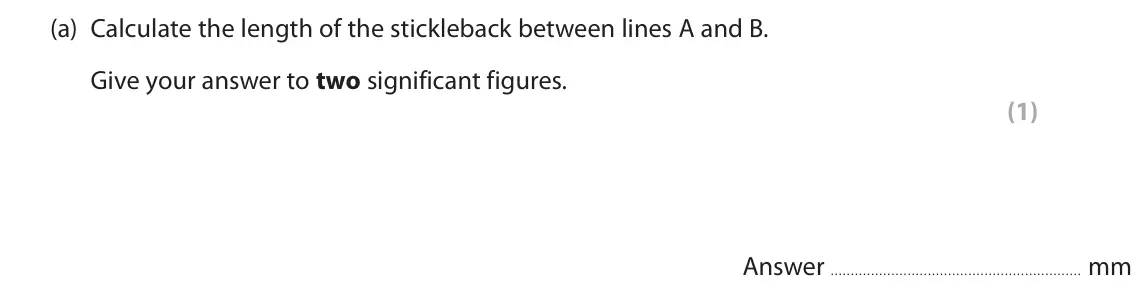
Q3(b)(i)
The whole paper ↗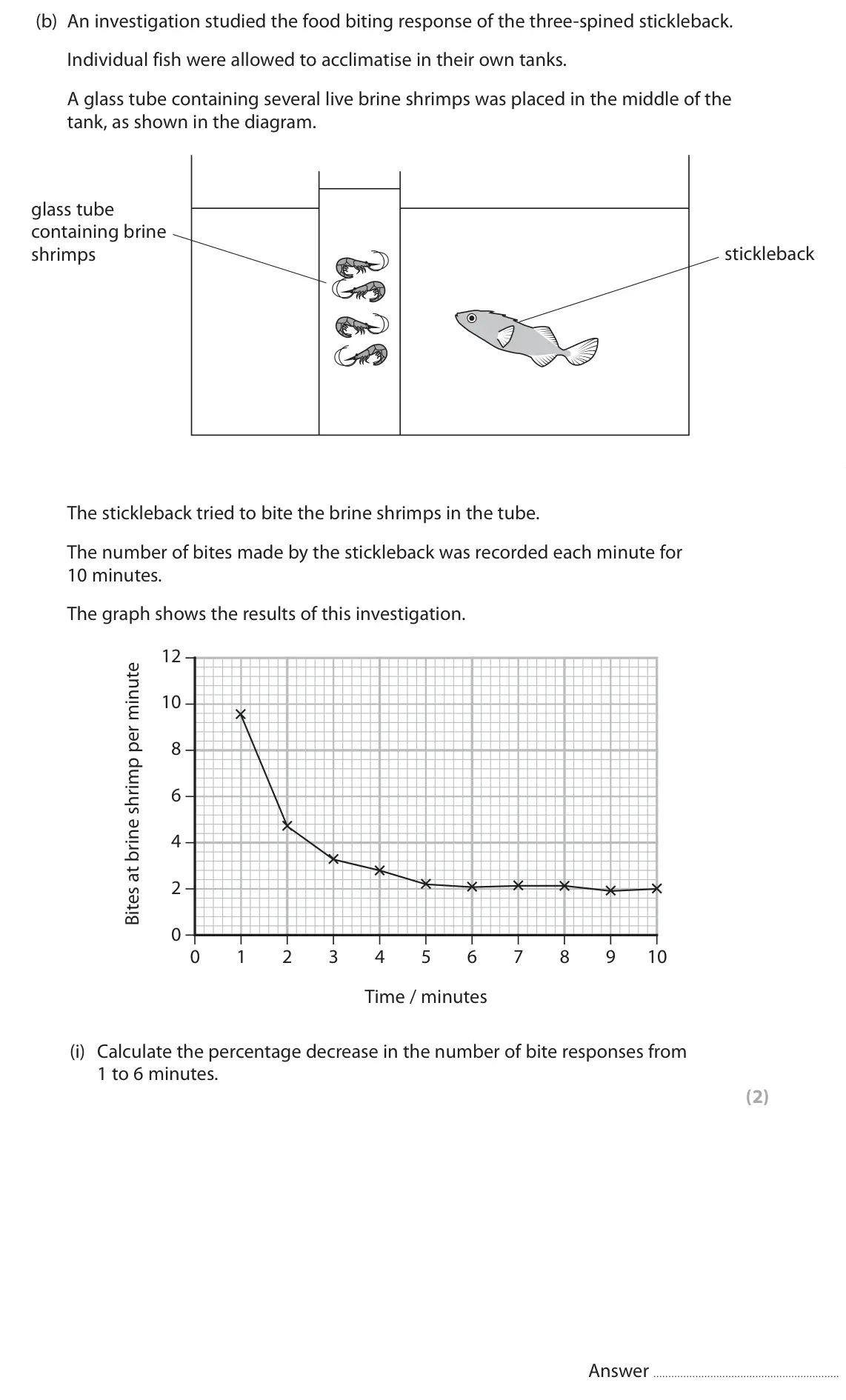
Q3(b)(ii)
The whole paper ↗
Q3(c)
The whole paper ↗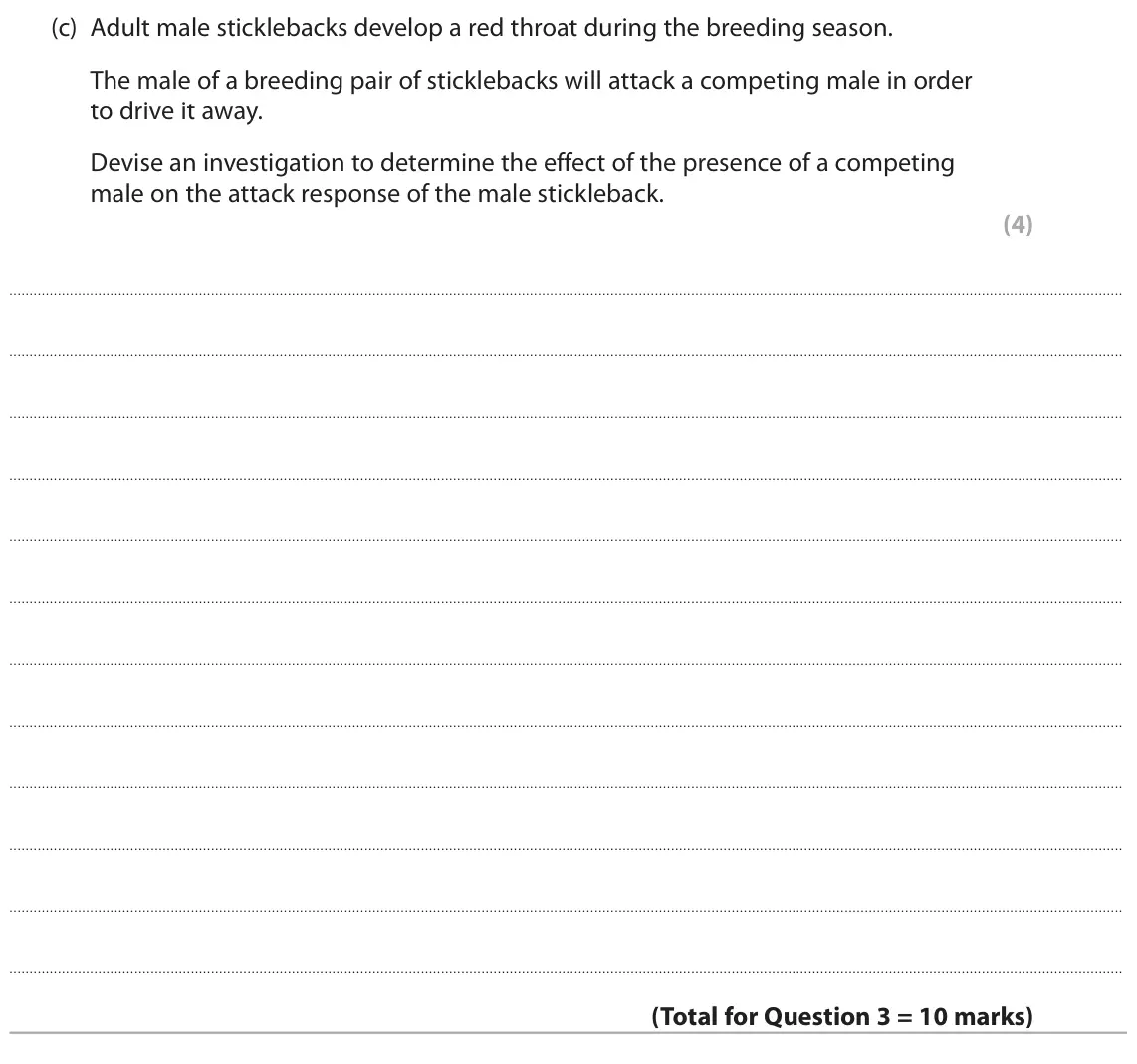
Q5(a)
The whole paper ↗
Q5(b)(i)
The whole paper ↗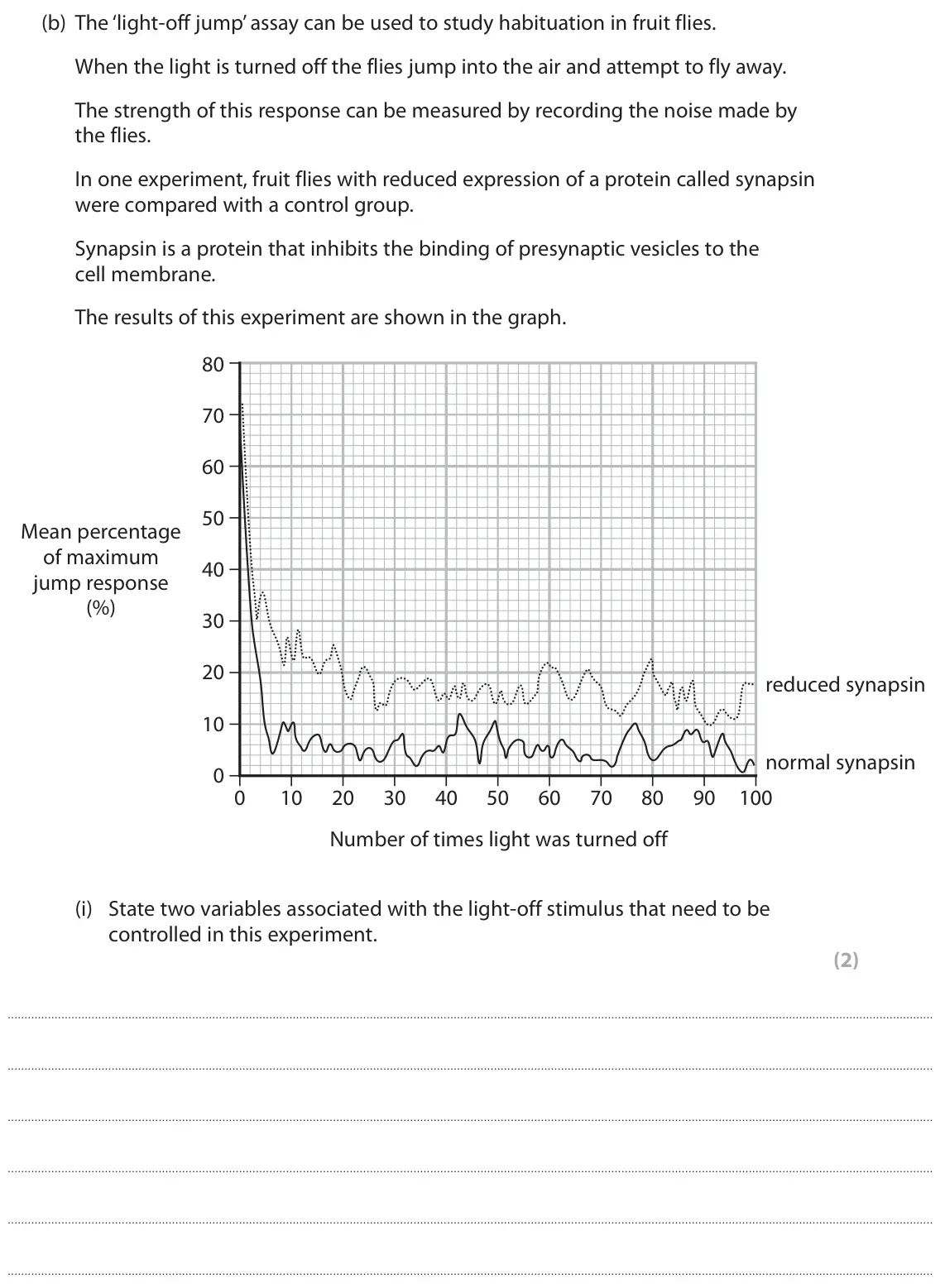
Q5(b)(ii)
The whole paper ↗
Q5(b)(iii)
The whole paper ↗
Q8(j)
The whole paper ↗
Q10(c)
The whole paper ↗
Q7(i)
The whole paper ↗
Q7(e)
The whole paper ↗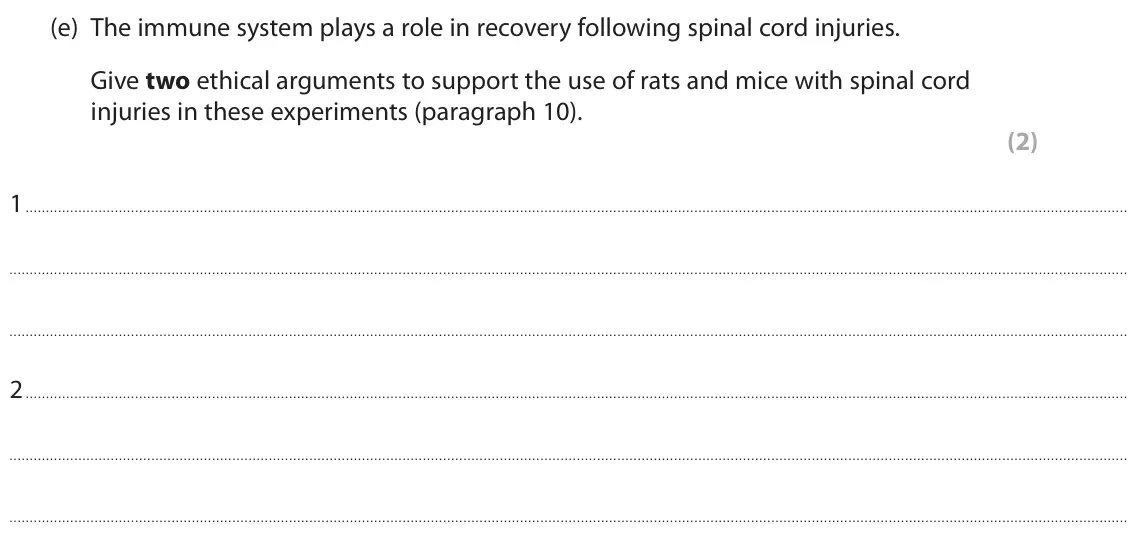
Q7(j)
The whole paper ↗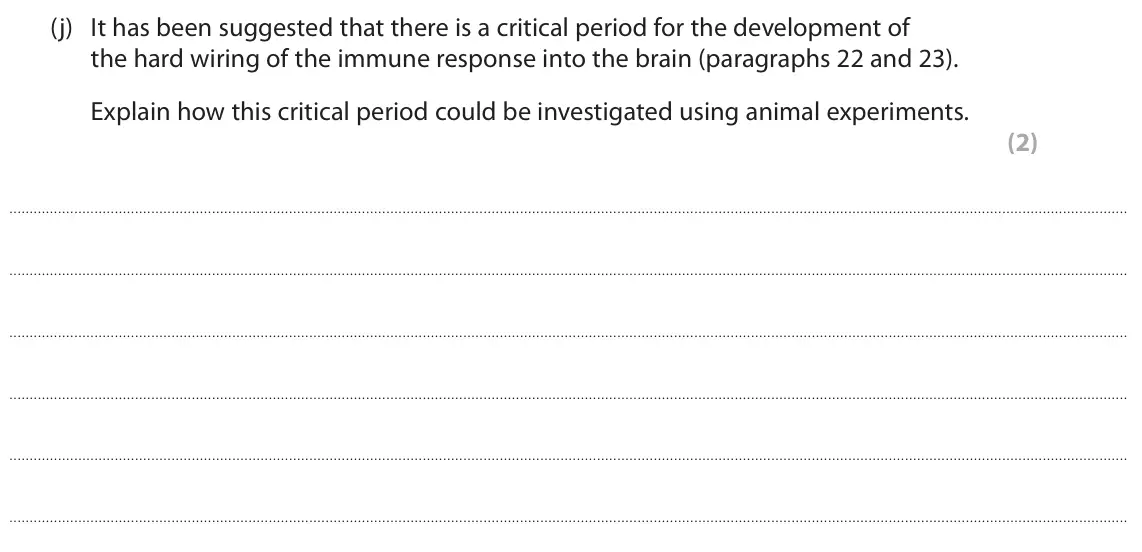
Q9(b)(i)
The whole paper ↗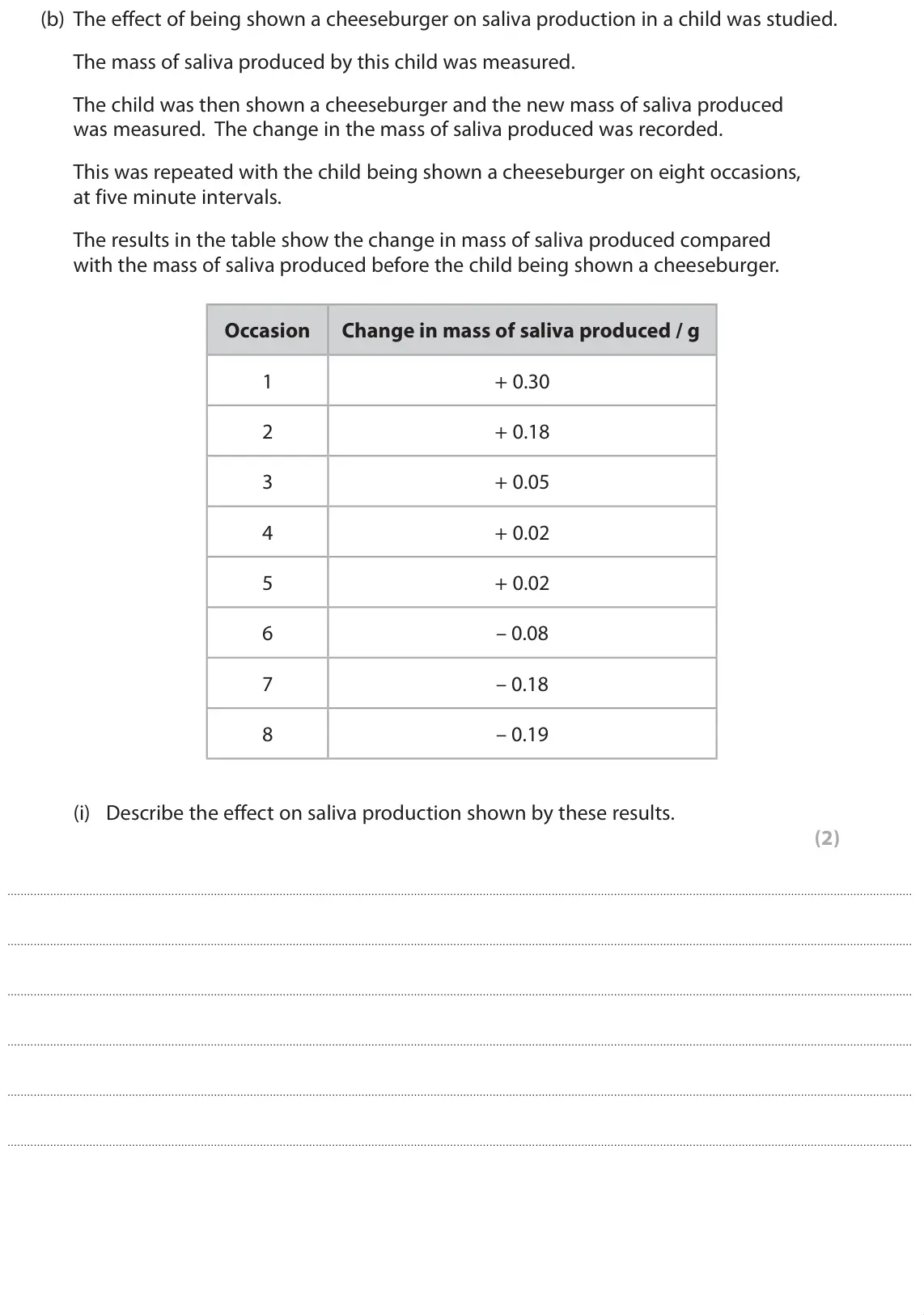
Q9(b)(ii)
The whole paper ↗
All 26 questions on Learning, brain development and animal research, as a list
- June 2025, Paper 3, Q2(b)(i) (1 mark): The frequency of tapping the Petri dish was controlled. Give one other variable of the tapping stimulus that should be controlled. (1)
- June 2025, Paper 3, Q2(b)(ii) (2 marks): Show that the mean number of Stentors contracting between 50 and 60 taps is approximately 45. (2)
- June 2025, Paper 3, Q2(b)(iii) (2 marks): Give two conclusions that can be drawn from the results of this investigation. (2) 1 2
- June 2025, Paper 3, Q2(b)(iv) (2 marks): Explain the results of this investigation. (2)
- June 2024, Paper 2, Q9(a)(ii) (3 marks): The investigation also tested the toxicity of the different tissues from each of the five pufferfish. The level of toxicity was tested in mice, and the results
- June 2023, Paper 3, Q3(a) (1 mark): Calculate the length of the stickleback between lines A and B. Give your answer to two significant figures. (1) Answer mm
- June 2023, Paper 3, Q3(b)(i) (2 marks): Calculate the percentage decrease in the number of bite responses from 1 to 6 minutes. (2) Answer
- June 2023, Paper 3, Q3(b)(ii) (3 marks): Explain the results of this investigation. (3)
- June 2023, Paper 3, Q3(c) (4 marks): Adult male sticklebacks develop a red throat during the breeding season. The male of a breeding pair of sticklebacks will attack a competing male in order to dr
- June 2022, Paper 3, Q5(a) (2 marks): Explain the importance of the habituation response in an animal. (2)
- June 2022, Paper 3, Q5(b)(i) (2 marks): State two variables associated with the light-off stimulus that need to be controlled in this experiment. (2)
- June 2022, Paper 3, Q5(b)(ii) (3 marks): Determine the effect of reduced synapsin on the habituation of fruit flies in this experiment. (3)
- June 2022, Paper 3, Q5(b)(iii) (3 marks): Explain how reduced expression of synapsin could produce these results. (3)
- June 2022, Paper 3, Q8(j) (4 marks): Discuss the ethical issues relating to the use of mice in experiments such as those described in the article (paragraph 25). (4)
- November 2021, Paper 2, Q10(c) (2 marks): In one experiment, Hubel and Wiesel kept the right eye of a kitten closed during the critical period. They then studied the effect of this on the visual region
- October 2020, Paper 3, Q7(i) (2 marks): Sight is a sense that develops during a critical period, ‘providing a basis on which the brain can compute the activity needed for self-preservation.’ (paragrap
- October 2020, Paper 3, Q7(e) (2 marks): The immune system plays a role in recovery following spinal cord injuries. Give two ethical arguments to support the use of rats and mice with spinal cord injur
- October 2020, Paper 3, Q7(j) (2 marks): It has been suggested that there is a critical period for the development of the hard wiring of the immune response into the brain (paragraphs 22 and 23). Expla
- June 2019, Paper 2, Q9(b)(i) (2 marks): Describe the effect on saliva production shown by these results. (2)
- June 2019, Paper 2, Q9(b)(ii) (1 mark): Name the type of learning behaviour shown by the child as they were repeatedly shown a cheeseburger. (1)
- June 2019, Paper 2, Q9(b)(iii) (4 marks): Explain what happens at the synapse to cause a decrease in saliva production when the child was shown a cheeseburger on more than six occasions. (4)
- June 2018, Paper 2, Q4(b) (3 marks): Describe the role of visual stimulation on the development of the visual cortex during the critical period. (3)
- June 2017, Paper 2, Q8(a) (1 mark): Which of the following terms describes a change in response as a result of repeated stimulation? (1) A co-ordination B habituation C inhibition D reduction
- June 2017, Paper 2, Q8(c)(i) (6 marks): Analyse the data from these two studies to evaluate the most likely cause of the loss of the withdrawal response. (6)
- June 2017, Paper 2, Q8(c)(ii) (4 marks): Devise an experiment to show that the frequency of the stimulation used in the first study should be 20 stimuli per minute. (4)
- June 2017, Paper 3, Q2(d) (4 marks): This investigation used only one 30-minute session of TENS pulses. This was done to reduce the risk of habituation. Describe the process that occurs at a synaps
Questions, mark schemes and examiner’s reports are © Pearson Edexcel, from their published past papers. Plumi isn’t affiliated with any exam board. Want whole papers? Every Edexcel A-Level Biology A paper.
Rather write your answers by hand on iPad? Plumi marks them against the same mark schemes.