 plumi
Detecting stimuli and plant responses: Edexcel A‑Level Biology A questions
Every Edexcel A-Level Biology A exam question on Detecting stimuli and plant responses (specification points 8.5–8.6), 2016–2025, with its mark scheme and examiner’s report.
Find questions1,749
Calculations
Q4(a)
The whole paper ↗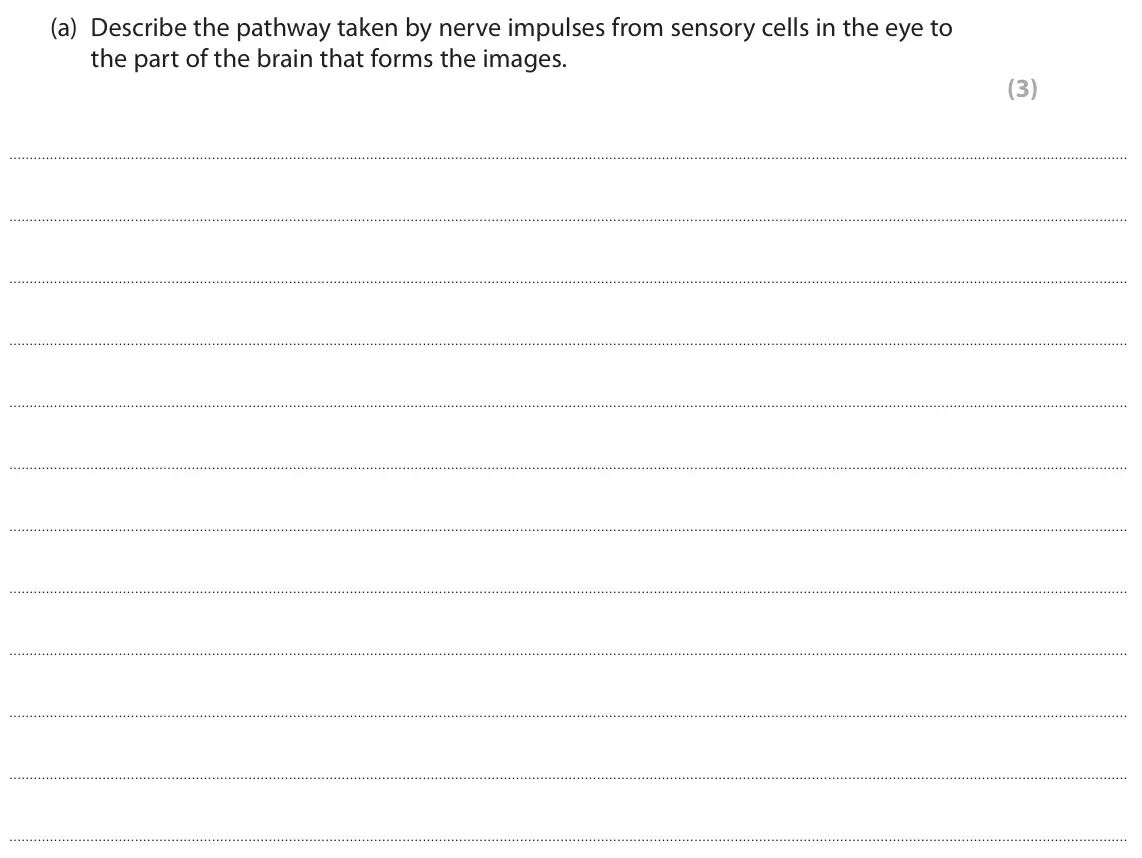
Q4(b)
The whole paper ↗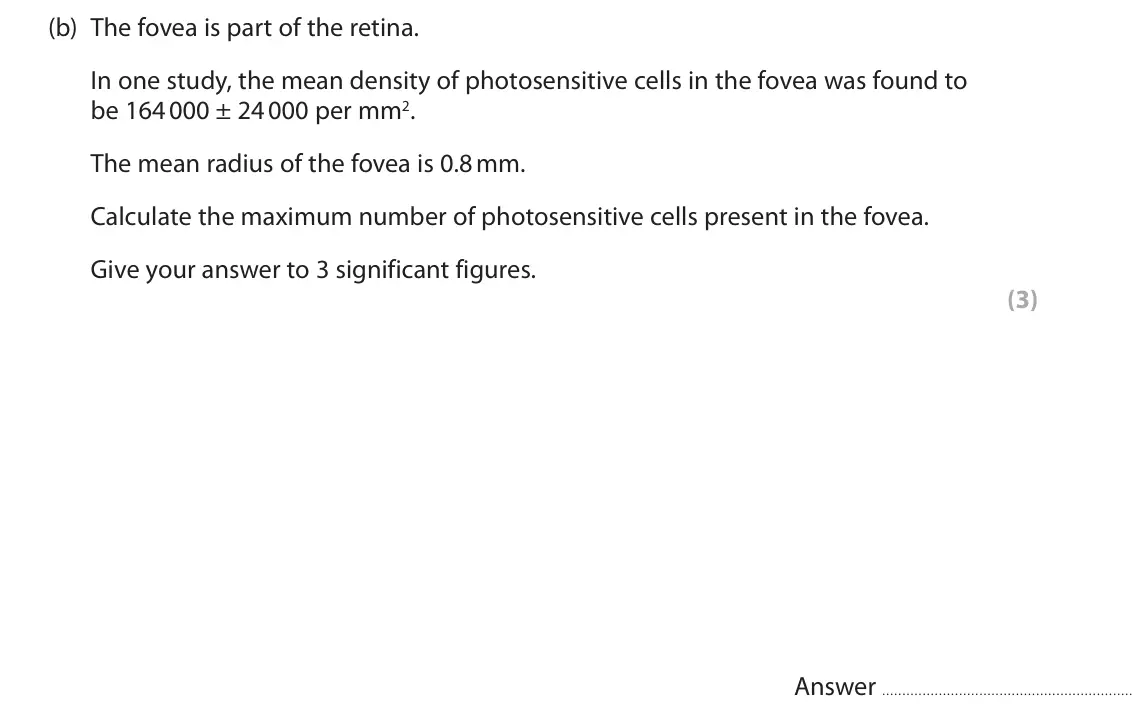
Q8(a)(i)
The whole paper ↗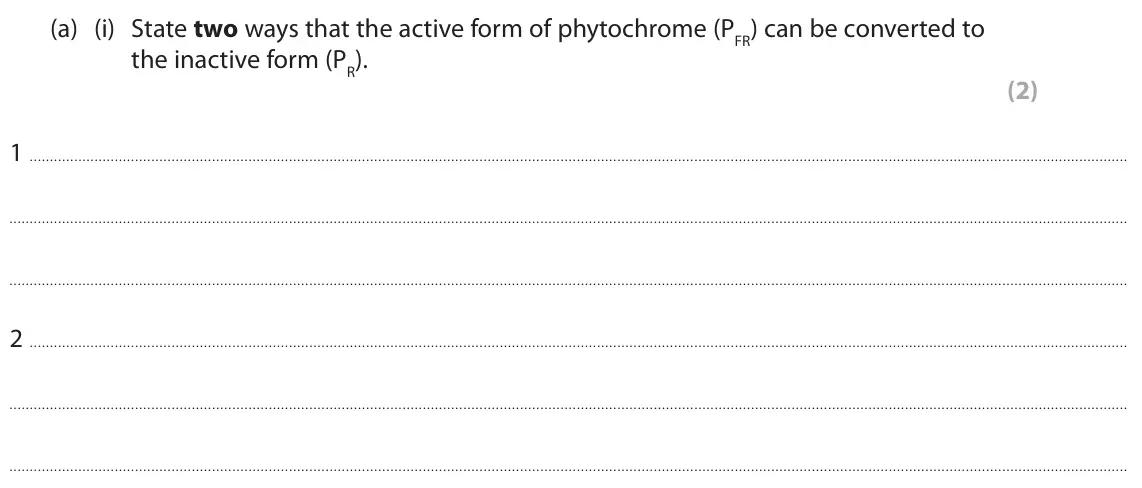
Q8(a)(ii)
The whole paper ↗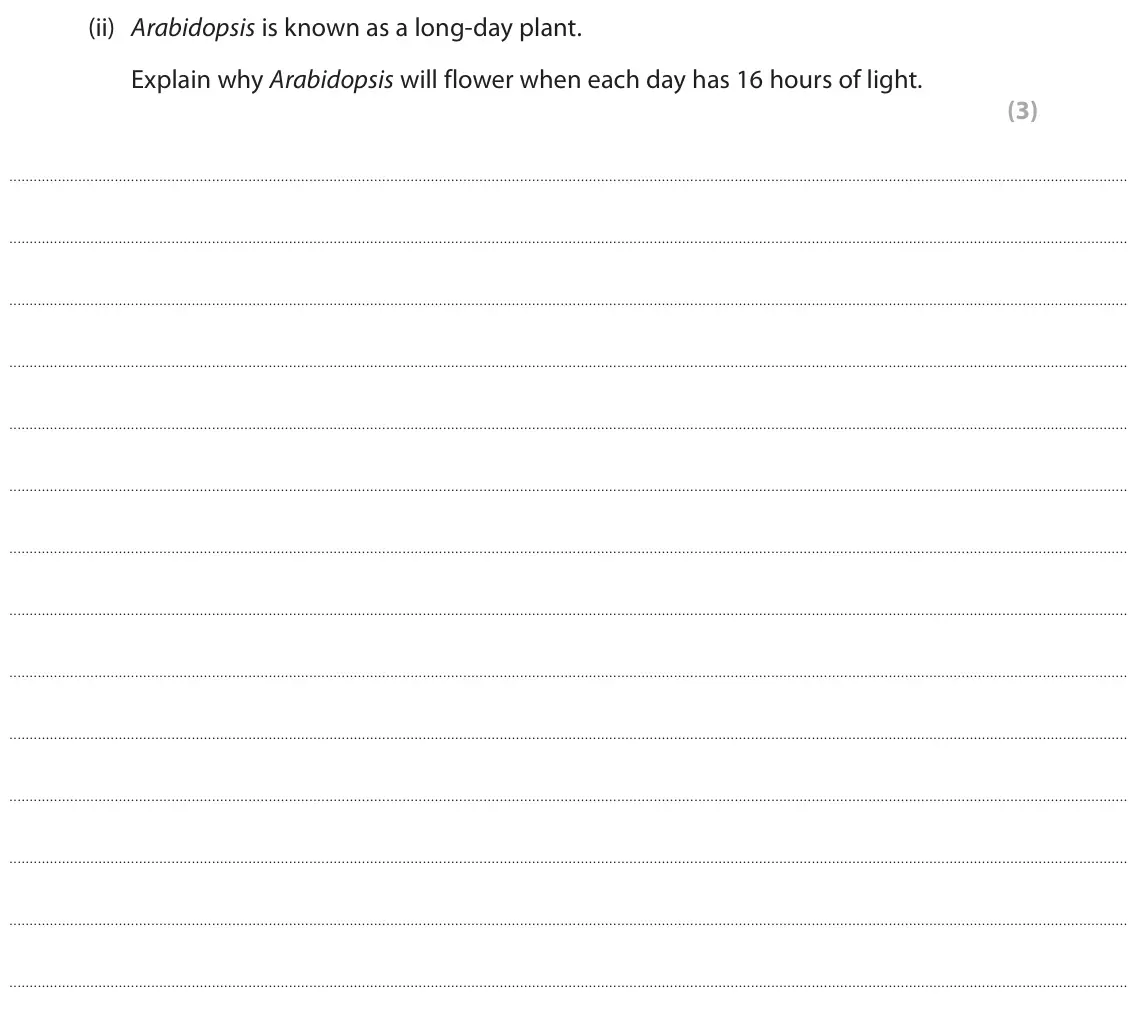
Q8(b)(ii)
The whole paper ↗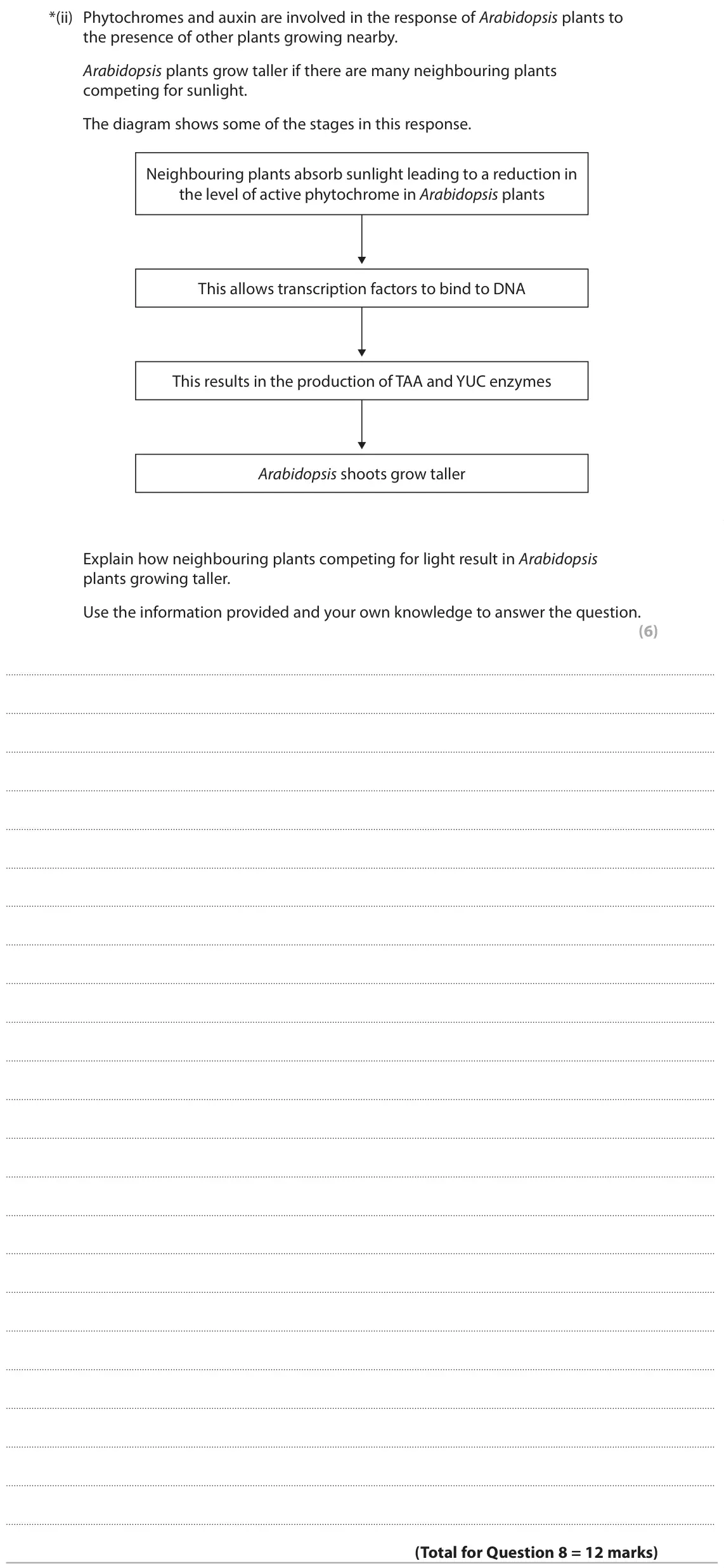
Q7(b)(i)
The whole paper ↗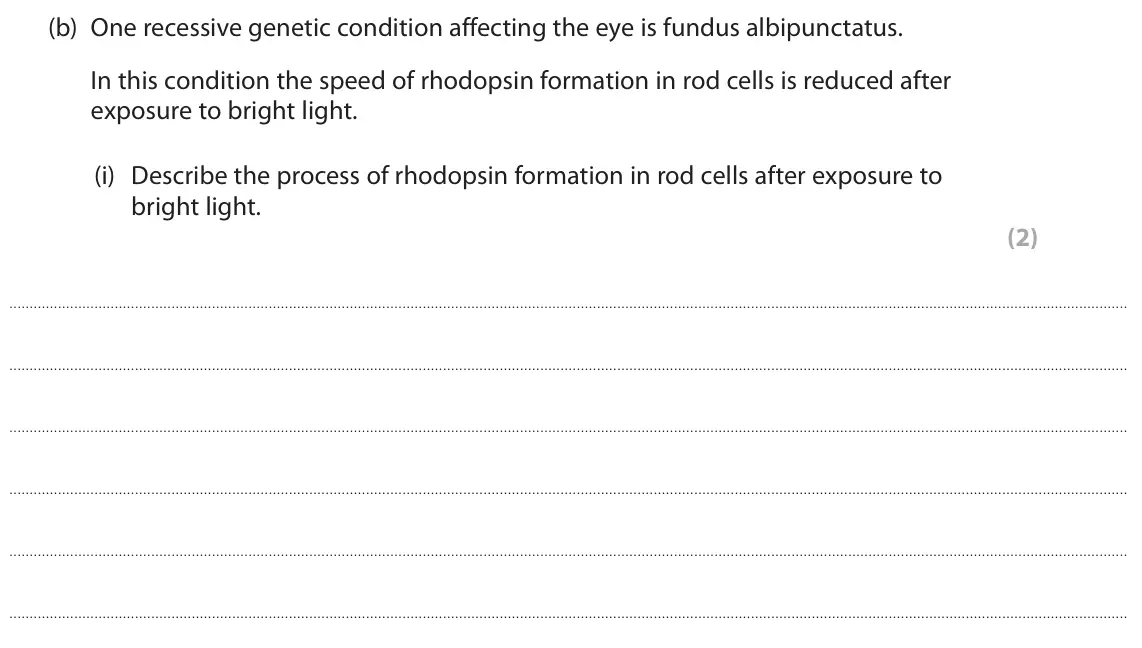
Q8(b)(i)
The whole paper ↗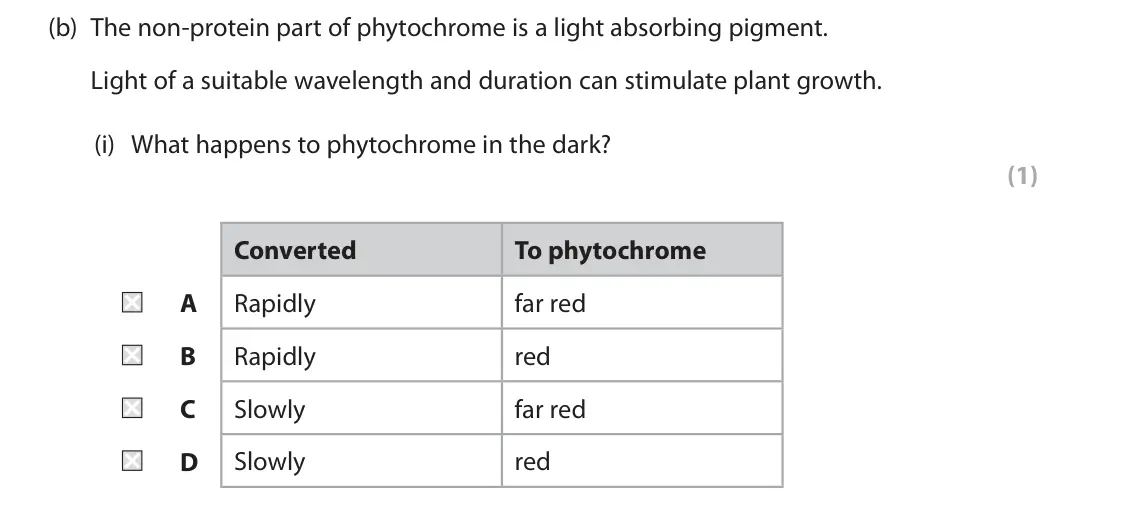
Q8(b)(ii)
The whole paper ↗
Q1(b)
The whole paper ↗
Q1(c)(i)
The whole paper ↗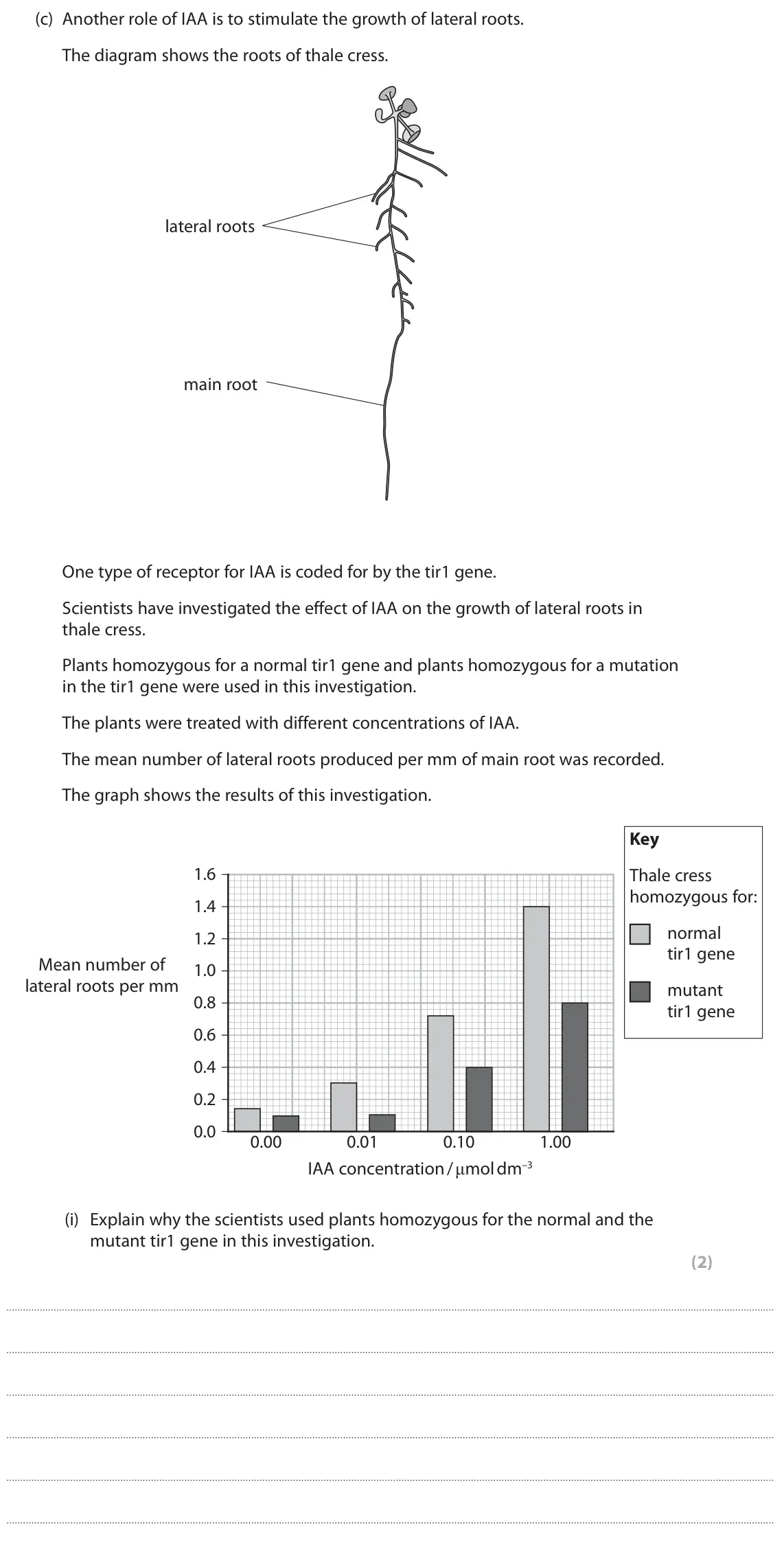
Q1(c)(ii)
The whole paper ↗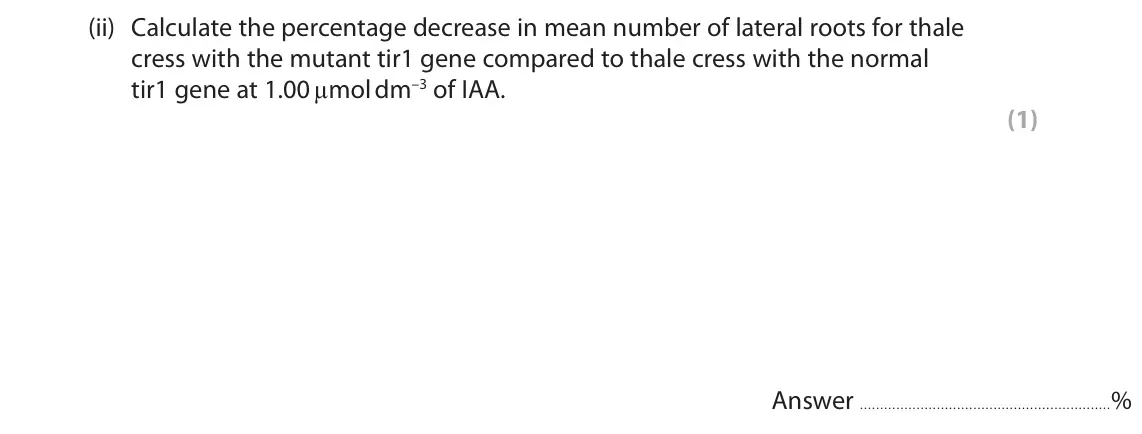
Q1(c)(iii)
The whole paper ↗
Q9(b)
The whole paper ↗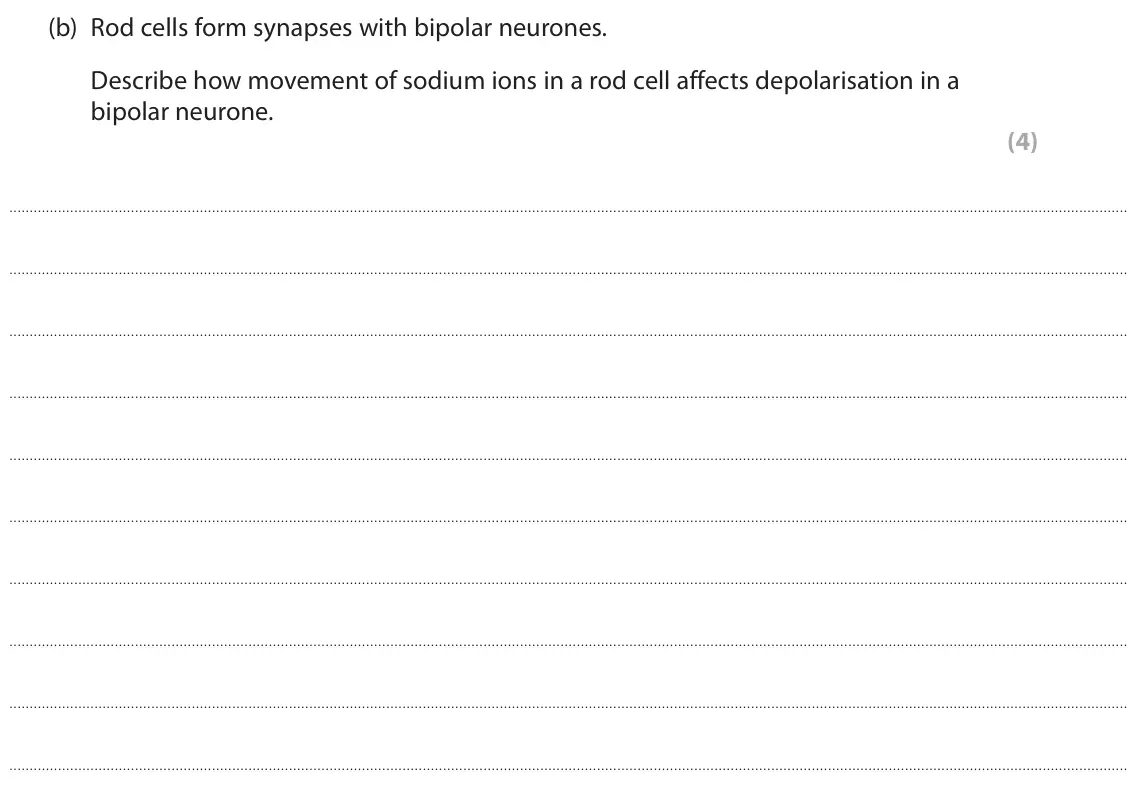
Q9(c)(i)
The whole paper ↗
Q9(c)(ii)
The whole paper ↗
Q1(a)(i)
The whole paper ↗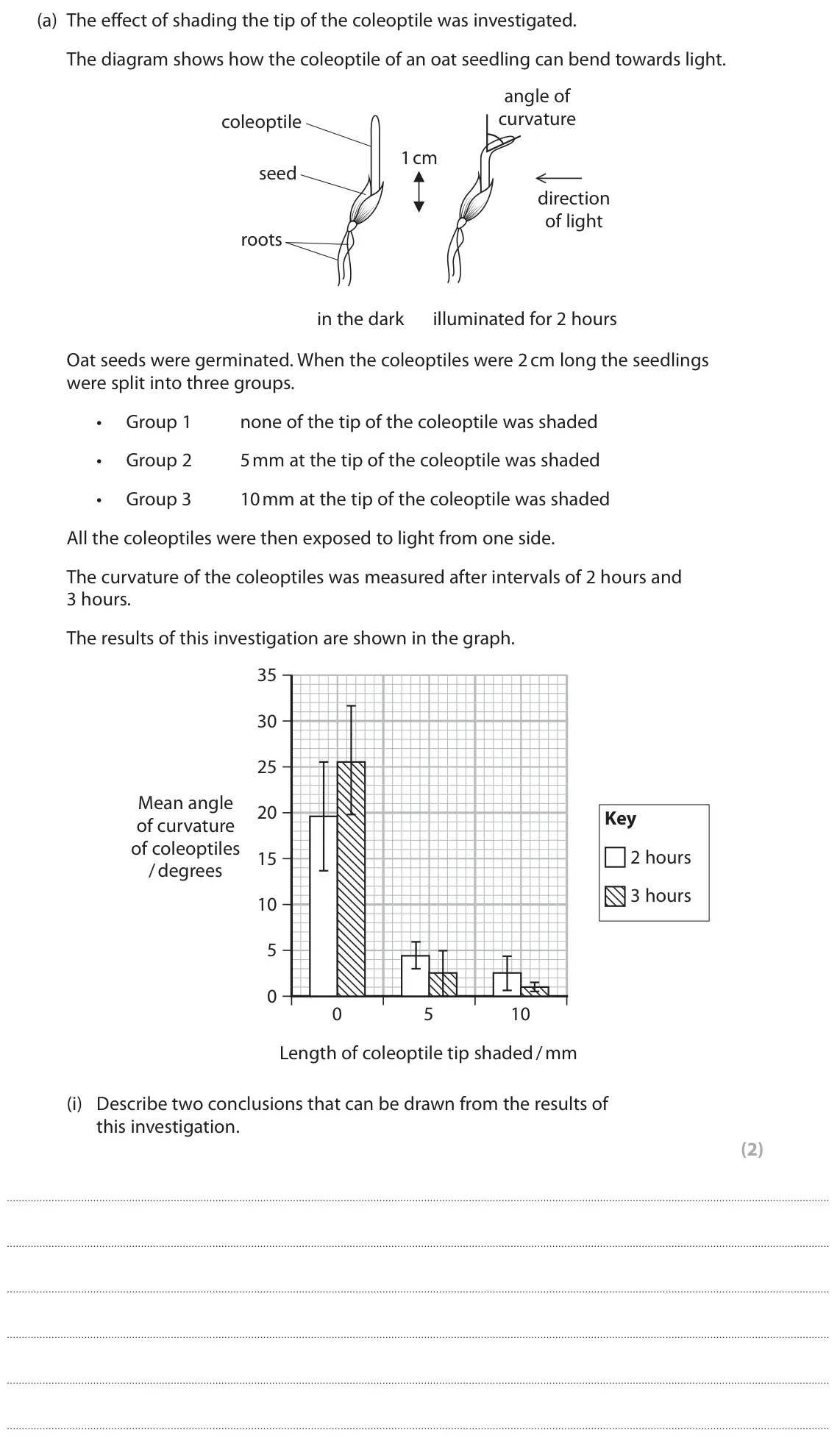
Q1(a)(ii)
The whole paper ↗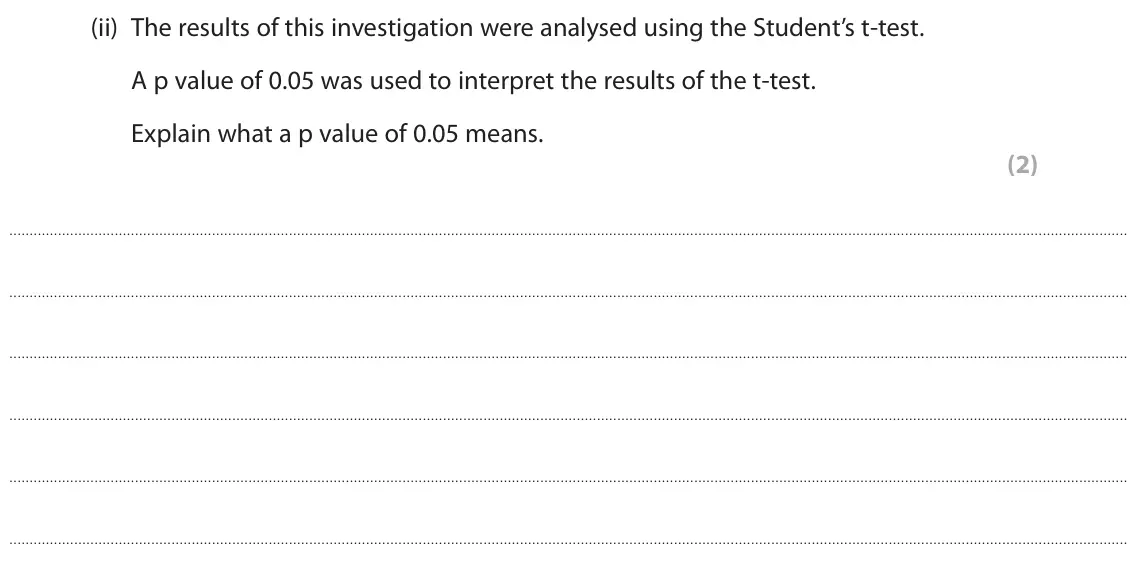
Q1(b)(i)
The whole paper ↗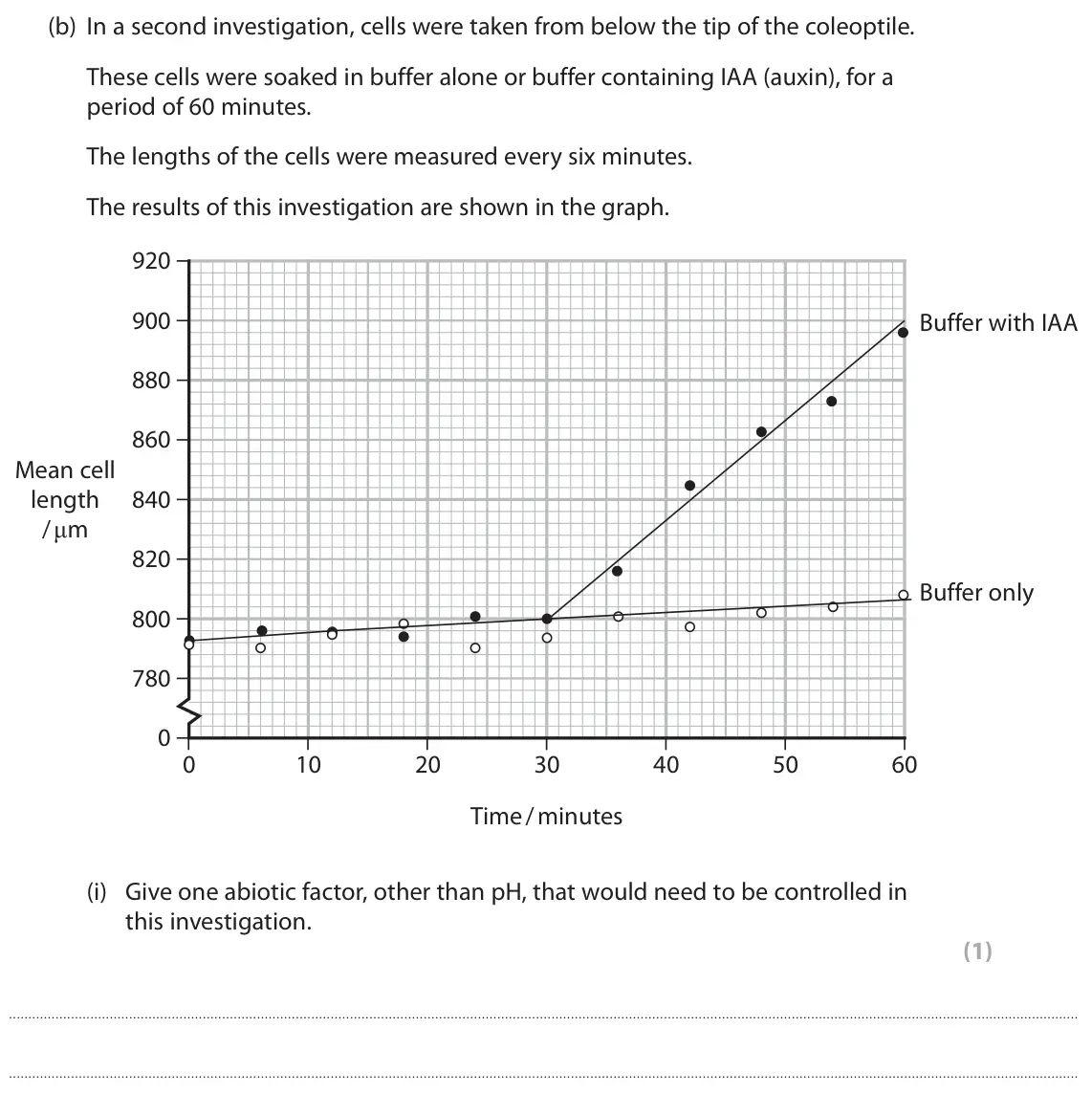
Q1(b)(ii)
The whole paper ↗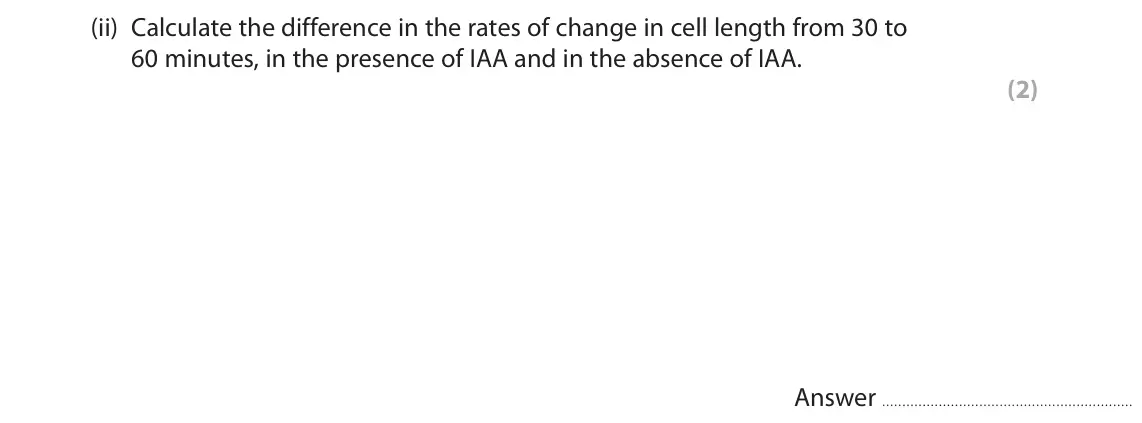
Q1(c)
The whole paper ↗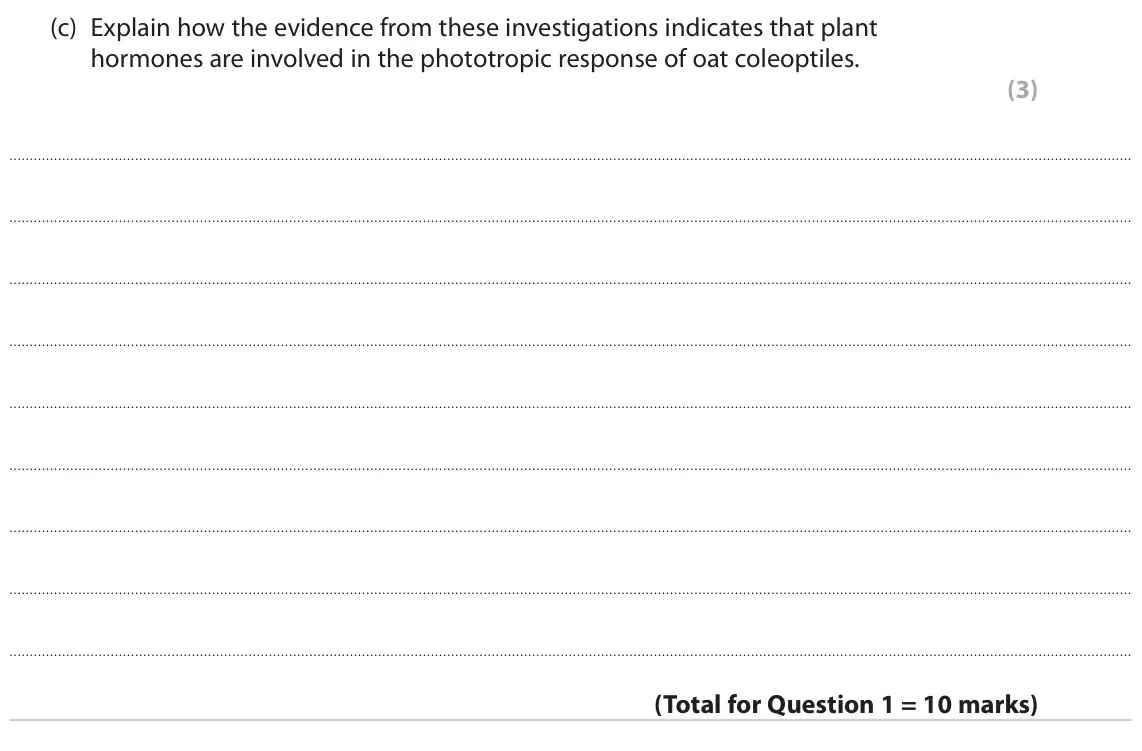
All 32 questions on Detecting stimuli and plant responses, as a list
- June 2025, Paper 2, Q4(a) (3 marks): Describe the pathway taken by nerve impulses from sensory cells in the eye to the part of the brain that forms the images. (3)
- June 2025, Paper 2, Q4(b) (3 marks): The fovea is part of the retina. In one study, the mean density of photosensitive cells in the fovea was found to be 164 000 ± 24 000 per mm2. The mean radius o
- June 2025, Paper 2, Q8(a)(i) (2 marks): State two ways that the active form of phytochrome (PFR) can be converted to the inactive form (PR). (2) 1 2
- June 2025, Paper 2, Q8(a)(ii) (3 marks): Arabidopsis is known as a long-day plant. Explain why Arabidopsis will flower when each day has 16 hours of light. (3)
- June 2025, Paper 2, Q8(b)(ii) (6 marks): Phytochromes and auxin are involved in the response of Arabidopsis plants to the presence of other plants growing nearby. Arabidopsis plants grow taller if ther
- June 2024, Paper 2, Q7(b)(i) (2 marks): Describe the process of rhodopsin formation in rod cells after exposure to bright light. (2)
- June 2024, Paper 2, Q8(b)(i) (1 mark): What happens to phytochrome in the dark? (1) Converted To phytochrome A Rapidly far red B Rapidly red C Slowly far red D Slowly red
- June 2024, Paper 2, Q8(b)(ii) (3 marks): Explain how the response of phytochrome to a light stimulus can cause an increase in plant growth. (3)
- June 2024, Paper 3, Q1(b) (3 marks): One role of IAA is to stimulate the phototropic response of shoots. Describe how IAA causes a phototropic response in the shoots of a plant. (3)
- June 2024, Paper 3, Q1(c)(i) (2 marks): Explain why the scientists used plants homozygous for the normal and the mutant tir1 gene in this investigation. (2)
- June 2024, Paper 3, Q1(c)(ii) (1 mark): Calculate the percentage decrease in mean number of lateral roots for thale cress with the mutant tir1 gene compared to thale cress with the normal tir1 gene at
- June 2024, Paper 3, Q1(c)(iii) (2 marks): Deduce the effect of the mutation in the tir1 gene on the response of thale cress to IAA. (2)
- June 2023, Paper 2, Q9(b) (4 marks): Rod cells form synapses with bipolar neurones. Describe how movement of sodium ions in a rod cell affects depolarisation in a bipolar neurone. (4)
- June 2023, Paper 2, Q9(c)(i) (2 marks): Describe the role of the photosensitive pigment phytochrome in the flowering of long‑day plants. (2)
- June 2023, Paper 2, Q9(c)(ii) (3 marks): Devise an investigation to find out if a species of plant is a long-day plant or a short‑day plant. (3)
- June 2022, Paper 3, Q1(a)(i) (2 marks): Describe two conclusions that can be drawn from the results of this investigation. (2)
- June 2022, Paper 3, Q1(a)(ii) (2 marks): The results of this investigation were analysed using the Student’s t-test. A p value of 0.05 was used to interpret the results of the t-test. Explain what a p
- June 2022, Paper 3, Q1(b)(i) (1 mark): Give one abiotic factor, other than pH, that would need to be controlled in this investigation. (1)
- June 2022, Paper 3, Q1(b)(ii) (2 marks): Calculate the difference in the rates of change in cell length from 30 to 60 minutes, in the presence of IAA and in the absence of IAA. (2) Answer
- June 2022, Paper 3, Q1(c) (3 marks): Explain how the evidence from these investigations indicates that plant hormones are involved in the phototropic response of oat coleoptiles. (3)
- November 2021, Paper 2, Q6(a)(iv) (2 marks): Give reasons why the infected alfalfa plant cells are grown on agar containing IAA in stage 5. (2)
- November 2021, Paper 2, Q10(a) (5 marks): A current is produced by a rod cell when ions move through the cell surface membrane of a rod cell. The graph shows the effect of increasing light intensity on
- November 2021, Paper 3, Q1(b) (4 marks): Describe the role of IAA (auxin) in the phototropic response of plants. (4)
- October 2020, Paper 2, Q3(a) (4 marks): The diagram shows an oat seedling in part of a field. coleoptile of oat seedling surface of soil in the field oat seed Cells in the tip of the oat coleoptile re
- October 2020, Paper 2, Q3(b)(i) (1 mark): Which row correctly describes the effects of sunlight on phytochrome? (1) Change in form of Speed of change phytochrome A PFR to PR slow B PFR to PR rapid C PR
- October 2020, Paper 2, Q3(b)(ii) (1 mark): Phytochrome can be described as (1) A a form of opsin B a photosensitive pigment C an isomer of retinal D a type of cytochrome
- October 2020, Paper 2, Q3(b)(iii) (1 mark): Give one example of a growth response of a plant that is affected by phytochrome. (1)
- October 2020, Paper 3, Q7(a) (5 marks): Describe how ‘eyes relay visual information’ to the brain (paragraph 2). (5)
- June 2019, Paper 2, Q9(c) (3 marks): When the child was shown the cheeseburger, information would have been sent from the eye to the brain. Describe the role of sodium ions in the functioning of a
- June 2019, Paper 3, Q5(b)(i) (3 marks): Explain why the plants were placed in a box in complete darkness. (3)
- June 2019, Paper 3, Q5(b)(ii) (2 marks): The mean curvatures of the stems and the roots are shown in the graphs. Mean curvature of the stem in degrees 70 60 50 40 30 20 Key 10 *x.. . →* upright lettuce
- June 2018, Paper 2, Q4(a)(i) (1 mark): The non-protein part of the light-absorbing pigment in the rod cells of the retina is called (1) A IAA B opsin C retinal D rhodopsin
Questions, mark schemes and examiner’s reports are © Pearson Edexcel, from their published past papers. Plumi isn’t affiliated with any exam board. Want whole papers? Every Edexcel A-Level Biology A paper.
Rather write your answers by hand on iPad? Plumi marks them against the same mark schemes.