 plumi
Genomes, GM organisms and nature versus nurture: Edexcel A‑Level Biology A questions
Every Edexcel A-Level Biology A exam question on Genomes, GM organisms and nature versus nurture (specification points 8.16–8.19), 2016–2025, with its mark scheme and examiner’s report.
Find questions1,749
Calculations
Q7(b)(i)
The whole paper ↗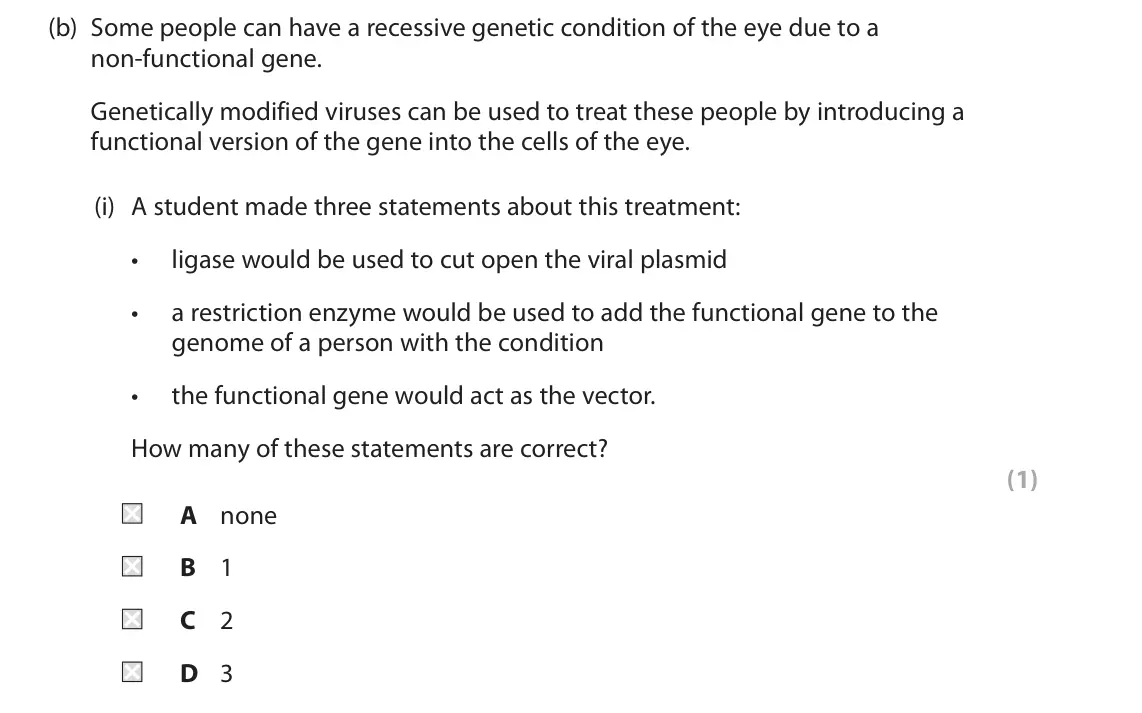
Q7(b)(iii)
The whole paper ↗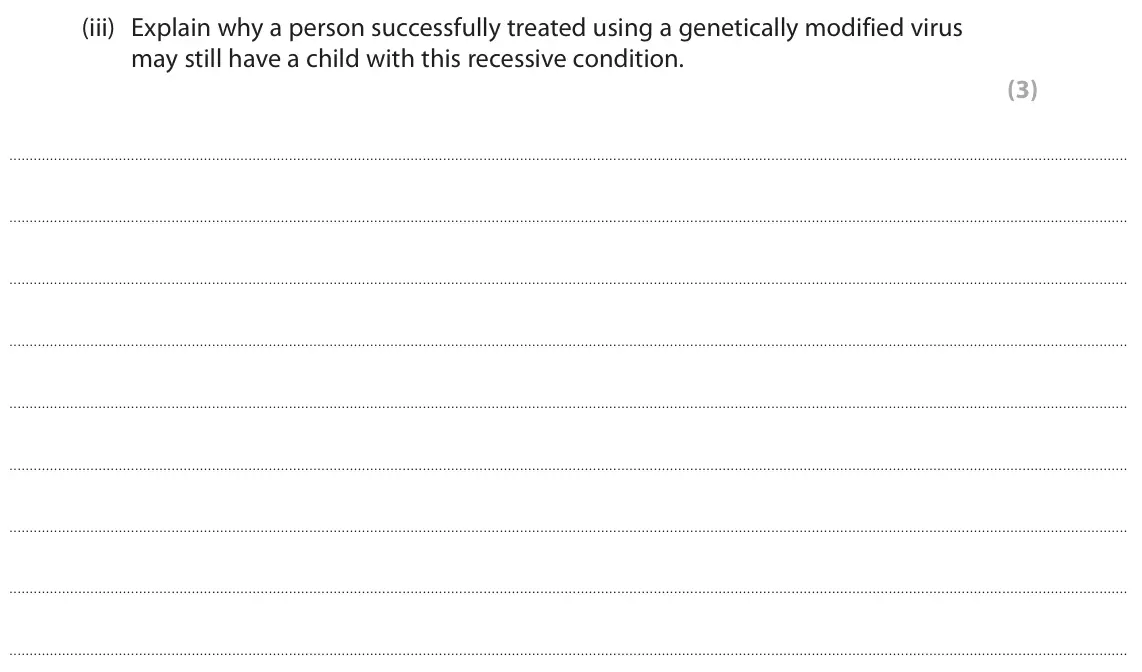
Q7(c)
The whole paper ↗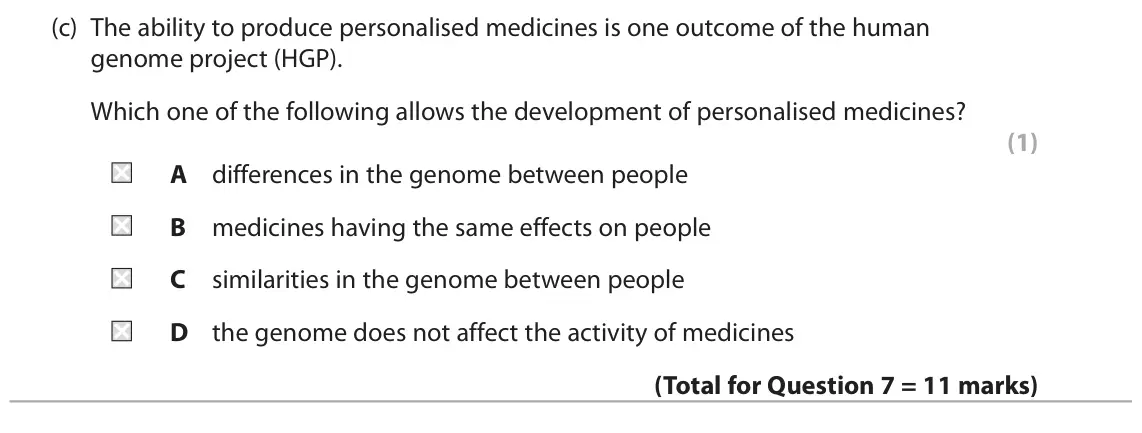
Q5(c)
The whole paper ↗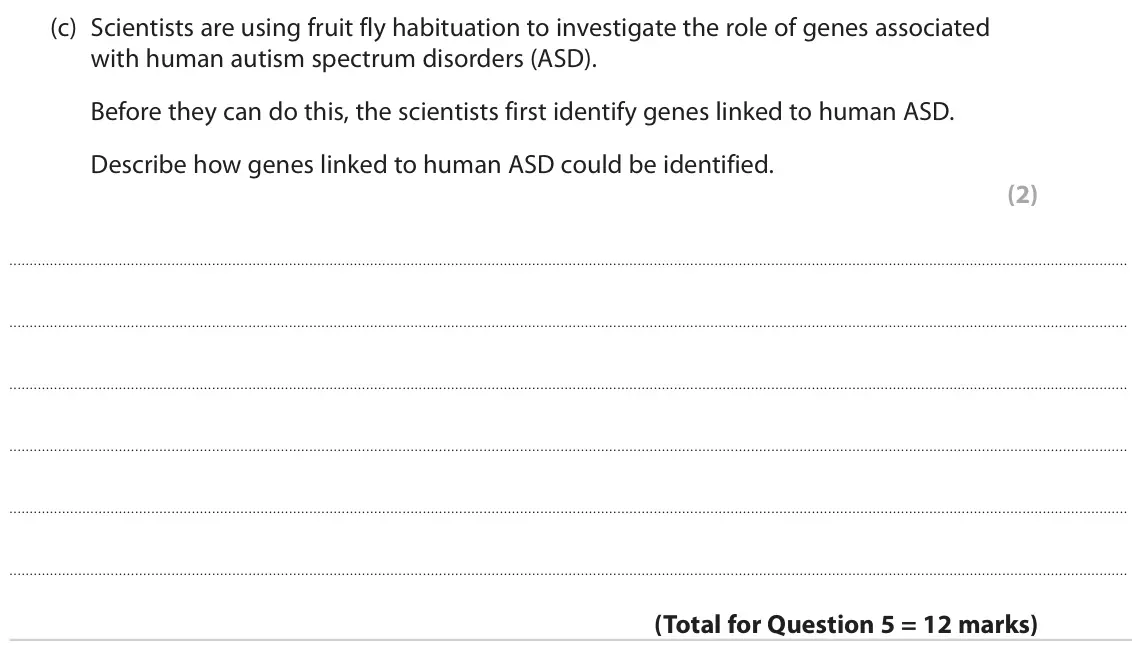
Q6(a)(i)
The whole paper ↗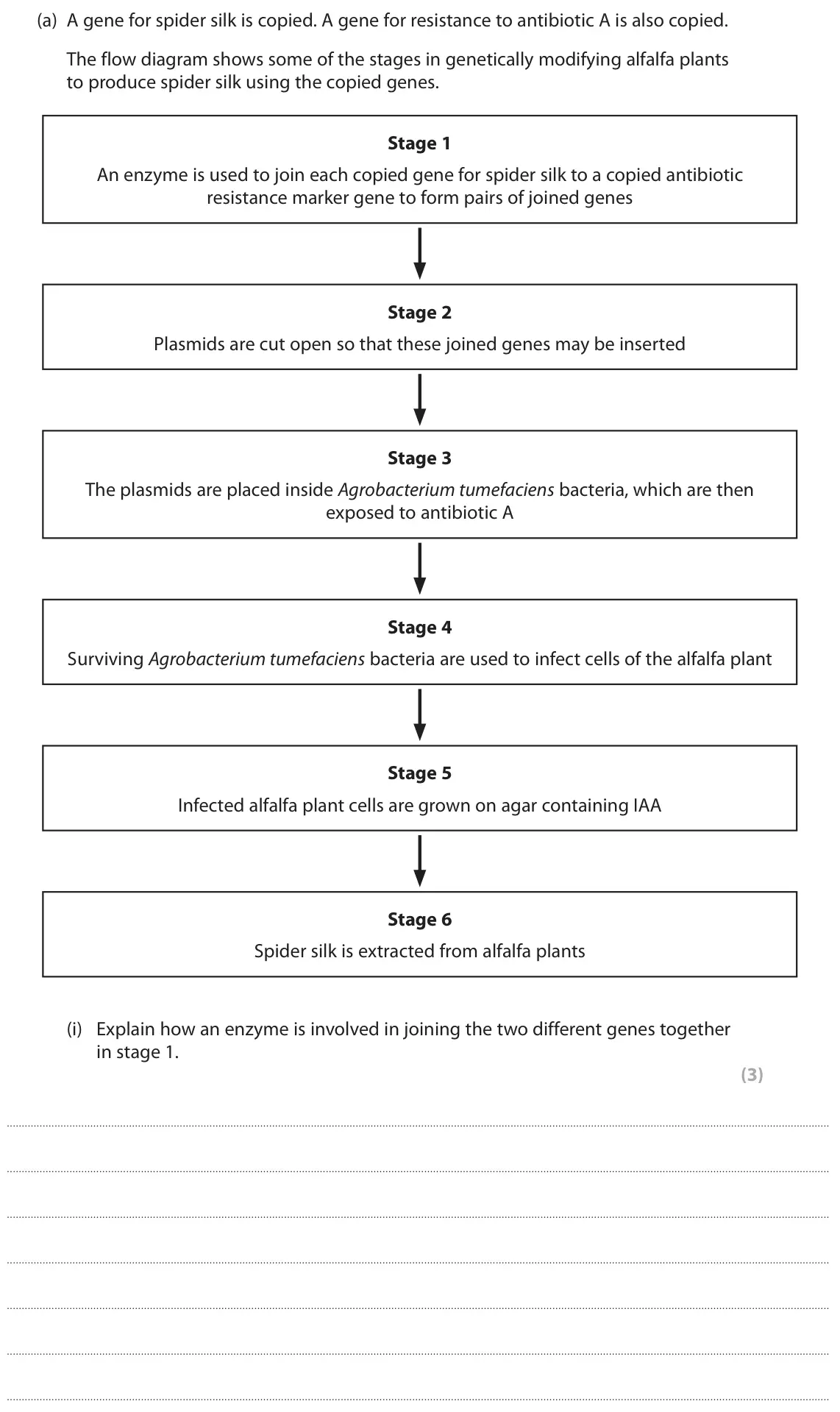
Q6(a)(ii)
The whole paper ↗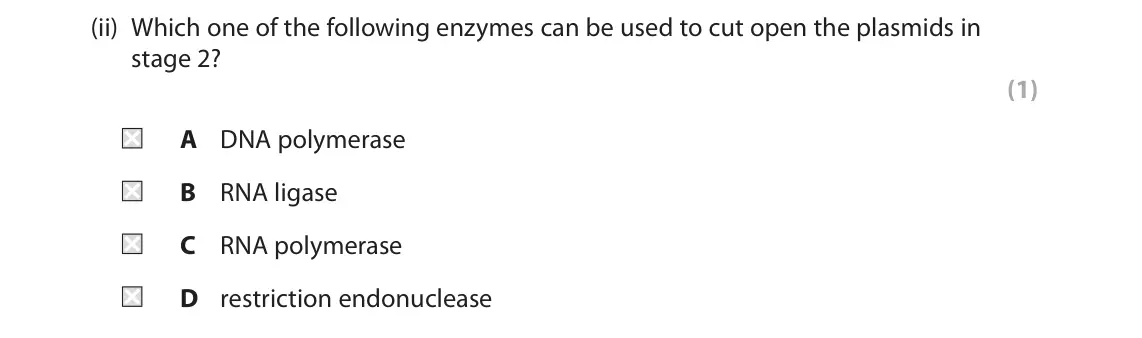
Q6(a)(iii)
The whole paper ↗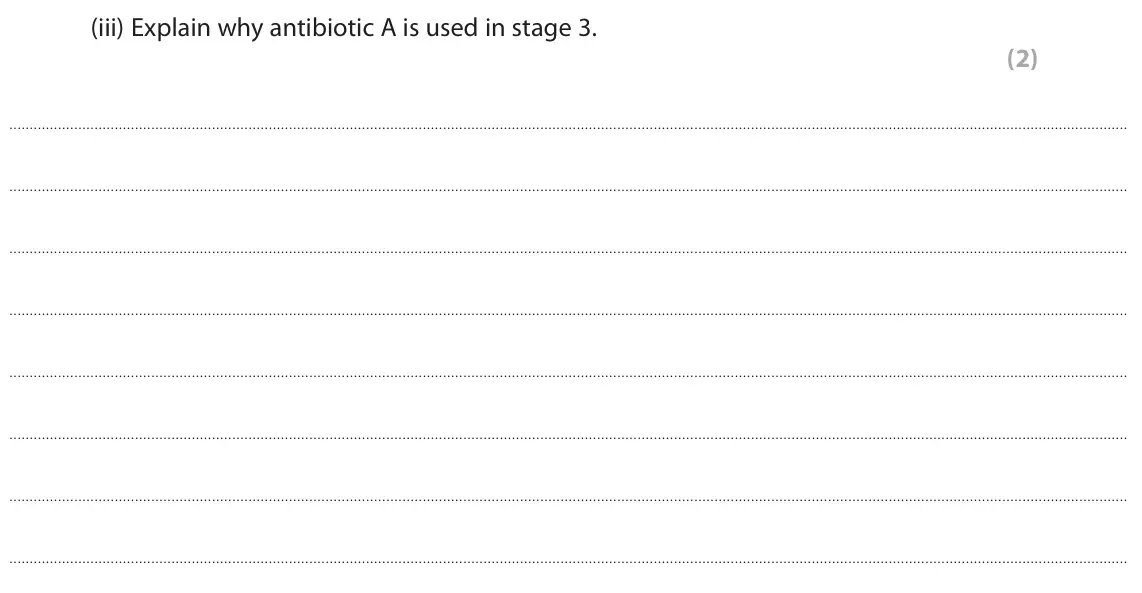
Q6(a)(v)
The whole paper ↗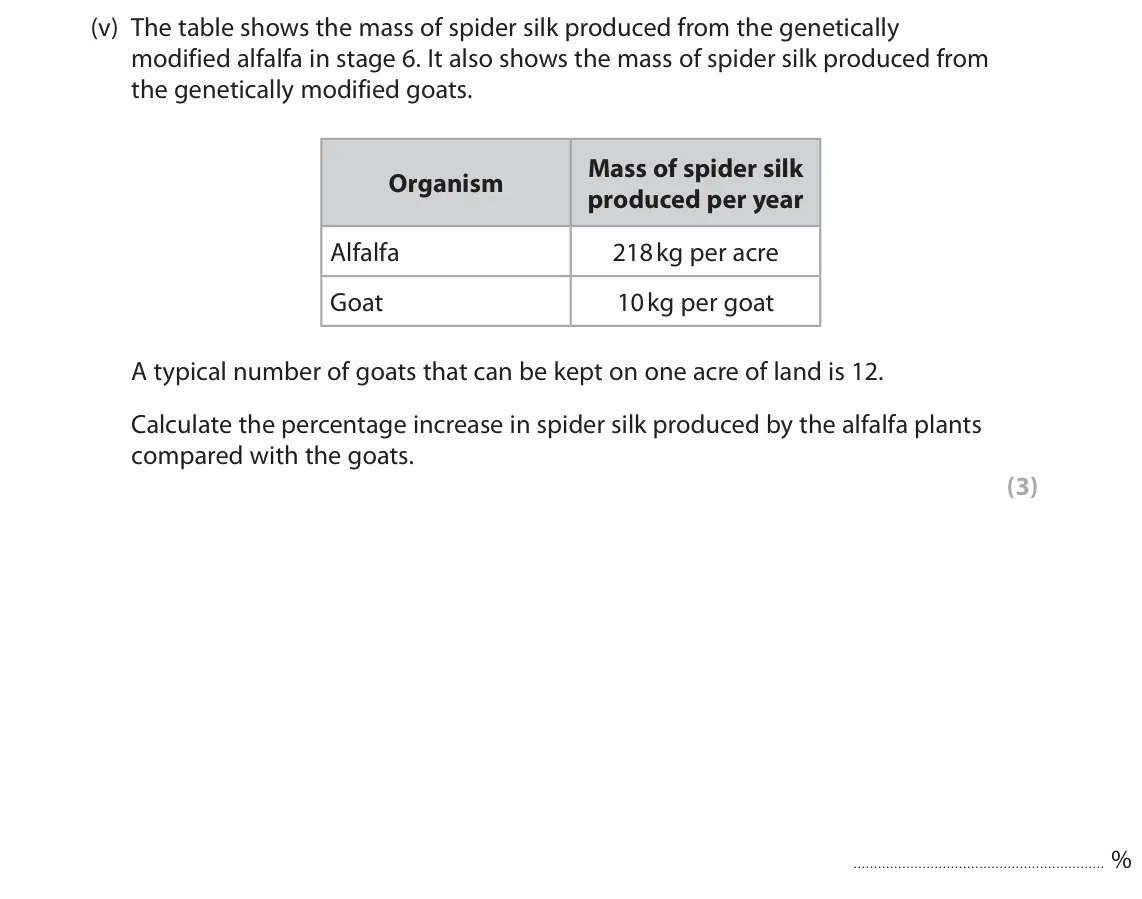
Q6(b)
The whole paper ↗
Q6(a)
The whole paper ↗
Q6(b)
The whole paper ↗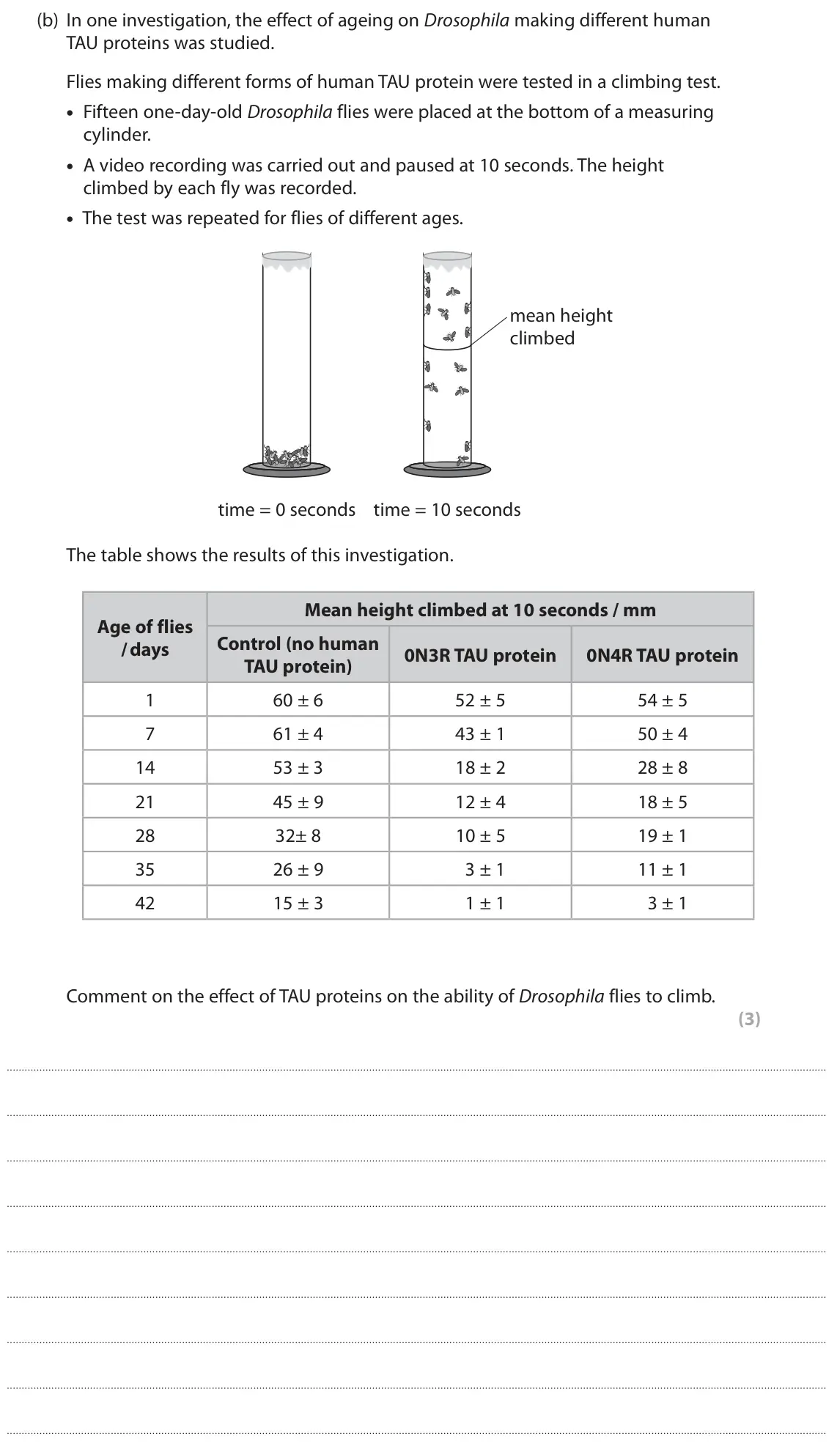
Q8(c)
The whole paper ↗
Q8(d)
The whole paper ↗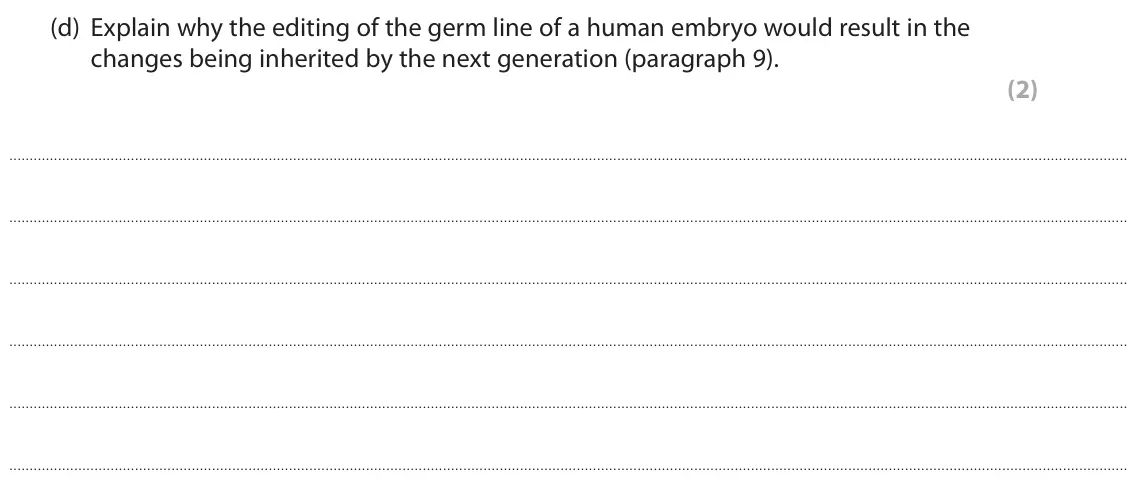
Q8(e)
The whole paper ↗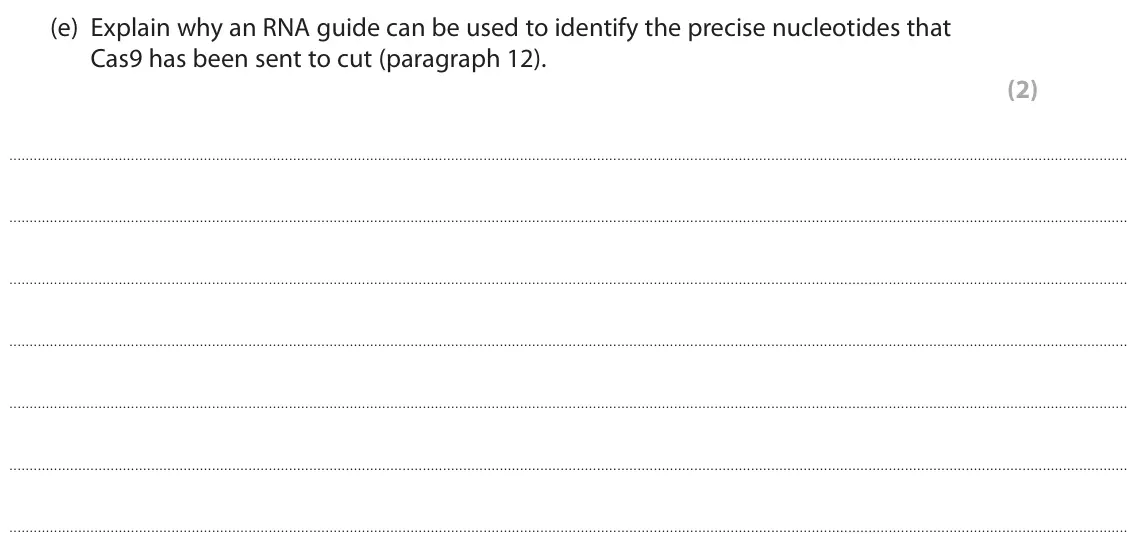
Q1(a)(i)
The whole paper ↗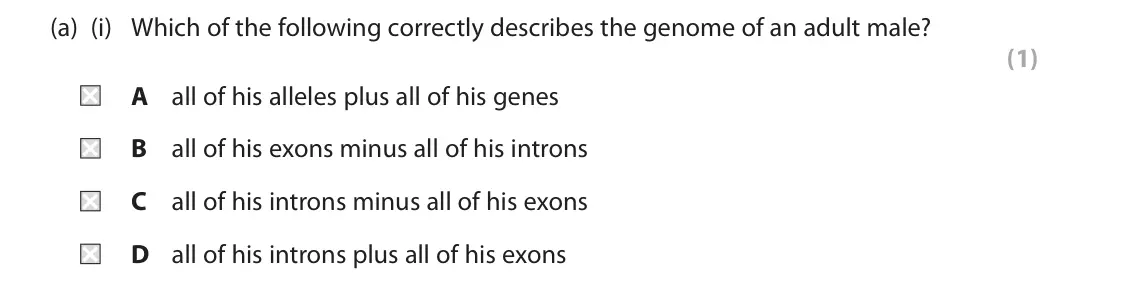
Q1(a)(ii)
The whole paper ↗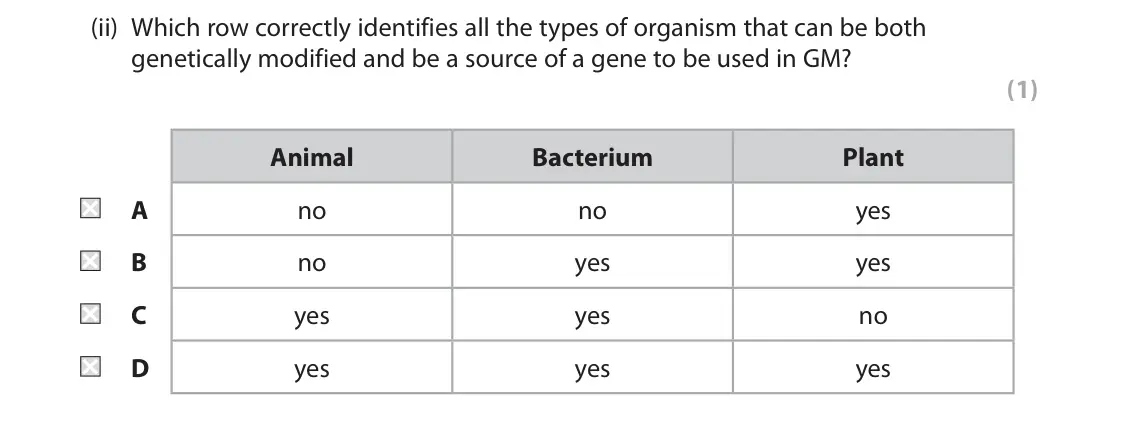
Q1(b)
The whole paper ↗
Q7(k)
The whole paper ↗
Q8(c)(i)
The whole paper ↗
Q8(c)(ii)
The whole paper ↗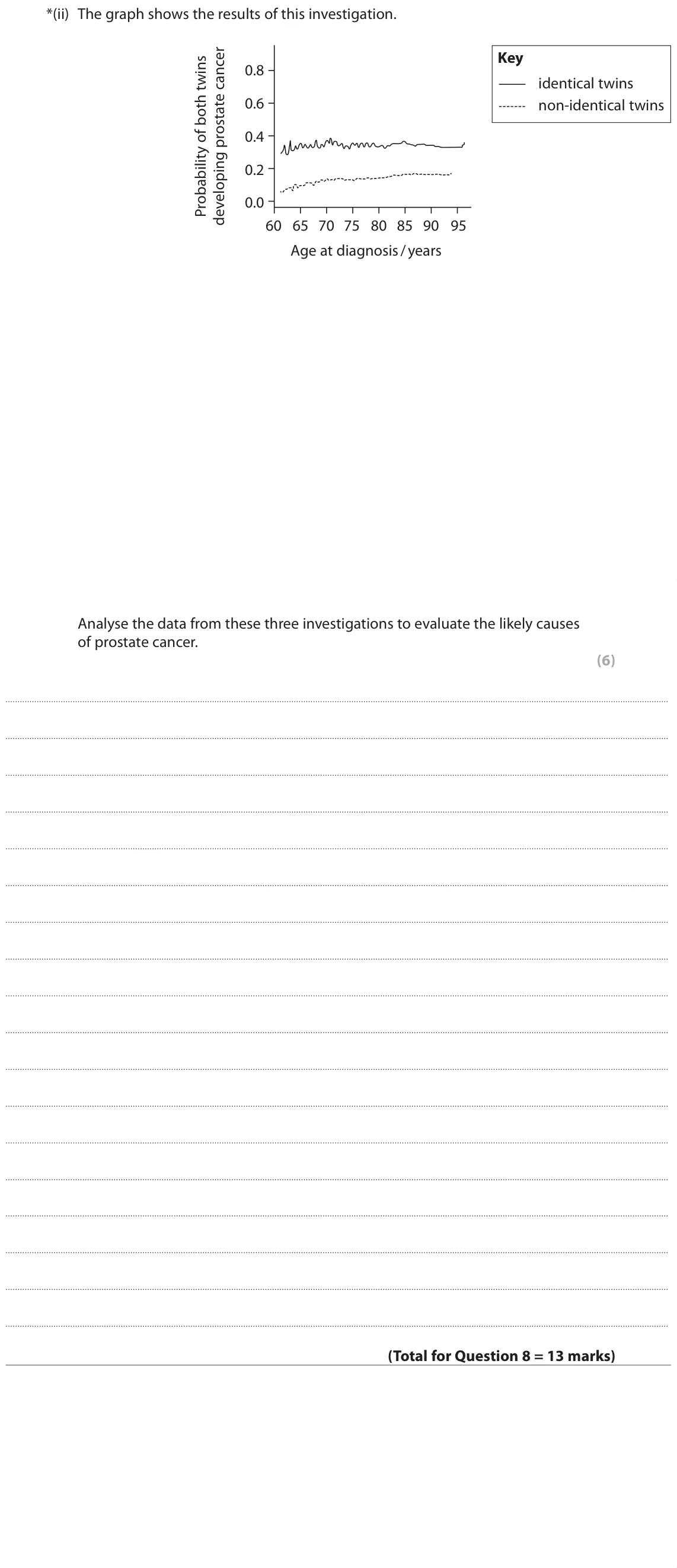
All 26 questions on Genomes, GM organisms and nature versus nurture, as a list
- June 2023, Paper 2, Q7(b)(i) (1 mark): A student made three statements about this treatment: • ligase would be used to cut open the viral plasmid • a restriction enzyme would be used to add the funct
- June 2023, Paper 2, Q7(b)(iii) (3 marks): Explain why a person successfully treated using a genetically modified virus may still have a child with this recessive condition. (3)
- June 2023, Paper 2, Q7(c) (1 mark): The ability to produce personalised medicines is one outcome of the human genome project (HGP). Which one of the following allows the development of personalise
- June 2022, Paper 3, Q5(c) (2 marks): Scientists are using fruit fly habituation to investigate the role of genes associated with human autism spectrum disorders (ASD). Before they can do this, the
- November 2021, Paper 2, Q6(a)(i) (3 marks): Explain how an enzyme is involved in joining the two different genes together in stage 1. (3)
- November 2021, Paper 2, Q6(a)(ii) (1 mark): Which one of the following enzymes can be used to cut open the plasmids in stage 2? (1) A DNA polymerase B RNA ligase C RNA polymerase D restriction endonucleas
- November 2021, Paper 2, Q6(a)(iii) (2 marks): Explain why antibiotic A is used in stage 3. (2)
- November 2021, Paper 2, Q6(a)(v) (3 marks): The table shows the mass of spider silk produced from the genetically modified alfalfa in stage 6. It also shows the mass of spider silk produced from the genet
- November 2021, Paper 2, Q6(b) (2 marks): Give two reasons why some people may be concerned about the use of genetically modified alfalfa as a source of spider silk. (2)
- November 2021, Paper 3, Q6(a) (4 marks): Describe how Drosophila flies could be genetically modified to produce one form of the human TAU protein. (4)
- November 2021, Paper 3, Q6(b) (3 marks): In one investigation, the effect of ageing on Drosophila making different human TAU proteins was studied. Flies making different forms of human TAU protein were
- November 2021, Paper 3, Q8(c) (3 marks): Describe how plant biologists could demonstrate the effect of deleting genes that attract pests to crops (paragraph 8). (3)
- November 2021, Paper 3, Q8(d) (2 marks): Explain why the editing of the germ line of a human embryo would result in the changes being inherited by the next generation (paragraph 9). (2)
- November 2021, Paper 3, Q8(e) (2 marks): Explain why an RNA guide can be used to identify the precise nucleotides that Cas9 has been sent to cut (paragraph 12). (2)
- October 2020, Paper 2, Q1(a)(i) (1 mark): Which of the following correctly describes the genome of an adult male? (1) A all of his alleles plus all of his genes B all of his exons minus all of his intro
- October 2020, Paper 2, Q1(a)(ii) (1 mark): Which row correctly identifies all the types of organism that can be both genetically modified and be a source of a gene to be used in GM? (1) Animal Bacterium
- October 2020, Paper 2, Q1(b) (3 marks): Genetically modified organisms (GMOs) can synthesise personalised proteins for use as medicines. Describe the role of enzymes involved in the synthesis of perso
- October 2020, Paper 3, Q7(k) (4 marks): Describe how bacteria can be genetically modified to produce a cytokine for the treatment of neurological and mental disorders (paragraph 24). (4)
- June 2019, Paper 2, Q8(c)(i) (2 marks): Explain why identical twins were included in this investigation. (2)
- June 2019, Paper 2, Q8(c)(ii) (6 marks): The graph shows the results of this investigation. Key 0.8 identical twins 0.6 non-identical twins 0.4 0.2 0.0 60 65 70 75 80 85 90 95 Age at diagnosis / years
- June 2018, Paper 2, Q10(c)(ii) (3 marks): Explain how human genome sequencing can be used to identify the mutations associated with MPS I. (3)
- June 2018, Paper 2, Q10(d)(ii) (2 marks): Explain why the use of CRISPR-Cas9 technology can be described as personalised medicine. (2)
- June 2018, Paper 3, Q7(e) (4 marks): Tabor used enzymes to genetically modify a ‘harmless species of Escherichia coli’ (paragraph 26). Describe the functions of the enzymes used to genetically modi
- June 2018, Paper 3, Q7(h) (2 marks): Explain why genetically modified bacteria delivering drugs ‘to the exact tissue in the body where they’re needed and nowhere else’ would decrease side effects (
- June 2017, Paper 2, Q10(e) (6 marks): New varieties of plants with desirable combinations of characteristics can be produced using the methods shown in the table. Method Example In wheat, genome D i
- June 2017, Paper 3, Q7(f) (1 mark): State what is meant by the genome of a thermophile (paragraph 14). (1)
Questions, mark schemes and examiner’s reports are © Pearson Edexcel, from their published past papers. Plumi isn’t affiliated with any exam board. Want whole papers? Every Edexcel A-Level Biology A paper.
Rather write your answers by hand on iPad? Plumi marks them against the same mark schemes.