 plumi
Evolution and speciation: Edexcel A‑Level Biology A questions
Every Edexcel A-Level Biology A exam question on Evolution and speciation (specification points 5.17–5.20), 2016–2025, with its mark scheme and examiner’s report.
Find questions1,749
Calculations
Q7(b)(i)
The whole paper ↗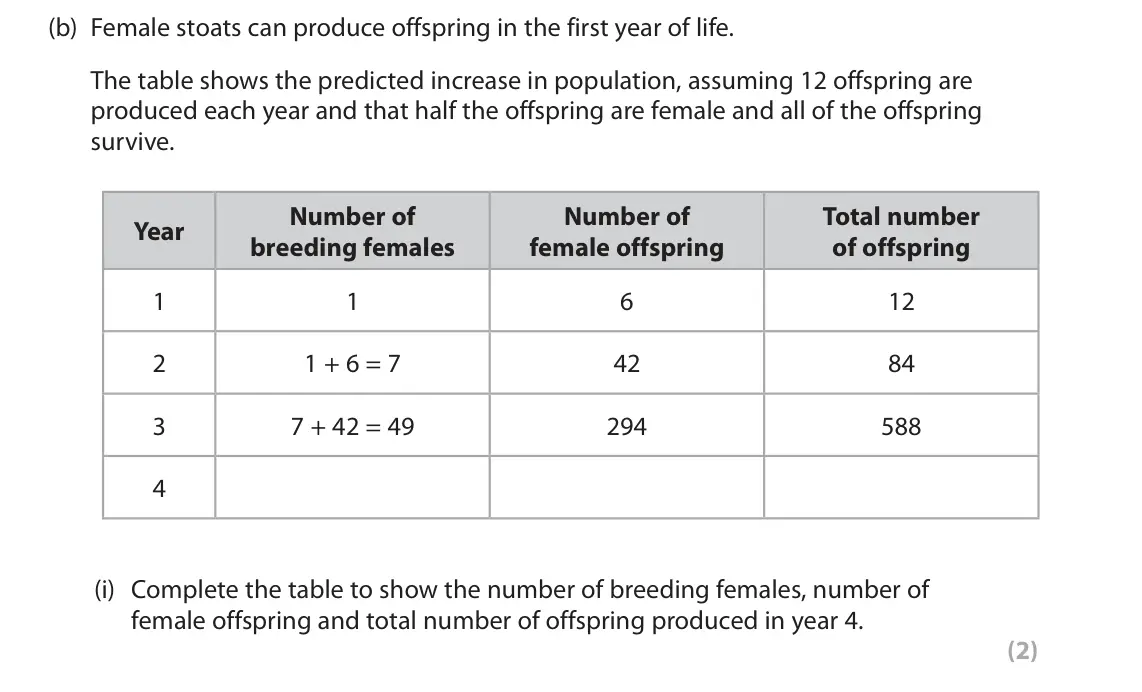
Q7(b)(ii)
The whole paper ↗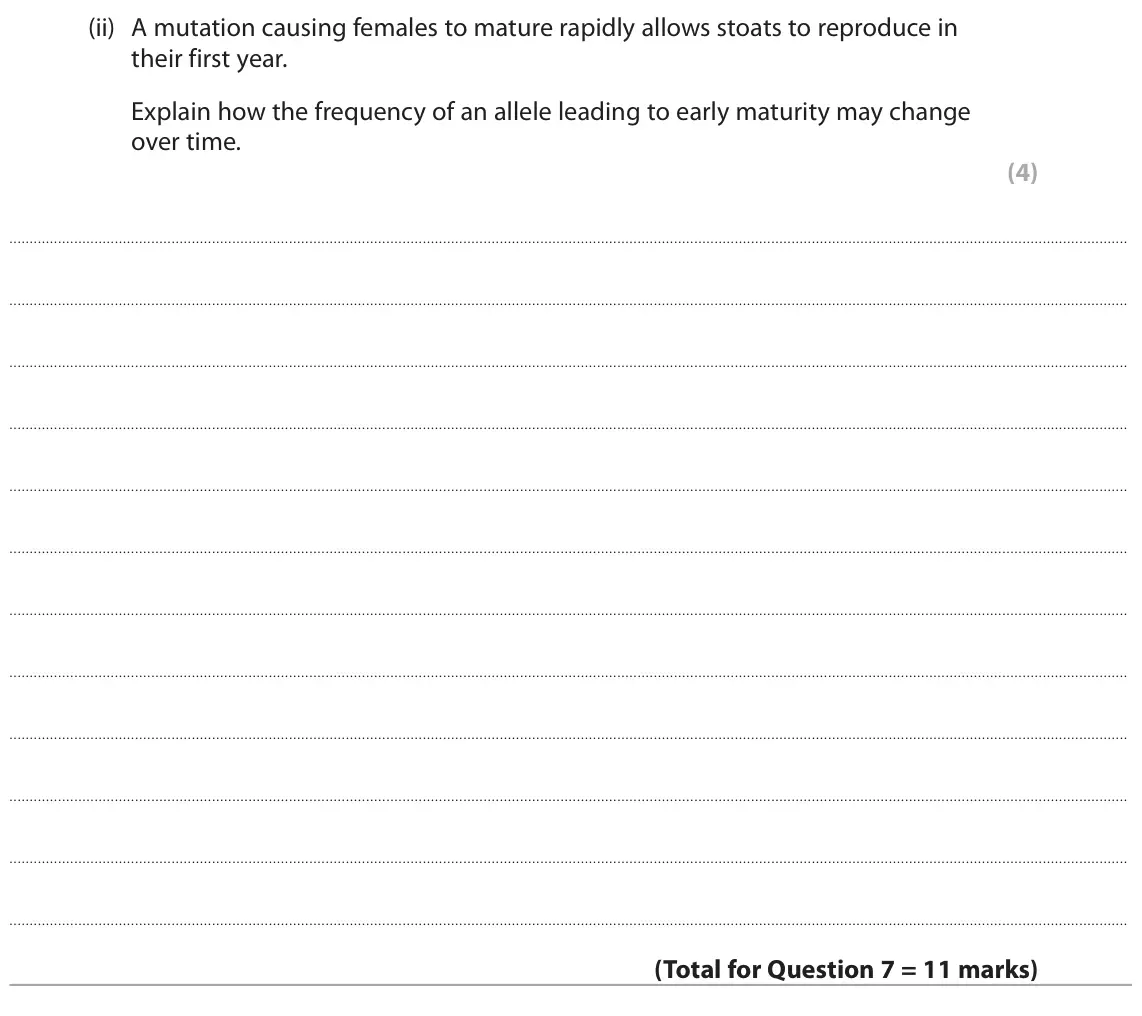
Q8(a)
The whole paper ↗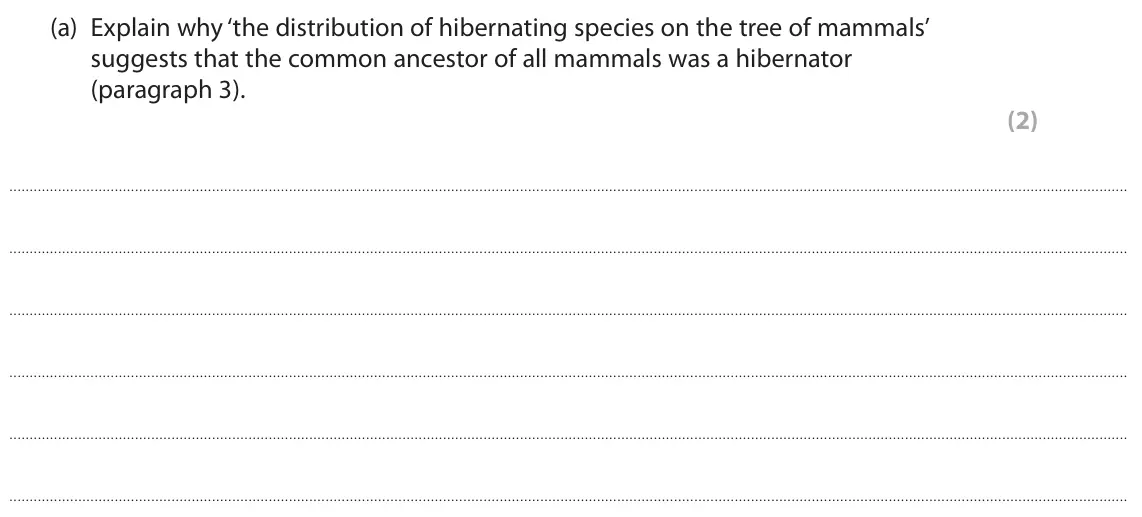
Q8(b)(i)
The whole paper ↗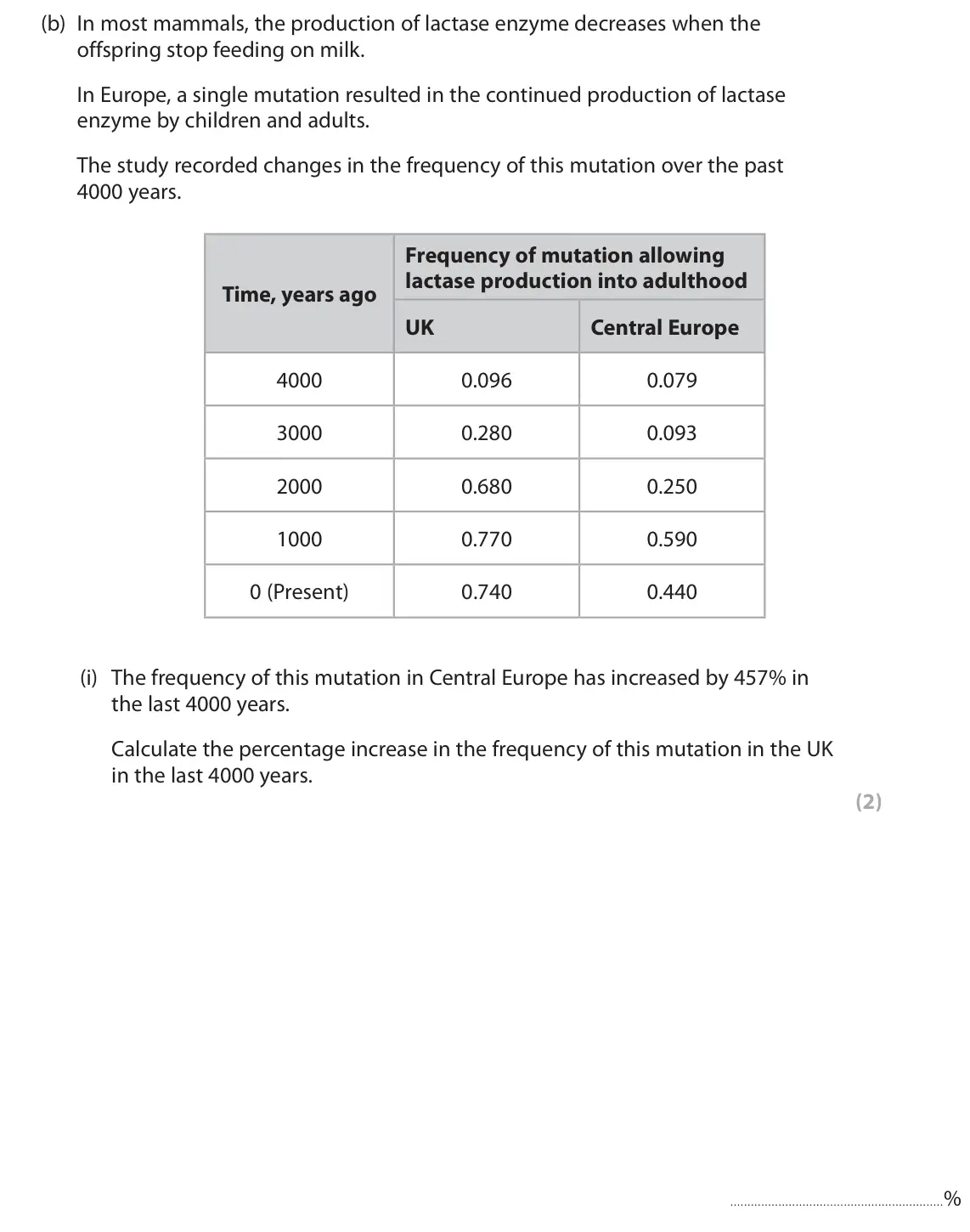
Q8(b)(ii)
The whole paper ↗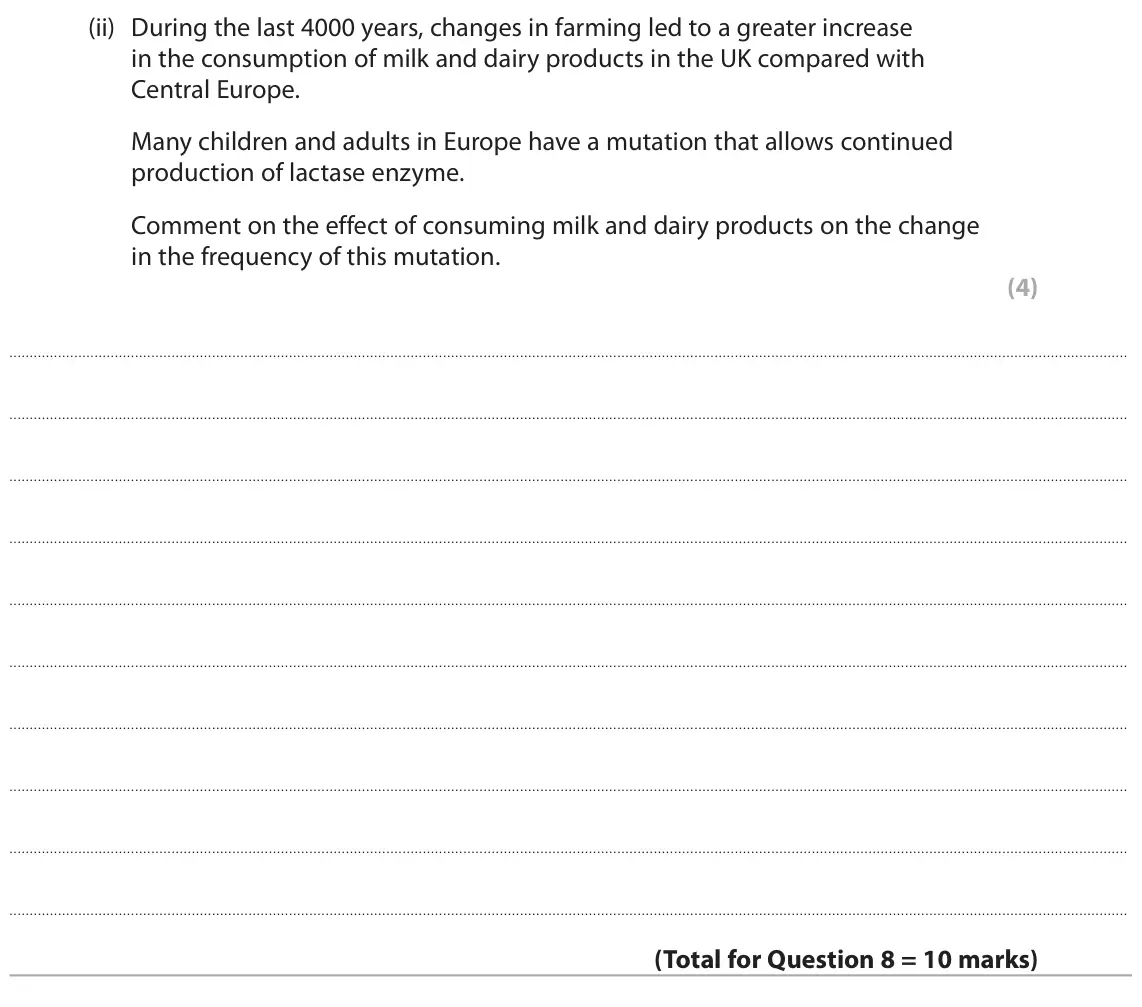
Q8(k)
The whole paper ↗
Q6(b)(ii)
The whole paper ↗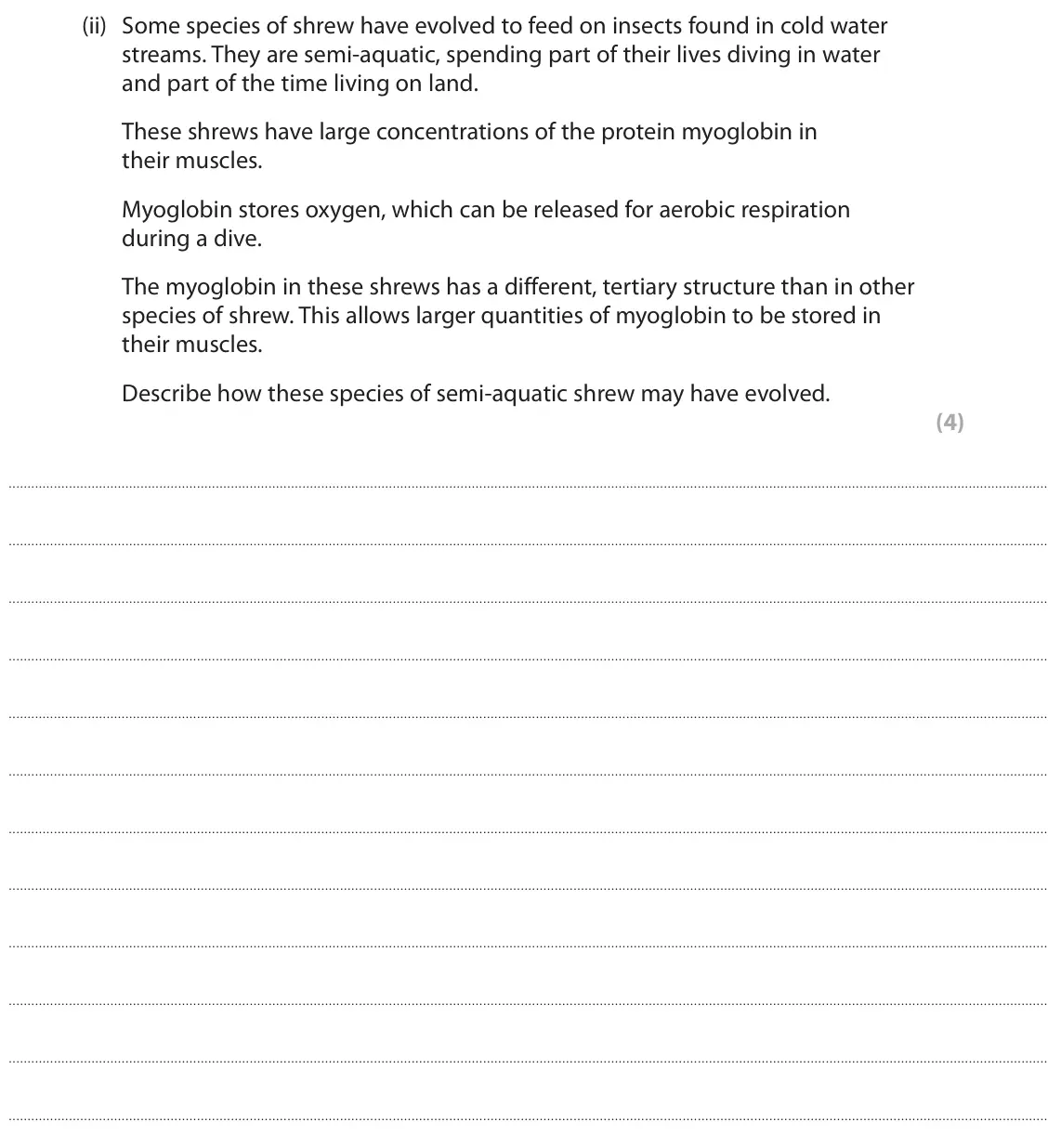
Q8(i)
The whole paper ↗
Q8(a)
The whole paper ↗
Q3(b)(i)
The whole paper ↗
Q3(c)
The whole paper ↗
Q7(a)
The whole paper ↗
Q7(l)
The whole paper ↗
Q10(b)(ii)
The whole paper ↗
Q7(g)
The whole paper ↗
All 15 questions on Evolution and speciation, as a list
- June 2025, Paper 1, Q7(b)(i) (2 marks): Complete the table to show the number of breeding females, number of female offspring and total number of offspring produced in year 4. (2)
- June 2025, Paper 1, Q7(b)(ii) (4 marks): A mutation causing females to mature rapidly allows stoats to reproduce in their first year. Explain how the frequency of an allele leading to early maturity ma
- June 2025, Paper 3, Q8(a) (2 marks): Explain why ‘the distribution of hibernating species on the tree of mammals’ suggests that the common ancestor of all mammals was a hibernator (paragraph 3). (2
- June 2024, Paper 1, Q8(b)(i) (2 marks): The frequency of this mutation in Central Europe has increased by 457% in the last 4000 years. Calculate the percentage increase in the frequency of this mutati
- June 2024, Paper 1, Q8(b)(ii) (4 marks): During the last 4000 years, changes in farming led to a greater increase in the consumption of milk and dairy products in the UK compared with Central Europe. M
- June 2024, Paper 3, Q8(k) (3 marks): Describe how sympatric speciation could have occurred in the moths living on sloths (Box 4). (3)
- June 2023, Paper 1, Q6(b)(ii) (4 marks): Some species of shrew have evolved to feed on insects found in cold water streams. They are semi-aquatic, spending part of their lives diving in water and part
- June 2023, Paper 3, Q8(i) (4 marks): The structure of the oxygen-evolving complex is similar to that of catalase, ‘it looks as if it evolved from two catalase enzymes lashed together’ (paragraph 17
- June 2022, Paper 3, Q8(a) (3 marks): Explain why natural selection took place in Darwin’s Galapagos finches (paragraph 3). (3)
- November 2021, Paper 1, Q3(b)(i) (3 marks): Explain why the percentage of elephants without tusks in Mozambique will probably increase in the future. (3)
- June 2019, Paper 1, Q3(c) (4 marks): Explain how these two species of snake could have arisen from a common ancestor. (4)
- June 2019, Paper 3, Q7(a) (5 marks): Describe how different species of cichlid fish have evolved in lakes and rivers in Africa. (5)
- June 2018, Paper 3, Q7(l) (1 mark): Name one process that would have validated Pettersson’s paper before it was published in the journal known as the Proceedings of the National Academy of Science
- June 2017, Paper 1, Q10(b)(ii) (3 marks): Explain how two species of African elephant could evolve from a common ancestor. (3)
- June 2017, Paper 3, Q7(g) (5 marks): Explain how cyanobacteria evolved to ‘handle high temperatures’ (paragraphs 14 and 15). (5)
Questions, mark schemes and examiner’s reports are © Pearson Edexcel, from their published past papers. Plumi isn’t affiliated with any exam board. Want whole papers? Every Edexcel A-Level Biology A paper.
Rather write your answers by hand on iPad? Plumi marks them against the same mark schemes.