 plumi
Ecosystems and succession: Edexcel A‑Level Biology A questions
Every Edexcel A-Level Biology A exam question on Ecosystems and succession (specification points 5.1–5.4), 2016–2025, with its mark scheme and examiner’s report.
Find questions1,749
Calculations
Q1(a)(i)
The whole paper ↗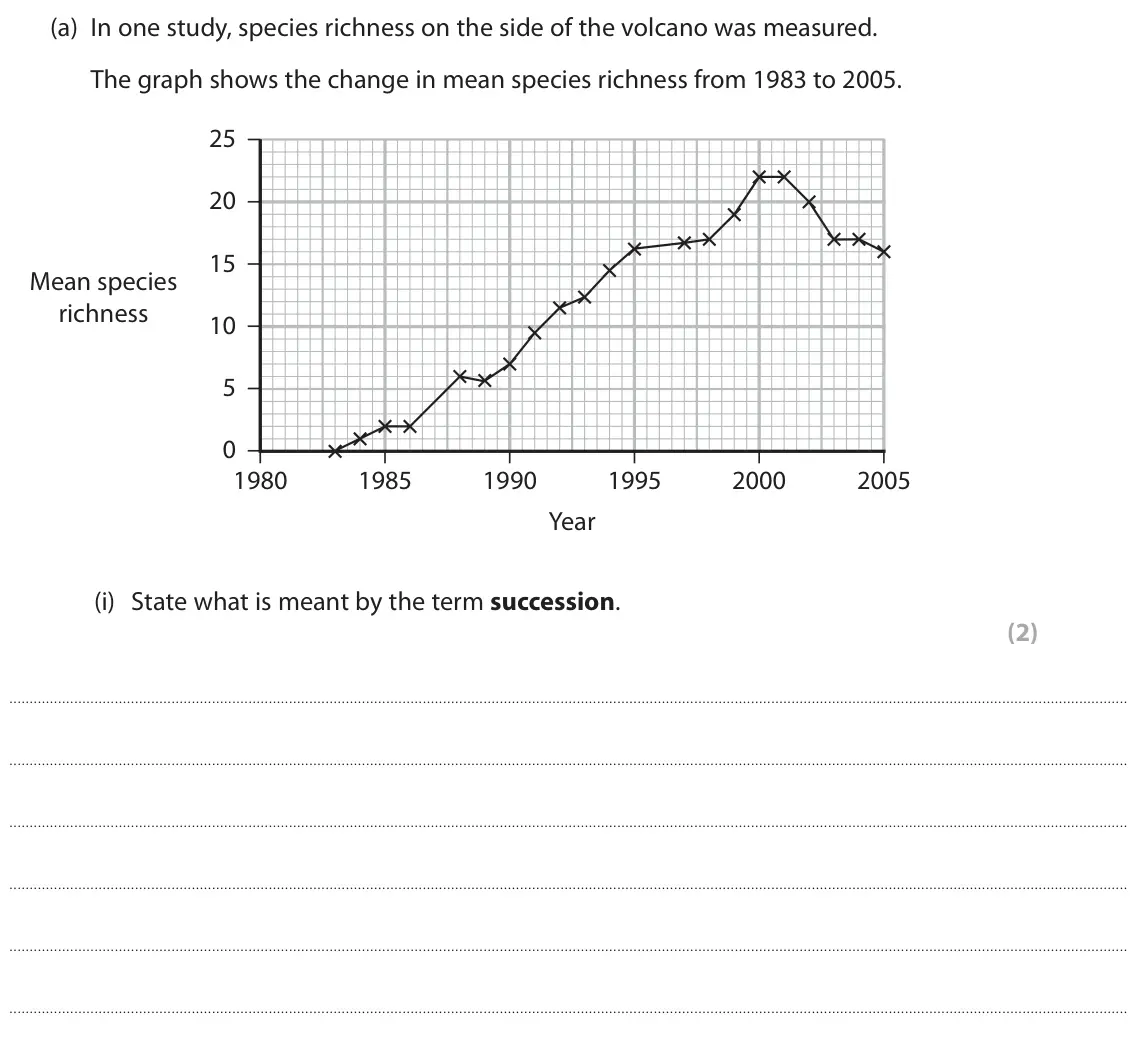
Q1(a)(ii)
The whole paper ↗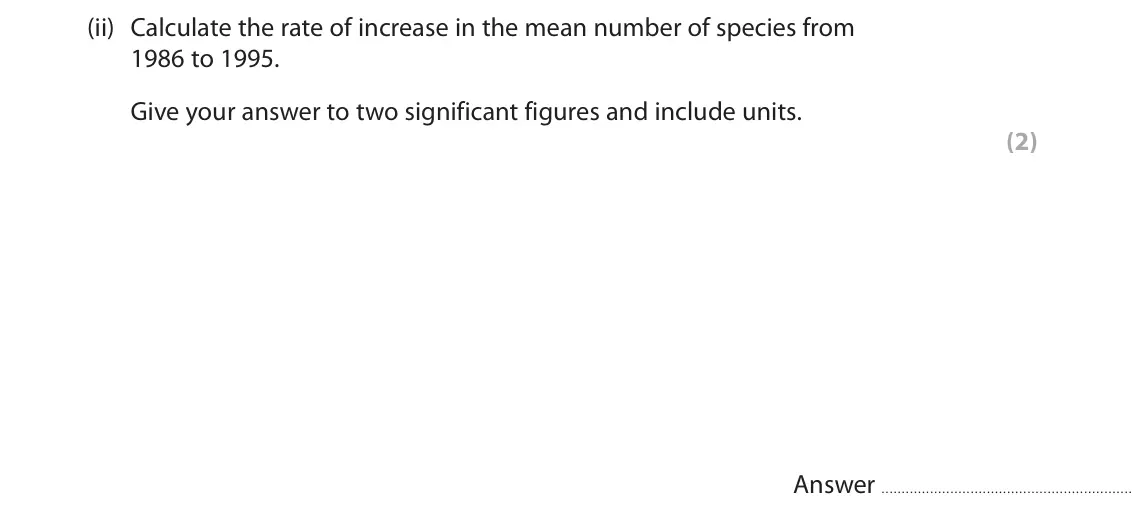
Q1(a)(iii)
The whole paper ↗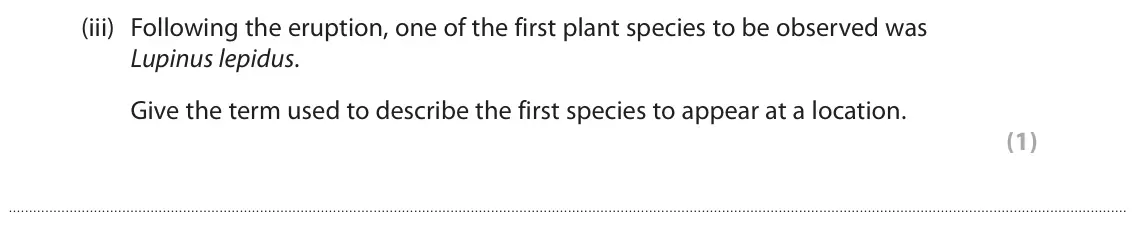
Q6(a)(ii)
The whole paper ↗
Q6(b)(i)
The whole paper ↗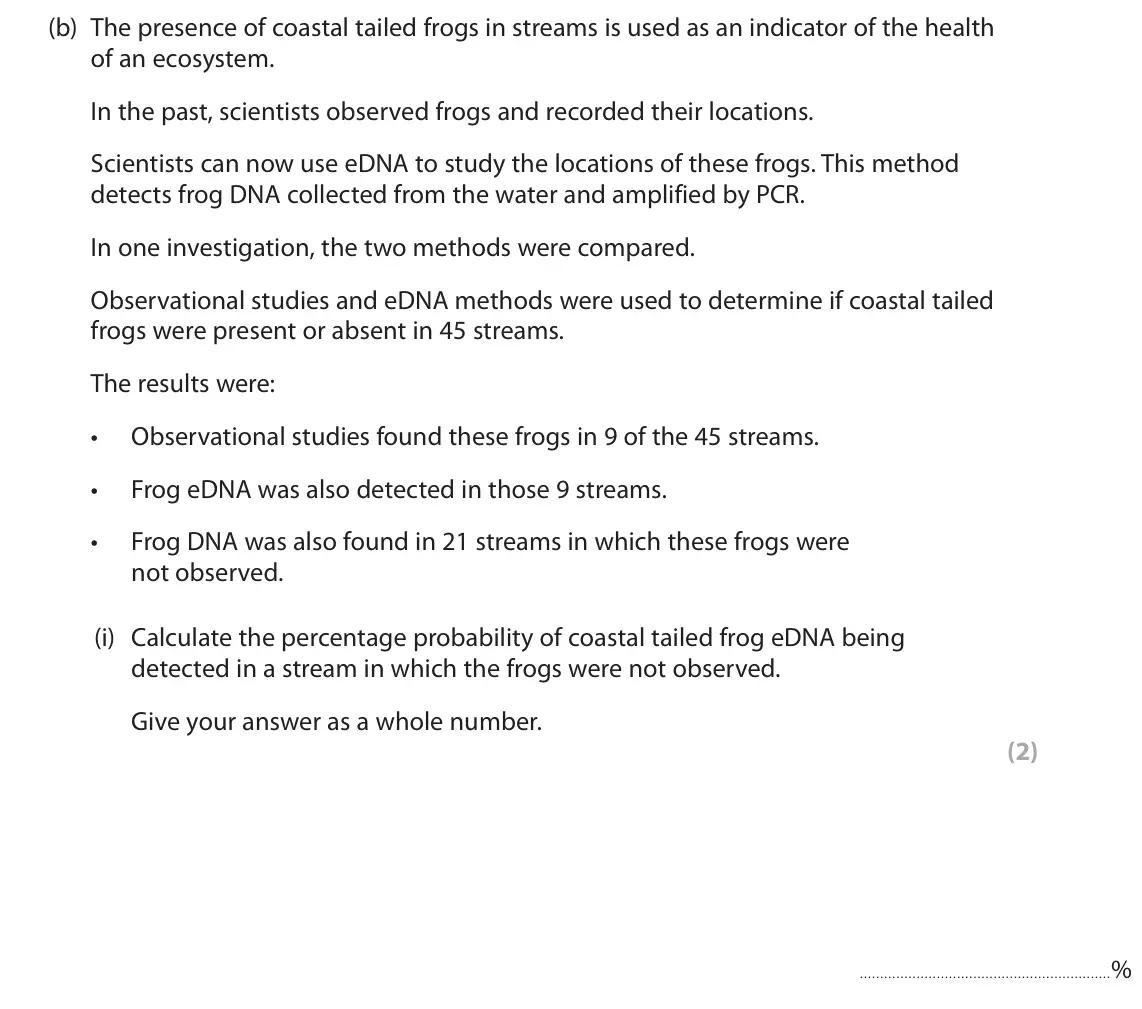
Q6(b)(ii)
The whole paper ↗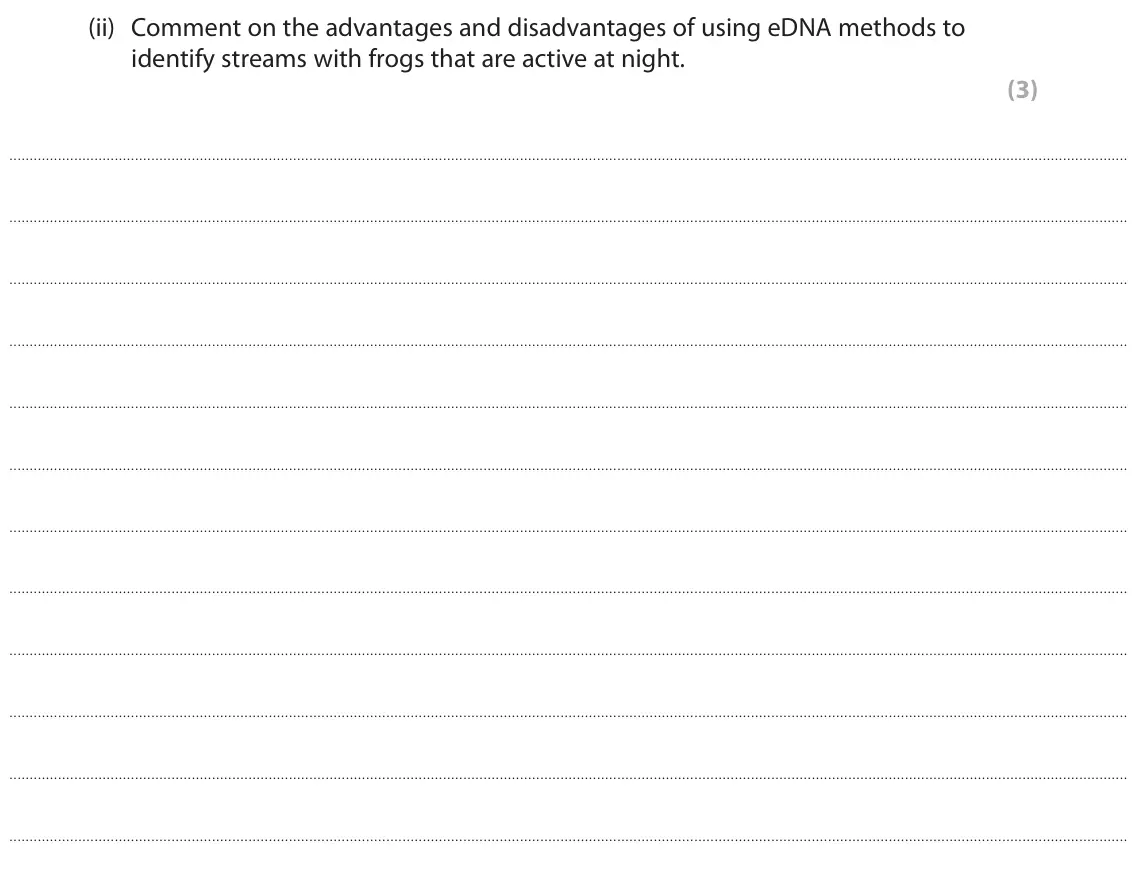
Q7(a)(i)
The whole paper ↗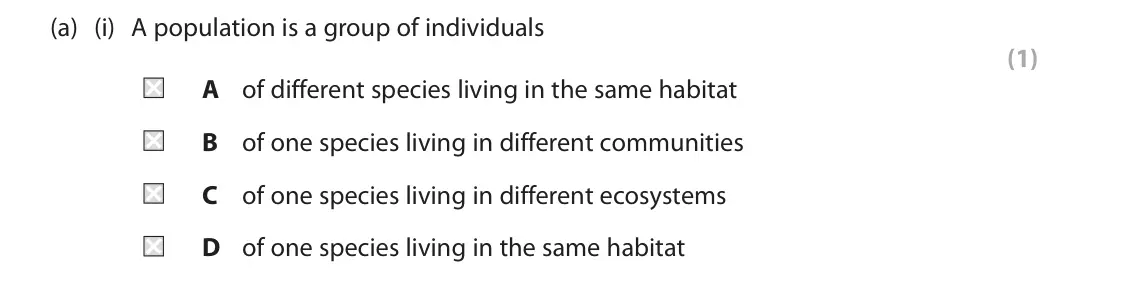
Q7(a)(ii)
The whole paper ↗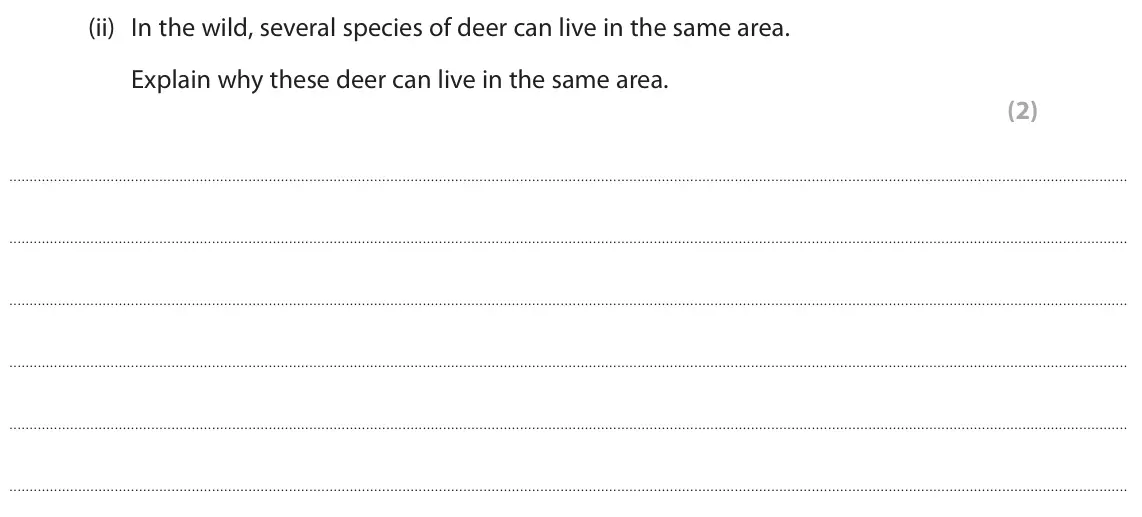
Q7(c)
The whole paper ↗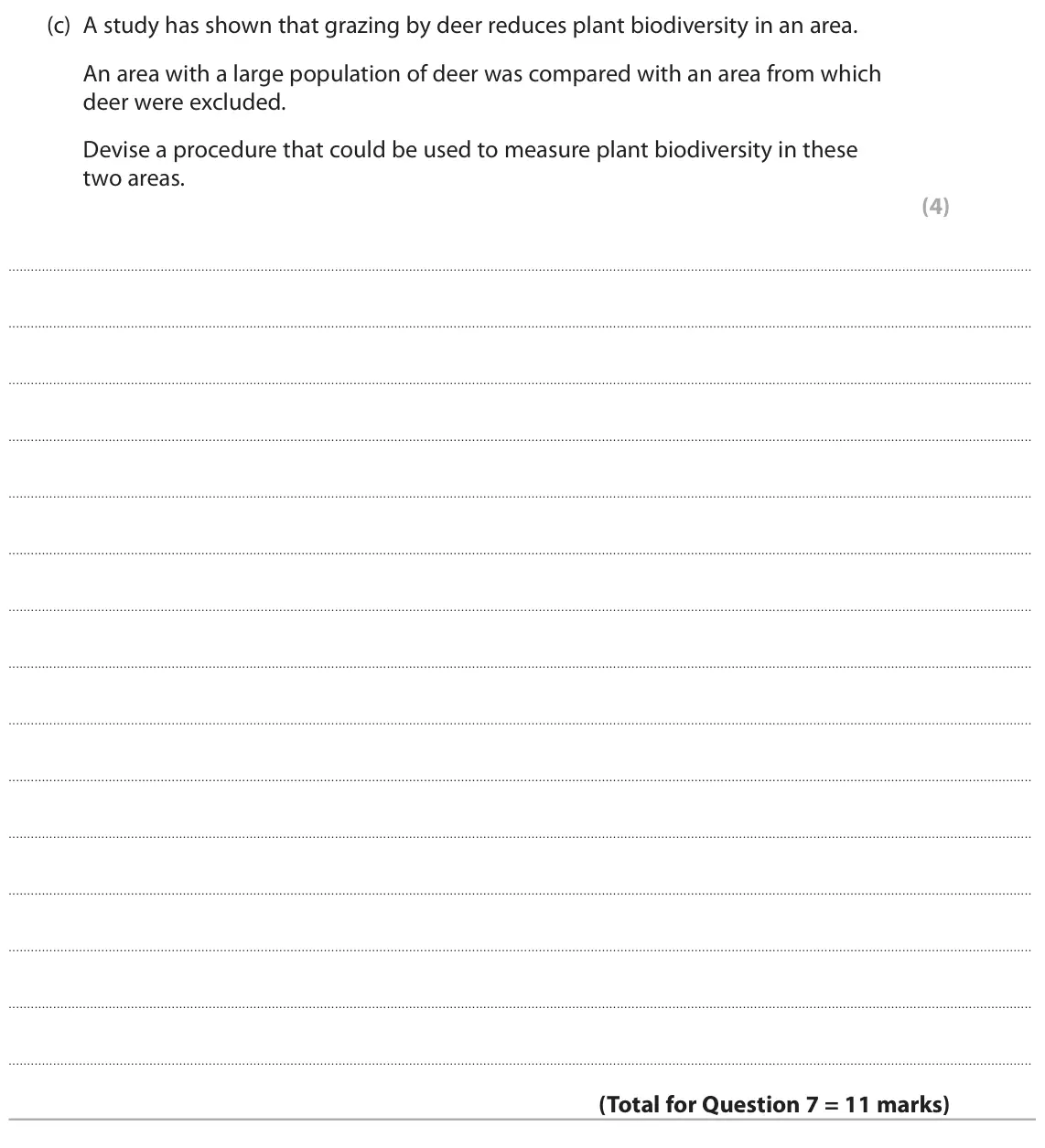
Q1(a)
The whole paper ↗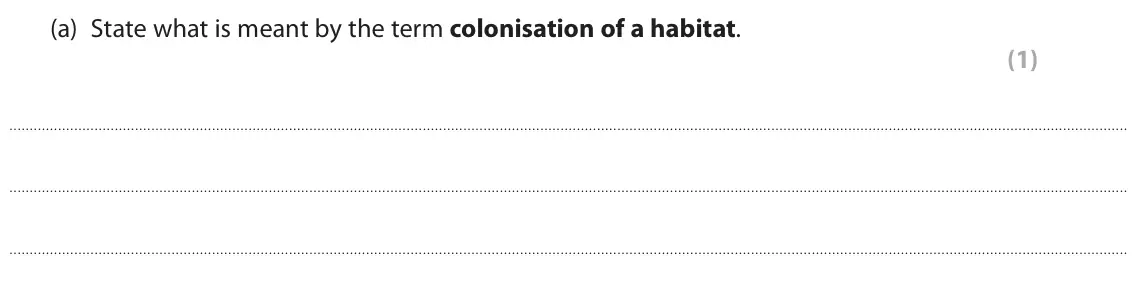
Q8(j)
The whole paper ↗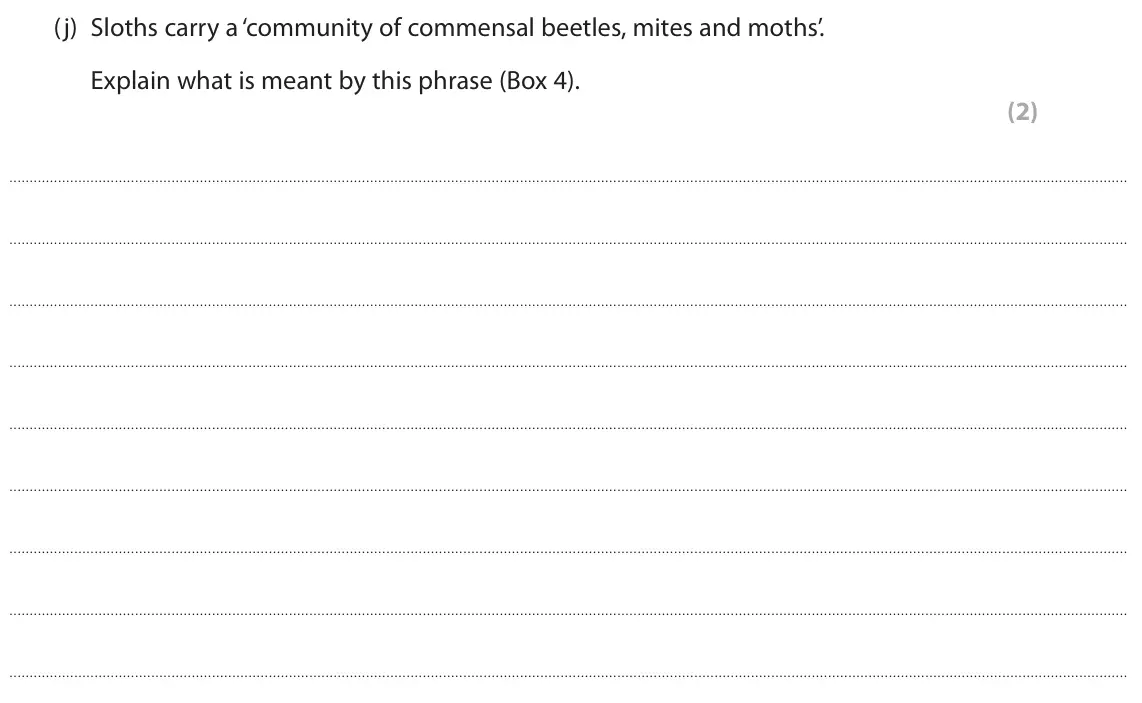
Q1(a)
The whole paper ↗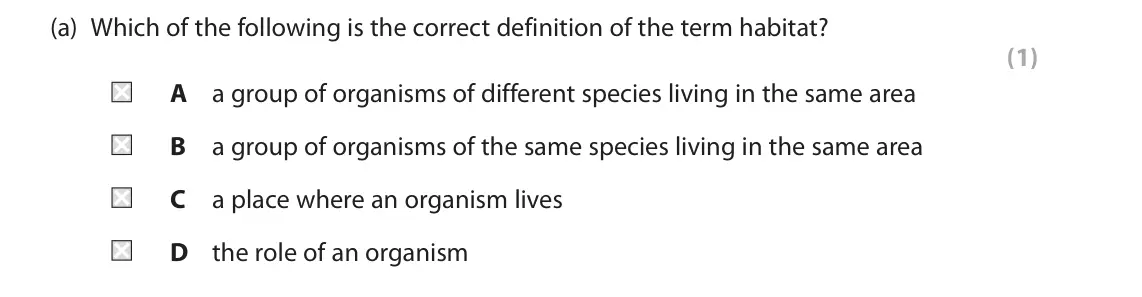
Q8(c)(ii)
The whole paper ↗
Q3(b)
The whole paper ↗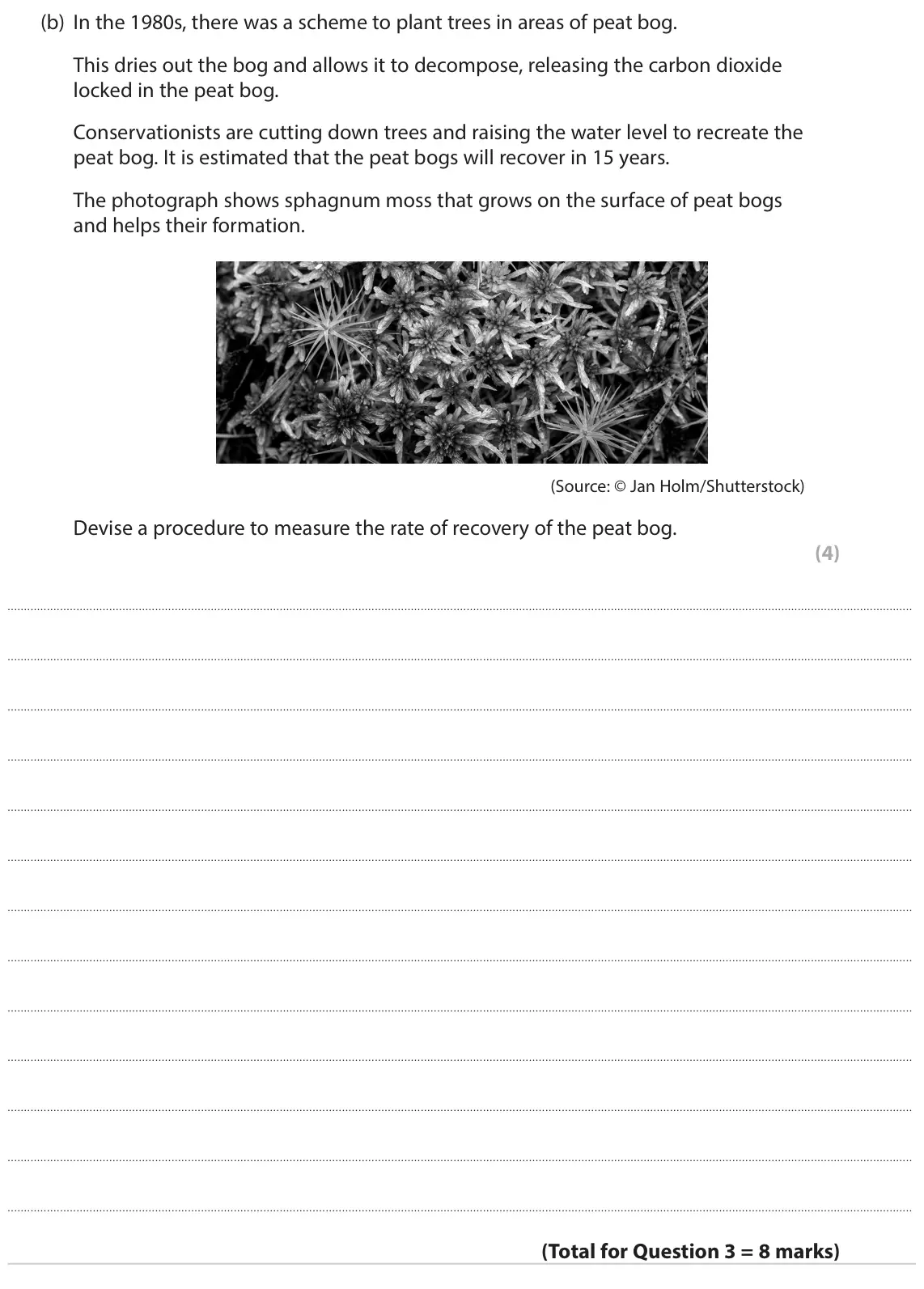
Q3(b)(ii)
The whole paper ↗
Q5(b)(i)
The whole paper ↗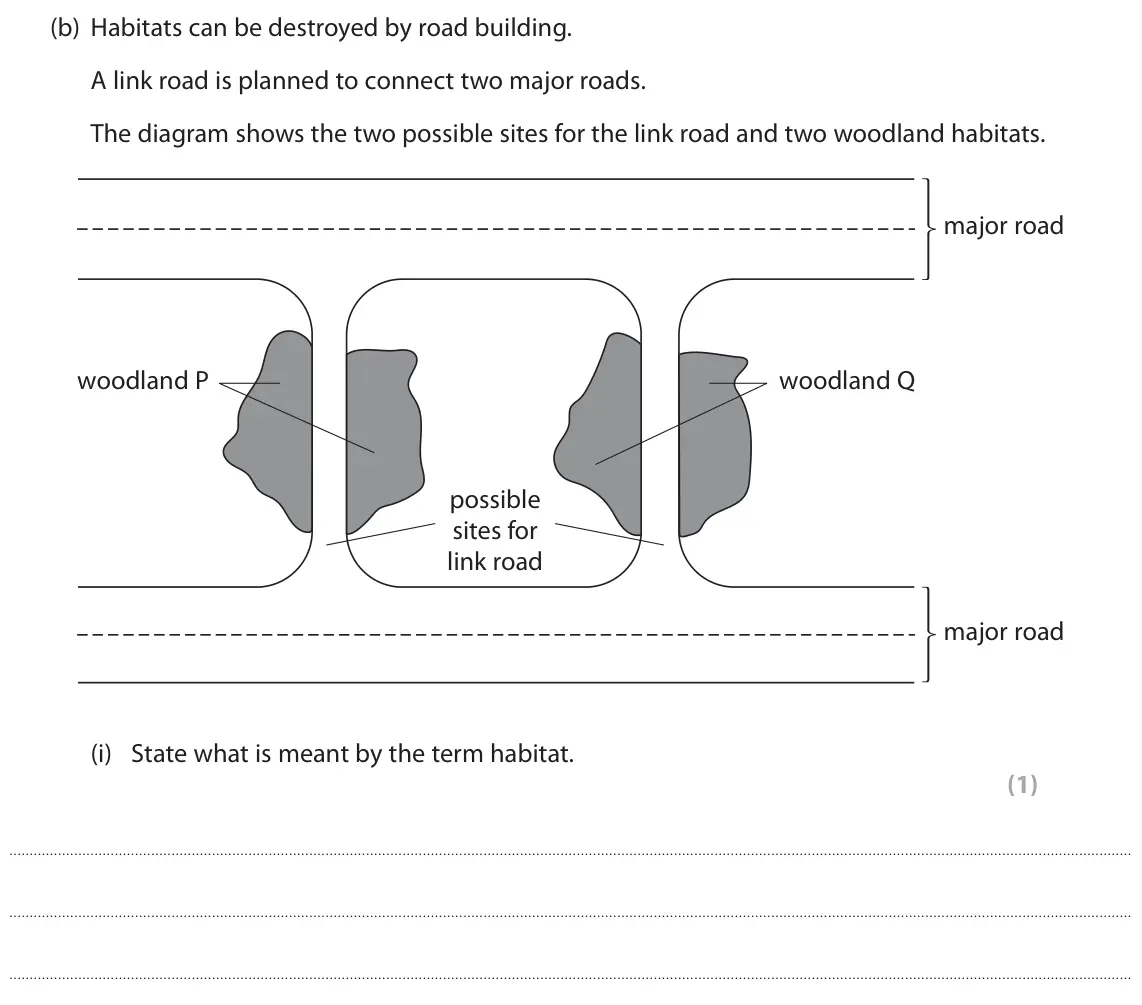
Q5(a)(i)
The whole paper ↗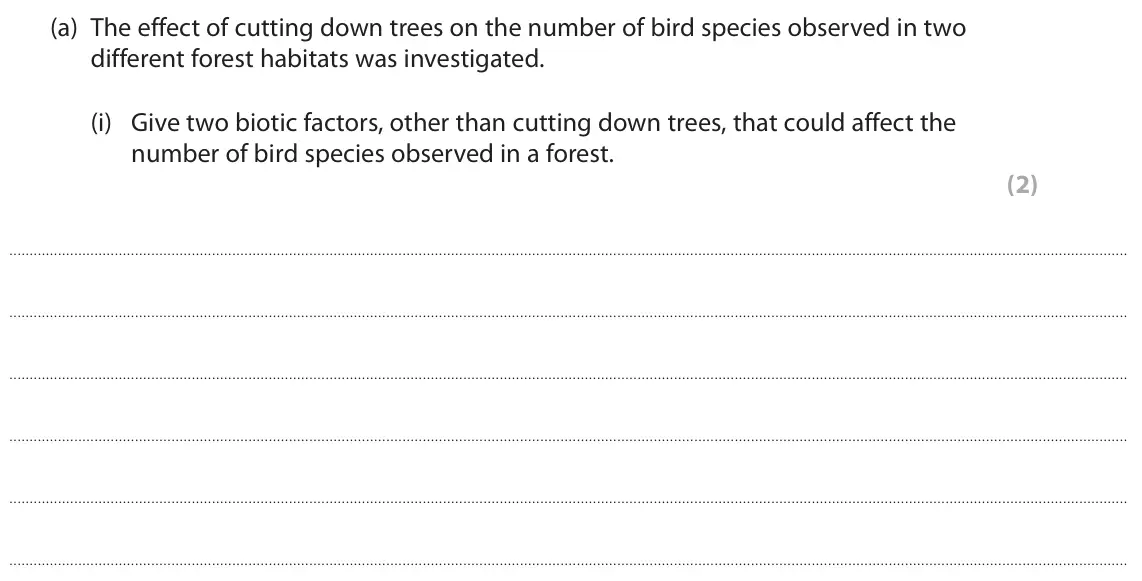
Q5(a)(ii)
The whole paper ↗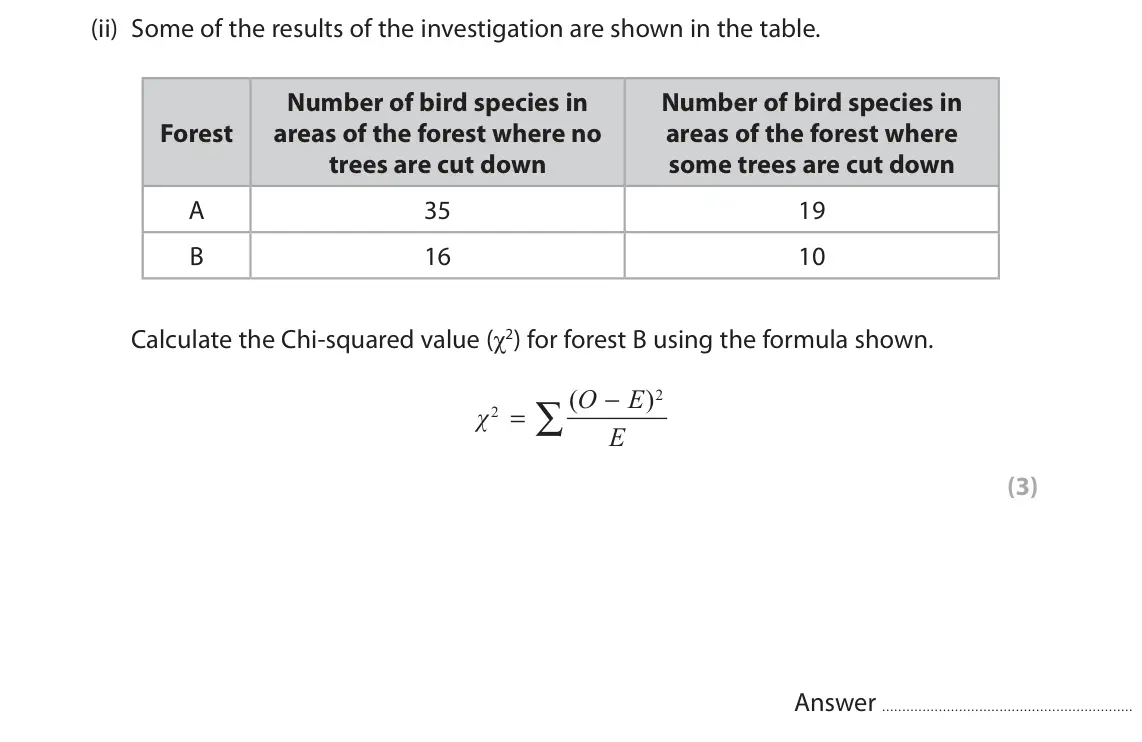
Q5(a)(iii)
The whole paper ↗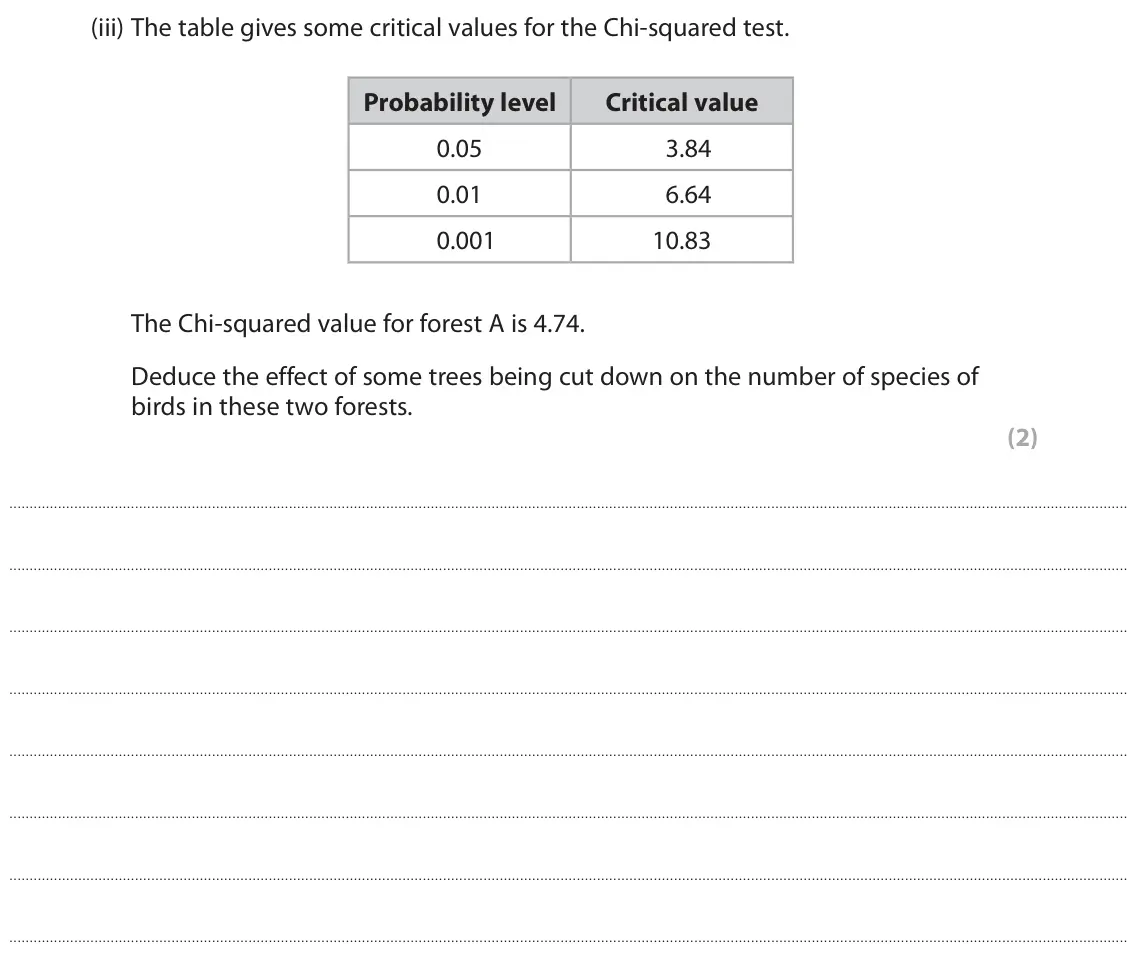
Q8(g)
The whole paper ↗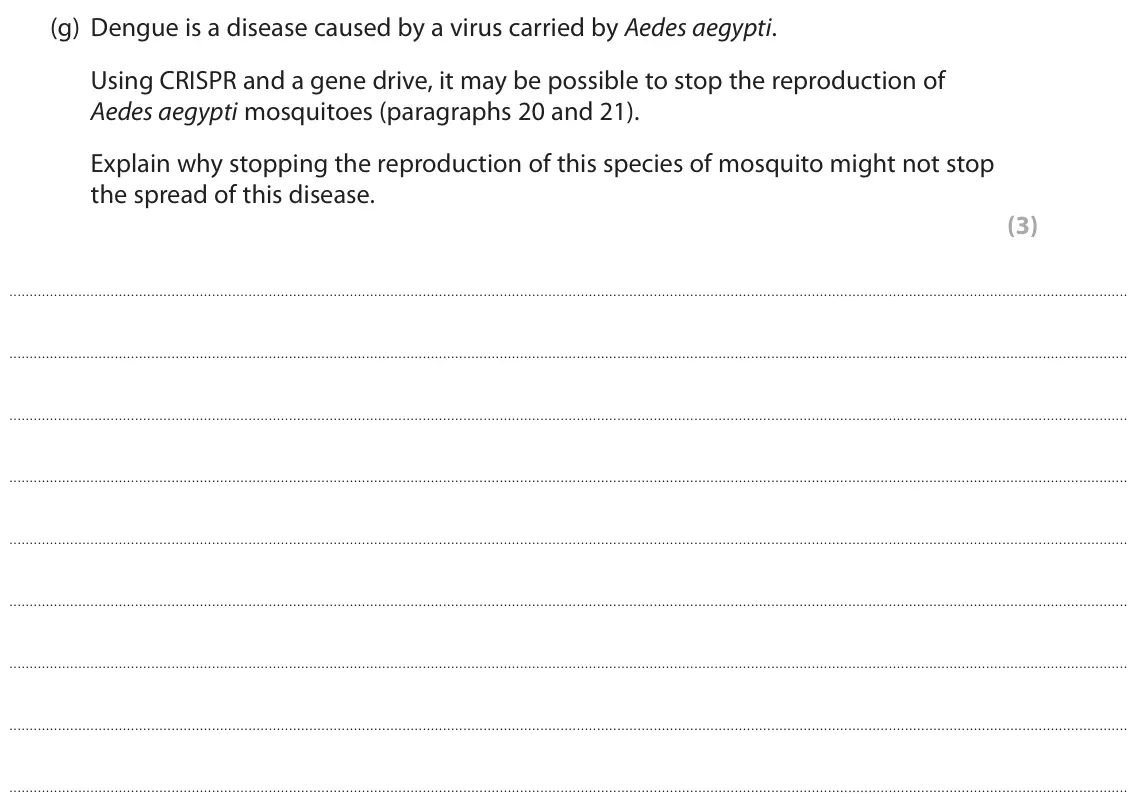
All 35 questions on Ecosystems and succession, as a list
- June 2025, Paper 3, Q1(a)(i) (2 marks): State what is meant by the term succession. (2)
- June 2025, Paper 3, Q1(a)(ii) (2 marks): Calculate the rate of increase in the mean number of species from 1986 to 1995. Give your answer to two significant figures and include units. (2) Answer
- June 2025, Paper 3, Q1(a)(iii) (1 mark): Following the eruption, one of the first plant species to be observed was Lupinus lepidus. Give the term used to describe the first species to appear at a locat
- June 2025, Paper 3, Q6(a)(ii) (2 marks): Describe what is meant by the niche of the coastal tailed frog. (2)
- June 2025, Paper 3, Q6(b)(i) (2 marks): Calculate the percentage probability of coastal tailed frog eDNA being detected in a stream in which the frogs were not observed. Give your answer as a whole nu
- June 2025, Paper 3, Q6(b)(ii) (3 marks): Comment on the advantages and disadvantages of using eDNA methods to identify streams with frogs that are active at night. (3)
- June 2024, Paper 1, Q7(a)(i) (1 mark): A population is a group of individuals (1) A of different species living in the same habitat B of one species living in different communities C of one species l
- June 2024, Paper 1, Q7(a)(ii) (2 marks): In the wild, several species of deer can live in the same area. Explain why these deer can live in the same area. (2)
- June 2024, Paper 1, Q7(c) (4 marks): A study has shown that grazing by deer reduces plant biodiversity in an area. An area with a large population of deer was compared with an area from which deer
- June 2024, Paper 3, Q1(a) (1 mark): State what is meant by the term colonisation of a habitat. (1)
- June 2024, Paper 3, Q8(j) (2 marks): Sloths carry a ‘community of commensal beetles, mites and moths’. Explain what is meant by this phrase (Box 4). (2)
- June 2023, Paper 1, Q1(a) (1 mark): Which of the following is the correct definition of the term habitat? (1) A a group of organisms of different species living in the same area B a group of organ
- June 2023, Paper 1, Q8(c)(ii) (4 marks): Discuss the possible effects of a reduction in seagrass on animals living in the Mediterranean Sea. (4)
- June 2022, Paper 1, Q3(b) (4 marks): In the 1980s, there was a scheme to plant trees in areas of peat bog. This dries out the bog and allows it to decompose, releasing the carbon dioxide locked in
- June 2022, Paper 3, Q3(b)(ii) (2 marks): Describe what is meant by the term succession. (2)
- November 2021, Paper 1, Q5(b)(i) (1 mark): State what is meant by the term habitat. (1)
- November 2021, Paper 3, Q5(a)(i) (2 marks): Give two biotic factors, other than cutting down trees, that could affect the number of bird species observed in a forest. (2)
- November 2021, Paper 3, Q5(a)(ii) (3 marks): Some of the results of the investigation are shown in the table. Number of bird species in Number of bird species in Forest areas of the forest where no areas o
- November 2021, Paper 3, Q5(a)(iii) (2 marks): The table gives some critical values for the Chi-squared test. Probability level Critical value 0.05 3.84 0.01 6.64 0.001 10.83 The Chi-squared value for forest
- November 2021, Paper 3, Q8(g) (3 marks): Dengue is a disease caused by a virus carried by Aedes aegypti. Using CRISPR and a gene drive, it may be possible to stop the reproduction of Aedes aegypti mosq
- October 2020, Paper 1, Q6(a) (4 marks): Comment on the changes in the abundance of these three species over 200 years. (4)
- October 2020, Paper 1, Q6(b) (3 marks): Explain what happened to the bare rock to allow the growth of these trees. (3)
- October 2020, Paper 1, Q6(c) (3 marks): Plants such as lupin are often found in the early stages of glacial retreat. Lupin plants have nodules on their roots containing nitrogen‑fixing bacteria that c
- October 2020, Paper 1, Q7(b)(ii) (5 marks): Devise an investigation to compare species richness of the plants growing under the trees in a deciduous woodland with that of a coniferous woodland. (5)
- October 2020, Paper 1, Q7(c) (4 marks): In a study of two woodlands, 11 species of plant were found in a deciduous woodland and 4 different species in a coniferous woodland. The table shows the other
- October 2020, Paper 3, Q2(a) (2 marks): Describe the difference between the terms niche and habitat. (2)
- October 2020, Paper 3, Q3(b)(i) (1 mark): State what is meant by the term ecosystem. (1)
- June 2019, Paper 3, Q4(a) (4 marks): Deduce the effect of pH on the number and mass of earthworms in these two types of soil. (4)
- June 2019, Paper 3, Q4(b) (4 marks): Describe a sampling method that could be used to collect the data in this table. (4)
- June 2019, Paper 3, Q4(c) (3 marks): Explain how differences between the mass of earthworms in these two soils could be shown to be statistically significant. (3)
- June 2018, Paper 1, Q7(b)(i) (1 mark): Which of the following is an abiotic factor that should be considered in the model? (1) A ash tree resistance to H. fraxineus B H. fraxineus pathogens C humidit
- June 2017, Paper 1, Q9(b) (6 marks): The changes in the compost heaps are due to the activity of decomposers and other organisms. Devise an investigation to determine the effect of the carbon to ni
- June 2017, Paper 3, Q5(b) (5 marks): The altitude at which a plant grows on a mountain affects its flavonoid content. Devise a procedure to show that an increase in altitude increases the flavonoid
- June 2017, Paper 3, Q5(c)(i) (3 marks): Compare and contrast the effect of length of exposure to UV-B on the chlorophyll and flavonoid content of these plants. (3)
- June 2017, Paper 3, Q7(i) (3 marks): Explain how the production of antibiotics by Streptomyces species can reduce interspecific competition (paragraph 20). (3)
Questions, mark schemes and examiner’s reports are © Pearson Edexcel, from their published past papers. Plumi isn’t affiliated with any exam board. Want whole papers? Every Edexcel A-Level Biology A paper.
Rather write your answers by hand on iPad? Plumi marks them against the same mark schemes.