 plumi
Reversible reactions and dynamic equilibrium: AQA GCSE Chemistry questions
Every AQA GCSE Chemistry exam question on 4.6.2 Reversible reactions and dynamic equilibrium, 2018–2025, with its mark scheme and examiner’s report.
Find questions1,744
Calculations
Q09.1
The whole paper ↗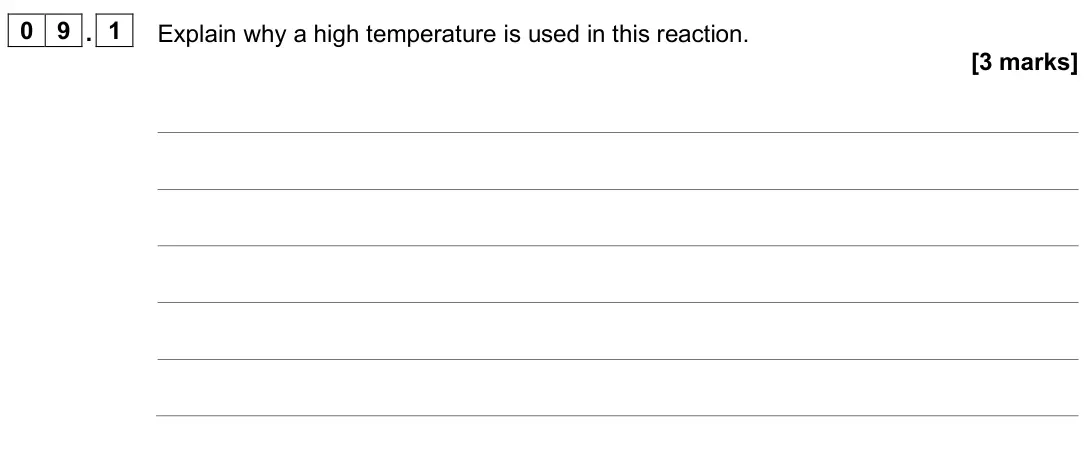
Q09.2
The whole paper ↗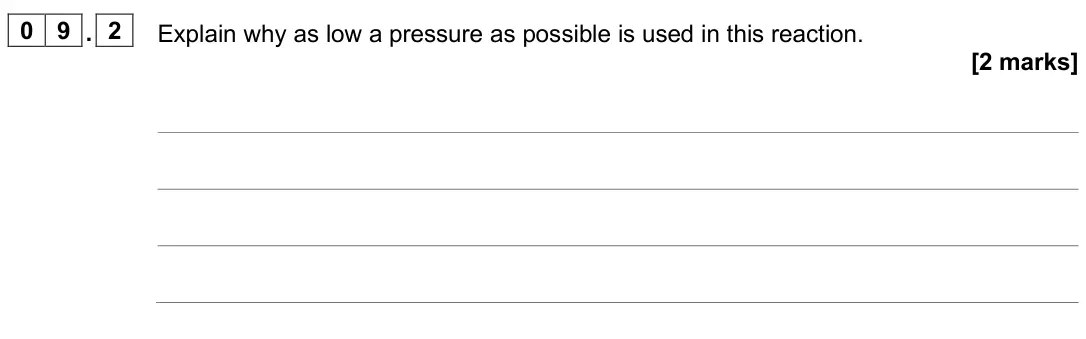
Q09.3
The whole paper ↗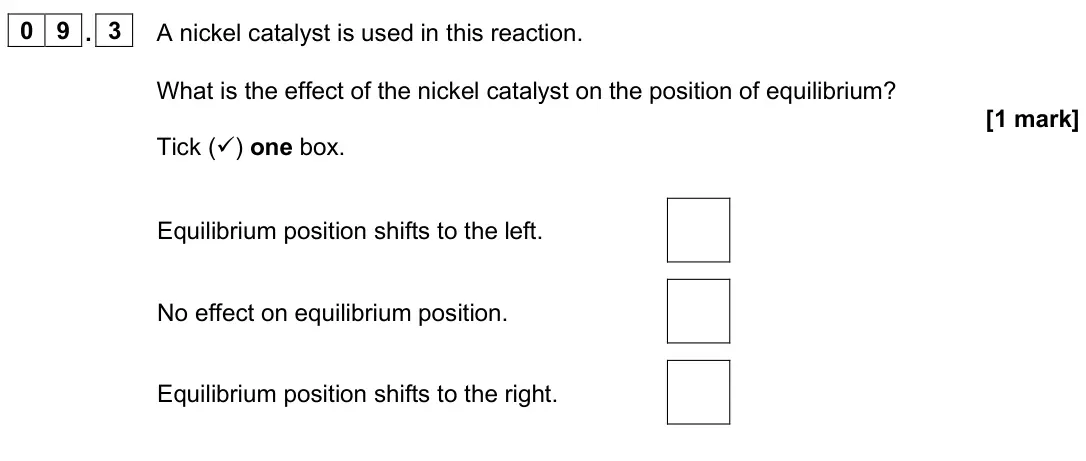
Q03.1
The whole paper ↗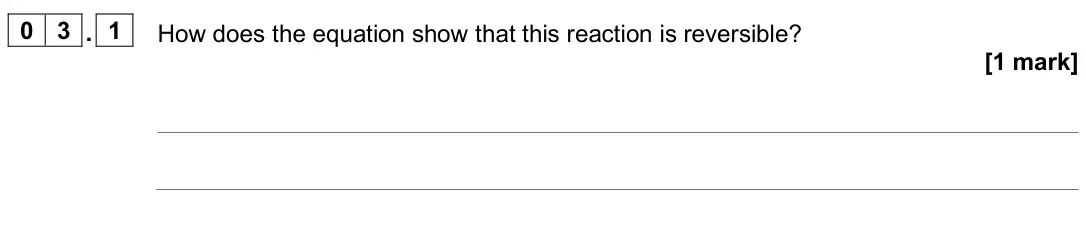
Q03.2
The whole paper ↗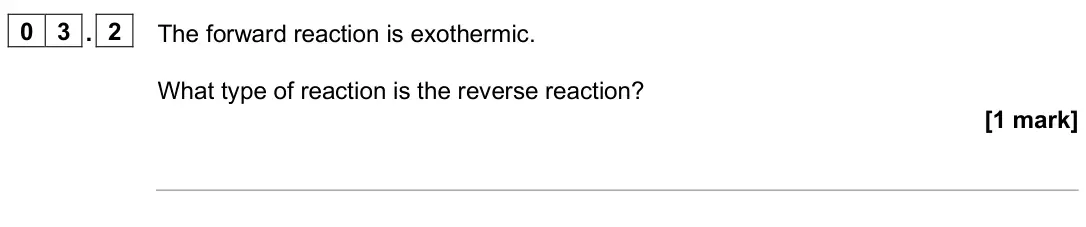
Q03.1
The whole paper ↗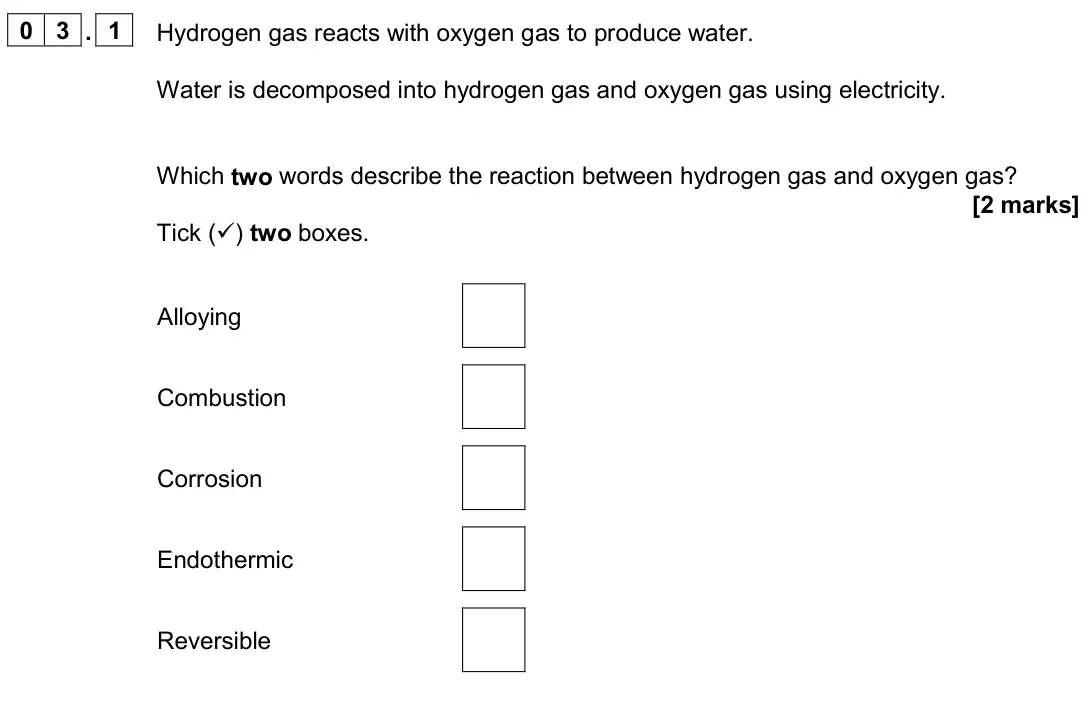
Q03.2
The whole paper ↗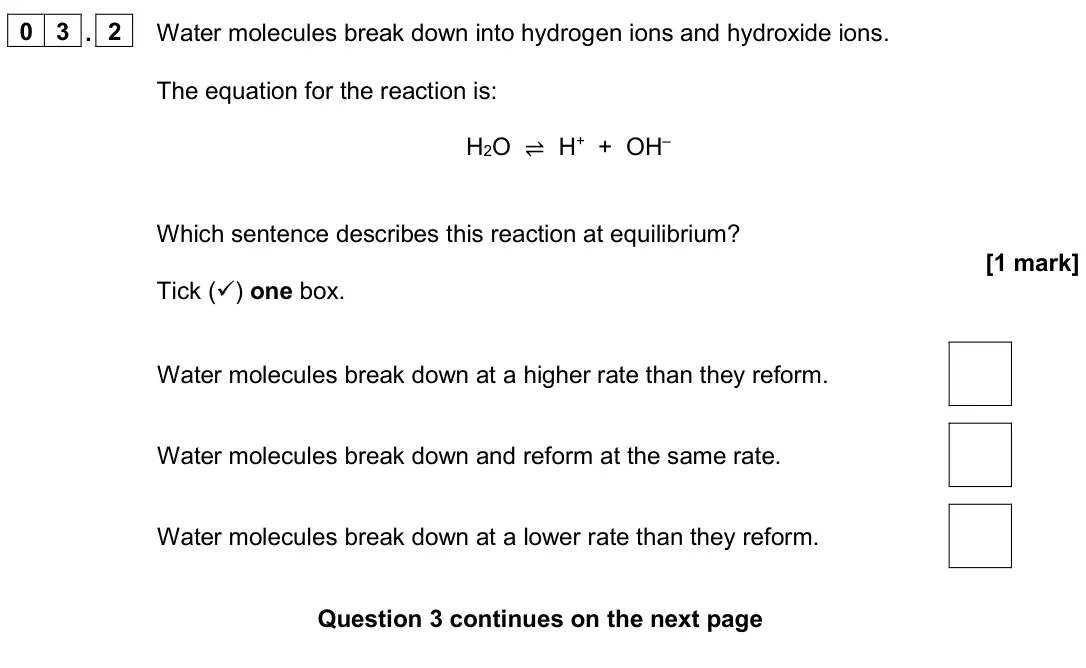
Q07.2
The whole paper ↗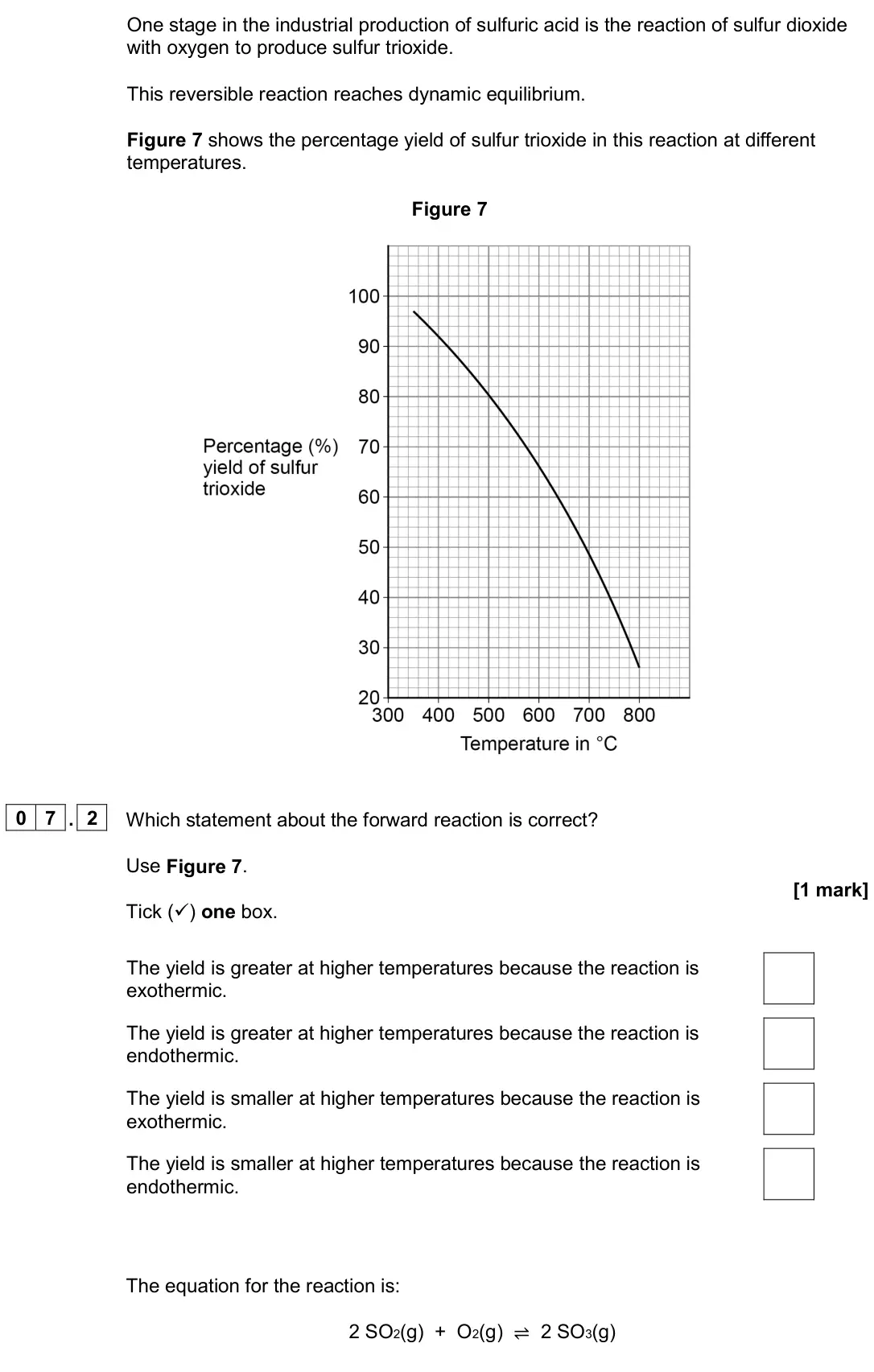
Q07.3
The whole paper ↗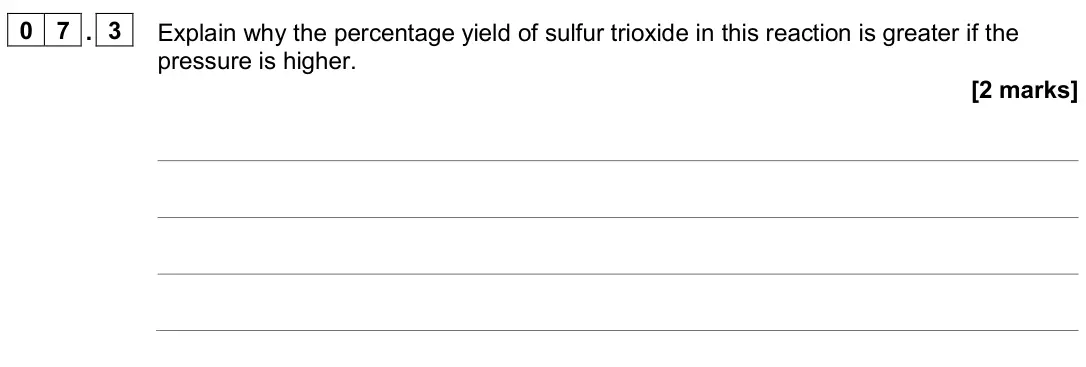
Q07.4
The whole paper ↗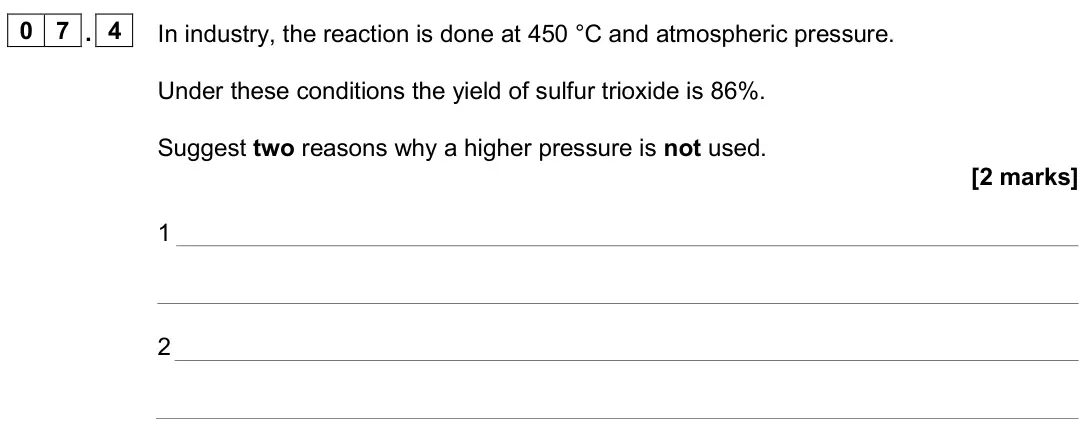
Q10.1
The whole paper ↗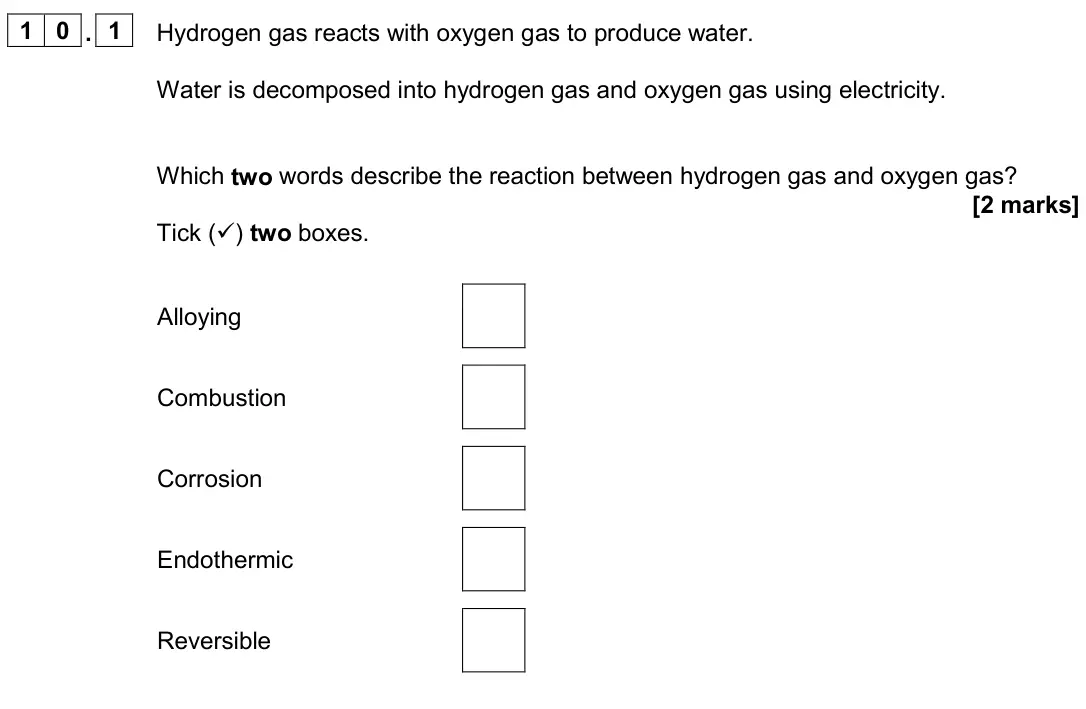
Q10.2
The whole paper ↗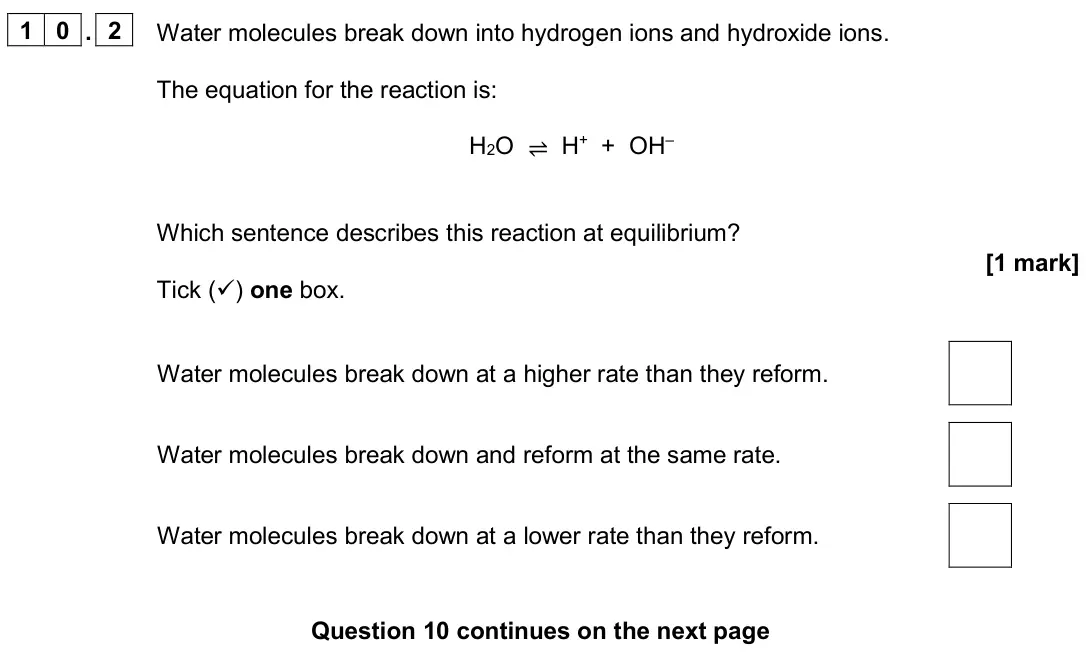
Q09.1
The whole paper ↗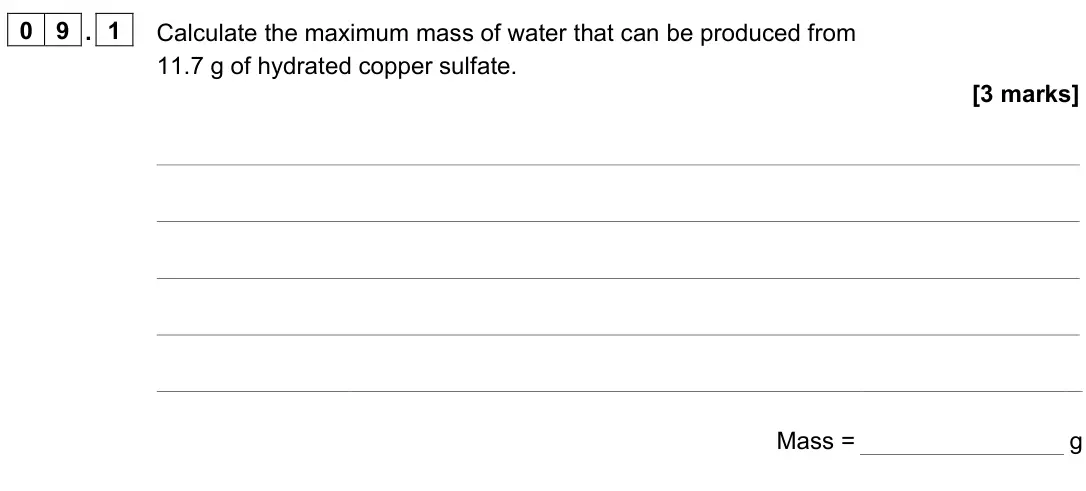
Q09.2
The whole paper ↗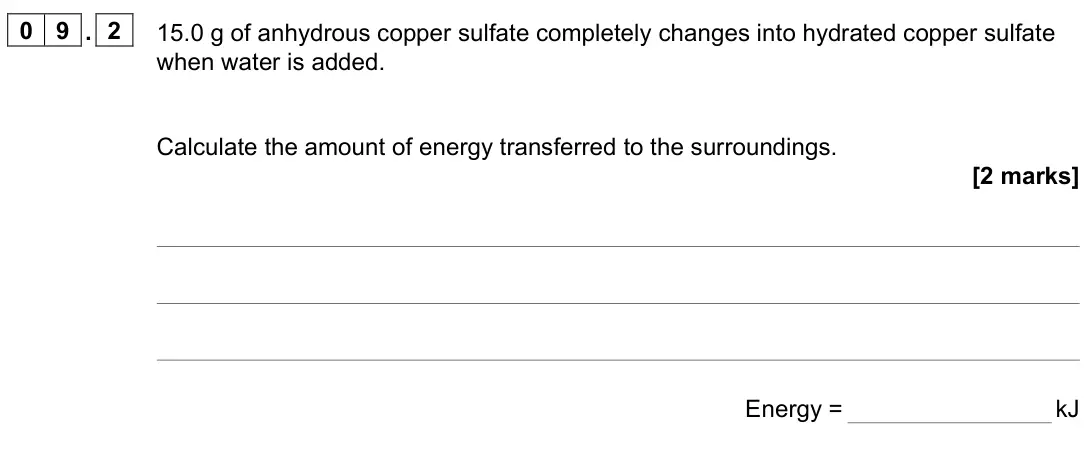
Q09.3
The whole paper ↗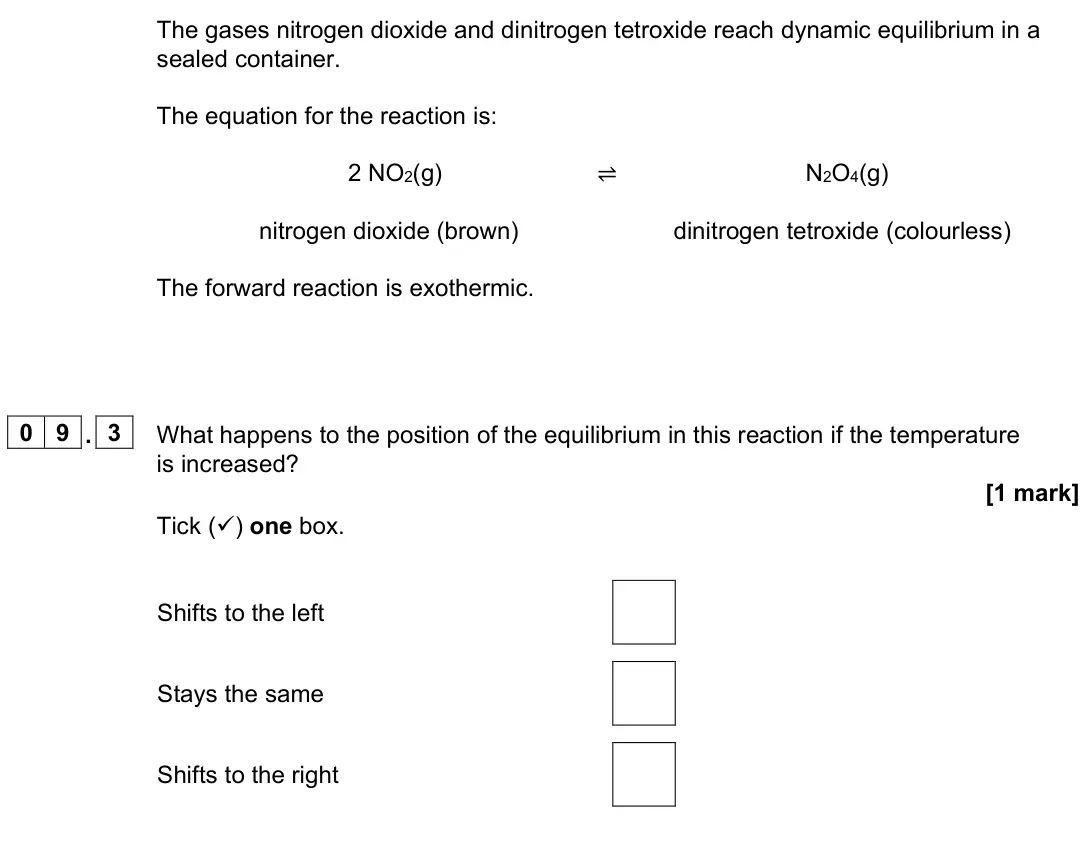
Q09.4
The whole paper ↗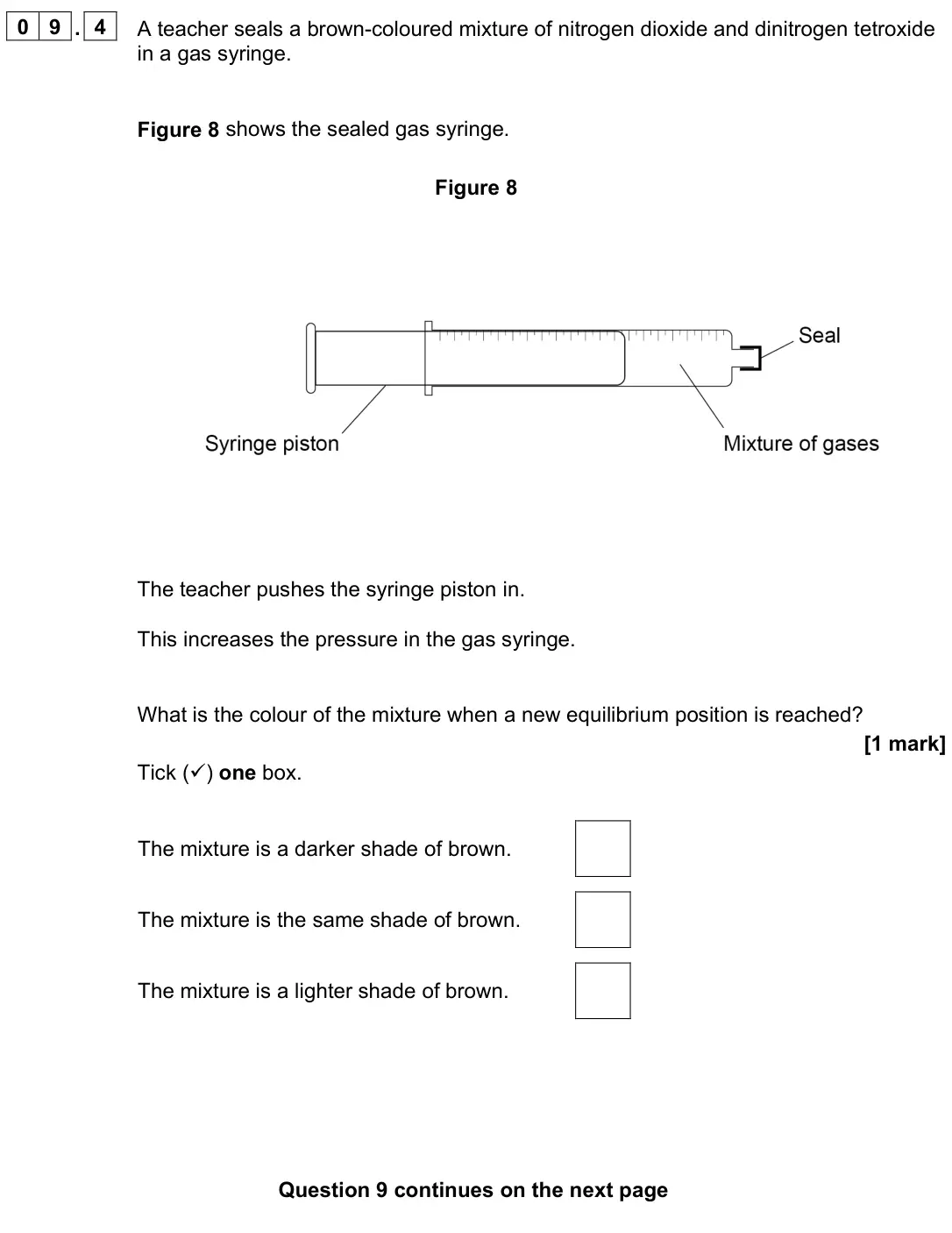
Q09.5
The whole paper ↗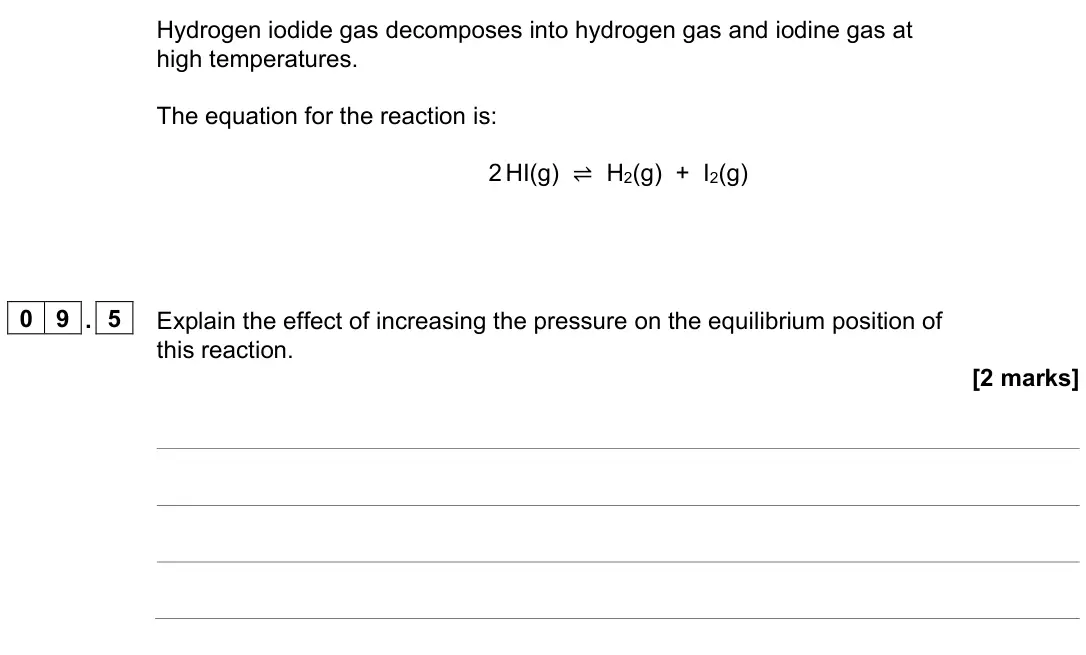
Q09.6
The whole paper ↗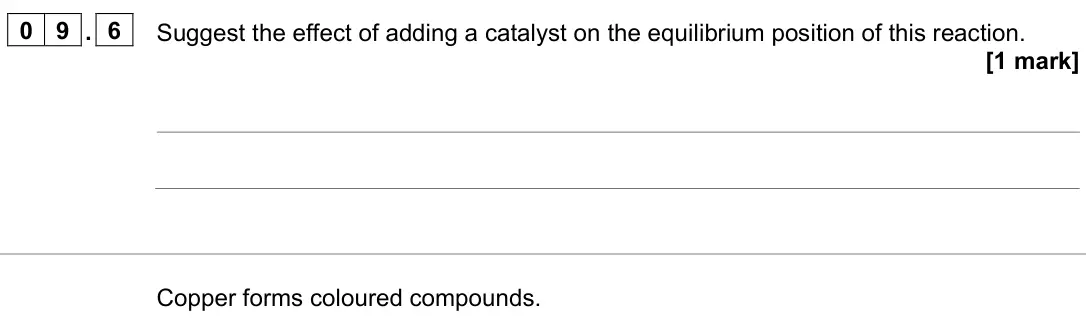
Q09.7
The whole paper ↗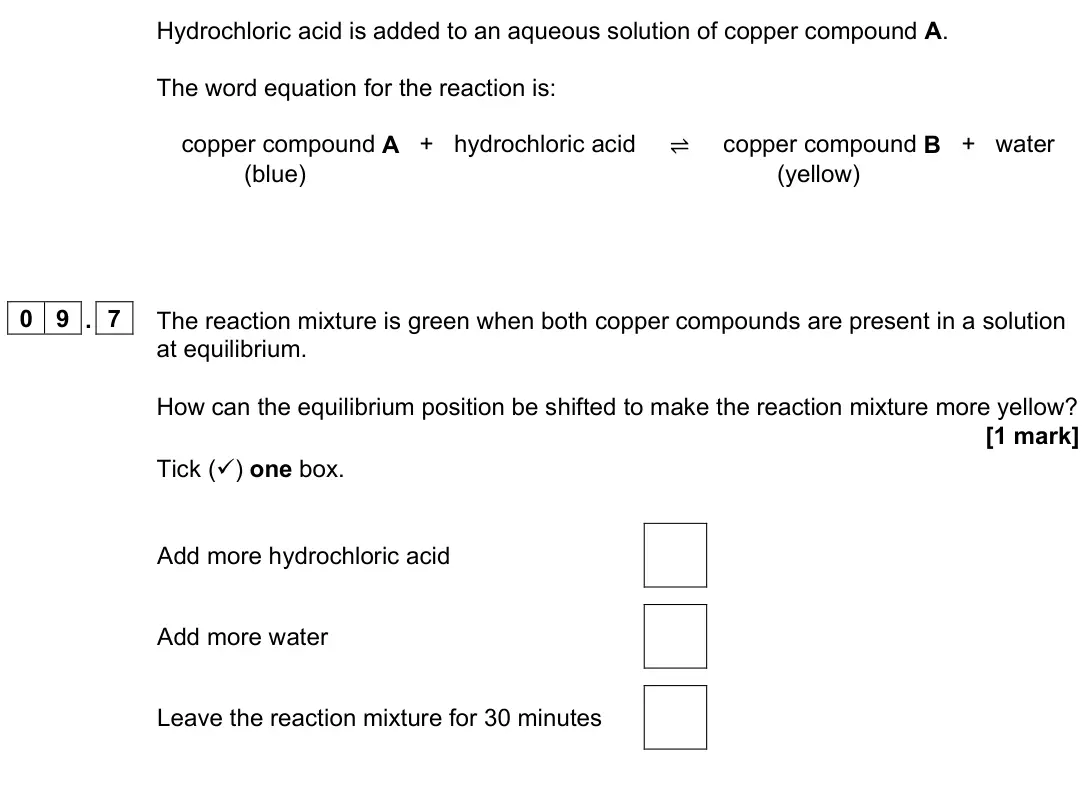
Q09.8
The whole paper ↗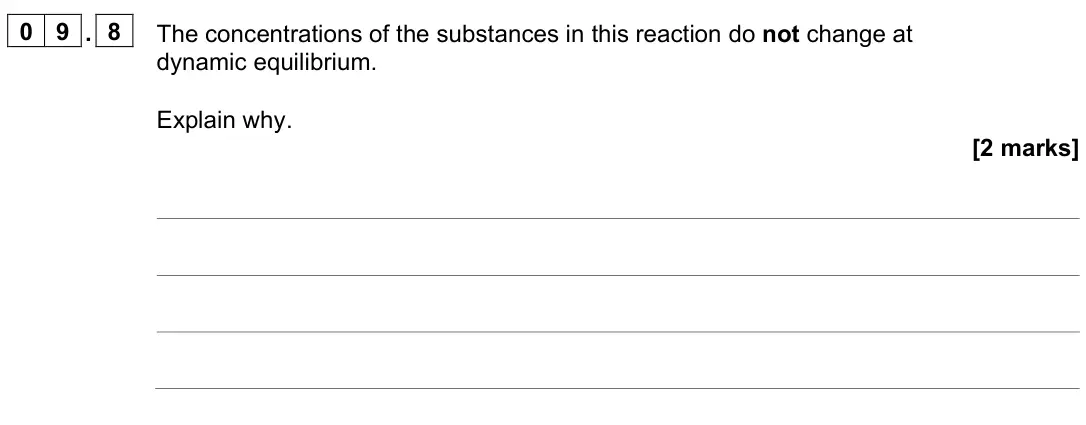
All 56 questions on Reversible reactions and dynamic equilibrium, as a list
- June 2025, Paper 2 Higher, Q09.1 (3 marks): Explain why a high temperature is used in this reaction. [3 marks]
- June 2025, Paper 2 Higher, Q09.2 (2 marks): Explain why as low a pressure as possible is used in this reaction. [2 marks]
- June 2025, Paper 2 Higher, Q09.3 (1 mark): A nickel catalyst is used in this reaction. What is the effect of the nickel catalyst on the position of equilibrium? [1 mark] Tick () one box. Equilibrium pos
- June 2025, Paper 2 Foundation, Q03.1 (1 mark): How does the equation show that this reaction is reversible? [1 mark]
- June 2025, Paper 2 Foundation, Q03.2 (1 mark): The forward reaction is exothermic. What type of reaction is the reverse reaction? [1 mark]
- June 2024, Paper 2 Higher, Q03.1 (2 marks): Hydrogen gas reacts with oxygen gas to produce water. Water is decomposed into hydrogen gas and oxygen gas using electricity. Which two words describe the react
- June 2024, Paper 2 Higher, Q03.2 (1 mark): Water molecules break down into hydrogen ions and hydroxide ions. The equation for the reaction is: H2O ⇌ H+ + OH– Which sentence describes this reaction at equ
- June 2024, Paper 2 Higher, Q07.2 (1 mark): Which statement about the forward reaction is correct? Use Figure 7. [1 mark] Tick () one box. The yield is greater at higher temperatures because the reaction
- June 2024, Paper 2 Higher, Q07.3 (2 marks): Explain why the percentage yield of sulfur trioxide in this reaction is greater if the pressure is higher. [2 marks]
- June 2024, Paper 2 Higher, Q07.4 (2 marks): In industry, the reaction is done at 450 °C and atmospheric pressure. Under these conditions the yield of sulfur trioxide is 86%. Suggest two reasons why a high
- June 2024, Paper 2 Foundation, Q10.1 (2 marks): Hydrogen gas reacts with oxygen gas to produce water. Water is decomposed into hydrogen gas and oxygen gas using electricity. Which two words describe the react
- June 2024, Paper 2 Foundation, Q10.2 (1 mark): Water molecules break down into hydrogen ions and hydroxide ions. The equation for the reaction is: H2O ⇌ H+ + OH– Which sentence describes this reaction at equ
- June 2023, Paper 2 Higher, Q09.1 (3 marks): Calculate the maximum mass of water that can be produced from 11.7 g of hydrated copper sulfate. [3 marks] Mass = g
- June 2023, Paper 2 Higher, Q09.2 (2 marks): 15.0 g of anhydrous copper sulfate completely changes into hydrated copper sulfate when water is added. Calculate the amount of energy transferred to the surrou
- June 2023, Paper 2 Higher, Q09.3 (1 mark): What happens to the position of the equilibrium in this reaction if the temperature is increased? [1 mark] Tick () one box. Shifts to the left Stays the same S
- June 2023, Paper 2 Higher, Q09.4 (1 mark): A teacher seals a brown-coloured mixture of nitrogen dioxide and dinitrogen tetroxide in a gas syringe. Figure 8 shows the sealed gas syringe. Figure 8 The teac
- June 2023, Paper 2 Higher, Q09.5 (2 marks): Explain the effect of increasing the pressure on the equilibrium position of this reaction. [2 marks]
- June 2023, Paper 2 Higher, Q09.6 (1 mark): Suggest the effect of adding a catalyst on the equilibrium position of this reaction. [1 mark] Copper forms coloured compounds.
- June 2023, Paper 2 Higher, Q09.7 (1 mark): The reaction mixture is green when both copper compounds are present in a solution at equilibrium. How can the equilibrium position be shifted to make the react
- June 2023, Paper 2 Higher, Q09.8 (2 marks): The concentrations of the substances in this reaction do not change at dynamic equilibrium. Explain why. [2 marks]
- June 2023, Paper 2 Foundation, Q04.1 (2 marks): Table 3 gives the appearance of the reactant and of the products. Table 3 Compound Appearance Reactant calcium hydroxide white powder Products calcium oxide whi
- June 2023, Paper 2 Foundation, Q04.2 (1 mark): Accurate results are not produced if solid powders escape from the test tube during heating. Suggest why sealing the test tube with a stopper is not a good way
- June 2023, Paper 2 Foundation, Q04.3 (1 mark): The student wanted to calculate the mass of the contents of the test tube after each minute of heating. The student weighed the test tube and contents after eac
- June 2023, Paper 2 Foundation, Q04.4 (1 mark): Complete the sentence. Choose the answer from the box. Use Table 4. [1 mark] 3 minutes 4 minutes 5 minutes 6 minutes The minimum heating time needed for all of
- June 2023, Paper 2 Foundation, Q04.5 (2 marks): Calculate the total mass of water vapour produced by heating the calcium hydroxide. Use Table 4. [2 marks] Mass = g The word equation for the reaction is: calci
- June 2023, Paper 2 Foundation, Q04.6 (1 mark): 3.03 g of calcium oxide reacts completely with water to produce 4.00 g of calcium hydroxide. How much energy is transferred to the surroundings in this reaction
- June 2023, Paper 2 Foundation, Q04.7 (1 mark): The forward reaction takes in energy from the surroundings. Complete the sentence. Choose the answer from the box. [1 mark] combustion endothermic exothermic Th
- June 2022, Paper 2 Higher, Q02.1 (1 mark): Determine the mass of the empty test tube. [1 mark] Mass of empty test tube = g
- June 2022, Paper 2 Higher, Q02.2 (2 marks): Explain why the mass of the test tube and contents decreased. [2 marks]
- June 2022, Paper 2 Higher, Q02.3 (1 mark): Suggest why the test tube and contents were heated until the mass did not change. [1 mark]
- June 2022, Paper 2 Higher, Q02.4 (3 marks): When 238 g of hydrated cobalt chloride is heated until the mass does not change, 88.1 kJ of energy is taken in. The student heated 2.00 g of hydrated cobalt chl
- June 2022, Paper 2 Higher, Q02.5 (1 mark): What type of reaction takes place when hydrated cobalt chloride is heated? [1 mark]
- June 2022, Paper 2 Higher, Q07.6 (6 marks): The equation for the production of ammonia in the Haber process is: N2(g) + 3 H2(g) ⇌ 2 NH3(g) The forward reaction is exothermic. The conditions used are: • a
- June 2022, Paper 2 Foundation, Q09.1 (1 mark): Determine the mass of the empty test tube. [1 mark] Mass of empty test tube = g
- June 2022, Paper 2 Foundation, Q09.2 (2 marks): Explain why the mass of the test tube and contents decreased. [2 marks]
- June 2022, Paper 2 Foundation, Q09.3 (1 mark): Suggest why the test tube and contents were heated until the mass did not change. [1 mark]
- June 2022, Paper 2 Foundation, Q09.4 (3 marks): When 238 g of hydrated cobalt chloride is heated until the mass does not change, 88.1 kJ of energy is taken in. The student heated 2.00 g of hydrated cobalt chl
- June 2022, Paper 2 Foundation, Q09.5 (1 mark): What type of reaction takes place when hydrated cobalt chloride is heated? [1 mark]
- November 2021, Paper 2 Higher, Q10.3 (6 marks): Ethanol can be produced from ethene and steam. The equation for the reaction is: C2H4(g) + H2O(g) ⇌ C2H5OH(g) The forward reaction is exothermic. Explain how th
- November 2021, Paper 2 Foundation, Q04.1 (1 mark): How does the equation show that the reaction is reversible? [1 mark]
- November 2021, Paper 2 Foundation, Q04.2 (2 marks): Which two statements are correct when the reaction reaches equilibrium? [2 marks] Tick () two boxes. The forward reaction and reverse reaction are both exother
- November 2021, Paper 2 Foundation, Q04.3 (1 mark): The initial mixture of hydrogen and iodine in the sealed container is purple. Hydrogen iodide is colourless. How will the colour of the mixture in the sealed co
- November 2020, Paper 2 Higher, Q10.2 (3 marks): A few drops of a colourless solution containing a high concentration of thiocyanate ions (SCN–) are added to the orange equilibrium mixture. Explain the colour
- November 2020, Paper 2 Higher, Q10.3 (3 marks): A water bath is set up at a temperature above room temperature. When a test tube containing the orange equilibrium mixture is placed in the water bath, the mixt
- November 2020, Paper 2 Higher, Q10.4 (2 marks): Explain why a change in pressure does not affect the colour of the equilibrium mixture. [2 marks]
- November 2020, Paper 2 Higher, Q10.5 (1 mark): Other metal ions form coloured equilibrium mixtures with thiocyanate ions. Which metal ion could form a coloured equilibrium mixture with thiocyanate ions? [1 m
- November 2020, Paper 2 Foundation, Q01.1 (1 mark): What does the symbol ⇌ show about the reaction? [1 mark]
- June 2018, Paper 2 Higher, Q09.3 (2 marks): The reaction is carried out at a temperature of 250 ºC and a pressure of 100 atmospheres. The forward reaction is exothermic. Explain what happens to the yield
- June 2018, Paper 2 Higher, Q09.4 (4 marks): A pressure of 100 atmospheres is used instead of atmospheric pressure. The higher pressure gives a greater yield of methanol and an increased rate of reaction.
- June 2018, Paper 2 Higher, Q09.7 (1 mark): Suggest the effect of using the catalyst on the equilibrium yield of methanol. [1 mark]
- Specimen, Paper 2 Higher, Q10.2 (2 marks): The forward reaction is exothermic. Use Le Chatelier’s Principle to predict the effect of increasing temperature on the amount of ethanol produced at equilibriu
- Specimen, Paper 2 Higher, Q10.3 (2 marks): Explain how increasing the pressure of the reactants will affect the amount of ethanol produced at equilibrium. [2 mark
- Specimen, Paper 2 Foundation, Q02.1: Name the type of reaction shown by the sign [1 mar
- Specimen, Paper 2 Foundation, Q02.2 (1 mark): When the student added water to anhydrous cobalt chloride what happened? [1 mark] 5
- Specimen, Paper 2 Foundation, Q02.3 (1 mark): A student measured the temperature rise when anhydrous cobalt chloride was added to water. The student’s results are shown in Table 1. Table 1 Trial 1 Trial 2 T
- Specimen, Paper 2 Foundation, Q02.4 (1 mark): When water was added to anhydrous cobalt chloride an exothermic reaction took place. Name the type of reaction when hydrated cobalt chloride reacts to form anhy
Questions, mark schemes and examiner’s reports are © AQA, from their published past papers. Plumi isn’t affiliated with any exam board. Want whole papers? Every AQA GCSE Chemistry paper.
Rather write your answers by hand on iPad? Plumi marks them against the same mark schemes.