 plumi
Food production: AQA GCSE Biology questions
Every AQA GCSE Biology exam question on 4.7.5 Food production, 2018–2025, with its mark scheme and examiner’s report.
Find questions1,505
Calculations
Q06.5
The whole paper ↗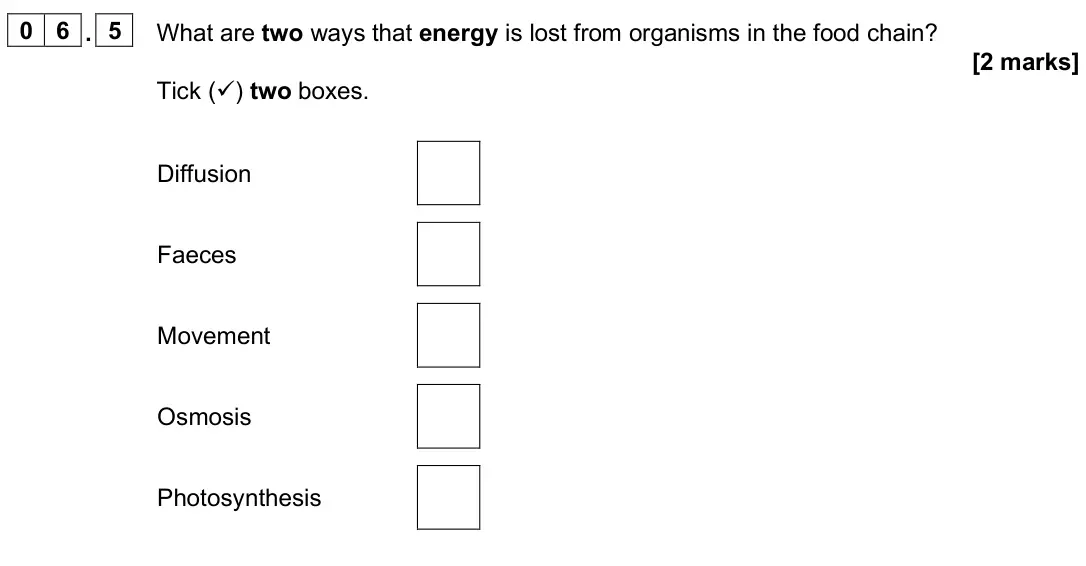
Q07.5
The whole paper ↗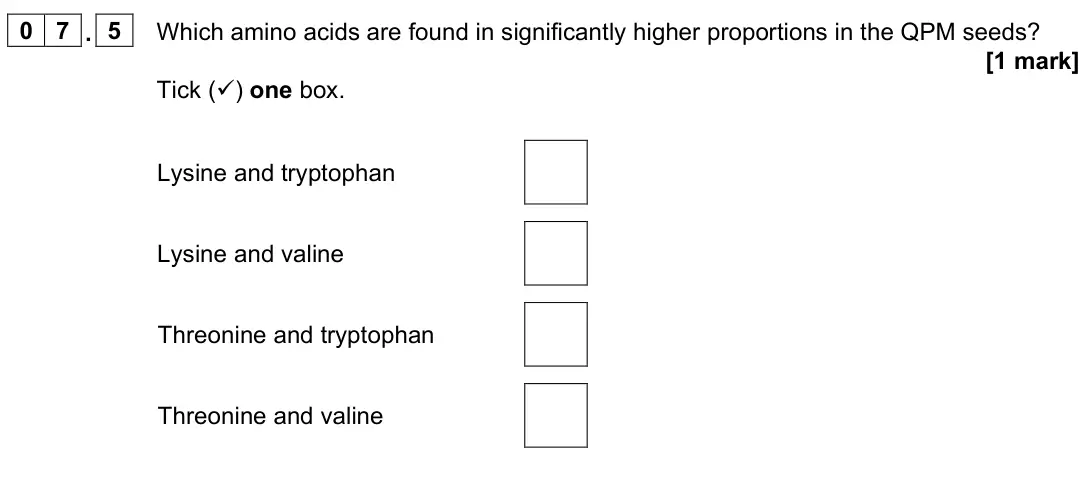
Q07.6
The whole paper ↗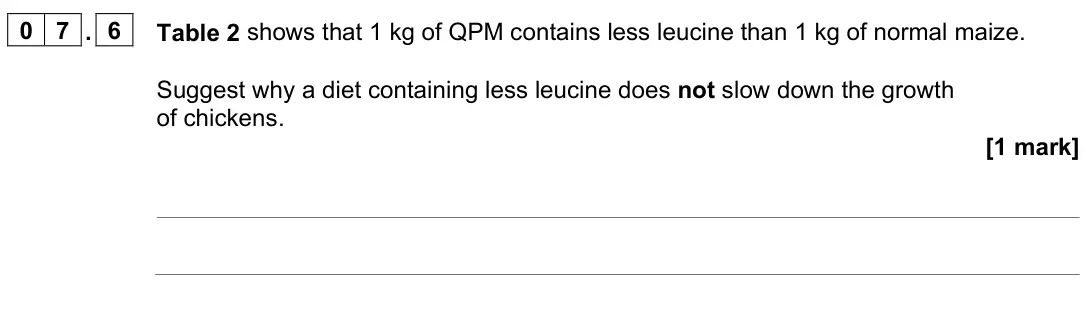
Q03.5
The whole paper ↗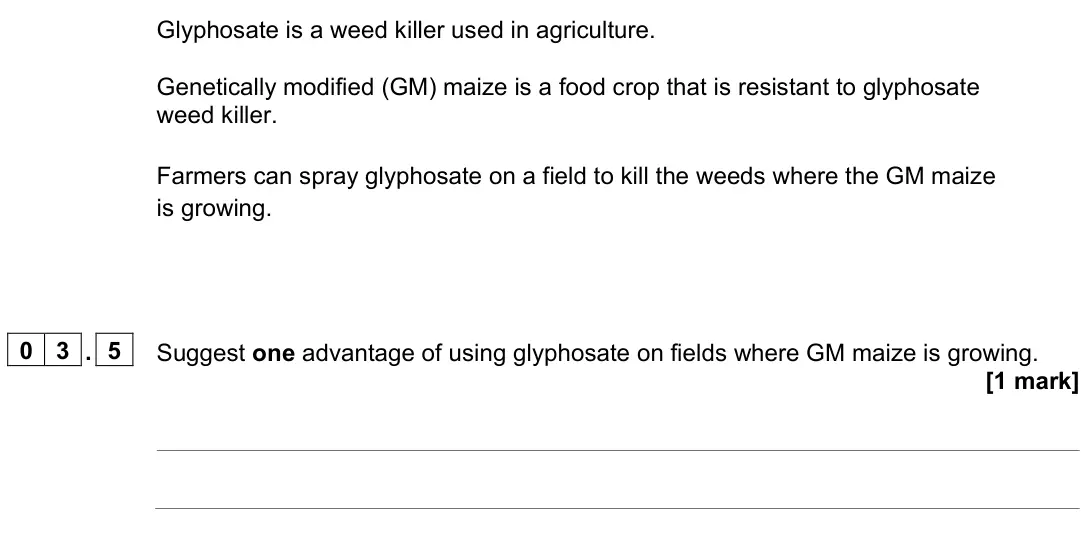
Q04.1
The whole paper ↗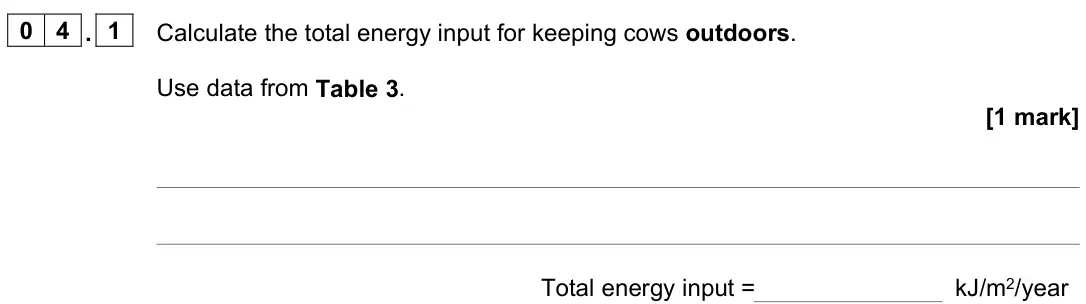
Q04.2
The whole paper ↗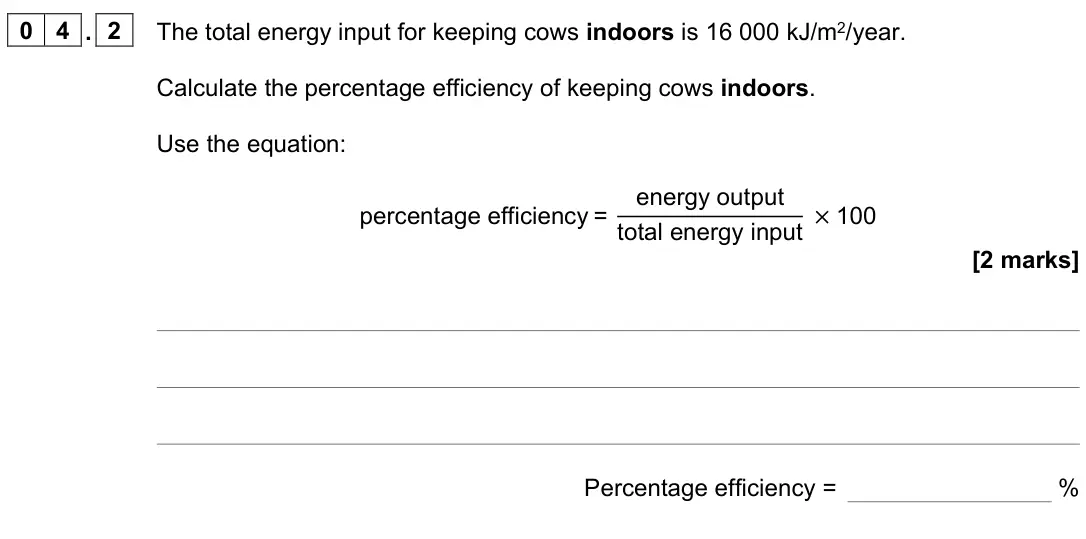
Q04.3
The whole paper ↗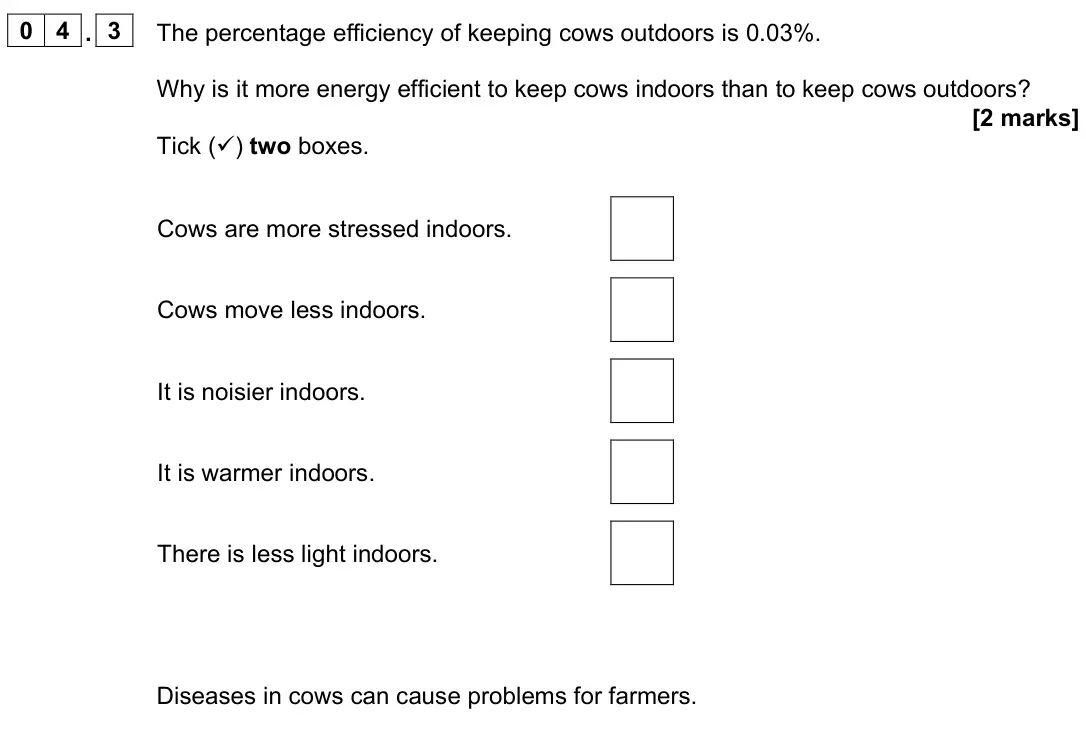
Q04.4
The whole paper ↗
Q06.5
The whole paper ↗
Q06.6
The whole paper ↗
Q07.7
The whole paper ↗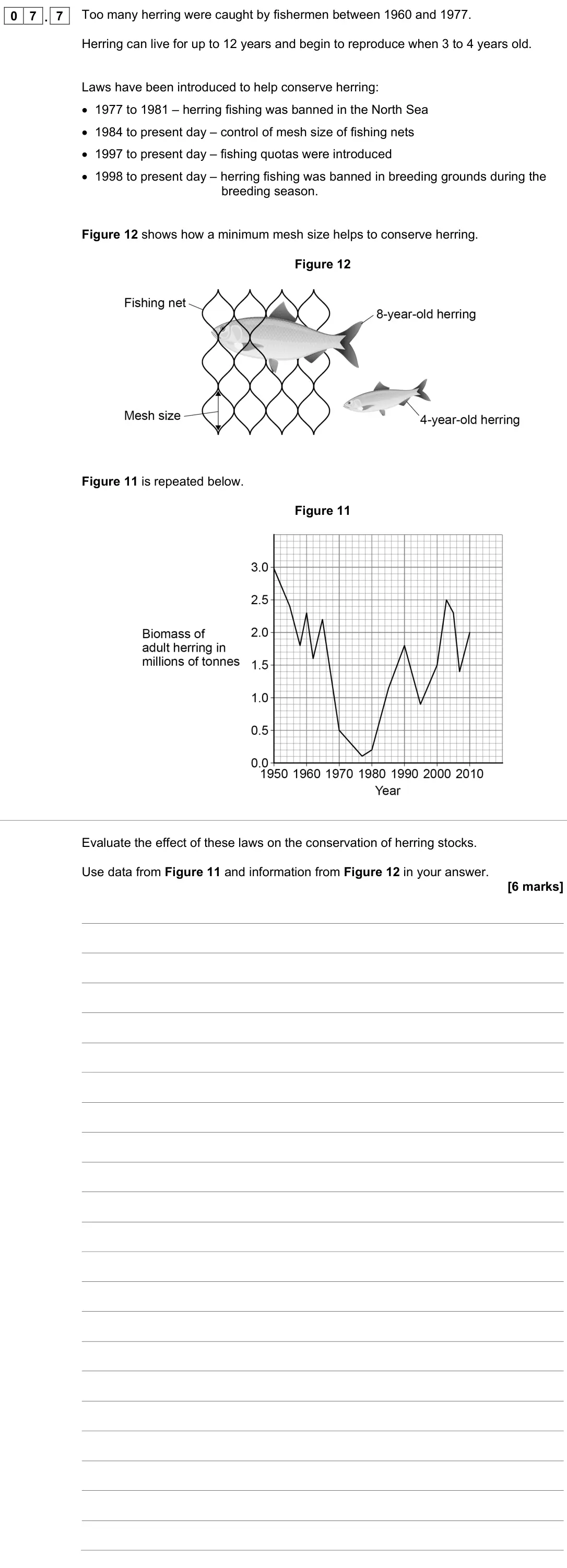
Q03.4
The whole paper ↗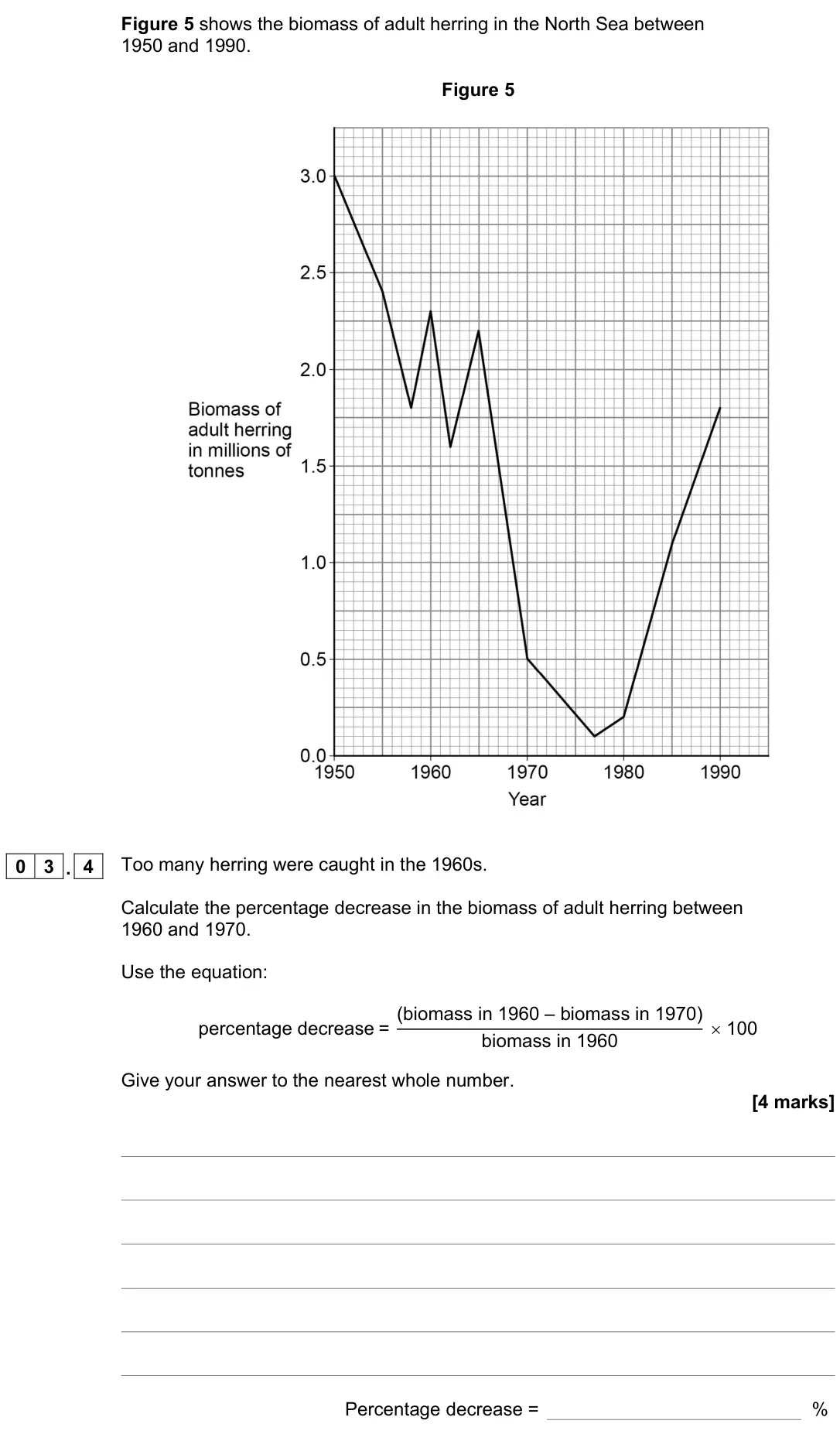
Q03.5
The whole paper ↗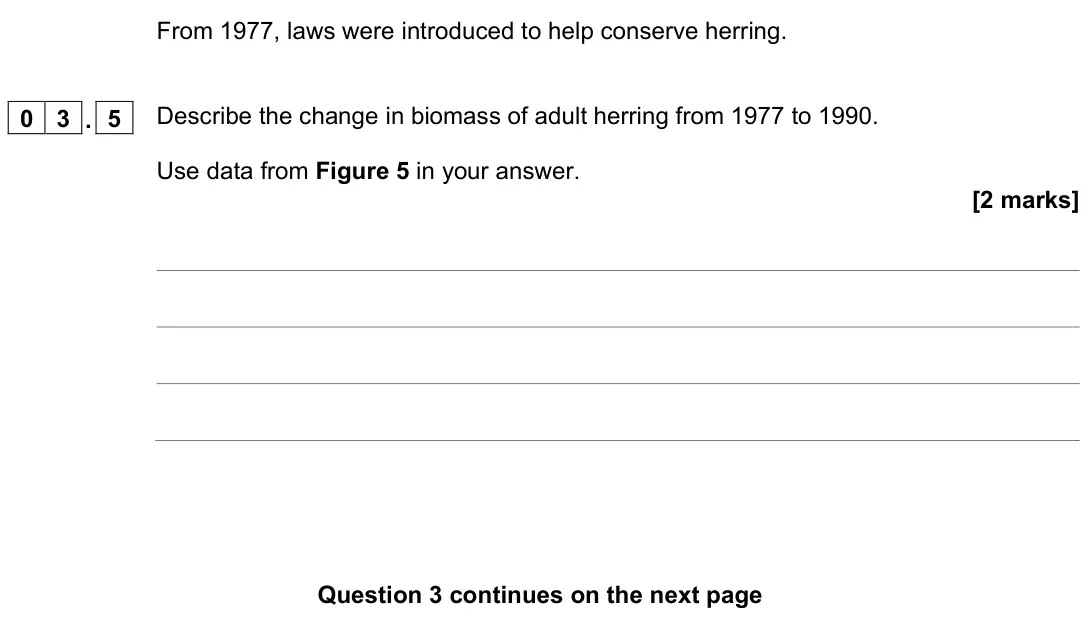
Q03.6
The whole paper ↗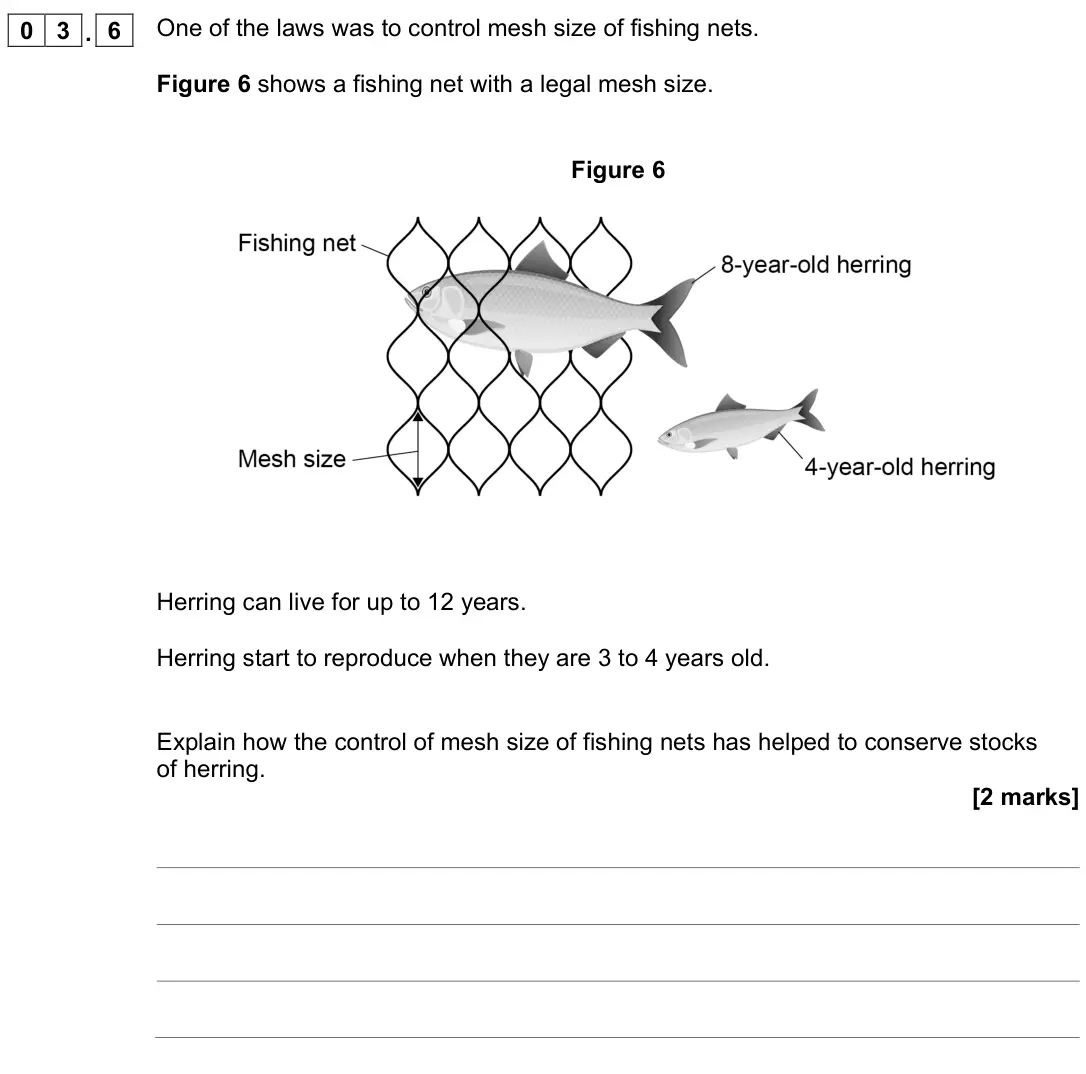
Q05.1
The whole paper ↗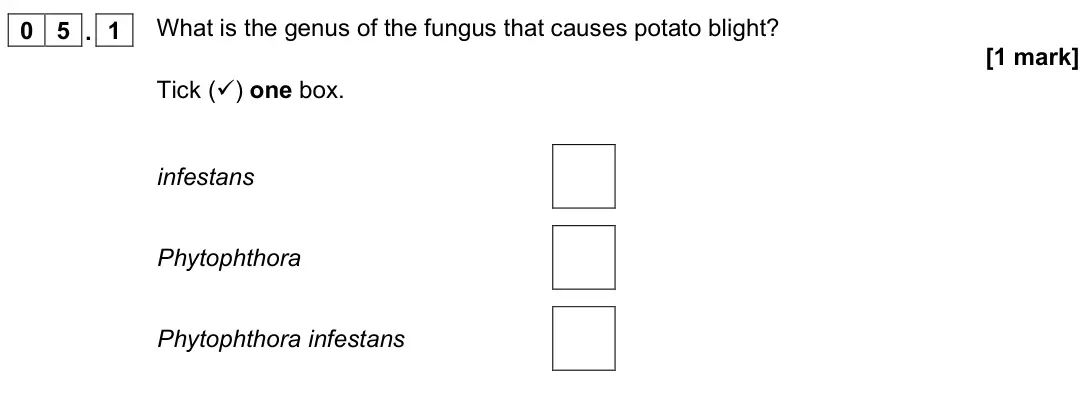
Q05.2
The whole paper ↗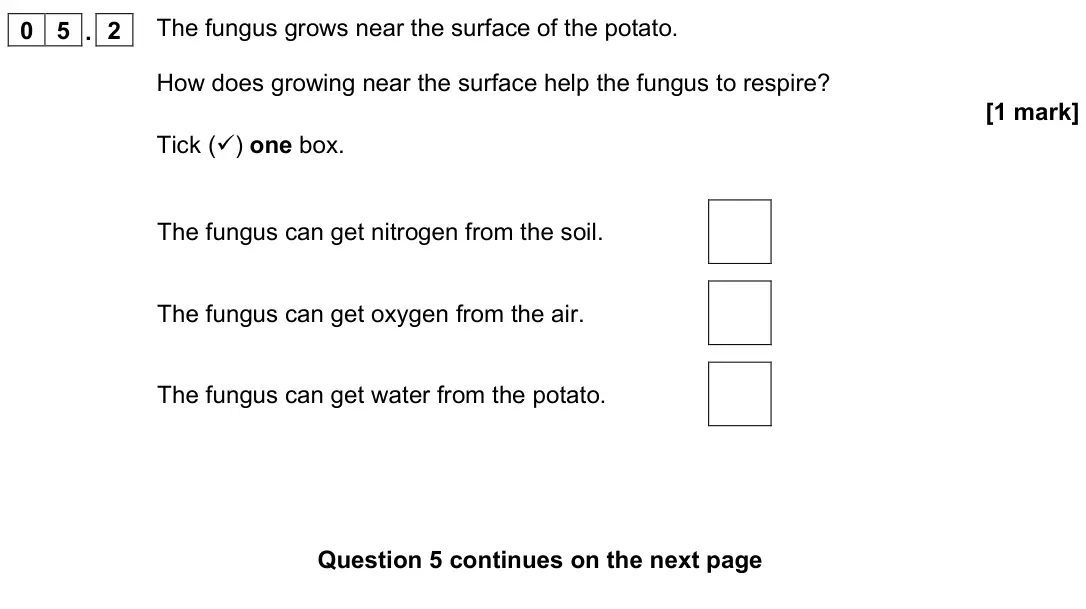
Q05.4
The whole paper ↗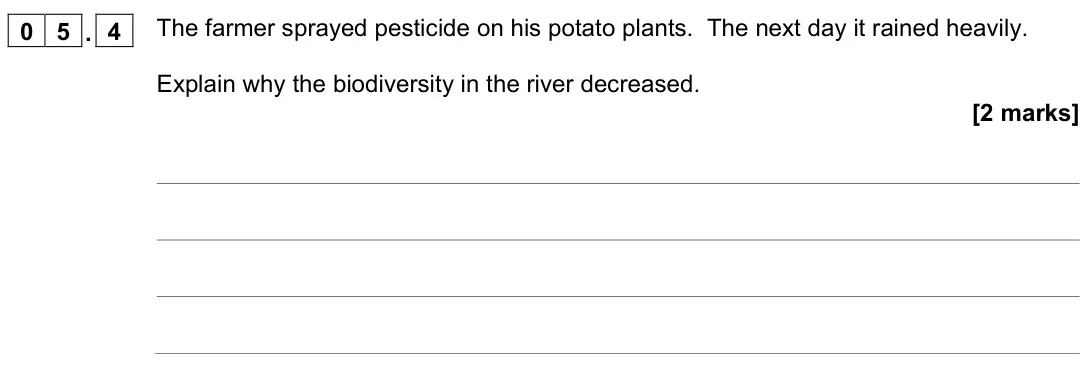
Q05.5
The whole paper ↗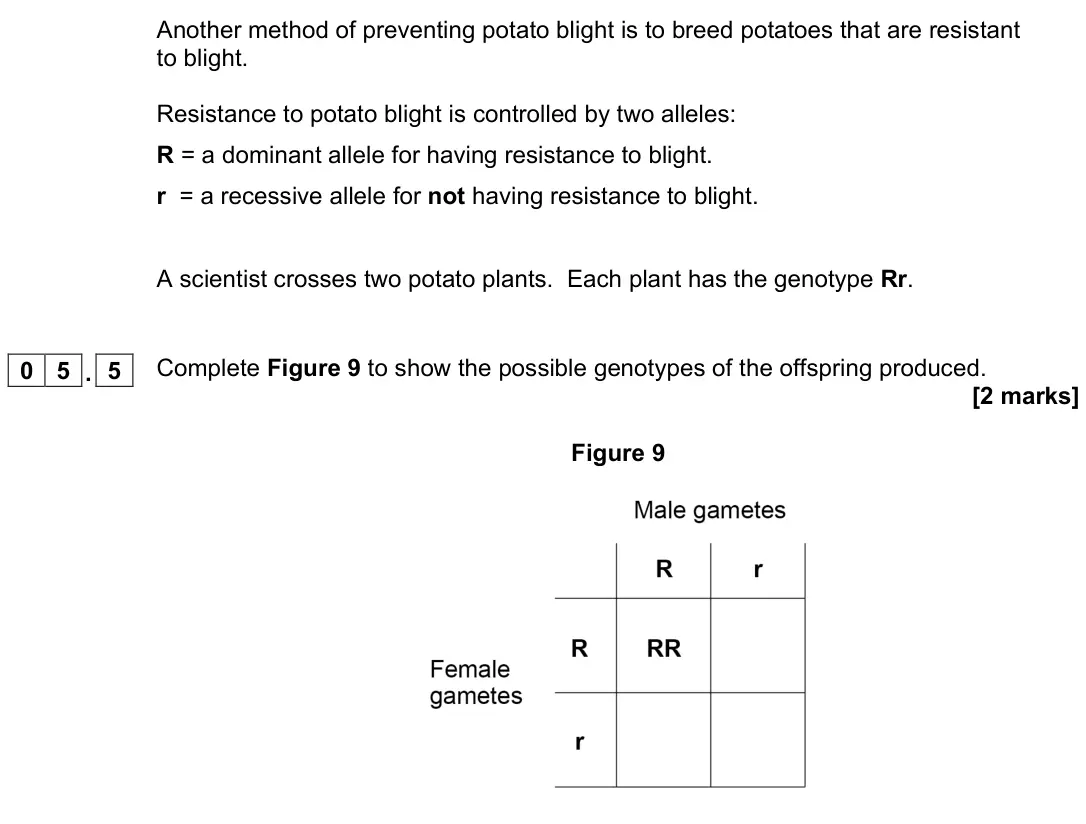
All 32 questions on Food production, as a list
- June 2025, Paper 2 Foundation, Q06.5 (2 marks): What are two ways that energy is lost from organisms in the food chain? [2 marks] Tick () two boxes. Diffusion Faeces Movement Osmosis Photosynthesis
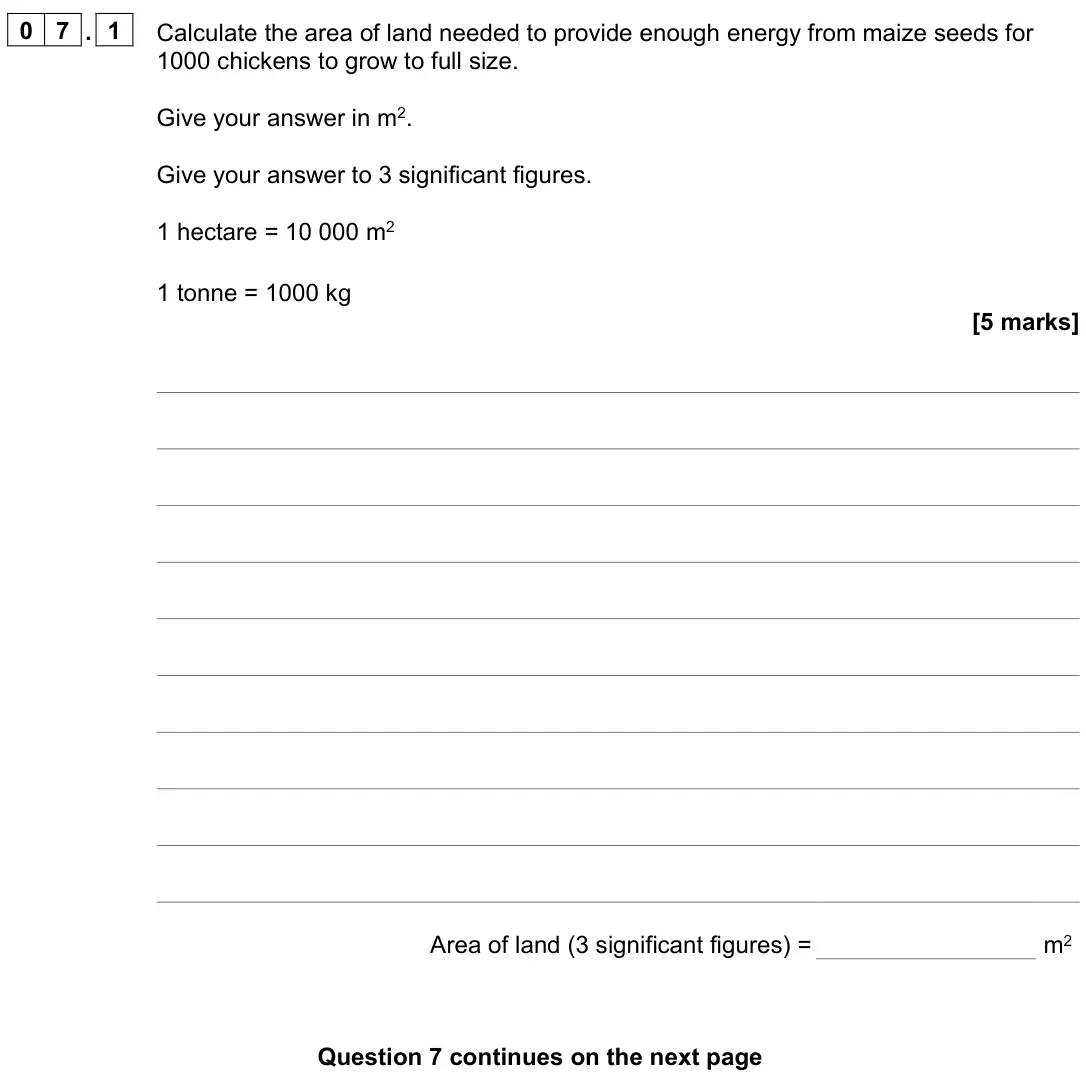
- June 2024, Paper 2 Higher, Q07.1 (5 marks): Calculate the area of land needed to provide enough energy from maize seeds for 1000 chickens to grow to full size. Give your answer in m2. Give your answer to
- June 2024, Paper 2 Higher, Q07.5 (1 mark): Which amino acids are found in significantly higher proportions in the QPM seeds? [1 mark] Tick () one box. Lysine and tryptophan Lysine and valine Threonine a
- June 2024, Paper 2 Higher, Q07.6 (1 mark): Table 2 shows that 1 kg of QPM contains less leucine than 1 kg of normal maize. Suggest why a diet containing less leucine does not slow down the growth of chic
- June 2024, Paper 2 Foundation, Q03.5 (1 mark): Suggest one advantage of using glyphosate on fields where GM maize is growing. [1 mark]
- June 2023, Paper 2 Foundation, Q04.1 (1 mark): Calculate the total energy input for keeping cows outdoors. Use data from Table 3. [1 mark] Total energy input = kJ/m2/year
- June 2023, Paper 2 Foundation, Q04.2 (2 marks): The total energy input for keeping cows indoors is 16 000 kJ/m2/year. Calculate the percentage efficiency of keeping cows indoors. Use the equation: percentage
- June 2023, Paper 2 Foundation, Q04.3 (2 marks): The percentage efficiency of keeping cows outdoors is 0.03%. Why is it more energy efficient to keep cows indoors than to keep cows outdoors? [2 marks] Tick ()
- June 2023, Paper 2 Foundation, Q04.4 (1 mark): Suggest why diseases spread more quickly when the cows are kept indoors. [1 mark]
- June 2022, Paper 2 Higher, Q06.5 (2 marks): It is more energy-efficient to rear cows indoors than to rear cows outdoors. Give two reasons why. [2 marks] 1 2
- June 2022, Paper 2 Higher, Q06.6 (2 marks): Suggest two possible disadvantages of rearing cows indoors. [2 marks] 1 2
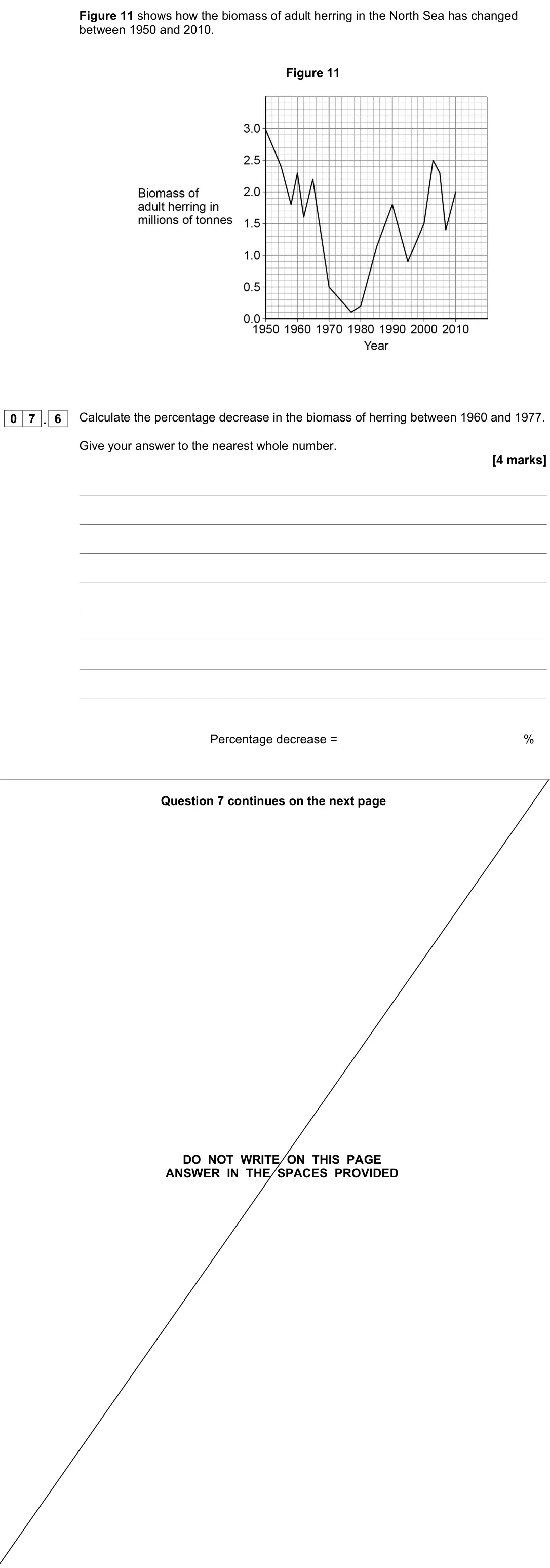
- November 2021, Paper 2 Higher, Q07.6 (4 marks): Calculate the percentage decrease in the biomass of herring between 1960 and 1977. Give your answer to the nearest whole number. [4 marks] Percentage decrease =
- November 2021, Paper 2 Higher, Q07.7 (6 marks): Too many herring were caught by fishermen between 1960 and 1977. Herring can live for up to 12 years and begin to reproduce when 3 to 4 years old. Laws have bee
- November 2021, Paper 2 Foundation, Q03.4 (4 marks): Too many herring were caught in the 1960s. Calculate the percentage decrease in the biomass of adult herring between 1960 and 1970. Use the equation: percentage
- November 2021, Paper 2 Foundation, Q03.5 (2 marks): Describe the change in biomass of adult herring from 1977 to 1990. Use data from Figure 5 in your answer. [2 marks]
- November 2021, Paper 2 Foundation, Q03.6 (2 marks): One of the laws was to control mesh size of fishing nets. Figure 6 shows a fishing net with a legal mesh size. Figure 6 Herring can live for up to 12 years. Her
- November 2021, Paper 2 Foundation, Q05.1 (1 mark): What is the genus of the fungus that causes potato blight? [1 mark] Tick () one box. infestans Phytophthora Phytophthora infestans
- November 2021, Paper 2 Foundation, Q05.2 (1 mark): The fungus grows near the surface of the potato. How does growing near the surface help the fungus to respire? [1 mark] Tick () one box. The fungus can get nit
- November 2021, Paper 2 Foundation, Q05.4 (2 marks): The farmer sprayed pesticide on his potato plants. The next day it rained heavily. Explain why the biodiversity in the river decreased. [2 marks]
- November 2021, Paper 2 Foundation, Q05.5 (2 marks): Complete Figure 9 to show the possible genotypes of the offspring produced. [2 marks] Figure 9
- November 2021, Paper 2 Foundation, Q05.6 (1 mark): Draw a ring around one of the homozygous genotypes in Figure 9. [1 mark]
- November 2021, Paper 2 Foundation, Q05.8 (2 marks): Potatoes can also reproduce asexually. Potatoes from one plant can be planted in the ground to produce new potato plants. All the new plants from a parent plant
- November 2020, Paper 2 Higher, Q02.4 (2 marks): The increasing human population has caused a decline in fish stocks. Describe how fishing quotas can help to return fish stocks to a sustainable level. [2 marks
- November 2020, Paper 2 Higher, Q02.5 (6 marks): Farming techniques have changed in recent years. Describe: • why more land is being used for farming • how increased farming has decreased biodiversity. [6 mark
- November 2020, Paper 2 Higher, Q02.6 (1 mark): Genetic modification of crop plants can help meet the demands of the increasing human population. Golden rice is a genetically modified (GM) crop. What is the a
- November 2020, Paper 2 Higher, Q07.3 (4 marks): Explain how making dog food from insects could improve human food security in the future. [4 marks]
- November 2020, Paper 2 Foundation, Q09.4 (2 marks): The increasing human population has caused a decline in fish stocks. Describe how fishing quotas can help to return fish stocks to a sustainable level. [2 marks
- November 2020, Paper 2 Foundation, Q09.5 (6 marks): Farming techniques have changed in recent years. Describe: • why more land is being used for farming • how increased farming has decreased biodiversity. [6 mark
- November 2020, Paper 2 Foundation, Q09.6 (1 mark): Genetic modification of crop plants can help meet the demands of the increasing human population. Golden rice is a genetically modified (GM) crop. What is the a
- Specimen, Paper 2 Higher, Q08.1: Some people think the farming methods shown in Figure 10 are unethical. Suggest two other possible disadvantages of intensive farming methods. [2 mar 1 2
- Specimen, Paper 2 Higher, Q08.3: Calculate the percentage (%) decrease in the number of seals caught from 2004 to 2010. [2 mar Decrease in seals = 9
- Specimen, Paper 2 Higher, Q08.4 (2 marks): The conclusion in the newspaper might not be correct. Suggest two reasons why. [2 marks 1 2 30
Questions, mark schemes and examiner’s reports are © AQA, from their published past papers. Plumi isn’t affiliated with any exam board. Want whole papers? Every AQA GCSE Biology paper.
Rather write your answers by hand on iPad? Plumi marks them against the same mark schemes.